1. Introduction
Osteosarcoma is an aggressive primary bone malignancy for which doxorubicin remains a cornerstone chemotherapeutic agent in both neoadjuvant and adjuvant treatment protocols. Despite its clinical utility, the effectiveness of doxorubicin is frequently compromised by intrinsic or acquired resistance mechanisms in osteosarcoma cells [
1,
2,
3,
4]. One well-recognized mechanism involves the overexpression of multidrug transporters such as P-glycoprotein, which actively export chemotherapeutic agents and reduce intracellular drug accumulation [
5]. Resistance to platinum-based agents has also been associated with impaired drug uptake, enhanced DNA repair mechanisms, and elevated intracellular antioxidant defenses, including glutathione-mediated detoxification of cytotoxic stress [
6,
7]. In addition to therapeutic resistance, doxorubicin-induced cardiotoxicity represents a major dose-limiting adverse effect and may lead to progressive cardiomyopathy and heart failure [
8]. Over the past three decades, standard combination regimens incorporating methotrexate, doxorubicin, and cisplatin have produced limited improvement in long-term survival, particularly in patients with metastatic disease or poor chemotherapeutic response [
9]. These limitations highlight the urgent need for novel strategies that enhance therapeutic efficacy while minimizing systemic toxicity.
Growing interest has focused on dietary phytochemicals and natural compounds as adjuvant agents capable of potentiating chemotherapy while reducing adverse effects [
10]. Curcumin, a polyphenolic compound derived from
Curcuma longa, exhibits diverse biological activities including anti-inflammatory, antioxidant, immunomodulatory, and anticancer properties [
11]. Extensive evidence indicates that curcumin exerts antitumor activity through modulation of multiple molecular targets involved in tumor initiation and progression [
12,
13]. Moreover, curcumin suppresses oncogenic signaling networks while enhancing pro-apoptotic pathways, thereby promoting programmed cell death in cancer cells [
14,
15]. Owing to its pleiotropic actions and favorable safety profile, curcumin has emerged as a promising candidate for combination therapy aimed at overcoming chemoresistance and improving therapeutic outcomes.
Mitogen-activated protein kinase (MAPK) signaling pathways regulate fundamental cellular processes including proliferation, differentiation, stress responses, and apoptosis [
16]. The MAPK family consists primarily of extracellular signal-regulated kinase (ERK), p38 MAPK, and c-Jun
N-terminal kinase (JNK), each responding to distinct extracellular and intracellular stimuli [
17]. Activation of ERK, p38, and JNK has been implicated in apoptosis induction under specific conditions, particularly in response to oxidative stress and chemotherapeutic exposure [
18]. Because MAPK pathways integrate stress signals and influence cell fate decisions, they represent attractive therapeutic targets in cancer treatment. Modulation of MAPK signaling has therefore been proposed as a strategy to enhance anticancer efficacy and overcome therapeutic resistance [
19,
20]. Nevertheless, the relative contribution of individual MAPK branches to chemotherapy-induced apoptosis remains context-dependent and requires further clarification in osteosarcoma.
Thioredoxin domain-containing protein 5 (TXNDC5) has recently attracted attention as an oncogenic factor due to its elevated expression in multiple malignancies and its involvement in tumor progression [
21]. TXNDC5 contributes to cancer cell survival by regulating redox homeostasis and cellular stress adaptation. Under hypoxic conditions, TXNDC5 expression is upregulated via hypoxia-inducible factor-1α (HIF-1α), reducing reactive oxygen species–induced endoplasmic reticulum (ER) stress and supporting cancer cell survival [
22,
23]. Beyond stress adaptation, TXNDC5 has been implicated in cell cycle regulation; its overexpression increases the proportion of cells in the G2/M phase, whereas its suppression results in G0/G1 arrest [
21,
24]. Functionally, TXNDC5 acts as a protein disulfide isomerase that facilitates protein folding within the ER and protects cells from ER stress-induced apoptosis [
22,
25]. Elevated TXNDC5 expression has been associated with poor prognosis in several cancers and may serve as a prognostic biomarker [
21,
22,
26]. Inhibition of TXNDC5 has been shown to suppress malignant phenotypes and enhance susceptibility to apoptosis, supporting its potential as a therapeutic target [
21,
22,
23,
26]. Our previous work further demonstrated that TXNDC5 suppression enhances chemosensitivity in cancer cells [
23].
Given the limitations of doxorubicin therapy and the multifaceted anticancer properties of curcumin, combining these agents represents a rational strategy for osteosarcoma treatment. Curcumin has been shown to sensitize cancer cells to chemotherapeutic agents by modulating pathways associated with survival, oxidative stress, apoptosis, and drug resistance, thereby enhancing anticancer efficacy and potentially allowing dose reduction of cytotoxic drugs [
12,
27,
28,
29]. Importantly, curcumin has also been reported to mitigate chemotherapy-induced toxicity in normal tissues, improving the therapeutic index of conventional anticancer therapies [
29,
30,
31,
32]. However, the molecular mechanisms underlying the combined effects of curcumin and doxorubicin in osteosarcoma cells remain incompletely defined. Therefore, the present study investigated the effects of combined curcumin and doxorubicin treatment on apoptosis in human osteosarcoma cells and examined the associated signaling pathways, with particular emphasis on MAPK-dependent mechanisms.
2. Materials and Methods
2.1. Reagents and Chemicals
Minimum Essential Medium (MEM) was obtained from Gibco (Thermo Fisher Scientific, Waltham, MA, USA). Fetal bovine serum (FBS), penicillin–streptomycin, sodium pyruvate, and MEM non-essential amino acids (NEAA) were also purchased from Gibco (Thermo Fisher Scientific, Waltham, MA, USA). Curcumin (from Curcuma longa (turmeric), powder form; CAS No. 458-37-7; Sigma-Aldrich, St. Louis, MO, USA) was used in this study. Doxorubicin hydrochloride was acquired from Sigma-Aldrich (St. Louis, MO, USA). Propidium iodide (PI), RNase A, paraformaldehyde (PFA), trypan blue, and routine laboratory reagents were obtained from Sigma-Aldrich. The Cell Counting Kit-8 (CCK-8) assay kit was purchased from Dojindo Laboratories (Kumamoto, Japan), and the Bio-Rad protein assay kit was obtained from Bio-Rad Laboratories (Hercules, CA, USA). X-tremeGENE™ HP DNA transfection reagent was purchased from Roche (Raleigh, NC, USA). MAPK inhibitors PD98059, SB203580, and SP600125 were obtained from Sigma-Aldrich. The TXNDC5 overexpression plasmid and corresponding control vector were obtained from Addgene (Watertown, MA, USA). All other chemicals were of analytical grade. Primary antibodies against cleaved PARP, phosphorylated and total ERK, p38 MAPK, and JNK were obtained from Santa Cruz Biotechnology (Santa Cruz, CA, USA). Anti-TXNDC5 antibody was purchased from Abcam (Waltham, MA, USA). All primary antibodies were used at dilutions of 1:1000 unless otherwise specified. Horseradish peroxidase–conjugated secondary antibodies were used at a dilution of 1:10,000.
2.2. Cell Culture
Human osteosarcoma HOS and MG-63 cells were maintained in MEM supplemented with 10% FBS, 100 U/mL penicillin G, 100 μg/mL streptomycin, 250 ng/mL amphotericin B, 1 mM sodium pyruvate, and MEM non-essential amino acids (NEAA). Cells were cultured at 37 °C in a humidified incubator containing 5% CO2. Upon reaching approximately 80% confluence, cells were rinsed with phosphate-buffered saline (PBS) and detached using trypsin–EDTA. Enzymatic activity was neutralized with complete medium, and cells were collected by centrifugation at 1000 rpm for 3 min. Cell pellets were resuspended in fresh medium, and viable cells were quantified using trypan blue exclusion and a hemocytometer before seeding at the desired density.
2.3. Cell Viability Assay
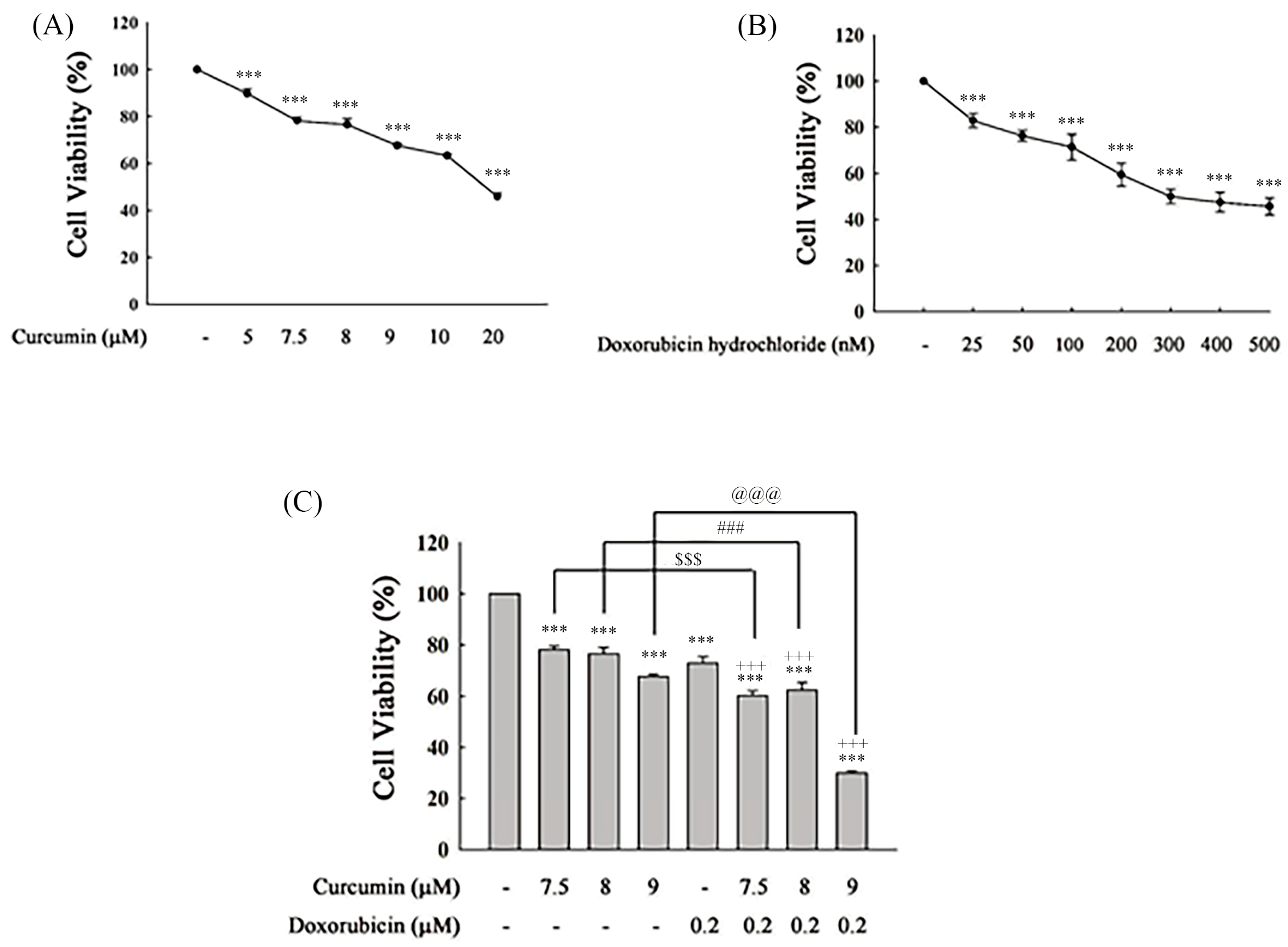
Cell viability was determined using the CCK-8 assay according to the manufacturer’s protocol. HOS and MG-63 cells were seeded at 4 × 10⁴ cells per well in 24-well plates and allowed to attach for at least 16 h prior to treatment. Cells were treated with curcumin, doxorubicin, or their combination. For curcumin-only treatment, concentrations ranged from 5–20 μM; for doxorubicin alone, concentrations ranged from 25–500 nM. For combination treatment, curcumin (7.5–9 μM) was combined with doxorubicin (0.2 μM). The selected concentration range of curcumin was based on preliminary dose–response experiments to identify sub-cytotoxic conditions (20–40% reduction in cell viability) suitable for evaluating combination effects. Doxorubicin was used as an internal reference control due to its well-established cytotoxic effects in osteosarcoma cells. After 48 h, 20 μL CCK-8 reagent was added to each well and incubated for 1.5 h at 37 °C. Aliquots (200 μL) were transferred to a 96-well plate, and absorbance was measured at 450 nm. Cell viability was expressed relative to untreated controls.
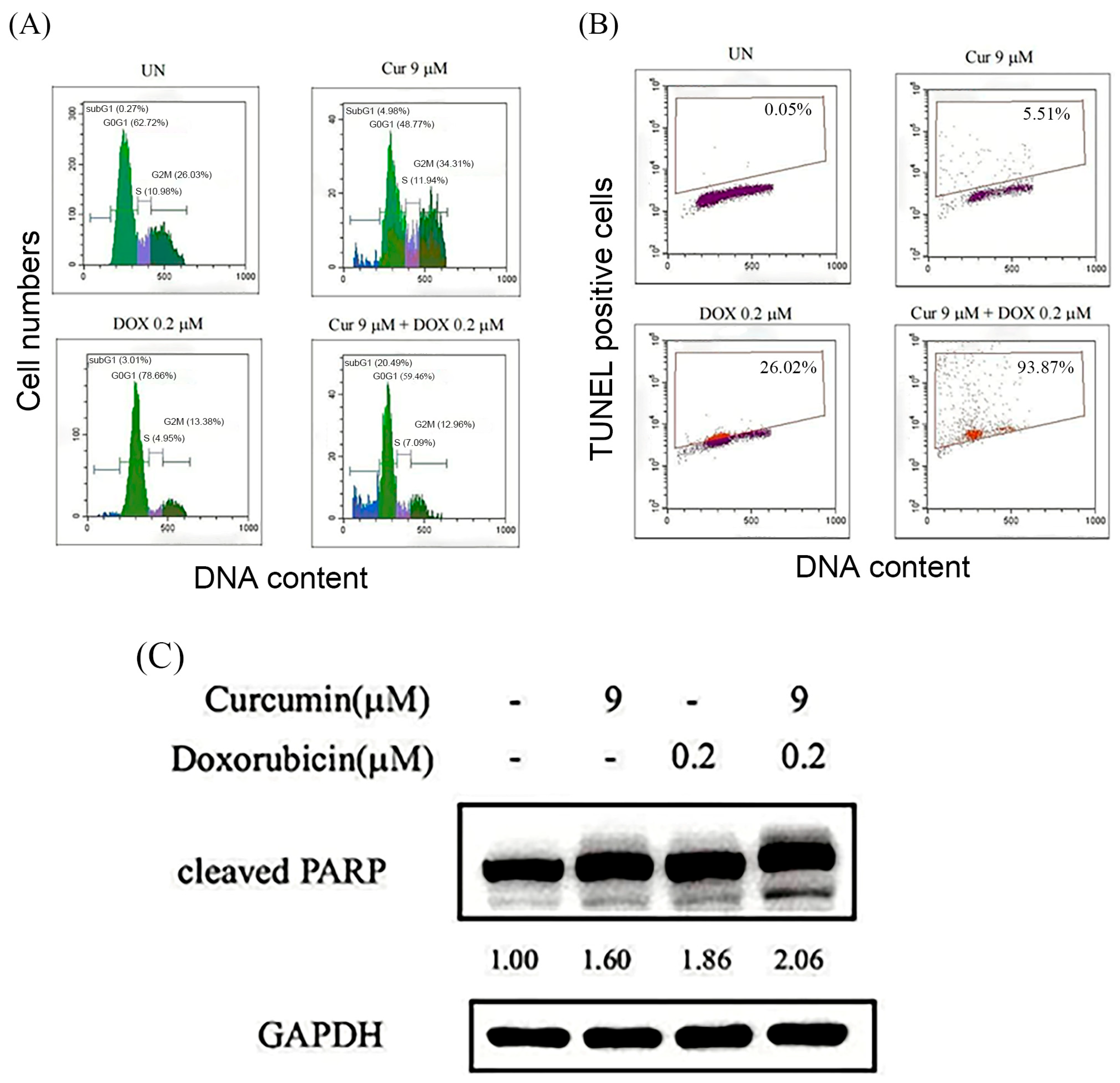
2.4. Flow Cytometry Analysis of Sub-G1 Population
Flow cytometric analysis was performed using a CytoFLEX flow cytometer (Beckman Coulter, Brea, CA, USA). Data acquisition was conducted under standard hydrodynamic focusing conditions, and at least 10,000 events were collected per sample. Cell cycle distribution and the sub-G1 population were analyzed by flow cytometry following propidium iodide (PI) staining, which was used as a single-color parameter to determine DNA content. After drug treatment, cells were washed with phosphate-buffered saline (PBS), harvested, and centrifuged at 1300 rpm for 5 min. The supernatant was removed, and the cell pellet was resuspended in 1 mL of PBS. Cells were then transferred to 1.5 mL microcentrifuge tubes. RNase A (4 μL) and propidium iodide (PI; 20 μL) were added to each sample, and the mixtures were incubated for 30 min at room temperature in the dark. All samples were analyzed within 3 h using a flow cytometer to determine cell cycle distribution. The sub-G1 population, defined as a population with DNA content lower than that of the G1 peak, appears to the left of the G1 phase in the DNA content histogram. This population arises from apoptotic cells undergoing DNA fragmentation, resulting in reduced PI incorporation and lower fluorescence intensity. Therefore, the percentage of cells in the sub-G1 fraction was quantified as an indicator of apoptotic cell death.
2.5. TUNEL Assay
For detection of apoptotic DNA fragmentation, a terminal deoxynucleotidyl transferase–mediated dUTP nick end labeling (TUNEL) assay was performed using the APO-BrdU™ TUNEL assay kit with Alexa Fluor™ 488 anti-BrdU (Thermo Fisher Scientific; Cat. No. A23210) according to the manufacturer’s instructions. Following labeling, cells were subjected to dual-color staining with Alexa Fluor™ 488–conjugated anti-BrdU and propidium iodide (PI). Alexa Fluor™ 488 fluorescence was used to detect TUNEL-positive cells, while PI staining was used to determine total DNA content. Dual-color flow cytometric analysis was performed to distinguish apoptotic (TUNEL-positive) cells from non-apoptotic populations. Data acquisition and analysis were conducted using appropriate flow cytometry software. A minimum of 10,000 events per sample were collected.
After drug treatment, cells were collected and washed twice with phosphate-buffered saline (PBS) and transferred to 15 mL centrifuge tubes. Cells were then detached by incubation with trypsin at 37 °C in a humidified incubator containing 5% CO2 for approximately 3 min. Detached cells were collected, washed with PBS, combined into the same tube, and centrifuged at 1300 rpm for 5 min. The supernatant was carefully removed. Cells were fixed with 5 mL of 1% paraformaldehyde (PFA) at room temperature for 15 min, followed by two washes with PBS to remove residual fixative. Cells were then resuspended in 5 mL of ice-cold 70% ethanol and stored at −20 °C for at least 16–18 h prior to analysis. After fixation and permeabilization, cells were centrifuged at 1300 rpm for 5 min, and the supernatant was removed. Cells were resuspended in 1 mL of wash buffer and centrifuged again at 1300 rpm for 5 min. This washing step was repeated twice to ensure complete removal of residual medium and debris. Subsequently, 50 μL of DNA labeling solution was added to each sample, and cells were incubated at 37 °C for 60 min in a hybridization incubator. During incubation, samples were gently mixed every 15 min to ensure uniform reagent distribution. Following labeling, cells were washed twice with 1 mL of rinse buffer (1300 rpm, 5 min), with complete removal of the supernatant after each wash. Cells were then resuspended in 0.1 mL of antibody solution and incubated at room temperature for 30 min in the dark. Subsequently, 0.9 mL of PI/RNase A solution was added, and samples were further incubated at room temperature for 30 min in the dark. All samples were analyzed by flow cytometry within 3 h of completion of staining. The percentage of TUNEL-positive cells was quantified as an indicator of apoptotic cell death.
2.6. Western Blot Analysis
Protein expression levels of cleaved poly(ADP-ribose) polymerase (PARP), mitogen-activated protein kinase (MAPK) signaling proteins, and thioredoxin domain-containing protein 5 (TXNDC5) were analyzed by Western blotting. Protein samples were prepared from whole-cell lysates. After treatment, cells were washed with phosphate-buffered saline (PBS) and lysed in protein extraction buffer on ice for 10 min. The lysates were then centrifuged at 12,000×
g for 10 min at 4 °C, and the supernatants were collected as total cellular proteins. Protein concentrations were determined using a protein assay reagent (Bio-Rad, Richmond, CA, USA) according to the manufacturer’s instructions. Protein samples were retrieved from −80 °C storage and kept on ice prior to analysis. For experiments performed in HOS cells, four treatment groups were included: untreated control, curcumin-treated (CUR, 9 μM), doxorubicin-treated (DOX, 0.2 μM), and combined curcumin (9 μM) and doxorubicin (0.2 μM) treatment, as indicated in the corresponding figures. For validation experiments performed in MG-63 cells (
Supplementary Figure S2), cells were treated with curcumin (15 μM), doxorubicin (0.3 μM), or the indicated combinations for 48 h. Higher concentrations of doxorubicin were selected in MG-63 cells to facilitate clearer detection of apoptotic signaling, as assessed by cleaved PARP expression.
Protein concentrations were determined using a Bio-Rad Protein Assay kit according to the manufacturer’s instructions. Equal amounts of protein (20–30 μg per lane) from each sample were mixed with distilled water and sample buffer to a final volume of 20 μL. Samples were heated for 5 min, immediately placed on ice for 5 min, and briefly centrifuged prior to electrophoresis. Proteins were separated by 12% sodium dodecyl sulfate–polyacrylamide gel electrophoresis (SDS–PAGE) and subsequently transferred onto polyvinylidene difluoride (PVDF) membranes. Membranes were blocked with 0.05% bovine serum albumin (BSA) for 90–120 min at room temperature, followed by washing with phosphate-buffered saline containing 0.1% Tween-20 (PBST) three times for 10 min each. Membranes were then incubated with primary antibodies at 4 °C for 16–18 h. After primary antibody incubation, membranes were washed three times with PBST for 10 min each and incubated with the appropriate horseradish peroxidase–conjugated secondary antibodies at room temperature for approximately 1 h. Membranes were subsequently washed three times with PBST for 10 min each. Protein bands were detected using enhanced chemiluminescence (ECL) reagents, and immunoreactive signals were visualized and quantified using a chemiluminescence imaging system. Membranes were trimmed according to molecular weight markers prior to antibody incubation when appropriate. Each target protein corresponds to the same sample as the loading control, but was obtained from a trimmed membrane processed separately. Band intensities were quantified using image analysis software, normalized to the corresponding loading control (GAPDH or tubulin), and expressed relative to control conditions. Phosphorylation levels were evaluated as relative changes and were not normalized to corresponding total protein levels. All quantitative analyses were performed using consistent regions of interest and standardized analysis parameters across all treatment groups to ensure comparability.
2.7. MAPK Inhibitor Pretreatment Experiments
To investigate the involvement of mitogen-activated protein kinase (MAPK) signaling pathways in apoptosis induced by combined curcumin and doxorubicin treatment, specific pharmacological inhibitors were used. HOS cells were pretreated with the ERK inhibitor PD98059 (25 μM), the p38 MAPK inhibitor SB203580 (25 μM), or the JNK inhibitor SP600125 (25 μM) for 1 h prior to drug treatment. Following inhibitor pretreatment, cells were treated with curcumin (9 μM) and doxorubicin (0.2 μM), either alone or in combination, as indicated. Cells were then incubated under standard culture conditions for an additional 48 h. After treatment, cells were harvested, and total cellular proteins were extracted for subsequent Western blot analysis. The effects of MAPK inhibition on apoptosis were evaluated by assessing the expression level of cleaved poly(ADP-ribose) polymerase (PARP) using Western blotting, as described above. These experiments were performed to determine the functional contribution of individual MAPK pathways to apoptosis induced by combined curcumin and doxorubicin treatment.
2.8. TXNDC5 Overexpression and Cell Transfection
TXNDC5 overexpression was achieved by plasmid transfection in HOS cells. One day prior to transfection, cells were seeded in culture dishes to reach approximately 80% confluence at the time of transfection. A TXNDC5 overexpression plasmid was used, with an empty vector serving as the control. Transfections were performed using X-tremeGENE™ HP DNA Transfection Reagent (Roche, Indianapolis, IN, USA) according to the manufacturer’s instructions. Briefly, serum-free culture medium was added to 1.5 mL microcentrifuge tubes, followed by the addition of X-tremeGENE™ HP reagent at a ratio of 3 μL per 1 μg of plasmid DNA. Plasmid DNA was then added at a ratio of 1 μg per transfection reaction, and the mixture was gently mixed and incubated at room temperature for 15 min to allow formation of DNA–reagent complexes. The complexes were subsequently added dropwise to cells cultured in complete medium. After transfection, cells were incubated at 37 °C in a humidified atmosphere containing 5% CO2. Cells were harvested 24 h after transfection for protein extraction and Western blot analysis to confirm TXNDC5 overexpression. Successfully transfected cells were then used for subsequent functional assays, including apoptosis analysis following combined curcumin and doxorubicin treatment.
2.9. Statistical Analysis
All quantitative data are presented as the mean ± standard deviation (SD) from at least three independent experiments. Statistical analyses were performed using GraphPad Prism software (version 9.0; GraphPad Software, San Diego, CA, USA). Comparisons between two groups were conducted using Student’s t-test. For comparisons among multiple groups, one-way analysis of variance (ANOVA) followed by Tukey’s post hoc test was applied. The assumptions of normality and homogeneity of variance were considered to be satisfied based on the experimental design and comparable variance observed among groups. A p-value of less than 0.05 was considered statistically significant.
4. Discussion
Consistent with the concept that curcumin can function as a chemosensitizing phytochemical, studies published since 2021 have demonstrated that curcumin enhances the anticancer response to doxorubicin through modulation of stress-adaptive and survival-related pathways, although the dominant molecular nodes appear to vary across tumor contexts. For instance, in doxorubicin-insensitive breast cancer models, curcumin has been reported to restore doxorubicin responsiveness primarily by targeting Aurora A–centered signaling networks and drug-resistance programs [
33], rather than directly implicating MAPK signaling as the central mediator of the synergistic effect. In contrast, accumulating mechanistic evidence has highlighted the c-Jun
N-terminal kinase (JNK) cascade as a key stress-activated pathway through which curcumin promotes tumor cell death under specific cellular conditions, including oxidative stress–driven apoptosis or regulated cell death [
28,
34,
35,
36].
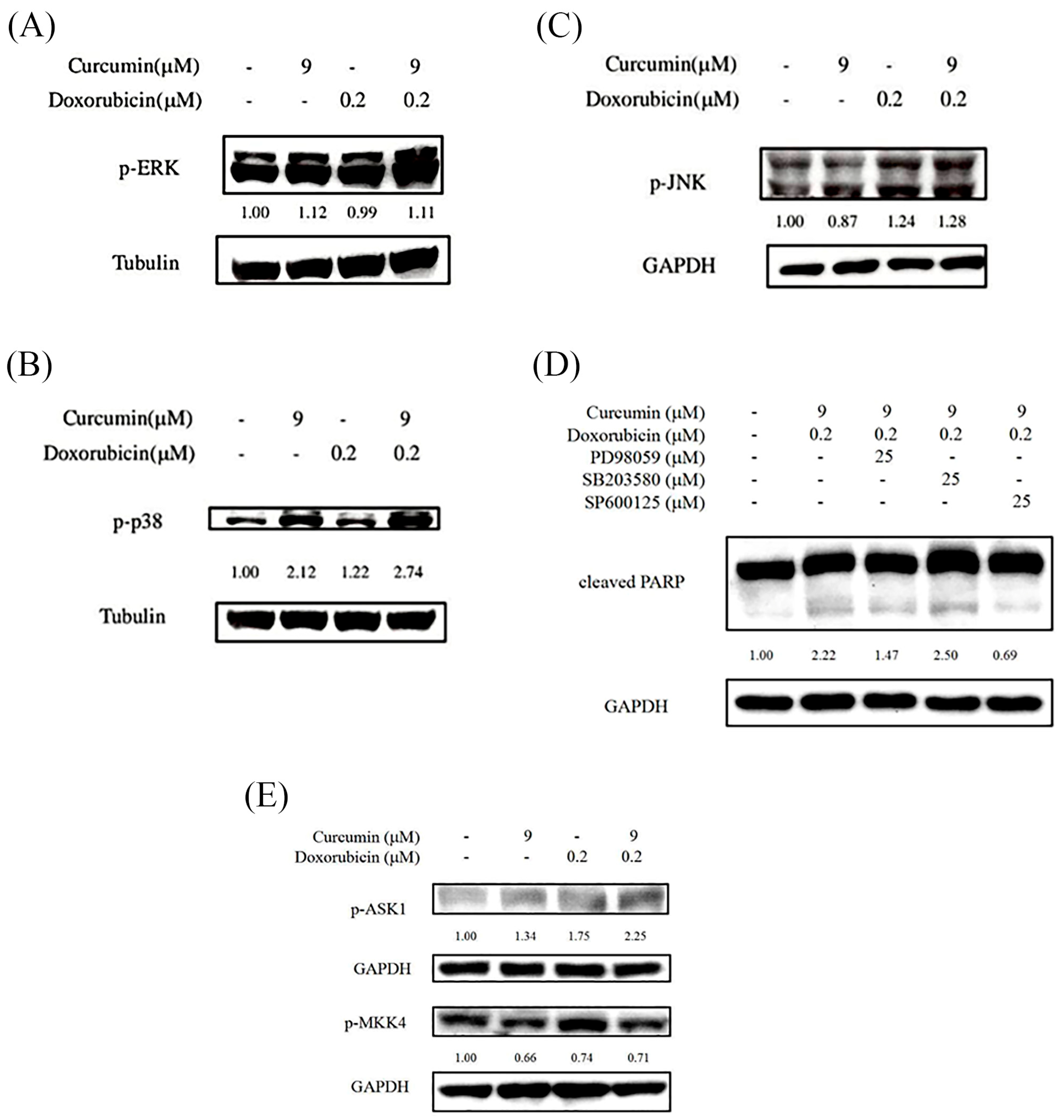
Building on this framework, our data suggest that JNK activation represents a principal execution-associated MAPK signal in human osteosarcoma HOS cells subjected to combined curcumin and doxorubicin treatment. This conclusion is supported by the marked increase in JNK phosphorylation and by the ability of the JNK inhibitor SP600125 to significantly attenuate PARP cleavage (
Figure 4), indicating a functional requirement for JNK signaling in apoptotic execution.
Interestingly, although combined curcumin and doxorubicin treatment elicited a pronounced increase in p38 MAPK phosphorylation (
Figure 4B), pharmacological inhibition of p38 signaling using SB203580 failed to attenuate PARP cleavage induced by the combination treatment (
Figure 4D). This dissociation between p38 activation and apoptotic execution suggests that p38 MAPK activation in this context is not functionally required for apoptosis induction. Instead, p38 activation may reflect a stress-responsive or adaptive signaling event triggered by chemotherapeutic and phytochemical stress, rather than serving as a dominant execution pathway. Indeed, p38 MAPK has been reported to exert context-dependent functions in cancer cells, acting either as a pro-apoptotic mediator or as a regulator of stress adaptation and survival depending on cellular context and stimulus intensity [
37]. In several models, p38 activation accompanies cellular stress without being essential for downstream apoptotic execution once stronger death-promoting pathways are engaged [
38,
39,
40].
In the present study, our data support a model in which p38 MAPK activation represents an upstream stress-sensing response to combined curcumin and doxorubicin treatment, whereas JNK signaling functions as the principal execution-associated MAPK pathway driving apoptotic cell death. Notably, although ERK phosphorylation was not elevated by the combination treatment, pharmacological inhibition of ERK signaling nevertheless reduced cleaved PARP expression (
Figure 4). This finding suggests that basal ERK activity may function in a permissive or cooperative manner to support JNK-dependent apoptotic signaling, rather than acting as an inducible driver of apoptosis under these experimental conditions.
It should be noted that phosphorylation levels of MAPK proteins were normalized to the loading control (GAPDH) rather than to their corresponding total protein levels. Although normalization to total protein is commonly applied in signaling studies, the consistent phosphorylation patterns observed across independent experiments, together with functional validation using pharmacological inhibitors (e.g., SP600125), support the interpretation of MAPK pathway involvement. Nevertheless, the present findings should be interpreted as relative changes in phosphorylation status rather than definitive evidence of absolute pathway activation.
Mechanistically, upstream signaling analysis further revealed that combination treatment rapidly increased ASK1 phosphorylation, whereas MKK4 phosphorylation was not detectably increased within the same early time window. This pattern suggests that ASK1-to-JNK transmission may proceed through alternative intermediates (e.g., preferential engagement of other MAP2Ks such as MKK7, or transient kinetics of MKK4 activation that fall outside the sampling window), and highlights that ASK1 activation alone is not necessarily mirrored by a sustained p-MKK4 signal at the time point examined. Such a “non-parallel” phosphorylation pattern is compatible with the broader view that JNK signaling is highly stimulus-, timing-, and scaffold-dependent, and that upstream kinase readouts can be pathway-selective rather than uniformly propagated across all canonical nodes. Collectively, compared with recent chemosensitization studies emphasizing resistance networks [
27,
41], our findings add a complementary mechanistic angle by identifying JNK-dependent MAPK signaling as the dominant apoptosis-associated axis under curcumin–doxorubicin co-treatment in osteosarcoma cells, while also distinguishing inducible MAPK signals from permissive basal signaling requirements.
TXNDC5 is known to play a role in redox homeostasis and cellular stress responses, and its dysregulation has been implicated in cancer progression and therapeutic resistance [
22,
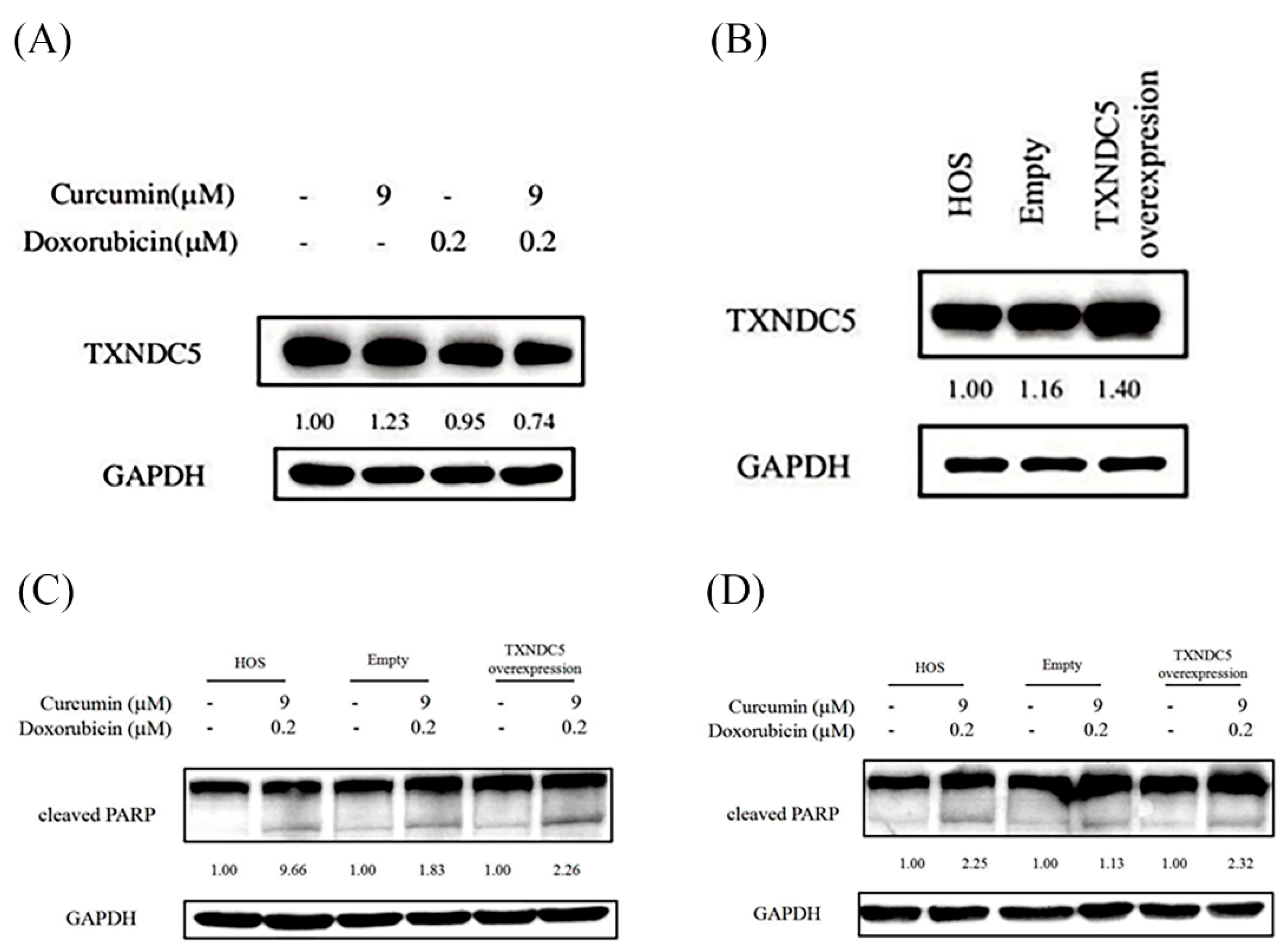
42]. In the present study, combined curcumin and doxorubicin treatment reduced TXNDC5 expression in HOS cells. However, enforced overexpression of TXNDC5 failed to attenuate PARP cleavage induced by the combination treatment, indicating that TXNDC5 downregulation alone is not sufficient to account for apoptotic execution. One possible explanation is that apoptosis induced by the combined treatment is driven by dominant pro-apoptotic signaling pathways that override TXNDC5-mediated protective mechanisms. Consistent with this notion, our data suggest that JNK activation is involved in apoptosis induced by combined curcumin and doxorubicin treatment, indicating that MAPK-dependent apoptotic signaling may predominate over the modulatory effects of TXNDC5. In addition, TXNDC5 may function at an upstream stress-response level, whereas PARP cleavage represents a late-stage apoptotic event. Once the execution phase of apoptosis has been initiated, restoration of TXNDC5 expression may be insufficient to reverse apoptotic progression. This temporal dissociation between stress-associated regulators and apoptotic execution factors has also been described in other models of chemotherapeutic stress. Taken together, these findings suggest that TXNDC5 downregulation is associated with, but not determinative of, apoptosis induced by combined curcumin and doxorubicin treatment. Rather than acting as a central apoptotic regulator, TXNDC5 may serve as a stress-responsive modulator whose effects may be secondary to stronger pro-apoptotic signaling pathways activated by the combination treatment. Consistent with this interpretation, TXNDC5 downregulation accompanies combined curcumin and doxorubicin treatment but does not appear sufficient to counteract apoptosis associated with MAPK-dependent signaling.
While the present findings support the involvement of MAPK signaling in apoptosis induced by combined curcumin and doxorubicin treatment, the mechanistic relationships between individual MAPK pathways, TXNDC5 regulation, and apoptotic execution should be interpreted with caution. Although JNK phosphorylation and inhibitor studies suggest a functional role in apoptosis, the current data do not establish a direct causal relationship at the molecular level. Similarly, although TXNDC5 expression was reduced following treatment, its precise role in regulating apoptotic signaling remains to be further elucidated. Therefore, these findings primarily indicate an association rather than definitive mechanistic linkage.
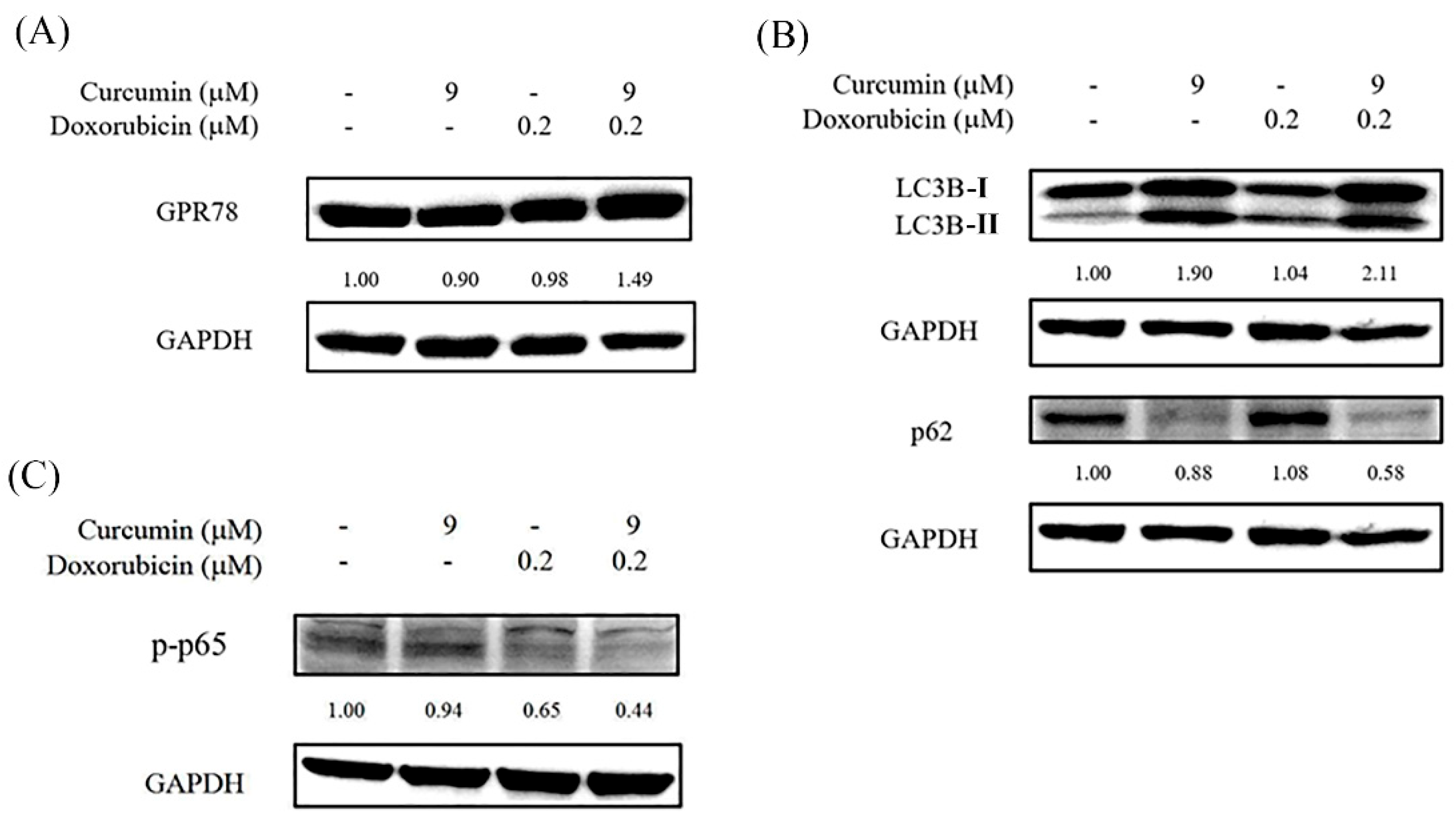
In addition to JNK-dependent MAPK signaling, our observation that GRP78 was increased by the combination treatment suggests engagement of an endoplasmic reticulum (ER) stress response, which is a common cellular reaction to proteotoxic and oxidative insults induced by chemotherapy. ER stress has been reported to play context-dependent roles in cancer cells, functioning as either a protective mechanism or a contributor to cell death depending on stress intensity and duration [
43,
44]. Importantly, curcumin has been reported to enhance chemosensitivity by amplifying ER stress signaling in cancer cells. For example, curcumin was shown to increase cisplatin sensitivity in non-small cell lung cancer cells through activation of ER stress–associated pathways, supporting the concept that ER stress augmentation can contribute to curcumin-mediated chemosensitization [
45]. Moreover, mechanistic evidence indicates that curcumin itself can trigger ER stress programs (e.g., ATF6-associated signaling) and promote apoptotic execution, providing a plausible basis for why ER stress markers may rise in our co-treatment setting [
46]. Consistently, ER stress activation has also been observed alongside stress-activated kinase signaling (including JNK/p38) in curcumin-treated cancer models, suggesting that ER stress may occur as part of a broader stress-integrated response rather than as an isolated pathway [
47,
48]. In the present study, because GRP78 was assessed as a marker without functional interrogation of unfolded protein response (UPR) branches (PERK/eIF2α/ATF4–CHOP, IRE1α/XBP1, or ATF6) or ER stress dependence, the current data support ER stress engagement as an accompanying stress signature rather than definitive evidence that ER stress is required for apoptosis. Future experiments using pathway-level readouts (e.g., CHOP induction, XBP1 splicing, ATF6 cleavage) and pharmacologic or genetic modulation would be needed to determine whether ER stress is mechanistically upstream of the JNK-dependent apoptotic axis observed here.
Furthermore, the interpretation of increased LC3B-II levels accompanied by reduced p62 expression requires careful consideration, as autophagy is well recognized to exert context-dependent roles in cancer cells under chemotherapeutic or phytochemical stress. In many settings, autophagy is activated as an adaptive or compensatory response that promotes cell survival by alleviating proteotoxic and metabolic stress; however, under conditions of sustained or excessive stress, autophagy may also cooperate with apoptotic signaling or contribute to cell death [
49,
50]. In the present study, the observed alterations in autophagy-associated markers most plausibly reflect engagement of a stress-responsive autophagy program triggered by combined curcumin and doxorubicin treatment, rather than definitive evidence that autophagy directly drives apoptotic execution.
Consistent with this interpretation, accumulating evidence indicates that curcumin can modulate autophagy through multiple signaling nodes, including the PI3K/Akt/mTOR axis, and that the functional outcome of curcumin-induced autophagy is highly dependent on tumor type, cellular context, and stress intensity [
28]. Recent studies have reported that curcumin alone or in combination with conventional chemotherapeutic agents can enhance autophagy-associated responses in cancer cells, often in parallel with apoptotic signaling, supporting the notion that autophagy activation frequently accompanies chemosensitization rather than acting as an isolated death mechanism [
45,
47]. Nevertheless, because autophagic flux and functional dependence on autophagy were not directly assessed in this study—such as by using lysosomal inhibitors, tandem fluorescent LC3 reporters, or genetic disruption of core autophagy regulators—the present findings should be interpreted as indicative of autophagy modulation as part of a broader cellular stress landscape. Future studies will be required to determine whether autophagy serves a protective, neutral, or contributory role in the apoptotic response elicited by combined curcumin and doxorubicin treatment.
In parallel, changes in additional stress- and survival-related signaling pathways were also observed. Specifically, suppression of NF-κB p65 phosphorylation was observed following combined treatment (
Figure 6C). Given the established role of NF-κB signaling in promoting cell survival and chemoresistance, attenuation of NF-κB activity may further contribute to a cellular environment that favors apoptotic signaling. However, as NF-κB signaling was not functionally interrogated in this study, its precise contribution to apoptosis induction warrants further investigation.
In addition to MAPK-dependent apoptotic signaling, accumulating evidence suggests that curcumin-mediated chemosensitization is closely associated with the induction of oxidative stress and disruption of redox homeostasis. Recent studies have demonstrated that combined curcumin and doxorubicin treatment markedly increases intracellular reactive oxygen species (ROS) levels, leading to mitochondrial dysfunction, ATP depletion, cytochrome c release, and caspase-3 activation. This oxidative stress–driven cytotoxicity is further accompanied by iron accumulation and lipid peroxidation, ultimately contributing to ferroptosis-associated cell death pathways. Importantly, pharmacological inhibition of ROS or ferroptosis has been shown to attenuate apoptosis and DNA fragmentation, supporting a mechanistic link between oxidative stress, ferroptosis, and apoptotic signaling [
51]. These findings provide a broader mechanistic framework in which oxidative stress acts as an upstream trigger that integrates multiple stress-response pathways, including MAPK activation, ER stress, and autophagy modulation. In this context, our data support a model in which curcumin–doxorubicin co-treatment induces a multifaceted stress response, while JNK-dependent MAPK signaling serves as the dominant execution-associated pathway driving apoptosis in osteosarcoma cells. Other stress-related events, such as ER stress activation and autophagy-associated changes, may reflect downstream or parallel adaptive responses to oxidative stress rather than primary determinants of apoptotic execution.
Although the p-JNK signal observed in MG-63 cells appeared relatively weaker, the increase in phosphorylation following combined treatment was consistently detected across independent experiments. This variation may reflect differences in protein expression levels or antibody sensitivity between cell lines. These findings provide supportive validation that JNK activation is not restricted to HOS cells, although the mechanistic conclusions of the present study are primarily based on HOS cells.
It is also important to consider the intrinsic differences between osteosarcoma cell lines used in this study. HOS and MG-63 cells differ in their genetic background, differentiation status, and tumorigenic potential. MG-63 cells are generally considered to exhibit a more immature osteoblastic phenotype and distinct proliferative and signaling characteristics compared with HOS cells. These intrinsic differences may influence cellular stress responses and downstream signaling activation, including MAPK pathways. In this context, while MG-63 cells were used to provide supportive validation of the combination effect, the detailed mechanistic findings in the present study are primarily based on HOS cells. Therefore, variations observed between cell lines may reflect cell type-specific signaling properties rather than inconsistencies in experimental outcomes.
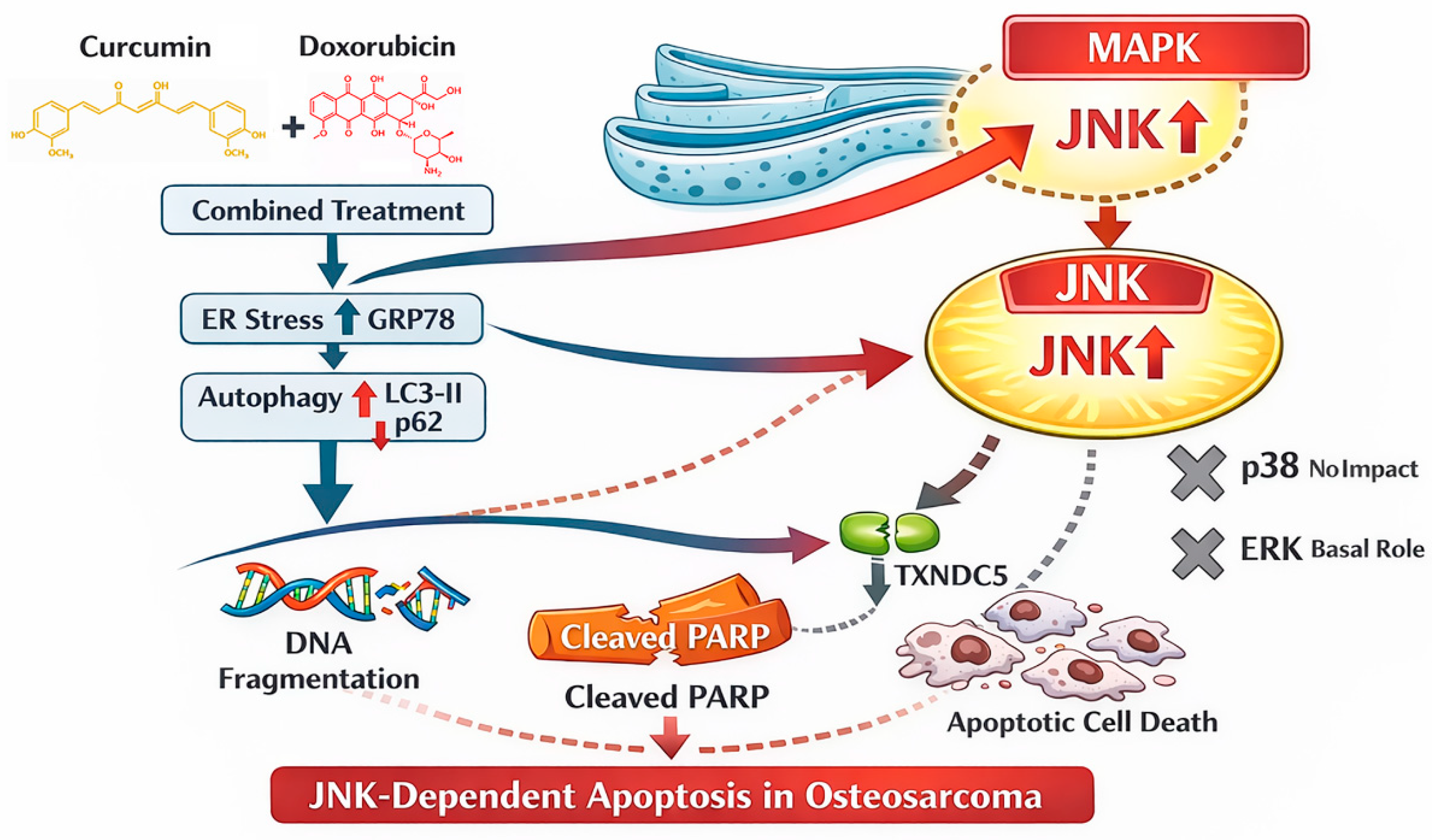
Collectively, these observations suggest that combined curcumin and doxorubicin treatment induces a broad cellular stress response involving MAPK signaling, ER stress, autophagy-associated processes, and NF-κB modulation. Among these pathways, JNK-dependent MAPK signaling represents the dominant and functionally required axis mediating apoptotic execution, while other stress-response pathways may serve supportive or context-dependent functions. A schematic model summarizing these findings is presented in
Figure 7, highlighting JNK activation as the principal execution-associated pathway, with ER stress, autophagy, NF-κB modulation, and TXNDC5 downregulation representing accompanying stress responses. By distinguishing the primary apoptotic driver from these associated pathways, this study provides mechanistic insight into curcumin-mediated chemosensitization and supports the potential application of curcumin as an adjuvant to enhance the therapeutic efficacy of doxorubicin in osteosarcoma.




 ,
,