Menstrual Cycle and Hormonal Contraceptives in Female Athletes: Should Symptoms and Nutrition Matter More than Cycle Phase? A Narrative Review

 ,
,  ,
,  , , , and
Abstract
1. Introduction
2. Methods
3. Endocrine Context: Natural (Eumenorrheic) Menstrual Cycle and Hormonal Contraceptive Use
3.1. Natural (Eumenorrheic) Menstrual Cycle
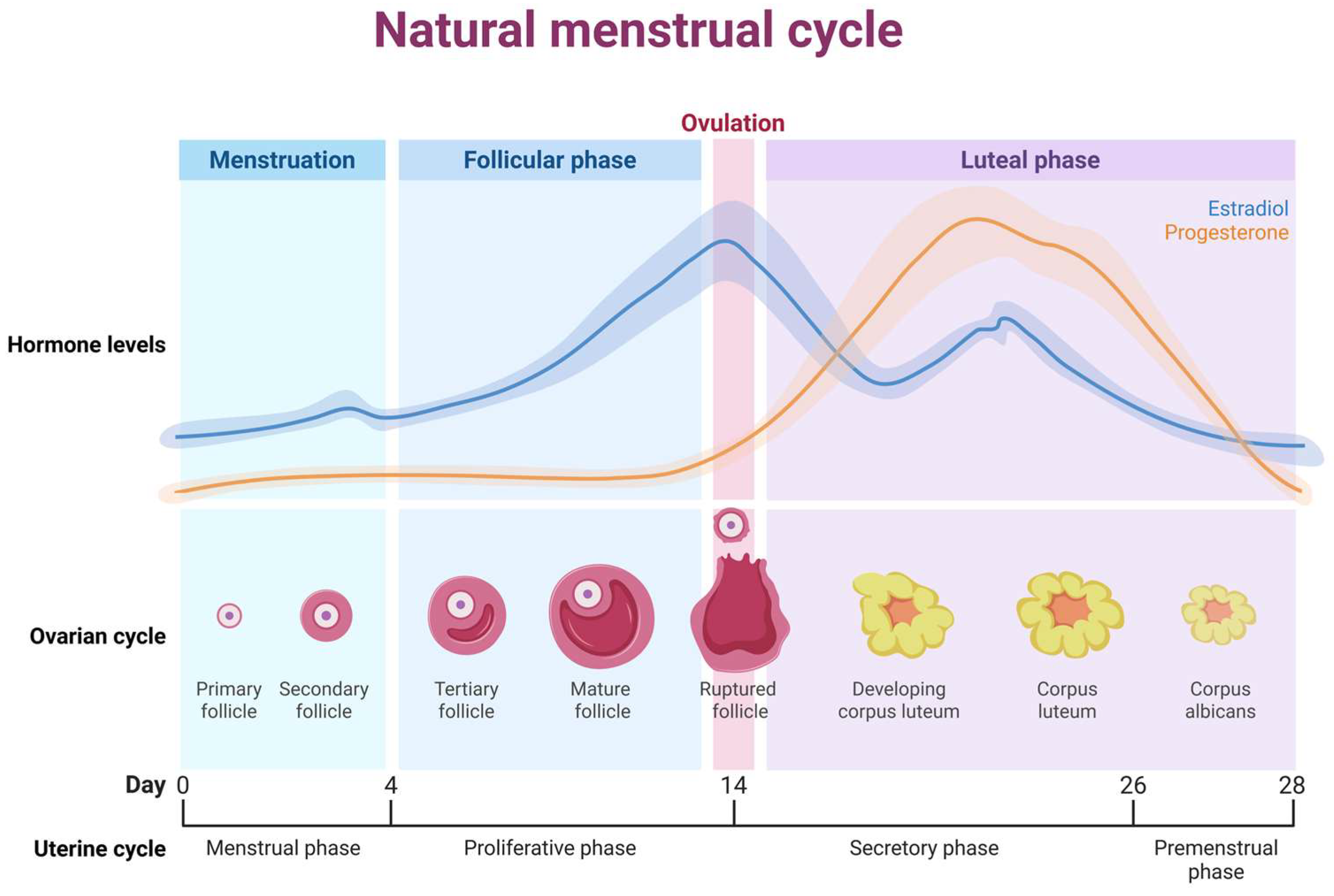
3.1.1. Hormonal Fluctuations Across the Cycle
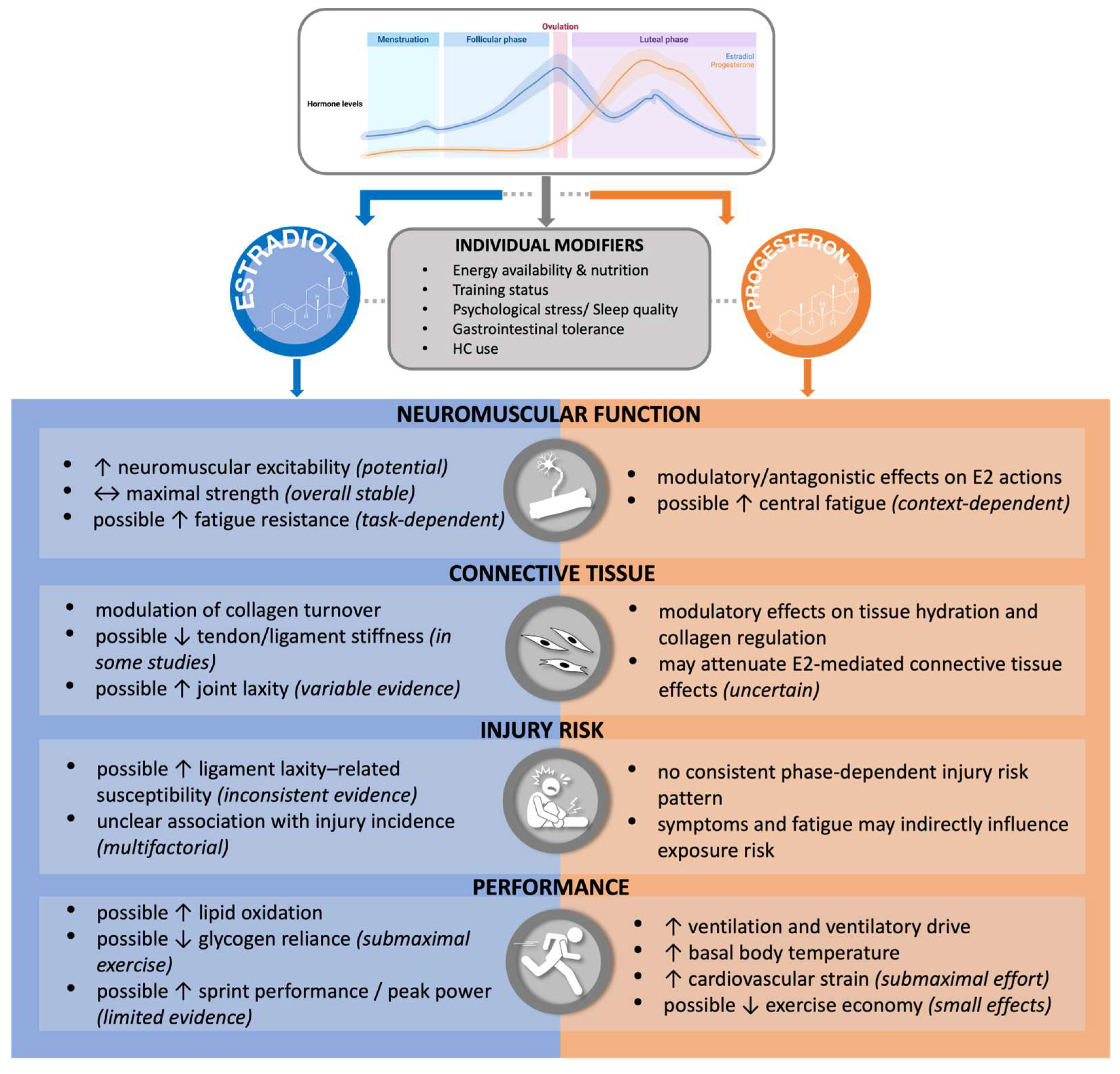
3.1.2. Systemic Effects of Estradiol and Progesterone
3.1.3. Interindividual Variability and Functional Relevance
3.2. Hormonal Contraceptive Use
3.2.1. Types and Mechanisms of Action
3.2.2. Endocrine Environment Induced by Hormonal Contraceptives
3.2.3. Implications for Metabolic Regulation and Symptom Expression
4. Physiological Systems Potentially Sensitive to Endocrine Context
4.1. Neuromuscular Function and Muscle–Tendon Behavior
4.2. Injury Risk and Musculoskeletal Health
4.3. Athletic Performance Outcomes
4.4. Endurance Performance and Submaximal Physiology
4.5. Strength and Power
4.6. Sprint/Anaerobic Performance and Coordination
4.7. Sport-Specific Performance
5. Metabolic and Nutritional Considerations
5.1. Energy Expenditure, Substrate Utilization, and Insulin Sensitivity
5.2. Appetite Regulation, Cravings, and Energy Intake
5.3. Muscle Protein Metabolism and Recovery
5.4. Inflammation, Fluid Balance, and Gastrointestinal Function
5.5. Metabolic Effects of Hormonal Contraceptives
5.6. Nutritional Considerations Across the Menstrual Cycle and HC Use
6. Symptoms as Functional Drivers of Performance
6.1. Prevalence and Heterogeneity of Symptoms
6.2. Symptoms Versus Hormonal Phase: Implications for Training Tolerance and Performance
6.3. Toward Symptom-Informed Strategies
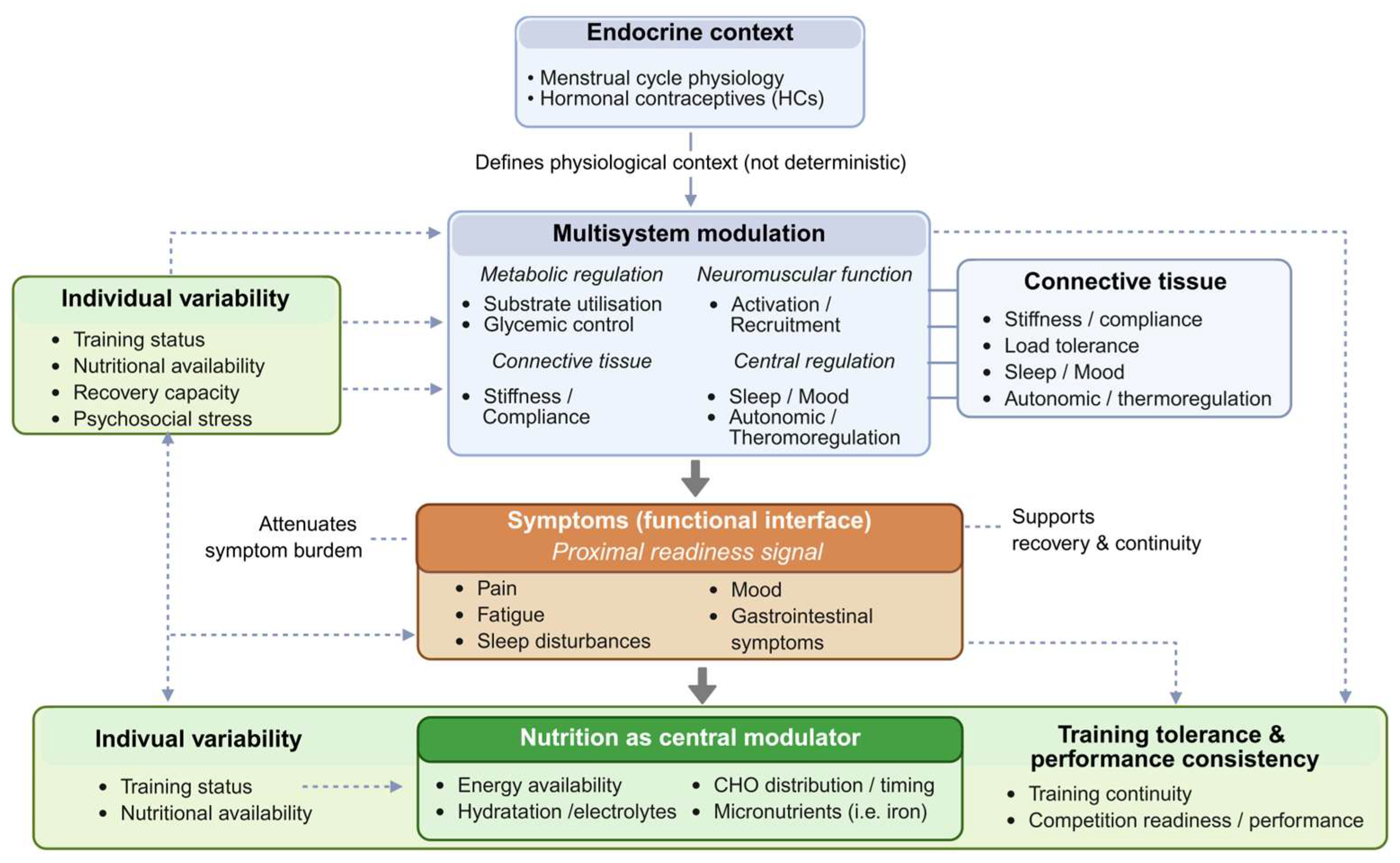
7. Integrative Framework: From Endocrine Context to Performance
8. Practical Implications for Sports and Health Professionals
9. Conclusions
Author Contributions
Funding
Institutional Review Board Statement
Informed Consent Statement
Data Availability Statement
Acknowledgments
Conflicts of Interest
References
- Hunter, S.K.; Angadi, S.S.; Bhargava, A.; Harper, J.; Hirschberg, A.L.; Levine, B.D.; Moreau, K.L.; Nokoff, N.J.; Stachenfeld, N.S.; Bermon, S. The Biological Basis of Sex Differences in Athletic Performance: Consensus Statement for the American College of Sports Medicine. Med. Sci. Sports Exerc. 2023, 55, 2328–2360. [Google Scholar] [CrossRef]
- Anderson, N.; Robinson, D.G.; Verhagen, E.; Fagher, K.; Edouard, P.; Rojas-Valverde, D.; Ahmed, O.H.; Jederström, M.; Usacka, L.; Benoit-Piau, J.; et al. Under-representation of women is alive and well in sport and exercise medicine: What it looks like and what we can do about it. BMJ Open Sport Exerc. Med. 2023, 9, e001606. [Google Scholar] [CrossRef] [PubMed]
- Hunter, S.K.; Senefeld, J.W. Sex differences in human performance. J. Physiol. 2024, 602, 4129–4156. [Google Scholar] [CrossRef] [PubMed]
- Fehring, R.J.; Schneider, M.; Raviele, K. Variability in the phases of the menstrual cycle. J. Obstet. Gynecol. Neonatal Nurs. 2006, 35, 376–384. [Google Scholar] [CrossRef] [PubMed]
- Casto, K.V.; Jordan, T.; Petersen, N. Hormone-based models for comparing menstrual cycle and hormonal contraceptive effects on human resting-state functional connectivity. Front. Neuroendocrinol. 2022, 67, 101036. [Google Scholar] [CrossRef]
- Campbell, S.E.; Febbraio, M.A. Effects of ovarian hormones on exercise metabolism. Curr. Opin. Clin. Nutr. Metab. Care 2001, 4, 515–520. [Google Scholar] [CrossRef]
- O’Bryan, S.J.; Critchlow, A.; Fuchs, C.J.; Hiam, D.; Lamon, S. The contribution of age and sex hormones to female neuromuscular function across the adult lifespan. J. Physiol. 2026, 604, 829–848. [Google Scholar] [CrossRef]
- McNulty, K.L.; Elliott-Sale, K.J.; Dolan, E.; Swinton, P.A.; Ansdell, P.; Goodall, S.; Thomas, K.; Hicks, K.M. The Effects of Menstrual Cycle Phase on Exercise Performance in Eumenorrheic Women: A Systematic Review and Meta-Analysis. Sports Med. 2020, 50, 1813–1827. [Google Scholar] [CrossRef]
- Elliott-Sale, K.J.; Minahan, C.L.; de Jonge, X.A.K.J.; Ackerman, K.E.; Sipilä, S.; Constantini, N.W.; Lebrun, C.M.; Hackney, A.C. Methodological Considerations for Studies in Sport and Exercise Science with Women as Participants: A Working Guide for Standards of Practice for Research on Women. Sports Med. 2021, 51, 843–861. [Google Scholar] [CrossRef]
- Schlie, J.; Krassowski, V.; Schmidt, A. Effects of menstrual cycle phases on athletic performance and related physiological outcomes: A systematic review of studies using high methodological standards. J. Appl. Physiol. 2025, 139, 650–667. [Google Scholar] [CrossRef]
- Angelidi, A.M.; Stefanakis, K.; Chou, S.H.; Valenzuela-Vallejo, L.; Dipla, K.; Boutari, C.; Ntoskas, K.; Tokmakidis, P.; Kokkinos, A.; Goulis, D.G.; et al. Relative Energy Deficiency in Sport (REDs): Endocrine Manifestations, Pathophysiology and Treatments. Endocr. Rev. 2024, 45, 676–708. [Google Scholar] [CrossRef] [PubMed]
- Bruinvels, G.; Burden, R.; Brown, N.; Richards, T.; Pedlar, C. The Prevalence and Impact of Heavy Menstrual Bleeding (Menorrhagia) in Elite and Non-Elite Athletes. PLoS ONE 2016, 11, e0149881. [Google Scholar] [CrossRef] [PubMed]
- Findlay, R.J.; Macrae, E.H.R.; Whyte, I.Y.; Easton, C.; Forrest Née Whyte, L.J. How the menstrual cycle and menstruation affect sporting performance: Experiences and perceptions of elite female rugby players. Br. J. Sports Med. 2020, 54, 1108–1113. [Google Scholar] [CrossRef] [PubMed]
- Brown, N.; Knight, C.J.; Forrest Née Whyte, L.J. Elite female athletes’ experiences and perceptions of the menstrual cycle on training and sport performance. Scand. J. Med. Sci. Sports 2021, 31, 52–69. [Google Scholar] [CrossRef]
- Draper, C.F.; Duisters, K.; Weger, B.; Chakrabarti, A.; Harms, A.C.; Brennan, L.; Hankemeier, T.; Goulet, L.; Konz, T.; Martin, F.P.; et al. Menstrual cycle rhythmicity: Metabolic patterns in healthy women. Sci. Rep. 2018, 8, 14568. [Google Scholar] [CrossRef]
- Elliott-Sale, K.J.; Altini, M.; Doyle-Baker, P.; Ferrer, E.; Flood, T.R.; Harris, R.; Impellizzeri, F.M.; de Jonge, X.J.; Kryger, K.O.; Lewin, G.; et al. Why We Must Stop Assuming and Estimating Menstrual Cycle Phases in Laboratory and Field-Based Sport Related Research. Sports Med. 2025, 55, 1339–1351. [Google Scholar] [CrossRef]
- Etxeberria, A.; Rodriguez-Muguruza, A. Reframing the significance of menstruation: Evolutionary insights from an organismal-relational perspective. Hist. Philos. Life Sci. 2025, 48, 2. [Google Scholar] [CrossRef]
- Kodete, C.S.; Thuraka, B.; Pasupuleti, V.; Malisetty, S. Hormonal Influences on Skeletal Muscle Function in Women across Life Stages: A Systematic Review. Muscles 2024, 3, 271–286. [Google Scholar] [CrossRef]
- Hackney, A.C.; Cyren, C.H.; Brammeier, M.; Sharp, R.L. Effect of menstrual cycle phase on the glucose-insulin relationship at rest and during exercise. Biol. Sport 1993, 10, 73–80. [Google Scholar]
- Devries, M.C.; Hamadeh, M.J.; Phillips, S.M.; Tarnopolsky, M.A. Menstrual cycle phase and sex influence muscle glycogen utilization and glucose turnover during moderate-intensity endurance exercise. Am. J. Physiol. Regul. Integr. Comp. Physiol. 2006, 291, R1120–R1128. [Google Scholar] [CrossRef]
- Chidi-Ogbolu, N.; Baar, K. Effect of Estrogen on Musculoskeletal Performance and Injury Risk. Front. Physiol. 2019, 9, 1834. [Google Scholar] [CrossRef] [PubMed]
- Bell, D.R.; Blackburn, J.T.; Norcross, M.F.; Ondrak, K.S.; Hudson, J.D.; Hackney, A.C.; Padua, D.A. Estrogen and muscle stiffness have a negative relationship in females. Knee Surg. Sports Traumatol. Arthrosc. 2012, 20, 361–367, Correction in Knee Surg. Sports Traumatol. Arthrosc. 2018, 26, 2214. [Google Scholar] [CrossRef] [PubMed]
- Vincent, K.; Tracey, I. Hormones and their Interaction with the Pain Experience. Rev. Pain 2008, 2, 20–24. [Google Scholar] [CrossRef] [PubMed]
- Charkoudian, N.; Stachenfeld, N. Sex hormone effects on autonomic mechanisms of thermoregulation in humans. Auton. Neurosci. 2016, 196, 75–80. [Google Scholar] [CrossRef]
- Del Río, J.P.; Alliende, M.I.; Molina, N.; Serrano, F.G.; Molina, S.; Vigil, P. Steroid Hormones and Their Action in Women’s Brains: The Importance of Hormonal Balance. Front. Public Health 2018, 6, 141. [Google Scholar] [CrossRef]
- Sundström Poromaa, I.; Gingnell, M. Menstrual cycle influence on cognitive function and emotion processing—From a reproductive perspective. Front. Neurosci. 2014, 8, 380. [Google Scholar] [CrossRef]
- Baker, F.C.; Driver, H.S. Circadian rhythms, sleep, and the menstrual cycle. Sleep Med. 2007, 8, 613–622. [Google Scholar] [CrossRef]
- Mountjoy, M.; Ackerman, K.E.; Bailey, D.M.; Burke, L.M.; Constantini, N.; Hackney, A.C.; Heikura, I.A.; Melin, A.; Pensgaard, A.M.; Stellingwerff, T.; et al. International Olympic Committee’s (IOC) consensus statement on Relative Energy Deficiency in Sport (REDs). Br. J. Sports Med. 2023, 57, 1073–1097. [Google Scholar] [CrossRef]
- Passoni, P.; Inzoli, A.; De Ponti, E.; Polizzi, S.; Ceccherelli, A.; Fantauzzi, M.; Procaccianti, C.; Cattoni, A.; Villa, S.; Riva, A.; et al. Association between physical activity and menstrual cycle disorders in young athletes. Int. J. Sports Med. 2024, 45, 543–548. [Google Scholar] [CrossRef]
- Henry, C.J.; Lightowler, H.J.; Marchini, J. Intra-individual variation in resting metabolic rate during the menstrual cycle. Br. J. Nutr. 2003, 89, 811–817. [Google Scholar] [CrossRef]
- Taipale-Mikkonen, R.S.; Raitanen, A.; Hackney, A.C.; Solli, G.S.; Valtonen, M.; Peltonen, H.; McGawley, K.; Kyröläinen, H.; Ihalainen, J.K. Influence of Menstrual Cycle or Hormonal Contraceptive Phase on Physiological Variables Monitored During Treadmill Testing. Front. Physiol. 2021, 12, 761760. [Google Scholar] [CrossRef]
- Spinelli, A.; Talamanca, I.F.; Lauria, L. Patterns of contraceptive use in 5 European countries. Am. J. Public Health 2000, 90, 1403–1408. [Google Scholar] [CrossRef] [PubMed]
- Teal, S.; Edelman, A. Contraception Selection, Effectiveness, and Adverse Effects: A Review. JAMA 2021, 326, 2507–2518. [Google Scholar] [CrossRef] [PubMed]
- Martin, D.; Sale, C.; Cooper, S.B.; Elliott-Sale, K.J. Period Prevalence and Perceived Side Effects of Hormonal Contraceptive Use and the Menstrual Cycle in Elite Athletes. Int. J. Sports Physiol. Perform. 2018, 13, 926–932. [Google Scholar] [CrossRef] [PubMed]
- Elliott-Sale, K.J.; Smith, S.; Bacon, J.; Clayton, D.; McPhilimey, M.; Goutianos, G.; Hampson, J.; Sale, C. Examining the role of oral contraceptive users as an experimental and/or control group in athletic performance studies. Contraception 2013, 88, 408–412. [Google Scholar] [CrossRef]
- Cortés, M.E.; Alfaro, A.A. The effects of hormonal contraceptives on glycemic regulation. Linacre Q. 2014, 81, 209–218. [Google Scholar] [CrossRef]
- Metz, L.; Isacco, L.; Redman, L.M. Effect of oral contraceptives on energy balance in women: A review of current knowledge and potential cellular mechanisms. Metabolism 2022, 126, 154919. [Google Scholar] [CrossRef]
- Robinson, S.A.; Dowell, M.; Pedulla, D.; McCauley, L. Do the emotional side-effects of hormonal contraceptives come from pharmacologic or psychological mechanisms? Med. Hypotheses 2004, 63, 268–273. [Google Scholar] [CrossRef]
- Lacasse, J.M.; Heller, C.; Kheloui, S.; Ismail, N.; Raval, A.P.; Schuh, K.M.; Tronson, N.C.; Leuner, B. Beyond Birth Control: The Neuroscience of Hormonal Contraceptives. J. Neurosci. 2024, 44, e1235242024. [Google Scholar] [CrossRef]
- Spillane, P.; Pastorio, E.; Nédélec, E.; Piasecki, J.; Goodall, S.; Hicks, K.M.; Ansdell, P. Menstrual cycle phase alters corticospinal excitability and spike-timing-dependent plasticity in healthy females. J. Neurophysiol. 2026, 135, 414–424. [Google Scholar] [CrossRef]
- Bryant, A.L.; Clark, R.A.; Bartold, S.; Murphy, A.; Bennell, K.L.; Hohmann, E.; Marshall-Gradisnik, S.; Payne, C.; Crossley, K.M. Effects of estrogen on the mechanical behavior of the human Achilles tendon in vivo. J. Appl. Physiol. 2008, 105, 1035–1043. [Google Scholar] [CrossRef] [PubMed]
- Hansen, M.; Kongsgaard, M.; Holm, L.; Skovgaard, D.; Magnusson, S.P.; Qvortrup, K.; Larsen, J.O.; Aagaard, P.; Dahl, M.; Serup, A.; et al. Effect of estrogen on tendon collagen synthesis, tendon structural characteristics, and biomechanical properties in postmenopausal women. J. Appl. Physiol. 2009, 106, 1385–1393. [Google Scholar] [CrossRef] [PubMed]
- Maruyama, S.; Sekine, C.; Shagawa, M.; Yokota, H.; Hirabayashi, R.; Togashi, R.; Yamada, Y.; Hamano, R.; Ito, A.; Sato, D.; et al. Menstrual Cycle Changes Joint Laxity in Females—Differences between Eumenorrhea and Oligomenorrhea. J. Clin. Med. 2022, 11, 3222. [Google Scholar] [CrossRef] [PubMed]
- Siddiqui, R.N.; Randall, S.E.; Terle, P.; Lo, J.E.; Peterson, J.; Saraf, S.M.; Mulcahey, M.K. Hormonal Variation in Premenopausal Female Athletes Is Associated With Risk Factors for Shoulder Instability: A Systematic Review. Arthrosc. Sports Med. Rehabil. 2025, 7, 101285. [Google Scholar] [CrossRef]
- Legerlotz, K.; Nobis, T. Insights in the Effect of Fluctuating Female Hormones on Injury Risk—Challenge and Chance. Front. Physiol. 2022, 13, 827726. [Google Scholar] [CrossRef]
- Hartman, H.; Fehr, S.; Gianakos, A.L. Hormonal Fluctuation and Ankle Instability in Women—Is There a Correlation? Foot Ankle Orthop. 2024, 9, 24730114241300140. [Google Scholar] [CrossRef]
- Kubo, K.; Miyamoto, M.; Tanaka, S.; Maki, A.; Tsunoda, N.; Kanehisa, H. Muscle and tendon properties during menstrual cycle. Int. J. Sports Med. 2009, 30, 139–143. [Google Scholar] [CrossRef]
- Burgess, K.E.; Pearson, S.J.; Onambélé, G.L. Menstrual cycle variations in oestradiol and progesterone have no impact on in vivo medial gastrocnemius tendon mechanical properties. Clin. Biomech. 2009, 24, 504–509. [Google Scholar] [CrossRef]
- Hansen, M.; Couppe, C.; Hansen, C.S.; Skovgaard, D.; Kovanen, V.; Larsen, J.O.; Aagaard, P.; Magnusson, S.P.; Kjaer, M. Impact of oral contraceptive use and menstrual phases on patellar tendon morphology, biochemical composition, and biomechanical properties in female athletes. J. Appl. Physiol. 2013, 114, 998–1008. [Google Scholar] [CrossRef]
- Sun, L.; Luo, L.; Yang, Y.; Wangchuan, Q.; Luo, J. Gender Differences in the Incidence and Types of Sports Injuries Among Female Athletes: A Scoping Review. J. Nurs. Manag. 2025, 2025, 6416101. [Google Scholar] [CrossRef]
- Saber, B.; Bridger, D.; Agrawal, D.K. A Critical Analysis of the Factors Contributing to Anterior Cruciate Ligament Injuries in Female Athletes. J. Orthop. Sports Med. 2024, 6, 203–209. [Google Scholar] [CrossRef]
- Martínez-Fortuny, N.; Alonso-Calvete, A.; Da Cuña-Carrera, I.; Abalo-Núñez, R. Menstrual Cycle and Sport Injuries: A Systematic Review. Int. J. Environ. Res. Public Health 2023, 20, 3264. [Google Scholar] [CrossRef] [PubMed]
- Shagawa, M.; Maruyama, S.; Sekine, C.; Yokota, H.; Hirabayashi, R.; Hirata, A.; Yokoyama, M.; Edama, M. Comparison of anterior knee laxity, stiffness, genu recurvatum, and general joint laxity in the late follicular phase and the ovulatory phase of the menstrual cycle. BMC Musculoskelet. Disord. 2021, 22, 886. [Google Scholar] [CrossRef]
- Martin, D.; Timmins, K.; Cowie, C.; Alty, J.; Mehta, R.; Tang, A.; Varley, I. Injury Incidence Across the Menstrual Cycle in International Footballers. Front. Sports Act. Living 2021, 3, 616999. [Google Scholar] [CrossRef] [PubMed]
- Romero-Parra, N.; Cupeiro, R.; Alfaro-Magallanes, V.M.; Rael, B.; Rubio-Arias, J.Á.; Peinado, A.B.; Benito, P.J.; IronFEMME Study Group. Exercise-Induced Muscle Damage During the Menstrual Cycle: A Systematic Review and Meta-Analysis. J. Strength Cond. Res. 2021, 35, 549–561. [Google Scholar] [CrossRef] [PubMed]
- Fort-Vanmeerhaeghe, A.; Pujol-Marzo, M.; Milà, R.; Campos, B.; Nevot-Casas, O.; Casadevall-Sayeras, P.; Peña, J. Injury Risk and Overall Well-Being During the Menstrual Cycle in Elite Adolescent Team Sports Athletes. Healthcare 2025, 13, 1154. [Google Scholar] [CrossRef]
- Konopka, J.A.; Hsue, L.J.; Dragoo, J.L. Effect of Oral Contraceptives on Soft Tissue Injury Risk, Soft Tissue Laxity, and Muscle Strength: A Systematic Review of the Literature. Orthop. J. Sports Med. 2019, 7, 2325967119831061. [Google Scholar] [CrossRef]
- Herzberg, S.D.; Motu’apuaka, M.L.; Lambert, W.; Fu, R.; Brady, J.; Guise, J.M. The Effect of Menstrual Cycle and Contraceptives on ACL Injuries and Laxity: A Systematic Review and Meta-analysis. Orthop. J. Sports Med. 2017, 5, 2325967117718781. [Google Scholar] [CrossRef]
- DeFroda, S.F.; Bokshan, S.L.; Worobey, S.; Ready, L.; Daniels, A.H.; Owens, B.D. Oral contraceptives provide protection against anterior cruciate ligament tears: A national database study of 165,748 female patients. Physician Sportsmed. 2019, 47, 416–420. [Google Scholar] [CrossRef]
- White, L.; Losciale, J.M.; Squier, K.; Guy, S.; Scott, A.; Prior, J.C.; Whittaker, J.L. Combined hormonal contraceptive use is not protective against musculoskeletal conditions or injuries: A systematic review with data from 5 million females. Br. J. Sports Med. 2023, 57, 1195–1202. [Google Scholar] [CrossRef]
- Prior, J.C. Adolescents’ Use of Combined Hormonal Contraceptives for Menstrual Cycle–Related Problem Treatment and Contraception: Evidence of Potential Lifelong Negative Reproductive and Bone Effects. Women’s Reprod. Health 2016, 3, 73–92. [Google Scholar] [CrossRef]
- Isacco, L.; Duché, P.; Boisseau, N. Influence of hormonal status on substrate utilization at rest and during exercise in the female population. Sports Med. 2012, 42, 327–342. [Google Scholar] [CrossRef] [PubMed]
- Janse De Jonge, X.A.; Thompson, M.W.; Chuter, V.H.; Silk, L.N.; Thom, J.M. Exercise performance over the menstrual cycle in temperate and hot, humid conditions. Med. Sci. Sports Exerc. 2012, 44, 2190–2198. [Google Scholar] [CrossRef] [PubMed]
- Schumpf, L.F.; Braun, C.; Peric, A.; Schmid, M.J.; Lehnick, D.; Christmann-Schmid, C.; Brambs, C. The influence of the menstrual cycle and hormonal contraceptives on cardiorespiratory fitness in physically active women: A systematic review and meta-analysis. Heliyon 2023, 9, e17049. [Google Scholar] [CrossRef]
- Williams, T.J.; Krahenbuhl, G.S. Menstrual cycle phase and running economy. Med. Sci. Sports Exerc. 1997, 29, 1609–1618. [Google Scholar] [CrossRef]
- Rael, B.; Alfaro-Magallanes, V.M.; Romero-Parra, N.; Castro, E.A.; Cupeiro, R.; Janse de Jonge, X.A.K.; Wehrwein, E.A.; Peinado, A.B. Menstrual Cycle Phases Influence on Cardiorespiratory Response to Exercise in Endurance-Trained Females. Int. J. Environ. Res. Public Health 2021, 18, 860. [Google Scholar] [CrossRef]
- Lee, S.J.; Sim, M.; Van Rens, F.E.; Peiffer, J.J. Fatigue Resistance Is Altered during the High-Hormone Phase of Eumenorrheic Females but not Oral Contraceptive Users. Med. Sci. Sports Exerc. 2023, 56, 92–102. [Google Scholar] [CrossRef]
- Benito, P.J.; Alfaro-Magallanes, V.M.; Rael, B.; Castro, E.A.; Romero-Parra, N.; Rojo-Tirado, M.A.; Peinado, A.B. Effect of Menstrual Cycle Phase on the Recovery Process of High-Intensity Interval Exercise—A cross-sectional observational study. Int. J. Environ. Res. Public Health 2023, 20, 3266. [Google Scholar] [CrossRef]
- Jones, A.M. The physiology of the world record holder for the women’s marathon. Int. J. Sports Sci. Coach. 2006, 1, 101–116. [Google Scholar] [CrossRef]
- Niering, M.; Wolf-Belala, N.; Seifert, J.; Tovar, O.; Coldewey, J.; Kuranda, J.; Muehlbauer, T. The Influence of Menstrual Cycle Phases on Maximal Strength Performance in Healthy Female Adults: A Systematic Review with Meta-Analysis. Sports 2024, 12, 31. [Google Scholar] [CrossRef]
- Fridén, C.; Hirschberg, A.L.; Saartok, T. Muscle strength and endurance do not significantly vary across 3 phases of the menstrual cycle in moderately active premenopausal women. Clin. J. Sport Med. 2003, 13, 238–241. [Google Scholar] [CrossRef]
- Sawai, A.; Tochigi, Y.; Kavaliova, N.; Zaboronok, A.; Warashina, Y.; Mathis, B.J.; Mesaki, N.; Shiraki, H.; Watanabe, K. MRI reveals menstrually-related muscle edema that negatively affects athletic agility in young women. PLoS ONE 2018, 13, e0191022. [Google Scholar] [CrossRef]
- Dam, T.V.; Dalgaard, L.B.; Sevdalis, V.; Bibby, B.M.; Janse De Jonge, X.; Gravholt, C.H.; Hansen, M. Muscle Performance during the Menstrual Cycle Correlates with Psychological Well-Being, but Not Fluctuations in Sex Hormones. Med. Sci. Sports Exerc. 2022, 54, 1678–1689. [Google Scholar] [CrossRef]
- Graja, A.; Kacem, M.; Hammouda, O.; Borji, R.; Bouzid, M.A.; Souissi, N.; Rebai, H. Physical, Biochemical, and Neuromuscular Responses to Repeated Sprint Exercise in Eumenorrheic Female Handball Players: Effect of Menstrual Cycle Phases. J. Strength Cond. Res. 2022, 36, 2268–2276. [Google Scholar] [CrossRef] [PubMed]
- Sipilä, S.; Finni, T.; Kovanen, V. Estrogen influences on neuromuscular function in postmenopausal women. Calcif. Tissue Int. 2015, 96, 222–233. [Google Scholar] [CrossRef]
- Fridén, C.; Ramsey, D.K.; Bäckström, T.; Benoit, D.L.; Saartok, T.; Lindén Hirschberg, A. Altered postural control during the luteal phase in women with premenstrual symptoms. Neuroendocrinology 2005, 81, 150–157. [Google Scholar] [CrossRef] [PubMed]
- Fridén, C.; Hirschberg, A.L.; Saartok, T.; Renström, P. Knee joint kinaesthesia and neuromuscular coordination during three phases of the menstrual cycle in moderately active women. Knee Surg. Sports Traumatol. Arthrosc. 2006, 14, 383–389. [Google Scholar] [CrossRef] [PubMed]
- Igonin, P.H.; Rogowski, I.; Boisseau, N.; Martin, C. Impact of the Menstrual Cycle Phases on the Movement Patterns of Sub-Elite Women Soccer Players during Competitive Matches. Int. J. Environ. Res. Public Health 2022, 19, 4465. [Google Scholar] [CrossRef]
- Julian, R.; Skorski, S.; Hecksteden, A.; Pfeifer, C.; Bradley, P.S.; Schulze, E.; Meyer, T. Menstrual cycle phase and elite female soccer match-play: Influence on various physical performance outputs. Sci. Med. Football 2021, 5, 97–104. [Google Scholar] [CrossRef]
- Baker, F.C.; Siboza, F.; Fuller, A. Temperature regulation in women: Effects of the menstrual cycle. Temperature 2020, 7, 226–262. [Google Scholar] [CrossRef]
- Löfberg, I.E.; Karppinen, J.E.; Laatikainen-Raussi, I.; Ihalainen, J.K.; Lehti, M.; Hackney, A.C.; Mikkonen, R.S. Peak Fat Oxidation during Submaximal Exercise Remains Consistent across Menstrual Cycle and Combined Oral Contraceptive Phases. Med. Sci. Sports Exerc. 2025, 57, 1383–1394. [Google Scholar] [CrossRef]
- Hummel, J.; Benkendorff, C.; Fritsche, L.; Prystupa, K.; Vosseler, A.; Gancheva, S.; Trenkamp, S.; Birkenfeld, A.L.; Preissl, H.; Roden, M.; et al. Brain insulin action on peripheral insulin sensitivity in women depends on menstrual cycle phase. Nat. Metab. 2023, 5, 1475–1482. [Google Scholar] [CrossRef] [PubMed]
- Candan, E.; Metin, Z.E.; Tengilimoglu-Metin, M.M. The role of premenstrual syndrome in hedonic hunger and food craving during the menstrual cycle. J. Nutr. Sci. 2025, 14, e66. [Google Scholar] [CrossRef] [PubMed]
- Rocha-Rodrigues, S.; Sousa, M.; Lourenço Reis, P.; Leão, C.; Cardoso-Marinho, B.; Massada, M.; Afonso, J. Bidirectional Interactions between the Menstrual Cycle, Exercise Training, and Macronutrient Intake in Women: A Review. Nutrients 2021, 13, 438. [Google Scholar] [CrossRef] [PubMed]
- Agarwal, K.; Franks, A.T.; Zhang, X.; Schisterman, E.; Mumfordd, S.L.; Joseph, P.V. Association of inflammation biomarkers with food cravings and appetite changes across the menstrual cycle. Clin. Nutr. ESPEN 2023, 56, 193–199. [Google Scholar] [CrossRef]
- Kamemoto, K.; Yamada, M.; Matsuda, T.; Ogata, H.; Ishikawa, A.; Kanno, M.; Miyashita, M.; Sakamaki-Sunaga, M. Effects of menstrual cycle on appetite-regulating hormones and energy intake in response to cycling exercise in physically active women. J. Appl. Physiol. 2022, 132, 224–235. [Google Scholar] [CrossRef]
- McCarthy, S.F.; Townsend, L.K.; McKie, G.L.; Bornath, D.P.D.; Islam, H.; Gurd, B.J.; Medeiros, P.J.; Hazell, T.J. Differential changes in appetite hormones post-prandially based on menstrual cycle phase and oral contraceptive use: A preliminary study. Appetite 2024, 198, 107362. [Google Scholar] [CrossRef]
- Tanabe, K.; Kamemoto, K.; Kawaguchi, Y.; Fushimi, K.; Wong, S.Y.; Ikegami, N.; Sakamaki-Sunaga, M.; Hayashi, N. Proteomics of appetite-regulating system influenced by menstrual cycle and intensive exercise in female athletes: A pilot study. Sci. Rep. 2024, 14, 4188. [Google Scholar] [CrossRef]
- Langan-Evans, C.; Hearris, M.A.; Gallagher, C.; Long, S.; Thomas, C.; Moss, A.D.; Cheung, W.; Howatson, G.; Morton, J.P. Nutritional Modulation of Sleep Latency, Duration, and Efficiency: A Randomized, Repeated-Measures, Double-Blind Deception Study. Med. Sci. Sports Exerc. 2023, 55, 289–300. [Google Scholar] [CrossRef]
- Brown, N.; Martin, D.; Waldron, M.; Bruinvels, G.; Farrant, L.; Fairchild, R. Nutritional practices to manage menstrual cycle related symptoms: A systematic review. Nutr. Res. Rev. 2024, 37, 352–375. [Google Scholar] [CrossRef]
- Sims, S.T.; Kerksick, C.M.; Smith-Ryan, A.E.; Janse de Jonge, X.A.K.; Hirsch, K.R.; Arent, S.M.; Hewlings, S.J.; Kleiner, S.M.; Bustillo, E.; Tartar, J.L.; et al. International society of sports nutrition position stand: Nutritional concerns of the female athlete. J. Int. Soc. Sports Nutr. 2023, 20, 2204066. [Google Scholar] [CrossRef]
- Duhita, M.R.; Schutz, Y.; Montani, J.P.; Dulloo, A.G.; Miles-Chan, J.L. Oral Contraceptive Pill Alters Acute Dietary Protein-Induced Thermogenesis in Young Women. Obesity 2017, 25, 1482–1485. [Google Scholar] [CrossRef] [PubMed]
- Kissow, J.; Jacobsen, K.J.; Gunnarsson, T.P.; Jessen, S.; Hostrup, M. Effects of Follicular and Luteal Phase-Based Menstrual Cycle Resistance Training on Muscle Strength and Mass. Sports Med. 2022, 52, 2813–2819. [Google Scholar] [CrossRef] [PubMed]
- Oosthuyse, T.; Strauss, J.A.; Hackney, A.C. Understanding the female athlete: Molecular mechanisms underpinning menstrual phase differences in exercise metabolism. Eur. J. Appl. Physiol. 2023, 123, 423–450. [Google Scholar] [CrossRef] [PubMed]
- Colenso-Semple, L.M.; McKendry, J.; Lim, C.; Atherton, P.J.; Wilkinson, D.J.; Smith, K.; Phillips, S.M. Menstrual cycle phase does not influence muscle protein synthesis or whole-body myofibrillar proteolysis in response to resistance exercise. J. Physiol. 2025, 603, 1109–1121. [Google Scholar] [CrossRef]
- D’Souza, A.C.; Wageh, M.; Williams, J.S.; Colenso-Semple, L.M.; McCarthy, D.G.; McKay, A.K.A.; Elliott-Sale, K.J.; Burke, L.M.; Parise, G.; MacDonald, M.J.; et al. Menstrual cycle hormones and oral contraceptives: A multimethod systems physiology-based review of their impact on key aspects of female physiology. J. Appl. Physiol. 2023, 135, 1284–1299. [Google Scholar] [CrossRef]
- Van Every, D.W.; D’Souza, A.C.; Phillips, S.M. Hormones, Hypertrophy, and Hype: An Evidence-Guided Primer on Endogenous Endocrine Influences on Exercise-Induced Muscle Hypertrophy. Exerc. Sport Sci. Rev. 2024, 52, 117–125. [Google Scholar] [CrossRef]
- Engstad, M.K.; Seynnes, O.; Vesterhus, I.; Hesseberg, E.; Fjeldberg, K.; Carlsen, M.H.; Ottestad, I.O.; Hansen, M.; Nordez, A.; Lacourpaille, L.; et al. Effect of Oral Contraceptive Use on Muscle Hypertrophy Following Strength Training. Scand. J. Med. Sci. Sports 2025, 35, e70052. [Google Scholar] [CrossRef]
- Colenso-Semple, L.M.; McKendry, J.; Lim, C.; Atherton, P.J.; Wilkinson, D.J.; Smith, K.; Phillips, S.M. Oral contraceptive pill phase does not influence muscle protein synthesis or myofibrillar proteolysis at rest or in response to resistance exercise. J. Appl. Physiol. 2025, 138, 810–815. [Google Scholar] [CrossRef]
- Singer, A.; Tropschuh, K.; von Gernler, M.; Decrinis, C.; Stute, P. The impact of progestogens on RAAS—A systematic review. BMC Women’s Health 2025, 25, 81. [Google Scholar] [CrossRef]
- Kanellakis, S.; Skoufas, E.; Simitsopoulou, E.; Migdanis, A.; Migdanis, I.; Prelorentzou, T.; Louka, A.; Moschonis, G.; Bountouvi, E.; Androutsos, O. Changes in body weight and body composition during the menstrual cycle. Am. J. Hum. Biol. 2023, 35, e23951. [Google Scholar] [CrossRef] [PubMed]
- Godsland, I.F.; Crook, D.; Simpson, R.; Proudler, T.; Felton, C.; Lees, B.; Anyaoku, V.; Devenport, M.; Wynn, V. The effects of different formulations of oral contraceptive agents on lipid and carbohydrate metabolism. N. Engl. J. Med. 1990, 323, 1375–1381. [Google Scholar] [CrossRef] [PubMed]
- Cree, J.M.E.; Brennan, N.M.; Poppitt, S.D.; Miles-Chan, J.L. The Effect of the Oral Contraceptive Pill on Acute Glycaemic Response to an Oral Glucose Bolus in Healthy Young Women: A Randomised Crossover Study. Nutrients 2024, 16, 3490. [Google Scholar] [CrossRef] [PubMed]
- Martin, D.; Bargh, M.; Pennington, K. Effect of oral contraceptive consumption timing on substrate metabolism, cognition, and exercise performance in females: A randomised controlled trial. Eur. J. Appl. Physiol. 2025, 125, 1893–1903. [Google Scholar] [CrossRef]
- Rios-Avila, L.; Coats, B.; Chi, Y.Y.; Midttun, Ø.; Ueland, P.M.; Stacpoole, P.W.; Gregory, J.F., III. Metabolite profile analysis reveals association of vitamin B-6 with metabolites related to one-carbon metabolism and tryptophan catabolism but not with biomarkers of inflammation in oral contraceptive users and reveals the effects of oral contraceptives on these processes. J. Nutr. 2015, 145, 87–95. [Google Scholar] [CrossRef]
- Curtin, A.C.; Johnston, C.S. Vitamin B6 Supplementation Reduces Symptoms of Depression in College Women Taking Oral Contraceptives: A Randomized, Double-Blind Crossover Trial. J. Diet. Suppl. 2023, 20, 550–562. [Google Scholar] [CrossRef]
- Donangelo, C.M.; Cornes, R.; Sintes, C.; Bezerra, F.F. Combined Oral Contraceptives: Association with Serum 25-Hydroxyvitamin D and Calcium and Bone Homeostasis. J. Women’s Health 2024, 33, 805–815. [Google Scholar] [CrossRef]
- Ricker, E.A.; De Souza, M.J.; Stone, M.S.; Jackson, G.S.; McCabe, G.P.; McCabe, L.D.; Weaver, C.M. Differential bone calcium retention with the use of oral versus vaginal hormonal contraception: A randomized trial using calcium-41 radiotracer. Contraception 2025, 143, 110778. [Google Scholar] [CrossRef]
- Beck, K.L.; von Hurst, P.R.; O’Brien, W.J.; Badenhorst, C.E. Micronutrients and athletic performance: A review. Food Chem. Toxicol. 2021, 158, 112618. [Google Scholar] [CrossRef]
- Grozenski, A.; Kiel, J. Basic Nutrition for Sports Participation, Part 1: Diet Composition, Macronutrients, and Hydration. Curr. Sports Med. Rep. 2021, 19, 389–391. [Google Scholar] [CrossRef]
- Sim, M.; Dawson, B.; Landers, G.; Trinder, D.; Peeling, P. Iron regulation in athletes: Exploring the menstrual cycle and effects of different exercise modalities on hepcidin production. Int. J. Sport Nutr. Exerc. Metab. 2014, 24, 177–187. [Google Scholar] [CrossRef] [PubMed]
- Kardasis, W.; Naquin, E.R.; Garg, R.; Arun, T.; Gopianand, J.S.; Karmakar, E.; Gnana-Prakasam, J.P. The IRONy in Athletic Performance. Nutrients 2023, 15, 4945. [Google Scholar] [CrossRef] [PubMed]
- Li, X.; Rhee, D.K.; Malhotra, R.; Mayeur, C.; Hurst, L.A.; Ager, E.; Shelton, G.; Kramer, Y.; McCulloh, D.; Keefe, D.; et al. Progesterone receptor membrane component-1 regulates hepcidin biosynthesis. J. Clin. Investig. 2016, 126, 389–401. [Google Scholar] [CrossRef] [PubMed]
- Heyward, O.; Elliott-Sale, K.J.; Roe, G.; Emmonds, S.; Hornby, K.; Stokes, K.A.; Jones, B. Oral contraceptive use in Premiership and Championship women’s rugby union: Perceived symptomology, management strategies, and performance and wellness effects. Sci. Med. Football 2024, 8, 95–102. [Google Scholar] [CrossRef]
- Osborne, J.O.; Storvand, J.H.; Engseth, T.P.; Solli, G.S.; Morseth, B.; Taylor, M.Y.; Welde, B.; Elliott-Sale, K.J.; Andersson, E.P.; Sandbakk, Ø.; et al. Prevalence of Hormonal Contraceptive Use and Self-Reported Symptomatic Experiences Attributed to the Menstrual Cycle or Hormonal Contraceptive Use in Norwegian Women: The Effect of Training Categories and Age Groups—The FENDURA Project. Scand. J. Med. Sci. Sports 2025, 35, e70096. [Google Scholar] [CrossRef]
- Bruinvels, G.; Hackney, A.C.; Pedlar, C.R. Menstrual Cycle: The Importance of Both the Phases and the Transitions Between Phases on Training and Performance. Sports Med. 2022, 52, 1457–1460. [Google Scholar] [CrossRef]
- Elliott-Sale, K.J.; McNulty, K.L.; Ansdell, P.; Goodall, S.; Hicks, K.M.; Thomas, K.; Swinton, P.A.; Dolan, E. The Effects of Oral Contraceptives on Exercise Performance in Women: A Systematic Review and Meta-analysis. Sports Med. 2020, 50, 1785–1812. [Google Scholar] [CrossRef]
- Ikarashi, K.; Sato, D.; Edama, M.; Fujimoto, T.; Ochi, G.; Yamashiro, K. Fluctuation of fine motor skills throughout the menstrual cycle in women. Sci. Rep. 2024, 14, 15079. [Google Scholar] [CrossRef]
- Pallante, P.I.; Vega, A.C.; Escobar, A.; Hackney, A.C.; Rubin, D.A. Micronutrient intake and premenstrual syndrome in female collegiate athletes. J. Sports Med. Phys. Fit. 2023, 63, 444–451. [Google Scholar] [CrossRef]
- Jafari, F.; Amani, R.; Tarrahi, M.J. Effect of Zinc Supplementation on Physical and Psychological Symptoms, Biomarkers of Inflammation, Oxidative Stress, and Brain-Derived Neurotrophic Factor in Young Women with Premenstrual Syndrome: A Randomized, Double-Blind, Placebo-Controlled Trial. Biol. Trace Elem. Res. 2020, 194, 89–95. [Google Scholar] [CrossRef]
- Zekavat, O.R.; Karimi, M.Y.; Amanat, A.; Alipour, F. A randomised controlled trial of oral zinc sulphate for primary dysmenorrhoea in adolescent females. Aust. N. Z. J. Obstet. Gynaecol. 2015, 55, 369–373. [Google Scholar] [CrossRef]
- Khayat, S.; Fanaei, H.; Kheirkhah, M.; Moghadam, Z.B.; Kasaeian, A.; Javadimehr, M. Curcumin attenuates severity of premenstrual syndrome symptoms: A randomized, double-blind, placebo-controlled trial. Complement. Ther. Med. 2015, 23, 318–324. [Google Scholar] [CrossRef]



| Endocrine Context | Estradiol | Progesterone | Endocrine Pattern | Key Physiological Implications | Practical Interpretation |
|---|---|---|---|---|---|
| Natural (eumenorrheic) menstrual cycle—EF | ↓ | ↓ | Low-hormone state. | Higher likelihood of symptoms (e.g., pain, fatigue) in susceptible individuals; variable training tolerance. | Phase relevance is largely symptom-driven rather than hormone-driven. |
| Natural (eumenorrheic) menstrual cycle—LF/OV | ↑↑ (peak) | ↓ | Estradiol-dominant. | Potential modulation of lipid oxidation and neuromuscular excitability; possible reduction in connective tissue stiffness. | Some athletes may experience favorable readiness, but responses are inconsistent. |
| Natural (eumenorrheic) menstrual cycle—ML | ↑ | ↑↑ | Progesterone-dominant. | Increased basal temperature and ventilatory drive; possible alterations in insulin sensitivity, appetite, fluid balance, and fatigue perception. | May increase nutrition-related demands (carbohydrate handling, hydration, recovery support). |
| Natural (eumenorrheic) menstrual cycle—LT/premenstrual | ↓ | ↓ | Hormonal withdrawal. | Greater symptom burden in women with PMS (mood changes, cravings, GI discomfort, sleep disturbances); inflammation-related cravings. | Practical relevance depends strongly on PMS severity and individual symptom patterns. |
| HC use | ↓ endogenous | ↓ endogenous | Suppressed ovulation; chronic exposure to synthetic hormones. | Reduced cyclic hormonal variation but heterogeneous metabolic and symptom responses; endocrine profile does not replicate any natural cycle phase. | HCs should not be assumed to “stabilize” physiology; individualized monitoring remains essential. |
| Domain | Natural (Eumenorrheic) Menstrual Cycle | Hormonal Contraceptive Use |
|---|---|---|
| Energy availability/intake | Appetite and intake may increase during the luteal phase by 100–300 kcal/day, particularly in women with PMS; risk of mismatched fueling across phases. Target: >45 kcal/kg FFM/day. | Energy intake may appear more stable, but appetite, fatigue, and tolerance remain highly individualized. Target: >45 kcal/kg FFM/day |
| Carbohydrate metabolism | Estradiol may favor lipid oxidation; progesterone may contribute to altered glycemic regulation during the luteal phase. Practical relevance is context-dependent. Post-exercise: ~1.2 g/kg rapid carbohydrates. During exercise: 30–60 g/h for sessions > 60 min to compensate for reduced gluconeogenesis in the luteal phase. | Some evidence suggests altered glucose handling in some users; effects are heterogeneous and formulation-dependent. Prioritize low-glycemic index carbohydrates during active pill weeks to mitigate transient insulin resistance. |
| Protein metabolism/recovery | Recent tracer studies suggest no meaningful phase-dependent differences in MPS or proteolysis; recovery capacity may still vary due to symptoms and training load. Target: 1.4–2.2 g/kg/day and post-exercise protein intake (target ~0.32–0.38 g/kg). | HC phase (active vs. pill-free) does not appear to systematically alter anabolic responsiveness; no clear rationale for pill-week protein periodization. Target: 1.4–2.2 g/kg/day and post-exercise protein intake (target ~0.32–0.38 g/kg). |
| Inflammation/symptoms | Luteal-phase increases in inflammation-related symptoms (fatigue, cravings, discomfort) may indirectly affect training tolerance and recovery nutrition. Vitamin D (2000 IU/day), zinc (30–50 mg/day), and curcumin (100 mg twice daily) may reduce symptom severity. | HC use may reduce symptom severity in some women, but individual responses remain variable. |
| Fluid balance/ hydration | Progesterone-related fluid retention may contribute to transient body mass fluctuations and perceived bloating. | Fluid shifts and bloating may occur depending on individual response and formulation; monitoring remains essential. |
| GI tolerance | GI symptoms (bloating, bowel changes) may fluctuate across the cycle and affect feeding strategies around exercise. | GI tolerance may improve or worsen depending on individual response; symptom monitoring is recommended. |
| Iron status | Menstrual blood loss and hepcidin modulation may increase risk of iron deficiency; absorption may be more favorable in early follicular phase. Estimated requirement in endurance athletes: ~30 mg/day. | Reduced bleeding may lower risk of deficiency; supplementation should be based on biomarkers rather than routine use. Supplement only when deficiency is confirmed. Some oral contraceptives provide 25 mg iron during placebo days. |
| Overall practical implication | Nutritional planning should prioritize training load, energy availability, and symptom expression rather than phase-based assumptions. | HC use does not guarantee metabolic “stabilization”; individualized monitoring remains the most appropriate approach. |
Disclaimer/Publisher’s Note: The statements, opinions and data contained in all publications are solely those of the individual author(s) and contributor(s) and not of MDPI and/or the editor(s). MDPI and/or the editor(s) disclaim responsibility for any injury to people or property resulting from any ideas, methods, instructions or products referred to in the content. |
© 2026 by the authors. Licensee MDPI, Basel, Switzerland. This article is an open access article distributed under the terms and conditions of the Creative Commons Attribution (CC BY) license.
Share and Cite
Natalucci, V.; Spinello, G.; Moro, T.; Pavei, G.; Boccia, G.; La Torre, A.; Bonato, M. Menstrual Cycle and Hormonal Contraceptives in Female Athletes: Should Symptoms and Nutrition Matter More than Cycle Phase? A Narrative Review. Nutrients 2026, 18, 1144. https://doi.org/10.3390/nu18071144
Natalucci V, Spinello G, Moro T, Pavei G, Boccia G, La Torre A, Bonato M. Menstrual Cycle and Hormonal Contraceptives in Female Athletes: Should Symptoms and Nutrition Matter More than Cycle Phase? A Narrative Review. Nutrients. 2026; 18(7):1144. https://doi.org/10.3390/nu18071144
Chicago/Turabian StyleNatalucci, Valentina, Gioi Spinello, Tatiana Moro, Gaspare Pavei, Gennaro Boccia, Antonio La Torre, and Matteo Bonato. 2026. "Menstrual Cycle and Hormonal Contraceptives in Female Athletes: Should Symptoms and Nutrition Matter More than Cycle Phase? A Narrative Review" Nutrients 18, no. 7: 1144. https://doi.org/10.3390/nu18071144
APA StyleNatalucci, V., Spinello, G., Moro, T., Pavei, G., Boccia, G., La Torre, A., & Bonato, M. (2026). Menstrual Cycle and Hormonal Contraceptives in Female Athletes: Should Symptoms and Nutrition Matter More than Cycle Phase? A Narrative Review. Nutrients, 18(7), 1144. https://doi.org/10.3390/nu18071144