1. Introduction
Extracellular vesicles (EVs) are membrane-enclosed particles released by most cell types. Small EVs, often operationally defined as vesicles < 200 nm in diameter, represent one subclass of EVs. They carry diverse molecular cargoes, including proteins, lipids, messenger RNAs (mRNAs), and microRNAs (miRNAs). Through cargo delivery, EVs participate in intercellular and interorgan communication, as summarized in current EV consensus guidelines [
1].
Skeletal muscle is a major contributor to metabolic homeostasis and physical activity [
2]. It communicates with distal organs through the secretion of myokines and muscle-derived EVs [
3]. Accumulating evidence suggests that acute endurance exercise triggers a rapid systemic release of small EVs, whose miRNA and protein profiles are transferred to recipient tissues, such as the liver, to mediate adaptive metabolic signaling [
3,
4]. However, chronic metabolic stress induced by a high-fat diet (HFD) disrupts this EV-mediated signaling network: skeletal muscle-derived EVs exhibit alterations in both secretion volume and molecular heterogeneity, particularly in their lipid and miRNA composition, which may contribute to muscle homeostatic imbalance [
5]. Furthermore, EVs released from lipid-induced insulin-resistant muscle cells can alter gene expression and proliferation in pancreatic β-cells [
6], leading to a vicious cycle of insulin resistance.
miRNAs are 21–25-nucleotide non-coding ribonucleic acids (RNAs) that regulate gene expression by binding to the 3′ untranslated regions of target mRNAs [
7]. EV-encapsulated miRNAs are protected by a lipid bilayer, contributing to their relative stability in extracellular environments [
1]. Physical exercise has been shown to modify the composition of circulating EV miRNAs, such as miR-133a, miR-181, and the let-7 family [
3], though the correspondence between muscle and circulating exosomal miRNA abundances following acute exercise remains inconsistent [
8]. However, most prior research has focused on the transient effects of acute exercise. The extent to which long-term training and, crucially, the timing of exercise influence the chronic adaptation of the muscle-derived EV miRNA profile remains an unresolved question in metabolic physiology [
3,
4,
8].
The circadian clock exerts time-dependent regulation on nearly all physiological processes [
9], with over 40% of mammalian genes exhibiting circadian rhythmicity [
10]. Skeletal muscle acts as a peripheral clock where gene expression and metabolism are governed by core clock proteins [
11]. Notably, the metabolic efficacy of exercise is highly phase-dependent: exercise performed during the active phase improves energy metabolism more effectively than rest-phase interventions [
12], paralleling the diurnal peaks in muscle performance [
13]. Despite these insights, the circadian orchestration of EV secretion and EV miRNA composition remains poorly understood. While circadian rhythmicity has been demonstrated at the transcriptome level [
10], specific miRNAs have also been reported to exhibit circadian oscillation in peripheral tissues [
14]. Whether this translates to temporal variation in EV miRNA cargo is unexplored. Moreover, under HFD conditions, where metabolic homeostasis is disrupted, how circadian timing and chronic exercise jointly modulate EV-mediated interorgan communication remains uncharacterized. Given that EVs serve as key mediators of metabolic crosstalk between muscle and peripheral tissues, elucidating their circadian dynamics could reveal novel mechanisms underlying exercise’s time-dependent metabolic benefits [
3,
5].
This study was designed as a discovery-driven investigation to develop hypotheses regarding the joint modulation of muscle-derived EV-enriched miRNA profiles by circadian phase and chronic exercise under HFD conditions. Using a 2 × 2 factorial design (Phase: ZT3 vs. ZT15; Condition: sed vs. exe; ZT, Zeitgeber Time; sed, sedentary; exe, exercise), this study examines (i) phase- and exercise-dependent changes in particle size characteristics of EV-enriched preparations from ex vivo quadriceps muscle (QUA) cultures; (ii) phase- and exercise-associated differences in EV miRNA expression; and (iii) experimentally validated target-gene networks and functional enrichment of key differentially expressed miRNAs. The results are intended to provide a foundational basis for chronobiological investigation of muscle-derived EV miRNA signaling under obesogenic conditions.
2. Materials and Methods
2.1. Experimental Animals and Circadian Phase Manipulation
All experimental procedures were approved by the Animal Experiment Review Committee of Waseda University (approval number: A23-126) and conducted in accordance with institutional guidelines and the Animal Research: Reporting of In Vivo Experiments (ARRIVE) 2.0 guidelines. Seven-week-old healthy male C57BL/6J mice were obtained from Takasugi Experimental Animals Supply Co., Ltd. (Kasukabe, Japan). Animals were housed in plastic cages (2–3 per cage) at 22 ± 2 °C under a 12:12 h light–dark cycle (lights on at 08:00 and off at 20:00), with ad libitum access to water and HFD (Research Diets D12492, E.P. Trading Co., Ltd., Tokyo, Japan; protein 20 kcal%, carbohydrate 20 kcal%, and fat 60 kcal%).
The overall experimental design, including circadian manipulation and exercise protocols, followed our previous study [
15]. Mice underwent 8 weeks of HFD feeding followed by 8 weeks of treadmill training or sedentary control in a two-factor (2 × 2) experimental design combining circadian phase (ZT3 vs. ZT15) and training condition (exercise vs. sedentary), with
n = 6 mice per group. ZT0 was defined as lights on; ZT3 corresponded to 3 h after lights on (rest phase) and ZT15 to 3 h after lights off (active phase). ZT3 and ZT15 were selected to represent the early rest and early active phases of nocturnal mice, respectively, based on established phase-dependent exercise responses [
12,
13] and consistent with our previous study [
15]. Mice assigned to the ZT15 group were exposed to 24 h of constant light on Day 3 of HFD feeding, followed by a 12 h light–dark reversal (new ZT0 = 20:00; lights on at 20:00, lights off at 08:00). This reversed light–dark schedule was maintained for the remainder of the experiment, ensuring that both phase groups trained at the same local clock time (11:00) under otherwise identical environmental conditions. This procedure produced a stable 12 h phase delay relative to the ZT3 group while preserving the 24 h rhythm [
16,
17]. Re-entrainment of the ZT15 group was confirmed in our previous study [
15] by monitoring the active/rest feeding ratio, which stabilized within approximately 12 days after the light–dark reversal, confirming successful phase separation prior to the exercise intervention.
2.2. Exercise Intervention and Tissue Collection
To minimize baseline body weight differences, animals were initially allocated using pairwise randomization based on body weight. After the HFD period, each phase group was subdivided into sedentary and exercise subgroups using the same pairwise randomization method based on body weight reassessed at Week 8. Exercise training was conducted 5 consecutive days per week, with 2 days of rest on weekends, for 8 weeks at 60 min per session at either ZT3 or ZT15, following a progressive moderate-to-vigorous aerobic protocol targeting approximately 60–70% of maximal oxygen uptake (VO
2max) for obese C57BL/6J mice [
18,
19]. Treadmill speed began at 9 m/min in Week 9 (i.e., the first week of training), increasing by 2 m/min every 10 min during the first 20 min, after which speed was held constant for the remainder of each session; the starting speed was advanced by 1 m/min per week, reaching 13 m/min by Week 13, at which speed it was maintained for the remainder of the training period. Sedentary controls were placed near the treadmill during training hours but did not perform running. Forty-eight hours after the final exercise session, mice were fasted for 4 h and euthanized for QUA collection to minimize acute exercise effects and feeding effects. No animals or samples were excluded from the analysis. No formal a priori sample size calculation was performed; group sizes were determined based on feasibility and precedent from prior studies. Group allocation was known to the investigators, and no blinding was applied at any stage of the experiment.
2.3. Ex Vivo Culture of QUA Tissue and EV Isolation
To collect muscle-derived EV-enriched conditioned media, ex vivo explant cultures of QUA tissue were established as follows [
20,
21]: QUA tissue was rinsed three times with phosphate-buffered saline (PBS), cut into approximately 5 mm fragments, and incubated in 6-well plates containing 6 mL of serum-free Dulbecco’s Modified Eagle Medium (DMEM) supplemented with 1% penicillin–streptomycin. Cultures were maintained at 37 °C under 5% CO
2 for 24 h. The resulting conditioned media were then collected for EV isolation, particle size characterization, and EV-associated miRNA profiling. Conditioned media were centrifuged (3000×
g, 15 min) to remove cellular debris, followed by filtration through a 0.22-μm filter. EVs were enriched using the Total Exosome/EV Isolation Reagent (Thermo Fisher Scientific, Waltham, MA, USA) following the manufacturer’s instructions. As precipitation-based methods may co-isolate non-vesicular components, the preparations are described as EV-enriched in accordance with Minimal Information for Studies of EVs (MISEV) 2018 guidelines [
1], and the results should be interpreted as reflecting the miRNA landscape of the muscle-derived EV-enriched secretome.
2.4. EV Size Distribution
Particle size was measured by nanoparticle tracking analysis (NTA) using the VideoDrop system (Meiwafosis Co., Ltd., Tokyo, Japan). For EV size analysis, we analyzed n = 6 independent biological replicates per group, with each replicate representing one mouse. Each sample was serially diluted (1:10–1:1000) to ensure that particle counts fell within the linear detection range. For each sample, three videos were recorded at 25 °C under identical tracking settings. Particle size distributions were binned at 50 nm intervals and normalized to total counts. Size metrics (mean and median diameters) are presented as descriptive summaries: mean ± standard error of the mean (SEM) for mean diameter and box-and-whisker plots for median diameter.
2.5. Small RNA Extraction, Library Preparation, and Sequencing
For miRNA sequencing, to obtain sufficient RNA yield for library preparation, the six mice in each experimental group were randomly assigned into three independent pairs, and EV samples from each pair of mice were pooled to form one biological replicate. Consequently, each of the four experimental groups (ZT3-sed, ZT3-exe, ZT15-sed, and ZT15-exe) comprised n = 3 independent biological replicates for sequencing, with each replicate derived from a pool of two mice. Total RNA was extracted from EV-enriched fractions using the Total Exosome RNA & Protein Isolation Kit (Thermo Fisher Scientific, Waltham, MA, USA). The concentration of the extracted small RNA was quantified using a Qubit® 3 Fluorometer with the Qubit RNA High Sensitivity Assay Kit (Thermo Fisher Scientific). Given that the target analytes were small RNAs (<200 nt), formal assessment of the RNA Integrity Number via Bioanalyzer was not performed. Libraries were generated with the QIAseq® miRNA Library Kit and QIAseq® miRNA next-generation sequencing (NGS) Index Kit (Qiagen, Hilden, Germany), including adaptor ligation, reverse transcription, and amplification with 22 polymerase chain reaction (PCR) cycles. Library concentrations were quantified using a Qubit® 3 Fluorometer and normalized to equimolar amounts. Sequencing was performed on the Ion GeneStudio™ S5 system (Thermo Fisher Scientific) with approximately 100 bp single-end reads, yielding more than 6 million reads per library.
Sequencing reads were processed via the Qiagen GeneGlobe Data Analysis Center and mapped to miRBase Release 22.1 [
22]. miRNAs with a total read count greater than 10 were retained for analysis [
23].
2.6. Differential Expression Analysis of miRNAs
Raw count data were analyzed in DESeq2 (Galaxy v2.11.40.8) [
24] with median-of-ratios normalization. Given the limited sample size (
n = 3 biological replicates per group), statistical power for reliably detecting interaction effects in a full factorial model would be insufficient; differential expression was therefore examined using a set of predefined contrasts designed to describe phase- and exercise-related expression differences across groups, without an explicit interaction term. For robust inference, differential expression tests prioritized miRNAs with BaseMean ≥ 25. The analysis comprised two types of contrasts:
(i) Composite-effect contrasts to assess overall trends: all ZT15 vs. all ZT3 samples (composite phase contrast); all exe vs. all sed samples (composite exercise contrast).
(ii) Condition-specific pairwise comparisons to resolve context-dependence: ZT15-sed vs. ZT3-sed; ZT15-exe vs. ZT3-exe; ZT3-exe vs. ZT3-sed; and ZT15-exe vs. ZT15-sed.
Each contrast was tested independently using the Wald test. For exploratory visualization (volcano plots), miRNAs meeting the criteria of BaseMean ≥ 25, an absolute log
2 fold change (log
2FC) > 0.30, and
p < 0.05 were highlighted. For downstream intersection analysis of target gene sets (
Section 2.8) and functional enrichment analysis (
Section 2.9), miRNA sets were constructed from all six contrasts listed above using a more permissive exploratory threshold (BaseMean ≥ 25, an absolute log
2FC > 0.30, and
p < 0.10). This expanded set was used exclusively for hypothesis generation.
2.7. Principal Component Analysis (PCA)
PCA was performed to evaluate the global variation structure of EV miRNA expression profiles. The analysis was based on variance-stabilizing transformation (VST) data generated by DESeq2 on the Galaxy platform [
24,
25], followed by mean-centering after data export. PCA visualization and result reporting were conducted using GraphPad Prism 10 (GraphPad Software, San Diego, CA, USA).
The PCA included all detected miRNAs (155 miRNAs) across all samples (n = 12; four experimental groups with n = 3 biological replicates per group, each replicate representing an independent pool derived from two mice). No differential-expression filtering was applied to capture overall miRNA expression structure rather than differential effects. Eigenvalues, percentage variance explained, and cumulative variance contributions are reported for the first two principal components (PC1 and PC2).
2.8. Intersection Analysis of Target-Gene Sets Derived from Composite and Condition-Specific Comparisons
To assess the consistency between composite effects (Phase or Exercise) and condition-specific miRNA patterns, target gene sets were constructed based on differentially expressed miRNAs identified using the exploratory threshold described in
Section 2.6 (BaseMean ≥ 25, an absolute log
2FC > 0.30,
p < 0.10). Target gene information was obtained exclusively from experimentally validated miRNA–target interactions curated in the miRNA Target Interaction Database (miRTarBase) Release 10. miRNAs without experimentally validated target information were excluded from downstream analyses. Prediction-based databases were not used.
Differentially expressed miRNAs were first categorized into upregulated and downregulated sets for the composite phase effect and the composite exercise effect, respectively. For each composite effect, only the two corresponding condition-specific comparisons were considered (e.g., for the composite phase effect, ZT15-sed vs. ZT3-sed and ZT15-exe vs. ZT3-exe), and upregulated and downregulated miRNA sets were constructed accordingly. Based on these miRNA sets, target gene sets were generated for both the composite effects and their corresponding condition-specific comparisons. Intersections among these gene sets were examined to identify core target genes, defined as genes that belonged to a composite-effect target gene set (Phase or Exercise) and were also present in at least one of the two corresponding condition-specific comparison target gene sets. These intersections were visualized using Venn diagrams generated with the jvenn online tool [
26].
2.9. Functional Enrichment Analysis of Target Genes
Core target genes, defined in
Section 2.8, were used for downstream functional enrichment analyses, performed separately for upregulated and downregulated sets under phase and exercise effects.
Gene Ontology biological process (GO-BP) enrichment (GOTERM_BP_DIRECT) and Kyoto Encyclopedia of Genes and Genomes (KEGG) pathway enrichment analyses were performed using Database for Annotation, Visualization and Integrated Discovery (DAVID) 2025 (v2025_1) [
27,
28,
29], with Mus musculus as the reference background in DAVID and official gene symbols used as identifiers. Multiple testing correction was applied using the Benjamini–Hochberg procedure. For GO-BP enrichment, terms with a Benjamini–Hochberg-adjusted false discovery rate (FDR) < 0.05 and a gene count (Count) ≥ 5 were considered statistically significant. For KEGG pathway enrichment of upregulated target genes, the same significance criteria were applied (FDR < 0.05, Count ≥ 3). For KEGG pathway enrichment of downregulated target genes, a more permissive threshold was used (FDR < 0.10, Count ≥ 3) to avoid excessive exclusion of potentially relevant pathways when pathway representation was limited.
Functional enrichment analyses were positioned as exploratory, and the results were interpreted primarily for hypothesis generation rather than for defining definitive pathway activation. For result presentation, representative GO-BP terms and KEGG pathways were selected from the significantly enriched results based on their physiological relevance to the focus of this study.
2.10. Statistical Analysis
Particle size distributions were normalized to total counts and are presented descriptively as mean ± SEM (mean diameter) or box-and-whisker plots (median diameter). For small RNA sequencing, each experimental group comprised
n = 3 biological replicates (pooled pairs of mice). Raw count data were analyzed using DESeq2 (Galaxy v2.11.40.8) with median-of-ratio normalization. Differential expression was evaluated using predefined composite and condition-specific contrasts without inclusion of an interaction term due to limited statistical power. Wald tests were applied independently for each contrast. For exploratory visualization (volcano plots), miRNAs meeting BaseMean ≥ 25, absolute log
2FC > 0.30, and
p < 0.05 were highlighted. For target gene intersection analyses, a more permissive exploratory threshold (BaseMean ≥ 25, absolute log
2FC > 0.30,
p < 0.10) was applied for hypothesis generation. PCA was performed on VST data, including all detected miRNAs (
n = 155;
n = 12 samples) without prior filtering. Functional enrichment analyses were performed as described in
Section 2.9 and interpreted as exploratory. All analyses were conducted in an exploratory framework without a prespecified primary outcome measure.
3. Results
3.1. Size Characteristics of EVs in HFD Mice
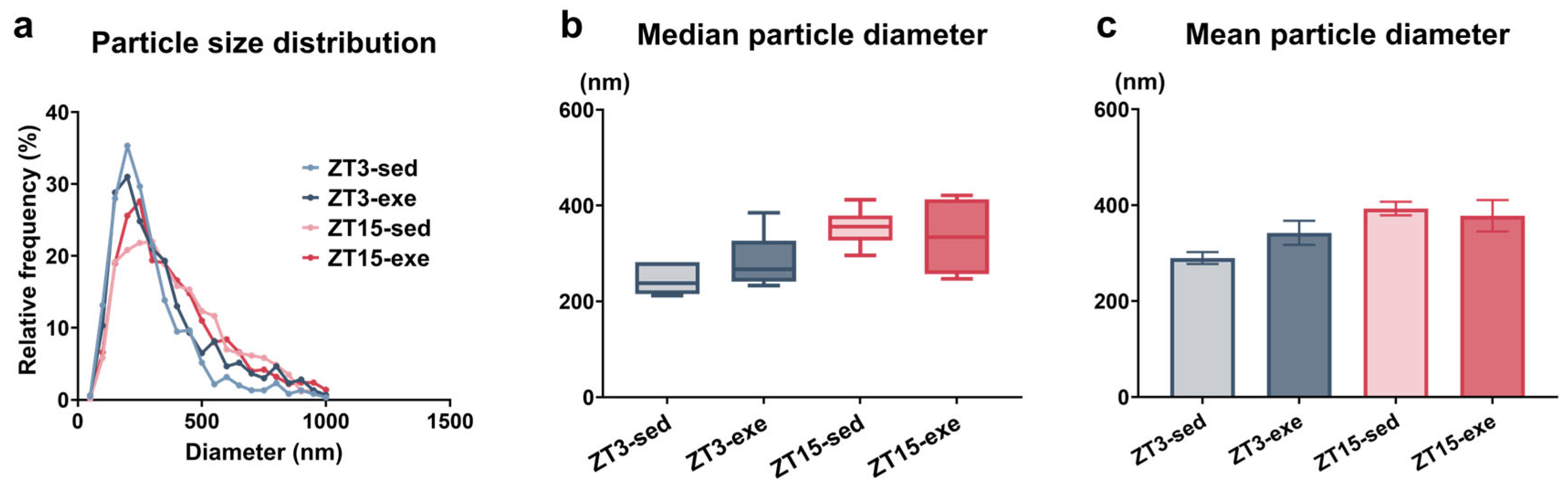
To describe the particle size characteristics of EV-enriched preparations for downstream miRNA profiling, we profiled the particle size of ex vivo QUA-derived EV-enriched preparations using NTA (
Figure 1). Size distributions were unimodal with a predominant peak between 100 and 400 nm (
Figure 1a). Descriptively, median and mean diameters were numerically larger in ZT15 groups than ZT3 groups, whereas no clear directional pattern was observed between exercise and sedentary conditions (
Figure 1b,c). Given the polymer-based isolation method and potential particle aggregation, these size metrics are interpreted as preparation characteristics rather than evidence of differential vesicle biogenesis.
3.2. Composite Trends and Condition-Specific Patterns in EV miRNA Expression
To summarize overall expression trends, we first examined the composite effects of phase and exercise by comparing pooled sample groups (
Figure 2). Using the exploratory thresholds described in Methods,
Section 2.6 (BaseMean ≥ 25, an absolute log
2FC > 0.30,
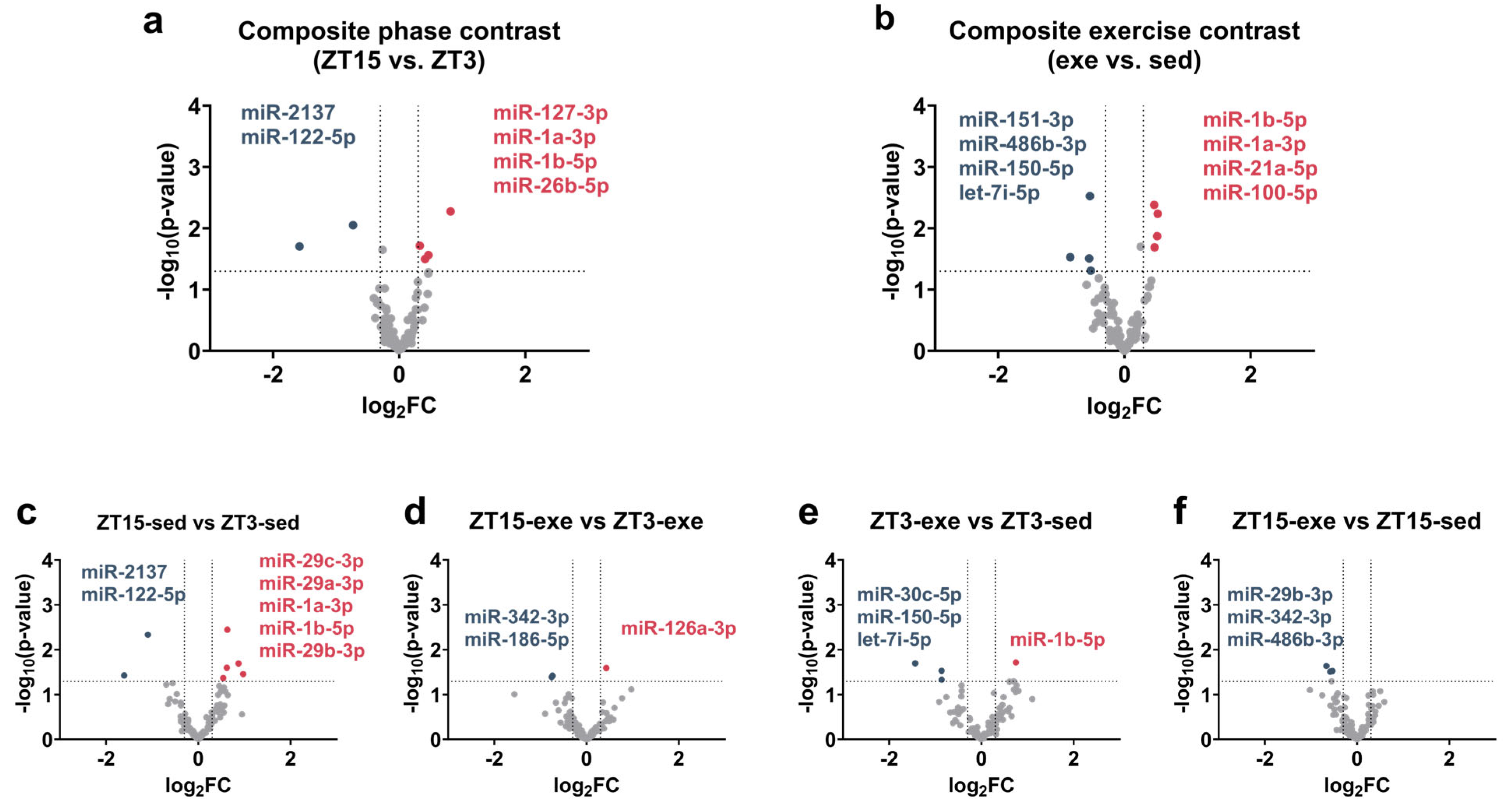
p < 0.05), six miRNAs met the criteria in the composite phase contrast (ZT15 vs. ZT3) (
Figure 2a): four upregulated (miR-127-3p, miR-1a-3p, miR-1b-5p, and miR-26b-5p) and two downregulated (miR-2137 and miR-122-5p). For the composite exercise contrast (exe vs. sed), eight miRNAs met these criteria (
Figure 2b): four were upregulated (miR-1b-5p, miR-1a-3p, miR-21a-5p, and miR-100-5p), and four were downregulated (miR-151-3p, miR-486b-3p, miR-150-5p, and let-7i-5p). Notably, miR-1a-3p (Phase contrast: log
2FC = 0.46,
p = 0.027; Exercise contrast: log
2FC = 0.52,
p = 0.013) and miR-1b-5p (Phase contrast: log
2FC = 0.41,
p = 0.032; Exercise contrast: log
2FC = 0.53,
p = 0.006) appeared in both composite contrasts. As the composite exercise contrast pools ZT3 and ZT15 samples together, and these miRNAs were prominently upregulated in the sedentary-phase comparison (ZT15-sed vs. ZT3-sed;
Figure 2c) but not in the exercise-condition comparisons, their appearance in both composite contrasts reflects shared signal structure rather than two independent regulatory effects.
To dissect the context-dependent regulation, we performed four planned pairwise comparisons between specific experimental groups (
Figure 2). Under sedentary conditions (ZT15-sed vs. ZT3-sed), seven miRNAs met the criteria, representing the largest set among the four contrasts; five were upregulated (miR-29c-3p, miR-29a-3p, miR-1a-3p, miR-1b-5p, and miR-29b-3p), and two were downregulated (miR-2137 and miR-122-5p) (
Figure 2c). Under exercise conditions (ZT15-exe vs. ZT3-exe), three miRNAs met the criteria, including one upregulated miRNA (miR-126a-3p) and two downregulated miRNAs (miR-342-3p and miR-186-5p) (
Figure 2d). For the exercise effect at ZT3 (ZT3-exe vs. ZT3-sed), four miRNAs met the criteria (one up: miR-1b-5p; three down: miR-30c-5p, miR-150-5p, and let-7i-5p) (
Figure 2e). At ZT15 (ZT15-exe vs. ZT15-sed), three miRNAs were downregulated (miR-29b-3p, miR-342-3p, and miR-486b-3p) (
Figure 2f). These results demonstrated that miRNA responses to phase and exercise were context-dependent across comparisons (complete statistics for all detected miRNAs across all six contrasts are provided in
Table S1).
3.3. PCA Reveals a Dominant Phase-Associated Distributional Trend
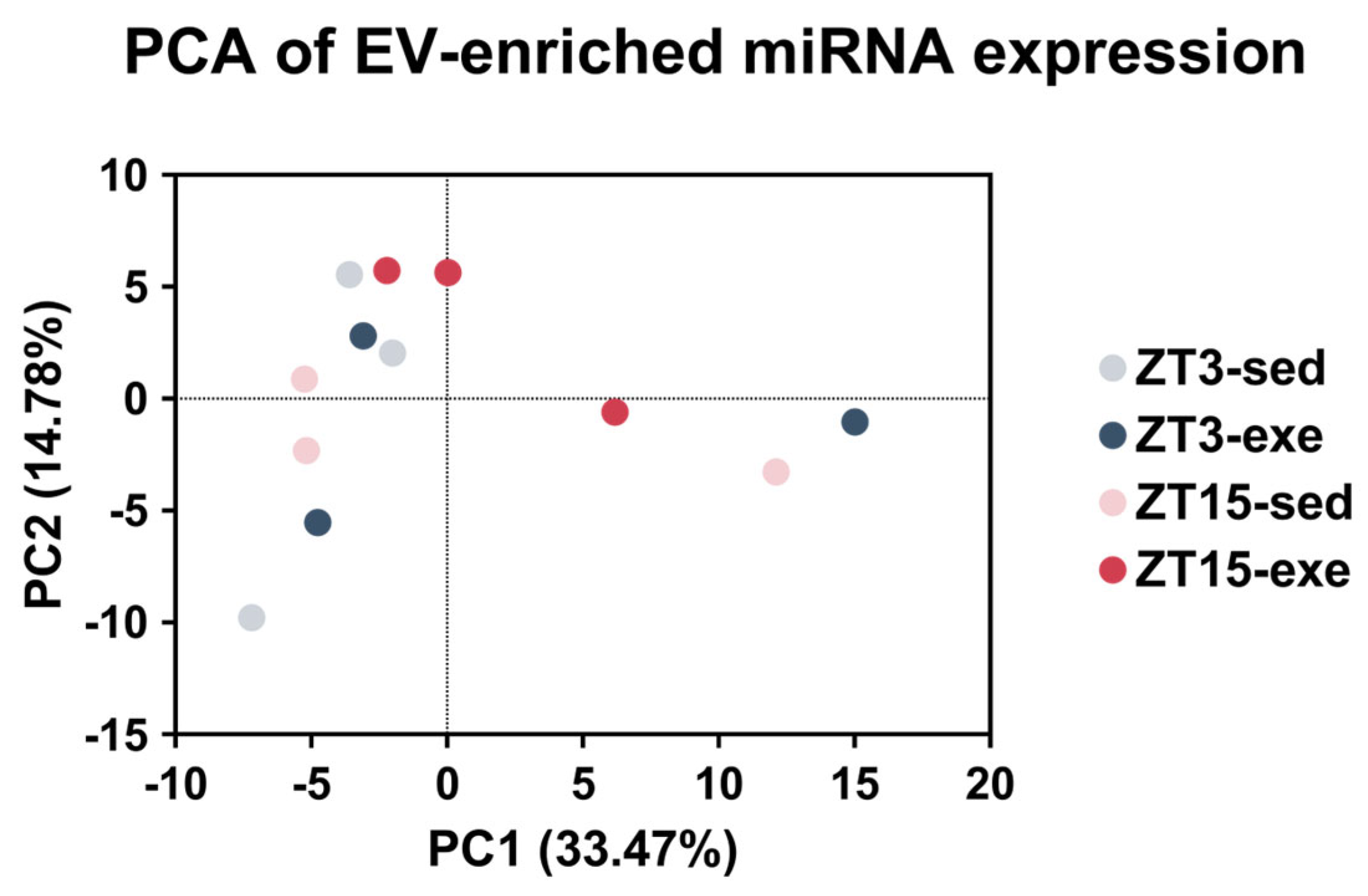
PCA was performed on the miRNA expression data (the VST-transformed miRNA expression matrix; 155 miRNAs across 12 samples). PC1 explained 33.47% of the total variance and showed a phase-associated separation: ZT3 samples distributed toward negative or near-zero PC1 values, whereas ZT15 samples distributed toward positive PC1 values, with partial overlap between groups (
Figure 3). One ZT3-exe sample was also distributed toward positive PC1 values. PC2 accounted for 14.78% of the variance and captured additional inter-sample variability without separation by exercise condition. The cumulative variance explained by PC1 and PC2 was 48.25%. Overall, PCA demonstrated a greater contribution of circadian phase to global variance in EV miRNA expression, as shown by the phase-associated distribution along PC1.
3.4. Overlap Between Target Gene Sets from Composite and Condition-Specific Comparisons
To examine the consistency between composite effect trends and condition-specific patterns, miRTarBase-validated target genes from all comparisons (
Table S2) derived from miRNAs meeting an exploratory expansion threshold (BaseMean ≥ 25, an absolute log
2FC > 0.30,
p < 0.10) were intersected after gene-symbol deduplication (
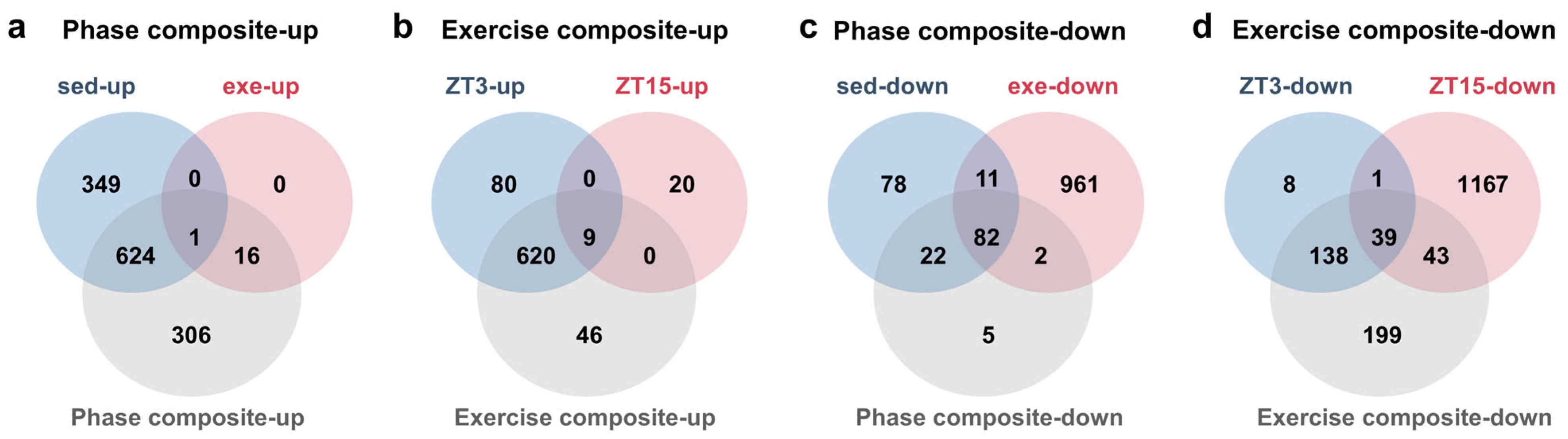
Figure 4). In the Phase composite-up group, 641 of 947 target genes (67.69%) overlapped with at least one condition-specific gene set (sed-up and/or exe-up), whereas 306 targets (32.31%) were unique (
Figure 4a). In the Exercise composite-up group, 629 of 675 target genes (93.19%) overlapped with at least one condition-specific gene set (ZT3-up and/or ZT15-up), with only 46 targets (6.81%) unique to the Exercise composite-up group (
Figure 4b). In the Phase composite-down group, 106 of 111 target genes (95.50%) overlapped with condition-specific gene sets, with only 5 targets (4.50%) unique (
Figure 4c). By contrast, in the Exercise composite-down group, 220 of 419 target genes (52.51%) overlapped with condition-specific gene sets (ZT3-down and/or ZT15-down), while 199 targets (47.49%) were unique (
Figure 4d).
These overlaps demonstrate that composite trends capture a substantial component of the condition-specific patterns; the unique sectors, particularly within exercise-related contrasts, confirm context-dependent regulation.
3.5. GO-BP Enrichment of Core Target Genes
To investigate the biological functions mediated by phase- and exercise-associated miRNAs, Gene Ontology (GO) enrichment analysis was performed on miRTarBase-validated target genes of core phase-up, exercise-up, phase-down, and exercise-down miRNAs, where “core” targets are those shared between a composite effect and at least one of its corresponding condition-specific comparisons. GO terms displayed were selected from the significantly enriched results based on physiological relevance to the focus of this study (complete GO-BP enrichment results for all core target gene sets are provided in
Table S3).
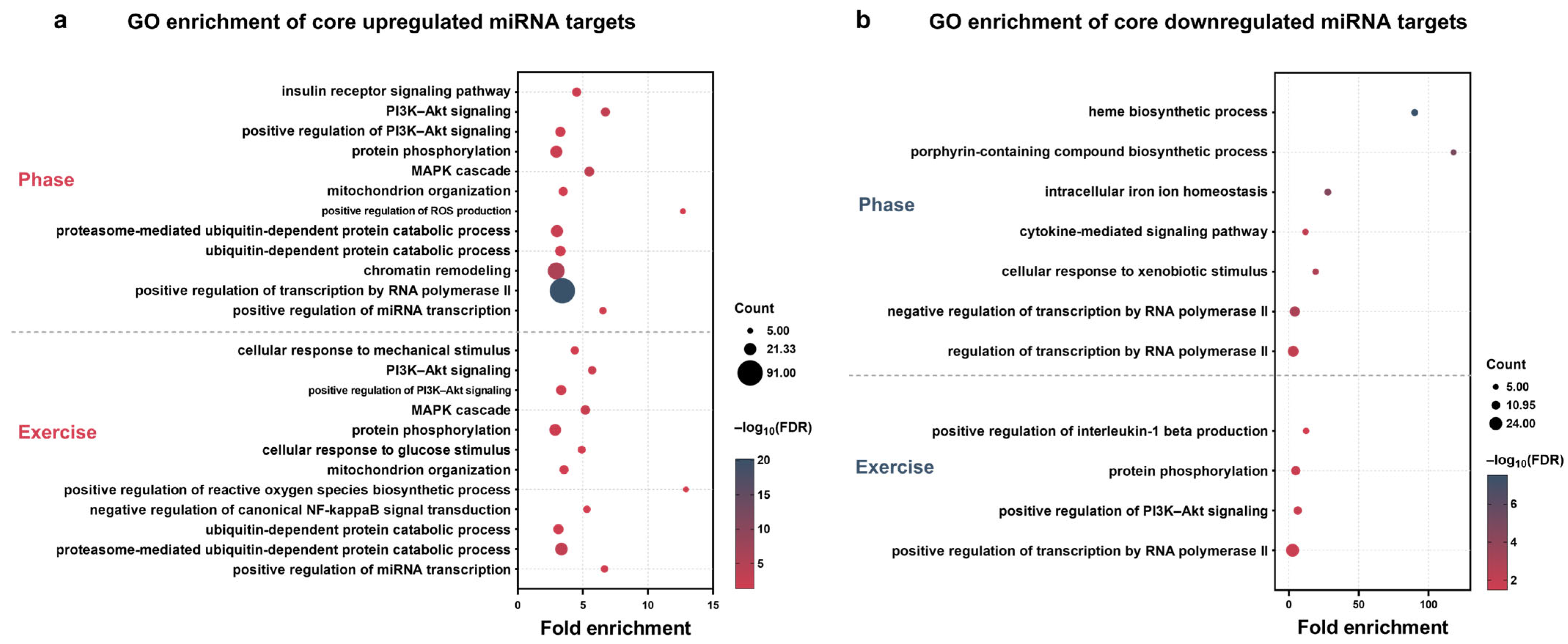
Target genes of core phase-up miRNAs were enriched in biological process terms related to metabolic and intracellular signaling processes, including insulin receptor signaling and phosphoinositide 3-kinase (PI3K)/protein kinase B (Akt) signal transduction. Additional enriched biological processes were related to protein phosphorylation, mitogen-activated protein kinase (MAPK) signaling, mitochondrial organization, and oxidative stress–related processes. The enrichment of these terms potentially reflects a temporal coordination of redox homeostasis across different circadian phases, complemented by the regulation of transcription and miRNA transcription (
Figure 5a). Target genes of core exercise-up miRNAs showed enrichment in biological processes associated with mechanical and metabolic signaling. These included cellular response to mechanical stimuli, PI3K/Akt and MAPK signaling pathways, protein phosphorylation, mitochondrial organization, and regulation of miRNA transcription, together with oxidative stress-associated signaling and protein turnover (
Figure 5a). For core phase-down miRNAs, enriched biological processes were predominantly related to heme biosynthesis and iron ion homeostasis. In addition, cytokine-mediated signaling and stress-related processes, as well as transcriptional repression by RNA polymerase II, were also enriched (
Figure 5b). Target genes of core exercise-down miRNAs were enriched in inflammation-, transcription-, and signaling-related processes, including positive regulation of interleukin-1 beta (IL-1β) production, protein phosphorylation, and PI3K/Akt-related signaling (
Figure 5b).
Collectively, these enrichment patterns suggest that phase- and exercise-associated miRNAs may map to partly distinct biological process modules, with phase-related core miRNAs (defined as those shared between composite and condition-specific comparisons) preferentially associated with metabolic and iron–heme-related pathways, and exercise-related miRNAs more strongly associated with signaling, inflammatory, and transcription-related processes.
3.6. KEGG Pathway Enrichment of Core Target Genes
To further characterize signaling pathways potentially mediated by phase- and exercise-associated miRNAs, KEGG pathway enrichment analysis was performed on miRTarBase-validated target genes of core phase-up, exercise-up, phase-down, and exercise-down miRNAs (as defined in
Section 3.5). KEGG pathways were selected using the same criteria (complete KEGG pathway enrichment results for all core target gene sets are provided in
Table S4).
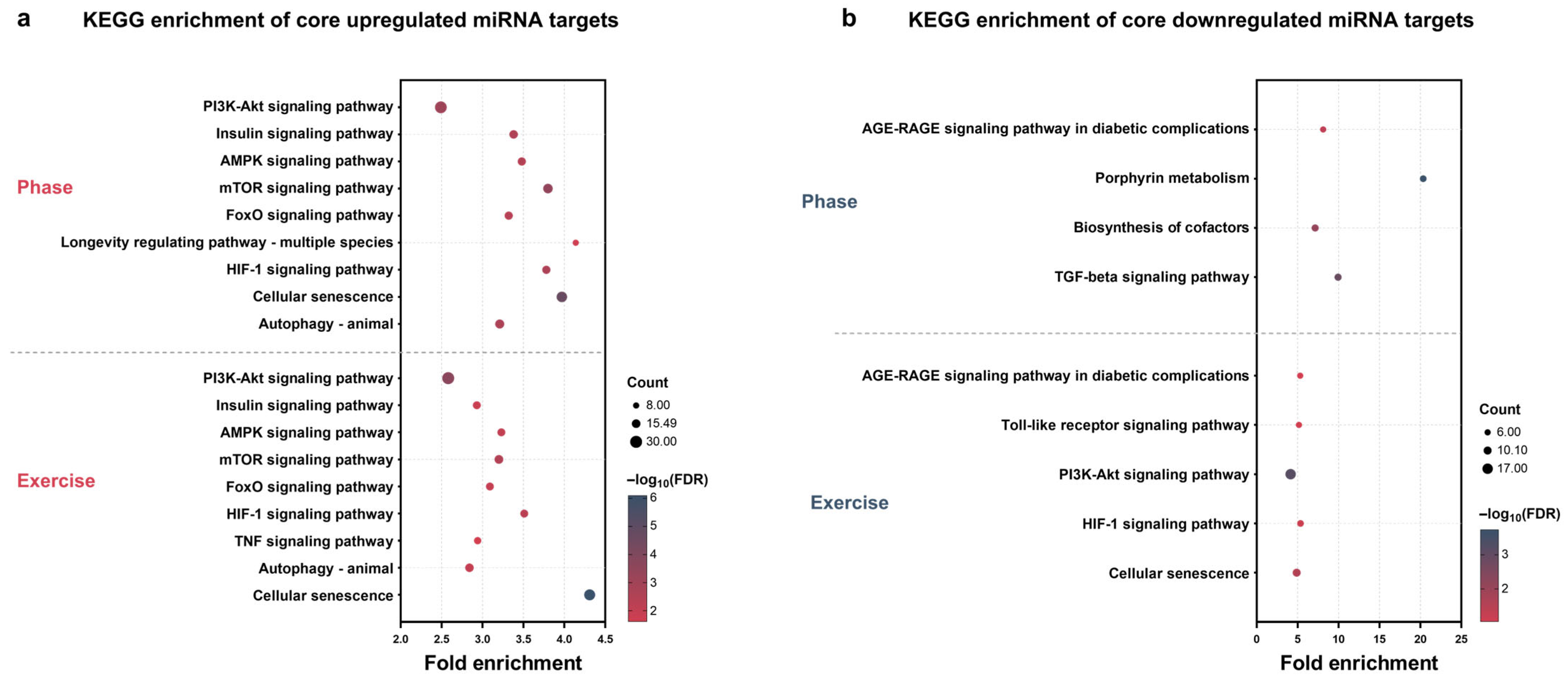
Target genes of core phase-up miRNAs were predominantly enriched in pathways related to metabolic and energy regulation. These included insulin- and PI3K/Akt-related signaling pathways, together with broader energy-sensing and metabolic regulatory pathways. In addition, pathways associated with cellular adaptation and longevity regulation were enriched, along with stress- and hypoxia-related signaling and cellular senescence, suggesting an association between circadian phase and metabolic homeostasis as well as long-term cellular state (
Figure 6a). Target genes of core exercise-up miRNAs also showed enrichment in pathways involved in metabolic and energy regulation, including insulin- and PI3K/Akt-related signaling and energy-sensing pathways. Additional enriched pathways were related to metabolic adaptation, stress responses, inflammatory signaling, and cellular remodeling processes such as autophagy and cellular senescence, indicating exercise-associated regulation of metabolic homeostasis and cellular adaptation (
Figure 6a). For core phase-down miRNAs, enriched pathways were mainly associated with metabolic stress and redox-related processes. These included pathways linked to Advanced Glycation End Products–Receptor for Advanced Glycation End Products (AGE-RAGE) signaling in diabetic complications, porphyrin metabolism, and cofactor biosynthesis, together with regulatory signaling such as transforming growth factor beta (TGF-β) signaling, suggesting phase-dependent alterations in redox balance and metabolic stress responses (
Figure 6b). Target genes of core exercise-down miRNAs were enriched in pathways related to metabolic stress, inflammation-associated signaling, and cellular regulation. These pathways included those associated with diabetic complications, innate immune signaling, and cellular senescence (
Figure 6b).
Collectively, KEGG pathway enrichment analysis indicates that phase- and exercise-associated miRNAs are linked to distinct signaling pathway modules, with phase-related core miRNAs preferentially associated with metabolic and energy-regulatory pathways, and exercise-related core miRNAs more strongly associated with stress, inflammatory, and cellular adaptation pathways.
4. Discussion
4.1. Main Findings
Using a two-factor design combining circadian phase (ZT3 vs. ZT15) and long-term training (exe vs. sed) in HFD-induced obese mice, this study systematically characterized skeletal muscle-derived EV-enriched miRNA profiles and examined their potential functional relevance.
First, at the transcriptomic level, both circadian phase and exercise were associated with differences in EV miRNA composition. In the composite-effect analyses, the composite phase contrast identified six miRNAs, and the composite exercise contrast identified eight miRNAs meeting exploratory criteria. Among these, miR-1a-3p and miR-1b-5p appeared across both composite contrasts; however, this signal was primarily driven by the sedentary-phase comparison rather than an independent exercise effect, indicating a stable phase-associated signature with exercise introducing context-dependent modulation. Second, condition-specific comparisons further revealed context-dependent differences, as phase-associated miRNA differences varied between sedentary and exercise conditions, and exercise-associated effects differed by circadian phase. PCA corroborated these findings at the global level, demonstrating a stronger association of circadian phase with overall variance in EV miRNA expression than exercise. Third, intersection analyses based on miRTarBase-validated target genes showed that composite trends captured substantial components of the corresponding condition-specific patterns, while distinct subsets reflected phase- or exercise-specific modulation. Exploratory functional enrichment of core target genes revealed partly distinct biological themes, with phase-associated miRNAs preferentially linked to metabolic and iron–heme-related processes, and exercise-associated miRNAs linked to signaling, inflammatory, and transcription-related processes. These enrichment results are hypothesis-generating rather than evidence of definitive pathway activation.
4.2. Mechanistic Considerations and Biological Significance
4.2.1. Circadian Regulation of EV Secretion
The numerically larger size metrics at ZT15 are consistent with circadian-phase-dependent remodeling of the EV-enriched secretome, plausibly reflecting rhythmic shifts in membrane lipid composition and cellular metabolic state. These descriptive shifts likely align with broader rhythmic programs, as circadian control governs over 40% of the transcriptome and coordinates muscle metabolism through peripheral clock genes [
10,
11]. EVs participate in circadian-related communication, and EV biogenesis is influenced by oscillations of core clock components [
30]. Enhanced metabolic activity during the active phase is associated with differences in cellular metabolic state and membrane-related properties, aligning with prior evidence of time-dependent exercise effects on muscle oxidative metabolism [
12,
13]. Furthermore, the diurnal production of EVs is influenced by host feeding-entrained signals, including gut microbiota-derived EVs exhibiting diurnal regulation and activating hepatic gluconeogenesis [
31]. This rhythmic regulation of lipid metabolism, encompassing fatty acid synthesis, β-oxidation, and associated redox metabolism [
9], may further modulate the lipid composition and biophysical properties of the secreted vesicle membrane.
4.2.2. Myogenic miRNAs Under Circadian and Training Control
The detection of miR-1a-3p and miR-1b-5p across composite contrasts, primarily driven by the sedentary-phase comparison, aligns with their known roles in myogenesis [
32,
33], suggesting a phase-associated EV miRNA signature in EV-enriched fractions. Several miRNAs, including miR-181d and miR-191, have been identified as circadian-rhythmic miRNAs co-expressed with core clock genes in mouse liver [
14]. Acute-exercise studies report rapid increases in circulating EVs carrying myogenic miRNAs supporting a muscle–liver communication axis [
3,
4]. The miR-1 family upregulation in the composite phase contrast was primarily driven by the sedentary-phase comparison (ZT15-sed vs. ZT3-sed); this phase-associated signal was absent in the corresponding exercise-condition comparison (ZT15-exe vs. ZT3-exe), suggesting that chronic training may have attenuated the phase-related differential in miR-1 cargo between ZT15 and ZT3. More broadly, unlike the transient miRNA mobilization observed in acute exercise paradigms [
3,
4], the present 8-week intervention reflects long-term adaptive remodeling, which may account for the comparatively modest exercise-specific miRNA signal observed across contrasts. Downregulation of miR-122-5p at ZT15 reflects altered EV-associated miRNA composition; given the established metabolic relevance of exosomal miR-122 [
34], its directional regulation and source attribution would benefit from dedicated tracing studies in future work. It should also be noted that miR-122 is canonically a hepatocyte-enriched miRNA [
35,
36]; its detection in ex vivo QUA-derived EV-enriched preparations therefore suggests that it reflects contributions from non-myofiber cell populations within the tissue or from circulating EV contamination during the ex vivo culture, rather than myofiber-intrinsic regulation.
Beyond the miR-1 family, the concurrent upregulation of miR-29a-3p, miR-29b-3p, and miR-29c-3p represented the most numerically prominent cluster in the sedentary-phase comparison. The miR-29 family has been associated with impaired insulin signaling, with elevated expression in insulin-responsive tissues under insulin-resistant and type 2 diabetic conditions and suppression of insulin-activated Akt activity in adipocytes, although the precise mechanisms remain unclear [
37,
38]. In the HFD context, their phase-associated upregulation at ZT15 under sedentary conditions may reflect a time-of-day-dependent alteration in EV-enriched miRNA cargoes. Notably, miR-29b-3p was downregulated in the ZT15-exe vs. ZT15-sed comparison but showed no significant exercise-associated difference at ZT3, suggesting a potentially ZT15-specific modulation by chronic training. Given the metabolic relevance of the miR-29 family, this pattern may warrant further investigation in the context of active-phase exercise and insulin signaling under HFD conditions. Whether the miR-29 family and miR-1 family responses share a common phase-dependent regulatory mechanism remains to be determined.
4.2.3. Exercise Modulation of EV-Mediated Crosstalk in HFD
HFD and obesity are associated with insulin resistance [
5] and have been linked to alterations in EV-mediated interorgan communication [
34,
39]. Notably, HFD-associated adipose EVs deliver miR-27a to skeletal muscle, repressing peroxisome proliferator-activated receptor gamma (PPARγ) and inducing insulin resistance [
40]. The present results indicate that exercise-associated differences in EV miRNA profiles, while detectable, were context-dependent. This pattern is compatible with differences in the enrichment of miRNA target genes associated with signaling pathways under HFD conditions, as indicated by the functional enrichment analyses. In prior in vivo work, exercise-induced muscle-derived EVs have been shown to transport glycolytic enzymes to bone and to mediate exercise-induced cognitive protection via miRNA transfer to the brain [
41,
42]. The exercise-associated differences in EV miRNA profiles observed here are therefore consistent with a long-term adaptive remodeling framework, in which repeated exercise bouts progressively reshape EV cargo composition rather than reflecting transient acute responses, lending biological plausibility to the present findings. Intersection analyses further showed that composite-effect target sets accounted for a substantial proportion of condition-specific signals, while ZT3- and ZT15-specific subsets pointed to phase-contingent exercise regulation beyond the core shared patterns.
4.2.4. Time-Dependent Functional Networks from Enrichment Analyses
The GO/KEGG enrichments reveal complementary time-dependent networks: core phase-up targets were mainly enriched in metabolic and intracellular signaling processes, whereas core phase-down targets were dominated by iron–heme-related processes. Core exercise-up targets showed enrichment consistent with mechanical/metabolic signaling, while core exercise-down targets emphasized inflammation- and transcription-related processes. Both sets converged on nutrient/energy pathways (including insulin- and PI3K/Akt-related signaling) [
9], which is notable as multiple miRNAs are known to modulate insulin sensitivity via this pathway [
43]. The enrichment of oxidative stress-related processes in phase-associated targets is consistent with circadian regulation of mitochondrial redox homeostasis [
44] and with altered redox homeostasis under HFD conditions [
45]. The modulation of inflammatory signals (e.g., IL-1β regulation) aligns with the potential for long-term training to ameliorate HFD-induced chronic inflammation [
46], consistent with evidence that miRNA-mediated mitochondrial dysfunction contributes to inflammation-related metabolic stress [
47].
The prominence of porphyrin/heme-related terms in phase-associated enrichments is consistent with prior evidence of circadian regulation of iron metabolism. Hepcidin, a central regulator of systemic iron homeostasis, exhibits diurnal rhythmicity [
48], and core clock components such as brain and muscle ARNT-like 1 (BMAL1) have been implicated in pathways related to heme metabolism in peripheral tissues [
9]. Given the role of heme in electron transport chain complexes, alterations in heme availability may influence mitochondrial oxidative function and redox balance under HFD-induced metabolic stress [
44]. Although direct evidence linking these processes to EV-mediated signaling is still emerging, this enrichment pattern highlights an underexplored aspect of chrono-metabolic regulation.
4.3. Integration with Prior Work and the Working Model
These findings align with the concept of time-dependent exercise adaptation, as supported by studies showing greater metabolic benefits during the active phase [
12,
13]. Indeed, exercise-induced miR-136-3p has been shown to modulate glucose uptake and myogenesis by targeting nardilysin convertase, highlighting the specific role of extracellular miRNAs in training adaptations [
49]. Extending prior acute-exercise EV research [
4], the present long-term paradigm suggests persistent associations in muscle EV-enriched miRNA profiles and supports circadian phase as a relatively greater contributor to variance. Under HFD, our results align with evidence that EV signaling contributes to metabolic dysregulation, while exercise introduces context-dependent modulation of time-associated EV communication [
5,
6,
50]. Although prior studies have linked circadian regulation to inflammatory and apoptotic pathways [
51], our exploratory functional enrichment analysis is consistent with this framework, suggesting links between muscle-derived EV miRNA target gene networks and pathways implicated in cardiometabolic disease [
52].
Integrating these observations, we propose a working model wherein circadian phase associates with baseline muscle EV miRNA profiles, and exercise adds adaptive modulation. Pending validation through in vivo EV tracing and functional studies in recipient tissues, these patterns provide a testable framework for interorgan metabolic communication in obesity, with hypothesized involvement of phase-associated myogenic signals (e.g., miR-1 family) and exploratory enrichment in iron–heme and metabolic signaling pathways as functional indicators rather than evidence of disease-specific activation.
4.4. Limitations and Future Directions
Several limitations of the present study should be acknowledged. As polymer-based precipitation may co-isolate non-vesicular components, preparations are described as EV-enriched in accordance with MISEV guidelines, and findings reflect the miRNA landscape of the muscle-derived EV-enriched secretome rather than purified vesicles. The small sample size (n = 3 biological replicates per group) constrains statistical power; accordingly, the present findings are interpreted as exploratory and hypothesis-generating, pending confirmation in larger independent cohorts with quantitative reverse transcription polymerase chain reaction (qRT-PCR) validation of candidate miRNAs and assessment of inter-individual variability. This study was conducted in male C57BL/6J mice at a specific age; generalizability to other strains, ages, and female animals remains to be established, and these constraints limit the translational relevance of the present findings to broader populations. Additionally, as this study was specifically designed to characterize the joint effects of circadian phase and chronic exercise under HFD-induced obesity, a standard diet comparison group was not included. The phase-associated EV miRNA patterns identified here therefore serve as a foundation for future diet-comparative and mechanistic investigations, including functional studies in recipient tissues and higher-resolution temporal profiling under constant conditions, aimed at distinguishing endogenous circadian regulation from light-driven effects and determining the broader physiological relevance of circadian regulation of muscle-derived EV signaling.
5. Conclusions
In HFD-induced obese mice, circadian phase was the dominant contributor to global variance in muscle-derived EV-enriched miRNA profiles, exceeding the contribution of exercise, as reflected by the phase-associated separation along PC1 (33.47% of total variance). miR-1a-3p and miR-1b-5p were detected across composite contrasts; condition-specific analyses demonstrated that this signal was primarily phase-driven. Both miRNAs, together with the miR-29 family, were upregulated at ZT15 relative to ZT3 under sedentary conditions; their co-occurrence in the composite exercise contrast reflected this phase-driven signal rather than independent exercise effects. Exercise-associated differences were context-dependent: miR-150-5p and let-7i-5p were downregulated at ZT3, and miR-486b-3p was downregulated at ZT15, under exercise relative to sedentary conditions. Exploratory functional enrichment of experimentally validated targets suggested that phase-associated miRNAs preferentially mapped to metabolic and iron–heme pathways, whereas exercise-associated miRNAs were linked to signaling, inflammatory, and transcription-related networks.
Collectively, these findings indicate that circadian phase, rather than exercise, is the dominant contributor to global variance in muscle-derived EV-enriched miRNA profiles under obesogenic conditions, with exercise introducing context-dependent adaptive modulation. Pending functional validation in vivo, the temporal dimension of exercise prescription may represent an additional variable in strategies targeting EV-mediated metabolic communication in this context. This study provides a foundational basis for the chronobiological investigation of muscle-derived EV secretome dynamics and highlights temporal specificity as a key dimension in EV-mediated exercise physiology research.