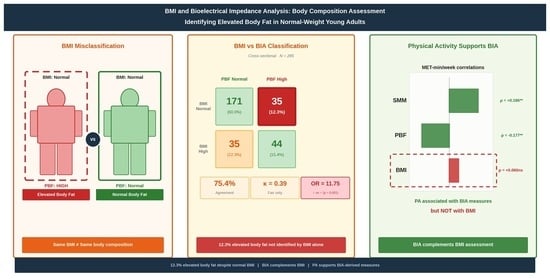
This cross-sectional study examined the relationship between food group consumption and body composition in 285 young Hungarian adults, comparing BMI-based and BIA-based classification approaches. The study addresses a methodological gap in nutritional epidemiology, where BMI remains the predominant measure that does not distinguish between fat and lean tissue mass [
5,
6].
Methodological note on sweets/snacks as an indicator food group: Throughout this discussion, sweets and snacks consumption serves as an indicator variable to demonstrate how classification method (BMI vs. PBF) affects the direction of diet–adiposity associations. We do not claim that sweets consumption is a primary obesogenic factor in this population; rather, it provides a useful test case, because it is commonly assumed to associate positively with adiposity. The inverse BMI correlation illustrates the methodological limitation, regardless of any true causal relationship between sweets intake and body fat.
4.1. Reporting Bias and BMI Misclassification
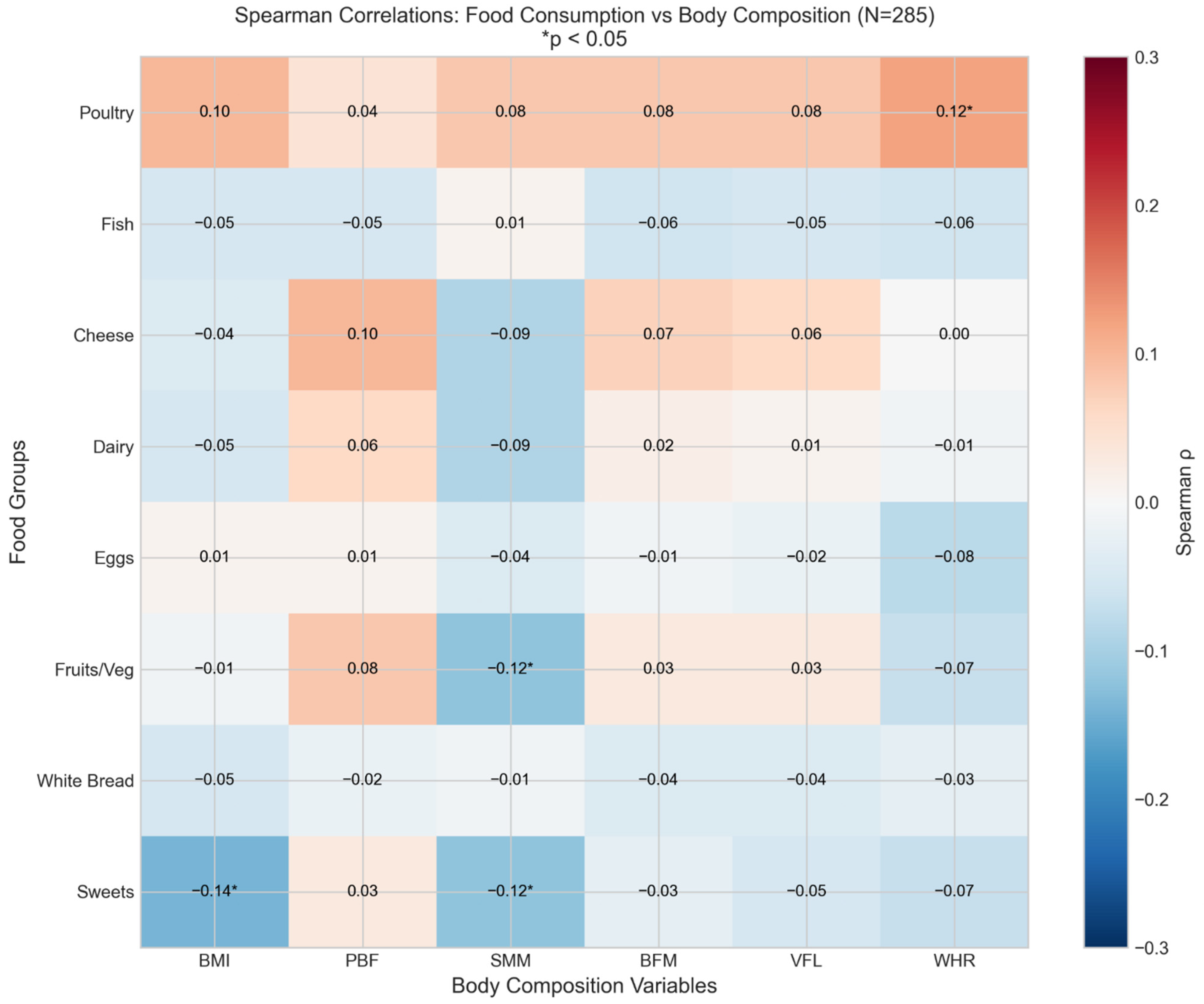
The inverse association between self-reported sweets consumption and BMI (rho = −0.138,
p = 0.020) does not reflect true dietary intake. Rather, this pattern demonstrates a well-documented phenomenon: individuals with a higher BMI tend to underreport consumption of socially undesirable foods (social desirability bias) [
18,
19]. This reporting bias, combined with BMI not distinguishing between fat and lean tissue [
5,
6,
14], creates potentially misleading diet–BMI associations. Our data showed that the sweets–SMM correlation was also negative (−0.120), indicating that individuals with a lower lean body mass appear to consume more sweets in self-reports. Because BMI conflates muscle and fat [
5,
14], these measurement artifacts compound.
Evidence for the artifact: When examining actual adiposity (PBF) instead of BMI, this inverse pattern disappears (rho = +0.032,
p = 0.591), suggesting that the BMI finding may be an artifact of measurement limitations and reporting bias rather than underlying biological associations. This direction reversal—from negative (BMI) to positive (PBF)—suggests that BMI-based dietary associations may be confounded by both adiposity misclassification [
5,
6,
14] and differential reporting bias across BMI categories [
18].
4.2. Physical Activity Supports BMI Limitation Evidence
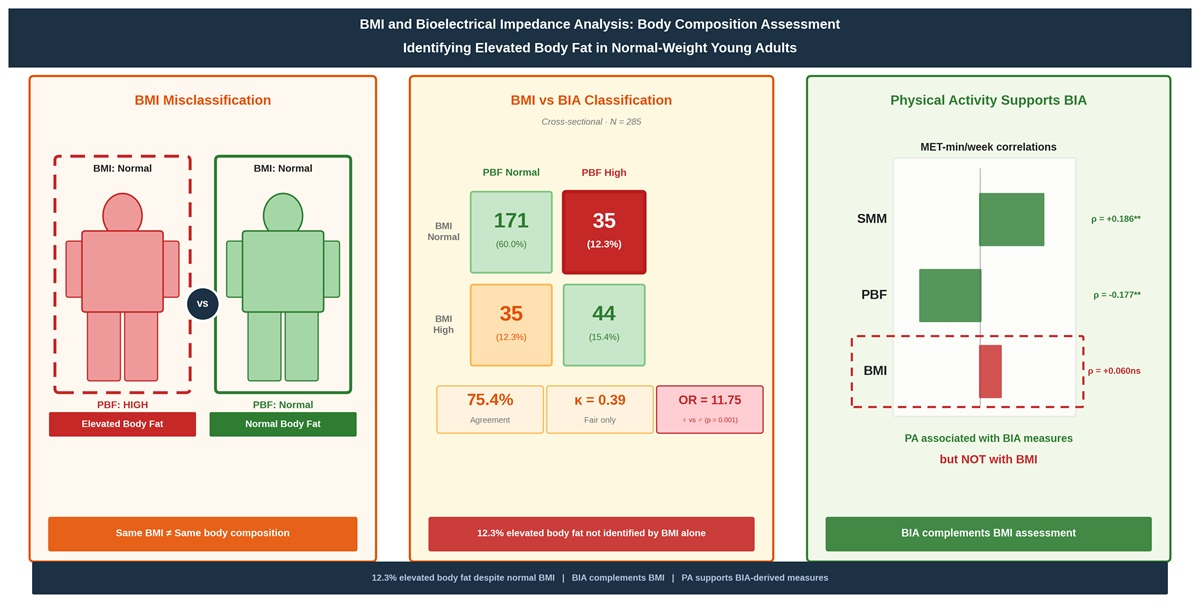
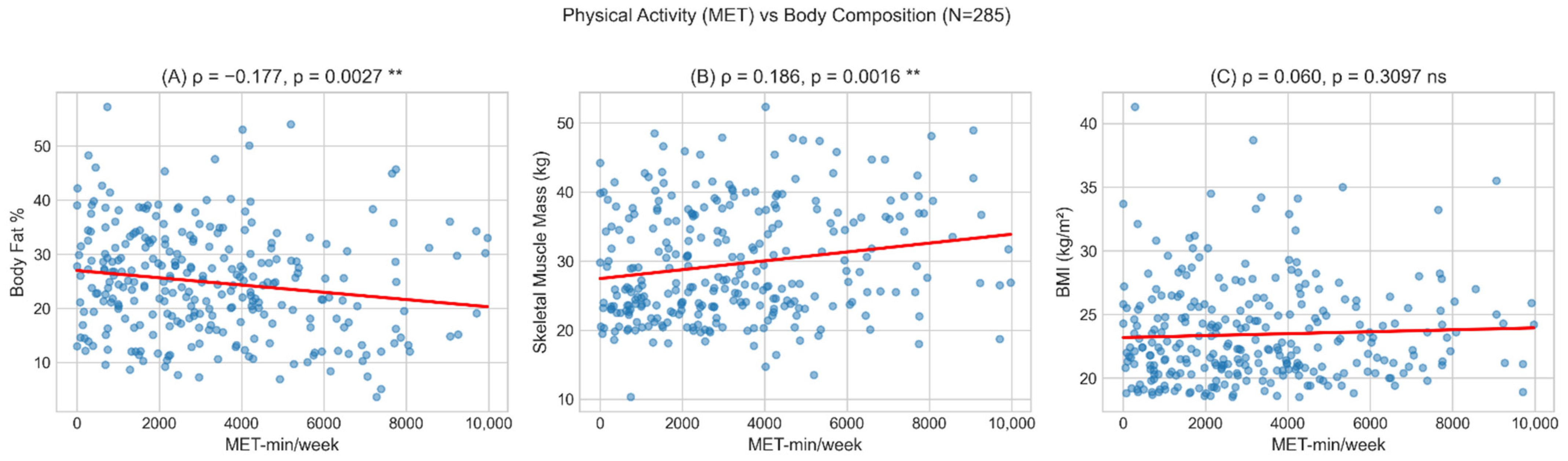
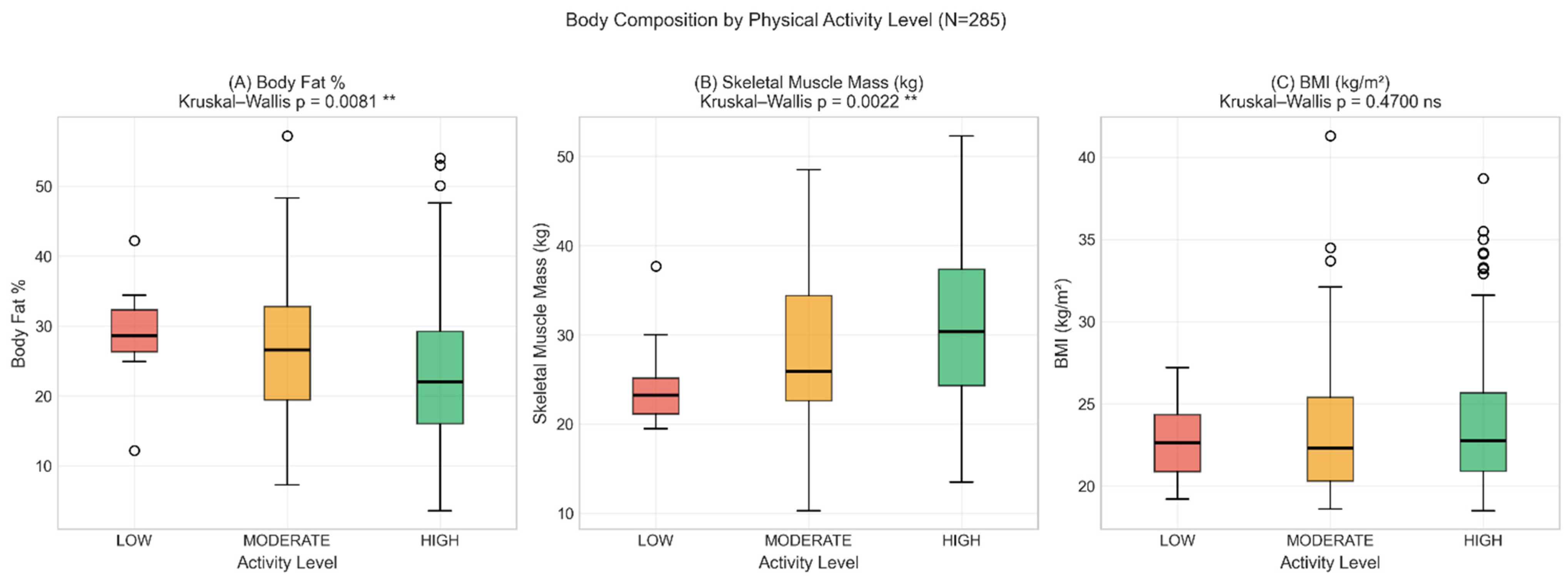
The integration of IPAQ-SF physical activity data provides additional evidence for the limited sensitivity of BMI alone. Physical activity (MET-min/week) showed significant correlations with true body composition measures (PBF: rho = −0.177, p = 0.003; SMM: rho = +0.186, p = 0.002) but no significant correlation with BMI (rho = +0.060, p = 0.310). Individuals who exercise more have lower body fat and higher muscle mass, yet BMI alone may not capture these body composition differences.
The absence of an MET-BMI correlation can be explained by the compensatory effect: as exercise reduces fat mass but increases muscle mass, BMI remains relatively stable. This illustrates a limitation of the BMI as an adiposity measure: it does not distinguish between individuals who have achieved a given BMI through different pathways (high muscle/low fat vs. low muscle/high fat).
4.4. Methodological Considerations
The sex-specific PBF cutoffs applied in this study (≥25% for males, ≥32% for females) were originally established using DXA [
14], whereas body composition in the present study was assessed using multi-frequency BIA (InBody 270S). While DXA is considered a reference standard for body composition assessment, several validation studies have demonstrated acceptable agreement between the InBody 270S and DXA for estimating percent body fat and fat-free mass in healthy young adult populations, with reported correlations ranging from r = 0.92 to r = 0.98 for PBF [
12,
13]. Nevertheless, BIA estimates of body fat percentage may exhibit systematic bias relative to DXA, with the direction and magnitude depending on hydration status, ethnicity, and adiposity level. The InBody 270S tends to slightly underestimate PBF in lean individuals and overestimate it in those with higher adiposity compared to DXA [
6]. Applying DXA-derived cutoffs to BIA-estimated PBF values may therefore introduce classification error, potentially affecting the prevalence estimates of elevated body fat with a normal BMI reported in this study. Future studies should ideally derive population-specific BIA cutoffs validated against DXA or apply device-specific correction equations to improve classification accuracy.
While our BMI-vs-BIA comparison provides evidence for BMI limitations, the cross-sectional design means reverse causality cannot be excluded—individuals with a higher body weight may actively restrict sweets consumption as a weight management strategy [
22]. Self-reported dietary data are also susceptible to social desirability bias [
18]; however, the divergent patterns between BMI and PBF (negative vs. positive correlations with sweets) suggest that BMI measurement limitations, rather than reporting bias, primarily explain our findings.
Statistical note on multiple comparisons: After Bonferroni correction, no individual correlations retained statistical significance. However, this study does not aim to establish specific diet–adiposity associations; rather, it demonstrates how BMI-based classification systematically distorts the directionality of associations even when effect sizes are small. The consistent pattern—negative correlations with BMI but positive (or neutral) correlations with PBF across multiple variables—supports our methodological conclusion regardless of individual p-values.
4.5. Comparison with Previous Studies
Our findings contrast with prospective studies demonstrating positive associations between sugar-sweetened beverage consumption and weight gain [
22,
23]. However, cross-sectional studies have occasionally reported similar findings. A study by Darmon and Drewnowski [
24] found that obese individuals reported a lower consumption of sweets and fats compared to normal-weight participants, attributed to dietary underreporting and active restraint [
25].
Sex differences in food group consumption patterns were observed, with females reporting a significantly higher intake of raw fruits/vegetables (p = 0.001).
4.6. Clinical and Public Health Implications
Despite the unexpected direction of some associations, our results have practical relevance. The complexity of diet–body composition relationships suggests that multiple assessment methods, including objective dietary biomarkers, may be needed. BIA-derived body composition parameters provide more detailed information than BMI alone, enabling differentiation between fat and lean tissue compartments.
The observed coefficients of determination (R
2 = 0.096 for BMI, R
2 = 0.343 for PBF) indicate that dietary factors explain a modest proportion of variance in body composition, consistent with the multifactorial nature of adiposity. Genetic predisposition, total energy intake, macronutrient distribution, sleep patterns, and psychosocial factors all contribute to body composition but were not assessed in this study. The modest R
2 values should be interpreted in the context of using frequency-based dietary data rather than quantitative nutrient intake. Furthermore, regarding the bivariate associations shown in
Figure 1 and
Figure 3 and
Table 9, the modest correlation coefficients (rho ranging from −0.177 to +0.186) translate to low individual coefficients of determination (r
2 = 0.01–0.03). This highlights that no single behavioral metric explains a large portion of body composition variance but rather they act cumulatively.
The notable age effect on BMI (β = 0.406 per year) emphasizes the importance of early intervention, as even young adults show weight accumulation with increasing age. University health programs should consider targeted nutritional education that addresses both the quantity and quality of dietary intake.
Although our BIA device (InBody 270S) provided automated WHR estimates, simpler clinical anthropometric measures such as manual, tape measure-derived waist circumference (WC) and waist-to-height ratio (WHtR) may also identify individuals with elevated metabolic risk without the need for specialized equipment. These measures have demonstrated good predictive value for cardiometabolic outcomes in young adult populations and are recommended by several clinical guidelines. Future studies should explicitly compare the screening performance of traditional tape measure methods with BIA-derived parameters to determine the most cost-effective approach for population-level body composition assessment.
4.7. Strengths and Limitations
Several general limitations of BIA methodology for estimating body fat percentage warrant consideration. BIA derives body composition estimates indirectly from whole-body or segmental impedance measurements using proprietary prediction equations that are calibrated against reference populations [
6]. The accuracy of these estimates depends on assumptions regarding the hydration of fat-free mass (typically assumed to be 73.2%), body geometry, and the proportional distribution of fluid between intracellular and extracellular compartments. Deviations from these assumptions—such as those occurring with acute changes in hydration status, recent physical exercise, food or fluid intake, menstrual cycle phase, or ambient temperature—can introduce measurement errors [
6]. Furthermore, BIA prediction equations are population-specific; equations developed in one ethnic or age group may not generalize well to others, potentially introducing systematic bias when applied to Central European young adults. Multi-frequency segmental devices such as the InBody 270S partially mitigate some of these limitations by measuring impedance at multiple frequencies (distinguishing intracellular from extracellular water) and across individual body segments, thereby reducing reliance on geometric assumptions. However, the proprietary nature of InBody algorithms limits transparency regarding the reference populations and statistical models underpinning the output values. Additionally, BIA cannot distinguish between subcutaneous and visceral adipose tissue directly; visceral fat level estimates are derived from proprietary algorithms rather than direct measurement, which may reduce accuracy compared to imaging-based methods such as computed tomography or magnetic resonance imaging [
5,
6]. Despite these limitations, BIA remains a practical, non-invasive, and cost-effective tool for field-based body composition assessment, particularly in epidemiological studies involving large samples where DXA or imaging is not feasible.
Strengths of this study include the use of validated BIA technology for detailed body composition assessment, application of appropriate non-parametric statistical methods for ordinal dietary data, and a focus on the understudied young adult population. The inclusion of multiple body composition parameters beyond BMI provides a more complete picture of nutritional status.
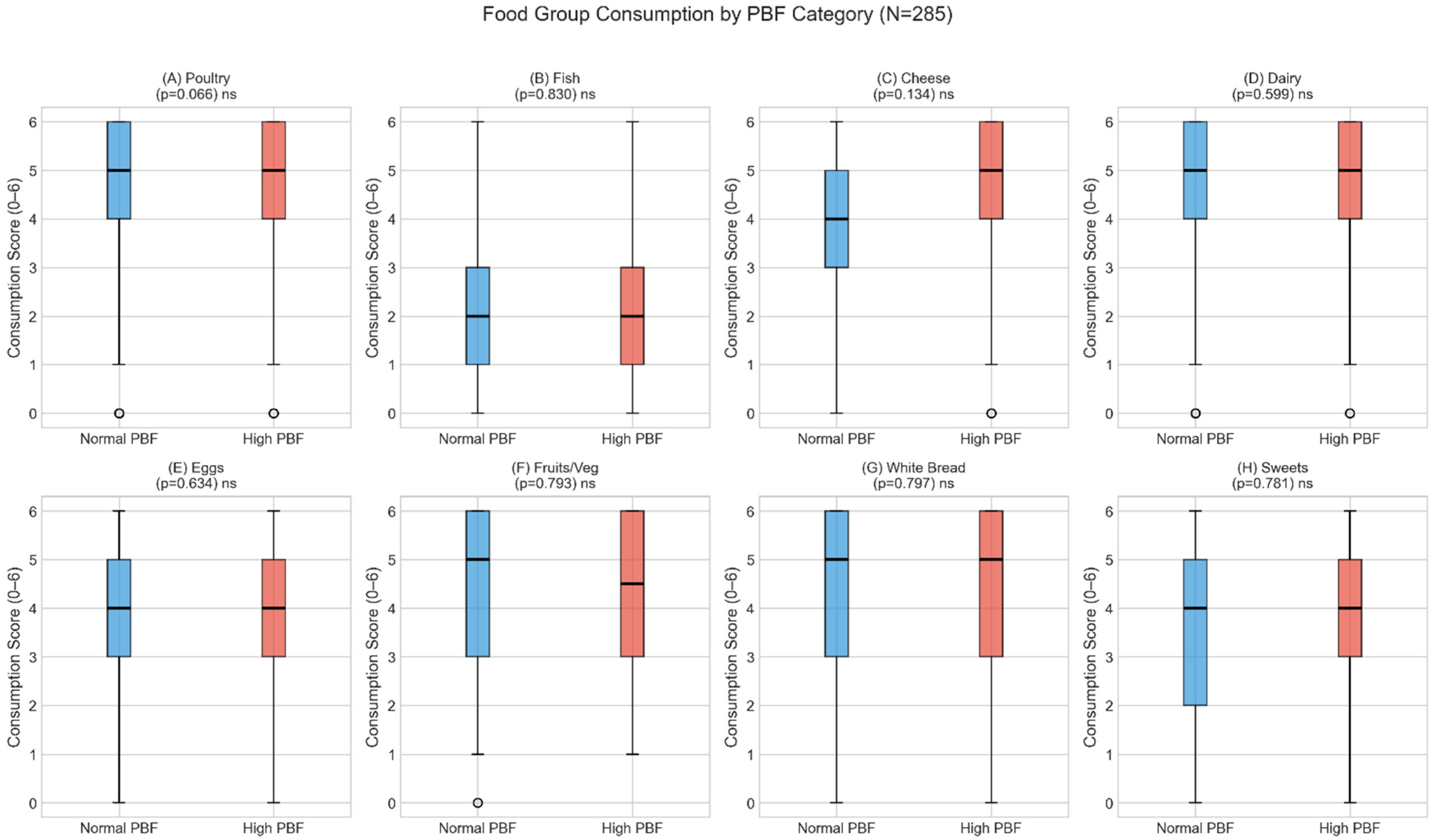
Limitations must be acknowledged. First, the cross-sectional design precludes causal inference. Second, although individual dietary correlations were of small magnitude (Cohen’s d < 0.30), this is expected given the multifactorial nature of body composition and the limitations of self-reported dietary data. Third, self-reported dietary data are subject to substantial measurement error, including the systematic underreporting of energy-dense foods. Research consistently shows that individuals with higher adiposity tend to underreport consumption of socially undesirable foods such as sweets and snacks, a phenomenon known as social desirability bias [
18]. This underreporting may explain why neither BMI-based nor PBF-based analyses revealed strong positive correlations between sweets consumption and adiposity measures. Fourth, convenience sampling from university health screenings may limit generalizability. Fifth, the FFQ assessed only eight food groups using a 7-point Likert scale, not capturing overall energy intake or portion sizes. Although the FFQ structure followed Hungarian National Healthcare Guidelines [
10], it was not validated against dietary records or biomarkers, limiting our ability to quantify underreporting or assess true dietary intake. Sixth, we report uncorrected
p-values for transparency. Given the exploratory nature and the high number of tests (88 correlations), we acknowledge that Bonferroni correction would eliminate all individual correlations. Moreover, the very low significance threshold after Bonferroni correction increases the risk of Type II errors, potentially rejecting genuinely existing associations. However, the primary findings (prevalence of normal BMI with elevated body fat = 12%, IPAQ–body composition associations) remain robust, as they do not rely on correlation thresholds. The dietary correlations serve to illustrate the limited sensitivity of BMI alone rather than establish causal diet–adiposity links. Future research should employ validated FFQs with energy intake estimation and consider prospective designs to establish temporal relationships between dietary habits and body composition changes.
Additionally, this study did not include clinical metabolic markers (fasting glucose, lipid panel, HOMA-IR, and blood pressure), which are essential for true metabolic phenotyping. Our classification of elevated body fat with a normal BMI is based solely on body composition parameters and does not constitute metabolic risk assessment. Future studies should combine BIA with metabolic biomarkers to determine whether the body composition discrepancies identified here correspond to actual cardiometabolic risk elevation.




 ,
,