Intestinal Multi-Target Mechanisms of Natural Active Substances in Hyperuricemia Alleviation: Recent Progress


Abstract
1. Introduction
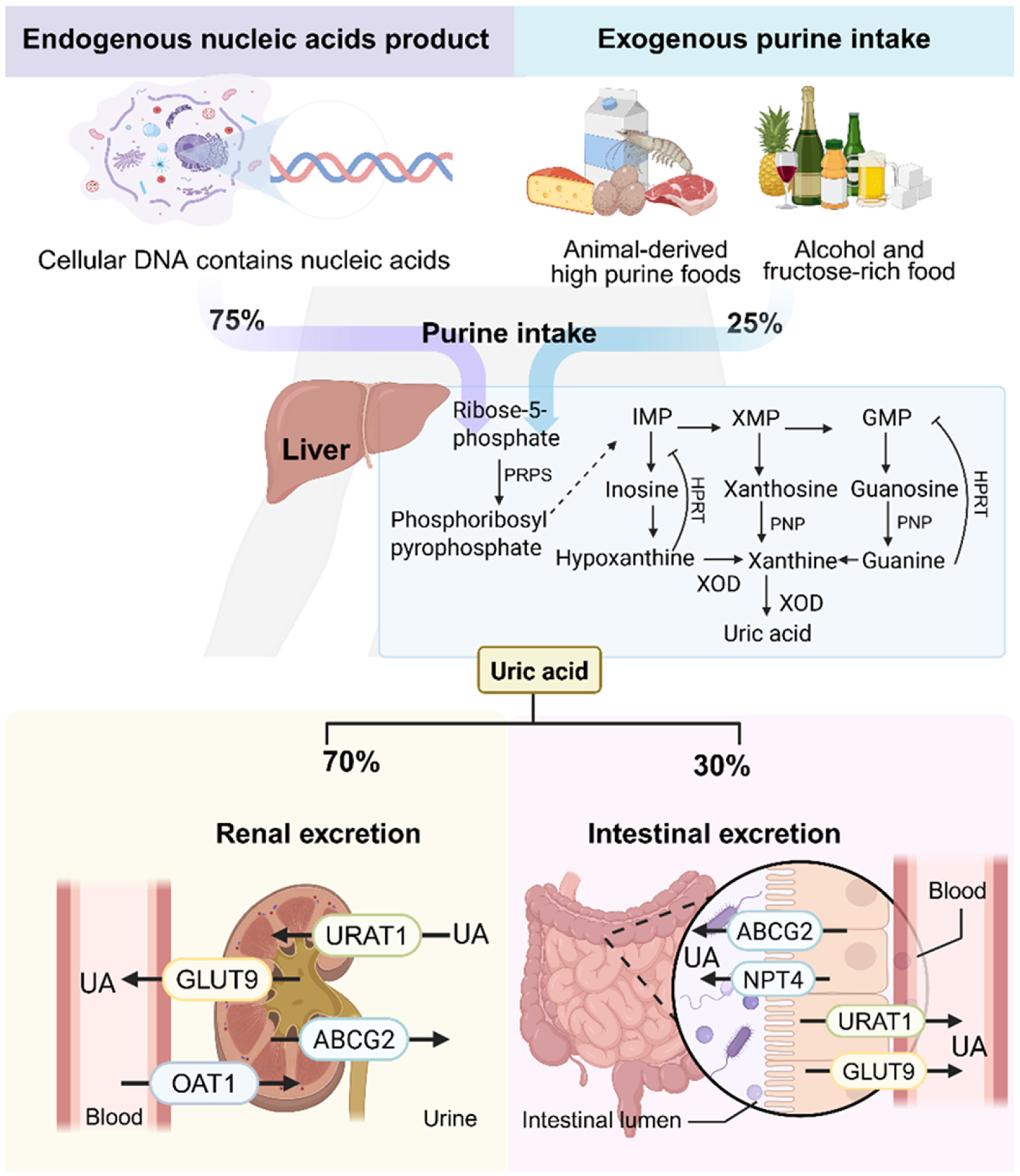
2. The Role of the Intestine in Hyperuricemia
2.1. Dysbiosis of Intestinal Flora and Metabolic Disorder
2.2. Intestinal Barrier Damage and Increased Permeability
2.3. Intestinal Inflammation and Systemic Spread
2.4. Imbalance of Intestinal Uric Acid Transport System
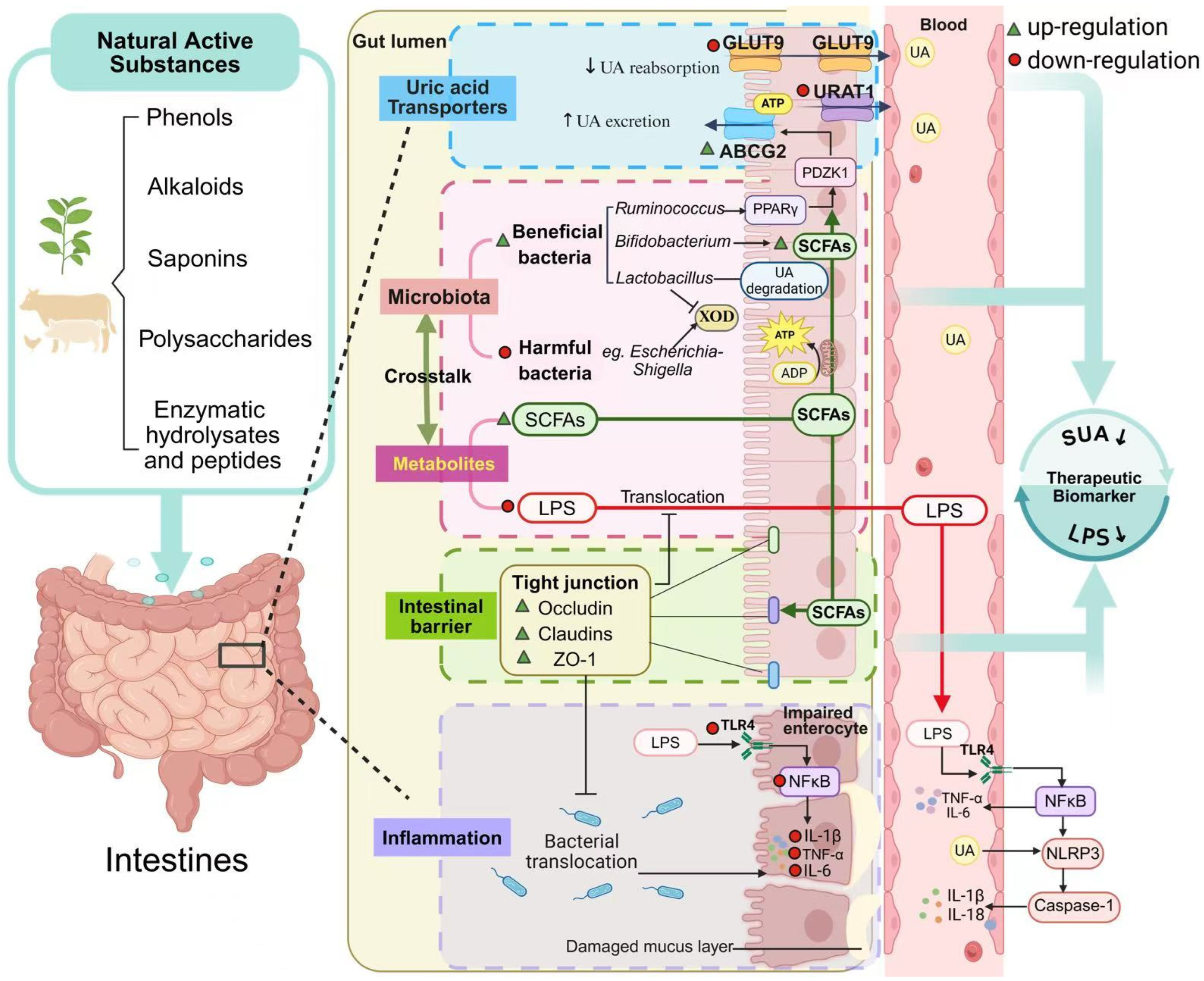
2.5. Inter-Mechanism Interaction Network
3. Natural Products Targeting the Gut in HUA
3.1. Regulation of Intestinal Flora and Metabolism
3.2. Regulation of Intestinal Barrier Function and Inflammation
3.3. Regulation of Intestinal Uric Acid Transporters
3.4. Synergistic Action of Multiple Targets
4. Conclusions and Perspective
Author Contributions
Funding
Institutional Review Board Statement
Informed Consent Statement
Data Availability Statement
Conflicts of Interest
Abbreviations
| UA | Uric Acid |
| HUA | Hyperuricemia |
| XOD | Xanthine Oxidase |
| ADA | Adenosine Deaminase |
| AMP | Adenosine Monophosphate |
| ABCG2 | ATP-binding cassette subfamily G2 |
| GLUT9 | Glucose Transporter 9 |
| SLC2A9 | Solute Carrier Family 2 Member 9 |
| URAT1 | Urate Anion Transporter 1 |
| OAT | Organic Anion Transporter |
| SCFAs | Short-Chain Fatty Acids |
| TJ | Tight Junction |
| ZO-1 | Zonula Occludens-1 |
| DAO | Diamine Oxidase |
| D-LAC | D-Lactic Acid |
| LPS | Lipopolysaccharide |
| TLR4 | Toll-like receptor 4 |
| NF-κB | Nuclear factor kappa-light-chain-enhancer of activated B cells |
| IL-1β | Interleukin-1 Beta |
| IL-6 | Interleukin-6 |
| TNF-α | Tumor Necrosis Factor-Alpha |
| GALT | Gut-Associated Lymphoid Tissue |
| NLRP3 | NOD-like Receptor Family Pyrin Domain Containing 3 |
| MSU | Monosodium Urate |
| SNP | Single nucleotide polymorphism |
| FMT | Fecal microbiota transplantation |
| Nrf2 | Nuclear Factor Erythroid 2-Related Factor 2 |
| CKD | Chronic kidney disease |
| AHR | Aryl Hydrocarbon Receptor |
| PPARγ | Peroxisome Proliferator-Activated Receptor Gamma |
| TMAO | Trimethylamine N-Oxide |
| OAT10 | Organic Anion Transporter 10 |
| KO | Knockout |
| WT | Wild Type |
| V/C | Villus Height-to-Crypt Depth Ratio |
| AMPK | AMP-activated Protein Kinase |
| AKT | Protein Kinase B |
| CREB | cAMP Response Element-Binding Protein |
| SPF | Specific Pathogen-Free |
| SD | Sprague–Dawley |
| KM | Kunming |
| C57BL/6J | C57 Black 6 Mouse Strain |
| ICR | Institute of Cancer Research |
| HFD | High-Fat Diet |
| PO | Potassium Oxonate |
| HX | Hypoxanthine |
| AD | Adenine |
| BW | Body Weight |
| CFU | Colony Forming Units |
| i.p. | Intraperitoneal injection |
| i.g. | Intragastric gavage |
| p.o. | Per os (oral administration) |
| mRNA | Messenger RNA |
| NMR | Nuclear Magnetic Resonance |
| LC-MS | Liquid Chromatography–Mass Spectrometry |
References
- Kuwabara, M.; Hisatome, I.; Ae, R.; Kosami, K.; Aoki, Y.; Andres-Hernando, A.; Kanbay, M.; Lanaspa, M.A. Hyperuricemia, A new cardiovascular risk. Nutr. Metab. Cardiovasc. Dis. 2025, 35, 103796. [Google Scholar] [CrossRef] [Scilit] [PubMed]
- Timsans, J.; Palomäki, A.; Kauppi, M. Gout and Hyperuricemia: A Narrative Review of Their Comorbidities and Clinical Implications. J. Clin. Med. 2024, 13, 7616. [Google Scholar] [CrossRef] [Scilit] [PubMed]
- Dehlin, M.; Jacobsson, L.; Roddy, E. Global epidemiology of gout: Prevalence, incidence, treatment patterns and risk factors. Nat. Rev. Rheumatol. 2020, 16, 380–390. [Google Scholar] [CrossRef] [Scilit] [PubMed]
- Liu, R.; Han, C.; Wu, D.; Xia, X.; Gu, J.; Guan, H.; Shan, Z.; Teng, W. Prevalence of Hyperuricemia and Gout in Mainland China from 2000 to 2014: A Systematic Review and Meta-Analysis. BioMed Res. Int. 2015, 2015, 762820. [Google Scholar] [CrossRef] [Scilit]
- Benn, C.L.; Dua, P.; Gurrell, R.; Loudon, P.; Pike, A.; Storer, R.I.; Vangjeli, C. Physiology of Hyperuricemia and Urate-Lowering Treatments. Front. Med. 2018, 5, 160. [Google Scholar] [CrossRef] [Scilit]
- Zhang, W.-Z.; Peng, Q.; Cai, X.-S.; Jiang, G.-L.; Huang, J.-J.; Lu, L.-L.; Feng, W.-Z.; Yan, P.-Y.; Gu, J.-R. A study on the correlation between hyperuricemia and lifestyle and dietary habits. Medicine 2025, 104, e41399. [Google Scholar] [CrossRef] [Scilit]
- Hong, R.; Huang, J.; Xu, C.; Zhang, X.; Mi, F.; Xu, F.; Wang, Y.; Feng, Y.; Yin, J. Association of Sedentary Behavior and Physical Activity With Hyperuricemia and Sex Differences: Results From the China Multi-Ethnic Cohort Study. J. Rheumatol. 2022, 49, 513–522. [Google Scholar] [CrossRef] [Scilit]
- Cho, C.; Kim, B.; Kim, D.S.; Hwang, M.Y.; Shim, I.; Song, M.; Lee, Y.C.; Jung, S.-H.; Cho, S.K.; Park, W.-Y.; et al. Large-scale cross-ancestry genome-wide meta-analysis of serum urate. Nat. Commun. 2024, 15, 3441. [Google Scholar] [CrossRef] [Scilit]
- Yang, Q.; Köttgen, A.; Dehghan, A.; Smith, A.V.; Glazer, N.L.; Chen, M.-H.; Chasman, D.I.; Aspelund, T.; Eiriksdottir, G.; Harris, T.B.; et al. Multiple Genetic Loci Influence Serum Urate Levels and Their Relationship With Gout and Cardiovascular Disease Risk Factors. Circ. Cardiovasc. Genet. 2010, 3, 523–530. [Google Scholar] [CrossRef] [Scilit]
- Li, X.; Meng, X.; Spiliopoulou, A.; Timofeeva, M.; Wei, W.-Q.; Gifford, A.; Shen, X.; He, Y.; Varley, T.; McKeigue, P.; et al. MR-PheWAS: Exploring the causal effect of SUA level on multiple disease outcomes by using genetic instruments in UK Biobank. Ann. Rheum. Dis. 2018, 77, 1039–1047. [Google Scholar] [CrossRef] [Scilit]
- Pilemann-Lyberg, S.; Hansen, T.W.; Tofte, N.; Winther, S.A.; Theilade, S.; Ahluwalia, T.S.; Rossing, P. Uric Acid Is an Independent Risk Factor for Decline in Kidney Function, Cardiovascular Events, and Mortality in Patients With Type 1 Diabetes. Diabetes Care 2019, 42, 1088–1094. [Google Scholar] [CrossRef] [Scilit] [PubMed]
- Jung, S.W.; Kim, S.-M.; Kim, Y.G.; Lee, S.-H.; Moon, J.-Y. Uric acid and inflammation in kidney disease. Am. J. Physiol.-Ren. Physiol. 2020, 318, F1327–F1340. [Google Scholar] [CrossRef] [Scilit] [PubMed]
- Zhao, S.; Feng, P.; Hu, X.; Cao, W.; Liu, P.; Han, H.; Jin, W.; Li, X. Probiotic Limosilactobacillus fermentum GR-3 ameliorates human hyperuricemia via degrading and promoting excretion of uric acid. iScience 2022, 25, 105198. [Google Scholar] [CrossRef] [Scilit] [PubMed]
- Kan, Y.; Zhang, Z.; Yang, K.; Ti, M.; Ke, Y.; Wu, L.; Yang, J.; He, Y. Influence of D-Amino Acids in Beer on Formation of Uric Acid. Food Technol. Biotechnol. 2019, 57, 418–425. [Google Scholar] [CrossRef] [Scilit]
- Liu, X.; Huang, S.; Xu, W.; Zhou, A.; Li, H.; Zhang, R.; Liu, Y.; Yang, Y.; Jia, H. Association of dietary patterns and hyperuricemia: A cross-sectional study of the Yi ethnic group in China. Food Nutr. Res. 2018, 62, 1380. [Google Scholar] [CrossRef] [Scilit]
- Lv, S.; Jia, W.; Zhang, R.; Zhang, L. Dietary anthocyanins as natural phytochemicals for regulating hyperuricemia: Proposed intestinal flora, key enzyme activity, and anti-inflammatory pathways. Trends Food Sci. Technol. 2024, 150, 104608. [Google Scholar] [CrossRef] [Scilit]
- Chen, Y.; Yang, J.; Rao, Q.; Wang, C.; Chen, X.; Zhang, Y.; Suo, H.; Song, J. Understanding Hyperuricemia: Pathogenesis, Potential Therapeutic Role of Bioactive Peptides, and Assessing Bioactive Peptide Advantages and Challenges. Foods 2023, 12, 4465. [Google Scholar] [CrossRef] [Scilit]
- Pan, L.; Han, P.; Ma, S.; Peng, R.; Wang, C.; Kong, W.; Cong, L.; Fu, J.; Zhang, Z.; Yu, H.; et al. Abnormal metabolism of gut microbiota reveals the possible molecular mechanism of nephropathy induced by hyperuricemia. Acta Pharm. Sin. B 2020, 10, 249–261. [Google Scholar] [CrossRef] [Scilit]
- Cicero, A.F.G.; Fogacci, F.; Kuwabara, M.; Borghi, C. Therapeutic Strategies for the Treatment of Chronic Hyperuricemia: An Evidence-Based Update. Medicina 2021, 57, 58. [Google Scholar] [CrossRef] [Scilit]
- Liu, Y.; Deng, W.; Wei, F.; Kang, X.; Han, R.; Feng, X.; Li, C.; Li, M.; Zhao, G.; Yu, J.; et al. Recent Advances in the Application of Foodborne Substances in Hyperuricemia. J. Agric. Food Chem. 2024, 72, 27639–27653. [Google Scholar] [CrossRef] [Scilit]
- Cicero, A.F.G.; Fogacci, F.; Cincione, R.I.; Tocci, G.; Borghi, C. Clinical Effects of Xanthine Oxidase Inhibitors in Hyperuricemic Patients. Med. Princ. Pract. 2021, 30, 122–130. [Google Scholar] [CrossRef] [Scilit]
- Lv, Q.; Xu, D.; Zhang, X.; Yang, X.; Zhao, P.; Cui, X.; Liu, X.; Yang, W.; Yang, G.; Xing, S. Association of Hyperuricemia With Immune Disorders and Intestinal Barrier Dysfunction. Front. Physiol. 2020, 11, 524236. [Google Scholar] [CrossRef] [Scilit] [PubMed]
- Zhang, X.; Cui, J.; Hou, J.; Wang, W. Research Progress of Natural Active Substances with Uric-Acid-Reducing Activity. J. Agric. Food Chem. 2022, 70, 15647–15664. [Google Scholar] [CrossRef] [Scilit] [PubMed]
- Dong, L.; Dong, F.; Guo, P.; Li, T.; Fang, Y.; Dong, Y.; Xu, X.; Cai, T.; Liang, S.; Song, X.; et al. Gut microbiota as a new target for hyperuricemia: A perspective from natural plant products. Phytomedicine 2025, 138, 156402. [Google Scholar] [CrossRef] [Scilit] [PubMed]
- Lv, Q.; Zhou, J.; Wang, C.; Yang, X.; Han, Y.; Zhou, Q.; Yao, R.; Sui, A. A dynamics association study of gut barrier and microbiota in hyperuricemia. Front. Microbiol. 2023, 14, 1287468. [Google Scholar] [CrossRef] [Scilit]
- Kasahara, K.; Kerby, R.L.; Zhang, Q.; Pradhan, M.; Mehrabian, M.; Lusis, A.J.; Bergström, G.; Bäckhed, F.; Rey, F.E. Gut bacterial metabolism contributes to host global purine homeostasis. Cell Host Microbe 2023, 31, 1038–1053.e1010. [Google Scholar] [CrossRef] [Scilit]
- Hsieh, C.-Y.; Lin, H.-J.; Chen, C.-H.; Lai, E.C.-C.; Yang, Y.-H.K. Chronic kidney disease and stroke. Lancet Neurol. 2014, 13, 1071. [Google Scholar] [CrossRef] [Scilit]
- Shuprovich, A.A.; Zinych, O.V.; Prybyla, O.V.; Kushnareva, N.N.; Kovalchuk, A.V.; Korpachev, V.V. Indicies of uric acid metabolism as marker of anabolic-catabolic balance in men and women with type 2 diabetes with different phenotypes. Diabetologia 2021, 64, 332. [Google Scholar]
- Kuo, Y.-W.; Hsieh, S.-H.; Chen, J.-F.; Liu, C.-R.; Chen, C.-W.; Huang, Y.-F.; Ho, H.-H. Lactobacillus reuteri TSR332 and Lactobacillus fermentum TSF331 stabilize serum uric acid levels and prevent hyperuricemia in rats. PeerJ 2021, 9, e11209. [Google Scholar] [CrossRef] [Scilit]
- Liu, Y.; Jarman, J.B.; Low, Y.S.; Augustijn, H.E.; Huang, S.; Chen, H.; DeFeo, M.E.; Sekiba, K.; Hou, B.-H.; Meng, X.; et al. A widely distributed gene cluster compensates for uricase loss in hominids. Cell 2023, 186, 3400–3413.e3420. [Google Scholar] [CrossRef] [Scilit]
- Xu, G.; Wu, L.; Yang, H.; Liu, T.; Tong, Y.; Wan, J.; Han, B.; Zhou, L.; Hu, X. Eupatilin inhibits xanthine oxidase in vitro and attenuates hyperuricemia and renal injury in vivo. Food Chem. Toxicol. 2024, 183, 114307. [Google Scholar] [CrossRef] [Scilit] [PubMed]
- Ezenabor, E.H.; Adeyemi, A.A.; Adeyemi, O.S.; Dubey, M.K. Gut Microbiota and Metabolic Syndrome: Relationships and Opportunities for New Therapeutic Strategies. Scientifica 2024, 2024, 4222083. [Google Scholar] [CrossRef] [Scilit] [PubMed]
- Ferrer-Picón, E.; Dotti, I.; Corraliza, A.M.; Mayorgas, A.; Esteller, M.; Perales, J.C.; Ricart, E.; Masamunt, M.C.; Carrasco, A.; Tristán, E.; et al. Intestinal Inflammation Modulates the Epithelial Response to Butyrate in Patients With Inflammatory Bowel Disease. Inflamm. Bowel Dis. 2020, 26, 43–55. [Google Scholar] [CrossRef] [Scilit] [PubMed]
- Xiang, S.; Ye, K.; Li, M.; Ying, J.; Wang, H.; Han, J.; Shi, L.; Xiao, J.; Shen, Y.; Feng, X.; et al. Xylitol enhances synthesis of propionate in the colon via cross-feeding of gut microbiota. Microbiome 2021, 9, 62. [Google Scholar] [CrossRef] [Scilit]
- Nieuwdorp, M.; Gilijamse, P.W.; Pai, N.; Kaplan, L.M. Role of the Microbiome in Energy Regulation and Metabolism. Gastroenterology 2014, 146, 1525–1533. [Google Scholar] [CrossRef] [Scilit]
- Xu, D.; Lv, Q.; Wang, X.; Cui, X.; Zhao, P.; Yang, X.; Liu, X.; Yang, W.; Yang, G.; Wang, G.; et al. Hyperuricemia is associated with impaired intestinal permeability in mice. Am. J. Physiol.-Gastrointest. Liver Physiol. 2019, 317, G484–G492. [Google Scholar] [CrossRef] [Scilit]
- Wada, A.; Higashiyama, M.; Kurihara, C.; Ito, S.; Tanemoto, R.; Mizoguchi, A.; Nishii, S.; Inaba, K.; Sugihara, N.; Hanawa, Y.; et al. Protective Effect of Luminal Uric Acid Against Indomethacin-Induced Enteropathy: Role of Antioxidant Effect and Gut Microbiota. Dig. Dis. Sci. 2021, 67, 121–133. [Google Scholar] [CrossRef] [Scilit]
- Martínez-Nava, G.A.; Altamirano-Molina, E.; Vázquez-Mellado, J.; Casimiro-Soriguer, C.S.; Dopazo, J.; Lozada-Pérez, C.; Herrera-López, B.; Martínez-Gómez, L.E.; Martínez-Armenta, C.; Guido-Gómora, D.L.; et al. Metatranscriptomic analysis reveals gut microbiome bacterial genes in pyruvate and amino acid metabolism associated with hyperuricemia and gout in humans. Sci. Rep. 2025, 15, 9981. [Google Scholar] [CrossRef] [Scilit]
- Wei, J.; Zhang, Y.; Dalbeth, N.; Terkeltaub, R.; Yang, T.; Wang, Y.; Yang, Z.; Li, J.; Wu, Z.; Zeng, C.; et al. Association Between Gut Microbiota and Elevated Serum Urate in Two Independent Cohorts. Arthritis Rheumatol. 2022, 74, 682–691. [Google Scholar] [CrossRef] [Scilit]
- Patel, D.; Menon, D.; Bernfeld, E.; Mroz, V.; Kalan, S.; Loayza, D.; Foster, D.A. Aspartate Rescues S-phase Arrest Caused by Suppression of Glutamine Utilization in KRas-driven Cancer Cells. J. Biol. Chem. 2016, 291, 9322–9329. [Google Scholar] [CrossRef] [Scilit]
- Wang, F.; Sun, L.; Zong, G.; Gao, X.; Zhang, H.; Xiong, Q.; Huo, S.; Niu, Z.; Sun, Q.; Zeng, R.; et al. Associations of Amino Acid and Acylcarnitine Profiles With Incident Hyperuricemia in Middle-Aged and Older Chinese Individuals. Arthritis Care Res. 2020, 72, 1305–1314. [Google Scholar] [CrossRef] [Scilit]
- Sylvestre, M.; Di Carlo, S.E.; Peduto, L. Stromal regulation of the intestinal barrier. Mucosal Immunol. 2023, 16, 221–231. [Google Scholar] [CrossRef] [Scilit] [PubMed]
- Shi, P.; Tang, L.; Yin, F.; Guo, H.; Liu, J. Expression, Function, and Regulation of ABCG2 on the Intestinal Epithelial Barrier Permeability. Curr. Drug Metab. 2025, 26, 30–38. [Google Scholar] [CrossRef] [Scilit] [PubMed]
- Guo, Y.; Li, H.; Liu, Z.; Li, C.; Chen, Y.; Jiang, C.; Yu, Y.; Tian, Z. Impaired intestinal barrier function in a mouse model of hyperuricemia. Mol. Med. Rep. 2019, 20, 3292–3300. [Google Scholar] [CrossRef] [Scilit] [PubMed]
- Cui, Y.; Wang, Q.; Chang, R.; Zhou, X.; Xu, C. Intestinal Barrier Function–Non-alcoholic Fatty Liver Disease Interactions and Possible Role of Gut Microbiota. J. Agric. Food Chem. 2019, 67, 2754–2762. [Google Scholar] [CrossRef] [Scilit]
- Yang, X.; Liu, D.; Zhao, X.; Han, Y.; Zhang, X.; Zhou, Q.; Lv, Q. Hyperuricemia drives intestinal barrier dysfunction by regulating gut microbiota. Heliyon 2024, 10, e36024. [Google Scholar] [CrossRef] [Scilit]
- Zhou, Y.; Zhao, M.; Pu, Z.; Xu, G.; Li, X. Relationship between oxidative stress and inflammation in hyperuricemia. Medicine 2018, 97, e13108. [Google Scholar] [CrossRef] [Scilit]
- Zhang, Y.; He, F.; Yu, X.; Li, T.; Zhou, L.; Shen, B. Hyperuricemia-induced kidney injury: A narrative review of mechanisms and therapeutic advances. BMC Nephrol. 2025, 26, 629. [Google Scholar] [CrossRef] [Scilit]
- Mehmood, A.; Iftikhar, A.; Chen, X. Food-derived bioactive peptides with anti-hyperuricemic activity: A comprehensive review. Food Chem. 2024, 451, 139444. [Google Scholar] [CrossRef] [Scilit]
- Qi, P.; Li, L.; Zhang, J.; Ren, L.; Xie, X. The dual regulatory effects of intestinal microorganisms and their metabolites in gouty arthritis pathogenesis: A balance between promotion and inhibition. Front. Immunol. 2025, 16, 1591369. [Google Scholar] [CrossRef] [Scilit]
- Liu, P.; Wang, W.; Li, Q.; Hu, X.; Xu, B.; Wu, C.; Bai, L.; Ping, L.; Lan, Z.; Chen, L. Methyl Gallate Improves Hyperuricemia Nephropathy Mice Through Inhibiting NLRP3 Pathway. Front. Pharmacol. 2021, 12, 759040. [Google Scholar] [CrossRef] [Scilit]
- Yin, H.; Liu, N.; Chen, J. The Role of the Intestine in the Development of Hyperuricemia. Front. Immunol. 2022, 13, 845684. [Google Scholar] [CrossRef] [Scilit] [PubMed]
- Zhu, C.S.; Sun, B.; Zhang, B.; Zhou, Z. An update of genetics, co-morbidities and management of hyperuricaemia. Clin. Exp. Pharmacol. Physiol. 2021, 48, 1305–1316. [Google Scholar] [CrossRef] [Scilit] [PubMed]
- DeBosch, B.J.; Kluth, O.; Fujiwara, H.; Schürmann, A.; Moley, K. Early-onset metabolic syndrome in mice lacking the intestinal uric acid transporter SLC2A9. Nat. Commun. 2014, 5, 4642. [Google Scholar] [CrossRef] [Scilit] [PubMed]
- Estiverne, C.; Mandal, A.K.; Mount, D.B. Molecular Pathophysiology of Uric Acid Homeostasis. Semin. Nephrol. 2020, 40, 535–549. [Google Scholar] [CrossRef] [Scilit]
- Fujita, K.; Ichida, K. ABCG2 as a therapeutic target candidate for gout. Expert Opin. Ther. Targets 2017, 22, 123–129. [Google Scholar] [CrossRef] [Scilit]
- Matsuo, H.; Takada, T.; Ichida, K.; Nakamura, T.; Nakayama, A.; Ikebuchi, Y.; Ito, K.; Kusanagi, Y.; Chiba, T.; Tadokoro, S.; et al. Common Defects of ABCG2, a High-Capacity Urate Exporter, Cause Gout: A Function-Based Genetic Analysis in a Japanese Population. Sci. Transl. Med. 2009, 1, 5ra11. [Google Scholar] [CrossRef] [Scilit]
- Bartos, Z.; Homolya, L. Identification of Specific Trafficking Defects of Naturally Occurring Variants of the Human ABCG2 Transporter. Front. Cell Dev. Biol. 2021, 9, 615729. [Google Scholar] [CrossRef] [Scilit]
- Zhang, W.; Jin, Y.; Li, J.; Huang, J.; Chen, H. Effects of Genetic and Nongenetic Factors on Hyperuricemia in Chinese Patients with Coronary Artery Disease. Pharmacogenomics 2021, 22, 821–831. [Google Scholar] [CrossRef] [Scilit]
- Abdulhafiz, F.; Mohammed, A.; Chiruvella, K.K.; Korivi, M.; Reduan, M.F.H. Editorial: Natural products in the treatment of Hyperuricemia, gout and other metabolic disorders. Front. Pharmacol. 2023, 14, 1333257. [Google Scholar] [CrossRef] [Scilit]
- Wang, Z.; Li, Y.; Liao, W.; Huang, J.; Liu, Y.; Li, Z.; Tang, J. Gut microbiota remodeling: A promising therapeutic strategy to confront hyperuricemia and gout. Front. Cell. Infect. Microbiol. 2022, 12, 935723. [Google Scholar] [CrossRef] [Scilit] [PubMed]
- Chen, K.-L.; Xie, D.-D.; Luo, M.-P.; Liu, B.; Li, Y.; Zhao, Y.-J.; Zhao, X.-X.; Pei, J.-M.; Ding, Y.-G.; Feng, Z.-P.; et al. Functional Food Potential of Chrysanthemum morifolium, Perilla frutescens, and Sophora japonica in Managing Hyperuricemia through Dual Enzyme Inhibition. J. Agric. Food Chem. 2024, 72, 25879–25894. [Google Scholar] [CrossRef] [Scilit] [PubMed]
- Zhou, Y.; Zeng, Y.; Wang, R.; Pang, J.; Wang, X.; Pan, Z.; Jin, Y.; Chen, Y.; Yang, Y.; Ling, W. Resveratrol Improves Hyperuricemia and Ameliorates Renal Injury by Modulating the Gut Microbiota. Nutrients 2024, 16, 1086. [Google Scholar] [CrossRef] [Scilit] [PubMed]
- Li, Y.; Pu, L.-Y.; Li, Y.; Zhu, G.; Wu, Z. Design, synthesis and evaluation of a myricetin and nobiletin hybrid compound for alleviating hyperuricemia based on metabolomics and gut microbiota. RSC Adv. 2023, 13, 21448–21458. [Google Scholar] [CrossRef] [Scilit]
- Li, D.; Zhang, M.; Teng Zhu La, A.L.; Lyu, Z.; Li, X.; Feng, Y.; Liu, D.; Guo, Y.; Hu, Y. Quercetin-enriched Lactobacillus aviarius alleviates hyperuricemia by hydrolase-mediated degradation of purine nucleosides. Pharmacol. Res. 2023, 196, 106928. [Google Scholar] [CrossRef] [Scilit]
- Ren, Q.; Cheng, L.; Guo, F.; Tao, S.; Zhang, C.; Ma, L.; Fu, P. Fisetin Improves Hyperuricemia-Induced Chronic Kidney Disease via Regulating Gut Microbiota-Mediated Tryptophan Metabolism and Aryl Hydrocarbon Receptor Activation. J. Agric. Food Chem. 2021, 69, 10932–10942. [Google Scholar] [CrossRef] [Scilit]
- Xu, Y.; Cao, X.; Zhao, H.; Yang, E.; Wang, Y.; Cheng, N.; Cao, W. Impact of Camellia japonica Bee Pollen Polyphenols on Hyperuricemia and Gut Microbiota in Potassium Oxonate-Induced Mice. Nutrients 2021, 13, 2665. [Google Scholar] [CrossRef] [Scilit]
- Chen, Y.; Pei, C.; Chen, Y.; Xiao, X.; Zhang, X.; Cai, K.; Deng, S.; Liang, R.; Xie, Z.; Li, P.; et al. Kidney tea ameliorates hyperuricemia in mice via altering gut microbiota and restoring metabolic profile. Chem.-Biol. Interact. 2023, 376, 110449. [Google Scholar] [CrossRef] [Scilit]
- Zhao, Z.X.; Tang, X.H.; Jiang, S.L.; Pang, J.Q.; Xu, Y.B.; Yuan, D.D.; Zhang, L.L.; Liu, H.M.; Fan, Q. Astragaloside IV improves the pharmacokinetics of febuxostat in rats with hyperuricemic nephropathy by regulating urea metabolism in gut microbiota. Front. Pharmacol. 2022, 13, 1031509. [Google Scholar] [CrossRef] [Scilit]
- Zhang, W.; Cui, Y.; Liu, Z.; Wang, S.; Yang, A.; Li, X.; Zhang, J. Astragalus membranaceus ultrafine powder alleviates hyperuricemia by regulating the gut microbiome and reversing bile acid and adrenal hormone biosynthesis dysregulation. Arab. J. Chem. 2022, 15, 103970. [Google Scholar] [CrossRef] [Scilit]
- Ji, X.; Yu, L.; Han, C.; Gao, H.; Cai, Y.; Li, J.; He, Y.; Lu, H.; Song, G.; Xue, P. Investigating the effects of rare ginsenosides on hyperuricemia and associated sperm damage via nontargeted metabolomics and gut microbiota. J. Ethnopharmacol. 2024, 332, 118362. [Google Scholar] [CrossRef] [Scilit]
- Ren, F.; Lin, J.; Zhu, M.; Ma, R.; Zhang, M.; Chen, W.; Ma, G.; Chen, H.; He, R.; Chen, W. Polysaccharides from Alpinia oxyphylla fruit prevent hyperuricemia by inhibiting uric acid synthesis, modulating intestinal flora and reducing renal inflammation. Int. J. Biol. Macromol. 2024, 278, 134782. [Google Scholar] [CrossRef] [Scilit] [PubMed]
- Xu, M.; Xiao, H.; Zou, X.; Pan, L.; Song, Q.; Hou, L.; Zeng, Y.; Han, Y.; Zhou, Z. Mechanisms of levan in ameliorating hyperuricemia: Insight into levan on serum metabolites, gut microbiota, and function in hyperuricemia rats. Carbohydr. Polym. 2025, 347, 122665. [Google Scholar] [CrossRef] [Scilit] [PubMed]
- Li, Y.; Li, L.; Tian, J.; Zheng, F.; Liao, H.; Zhao, Z.; Chen, Y.; Pang, J.; Wu, T. Insoluble Fiber in Barley Leaf Attenuates Hyperuricemic Nephropathy by Modulating Gut Microbiota and Short-Chain Fatty Acids. Foods 2022, 11, 3482. [Google Scholar] [CrossRef] [Scilit] [PubMed]
- Wei, B.; Ren, P.; Xue, C.; Wang, Y.; Tang, Q. Guluronate oligosaccharides exerts beneficial effects on hyperuricemia and regulation of gut microbiota in mice. Food Biosci. 2023, 54, 102855. [Google Scholar] [CrossRef] [Scilit]
- Wang, Z.; Zhang, Z.; Lu, C.; Zhou, J.; Wang, Z.; Han, J.; Su, X. Effects of Sporisorium reiliana polysaccharides and Phoenix dactylifera monosaccharides on the gut microbiota and serum metabolism in mice with fructose-induced hyperuricemia. Arch. Microbiol. 2022, 204, 436. [Google Scholar] [CrossRef] [Scilit]
- Wang, L.-M.; Wang, P.; Teka, T.; Zhang, Y.-C.; Yang, W.-Z.; Zhang, Y.; Wang, T.; Liu, L.-X.; Han, L.-F.; Liu, C.-X. 1H NMR and UHPLC/Q-Orbitrap-MS-Based Metabolomics Combined with 16S rRNA Gut Microbiota Analysis Revealed the Potential Regulation Mechanism of Nuciferine in Hyperuricemia Rats. J. Agric. Food Chem. 2020, 68, 14059–14070. [Google Scholar] [CrossRef] [Scilit]
- Wang, R.; Halimulati, M.; Huang, X.; Ma, Y.; Li, L.; Zhang, Z. Sulforaphane-driven reprogramming of gut microbiome and metabolome ameliorates the progression of hyperuricemia. J. Adv. Res. 2023, 52, 19–28. [Google Scholar] [CrossRef] [Scilit]
- Fan, S.; Huang, Y.; Lu, G.; Sun, N.; Wang, R.; Lu, C.; Ding, L.; Han, J.; Zhou, J.; Li, Y.; et al. Novel anti-hyperuricemic hexapeptides derived from Apostichopus japonicus hydrolysate and their modulation effects on the gut microbiota and host microRNA profile. Food Funct. 2022, 13, 3865–3878. [Google Scholar] [CrossRef] [Scilit]
- Han, J.; Wang, X.; Tang, S.; Lu, C.; Wan, H.; Zhou, J.; Li, Y.; Ming, T.; Wang, Z.J.; Su, X. Protective effects of tuna meat oligopeptides (TMOP) supplementation on hyperuricemia and associated renal inflammation mediated by gut microbiota. FASEB J. 2020, 34, 5061–5076. [Google Scholar] [CrossRef] [Scilit]
- Xu, X.; Wang, H.; Guo, D.; Man, X.; Liu, J.; Li, J.; Luo, C.; Zhang, M.; Zhen, L.; Liu, X. Curcumin modulates gut microbiota and improves renal function in rats with uric acid nephropathy. Ren. Fail. 2021, 43, 1063–1075. [Google Scholar] [CrossRef] [Scilit]
- Yao, J.; Bai, E.; Duan, Y.; Huang, Y. Ethanol Extracts from Torreya grandis Seed Have Potential to Reduce Hyperuricemia in Mouse Models by Influencing Purine Metabolism. Foods 2024, 13, 840. [Google Scholar] [CrossRef] [Scilit] [PubMed]
- Xue, M.; Du, R.; Zhou, Y.; Liu, Y.; Tian, Y.; Xu, Y.; Yan, J.; Song, P.; Wan, L.; Xu, H.; et al. Fucoidan Supplementation Relieved Kidney Injury and Modulated Intestinal Homeostasis in Hyperuricemia Mice. J. Agric. Food Chem. 2024, 72, 27187–27202. [Google Scholar] [CrossRef] [Scilit] [PubMed]
- Bian, M.; Wang, J.; Wang, Y.; Nie, A.; Zhu, C.; Sun, Z.; Zhou, Z.; Zhang, B. Chicory ameliorates hyperuricemia via modulating gut microbiota and alleviating LPS/TLR4 axis in quail. Biomed. Pharmacother. 2020, 131, 110719. [Google Scholar] [CrossRef] [Scilit] [PubMed]
- Lou, X.-J.; Wang, Y.-Z.; Lei, S.-S.; He, X.; Lu, T.-T.; Zhan, L.-H.; Chen, X.; Chen, Y.-H.; Li, B.; Zheng, X.; et al. Beneficial Effects of Macroporous Resin Extract of Dendrobium candidum Leaves in Rats with Hyperuricemia Induced by a High-Purine Diet. Evid.-Based Complement. Altern. Med. 2020, 2020, 3086106. [Google Scholar] [CrossRef] [Scilit]
- Zhao, J.; Fu, Y.; Qiu, H. Effect and mechanism of Plantaginis Semen polysaccharides on intestinal microecology in rats with hyperuricemia. Front. Microbiol. 2025, 16, 1555734. [Google Scholar] [CrossRef] [Scilit]
- Zhou, X.; Zhang, B.; Zhao, X.; Lin, Y.; Wang, J.; Wang, X.; Hu, N.; Wang, S. Chlorogenic acid supplementation ameliorates hyperuricemia, relieves renal inflammation, and modulates intestinal homeostasis. Food Funct. 2021, 12, 5637–5649. [Google Scholar] [CrossRef] [Scilit]
- Liu, X.; Liang, X.-Q.; Lu, T.-C.; Feng, Z.; Zhang, M.; Liao, N.-Q.; Zhang, F.-L.; Wang, B.; Wang, L.-S. Leech Poecilobdella manillensis protein extract ameliorated hyperuricemia by restoring gut microbiota dysregulation and affecting serum metabolites. World J. Gastroenterol. 2024, 30, 3488–3510. [Google Scholar] [CrossRef] [Scilit]
- Wu, H.; Pang, M.-m.; Li, Y.-l.; Hong, J.-h.; Liu, P.-m.; Bian, M.; Yang, J.-j. Allicin Aplealleviates Gouty Arthritis by Regulating the Gut-Joint Axis, Reducing XOD Activity, Inhibiting Oxidative Stress, and Suppressing NLRP3 Inflammasome Activation. Drug Des. Dev. Ther. 2025, 19, 7887–7907. [Google Scholar] [CrossRef] [Scilit]
- Li, Q.; Lin, H.; Niu, Y.; Liu, Y.; Wang, Z.; Song, L.; Gao, L.; Li, L. Mangiferin promotes intestinal elimination of uric acid by modulating intestinal transporters. Eur. J. Pharmacol. 2020, 888, 173490. [Google Scholar] [CrossRef] [Scilit]
- Chen, Q.; Li, D.; Wu, F.; He, X.; Zhou, Y.; Sun, C.; Wang, H.; Liu, Y. Berberine Regulates the Metabolism of Uric Acid and Modulates Intestinal Flora in Hyperuricemia Rats Model. Comb. Chem. High Throughput Screen. 2023, 26, 2057–2066. [Google Scholar] [CrossRef] [Scilit] [PubMed]
- Zhang, Y.; Jin, L.; Liu, J.; Wang, W.; Yu, H.; Li, J.; Chen, Q.; Wang, T. Effect and mechanism of dioscin from Dioscorea spongiosa on uric acid excretion in animal model of hyperuricemia. J. Ethnopharmacol. 2018, 214, 29–36. [Google Scholar] [CrossRef] [Scilit] [PubMed]
- Zhang, N.; Zhou, J.; Zhao, L.; Zhao, Z.; Wang, S.; Zhang, L.; Zhou, F. Ferulic acid supplementation alleviates hyperuricemia in high-fructose/fat diet-fed rats via promoting uric acid excretion and mediating the gut microbiota. Food Funct. 2023, 14, 1710–1725. [Google Scholar] [CrossRef] [Scilit] [PubMed]
- Guo, Y.; Yu, Y.; Li, H.; Ding, X.; Li, X.; Jing, X.; Chen, J.; Liu, G.; Lin, Y.; Jiang, C.; et al. Inulin supplementation ameliorates hyperuricemia and modulates gut microbiota in Uox-knockout mice. Eur. J. Nutr. 2020, 60, 2217–2230. [Google Scholar] [CrossRef] [Scilit]
- Zhang, T.; Liu, S.; Liu, S.; Zhao, P.; Zhang, C.; Wang, X.; Meng, Y.; Lu, Y. Oleanolic Acid Alleviates Hyperuricemia via Gut Microbiota Control the Integrity of Gut Barrier and the Expressions of Urate Transporter in Mice. J. Agric. Food Chem. 2025, 73, 5899–5914. [Google Scholar] [CrossRef] [Scilit]
- Qi, X.; Ma, Y.; Guan, K.; Zhao, L.; Ma, Y.; Wang, R. Whey Protein Peptide Pro-Glu-Trp Ameliorates Hyperuricemia by Enhancing Intestinal Uric Acid Excretion, Modulating the Gut Microbiota, and Protecting the Intestinal Barrier in Rats. J. Agric. Food Chem. 2024, 72, 2573–2584. [Google Scholar] [CrossRef] [Scilit]
- He, M.; Jiang, N.; Jiang, L.; Tang, T.; Zhang, Q.; Xu, Q.; Li, S.; Zhang, F.; Fan, X.; Han, J. Advances in external therapies of traditional Chinese medicine for the management of hyperuricemia: A comprehensive review. Front. Endocrinol. 2025, 16, 1667523. [Google Scholar] [CrossRef] [Scilit]
- Yang, S.; Chen, Q.; You, Y.; Wu, C.; Chen, M.; Yang, A.W.H.; Sun, X.; Hung, A.; Zhao, X.; Li, H. Molecular mechanisms of Lycii Fructus (Goji berries) against xanthine dehydrogenase in hyperuricemia management: Integrating computational, metabolomic, and experimental approaches. Food Res. Int. 2025, 204, 115926. [Google Scholar] [CrossRef] [Scilit]
- Song, G.; Li, F.; Shi, X.; Liu, J.; Cheng, Y.; Wu, Y.; Fang, Z.; Zhu, Y.; Wang, D.; Yuan, T.; et al. Characterization of ultrasound-assisted covalent binding interaction between β-lactoglobulin and dicaffeoylquinic acid: Great potential for the curcumin delivery. Food Chem. 2024, 441, 138400. [Google Scholar] [CrossRef] [Scilit]
- Li, H.; Wang, T.; Hu, Y.; Wu, J.; Van der Meeren, P. Designing delivery systems for functional ingredients by protein/polysaccharide interactions. Trends Food Sci. Technol. 2022, 119, 272–287. [Google Scholar] [CrossRef] [Scilit]
- Wang, M.; Zhao, L.; Liu, Y.; Tian, D.; Jiang, A.; Cai, Q.; Xiang, Y.; Zhang, L.; Chen, Y.; Ye, J.; et al. Chylomicron-mimicking supramolecular nano emulsion for oral luteolin delivery against hyperuricemia. Pharm. Dev. Technol. 2025, 30, 1543–1556. [Google Scholar] [CrossRef] [Scilit]
- Liu, X.; Zhang, L.; Lai, B.; Li, J.; Zang, J.; Ma, L. Harnessing Protein Hydrolysates and Peptides for Hyperuricemia Management: Insights into Sources, Mechanisms, Techniques, and Future Directions. J. Agric. Food Chem. 2024, 72, 18758–18773. [Google Scholar] [CrossRef] [Scilit]



| Bioactive Compound | Model | Dose | Microbiota Findings | Mode of Mechanism | Reference |
|---|---|---|---|---|---|
| Resveratrol (RES) | Male C57BL/6J mice (n = 12/group) were fed with high-fat diet (HFD) for 8 weeks. | 0.1% in diet, ≈ 100 mg/kg BW/day, p.o. | ↑ Lactobacillus sp. ESL0791, Lacticaseibacillus rhamnosus; ↓ Eisenbergiella tayi | Decrease the expression of genes related to purine metabolism. | [63] |
| Myricetin and nobiletin (MNH) | Male SPF KM mice (n = 10/group) were fed with 15% (w/w) yeast paste diet for 9 weeks. | 30 mg/kg BW/day, i.g. | ↑ norank_f_Muribaculaceae, Bacteroide; ↓ Lactobacillus, Limosilactobacillus | Regulate the metabolic pathways involved in glycerophospholipid metabolism, arachidonic acid metabolism, and alanine/aspartate/glutamate metabolism. | [64] |
| Quercetin | Arbor Acres broilers (n = 10–14/group) were gavaged with yeast powder (10 g/kg) and AD (100 mg/kg) for 7 weeks; Male KM mice (n = 10/group) were gavaged with 100 mg/kg AD and intraperitoneally injected with 300 mg/kg PO daily for 4 weeks. | Quercetin: 200 mg/kg BW/day, i.g.; L. aviarius CML180: 0.2 mL of 1 × 10⁸ CFU/mL bacterial solution, i.g. | ↑ Lactobacillus; ↓ Clostridium perfringens | Increase the hydrophobicity of L. aviarius CML180 and its ability to co-aggregate with Clostridium perfringens. Promote the adhesion of L. aviarius CML180 to cells in the intestinal epithelium. Upregulate purine nucleoside-hydrolyzing activity. | [65] |
| Fisetin | Male C57BL/6J mice (n = 6/group) were administrated AD (160 mg/kg) and PO (2400 mg/kg) every other day for 4 weeks. | 50 and 100 mg/kg BW/day, p.o. | ↑ Epsilonbacteraeota, Bacteroidetes; ↓ Firmicutes | Inhibit gut microbiota-mediated tryptophan metabolism and AHR activation. | [66] |
| Camellia japonica bee pollen polyphenols | Male KM mice (n = 10/group) were administered intragastrically with 300 mg/kg PO for 7 days. | 2 and 4 g/kg BW/day, i.g. | ↑ Lactobacillus, Clostridiaceae, Proteobacteria; ↓ Firmicutes, Bacteroidia. | Increase SCFAs (acetic acid, butyric acid); provide energy for excretion of uric acid by the cells in the intestinal wall. | [67] |
| Kidney tea (KT) | Male C57BL/6 mice (n = 6/group) were given 300 mg/kg PO (i.p.) for 14 days. | 1.6 g/kg BW/day, i.g. | ↑ Roseburia, Enterorhabdus; ↓ Ileibacterium | Upregulate the biosynthesis of phenylalanine/tyrosine/tryptophan. | [68] |
| Astragaloside IV (AST) | Male SD rats (n = 6/group) were fed with 10% yeast and 0.15% AD for 4 weeks. | 5 and 10 mg/kg BW/day, p.o.; 2 mg/kg BW/day i.p. | ↑ Faecalibacterium, Lachnospira; ↓ Eubacterium, Parabacteroides, Clostridium | Regulate urea metabolism, anti-calcification, and SCFA generation through gut microbiota. | [69] |
| Astragalus membranaceus ultrafine powder (AMUP) | Pathogen-free male SD rats with intragastric administration of 300 mg/kg PO combined with 10% fructose water feeding for 24 days. | 1.5 and 3 g/kg BW/day, i.g. | ↑ Clostridium, Trichosporonaceae | Decrease the content of bile acid and its downstream metabolites in fecal, and decrease the levels of biomarkers related to immune cells and intestinal inflammatory responses. | [70] |
| Rare ginsenosides (RGS) | Male KM mice (n = 6/group) were injected intraperitoneally with 300 mg/kg/d PO for 35 days. | 50, 100 and 200 mg/kg BW/day, p.o. | ↑ Firmicutes/Bacteroidetes (F/B) ratio | Upregulate sphingolipid metabolism and pyrimidine metabolism. | [71] |
| A. oxyphylla polysaccharide (AFP) | Male C57 BL/6J mice (n = 10/group) were given 50 mg/kg PO (i.g.) and 250 mg/kg AD (i.g.) for 28 days. | 100 and 200 mg/kg BW/day, i.g. | ↑ Prevotella, Ruminococcus; ↓ Parabacteroides, Helicobacter | Regulate the metabolism of pyrimidine, alanine, aspartate, and glutamate. | [72] |
| Levan | Male SD rats (n = 8/group) were given a mixed solution of 1.0 g/kg PO (i.g.) and 0.1 g/kg HX (i.g.) for 3 weeks. | 100 and 200 mg/kg BW/day, i.g. | ↑ Muribaculaceae, Faecalibaculum, Bifidobacterium, Lactobacillus; Roseburia ↓ Lactobacillus, Proteus | ↑ SCFAs, LysoPCs, Pi(38:4), GPlns(18:0/20:4) and Glyceraldehyde; ↓ O-acetylcarnitine, SLPC. Upregulate lipid metabolism, glycerophospholipid metabolism, and immune response. | [73] |
| Insoluble fiber in Barley Leaf | Male KM mice (n = 6/group) received 350 mg/kg/d PO intraperitoneally and 70 mg/kg/d AD by gastric gavage for 14 days. | 2.5% (w/w) in diet, p.o. (≈1.34% insoluble fiber by weight) | ↑ Bacteroides, Alloprevotella, Eisenbergiella | Increase fecal SCFAs (acetate, propionate, butyrate). | [74] |
| Guluronate oligosaccharides (GOS) | Male Balb/c mice (n = 11/group) were fed a diet containing 25% yeast and injected intraperitoneally with PO for 4 weeks. | 200 mg/kg BW/day, i.g. | ↑ Lachnospiraceae_UCG_006, Ruminococcus; ↓ Bilophila, Tuzzerella | Enhance colonic SCFAs; reduce mRNA levels of intestinal GLUT9. | [75,76] |
| Sporisorium reiliana polysaccharides | SPF C57BL/6 male (n = 8/group) mice were given 13% fructose solution for 8 weeks. | 50 and 100 mg/kg BW/day, i.g. | ↓ Bacteroidetes, Proteobacteria | Decrease the expression of genes involved in glycolysis/gluconeogenesis metabolic pathways and purine metabolism. | [76] |
| Nuciferine | Male SD adult rats (n = 10/group) were orally administered with 250 mg/kg PO. | 25 mg/kg BW/day, p.o. | ↑ Firmicutes; ↓ Bacteroidetes, Tenericutes | Regulate glycolysis and TCA metabolism; increased glycine, serine, glycerophospholipid in urine and plasma. Reduce intestinal uric acid by downregulating nucleotide metabolism. | [77] |
| Sulforaphane (SFN) | Male SD rats (n = 10/group) were fed with common feedstuffs and 20% yeast with 4% PO for 6 weeks. | 10 mg/kg BW/day, i.g. | ↑ Streptomyces, Clostridium azureum, Clostridium lactis | Epigenetic modification of Nrf2 and interaction between gut microbiota and epigenetic modification. | [78] |
| GPAGPR and GPSGRP from Apostichopus japonicus | Male C57BL/6 mice (n = 5/group) received 200 mg/kg/d of HX (i.g.), 30 mg/kg/d of yeast extract (i.g.) and 250 mg/kg/d of PO (i.g.) for 12 weeks. | 10 mg/kg BW/day, i.g. | ↑ Lactobacillus; ↑ Escherichia, Bilophila, Desulfovibrio | Modulate microbial SCFA, bile acid, and tryptophan metabolism. | [79] |
| Tuna meat oligopeptides (TMOP) | Male ICR mice (n = 8/group) received 200 mg/kg/d HX (i.g.), 30 mg/kg/d yeast extract (i.g.) and 250 mg/kg/d PO (i.g.) for 8 weeks. | 50 and 300 mg/kg BW/day, i.g. | ↑ Clostridium, Ruminococcus, Bifidobacterium, Eubacterium | Increase mRNA and protein level of the occludin and claudin-1. | [80] |
| Bioactive Compound | Model | Dose | Mode of Mechanism | Reference |
|---|---|---|---|---|
| Curcumin | Male Wistar rats (n = 10/group) were treated with 150 mg/kg AD (i.g.) and 250 mg/kg PO (i.g.) for 4 weeks. | 200 mg/kg BW/day, i.g. | Increase protein expression of ZO-1 and occludin in the ileum. | [81] |
| Ethanol extracts of Torreya grandis seed (EST) | SPF male Kunming mice (n = 7/group) received intraperitoneal injections of 300 mg/kg PO for two weeks. | 5 mg/kg BW/day, i.g. | Increase protein expression of NPT1 in intestine. Produce SCFAs with immunomodulatory and anti-inflammatory effects on the intestine. Provide colon protection and have a positive association with tight junction proteins. | [82] |
| Fucoidan | Male C57BL/6J mice (n = 10/group) were fed with a high yeast diet (10% w/w yeast) and given daily intragastric administration of PO (250 mg/kg) and AD (100 mg/kg) for 10 weeks. | 150 and 300 mg/kg BW/day, i.g. | Reduce serum lipopolysaccharide and improve the intestinal mucosal barrier function. Increase butyric acid; enhance the expression of ABCG2 via the AMPK/AKT/CREB pathway in ileum. | [83] |
| Chicory | Male quails (n = 8/group) were fed the formulation with added yeast extract powder (15 g/kg) for 60 days. | 6.6, 13.3 and 16.7 g/kg BW/day, i.g. | Increase the mRNA and protein expressions of occludin, claudin-1 in small intestine; reduce serum LPS. | [84] |
| Extracts of Dendrobium candidum leaves | Male SD rats (n = 8–10/group) were given high-purine diet (0.15% adenine, 10% yeast extract, and 89.85% standard diet) for 5 weeks. | 4.375 and 17.5 mg/kg BW/day, i.g. | Increase villus height, reduce crypt depth, enhance barrier function, and suppress the TLR4/NF-κB pathway, attenuating intestinal inflammation and permeability induced by hyperuricemia. | [85] |
| Plantaginis Semen polysaccharides (PSP) | Male SD rats (n = 10/group) were gavaged with 100 mg/kg AD and 300 mg/kg PO mixed once daily and the rats were fed food mixed with yeast for 7 weeks. | 1.35, 2.7 and 5.4 g/kg BW/day, i.g. | Increase the intestinal tight junction proteins occludin and ZO-1. Inhibit inflammatory cascades and regulate renal uric acid transport proteins. | [86] |
| Chlorogenic acid (CGA) | Male KM mice (n = 10/group) were treated with 300 mg/kg HX (i.g.) and 300 mg/kg PO (i.p.) for 19 days. | 30 and 60 mg/kg BW/day, i.g. | Upregulate purine metabolism, glutamate metabolism, increase mRNA expression of ZO-1 and occludin, and reduce mRNA of IL-1β and IL-6 in ileum. | [87] |
| Leech Poecilobdella manillensis total protein extract | KM mice (n = 8–10/group) were provided with a high-purine diet and intraperitoneal injection 200 μL PO for 7 consecutive days. | 49 mg/kg BW/day, i.g. | Increase ZO-1 protein expression in jejunal tissue, regulated sphingolipid metabolism, and galactose metabolism pathways. | [88] |
| Allicin | Male SD rats (n = 10/group) with PO (750 mg/kg, i.g.) and yeast (10 g/kg, i.g.) induced HUA and intra-articular MSU (0.15 mL, 25 mg/mL) induced gouty arthritis; treated for 7 days. | 15 and 30 mg/kg BW/day, i.g. | Decrease serum uric acid and XOD activity; suppress synovial oxidative stress (↓ ROS, ↓ MDA; ↑ SOD, ↑ GSH); inhibit NLRP3 inflammasome activation (↓ NLRP3, ASC, caspase-1, IL-1β) and pro-inflammatory cytokines (↓ TNF-α, IL-8, IL-18) in synovial tissue; restore gut microbiota diversity and increase Lactobacillus abundance; and elevate butyric acid levels. | [89] |
| Bioactive Compound | Model | Dose | Mode of Mechanism | Reference |
|---|---|---|---|---|
| Eupatilin | Male SD rats (n = 8/group) were given PO and HX (both 300 mg/kg, p.o.) for 14 days. | 20, 40 and 80 mg/kg BW/day, p.o. | Inhibit activities of the ADA and XOD enzyme, decrease expression of GLUT9 and URAT1, and increase expression ABCG2 in ileum. | [31] |
| Mangiferin | The KM mice (n = 8–10/group) with intraperitoneal injection of 300 mg/kg PO for 7 days. | 3, 6 and 12 mg/kg BW/day, i.g. | Increase protein expression of ABCG2 and inhibit the protein expression of GLUT9 markedly in a dose-dependent manner in the intestine. | [90] |
| Berberine | Male SD male rats (n = 10–12/group) were given PO (1500 mg/kg/day with food) for 7 days. | 100 mg/kg BW/day, p.o. | Upregulate N-glycan biosynthesis, starch/sucrose metabolism, sphingolipid metabolism, increase the level of ABCG2, and decrease the level of urate transport Galectin-9 in the colon. | [91] |
| Dioscin (Tiogenin and Diosgenin) | Male SD rats (n = 8/group) and KM mice (n = 8–10/group) were intragastrically administrated with 300 mg/kg PO. | 25 and 50 mg/kg BW/day, p.o. | Upregulate ABCG2-mediated UA efflux. | [92] |
| Ferulic acid (FA) | Male SD rats (n = 10/group) induced by a high-fructose/fat diet (18.9 kJ g−1, 18% fructose and 20% lard) for 20 weeks. | 0.05% and 0.1% (50 mg and 100 mg per 100 g diet, p.o. | Reduce intestinal ABCG2 mRNA levels, and increase Slc2a9 and Slc22a13 in duodenum, jejunum, and ileum. | [93] |
| Bioactive Compound | Model | Dose | Microbiota Findings | Intestinal Barrier | Intestinal Inflammation | Uric Acid Transporters | Reference |
|---|---|---|---|---|---|---|---|
| Inulin-type fructans | Uox-knockout mouse model (C57BL/6J genetic background, n = 8/group). | 9.5 g/kg BW/day (i.g.) last 7 weeks | ↑ Akkermansia Bifidobacterium, Parasutterella and Ruminococcus; ↓ Bacteroides | Increase intestinal TJ proteins (ZO-1 and occludin); reduce serum DAO & d-LAC | Lower serum and ileum IL-1β, IL-6, TNF-α; reduce serum LPS | Upregulate the mRNA level of ABCG2 in jejunum and ileum. | [94] |
| Oleanolic acid (OA) | Male C57BL/6J mice (n = 8/group) were given 250 mg/kg/d PO (i.g.) and 250 mg/kg/d HX (i.g.) for 12 weeks. | 25, 50 and 100 mg/kg BW/day, i.g. | ↑ Enterorhabdus, norank_f__norank_o__ Clostridia_UCG-014, Lachnospiraceae_ NK4A136_group; ↓ Bacteroides, Staphylococcus | Increase the villus height-to-crypt depth (V/C) ratio, and upregulate the protein expressions of occludin, claudin-1 and ZO-1 | Reduce renal IL-6, TNF-α, TLR4; FMT reproduced anti-inflammatory phenotype | Increase intestinal ABCG2 protein expression, and decrease intestinal GLUT9 protein expression. | [95] |
| Pro-Glu-Trp (PEW) from Whey Protein | Male SD rats (n = 6/group) were given gavage of 500 mg/kg PO and 500 mg/kg HX for 28 days. | 30 and 60 mg/kg BW/day, i.g. | ↑ Muribaculaceae, Lactobacillus, Ruminococcus; ↓ Bacteroides, Alloprevotella, Desulfovibrio | Upregulate the expression of tight junction protein occludin and ZO-1; restore villus height/crypt depth | Lower serum IL-1β, IL-6, TNF-α and LPS | Increase ABCG2 and GLUT9 protein expressions in jejunum and ileum. | [96] |
Disclaimer/Publisher’s Note: The statements, opinions and data contained in all publications are solely those of the individual author(s) and contributor(s) and not of MDPI and/or the editor(s). MDPI and/or the editor(s) disclaim responsibility for any injury to people or property resulting from any ideas, methods, instructions or products referred to in the content. |
© 2026 by the authors. Licensee MDPI, Basel, Switzerland. This article is an open access article distributed under the terms and conditions of the Creative Commons Attribution (CC BY) license.
Share and Cite
Chen, Y.; Pan, Z.; Li, H.; Wang, K.; Wang, Y. Intestinal Multi-Target Mechanisms of Natural Active Substances in Hyperuricemia Alleviation: Recent Progress. Nutrients 2026, 18, 997. https://doi.org/10.3390/nu18060997
Chen Y, Pan Z, Li H, Wang K, Wang Y. Intestinal Multi-Target Mechanisms of Natural Active Substances in Hyperuricemia Alleviation: Recent Progress. Nutrients. 2026; 18(6):997. https://doi.org/10.3390/nu18060997
Chicago/Turabian StyleChen, Ying, Ziling Pan, Hongyan Li, Ke Wang, and Yousheng Wang. 2026. "Intestinal Multi-Target Mechanisms of Natural Active Substances in Hyperuricemia Alleviation: Recent Progress" Nutrients 18, no. 6: 997. https://doi.org/10.3390/nu18060997
APA StyleChen, Y., Pan, Z., Li, H., Wang, K., & Wang, Y. (2026). Intestinal Multi-Target Mechanisms of Natural Active Substances in Hyperuricemia Alleviation: Recent Progress. Nutrients, 18(6), 997. https://doi.org/10.3390/nu18060997