Family Support in Healthy Dietary Behaviours Among Community-Dwelling Older Adults: A Scoping Review



Abstract
1. Background
2. Methods
2.1. Eligibility Criteria
2.1.1. Types of Participants
2.1.2. Concept
2.1.3. Context
2.1.4. Types of Studies
2.2. Search Strategy
2.3. Study Selection
2.4. Data Extraction
2.5. Critical Appraisal
2.6. Reporting the Data
3. Results
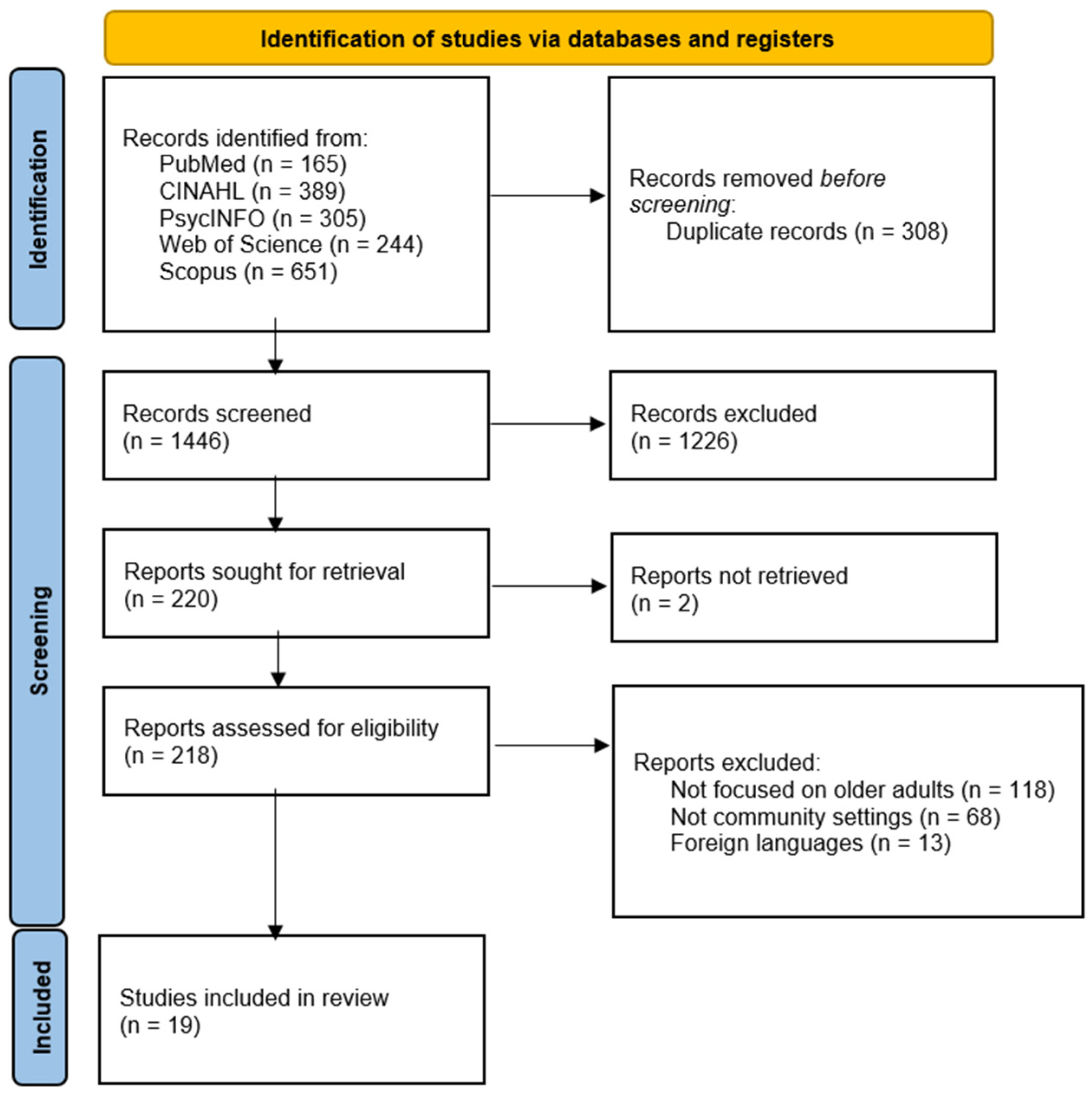
3.1. Literature Selection Process
3.2. Methodological Quality
3.3. Characteristics of the Included Studies
3.4. Narrative Synthesis of Quantitative Findings
3.4.1. Outcome Measures
3.4.2. Instrumental Support: Shared Meal Preparation, Cooking, and Co-Adherence
3.4.3. Emotional and Esteem Support: Encouragement, Autonomy, and Motivation
3.4.4. Informational Support: Guidance and Knowledge Sharing
3.4.5. Family-Inclusive Interventions and Broader Family Context
3.5. Thematic Synthesis of Qualitative Findings
3.5.1. Instrumental Support
3.5.2. Informational Support
3.5.3. Emotional Support
3.5.4. Esteem and Appraisal Support
3.5.5. Coping, Psychological Support, and Cultural Factors
3.6. Integrated Triangulation
4. Discussion
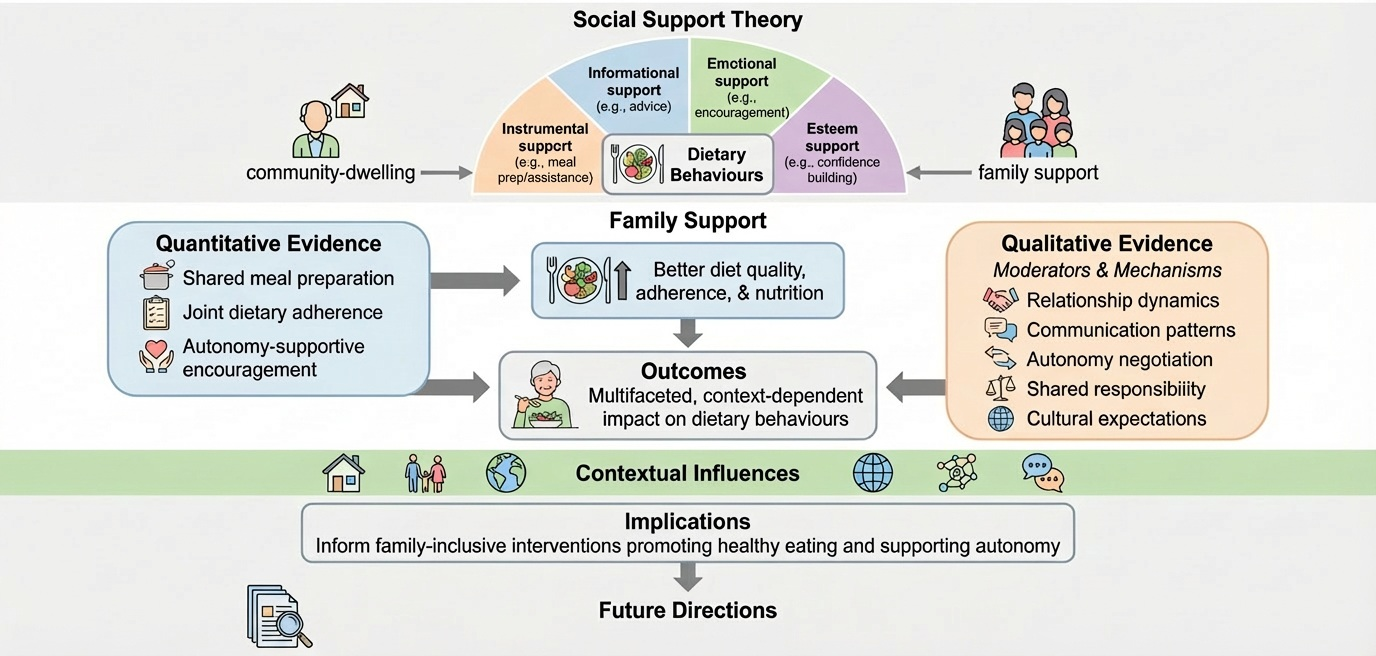
4.1. Summary of the Findings
4.2. Interpretation of Findings and Comparison with Existing Literature
4.2.1. Instrumental Support and the Role of Co-Adherence
4.2.2. Emotional and Esteem Support: Support Versus Social Control
4.2.3. Informational Support and Collaborative Learning
4.2.4. Contextual Influences
4.3. Strengths and Limitations
4.4. Implications for Practice and Research
5. Conclusions
Supplementary Materials
Author Contributions
Funding
Data Availability Statement
Acknowledgments
Conflicts of Interest
References
- WHO. Ageing and Health. Available online: https://www.who.int/news-room/fact-sheets/detail/ageing-and-health (accessed on 15 November 2025).
- Ahmed, T.; Haboubi, N. Assessment and management of nutrition in older people and its importance to health. Clin. Interv. Aging 2010, 5, 207–216. [Google Scholar] [CrossRef] [Scilit]
- Clegg, M.E.; Williams, E.A. Optimizing nutrition in older people. Maturitas 2018, 112, 34–38. [Google Scholar] [CrossRef] [Scilit]
- Mithal, A.; Bonjour, J.P.; Boonen, S.; Burckhardt, P.; Degens, H.; El Hajj Fuleihan, G.; Josse, R.; Lips, P.; Morales Torres, J.; Rizzoli, R.; et al. Impact of nutrition on muscle mass, strength, and performance in older adults. Osteoporos. Int. 2013, 24, 1555–1566. [Google Scholar] [CrossRef] [Scilit]
- Shlisky, J.; Bloom, D.E.; Beaudreault, A.R.; Tucker, K.L.; Keller, H.H.; Freund-Levi, Y.; Fielding, R.A.; Cheng, F.W.; Jensen, G.L.; Wu, D. Nutritional considerations for healthy aging and reduction in age-related chronic disease. Adv. Nutr. 2017, 8, 17–26. [Google Scholar] [CrossRef] [Scilit] [PubMed]
- Suominen, M.H.; Puranen, T.; Jyväkorpi, S.; Eloniemi-Sulkava, U.; Kautiainen, H.; Siljamäki-Ojansuu, U.; Pitkalä, K. Nutritional guidance improves nutrient intake and quality of life, and may prevent falls in aged persons with Alzheimer disease living with a spouse (NuAD trial). J. Nutr. Health Aging 2015, 19, 901–907. [Google Scholar] [CrossRef] [Scilit]
- Li, Y.; Wang, S.; Zhang, L.; Dong, Q.; Hu, X.; Yang, Y.; Liu, T.; Wu, B.; Shan, B.; Yin, C. Sensory insights in aging: Exploring the impact on improving dietary through sensory enhancement. Food Sci. Nutr. 2025, 13, e70074. [Google Scholar] [CrossRef] [Scilit]
- Spence, C.; Youssef, J. Aging and the (chemical) senses: Implications for food behaviour amongst elderly consumers. Foods 2021, 10, 168. [Google Scholar] [CrossRef] [Scilit]
- Ścisło, L.; Pluta, J.; Kliś-Kalinowska, A.; Górski, M.; Buczkowska, M. The impact of polypharmacy and oral nutritional supplementation on nutritional status in patients residing in a long-term care facility. Front. Nutr. 2025, 12, 1516103. [Google Scholar] [CrossRef] [Scilit] [PubMed]
- Hu, Y.; Xiao, J.; Li, X. The impact of living arrangements on dietary patterns among older adults: The mediating effects of loneliness and anxiety. Front. Public Health 2025, 13, 1519564. [Google Scholar] [CrossRef] [Scilit] [PubMed]
- Kucukerdonmez, O.; Varli, S.N.; Koksal, E. Comparison of nutritional status in the elderly according to living situations. J. Nutr. Health Aging 2017, 21, 25–30. [Google Scholar] [CrossRef] [Scilit]
- Howell, B.M. Interactions between diet, physical activity, and the sociocultural environment for older adult health in the urban subarctic. J. Community Health 2020, 45, 252–263. [Google Scholar] [CrossRef] [Scilit]
- Schulz, R.; Beach, S.R.; Czaja, S.J.; Martire, L.M.; Monin, J.K. Family caregiving for older adults. Annu. Rev. Psychol. 2020, 71, 635–659. [Google Scholar] [CrossRef] [Scilit]
- Rosland, A.-M.; Kieffer, E.; Israel, B.; Cofield, M.; Palmisano, G.; Sinco, B.; Spencer, M.; Heisler, M. When is social support important? The association of family support and professional support with specific diabetes self-management behaviors. J. Gen. Intern. Med. 2008, 23, 1992–1999. [Google Scholar] [CrossRef] [Scilit] [PubMed]
- Bowden, V.R.; Friedman, M.M.; Jones, E.G. Family Nursing: Research, Theory, and Practice; Prentice Hall: Hoboken, NJ, USA, 2003. [Google Scholar]
- Black, A.P.; D’Onise, K.; McDermott, R.; Vally, H.; O’Dea, K. How effective are family-based and institutional nutrition interventions in improving children’s diet and health? A systematic review. BMC Public Health 2017, 17, 818. [Google Scholar] [CrossRef] [Scilit] [PubMed]
- Liu, K.S.; Chen, J.Y.; Ng, M.Y.; Yeung, M.H.; Bedford, L.E.; Lam, C.L. How does the family influence adolescent eating habits in terms of knowledge, attitudes and practices? A global systematic review of qualitative studies. Nutrients 2021, 13, 3717. [Google Scholar] [CrossRef] [Scilit]
- Milanović, Z.; Pantelić, S.; Trajković, N.; Sporiš, G.; Kostić, R.; James, N. Age-related decrease in physical activity and functional fitness among elderly men and women. Clin. Interv. Aging 2013, 8, 549. [Google Scholar] [CrossRef] [Scilit] [PubMed]
- Zhu, X.; Ning, B.; Xia, F.; Wang, B.; Li, Y.; Zhang, P.; Zhang, X.; Yang, D.; Ji, G.; Li, M. The impact of widowhood on the quality of life of older adults: The mediating role of intergenerational support from children. BMC Geriatr. 2024, 24, 658. [Google Scholar] [CrossRef] [Scilit]
- Bethencourt, C. The living arrangements of elderly widows, their children, and their children’s spouses. J. Demogr. Econ. 2019, 85, 95–121. [Google Scholar] [CrossRef] [Scilit]
- Konttinen, H.; Halmesvaara, O.; Fogelholm, M.; Saarijärvi, H.; Nevalainen, J.; Erkkola, M. Sociodemographic differences in motives for food selection: Results from the LoCard cross-sectional survey. Int. J. Behav. Nutr. Phys. Act. 2021, 18, 71. [Google Scholar] [CrossRef] [Scilit]
- Marshall, S.; Agarwal, E.; Young, A.; Isenring, E. Role of domiciliary and family carers in individualised nutrition support for older adults living in the community. Maturitas 2017, 98, 20–29. [Google Scholar] [CrossRef] [Scilit]
- Marshall, S.; Bauer, J.; Capra, S.; Isenring, E. Are informal carers and community care workers effective in managing malnutrition in the older adult community? A systematic review of current evidence. J. Nutr. Health Aging 2013, 17, 645–651. [Google Scholar] [CrossRef] [Scilit] [PubMed]
- Stephens, M.A.P.; Franks, M.M.; Rook, K.S.; Iida, M.; Hemphill, R.C.; Salem, J.K. Spouses’ attempts to regulate day-to-day dietary adherence among patients with type 2 diabetes. Health Psychol. 2013, 32, 1029. [Google Scholar] [CrossRef] [Scilit] [PubMed]
- Canda, E.R. Filial piety and care for elders: A contested Confucian virtue reexamined. J. Ethn. Cult. Divers. Soc. Work. 2013, 22, 213–234. [Google Scholar] [CrossRef] [Scilit]
- Yin, Y.-H.; Liu, J.Y.W.; Välimäki, M. “How difficult it is to change dietary behaviour” experience of older people with sarcopenic obesity: A qualitative study. BMC Geriatr. 2024, 24, 568. [Google Scholar] [CrossRef] [Scilit]
- Peters, M.D.; Godfrey, C.M.; Khalil, H.; McInerney, P.; Parker, D.; Soares, C.B. Guidance for conducting systematic scoping reviews. JBI Evid. Implement. 2015, 13, 141–146. [Google Scholar] [CrossRef] [Scilit]
- Tricco, A.C.; Lillie, E.; Zarin, W.; O’Brien, K.K.; Colquhoun, H.; Levac, D.; Moher, D.; Peters, M.D.; Horsley, T.; Weeks, L. PRISMA extension for scoping reviews (PRISMA-ScR): Checklist and explanation. Ann. Intern. Med. 2018, 169, 467–473. [Google Scholar] [CrossRef] [Scilit]
- Arksey, H.; O’malley, L. Scoping studies: Towards a methodological framework. Int. J. Soc. Res. Methodol. 2005, 8, 19–32. [Google Scholar] [CrossRef] [Scilit]
- Levac, D.; Colquhoun, H.; O’brien, K.K. Scoping studies: Advancing the methodology. Implement. Sci. 2010, 5, 69. [Google Scholar] [CrossRef] [Scilit]
- Neufeld, L.M.; Hendriks, S.; Hugas, M. Healthy diet: A definition for the United Nations Food systems summit 2021. In Science and Innovations for Food Systems Transformation; Springer: Cham, Switzerland, 2023; pp. 21–30. [Google Scholar] [CrossRef] [Scilit]
- Barker, T.H.; Stone, J.C.; Sears, K.; Klugar, M.; Tufanaru, C.; Leonardi-Bee, J.; Aromataris, E.; Munn, Z. The revised JBI critical appraisal tool for the assessment of risk of bias for randomized controlled trials. JBI Evid. Synth. 2023, 21, 494–506. [Google Scholar] [CrossRef] [Scilit]
- Barker, T.H.; Habibi, N.; Aromataris, E.; Stone, J.C.; Leonardi-Bee, J.; Sears, K.; Hasanoff, S.; Klugar, M.; Tufanaru, C.; Moola, S. The revised JBI critical appraisal tool for the assessment of risk of bias for quasi-experimental studies. JBI Evid. Synth. 2024, 22, 378–388. [Google Scholar] [CrossRef] [Scilit]
- Moola, S.; Munn, Z.; Tufanaru, C.; Aromataris, E.; Sears, K.; Sfetcu, R.; Currie, M.; Qureshi, R.; Mattis, P.; Lisy, K. Systematic reviews of etiology and risk. JBI Man. Evid. Synth. 2020, 1, 217–269. [Google Scholar]
- Munn, Z.; Barker, T.H.; Moola, S.; Tufanaru, C.; Stern, C.; McArthur, A.; Stephenson, M.; Aromataris, E. Methodological quality of case series studies: An introduction to the JBI critical appraisal tool. JBI Evid. Synth. 2020, 18, 2127–2133. [Google Scholar] [CrossRef] [Scilit]
- Lockwood, C.; Munn, Z.; Porritt, K. Qualitative research synthesis: Methodological guidance for systematic reviewers utilizing meta-aggregation. JBI Evid. Implement. 2015, 13, 179–187. [Google Scholar] [CrossRef] [Scilit] [PubMed]
- Stern, C.; Lizarondo, L.; Carrier, J.; Godfrey, C.; Rieger, K.; Salmond, S.; Apostolo, J.; Kirkpatrick, P.; Loveday, H. Methodological guidance for the conduct of mixed methods systematic reviews. JBI Evid. Synth. 2020, 18, 2108–2118. [Google Scholar] [CrossRef] [Scilit]
- Tricco, A.C.; Soobiah, C.; Antony, J.; Cogo, E.; MacDonald, H.; Lillie, E.; Tran, J.; D’Souza, J.; Hui, W.; Perrier, L. A scoping review identifies multiple emerging knowledge synthesis methods, but few studies operationalize the method. J. Clin. Epidemiol. 2016, 73, 19–28. [Google Scholar] [CrossRef] [Scilit]
- Ong, R.H.S.; Chow, W.L.; Cheong, M.; Lim, G.H.; Xie, W.; Baggs, G.; Huynh, D.T.T.; Oh, H.C.; How, C.H.; Tan, N.-C. Associations between socio-demographics, nutrition knowledge, nutrition competencies and attitudes in community-dwelling healthy older adults in Singapore: Findings from the SHIELD study. J. Health Popul. Nutr. 2021, 40, 52. [Google Scholar] [CrossRef] [Scilit]
- Lee, A.A.; Heisler, M.; Trivedi, R.; Leukel, P.; Mor, M.K.; Rosland, A.-M. Autonomy support from informal health supporters: Links with self-care activities, healthcare engagement, metabolic outcomes, and cardiac risk among Veterans with type 2 diabetes. J. Behav. Med. 2021, 44, 241–252. [Google Scholar] [CrossRef] [Scilit]
- Sok, S.R.; Yun, E.K. A comparison of physical health status, self-esteem, family support and health-promoting behaviours between aged living alone and living with family in Korea. J. Clin. Nurs. 2011, 20, 1606–1612. [Google Scholar] [CrossRef] [Scilit]
- Lee, J.-G.; Chung, W.-K.; Om, A.-S. Influence of family and social detachment on city-dwelling elderly demographic’s risk factors for malnutrition in South Korea Social detachment and elderly’malnutrition. J. Gerontol. Geriatr. 2023, 71, 228–236. [Google Scholar] [CrossRef] [Scilit]
- Watanabe, K.; Kurose, T.; Kitatani, N.; Yabe, D.; Hishizawa, M.; Hyo, T.; Seino, Y. The role of family nutritional support in Japanese patients with type 2 diabetes mellitus. Intern. Med. 2010, 49, 983–989. [Google Scholar] [CrossRef] [Scilit]
- Lee, M.K.; Park, S.Y.; Choi, G.S. Facilitators and barriers to adoption of a healthy diet in survivors of colorectal cancer. J. Nurs. Scholarsh. 2019, 51, 509–517. [Google Scholar] [CrossRef] [Scilit]
- Lee, M.; Park, S.; Choi, G.S. Association of support from family and friends with self-leadership for making long-term lifestyle changes in patients with colorectal cancer. Eur. J. Cancer Care 2018, 27, e12846. [Google Scholar] [CrossRef] [Scilit] [PubMed]
- Chung, M.L.; Lennie, T.A.; Mudd-Martin, G.; Moser, D.K. Adherence to a low-sodium diet in patients with heart failure is best when family members also follow the diet: A multicenter observational study. J. Cardiovasc. Nurs. 2015, 30, 44–50. [Google Scholar] [CrossRef] [Scilit]
- Schoenberg, N.E. The relationship between perceptions of social support and adherence to dietary recommendations among African-American elders with hypertension. Int. J. Aging Hum. Dev. 1998, 47, 279–297. [Google Scholar] [CrossRef] [Scilit] [PubMed]
- Nicklett, E.J.; Semba, R.; Simonsick, E.M.; Szanton, S.; Bandeen-Roche, K.; Ferrucci, L.; Guralnik, J.; Fried, L.P. Diet quality and social support: Factors associated with serum carotenoid concentrations among older disabled women (the Women’s Health and Aging Study). J. Nutr. Health Aging 2012, 16, 511–518. [Google Scholar] [CrossRef] [Scilit]
- Usman, S.; Irwan, A.M.; Arafat, R. Family involvement in low-salt diet for hypertensive older adults. Work. Older People 2023, 27, 1–14. [Google Scholar] [CrossRef] [Scilit]
- Archuleta, M.; VanLeeuwen, D.; Halderson, K.; Jackson, K.D.; Bock, M.A.; Eastman, W.; Powell, J.; Titone, M.; Marr, C.; Wells, L. Cooking schools improve nutrient intake patterns of people with type 2 diabetes. J. Nutr. Educ. Behav. 2012, 44, 319–325. [Google Scholar] [CrossRef] [Scilit]
- Meethien, N.; Pothiban, L.; Ostwald, S.K.; Sucamvang, K.; Panuthai, S. Effectiveness of nutritional education in promoting healthy eating among elders in northeastern Thailand. Pac. Rim Int. J. Nurs. Res. 2011, 15, 188–202. [Google Scholar]
- Yodmai, K.; Somrongthong, R.; Nanthamongkolchai, S.; Suksatan, W. Effects of the older family network program on improving quality of life among older adults in Thailand. J. Multidiscip. Healthc. 2021, 14, 1373–1383. [Google Scholar] [CrossRef] [Scilit]
- Gallant, M.P.; Spitze, G.D.; Prohaska, T.R. Help or hindrance? How family and friends influence chronic illness self-management among older adults. Res. Aging 2007, 29, 375–409. [Google Scholar] [CrossRef] [Scilit]
- Beverly, E.A.; Miller, C.K.; Wray, L.A. Spousal support and food-related behavior change in middle-aged and older adults living with type 2 diabetes. Health Educ. Behav. 2008, 35, 707–720. [Google Scholar] [CrossRef] [Scilit] [PubMed]
- Choi, S.E.; Lee, J.J.; Park, J.J.; Sarkisian, C.A. Spousal support in diabetes self-management among Korean immigrant older adults. Res. Gerontol. Nurs. 2015, 8, 94–104. [Google Scholar] [CrossRef] [Scilit]
- Li, H.; Wu, Y.; Bai, Z.; Xu, X.; Su, D.; Chen, J.; He, R.; Sun, J. The association between family health and frailty with the mediation role of health literacy and health behavior among older adults in China: Nationwide cross-sectional study. JMIR Public Health Surveill. 2023, 9, e44486. [Google Scholar] [CrossRef] [Scilit]
- Makwana, N.; Damor, N.; Trivedi, N. Barriers and Facilitators to Health-Seeking Behaviors and Self-Care Practices of Older Adults in Rural India, A Mixed Method Study; Research Square: Durham, NC, USA, 2024. [Google Scholar]
- Price, E.L.; Bereknyei, S.; Kuby, A.; Levinson, W.; Braddock, C.H., 3rd. New elements for informed decision making: A qualitative study of older adults’ views. Patient Educ. Couns. 2012, 86, 335–341. [Google Scholar] [CrossRef] [Scilit]
- Valk, G.; Kriegsman, D.; Assendelft, W. Patient education for preventing diabetic foot ulceration (Cochrane Review). Cochrane Libr. 2002, 2, CD001488. [Google Scholar]
- Adiewere, P.; Gillis, R.B.; Jiwani, S.I.; Meal, A.; Shaw, I.; Adams, G.G. A systematic review and meta-analysis of patient education in preventing and reducing the incidence or recurrence of adult diabetes foot ulcers (DFU). Heliyon 2018, 4, e00614. [Google Scholar] [CrossRef] [Scilit]
- Vandormael, A.; Adam, M.; Hachaturyan, V.; Greuel, M.; Favaretti, C.; Gates, J.; Baernighausen, T. Reactance to social authority in entertainment-education media: Protocol for a web-based randomized controlled trial. JMIR Res. Protoc. 2021, 10, e25343. [Google Scholar] [CrossRef] [Scilit]
- Spronk, I.; Kullen, C.; Burdon, C.; O’Connor, H. Relationship between nutrition knowledge and dietary intake. Br. J. Nutr. 2014, 111, 1713–1726. [Google Scholar] [CrossRef] [Scilit]
- Umberson, D.; Montez, J.K. Social relationships and health: A flashpoint for health policy. J. Health Soc. Behav. 2010, 51, S54–S66. [Google Scholar] [CrossRef] [Scilit] [PubMed]
- Delormier, T.; Frohlich, K.L.; Potvin, L. Food and eating as social practice--understanding eating patterns as social phenomena and implications for public health. Sociol. Health Illn. 2009, 31, 215–228. [Google Scholar] [CrossRef] [Scilit] [PubMed]
- Boss, P.; Doherty, W.J.; LaRossa, R.; Schumm, W.R.; Steinmetz, S.K. Sourcebook of Family Theories and Methods: A Contextual Approach; Springer Science & Business Media: Berlin/Heidelberg, Germany, 1993. [Google Scholar]
- Monterrosa, E.C.; Frongillo, E.A.; Drewnowski, A.; de Pee, S.; Vandevijvere, S. Sociocultural influences on food choices and implications for sustainable healthy diets. Food Nutr. Bull. 2020, 41, 59S–73S. [Google Scholar] [CrossRef] [Scilit]
- Tang, Z.; Singh, P.; Brown, D.M.; Dey, B.L.; Apostolidis, C. Not ok boomer! Exploring socialization and conflict within the context of intergenerationalco-parenting families. Eur. J. Mark. 2025, 60, 613–639. [Google Scholar] [CrossRef] [Scilit]
- Shukla, A. Examining the role of intergenerational relations in food systems: Evidence from western India. Prog. Dev. Stud. 2024, 24, 234–251. [Google Scholar] [CrossRef] [Scilit]
- Jönsson, H.; Michaud, M.; Neuman, N. What is commensality? A critical discussion of an expanding research field. Int. J. Environ. Res. Public Health 2021, 18, 6235. [Google Scholar] [CrossRef] [Scilit] [PubMed]
- Murawski, A.; Ramirez-Zohfeld, V.; Schierer, A.; Olvera, C.; Mell, J.; Gratch, J.; Brett, J.; Lindquist, L.A. Transforming a negotiation framework to resolve conflicts among older adults and family caregivers. Geriatrics 2023, 8, 36. [Google Scholar] [CrossRef] [Scilit] [PubMed]
- Ali, S.H.; Bhattacharya, S.; Chanda, A.; Dhar, B. South Asia’s diabetes crisis needs families: How can we advance from informal care to integrated engagement? Lancet Reg. Health-S. Asia 2025, 38, 100607. [Google Scholar] [CrossRef] [Scilit] [PubMed]
- Wu, J.; Zhu, X.; Wu, Q.; Xiao, F. Interdisciplinary collaborative care model combined with family empowerment in patients with comorbid hypertension and diabetes: A study on blood pressure/glucose control and psychosocial adaptation based on the COM-B model. Clin. Exp. Hypertens. 2025, 47, 2570212. [Google Scholar] [CrossRef] [Scilit]
- Matherne, C.E.; Munn-Chernoff, M.A.; Thornton, L.M.; Rhee, S.H.; Lin, S.; Corley, R.P.; Stallings, M.C.; Hewitt, J.K. Perceived family functioning among adolescents with and without loss of control eating. Eat. Behav. 2019, 33, 18–22. [Google Scholar] [CrossRef] [Scilit]
- Van Ryzin, M.J.; Nowicka, P. Direct and indirect effects of a family-based intervention in early adolescence on parent-youth relationship quality, late adolescent health, and early adult obesity. J. Fam. Psychol. 2013, 27, 106–116. [Google Scholar] [CrossRef] [Scilit]
- Jones, A.; Pugh, D.; Bell, V.; Wong, K.K.-Y. Multigenerational Living and Mental Health Outcomes of Working-Age Adults and Children—A Scoping Systematic Review. Health Soc. Care Community 2025, 2025, 7513142. [Google Scholar] [CrossRef] [Scilit]
- Liu, S.; Marques, I.G.; Perdew, M.A.; Strange, K.; Hartrick, T.; Weismiller, J.; Ball, G.D.; Mâsse, L.C.; Rhodes, R.; Naylor, P.-J. Family-based, healthy living intervention for children with overweight and obesity and their families: A ‘real world’trial protocol using a randomised wait list control design. BMJ Open 2019, 9, e027183. [Google Scholar] [CrossRef] [Scilit]
- Jantzen, R.R.; Naylor, P.-J.; Strange, K.; Ball, G.D.; Mâsse, L.C.; Rhodes, R.E.; Zhang, X.; Nolan, R.P.; Zheng, S.; Rac, V. Evaluating the Effectiveness of a Family-Based Lifestyle Intervention for Managing Childhood Overweight: Protocol for a Randomized Controlled Trial. JMIR Res. Protoc. 2025, 14, e76837. [Google Scholar] [CrossRef] [Scilit]
- Dwyer, L.; Oh, A.; Patrick, H.; Hennessy, E. Promoting family meals: A review of existing interventions and opportunities for future research. Adolesc. Health Med. Ther. 2015, 6, 115–131. [Google Scholar]
- Schwingshackl, L.; Ruzanska, U.; Anton, V.; Wallroth, R.; Ohla, K.; Knüppel, S.; Schulze, M.B.; Pischon, T.; Deutschbein, J.; Schenk, L. The NutriAct Family Study: A web-based prospective study on the epidemiological, psychological and sociological basis of food choice. BMC Public Health 2018, 18, 963. [Google Scholar] [CrossRef] [Scilit] [PubMed]
- Czarniecka-Skubina, E.; Gutkowska, K.; Hamulka, J. The family environment as a source for creating the dietary attitudes of primary school students—A focus group interview: The junior-edu-Żywienie (JEŻ) project. Nutrients 2023, 15, 4930. [Google Scholar] [CrossRef] [Scilit] [PubMed]
- Thompson, C.; Cummins, S.; Brown, T.; Kyle, R. Contrasting approaches to ‘doing’family meals: A qualitative study of how parents frame children’s food preferences. Crit. Public Health 2016, 26, 322–332. [Google Scholar] [CrossRef] [Scilit] [PubMed]
- Di Pasquale, R.; Rivolta, A. A conceptual analysis of food parenting practices in the light of self-determination theory: Relatedness-enhancing, competence-enhancing and autonomy-enhancing food parenting practices. Front. Psychol. 2018, 9, 2373. [Google Scholar] [CrossRef] [Scilit]


| Cross-Sectional Studies [34] | ||||||||
|---|---|---|---|---|---|---|---|---|
| Were the criteria for inclusion in the sample clearly defined? | Were the study subjects and the setting described in detail? | Was the exposure measured in a valid and reliable way? | Were objective, standard criteria used for measurement of the condition? | Were confounding factors identified? | Were strategies to deal with confounding factors stated? | Were the outcomes measured in a valid and reliable way? | Was appropriate statistical analysis used? | |
| Ong et al., 2021 [39] | Yes | Yes | Unclear | Yes | Yes | Yes | Unclear | Yes |
| Howell, 2019 [12] | Yes | Yes | Yes | Yes | Yes | Yes | Yes | Yes |
| Lee et al., 2021 [40] | Yes | Yes | Yes | Yes | Yes | Yes | Yes | Yes |
| Sok & Yun, 2011 [41] | Yes | Yes | Yes | Yes | No | No | Yes | Yes |
| Lee, Chung, & Om, 2023 [42] | Yes | Yes | Yes | Yes | Yes | Yes | Yes | Yes |
| Watanabe et al., 2010 [43] | Yes | Yes | Unclear | Yes | Unclear | No | Yes | Yes |
| Lee et al., 2019 [44] | Yes | Yes | Yes | Yes | Yes | Yes | Yes | Yes |
| Lee et al., 2018 [45] | Yes | Yes | Yes | Yes | Yes | Yes | Yes | Yes |
| Chung et al., 2015 [46] | Yes | Yes | Unclear | Yes | Yes | Unclear | Yes | Yes |
| Schoenberg,1997 [47] | Yes | Yes | Yes | Yes | Yes | Unclear | Yes | Yes |
| Cohort Study [34] | |||||||||||
|---|---|---|---|---|---|---|---|---|---|---|---|
| Were the two groups similar and recruited from the same population? | Were the exposures measured similarly to assign people to both exposed and unexposed groups? | Was the exposure measured in a valid and reliable way? | Were confounding factors identified? | Were strategies to deal with confounding factors stated? | Were the groups/participants free of the outcome at the start of the study (or at the moment of exposure)? | Were the outcomes measured in a valid and reliable way? | Was the follow up time reported and sufficient to be long enough for outcomes to occur? | Was follow up complete, and if not, were the reasons to loss to follow up described and explored? | Were strategies to address incomplete follow up utilized? | Was appropriate statistical analysis used? | |
| Nicklett et al., 2012 [48] | Yes | Yes | Yes | Yes | Yes | Unclear | Yes | Yes | Yes | Yes | Yes |
| Longitudinal Study | ||||||||||
|---|---|---|---|---|---|---|---|---|---|---|
| Were there clear criteria for inclusion in the case series? | Was the condition measured in a standard, reliable way for all participants included in the case series? | Were valid methods used for identification of the condition for all participants included in the case series? | Did the case series have consecutive inclusion of participants? | Did the case series have complete inclusion of participants? | Was there clear reporting of the demographics of the participants in the study? | Was there clear reporting of clinical information of the participants? | Were the outcomes or follow up results of cases clearly reported? | Was there clear reporting of the presenting site(s)/clinic(s) demographic information? | Was statistical analysis appropriate? | |
| Stephens et al., 2013 [24] | Yes | Yes | Yes | Unclear | Yes | Yes | Yes | Yes | Yes | Yes |
| Randomized Controlled Trial [32] | |||||||||||||
|---|---|---|---|---|---|---|---|---|---|---|---|---|---|
| Was true randomization used to assign the participants to treatment groups? | Was the allocation to the treatment groups concealed? | Were treatment groups similar at baseline? | Were participants blind to the treatment assignments? | Were those delivering treatment blind to the treatment assignments? | Were treatment groups treated identically other than during the intervention of interest? | Were outcomes assessors blind to the treatment assignments? | Were outcomes measured in the same way for all of the treatment groups? | Were outcomes measured in a reliable way? | Was follow-up complete and, if not, were differences between the groups in terms of their follow-up adequately described and analysed? | Were the participants analysed in the groups to which they were randomized? | Was an appropriate method of statistical analysis used? | Was the trial design appropriate and were any deviations from the standard RCT design (individual randomization, parallel groups) accounted for in the conduct and analysis of the trial? | |
| Usman et al., 2023 [49] | Yes | Unclear | Yes | Unclear | Unclear | Yes | Unclear | Yes | Unclear | Yes | Yes | Yes | Yes |
| Quasi-Experimental Studies/Pretest–Posttest | |||||||||
|---|---|---|---|---|---|---|---|---|---|
| Is it clear in the study what is the “cause” and what is the “effect” (i.e., there is no confusion about which variable comes first)? | Was there a control group? | Were participants included in any comparisons similar? | Were the participants included in any comparisons receiving similar treatment/care, other than the exposure or intervention of interest? | Were there multiple measurements of the outcome, both pre and post the intervention/exposure? | Were the outcomes of participants included in any comparisons measured in the same way? | Were outcomes measured in a reliable way? | Was follow-up complete and if not, were differences between groups in terms of their follow-up adequately described and analyzed? | Was appropriate statistical analysis used? | |
| Archuleta et al., 2012 [50] | Yes | No | Yes | Yes | Yes | Yes | Yes | Yes | Yes |
| Meethien et al., 2011 [51] | Yes | Yes | Yes | Yes | Yes | Yes | Unclear | Yes | Yes |
| Yodmai et al., 2021 [52] | Yes | Yes | Yes | Yes | Yes | Yes | Unclear | Yes | Yes |
| Qualitative Studies [36] | ||||||||||
|---|---|---|---|---|---|---|---|---|---|---|
| Is there congruity between the stated philosophical perspective and the research methodology? | Is there congruity between the research methodology and the research question or objectives? | Is there congruity between the research methodology and the methods used to collect data? | Is there congruity between the research methodology and the representation and analysis of data? | Is there congruity between the research methodology and the interpretation of results? | Is there a statement locating the researcher culturally or theoretically? | Is the influence of the researcher on the research, and vice- versa, addressed? | Are participants, and their voices, adequately represented? | Is the research ethical according to current criteria or, for recent studies, and is there evidence of ethical approval by an appropriate body? | Do the conclusions drawn in the research report flow from the analysis or interpretation of the data? | |
| Gallant et al., 2007 [53] | Yes | Yes | Yes | Yes | Yes | Unclear | No | Yes | Unclear | Yes |
| Beverly et al., 2008 [54] | Yes | Yes | Yes | Yes | Yes | Unclear | No | Yes | Yes | Yes |
| Choi et al., 2015 [55] | Yes | Yes | Yes | Yes | Yes | Unclear | No | Yes | Yes | Yes |
| Schoenberg, 1997 [47] | Yes | Yes | Yes | Yes | Yes | Unclear | No | Yes | Unclear | Yes |
| Observational Studies | |||||||||
|---|---|---|---|---|---|---|---|---|---|
| Authors & Year | Study Design | Aims | Setting | Population | Family/Social Support Variables | Outcomes | Key Findings (Family Roles) | Implications | Limitations |
| Ong et al., 2021 [39] | Cross-sectional study | Assessing nutrition literacy, including knowledge, competencies, and attitudes, among community-dwelling older adults in Singapore, exploring how these vary across socio-demographic factors, and identifying key predictors of better nutrition knowledge. | Eastern Singapore
| n = 400; ≥65 years; mean age 71.2; 54% female; 83% Chinese; mostly married (74.2%); relatively healthy |
| Nutrition Knowledge Index (0–7). Higher scores linked to: female gender, Chinese ethnicity, ability to understand nutrition info., and access to help from family/friends. |
| Nutrition interventions should involve caregivers and family, esp. for older males and minority groups. Group-based/family-inclusive strategies may improve nutrition knowledge and eating habits. |
|
| Chung et al., 2015 [46] | Multi-centre observational study (secondary analysis) | Investigating whether adherence to a low sodium diet among heart failure patients improves when family members also follow the same diet, and examining how relationship status and living arrangements influence this effect. | Outpatient cardiology clinics in Kentucky, Georgia, and Indiana (USA) | n = 379 outpatients with heart failure; mean age 61.7 (±11.7); 67% male; mostly Caucasian (78%); both spousal and non-spousal family contexts examined |
| Primary: 24 hr urinary sodium excretion (objective measure of diet adherence). Adherence defined as <3000 mg sodium/day. |
| Interventions should target patient–family dyads, encouraging family members to adopt the same diet to reinforce adherence. Family modeling and joint behaviour change are crucial in dietary interventions. |
|
| Howell, 2020 [12] | Cross-sectional study | Investigating how sociocultural influences affect diet, physical activity patterns, and nutritional status among older adults living in Anchorage, Alaska. | Urban Anchorage, Alaska, USA | 82 community-dwelling older adults, mean age 74, 63% female | Family influence measured using the Sociocultural Influences Survey (SIS); living with family/others | Dietary intake (FFQ, HEI), physical activity (CHAMPS, METs), anthropometrics (BMI, WtHR) | Family influence associated with increased fruit consumption and higher energy expenditure in physical activity among those living with others | Suggests family support may positively influence dietary and activity behaviours; urban programmes could leverage family involvement | Cross-sectional design, small sample, sarcopenia not assessed, limited generalizability, no intervention tested |
| Lee et al., 2021 [40] | Cross-sectional study | Exploring how sociocultural factors influence diet, physical activity, and nutritional outcomes among urban-dwelling older adults in Alaska. | Veterans Affairs healthcare facility (Midwestern USA) | n = 239 Veterans with type 2 diabetes; mean age = 61.0 yrs (SD 9.0); 97% male; majority lived with a supporter (~2/3); recruited as patients at risk for complications (elevated HbA1c and/or SBP) | Perceived autonomy support from a primary informal health supporter, measured using the Important Others Climate Questionnaire (IOCQ; α = 0.83). Supporter residence coded (in-home vs. out-of-home). Supporters = family or friends who assist ≥2×/month. | Diabetes self-care subscales (SDSCA): general diet, exercise, SMBG, foot care, medication; Patient Activation Measure (PAM); PEPPI (efficacy for provider interaction); clinical labs: HbA1c, SBP, non-HDL-C; UKPDS 5- and 10-year cardiac risk | Autonomy support significantly associated with higher adherence to general diet (p < 0.001) and exercise (p = 0.003), greater patient activation (p < 0.001), higher provider interaction efficacy (PEPPI) (p < 0.001), and lower 5 & 10 yr UKPDS cardiac risk (p = 0.044; p = 0.027). No significant association with diabetes-specific behaviours (SMBG, foot care, medication) or cross-sectional HbA1c, SBP, non-HDL-C. Interaction: autonomy support × supporter residence → patient activation (effect present among in-home supporters). | Family/friend autonomy-supportive behaviours may facilitate lifestyle behaviours (diet & exercise) and patient activation; co-residence modifies some effects (in-home autonomy support particularly important for activation). Interventions training supporters in autonomy-supportive communication (in-home and out-of-home) could be a promising strategy to improve lifestyle adherence and longer-term cardiac risk. | Cross-sectional (no causality); sample = mostly male veterans (limits broader older adult generalizability); mean age 61 but range includes younger adults (31–71)—although with a mean of ≥60, not an exclusively older sample; selection bias (participants enrolled in trial and required to name a supporter—excludes unsupported patients); outcomes partly self-reported; autonomy support is perceived (subjective) measure; multiple testing increases Type I error risk. |
| Nicklett et al., 2012 [48] | Secondary analysis of a longitudinal, population-based cohort | Examining how different forms of social support relate to diet quality in older women, using serum carotenoid levels as an objective indicator. | Community-dwelling older women in 12 zip codes, Baltimore, MD (USA). Baseline: 1992; follow-ups: 1993–1994 | Analytic sample n = 325 older disabled women (≥65) who had blood drawn at follow-ups | Instrumental: satisfaction with help from family/friends (0–10); received help with preparing meals/shopping (yes/no). Emotional: having confidant; perceived need for more emotional support. Social interaction: phone call frequency; attendance at church/other activities (combined). Social space/network: frequency leaving home/neighbourhood; household composition (marital status + household size). Some measures combine family/friends. Change variables (increase/same/decrease) constructed over 1 year. | Outcome: Change in total serum carotenoids (sum of α-carotene, β-carotene, β-cryptoxanthin, lutein/zeaxanthin, lycopene) measured by HPLC. Change measured between follow-up round 1 → round 2 (1993–1994). Covariates: age, BMI change, income satisfaction. |
|
|
|
| Sok & Yun, 2011 [41] | Comparative descriptive (cross-sectional survey) | Examining and comparing physical health, self-esteem, family support, and health-promoting behaviours between older adults living alone and those living with family. | Community, Seoul, Korea | n = 267 community-dwelling older adults (≥65 years); 133 living alone, 134 living with family; majority female (~63%); about 57% aged 65–74, 43% ≥75 | Family support scale (emotional support; 11 items, 5-point Likert, higher = better support) | Physical health status, self-esteem, health-promoting behaviours (exercise & nutrition subscales of HPLP) |
| Findings suggest that interventions for older adults should leverage family involvement where possible, while for those living alone, alternative social support systems may be needed to promote health behaviours. | Only two HPLP subscales (exercise, nutrition) were used; convenience sample from Seoul limits generalizability; cross-sectional design prevents causal inference. |
| Lee et al., 2023 [42] | Cross-sectional, secondary analysis of national survey | Investigating how social detachment and related factors influence the prevalence of malnutrition among elderly residents in urban areas of South Korea. | Nationwide, South Korea, 969 districts | n = 10,097; ≥65 years; community-dwelling older adults; excluded those who had been institutionalized |
| Malnutrition risk measured using NSI Checklist (low, moderate, high). |
|
|
|
| Watanabe et al., 2010 [43] | Cross-sectional study | Examining the relationship between family support and glycemic control through nutritional self-care behaviours among Japanese patients with type 2 diabetes. | Kansai Electric Power Hospital, Japan | 112 Japanese outpatients with type 2 diabetes; mean age 62.9 years; 61% male; avg. duration of diabetes 11.5 years |
| HbA1c, triglycerides, BMI, cholesterol |
|
|
|
| Lee et al., 2019 [44] | Cross-sectional study | Examining how patient and family characteristics, perceived dietary barriers, and family efforts to improve eating habits are associated with diet quality in colorectal cancer patients. | Two National University Hospitals, South Korea | 216 colorectal cancer survivors (>19 yrs; mean age 62.2; 70% male; 76% married) + their 216 primary family caregivers (mean age 55.2; 72% female; mostly spouses) |
| Diet Quality Index (DQI), daily fruit & vegetable intake, calcium intake |
| Interventions for CRC survivors should target the patient–family dyad, addressing both patient barriers and caregivers’ behaviours. Caregiver lifestyle changes can reinforce healthier diets for survivors. Nurses and dietitians should integrate family members in dietary interventions. | Cross-sectional design (no causality). Limited to two hospitals in South Korea → generalizability issues. Focused only on CRC survivors, not the broader older adult population. |
| Lee et al., 2018 [45] | Cross-sectional study | Examining the association between support from family and friends for healthy eating and exercise, and improvements in self-leadership among patients with colorectal cancer. | Two National University Hospitals, South Korea | n = 251; CRC survivors; mean age 62.7; 61% ≥ 60 years; 69% male; 72% married |
|
|
|
|
|
| Stephens et al., 2013 [24] | Observational study (short-term longitudinal, 24 days) | Investigating how spouses’ daily diet-related support, persuasion, and pressure influence dietary adherence and diabetes-specific distress in older adults with type 2 diabetes, and whether these effects differ based on shared responsibility for disease management. | Community-based recruitment via clinics, media, and senior centres (USA) | n = 126 couples; patients with T2DM aged ≥55 (mean ~66 yrs); married/partnered; spouses without diabetes; mean years married = 38; 50% female; 76% White |
|
|
|
|
|
| Randomized Controlled Trial | ||||||||||
|---|---|---|---|---|---|---|---|---|---|---|
| Authors & Year | Aims | Setting | Population | Sample Size | Intervention (with Family Involvement) | Control (Without Family) | Outcomes Measured | Key Findings (Family Roles) | Implications | Limitations |
| Usman et al., 2023 [49] | Evaluating the impact of involving family members in educational sessions and follow-up meetings on low-salt diet compliance among hypertensive older adults. | Batua Public Health Center, Makassar, Indonesia | Older adults ≥60 yrs, diagnosed with hypertension; cognitively intact; living with a family member able to assist with self-care | n = 30 (15 intervention; 15 control) | Educational sessions (2 × 90–100 min, with one-week intervals) + 2 follow-up meetings (1 & 2 months after), delivered with one family member present. Content: low-salt diet education, joint cooking exercises, practical demonstrations, role of family in giving “reminders.” Based on family empowerment theory + Geragogy principles. | Usual care (monthly health check-ups provided by government), no involvement of family members. |
|
| Involving family members in dietary education sessions & follow-ups improves adherence to low-salt diets among hypertensive older adults. Family acts as reminders, enforcers, and co-practitioners of diet changes. Could be scaled as community-based programmes. | Small sample (n = 30). Single urban setting; may not be generalizable to rural areas. BP outcomes not statistically significant. Short follow-up period (2 months). |
| Pretest–Posttest Experimental/Control Group Studies | ||||||||||
|---|---|---|---|---|---|---|---|---|---|---|
| Authors & Year | Study Design | Aims | Setting | Population | Sample Size | Intervention/Focus | Family Role/Component | Outcomes Measured | Key Findings | Limitations |
| Meethien et al., 2011 [51] | Pretest–posttest experimental and control group design | Evaluating the effectiveness of a nurse-led nutritional education programme involving both older adults and their family members, in promoting healthy eating among older adults in rural northeastern Thailand. | Two rural villages, Northeastern Thailand | Older people ≥60 yrs (mean ~67), living with family; predominantly low-income farmers; Buddhist | 166 elders + 166 family members (EG: 43 elders + 43 family; CG: 40 elders + 40 family) | 3-month nurse-led nutritional education programme based on Pender’s HPM: group teaching, individual counselling, motivation, family support training, printed handouts, home visits. | Family members actively engaged in meal planning, preparation, overcoming barriers, goal-setting, monitoring; received training on roles and responsibilities to support older people. | Elder Healthy Eating Scale (food selection, preparation, consumption), repeated measures at baseline, 1 week, and 12 weeks post-programme. | EG had significantly higher scores in overall healthy eating and all sub-dimensions vs. CG, both at 1 week and 12 weeks post-programme; family support and self-efficacy were key success factors. | Limited to 2 rural villages, mostly farmers; supportive families only; findings may not be generalizable to older people without family support or in different socioeconomic contexts. |
| Archuleta et al., 2012 [50] | Quasi-experimental, pretest–posttest | Assessing whether cooking classes incorporating nutrition education and hands-on meal preparation improve nutrient intake patterns in individuals with type 2 diabetes. | Community locations in New Mexico (schools, churches, senior centres) | Adults with type 2 diabetes (mean age 63; range 30–85; 78% female; 34% Hispanic; diverse SES) | n = 117 (20 in 2002; 97 in 2006–2007) | Kitchen Creations (4-session diabetes cooking school, 3 hrs each). Culturally tailored nutrition education + hands-on cooking + shared meals. Based on Social Cognitive Theory. | Family members (spouses/caregivers) invited to attend and cook together, reinforcing social support and shared responsibility in dietary change. | 3-day food records (energy, macronutrients, saturated fat, cholesterol, sodium, carbohydrate, fiber, sugar); pre/post comparisons. | Significant decreases in energy intake, fat, saturated fat, cholesterol, sodium, and carbohydrates (p < 0.05). Increase in % of calories from protein. Improvements most notable among low-income participants for cholesterol, and high-income participants for sodium. |
|
| Quasi-Experimental Study | |||||||||
|---|---|---|---|---|---|---|---|---|---|
| Authors & Year | Aims | Setting | Population | Sample Size | Intervention/Focus | Family Role/Component | Outcomes Measured | Key Findings | Limitations |
| Yodmai et al., 2021 [52] | Assessing the effects of a family-involved ageing network health promotion programme on reducing depression and improving quality of life among older adults in rural Thailand. | Rural communities, Khon Kaen Province, Thailand | Community-dwelling older adults aged 60–80 with chronic diseases (HTN, diabetes, hyperlipidemia, heart disease), living with family members aged 20–59. | n = 110 (55 intervention, 55 comparison) | Older Family Network Programme (12 months): family-inclusive health promotion programme based on the Theory of Planned Behaviour & the concept of social networks. Included training on healthy food, exercise, emotional management, disease/disability prevention. Family members joined monthly sessions. |
|
|
|
|
| Qualitative Study | |||||||
|---|---|---|---|---|---|---|---|
| Authors & Year | Aims | Setting | Population | Family Support | Key Findings (Family Roles) | Implications | Limitations |
| Gallant et al., 2007 [53] | Exploring how an individual’s social environment can either support or hinder the self-management of chronic illnesses. | Upstate New York, USA (community settings) | n = 84; ≥65 years; African American and White older adults with arthritis, diabetes, and/or heart disease. Groups stratified by race and gender. (13 focus groups) | Family roles: meal preparation, medication reminders, transport, accompanying to doctors, shared diets, encouragement, overprotection, unwanted advice, conflicting food needs. Friends: companionship for walking, shared information, emotional support, transport. |
| Interventions should acknowledge family as both a support and hindrance; include strategies to manage negative influences. Friends are underutilized but may be effective peer support resources. | Limited generalizability (only African American and White participants, small subgroup sizes). Qualitative design—cannot measure effect sizes. |
| Beverly et al., 2008 [54] | Exploring how aspects of spousal relationships influence the link between self-efficacy and dietary adherence in adults with diabetes, highlighting the role of partners in supporting or hindering changes in health behaviour. | Hershey Medical Center & affiliated clinics, Pennsylvania, USA | 30 married/cohabiting couples (≥50 years) mean age 65.4, where one partner had been diagnosed with type 2 diabetes within the past year (6 focus groups with couples) | Spousal involvement: control over food (shopping, preparation, monitoring), dietary competence (knowledge, skills, willingness), commitment to provide support, spousal communication, coping strategies within the marriage. | Spouses played a dual role: (1) positive—providing tangible and emotional support, dietary knowledge, reinforcement, shared responsibility; (2) negative—excessive control, nagging, conflict, overstepping autonomy. Communication quality shaped whether spousal involvement was supportive or undermining. | Highlights the importance of designing nutrition interventions that involve spouses as partners in dietary management. Interventions should recognize both the benefits and potential tensions in spousal support dynamics. | Focused only on couples with a recent diabetes diagnosis; not specific to sarcopenic obesity. Limited transferability beyond spousal dyads (excludes other family roles). Small, regional U.S. sample. |
| Choi et al., 2015 [55] | Exploring key domains of spousal support for diabetes self-management among Korean seniors and their spouses, using focus groups to identify support strategies and gender-related differences. | Korean community in Los Angeles, USA | n = 33; Korean immigrants ≥60 years with type 2 diabetes (mean age of patients 68; spouses 74); all Korean-speaking; recruited from clinics & a health information centre (5 groups: 2 with patients, 3 with spouses) | Domains of spousal support: diet management, exercise, emotional support, medical regimen, communication with HCPs, providing information; examined gender and patient vs. spouse perspectives. |
|
|
|
| Mixed-Methods Study | |||||||||
|---|---|---|---|---|---|---|---|---|---|
| Authors & Year (Title) | Study Design | Aims | Setting | Population | Family/Social Support Variables | Outcomes | Key Findings (Re: Family Roles) | Implications | Limitations |
| Schoenberg, 1998 [47] | Mixed-methods (survey + in-depth interviews) | Exploring the relationship between perceived social support and dietary adherence among rural-dwelling African American seniors with hypertension, aiming to understand why strong social support may not always translate into dietary compliance. | Rural community, southeastern USA | n = 41 African American older people with hypertension; mean age ≈ 70 s (range ~60–92) | Measured social support (Norbeck Social Support Questionnaire, IPRI); Sources included daughters (71%), sisters (63%), sons (56%), spouses (44%), grandchildren (39%); examined household composition, assistance with shopping/cooking, meal sharing | Adherence to 3 anti-hypertensive diet recommendations: fat, sodium, and weight control | Family roles included:
| Family involvement can be both supportive (motivation, caregiving) and obstructive (temptations, undermining behaviours). Family influence is highly contextual, not uniformly positive. Highlights cultural and social dynamics in older African-Americans. | Small sample size (n = 41), all African American, rural setting → limits generalizability; high baseline perception of support reduced variability; standardized support measures may not capture culturally specific or “nontraditional” supports (e.g., deceased relatives, religious faith). |
| Social Support Domain | Theme | Summary of Findings | Study Source |
|---|---|---|---|
| Instrumental Support | Control over Food | Spouses (mostly wives) controlled food preparation and portion sizes; men with diabetes felt loss of autonomy and frustration. | Beverly et al. (2008) [54] |
| Shared Food Practices | Couples or families collaborating in grocery shopping, cooking, and shared diets promoted adherence and mutual responsibility. | Beverly et al. (2008) [54]; Gallant et al. (2007) [53]; Choi et al. (2015) [55] | |
| Dietary Monitoring and Meal Preparation | Family members (often wives or daughters) cooked healthy meals and monitored adherence, although excessive control or differing diets caused tension. | Gallant et al. (2007) [53]; Choi et al. (2015) [55] | |
| Household Assistance and Food Procurement | Most African American older adults reported preparing meals independently despite living with family, indicating limited instrumental support in dietary adherence. | Schoenberg (1998) [47] | |
| Exercise and Medical Support | Spouses encouraged or joined in exercise and accompanied patients to visits to the doctor, enhancing adherence. | Choi et al. (2015) [55] | |
| Informational Support | Dietary Competence | Couples sought information from books, media, and healthcare professionals, improving diet knowledge and confidence. | Beverly et al. (2008) [54] |
| Exchanges of Health Information | Family or friends shared illness-related information; family members with medical backgrounds acted as advisors, but unsolicited advice was sometimes unhelpful. | Gallant et al. (2007) [53]; Choi et al. (2015) [55] | |
| Health Awareness and Personal Responsibility | Participants expressed general awareness of dietary guidelines (e.g., fat, sodium), but often relied on self-initiated moderation rather than family advice. | Schoenberg (1998) [47] | |
| Emotional Support | Commitment and Encouragement | Emotional reassurance, empathy, and teamwork between couples motivated adherence. | Beverly et al. (2008) [54]; Choi et al. (2015) [55] |
| Emotional Understanding | Spouses provided comfort and empathy; however, women often reported their advice was “not listened to”, particularly regarding diet and exercise. | Choi et al. (2015) [55] | |
| Emotional Independence | Many older African American participants emphasized self-reliance and a “do-it-myself” attitude toward dietary management, reflecting emotional independence rather than reliance on family. | Schoenberg (1998) [47] | |
| Esteem/Appraisal Support | Spousal Communication | Open communication and mutual problem-solving improved marital quality and dietary adherence; controlling talk or avoidance hindered cooperation. | Beverly et al. (2008) [54]; Choi et al. (2015) [55] |
| Understanding vs. Lack of Understanding | Understanding from peers or similarly ill friends enhanced adherence, while lack of empathy from healthy family members fostered isolation. | Gallant et al. (2007) [53] | |
| Coping/Psychological Support | Coping with Chronic Disease | Couples viewed chronic disease as a shared challenge; teamwork enhanced resilience, while lack of support led to stress and isolation. | Beverly et al. (2008) [54]; Choi et al. (2015) [55] |
| Overprotection and Independence | Overprotection from adult children or spouses both supported and hindered autonomy; excessive control reduced self-efficacy. | Gallant et al. (2007) [53]; Choi et al. (2015) [55] | |
| Moderation and Self-Regulation | Participants managed their diet by self-imposed moderation rather than family enforcement, suggesting self-driven coping strategies. | Schoenberg (1998) [47] | |
| Cultural Factors | Cultural Adaptation of Diet | For Korean immigrants, modifying traditional rice-based diets caused emotional and cultural strain within families; teamwork and individualized support improved adaptation. | Choi et al.(2015) [55] |
| Cultural Food Beliefs and Ageing | African American elders described reducing “greasy” or “rich” foods naturally with age, reflecting culturally embedded health wisdom. | Schoenberg (1998) [47] |
Disclaimer/Publisher’s Note: The statements, opinions and data contained in all publications are solely those of the individual author(s) and contributor(s) and not of MDPI and/or the editor(s). MDPI and/or the editor(s) disclaim responsibility for any injury to people or property resulting from any ideas, methods, instructions or products referred to in the content. |
© 2026 by the authors. Licensee MDPI, Basel, Switzerland. This article is an open access article distributed under the terms and conditions of the Creative Commons Attribution (CC BY) license.
Share and Cite
Mak, P.Y.; Tyrovolas, S.; Liu, J.Y.W. Family Support in Healthy Dietary Behaviours Among Community-Dwelling Older Adults: A Scoping Review. Nutrients 2026, 18, 963. https://doi.org/10.3390/nu18060963
Mak PY, Tyrovolas S, Liu JYW. Family Support in Healthy Dietary Behaviours Among Community-Dwelling Older Adults: A Scoping Review. Nutrients. 2026; 18(6):963. https://doi.org/10.3390/nu18060963
Chicago/Turabian StyleMak, Pui Ying, Stefanos Tyrovolas, and Justina Yat Wa Liu. 2026. "Family Support in Healthy Dietary Behaviours Among Community-Dwelling Older Adults: A Scoping Review" Nutrients 18, no. 6: 963. https://doi.org/10.3390/nu18060963
APA StyleMak, P. Y., Tyrovolas, S., & Liu, J. Y. W. (2026). Family Support in Healthy Dietary Behaviours Among Community-Dwelling Older Adults: A Scoping Review. Nutrients, 18(6), 963. https://doi.org/10.3390/nu18060963