Curcumin-Loaded Lactoferrin/Pectin Core–Shell Structured Microgel Nanoparticles: Dual Regulatory Effects in Alleviating Inflammatory Bowel Disease



Abstract
1. Introduction
2. Materials and Methods
2.1. Materials and Reagents
2.2. LF/CP-Cur MN Preparation
2.3. Single-Factor Optimization Experiment of LF/CP-Cur MN
2.4. Dynamic Light Scattering (DLS) Analysis
2.5. Scanning Electron Microscopy (SEM) Analysis
2.6. X-Ray Diffraction (XRD) Analysis
2.7. Fourier Transform Infrared Spectroscopy (FT-IR) Analysis
2.8. Thermal Stability Analysis
2.9. Taste Profile Analysis by Electronic Tongue
2.10. In Vitro Drug Release Studies
2.11. Animals and Diets
2.12. Measurements of Body Weight, Colon Length, and Disease Activity Index (DAI)
2.13. Histopathology and Mucus Analysis
2.14. Analysis of Cur Content in Colon
2.15. Cytokine Quantification by Enzyme-Linked Immunoassay (ELISA)
2.16. 16s rRNA Gene Profiles
2.17. Determination of Short-Chain Fatty Acids (SCFAs)
2.18. Statistical Analysis
3. Results
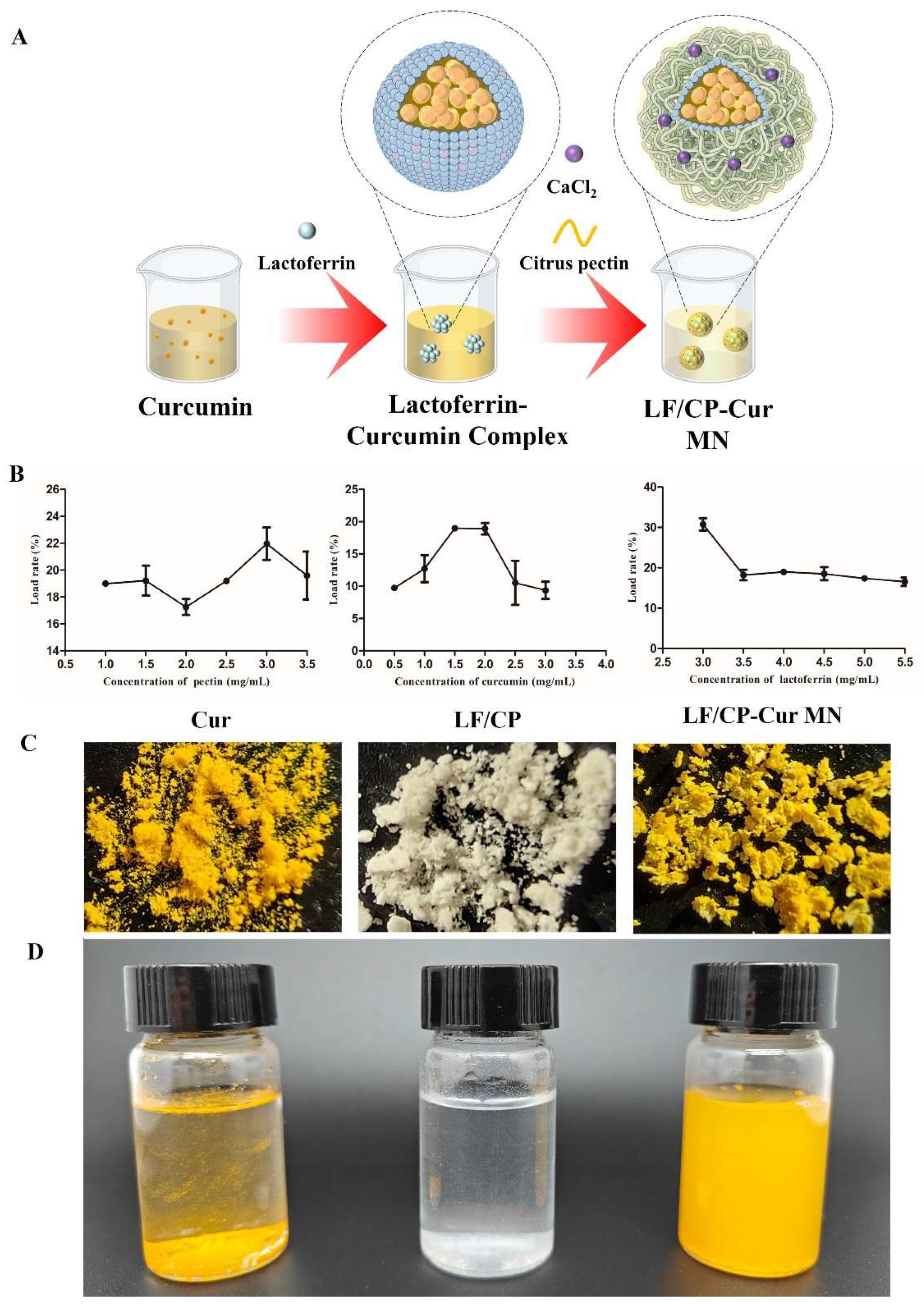
3.1. Optimized LC and Dissolved State of LF/CP-Cur MN
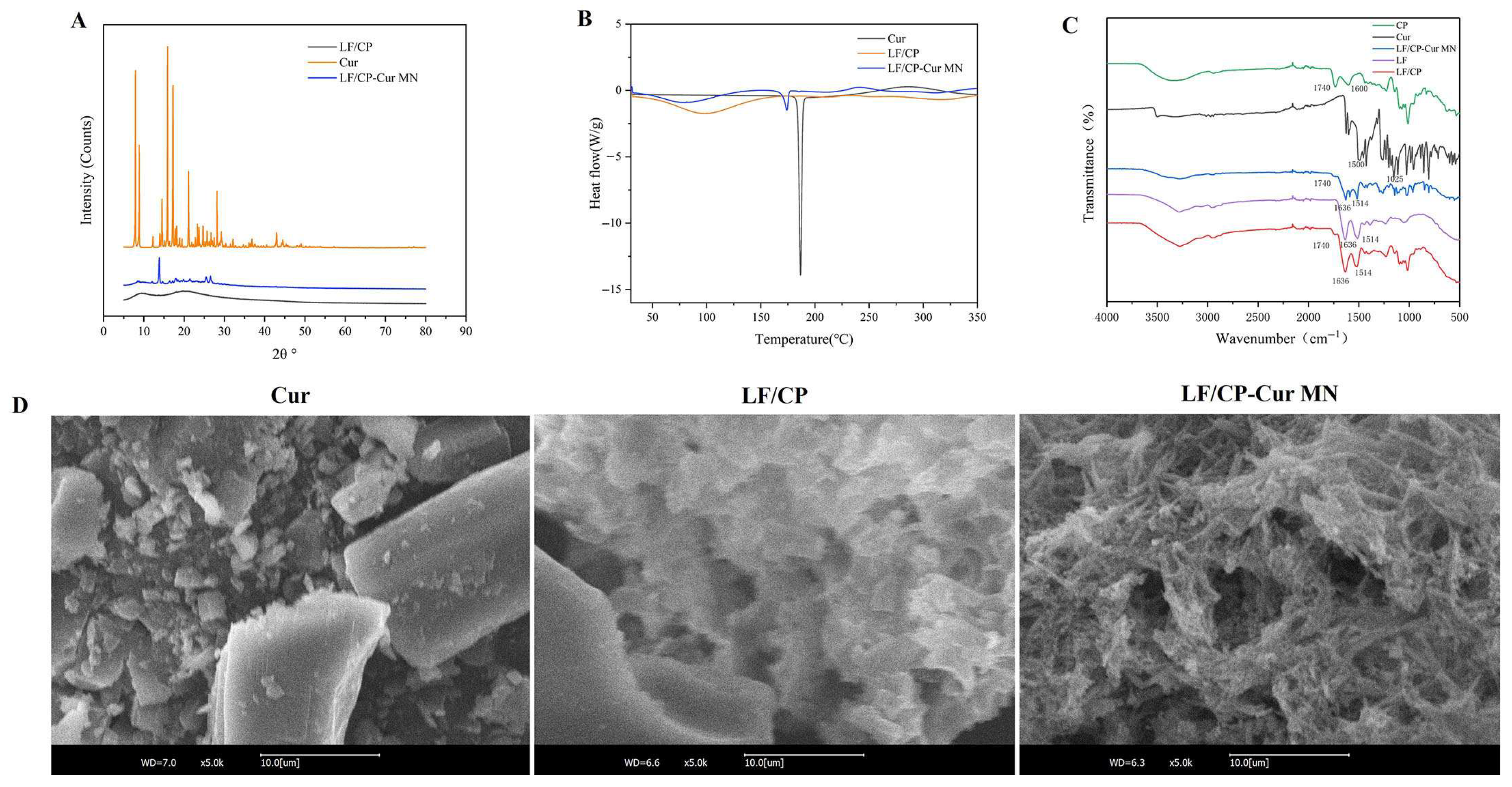
3.2. Structural Characterization and Surface Morphology of LF/CP-Cur MN
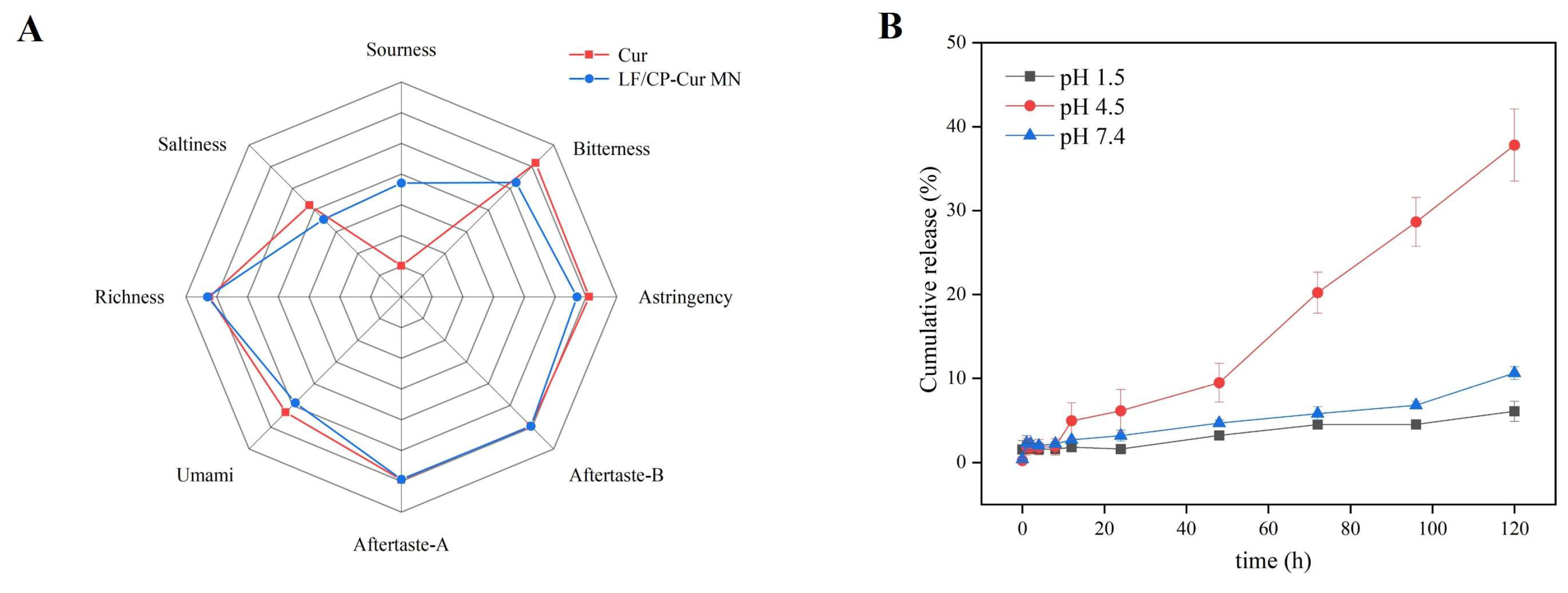
3.3. In Vitro Sensory Evaluation and Drug Release Analysis of LF/CP-Cur MN
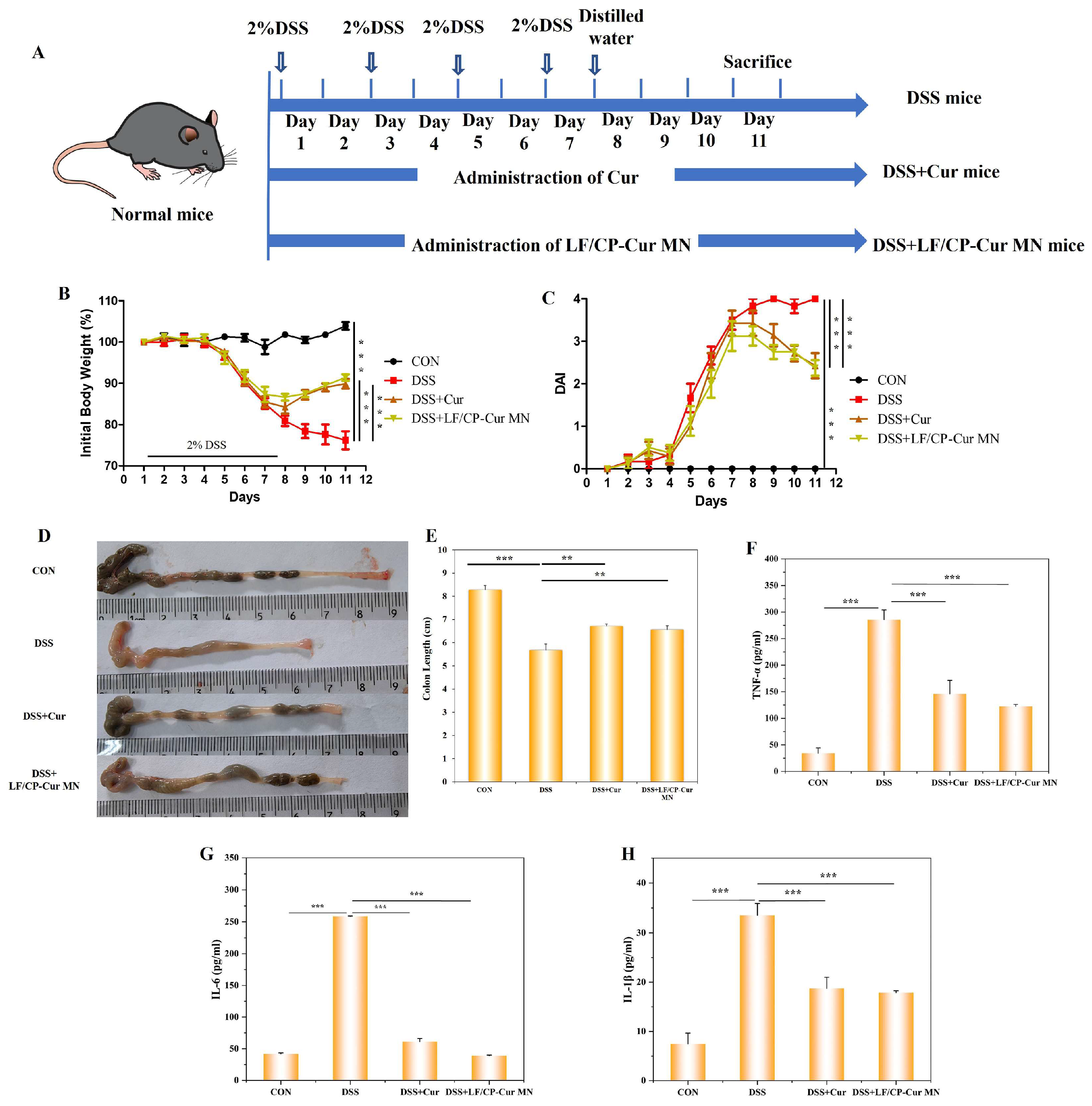
3.4. Amelioration of Clinical Symptoms in IBD Mice by LF/CP-Cur MN
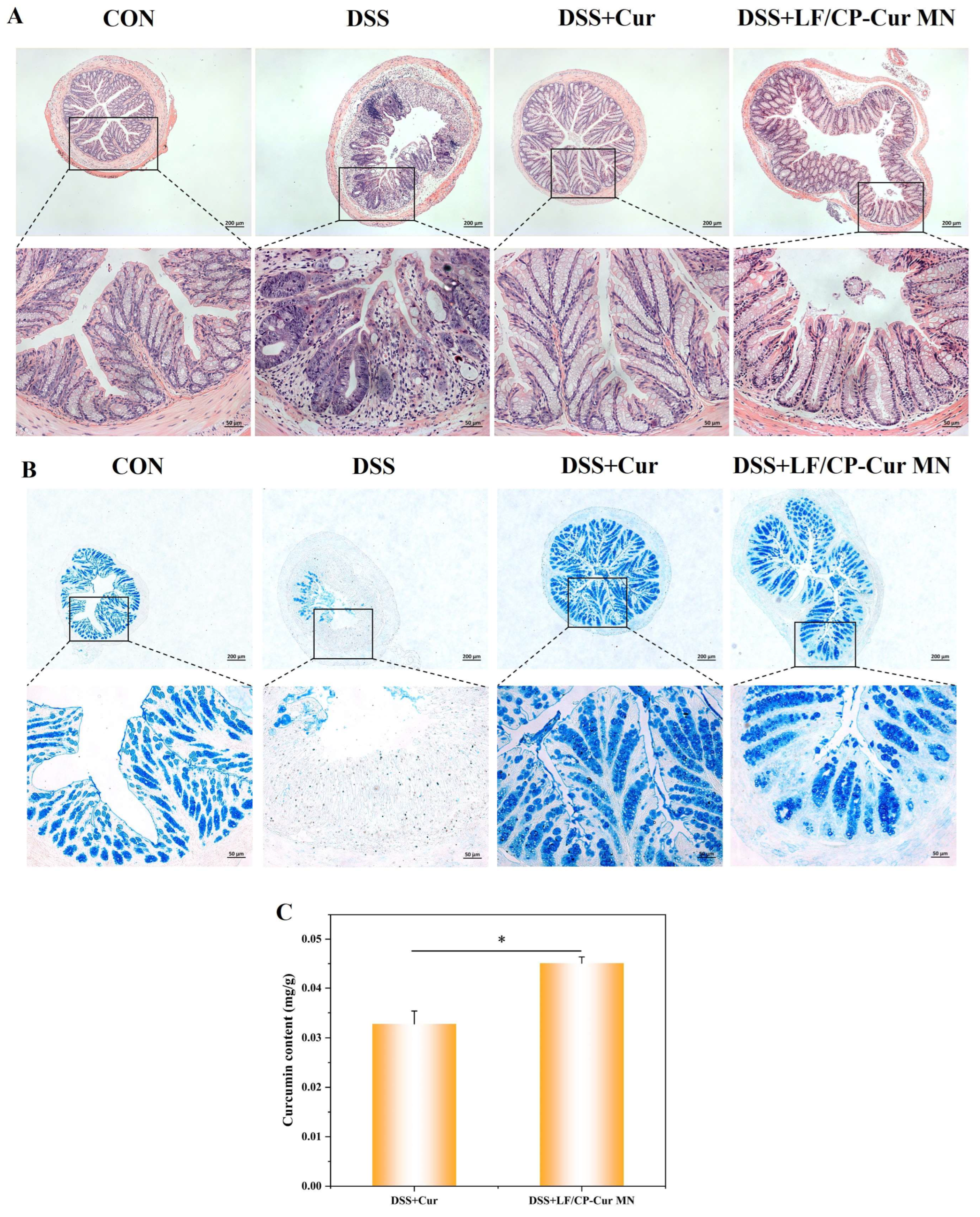
3.5. Protective Effect of LF/CP-Cur MN on the Intestinal Mucosal Barrier and Enhanced Colonic Accumulation of Cur in IBD Mice
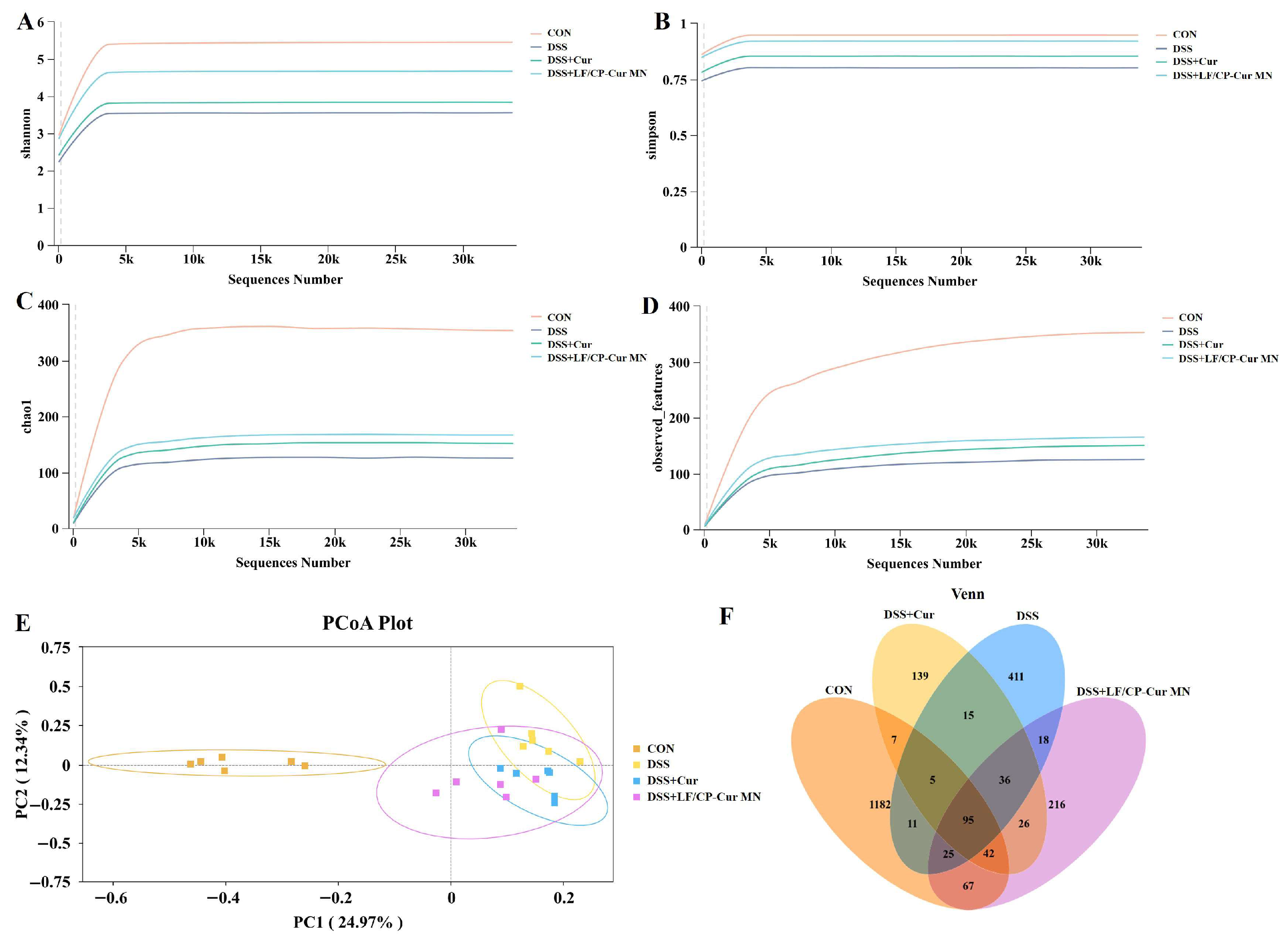
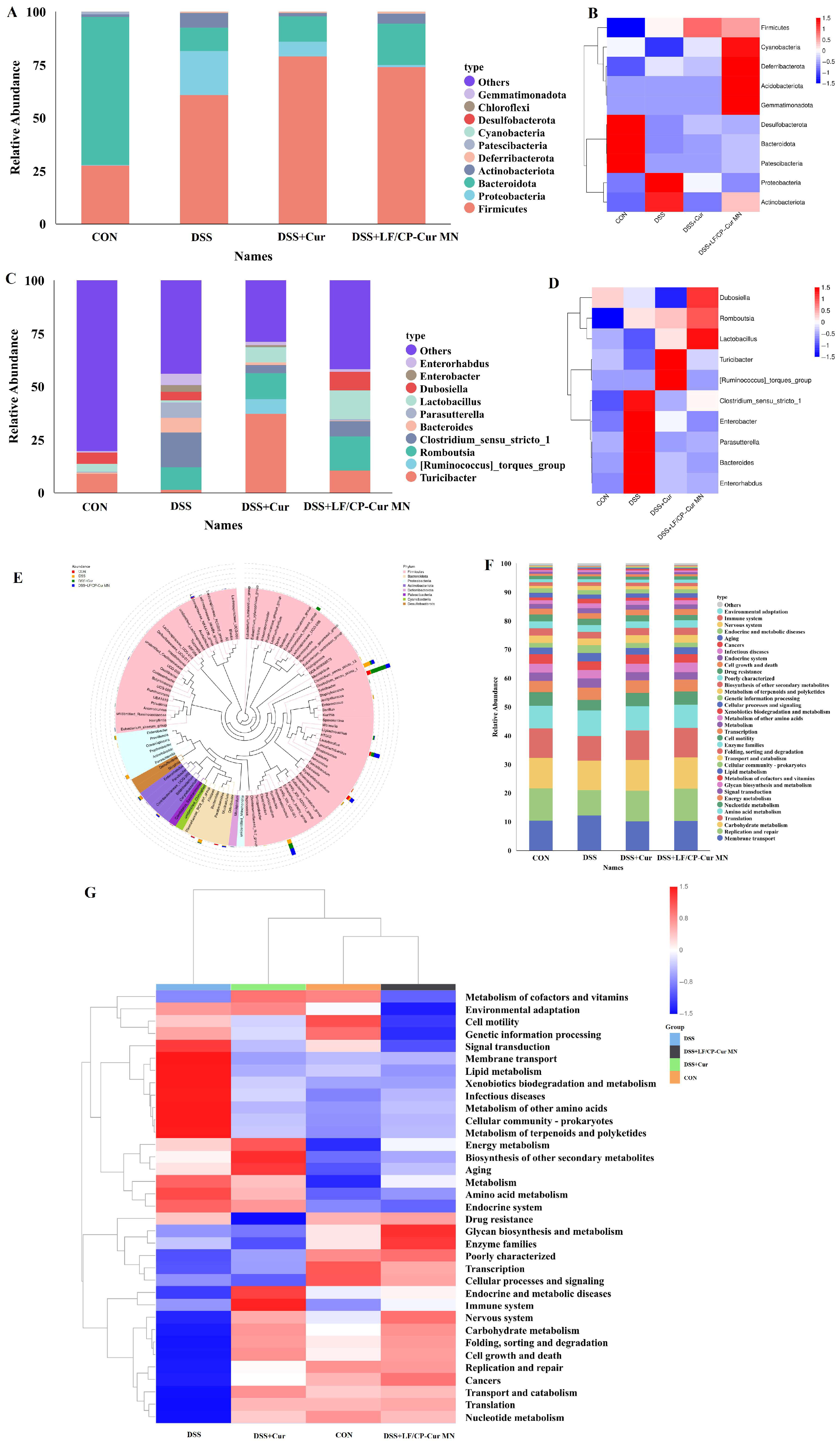
3.6. Effects of LF/CP-Cur MN on the Intestinal Microbiota Structure in IBD Mice
3.7. Role of LF/CP-Cur MN in Maintaining Gut Microbiota Diversity in IBD Mice
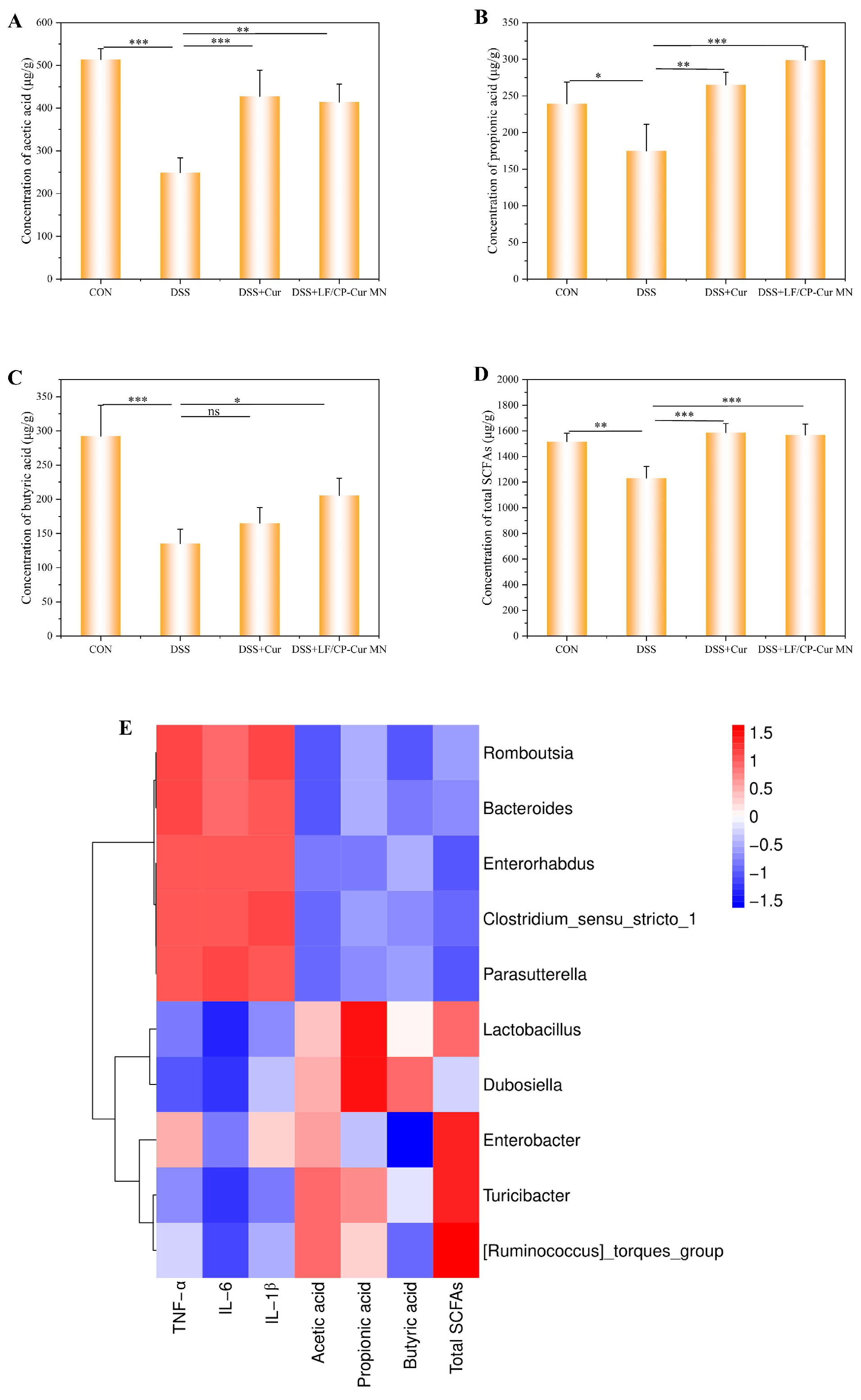
3.8. SCFAs Elevation by LF/CP-Cur MN in IBD Mice
4. Conclusions
Author Contributions
Funding
Institutional Review Board Statement
Informed Consent Statement
Data Availability Statement
Acknowledgments
Conflicts of Interest
References
- Lu, Q.; Yang, M.F.; Liang, Y.J.; Xu, J.; Xu, H.M.; Nie, Y.Q.; Wang, L.S.; Yao, J.; Li, D.F. Immunology of inflammatory bowel disease: Molecular mechanisms and therapeutics. J. Inflamm. Res. 2022, 15, 1825–1844. [Google Scholar] [CrossRef]
- Kaplan, G.G.; Ng, S.C. Understanding and preventing the global increase of inflammatory bowel disease. Gastroenterology 2017, 152, 313–321.e2. [Google Scholar] [CrossRef]
- Park, K.T.; Ehrlich, O.G.; Allen, J.I.; Meadows, P.; Szigethy, E.M.; Henrichsen, K.; Kim, S.C.; Lawton, R.C.; Murphy, S.M.; Regueiro, M.; et al. The cost of inflammatory bowel disease: An initiative from the Crohn’s & colitis foundation. Inflamm. Bowel Dis. 2020, 26, 1–10. [Google Scholar] [CrossRef] [PubMed]
- Ghouri, Y.A.; Tahan, V.; Shen, B. Secondary causes of inflammatory bowel diseases. World J. Gastroenterol. 2020, 26, 3998–4017. [Google Scholar] [CrossRef]
- de Boer, N.K.H.; van Bodegraven, A.A.; Jharap, B.; de Graaf, P.; Mulder, C.J.J. Drug insight: Pharmacology and toxicity of thiopurine therapy in patients with IBD. Nat. Rev. Gastroenterol. Hepatol. 2007, 4, 686–694. [Google Scholar] [CrossRef] [PubMed]
- Sandborn, W.J.; Panés, J.; D’Haens, G.R.; Sands, B.E.; Su, C.Y.; Moscariello, M.; Jones, T.; Pedersen, R.; Friedman, G.S.; Lawendy, N.; et al. Safety of tofacitinib for treatment of ulcerative colitis, Based on 4.4 years of data from global clinical trials. Clin. Gastroenterol. Hepatol. 2019, 17, 1541–1550. [Google Scholar] [CrossRef]
- Liu, F.; Li, D.; Wang, X.J.; Cui, Y.; Li, X.L. Polyphenols intervention is an effective strategy to ameliorate inflammatory bowel disease: A systematic review and meta-analysis. Int. J. Food Sci. Nutr. 2020, 72, 14–25. [Google Scholar] [CrossRef] [PubMed]
- Martin, D.A.; Bolling, B.W. A review of the efficacy of dietary polyphenols in experimental models of inflammatory bowel diseases. Food Funct. 2015, 6, 1773–1786. [Google Scholar] [CrossRef]
- Vecchi Brumatti, L.; Marcuzzi, A.; Tricarico, P.M.; Zanin, V.; Girardelli, M.; Bianco, A.M. Curcumin and Inflammatory Bowel Disease: Potential and Limits of Innovative Treatments. Molecules 2014, 19, 21127–21153. [Google Scholar] [CrossRef]
- Farzaneh, F.; Sarina, B.; Milad, A.; Al, A.; Mohammad Hossein, P.; Mahmood, K.M.; Amirhossein, S.; Hamed, M. Curcumin and inflammatory bowel diseases: From in vitro studies to clinical trials. Mol. Immunol. 2021, 130, 20–30. [Google Scholar] [CrossRef]
- Peng, Y.; Ao, M.Y.; Dong, B.H.; Jiang, Y.X.; Yu, L.Y.; Chen, Z.M.; Hu, C.J.; Xu, R.C. Anti-inflammatory effects of curcumin in the inflammatory diseases: Status, limitations and countermeasures. Drug Des. Dev. Ther. 2021, 15, 4503–4525. [Google Scholar] [CrossRef] [PubMed]
- Liang, D.S.; Shen, X.F.; Han, L.; Ren, H.; Zang, T.; Tan, L.L.; Lu, Z.X.; Liao, X.P.; Vetha, B.S.S.; Liu, Y.H.; et al. Dual-ROS sensitive moieties conjugate inhibits curcumin oxidative degradation for colitis precise therapy. Adv. Heal. Mater. 2024, 13, 2303016. [Google Scholar] [CrossRef]
- Jin, J.M.; Ye, X.Z.; Huang, Z.F.; Jiang, S.C.; Lin, D.N. Curcumin@Fe/Tannic acid complex nanoparticles for inflammatory bowel disease treatment. ACS Omega 2024, 9, 14316–14322. [Google Scholar] [CrossRef]
- Xie, Y.Z.; Xu, W.; Jin, Z.; Zhao, K. Chondroitin sulfate functionalized palmitic acid and cysteine cografted-quaternized chitosan for CD44 and gut microbiota dual-targeted delivery of curcumin. Mater. Today Bio 2023, 20, 100617. [Google Scholar] [CrossRef] [PubMed]
- Yan, J.K.; Qiu, W.-Y.; Wang, Y.Y.; Wu, J.Y. Biocompatible polyelectrolyte complex nanoparticles from lactoferrin and pectin as potential vehicles for antioxidative curcumin. J. Agric. Food Chem. 2017, 65, 5720–5730. [Google Scholar] [CrossRef]
- Zhou, F.; Mai, T.; Wang, Z.; Zeng, Z.; Shi, J.; Zhang, F.; Kong, N.; Jiang, H.; Guo, L.; Xu, M.; et al. The improvement of intestinal dysbiosis and hepatic metabolic dysfunction in dextran sulfate sodium-induced colitis mice: Effects of curcumin. J. Gastroenterol. Hepatol. 2023, 38, 1333–1345. [Google Scholar] [CrossRef]
- Zhao, H.; Yue, Y.; Han, H.; Chen, X.; Lu, Y.; Zheng, J.; Hou, H.; Lang, X.; He, L.; Hu, Q.; et al. Effect of toll-like receptor 3 agonist poly I:C on intestinal mucosa and epithelial barrier function in mouse models of acute colitis. World J. Gastroenterol. 2017, 23, 999–1009. [Google Scholar] [CrossRef] [PubMed]
- Elzoghby, A.O.; Abdelmoneem, M.A.; Hassanin, I.A.; Abd Elwakil, M.M.; Elnaggar, M.A.; Mokhtar, S.; Fang, J.Y.; Elkhodairy, K.A. Lactoferrin, a multi-functional glycoprotein: Active therapeutic, drug nanocarrier & targeting ligand. Biomaterials 2020, 263, 120355. [Google Scholar] [CrossRef]
- Lelis, C.A.; Nunes, N.M.; Paula, H.M.C.D.; Coelho, Y.L.; Silva, L.H.M.D.; Pires, A.C.D.S. Insights into protein-curcumin interactions: Kinetics and thermodynamics of curcumin and lactoferrin binding. Food Hydrocoll. 2020, 105, 105825. [Google Scholar] [CrossRef]
- Cao, L.Q.; Lu, W.; Mata, A.; Nishinari, K.; Fang, Y.P. Egg-box model-based gelation of alginate and pectin: A review. Carbohydr. Polym. 2020, 242, 116389. [Google Scholar] [CrossRef]
- Xue, J.Y.; Luo, Y.C. Protein-polysaccharide nanocomplexes as nanocarriers for delivery of curcumin: A comprehensive review on preparation methods and encapsulation mechanisms. J. Future Foods 2023, 3, 99–114. [Google Scholar] [CrossRef]
- Rahman, M.; Farooq, S. Role of peanut oleosomes in the delivery of curcumin embedded in interpenetrating emulsion-filled gels made with whey protein and chitosan. Colloids Surf. A 2025, 707, 135962. [Google Scholar] [CrossRef]
- Bhujbal, S.V.; Mitra, B.; Jain, U.; Gong, Y.; Agrawal, A.; Karki, S.; Taylor, L.S.; Kumar, S.; Zhou, Q. Pharmaceutical amorphous solid dispersion: A review of manufacturing strategies. Acta Pharm. Sin. B 2021, 11, 2505–2536. [Google Scholar] [CrossRef]
- Synytsya, A.; Čopíková, J. Fourier transform infrared spectroscopy in the study of dietary fibers. In Dietary Fiber: Properties, Recovery, and Applications; Academic Press: Cambridge, MA, USA, 2015; pp. 207–235. [Google Scholar]
- Paswan, M.; Chandel, A.K.S.; Malek, N.I.; Dholakiya, B.Z. Preparation of sodium alginate/Cur-PLA hydrogel Beads for curcumin encapsulation. Int. J. Biol. Macromol. 2024, 254, 128005. [Google Scholar] [CrossRef]
- Camilleri, M.; Linden, D.R. Measurement of gastrointestinal and colonic motor functions in humans and animals. Cell. Mol. Gastroenterol. Hepatol. 2016, 2, 412–428. [Google Scholar] [CrossRef]
- Holt, P.R.; Katz, S.; Kirshoff, R. Curcumin therapy in inflammatory bowel disease: A pilot study. Dig. Dis. Sci. 2005, 50, 2191–2193. [Google Scholar] [CrossRef] [PubMed]
- Jin, M.Y.; Li, M.Y.; Huang, R.M.; Wu, X.Y.; Sun, Y.M.; Xu, Z.L. Structural features and anti-inflammatory properties of pectic polysaccharides: A review. Trends Food Sci. Technol. 2021, 107, 284–298. [Google Scholar] [CrossRef]
- Jin, M.-Y.; Wu, X.-Y.; Li, M.-Y.; Li, X.-T.; Huang, R.-M.; Sun, Y.-M.; Xu, Z.-L. Noni (Morinda citrifolia L.) fruit polysaccharides regulated IBD mice via targeting gut microbiota: Association of JNK/ERK/NF-κB signaling pathways. J. Agric. Food Chem. 2021, 69, 10151–10162. [Google Scholar] [CrossRef] [PubMed]
- Bigucci, F.; Luppi, B.; Monaco, L.; Cerchiara, T.; Zecchi, V. Pectin-based microspheres for colon-specific delivery of vancomycin. J. Pharm. Pharmacol. 2010, 61, 41–46. [Google Scholar] [CrossRef]
- Nelson, K.M.; Dahlin, J.L.; Bisson, J.; Graham, J.; Pauli, G.F.; Walters, M.A. The essential medicinal chemistry of curcumin. J. Med. Chem. 2017, 60, 1620–1637. [Google Scholar] [CrossRef] [PubMed]
- Thirawong, N.; Nunthanid, J.; Puttipipatkhachorn, S.; Sriamornsak, P. Mucoadhesive properties of various pectins on gastrointestinal mucosa: An in vitro evaluation using texture analyzer. Eur. J. Pharm. Biopharm. 2007, 67, 132–140. [Google Scholar] [CrossRef]
- Earle, K.A.; Billings, G.; Sigal, M.; Lichtman, J.S.; Hansson, G.C.; Elias, J.E.; Amieva, M.R.; Huang, K.C.; Sonnenburg, J.L. Quantitative imaging of gut microbiota spatial organization. Cell Host Microbe 2015, 18, 478–488. [Google Scholar] [CrossRef] [PubMed]
- Qin, J.; Li, R.; Raes, J.; Arumugam, M.; Burgdorf, K.S.; Manichanh, C.; Nielsen, T.; Pons, N.; Levenez, F.; Yamada, T.; et al. A human gut microbial gene catalogue established by metagenomic sequencing. Nature 2010, 464, 59–65. [Google Scholar] [CrossRef]
- Sekirov, I.; Russell, S.L.; Antunes, L.C.M.; Finlay, B.B. Gut microbiota in health and disease. Physiol. Rev. 2010, 90, 859–904. [Google Scholar] [CrossRef]
- Mao, G.; Li, S.; Orfila, C.; Shen, X.; Zhou, S.; Linhardt, R.J.; Ye, X.; Chen, S. Depolymerized RG-I-enriched pectin from citrus segment membranes modulates gut microbiota, increases SCFA production, and promotes the growth of Bifidobacterium spp., Lactobacillus spp. and Faecalibaculum spp. Food Funct. 2019, 10, 7828–7843. [Google Scholar] [CrossRef] [PubMed]
- Li, C.; Peng, K.; Xiao, S.; Long, Y.; Yu, Q. The role of Lactobacillus in inflammatory bowel disease: From actualities to prospects. Cell Death Discov. 2023, 9, 361. [Google Scholar] [CrossRef] [PubMed]
- Sonakshi, R.; Aditi, S. Gut microbiome and human health: Exploring how the probiotic genus Lactobacillus modulate immune responses. Front. Pharmacol. 2022, 13, 1042189. [Google Scholar] [CrossRef]
- Zhang, Y.; Tu, S.; Ji, X.; Wu, J.; Meng, J.; Gao, J.; Shao, X.; Shi, S.; Wang, G.; Qiu, J.; et al. Dubosiella newyorkensis modulates immune tolerance in colitis via the L-lysine-activated AhR-IDO1-Kyn Pathway. Nat. Commun. 2024, 15, 1333. [Google Scholar] [CrossRef]
- Zhu, W.; Winter, M.G.; Byndloss, M.X.; Spiga, L.; Duerkop, B.A.; Hughes, E.R.; Büttner, L.; de Lima Romão, E.; Behrendt, C.L.; Lopez, C.A.; et al. Precision editing of the gut microbiota ameliorates colitis. Nature 2018, 553, 208–211. [Google Scholar] [CrossRef]
- Huang, Z.; Yao, Q.; Ma, S.; Zhou, J.; Wang, X.; Meng, Q.; Liu, Y.; Yu, Z.; Chen, X. The synergistic role of gut microbiota and RNA in metabolic diseases: Mechanisms and therapeutic insights. Front. Microbiol. 2025, 16, 1504395. [Google Scholar] [CrossRef]
- Hugenholtz, F.; de Vos, W.M. Mouse models for human intestinal microbiota research: A critical evaluation. Cell. Mol. Life Sci. 2018, 75, 149–160. [Google Scholar] [CrossRef] [PubMed]




Disclaimer/Publisher’s Note: The statements, opinions and data contained in all publications are solely those of the individual author(s) and contributor(s) and not of MDPI and/or the editor(s). MDPI and/or the editor(s) disclaim responsibility for any injury to people or property resulting from any ideas, methods, instructions or products referred to in the content. |
© 2026 by the authors. Licensee MDPI, Basel, Switzerland. This article is an open access article distributed under the terms and conditions of the Creative Commons Attribution (CC BY) license.
Share and Cite
Jin, M.-Y.; Yu, S.-Y.; Wang, E.-F.; Zhang, H.; Xu, J.-Y.; Wang, C.; Li, L.-Q.; Yan, J.-K. Curcumin-Loaded Lactoferrin/Pectin Core–Shell Structured Microgel Nanoparticles: Dual Regulatory Effects in Alleviating Inflammatory Bowel Disease. Nutrients 2026, 18, 921. https://doi.org/10.3390/nu18060921
Jin M-Y, Yu S-Y, Wang E-F, Zhang H, Xu J-Y, Wang C, Li L-Q, Yan J-K. Curcumin-Loaded Lactoferrin/Pectin Core–Shell Structured Microgel Nanoparticles: Dual Regulatory Effects in Alleviating Inflammatory Bowel Disease. Nutrients. 2026; 18(6):921. https://doi.org/10.3390/nu18060921
Chicago/Turabian StyleJin, Ming-Yu, Sai-Yin Yu, Er-Feng Wang, Henan Zhang, Jing-Yi Xu, Chen Wang, Long-Qing Li, and Jing-Kun Yan. 2026. "Curcumin-Loaded Lactoferrin/Pectin Core–Shell Structured Microgel Nanoparticles: Dual Regulatory Effects in Alleviating Inflammatory Bowel Disease" Nutrients 18, no. 6: 921. https://doi.org/10.3390/nu18060921
APA StyleJin, M.-Y., Yu, S.-Y., Wang, E.-F., Zhang, H., Xu, J.-Y., Wang, C., Li, L.-Q., & Yan, J.-K. (2026). Curcumin-Loaded Lactoferrin/Pectin Core–Shell Structured Microgel Nanoparticles: Dual Regulatory Effects in Alleviating Inflammatory Bowel Disease. Nutrients, 18(6), 921. https://doi.org/10.3390/nu18060921