The cross-sectional design precludes any inference regarding directionality. Gastrointestinal symptoms may precede, accompany, or result from metabolic dysregulation. The principal finding is that participants reporting chronic gastrointestinal symptoms exhibited a more adverse cardiometabolic profile compared with asymptomatic individuals, characterized primarily by atherogenic dyslipidemia (higher triglycerides and lower HDL-cholesterol) and higher fasting plasma glucose. These alterations were captured by an exploratory composite metabolic stress score derived from routinely available markers, highlighting a pattern of shared metabolic vulnerability rather than a single-organ dysfunction.
4.1. Gastrointestinal Symptoms and Cardiometabolic Risk
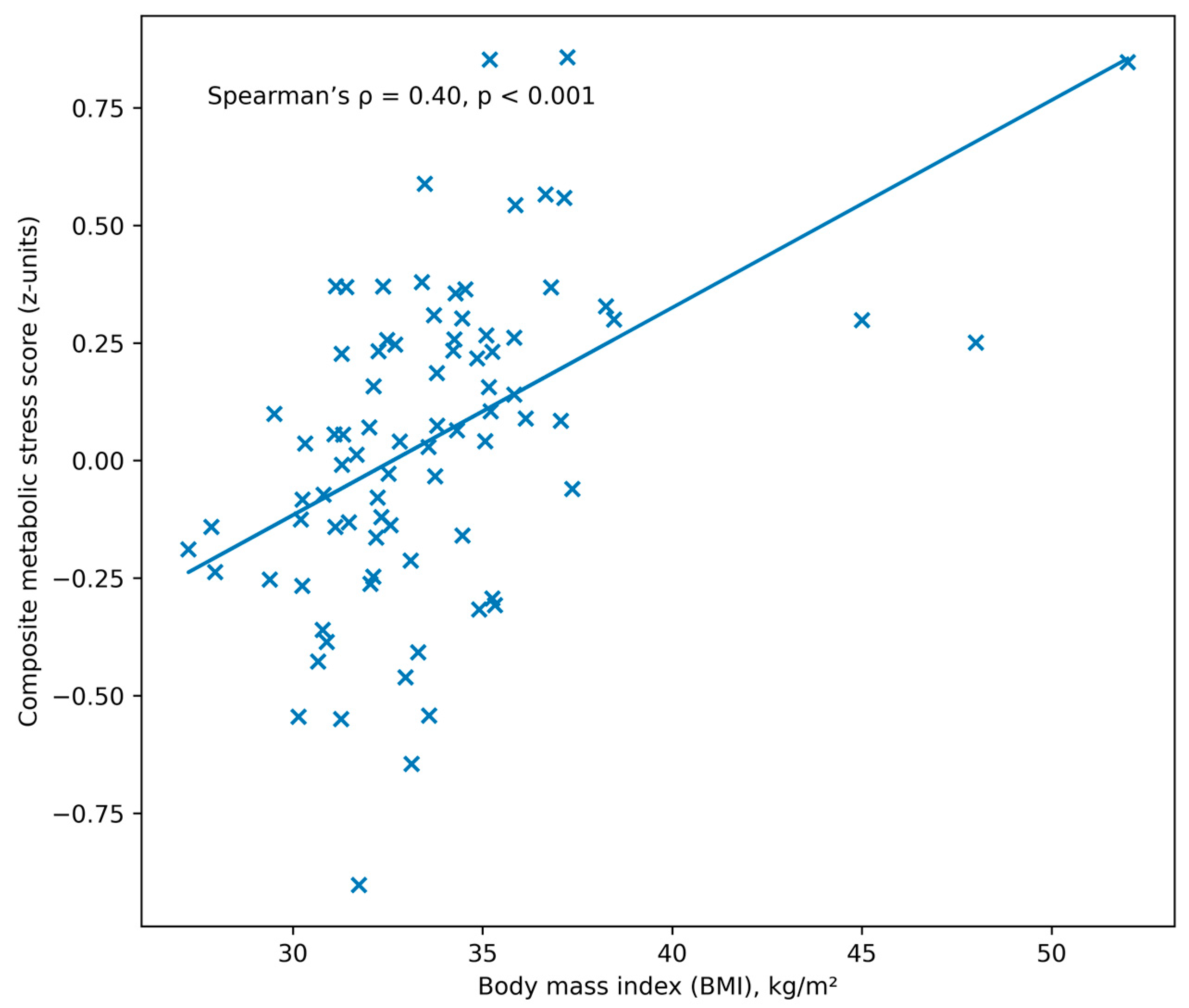
The association between gastrointestinal symptoms and unfavorable metabolic traits observed in this cohort aligns with accumulating evidence suggesting close links between digestive complaints and metabolic dysregulation. While gastrointestinal symptoms are often considered functional or benign in isolation, our findings indicate that their persistence may coincide with broader cardiometabolic disturbances. Notably, the GI+ subgroup demonstrated significantly higher triglyceride concentrations and lower HDL-cholesterol levels, two key components of atherogenic dyslipidemia, as well as higher fasting glucose levels, despite similar body mass index and HbA1c values compared with GI− participants. Self-reported symptoms do not represent diagnostic evidence of gastrointestinal pathology. Instead, they were treated as a patient-reported phenotype potentially reflecting underlying lifestyle, dietary, or metabolic patterns.
This pattern suggests that gastrointestinal symptom burden may be associated with early or intermediate metabolic alterations that are not fully reflected by long-term glycemic markers or global adiposity alone. Such dissociation underscores the importance of evaluating lipid and short-term glycemic parameters when interpreting metabolic risk in individuals with chronic digestive complaints [
14,
30].
4.2. Composite Metabolic Stress and Multidimensional Risk Patterns
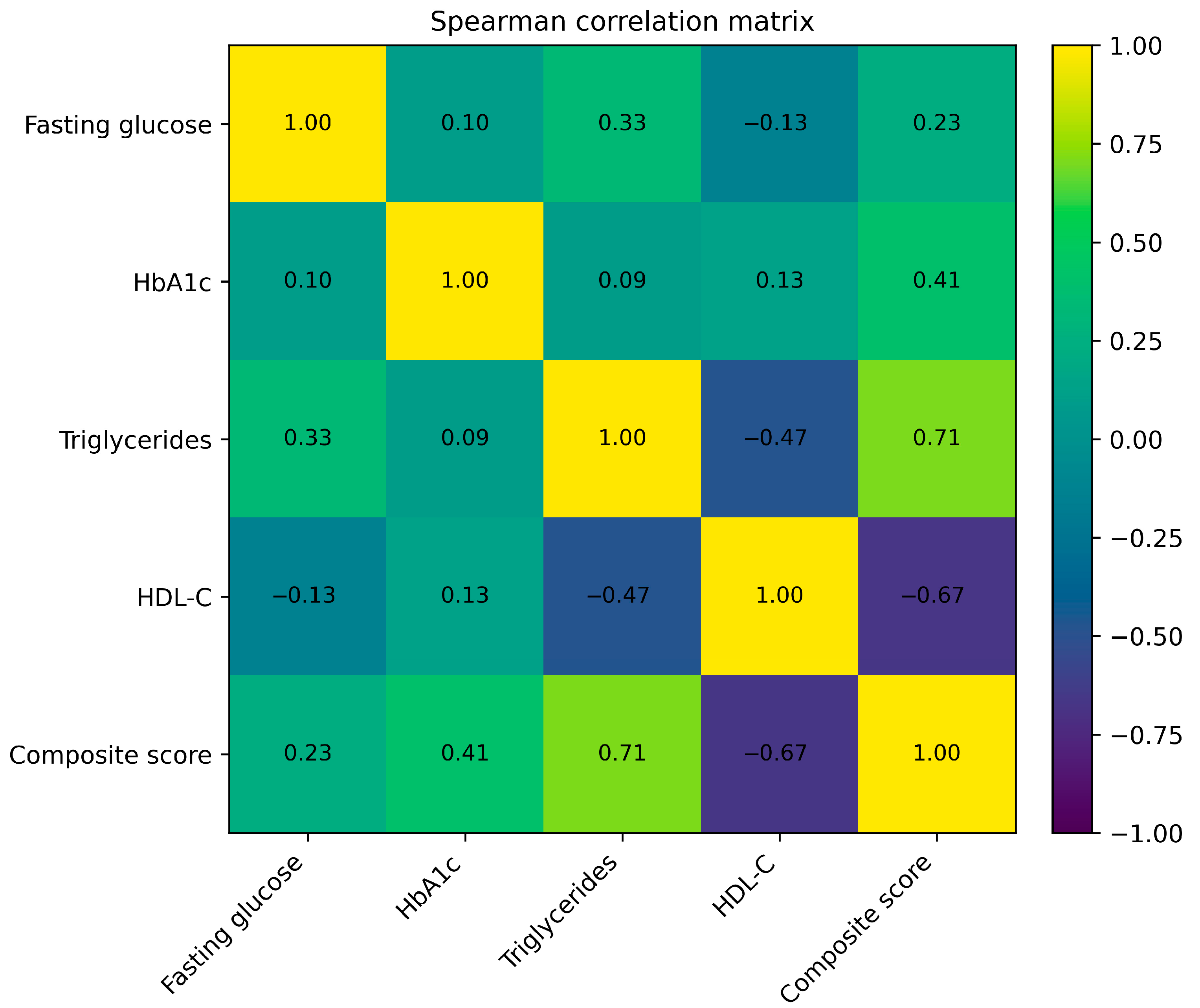
The composite metabolic stress score used in this study was designed to summarize multidimensional cardiometabolic burden using accessible clinical markers rather than to serve as a diagnostic index. Its associations with triglycerides, HDL-cholesterol, fasting glucose, and systolic blood pressure support its internal coherence as a descriptive summary of metabolic stress. Importantly, the higher composite scores observed in GI+ participants reinforce the notion that gastrointestinal symptoms may cluster with broader metabolic risk profiles [
30,
31]. No a priori power calculation was performed due to the exploratory design. The between-group difference in the composite metabolic stress score appears to be driven predominantly by triglyceride and HDL-cholesterol components, as BMI and HbA1c did not differ significantly between GI+ and GI− participants.
Metabolic disturbances characterized by oxidative stress and low-grade inflammation have been shown to contribute to multisystem tissue vulnerability. Experimental models indicate that metabolic stress can promote systemic inflammatory signaling and organ crosstalk, supporting the plausibility of concurrent gastrointestinal and cardiometabolic alterations.
Such integrative approaches may be particularly useful in exploratory or hypothesis-generating studies, where single biomarkers may fail to capture the complexity of metabolic dysregulation. However, given that the composite score incorporates established cardiometabolic variables, its interpretation should remain descriptive and complementary to individual parameter analysis [
32,
33,
34]. Importantly, the composite metabolic stress score should be considered an exploratory research tool. External validation in larger and independent cohorts is required before any potential clinical application.
4.3. Biological Plausibility and the Gut–Metabolism Interface
Although direct measures of gut microbiota composition, intestinal permeability, bile acid metabolism, or hepatic function were not available in this study, the observed associations are biologically plausible within current models of the gut–metabolism interface. Experimental and clinical research has demonstrated that alterations in gut microbial ecology, intestinal barrier function, and diet–microbiota interactions can influence lipid metabolism, glucose homeostasis, and systemic inflammation [
35,
36]. At a broader epidemiological level, gastrointestinal symptoms have been increasingly recognized as potential indicators of metabolic dysregulation in both European and global populations, particularly in the context of obesity, insulin resistance, and diet-related microbiome alterations.
Within this conceptual framework, persistent gastrointestinal symptoms may reflect underlying functional or microbial disturbances that coexist with cardiometabolic dysregulation. Rather than demonstrating a specific gut–liver axis, our findings are consistent with the hypothesis of shared upstream drivers—such as dietary patterns, low-grade inflammation, or metabolic endotoxemia—that may simultaneously affect gastrointestinal function and metabolic regulation. These mechanisms remain speculative in the context of the present study and warrant direct investigation in future research [
37,
38].
4.5. Strengths and Limitations
This study has several strengths. It is based on real-world clinical data and uses standardized metabolic measurements routinely available in clinical practice, enhancing its translational relevance. Gastrointestinal status was defined independently of metabolic variables, thereby avoiding circularity. In addition, the integrative analysis of lipid, glycemic, anthropometric, and cardiovascular parameters provide a multidimensional overview of cardiometabolic risk patterns in a clinical population.
Several limitations should also be acknowledged. First, the cross-sectional design precludes any inference about causality or directionality. Gastrointestinal symptoms may precede, accompany, or result from metabolic dysregulation. Second, gastrointestinal symptoms were self-reported and not supported by standardized diagnostic criteria or objective investigations, which may introduce misclassification bias and reflect perceived symptom burden rather than confirmed gastrointestinal pathology.
Third, potential confounding factors were not systematically controlled. Information on medication use (including lipid-lowering therapy, antihypertensive drugs, and glucose-lowering medications), dietary patterns, smoking status, and physical activity was not consistently available in the clinical records used for this study. These variables may directly influence metabolic parameters and therefore represent potential sources of residual confounding. Consequently, the observed associations should be interpreted cautiously.
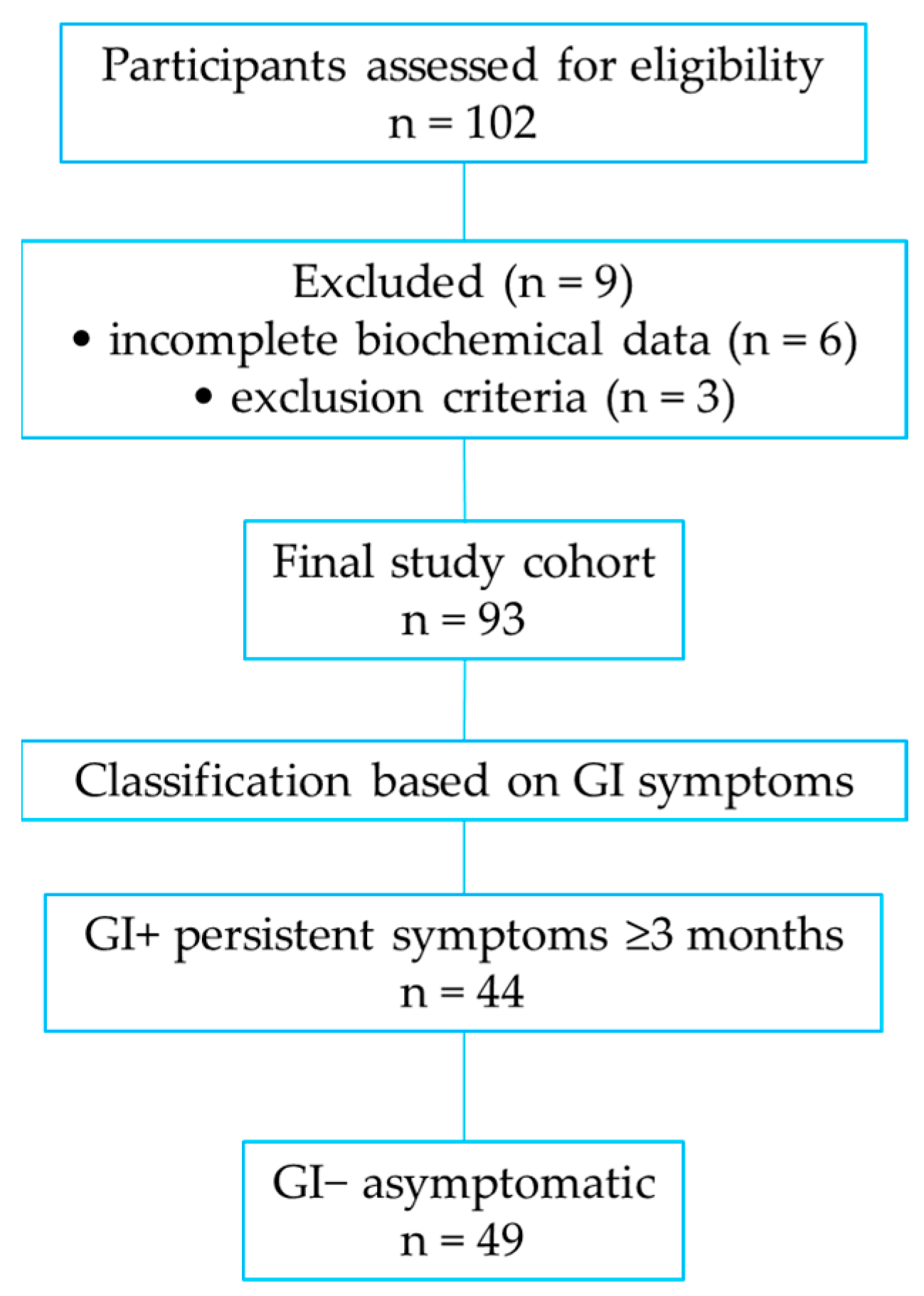
Information on medication use (including lipid-lowering, antihypertensive, or antidiabetic treatments), dietary patterns, smoking status, and physical activity was not consistently available. These variables may have influenced metabolic parameters and therefore represent potential residual confounding. Similarly, diabetes status was not formally incorporated as a covariate. In addition, the relatively modest sample size (n = 93) limits statistical power, particularly for subgroup analyses. Therefore, the results should be interpreted as exploratory and hypothesis-generating rather than definitive evidence of cardiometabolic associations with gastrointestinal symptoms.
Fourth, the absence of direct gastrointestinal or hepatic biomarkers (e.g., microbiome profiling, intestinal permeability markers, or bile acid analyses) limits mechanistic interpretation. The composite metabolic stress score, while transparently constructed, is exploratory and not a validated diagnostic tool.
Finally, the single-center convenience sample and the predominance of overweight and obese participants limit generalizability to the broader population. However, this also allowed focused exploration within a metabolically vulnerable group frequently encountered in clinical nutrition practice. The modest sample size further supports interpreting the findings as hypothesis-generating rather than definitive.
4.6. Future Directions
Future studies should incorporate longitudinal designs and objective gastrointestinal phenotyping, including microbiome profiling, intestinal permeability markers, bile acid analysis, and hepatic imaging or biomarkers. Such approaches would allow direct testing of the hypothesized links between gastrointestinal function and cardiometabolic regulation and clarify whether gastrointestinal symptoms precede, accompany, or result from metabolic dysregulation.
In conclusion, persistent gastrointestinal symptoms in adults were associated with a more adverse cardiometabolic profile characterized by atherogenic dyslipidemia and higher fasting glucose levels. An exploratory composite metabolic stress score derived from routine biomarkers summarized this pattern effectively. These findings support the biological plausibility of shared metabolic vulnerability between gastrointestinal symptom burden and cardiometabolic risk, while underscoring the need for mechanistic and longitudinal studies to further elucidate these relationships.



 ,
,