Gut Microbiota Changes Following Short-Term Probiotic Supplementation in Older Home Enteral Nutrition Patients

 ,
, 
 ,
,  , , , , , , , , and
Abstract
1. Introduction
2. Materials and Methods
2.1. Participants and Study Protocol
2.2. DNA Extraction and 16S rRNA Gene Amplicon Sequencing
2.3. Statistical Analysis
3. Results
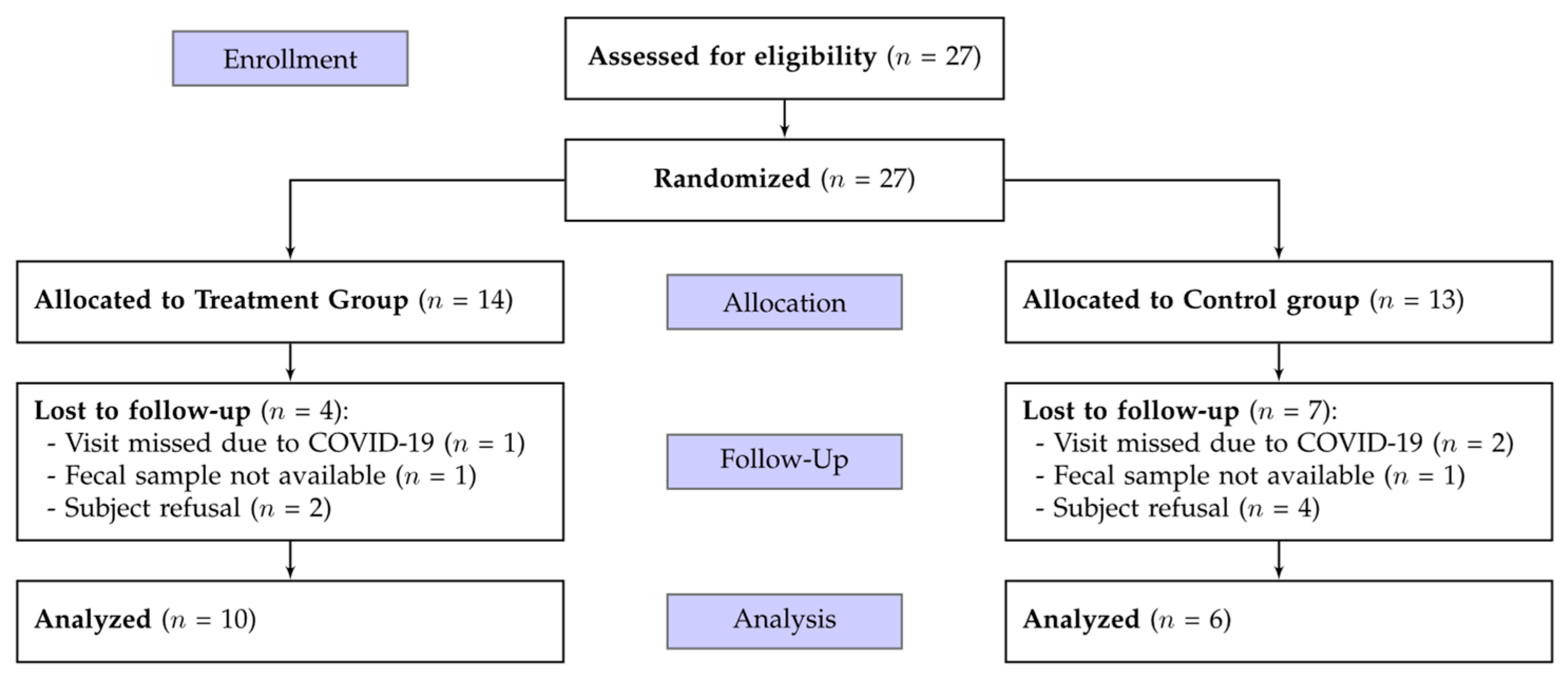
3.1. Population Characteristics
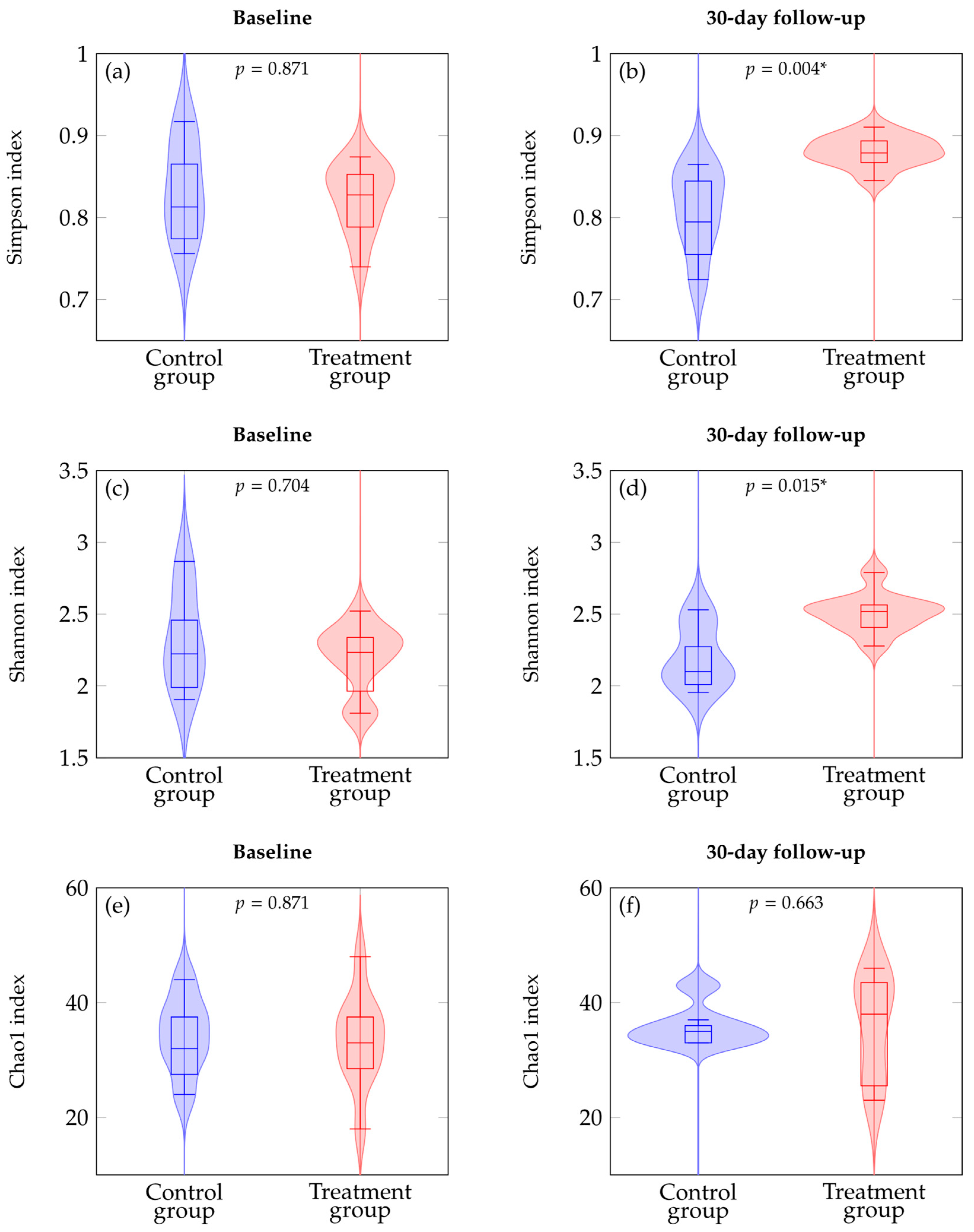
3.2. Effects of Probiotic Supplementation on Alpha Diversity
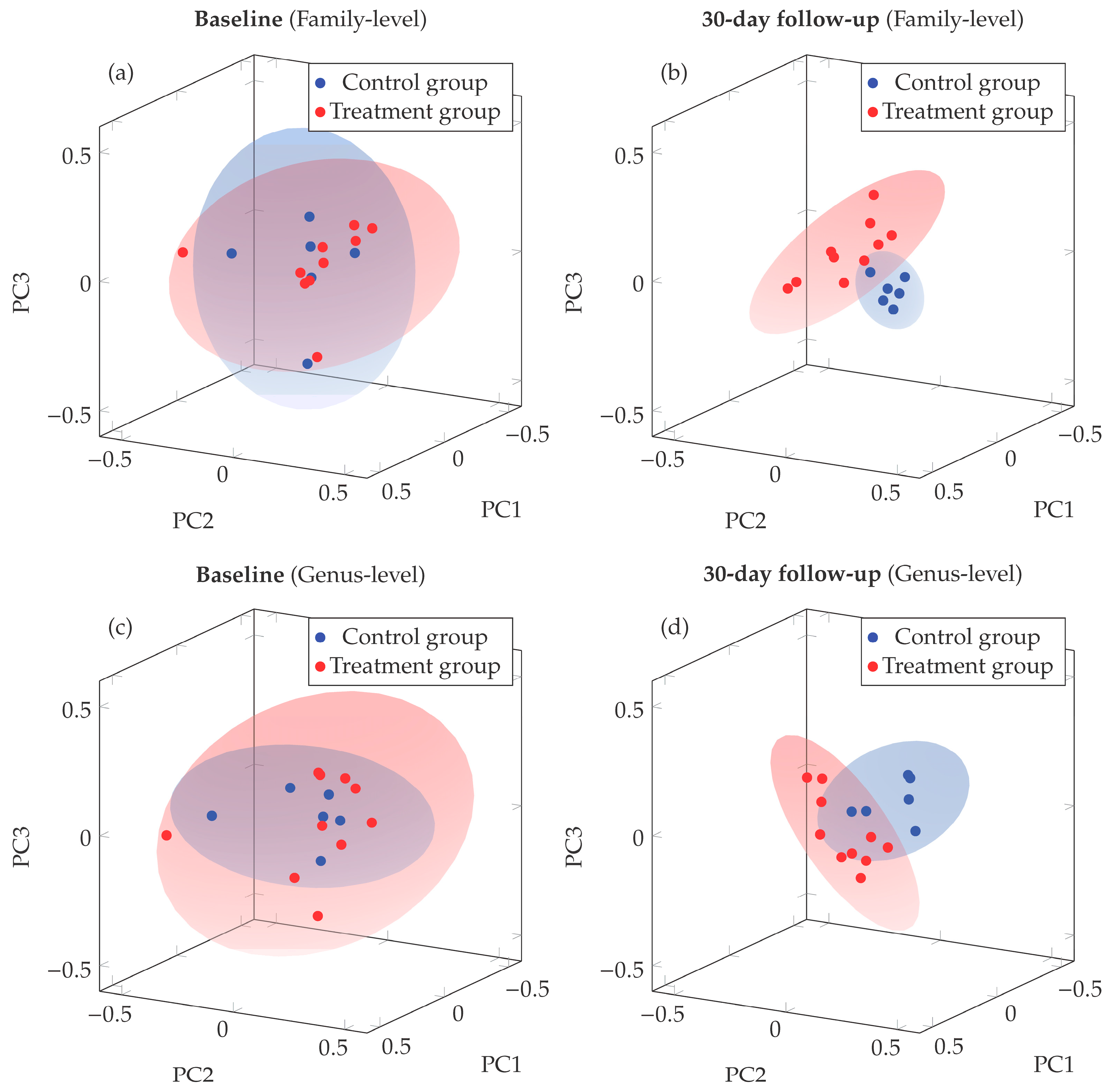
3.3. Beta Diversity Shifts Following Probiotic Supplementation
4. Discussion
5. Conclusions and Limitations
Author Contributions
Funding
Institutional Review Board Statement
Informed Consent Statement
Data Availability Statement
Conflicts of Interest
Abbreviations
| HEN | Home Enteral Nutrition |
| EN | Enteral Nutrition |
| PEG | Percutaneous endoscopic gastrostomy |
| SCFAs | Short-chain fatty acids |
| SD | Standard deviation |
| IQR | Interquartile range |
| LOO | Leave-One-Out |
| BMI | Body mass index |
| PPI | Proton pump inhibitors |
| CI | Confidence intervals |
| CV | Cardiovascular |
| CNS | Central Nervous System |
| PC | Principal Coordinate |
| PCoA | Principal Coordinate Analysis |
Appendix A
Appendix A.1

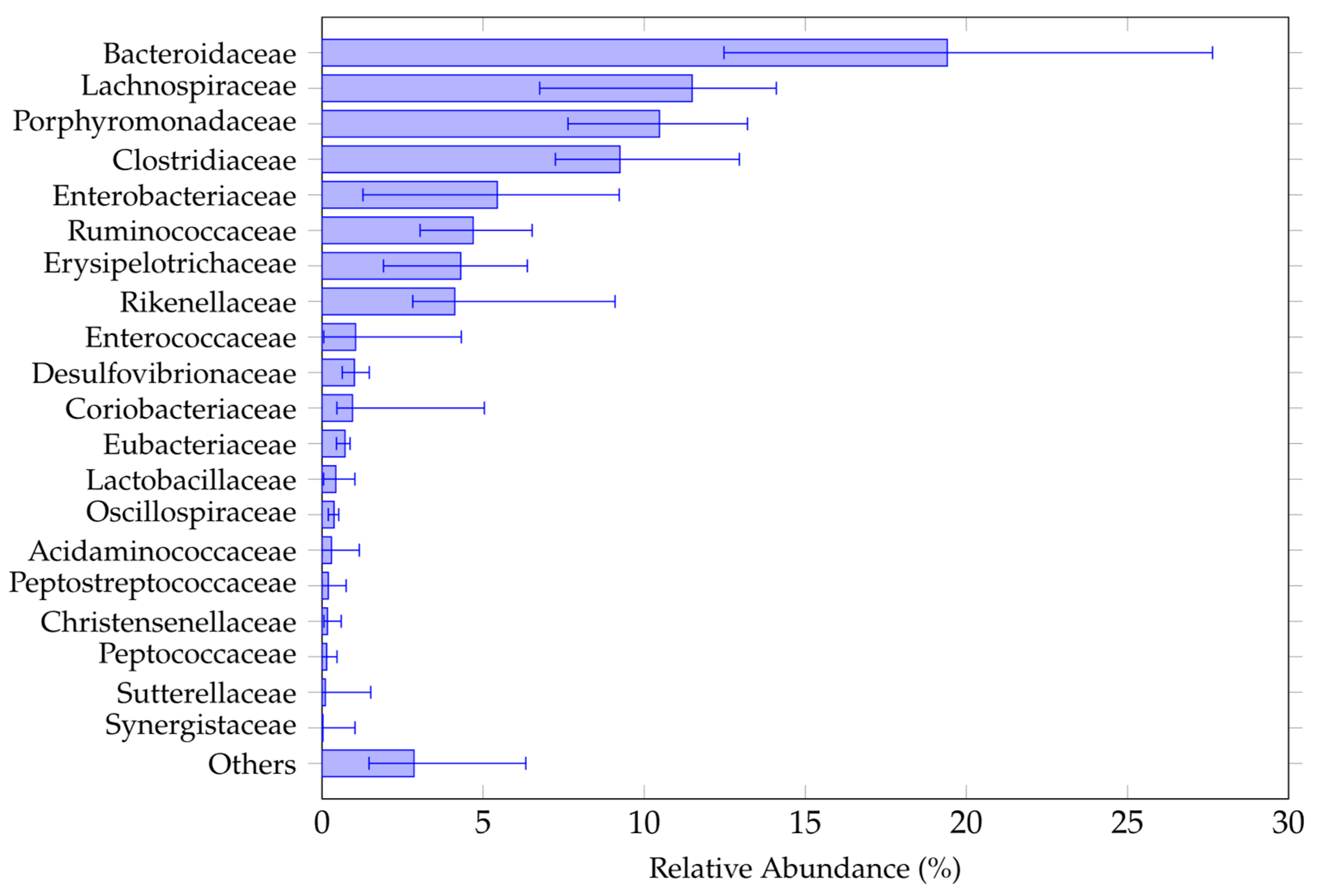
| Family | 1st Quartile | Median | 3rd Quartile |
|---|---|---|---|
| Bacteroidaceae | 12.48% | 19.41% | 27.64% |
| Lachnospiraceae | 6.76% | 11.49% | 14.10% |
| Porphyromonadaceae | 7.64% | 10.47% | 13.21% |
| Clostridiaceae | 7.24% | 9.25% | 12.96% |
| Enterobacteriaceae | 1.27% | 5.44% | 9.23% |
| Ruminococcaceae | 3.04% | 4.69% | 6.52% |
| Erysipelotrichaceae | 1.91% | 4.30% | 6.37% |
| Rikenellaceae | 2.82% | 4.12% | 9.10% |
| Enterococcaceae | 0.05% | 1.04% | 4.32% |
| Desulfovibrionaceae | 0.63% | 1.00% | 1.47% |
| Coriobacteriaceae | 0.46% | 0.94% | 5.04% |
| Eubacteriaceae | 0.45% | 0.71% | 0.87% |
| Lactobacillaceae | 0.05% | 0.43% | 1.02% |
| Unclassified clostridiales | 0.26% | 0.39% | 0.74% |
| Oscillospiraceae | 0.19% | 0.37% | 0.52% |
| Acidaminococcaceae | 0.00% | 0.29% | 1.16% |
| Peptostreptococcaceae | 0.00% | 0.19% | 0.75% |
| Christensenellaceae | 0.06% | 0.17% | 0.59% |
| Peptococcaceae | 0.00% | 0.14% | 0.46% |
| Sutterellaceae | 0.00% | 0.10% | 1.51% |
| Synergistaceae | 0.00% | 0.03% | 1.02% |
| Prevotellaceae | 0.00% | 0.02% | 0.33% |
| Pseudomonadaceae | 0.00% | 0.02% | 0.09% |
| Streptococcaceae | 0.00% | 0.01% | 0.23% |
| Victivallaceae | 0.00% | 0.01% | 0.12% |
| Clostridiales family xiii incertae sedis | 0.00% | 0.00% | 0.09% |
| Corynebacteriaceae | 0.00% | 0.00% | 0.30% |
| Clostridiales family xi incertae sedis | 0.00% | 0.00% | 0.03% |
| Bifidobacteriaceae | 0.00% | 0.00% | 3.19% |
| Clostridiales family xii incertae sedis | 0.00% | 0.00% | 0.07% |
| Gracilibacteraceae | 0.00% | 0.00% | 0.07% |
| Verrucomicrobiaceae | 0.00% | 0.00% | 0.03% |
| Bacillaceae | 0.00% | 0.00% | 0.01% |
| Leuconostocaceae | 0.00% | 0.00% | 0.01% |
| Sphingobacteriaceae | 0.00% | 0.00% | 0.01% |
| Catabacteriaceae | 0.00% | 0.00% | 0.00% |
| Thermoanaerobacterales family iv incertae sedis | 0.00% | 0.00% | 0.00% |
| Beutenbergiaceae | 0.00% | 0.00% | 0.00% |
| Oxalobacteraceae | 0.00% | 0.00% | 0.00% |
| Actinomycetaceae | 0.00% | 0.00% | 0.00% |
| Planococcaceae | 0.00% | 0.00% | 0.00% |
| Carnobacteriaceae | 0.00% | 0.00% | 0.00% |
| Veillonellaceae | 0.00% | 0.00% | 0.00% |
| Thermoanaerobacterales family iii incertae sedis | 0.00% | 0.00% | 0.00% |
| Nitrospinaceae | 0.00% | 0.00% | 0.00% |
| Comamonadaceae | 0.00% | 0.00% | 0.00% |
| Geobacteraceae | 0.00% | 0.00% | 0.00% |
| Colwelliaceae | 0.00% | 0.00% | 0.00% |
| Staphylococcaceae | 0.00% | 0.00% | 0.00% |
| Oligosphaeraceae | 0.00% | 0.00% | 0.00% |
| Propionibacteriaceae | 0.00% | 0.00% | 0.00% |
| Micrococcaceae | 0.00% | 0.00% | 0.00% |
| Peptoniphilaceae | 0.00% | 0.00% | 0.00% |
| Brevibacteriaceae | 0.00% | 0.00% | 0.00% |
| Alteromonadaceae | 0.00% | 0.00% | 0.00% |
| Microbacteriaceae | 0.00% | 0.00% | 0.00% |
| Acetobacteraceae | 0.00% | 0.00% | 0.00% |
| Paenibacillaceae | 0.00% | 0.00% | 0.00% |
| Moraxellaceae | 0.00% | 0.00% | 0.00% |
| Campylobacteraceae | 0.00% | 0.00% | 0.00% |
| Alcaligenaceae | 0.00% | 0.00% | 0.00% |
| Flavobacteriaceae | 0.00% | 0.00% | 0.00% |
| Cytophagaceae | 0.00% | 0.00% | 0.00% |
| Brachyspiraceae | 0.00% | 0.00% | 0.00% |
| Thermoanaerobacteraceae | 0.00% | 0.00% | 0.00% |
| Defluviitaleaceae | 0.00% | 0.00% | 0.00% |
| Halanaerobiaceae | 0.00% | 0.00% | 0.00% |
| Syntrophomonadaceae | 0.00% | 0.00% | 0.00% |
| Proteinivoraceae | 0.00% | 0.00% | 0.00% |
Appendix A.2
| Metric | F (1, 28) | p-Value |
|---|---|---|
| Simpson | 6.84 | 0.014 |
| Shannon | 6.64 | 0.016 |
| Chao1 | 0.04 | 0.838 |
References
- Fulop, T.; Witkowski, J.M.; Olivieri, F.; Larbi, A. The integration of inflammaging in age-related diseases. Semin. Immunol. 2018, 40, 17–35. [Google Scholar] [CrossRef]
- Franceschi, C.; Olivieri, F.; Moskalev, A.; Ivanchenko, M.; Santoro, A. Toward precision interventions and metrics of inflammaging. Nat. Aging 2025, 5, 1441–1454. [Google Scholar] [CrossRef] [PubMed]
- Worku, D.A. Ageing, Nutrition, and Infection: The Forgotten Triad. Br. J. Hosp. Med. 2025, 86, 1–25. [Google Scholar] [CrossRef] [PubMed]
- Volkert, D.; Berner, Y.N.; Berry, E.; Cederholm, T.; Coti Bertrand, P.; Milne, A.; Palmblad, J.; Schneider, S.; Sobotka, L.; Stanga, Z.; et al. ESPEN Guidelines on Enteral Nutrition: Geriatrics. Clin. Nutr. 2006, 25, 330–360. [Google Scholar] [CrossRef]
- Bischoff, S.C.; Austin, P.; Boeykens, K.; Chourdakis, M.; Cuerda, C.; Jonkers-Schuitema, C.; Lichota, M.; Nyulasi, I.; Schneider, S.M.; Stanga, Z.; et al. ESPEN practical guideline: Home enteral nutrition. Clin. Nutr. 2022, 41, 468–488. [Google Scholar] [CrossRef]
- Orlandoni, P.; Jukic Peladic, N. Safety and Effectiveness of Percutaneous Endoscopic Gastrostomy May Be Improved by Proper Pre- and Post-Positioning Management of Elderly Patients with Multimorbidity. Nutrients 2024, 16, 2893. [Google Scholar] [CrossRef]
- Mądra-Gackowska, K.; Szewczyk-Golec, K.; Gackowski, M.; Hołyńska-Iwan, I.; Parzych, D.; Czuczejko, J.; Graczyk, M.; Husejko, J.; Jabłoński, T.; Kędziora-Kornatowska, K. Selected Biochemical, Hematological, and Immunological Blood Parameters for the Identification of Malnutrition in Polish Senile Inpatients: A Cross-Sectional Study. J. Clin. Med. 2025, 14, 1494. [Google Scholar] [CrossRef]
- Mądra-Gackowska, K.; Szewczyk-Golec, K.; Gackowski, M.; Woźniak, A.; Kędziora-Kornatowska, K. Evaluation of Selected Parameters of Oxidative Stress and Adipokine Levels in Hospitalized Older Patients with Diverse Nutritional Status. Antioxidants 2023, 12, 569. [Google Scholar] [CrossRef]
- Wu, G.D.; Compher, C.; Chen, E.Z.; Smith, S.A.; Shah, R.D.; Bittinger, K.; Chehoud, C.; Albenberg, L.G.; Nessel, L.; Gilroy, E.; et al. Comparative metabolomics in vegans and omnivores reveal constraints on diet-dependent gut microbiota metabolite production. Gut 2016, 65, 63–72. [Google Scholar] [CrossRef]
- Desai, M.S.; Seekatz, A.M.; Koropatkin, N.M.; Kamada, N.; Hickey, C.A.; Wolter, M.; Pudlo, N.A.; Kitamoto, S.; Terrapon, N.; Muller, A.; et al. A Dietary Fiber-Deprived Gut Microbiota Degrades the Colonic Mucus Barrier and Enhances Pathogen Susceptibility. Cell 2016, 167, 1339–1353.e21. [Google Scholar] [CrossRef]
- Francini, E.; Badillo Pazmay, G.V.; Fumarola, S.; Procopio, A.D.; Olivieri, F.; Marchegiani, F. Bi-Directional Relationship Between Bile Acids (BAs) and Gut Microbiota (GM): UDCA/TUDCA, Probiotics, and Dietary Interventions in Elderly People. Int. J. Mol. Sci. 2025, 26, 1759. [Google Scholar] [CrossRef]
- Trueba, G.; Cardenas, P.; Romo, G.; Gutierrez, B. Reevaluating human-microbiota symbiosis: Strain-level insights and evolutionary perspectives across animal species. BioSystems 2024, 244, 105283. [Google Scholar] [CrossRef]
- Thursby, E.; Juge, N. Introduction to the human gut microbiota. Biochem. J. 2017, 474, 1823–1836. [Google Scholar] [CrossRef]
- Chen, Y.; Zhou, J.; Wang, L. Role and Mechanism of Gut Microbiota in Human Disease. Front. Cell. Infect. Microbiol. 2021, 11, 625913. [Google Scholar] [CrossRef]
- Jeffery, I.B.; Lynch, D.B.; O’Toole, P.W. Composition and temporal stability of the gut microbiota in older persons. ISME J. 2016, 10, 170–182. [Google Scholar] [CrossRef]
- Claesson, M.J.; Cusack, S.; O’Sullivan, O.; Greene-Diniz, R.; De Weerd, H.; Flannery, E.; Marchesi, J.R.; Falush, D.; Dinan, T.; Fitzgerald, G.; et al. Composition, variability, and temporal stability of the intestinal microbiota of the elderly. Proc. Natl. Acad. Sci. USA 2011, 108, 4586–4591. [Google Scholar] [CrossRef]
- Duan, R.; Zhu, S.; Wang, B.; Duan, L. Alterations of Gut Microbiota in Patients with Irritable Bowel Syndrome Based on 16S rRNA-Targeted Sequencing: A Systematic Review. Clin. Transl. Gastroenterol. 2019, 10, e00012. [Google Scholar] [CrossRef]
- Qin, J.; Li, Y.; Cai, Z.; Li, S.; Zhu, J.; Zhang, F.; Liang, S.; Zhang, W.; Guan, Y.; Shen, D.; et al. A metagenome-wide association study of gut microbiota in type 2 diabetes. Nature 2012, 490, 55–60. [Google Scholar] [CrossRef]
- Fan, Y.; Pedersen, O. Gut microbiota in human metabolic health and disease. Nat. Rev. Microbiol. 2021, 19, 55–71. [Google Scholar] [CrossRef]
- Vogt, N.M.; Kerby, R.L.; Dill-McFarland, K.A.; Harding, S.J.; Merluzzi, A.P.; Johnson, S.C.; Carlsson, C.M.; Asthana, S.; Zetterberg, H.; Blennow, K.; et al. Gut microbiome alterations in Alzheimer’s disease. Sci. Rep. 2017, 7, 13537. [Google Scholar] [CrossRef]
- Haran, J.P.; McCormick, B.A. Aging, Frailty, and the Microbiome—How Dysbiosis Influences Human Aging and Disease. Gastroenterology 2021, 160, 507–523. [Google Scholar] [CrossRef]
- Mancabelli, L.; Milani, C.; De Biase, R.; Bocchio, F.; Fontana, F.; Lugli, G.A.; Alessandri, G.; Tarracchini, C.; Viappiani, A.; De Conto, F.; et al. Taxonomic and metabolic development of the human gut microbiome across life stages: A worldwide metagenomic investigation. mSystems 2024, 9, e01294-23. [Google Scholar] [CrossRef]
- Bajaj, A.; Markandey, M.; Singh, M.; Sahu, P.; Vuyyuru, S.K.; Kante, B.; Kumar, P.; Verma, M.; Makharia, G.; Kedia, S.; et al. Exclusive Enteral Nutrition Mediates Beneficial Gut Microbiome Enrichment in Acute Severe Colitis. Inflamm. Bowel Dis. 2024, 30, 641–650. [Google Scholar] [CrossRef]
- Lv, Y.; Lou, Y.; Liu, A.; Cheng, Q.; Yang, G.; Xu, C.; Luo, Y.; Lou, J.; Yu, J.; Fang, Y.; et al. The impact of exclusive enteral nutrition on the gut microbiome and bile acid metabolism in pediatric Crohn’s disease. Clin. Nutr. 2023, 42, 116–128. [Google Scholar] [CrossRef]
- Tang, W.; Huang, Y.; Shi, P.; Wang, Y.; Zhang, Y.; Xue, A.; Tang, Z.; Hu, W.; Sun, H.; Zhang, P.; et al. Effect of Exclusive Enteral Nutrition on the Disease Process, Nutrition Status, and Gastrointestinal Microbiota for Chinese Children with Crohn’s Disease. J. Parenter. Enter. Nutr. 2021, 45, 826–838. [Google Scholar] [CrossRef]
- O’Keefe, S.J. Tube feeding, the microbiota, and Clostridium difficile infection. World J. Gastroenterol. 2010, 16, 139. [Google Scholar] [CrossRef]
- Whelan, K.; Judd, P.A.; Tuohy, K.M.; Gibson, G.R.; Preedy, V.R.; Taylor, M.A. Fecal microbiota in patients receiving enteral feeding are highly variable and may be altered in those who develop diarrhea. Am. J. Clin. Nutr. 2009, 89, 240–247. [Google Scholar] [CrossRef]
- Claesson, M.J.; Jeffery, I.B.; Conde, S.; Power, S.E.; O’Connor, E.M.; Cusack, S.; Harris, H.M.B.; Coakley, M.; Lakshminarayanan, B.; O’Sullivan, O.; et al. Gut microbiota composition correlates with diet and health in the elderly. Nature 2012, 488, 178–184. [Google Scholar] [CrossRef]
- Adak, A.; Khan, M.R. An insight into gut microbiota and its functionalities. Cell. Mol. Life Sci. 2019, 76, 473–493. [Google Scholar] [CrossRef]
- Zheng, T.; Gao, Y.; Xu, Y.; Chen, Z.; Wang, X.; Liu, J.; Liu, G. Combination of Enteral Nutrition and Probiotics Promote Recovery Following Ileal Pouch–Anal Anastomosis in Rats. Inflammation 2021, 44, 725–736. [Google Scholar] [CrossRef]
- Naslowski, J.B.; Schieferdecker, M.E.M.; Campos, A.C.L. Effects of probiotic supplementation on infectious and gastrointestinal complications of critically ill patients: Randomized, blinded, placebo-controlled clinical trial. Clin. Nutr. ESPEN 2025, 68, 228–237. [Google Scholar] [CrossRef]
- Akatsu, H.; Iwabuchi, N.; Xiao, J.; Matsuyama, Z.; Kurihara, R.; Okuda, K.; Yamamoto, T.; Maruyama, M. Clinical Effects of Probiotic Bifidobacterium longum BB536 on Immune Function and Intestinal Microbiota in Elderly Patients Receiving Enteral Tube Feeding. J. Parenter. Enter. Nutr. 2013, 37, 631–640. [Google Scholar] [CrossRef]
- Del Piano, M.; Ballarè, M.; Montino, F.; Orsello, M.; Garello, E.; Ferrari, P.; Masini, C.; Strozzi, G.P.; Sforza, F. Clinical Experience with Probiotics in the Elderly on Total Enteral Nutrition. J. Clin. Gastroenterol. 2004, 38, S111–S114. [Google Scholar] [CrossRef]
- Seifi, N.; Rezvani, R.; Sedaghat, A.; Nematy, M.; Khadem-Rezaiyan, M.; Safarian, M. The effects of synbiotic supplementation on enteral feeding tolerance, protein homeostasis, and muscle wasting of critically ill adult patients: A randomized controlled trial. Trials 2022, 23, 846. [Google Scholar] [CrossRef]
- Almeida, G.M.D.; Egea, M.B. Probiotics: A Little Help for Enteral Nutritional Therapy in Critically Ill Adults. Int. J. Mol. Sci. 2025, 26, 8458. [Google Scholar] [CrossRef]
- Wang, M.-C.; Zaydi, A.I.; Lin, W.-H.; Lin, J.-S.; Liong, M.-T.; Wu, J.-J. Putative Probiotic Strains Isolated from Kefir Improve Gastrointestinal Health Parameters in Adults: A Randomized, Single-Blind, Placebo-Controlled Study. Probiotics Antimicrob. Proteins 2020, 12, 840–850. [Google Scholar] [CrossRef]
- Liu, P.; Liu, Z.; Wang, J.; Wang, J.; Gao, M.; Zhang, Y.; Yang, C.; Zhang, A.; Li, G.; Li, X.; et al. Immunoregulatory role of the gut microbiota in inflammatory depression. Nat. Commun. 2024, 15, 3003. [Google Scholar] [CrossRef]
- Zheng, Y.; Bonfili, L.; Wei, T.; Eleuteri, A.M. Understanding the Gut–Brain Axis and Its Therapeutic Implications for Neurodegenerative Disorders. Nutrients 2023, 15, 4631. [Google Scholar] [CrossRef]
- Kim, C.-S.; Cha, J.; Sim, M.; Jung, S.; Chun, W.Y.; Baik, H.W.; Shin, D.-M. Probiotic Supplementation Improves Cognitive Function and Mood with Changes in Gut Microbiota in Community-Dwelling Older Adults: A Randomized, Double-Blind, Placebo-Controlled, Multicenter Trial. J. Gerontol. Ser. A 2021, 76, 32–40. [Google Scholar] [CrossRef]
- Verdenelli, M.C.; Ghelfi, F.; Silvi, S.; Orpianesi, C.; Cecchini, C.; Cresci, A. Probiotic properties of Lactobacillus rhamnosus and Lactobacillus paracasei isolated from human faeces. Eur. J. Nutr. 2009, 48, 355–363. [Google Scholar] [CrossRef]
- Silvi, S.; Verdenelli, M.C.; Cecchini, C.; Coman, M.M.; Bernabei, M.S.; Rosati, J.; De Leone, R.; Orpianesi, C.; Cresci, A. Probiotic-enriched foods and dietary supplement containing SYNBIO positively affects bowel habits in healthy adults: An assessment using standard statistical analysis and Support Vector Machines. Int. J. Food Sci. Nutr. 2014, 65, 994–1002. [Google Scholar] [CrossRef] [PubMed]
- Coman, M.M.; Micioni Di Bonaventura, M.V.; Cifani, C.; Silvi, S.; Verdenelli, M.C. SYNBIO® Probiotic and Antioxidant Dietary Supplementation: Clinical Trial Evaluation of Potential Effects on Airline Flight Crew Members’ Well-Being. Microorganisms 2023, 11, 924. [Google Scholar] [CrossRef] [PubMed]
- Francini, E.; Orlandoni, P.; Sparvoli, D.; Jukic Peladic, N.; Cardelli, M.; Recchioni, R.; Silvi, S.; Stocchi, V.; Donati Zeppa, S.; Procopio, A.D.; et al. Possible Role of Tauroursodeoxycholic Acid (TUDCA) and Antibiotic Administration in Modulating Human Gut Microbiota in Home Enteral Nutrition Therapy for the Elderly: A Case Report. Int. J. Mol. Sci. 2024, 25, 7115. [Google Scholar] [CrossRef]
- Ravikrishnan, A.; Wijaya, I.; Png, E.; Chng, K.R.; Ho, E.X.P.; Ng, A.H.Q.; Mohamed Naim, A.N.; Gounot, J.-S.; Guan, S.P.; Hanqing, J.L.; et al. Gut metagenomes of Asian octogenarians reveal metabolic potential expansion and distinct microbial species associated with aging phenotypes. Nat. Commun. 2024, 15, 7751. [Google Scholar] [CrossRef]
- Zhang, J.; Deng, J.; Li, J.; Su, Y.; Hu, J.; Lin, D.; Su, M.; Chen, Y.; Liao, S.; Bai, X.; et al. Changes of gut microbiota under different nutritional methods in elderly patients with severe COVID-19 and their relationship with prognosis. Front. Immunol. 2023, 14, 1260112. [Google Scholar] [CrossRef] [PubMed]
- Wardill, H.R.; Van Groningen, L.F.J.; Dorraki, M.; Molendijk, E.B.D.; Kalter, D.; Da Silva Ferreira, A.R.; Kurilshikov, A.; Ryan, F.J.; Verjans, J.W.; Harmsen, H.J.M.; et al. Enteral versus parenteral nutrition in auto-HCT: A randomized controlled trial on clinical outcomes and gut microbiome dynamics. Support. Care Cancer 2025, 33, 865. [Google Scholar] [CrossRef]
- Ragonnaud, E.; Biragyn, A. Gut microbiota as the key controllers of “healthy” aging of elderly people. Immun. Ageing 2021, 18, 2. [Google Scholar] [CrossRef]
- Wen, N.-N.; Sun, L.-W.; Geng, Q.; Zheng, G.-H. Gut microbiota changes associated with frailty in older adults: A systematic review of observational studies. World J. Clin. Cases 2024, 12, 6815–6825. [Google Scholar] [CrossRef]
- Donati Zeppa, S.; Agostini, D.; Ferrini, F.; Gervasi, M.; Barbieri, E.; Bartolacci, A.; Piccoli, G.; Saltarelli, R.; Sestili, P.; Stocchi, V. Interventions on Gut Microbiota for Healthy Aging. Cells 2022, 12, 34. [Google Scholar] [CrossRef]
- Das, B.; Nair, G.B. Homeostasis and dysbiosis of the gut microbiome in health and disease. J. Biosci. 2019, 44, 117. [Google Scholar] [CrossRef] [PubMed]
- Vacca, M.; Celano, G.; Calabrese, F.M.; Portincasa, P.; Gobbetti, M.; De Angelis, M. The Controversial Role of Human Gut Lachnospiraceae. Microorganisms 2020, 8, 573. [Google Scholar] [CrossRef]
- Engels, C.; Ruscheweyh, H.-J.; Beerenwinkel, N.; Lacroix, C.; Schwab, C. The Common Gut Microbe Eubacterium hallii also Contributes to Intestinal Propionate Formation. Front. Microbiol. 2016, 7, 713. [Google Scholar] [CrossRef]
- Belzer, C.; Chia, L.W.; Aalvink, S.; Chamlagain, B.; Piironen, V.; Knol, J.; De Vos, W.M. Microbial Metabolic Networks at the Mucus Layer Lead to Diet-Independent Butyrate and Vitamin B12 Production by Intestinal Symbionts. mBio 2017, 8, e00770-17. [Google Scholar] [CrossRef]
- Wieërs, G.; Belkhir, L.; Enaud, R.; Leclercq, S.; Philippart De Foy, J.-M.; Dequenne, I.; De Timary, P.; Cani, P.D. How Probiotics Affect the Microbiota. Front. Cell. Infect. Microbiol. 2020, 9, 454. [Google Scholar] [CrossRef] [PubMed]
- Hopkins, M.J.; Macfarlane, G.T. Changes in predominant bacterial populations in human faeces with age and with Clostridium difficile infection. J. Med. Microbiol. 2002, 51, 448–454. [Google Scholar] [CrossRef]
- Mariat, D.; Firmesse, O.; Levenez, F.; Guimarăes, V.; Sokol, H.; Doré, J.; Corthier, G.; Furet, J.-P. The Firmicutes/Bacteroidetes ratio of the human microbiota changes with age. BMC Microbiol. 2009, 9, 123. [Google Scholar] [CrossRef]
- Mantovani, A.; Longo, L.; Thoen, R.U.; Rampelotto, P.H.; Salinas, R.; Guerreiro, G.T.S.; Álvares-da-Silva, M.R. Firmicutes/Bacteroidetes and Firmicutes/Proteobacteria ratios are associated with worse prognosis in a cohort of Latin American patients with cirrhosis. Clinics 2024, 79, 100471. [Google Scholar] [CrossRef] [PubMed]
- Salosensaari, A.; Laitinen, V.; Havulinna, A.S.; Meric, G.; Cheng, S.; Perola, M.; Valsta, L.; Alfthan, G.; Inouye, M.; Watrous, J.D.; et al. Taxonomic signatures of cause-specific mortality risk in human gut microbiome. Nat. Commun. 2021, 12, 2671. [Google Scholar] [CrossRef]
- Clark, R.I.; Salazar, A.; Yamada, R.; Fitz-Gibbon, S.; Morselli, M.; Alcaraz, J.; Rana, A.; Rera, M.; Pellegrini, M.; Ja, W.W.; et al. Distinct Shifts in Microbiota Composition during Drosophila Aging Impair Intestinal Function and Drive Mortality. Cell Rep. 2015, 12, 1656–1667. [Google Scholar] [CrossRef] [PubMed]


| Total (n = 16) | Control Group (n = 6) | Treatment Group (n = 10) | p-Value | |
|---|---|---|---|---|
| Age (years) | 81.4 ± 7.9 | 83.3 ± 4.4 | 80.3 ± 9.4 | 0.398 |
| Body mass index (kg/m2) | 21.0 ± 3.7 | 22.6 ± 4.4 | 19.9 ± 3.0 | 0.218 |
| N° medications | 7.2 ± 3.9 | 5.6 ± 3.5 | 8.8 ± 3.9 | 0.210 |
| Female | 13 (81.2%) | 6 (100.0%) | 7 (70.0%) | 0.250 |
| Constipation | 8 (50.0%) | 2 (33.3%) | 6 (60.0%) | 0.608 |
| Nursing home | 7 (43.8%) | 2 (33.3%) | 5 (50.0%) | 0.633 |
| PC1 | PC2 | PC3 |
|---|---|---|
| Family-level Analysis: | ||
| Bacteroidaceae (−0.907) | Ruminococcaceae (−0.821) | Lachnospiraceae (0.871) |
| Corynebacteriaceae (0.689) | Catabacteriaceae (−0.793) | Erysipelotrichaceae (0.789) |
| Coriobacteriaceae (0.606) | Christensenellaceae (−0.708) | Sphingobacteriaceae (0.769) |
| Acidaminococcaceae (−0.579) | Bacillaceae (−0.691) | Oxalobacteraceae (0.667) |
| Bifidobacteriaceae (0.565) | Peptococcaceae (−0.668) | Streptococcaceae (0.593) |
| Prevotellaceae (−0.538) | Veillonellaceae (0.641) | Leuconostocaceae (0.531) |
| Clostridiaceae (−0.529) | Enterobacteriaceae (0.615) | Peptostreptococcaceae (0.523) |
| Staphylococcaceae (0.507) | Clostridiales Family XI (0.613) | Flavobacteriaceae (0.473) |
| Clostridiales Family XI (0.486) | Enterococcaceae (−0.601) | Porphyromonadaceae (−0.471) |
| Enterobacteriaceae (0.434) | Oscillospiraceae (−0.583) | Sutterellaceae (−0.467) |
| Genus-level Analysis: | ||
| Bacteroides (−0.778) | Collinsella (0.776) | Eubacterium (−0.82) |
| Clostridium (−0.624) | Raoultella (0.776) | Alistipes (−0.692) |
| Bilophila (0.589) | Anaerococcus (0.775) | Sutterella (0.624) |
| Enterococcus (0.575) | Megamonas (0.771) | Herbaspirillum (−0.615) |
| Olsenella (0.558) | Marvinbryantia (0.771) | Oxalobacter (−0.580) |
| Bifidobacterium (0.523) | Dialister (0.771) | Anaerostipes (−0.545) |
| Corynebacterium (0.517) | Finegoldia (0.749) | Catabacter (−0.507) |
| Finegoldia (0.498) | Bifidobacterium (0.729) | Subdoligranulum (0.497) |
| Phascolarctobacterium (−0.497) | Olsenella (0.710) | Candidatus soleaferrea (−0.484) |
| Desulfovibrio (−0.493) | Eggerthella (−0.582) | Enorma (0.456) |
Disclaimer/Publisher’s Note: The statements, opinions and data contained in all publications are solely those of the individual author(s) and contributor(s) and not of MDPI and/or the editor(s). MDPI and/or the editor(s) disclaim responsibility for any injury to people or property resulting from any ideas, methods, instructions or products referred to in the content. |
© 2026 by the authors. Licensee MDPI, Basel, Switzerland. This article is an open access article distributed under the terms and conditions of the Creative Commons Attribution (CC BY) license.
Share and Cite
Tombolesi, N.; Francini, E.; Matacchione, G.; Sparvoli, D.; Peladic, N.J.; Cardelli, M.; Recchioni, R.; Sbriscia, M.; Fantone, S.; Giordani, C.; et al. Gut Microbiota Changes Following Short-Term Probiotic Supplementation in Older Home Enteral Nutrition Patients. Nutrients 2026, 18, 1013. https://doi.org/10.3390/nu18061013
Tombolesi N, Francini E, Matacchione G, Sparvoli D, Peladic NJ, Cardelli M, Recchioni R, Sbriscia M, Fantone S, Giordani C, et al. Gut Microbiota Changes Following Short-Term Probiotic Supplementation in Older Home Enteral Nutrition Patients. Nutrients. 2026; 18(6):1013. https://doi.org/10.3390/nu18061013
Chicago/Turabian StyleTombolesi, Niki, Emanuele Francini, Giulia Matacchione, Debora Sparvoli, Nikolina Jukic Peladic, Maurizio Cardelli, Rina Recchioni, Matilde Sbriscia, Sonia Fantone, Chiara Giordani, and et al. 2026. "Gut Microbiota Changes Following Short-Term Probiotic Supplementation in Older Home Enteral Nutrition Patients" Nutrients 18, no. 6: 1013. https://doi.org/10.3390/nu18061013
APA StyleTombolesi, N., Francini, E., Matacchione, G., Sparvoli, D., Peladic, N. J., Cardelli, M., Recchioni, R., Sbriscia, M., Fantone, S., Giordani, C., Giuliani, A., Silvi, S., Fiorini, D., Zeppa, S. D., Procopio, A. D., Olivieri, F., Lattanzio, F., Capalbo, M., Orlandoni, P., & Marchegiani, F. (2026). Gut Microbiota Changes Following Short-Term Probiotic Supplementation in Older Home Enteral Nutrition Patients. Nutrients, 18(6), 1013. https://doi.org/10.3390/nu18061013