Dietary Caffeine, Cold Exposure, and the Estrogen–TRPM8 Axis: A Nutri-Environmental Model for Lower Urinary Tract Symptoms in the Menopause Transition: A Narrative Review


Abstract
1. Introduction
2. Materials and Methods
3. Results
3.1. Epidemiology and Clinical Patterns of Lower Urinary Tract Symptoms Across the Menopause Transition
3.1.1. Symptom Emergence During Transition
3.1.2. Overlap with Genitourinary Syndrome of Menopause and Overactive Bladder
3.2. Cold Exposure and Indoor Temperature as Modifiable Determinants of Nocturia and Urgency
3.2.1. Seasonality and Symptom Worsening
3.2.2. Indoor Cold Exposure and Nocturia
3.2.3. Passive Body Heating as a Behavioral Countermeasure
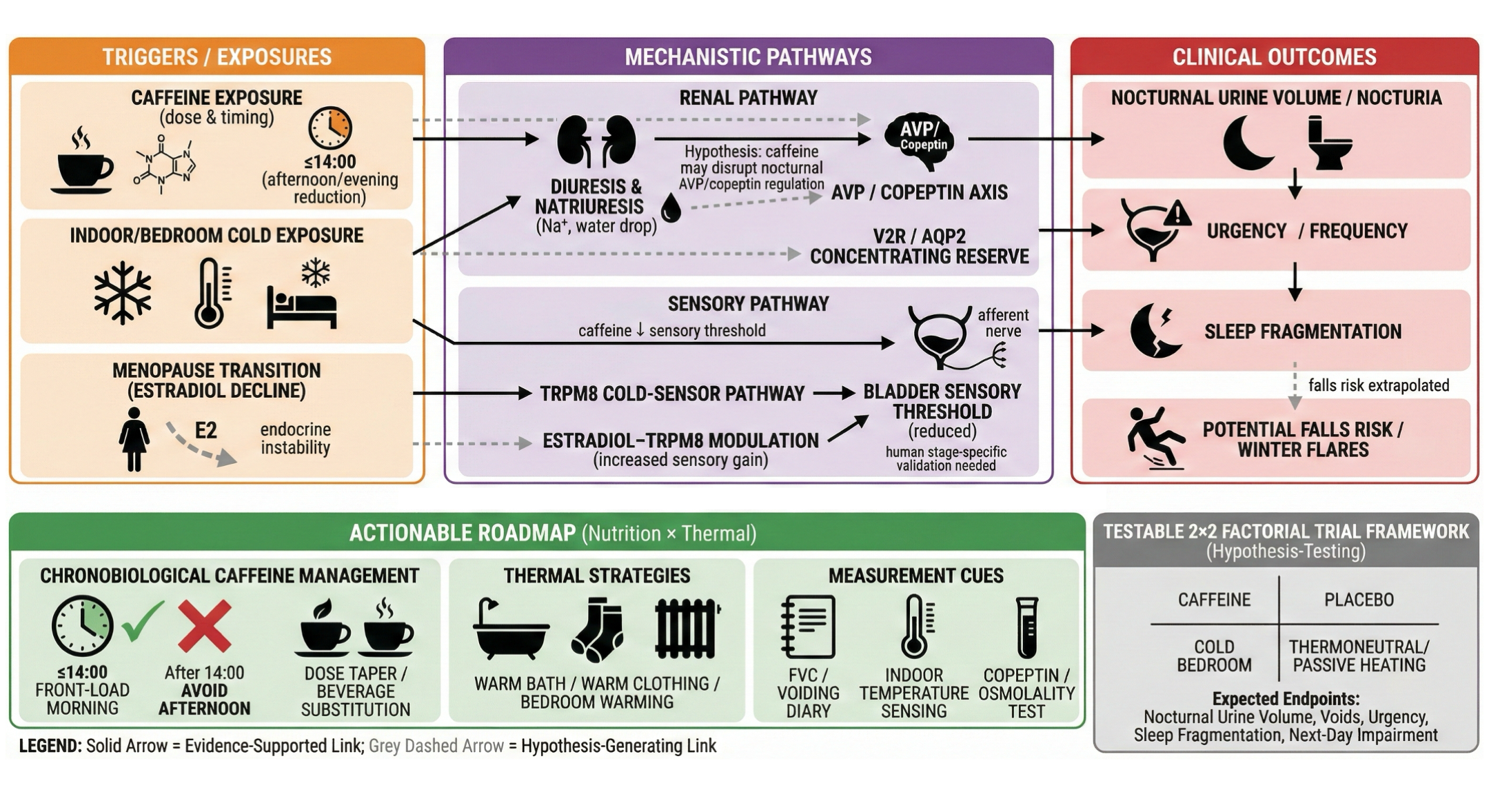
3.3. Mechanistic Synthesis I: A Hypothesis-Generating Dual-Axis Model for Cold-Exacerbated Nocturnal Polyuria
3.3.1. Cold-Induced Diuresis and Vasopressin Dependence
3.3.2. Caffeine as a Core Dietary Determinant of Water Homeostasis and Bladder Sensitivity
3.3.3. Menopause Transition as a Susceptibility State
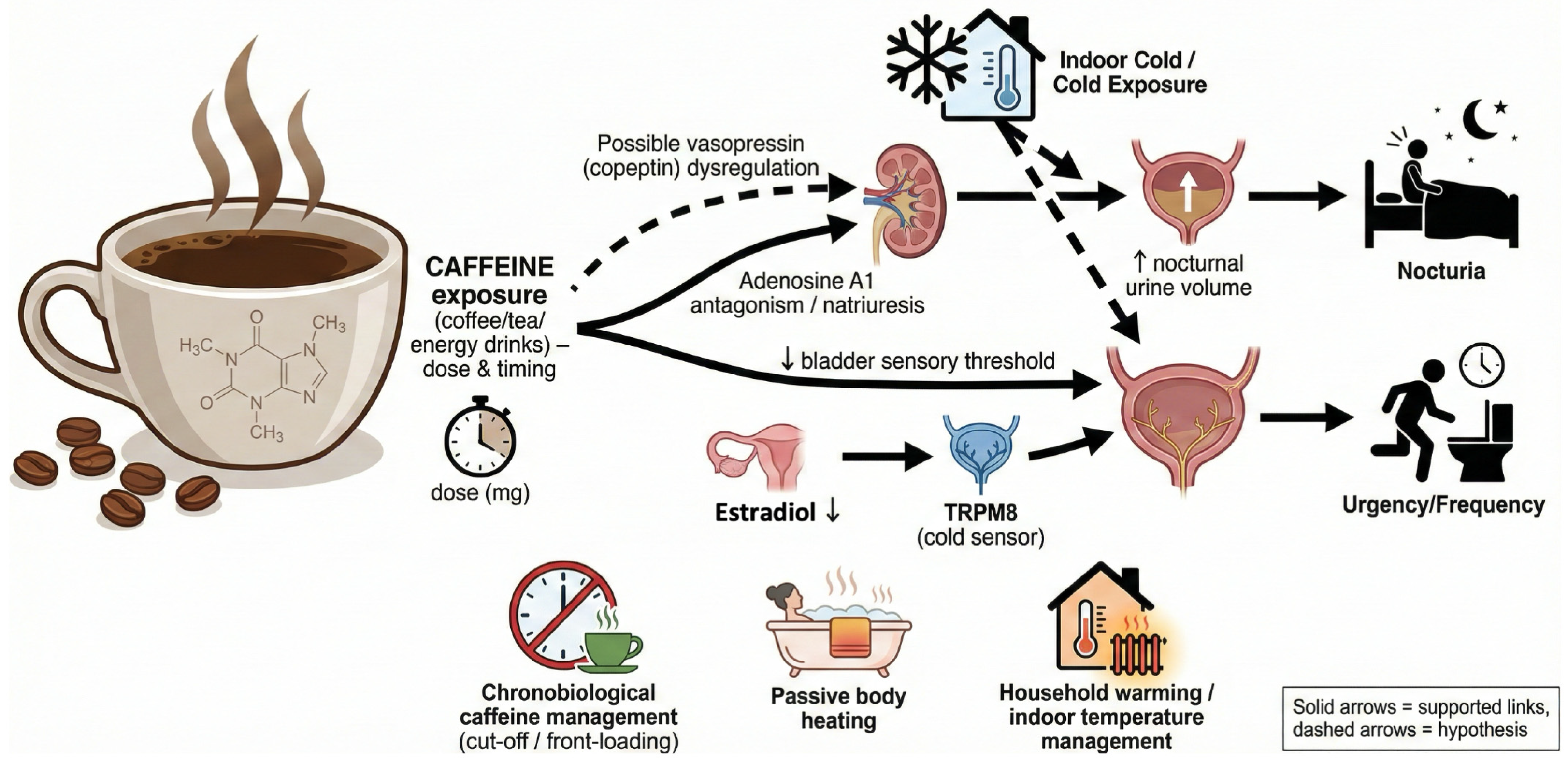
3.3.4. Proposed Model: Dual Hormone Suppression
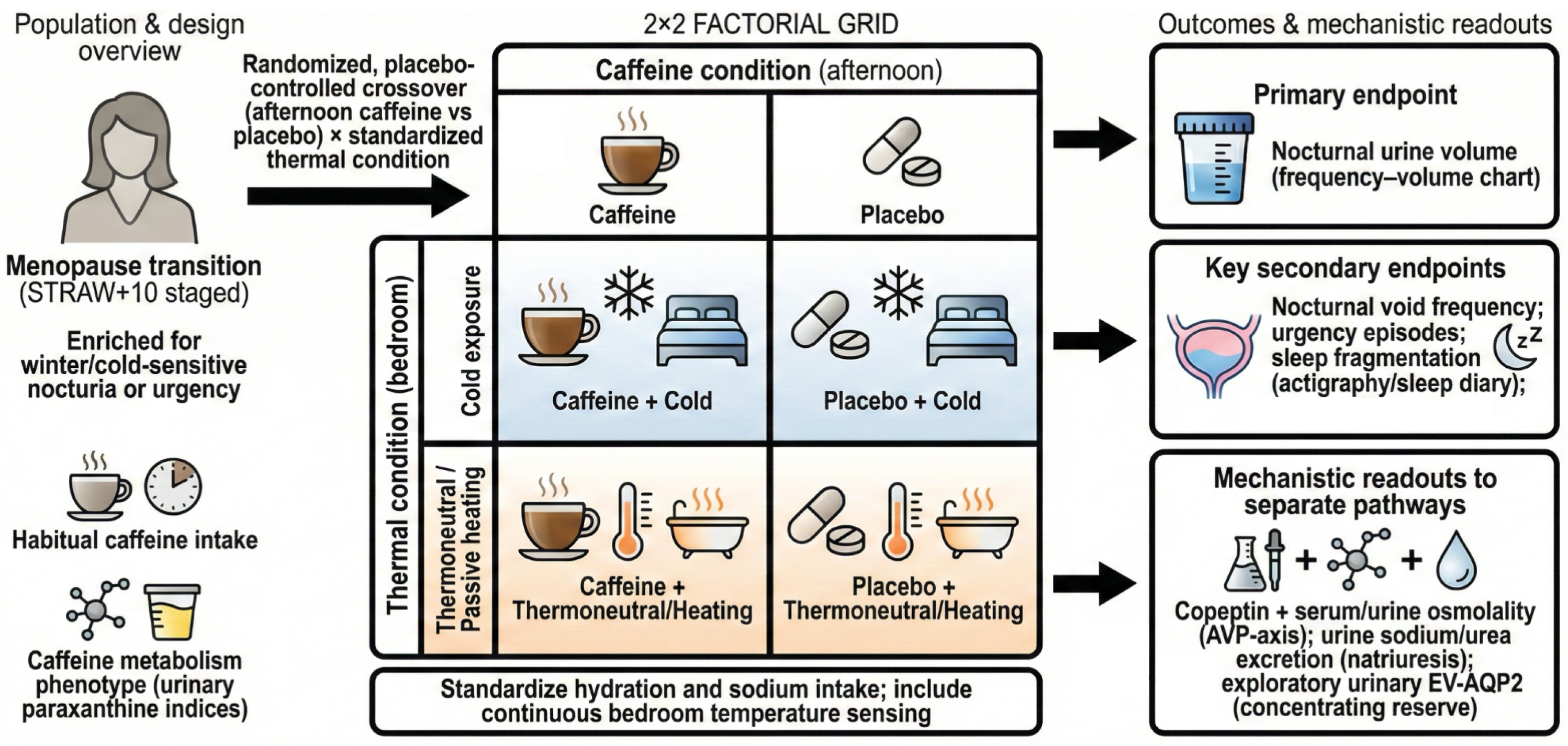
- Cold exposure may amplify the nocturnal urine-volume response to caffeine under controlled hydration, beyond additive effects;
- Pre-sleep thermal interventions may attenuate nocturnal urine volume and nocturnal voids during cold exposure, with larger effects in cold-sensitive phenotypes.
3.4. TRPM8 and Cold-Induced Urinary Urgency
3.4.1. Role of TRPM8 and Cold-Induced Urinary Urgency
3.4.2. TRPM8 Expression in Bladder Disorders and Therapeutic Antagonism
3.4.3. Estrogen Modulation of TRPM8 and Sensory Gain
3.4.4. Integrated Clinical Hypothesis
4. Discussion
4.1. Future Directions
4.2. Clinical Implications: Mechanism-Based Precision Lifestyle Medicine and Seasonal Tailoring
4.2.1. Symptom-Pattern and Mechanism-First Assessment
4.2.2. Pragmatic Clinical Algorithm for Winter/Cold-Sensitive LUTS (For Implementation and for Future Trials)
4.2.3. Environmental Prescription and Heat-Based Interventions
4.2.4. Chronobiological Caffeine Management
4.2.5. Pharmacologic Strategies and Future Seasonal Sensory Targeting
4.2.6. Sleep, Falls, and Behavioral Interventions
4.3. Research Gaps and Priorities
- Human validation of TRPM8 linked cold urgency in transitional menopause, including quantitative mapping of cold sensory thresholds and bladder reflex responses;
- Prospective studies integrating indoor temperature sensing, caffeine timing, copeptin profiles, and voiding diaries to test dual hormone suppression;
- Biomarker driven phenotyping to define cold-sensitive endotypes including urinary microbiome and metabolomics signatures;
- Intervention trials of environmental prescription, passive body heating, and chronobiological caffeine timing, stratified by menopausal stage and symptom mechanism.
4.4. Limitations
5. Conclusions
Supplementary Materials
Author Contributions
Funding
Institutional Review Board Statement
Informed Consent Statement
Data Availability Statement
Acknowledgments
Conflicts of Interest
Abbreviations
| A1 | Adenosine A1 receptor |
| AQP2 | Aquaporin-2 |
| AVP | Arginine vasopressin |
| CBT | Cognitive behavioral therapy |
| CYP1A2 | Cytochrome P450 1A2 |
| EV-AQP2 | Extracellular vesicle aquaporin-2 |
| FVC | Frequency–volume chart |
| L1 | Human intervention |
| L2 | Human observational |
| L3 | Mechanistic physiology |
| L4 | Animal/ex vivo or in vitro models |
| L5 | Hypothesis-only/integrative inference |
| LUTSs | Lower urinary tract symptoms |
| OAB | Overactive bladder |
| STRAW + 10 | Stages of Reproductive Aging Workshop +10 |
| TRPM8 | Transient receptor potential melastatin 8 |
| V2R | Vasopressin V2 receptor |
| UI | Urinary incontinence |
References
- Harlow, S.D.; Gass, M.; Hall, J.E.; Lobo, R.; Maki, P.; Rebar, R.W.; Sherman, S.; Sluss, P.M.; de Villiers, T.J.; Group, S.C. Executive summary of the Stages of Reproductive Aging Workshop + 10: Addressing the unfinished agenda of staging reproductive aging. Menopause 2012, 19, 387–395. [Google Scholar] [CrossRef]
- Davis, S.R.; Pinkerton, J.; Santoro, N.; Simoncini, T. Menopause-Biology, consequences, supportive care, and therapeutic options. Cell 2023, 186, 4038–4058. [Google Scholar] [CrossRef]
- El Khoudary, S.R.; Greendale, G.; Crawford, S.L.; Avis, N.E.; Brooks, M.M.; Thurston, R.C.; Karvonen-Gutierrez, C.; Waetjen, L.E.; Matthews, K. The menopause transition and women’s health at midlife: A progress report from the Study of Women’s Health Across the Nation (SWAN). Menopause 2019, 26, 1213–1227. [Google Scholar] [CrossRef] [PubMed]
- Waetjen, L.E.; Ye, J.; Feng, W.Y.; Johnson, W.O.; Greendale, G.A.; Sampselle, C.M.; Sternfield, B.; Harlow, S.D.; Gold, E.B.; Study of Women’s Health Across the Nation. Association between menopausal transition stages and developing urinary incontinence. Obstet. Gynecol. 2009, 114, 989–998. [Google Scholar] [CrossRef]
- Jones, H.J.; Huang, A.J.; Subak, L.L.; Brown, J.S.; Lee, K.A. Bladder Symptoms in the Early Menopausal Transition. J. Women’s Health 2016, 25, 457–463. [Google Scholar] [CrossRef]
- Vaughan, C.P.; Markland, A.D.; McGwin, G.; Lukacz, E.S.; Brady, S.S.; Lacoursiere, Y.D.; Wyman, J.F.; Sutcliffe, S.; Smith, A.L.; Kenton, K.; et al. Association of menopausal status and hormone use with bladder health and lower urinary tract symptoms in US women: Results from the RISE FOR HEALTH study. Menopause 2025, 32, 583–591. [Google Scholar] [CrossRef]
- Portman, D.J.; Gass, M.L.; on behalf of the Vulvovaginal Atrophy Terminology Consensus Conference Panel. Genitourinary syndrome of menopause: New terminology for vulvovaginal atrophy from the International Society for the Study of Women’s Sexual Health and the North American Menopause Society. Maturitas 2014, 79, 349–354. [Google Scholar] [CrossRef]
- The NAMS 2020 GSM Position Statement Editorial Panel. The 2020 genitourinary syndrome of menopause position statement of The North American Menopause Society. Menopause 2020, 27, 976–992. [Google Scholar] [CrossRef]
- Lightner, D.J.; Gomelsky, A.; Souter, L.; Vasavada, S.P. Diagnosis and Treatment of Overactive Bladder (Non-Neurogenic) in Adults: AUA/SUFU Guideline Amendment 2019. J. Urol. 2019, 202, 558–563. [Google Scholar] [CrossRef] [PubMed]
- Hashim, H.; Blanker, M.H.; Drake, M.J.; Djurhuus, J.C.; Meijlink, J.; Morris, V.; Petros, P.; Wen, J.G.; Wein, A. International Continence Society (ICS) report on the terminology for nocturia and nocturnal lower urinary tract function. Neurourol. Urodyn. 2019, 38, 499–508. [Google Scholar] [CrossRef] [PubMed]
- Maier, S.; Dreoni, I. Who is “energy poor” in the EU? Energy Policy 2026, 208, 114869. [Google Scholar] [CrossRef]
- Oliveras, L.; Peralta, A.; Palencia, L.; Gotsens, M.; Lopez, M.J.; Artazcoz, L.; Borrell, C.; Mari-Dell’Olmo, M. Energy poverty and health: Trends in the European Union before and during the economic crisis, 2007–2016. Health Place 2021, 67, 102294. [Google Scholar] [CrossRef]
- Recalde, M.; Peralta, A.; Oliveras, L.; Tirado-Herrero, S.; Borrell, C.; Palència, L.; Gotsens, M.; Artazcoz, L.; Marí-Dell’Olmo, M. Structural energy poverty vulnerability and excess winter mortality in the European Union: Exploring the association between structural determinants and health. Energy Policy 2019, 133, 110869. [Google Scholar] [CrossRef]
- Temple, J.L.; Bernard, C.; Lipshultz, S.E.; Czachor, J.D.; Westphal, J.A.; Mestre, M.A. The Safety of Ingested Caffeine: A Comprehensive Review. Front. Psychiatry 2017, 8, 80. [Google Scholar] [CrossRef]
- Tae, B.S.; Park, T.Y.; Jeon, B.J.; Chung, H.; Lee, Y.H.; Park, J.Y.; Bae, J.H.; Choi, H. Seasonal Variation of Overactive Bladder Symptoms in Female Patients. Int. Neurourol. J. 2019, 23, 334–340. [Google Scholar] [CrossRef] [PubMed]
- Saeki, K.; Obayashi, K.; Kurumatani, N. Indoor cold exposure and nocturia: A cross-sectional analysis of the HEIJO-KYO study. BJU Int. 2016, 117, 829–835. [Google Scholar] [CrossRef] [PubMed]
- Ishimaru, T.; Ando, S.; Umishio, W.; Kubo, T.; Murakami, S.; Fujino, Y.; Ikaga, T. Impact of Cold Indoor Temperatures on Overactive Bladder: A Nationwide Epidemiological Study in Japan. Urology 2020, 145, 60–65. [Google Scholar] [CrossRef]
- Tai, Y.; Obayashi, K.; Okumura, K.; Yamagami, Y.; Negoro, H.; Kurumatani, N.; Saeki, K. Association Between Before-bedtime Passive Body Heating and Nocturia During the Cold Season Among Older Adults. J. Epidemiol. 2023, 33, 398–404. [Google Scholar] [CrossRef]
- Sun, Z. Genetic AVP deficiency abolishes cold-induced diuresis but does not attenuate cold-induced hypertension. Am. J. Physiol.-Ren. Physiol. 2006, 290, F1472–F1477. [Google Scholar] [CrossRef]
- Broman, M.; Kallskog, O.; Nygren, K.; Wolgast, M. The role of antidiuretic hormone in cold-induced diuresis in the anaesthetized rat. Acta Physiol. Scand. 1998, 162, 475–480. [Google Scholar] [CrossRef]
- Schill, F.; Timpka, S.; Hellstrand, S.; Melander, O.; Enhorning, S. Coffee intake and the vasopressin system: An epidemiological and experimental study. Endocr. Connect. 2025, 14, e250100. [Google Scholar] [CrossRef]
- Fenton, R.A.; Poulsen, S.B.; de la Mora Chavez, S.; Soleimani, M.; Busslinger, M.; Dominguez Rieg, J.A.; Rieg, T. Caffeine-induced diuresis and natriuresis is independent of renal tubular NHE3. Am. J. Physiol.-Ren. Physiol. 2015, 308, F1409–F1420. [Google Scholar] [CrossRef]
- Lohsiriwat, S.; Hirunsai, M.; Chaiyaprasithi, B. Effect of caffeine on bladder function in patients with overactive bladder symptoms. Urol. Ann. 2011, 3, 14–18. [Google Scholar] [CrossRef]
- Park, J.; Lee, H.; Kim, Y.; Norton, C.; Woodward, S.; Lee, S. Effectiveness of Fluid and Caffeine Modifications on Symptoms in Adults With Overactive Bladder: A Systematic Review. Int. Neurourol. J. 2023, 27, 23–35. [Google Scholar] [CrossRef]
- Jura, Y.H.; Townsend, M.K.; Curhan, G.C.; Resnick, N.M.; Grodstein, F. Caffeine intake, and the risk of stress, urgency and mixed urinary incontinence. J. Urol. 2011, 185, 1775–1780. [Google Scholar] [CrossRef] [PubMed]
- Tian, Y.; Serino, R.; Verbalis, J.G. Downregulation of renal vasopressin V2 receptor and aquaporin-2 expression parallels age-associated defects in urine concentration. Am. J. Physiol.-Ren. Physiol. 2004, 287, F797–F805. [Google Scholar] [CrossRef] [PubMed][Green Version]
- Marples, D.; Christensen, B.M.; Frokiaer, J.; Knepper, M.A.; Nielsen, S. Dehydration reverses vasopressin antagonist-induced diuresis and aquaporin-2 downregulation in rats. Am. J. Physiol. 1998, 275, F400–F409. [Google Scholar] [CrossRef] [PubMed]
- Uvin, P.; Franken, J.; Pinto, S.; Rietjens, R.; Grammet, L.; Deruyver, Y.; Alpizar, Y.A.; Talavera, K.; Vennekens, R.; Everaerts, W.; et al. Essential role of transient receptor potential M8 (TRPM8) in a model of acute cold-induced urinary urgency. Eur. Urol. 2015, 68, 655–661. [Google Scholar] [CrossRef]
- Noguchi, W.; Ishizuka, O.; Imamura, T.; Kurizaki, Y.; Yamagishi, T.; Yokoyama, H.; Lei, Z.; Silwal, S.G.; Nishizawa, O.; Andersson, K.E. The relationship between alpha1-adrenergic receptors and TRPM8 channels in detrusor overactivity induced by cold stress in ovariectomized rats. J. Urol. 2013, 189, 1975–1981. [Google Scholar] [CrossRef][Green Version]
- Mukerji, G.; Yiangou, Y.; Corcoran, S.L.; Selmer, I.S.; Smith, G.D.; Benham, C.D.; Bountra, C.; Agarwal, S.K.; Anand, P. Cool and menthol receptor TRPM8 in human urinary bladder disorders and clinical correlations. BMC Urol. 2006, 6, 6. [Google Scholar] [CrossRef]
- Lashinger, E.S.; Steiginga, M.S.; Hieble, J.P.; Leon, L.A.; Gardner, S.D.; Nagilla, R.; Davenport, E.A.; Hoffman, B.E.; Laping, N.J.; Su, X. AMTB, a TRPM8 channel blocker: Evidence in rats for activity in overactive bladder and painful bladder syndrome. Am. J. Physiol.-Ren. Physiol. 2008, 295, F803–F810. [Google Scholar] [CrossRef]
- Yin, Y.; Le, S.C.; Hsu, A.L.; Borgnia, M.J.; Yang, H.; Lee, S.Y. Structural basis of cooling agent and lipid sensing by the cold-activated TRPM8 channel. Science 2019, 363, eaav9334. [Google Scholar] [CrossRef] [PubMed]
- Kubo, T.; Tsuji, S.; Amano, T.; Yoshino, F.; Niwa, Y.; Kasahara, K.; Yoshida, S.; Mukaisho, K.I.; Sugihara, H.; Tanaka, S.; et al. Effects of beta-estradiol on cold-sensitive receptor channel TRPM8 in ovariectomized rats. Exp. Anim. 2017, 66, 337–343. [Google Scholar] [CrossRef] [PubMed]
- Park, E.C.; Lim, J.S.; Kim, S.I.; Lee, S.Y.; Tak, Y.K.; Choi, C.W.; Yun, S.; Park, J.; Lee, M.; Chung, H.K.; et al. Proteomic Analysis of Urothelium of Rats with Detrusor Overactivity Induced by Bladder Outlet Obstruction. Mol. Cell. Proteom. 2018, 17, 948–960. [Google Scholar] [CrossRef]
- Tikkinen, K.A.; Johnson, T.M., 2nd; Tammela, T.L.; Sintonen, H.; Haukka, J.; Huhtala, H.; Auvinen, A. Nocturia frequency, bother, and quality of life: How often is too often? A population-based study in Finland. Eur. Urol. 2010, 57, 488–496. [Google Scholar] [CrossRef]
- Bosch, J.L.; Weiss, J.P. The prevalence and causes of nocturia. J. Urol. 2013, 189, S86–S92. [Google Scholar] [CrossRef]
- Ancoli-Israel, S.; Bliwise, D.L.; Norgaard, J.P. The effect of nocturia on sleep. Sleep Med. Rev. 2011, 15, 91–97. [Google Scholar] [CrossRef] [PubMed]
- Pearce, M.M.; Hilt, E.E.; Rosenfeld, A.B.; Zilliox, M.J.; Thomas-White, K.; Fok, C.; Kliethermes, S.; Schreckenberger, P.C.; Brubaker, L.; Gai, X.; et al. The female urinary microbiome: A comparison of women with and without urgency urinary incontinence. mBio 2014, 5, e01283-01214. [Google Scholar] [CrossRef] [PubMed]
- Thomas-White, K.; Taege, S.; Limeira, R.; Brincat, C.; Joyce, C.; Hilt, E.E.; Mac-Daniel, L.; Radek, K.A.; Brubaker, L.; Mueller, E.R.; et al. Vaginal estrogen therapy is associated with increased Lactobacillus in the urine of postmenopausal women with overactive bladder symptoms. Am. J. Obstet. Gynecol. 2020, 223, 727.e1–727.e11. [Google Scholar] [CrossRef]
- Mossa, A.H.; Shamout, S.; Cammisotto, P.; Campeau, L. Urinary metabolomics predict the severity of overactive bladder syndrome in an aging female population. Int. Urogynecol. J. 2020, 31, 1023–1031. [Google Scholar] [CrossRef]
- Vaughan, C.P.; Markland, A.D.; Huang, A.J.; Alessi, C.A.; Guzman, A.; Martin, J.L.; Bliwise, D.L.; Johnson Ii, T.M.; Burgio, K.L.; Fung, C.H. Considerations for integrated cognitive behavioural treatment for older adults with coexisting nocturia and insomnia. Age Ageing 2022, 51, afac024. [Google Scholar] [CrossRef] [PubMed]
- Pesonen, J.S.; Vernooij, R.W.M.; Cartwright, R.; Aoki, Y.; Agarwal, A.; Mangera, A.; Markland, A.D.; Tsui, J.F.; Santti, H.; Griebling, T.L.; et al. The Impact of Nocturia on Falls and Fractures: A Systematic Review and Meta-Analysis. J. Urol. 2020, 203, 674–683. [Google Scholar] [CrossRef] [PubMed]
- Vaughan, C.P.; Brown, C.J.; Goode, P.S.; Burgio, K.L.; Allman, R.M.; Johnson, T.M., 2nd. The association of nocturia with incident falls in an elderly community-dwelling cohort. Int. J. Clin. Pract. 2010, 64, 577–583. [Google Scholar] [CrossRef] [PubMed]
- Juul, K.V.; Malmberg, A.; van der Meulen, E.; Walle, J.V.; Norgaard, J.P. Low-dose desmopressin combined with serum sodium monitoring can prevent clinically significant hyponatraemia in patients treated for nocturia. BJU Int. 2017, 119, 776–784. [Google Scholar] [CrossRef]
- Kim, S.; Jo, C.H.; Kim, G.H. The Role of Vasopressin V2 Receptor in Drug-Induced Hyponatremia. Front. Physiol. 2021, 12, 797039. [Google Scholar] [CrossRef]
- Alsahabi, J.A.; Boukheir, G.; Bamaie, E.; AlMowallad, S.; Ghazwani, Y.; Karel, E. Systematic review and meta-analysis of randomized control trials addressing efficacy and safety of desmopressin for females with nocturia. Continence 2023, 6, 100592. [Google Scholar] [CrossRef]



| Evidence Domain | Study (Ref) | Design/Population (as Described in Manuscript) | Exposure Definition | Urinary Outcome(s) | Key Take-Home Message for This Review |
|---|---|---|---|---|---|
| Seasonality | [15] | Female patient cohort | Season (winter vs. other seasons) | OAB symptom burden | OAB storage symptoms show seasonal variation consistent with winter worsening. |
| Indoor cold exposure | [16] | Cross-sectional community cohort | Colder indoor environment/indoor cold exposure | Nocturia | Colder indoor exposure is associated with higher nocturia probability. |
| Indoor temperature | [17] | Nationwide epidemiological study (Japan) | Cold indoor temperatures | OAB outcomes | Lower indoor temperature is associated with higher probability of OAB outcomes. |
| Passive body heating | [18] | Observational study during cold season | Passive body heating before bedtime | Nocturia | Passive body heating before sleep is associated with fewer nocturnal voids during cold seasons. |
| Framework Axis | Pop/ Stage Tag | Evidence Status (in This Review) | Key Pathway (Simplified) | Predicted LUTS Phenotype | Candidate Measurements/Biomarkers | Mechanism-Aligned Levers | Representative Refs |
|---|---|---|---|---|---|---|---|
| Caffeine exposure parameters (dose and timing) | G | Supported for acute bladder effects and epidemiologic risk at very high intake; timing-focused trials are limited [Evidence tag: L1–L2 for caffeine reduction/bladder outcomes; L3 for renal physiology; L5 for cold × caffeine synergy in transitional menopause] | Higher caffeine dose and later-day intake may increase urine output through mild diuresis and natriuresis and may worsen sleep continuity. In susceptible individuals, this could lower perceived bladder filling thresholds, contributing to urgency and frequency. Observational data suggest higher urgency urinary incontinence risk mainly at very high daily caffeine intake (for example, 450 mg per day or more), while experimental challenge studies report increased diuresis and earlier urgency at approximately 4.5 mg per kg in adults with overactive bladder symptoms | Possible dose- and timing-related nocturia and urgency flares. Risk may be higher with afternoon or evening caffeine, particularly when other winter triggers coexist | Daily caffeine dose (mg/day); timing relative to bedtime; beverage type; habitual intake; symptom/sleep diary; urinary caffeine metabolites (paraxanthine/theobromine/theophylline); exploratory CYP1A2 phenotyping | Chronobiological caffeine restriction (front-load earlier in the day; consider avoiding after 14:00); stepwise dose reduction or taper; switch to low-caffeine or decaffeinated beverages after lunch; combine with thermal strategies in winter | [14,23,24,25] |
| Estrogen–TRPM8 sensory axis | X + G | Supported in models; human stage-specific linkage is hypothesis-generating [Evidence tag: L4 for ovariectomy/animal models; L3 for mechanistic inference; L5 for stage-specific human validation] | Estrogen decline and endocrine instability may increase TRPM8 sensory gain; cold exposure triggers TRPM8 afferents with sympathetic amplification, leading to urgency reflex amplification | Cold-induced urgency and frequency flares; OAB-like storage symptoms with winter worsening | Symptom diary linked to temperature; OAB questionnaires; menopausal staging with serial estradiol profiling; cold sensitivity testing; standardized cold challenge response; exploratory TRPM8 assays in urine or tissue | Warming strategies; local estrogen when indicated; guideline-based OAB therapy; future seasonal trials of TRPM8 antagonism | [15,17,28,29,30,31,32,33] |
| Downstream sleep and safety outcomes | O + G | Supported [Evidence tag: L1–L2 for behavioral sleep interventions and risk associations] | Nocturia → sleep fragmentation → daytime impairment → falls/fractures risk | Sleep disruption with increased fall risk | Sleep diary/actigraphy; nocturnal awakenings; fall events; fracture outcomes | Integrated cognitive behavioral therapy (CBT) for nocturia + insomnia; nighttime lighting; fall-prevention counseling; treat upstream nocturia triggers | [37,41,42,43] |
| Indoor cold exposure and nocturnal water homeostasis (AVP/copeptin–V2R/AQP2) | G + O + X | Supported for indoor temperature associations with nocturia/OAB and for passive heating associations during cold seasons; supported for vasopressin dependence of cold diuresis and for V2R/AQP2 “concentrating reserve” mechanisms largely in experimental models. Transitional-menopause stage–specific nocturnal AVP attenuation/limited-reserve inference remains hypothesis-generating | Repeated nocturnal indoor/bedroom cold → cold stress (vasoconstriction/central volume shift) → diuresis with intact AVP-axis involvement; in a “limited reserve” state (blunted nocturnal AVP rise and/or reduced renal V2R/AQP2 responsiveness) → reduced collecting-duct water reabsorption → increased nocturnal urine volume (nocturnal polyuria) → nocturia | Cold-exacerbated nocturnal polyuria–predominant nocturia (higher nocturnal urine volume and nocturnal voids), with symptom improvement expected under thermoneutral bedroom/passive heating conditions | Objective bedroom temperature sensing (continuous/time-stamped); frequency–volume chart focusing on nocturnal urine volume and nocturnal voids; serum/plasma copeptin (± serial), serum/urine osmolality; urine sodium/urea excretion; exploratory urinary AQP2 measures (e.g., EV-AQP2 where feasible) | Pragmatic warming strategies in winter: passive pre-bedtime heating, thermoneutral bedroom temperature (heating/insulation/heated bedding), and exposure-fidelity monitoring with sensors; in trials, standardize evening fluid/sodium to reduce confounding | [16,17,18,19,20,26,27] |
Disclaimer/Publisher’s Note: The statements, opinions and data contained in all publications are solely those of the individual author(s) and contributor(s) and not of MDPI and/or the editor(s). MDPI and/or the editor(s) disclaim responsibility for any injury to people or property resulting from any ideas, methods, instructions or products referred to in the content. |
© 2026 by the authors. Licensee MDPI, Basel, Switzerland. This article is an open access article distributed under the terms and conditions of the Creative Commons Attribution (CC BY) license.
Share and Cite
Lee, D.H.; Park, J.J. Dietary Caffeine, Cold Exposure, and the Estrogen–TRPM8 Axis: A Nutri-Environmental Model for Lower Urinary Tract Symptoms in the Menopause Transition: A Narrative Review. Nutrients 2026, 18, 825. https://doi.org/10.3390/nu18050825
Lee DH, Park JJ. Dietary Caffeine, Cold Exposure, and the Estrogen–TRPM8 Axis: A Nutri-Environmental Model for Lower Urinary Tract Symptoms in the Menopause Transition: A Narrative Review. Nutrients. 2026; 18(5):825. https://doi.org/10.3390/nu18050825
Chicago/Turabian StyleLee, Dong Hee, and Jeong Jun Park. 2026. "Dietary Caffeine, Cold Exposure, and the Estrogen–TRPM8 Axis: A Nutri-Environmental Model for Lower Urinary Tract Symptoms in the Menopause Transition: A Narrative Review" Nutrients 18, no. 5: 825. https://doi.org/10.3390/nu18050825
APA StyleLee, D. H., & Park, J. J. (2026). Dietary Caffeine, Cold Exposure, and the Estrogen–TRPM8 Axis: A Nutri-Environmental Model for Lower Urinary Tract Symptoms in the Menopause Transition: A Narrative Review. Nutrients, 18(5), 825. https://doi.org/10.3390/nu18050825