From Dysbiosis to Distress: The Gut–Brain Connection in Trauma-Related Disorders

 ,
,  , , , , ,
  and
and 
Abstract
1. Introduction
1.1. Definitions: PTSD and Trauma-Related Disorders
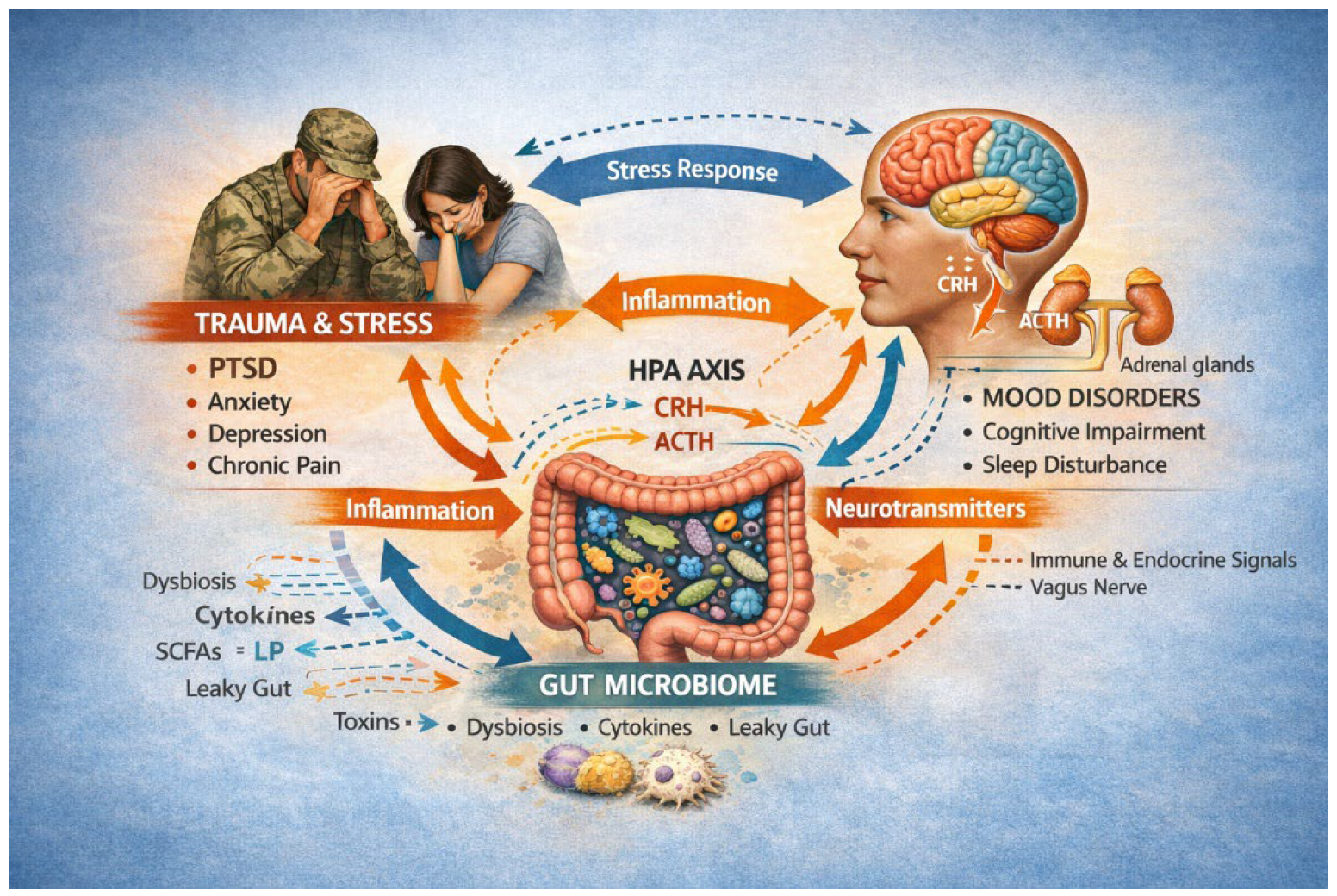
1.2. The Gut–Brain Axis: A Brief Primer
1.3. Scope and Rationale of the Review
2. Materials and Methods
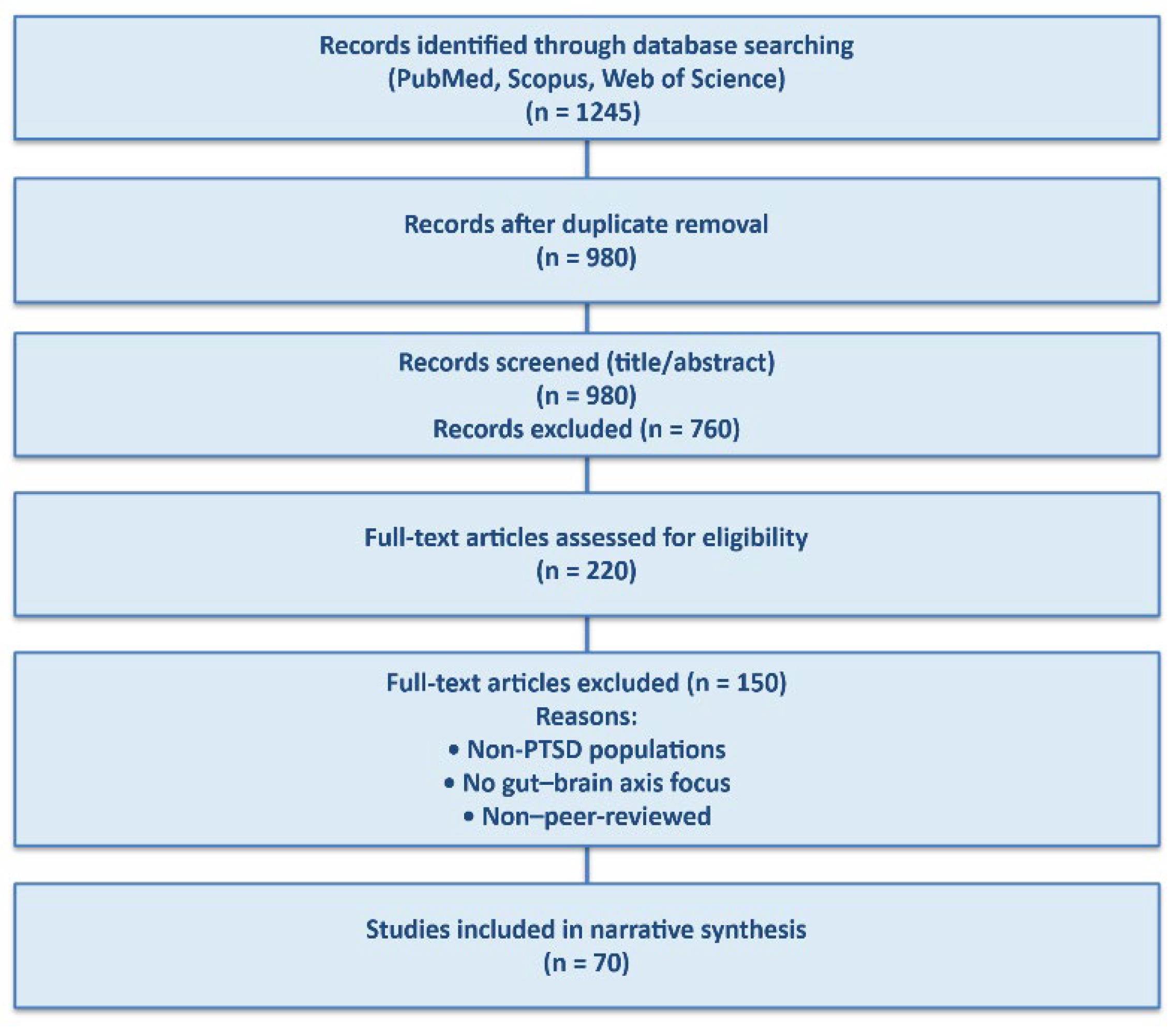
2.1. Search Strategy and Selection Criteria
2.2. Inclusion and Exclusion Criteria and Time Frame
3. Pathophysiological Links Between Dysbiosis and Trauma
3.1. Dysbiosis, Gut Permeability, and Endotoxemia
3.2. Neuroendocrine Pathways: HPA Axis Dysregulation
3.3. Neuroimmune Signaling and Microglial Activation
3.4. Vagal/Autonomic Pathways
3.5. Microbial Metabolites and Neurotransmitters
4. Evidence from Preclinical Models
4.1. Early-Life Stress and Microbiota Development
4.2. PTSD-like Phenotypes and Microbiota Alterations in Animals
4.3. Germ-Free, Antibiotic, Colonization, and FMT (Fecal Microbiota Transplantation)
4.4. Translational Considerations: Differences Between Animal Models and Human Trauma
5. Clinical Evidence in PTSD and Trauma-Related Disorders
5.1. Cross-Sectional Microbiome Studies
5.2. Longitudinal/Prospective Studies
5.3. Biomarkers: Permeability, Inflammatory Cytokines, and Metabolomics
5.4. Common Comorbidities
6. Nutritional and Microbiota-Targeted Interventions
6.1. Dietary Patterns (Mediterranean, Western, Plant-Forward)
6.2. Key Nutrients and Bioactives (Omega-3s, Polyphenols, Vitamins B/D, Minerals)
6.3. Prebiotics and Dietary Fiber
6.4. Probiotics and Psychobiotics
6.5. Postbiotics and Short-Chain Fatty Acids (SCFAs)-Focused Strategies
6.6. Fermented Foods
6.7. Fecal Microbiota Transplantation (FMT)
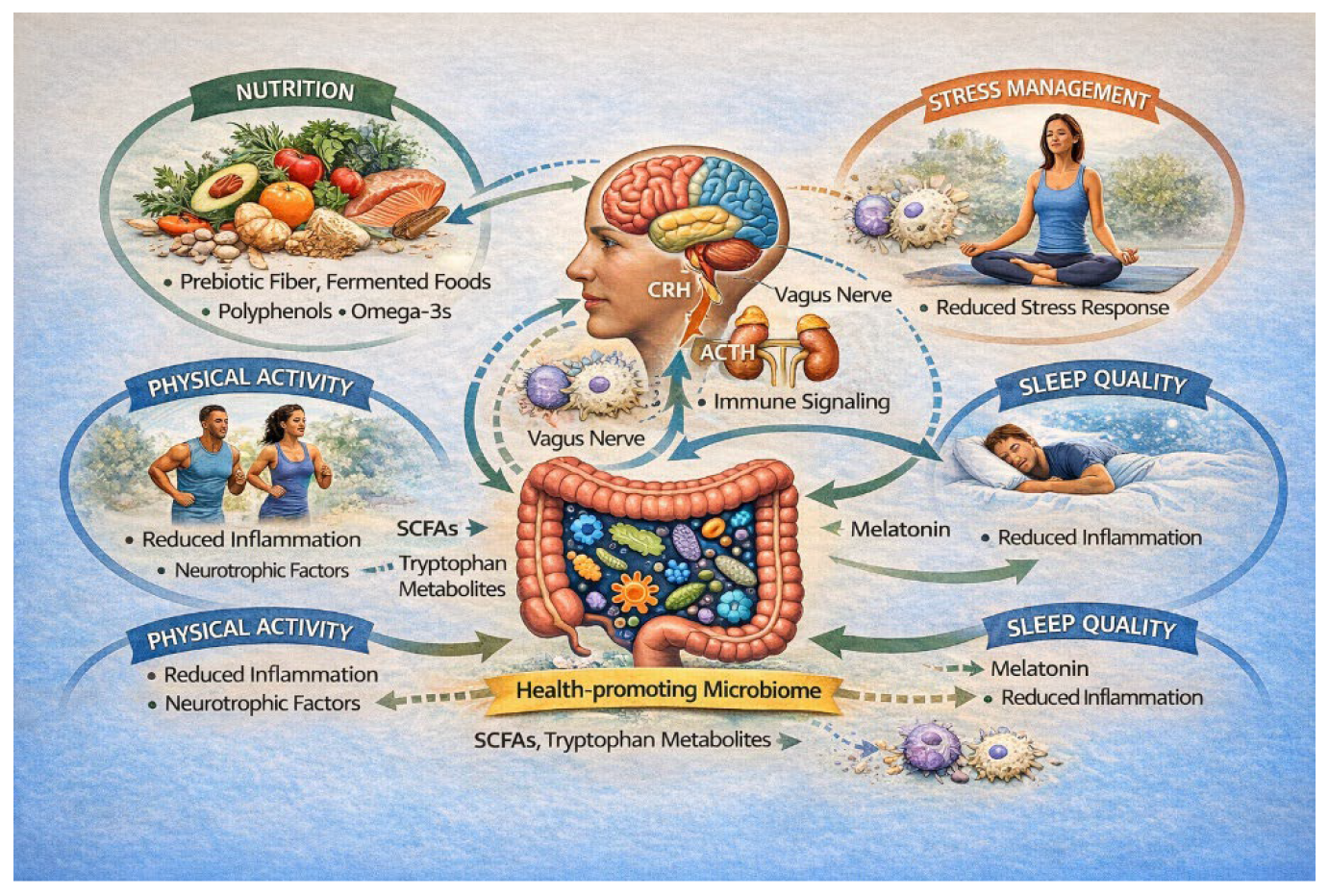
6.8. Multidomain Lifestyle Interventions: Diet, Exercise and Sleep
6.9. Safety, Tolerability, and Interactions with Psychotropics
7. Moderators and Special Populations
7.1. Sex/Gender Differences
7.2. Early Life/Childhood/Adolescence
7.3. Socioeconomic, Cultural, and Dietary Context
7.4. Medication Use and Microbiome Interactions
8. Clinical Translation
8.1. Practical Guidance for Clinicians
8.2. Candidate Clinical Algorithms and Care Pathways
8.3. Patient-Centered Outcomes and Feasibility
9. Conclusions, Research Gaps and Future Directions
Author Contributions
Funding
Institutional Review Board Statement
Informed Consent Statement
Data Availability Statement
Conflicts of Interest
References
- Fraile-Martinez, O.; García-Montero, C.; Álvarez-Mon, M.Á.; Casanova-Martín, C.; Fernández-Faber, D.; Presa, M.; Lahera, G.; Lopez-Gonzalez, L.; Díaz-Pedrero, R.; Saz, J.V.; et al. Grasping Posttraumatic Stress Disorder from the Perspective of Psychoneuroimmunoendocrinology: Etiopathogenic Mechanisms and Relevance for Integrative Management. Biol. Psychiatry 2025, 98, 733–745. [Google Scholar] [CrossRef] [PubMed]
- Leclercq, S.; Forsythe, P.; Bienenstock, J. Posttraumatic Stress Disorder: Does the Gut Microbiome Hold the Key? Can. J. Psychiatry 2016, 61, 204–213. [Google Scholar] [CrossRef] [PubMed] [PubMed Central]
- Katrinli, S.; Oliveira, N.C.S.; Felger, J.C.; Michopoulos, V.; Smith, A.K. The role of the immune system in posttraumatic stress disorder. Transl. Psychiatry 2022, 12, 313. [Google Scholar] [CrossRef] [PubMed] [PubMed Central]
- Eitan, S.; Madison, C.A.; Kuempel, J. The self-serving benefits of being a good host: A role for our micro-inhabitants in shaping opioids’ function. Neurosci. Biobehav. Rev. 2021, 127, 284–295. [Google Scholar] [CrossRef] [PubMed]
- Sudo, N. Microbiome, HPA axis and production of endocrine hormones in the gut. Adv. Exp. Med. Biol. 2014, 817, 177–194. [Google Scholar] [CrossRef] [PubMed]
- Kiecolt-Glaser, J.K.; Derry, H.M.; Fagundes, C.P. Inflammation: Depression fans the flames and feasts on the heat. Am. J. Psychiatry 2015, 172, 1075–1091. [Google Scholar] [CrossRef] [PubMed] [PubMed Central]
- Haroon, E.; Raison, C.L.; Miller, A.H. Psychoneuroimmunology meets neuropsychopharmacology: Translational implications of the impact of inflammation on behavior. Neuropsychopharmacology 2012, 37, 137–162. [Google Scholar] [CrossRef] [PubMed] [PubMed Central]
- Harnett, N.G.; Goodman, A.M.; Knight, D.C. PTSD-related neuroimaging abnormalities in brain function, structure, and biochemistry. Exp. Neurol. 2020, 330, 113331. [Google Scholar] [CrossRef] [PubMed]
- Pan, J.; Lin, S.; Qian, Q.; Fu, S.; Liu, X. Gut-brain axis in post-traumatic stress disorder: Microbial-mediated mechanisms and new therapeutic approaches—A narrative review. Front. Pharmacol. 2025, 16, 1621678. [Google Scholar] [CrossRef] [PubMed] [PubMed Central]
- Cryan, J.F.; O’Riordan, K.J.; Cowan, C.S.M.; Sandhu, K.V.; Bastiaanssen, T.F.S.; Boehme, M.; Codagnone, M.G.; Cussotto, S.; Fulling, C.; Golubeva, A.V.; et al. The Microbiota-Gut-Brain Axis. Physiol. Rev. 2019, 99, 1877–2013. [Google Scholar] [CrossRef] [PubMed]
- Mayer, E.A.; Tillisch, K.; Gupta, A. Gut/brain axis and the microbiota. J. Clin. Investig. 2015, 125, 926–938. [Google Scholar] [CrossRef] [PubMed] [PubMed Central]
- Carabotti, M.; Scirocco, A.; Maselli, M.A.; Severi, C. The gut-brain axis: Interactions between enteric microbiota, central and enteric nervous systems. Ann. Gastroenterol. 2015, 28, 203–209. [Google Scholar] [PubMed] [PubMed Central]
- Pinna, G. Role of PPAR-Allopregnanolone Signaling in Behavioral and Inflammatory Gut-Brain Axis Communications. Biol. Psychiatry 2023, 94, 609–618. [Google Scholar] [CrossRef] [PubMed]
- He, Q.; Wang, W.; Xu, D.; Xiong, Y.; Tao, C.; You, C.; Ma, L.; Ma, J. Potential causal association between gut microbiome and posttraumatic stress disorder. Transl. Psychiatry 2024, 14, 67, Erratum in Transl. Psychiatry 2025, 15, 347. https://doi.org/10.1038/s41398-025-03628-5. [Google Scholar] [CrossRef] [PubMed] [PubMed Central]
- Wang, H.X.; Wang, Y.P. Gut Microbiota-brain Axis. Chin. Med. J. 2016, 129, 2373–2380. [Google Scholar] [CrossRef] [PubMed] [PubMed Central]
- Yadav, S.K.; Ahmad, R.; Moshfegh, C.M.; Sankarasubramanian, J.; Joshi, V.; Elkhatib, S.K.; Chhonker, Y.S.; Murry, D.J.; Talmon, G.A.; Guda, C.; et al. Repeated Social Defeat Stress Induces an Inflammatory Gut Milieu by Altering the Mucosal Barrier Integrity and Gut Microbiota Homeostasis. Biol. Psychiatry Glob. Open Sci. 2023, 3, 824–836. [Google Scholar] [CrossRef] [PubMed] [PubMed Central]
- Bercik, P.; Collins, S.M.; Verdu, E.F. Microbes and the gut-brain axis. Neurogastroenterol. Motil. 2012, 24, 405–413. [Google Scholar] [CrossRef] [PubMed]
- Zhou, X.; Guo, Z.; Ling, Y.; Teng, W.; Cui, J.; Yan, Z.; Hou, X.; Cen, W.; Long, N.; Li, W.; et al. Causal effect of air pollution on the risk of brain health and potential mediation by gut microbiota. Ecotoxicol. Environ. Saf. 2024, 285, 117080. [Google Scholar] [CrossRef] [PubMed]
- Halverson, T.; Alagiakrishnan, K. Gut microbes in neurocognitive and mental health disorders. Ann. Med. 2020, 52, 423–443. [Google Scholar] [CrossRef] [PubMed] [PubMed Central]
- Xiao, L.; Liu, S.; Wu, Y.; Huang, Y.; Tao, S.; Liu, Y.; Tang, Y.; Xie, M.; Ma, Q.; Yin, Y.; et al. The interactions between host genome and gut microbiome increase the risk of psychiatric disorders: Mendelian randomization and biological annotation. Brain Behav. Immun. 2023, 113, 389–400. [Google Scholar] [CrossRef]
- Zang, Y.; Lai, X.; Li, C.; Ding, D.; Wang, Y.; Zhu, Y. The Role of Gut Microbiota in Various Neurological and Psychiatric Disorders-An Evidence Mapping Based on Quantified Evidence. Mediat. Inflamm. 2023, 2023, 5127157. [Google Scholar] [CrossRef] [PubMed] [PubMed Central]
- Petakh, P.; Duve, K.; Oksenych, V.; Behzadi, P.; Kamyshnyi, O. Molecular mechanisms and therapeutic possibilities of short-chain fatty acids in posttraumatic stress disorder patients: A mini-review. Front. Neurosci. 2024, 18, 1394953. [Google Scholar] [CrossRef] [PubMed] [PubMed Central]
- Petakh, P.; Oksenych, V.; Kamyshna, I.; Boisak, I.; Lyubomirskaya, K.; Kamyshnyi, O. Exploring the interplay between posttraumatic stress disorder, gut microbiota, and inflammatory biomarkers: A comprehensive meta-analysis. Front. Immunol. 2024, 15, 1349883. [Google Scholar] [CrossRef] [PubMed] [PubMed Central]
- Stilling, R.M.; Dinan, T.G.; Cryan, J.F. Microbial genes, brain & behaviour—Epigenetic regulation of the gut-brain axis. Genes Brain Behav. 2014, 13, 69–86. [Google Scholar] [CrossRef] [PubMed]
- Foster, J.A.; Rinaman, L.; Cryan, J.F. Stress & the gut-brain axis: Regulation by the microbiome. Neurobiol. Stress 2017, 7, 124–136. [Google Scholar] [CrossRef] [PubMed]
- Rea, K.; Dinan, T.G.; Cryan, J.F. Gut Microbiota: A Perspective for Psychiatrists. Neuropsychobiology 2020, 79, 50–62. [Google Scholar] [CrossRef] [PubMed]
- Cryan, J.F.; Dinan, T.G. Mind-altering microorganisms: The impact of the gut microbiota on brain and behaviour. Nat. Rev. Neurosci. 2012, 13, 701–712. [Google Scholar] [CrossRef] [PubMed]
- Voigt, R.M.; Zalta, A.K.; Raeisi, S.; Zhang, L.; Brown, J.M.; Forsyth, C.B.; Boley, R.A.; Held, P.; Pollack, M.H.; Keshavarzian, A. Abnormal intestinal milieu in posttraumatic stress disorder is not impacted by treatment that improves symptoms. Am. J. Physiol. Gastrointest. Liver Physiol. 2022, 323, G61–G70. [Google Scholar] [CrossRef] [PubMed] [PubMed Central]
- Bajaj, J.S.; Sikaroodi, M.; Fagan, A.; Heuman, D.; Gilles, H.; Gavis, E.A.; Fuchs, M.; Gonzalez-Maeso, J.; Nizam, S.; Gillevet, P.M.; et al. Posttraumatic stress disorder is associated with altered gut microbiota that modulates cognitive performance in veterans with cirrhosis. Am. J. Physiol. Gastrointest. Liver Physiol. 2019, 317, G661–G669. [Google Scholar] [CrossRef] [PubMed] [PubMed Central]
- Sugden, S.G.; Merlo, G. Using lifestyle interventions and the gut microbiota to improve PTSD symptoms. Front. Neurosci. 2024, 18, 1488841. [Google Scholar] [CrossRef] [PubMed] [PubMed Central]
- Dinan, T.G.; Stanton, C.; Cryan, J.F. Psychobiotics: A novel class of psychotropic. Biol. Psychiatry 2013, 74, 720–726. [Google Scholar] [CrossRef] [PubMed]
- Morais, L.H.; Schreiber, H.L.; Mazmanian, S.K. The gut microbiota–brain axis in behaviour and brain disorders. Nat. Rev. Microbiol. 2021, 19, 241–255. [Google Scholar] [CrossRef]
- Balmus, I.M.; Ilie, O.D.; Ciobica, A.; Cojocariu, R.O.; Stanciu, C.; Trifan, A.; Cimpeanu, M.; Cimpeanu, C.; Gorgan, L. Irritable Bowel Syndrome between Molecular Approach and Clinical Expertise-Searching for Gap Fillers in the Oxidative Stress Way of Thinking. Medicina 2020, 56, 38. [Google Scholar] [CrossRef] [PubMed] [PubMed Central]
- Alpert, O.; Begun, L.; Issac, T.; Solhkhah, R. The brain-gut axis in gastrointestinal cancers. J. Gastrointest. Oncol. 2021, 12, S301–S310. [Google Scholar] [CrossRef] [PubMed] [PubMed Central]
- Winder, C.; Lodhia, A.; Basso, M.; Cohen Kadosh, K. Gut microbiome differences in individuals with PTSD compared to trauma-exposed controls: A systematic review. Front. Neurosci. 2025, 19, 1540180. [Google Scholar] [CrossRef] [PubMed] [PubMed Central]
- McKernan, D.P.; Gaszner, G.; Quigley, E.M.; Cryan, J.F.; Dinan, T.G. Altered peripheral toll-like receptor responses in the irritable bowel syndrome. Aliment. Pharmacol. Ther. 2011, 33, 1045–1052. [Google Scholar] [CrossRef] [PubMed]
- Sherwin, E.; Bordenstein, S.R.; Quinn, J.L.; Dinan, T.G.; Cryan, J.F. Microbiota and the social brain. Science 2019, 366, eaar2016. [Google Scholar] [CrossRef] [PubMed]
- Valles-Colomer, M.; Falony, G.; Darzi, Y.; Tigchelaar, E.F.; Wang, J.; Tito, R.Y.; Schiweck, C.; Kurilshikov, A.; Joossens, M.; Wijmenga, C.; et al. The neuroactive potential of the human gut microbiota in quality of life and depression. Nat. Microbiol. 2019, 4, 623–632. [Google Scholar] [CrossRef] [PubMed]
- Naudé, P.J.W.; Claassen-Weitz, S.; Gardner-Lubbe, S.; Botha, G.; Kaba, M.; Zar, H.J.; Nicol, M.P.; Stein, D.J. Association of maternal prenatal psychological stressors and distress with maternal and early infant faecal bacterial profile. Acta Neuropsychiatr. 2020, 32, 32–42. [Google Scholar] [CrossRef] [PubMed] [PubMed Central]
- O’Mahony, S.M.; Clarke, G.; Dinan, T.G.; Cryan, J.F. Early-life adversity and brain development: Is the microbiome a missing piece of the puzzle? Neuroscience 2017, 342, 37–54. [Google Scholar] [CrossRef] [PubMed]
- Dinan, T.G.; Cryan, J.F. Gut instincts: Microbiota as a key regulator of brain development, ageing and neurodegeneration. J. Physiol. 2017, 595, 489–503. [Google Scholar] [CrossRef] [PubMed] [PubMed Central]
- Daskalakis, N.P.; Bagot, R.C.; Parker, K.J.; Vinkers, C.H.; de Kloet, E.R. The three-hit concept of vulnerability and resilience: Toward understanding adaptation to early-life adversity outcome. Psychoneuroendocrinology 2013, 38, 1858–1873. [Google Scholar] [CrossRef] [PubMed] [PubMed Central]
- Cohen, H.; Zohar, J. An animal model of posttraumatic stress disorder: The use of cut-off behavioral criteria. Ann. N. Y. Acad. Sci. 2004, 1032, 167–178. [Google Scholar] [CrossRef] [PubMed]
- Galley, J.D.; Nelson, M.C.; Yu, Z.; Dowd, S.E.; Walter, J.; Kumar, P.S.; Lyte, M.; Bailey, M.T. Exposure to a social stressor disrupts the community structure of the colonic mucosa-associated microbiota. BMC Microbiol. 2014, 14, 189. [Google Scholar] [CrossRef] [PubMed] [PubMed Central]
- Luczynski, P.; Whelan, S.O.; O’Sullivan, C.; Clarke, G.; Shanahan, F.; Dinan, T.G.; Cryan, J.F. Adult microbiota-deficient mice have distinct dendritic morphological changes: Differential effects in the amygdala and hippocampus. Eur. J. Neurosci. 2016, 44, 2654–2666. [Google Scholar] [CrossRef] [PubMed] [PubMed Central]
- Ait-Belgnaoui, A.; Colom, A.; Braniste, V.; Ramalho, L.; Marrot, A.; Cartier, C.; Houdeau, E.; Theodorou, V.; Tompkins, T. Probiotic gut effect prevents the chronic psychological stress-induced brain activity abnormality in mice. Neurogastroenterol. Motil. 2014, 26, 510–520. [Google Scholar] [CrossRef] [PubMed]
- Bharwani, A.; Mian, M.F.; Surette, M.G.; Bienenstock, J.; Forsythe, P. Oral treatment with Lactobacillus rhamnosus attenuates behavioural deficits and immune changes in chronic social stress. BMC Med. 2017, 15, 7. [Google Scholar] [CrossRef] [PubMed] [PubMed Central]
- Kim, Y.K.; Shin, C. The Microbiota-Gut-Brain Axis in Neuropsychiatric Disorders: Pathophysiological Mechanisms and Novel Treatments. Curr. Neuropharmacol. 2018, 16, 559–573. [Google Scholar] [CrossRef] [PubMed] [PubMed Central]
- Bravo, J.A.; Forsythe, P.; Chew, M.V.; Escaravage, E.; Savignac, H.M.; Dinan, T.G.; Bienenstock, J.; Cryan, J.F. Ingestion of Lactobacillus strain regulates emotional behavior and central GABA receptor expression in a mouse via the vagus nerve. Proc. Natl. Acad. Sci. USA 2011, 108, 16050–16055. [Google Scholar] [CrossRef] [PubMed] [PubMed Central]
- Hemmings, S.M.J.; Malan-Müller, S.; van den Heuvel, L.L.; Demmitt, B.A.; Stanislawski, M.A.; Smith, D.G.; Bohr, A.D.; Stamper, C.E.; Hyde, E.R.; Morton, J.T.; et al. The Microbiome in Posttraumatic Stress Disorder and Trauma-Exposed Controls: An Exploratory Study. Psychosom. Med. 2017, 79, 936–946. [Google Scholar] [CrossRef] [PubMed] [PubMed Central]
- Zeamer, A.L.; Salive, M.C.; An, X.; Beaudoin, F.L.; House, S.L.; Stevens, J.S.; Zeng, D.; Neylan, T.C.; Clifford, G.D.; Linnstaedt, S.D.; et al. Association between microbiome and the development of adverse posttraumatic neuropsychiatric sequelae after traumatic stress exposure. Transl. Psychiatry 2023, 13, 354. [Google Scholar] [CrossRef] [PubMed]
- O’Hare, M.A.; Swart, P.C.; Malan-Müller, S.; van den Heuvel, L.L.; Bröcker, E.; Seedat, S.; Hemmings, S.M.J. The saNeuroGut Initiative: Investigating the Gut Microbiome and Symptoms of Anxiety, Depression, and Posttraumatic Stress. Neuroimmunomodulation 2025, 32, 1–15. [Google Scholar] [CrossRef] [PubMed] [PubMed Central]
- Malan-Müller, S.; Vidal, R.; O’Shea, E.; Montero, E.; Figuero, E.; Zorrilla, I.; de Diego-Adeliño, J.; Cano, M.; García-Portilla, M.P.; González-Pinto, A.; et al. Probing the oral-brain connection: Oral microbiome patterns in a large community cohort with anxiety, depression, and trauma symptoms, and periodontal outcomes. Transl. Psychiatry 2024, 14, 419. [Google Scholar] [CrossRef] [PubMed] [PubMed Central]
- Levert-Levitt, E.; Shapira, G.; Sragovich, S.; Shomron, N.; Lam, J.C.K.; Li, V.O.K.; Heimesaat, M.M.; Bereswill, S.; Yehuda, A.B.; Sagi-Schwartz, A.; et al. Oral microbiota signatures in post-traumatic stress disorder (PTSD) veterans. Mol. Psychiatry 2022, 27, 4590–4598. [Google Scholar] [CrossRef] [PubMed]
- Torres-Fuentes, C.; Schellekens, H.; Dinan, T.G.; Cryan, J.F. The microbiota-gut-brain axis in obesity. Lancet Gastroenterol. Hepatol. 2017, 2, 747–756. [Google Scholar] [CrossRef] [PubMed]
- Okubo, R.; Chen, C.; Sekiguchi, M.; Hamazaki, K.; Matsuoka, Y.J. Mechanisms underlying the effects of n-3 polyunsaturated fatty acids on fear memory processing and their hypothetical effects on fear of cancer recurrence in cancer survivors. Prostaglandins Leukot. Essent. Fat. Acids 2018, 131, 14–23. [Google Scholar] [CrossRef] [PubMed]
- Marano, G.; Mazza, M.; Lisci, F.M.; Ciliberto, M.; Traversi, G.; Kotzalidis, G.D.; De Berardis, D.; Laterza, L.; Sani, G.; Gasbarrini, A.; et al. The Microbiota-Gut-Brain Axis: Psychoneuroimmunological Insights. Nutrients 2023, 15, 1496. [Google Scholar] [CrossRef] [PubMed] [PubMed Central]
- Marano, G.; Traversi, G.; Gaetani, E.; Gasbarrini, A.; Mazza, M. Gut microbiota in women: The secret of psychological and physical well-being. World J. Gastroenterol. 2023, 29, 5945–5952. [Google Scholar] [CrossRef] [PubMed] [PubMed Central]
- Kiecolt-Glaser, J.K.; Belury, M.A.; Andridge, R.; Malarkey, W.B.; Glaser, R. Omega-3 supplementation lowers inflammation and anxiety in medical students: A randomized controlled trial. Brain Behav. Immun. 2011, 25, 1725–1734. [Google Scholar] [CrossRef] [PubMed] [PubMed Central]
- Frank, D.N.; Zhu, W.; Sartor, R.B.; Li, E. Investigating the biological and clinical significance of human dysbioses. Trends Microbiol. 2011, 19, 427–434. [Google Scholar] [CrossRef] [PubMed] [PubMed Central]
- Foster, J.A.; McVey Neufeld, K.A. Gut-brain axis: How the microbiome influences anxiety and depression. Trends Neurosci. 2013, 36, 305–312. [Google Scholar] [CrossRef] [PubMed]
- Rogers, G.B.; Keating, D.J.; Young, R.L.; Wong, M.L.; Licinio, J.; Wesselingh, S. From gut dysbiosis to altered brain function and mental illness: Mechanisms and pathways. Mol. Psychiatry 2016, 21, 738–748. [Google Scholar] [CrossRef] [PubMed] [PubMed Central]
- Shoubridge, A.P.; Choo, J.M.; Martin, A.M.; Keating, D.J.; Wong, M.L.; Licinio, J.; Rogers, G.B. The gut microbiome and mental health: Advances in research and emerging priorities. Mol. Psychiatry 2022, 27, 1908–1919. [Google Scholar] [CrossRef] [PubMed]
- Maes, M.; Kubera, M.; Leunis, J.C.; Berk, M. Increased IgA and IgM responses against gut commensals in chronic depression: Further evidence for increased bacterial translocation or leaky gut. J. Affect. Disord. 2012, 141, 55–62. [Google Scholar] [CrossRef] [PubMed]
- Sarkar, A.; Lehto, S.M.; Harty, S.; Dinan, T.G.; Cryan, J.F.; Burnet, P.W.J. Psychobiotics and the Manipulation of Bacteria-Gut-Brain Signals. Trends Neurosci. 2016, 39, 763–781. [Google Scholar] [CrossRef] [PubMed] [PubMed Central]
- Kit, A.; Conway, K.; Makarowski, S.; O’Regan, G.; Allen, J.; Shultz, S.R.; Bodnar, T.S.; Christie, B.R. Can the gut-brain axis provide insight into psilocybin’s therapeutic value in reducing stress? Neurobiol. Stress 2025, 36, 100732. [Google Scholar] [CrossRef] [PubMed] [PubMed Central]
- Huang, R.; Wang, K.; Hu, J. Effect of Probiotics on Depression: A Systematic Review and Meta-Analysis of Randomized Controlled Trials. Nutrients 2016, 8, 483. [Google Scholar] [CrossRef] [PubMed] [PubMed Central]
- Mörkl, S.; Butler, M.I.; Holl, A.; Cryan, J.F.; Dinan, T.G. Probiotics and the Microbiota-Gut-Brain Axis: Focus on Psychiatry. Curr. Nutr. Rep. 2020, 9, 171–182, Erratum in Curr. Nutr. Rep. 2020, 9, 183. https://doi.org/10.1007/s13668-020-00319-z. [Google Scholar] [CrossRef] [PubMed] [PubMed Central]
- Prajapati, S.K.; Jain, S.; Yadav, H. Age-Related Cognitive Decline and Dementia: Interface of Microbiome-Immune-Neuronal Interactions. J. Gerontol. A Biol. Sci. Med. Sci. 2025, 80, glaf038. [Google Scholar] [CrossRef] [PubMed] [PubMed Central]
- Martin, C.R.; Osadchiy, V.; Kalani, A.; Mayer, E.A. The Brain-Gut-Microbiome Axis. Cell. Mol. Gastroenterol. Hepatol. 2018, 6, 133–148. [Google Scholar] [CrossRef] [PubMed] [PubMed Central]
- Cryan, J.F.; O’Riordan, K.J.; Sandhu, K.; Peterson, V.; Dinan, T.G. The gut microbiome in neurological disorders. Lancet Neurol. 2020, 19, 179–194. [Google Scholar] [CrossRef] [PubMed]
- McEwen, B.S.; Akil, H. Revisiting the Stress Concept: Implications for Affective Disorders. J. Neurosci. 2020, 40, 12–21. [Google Scholar] [CrossRef] [PubMed] [PubMed Central]
- Fleshner, M.; Crane, C.R. Exosomes, DAMPs and miRNA: Features of Stress Physiology and Immune Homeostasis. Trends Immunol. 2017, 38, 768–776. [Google Scholar] [CrossRef] [PubMed] [PubMed Central]
- Yehuda, R.; Lehrner, A. Intergenerational transmission of trauma effects: Putative role of epigenetic mechanisms. World Psychiatry 2018, 17, 243–257. [Google Scholar] [CrossRef] [PubMed] [PubMed Central]
- Anisman, H.; Doubad, D.; Asokumar, A.; Matheson, K. Psychosocial and neurobiological aspects of the worldwide refugee crisis: From vulnerability to resilience. Neurosci. Biobehav. Rev. 2024, 165, 105859. [Google Scholar] [CrossRef] [PubMed]
- Rook, G.A.; Lowry, C.A.; Raison, C.L. Microbial ‘Old Friends’, immunoregulation and stress resilience. Evol. Med. Public Health 2013, 2013, 46–64. [Google Scholar] [CrossRef] [PubMed] [PubMed Central]
- Marano, G.; Rossi, S.; Sfratta, G.; Traversi, G.; Lisci, F.M.; Anesini, M.B.; Pola, R.; Gasbarrini, A.; Gaetani, E.; Mazza, M. Gut Microbiota: A New Challenge in Mood Disorder Research. Life 2025, 15, 593. [Google Scholar] [CrossRef] [PubMed] [PubMed Central]
- Dinan, T.G.; Cryan, J.F. Brain-Gut-Microbiota Axis and Mental Health. Psychosom. Med. 2017, 79, 920–926. [Google Scholar] [CrossRef] [PubMed]
- Kelly, J.R.; Minuto, C.; Cryan, J.F.; Clarke, G.; Dinan, T.G. Cross Talk: The Microbiota and Neurodevelopmental Disorders. Front. Neurosci. 2017, 11, 490. [Google Scholar] [CrossRef] [PubMed] [PubMed Central]
- Clapp, M.; Aurora, N.; Herrera, L.; Bhatia, M.; Wilen, E.; Wakefield, S. Gut microbiota’s effect on mental health: The gut-brain axis. Clin. Pract. 2017, 7, 987. [Google Scholar] [CrossRef] [PubMed] [PubMed Central]
- Rudzki, L.; Szulc, A. “Immune Gate” of Psychopathology—The Role of Gut Derived Immune Activation in Major Psychiatric Disorders. Front. Psychiatry 2018, 9, 205. [Google Scholar] [CrossRef] [PubMed] [PubMed Central]
- Bastiaanssen, T.F.S.; Cowan, C.S.M.; Claesson, M.J.; Dinan, T.G.; Cryan, J.F. Making Sense of … the Microbiome in Psychiatry. Int. J. Neuropsychopharmacol. 2019, 22, 37–52. [Google Scholar] [CrossRef] [PubMed] [PubMed Central]



| Pathway | Mechanistic Description | Representative Findings/Biomarkers | References |
|---|---|---|---|
| Barrier Dysfunction | Stress-induced tight-junction loss (“leaky gut”) → LPS translocation | ↑ Zonulin, LPS, CRP | [9,16,22] |
| Neuroimmune Activation | Cytokine release and microglial activation | ↑ IL-6, TNF-α; altered SCFA profile | [3,23,35] |
| Neuroendocrine Axis | HPA dysregulation, CRH ↑, cortisol ↓ | Hypocortisolism, elevated CRP | [3,9,20] |
| Microbial Metabolites | Altered SCFAs, tryptophan/kynurenine, arginine | ↓ Butyrate, altered Trp/Kyn ratio | [16,21,22] |
| Gut–Brain Axis Domain | Key Mechanism(s) | Main Evidence Source | Consistency of Findings | Translational Readiness | Key Limitations |
|---|---|---|---|---|---|
| Microbiota composition | Reduced α-diversity; depletion of SCFA-producing taxa (e.g., Lachnospiraceae, Ruminococcaceae); enrichment of pro-inflammatory taxa | Animal models; cross-sectional and longitudinal human studies | Moderate (heterogeneous across cohorts) | Early | High inter-individual variability; strong influence of diet, medication, and comorbidities |
| Intestinal barrier function | Increased gut permeability; LPS translocation; altered tight-junction proteins | Robust animal data; limited human biomarker studies | Moderate (stronger in preclinical models) | Early | Scarcity of validated permeability biomarkers in PTSD; indirect clinical measures |
| Immune and inflammatory signaling | Low-grade systemic inflammation; altered cytokine profiles (e.g., IL-6, TNF-α, CRP) | Meta-analyses; observational clinical studies | Low–Moderate | Indirect | Substantial heterogeneity; confounding by obesity, smoking, and psychotropic use |
| Neuroendocrine regulation (HPA axis) | Hypocortisolism; enhanced CRH signaling; altered glucocorticoid feedback | Human observational and longitudinal studies | Moderate | Established (pathophysiology) | Limited specificity to microbiota-driven mechanisms |
| Microbial metabolites | Altered SCFAs availability; disrupted tryptophan–kynurenine and arginine pathways | Preclinical studies; emerging human metabolomics | Emerging | Early | Limited clinical validation; lack of standardized metabolomic panels |
| Autonomic and vagal pathways | Reduced vagal tone; impaired cholinergic anti-inflammatory reflex | Preclinical studies; indirect human evidence | Emerging | Early | Predominantly associative clinical data |
| Microbiota-targeted interventions | Diet, prebiotics, probiotics, postbiotics, lifestyle interventions | Animal studies; pilot and small clinical trials | Variable | Emerging | Small sample sizes; strain- and context-specific effects; limited PTSD-specific RCTs |
| Intervention Category | Preclinical Evidence | Pilot Clinical Data | RCT-Level Evidence | Current Interpretation |
|---|---|---|---|---|
| Dietary patterns (Mediterranean, fiber-rich) | Strong | Moderate | Limited (indirect) | Adjunctive, low-risk |
| Probiotics/Psychobiotics | Strong (strain-specific) | Preliminary | Absent (PTSD-specific) | Experimental adjunct |
| Prebiotics/Postbiotics | Strong (mechanistic) | Emerging | Absent | Mechanistic candidates |
| Lifestyle interventions (exercise, sleep) | Moderate | Moderate–Strong | Indirect | Clinically actionable |
| Fecal microbiota transplantation (FMT) | Strong (animal models) | Very limited | Absent | Experimental only |
| Intervention Type | Mechanism of Action | Evidence Level | References |
|---|---|---|---|
| Dietary (Mediterranean/fiber-rich) | Promotes SCFAs, reduces inflammation | Moderate (observational, small trials) | [12,53,62,75] |
| Probiotics (Lactobacillus/Bifidobacterium) | Modulate cytokines, HPA activity | Preliminary (animal, pilot human) | [9,22,54] |
| Prebiotics/Postbiotics | Enhance barrier function, modulate SCFAs | Emerging (mechanistic studies) | [16,22,54] |
| Lifestyle (exercise, sleep, CBT) | Regulates autonomic and immune tone | Robust (indirect evidence) | [1,63] |
| FMT | Restores microbiota composition | Experimental (research phase) | [9,54] |
Disclaimer/Publisher’s Note: The statements, opinions and data contained in all publications are solely those of the individual author(s) and contributor(s) and not of MDPI and/or the editor(s). MDPI and/or the editor(s) disclaim responsibility for any injury to people or property resulting from any ideas, methods, instructions or products referred to in the content. |
© 2026 by the authors. Licensee MDPI, Basel, Switzerland. This article is an open access article distributed under the terms and conditions of the Creative Commons Attribution (CC BY) license.
Share and Cite
Marano, G.; Lo Giudice, L.; Specogna, E.; Chisari, L.; Brisi, C.; Traversi, G.; Mazza, O.; Mazza, M. From Dysbiosis to Distress: The Gut–Brain Connection in Trauma-Related Disorders. Nutrients 2026, 18, 530. https://doi.org/10.3390/nu18030530
Marano G, Lo Giudice L, Specogna E, Chisari L, Brisi C, Traversi G, Mazza O, Mazza M. From Dysbiosis to Distress: The Gut–Brain Connection in Trauma-Related Disorders. Nutrients. 2026; 18(3):530. https://doi.org/10.3390/nu18030530
Chicago/Turabian StyleMarano, Giuseppe, Luca Lo Giudice, Elettra Specogna, Luca Chisari, Caterina Brisi, Gianandrea Traversi, Osvaldo Mazza, and Marianna Mazza. 2026. "From Dysbiosis to Distress: The Gut–Brain Connection in Trauma-Related Disorders" Nutrients 18, no. 3: 530. https://doi.org/10.3390/nu18030530
APA StyleMarano, G., Lo Giudice, L., Specogna, E., Chisari, L., Brisi, C., Traversi, G., Mazza, O., & Mazza, M. (2026). From Dysbiosis to Distress: The Gut–Brain Connection in Trauma-Related Disorders. Nutrients, 18(3), 530. https://doi.org/10.3390/nu18030530