Muno-IgY Supplementation Improves Respiratory Health, Immune Response, and Exercise-Induced Physiological Stress in Healthy Adults: A Randomized Controlled Pilot Study




Abstract
1. Introduction
2. Materials and Methods
2.1. Study Design, Participants and Data Collection
2.2. Safety Assessments on Muno-IgY Supplementation
2.2.1. Height, Weight, and Body Mass Index (BMI)
2.2.2. Vital Signs
2.2.3. Laboratory Assessments
2.2.4. Adverse Events and Safety Monitoring
2.3. Evaluating the Effect of Muno-IgY on Immune Responses
2.3.1. Effect of Muno-IgY on Incidence, Severity, and Duration of Upper Respiratory Tract Infections
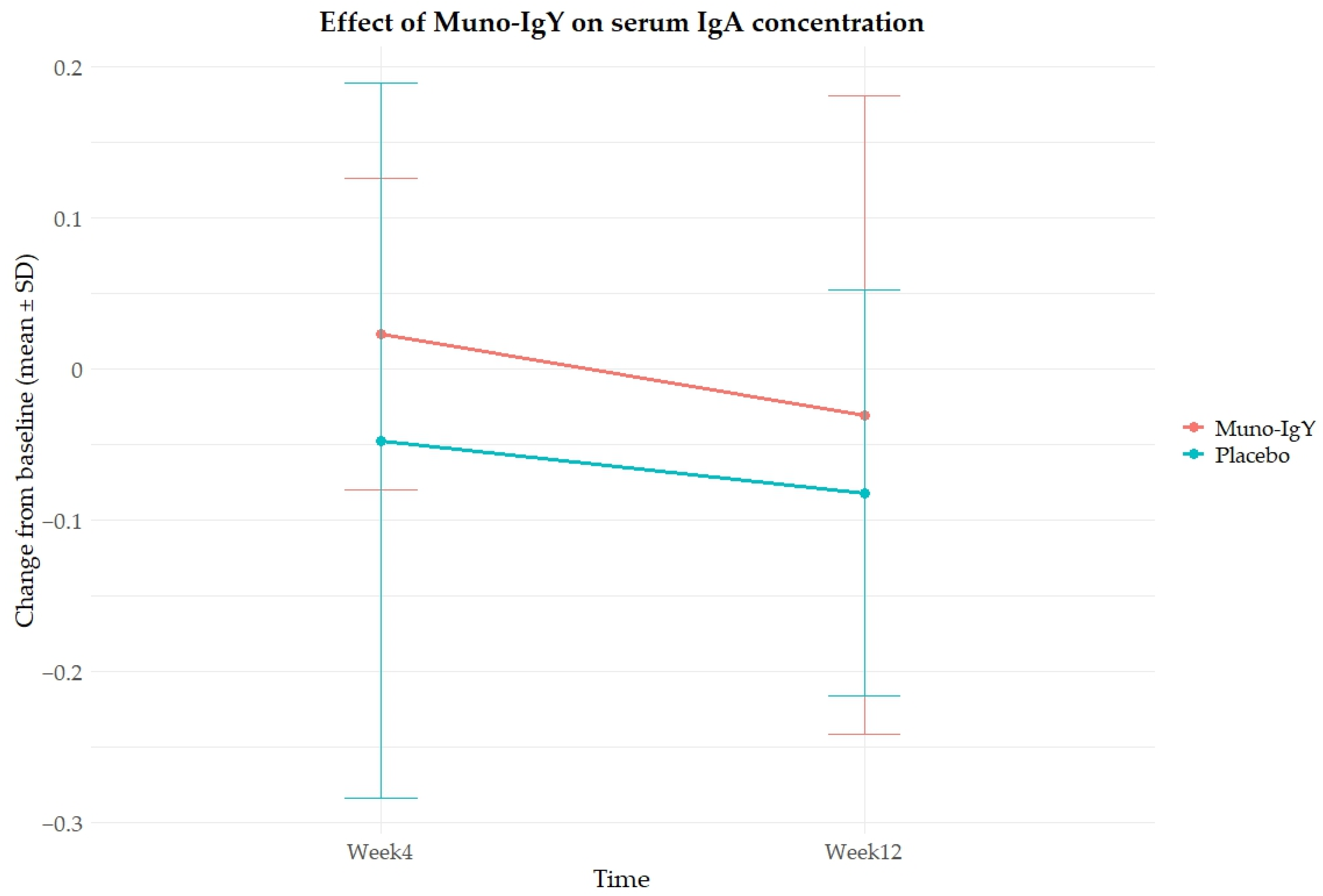
2.3.2. Effect of Muno-IgY on Serum IgA Concentration
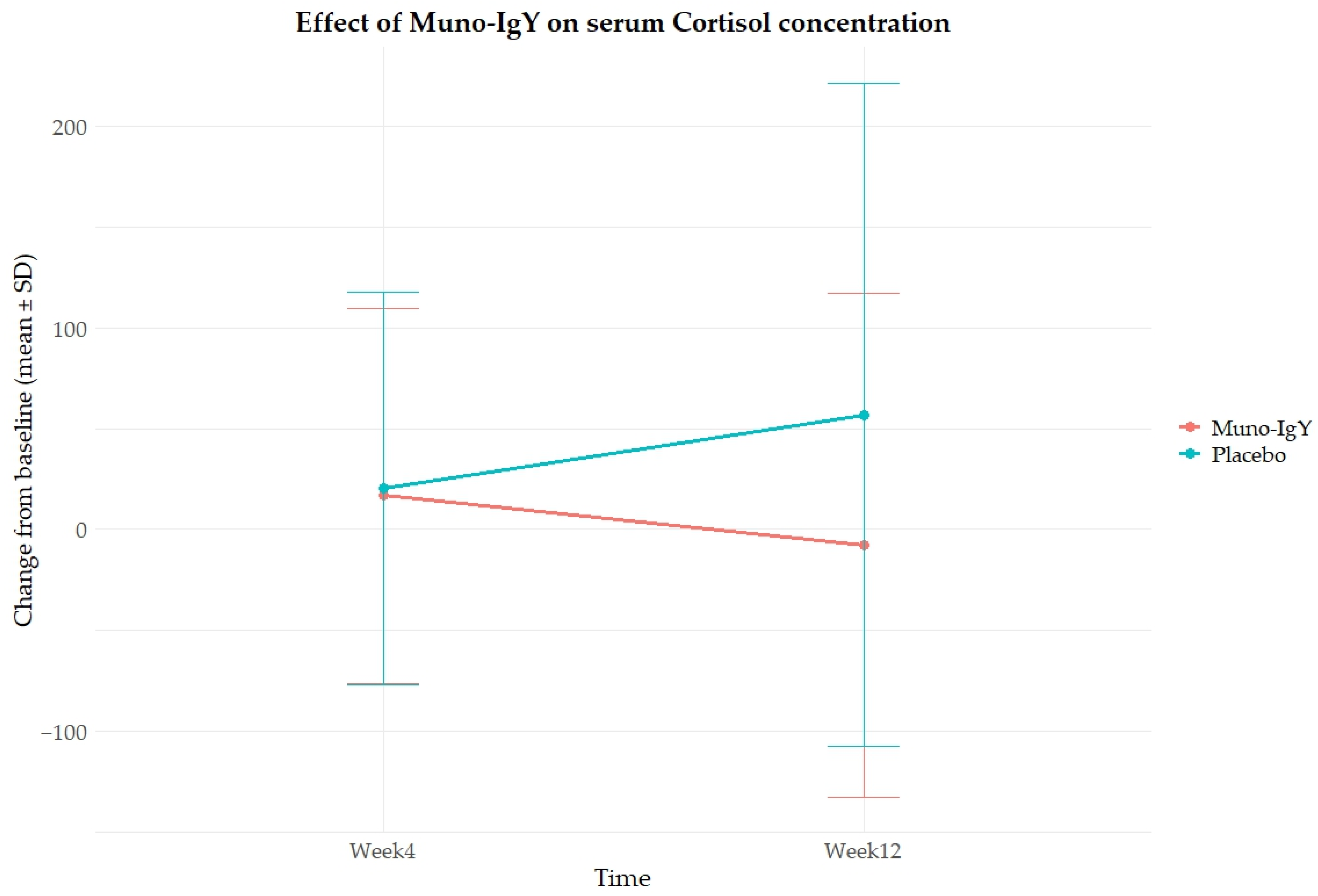
2.3.3. Effect of Muno-IgY on Inflammatory Biomarkers
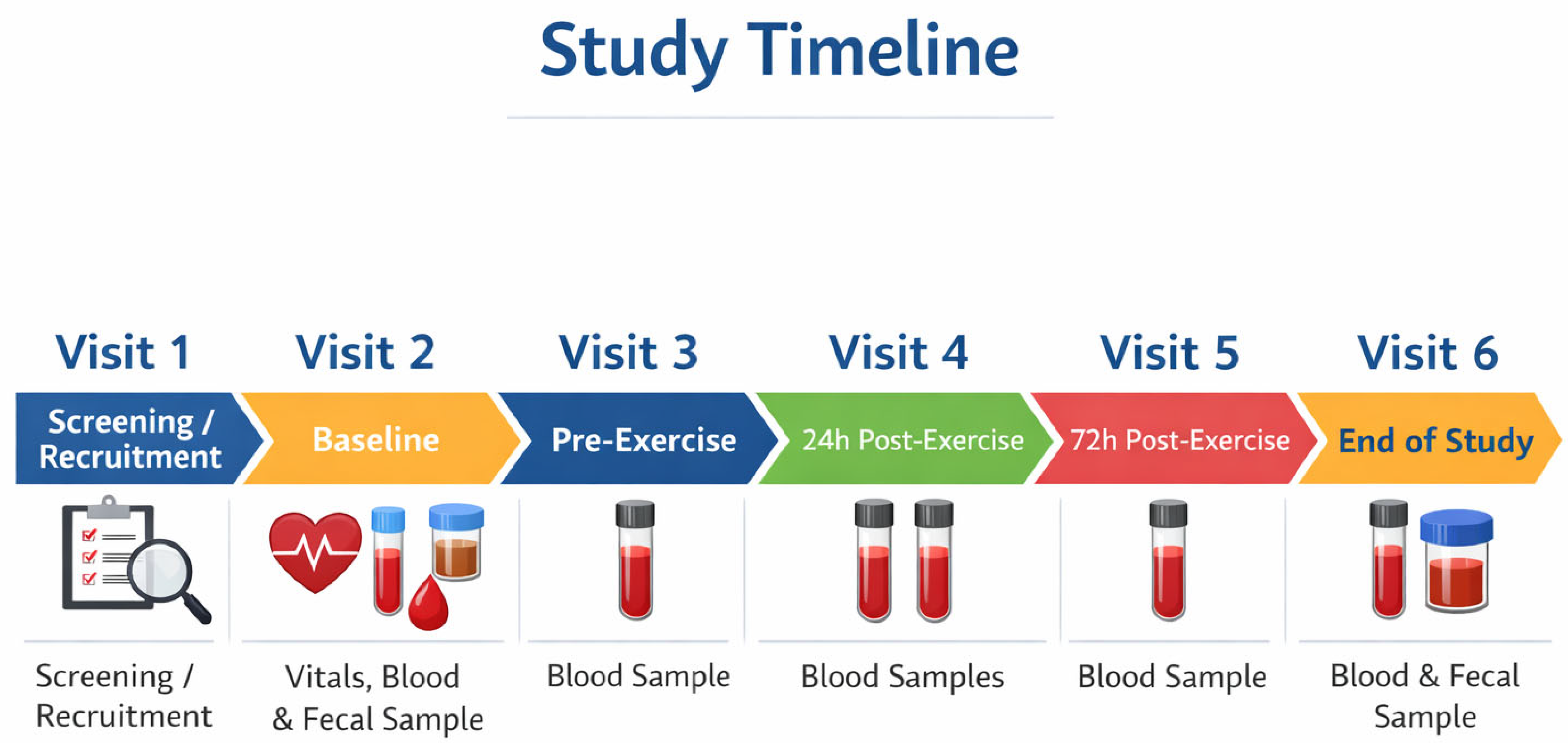
2.4. Effect of Muno-IgY on Post-Exercise Inflammatory, Immunity and Muscle Damage Responses
2.5. Effect of Muno-IgY Supplementation on Gut Microbiome
3. Statistical Analysis
4. Results
4.1. Study Population and Baseline Characteristics
4.2. Effect of Muno-IgY on Anthropometrics, Vital Signs, and Clinical Laboratory Safety
4.3. Adverse Events and Safety Monitoring of Muno-IgY
4.4. Effect of Muno-IgY on Immune Responses
4.4.1. Incidence, Severity, and Duration of Upper Respiratory Tract Infections
4.4.2. Serum IgA Concentration
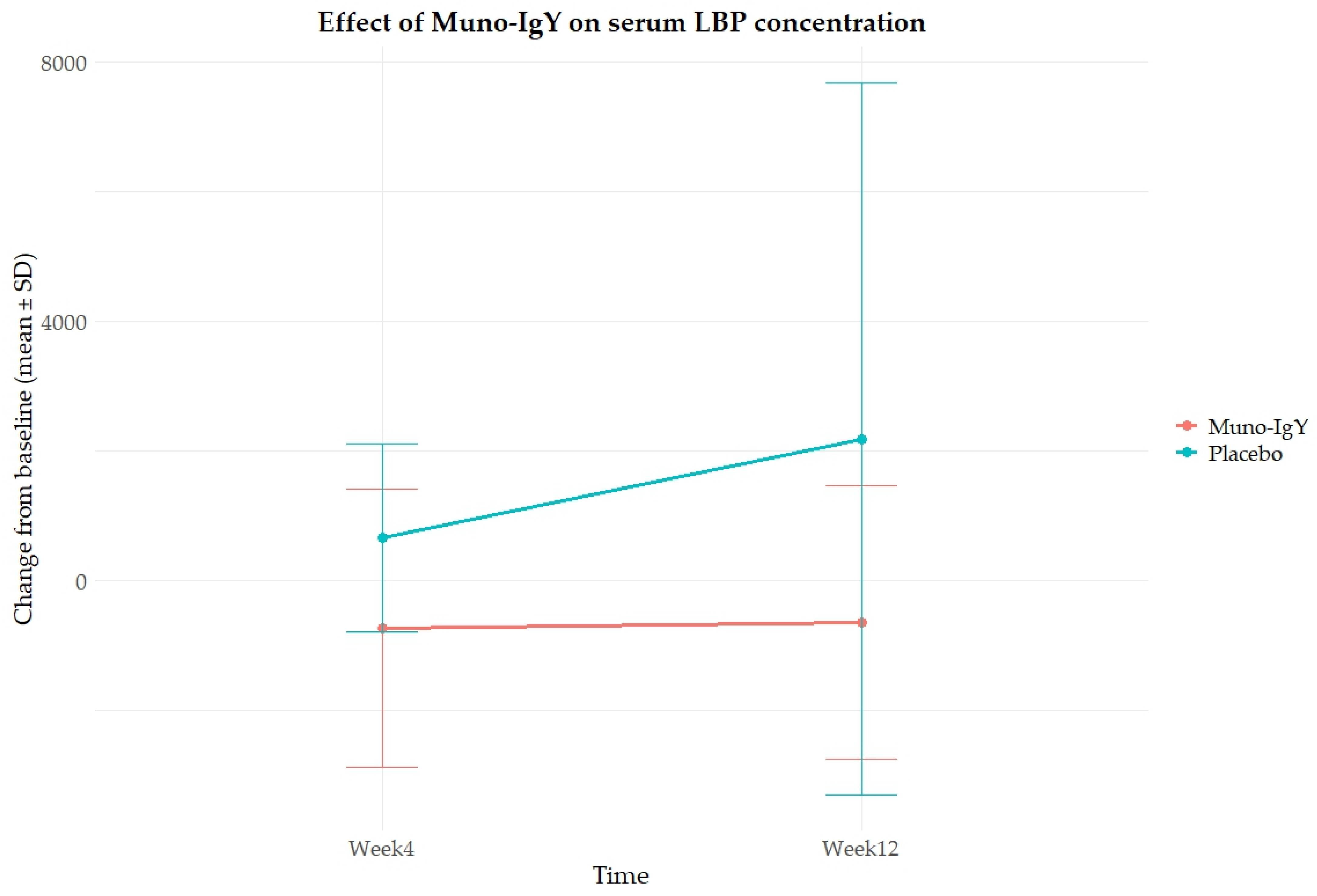
4.4.3. Inflammatory Biomarkers
4.5. Effect of Muno-IgY on Post-Exercise Inflammatory, Immunity and Muscle Damage Response
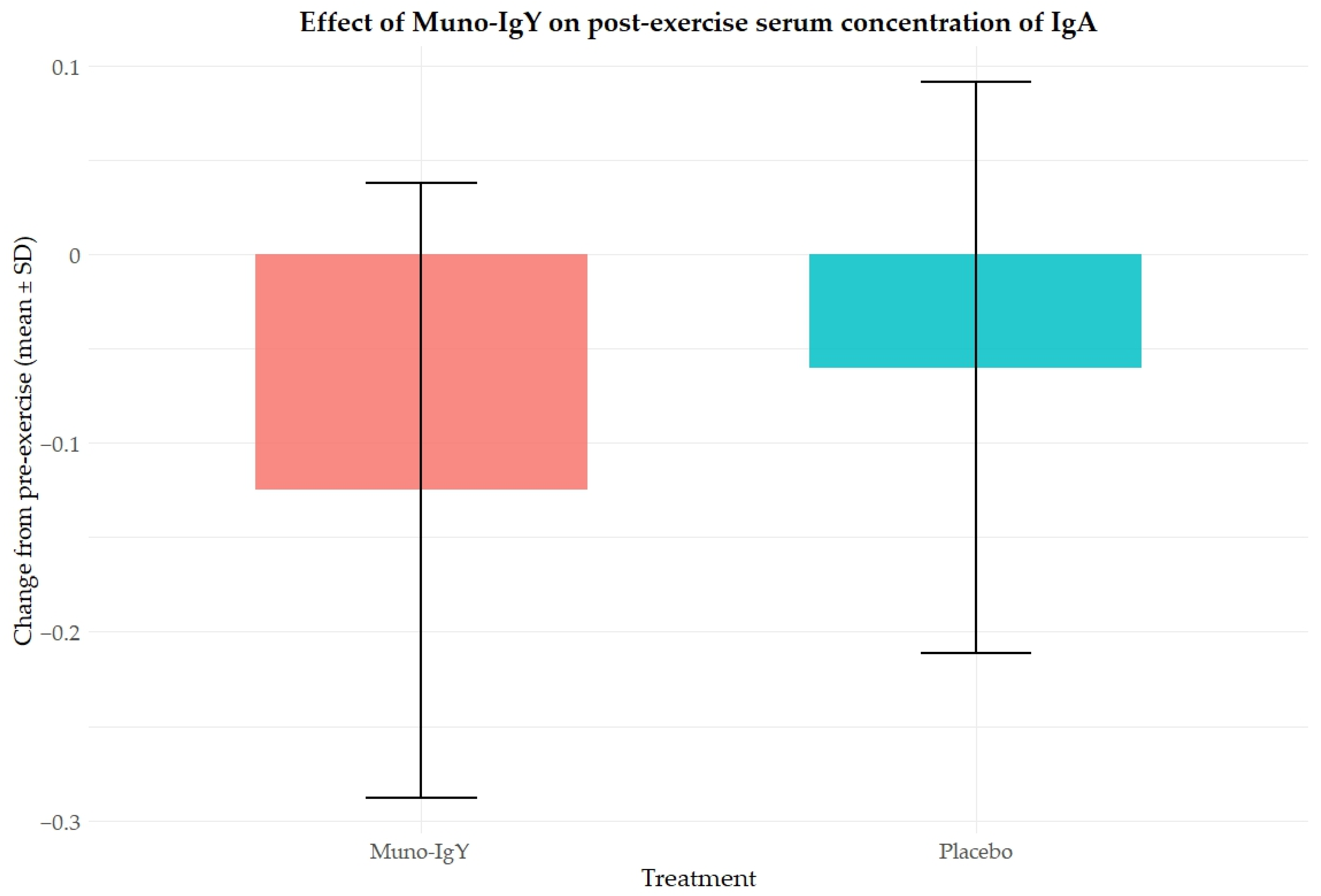
4.5.1. Serum IgA Concentration
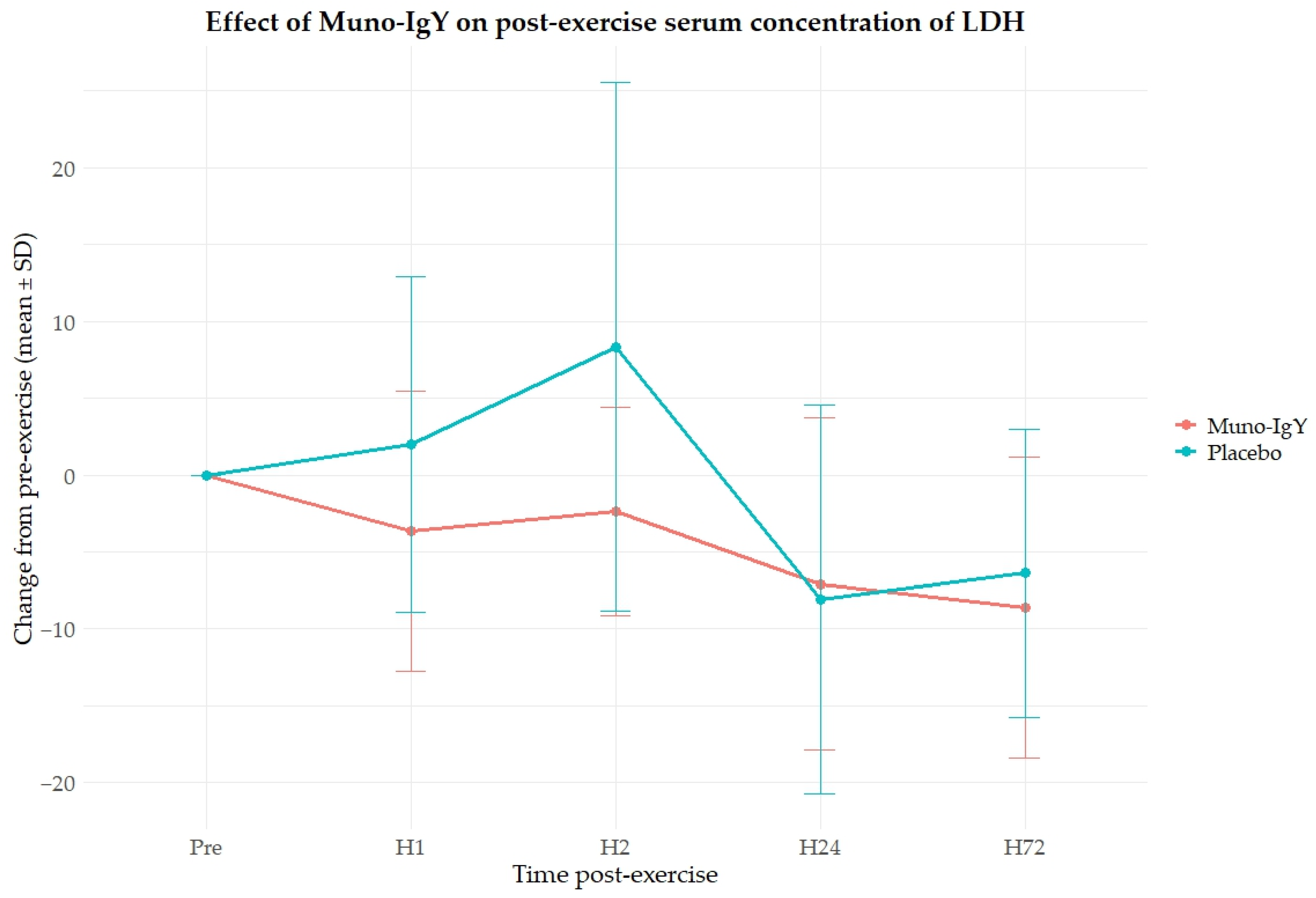
4.5.2. Serum Markers of Muscle Damage
4.5.3. Serum Markers of Inflammation
4.6. Effect of Muno-IgY Supplementation on Gut Microbiome
4.6.1. Alpha Diversity
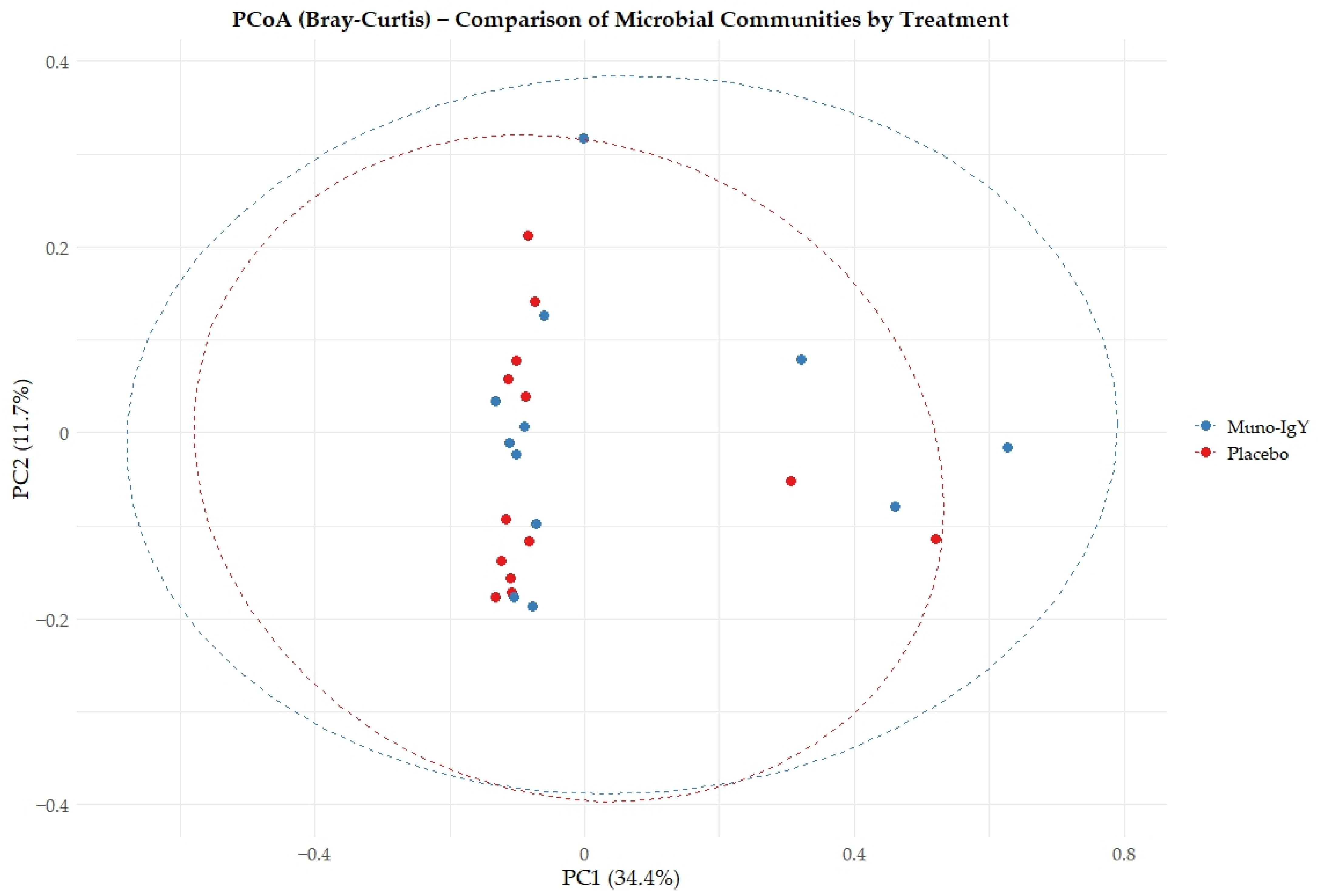
4.6.2. Beta Diversity
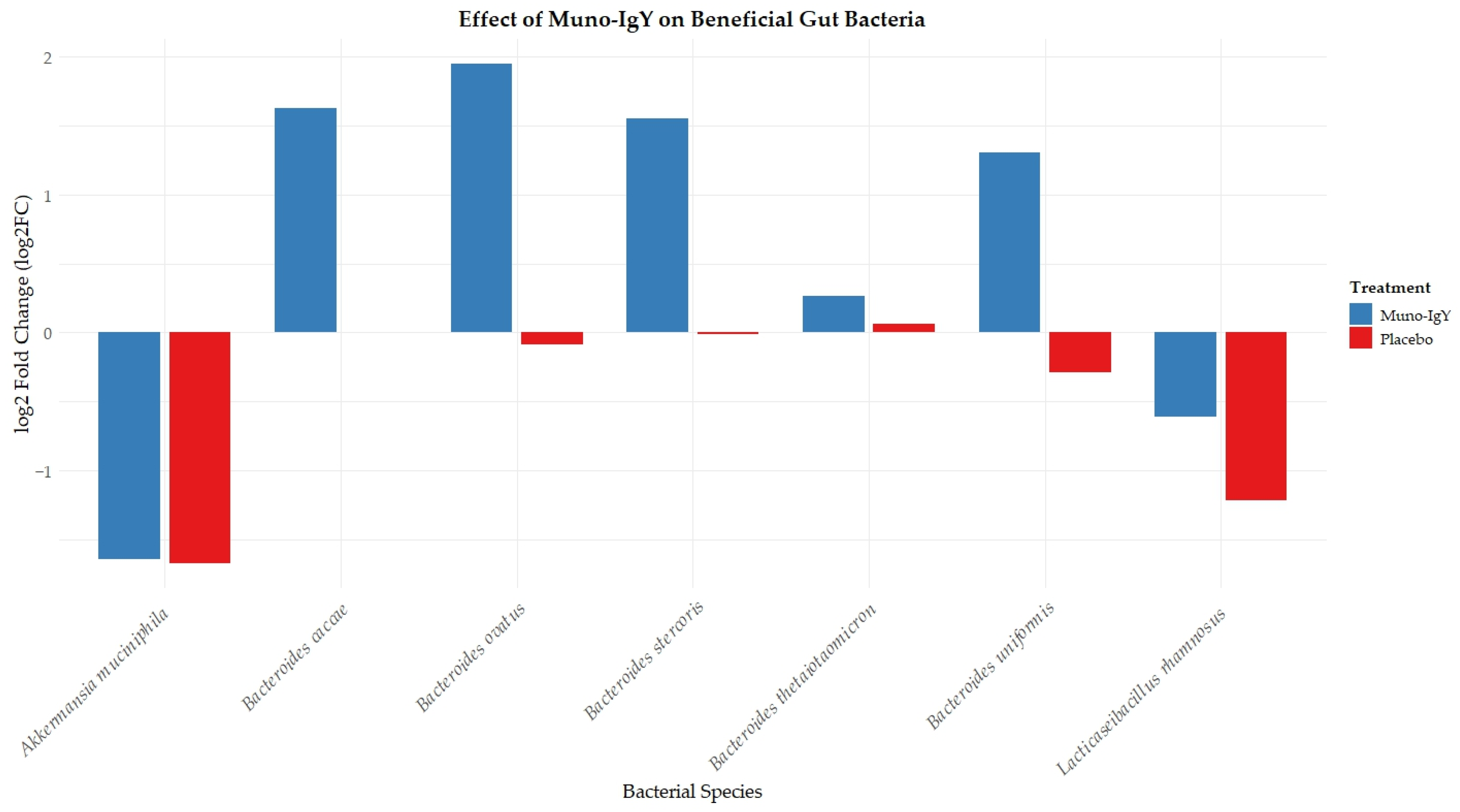
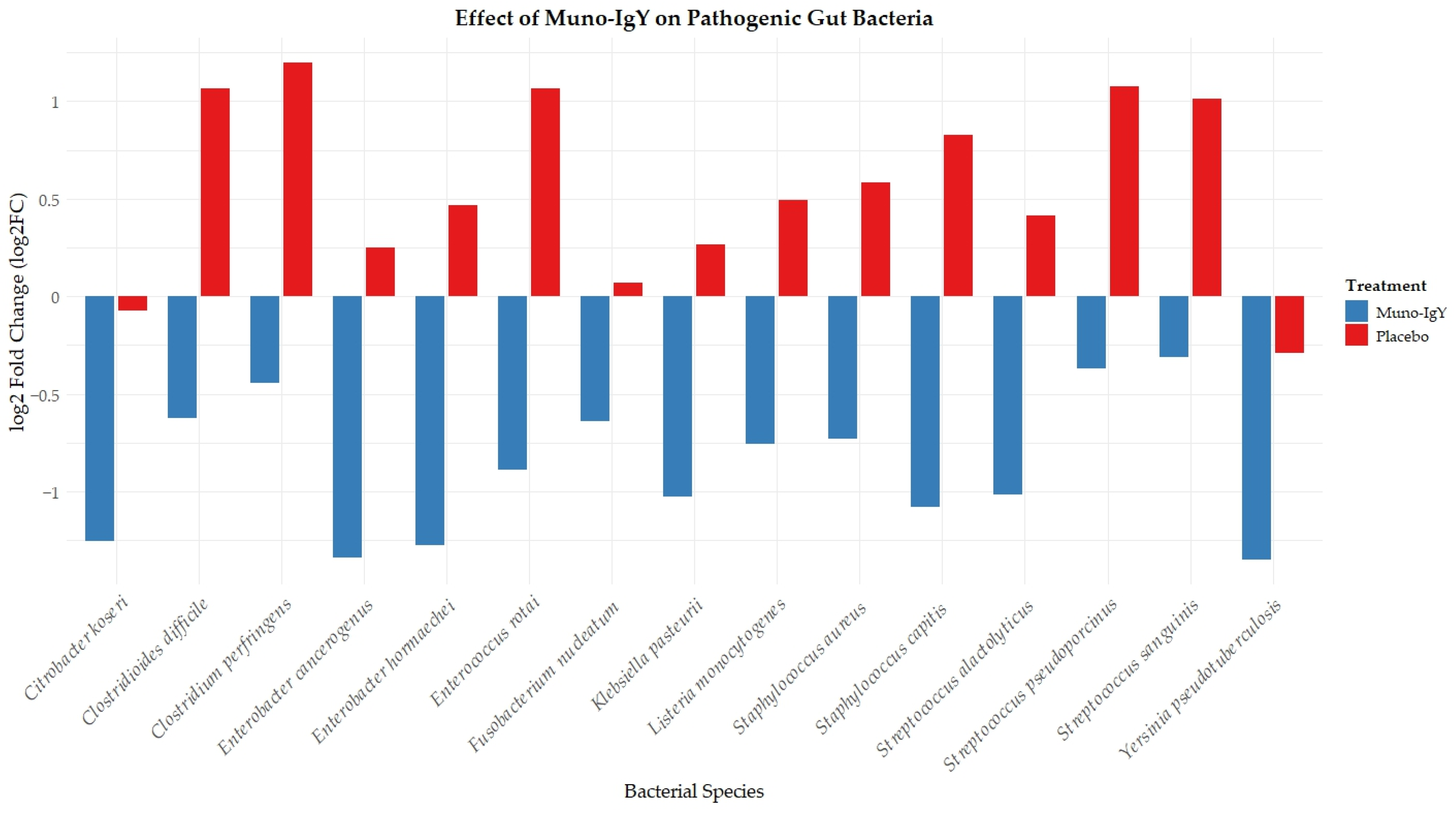
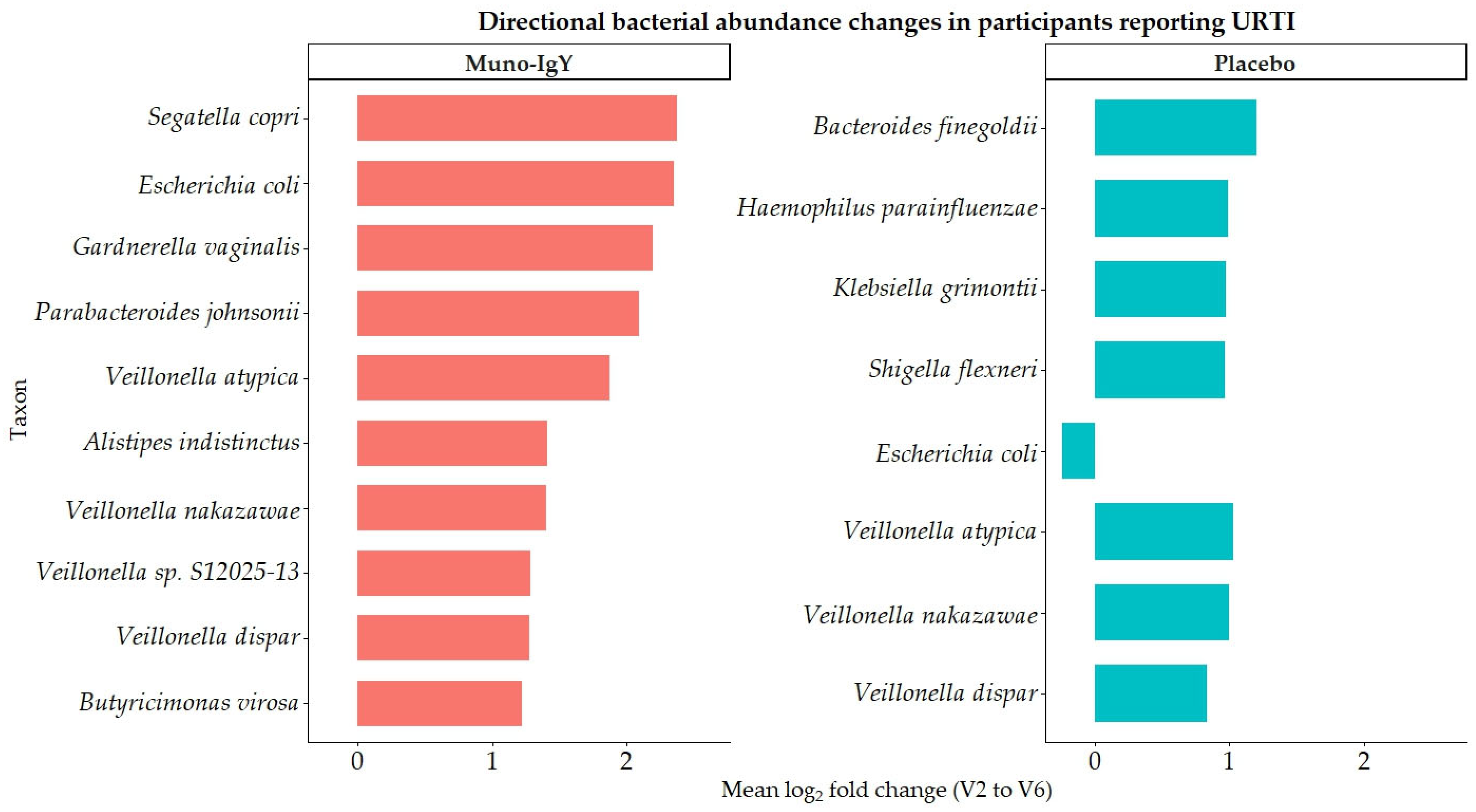
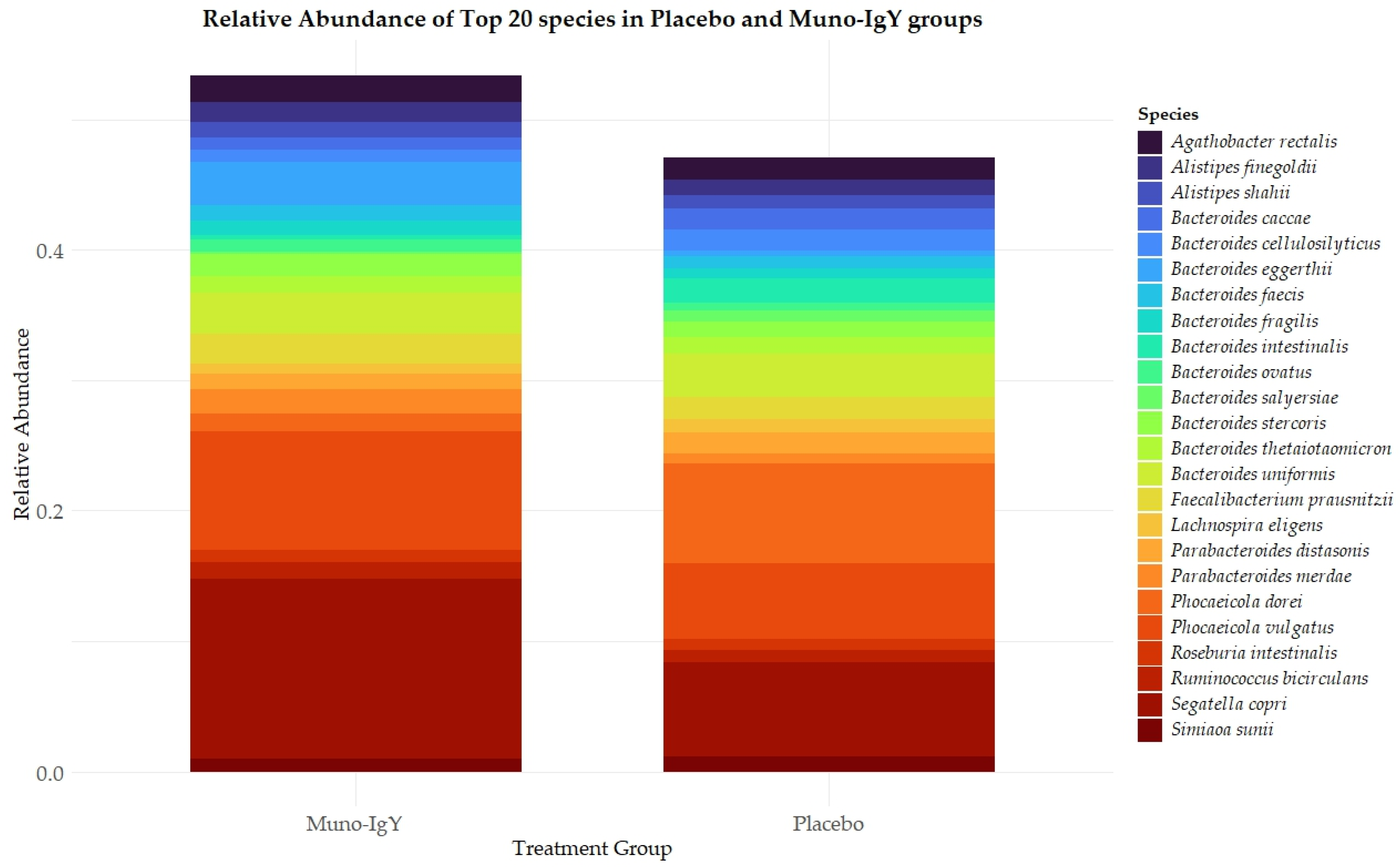
4.6.3. Species-Level Gut Microbiome Changes
5. Discussion
6. Conclusions
Author Contributions
Funding
Institutional Review Board Statement
Informed Consent Statement
Data Availability Statement
Conflicts of Interest
References
- Jin, X.; Ren, J.; Li, R.; Gao, Y.; Zhang, H.; Li, J.; Zhang, J.; Wang, X.; Wang, G. Global burden of upper respiratory infections in 204 countries and territories, from 1990 to 2019. EClinicalMedicine 2021, 37, 100986. [Google Scholar] [CrossRef] [PubMed]
- Dicpinigaitis, P.V.; Eccles, R.; Blaiss, M.S.; Wingertzahn, M.A. Impact of cough and common cold on productivity, absenteeism, and daily life in the United States: ACHOO Survey. Curr. Med. Res. Opin. 2015, 31, 1519–1525. [Google Scholar] [CrossRef] [PubMed]
- Engebretsen, L.; Steffen, K.; Alonso, J.M.; Aubry, M.; Dvorak, J.; Junge, A.; Meeuwisse, W.; Mountjoy, M.; Renström, P.; Wilkinson, M. Sports injuries and illnesses during the Winter Olympic Games. Br. J. Sports Med. 2010, 44, 772–780. [Google Scholar] [CrossRef]
- Cicchella, A.; Stefanelli, C.; Massaro, M. Upper respiratory tract infections in sport and the immune system response. A review. Biology 2021, 10, 362. [Google Scholar] [CrossRef] [PubMed]
- Colbey, C.; Cox, A.J.; Pyne, D.B.; Zhang, P.; Cripps, A.W.; West, N.P. Upper respiratory symptoms, gut health and mucosal immunity in athletes. Sports Med. 2018, 48, 65–77. [Google Scholar] [CrossRef]
- Kang, W.; Kudsk, K.A. Is there evidence that the gut contributes to mucosal immunity in humans? J. Parenter. Enter. Nutr. 2007, 31, 246–258. [Google Scholar] [CrossRef]
- Schuijt, T.J.; Lankelma, J.M.; Scicluna, B.P.; de Sousa e Melo, F.; Roelofs, J.J.T.H.; de Boer, J.D.; Hoogendijk, A.J.; de Beer, R.; de Vos, A.; Belzer, C.; et al. The gut microbiota plays a protective role in the host defence against pneumococcal pneumonia. Gut 2016, 65, 575–583. [Google Scholar] [CrossRef]
- Cox, A.J.; Pyne, D.B.; Saunders, P.U.; A Fricker, P. Oral administration of the probiotic Lactobacillus fermentum VRI-003 and mucosal immunity in endurance athletes. Br. J. Sports Med. 2010, 44, 222–226. [Google Scholar] [CrossRef]
- Clancy, R.L.; Gleeson, M.; Cox, A.; Callister, R.; Dorrington, M.; D’este, C.; Pang, G.; Pyne, D.; Fricker, P.; Henriksson, A. Reversal in fatigued athletes of a defect in interferon γ secretion after administration of Lactobacillus acidophilus. Br. J. Sports Med. 2006, 40, 351–354. [Google Scholar] [CrossRef]
- Heinz, S.A.; Henson, D.A.; Austin, M.D.; Jin, F.; Nieman, D.C. Quercetin supplementation and upper respiratory tract infection: A randomized community clinical trial. Pharmacol. Res. 2010, 62, 237–242. [Google Scholar] [CrossRef]
- Abbas, A.T.; El-Kafrawy, S.A.; Sohrab, S.S.; Azhar, E.I.A. IgY antibodies for the immunoprophylaxis and therapy of respiratory infections. Hum. Vaccines Immunother. 2019, 15, 264–275. [Google Scholar] [CrossRef] [PubMed]
- Wang, L.-H.; Li, X.-Y.; Jin, L.-J.; You, J.-S.; Zhou, Y.; Li, S.-Y.; Xu, Y.-P. Characterization of chicken egg yolk immunoglobulins (IgYs) specific for the most prevalent capsular serotypes of mastitis-causing Staphylococcus aureus. Vet. Microbiol. 2011, 149, 415–421. [Google Scholar] [PubMed]
- Lee, E.; Sunwoo, H.; Menninen, K.; Sim, J.S. In vitro studies of chicken egg yolk antibody (IgY) against Salmonella enteritidis and Salmonella typhimurium. Poult. Sci. 2002, 81, 632–641. [Google Scholar] [CrossRef] [PubMed]
- Zhen, Y.-H.; Jin, L.-J.; Guo, J.; Li, X.-Y.; Lu, Y.-N.; Chen, J.; Xu, Y.-P. Characterization of specific egg yolk immunoglobulin (IgY) against mastitis-causing Escherichia coli. Vet. Microbiol. 2008, 130, 126–133. [Google Scholar]
- Wang, Z.; Li, J.; Li, J.; Li, Y.; Wang, L.; Wang, Q.; Fang, L.; Ding, X.; Huang, P.; Yin, J.; et al. Protective effect of chicken egg yolk immunoglobulins (IgY) against enterotoxigenic Escherichia coli K88 adhesion in weaned piglets. BMC Vet. Res. 2019, 15, 234. [Google Scholar]
- Yang, Y.-E.; Wen, J.; Zhao, S.; Zhang, K.; Zhou, Y. Prophylaxis and therapy of pandemic H1N1 virus infection using egg yolk antibody. J. Virol. Methods 2014, 206, 19–26. [Google Scholar] [CrossRef]
- Nguyen, H.H.; Tumpey, T.M.; Park, H.-J.; Byun, Y.-H.; Tran, L.D.; Nguyen, V.D.; Kilgore, P.E.; Czerkinsky, C.; Katz, J.M.; Seong, B.L.; et al. Prophylactic and therapeutic efficacy of avian antibodies against influenza virus H5N1 and H1N1 in mice. PLoS ONE 2010, 5, e10152. [Google Scholar]
- Duncan, M.J.; Rosenkranz, R.R.; Vandelanotte, C.; Caperchione, C.M.; Rebar, A.L.; Maeder, A.J.; Tague, R.; Savage, T.N.; van Itallie, A.; Mummery, W.K.; et al. What is the impact of obtaining medical clearance to participate in a randomised controlled trial examining a physical activity intervention on the socio-demographic and risk factor profiles of included participants? Trials 2016, 17, 580. [Google Scholar] [CrossRef]
- Hansen, A.W.; Grønbæk, M.; Helge, J.W.; Severin, M.; Curtis, T.; Tolstrup, J.S.; Eysenbach, G. Effect of a web-based intervention to promote physical activity and improve health among physically inactive adults: A population-based randomized controlled trial. J. Med. Internet Res. 2012, 14, e2109. [Google Scholar]
- Giuliano, F.; Jackson, G.; Montorsi, F.; Martin-Morales, A.; Raillard, P. Safety of sildenafil citrate: Review of 67 double-blind placebo-controlled trials and the postmarketing safety database. Int. J. Clin. Pract. 2010, 64, 240–255. [Google Scholar]
- Moro, P.L.; Leung, J.; Marquez, P.; Kim, Y.; Wei, S.; Su, J.R.; Marin, M. Safety surveillance of varicella vaccines in the vaccine adverse event reporting system, United States, 2006–2020. J. Infect. Dis. 2022, 226, S431–S440. [Google Scholar] [CrossRef] [PubMed]
- He, Z.; Sun, G.; Zhu, H.; Ye, B.; Zheng, Z.; He, X.; Pan, H. Effects of different peripheral fatigue protocol on lower limb biomechanical changes during landing and its impact on the risk of anterior cruciate ligament injury: A systematic review. Front. Bioeng. Biotechnol. 2025, 13, 1587573. [Google Scholar] [CrossRef] [PubMed]
- Miraples, A.; McFadyen, B.J.; Raizada, M.N. Pollen DNA Isolation Methods: Literature Review and Benefit of Adding Chloroform: Isoamyl Alcohol to Commercial DNA Kits. Preprints 2025. [Google Scholar] [CrossRef]
- Han, S.; Wen, Y.; Yang, F.; He, P. Chicken egg yolk antibody (IgY) protects mice against enterotoxigenic Escherichia coli infection through improving intestinal health and immune response. Front. Cell. Infect. Microbiol. 2021, 11, 662710. [Google Scholar] [CrossRef]
- Nastasa, V.; Minea, B.; Pasca, A.-S.; Bostanaru-Iliescu, A.-C.; Stefan, A.-E.; Gologan, D.; Capota, R.; Foia, L.-G.; Mares, M. Long-Term Oral Administration of Hyperimmune Egg-Based IgY-Rich Formulations Induces Mucosal Immune Response and Systemic Increases of Cytokines Involved in Th2-and Th17-Type Immune Responses in C57BL/6 Mice. Int. J. Mol. Sci. 2024, 25, 8701. [Google Scholar] [CrossRef]
- Rehan, I.F.; Youssef, M.; Abdel-Rahman, M.A.M.; Fahmy, S.G.; Ahmed, E.; Ahmed, A.S.; Maky, M.A.; Diab, H.M.; Shanab, O.; Alkahtani, S.; et al. The impact of probiotics and egg yolk IgY on behavior and blood parameters in a broiler immune stress model. Front. Vet. Sci. 2020, 7, 145. [Google Scholar] [CrossRef]
- Munteanu, C.; Schwartz, B. The relationship between nutrition and the immune system. Front. Nutr. 2022, 9, 1082500. [Google Scholar] [CrossRef]
- Lim, P.S.; Chang, Y.-K.; Wu, T.-K. Serum lipopolysaccharide-binding protein is associated with chronic inflammation and metabolic syndrome in hemodialysis patients. Blood Purif. 2019, 47, 28–36. [Google Scholar] [CrossRef]
- Karalus, M.; Grodzicka, J. The Impact of Intense Physical Exercise on Humoral and Autoimmune Markers: Changes in IgG, IgA, and Anti-TPO Antibody Levels in Healthy Adults. Prog. Health Sci. 2025, 15, 50–55. [Google Scholar] [CrossRef]
- Abdukalykovna, I.Z.; Jamil, R.S.; Naji, H.A.; Jamal, Z.A.; Saleh, S.; Nurlanovna, O.A. Immune Response to Probiotics and Physical Activity: A Clinical Study. Trends Immunother. 2025, 9, 120–129. [Google Scholar] [CrossRef]
- Boukhris, O.; Trabelsi, K.; Abdessalem, R.; Hsouna, H.; Ammar, A.; Glenn, J.M.; Bott, N.; Irandoust, K.; Taheri, M.; Turki, M.; et al. Effects of the 5-m shuttle run test on markers of muscle damage, inflammation, and fatigue in healthy male athletes. Int. J. Environ. Res. Public Health 2020, 17, 4375. [Google Scholar] [CrossRef]
- Bessa, A.L.; Oliveira, V.N.; Agostini, G.G.; Oliveira, R.J.; Oliveira, A.C.; White, G.E.; Wells, G.D.; Teixeira, D.N.; Espindola, F.S. Exercise intensity and recovery: Biomarkers of injury, inflammation, and oxidative stress. J. Strength Cond. Res. 2016, 30, 311–319. [Google Scholar] [CrossRef] [PubMed]
- Cullen, J.M.A.; Shahzad, S.; Dhillon, J. A systematic review on the effects of exercise on gut microbial diversity, taxonomic composition, and microbial metabolites: Identifying research gaps and future directions. Front. Physiol. 2023, 14, 1292673. [Google Scholar] [CrossRef] [PubMed]
- Donaldson, G.P.; Ladinsky, M.S.; Yu, K.B.; Sanders, J.G.; Yoo, B.B.; Chou, W.-C.; Conner, M.E.; Earl, A.M.; Knight, R.; Bjorkman, P.J.; et al. Gut microbiota utilize immunoglobulin A for mucosal colonization. Science 2018, 360, 795–800. [Google Scholar] [CrossRef]
- A Sey, E.; Warris, A. The gut-lung axis: The impact of the gut mycobiome on pulmonary diseases and infections. Oxf. Open Immunol. 2024, 5, iqae008. [Google Scholar] [CrossRef] [PubMed]
- Yin, Q.; da Silva, A.C.; Zorrilla, F.; Almeida, A.S.; Patil, K.R.; Almeida, A. Ecological dynamics of Enterobacteriaceae in the human gut microbiome across global populations. Nat. Microbiol. 2025, 10, 541–553. [Google Scholar] [CrossRef]
- Pabst, O.; Slack, E. IgA and the intestinal microbiota: The importance of being specific. Mucosal Immunol. 2020, 13, 12–21. [Google Scholar]
- Nieters, A.; Blagitko-Dorfs, N.; Peter, H.-H.; Weber, S. Psychophysiological insomnia and respiratory tract infections: Results of an infection-diary-based cohort study. Sleep 2019, 42, zsz098. [Google Scholar]
- Maccioni, L.; Weber, S.; Elgizouli, M.; Stoehlker, A.-S.; Geist, I.; Peter, H.-H.; Vach, W.; Nieters, A. Obesity and risk of respiratory tract infections: Results of an infection-diary based cohort study. BMC Public Health 2018, 18, 271. [Google Scholar] [CrossRef]





| Summary of Adverse Event Data Elements Collected During the Study | |
|---|---|
| Parameter | Description |
| Event description | Brief description of symptoms or diagnosis |
| Onset/End | Date and time of event start and resolution |
| Severity | Mild: no limitation; Moderate: some limitation; Severe: unable to perform usual activities |
| Action taken | Dose unchanged, reduced, interrupted, withdrawn, or other actions |
| Outcome | Fatal, recovered/resolved, recovered with sequelae, not resolved, unknown |
| Causality | Related, suspected, or not related to the study product |
| Pregnancy monitoring | Abnormal pregnancy outcomes were considered AEs/SAEs. Participants with pregnancy were withdrawn or followed to resolution. |
| Characteristic | Muno-IgY (n = 14) | Placebo (n = 14) | Total (N = 28) |
|---|---|---|---|
| Age, years | |||
| Mean ± SD | 47.5 ± 7.1 | 48.1 ± 8.2 | 47.8 ± 7.6 |
| Range | 36–58 | 35–65 | 35–65 |
| Sex, n (%) | |||
| Female | 12 (85.7) | 12 (85.7) | 24 (85.7) |
| Male | 2 (14.3) | 2 (14.3) | 4 (14.3) |
| Race, n (%) | |||
| White | 10 (71.4) | 10 (71.4) | 20 (71.4) |
| Asian | 1 (7.1) | 1 (7.1) | 2 (7.1) |
| Black or African American | 1 (7.1) | 1 (7.1) | 2 (7.1) |
| Not reported | 2 (14.3) | 2 (14.3) | 4 (14.3) |
| Ethnicity, n (%) | |||
| Not Hispanic or Latino | 12 (85.7) | 12 (85.7) | 24 (85.7) |
| Hispanic or Latino | 2 (14.3) | 2 (14.3) | 4 (14.3) |
| BMI (kg/m2) | |||
| Mean ± SD | 25.4 ± 2.7 | 25.8 ± 2.3 | 25.6 ± 2.5 |
| Range | 20.2–29.5 | 21.3–29.8 | 20.2–29.8 |
| Vital signs | |||
| Systolic BP (mmHg), mean ± SD | 110.9 ± 10.4 | 113.3 ± 9.5 | 112.1 ± 9.9 |
| Diastolic BP (mmHg), mean ± SD | 74.9 ± 5.8 | 75.6 ± 6.6 | 75.3 ± 6.1 |
| Heart rate (bpm), mean ± SD | 65.4 ± 7.9 | 67.2 ± 7.6 | 66.3 ± 7.7 |
| Respiratory rate (breaths/min), mean ± SD | 14.4 ± 2.2 | 13.9 ± 1.9 | 14.1 ± 2.0 |
| Placebo | Muno-IgY | Total | |
|---|---|---|---|
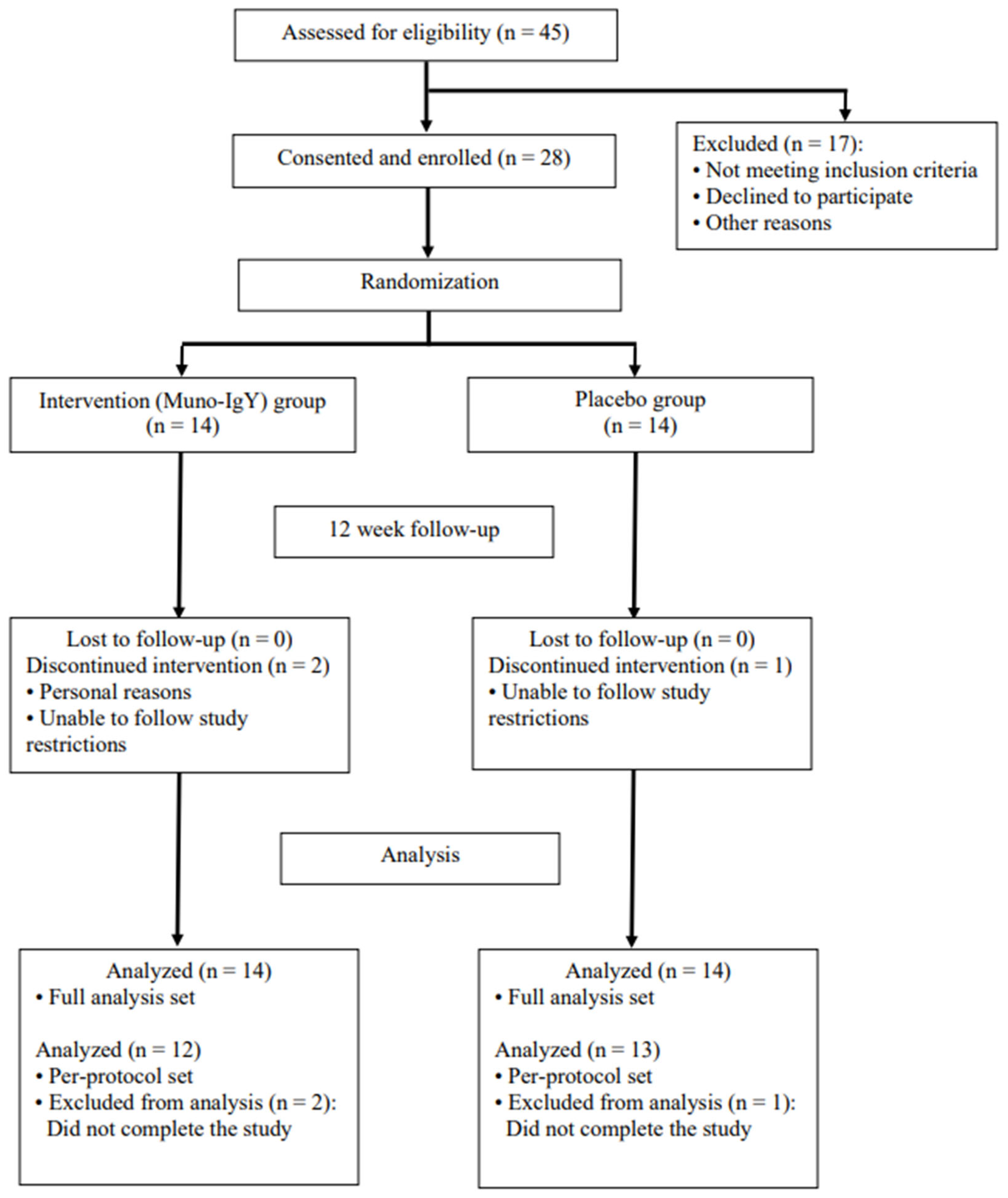
| Screened | 45 | ||
| Met criteria but not randomized | 2 | ||
| Screening failure | 15 | ||
| Randomized | 14 (100%) | 14 (100%) | 28 (100%) |
| Included in the Safety population | 14 (100%) | 14 (100%) | 28 (100%) |
| Included in the FAS population | 14 (100%) | 14 (100%) | 28 (100%) |
| Included in the PPS population | 12 (85.7%) | 13 (92.9%) | 25 (89.3%) |
| Completed study | 12 (85.7%) | 13 (92.9%) | 25 (89.3%) |
| Excluded from PPS | 2 (14.3%) | 1 (7.1%) | 3 (10.7%) |
| Withdrawal by subject | 2 (14.3%) | 1 (7.1%) | 3 (10.7%) |
| Muno-IgY (n = 14) | Placebo (n = 14) | Total (N = 28) | ||
|---|---|---|---|---|
| Overall | 7 (50%) | 9 (64.3%) | 16 (57.1%) | |
| Relation | Related | 0 (0%) | 0 (0%) | 0 (0%) |
| Suspected | 1 (7.1%) | 0 (0%) | 1 (3.6%) | |
| Not related | 6 (42.9%) | 9 (64.3%) | 15 (53.6%) | |
| Severity | Severe | 0 (0%) | 0 (0%) | 0 (0%) |
| Moderate | 0 (0%) | 0 (0%) | 0 (0%) | |
| Mild | 7 (50%) | 9 (64.3%) | 16 (57.1%) | |
| Discontinuation | 0 (0%) | 0 (0%) | 0 (0%) | 0 (0%) |
| Number of Participants | Percentage of Participants with URTI | |||||
|---|---|---|---|---|---|---|
| Muno-IgY | Placebo | Total | Muno-IgY | Placebo | Total | p-Value |
| 2 | 5 | 7 | 14.3% | 35.7% | 25.0% | 0.38 |
| Diversity Index | Placebo | Muno-IgY | p-Value |
|---|---|---|---|
| Shannon | 3.38 ± 0.57 | 3.43 ± 0.75 | 0.59 |
| Simpson | 0.86 ± 0.08 | 0.85 ± 0.12 | 0.53 |
| Taxon | Treatment | Mean Fold Change | Median Fold Change | Mean log2FC | Median log2FC |
|---|---|---|---|---|---|
| Escherichia coli | Placebo | 14.36 | 0.33 | −0.24 | −1.62 |
| Klebsiella grimontii | Placebo | 12.87 | 0.92 | 0.97 | −0.12 |
| Shigella flexneri | Placebo | 12.27 | 0.96 | 0.96 | −0.06 |
| Bacteroides finegoldii | Placebo | 3.59 | 1.99 | 1.20 | 0.99 |
| Haemophilus parainfluenzae | Placebo | 4.01 | 2.35 | 0.99 | 1.23 |
| Veillonella atypica | Placebo | 3.99 | 1.60 | 1.02 | 0.68 |
| Veillonella dispar | Placebo | 3.89 | 1.19 | 0.83 | 0.25 |
| Veillonella nakazawae | Placebo | 6.62 | 1.30 | 1.00 | 0.38 |
| Segatella copri | Muno-IgY | 11.47 | 11.47 | 2.37 | 2.37 |
| Parabacteroides johnsonii | Muno-IgY | 6.57 | 6.57 | 2.09 | 2.09 |
| Escherichia coli | Muno-IgY | 5.92 | 5.92 | 2.35 | 2.35 |
| Gardnerella vaginalis | Muno-IgY | 8.49 | 8.49 | 2.19 | 2.19 |
| Veillonella atypica | Muno-IgY | 4.39 | 4.39 | 1.87 | 1.87 |
| Veillonella dispar | Muno-IgY | 3.28 | 3.28 | 1.28 | 1.28 |
| Veillonella nakazawae | Muno-IgY | 4.38 | 4.38 | 1.40 | 1.40 |
| Veillonella sp. S12025-13 | Muno-IgY | 4.46 | 4.46 | 1.28 | 1.28 |
| Butyricimonas virosa | Muno-IgY | 3.20 | 3.20 | 1.22 | 1.22 |
| Alistipes indistinctus | Muno-IgY | 4.87 | 4.87 | 1.41 | 1.41 |
Disclaimer/Publisher’s Note: The statements, opinions and data contained in all publications are solely those of the individual author(s) and contributor(s) and not of MDPI and/or the editor(s). MDPI and/or the editor(s) disclaim responsibility for any injury to people or property resulting from any ideas, methods, instructions or products referred to in the content. |
© 2026 by the authors. Licensee MDPI, Basel, Switzerland. This article is an open access article distributed under the terms and conditions of the Creative Commons Attribution (CC BY) license.
Share and Cite
Fathima, S.; Kilgore, P.E.; Sarkar, T.; Sharma, N.; Nguyen, H.H. Muno-IgY Supplementation Improves Respiratory Health, Immune Response, and Exercise-Induced Physiological Stress in Healthy Adults: A Randomized Controlled Pilot Study. Nutrients 2026, 18, 524. https://doi.org/10.3390/nu18030524
Fathima S, Kilgore PE, Sarkar T, Sharma N, Nguyen HH. Muno-IgY Supplementation Improves Respiratory Health, Immune Response, and Exercise-Induced Physiological Stress in Healthy Adults: A Randomized Controlled Pilot Study. Nutrients. 2026; 18(3):524. https://doi.org/10.3390/nu18030524
Chicago/Turabian StyleFathima, Shahna, Paul E. Kilgore, Tina Sarkar, Navneet Sharma, and Huan H. Nguyen. 2026. "Muno-IgY Supplementation Improves Respiratory Health, Immune Response, and Exercise-Induced Physiological Stress in Healthy Adults: A Randomized Controlled Pilot Study" Nutrients 18, no. 3: 524. https://doi.org/10.3390/nu18030524
APA StyleFathima, S., Kilgore, P. E., Sarkar, T., Sharma, N., & Nguyen, H. H. (2026). Muno-IgY Supplementation Improves Respiratory Health, Immune Response, and Exercise-Induced Physiological Stress in Healthy Adults: A Randomized Controlled Pilot Study. Nutrients, 18(3), 524. https://doi.org/10.3390/nu18030524