Dietary Lithium, Silicon, and Boron: An Updated Critical Review of Their Roles in Metabolic Regulation, Neurobiology, Bone Health, and the Gut Microbiome

 ,
,  ,
,  ,
,  and
and 
Abstract
1. Introduction
2. Methods
2.1. Data Collection
2.2. Study Selection
- Study design;
- Sample size;
- Dose/exposure characteristics;
- Outcomes;
- Mechanistic pathways;
- Methodological limitations.
2.3. Article Screening Process
3. Results
3.1. Dietary Exposure of the Elements and Global Intake Variability
3.2. Lithium: Physiology, Mechanisms, and Safety
3.2.1. Absorption, Distribution, and Excretion of Lithium
3.2.2. Mechanistic Pathways of Lithium
Mitochondrial and Redox Regulation
Neuroplasticity and Neuroprotection
Endocrine and Stress Physiology
Immunological and Anti-Inflammatory Effects
Microbiome Interactions
3.2.3. Safety and Toxicity of Lithium
3.3. Silicon: Physiology, Mechanisms, and Safety
3.3.1. Absorption, Distribution, and Excretion of Silicon
3.3.2. Mechanistic Pathways of Silicon
Collagen Synthesis and Extracellular Matrix Integrity
Skeletal Effects and Bone Mineralization
Vascular Structure and Metabolic Regulation
Gut Barrier Integrity and Epithelial Regeneration
Safety and Toxicity of Silicon
3.4. Boron: Physiology, Mechanisms, and Safety
3.4.1. Absorption, Distribution, and Bioavailability
3.4.2. Mechanistic Pathways of Boron
Vitamin D and Mineral Metabolism
Inflammatory and Oxidative Modulation
Hormonal Regulation
Neurological and Cognitive Effects
3.4.3. Safety, Toxicity, and Regulatory Considerations
3.5. Integrative Mechanistic Model: Converging Pathways of Lithium, Silicon, and Boron
3.5.1. Oxidative and Inflammatory Crosstalk
3.5.2. Endocrine and Neuroendocrine Interactions
3.5.3. Microbiome-Driven Mechanisms
3.5.4. Bone–Gut–Brain Axis
4. Evidence Strength, Research Gaps, and Critical Appraisal
5. Public Health Implications
5.1. Potential Health-Relevant Variability
5.2. No General Recommendation for Supplementation
5.3. Water Policy Considerations
6. Conclusions
Author Contributions
Funding
Data Availability Statement
Conflicts of Interest
References
- Shahzad, B.; Mughal, M.N.; Tanveer, M.; Gupta, D.; Abbas, G. Is lithium biologically an important or toxic element to living organisms? An overview. Environ. Sci. Pollut. Res. 2017, 24, 103–115. [Google Scholar] [CrossRef]
- Hunt, C.D. Biochemical effects of physiological amounts of dietary boron. J. Trace Elem. Exp. Med. 1996, 9, 185–214. [Google Scholar] [CrossRef]
- Vidé, J.; Virsolvy, A.; Romain, C.; Ramos, J.; Jouy, N.; Richard, S.; Cristol, J.-P.; Gaillet, S.; Rouanet, J.-M. Dietary silicon-enriched spirulina improves early atherosclerosis markers in hamsters on a high-fat diet. Nutrition 2015, 31, 1148–1154. [Google Scholar] [CrossRef] [PubMed]
- Pizzorno, L. Nothing Boring About Boron. Integr. Med. 2015, 14, 35–48. [Google Scholar]
- Aron, L.; Ngian, Z.K.; Qiu, C.; Choi, J.; Liang, M.; Drake, D.M.; Hamplova, S.E.; Lacey, E.K.; Roche, P.; Yuan, M.; et al. Lithium deficiency and the onset of Alzheimer’s disease. Nature 2025, 645, 712–721. [Google Scholar] [CrossRef]
- Helbich, M.; Leitner, M.; Kapusta, N.D. Geospatial examination of lithium in drinking water and suicide mortality. Int. J. Health Geogr. 2012, 11, 19. [Google Scholar] [CrossRef]
- Jugdaohsingh, R.; Tucker, K.L.; Qiao, N.; Cupples, L.A.; Kiel, D.P.; Powell, J.J. Dietary silicon intake is positively associated with bone mineral density in men and premenopausal women of the Framingham Offspring cohort. J. Bone Miner. Res 2004, 19, 297–307. [Google Scholar] [CrossRef]
- Sripanyakorn, S.; Jugdaohsingh, R.; Dissayabutr, W.; Anderson, S.H.; Thompson, R.P.; Powell, J.J. The comparative absorption of silicon from different foods and food supplements. Br. J. Nutr. 2009, 102, 825–834. [Google Scholar] [CrossRef] [PubMed]
- Dudek, Ł.; Kochman, W.; Dziedzic, E. Silicon in prevention of atherosclerosis and other age-related diseases. Front. Cardiovasc. Med. 2024, 11, 1370536. [Google Scholar] [CrossRef]
- Naghii, M.R.; Mofid, M.; Asgari, A.R.; Hedayati, M.; Daneshpour, M.S. Comparative effects of daily and weekly boron supplementation on plasma steroid hormones and proinflammatory cytokines. J. Trace Elem. Med. Biol. 2011, 25, 54–58. [Google Scholar] [CrossRef]
- Penland, J.G. Dietary boron, brain function, and cognitive performance. Environ. Health Perspect. 1994, 102, 65–72. [Google Scholar] [CrossRef]
- European Food Safety Authority (EFSA). Calcium silicate and silicon dioxide/silicic acid gel added for nutritional purposes to food supplements. EFSA J. 2009, 7, 1132. [Google Scholar] [CrossRef]
- WHO (World Health Organization). Environmental Health Criteria 204: Boron; World Health Organization: Geneva, Switzerland, 1998. [Google Scholar]
- Jaitesh, P.V.S.; Jayashree, R.; Dhevagi, P.; Malathi, M.; Rahale, C.S. Lithium as an essential micronutrient: Current evidence and future perspectives in human nutrition and health. Ann. Phytomed. 2025, 14, 128–142. [Google Scholar] [CrossRef]
- Nielsen, F.H. Nutritional requirements for boron, silicon, vanadium, nickel, and arsenic: Current knowledge and speculation. FASEB J. 1991, 5, 2661–2667. [Google Scholar] [CrossRef]
- Pérez-Granados, A.M.; Vaquero, M.P. Silicon, aluminium, arsenic and lithium: Essentiality and human health implications. J. Nutr. Health Aging 2002, 6, 154–162. [Google Scholar]
- Green, B.N.; Johnson, C.D.; Adams, A. Writing narrative literature reviews for peer-reviewed journals: Secrets of the trade. J. Chiropr. Med. 2006, 5, 101–117. [Google Scholar] [CrossRef] [PubMed]
- Kessing, L.V.; Gerds, T.A.; Knudsen, N.N.; Jørgensen, L.F.; Kristiansen, S.M.; Voutchkova, D.; Ernstsen, V.; Schullehner, J.; Hansen, B.; Andersen, P.K.; et al. Association of Lithium in Drinking Water with the Incidence of Dementia. JAMA Psychiatry 2017, 74, 1005–1010. [Google Scholar] [CrossRef] [PubMed]
- Jugdaohsingh, R. Silicon and bone health. J. Nutr. Health Aging 2007, 11, 99. [Google Scholar]
- Seaborn, C.D.; Nielsen, F.H. Dietary silicon and arginine affect mineral element composition of rat femur and vertebra. Biol. Trace Elem. Res. 2002, 89, 239–250. [Google Scholar] [CrossRef]
- Carlisle, E.M. Essentiality and Function of Silicon. In Biochemistry of Silicon and Related Problems. Nobel Foundation Symposia; Bendz, G., Lindqvist, I., Runnström-Reio, V., Eds.; Springer: Boston, MA, USA, 1978; Volume 40, pp. 119–130. [Google Scholar] [CrossRef]
- Murray, F.J. A comparative review of the pharmacokinetics of boric acid in rodents and humans. Biol. Trace Elem. Res. 1998, 66, 331–341. [Google Scholar] [CrossRef]
- Aral, H.; Vecchio-Sadus, A. Toxicity of lithium to humans and the environment—A literature review. Ecotoxicol. Environ. Saf. 2008, 70, 349–356. [Google Scholar] [CrossRef]
- Sakrajda, K.; Rybakowski, J.K. The Mechanisms of Lithium Action: The Old and New Findings. Pharmaceuticals 2025, 18, 467. [Google Scholar] [CrossRef]
- Schou, M. Forty years of lithium treatment. Arch. Gen. Psychiatry 1997, 54, 9–13. [Google Scholar] [CrossRef] [PubMed]
- Amdisen, A. Serum Level Monitoring and Clinical Pharmacokinetics of Lithium. Clin. Pharmacokinet. 1977, 2, 73–92. [Google Scholar] [CrossRef]
- McKnight, R.F.; Adida, M.; Budge, K.; Stockton, S.; Goodwin, G.M.; Geddes, J.R. Lithium toxicity profile: A systematic review and meta-analysis. Lancet 2012, 379, 721–728. [Google Scholar] [CrossRef] [PubMed]
- Scaini, G.; Andrews, T.; Lima, C.N.C.; Benevenuto, D.; Streck, E.L.; Quevedo, J. Mitochondrial dysfunction as a critical event in the pathophysiology of bipolar disorder. Mitochondrion 2021, 57, 23–36. [Google Scholar] [CrossRef] [PubMed]
- Manji, H.K.; Moore, G.J.; Chen, G. Lithium at 50: Have the neuroprotective effects of this unique cation been overlooked? Biol. Psychiatry 1999, 46, 929–940. [Google Scholar] [CrossRef]
- Forlenza, O.V.; De-Paula, V.J.; Diniz, B.S. Neuroprotective effects of lithium: Implications for the treatment of Alzheimer’s disease and related neurodegenerative disorders. ACS Chem. Neurosci. 2014, 5, 443–450. [Google Scholar] [CrossRef]
- Wang, W.; Lu, D.; Shi, Y.; Wang, Y. Exploring the Neuroprotective Effects of Lithium in Ischemic Stroke: A literature review. Int. J. Med. Sci. 2024, 21, 284–298. [Google Scholar] [CrossRef] [PubMed]
- Habib, M.Z.; Ebeid, M.A.; el Faramawy, Y.; Saad, S.T.; El Magdoub, H.M.; Attia, A.A.; Aboul-Fotouh, S.; Abdel-Tawab, A.M. Effects of lithium on cytokine neuro-inflammatory mediators, Wnt/β-catenin signaling and microglial activation in the hippocampus of chronic mild stress-exposed rats. Toxicol. Appl. Pharmacol. 2020, 399, 115073. [Google Scholar] [CrossRef]
- Thangavel, M.; Raj, T.S.; Chinnappan, S.; Anbalagan, M.; Arunagirinathan, N.; Kuvin, E.; Sasikumar, P.; Paranjothy, C.; Mani, R.R. Lithium-induced neuroprotection in bipolar disorder: Translational insights into cytoskeletal and proteomic mechanisms. IBRO Neurosci. Rep. 2025, 19, 725–736. [Google Scholar] [CrossRef]
- Machado-Vieira, R. Lithium, Stress, and Resilience in Bipolar Disorder: Deciphering this key homeostatic synaptic plasticity regulator. J. Affect. Disord. 2018, 233, 92–99. [Google Scholar] [CrossRef] [PubMed]
- Haj-Mirzaian, A.; Amiri, S.; Kordjazy, N.; Momeny, M.; Razmi, A.; Rahimi-Balaei, M.; Amini-Khoei, H.; Marzban, H.; Mehr, S.E.; Ghaffari, S.H.; et al. Lithium attenuated the depressant and anxiogenic effect of juvenile social stress through mitigating the negative impact of interlukin-1β and nitric oxide on hypothalamic–pituitary–adrenal axis function. Neuroscience 2016, 315, 271–285. [Google Scholar] [CrossRef]
- de Leyhe, T.; Eschweiler, G.W.; Stransky, E.; Gasser, T.; Annas, P.; Basun, H.; Laske, C. Increase of BDNF serum concentration in lithium-treated patients with early Alzheimer’s disease. J. Alzheimer's Dis. 2009, 16, 649–656. [Google Scholar] [CrossRef]
- Koriyama, Y.; Nakayama, Y.; Matsugo, S.; Sugitani, K.; Ogai, K.; Takadera, T.; Kato, S. Anti-inflammatory effects of lipoic acid through inhibition of GSK-3β in lipopolysaccharide-induced BV-2 microglial cells. Neurosci. Res. 2013, 77, 87–96. [Google Scholar] [CrossRef]
- Bai, L.; Chang, H.-M.; Cheng, J.-C.; Chu, G.; Leung, P.C.K.; Yang, G. Lithium chloride inhibits StAR and progesterone production through GSK-3β and ERK1/2 signaling pathways in human granulosa-lutein cells. Mol. Cell. Endocrinol. 2018, 461, 89–99. [Google Scholar] [CrossRef] [PubMed]
- Fan, M.; Jin, W.; Zhao, H.; Xiao, Y.; Jia, Y.; Yin, Y.; Jiang, X.; Xu, J.; Meng, N.; Lv, P. Lithium chloride administration prevents spatial learning and memory impairment in repeated cerebral ischemia-reperfusion mice by depressing apoptosis and increasing BDNF expression in hippocampus. Behav. Brain Res. 2015, 291, 399–406. [Google Scholar] [CrossRef] [PubMed]
- Jans, K.; Jöckel, T.; von Frieling, J.; Ipharraguerre, I.R.; Roeder, T.; Lüersen, K.; Rimbach, G. Lithium affects sodium balance but not intestinal microbiota-studies in Drosophila melanogaster. J. Trace Elem. Med. Biol. 2024, 86, 127548. [Google Scholar] [CrossRef]
- Maddu, N.; Raghavendra, P.B. Review of lithium effects on immune cells. Immunopharmacol. Immunotoxicol. 2015, 37, 111–125. [Google Scholar] [CrossRef]
- Kerr, F.; Bjedov, I.; Sofola-Adesakin, O. Molecular Mechanisms of Lithium Action: Switching the Light on Multiple Targets for Dementia Using Animal Models. Front. Mol. Neurosci. 2018, 11, 297. [Google Scholar] [CrossRef]
- Schrauzer, G.N. Lithium: Occurrence, Dietary Intakes, Nutritional Essentiality. J. Am. Coll. Nutr. 2002, 21, 14–21. [Google Scholar] [CrossRef]
- Jugdaohsingh, R.; Anderson, S.H.; Tucker, K.L.; Elliott, H.; Kiel, D.P.; Thompson, R.P.; Powell, J.J. Dietary silicon intake and absorption. Am. J. Clin. Nutr. 2002, 75, 887–893. [Google Scholar] [CrossRef]
- Pennington, J.A. Silicon in foods and diets. Food Addit. Contam. 1991, 8, 97–118. [Google Scholar] [CrossRef]
- Reffitt, D.M.; Ogston, N.; Jugdaohsingh, R.; Cheung, H.F.J.; Evans, B.A.J.; Thompson, R.P.H.; Powell, J.J.; Hampson, G.N. Orthosilicic acid stimulates collagen type 1 synthesis and osteoblastic differentiation in human osteoblast-like cells in vitro. Bone 2003, 32, 127–135. [Google Scholar] [CrossRef] [PubMed]
- Magnusson, C.; Jugdaohsingh, R.; Hulthen, L.; Westerlund, A.; Powell, J.J.; Ransjö, M. Urinary Excretion of Silicon in Men, Non-pregnant Women, and Pregnant Women: A Cross-sectional Study. Biol. Trace Elem. Res. 2020, 194, 321–327. [Google Scholar] [CrossRef] [PubMed]
- Kim, Y.Y.; Kim, M.H.; Choi, M.K. Relationship Between Dietary Intake and Urinary Excretion of Silicon in Free-Living Korean Adult Men and Women. Biol. Trace Elem. Res. 2019, 191, 286–293. [Google Scholar] [CrossRef]
- Carlisle, E.M. Silicon as a trace nutrient. Sci. Total Environ. 1988, 73, 95–106. [Google Scholar] [CrossRef]
- Carlisle, E.M. Silicon: A Possible Factor in Bone Calcification. Science 1970, 167, 279–280. [Google Scholar] [CrossRef] [PubMed]
- Pritchard, A.; Nielsen, B.D. Silicon Supplementation for Bone Health: An Umbrella Review Attempting to Translate from Animals to Humans. Nutrients 2024, 16, 339. [Google Scholar] [CrossRef]
- Rondanelli, M.; A Faliva, M.; Peroni, G.; Gasparri, C.; Perna, S.; Riva, A.; Petrangolini, G.; Tartara, A. Silicon: A neglected micronutrient essential for bone health. Exp. Biol. Med. 2021, 246, 1500–1511. [Google Scholar] [CrossRef]
- Macdonald, H.M.; Hardcastle, A.C.; Jugdaohsingh, R.; Fraser, W.D.; Reid, D.M.; Powell, J.J. Dietary silicon interacts with oestrogen to influence bone health: Evidence from the Aberdeen Prospective Osteoporosis Screening Study. Bone 2012, 50, 681–687. [Google Scholar] [CrossRef]
- Rodella, L.F.; Bonazza, V.; Labanca, M.; Lonati, C.; Rezzani, R. A review of the effects of dietary silicon intake on bone homeostasis and regeneration. J. Nutr. Health Aging 2014, 18, 820–826. [Google Scholar] [CrossRef] [PubMed]
- Martin, K.R. Silicon: The Health Benefits of a Metalloid. In Interrelations Between Essential Metal Ions and Human Diseases; Sigel, A., Sigel, H., Sigel, R., Eds.; Metal Ions in Life Sciences; Springer: Dordrecht, The Netherlands, 2013; Volume 13. [Google Scholar] [CrossRef]
- Chen, J.; Dai, X.-Y.; Zhao, B.-C.; Xu, X.-W.; Kang, J.-X.; Xu, Y.-R.; Li, J.-L. Role of the GLP2–Wnt1 axis in silicon-rich alkaline mineral water maintaining intestinal epithelium regeneration in piglets under early-life stress. Cell. Mol. Life Sci. 2024, 81, 126. [Google Scholar] [CrossRef]
- Diao, J.; Xia, Y.; Jiang, X.; Qiu, J.; Cheng, S.; Su, J.; Duan, X.; Gao, M.; Qin, X.; Zhang, J.; et al. Silicon dioxide nanoparticles induced neurobehavioral impairments by disrupting microbiota–gut–brain axis. J. Nanobiotechnol. 2021, 19, 174. [Google Scholar] [CrossRef] [PubMed]
- Wu, W.-Y.; Chou, P.-L.; Yang, J.-C.; Chien, C.-T. Silicon-containing water intake confers antioxidant effect, gastrointestinal protection, and gut microbiota modulation in the rodents. PLoS ONE 2021, 16, e0248508. [Google Scholar] [CrossRef]
- Wachsmuth, H.R.; Weninger, S.N.; Duca, F.A. Role of the gut–brain axis in energy and glucose metabolism. Exp. Mol. Med. 2022, 54, 377–392. [Google Scholar] [CrossRef]
- EFSA Panel on Dietetic Products, Nutrition and Allergies (NDA). Scientific Opinion on the evaluation of allergenic foods and food ingredients for labelling purposes. EFSA J. 2014, 12, 3894. [Google Scholar] [CrossRef]
- Nielsen, F.H. New essential trace elements for the life sciences. Biol. Trace Elem. Res. 1990, 26, 599–611. [Google Scholar] [CrossRef] [PubMed]
- Hunt, C.D. Dietary boron: Progress in establishing essential roles in human physiology. J. Trace Elem. Med. Biol. 2012, 26, 157–160. [Google Scholar] [CrossRef]
- Acaroz, U.; Ince, S.; Arslan-Acaroz, D.; Gurler, Z.; Kucukkurt, I.; Demirel, H.H.; Arslan, H.O.; Varol, N.; Zhu, K. The ameliorative effects of boron against acrylamide-induced oxidative stress, inflammatory response, and metabolic changes in rats. Food Chem. Toxicol. 2018, 118, 745–752. [Google Scholar] [CrossRef]
- Rainey, C.J.; Nyquist, L.A.; Christensen, R.E.; Strong, P.L.; Culver, B.D.; Coughlin, J.R. Daily Boron Intake from the American Diet. J. Am. Diet. Assoc. 1999, 99, 335–340. [Google Scholar] [CrossRef] [PubMed]
- Dinca, L.; Scorei, R. Boron in Human Nutrition and its Regulations Use. J. Nutr. Ther. 2013, 2, 22–29. [Google Scholar] [CrossRef]
- Gündüz, M.K.; Bolat, M.; Kaymak, G.; Berikten, D.; Köse, D.A. Therapeutic Effects of Newly Synthesized Boron Compounds (BGM and BGD) on Hepatocellular Carcinoma. Biol. Trace Elem. Res. 2022, 200, 134–146. [Google Scholar] [CrossRef] [PubMed]
- Seidel, U.; Haegele, F.A.; Baumhof, E.; Jans, K.; Seidler, Y.; Kremer, D.; Bakker, S.J.L.; Birringer, M.; Lüersen, K.; Bosy-Westphal, A.; et al. Boron contents of German mineral and medicinal waters and their bioavailability in drosophila melanogaster and humans. Mol. Nutr. Food Res. 2021, 65, 2100345. [Google Scholar] [CrossRef]
- Peng, X.; Lingxia, Z.; Schrauzer, G.N.; Xiong, G. Selenium, boron, and germanium deficiency in the etiology of Kashin-Beck disease. Biol. Trace Elem. Res. 2000, 77, 193–197. [Google Scholar] [CrossRef]
- Estevez-Fregoso, E.; Kilic, A.; Rodríguez-Vera, D.; Nicanor-Juárez, L.E.; Romero-Rizo, C.E.M.; Farfán-García, E.D.; Soriano-Ursúa, M.A. Effects of Boron-Containing Compounds on Liposoluble Hormone Functions. Inorganics 2023, 11, 84. [Google Scholar] [CrossRef]
- Doğan, A.; Demirci, S.; Apdik, H.; Bayrak, O.F.; Gulluoglu, S.; Tuysuz, E.C.; Gusev, O.; Rizvanov, A.A.; Nikerel, E.; Şahin, F. A new hope for obesity management: Boron inhibits adipogenesis in progenitor cells through the Wnt/β-catenin pathway. Metabolism-Clin. Exp. 2017, 69, 130–142. [Google Scholar] [CrossRef]
- Khaliq, H.; Juming, Z.; Ke-Mei, P. The Physiological Role of Boron on Health. Biol. Trace Elem. Res. 2018, 186, 31–51. [Google Scholar] [CrossRef]
- Popova, E.V.; Tinkov, A.A.; Ajsuvakova, O.P.; Skalnaya, M.G.; Skalny, A.V. Boron—A potential goiterogen? Med. Hypotheses 2017, 104, 63–67. [Google Scholar] [CrossRef]
- Weber, K.S.; Ratjen, I.; Enderle, J.; Seidel, U.; Rimbach, G.; Lieb, W. Plasma boron concentrations in the general population: A cross-sectional analysis of cardio-metabolic and dietary correlates. Eur. J. Nutr. 2022, 61, 1363–1375. [Google Scholar] [CrossRef]
- Nandwana, V.; Nandwana, N.K.; Das, Y.; Saito, M.; Panda, T.; Das, S.; Almaguel, F.; Hosmane, N.S.; Das, B.C. The role of microbiome in brain development and neurodegenerative diseases. Molecules 2022, 27, 3402. [Google Scholar] [CrossRef] [PubMed]
- Penland, J.G. The importance of boron nutrition for brain and psychological function. Biol. Trace Elem. Res. 1998, 66, 299–317. [Google Scholar] [CrossRef]
- Turkez, H.; Yıldırım, S.; Sahin, E.; Arslan, M.E.; Emsen, B.; Tozlu, O.O.; Alak, G.; Ucar, A.; Tatar, A.; Hacimuftuoglu, A.; et al. Boron compounds exhibit protective effects against aluminum-induced neurotoxicity and genotoxicity: In vitro and in vivo study. Toxics 2022, 10, 428. [Google Scholar] [CrossRef]
- Soriano-Ursúa, M.A.; Farfán-García, E.D. The Cracked Potential of Boron-containing Compounds in Alzheimer’s Disease. Cent. Nerv. Syst. Agents Med. Chem. 2023, 23, 213–221. [Google Scholar] [CrossRef] [PubMed]
- Das, A.; Rajput, V.; Chowdhury, D.; Choudhary, R.; Bodakhe, S.H. Boron: An intriguing factor in retarding Alzheimer’s progression. Neurochem. Int. 2024, 181, 105897. [Google Scholar] [CrossRef] [PubMed]



| Region | Lithium Intake (μg/day) | Silicon Intake (mg/day) | Boron Intake (mg/day) | Major Sources | Notes on Bioavailability |
|---|---|---|---|---|---|
| Northern Europe | 10–150 | 20–50 | 1–3 | Mineral waters, grains, vegetables | Orthosilicic acid highly bioavailable |
| Southern Europe | 5-80 | 30-60 | 1–4 | Mineral waters, wine, fruits | Boron bioavailability high from plant foods |
| North America | 5–150 | 20–55 | 0.8–2 | Drinking water, cereals | Lithium varies > 100 μg by region |
| Asia | 10–300 | 15–40 | 1–3 | Rice, vegetables | High variation due to hydrogeology |
| Australia/NZ | 5–100 | 15–45 | 1–3 | Drinking water, fruits | Limited nationwide datasets |
| Element | Human Evidence | Animal Evidence | In Vitro Evidence | Overall Strength | Key Limitations |
|---|---|---|---|---|---|
| Lithium (Li) | Ecological/observational: inverse association between water Li and suicide rates [5] | Strong neuroprotective and anti-inflammatory effects at physiological doses [5] | Suppression of inflammatory/apoptotic pathways; mechanistic plausibility [5] | Moderate | Human studies are ecological; causality cannot be inferred; limited intervention trials |
| Silicon (Si) | Observational: bone density; suggesting gut barrier evidence [45,46,48,54] | Collagen synthesis, bone matrix formation, intestinal barrier repair [45,46,54] | Enhanced collagen synthesis and epithelial repair via Wnt/GLP-2 [52] | Moderate | Dietary intake variability; limited controlled trials; translation from animal dosing uncertain |
| Boron (B) | Small controlled trials: inflammation and mineral metabolism; heterogeneous neurocognitive outcomes [10,11,57,59,60] | Consistent effects on bone metabolism, inflammation, steroid hormone regulation [4,45] | NF-κB inhibition, cytokine modulation, mineralization pathways [4,15,16] | Moderate | Small sample sizes; heterogeneous endpoints; limited long-term data |
| Shared Considerations | High ecological confounding; poorly characterized dose–response | Mostly preclinical; variable translational relevance | Limited human validation | – | Inconsistent safety reporting; undefined benefit/toxicity thresholds; largely preclinical microbiome data |
| Element | Primary Physiological Roles | Key Mechanisms of Action | Strength of Human Evidence and Core Findings | Citations |
|---|---|---|---|---|
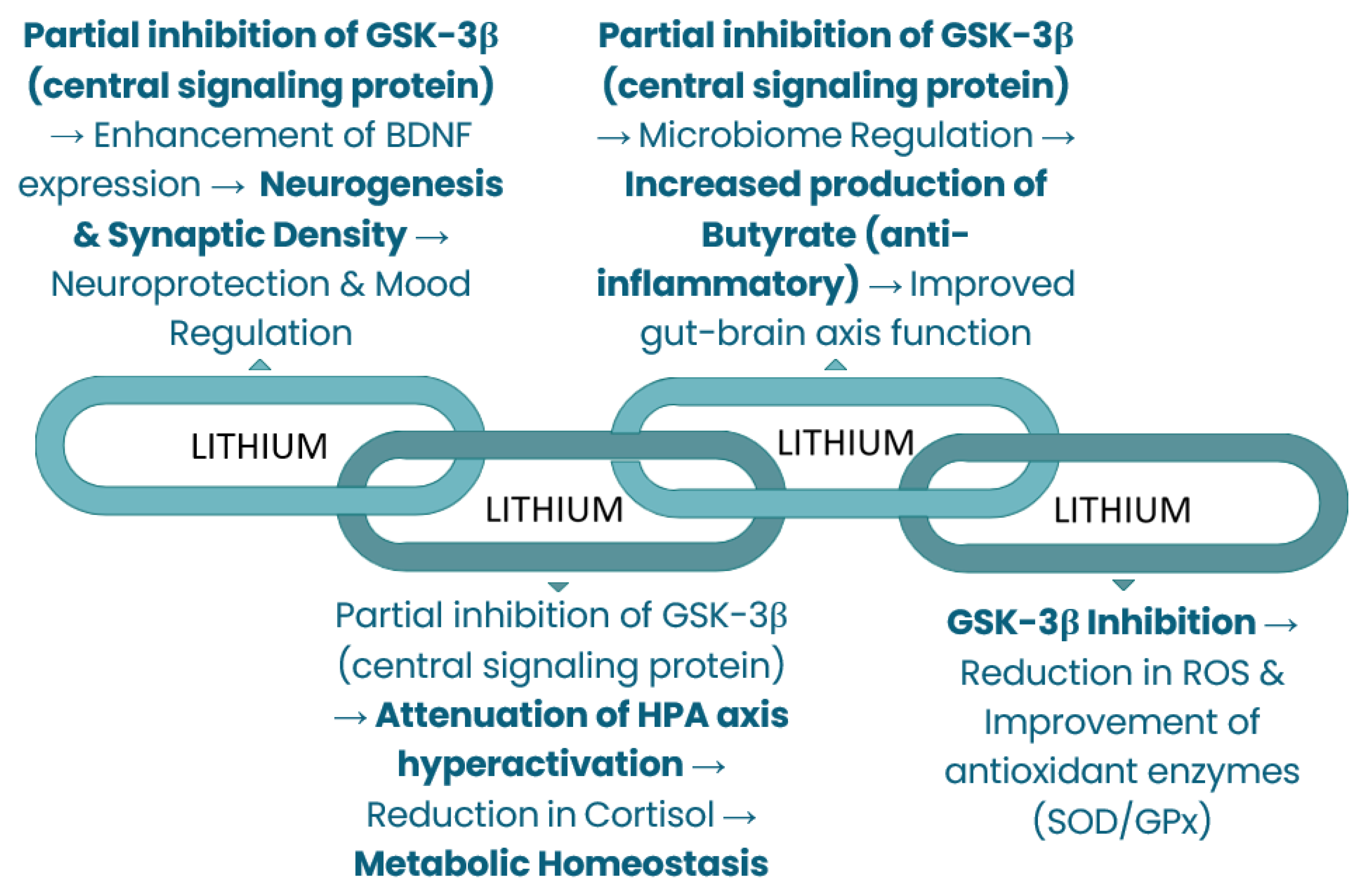
| Lithium (Li) | Neuroprotection, Mood Regulation, Metabolic Homeostasis. | Partial inhibition of GSK-3β. Enhanced BDNF expression. Attenuation of HPA-axis hyperactivation. | Limited: Primarily ecological studies. Requires controlled human trials. | [5,6,24,32,34] |
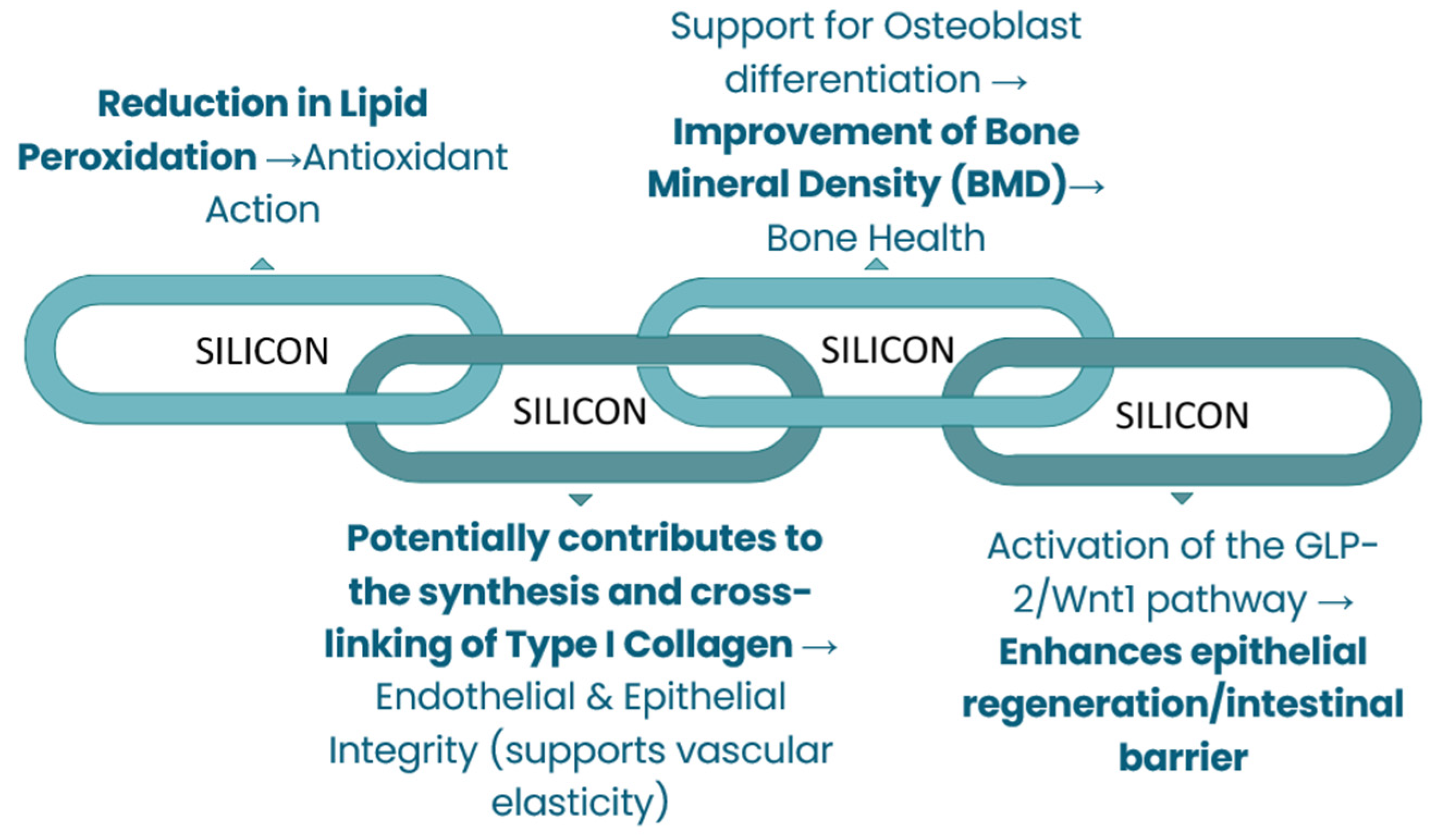
| Silicon (Si) | Bone Health, Collagen Synthesis, Vascular and Epithelial Integrity. | Essential for Type I Collagen synthesis and cross-linking. Supports Osteoblast differentiation. Activation of GLP-2/Wnt1 pathway for intestinal repair. | Moderate: Strongest findings in observational studies on Bone Mineral Density (BMD). Supported by biomarker-oriented interventions. | [7,19,46,49,52] |
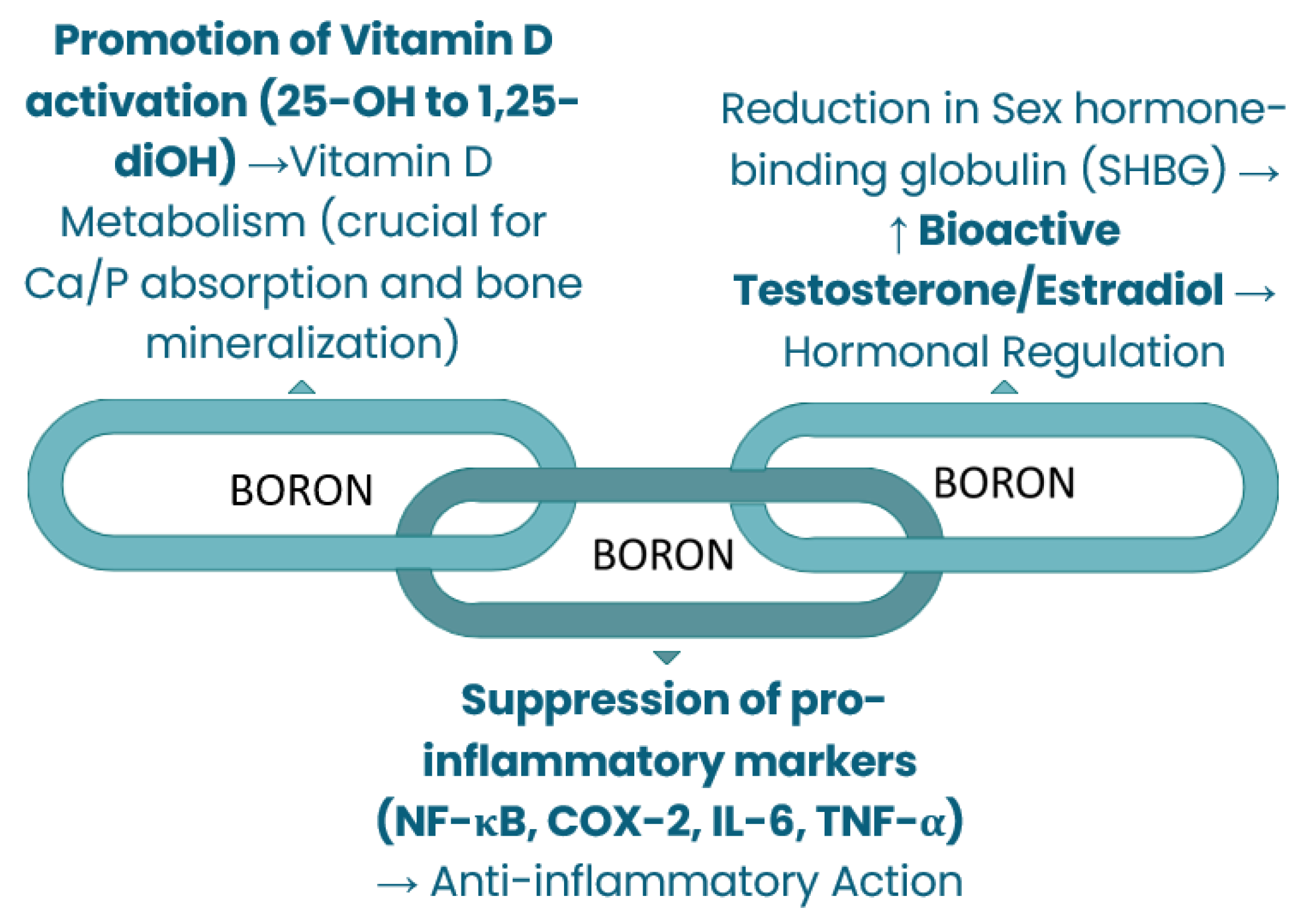
| Boron (B) | Vitamin D Metabolism, Hormonal Regulation, Anti-inflammatory Action, Neuroprotective | Promotes Vitamin D activation Reduces SHBG (Sex Hormone-Binding Globulin). Suppression of NF-kappa B and COX-2 inflammatory markers. Prevention, regulation, or treatment of neurodegeneration and of the onset and progression of Alzheimer’s disease. | Moderate: Supported by controlled trials for inflammation and hormonal metabolism. Suffers from small sample size and heterogeneous endpoints. | [2,4,10,57,59] |
Disclaimer/Publisher’s Note: The statements, opinions and data contained in all publications are solely those of the individual author(s) and contributor(s) and not of MDPI and/or the editor(s). MDPI and/or the editor(s) disclaim responsibility for any injury to people or property resulting from any ideas, methods, instructions or products referred to in the content. |
© 2026 by the authors. Licensee MDPI, Basel, Switzerland. This article is an open access article distributed under the terms and conditions of the Creative Commons Attribution (CC BY) license.
Share and Cite
Melenikioti, E.; Pavlidou, E.; Dakanalis, A.; Giaginis, C.; Papadopoulou, S.K. Dietary Lithium, Silicon, and Boron: An Updated Critical Review of Their Roles in Metabolic Regulation, Neurobiology, Bone Health, and the Gut Microbiome. Nutrients 2026, 18, 386. https://doi.org/10.3390/nu18030386
Melenikioti E, Pavlidou E, Dakanalis A, Giaginis C, Papadopoulou SK. Dietary Lithium, Silicon, and Boron: An Updated Critical Review of Their Roles in Metabolic Regulation, Neurobiology, Bone Health, and the Gut Microbiome. Nutrients. 2026; 18(3):386. https://doi.org/10.3390/nu18030386
Chicago/Turabian StyleMelenikioti, Eleni, Eleni Pavlidou, Antonios Dakanalis, Constantinos Giaginis, and Sousana K. Papadopoulou. 2026. "Dietary Lithium, Silicon, and Boron: An Updated Critical Review of Their Roles in Metabolic Regulation, Neurobiology, Bone Health, and the Gut Microbiome" Nutrients 18, no. 3: 386. https://doi.org/10.3390/nu18030386
APA StyleMelenikioti, E., Pavlidou, E., Dakanalis, A., Giaginis, C., & Papadopoulou, S. K. (2026). Dietary Lithium, Silicon, and Boron: An Updated Critical Review of Their Roles in Metabolic Regulation, Neurobiology, Bone Health, and the Gut Microbiome. Nutrients, 18(3), 386. https://doi.org/10.3390/nu18030386