Safranal-Standardized Saffron Extract Improves Metabolic, Cognitive, and Anxiolytic Outcomes in Aged Mice via Hypothalamic–Amygdalar Peptide Modulation
 , , ,
, , ,  , , and
Abstract
1. Introduction
2. Materials and Methods
2.1. Animals and Ethics Statement
2.2. Pharmacological Treatment with Safranal-Standardized Saffron Extract (SSE) and Monitorization of Safranal Plasma Levels
2.2.1. Absorption of Safranal After Acute Oral Administration of SSE
Measurement of Plasma Levels of Safranal
2.2.2. Study of SSE Efficacy Following Its Chronic Administration
2.3. Behavioral Analyses
2.3.1. Measurement of Food Intake and Body Weight
2.3.2. Open Field Test
2.3.3. Novel Object Recognition Test
- Familiarization phase: 1 h after the habituation, two identical objects were placed in the upper and lower corners of the apparatus (with left–right positions counterbalanced), and mice were again placed in the field and allowed to explore both objects for 10 min.
- Test phase: 90 min after the familiarization phase, mice were returned to the arena, where one of the objects was replaced with a novel object differing in shape and size. Over the next 5 min, the time spent exploring each object was recorded.
2.4. Tissue Sampling and Biochemical Procedures
2.4.1. Sample Collection
2.4.2. Real-Time PCR Analysis of Brain Areas and Liver Samples
Real-Time qPCR and Gene Expression Analysis
2.4.3. Western Blot Analysis
2.5. Statistical Analyses
3. Results
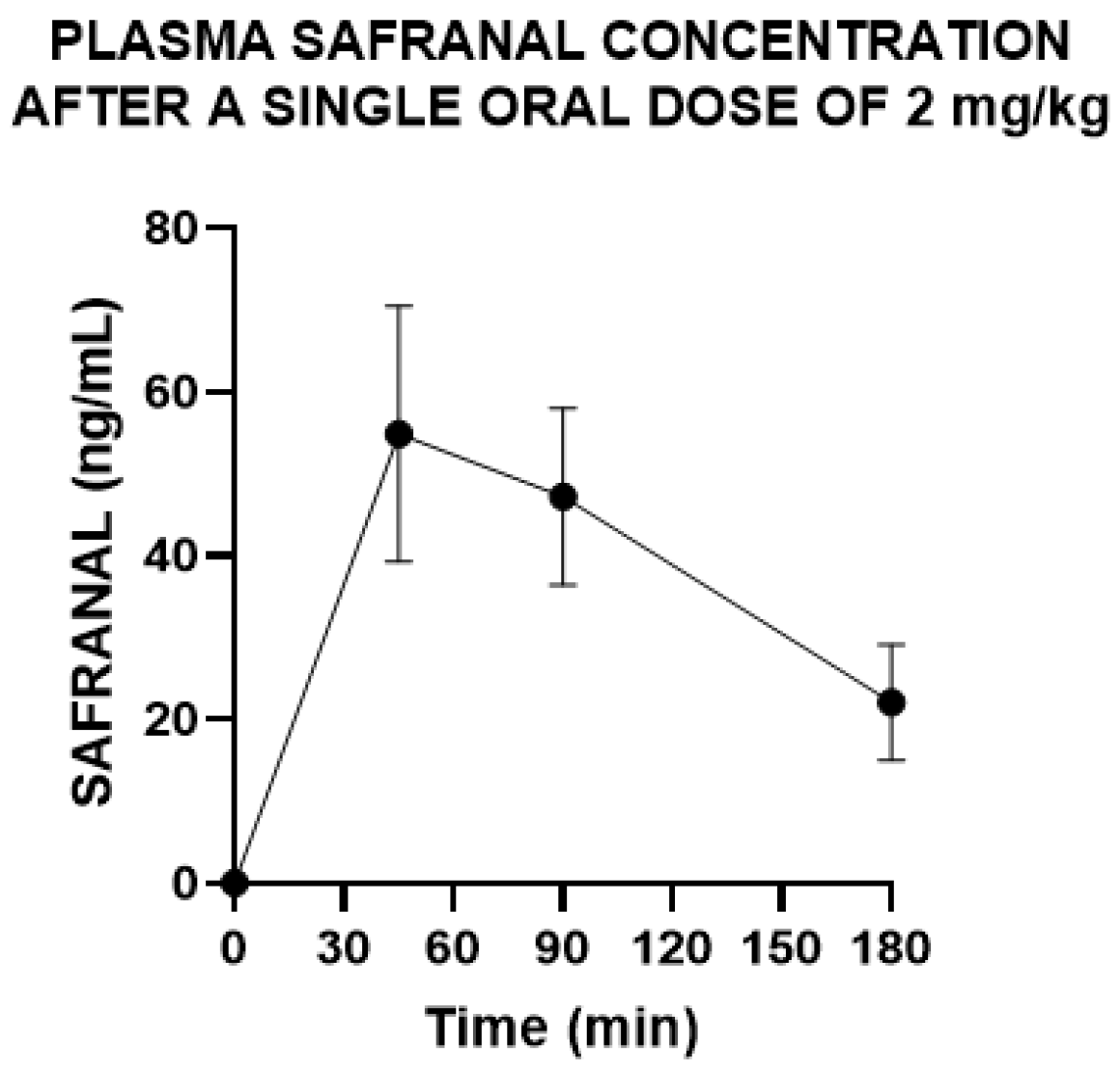
3.1. Time-Course of Plasma Safranal Levels
3.2. Behavioral Actions of SSE
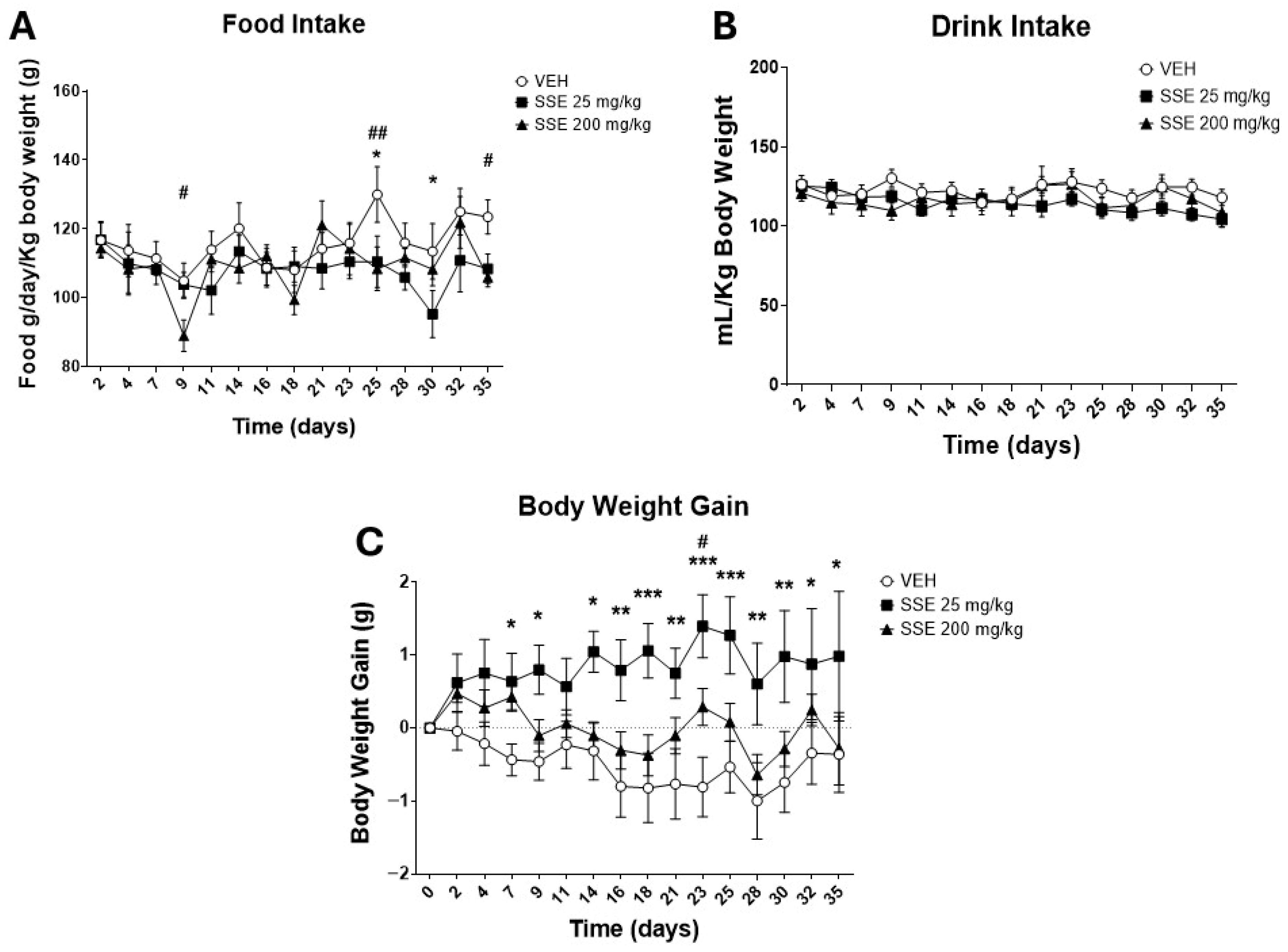
3.2.1. Effects of SSE on Feeding Behavior and Body Weight Gain
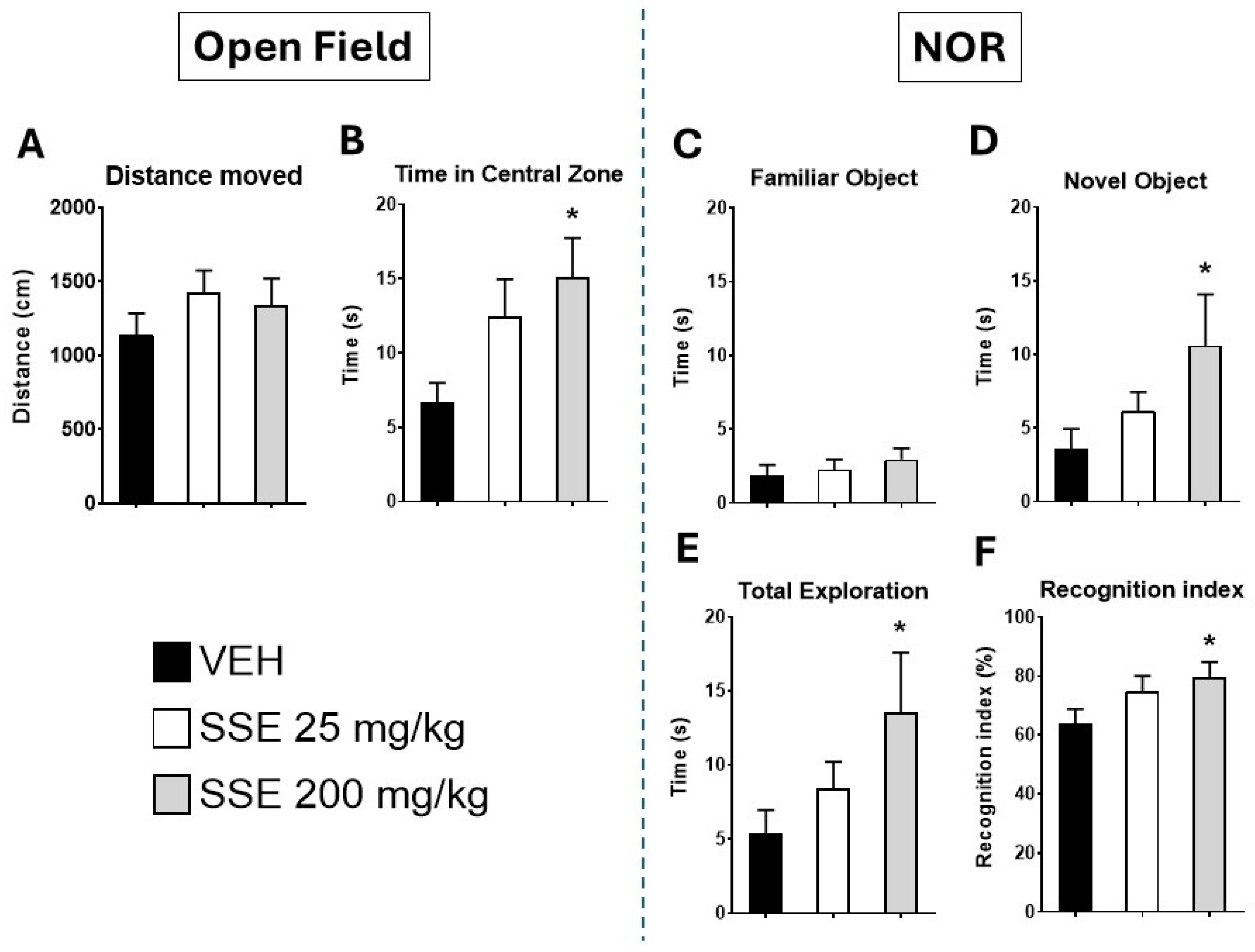
3.2.2. Effects of SSE on Anxiety-like Behaviors in the Open Field
3.2.3. Effects of SSE on the Novel Object Recognition Memory Test
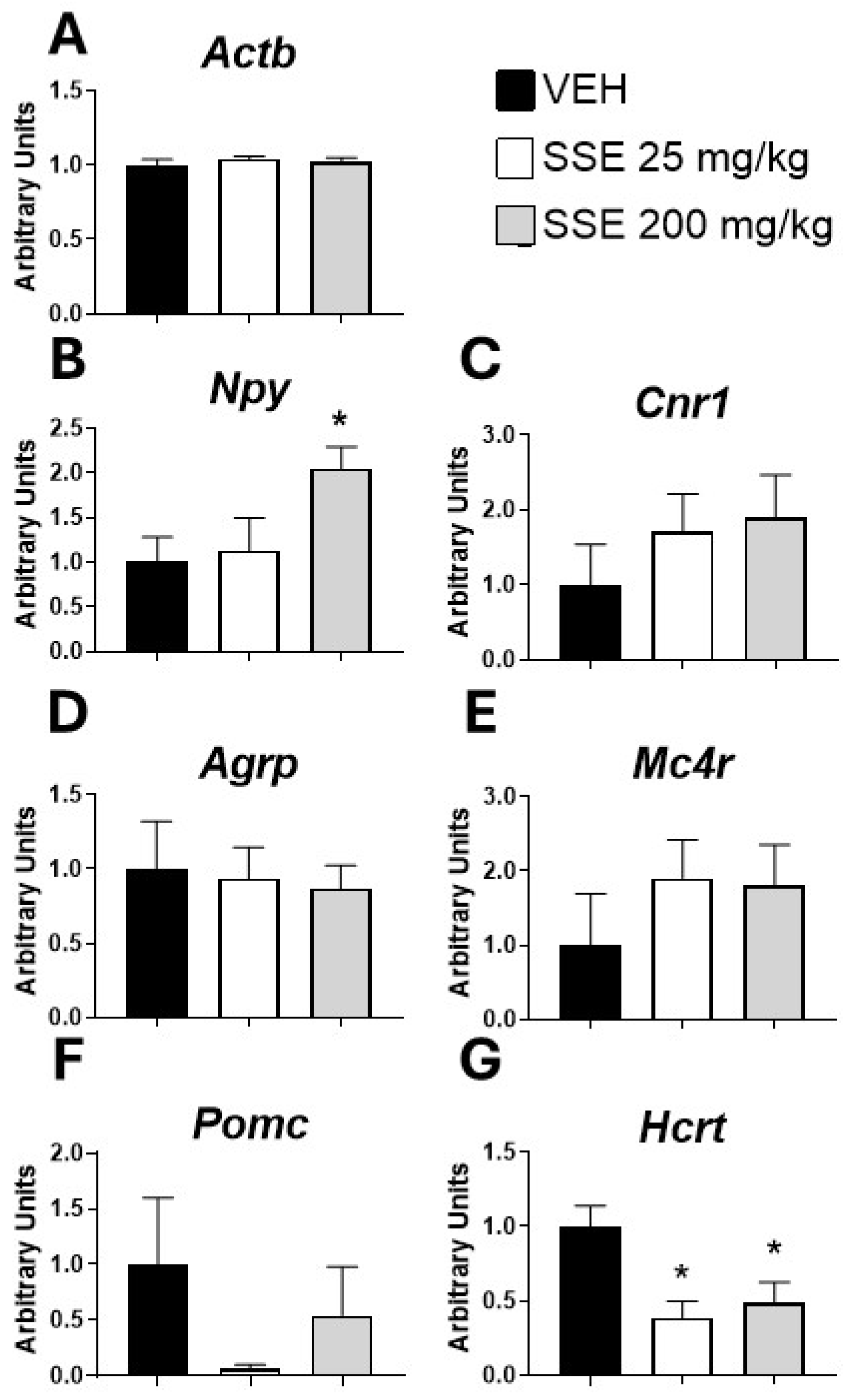
3.3. Hypothalamic Expression of mRNA Gene Coding for Peptides Controlling Feeding After Treatment with SSE
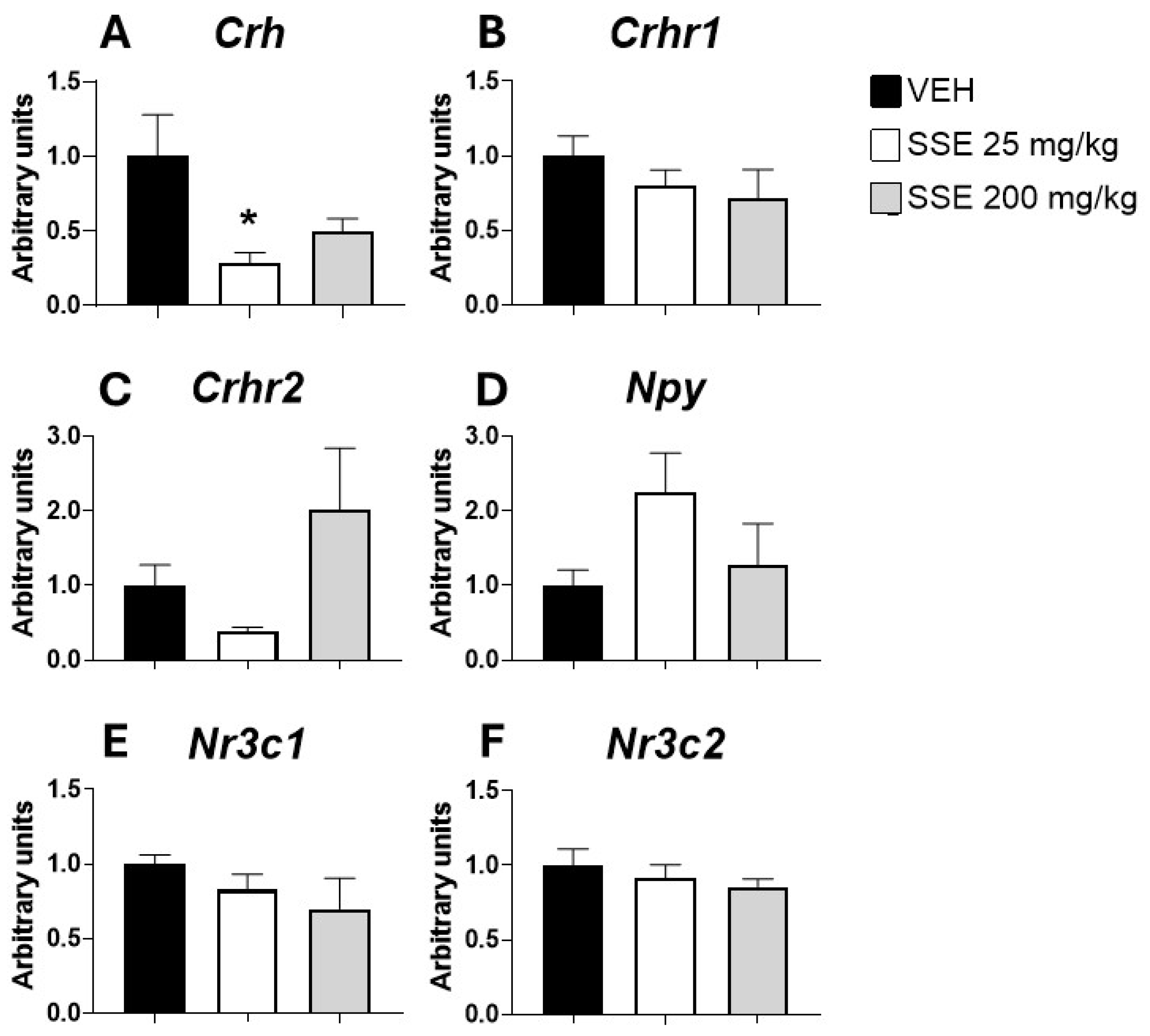
3.4. Expression of mRNA Genes Involved in Emotional Control in the Amygdala of Animals Treated with SSE
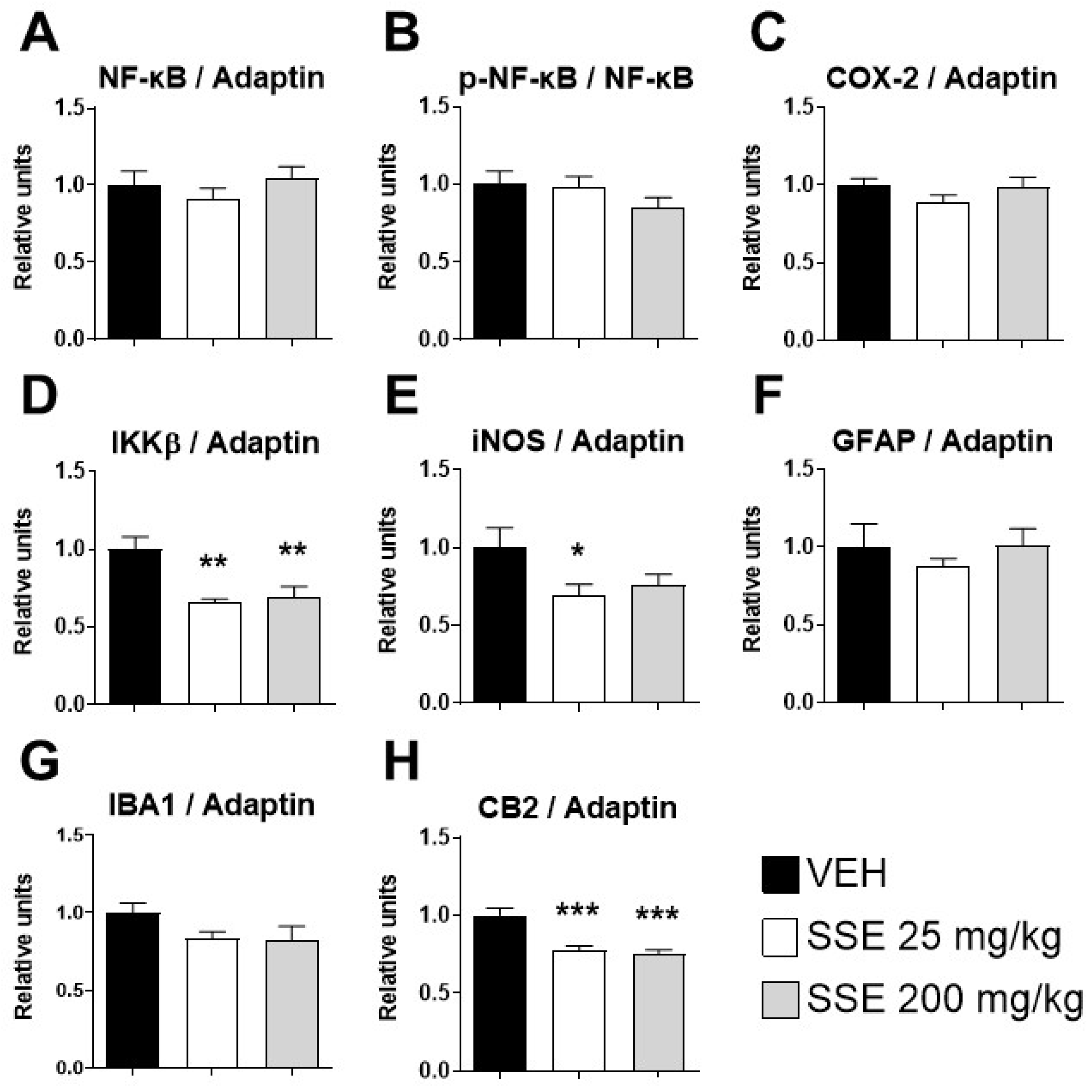
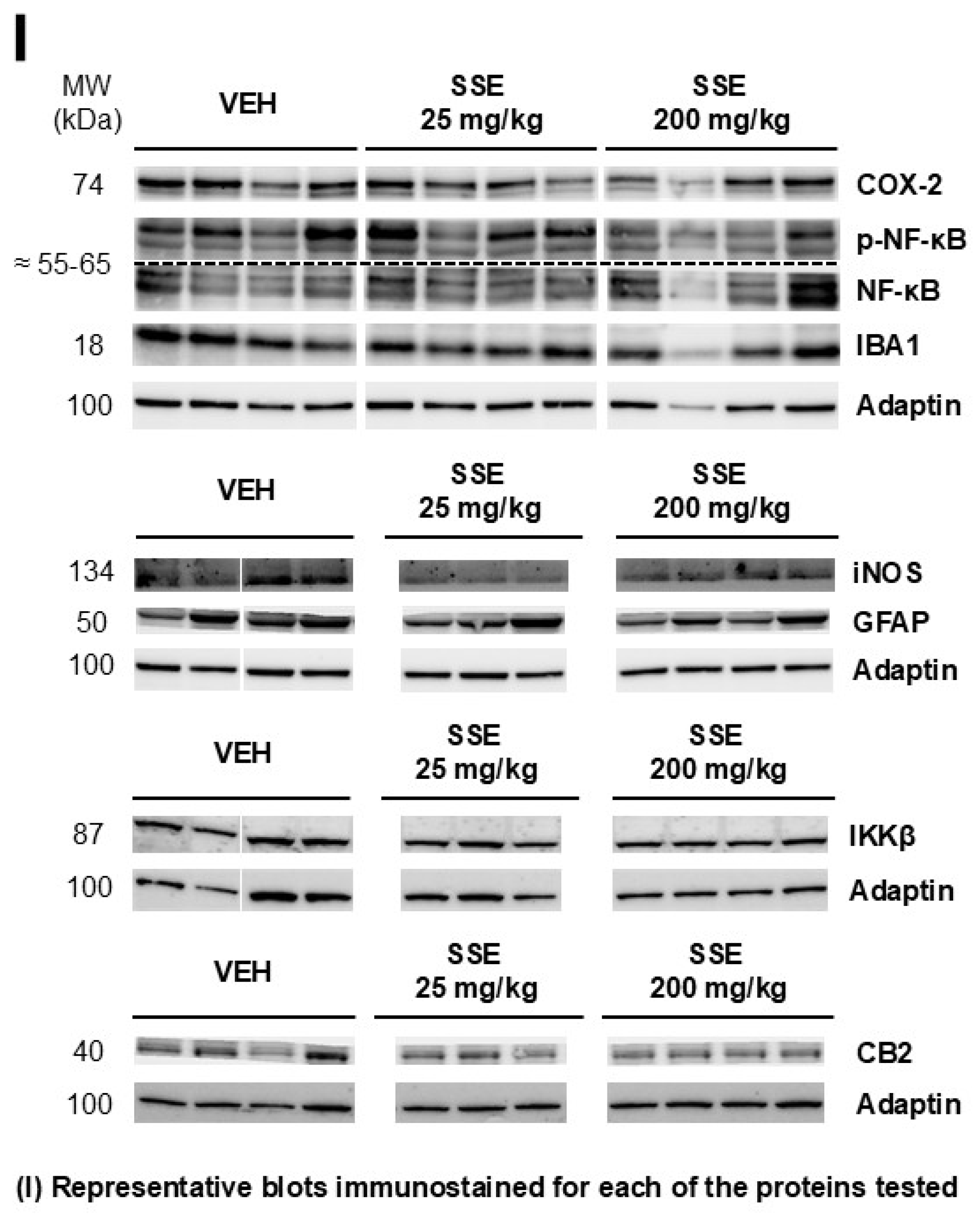
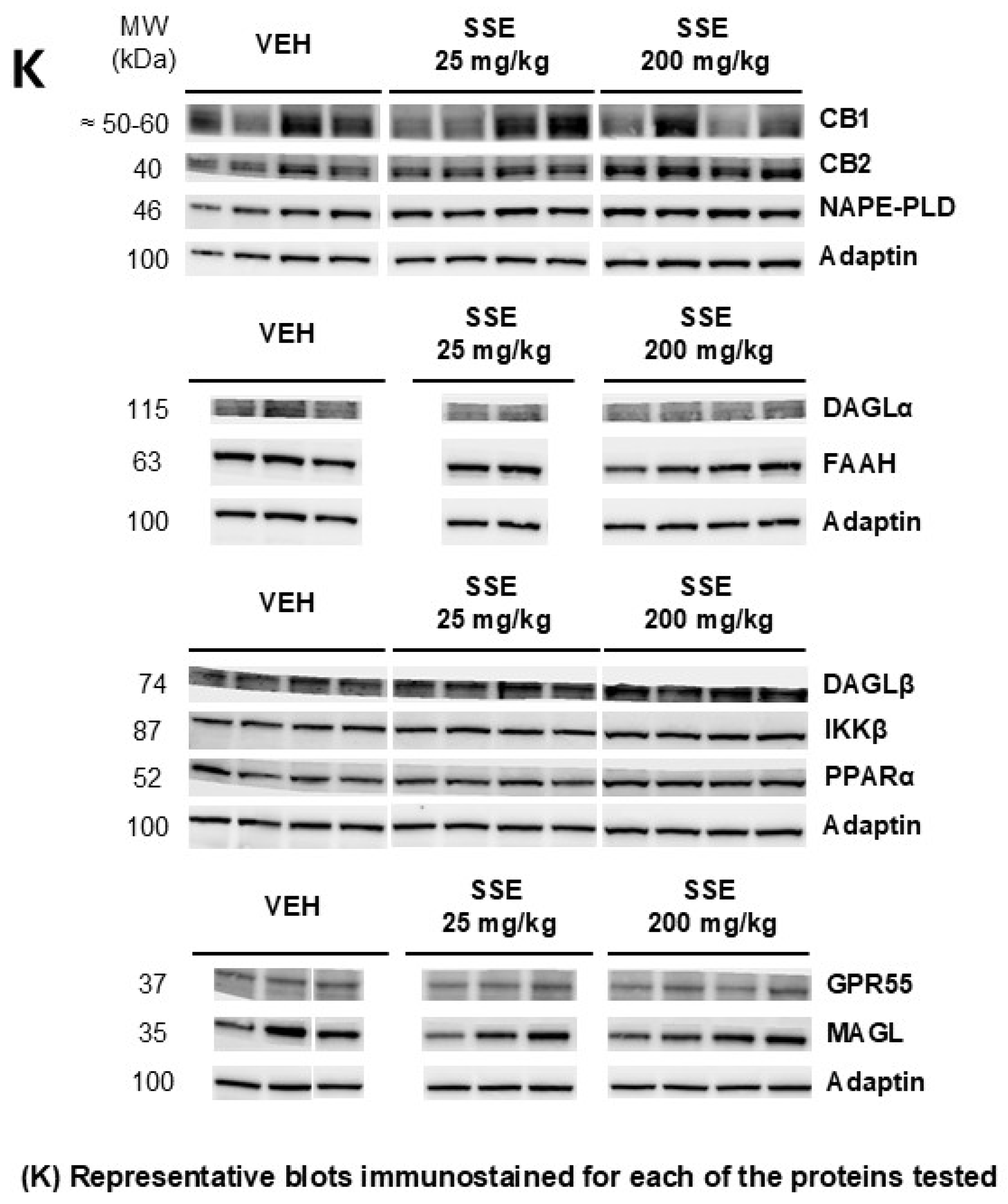
3.5. Expression of Proteins Involved in Neuroinflammation in the Prefrontal Cortex of Aged Mice Treated with SSE
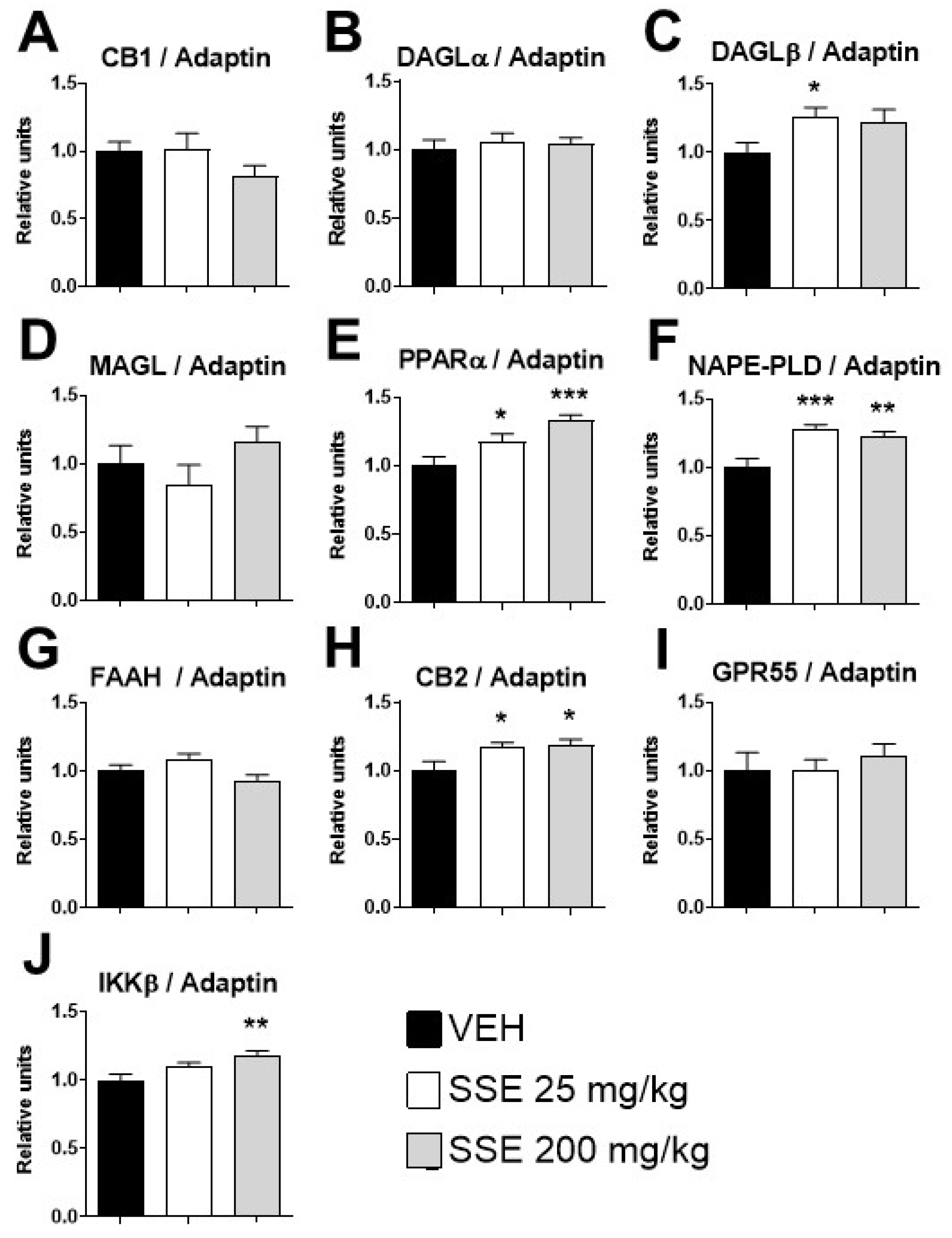
3.6. Expression of mRNA Genes Involved in Memory Processes Control in the Hippocampus of Aged Mice Treated with SSE
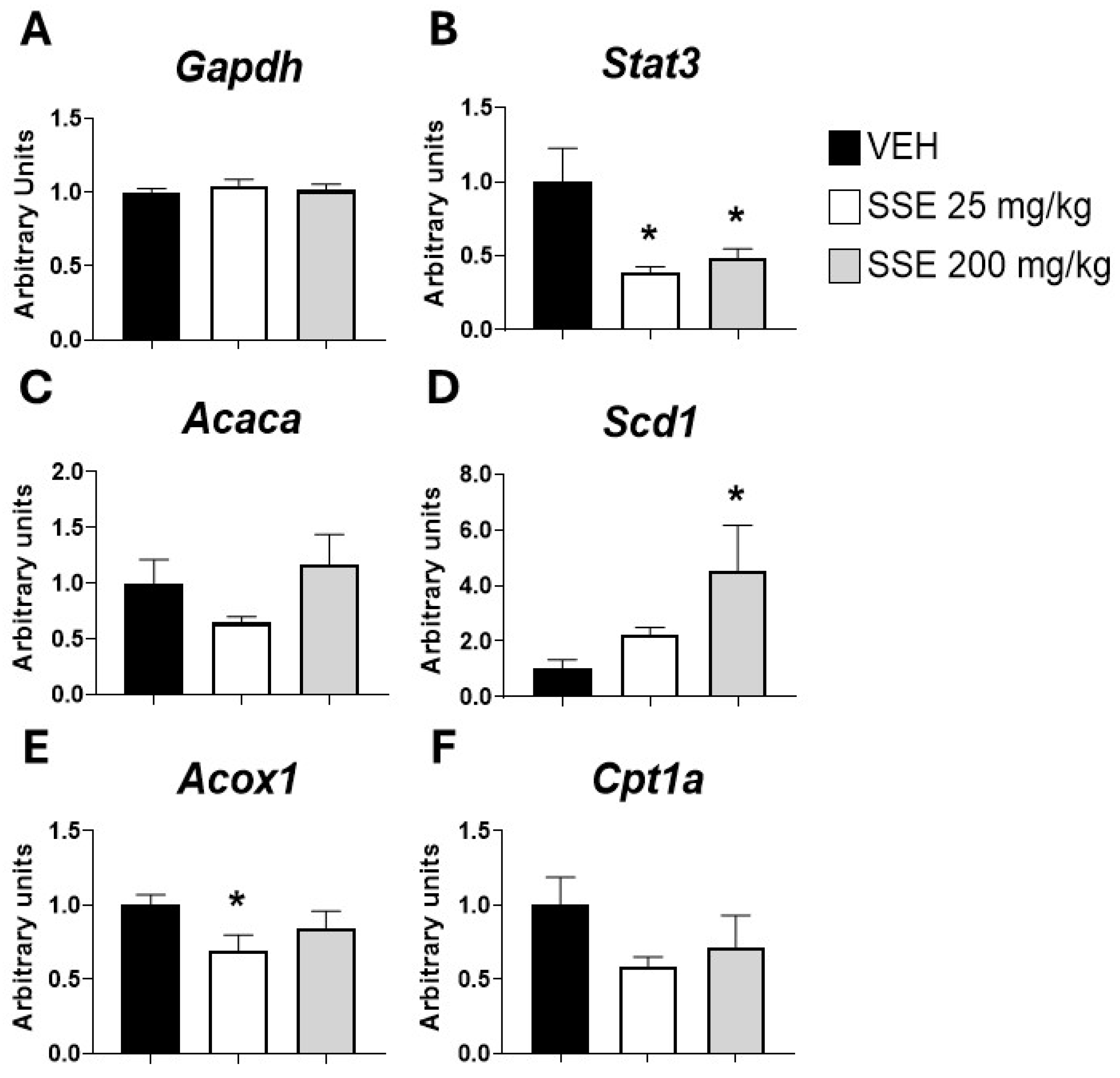
3.7. Expression of mRNA Genes Involved in Lipid Metabolism of Aged Animals Treated with SSE
4. Discussion
5. Conclusions and Limitations
- -
- Low dose (25 mg/kg): Favoring weight gain and mild anti-inflammatory responses (PFC) with selective hippocampal activation of endocannabinoid/paracannabinoid signaling and increased IKKβ.
- -
- High dose (200 mg/kg): Promoting anxiolytic behavior and memory enhancement, linked to endocannabinoid and acylethanolamide–PPARα signaling in the hippocampus, and a decrease in hypothalamic Hcrt expression.
- -
- This study suggests that the use of a standardized saffron extract similar to that presented here can be translated to humans, as the dosage employed falls within the range equivalent to that used in traditional practices and clinical trials in humans.
- -
- Second, we emphasize the importance of focusing on aged populations, in whom improvements in quality of life may be particularly meaningful due to the accumulation of symptoms, such as memory decline, mood alterations, and sleep disturbances. In this context, we also stress the need to include studies in postmenopausal/aged women, given the clear sex-associated increase in these symptoms following estradiol decline.
Supplementary Materials
Author Contributions
Funding
Institutional Review Board Statement
Informed Consent Statement
Data Availability Statement
Acknowledgments
Conflicts of Interest
References
- Ristori, S.; Bertoni, G.; Bientinesi, E.; Monti, D. The Role of Nutraceuticals and Functional Foods in Mitigating Cellular Senescence and Its Related Aspects: A Key Strategy for Delaying or Preventing Aging and Neurodegenerative Disorders. Nutrients 2025, 17, 1837. [Google Scholar] [CrossRef]
- Salama, R.M.; Eissa, N.; Doghish, A.S.; Abulsoud, A.I.; Abdelmaksoud, N.M.; Mohammed, O.A.; Abdel Mageed, S.S.; Darwish, S.F. Decoding the secrets of longevity: Unraveling nutraceutical and miRNA-Mediated aging pathways and therapeutic strategies. Front. Aging 2024, 5, 1373741. [Google Scholar] [CrossRef]
- Cailleaux, P.E.; Déchelotte, P.; Coëffier, M. Novel dietary strategies to manage sarcopenia. Curr. Opin. Clin. Nutr. Metab. Care 2024, 27, 234–243. [Google Scholar] [CrossRef]
- Starvaggi, J.; Di Chio, C.; De Luca, F.; Previti, S.; Zappalà, M.; Ettari, R. The Role of Nutraceuticals in Age-Related Ocular Diseases. Molecules 2025, 30, 3592. [Google Scholar] [CrossRef]
- Moshiri, M.; Vahabzadeh, M.; Hosseinzadeh, H. Clinical Applications of Saffron (Crocus sativus) and Its Constituents: A Review. Drug Res. 2015, 65, 287–295. [Google Scholar] [CrossRef]
- Schmidt, M.; Betti, G.; Hensel, A. Saffron in phytotherapy: Pharmacology and clinical uses. Wien. Med. Wochenschr. 2007, 157, 315–319. [Google Scholar] [CrossRef]
- Hosseini, A.; Razavi, B.M.; Hosseinzadeh, H. Pharmacokinetic Properties of Saffron and its Active Components. Eur. J. Drug Metab. Pharmacokinet. 2018, 43, 383–390. [Google Scholar] [CrossRef]
- Song, Y.N.; Wang, Y.; Zheng, Y.H.; Liu, T.L.; Zhang, C. Crocins: A comprehensive review of structural characteristics, pharmacokinetics and therapeutic effects. Fitoterapia 2021, 153, 104969. [Google Scholar] [CrossRef]
- Boozari, M.; Hosseinzadeh, H. Crocin molecular signaling pathways at a glance: A comprehensive review. Phytother. Res. 2022, 36, 3859–3884. [Google Scholar] [CrossRef]
- Cerdá-Bernad, D.; Valero-Cases, E.; Pastor, J.J.; Frutos, M.J. Saffron bioactives crocin, crocetin and safranal: Effect on oxidative stress and mechanisms of action. Crit. Rev. Food Sci. Nutr. 2022, 62, 3232–3249. [Google Scholar] [CrossRef]
- Abdian, S.; Fakhri, S.; Moradi, S.Z.; Khirehgesh, M.R.; Echeverría, J. Saffron and its major constituents against neurodegenerative diseases: A mechanistic review. Phytomedicine 2024, 135, 156097. [Google Scholar] [CrossRef]
- Hosseinzadeh, H.; Sadeghnia, H.R. Protective effect of safranal on pentylenetetrazol-induced seizures in the rat: Involvement of GABAergic and opioids systems. Phytomedicine 2007, 14, 256–262. [Google Scholar] [CrossRef]
- Amin, F.; Ibrahim, M.A.A.; Rizwan-Ul-Hasan, S.; Khaliq, S.; Gabr, G.A.; Muhammad; Khan, A.; Sidhom, P.A.; Tikmani, P.; Shawky, A.M.; et al. Interactions of Apigenin and Safranal with the 5HT1A and 5HT2A Receptors and Behavioral Effects in Depression and Anxiety: A Molecular Docking, Lipid-Mediated Molecular Dynamics, and In Vivo Analysis. Molecules 2022, 27, 8658. [Google Scholar] [CrossRef]
- Siddiqui, S.A.; Ali Redha, A.; Snoeck, E.R.; Singh, S.; Simal-Gandara, J.; Ibrahim, S.A.; Jafari, S.M. Anti-Depressant Properties of Crocin Molecules in Saffron. Molecules 2022, 27, 2076. [Google Scholar] [CrossRef]
- Kim, C.Y.; Ko, K.; Choi, S.H.; Jo, M.; Kim, J.; Yoon, S.; Yi, I.J.; Morán-Valero, M.I.; Kwon, M.Y.; Sohn, J.; et al. Effects of Saffron Extract (Affron) with 100 mg/kg and 200 mg/kg on Hypothalamic-Pituitary-Adrenal Axis and Stress Resilience in Chronic Mild Stress-Induced Depression in Wistar Rats. Nutrients 2023, 15, 4855. [Google Scholar] [CrossRef]
- Thorsell, A. Brain neuropeptide Y and corticotropin-releasing hormone in mediating stress and anxiety. Exp. Biol. Med. 2010, 235, 1163–1167. [Google Scholar] [CrossRef]
- Rana, T.; Behl, T.; Sehgal, A.; Singh, S.; Sharma, N.; Abdeen, A.; Ibrahim, S.F.; Mani, V.; Iqbal, M.S.; Bhatia, S.; et al. Exploring the role of neuropeptides in depression and anxiety. Prog. Neuropsychopharmacol. Biol. Psychiatry 2022, 114, 110478. [Google Scholar] [CrossRef]
- Lopresti, A.L.; Drummond, P.D. Saffron (Crocus sativus) for depression: A systematic review of clinical studies and examination of underlying antidepressant mechanisms of action. Hum. Psychopharmacol. 2014, 29, 517–527. [Google Scholar] [CrossRef]
- Cerdá-Bernad, D.; Costa, L.; Serra, A.T.; Bronze, M.R.; Valero-Cases, E.; Pérez-Llamas, F.; Candela, M.E.; Arnao, M.B.; Barberán, F.T.; Villalba, R.G.; et al. Saffron against Neuro-Cognitive Disorders: An Overview of Its Main Bioactive Compounds, Their Metabolic Fate and Potential Mechanisms of Neurological Protection. Nutrients 2022, 14, 5368. [Google Scholar] [CrossRef]
- Ayati, Z.; Yang, G.; Ayati, M.H.; Emami, S.A.; Chang, D. Saffron for mild cognitive impairment and dementia: A systematic review and meta-analysis of randomised clinical trials. BMC Complement. Med. Ther. 2020, 20, 333. [Google Scholar] [CrossRef]
- Husaini, A.M.; Ul Haq, S.A.; Jiménez, A.J.L.; Hussain, A.; Mir, R.A.; Rather, A.G.; Mir, J.I. The menace of saffron adulteration: Low-cost rapid identification of fake look-alike saffron using Foldscope and machine learning technology. Front. Plant Sci. 2022, 13, 945291. [Google Scholar] [CrossRef]
- Mehdizadeh, M. Combating saffron fraud: A systematic review of adulteration practices, detection technologies, recommendations and challenges. Syst. Rev. 2025, 4, 15. Available online: https://pubmed.ncbi.nlm.nih.gov/40792566/ (accessed on 9 September 2025). [CrossRef]
- Filatova, M.; Hajslová, J.; Stupák, M. Detection of saffron adulteration by other plant species using HS-SPME-GC-HRMS. Eur. Food Res. Technol. 2024, 250, 911–922. [Google Scholar] [CrossRef]
- Zalacain, A.; Ordoudi, S.A.; Díaz-Plaza, E.M.; Carmona, M.; Blázquez, I.; Tsimidou, M.Z.; Alonso, G.L. Near-infrared spectroscopy in saffron quality control: Determination of chemical composition and geographical origin. J. Agric. Food Chem. 2005, 53, 9337–9341. [Google Scholar] [CrossRef]
- Kehtari, T.; Tovar, D.C.; Epstein, D.; Junquera, P. From Mood to Memory: Unlocking Saffron’s Potential in Brain Health. Cureus 2025, 17, e82924. [Google Scholar] [CrossRef]
- Kilkenny, C.; Browne, W.J.; Cuthill, I.C.; Emerson, M.; Altman, D.G. Improving Bioscience Research Reporting: The Arrive Guidelines for Reporting Animal Research. PLoS Biol. 2010, 8, e1000412. [Google Scholar] [CrossRef]
- Nair, A.B.; Jacob, S. A simple practice guide for dose conversion between animals and human. J. Basic Clin. Pharm. 2016, 7, 27–31. [Google Scholar] [CrossRef]
- Hosseinzadeh, H.; Sadeghi Shakib, S.; Khadem Sameni, A.; Taghiabadi, E. Acute and subacute toxicity of safranal, a constituent of saffron, in mice and rats. Iran. J. Pharm. Res. 2013, 12, 93–99. [Google Scholar] [CrossRef]
- Santin, L.J.; Bilbao, A.; Pedraza, C.; Matas-Rico, E.; López-Barroso, D.; Castilla-Ortega, E.; Sánchez-López, J.; Riquelme, R.; Varela-Nieto, I.; de la Villa, P.; et al. Behavioral phenotype of maLPA1-null mice: Increased anxiety-like behavior and spatial memory deficits. Genes. Brain Behav. 2009, 8, 772–784. [Google Scholar] [CrossRef]
- Franklin, K.B.J.; Paxinos, G. Paxinos and Franklin’s The Mouse Brain in Stereotaxic Coordinates, 5th ed.; Academic Press: Amsterdam, The Netherlands, 2019. [Google Scholar]
- López-Gambero, A.J.; Pacheco-Sánchez, B.; Rosell-Valle, C.; Medina-Vera, D.; Navarro, J.A.; Fernández-Arjona, M.d.M.; de Ceglia, M.; Sanjuan, C.; Simon, V.; Cota, D.; et al. Dietary Administration of D-Chiro-Inositol Attenuates Sex-Specific Metabolic Imbalances in the 5xFAD Mouse Model of Alzheimer’s Disease. Biomed. Pharmacother. 2022, 150, 112994. [Google Scholar] [CrossRef]
- Medina-Vera, D.; Navarro, J.A.; Rivera, P.; Rosell-Valle, C.; Gutiérrez-Adán, A.; Sanjuan, C.; López-Gambero, A.J.; Tovar, R.; Suárez, J.; Pavón, F.J.; et al. D-Pinitol Promotes Tau Dephosphorylation through a Cyclin-Dependent Kinase 5 Regulation Mechanism: A New Potential Approach for Tauopathies? Br. J. Pharmacol. 2022, 179, 4655–4672. [Google Scholar] [CrossRef] [PubMed]
- Sun, J.; Chen, Q.; Zhuang, C.; Li, X.; Yu, L.; Jin, W. Mechanistic insights into synergistic effects using coupled PK-PD modeling. Sci. Rep. 2025, 15, 15631. [Google Scholar] [CrossRef] [PubMed]
- Liu, H.; Chen, Y.F.; Li, F.; Zhang, H.Y. Fructus Gardenia (Gardenia jasminoides, J. Ellis) phytochemistry, pharmacology of cardiovascular, and safety with the perspective of new drugs development. J. Asian Nat. Prod. Res. 2013, 15, 94–110. [Google Scholar] [CrossRef] [PubMed]
- Almodóvar, P.; Briskey, D.; Rao, A.; Prodanov, M.; Inarejos-García, A.M. Bioaccessibility and Pharmacokinetics of a Commercial Saffron (Crocus sativus, L.) Extract. Evid.-Based Complement. Altern. Med. 2020, 2020, 1575730. [Google Scholar] [CrossRef]
- Sakurai, T. Orexin: A link between energy homeostasis and adaptive behaviour. Curr. Opin. Clin. Nutr. Metab. Care 2003, 6, 353–360. [Google Scholar] [CrossRef]
- Spinazzi, R.; Andreis, P.G.; Rossi, G.P.; Nussdorfer, G.G. Orexins in the regulation of the hypothalamic-pituitary-adrenal axis. Pharmacol. Rev. 2006, 58, 46–57. [Google Scholar] [CrossRef]
- Halataei, B.A.; Khosravi, M.; Arbabian, S.; Sahraei, H.; Golmanesh, L.; Zardooz, H.; Jalili, C.; Ghoshooni, H. Saffron (Crocus sativus) aqueous extract and its constituent crocin reduces stress-induced anorexia in mice. Phytother. Res. 2011, 25, 1833–1838. [Google Scholar] [CrossRef]
- Mashmoul, M.; Azlan, A.; Mohtarrudin, N.; Mohd Yusof, B.N.; Khaza’ai, H.; Khoo, H.E.; Farzadnia, M.; Boroushaki, M.T. Protective effects of saffron extract and crocin supplementation on fatty liver tissue of high-fat diet-induced obese rats. BMC Complement. Altern. Med. 2016, 16, 401. [Google Scholar] [CrossRef]
- Kalra, S.P.; Kalra, P.S. Neuropeptide Y: A physiological orexigen modulated by the feedback action of ghrelin and leptin. Endocrine 2003, 22, 49–56. [Google Scholar] [CrossRef]
- Heilig, M. The NPY system in stress, anxiety and depression. Neuropeptides 2004, 38, 213–224. [Google Scholar] [CrossRef]
- Wang, Y.; Fu, S.; Mao, J.; Cui, K.; Jiang, H. Hypocretin: A promising target for the regulation of homeostasis. Front. Neurosci. 2025, 19, 1638270. [Google Scholar] [CrossRef] [PubMed]
- Johnson, P.L.; Molosh, A.; Fitz, S.D.; Truitt, W.A.; Shekhar, A. Orexin, stress, and anxiety/panic states. Prog. Brain Res. 2012, 198, 133–161. [Google Scholar] [CrossRef]
- Bale, T.L.; Vale, W.W. CRF and CRF receptors: Role in stress responsivity and other behaviors. Annu. Rev. Pharmacol. Toxicol. 2004, 44, 525–557. [Google Scholar] [CrossRef] [PubMed]
- Michopoulos, V.; Powers, A.; Gillespie, C.F.; Ressler, K.J.; Jovanovic, T. Inflammation in Fear- and Anxiety-Based Disorders: PTSD, GAD, and Beyond. Neuropsychopharmacology 2017, 42, 254–270. [Google Scholar] [CrossRef]
- Yirmiya, R.; Goshen, I. Immune modulation of learning, memory, neural plasticity and neurogenesis. Brain Behav. Immun. 2011, 25, 181–213. [Google Scholar] [CrossRef]
- Liang, J.; Chen, L.; Li, Y.; Chen, Y.; Yuan, L.; Qiu, Y.; Ma, S.; Fan, F.; Cheng, Y. Unraveling the Prefrontal Cortex-Basolateral Amygdala Pathway’s Role on Schizophrenia’s Cognitive Impairments: A Multimodal Study in Patients and Mouse Models. Schizophr. Bull. 2024, 50, 913–923. [Google Scholar] [CrossRef]
- Luo, F.; Liu, L.; Guo, M.; Liang, J.; Chen, L.; Shi, X.; Liu, H.; Cheng, Y.; Du, Y. Deciphering and Targeting the ESR2-miR-10a-5p-BDNF Axis in the Prefrontal Cortex: Advancing Postpartum Depression Understanding and Therapeutics. Research 2024, 7, 0537. [Google Scholar] [CrossRef]
- Kyrargyri, V.; Vega-Flores, G.; Gruart, A.; Delgado-García, J.M.; Probert, L. Differential contributions of microglial and neuronal IKKβ to synaptic plasticity and associative learning in alert behaving mice. Glia 2015, 63, 549–566. [Google Scholar] [CrossRef]
- Sun, L.; Dong, R.; Xu, X.; Yang, X.; Peng, M. Activation of cannabinoid receptor type 2 attenuates surgery-induced cognitive impairment in mice through anti-inflammatory activity. J. Neuroinflamm. 2017, 14, 138. [Google Scholar] [CrossRef]
- Aso, E.; Juvés, S.; Maldonado, R.; Ferrer, I. CB2 cannabinoid receptor agonist ameliorates Alzheimer-like phenotype in AβPP/PS1 mice. J. Alzheimers Dis. 2013, 35, 847–858. [Google Scholar] [CrossRef]
- Campolongo, P.; Roozendaal, B.; Trezza, V.; Cuomo, V.; Astarita, G.; Fu, J.; McGaugh, J.L.; Piomelli, D. Fat-induced satiety factor oleoylethanolamide enhances memory consolidation. Proc. Natl. Acad. Sci. USA 2009, 106, 8027–8031. [Google Scholar] [CrossRef]
- Quirk, G.J.; Mueller, D. Neural mechanisms of extinction learning and retrieval. Neuropsychopharmacology 2008, 33, 56–72. [Google Scholar] [CrossRef]
- Likhtik, E.; Stujenske, J.M.; Topiwala, M.A.; Harris, A.Z.; Gordon, J.A. Prefrontal entrainment of amygdala activity signals safety in learned fear and innate anxiety. Nat. Neurosci. 2014, 17, 106–113. [Google Scholar] [CrossRef] [PubMed]
- Weiser, M.J.; Foradori, C.D.; Handa, R.J. Estrogen receptor beta in the brain: From form to function. Brain Res. Rev. 2008, 57, 309–320. [Google Scholar] [CrossRef] [PubMed]
- Scharfman, H.E.; MacLusky, N.J. Estrogen-growth factor interactions and their contributions to neurological disorders. Headache 2008, 48, S77–S89. [Google Scholar] [CrossRef] [PubMed]
- Almeida, O.P.; Lautenschlager, N.; Vasikaram, S.; Leedman, P.; Flicker, L. Association between physiological serum concentration of estrogen and the mental health of community-dwelling postmenopausal women age 70 years and over. Am. J. Geriatr. Psychiatry 2005, 13, 142–149. [Google Scholar] [CrossRef]
- Orwoll, E.; Lambert, L.C.; Marshall, L.M.; Phipps, K.; Blank, J.; Barrett-Connor, E.; Cauley, J.; Ensrud, K.; Cummings, S. Testosterone and estradiol among older men. J. Clin. Endocrinol. Metab. 2006, 91, 1336–1344. [Google Scholar] [CrossRef]
- Ogrodnik, M.; Miwa, S.; Tchkonia, T.; Tiniakos, D.; Wilson, C.L.; Lahat, A.; Day, C.P.; Burt, A.; Palmer, A.; Anstee, Q.M.; et al. Cellular senescence drives age-dependent hepatic steatosis. Nat. Commun. 2017, 8, 15691. [Google Scholar] [CrossRef]
- Kinoshita, S.; Ogawa, W.; Okamoto, Y.; Takashima, M.; Inoue, H.; Matsuki, Y.; Watanabe, E.; Hiramatsu, R.; Kasuga, M. Role of hepatic STAT3 in the regulation of lipid metabolism. Kobe J. Med. Sci. 2008, 54, E200–E208. [Google Scholar]
- Flowers, M.T.; Ntambi, J.M. Role of stearoyl-coenzyme A desaturase in regulating lipid metabolism. Curr. Opin. Lipidol. 2008, 19, 248–256. [Google Scholar] [CrossRef]
- Dobrzyn, A.; Ntambi, J.M. The role of stearoyl-CoA desaturase in the control of metabolism. Prostaglandins Leukot. Essent. Fat. Acids 2005, 73, 35–41. [Google Scholar] [CrossRef]



Disclaimer/Publisher’s Note: The statements, opinions and data contained in all publications are solely those of the individual author(s) and contributor(s) and not of MDPI and/or the editor(s). MDPI and/or the editor(s) disclaim responsibility for any injury to people or property resulting from any ideas, methods, instructions or products referred to in the content. |
© 2026 by the authors. Licensee MDPI, Basel, Switzerland. This article is an open access article distributed under the terms and conditions of the Creative Commons Attribution (CC BY) license.
Share and Cite
Navarro, J.A.; Gavito, A.; Rivas, S.; Rodríguez-Martín, A.; Baixeras, E.; Decara, J.; Serrano-Castro, P.J.; Alfonso, Y.; Sanjuan, C.; Serrano, A.; et al. Safranal-Standardized Saffron Extract Improves Metabolic, Cognitive, and Anxiolytic Outcomes in Aged Mice via Hypothalamic–Amygdalar Peptide Modulation. Nutrients 2026, 18, 291. https://doi.org/10.3390/nu18020291
Navarro JA, Gavito A, Rivas S, Rodríguez-Martín A, Baixeras E, Decara J, Serrano-Castro PJ, Alfonso Y, Sanjuan C, Serrano A, et al. Safranal-Standardized Saffron Extract Improves Metabolic, Cognitive, and Anxiolytic Outcomes in Aged Mice via Hypothalamic–Amygdalar Peptide Modulation. Nutrients. 2026; 18(2):291. https://doi.org/10.3390/nu18020291
Chicago/Turabian StyleNavarro, Juan A., Ana Gavito, Sonia Rivas, Alonso Rodríguez-Martín, Elena Baixeras, Juan Decara, Pedro J. Serrano-Castro, Yolanda Alfonso, Carlos Sanjuan, Antonia Serrano, and et al. 2026. "Safranal-Standardized Saffron Extract Improves Metabolic, Cognitive, and Anxiolytic Outcomes in Aged Mice via Hypothalamic–Amygdalar Peptide Modulation" Nutrients 18, no. 2: 291. https://doi.org/10.3390/nu18020291
APA StyleNavarro, J. A., Gavito, A., Rivas, S., Rodríguez-Martín, A., Baixeras, E., Decara, J., Serrano-Castro, P. J., Alfonso, Y., Sanjuan, C., Serrano, A., & Rodríguez de Fonseca, F. (2026). Safranal-Standardized Saffron Extract Improves Metabolic, Cognitive, and Anxiolytic Outcomes in Aged Mice via Hypothalamic–Amygdalar Peptide Modulation. Nutrients, 18(2), 291. https://doi.org/10.3390/nu18020291