Review

Understanding Obesity as a Multisystem Disease: Advancing Research, Redefining Diagnostic Criteria, and Establishing Modern Therapeutic Approaches

by
Hala Abdallah
1,†,
Mohamad Khalil
1,*,†,
Laura Mahdi
1,
Gianni Pietragalla
1,
Maria Felicia Faienza
2,
Gabriella Garruti
3 and
Piero Portincasa
1,*
1
Internal Medicine Clinica Medica “A. Murri”, Department of Precision and Regenerative Medicine and Ionian Area (DiMePRe-J), University of Bari ‘Aldo Moro’, 70121 Bari, Italy
2
Pediatric Unit, Department of Precision and Regenerative Medicine and Ionian Area (DiMePRe-J), University of Bari ‘Aldo Moro’, 70121 Bari, Italy
3
Section of Internal Medicine, Endocrinology, Andrology and Metabolic Diseases, Department of Precision and Regenerative Medicine and Ionian Area (DiMePRe-J), University of Bari ‘Aldo Moro’, 70121 Bari, Italy
*
Authors to whom correspondence should be addressed.
These authors contributed equally to this work.
Nutrients 2026, 18(14), 2317; https://doi.org/10.3390/nu18142317
Submission received: 10 June 2026 / Revised: 11 July 2026 / Accepted: 13 July 2026 / Published: 15 July 2026

Abstract

Obesity is a complex, chronic, relapsing disease that affects nearly all physiological functions and homeostatic mechanisms, extending far beyond mere excess adiposity. Traditional clinical practice often relies on uniform interventions that fail to account for diverse patient phenotypes. This review synthesizes current evidence on personalized obesity management, dietary interventions, and advanced pharmacotherapies aligned with the new 2025 Lancet Commission framework. A comprehensive narrative review was conducted across major biomedical databases to evaluate the efficacy, safety, and mechanisms of metabolic interventions, focusing on phenotype-specific dietary matching, bioactive compounds, and modern multi-receptor glucagon-like peptide-1 (GLP-1)-based therapies across preclinical and clinical intervention tiers in adult and pediatric populations. While specific nutraceutical extracts display promising secondary metabolic benefits, their overall weight-loss efficacy remains modest due to variable clinical data and limited sample sizes. Conversely, high-potency anti-obesity medications demonstrate unprecedented weight-reduction efficacy, with semaglutide 2.4 mg and tirzepatide yielding mean body weight losses of ~14.9% and ~20.9%, respectively. Furthermore, landmark outcome data from the SELECT trial confirms that semaglutide 2.4 mg achieves a significant 20% relative risk reduction in major adverse cardiovascular events (MACE), independent of baseline glycemic status or heart failure. However, clinical extension data reveal rapid weight rebound upon drug cessation, highlighting that obesity requires continuous, long-term therapeutic strategies. Effective obesity care demands an operational shift from traditional, one-size-fits-all treatments to personalized, multi-tiered strategies. Combining phenotype-specific lifestyle modifications with potent, long-term multi-hormonal pharmacotherapies or metabolic surgery optimizes long-term therapeutic durability, systemic metabolic health, and sustained cardioprotection.

1. Introduction

The World Health Organization (WHO) has defined obesity as “excess or abnormal fat accumulation that presents a risk to health”, and this condition affects about 800 million people globally [1]. About 40.3% of adults in the USA live with obesity, according to the official August 2021–August 2023 NHAHES data published by the Centers for Disease Control and Prevention (CDC), with obesity-related costs at about $173 billion per year [2]. The global prevalence of both overweight and obesity is continuously increasing in adults, adolescents, and children, has reached epidemic levels, and is currently one of the most pressing public health challenges of the 21st century [3]. This chronic disease involves more than 200 countries around the world [4], and the associated morbidity and mortality are a matter of concern. According to the 2021 Global Burden of Disease (GBD) estimates, overweight and obesity were responsible for approximately 3.71 million deaths and 129 million disability-adjusted life years (DALYs) globally [5]. Over the past two decades, the age-standardized DALY rates attributable to excess body weight have increased by more than 15% and have positioned obesity among the fastest-growing risk factors for non-communicable diseases (NCDs) worldwide [5]. With the increasing prevalence of obesity, the prevalence of the comorbidities associated with obesity has also increased [6]. The rise in obesity directly correlates with the global surge in metabolic and cardiovascular conditions, including type 2 diabetes mellitus (T2DM), hypertension, dyslipidemia, atherosclerotic cardiovascular disease (ASCVD), such as heart disease and stroke, sleep apnea, musculoskeletal disorders, psychological comorbidities, and cancer [7,8]. Additional abnormalities associated with obesity include metabolic dysfunction-associated steatotic liver disease (MASLD) [9,10,11] and cholesterol cholelithiasis in both adults and young populations [12,13,14]. Projections estimate that 1.9 billion adults will live with obesity by 2035 [15,16], and that by 2050, over 1.3 billion individuals globally will be living with diabetes, a burden primarily driven by the ongoing obesity crisis [3]. Concurrently, epidemiological models forecast a doubling in the incidence of cardiovascular events in several countries within the next decade and a surge in obesity-related cancers to over 2 million new cases annually by 2070, representing approximately 7% of the global cancer burden [17]. Beyond the clinical consequences, obesity imposes a profound economic burden. In 2019, global costs, including healthcare expenditures and productivity losses, ranged from $3.19 billion in low-income countries to a staggering $1.33 trillion in high-income nations [17].
This review aims to provide an in-depth exploration of obesity, beginning with a refined definition aligned with the latest international consensus. It examines the multifactorial etiology of obesity, including dietary, genetic, and environmental determinants, and outlines its systemic metabolic consequences. Screening for obesity must include high-risk patients who may not otherwise receive appropriate counselling about health risks, lifestyle changes, therapeutic options, and risk factor reduction. Furthermore, the review critically appraises current strategies for weight management, ranging from dietary interventions and nutritional regimens to pharmacological therapies and bariatric surgery in both pediatric and adult populations.

2. Search Strategy and Literature Identification

This review was designed as a comprehensive narrative rather than a formal systematic review. The objective was to capture the breadth of evidence on obesity, including foundational historical work and the most recent advances in pathophysiology, prevention, and management.
A structured literature search was conducted across major biomedical databases, including MEDLINE Complete and Embase, selected to ensure broad coverage of clinical, epidemiological, and translational research. The search strategy was developed collaboratively by all authors and combined both free-text keywords and indexed subject headings (e.g., Medical Subject Headings (MeSH) and Entree terms (Elsevier’s controlled vocabulary). Core search concepts included “obesity,” “overweight,” and “metabolic syndrome”, along with related terms addressing etiology, comorbidities, and therapeutic interventions. The search was primarily focused on titles and abstracts to efficiently identify relevant publications; we found a total of 1254 publications. Exclusions were made for duplicate records, conference abstracts, grey literature, and studies that did not directly investigate the physiological mechanisms or clinical management of adiposity.
While no strict time limits were applied to capture seminal and historically important studies that shaped current understanding of obesity, particular emphasis was placed on recent literature, especially studies reflecting contemporary classifications, guidelines, and therapeutic innovations. Dates from 2020 to 2026 were heavily prioritized to capture the rapid integration of multi-hormonal therapies, the latest 2025 international commission frameworks, and modern diagnostic updates.
This approach allowed the review to contextualize modern findings within the evolution of obesity research. Only peer-reviewed, full-text articles published in English were considered. Priority was given to high-quality evidence, including consensus statements, clinical trials, meta-analyses, and large observational studies relevant to both adult and pediatric populations. Additional articles of significance were identified through manual screening of reference lists from key publications.
As a narrative review, this work is subject to selection bias, as a formal systematic study screening flow diagram or risk-of-bias assessment was not performed. Furthermore, our literature search was restricted to MEDLINE and Embase; the Cochrane Library was not formally searched for intervention updates, which may limit the exhaustiveness of the clinical trial synthesis.

3. Obesity

According to the CDC, “weight that is considered higher than what is considered healthy for a given height is described as overweight or obesity” [18]. To first identify obesity, the body mass index (BMI) is used by dividing the weight (kg) by the height (m2) [19]. For adults, a BMI of 25.0 to 29.9 kg/m2 was defined as overweight, and a BMI of 30 kg/m2 or higher was defined as obese [20,21]. The European Society for the Study of Obesity (EASO) recently proposed to consider a new framework for the diagnosis, staging, and management of Obesity in adults. According to this new framework, the diagnosis of visceral obesity must include subjects with a BMI > 25 kg/m2 and a waist-to-height ratio > 0.5 associated with medical, functional or psychological comorbidities [11,22].
The evidence of obesity is a call for approaches targeting the prevention and treatment of related comorbidities. Excessive body fat accumulation results from several drivers, which include sustained positive energy balance, i.e., caloric surplus, where caloric intake consistently exceeds the metabolic and physiological energy demands. In addition, interconnected etiological factors include obesogenic environments enriched with hyperpalatable, ultra-processed, hypercaloric foods, sedentary behaviour, gut dysbiosis, genetic background, and epigenetic modifications. Collectively, such drivers disrupt metabolic homeostasis [8,23].
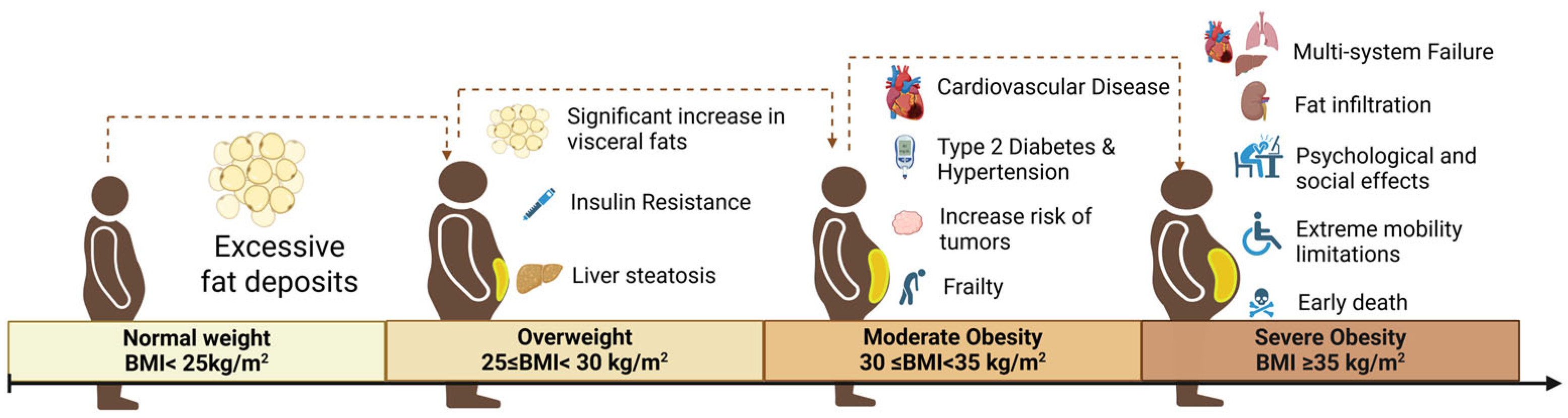
The body’s energy equilibrium is sustained through coordination of dietary intake, metabolic utilization, and accumulation of energy stores, shaping long-term energy status [24]. Adipose tissue is mainly classified into subcutaneous, visceral (intraperitoneal), and peripheral (subperitoneal) types [25,26]. In case of energy imbalance, the body takes in more energy than it uses, and the excess is stored as energy reserves in new fat cells through adipogenesis [27] (Figure 1).
The optimal metabolic state is governed by the integrated physiological functions of white, brown, and beige adipocytes, each differentially contributing to distinct energy storage and expenditure mechanisms. White adipocytes are distributed throughout the body and primarily serve as the body’s energy reservoir. They facilitate the conversion of circulating glucose and free fatty acids (FFAs) into unilocular lipid droplets composed of triglycerides. These droplets act as storage units that release energy through the controlled efflux of FFAs when metabolic demand increases [29]. Morphologically, white adipocytes are characterized by a single large lipid droplet, relatively low mitochondrial content, and minimal expression of uncoupling protein 1 (UCP1), reflecting their specialized role in energy storage rather than thermogenesis [30,31,32,33]. In contrast, brown adipocytes are enriched with multilocular lipid droplets and a high density of mitochondria, expressing significant levels of UCP1. This protein uncouples oxidative phosphorylation, allowing the dissipation of the proton gradient as heat rather than ATP, which underpins non-shivering thermogenesis. Brown adipocytes are therefore critical for maintaining body temperature and promoting energy expenditure [31]. Beige adipocytes exhibit an intermediate phenotype, capable of adopting brown-like thermogenic activity under specific stimuli such as cold exposure or β-adrenergic activation. Morphologically and functionally, beige adipocytes reside within white adipocyte depots but express UCP1 and possess moderate mitochondrial density when activated, contributing flexibly to both energy storage and thermoregulation [33,34,35,36,37].
Collectively, the metabolic efficiency and adaptability of the body are dependent on the coordinated interactions among white adipocytes, brown adipocytes, and beige adipocytes, which together regulate energy storage, mobilization, and dissipation in response to physiological demands [38,39,40,41]. In addition to its role as a fat storage, adipose tissue is also recognized as a dynamic endocrine organ that secretes adipokines, signalling molecules that play a role in insulin resistance, lipid metabolism, and inflammation. Once dysregulated, these hormones may lead to obesity, cardiometabolic diseases, hypertension, diabetes, and atherosclerosis [42]. For that, a balance between pro-inflammatory and anti-inflammatory adipokines determines whether adipose tissue promotes or protects against cardiometabolic disease [43].
As shown in Table 1, obesity is a heterogeneous condition encompassing multiple phenotypes with distinct clinical and metabolic characteristics.

3.1. Metabolically Healthy Obesity (MHO)

The metabolically healthy or benign obese represents 6 to 40% of the total obese population [44]. These patients are characterised by obesity with a lack of cardiometabolic abnormalities [52], less visceral adipose tissue, smaller adipocytes, and a lower inflammatory profile in comparison to the metabolically unhealthy obese subjects [47]. Regardless, a meta-analysis study revealed higher rates of cardiovascular disease, type 2 diabetes, certain cancers, chronic kidney disease, and depressive disorders in children and adults, due to subtle micro-level metabolic abnormalities, including elevated visceral fat, reduced adiponectin, oxidative stress, and chronic inflammation, which are not captured by standard MHO screening criteria [53]. The concept of MHO has also evolved substantially. Although individuals with MHO lack overt metabolic abnormalities at a given time, accumulating longitudinal evidence suggests that this phenotype is frequently transient rather than stable. Recent analyses indicate that most individuals with MHO eventually develop metabolic dysfunction and obesity-related complications during long-term follow-up, supporting the view that MHO represents an earlier stage of disease rather than a benign condition [54]. This concept closely parallels the preclinical obesity category proposed by the 2025 Lancet Commission [55], in which excess adiposity exists without established organ dysfunction but confers increased risk of progression, emphasizing the importance of continued surveillance and early intervention rather than therapeutic inertia.

3.2. Metabolically Abnormal Obesity (MAO)

A high number of subjects in the MAO group are overweight or obese with metabolic diseases, i.e., type 2 diabetes, cardiovascular diseases, systolic or diastolic high blood pressure, and a high waist-to-hip ratio. A recent study has shown an increase in oxidative stress, intra-abdominal adiposity, hepatic de novo lipogenesis, cholesterol synthesis, and adipose tissue inflammation, in addition to high levels of non-esterified fatty acids (NEFA), triglycerides, and 24 h plasma glucose in metabolically abnormal obesity [54]. Significant differences exist between MAO and MHO groups in levels of postprandial blood glucose, high-density lipoprotein cholesterol, insulin, and triglycerides [49]. However, common factors also exist between these two groups, such as the increase in arterial stiffness, 24 h plasma glucagon, and subcutaneous abdominal adipose tissue triglyceride synthesis [54].

3.3. Sarcopenic Obesity

Sarcopenia is a syndrome characterized by loss of muscle mass, strength, and performance [56]. Individuals living with sarcopenic obesity show an accumulation of body fat and a reduction in lean mass [57], associated with predictive factors such as increased age, decreased physical activity, smoking, low socio-economic status, pulmonary disease, and atherosclerosis [50]. Jiang et al. found an increased risk of CVD, heart disease, and stroke in the sarcopenic obese group compared to the non-sarcopenic group, and the risk becomes higher with a BMI ≥ 28.0 kg/m2 [58]. A meta-analysis encompassing 151 studies conducted across countries on every continent, involving a total of 692,056 individuals with an average age of 68.5 years, revealed that the prevalence of sarcopenia varied between 10% and 27% [59]. Another meta-analysis has estimated a prevalence of 9% sarcopenic obesity in both males and females, and its association with metabolic syndromes, CVD, CVD-related mortality, cognitive impairment, lung diseases, and functional limitation [60].

4. Factors Contributing to Obesity

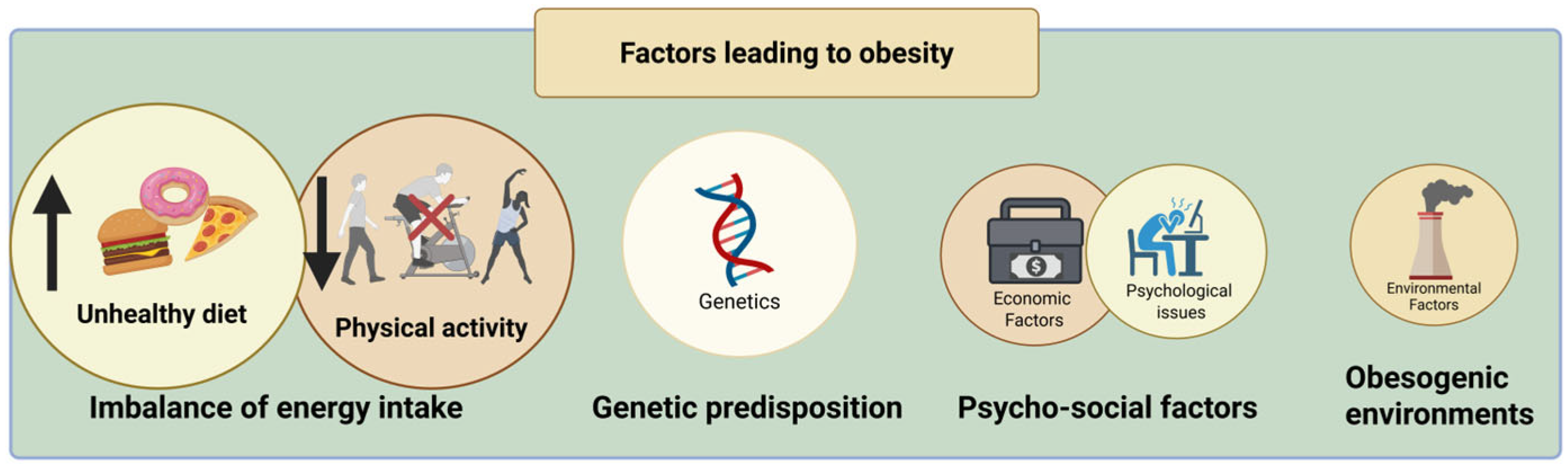
Obesity is a chronic multifactorial condition that can be influenced by unbalanced dietary habits, lack of physical activity, genetic predisposition, psycho-social, and environmental factors (Figure 2).
The evidence supports the thesis that the displacement of long-established dietary patterns by ultra-processed foods has globally become a key driver of the escalating global burden of multiple diet-related chronic diseases, including overweight, obesity, abdominal obesity, type 2 diabetes, hypertension, dyslipidemia, cardiovascular disease or mortality, coronary heart disease or mortality, cerebrovascular disease or mortality, chronic kidney disease, Crohn’s disease, depression, and all-cause mortality [65]. A major factor leading to obesity is the imbalance between energy intake and energy expenditure [66]. It is characterized by the consumption of unhealthy and high-calorie food, including high-fat, high-sugar, or ultra-processed food. Although they have high caloric levels, these types of food provide little satiety, leading to high consumption and high fat accumulation, without the sense of fullness. The excess energy coming from a high-fat diet is stored as triglycerides in the white adipose tissue. Once overloaded, these adipose tissues become dysfunctional and lead to lipid accumulation in muscles and the liver, causing metabolic dysfunction [66]. In addition, the trend of fast food, where a high-calorie meal can be eaten in a short time before reaching the satiety limit, contributes to excessive eating and obesity [67].
A lack of physical activity is one of the major causes of obesity, and the fourth leading risk factor for mortality (http://www.who.int/data, accessed on 25 May 2026), where the body does not expend the excessive energy taken in through eating. Low physical activity not only promotes obesity but also leads to long-term metabolic dysfunction and CVD.
In addition, obesity may be hereditary due to genetic variants, where studies have shown that the genetic predisposition to obesity can interact with other environmental factors, leading to the modification of adipocytes and the body’s response to a low-calorie diet [68]. A study by Farooqi et al. estimated that up to 20% of severe obesity in childhood is due to a mutation or chromosomal abnormality [69]. A recent study on genetic subtyping of obesity shows that obesity is genetically diverse, with some variants increasing body fat while protecting against diabetes, hypertension, and heart disease. Researchers identified 205 genomic regions and eight subtypes that explain why some individuals remain metabolically healthy despite obesity. These protective effects appear early in life, highlighting the importance of genetics in shaping health outcomes and pointing toward precision medicine approaches for tailored prevention and treatment [70].
Rare monogenic variants, caused by a mutation in a single gene (i.e., MC4R mutation), are typically rare in the population but lead to early onset and severe obesity, and may be treated with targeted therapies such as melanocortin analogs [71]. However, the common polygenic variants result from many genetic variants, each with a small influence and dependent on gene–environment interaction. This type of obesity is usually identified through GWAS studies with loci like FTO and SEC16B linked to appetite and fat storage, and is harder to treat [72].
Additionally, many individuals living with obesity suffer from psycho-social problems, including issues with quality of life, social standards, and unstable mood [73]. Studies suggest that about 20% to 60% of subjects with obesity and severe obesity struggle with psychiatric problems [74]. Issues can be depression [75] with an effect on poor health-related quality of life (HRQoL) [76], eating disorders [77], anxiety [78], and substance abuse [78]. For that, visiting mental health professionals can be helpful to improve the psycho-social aspects related to obesity [73].
Moreover, studies suggest that some chemicals in the environment, called ‘obesogens’, can affect the individual’s susceptibility to obesity and lead to a significant increase in obesity prevalence [79]. In vitro, obesogens affect the differentiation of white adipose tissues, and in vivo, they can affect the storage of fats [80]. In humans, a study showed that the organotin compound tributylin (TBT), used in marine shipping and industrial water systems, has a biomagnification or bioaccumulation property and functions as a type of obesogen, which can enter the body via seafood consumption. Consequences are on adipogenesis and fat accumulation [81].

5. Obesity-Related Metabolic Disorders

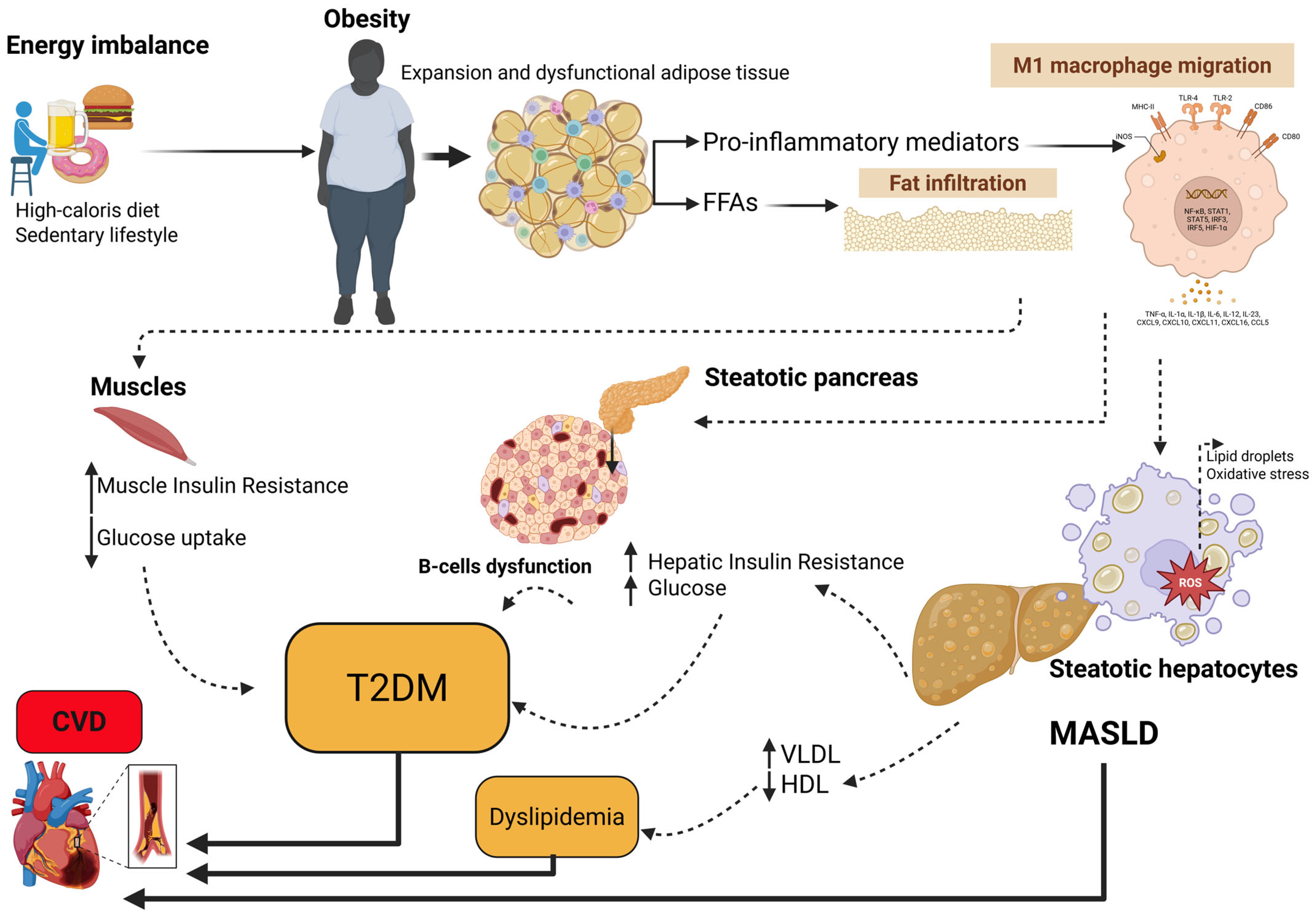
Excessive fat accumulation is a critical risk factor for a broad spectrum of metabolic diseases, including T2DM, metabolic dysfunction-associated steatotic liver disease (MASLD), CVD, and several other components of metabolic syndrome. This pathological process is primarily driven by an unhealthy dietary pattern rich in saturated fats and refined sugars, yet deficient in dietary fiber, which initiates a state of chronic low-grade inflammation and systemic insulin resistance. As adipose tissue becomes dysfunctional, it releases elevated levels of free fatty acids (FFAs) and pro-inflammatory adipokines, contributing to impaired insulin signaling in peripheral tissues such as skeletal muscle and liver (Figure 3) [82].
These metabolic derangements promote insulin resistance and hyperglycemia, hallmarks of T2DM. Simultaneously, ectopic fat deposition within the pancreas compromises β-cell integrity and insulin secretion, further aggravating glucose dysregulation [85].
In the liver, insulin resistance accelerates de novo lipogenesis and leads to atherogenic dyslipidemia, characterized by increased levels of very-low-density lipoprotein (VLDL) and reduced high-density lipoprotein (HDL), which substantially elevate the risk for CVD [83]. Collectively, these interrelated mechanisms highlight the systemic metabolic consequences of poor dietary habits and excessive adiposity.

5.1. Type 2 Diabetes Mellitus (T2DM)

The excess body fat accumulation in patients with obesity, especially visceral fat, leads to insulin resistance, where the cells become resistant and do not respond effectively to insulin [86]. To defend against this resistance, the pancreas starts to produce a higher amount of insulin to maintain normal blood glucose levels [87]. Over time, the capacity of the pancreas to maintain the normal glucose level decreases, leading to elevated blood glucose and the onset of T2DM [87]. In addition, obesity is associated with a type of insidious metabolic chronic inflammation [87], leading to an alteration of adipokine secretion and contributing further to insulin resistance and beta-cell dysfunction [88].

5.2. Metabolic-Associated Steatotic Liver Diseases (MASLD)

Obesity plays a significant role in liver fat accumulation, where excess fat intake accumulates in the body, including the liver, leading to liver steatosis [89]. When the capacity of adipose tissues for storing the excess fat intake is exceeded, the hepatocytes play this role and store the lipids as triglycerides [90]. If not managed, the excess fat accumulation induces chronic inflammation [91], which in turn increases the fat accumulation and damages the liver tissues, leading to MASH (metabolic-associated steatohepatitis) [10,11,92]. In another pathway, obesity is a risk factor for different metabolic syndromes, including insulin resistance and dyslipidemia, which also leads to hepatic fat accumulation [93]. In detail, insulin resistance affects the capacity of the liver to regulate lipid metabolism, leading to increased triglyceride accumulation in hepatocytes [93]. In addition, alterations in nutrient absorption and inflammatory signalling may occur due to obesity-related gut microbiota dysbiosis, leading to increased liver fat accumulation [93].

5.3. Cardiovascular Diseases

Obesity is a risk factor for cardiovascular diseases in many pathways and may lead to mortality. Since obesity leads to visceral fat accumulation, insulin resistance, dyslipidemia, and chronic inflammation, all these dysfunctions affect vascular functions and lead to atherosclerosis [94]. In addition, obesity increases the activity of the renin–angiotensin–aldosterone system (RAAS), which in turn increases the risk of hypertension and endothelial dysfunction, leading to an increase the cardiovascular risk [95]. Studies showed that the excessive fat accumulation also leads to an increase in total and central blood volume, a change in heart morphology and ventricular function [96]. Moreover, childhood obesity, defined through age- and sex-specific criteria due to ongoing growth and pubertal development, is a major risk factor for early-onset ASCVD [97]. Evidence from different reviews demonstrates that ASCVD originates in childhood and is significantly exacerbated by excess adiposity [98,99]. Obese children frequently exhibit metabolic risk factor clustering, including dyslipidemia, hypertension, insulin resistance, and dysglycemia, which together elevate cardiovascular risk and long-term mortality [100,101]. Moreover, childhood obesity is associated with increased odds of developing type 2 diabetes, metabolic dysfunction-associated steatohepatitis (MASH), and polycystic ovarian syndrome (PCOS) [102,103]. These metabolic disturbances often persist into adulthood, where ~50% of obese adolescents progress to severe obesity, and ~80% of those with severe obesity remain severely obese, compounding cumulative vascular damage and future disease burden [100].

5.4. Cholesterol Cholelithiasis

Cholesterol cholelithiasis refers to the formation of gallstones primarily composed of cholesterol, resulting from an imbalance among the three biliary lipid carriers, i.e., cholesterol, bile salts, and phospholipids within bile. If bile becomes supersaturated with cholesterol, excess cholesterol will shift from small vesicles made of Bile acid (BA)-cholesterol to larger vesicles made of large quantities of cholesterol solubilized by BA and phospholipids. Upon bile concentration in the gallbladder, vesicles tend to further aggregate and cholesterol will shift from the liquid (soluble) status to the solid status of monohydrate and then anhydrous solid cholesterol crystals which gradually aggregate into pure or mixed cholesterol stones [104,105]. Cholesterol cholelithiasis is influenced by multiple factors, including genetics, diet, metabolic disturbances, and gallbladder motility, and represents the most common type of gallstone disease [12]. Cholelithiasis affects approximately 10–20% of adults worldwide [106] with an overall prevalence of around 6% [107]. In Europe, reported rates range from 5.9% to 21.9% [108,109]. It represents one of the most frequent abdominal conditions requiring hospitalization in high-income countries [107,110]. Moreover, cholelithiasis is strongly linked to other disorders, including gallbladder cancer [111], MASLD [112], and coronary heart disease [113]. Collectively, these data emphasize the relevance of prevention and effective management strategies for cholelithiasis.
Obesity is a well-recognized risk factor that often co-occurs with cholelithiasis. Evidence indicates that elevated weight increases the likelihood of developing cholelithiasis during childhood [114,115] and adulthood [116]. Furthermore, Chen L et al. [117] demonstrated, through a Mendelian randomization (MR) analysis, that obesity raises the risk of cholelithiasis even after adjusting for confounders. Additional work also reported a positive association between rising body mass index (BMI) and cholelithiasis risk [118]. A study evaluating childhood obesity in relation to gastrointestinal (GI) disorders [119] found that genetically predicted higher childhood BMI was linked to a greater risk of cholelithiasis in adulthood. Although certain biomarkers, such as HDL cholesterol and triglycerides, have been proposed as mechanistic mediators connecting obesity to cholelithiasis [120], many molecular pathways remain undefined. Elucidating these mechanisms could provide new insights for targeted prevention and treatment of cholelithiasis later in life. A recent study showed that childhood obesity may play a developmental role in the risk of adult cholelithiasis [109]. The study showed significant genetic links between most age-specific childhood BMI stages and adult cholelithiasis. It further demonstrated that higher BMI at several early-life stages, including birth, late infancy, and early childhood, was causally associated with an increased risk of developing cholelithiasis in adulthood. In addition, the study identified MLXIPL as the strongest shared molecular signal connecting childhood BMI to adult cholelithiasis, suggesting a potential biological pathway underlying this relationship [109].

6. Obesity in Young People

Approximately 30% of children and adolescents in the US live with overweight or obesity [121]. Today, the global burden of overweight and obesity affects more than 245 million children aged between 5 and 14 years, 249 rates are projected to rise significantly by 2050. Alarmingly, younger individuals face a future of obesity-related health complications that will place increasing pressure on healthcare systems, with costs expected to reach approximately US$4.32 trillion by 2035 [122]. Childhood obesity is particularly concerning due to the vulnerability of this age group and the early onset of related health issues [123]. Metabolic disturbances such as oxidative stress, energy imbalance, and genetic alterations can appear even before puberty, increasing the risk of long-term health problems [124]. Since many obesity-related factors are established early in life, investing in health from preconception to adolescence is not only effective but also highly cost-efficient, with potential returns of up to ten times the investment.
The causes behind the surge in youth obesity are multifaceted, stemming from a combination of biological, economic, and environmental influences [125]. As for adults, the development of obesity in youth subjects is influenced by multiple factors that interact throughout the lifespan, including individual factors such as epigenetics, biology, psychology, and specific behaviours such as nutrition, low or no physical activity, and sleep disorders. Genetics/epigenetics play a role, but they are often amplified by unhealthy eating patterns and socioeconomic circumstances [126]. As underscored by a recent action in The Lancet, the global proliferation of ultra-processed foods has become one of the most urgent yet inadequately addressed threats to human health in the 21st century [127]. Indeed, the global proliferation of ultra-processed foods poses a significant threat to children’s health, and this aspect requires urgent action from governments to protect children’s rights to adequate nutrition and health [128]. Affordable, calorie-dense, and sugar-laden ultra-processed foods are more accessible than nutritious options, particularly for low-income families who may also lack time for meal preparation [129,130], and children are highly vulnerable in terms of malnutrition, metabolic alterations, and mental health concerns related to ultra-processed foods, which deliver abnormally high levels of sweet, salty, and artificially flavoured foods [131]. Larger meal portion sizes served at restaurants may significantly increase children’s caloric intake by ≈ 86 kcal per meal, and if repeated, this exposure can override the normal satiety cues and contribute to long-term obesity [132].
Excessive sedentary screen time, especially TV viewing and mobile device use, is strongly linked to higher obesity risk in children and adolescents, due to low physical activity and unhealthy snacking habits [133].
Despite progress in identifying individual risk elements, the exact mechanisms through which these factors contribute to obesity remain unclear. Individual factors interact with the environment, including exposure to chemicals. Commercial determinants, particularly industry strategies that promote certain food products and ideas, can also help to shape the environment. Social determinants and policies affect many aspects of the lives of people living with obesity. Obesity in young individuals is also associated with psychological and neurological disorders, creating bidirectional relationships in which psychiatric conditions increase the risk of obesity and obesity can trigger disorders through immune, metabolic, and endocrine alterations. In addition, obesity promotes an increased risk of cardiovascular and metabolic disease through insulin resistance and various types of cancer [134,135]. Strong evidence suggests that comprehensive food environment policies can contribute to reducing childhood obesity [136]. A notable example is Chile’s 2016 Food Labelling and Advertising Law (FLAL), which combined mandatory front-of-package black warning labels with restrictions on food marketing to children and the sale of unhealthy foods in schools [137]. Recently, in a large national cohort study involving more than 321,000 children aged 4–6 years, exposure to the first phase of the policy was associated with a significant reduction in the likelihood of excess weight (overweight or obesity) [138]. The greatest effect was observed among children exposed to the policy for 18 months, with the probability of excess weight decreasing by 2.85% in girls and 2.40% in boys, while even 6 months of exposure produced significant reductions. These findings provide some of the strongest causal evidence to date that comprehensive regulatory policies targeting the food environment can effectively reduce excess weight in early childhood, supporting their adoption as scalable public health strategies to address the growing childhood obesity epidemic [138].

7. Advancing Obesity Research and Redefining Diagnostic Criteria

Despite extensive research into the pathophysiology of obesity, significant challenges persist in the areas of diagnosis, epidemiological assessment, clinical heterogeneity, and policy implementation [139]. In addition, no obvious categories for the anthropometric variables exist, and it is not clear what the levels of the anthropometric criteria are based on [140]. Recognizing these limitations, a growing number of international initiatives are redefining how obesity is understood and managed to develop more precise, equitable, and effective interventions.
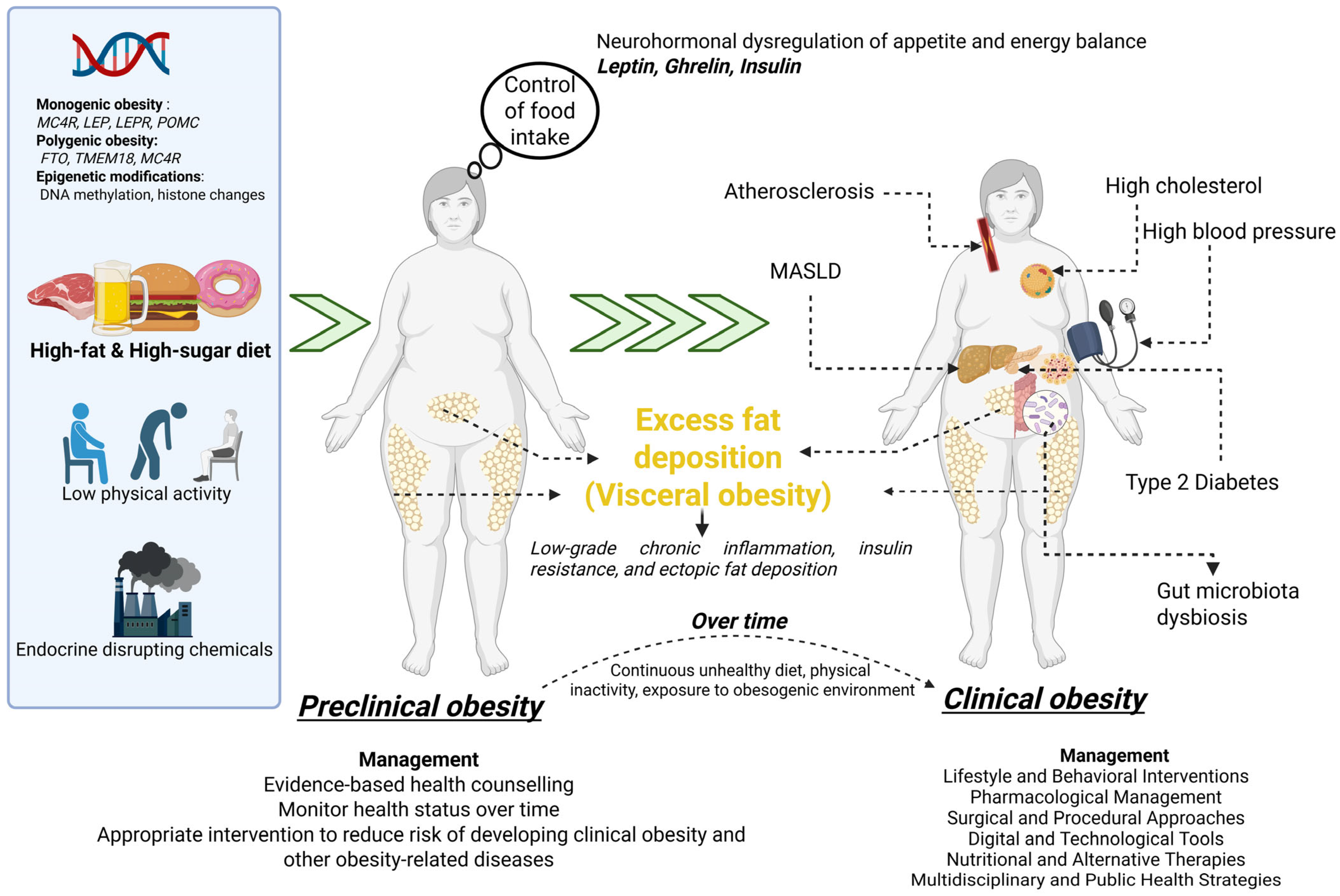
A landmark contribution in this regard comes from the 2025 Commission Report, which proposes a paradigm shift in the diagnostic criteria for obesity. Developed in collaboration with 56 international experts, the Commission introduces a novel distinction between “clinical obesity”, i.e., a high BMI confirmed by measures of body fat, if available, or by at least 1 anthropometric criterion (which includes waist circumference, waist-to-hip ratio, or waist-to-height ratio), and “preclinical obesity” in people without a high BMI and at least 2 anthropometric criteria [55]. This evidence-based framework seeks to move beyond the traditional reliance on body mass index (BMI) as a singular diagnostic tool, acknowledging its limited capacity to capture the biological and clinical diversity of individuals affected by excess adiposity. The new classification defines preclinical obesity as a state of excess fat accumulation without current organ dysfunction or life impairment but with a high risk of future health consequences, while clinical obesity is recognized as a chronic, systemic disease characterized by pathological fat accumulation with demonstrable physiological harm (Figure 4). The EASO, which published its own obesity “framework” in July 2024, considered that the Lancet Commission report could give rise to problematic concepts that could delay early prevention of obesity comorbidities. To introduce the concept of a “preclinical obesity” category might be responsible for a watchful waiting strategy that could delay interventions and dangerously worsen long-term health outcomes.
The necessity of capturing this preclinical risk is underscored by epidemiological data that show that the BMI cutoffs obscure hidden CVD vulnerabilities. A recent study among young women found a low risk of several CVDs with a low-normal BMI (about 22 kg/m2); however, an increased risk in the highest BMI among the normal range (between 22 and 25 kg/m2) has been detected [145]. Consequently, while the Commission underscores the need for practical and globally applicable diagnostic tools, it also calls for a revision of current treatment eligibility criteria and a greater emphasis on early intervention and prevention in those with preclinical risk.
These developments are aligned with and further informed by the recent consensus statement from the European Society for Clinical Investigation (https://esci.eu.com/), which identifies critical knowledge gaps and proposes strategic directions for future obesity research and policy [11]. Chief among the concerns are the inadequacy of BMI-centric epidemiological models, the lack of standardized long-term obesity surveillance, and a deficient understanding of phenotypic variability in obesity-related cardiometabolic risk. Additionally, the socio-economic and environmental drivers of obesity and their role in shaping transitions across phenotypes remain insufficiently elucidated [11]. The consensus report advocates for an integrated, syndemic framework, reflecting the interconnected biological, societal, and ecological determinants of obesity. This approach supports the development of tailored, community-level interventions embedded within global health strategies. The use of emerging technologies, including artificial intelligence, is emphasized to refine predictive models, enhance data resolution, and better stratify risk across diverse populations [11]. Taken together, the advancement of these consensuses highlights the need for harmonization of anthropometric and biochemical markers, inclusive public health messaging, and efforts to counteract stigma in clinical and societal discourse. Notably, they stress that the historical one-size-fits-all approach to obesity care is no longer tenable. Instead, there is an urgent need for precision medicine models, grounded in individualized assessment and supported by evidence-based public policies that reflect the true complexity of obesity as a disease and societal challenge [146]. With this idea in mind, Fourman et al. [147] applied the new Lancet 2025 criteria to the “All of Us” cohort, reporting that when BMI is high, most participants met at least one anthropometric criterion as well. By contrast, many other participants who did not meet the BMI criteria did meet the anthropometric criteria for obesity. Such methodological approaches will be required in the future, since the adoption of a new definition of obesity that incorporates anthropometric measures can significantly increase the prevalence of obesity and has major implications for clinical practice and public policy. In addition, further studies are warranted looking at the outcomes when stratifying individuals at high risk of organ dysfunction and long-term complications with anthropometric-only obesity and preclinical obesity as distinct entities [147].
The 2025 Lancet Commission also reframes pediatric obesity as a heterogeneous chronic disease that extends beyond excess body weight and emphasizes the distinction between preclinical obesity and clinical obesity [55]. In children and adolescents, BMI-for-age percentiles remain an appropriate screening tool [148], but they should not be used in isolation to establish the diagnosis. Rather, obesity should be confirmed by evidence of excess adiposity using anthropometric measures (e.g., waist circumference or waist-to-height ratio), skinfold thickness, or direct body composition assessment when available [149], together with a comprehensive clinical evaluation to identify obesity-related organ dysfunction and functional impairment. Children with preclinical obesity exhibit excess adiposity without established clinical consequences but remain at increased risk for progression, warranting early preventive interventions and longitudinal monitoring. By contrast, clinical obesity is defined by the presence of obesity-related organ dysfunction or clinically significant impairment affecting one or more organ systems, including metabolic, cardiovascular, respiratory, musculoskeletal, hepatic, reproductive, renal, neurological, or psychosocial domains [55]. This paradigm recognizes that obesity-related complications often begin during childhood, although many initially manifest as subclinical abnormalities because of shorter disease duration and greater physiological compensatory capacity. Consequently, early identification and timely intervention are essential to prevent progression toward irreversible organ damage and adult cardiometabolic disease. This approach also aligns with the 2023 American Academy of Pediatrics Clinical Practice Guideline, which advocates early, intensive, family-centered treatment using a continuum of evidence-based interventions—including health behavior and lifestyle treatment, pharmacotherapy, and metabolic bariatric surgery for appropriately selected adolescents—rather than the traditional stepwise escalation based solely on BMI severity [148].

8. Strategies for Losing Weight in Adults

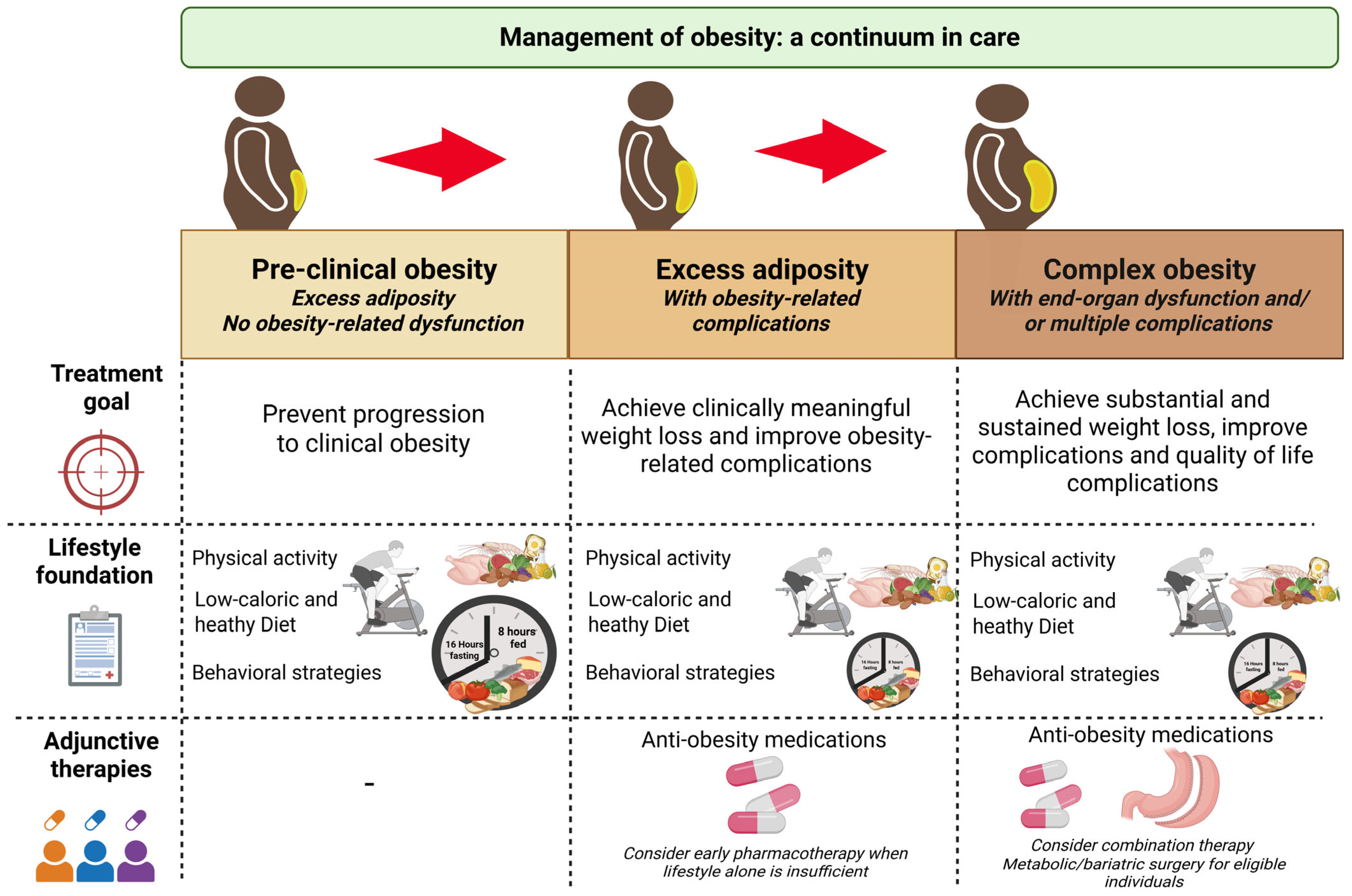
Managing excess adiposity requires a structured clinical approach that shifts focus from simple BMI metrics to a comprehensive evaluation of adipose-tissue function and organ-specific damage. In strict alignment with the 2025 Lancet Diabetes and Endocrinology Commission guidelines, therapeutic strategies are divided into two distinct tiers: preclinical obesity interventions focused on non-pharmacological risk mitigation for patients without functional organ impairment, and clinical obesity interventions, which require medical and surgical escalation for patients with established, adipose-driven comorbidities.
Comprehensive evidence-based obesity treatment combines behavioral interventions, lifestyle, pharmacological, and surgical approaches tailored to individual patient phenotypes (Figure 5) [11,55,150]. Rather than deploying these interventions as a sequential menu based on body mass index (BMI) thresholds, the 2025 Lancet Commission diagnostic paradigm mandates mapping strategies directly to the patient’s phenotypic staging. Preclinical obesity focuses on non-pharmacological risk containment, while clinical obesity requires immediate medical and procedural escalation to halt cumulative organ damage [151].

8.1. Interventions for Preclinical Obesity

To transition from a conceptual framework to targeted therapeutic implementation, non-pharmacological strategies within the preclinical tier must be personalized according to patient compliance, baseline metabolic profiles, and target risk factor reduction. A comprehensive phenotypic overview of these primary behavioral, dietary, and lifestyle interventions is summarized in Table 2.

8.1.1. Physical Activity

As defined, physical activity describes any skeletal muscle movement that leads to energy expenditure (WHO). In addition to its efficient effect on weight loss, physical activity improves metabolic disorders such as type 2 diabetes, reduces stress and anxiety, and decreases the risk of heart disease and certain tumors (https://www.who.int/news-room/fact-sheets/detail/physical-activity, accessed on 25 May 2025). Regarding physical activity’s beneficial healthy effect, studies have shown that aerobic training has a greater effect on weight loss than resistance training [179], since the expenditure of energy during aerobic exercise is higher than the expenditure during resistance training [180]. Combined with a healthy diet, physical activity showed a higher effectiveness in reducing body weight and improving body composition [181]. Different types of physical activity exist, but aerobic and high-intensity interval training are recommended for weight loss in subjects with obesity [182], with duration and intensity depending on the weight and the goal [183].

8.1.2. Dietary Approaches and Macronutrient Patterns

Dietary changes for weight loss within the preclinical tier focus on altering systemic energy balance while improving long-term nutritional quality [184]. Selecting a specific dietary approach depends on the metabolic profile of the patient, behavioral compliance capacity, and target risk factor reduction [185].
Ketogenic Diet
The ketogenic diet is one of the most popular diets in the last few years, consisting of very low carbohydrate consumption with varying levels of fat and protein [186]. When carbohydrate intake is restricted, hepatic gluconeogenesis maintains the glucose supply by producing non-carbohydrate sources such as pyruvate, lactate, and glycerol. When glucose storage is depleted, ketone bodies are produced as an alternative fuel. So the hormonal pivot here is the decreased insulin secretion that stops glycogen and fat storage while activating lipolysis and fatty acid oxidation [187]. Previous studies showed its effect in reducing fat mass and visceral fat mass, while preserving the lean mass in subjects [158]. The ketogenic diet has been shown to have beneficial effects on the blood lipid profile, in addition to an anti-inflammatory and cardioprotective role due to the state of ketosis, the decrease in simple sugar, and the higher omega-3 fatty acid consumption [188]. A meta-analysis was conducted to assess the effect of the ketogenic diet on weight loss and glycemic profile in overweight diabetic patients, which has shown a beneficial effect on weight loss, decreasing body circumference, glycated hemoglobin, triglycerides, and increasing high-density lipoproteins [189].
Very Low-Calorie Diet (VLCD)
The very low-calorie diet is considered a strategy for rapid weight loss that showed a long-term advantage by maintaining the loss of weight for over 36 months [190]. Subjects practicing this type of diet lost a high percentage of their weight, divided into fat mass and lean mass, which makes it not the best way to improve body composition and maintain the weight loss [191]. While old literature showed that a VLCD inducing rapid weight loss, i.e., >1.5 kg per week, becomes a risk factor for the formation of cholesterol gallstones in up to 30% of individuals due to cholesterol supersaturation in bile. Modern VLCD formulations incorporating supplemental dietary fiber and bile acid binders have significantly decreased the risk of clinical gallstones to below 10% [106,192].
Moreover, studies show that only a small fraction of patients maintain significant weight loss after long-term follow-up, while new cases of vascular events and type 2 diabetes have been reported after initial success [193]. Some patients showed persistent DNA damage, suggesting genomic instability risks [194]. Importantly, from a pediatric safety perspective, VLCDs require medical supervision due to recent clinical trial data that demonstrated that up to %95 of developing youth experience acute adverse events, including negative nitrogen balance and severe metabolic fatigue, during intensive energy restriction, mandating that VLCD utilization remain restricted to a highly monitored, specialized multi-disciplinary clinical setting [195].
High-Protein Diet
A high-protein diet is used to utilize fat-free skeletal mass during the energy restriction periods. Mechanistically speaking, elevated amino acid availability will enhance the mammalian target of rapamycin complex 1 pathway, stimulating muscle protein synthesis and enhancing the satiety feeling through the modulation of anorexigenic signaling peptides. In such a caloric-deficit diet, clinical studies showed that consumption of more than 2 g of protein per gram per day is required for maintaining the lean body mass within a calorie-deficient diet [160]. Additionally, A recent study on 80 subjects with obesity or overweight has shown a significant increase in microbial alpha-diversity and composition after the high-protein diet [196].
Low-Fat Diet
Low-fat strategies leverage the high energy density of dietary lipids relative to hydrophilic macronutrients to induce a passive energy deficit. Clinical studies have shown the effect of high-fat diets and the consumption of junk food high in saturated fatty acids on the alteration of the gut microbiota and its association with obesity-related metabolic diseases. A low-fat diet seems to be a healthy option for weight loss and the prevention of its consequences [197].
Mediterranean Diet (MD)
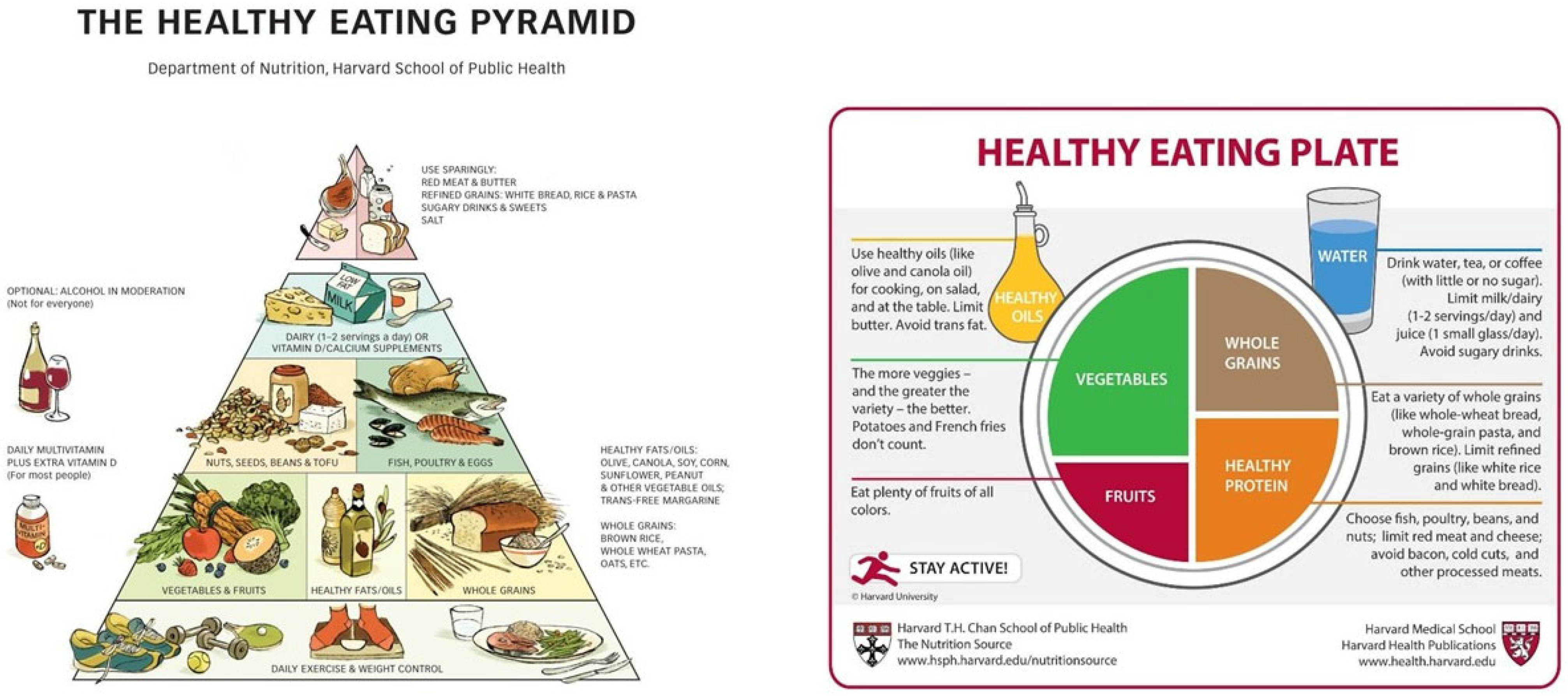
The concept of the MD emphasizes plant-based foods and healthy fats, where the main components are vegetables, fruits, whole grains, fish, and extra virgin olive oil, which is the primary source of additional fat, with low-alcohol intake allowed [198]. A popular graphical presentation of the MD dietary pyramid (Figure 6) represents the main components of MD, together with their relatively recommended quantity of consumption related to daily/weekly intake. Further elaboration provides the figure of the healthy eating plate, a guide for creating healthy, balanced meals, whether served at the table or packed in a lunch box [199,200]. Both cartoons point to the beneficial role of daily exercise and staying active (see below). Accumulating evidence from recent systematic reviews and meta-analyses supports the MD as an effective dietary strategy for weight management, although its weight-loss efficacy is generally comparable to other evidence-based dietary approaches. A network meta-analysis of RCTs in overweight and obese adults demonstrated that the MD consistently promoted clinically meaningful weight loss, although low-carbohydrate diets achieved a greater reduction in body weight (mean difference: −2.70 kg versus the MD) [163]. Similarly, in adults with T2DM and overweight or obesity, the MD ranked highest for improving glycemic control, while differences in weight loss between dietary patterns were small and of limited clinical relevance, suggesting that adherence and metabolic benefits may outweigh modest differences in weight reduction [165]. Furthermore, a recent meta-analysis in patients with MASLD showed that the MD significantly reduced body weight (weighted mean difference: −2.38 kg), body mass index (−0.70 kg/m2), and waist circumference (−1.56 cm) compared with control interventions [166].
Among the various dietary approaches, MD has the strongest evidence for improving long-term health outcomes. A systematic review and network meta-analysis of 40 randomized controlled trials involving 35,548 participants at increased cardiovascular risk found that Mediterranean dietary programs significantly reduced all-cause mortality (odds ratio [OR] 0.72, 95% CI 0.56–0.92), cardiovascular mortality (OR 0.55, 95% CI 0.39–0.78), stroke (OR 0.65, 95% CI 0.46–0.93), and non-fatal myocardial infarction (OR 0.48, 95% CI 0.36–0.65) [164]. Collectively, these findings indicate that while the Mediterranean diet may not consistently produce the greatest absolute weight loss, it achieves sustained reductions in adiposity alongside broad cardiometabolic and hepatic benefits, making it one of the most comprehensive dietary strategies for the prevention and management of obesity.

8.1.3. Fasting Regimens

Intermittent fasting (IF) is an alternation between eating times and fasting times [167]. Research indicates that intermittent fasting can offer numerous health benefits, including weight loss, improved insulin sensitivity, and reduced risk of type 2 diabetes [168]. Additionally, intermittent fasting may enhance heart health by lowering blood pressure and cholesterol levels [169]. It also promotes cellular repair processes and may reduce inflammation and oxidative stress [170]. Several types of intermittent fasting have been studied, which alternate between periods of fasting and eating [201].
Alternate-Day Fasting (ADF)
This method involves alternating between days of no caloric intake and days of unrestricted eating. Modified versions allow for a small caloric intake (up to 600 kcal) on fasting days [171]. A systematic review and meta-analysis of randomized controlled trials found that ADF significantly reduces body weight, body mass index (BMI), total cholesterol, low-density lipoprotein (LDL), triglycerides, and blood pressure [202].
Time-Restricted Eating (TRE)
This approach limits the daily eating window to a specific number of hours, typically ranging from 4 to 12 h, with the remaining hours spent fasting. A previous study found that early TRE (eating within a 6 h window starting in the morning) was more effective for weight loss and fat loss compared to a control eating schedule [173]. Additionally, TRE has been shown to improve cardiovascular health markers, such as lowering blood pressure and cholesterol levels [174]. However, the long-term sustainability and potential risks of TRE, particularly in different populations, require further investigation [175].
The 16:8 Method
The 16:8 intermittent fasting regimen, where individuals fast for 16 h and eat during an 8 h window, has garnered significant attention for its potential health benefits. Research indicates that this eating pattern can lead to weight loss, improved metabolic health, and enhanced insulin sensitivity [203]. Intermittent fasting has been shown to decrease levels of insulin and improve insulin sensitivity, which can be beneficial for individuals with or at risk of type 2 diabetes [204]. Moreover, intermittent fasting could improve circadian rhythms and reduce the risk of chronic diseases such as cardiovascular disease. These findings suggest that the 16:8 intermittent fasting method may offer a sustainable and effective approach to improving overall health and preventing metabolic disorders [205].
Ramadan IF
Intermittent fasting is one of the religious practices in the Islamic population called ‘’Ramadan intermittent fasting’’, where healthy adults practice fasting from food and drinks, including water, from dawn to sunset for 30 days per year [206]. Depending on the geographical location, fasting hours can vary between 12 and 22 h (mean 12–14 h) [207]. However, fasting is not required for premature children, the elderly, the sick, and pregnant and lactating women [208]. Studies showed that Ramadan intermittent fasting reduces body weight and body fat mass, improves metabolic syndrome, decreases waist circumference, fasting serum glucose, serum lipid profile, insulin sensitivity, and improves GI symptoms and motility [206]. In addition, Ramadan intermittent fasting was able to reduce subcutaneous and visceral fat and improve liver steatosis [209]. Hormonal changes, such as alterations in leptin and adiponectin levels, which regulate appetite and satiety, have also been observed [210].

8.1.4. Natural Compounds, Functional Foods, and Nutraceuticals

Beyond standardized macronutrient diets, plant-derived bioactive extracts represent a rapidly expanding area of adjunctive research. Under the 2025 Lancet Commission staging framework, these natural elements are classified strictly as experimental strategies for preclinical obesity management to assist with early metabolic risk containment. Crucially, none of the natural compounds, functional foods, or nutraceutical extracts detailed in this review possess regulatory approval from major bodies (such as the FDA or EMA) for the treatment of overweight or obesity, nor have any completed robust Phase III clinical testing.
Preclinical in vitro and in vivo models (summarized in Table 3) provide substantial mechanistic insight. These studies demonstrate that major phytochemical classes, including polyphenols, alkaloids, saponins, and terpenes, target pathways by downregulating adipogenic transcription factors (such as PPARγ and C/EBPα), inhibiting pancreatic lipase, and activating cellular energy sensors like AMPK and SIRT1.
Polyphenols represent one of the most extensively studied phytochemical classes in obesity research [222], owing to their antioxidant, anti-inflammatory, and metabolic regulatory properties [223]. Preclinical studies indicate that polyphenols exert their anti-obesity effects primarily through modulation of insulin signaling, inhibition of adipogenic transcription factors, and activation of AMPK-dependent pathways [211,212,213,214].
Alkaloids have also shown promising anti-obesity effects, particularly through inhibition of digestive enzymes and suppression of adipocyte differentiation [215,216,217].
Saponins exert anti-obesity effects through the regulation of lipid metabolism [218] and glucose homeostasis [219]. Terpenes contribute to obesity prevention primarily through antioxidant, anti-inflammatory, and lipid-lowering mechanisms [220,221].
To transition from a theoretical framework to actionable clinical guidance, multidisciplinary care coordination must follow strict, trigger-based operational guidelines. Primary care professionals are the center for all obesity treatment, and the endocrinologist is the specialist of reference for the therapeutic approach to this condition in high-risk patients or after the failure of primary care interventions [224].
Table 4 provides recent clinical evidence that natural compounds, functional foods, and nutraceuticals may exert beneficial effects on obesity and obesity-related metabolic disturbances, including insulin resistance, dyslipidemia, hepatic steatosis, and adipokine dysregulation. Most of the available evidence derives from randomized, double-blind, placebo-controlled trials conducted between 2023 and 2025, with intervention durations ranging from acute postprandial assessments to long-term supplementation up to 12 months.
Across multiple trials, reductions in body weight, body BMI, and adiposity-related parameters emerge as the most consistent outcomes. Significant decreases in body weight and BMI were reported following supplementation with curcumin [228], licorice extract combined with energy restriction [229], white kidney bean extract [231], fiber blends containing glucomannan, inulin, and psyllium [232], green coffee bean extract [225], Cyperus rotundus extract [240], sunflower seed extract [227], and Nitraria retusa extract [233]. Several interventions also demonstrated preferential reductions in visceral or abdominal fat, as observed with Camu Camu extract [230], Oligonol® [238], and combined Qingyanyin granules with press needle therapy [241], highlighting potential benefits for cardiometabolic risk reduction beyond total weight loss.
Improvements in glucose homeostasis and insulin sensitivity and favorable changes in lipid metabolism represent another recurring finding. While heterogeneity in study design, duration, and endpoints remains, these findings support the continued investigation of nutraceutical-based strategies as adjunctive, generally safe approaches for the prevention and management of obesity and its related metabolic disorders. However, the current evidence remains predominantly preclinical. Furthermore, nutraceuticals are not approved as drugs for obesity treatment by major regulatory agencies, and no clinical guidelines currently recommend their routine use for obesity management due to the limited availability of robust long-term clinical evidence.

8.2. Interventions for Clinical Obesity

When patients present with clinical obesity, lifestyle and nutritional recommendations are insufficient at this stage; management must be more advanced. This clinical tier mandates the integration of anti-obesity pharmacotherapies or bariatric surgery to restore metabolic homeostasis, alleviate systemic inflammation, and prevent long-term cardiovascular and hepatic mortality. The mechanistic foundations, clinical advantages, and primary limitations of current regulatory-approved anti-obesity medications and bariatric surgeries are detailed in Table 5.

8.2.1. Antiobesity Drugs

After the failure of the behavioural intervention, lifestyle changes, and maintaining weight loss, the use of anti-obesity drugs becomes a choice for weight management. The goal of these drugs is to reduce weight, maintain weight loss, and improve health status. The use of pharmacological therapy for weight loss is usually recommended for individuals with clinical obesity with weight-related comorbidities, or central adiposity (e.g., elevated waist circumference) with weight-related comorbidities [21,262]. Access to drugs is also possible for individuals without the above-mentioned conditions, but this is raising concern due to the economic implications of obesity treatments [263]. The choice of an anti-obesity drug depends on medication efficacy and adverse effects. Additional issues include patient contraindications, comorbidities, preferences, and out-of-pocket costs (Table 6).
Recent advancements in pharmacotherapy for body weight management have introduced several classes of medications, each targeting overweight and obesity management through distinct mechanisms. The GLP-1-based therapies are considered the first-line anti-obesity medication, but in case of intolerance, alternatives such as central nervous system (CNS) stimulants/appetite suppressants or lipase inhibitors may be used [264].
GLP-1-Based Therapy the GLP-1 (Glucagon-like Peptide-1)-Based Drugs
They were first used as anti- diabetic medication. However, the observation of 2% to 5% of body weight during the treatment highlighted the hypothesis of their effect on weight loss and obesity management [265]. They act through multiple mechanisms, where they reduce appetite, leading to decreased food intake, and they slow the rate at which the stomach empties, which prolongs feelings of fullness. Additionally, they enhance insulin secretion in response to meals and reduce glucagon release, helping regulate blood glucose levels [266]. Moreover, these drugs have shown beneficial metabolic effects by improving glycaemic control, reducing cardiovascular risk, and potentially reducing liver fat and sleep apnea severity [265]. A clinical study by Zander et al. has shown a significant weight loss (for a period of 6 weeks), an increase in satiety and fullness feeling, and a reduction in food intake after a continuous GLP-1 infusion in T2DM patients [267].
The cardiovascular efficacy of long-term GLP-1 receptor agonist therapy in individuals with preclinical or clinical obesity (independent of a diabetes diagnosis) was established by the landmark SELECT (Semaglutide Effects on Heart Disease and Stroke in patients with overweight or obesity) trial. The SELECT trial was performed as a randomised, double-blind, multicentre, placebo-controlled, event-driven phase 3 trial in 41 countries, which evaluated the effect of semaglutide on patients with or without heart failure at enrolment. Treatment with 2.4 mg semaglutide resulted in MACE reduction and composite heart failure compared to placebo [268]. Another multicentre, double-blind, randomized, placebo-controlled, event-driven superiority trial was conducted on 17,604 patients with established atherosclerotic cardiovascular disease and clinical obesity, where 8803 received 2.4 mg semaglutide for approximately 40 months, showing a statistically superior 20% relative risk reduction in MACE in the semaglutide group [269]. Taken together, these landmark data demonstrate that semaglutide 2.4 mg offers robust, systemic cardioprotection and MACE reduction in patients with obesity independent of glycemic status or baseline heart failure.
The most recently used GLP-1-based drug is tirzepatide, which plays a role in the regulation of appetite and insulin secretion and is an agonist of glucose-dependent insulinotropic polypeptide (GIP) by enhancing insulin release and improving fat metabolism [242]. It was primarily used as a medication for T2DM, where it helps improve blood sugar control by stimulating insulin release and reducing glucose production [243]. Studies have shown its ability to induce a dose-dependent bodyweight loss ranging from 7·0 to 9·5 kg [244].
Beyond dual-agonist therapies, there is a triple-hormone receptor agonist targeting the GLP-1, GIP, and glucagon (GCG) receptors. Retatrutide (LY3437943) represents this vanguard, where there is an integration of glucagon receptor agonism that enhances energy expenditure through increasing both thermogenesis and the metabolic activity of the liver, balancing the drop in resting metabolic rate typically seen with weight reduction. Phase 2 clinical data were so promising, and Phase 3 trials are currently underway to evaluate the long-term systemic durability. A phase 2a trial performed in 2024 on 98 MASLD participants showed that normal liver fat (<5%) was achieved after 24 weeks in more than 85% of participants in the two highest dose groups (79% (8 mg), 86% (12 mg)), suggesting it is an effective therapeutic agent for MASLD treatment [270].
However, emerging real-world evidence and clinical extension trials underline that weight reduction achieved via GLP-1 receptor agonists is dependent on the continuity of the treatment, with weight rebound occurring after discontinuation. In a STEP 1 randomized trial, 1961 adults with clinical obesity and without diabetes were taking 2.4 mg semaglutide for 68 weeks, and then it was discontinued for one year; participants regained two-thirds of their prior weight loss with similar changes in cardiometabolic variables [271]. Similarly, the SURMOUNT-4 trial showed a weight loss of 20.9% after a 36-week tirzepatide treatment, and after discontinuation, there was 14.8% of weight regain over one year [243]. These findings confirm that obesity operates as a chronic, relapsing metabolic disease, illustrating that pharmacological GLP-1 inhibition must be viewed as a long-term maintenance strategy rather than a temporary intervention.
Alternatively, semaglutide 2.4 mg and liraglutide 3.0 mg are subcutaneously used as abdominal injections, and they have also shown their efficacy in weight loss [151]. Some studies have shown the effects of semaglutide on glycemia and lipid improvement, as well as a cardiovascular beneficial effect, in addition to its anti-obesity management effect [246,247]. As of December 2025, the WHO has released new guidelines addressing the use of GLP-1-based therapies for the treatment of obesity, which should be used long-term and in combination with intensive behavioral therapy to maximize and sustain weight loss benefits [272]. An unmet need with these drugs is equitable access to therapy [263], and this aspect is also discussed in the guidelines [272].
A further therapeutic pharmacological approach in obesity is the combination therapy targeting GLP-1 along with other GI hormones. Cagrilintide is a long-acting amylin analogue that helps regulate appetite. Amylin is a 37-residue peptide hormone that is co-secreted from the pancreatic β-cells with insulin (insulin: amylin ratio 100:1). Amylin is therefore involved in glycemic regulation by slowing gastric emptying and promoting satiety. This effect prevents post-prandial glycemic spikes [273]. In a recent randomized trial based on 3417 patients with clinical obesity, combination treatment with cagrilintide 2.4 mg and semaglutide 2.4 mg led to greater weight loss compared with either agent alone or placebo after 68 weeks [274]. The study remains investigational, but is still promising for the future.
Despite their proven clinical efficacy, the widespread implementation of GLP-1 receptor agonists is constrained by major economic and healthcare system barriers. A recent lifetime cost-effectiveness analysis estimated that although tirzepatide and semaglutide improve health outcomes by approximately 0.35 and 0.25 quality-adjusted life years (QALYs), respectively, neither therapy is cost-effective at current US prices; semaglutide would require an estimated 81.9% price reduction and tirzepatide a 30.5% reduction to meet conventional willingness-to-pay thresholds [275]. From a payer perspective, the Institute for Clinical and Economic Review projected that expanding Medicare coverage for obesity pharmacotherapy would increase spending by US$24.9 billion over 10 years, with only modest early healthcare savings, highlighting the tension between long-term value and short-term affordability [276]. These financial and reimbursement barriers contribute to substantial socioeconomic and international disparities in access, underscoring the need for pricing reforms and equitable reimbursement policies to maximize the population-level benefits of these therapies [277].
CNS Stimulants/Appetite Suppressants
For patients with intolerance to GLP-1-based therapy, or those who prefer oral administration, other choices like CNS stimulants and an appetite suppressant combination may be used. Appetite Suppressants primarily act centrally on brain pathways to reduce food intake; long-term use must be carefully monitored.
The combination of phentermine–topiramate has shown a significant effect on body weight loss during the first years of use [248]. When taken together, phentermine and topiramate act synergistically, producing more effective appetite suppression and reductions in caloric intake compared to either drug alone [249]. However, the phentermine/topiramate combination drug was only US-approved but has only gained limited approval in Europe in 2024 [278]. Naltrexone–bupropion is also a reasonable alternative combination that can be used for long-term use; however, it has lower efficacy compared with phentermine–topiramate and GLP-1 receptor agonists [279].
Lipase Inhibitors
Synthetic inhibitors of pancreatic lipase are considered very effective for weight management, since they play a role in the hydrolysis of triglycerides into monoglycerides and free fatty acids. These free fatty acids get stored in adipose tissues, leading to weight gain [280]. Lipase inhibitors act locally in the GI tract without affecting the central nervous system or insulin secretion, suitable for patients who prefer non-hormonal weight loss strategies. They alter fat digestion by inhibiting pancreatic lipases. In addition, they increase fecal fat excretion because of incomplete fat hydrolysis and absorption. In normal individuals with a diet that contains 30% fat, lipase inhibitors, such as orlistat, lead to a dose-dependent increase in fat excretion in stool, which decreases the absorption of approximately 25 to 30% of calories coming as fat [251].

8.2.2. Bariatric Surgery

Since obesity has become a disease that leads to many other obesity-related disorders, surgical intervention is recommended for those who have clinical obesity and refractory organ failure. While historical guidelines as specified by the National Institutes of Health (NIH) rely strictly on a BMI ≥ 40 kg/m2 (or ≥35 kg/m2 with comorbidities) to qualify patients, the modern paradigm prioritizes the severity and reversibility of adipose-driven organ damage [281]. These surgical interventions involve a reduction in the size of the gastric pouch, which affects eating behaviors through endocrine and neural signalling, appetite reduction, and increased satiety. These effects, in addition to an increase in physical activity, increase and maintain the weight loss [252]. The following are the most popular surgical interventions for weight loss.
Sleeve Gastrectomy (SG)
This procedure is a popular bariatric surgery that consists of the removal of approximately 75–80% of the stomach, resulting in a tubular gastric sleeve. This surgery is effective for significant weight loss and improvement in obesity-related comorbidities. SG results in the loss of approximately 50% to 60% of the weight 2 years after surgery. Studies have shown that SG improves type 2 diabetes, dyslipidemia, and hypertension [253]. However, this type of surgery may lead to some complications, such as nutritional deficiencies and gastroesophageal reflux disease (GERD), due to the small size of the stomach [282].
Roux-en-Y Gastric Bypass (RYGB)
Characterized by the creation of a small pouch and rerouting the small intestine into this pouch. Patients are expected to lose about 70% of their excess body weight within 2 years post-surgery [255] and may maintain a substantial portion of this weight loss even 10 to 15 years post-surgery. It is known to significantly decrease body weight and to improve obesity-related diseases such as T2DM, hypertension, and dyslipidemia [254]. A previous study indicates that RYGB is more effective than SG in the long-term remission of T2DM and other metabolic disorders [254].
Adjustable Gastric Banding (AGB)
The procedure involves placing an adjustable silicone band around the upper part of the stomach to create a small gastric pouch, which restricts the amount of food that can be consumed at one time and promotes a feeling of fullness. Studies have shown that AGB can lead to significant weight loss and improvements in obesity-related comorbidities; however, the long-term success of AGB can be variable, with some patients experiencing complications such as band slippage, erosion, or the need for reoperation [257]. Despite these challenges, AGB remains a viable option for weight loss in selected patients, particularly those who prefer a less invasive procedure compared to other bariatric surgeries [258].
Elipse Gastric Balloon(s)
Intragastric balloons (IGBs) are a minimally invasive and reversible therapy for weight loss. The Elipse™ balloon is swallowed in the form of a capsule and then filled with liquid once it reaches the stomach. The balloon remains in the stomach for about 16 weeks, after which it naturally deflates and is excreted from the body. By occupying space in the stomach, the balloon helps patients feel fuller faster and reduces their overall food intake [259]. Clinical studies have shown that the Elipse™ balloon can lead to significant weight loss and improvements in metabolic parameters such as blood sugar levels and cholesterol [260]. The procedure is generally well-tolerated, with common side effects including nausea and abdominal discomfort, which typically resolve within a few days [261].

9. Strategies for Losing Weight in Children

Preventive strategies, particularly in children, are critical to reducing obesity rates and mitigating long-term complications. Although dietary and lifestyle modifications remain the cornerstone of obesity prevention or treatment, recent advances have introduced highly effective pharmacological options to complement bariatric surgery. Prevention of childhood obesity begins in the pre-conceptional period and during pregnancy. Preventive strategies can be implemented during the breastfeeding period. The composition and properties of human milk are known protective factors, and low-protein formulas are associated with a lower risk of obesity at 6 years. During the post-weaning period, low-carbohydrate (10–30% of total caloric intake) and low-fat (18–40% of total caloric intake) diets have demonstrated short-term efficacy [283]. The Mediterranean diet is recommended as a protective dietary approach in the most recent guidelines. It promotes increased consumption of dietary fiber, antioxidants, and long-chain fatty acids. Adherence to the Mediterranean diet is associated with higher levels of circulating vitamin D, a nutrient particularly deficient in obese children and adolescents, due to the significant impact of fat accumulation on its metabolism [284].
New medications, such as incretin therapies, including glucagon-like peptide-1 receptor agonists (GLP-1RA), have demonstrated remarkable efficacy in promoting weight loss, providing new insights into obesity-related conditions. Weight loss medications have low popularity, high costs (usually not covered by the national health care systems), and concerns regarding their safety. However, recent data on weight loss medications show promising results in adolescents [285,286]. A recent meta-analysis included 11 RCTs with 1024 patients with obesity, aged from 6 to 19 years old, showed that GLP-1 receptor agonists significantly decreased BMI z-score (MD −0.33; 95% CI −0.47 to −0.20; p < 0.01). GI symptoms were the most frequent adverse event (RR 1.52; 95% CI 1.09 to 2.12; p < 0.01) [287]. Beyond the GI side effects, pediatric and adolescent utilization of long-acting GLP-1 receptor agonists requires specialized clinical monitoring. In accordance with formal 2024 regulatory safety advisories from the FDA and EMA, long-term administration (>1 year) in developing cohorts carries a potential risk of delayed bone mineral density accrual and growth velocity deceleration, necessitating routine height and dual-energy X-ray absorptiometry (DEXA) monitoring [288,289].
Before implementing physiological escalations, family-based behavioral interventions (FBBIs) represent the foundation of pediatric care. In youth populations, dietary trajectories are profoundly modulated by a complex matrix of family dynamics, household food architecture, school micro-environments, and peer relationships. The family unit serves as the primary clinical environment, bearing the core responsibility to optimize home food availability, introduce stimulus control, and establish gradual, sustainable behavior modifications. Structured dietary counseling serves as a critical clinical instrument within this framework, enabling the precise integration of comprehensive dietary assessments alongside patient education and nutritional literacy. Ultimately, embedding the family structure and the broader environmental landscape into pediatric obesity management algorithms is an absolute clinical imperative to ensure therapeutic durability [290].
The use of bariatric surgery has shown promising results in severely obese adolescents, with evidence of long-term efficacy and good safety. Laparoscopic sleeve gastrectomy (SG) and Roux-en-Y gastric bypass (RYGB) are the most frequently performed procedures in adolescents. The maintenance of weight achieved after surgery is satisfactory from 3 years up to 12 years post-surgery. Moreover, bariatric surgery’s metabolic impact is widely acknowledged, with rates of T2D remission reaching up to 86% in adolescents compared to 53% in adults [291].
The management of pediatric obesity has undergone a paradigm shift from a conservative “watchful waiting” approach to early, intensive, multimodal treatment. The landmark 2023 American Academy of Paediatrics (AAP) Clinical Practice Guideline recommends prompt initiation of intensive health behavior and lifestyle treatment (IHBLT), defined as at least 26 h of face-to-face, family-based, multicomponent intervention over 3–12 months, as the cornerstone of therapy. Importantly, the guideline advocates escalation to pharmacotherapy in adolescents (≥12 years) with obesity when lifestyle intervention alone is insufficient and recommends referral for metabolic and bariatric surgery in adolescents aged ≥13 years with severe obesity, reflecting recognition of obesity as a chronic, progressive disease rather than a lifestyle disorder [292].
More recently, as in adults, the 2025 Lancet Diabetes & Endocrinology Commission, although it is not a treatment guideline, emphasizes that management should be individualized according to clinical consequences rather than BMI alone, promoting comprehensive assessment of metabolic, cardiovascular, orthopedic, respiratory, and psychosocial complications before therapeutic escalation. This framework supports a precision medicine approach while maintaining lifestyle intervention as first-line therapy [55].
Concurrently, randomized clinical trials have substantially expanded the evidence supporting pharmacological treatment in adolescents. In the STEP TEENS trial, once-weekly semaglutide 2.4 mg combined with lifestyle intervention produced a 16.1% reduction in BMI after 68 weeks compared with a 0.6% increase in the placebo group, with nearly three-quarters of participants achieving at least 5% weight reduction. Similarly, daily liraglutide 3.0 mg demonstrated a significantly greater reduction in BMI standard deviation score than placebo after 56 weeks in adolescents [293]. More recently, liraglutide also showed efficacy in children aged 6 to <12 years, producing significantly greater BMI reduction than placebo when combined with lifestyle intervention [294], suggesting that pharmacotherapy may become available for younger pediatric populations pending further long-term safety data [295]. Overall, these findings support the integration of GLP-1 receptor agonists into multidisciplinary obesity management for carefully selected pediatric patients while reinforcing that lifestyle modification remains the foundation of treatment.

10. Discussion

Obesity in the 21st century is now widely acknowledged as a chronic and multifactorial disease, extending beyond the traditional focus on BMI. The clinical understanding of obesity has evolved to include functional impairments, associated comorbidities, and broader social and environmental influences. Factors such as genetics, lifestyle, socioeconomic status, and urban infrastructure, collectively referred to as the exposome, are now seen as significant contributors to obesity risk [296].
Despite the continued use of BMI as a convenient epidemiological tool, its limitations have become increasingly apparent. BMI fails to distinguish between lean mass and fat mass, often misclassifying individuals with high muscle content or underestimating fat accumulation in those with lower muscle mass [297]. These inaccuracies are particularly relevant in pediatric, elderly, and athletic populations. As a result, the clinical utility of BMI in personalized obesity management is limited, necessitating more accurate methods for assessing body composition [298].
Alternative anthropometric measures, such as waist circumference (WC), waist-to-hip ratio (WHR), and waist-to-height ratio (WHtR), provide better estimates of visceral fat and cardiometabolic risk [299]. Imaging techniques like computed tomography (CT) and magnetic resonance imaging (MRI) have also gained traction in research settings to assess visceral adiposity, although standard clinical cut-offs remain underdeveloped [300].
The recognition of distinct obesity phenotypes, such as MHO, has further refined our understanding. Individuals with MHO may lack typical metabolic complications but still face long-term risks, including inflammation, joint problems, and reduced physical function. This suggests that even in the absence of overt metabolic dysfunction, obesity can negatively impact quality of life and health outcomes [52].
Modern definitions also frame obesity as a disease rather than a moral failing. For example, The Lancet Diabetes & Endocrinology Commission has introduced a transformative framework for understanding obesity not as a personal failing, but as a chronic, systemic disease. This shift in terminology and diagnostic criteria carries profound implications for clinical care, public health policy, and societal attitudes. Traditional terminology relies mostly on the BMI, which may misclassify metabolically unhealthy subjects with normal BMI or ignore fat distribution and organ dysfunction. However, the new framework introduces objective criteria such as adipose tissue dysfunction, organ impairment, and waist-to-hip ratio to diagnose “clinical obesity”, which explains the need to introduce new terminology to differentiate between clinical and pre-clinical obesity [151].
Importantly, obesity intersects with broader structural and social determinants of health. Access to healthy food, opportunities for physical activity, and social stigma all shape the lived experience of obesity and influence outcomes [301]. A patient-centered, multidimensional approach that integrates both individual care and policy-level interventions is essential.
Current research also addresses emerging topics such as adipose tissue dysfunction, which contributes to systemic inflammation and metabolic disturbances, and sarcopenic obesity, where fat accumulation coexists with muscle loss, increasing frailty and metabolic risk [302]. Additionally, childhood obesity, the obesity paradox, and intersectionality (how race, gender, and socioeconomic status shape obesity risk and treatment response) represent areas of growing complexity in both definition and management [303].
The integration of pharmacological therapies such as GLP-1 receptor agonists and metabolic surgery has revolutionized obesity management by enabling substantial and sustained weight loss. Yet, the persistent challenge of long-term weight maintenance underscores the need for a personalized, multimodal approach. This strategy combines behavioral modification, tailored nutrition plans, physical activity, pharmacotherapy, and, when appropriate, surgical interventions. Each modality addresses distinct physiological and psychological drivers of obesity, and their synergy enhances adherence, mitigates weight regain, and improves metabolic outcomes. Importantly, individualized care plans that evolve over time and include ongoing support are critical to sustaining weight loss and reducing obesity-related comorbidities.
Beyond established strategies such as dietary modification, physical activity, behavioral interventions, and pharmacotherapy, natural compounds and plant-derived bioactive substances have emerged as promising adjunctive tools for obesity management. Preclinical studies demonstrate that major phytochemical classes, including polyphenols, alkaloids, saponins, and terpenes, target key obesity-related pathways by inhibiting digestive enzymes (e.g., pancreatic lipase), suppressing adipogenesis via downregulation of PPARγ and C/EBP transcription factors, enhancing insulin signaling through PI3K/AKT and GLUT4 translocation, and activating energy-sensing pathways such as AMPK and SIRT1, alongside reductions in oxidative stress and inflammation. These mechanistic actions provide a strong biological rationale for translation into human interventions. Consistently, recent randomized clinical trials report improvements in body weight, BMI, visceral adiposity, glucose homeostasis, lipid profiles, hepatic markers, and adipokine regulation following supplementation with compounds such as curcumin, green coffee bean extract, licorice, fiber blends, berberine, Camu Camu, and other functional food-derived extracts. Importantly, several clinical outcomes—such as improved insulin sensitivity, reduced hepatic steatosis, modulation of adipokines, and favorable lipid changes closely mirror pathways identified in preclinical models, supporting a mechanistic continuum from cellular and animal studies to human physiology. While variability in efficacy across compounds and populations highlights the need for standardized formulations, longer interventions, and precision nutrition approaches, the convergence of mechanistic and clinical evidence suggests that nutraceuticals may complement lifestyle and pharmacological therapies, offering generally safe, multi-target strategies to address obesity and its associated metabolic complications.
Contemporary evidence supports the concept that obesity is characterized by a dysregulated biological “set point” for body weight, mediated by complex interactions between hypothalamic appetite-regulating pathways, adipose-derived hormones, gut peptides, and peripheral metabolic signals. Weight loss triggers compensatory neuroendocrine adaptations, including reductions in circulating leptin and insulin, increased orexigenic signaling, suppression of energy expenditure through adaptive thermogenesis, and enhanced food reward, all of which promote weight regain. These physiological responses explain why obesity behaves as a chronic, relapsing disease and provide a mechanistic rationale for sustained lifestyle support and, when indicated, long-term anti-obesity pharmacotherapy or metabolic surgery rather than short-term weight-loss interventions alone [304].

11. Conclusions

In conclusion, the clinical paradigm of obesity has undergone a transformative shift, redefining it from simple anthropometric measures to a chronic, progressive, and multisystem disease. Moving beyond the historical BMI-centric model, the implementation of the 2025 Lancet Commission framework establishes a crucial distinction between preclinical and clinical obesity. This phenotypic approach allows for precise risk stratification and multi-tiered care. Where the preclinical tier prioritizes lifestyle modifications and bioactive nutraceuticals to halt metabolic degradation before organ dysfunction occurs. Conversely, clinical obesity demands intensive escalations and potent anti-obesity medications or metabolic surgery to alleviate comorbidities.
Crucially, emerging evidence shows that weight reduction is linked to strong neuroendocrine compensatory adaptations driving a rapid biological rebound upon treatment cessation. This confirms that managing obesity requires continuous, long-term therapeutic maintenance rather than short-term interventions. Furthermore, addressing the rising crisis of pediatric obesity requires early, family-based behavioral interventions complemented by regulatory food environment policies and carefully monitored pharmacotherapies to prevent early vascular damage. Ultimately, achieving sustained metabolic health and overcoming global health disparities requires a synchronized model of care. This model must combine individualized precision medicine models with systemic pricing reforms and structural policies that target the broader commercial and socioeconomic determinants of this global epidemic.

Author Contributions

M.K., M.F.F., G.G. and P.P.: conceptualization; H.A., M.K., L.M. and G.P.: literature search; H.A., M.K. and L.M.: manuscript preparation; H.A., M.K., M.F.F., G.G. and P.P.: revision. All authors have read and agreed to the published version of the manuscript.

Funding

This research received no external funding.

Institutional Review Board Statement

Not applicable.

Informed Consent Statement

Not applicable.

Data Availability Statement

No new data were created or analyzed in this study. Data sharing is not applicable to this article.

Acknowledgments

PRIMA project: P.P. is the coordinator of the B4HT project “Box for Health by Tradition & Innovation: promoting sustainable Mediterranean diet by Healthy Foods” funded by the PRIMA project, Section 2—Multi-topic 2022. Project partners: University of Bari Aldo Moro (Italy), University of Genoa (Italy), Lebanese University (Lebanon), and University of Monastir (Tunisia). PAS GRAS project: P.P. is the recipient of HORIZON-HLTH-2022-STAYHLTH-01-05-two-stage Project 101080329—PAS GRAS. The authors also thank Paola De Benedictis, Rosa De Venuto, Vito Di Ceglie, and Nicoletta Lamanna.

Conflicts of Interest

The authors declare no conflicts of interest.

Abbreviations

The following abbreviations are used in this manuscript:
ADFAlternate-day fasting
AGBAdjustable gastric banding
AKTProtein kinase B
AMPKAMP-activated protein kinase
ASCVDAtherosclerotic cardiovascular disease
ATPAdenosine triphosphate
BABile acids
BATBrown adipose tissue
BeATBeige adipose tissue
BMIBody mass index
CDCCenters for Disease Control and Prevention
CIConfidence interval
CNSCentral nervous system
CTComputed tomography
CVDCardiovascular disease
DALYsDisability-adjusted life years
EASOEuropean Association for the Study of Obesity
FFAsFree fatty acids
GBDGlobal Burden of Disease
GERDGastroesophageal reflux disease
GIPGlucose-dependent insulinotropic polypeptide
GLP-1Glucagon-like peptide-1
GLP-1RAGlucagon-like peptide-1 receptor agonists
GLUT4Glucose transporter type 4
HDLHigh-density lipoprotein
HRQoLHealth-related quality of life
IFIntermittent fasting
IGBsIntragastric balloons
LDLLow-density lipoprotein
MACEMajor Adverse Cardiovascular Events
MASLDMetabolic dysfunction-associated steatotic liver disease
MASHMetabolic-associated steatohepatitis
MAOMetabolically abnormal obesity
MDMean difference
MeSHMedical Subject Headings
MHOMetabolically healthy obesity
MRIMagnetic resonance imaging
MRMendelian randomization
NCDsNon-communicable diseases
NEFANon-esterified fatty acids
NIHNational Institutes of Health
PCOSPolycystic ovarian syndrome
PI3KPhosphoinositide 3-kinase
PPARγPeroxisome proliferator-activated receptor gamma
RAASRenin–angiotensin–aldosterone system
RCTRandomized controlled trial
RRRelative risk
RYGBRoux-en-Y gastric bypass
SELECTSemaglutide Effects on Cardiovascular Outcomes in People with Overweight or Obesity (Clinical Trial)
STEPSemaglutide Treatment Effect in People with Obesity (Clinical Trial Series)
SGSleeve gastrectomy
SIRT1Sirtuin 1
T2DMType 2 diabetes mellitus
TRETime-restricted eating
UCP1Uncoupling protein 1
USAUnited States of America
VLDLVery low-density lipoprotein
WATWhite adipose tissue
WCWaist circumference
WHOWorld Health Organization
WHRWaist-to-hip ratio
WHtRWaist-to-height ratio

References

  1. World Health Organization. Obesity and Overweight. 2023. Available online: https://www.who.int/news-room/fact-sheets/detail/obesity-and-overweight (accessed on 23 February 2023).
  2. Ward, Z.J.; Bleich, S.N.; Long, M.W.; Gortmaker, S.L. Association of body mass index with health care expenditures in the United States by age and sex. PLoS ONE 2021, 16, e0247307. [Google Scholar] [CrossRef] [Scilit] [PubMed]
  3. GBD 2021 Adult BMI Collaborators. Global, regional, and national prevalence of adult overweight and obesity, 1990–2021, with forecasts to 2050: A forecasting study for the Global Burden of Disease Study 2021. Lancet 2025, 405, 813–838. [Google Scholar] [CrossRef] [Scilit] [PubMed]
  4. Chong, B.; Jayabaskaran, J.; Kong, G.; Chan, Y.H.; Chin, Y.H.; Goh, R.; Kannan, S.; Ng, C.H.; Loong, S.; Kueh, M.T.W.; et al. Trends and predictions of malnutrition and obesity in 204 countries and territories: An analysis of the Global Burden of Disease Study 2019. eClinicalMedicine 2023, 57, 101850. [Google Scholar] [CrossRef] [Scilit] [PubMed]
  5. GBD 2021 Risk Factors Collaborators. Global burden and strength of evidence for 88 risk factors in 204 countries and 811 subnational locations, 1990–2021: A systematic analysis for the Global Burden of Disease Study 2021. Lancet 2024, 403, 2162–2203. [Google Scholar] [CrossRef] [Scilit] [PubMed]
  6. The GBD 2015 Obesity Collaborators. Health Effects of Overweight and Obesity in 195 Countries over 25 Years. N. Engl. J. Med. 2017, 377, 13–27. [Google Scholar] [CrossRef] [Scilit] [PubMed]
  7. GBD 2021 Forecasting Collaborators. Burden of disease scenarios for 204 countries and territories, 2022–2050: A forecasting analysis for the Global Burden of Disease Study 2021. Lancet 2024, 403, 2204–2256. [Google Scholar] [CrossRef] [Scilit] [PubMed]
  8. Kong, Y.; Yang, H.; Nie, R.; Zhang, X.; Zuo, F.; Zhang, H.; Nian, X. Obesity: Pathophysiology and therapeutic interventions. Mol. Biomed. 2025, 6, 25. [Google Scholar] [CrossRef] [Scilit] [PubMed]
  9. Rinella, M.E.; Sookoian, S. From NAFLD to MASLD: Updated naming and diagnosis criteria for fatty liver disease. J. Lipid Res. 2024, 65, 100485. [Google Scholar] [CrossRef] [Scilit] [PubMed]
  10. Portincasa, P.; Baffy, G. Metabolic dysfunction-associated steatotic liver disease: Evolution of the final terminology. Eur. J. Intern. Med. 2024, 124, 35–39. [Google Scholar] [CrossRef] [Scilit] [PubMed]
  11. Carbone, F.; Despres, J.P.; Ioannidis, J.P.A.; Neeland, I.J.; Garruti, G.; Busetto, L.; Liberale, L.; Ministrini, S.; Vilahur, G.; Schindler, T.H.; et al. Bridging the gap in obesity research: A consensus statement from the European Society for Clinical Investigation. Eur. J. Clin. Investig. 2025, 55, e70059. [Google Scholar] [CrossRef] [Scilit] [PubMed]
  12. Portincasa, P.; Di Ciaula, A.; Bonfrate, L.; Stella, A.; Garruti, G.; Lamont, J.T. Metabolic dysfunction-associated gallstone disease: Expecting more from critical care manifestations. Intern. Emerg. Med. 2023, 18, 1897–1918. [Google Scholar] [CrossRef] [Scilit] [PubMed]
  13. Portincasa, P.; Di Ciaula, A.; Palmieri, V.; Van Berge-Henegouwen, G.P.; Palasciano, G. Effects of cholestyramine on gallbladder and gastric emptying in obese and lean subjects. Eur. J. Clin. Investig. 1995, 25, 746–753. [Google Scholar] [CrossRef] [Scilit] [PubMed]
  14. Di Ciaula, A.; Wang, D.Q.; Portincasa, P. Gallbladder and gastric motility in obese newborns, pre-adolescents and adults. J. Gastroenterol. Hepatol. 2012, 27, 1298–1305. [Google Scholar] [CrossRef] [Scilit] [PubMed]
  15. Peng, W.; Zhang, L.; Wen, F.; Tang, X.; Zeng, L.; Chen, J.; Galea, G.; Wen, D.; Wang, Y. Trends and disparities in non-communicable diseases in the Western Pacific region. Lancet Reg. Health West Pac. 2024, 43, 100938. [Google Scholar] [CrossRef] [Scilit] [PubMed]
  16. Lin, X.; Li, H. Obesity: Epidemiology, Pathophysiology, and Therapeutics. Front. Endocrinol. 2021, 12, 706978. [Google Scholar] [CrossRef] [Scilit] [PubMed]
  17. Soerjomataram, I.; Bray, F. Planning for tomorrow: Global cancer incidence and the role of prevention 2020–2070. Nat. Rev. Clin. Oncol. 2021, 18, 663–672. [Google Scholar] [CrossRef] [Scilit] [PubMed]
  18. Centers for Disease; Center to Advance Palliative Care (CAPC). Obesity. 2025. Available online: https://www.cdc.gov/obesity/php/about/index.html (accessed on 10 October 2025).
  19. Gallagher, D.; Visser, M.; Sepulveda, D.; Pierson, R.N.; Harris, T.; Heymsfield, S.B. How useful is body mass index for comparison of body fatness across age, sex, and ethnic groups? Am. J. Epidemiol. 1996, 143, 228–239. [Google Scholar] [CrossRef] [Scilit] [PubMed]
  20. Jensen, M.D.; Ryan, D.H.; Apovian, C.M.; Ard, J.D.; Comuzzie, A.G.; Donato, K.A.; Hu, F.B.; Hubbard, V.S.; Jakicic, J.M.; Kushner, R.F.; et al. 2013 AHA/ACC/TOS guideline for the management of overweight and obesity in adults: A report of the American College of Cardiology/American Heart Association Task Force on Practice Guidelines and The Obesity Society. Circulation 2014, 129, S102–S138. [Google Scholar] [CrossRef] [Scilit] [PubMed]
  21. Jensen, M.D.; Ryan, D.H.; Apovian, C.M.; Ard, J.D.; Comuzzie, A.G.; Donato, K.A.; Hu, F.B.; Hubbard, V.S.; Jakicic, J.M.; Kushner, R.F.; et al. 2013 AHA/ACC/TOS guideline for the management of overweight and obesity in adults: A report of the American College of Cardiology/American Heart Association Task Force on Practice Guidelines and The Obesity Society. J. Am. Coll. Cardiol. 2014, 63, 2985–3023. [Google Scholar] [CrossRef] [Scilit] [PubMed]
  22. Busetto, L.; Dicker, D.; Frühbeck, G.; Halford, J.C.G.; Sbraccia, P.; Yumuk, V.; Goossens, G.H. A new framework for the diagnosis, staging and management of obesity in adults. Nat. Med. 2024, 30, 2395–2399. [Google Scholar] [CrossRef] [Scilit] [PubMed]
  23. Meldrum, D.R.; Morris, M.A.; Gambone, J.C. Obesity pandemic: Causes, consequences, and solutions-but do we have the will? Fertil. Steril. 2017, 107, 833–839. [Google Scholar] [CrossRef] [Scilit] [PubMed]
  24. Rigamonti, A.; Brennand, K.; Lau, F.; Cowan, C.A. Rapid cellular turnover in adipose tissue. PLoS ONE 2011, 6, e17637. [Google Scholar] [CrossRef] [Scilit] [PubMed]
  25. Rosen, E.D.; Spiegelman, B.M. What we talk about when we talk about fat. Cell 2014, 156, 20–44. [Google Scholar] [CrossRef] [Scilit] [PubMed]
  26. Shen, W.; Wang, Z.; Punyanita, M.; Lei, J.; Sinav, A.; Kral, J.G.; Imielinska, C.; Ross, R.; Heymsfield, S.B. Adipose tissue quantification by imaging methods: A proposed classification. Obes. Res. 2003, 11, 5–16. [Google Scholar] [CrossRef] [Scilit] [PubMed]
  27. Sebo, Z.L.; Rodeheffer, M.S. Assembling the adipose organ: Adipocyte lineage segregation and adipogenesis in vivo. Development 2019, 146, dev172098. [Google Scholar] [CrossRef] [Scilit] [PubMed]
  28. Gallo, G.; Desideri, G.; Savoia, C. Update on Obesity and Cardiovascular Risk: From Pathophysiology to Clinical Management. Nutrients 2024, 16, 2781. [Google Scholar] [CrossRef] [Scilit] [PubMed]
  29. Garruti, G.; Ricquier, D. Analysis of uncoupling protein and its mRNA in adipose tissue deposits of adult humans. Int. J. Obes. Relat. Metab. Disord. 1992, 16, 383–390. [Google Scholar] [PubMed]
  30. Nicholls, D.G.; Locke, R.M. Thermogenic mechanisms in brown fat. Physiol. Rev. 1984, 64, 1–64. [Google Scholar] [CrossRef] [Scilit] [PubMed]
  31. Pilkington, A.C.; Paz, H.A.; Wankhade, U.D. Beige Adipose Tissue Identification and Marker Specificity-Overview. Front. Endocrinol. 2021, 12, 599134. [Google Scholar] [CrossRef] [Scilit] [PubMed]
  32. Prapaharan, B.; Lea, M.; Beaudry, J.L. Weighing in on the role of brown adipose tissue for treatment of obesity. J. Pharm. Pharm. Sci. 2024, 27, 13157. [Google Scholar] [CrossRef] [Scilit] [PubMed]
  33. Bartelt, A.; Heeren, J. Adipose tissue browning and metabolic health. Nat. Rev. Endocrinol. 2014, 10, 24–36. [Google Scholar] [CrossRef] [Scilit] [PubMed]
  34. Himms-Hagen, J.; Melnyk, A.; Zingaretti, M.C.; Ceresi, E.; Barbatelli, G.; Cinti, S. Multilocular fat cells in WAT of CL-316243-treated rats derive directly from white adipocytes. Am. J. Physiol. Cell Physiol. 2000, 279, C670–C681. [Google Scholar] [CrossRef] [Scilit] [PubMed]
  35. Wu, J.; Bostrom, P.; Sparks, L.M.; Ye, L.; Choi, J.H.; Giang, A.H.; Khandekar, M.; Virtanen, K.A.; Nuutila, P.; Schaart, G.; et al. Beige adipocytes are a distinct type of thermogenic fat cell in mouse and human. Cell 2012, 150, 366–376. [Google Scholar] [CrossRef] [Scilit] [PubMed]
  36. Yoneshiro, T.; Aita, S.; Matsushita, M.; Kayahara, T.; Kameya, T.; Kawai, Y.; Iwanaga, T.; Saito, M. Recruited brown adipose tissue as an antiobesity agent in humans. J. Clin. Investig. 2013, 123, 3404–3408. [Google Scholar] [CrossRef] [Scilit] [PubMed]
  37. Zhang, J.; Wu, H.; Ma, S.; Gao, L.; Yu, C.; Jing, F.; Zhao, J. TSH promotes adiposity by inhibiting the browning of white fat. Adipocyte 2020, 9, 264–278. [Google Scholar] [CrossRef] [Scilit] [PubMed]
  38. Vishvanath, L.; Gupta, R.K. Contribution of adipogenesis to healthy adipose tissue expansion in obesity. J. Clin. Investig. 2019, 129, 4022–4031. [Google Scholar] [CrossRef] [Scilit] [PubMed]
  39. Huang, L.; Guo, Z.; Huang, M.; Zeng, X.; Huang, H. Triiodothyronine (T3) promotes browning of white adipose through inhibition of the PI3K/AKT signalling pathway. Sci. Rep. 2024, 14, 20370. [Google Scholar] [CrossRef] [Scilit] [PubMed]
  40. Carobbio, S.; Pellegrinelli, V.; Vidal-Puig, A. Adipose Tissue Dysfunction Determines Lipotoxicity and Triggers the Metabolic Syndrome: Current Challenges and Clinical Perspectives. In Obesity and Lipotoxicity; Engin, A.B., Engin, A., Eds.; Springer International Publishing: Cham, Switzerland, 2024; pp. 231–272. [Google Scholar]
  41. Pallio, G. New Insights into Adipose Tissue Metabolic Function and Dysfunction. Int. J. Mol. Sci. 2023, 24, 9953. [Google Scholar] [CrossRef] [Scilit] [PubMed]
  42. Kim, J.A.; Choi, K.M. Newly Discovered Adipokines: Pathophysiological Link Between Obesity and Cardiometabolic Disorders. Front. Physiol. 2020, 11, 568800. [Google Scholar] [CrossRef] [Scilit] [PubMed]
  43. Datta, S.; Koka, S.; Boini, K.M. Understanding the Role of Adipokines in Cardiometabolic Dysfunction: A Review of Current Knowledge. Biomolecules 2025, 15, 612. [Google Scholar] [CrossRef] [Scilit] [PubMed]
  44. Munoz-Garach, A.; Cornejo-Pareja, I.; Tinahones, F.J. Does Metabolically Healthy Obesity Exist? Nutrients 2016, 8, 320. [Google Scholar] [CrossRef] [Scilit] [PubMed]
  45. Puri, R. Is it finally time to dispel the concept of metabolically-healthy obesity? J. Am. Coll. Cardiol. 2014, 63, 2687–2688. [Google Scholar] [CrossRef] [Scilit] [PubMed]
  46. Maki, Y.; Nunoi, N.; Kikuchi, M.; Fujishima, M. A profile of plasma branched chain amino acids in a totally pancreatectomized patient: Effects of glucagon replacement under a steady feeding state. Horm. Metab. Res. 1987, 19, 226–227. [Google Scholar] [CrossRef] [Scilit] [PubMed]
  47. Navarro, E.; Funtikova, A.N.; Fito, M.; Schroder, H. Can metabolically healthy obesity be explained by diet, genetics, and inflammation? Mol. Nutr. Food Res. 2015, 59, 75–93. [Google Scholar] [CrossRef] [Scilit] [PubMed]
  48. Wang, Y.C.; Liang, C.S.; Gopal, D.M.; Ayalon, N.; Donohue, C.; Santhanakrishnan, R.; Sandhu, H.; Perez, A.J.; Downing, J.; Gokce, N.; et al. Preclinical Systolic and Diastolic Dysfunctions in Metabolically Healthy and Unhealthy Obese Individuals. Circ. Heart Fail. 2015, 8, 897–904. [Google Scholar] [CrossRef] [Scilit] [PubMed]
  49. Du, T.; Zhang, J.; Yuan, G.; Zhang, M.; Zhou, X.; Liu, Z.; Sun, X.; Yu, X. Nontraditional risk factors for cardiovascular disease and visceral adiposity index among different body size phenotypes. Nutr. Metab. Cardiovasc. Dis. 2015, 25, 100–107. [Google Scholar] [CrossRef] [Scilit] [PubMed]
  50. Tyrovolas, S.; Koyanagi, A.; Olaya, B.; Ayuso-Mateos, J.L.; Miret, M.; Chatterji, S.; Tobiasz-Adamczyk, B.; Koskinen, S.; Leonardi, M.; Haro, J.M. Factors associated with skeletal muscle mass, sarcopenia, and sarcopenic obesity in older adults: A multi-continent study. J. Cachexia Sarcopenia Muscle 2016, 7, 312–321. [Google Scholar] [CrossRef] [Scilit] [PubMed]
  51. Sakuma, K.; Yamaguchi, A. Sarcopenic obesity and endocrinal adaptation with age. Int. J. Endocrinol. 2013, 2013, 204164. [Google Scholar] [CrossRef] [Scilit] [PubMed]
  52. Bluher, M. Metabolically Healthy Obesity. Endocr. Rev. 2020, 41, bnaa004. [Google Scholar] [CrossRef] [Scilit] [PubMed]
  53. Cermakova, E.; Forejt, M. Metabolically healthy obesity and health risks—A review of meta-analyses. Cent. Eur. J. Public Health 2024, 32, 3–8. [Google Scholar] [PubMed]
  54. Petersen, M.C.; Smith, G.I.; Palacios, H.H.; Farabi, S.S.; Yoshino, M.; Yoshino, J.; Cho, K.; Davila-Roman, V.G.; Shankaran, M.; Barve, R.A.; et al. Cardiometabolic characteristics of people with metabolically healthy and unhealthy obesity. Cell Metab. 2024, 36, 745–761.e5. [Google Scholar] [CrossRef] [Scilit] [PubMed]
  55. The Lancet Diabetes & Endocrinology. Redefining obesity: Advancing care for better lives. Lancet Diabetes Endocrinol. 2025, 13, 75. [Google Scholar] [CrossRef] [Scilit] [PubMed]
  56. Cruz-Jentoft, A.J.; Baeyens, J.P.; Bauer, J.M.; Boirie, Y.; Cederholm, T.; Landi, F.; Martin, F.C.; Michel, J.P.; Rolland, Y.; Schneider, S.M.; et al. Sarcopenia: European consensus on definition and diagnosis: Report of the European Working Group on Sarcopenia in Older People. Age Ageing 2010, 39, 412–423. [Google Scholar] [CrossRef] [Scilit] [PubMed]
  57. Khalil, M.; Di Ciaula, A.; Jaber, N.; Grandolfo, R.; Fiermonte, F.; Portincasa, P. Multidimensional Assessment of Sarcopenia and Sarcopenic Obesity in Geriatric Patients: Creatinine/Cystatin C Ratio Performs Better than Sarcopenia Index. Metabolites 2024, 14, 306. [Google Scholar] [CrossRef] [Scilit] [PubMed]
  58. Jiang, M.; Ren, X.; Han, L.; Zheng, X. Associations between sarcopenic obesity and risk of cardiovascular disease: A population-based cohort study among middle-aged and older adults using the CHARLS. Clin. Nutr. 2024, 43, 796–802. [Google Scholar] [CrossRef] [Scilit] [PubMed]
  59. Petermann-Rocha, F.; Balntzi, V.; Gray, S.R.; Lara, J.; Ho, F.K.; Pell, J.P.; Celis-Morales, C. Global prevalence of sarcopenia and severe sarcopenia: A systematic review and meta-analysis. J. Cachexia Sarcopenia Muscle 2022, 13, 86–99. [Google Scholar] [CrossRef] [Scilit] [PubMed]
  60. Liu, C.; Wong, P.Y.; Chung, Y.L.; Chow, S.K.; Cheung, W.H.; Law, S.W.; Chan, J.C.N.; Wong, R.M.Y. Deciphering the “obesity paradox” in the elderly: A systematic review and meta-analysis of sarcopenic obesity. Obes. Rev. 2023, 24, e13534. [Google Scholar] [CrossRef] [Scilit] [PubMed]
  61. Kim, M.S.; Shim, I.; Fahed, A.C.; Do, R.; Park, W.Y.; Natarajan, P.; Khera, A.V.; Won, H.H. Association of genetic risk, lifestyle, and their interaction with obesity and obesity-related morbidities. Cell Metab. 2024, 36, 1494–1503.e3. [Google Scholar] [CrossRef] [Scilit] [PubMed]
  62. Selman, A.; Dai, J.; Driskill, J.; Reddy, A.P.; Reddy, P.H. Depression and obesity: Focus on factors and mechanistic links. Biochim. Biophys. Acta Mol. Basis Dis. 2025, 1871, 167561. [Google Scholar] [CrossRef] [Scilit] [PubMed]
  63. Welsh, A.; Hammad, M.; Pina, I.L.; Kulinski, J. Obesity and cardiovascular health. Eur. J. Prev. Cardiol. 2024, 31, 1026–1035. [Google Scholar] [CrossRef] [Scilit] [PubMed]
  64. Heindel, J.J.; Howard, S.; Agay-Shay, K.; Arrebola, J.P.; Audouze, K.; Babin, P.J.; Barouki, R.; Bansal, A.; Blanc, E.; Cave, M.C.; et al. Obesity II: Establishing causal links between chemical exposures and obesity. Biochem. Pharmacol. 2022, 199, 115015. [Google Scholar] [CrossRef] [Scilit] [PubMed]
  65. Monteiro, C.A.; Louzada, M.L.; Steele-Martinez, E.; Cannon, G.; Andrade, G.C.; Baker, P.; Bes-Rastrollo, M.; Bonaccio, M.; Gearhardt, A.N.; Khandpur, N.; et al. Ultra-processed foods and human health: The main thesis and the evidence. Lancet 2025, 406, 2667–2684. [Google Scholar] [CrossRef] [Scilit] [PubMed]
  66. Bastias-Perez, M.; Serra, D.; Herrero, L. Dietary Options for Rodents in the Study of Obesity. Nutrients 2020, 12, 3234. [Google Scholar] [CrossRef] [Scilit] [PubMed]
  67. Andrade, A.M.; Kresge, D.L.; Teixeira, P.J.; Baptista, F.; Melanson, K.J. Does eating slowly influence appetite and energy intake when water intake is controlled? Int. J. Behav. Nutr. Phys. Act. 2012, 9, 135. [Google Scholar] [CrossRef] [Scilit] [PubMed]
  68. Heianza, Y.; Qi, L. Gene-Diet Interaction and Precision Nutrition in Obesity. Int. J. Mol. Sci. 2017, 18, 787. [Google Scholar] [CrossRef] [Scilit] [PubMed]
  69. Farooqi, I.S. Genetic Obesity Syndromes. In Endotext; Feingold, K.R., Adler, R.A., Ahmed, S.F., Anawalt, B., Blackman, M.R., Chrousos, G., Corpas, E., de Herder, W.W., Dhatariya, K., Dungan, K., et al., Eds.; MDText.com, Inc.: South Dartmouth, MA, USA, 2000. [Google Scholar]
  70. Chami, N.; Wang, Z.; Svenstrup, V.; Obrero, V.D.; Hemerich, D.; Huang, Y.; Dashti, H.; Manitta, E.; Preuss, M.H.; North, K.E.; et al. Genetic subtyping of obesity reveals biological insights into the uncoupling of adiposity from its cardiometabolic comorbidities. Nat. Med. 2025, 31, 3801–3812. [Google Scholar] [CrossRef] [Scilit] [PubMed]
  71. Semenova, E.; Guo, A.; Liang, H.; Hernandez, C.J.; John, E.B.; Thaker, V.V. The expanding landscape of genetic causes of obesity. Pediatr. Res. 2025, 97, 1358–1369. [Google Scholar] [CrossRef] [Scilit] [PubMed]
  72. Loos, R.J.F.; Yeo, G.S.H. The genetics of obesity: From discovery to biology. Nat. Rev. Genet. 2022, 23, 120–133. [Google Scholar] [CrossRef] [Scilit] [PubMed]
  73. Sarwer, D.B.; Polonsky, H.M. The Psychosocial Burden of Obesity. Endocrinol. Metab. Clin. N. Am. 2016, 45, 677–688. [Google Scholar] [CrossRef] [Scilit] [PubMed]
  74. Jones-Corneille, L.R.; Wadden, T.A.; Sarwer, D.B.; Faulconbridge, L.F.; Fabricatore, A.N.; Stack, R.M.; Cottrell, F.A.; Pulcini, M.E.; Webb, V.L.; Williams, N.N. Axis I psychopathology in bariatric surgery candidates with and without binge eating disorder: Results of structured clinical interviews. Obes. Surg. 2012, 22, 389–397. [Google Scholar] [CrossRef] [Scilit] [PubMed]
  75. Carpenter, K.M.; Hasin, D.S.; Allison, D.B.; Faith, M.S. Relationships between obesity and DSM-IV major depressive disorder, suicide ideation, and suicide attempts: Results from a general population study. Am. J. Public Health 2000, 90, 251–257. [Google Scholar] [CrossRef] [Scilit] [PubMed]
  76. Fabricatore, A.N.; Wadden, T.A.; Sarwer, D.B.; Faith, M.S. Health-related quality of life and symptoms of depression in extremely obese persons seeking bariatric surgery. Obes. Surg. 2005, 15, 304–309. [Google Scholar] [CrossRef] [Scilit] [PubMed]
  77. American Psychiatric Association. Diagnostic and Statistical Manual of Mental Disorders: DSM-5; American Psychiatric Association: Washington, DC, USA, 2013. [Google Scholar]
  78. Kalarchian, M.A.; Marcus, M.D.; Levine, M.D.; Courcoulas, A.P.; Pilkonis, P.A.; Ringham, R.M.; Soulakova, J.N.; Weissfeld, L.A.; Rofey, D.L. Psychiatric disorders among bariatric surgery candidates: Relationship to obesity and functional health status. Am. J. Psychiatry 2007, 164, 328–334; quiz 374. [Google Scholar] [CrossRef] [PubMed]
  79. Egusquiza, R.J.; Blumberg, B. Environmental Obesogens and Their Impact on Susceptibility to Obesity: New Mechanisms and Chemicals. Endocrinology 2020, 161, bqaa024. [Google Scholar] [CrossRef] [Scilit] [PubMed]
  80. Heindel, J.J.; Blumberg, B. Environmental Obesogens: Mechanisms and Controversies. Annu. Rev. Pharmacol. Toxicol. 2019, 59, 89–106. [Google Scholar] [CrossRef] [Scilit] [PubMed]
  81. Kanayama, T.; Kobayashi, N.; Mamiya, S.; Nakanishi, T.; Nishikawa, J. Organotin compounds promote adipocyte differentiation as agonists of the peroxisome proliferator-activated receptor gamma/retinoid X receptor pathway. Mol. Pharmacol. 2005, 67, 766–774. [Google Scholar] [CrossRef] [Scilit] [PubMed]
  82. Hotamisligil, G.S. Inflammation and metabolic disorders. Nature 2006, 444, 860–867. [Google Scholar] [CrossRef] [Scilit] [PubMed]
  83. Wen, X.; Zhang, B.; Wu, B.; Xiao, H.; Li, Z.; Li, R.; Xu, X.; Li, T. Signaling pathways in obesity: Mechanisms and therapeutic interventions. Signal Transduct. Target. Ther. 2022, 7, 298. [Google Scholar] [CrossRef] [Scilit] [PubMed]
  84. Adolph, T.E.; Tilg, H. Western diets and chronic diseases. Nat. Med. 2024, 30, 2133–2147. [Google Scholar] [CrossRef] [Scilit] [PubMed]
  85. Caldart, F.; de Pretis, N.; Luchini, C.; Ciccocioppo, R.; Frulloni, L. Pancreatic steatosis and metabolic pancreatic disease: A new entity? Intern. Emerg. Med. 2023, 18, 2199–2208. [Google Scholar] [CrossRef] [Scilit] [PubMed]
  86. Mazibuko, S.E.; Muller, C.J.; Joubert, E.; de Beer, D.; Johnson, R.; Opoku, A.R.; Louw, J. Amelioration of palmitate-induced insulin resistance in C2C12 muscle cells by rooibos (Aspalathus linearis). Phytomedicine 2013, 20, 813–819. [Google Scholar] [CrossRef] [Scilit] [PubMed]
  87. Aminian, A.; Bena, J.; Pantalone, K.M.; Burguera, B. Association of obesity with postacute sequelae of COVID-19. Diabetes Obes. Metab. 2021, 23, 2183–2188. [Google Scholar] [CrossRef] [Scilit] [PubMed]
  88. Kulaj, K.; Harger, A.; Bauer, M.; Caliskan, O.S.; Gupta, T.K.; Chiang, D.M.; Milbank, E.; Reber, J.; Karlas, A.; Kotzbeck, P.; et al. Adipocyte-derived extracellular vesicles increase insulin secretion through transport of insulinotropic protein cargo. Nat. Commun. 2023, 14, 709. [Google Scholar] [CrossRef] [Scilit] [PubMed]
  89. Li, L.; Liu, D.W.; Yan, H.Y.; Wang, Z.Y.; Zhao, S.H.; Wang, B. Obesity is an independent risk factor for non-alcoholic fatty liver disease: Evidence from a meta-analysis of 21 cohort studies. Obes. Rev. 2016, 17, 510–519. [Google Scholar] [CrossRef] [Scilit] [PubMed]
  90. Magkos, F.; Mantzoros, C.S. Body fat redistribution and metabolic abnormalities in HIV-infected patients on highly active antiretroviral therapy: Novel insights into pathophysiology and emerging opportunities for treatment. Metab. Clin. Exp. 2011, 60, 749–753. [Google Scholar] [CrossRef] [Scilit] [PubMed]
  91. Mazzoccoli, G.; De Cosmo, S.; Mazza, T. The Biological Clock: A Pivotal Hub in Non-alcoholic Fatty Liver Disease Pathogenesis. Front. Physiol. 2018, 9, 193. [Google Scholar] [CrossRef] [Scilit] [PubMed]
  92. Portincasa, P.; Khalil, M.; Mahdi, L.; Perniola, V.; Idone, V.; Graziani, A.; Baffy, G.; Di Ciaula, A. Metabolic Dysfunction-Associated Steatotic Liver Disease: From Pathogenesis to Current Therapeutic Options. Int. J. Mol. Sci. 2024, 25, 5640. [Google Scholar] [CrossRef] [Scilit] [PubMed]
  93. Basil, B.; Myke-Mbata, B.K.; Eze, O.E.; Akubue, A.U. From adiposity to steatosis: Metabolic dysfunction-associated steatotic liver disease, a hepatic expression of metabolic syndrome—Current insights and future directions. Clin. Diabetes Endocrinol. 2024, 10, 39. [Google Scholar] [CrossRef] [Scilit] [PubMed]
  94. Rosengren, A. Obesity and cardiovascular health: The size of the problem. Eur. Heart J. 2021, 42, 3404–3406. [Google Scholar] [CrossRef] [Scilit] [PubMed]
  95. Dwivedi, A.K.; Dubey, P.; Cistola, D.P.; Reddy, S.Y. Association Between Obesity and Cardiovascular Outcomes: Updated Evidence from Meta-analysis Studies. Curr. Cardiol. Rep. 2020, 22, 25. [Google Scholar] [CrossRef] [Scilit] [PubMed]
  96. Alpert, M.A.; Omran, J.; Bostick, B.P. Effects of Obesity on Cardiovascular Hemodynamics, Cardiac Morphology, and Ventricular Function. Curr. Obes. Rep. 2016, 5, 424–434. [Google Scholar] [CrossRef] [Scilit] [PubMed]
  97. McGill, H.C., Jr.; McMahan, C.A.; Herderick, E.E.; Malcom, G.T.; Tracy, R.E.; Strong, J.P. Origin of atherosclerosis in childhood and adolescence. Am. J. Clin. Nutr. 2000, 72, 1307S–1315S. [Google Scholar] [CrossRef] [Scilit] [PubMed]
  98. Chung, S.T.; Onuzuruike, A.U.; Magge, S.N. Cardiometabolic risk in obese children. Ann. N. Y. Acad. Sci. 2018, 1411, 166–183. [Google Scholar] [CrossRef] [Scilit] [PubMed]
  99. Caprio, S.; Santoro, N.; Weiss, R. Childhood obesity and the associated rise in cardiometabolic complications. Nat. Metab. 2020, 2, 223–232. [Google Scholar] [CrossRef] [Scilit] [PubMed]
  100. Woo, J.G.; Zhang, N.; Fenchel, M.; Jacobs, D.R., Jr.; Hu, T.; Urbina, E.M.; Burns, T.L.; Raitakari, O.; Steinberger, J.; Bazzano, L.; et al. Prediction of adult class II/III obesity from childhood BMI: The i3C consortium. Int. J. Obes. 2020, 44, 1164–1172. [Google Scholar] [CrossRef] [Scilit] [PubMed]
  101. Hu, T.; Jacobs, D.R., Jr.; Sinaiko, A.R.; Bazzano, L.A.; Burns, T.L.; Daniels, S.R.; Dwyer, T.; Hutri-Kahonen, N.; Juonala, M.; Murdy, K.A.; et al. Childhood BMI and Fasting Glucose and Insulin Predict Adult Type 2 Diabetes: The International Childhood Cardiovascular Cohort (i3C) Consortium. Diabetes Care 2020, 43, 2821–2829. [Google Scholar] [CrossRef] [Scilit] [PubMed]
  102. Li, L.; Perez, A.; Wu, L.T.; Ranjit, N.; Brown, H.S.; Kelder, S.H. Cardiometabolic Risk Factors among Severely Obese Children and Adolescents in the United States, 1999–2012. Child. Obes. 2016, 12, 12–19. [Google Scholar] [CrossRef] [Scilit] [PubMed]
  103. Chung, S.T.; Katz, L.E.L.; Stettler-Davis, N.; Shults, J.; Sherman, A.; Ha, J.; Stefanovski, D.; Boston, R.C.; Rader, D.J.; Magge, S.N. The Relationship Between Lipoproteins and Insulin Sensitivity in Youth with Obesity and Abnormal Glucose Tolerance. J. Clin. Endocrinol. Metab. 2022, 107, 1541–1551. [Google Scholar] [CrossRef] [Scilit] [PubMed]
  104. Portincasa, P.; vanErpecum, K.J.; Jansen, A.; Renooij, W.; Gadellaa, M.; vanBergeHenegouwen, G.P. Behavior of various cholesterol crystals in bile from patients with gallstones. Hepatology 1996, 23, 738–748. [Google Scholar] [CrossRef] [PubMed]
  105. Portincasa, P.; Moschetta, A.; Palasciano, G. Cholesterol gallstone disease. Lancet 2006, 368, 230–239. [Google Scholar] [CrossRef] [Scilit] [PubMed]
  106. Lammert, F.; Gurusamy, K.; Ko, C.W.; Miquel, J.F.; Mendez-Sanchez, N.; Portincasa, P.; van Erpecum, K.J.; van Laarhoven, C.J.; Wang, D.Q. Gallstones. Nat. Rev. Dis. Primers 2016, 2, 16024. [Google Scholar] [CrossRef] [Scilit] [PubMed]
  107. Wang, X.; Yu, W.; Jiang, G.; Li, H.; Li, S.; Xie, L.; Bai, X.; Cui, P.; Chen, Q.; Lou, Y.; et al. Global Epidemiology of Gallstones in the 21st Century: A Systematic Review and Meta-Analysis. Clin. Gastroenterol. Hepatol. 2024, 22, 1586–1595. [Google Scholar] [CrossRef] [Scilit] [PubMed]
  108. Stinton, L.M.; Myers, R.P.; Shaffer, E.A. Epidemiology of gallstones. Gastroenterol. Clin. N. Am. 2010, 39, 157–169. [Google Scholar] [CrossRef] [Scilit] [PubMed]
  109. Liu, L.; Zhang, L.; Liao, Y.; Jin, X.; Chen, Y.; Yang, T.; Li, X.; Cao, Y.; Yu, C.; Xiao, C.; et al. Age-specific childhood obesity and adult cholelithiasis: Association and shared transcriptomic bases. Int. J. Obes. 2025, 49, 2295–2302. [Google Scholar] [CrossRef] [Scilit] [PubMed]
  110. Schafmayer, C.; Hartleb, J.; Tepel, J.; Albers, S.; Freitag, S.; Völzke, H.; Buch, S.; Seeger, M.; Timm, B.; Kremer, B.; et al. Predictors of gallstone composition in 1025 symptomatic gallstones from Northern Germany. BMC Gastroenterol. 2006, 6, 36. [Google Scholar] [CrossRef] [Scilit] [PubMed]
  111. Stinton, L.M.; Shaffer, E.A. Epidemiology of gallbladder disease: Cholelithiasis and cancer. Gut Liver 2012, 6, 172–187. [Google Scholar] [CrossRef] [Scilit] [PubMed]
  112. Koller, T.; Kollerova, J.; Hlavaty, T.; Huorka, M.; Payer, J. Cholelithiasis and markers of nonalcoholic fatty liver disease in patients with metabolic risk factors. Scand. J. Gastroenterol. 2012, 47, 197–203. [Google Scholar] [CrossRef] [Scilit] [PubMed]
  113. Bortnichak, E.A.; Freeman, D.H., Jr.; Ostfeld, A.M.; Castelli, W.P.; Kannel, W.B.; Feinleib, M.; McNamara, P.M. The association between cholesterol cholelithiasis and coronary heart disease in Framingham, Massachusetts. Am. J. Epidemiol. 1985, 121, 19–30. [Google Scholar] [CrossRef] [Scilit] [PubMed]
  114. Frybova, B.; Drabek, J.; Lochmannova, J.; Douda, L.; Hlava, S.; Zemkova, D.; Mixa, V.; Kyncl, M.; Zeman, L.; Rygl, M.; et al. Cholelithiasis and choledocholithiasis in children; risk factors for development. PLoS ONE 2018, 13, e0196475. [Google Scholar] [CrossRef] [Scilit] [PubMed]
  115. Fradin, K.; Racine, A.D.; Belamarich, P.F. Obesity and symptomatic cholelithiasis in childhood: Epidemiologic and case-control evidence for a strong relation. J. Pediatr. Gastroenterol. Nutr. 2014, 58, 102–106. [Google Scholar] [CrossRef] [Scilit] [PubMed]
  116. Hendarto, H.; Akbar, F.N.; Muzakki, J.B.; Amri, R.A.; Nugraha, S.N.A.; Adlani, H. Obesity, dyslipidemia, and diabetes mellitus as risk factors in cholelithiasis. Electron. J. Gen. Med. 2023, 20, em549. [Google Scholar] [CrossRef] [Scilit] [PubMed]
  117. Chen, L.; Yang, H.; Li, H.; He, C.; Yang, L.; Lv, G. Insights into modifiable risk factors of cholelithiasis: A Mendelian randomization study. Hepatology 2022, 75, 785–796. [Google Scholar] [CrossRef] [Scilit] [PubMed]
  118. Kharga, B.; Sharma, B.K.; Singh, V.K.; Nishant, K.; Bhutia, P.; Tamang, R.; Jain, N. Obesity Not Necessary, Risk of Symptomatic Cholelithiasis Increases as a Function of BMI. J. Clin. Diagn. Res. 2016, 10, PC28–PC32. [Google Scholar] [CrossRef] [Scilit] [PubMed]
  119. Yuan, S.; Ruan, X.; Sun, Y.; Fu, T.; Zhao, J.; Deng, M.; Chen, J.; Li, X.; Larsson, S.C. Birth weight, childhood obesity, adulthood obesity and body composition, and gastrointestinal diseases: A Mendelian randomization study. Obesity 2023, 31, 2603–2614. [Google Scholar] [CrossRef] [Scilit] [PubMed]
  120. Xu, X.; Gao, J.; Sun, J.; Liu, R.; Chen, W. The role of metabolic factors in the association between obesity and cholelithiasis: A two-step, two-sample multivariable mendelian randomization study. Clinics 2024, 79, 100520. [Google Scholar] [CrossRef] [Scilit] [PubMed]
  121. Skinner, A.C.; Ravanbakht, S.N.; Skelton, J.A.; Perrin, E.M.; Armstrong, S.C. Prevalence of Obesity and Severe Obesity in US Children, 1999–2016. Pediatrics 2018, 141, e20173459. [Google Scholar] [CrossRef] [PubMed]
  122. Mahase, E. Global cost of overweight and obesity will hit $4.32tn a year by 2035, report warns. BMJ 2023, 380, 523. [Google Scholar] [CrossRef] [Scilit] [PubMed]
  123. World Health Organization (WHO). Noncommunicable Diseases: Childhood Overweight and Obesity. 2025. Available online: https://www.who.int/news-room/questions-and-answers/item/noncommunicable-diseases-childhood-overweight-and-obesity#:~:text=Overweight%20and%20obese%20children%20are%20likely%20to%20stay,well%20as%20their%20related%20diseases%2C%20are%20largely%20preventable (accessed on 15 May 2025).
  124. Huang, A.; Reinehr, T.; Roth, C.L. Connections Between Obesity and Puberty: Invited by Manuel Tena-Sempere, Cordoba. Curr. Opin. Endocr. Metab. Res. 2020, 14, 160–168. [Google Scholar] [CrossRef] [Scilit] [PubMed]
  125. Jebeile, H.; Kelly, A.S.; O’Malley, G.; Baur, L.A. Obesity in children and adolescents: Epidemiology, causes, assessment, and management. Lancet Diabetes Endocrinol. 2022, 10, 351–365. [Google Scholar] [CrossRef] [Scilit] [PubMed]
  126. Vourdoumpa, A.; Paltoglou, G.; Charmandari, E. The Genetic Basis of Childhood Obesity: A Systematic Review. Nutrients 2023, 15, 1416. [Google Scholar] [CrossRef] [Scilit] [PubMed]
  127. The Lancet. Ultra-processed foods: Time to put health before profit. Lancet 2025, 406, 2601. [Google Scholar] [CrossRef] [Scilit] [PubMed]
  128. Matji, J.N.; Brero, M. Protecting children from ultra-processed foods. Lancet 2025, 406, 2610–2612. [Google Scholar] [CrossRef] [Scilit] [PubMed]
  129. French, S.A.; Tangney, C.C.; Crane, M.M.; Wang, Y.; Appelhans, B.M. Nutrition quality of food purchases varies by household income: The SHoPPER study. BMC Public Health 2019, 19, 231. [Google Scholar] [CrossRef] [Scilit] [PubMed]
  130. Daniel, C. Is healthy eating too expensive?: How low-income parents evaluate the cost of food. Soc. Sci. Med. 2020, 248, 112823. [Google Scholar] [CrossRef] [Scilit] [PubMed]
  131. De Cosmi, V.; Scaglioni, S.; Agostoni, C. Early Taste Experiences and Later Food Choices. Nutrients 2017, 9, 107. [Google Scholar] [CrossRef] [Scilit] [PubMed]
  132. Sani, S.L.; Alfaraidi, S.; Mu, Y.; Sinaga, G.H.; Singhal, A. The Effect of Portion Size Interventions on Energy Intake and Risk of Obesity in School-Aged Children: A Systematic Review and Meta-Analysis. Nutrients 2025, 17, 2911. [Google Scholar] [CrossRef] [Scilit] [PubMed]
  133. Bejarano, C.M.; Carlson, J.A.; Conway, T.L.; Saelens, B.E.; Glanz, K.; Couch, S.C.; Cain, K.L.; Sallis, J.F. Physical Activity, Sedentary Time, and Diet as Mediators of the Association Between TV Time and BMI in Youth. Am. J. Health Promot. 2021, 35, 613–623. [Google Scholar] [CrossRef] [Scilit] [PubMed]
  134. Faienza, M.F.; Acquafredda, A.; Tesse, R.; Luce, V.; Ventura, A.; Maggialetti, N.; Monteduro, M.; Giordano, P.; Cavallo, L. Risk factors for subclinical atherosclerosis in diabetic and obese children. Int. J. Med. Sci. 2013, 10, 338–343. [Google Scholar] [CrossRef] [Scilit] [PubMed]
  135. Miniello, V.L.; Faienza, M.F.; Scicchitano, P.; Cortese, F.; Gesualdo, M.; Zito, A.; Basile, M.; Recchia, P.; Leogrande, D.; Viola, D.; et al. Insulin resistance and endothelial function in children and adolescents. Int. J. Cardiol. 2014, 174, 343–347. [Google Scholar] [CrossRef] [Scilit] [PubMed]
  136. Swinburn, B.; Sacks, G.; Vandevijvere, S.; Kumanyika, S.; Lobstein, T.; Neal, B.; Barquera, S.; Friel, S.; Hawkes, C.; Kelly, B.; et al. INFORMAS (International Network for Food and Obesity/non-communicable diseases Research, Monitoring and Action Support): Overview and key principles. Obes. Rev. 2013, 14, 1–12. [Google Scholar] [CrossRef] [Scilit] [PubMed]
  137. Corvalán, C.; Reyes, M.; Garmendia, M.L.; Uauy, R. Structural responses to the obesity and non-communicable diseases epidemic: Update on the Chilean law of food labelling and advertising. Obes. Rev. 2019, 20, 367–374. [Google Scholar] [CrossRef] [Scilit] [PubMed]
  138. Paraje, G.; Valdés, N.; Macaya, A.V.; Corvalán, C.; Popkin, B. The impact of Chile’s multipronged food labelling and advertising law on early childhood excess weight: A cohort difference-in-differences study. Lancet 2026, 407, 2630–2640. [Google Scholar] [CrossRef] [Scilit] [PubMed]
  139. World Health Organization (WHO). Controlling the Global Obesity Epidemic. 2025. Available online: https://www.who.int/activities/controlling-the-global-obesity-epidemic (accessed on 6 April 2025).
  140. Flegal, K.M. Redefining Obesity—Too Much Is Never Enough. JAMA Netw. Open 2025, 8, e2537637. [Google Scholar] [CrossRef] [Scilit] [PubMed]
  141. Yanovski, S.Z.; Yanovski, J.A. Approach to Obesity Treatment in Primary Care: A Review. JAMA Intern. Med. 2024, 184, 818–829. [Google Scholar] [CrossRef] [Scilit] [PubMed]
  142. Kawai, T.; Autieri, M.V.; Scalia, R. Adipose tissue inflammation and metabolic dysfunction in obesity. Am. J. Physiol. Cell Physiol. 2021, 320, C375–C391. [Google Scholar] [CrossRef] [Scilit] [PubMed]
  143. Di Ciaula, A.; Bonfrate, L.; Khalil, M.; Garruti, G.; Portincasa, P. Contribution of the microbiome for better phenotyping of people living with obesity. Rev. Endocr. Metab. Disord. 2023, 24, 839–870. [Google Scholar] [CrossRef] [Scilit] [PubMed]
  144. Portincasa, P.; Khalil, M.; Graziani, A.; Frühbeck, G.; Baffy, G.; Garruti, G.; Di Ciaula, A.; Bonfrate, L. Gut microbes in metabolic disturbances. Promising role for therapeutic manipulations? Eur. J. Intern. Med. 2024, 119, 13–30. [Google Scholar] [CrossRef] [Scilit] [PubMed]
  145. Dikaiou, P.; Bjorck, L.; Adiels, M.; Lundberg, C.E.; Mandalenakis, Z.; Manhem, K.; Rosengren, A. Obesity, overweight and risk for cardiovascular disease and mortality in young women. Eur. J. Prev. Cardiol. 2021, 28, 1351–1359. [Google Scholar] [CrossRef] [Scilit] [PubMed]
  146. Anazco, D.; Acosta, A. Precision medicine for obesity: Current evidence and insights for personalization of obesity pharmacotherapy. Int. J. Obes. 2025, 49, 452–463. [Google Scholar] [CrossRef] [Scilit] [PubMed]
  147. Fourman, L.T.; Awwad, A.; Gutiérrez-Sacristán, A.; Dash, C.A.; Johnson, J.E.; Thistle, A.K.; Chahal, N.; Stockman, S.L.; Toribio, M.; Anekwe, C.; et al. Implications of a New Obesity Definition Among the All of Us Cohort. JAMA Netw. Open 2025, 8, e2537619. [Google Scholar] [CrossRef] [Scilit] [PubMed]
  148. Hampl, S.E.; Hassink, S.G.; Skinner, A.C.; Armstrong, S.C.; Barlow, S.E.; Bolling, C.F.; Avila Edwards, K.C.; Eneli, I.; Hamre, R.; Joseph, M.M.; et al. Clinical Practice Guideline for the Evaluation and Treatment of Children and Adolescents with Obesity. Pediatrics 2023, 151, e2022060640. [Google Scholar] [CrossRef] [PubMed]
  149. O’Connor, L.E.; Lopez-Perez, L.; Martinez, R.X.; Spill, M.K.; Peña-Rosas, J.P.; MacFarlane, A.J. Report of a Meeting: An Expert Consultation on Body Composition and Adiposity for Children and Adolescents in All Their Diversity. Curr. Dev. Nutr. 2025, 9, 107475. [Google Scholar] [CrossRef] [Scilit] [PubMed]
  150. Elmaleh-Sachs, A.; Schwartz, J.L.; Bramante, C.T.; Nicklas, J.M.; Gudzune, K.A.; Jay, M. Obesity Management in Adults: A Review. JAMA 2023, 330, 2000–2015. [Google Scholar] [CrossRef] [Scilit] [PubMed]
  151. Rubino, F.; Cummings, D.E.; Eckel, R.H.; Cohen, R.V.; Wilding, J.P.H.; Brown, W.A.; Stanford, F.C.; Batterham, R.L.; Farooqi, I.S.; Farpour-Lambert, N.J.; et al. Definition and diagnostic criteria of clinical obesity. Lancet Diabetes Endocrinol. 2025, 13, 221–262. [Google Scholar] [CrossRef] [Scilit] [PubMed]
  152. Cao, Z.; Min, J.; Xu, C. Accelerometer-derived “weekend warrior” physical activity pattern and incident type 2 diabetes. Cardiovasc. Diabetol. 2025, 24, 130. [Google Scholar] [CrossRef] [Scilit] [PubMed]
  153. Alkedeh, O.; Priefer, R. The Ketogenic Diet: Breath Acetone Sensing Technology. Biosensors 2021, 11, 26. [Google Scholar] [CrossRef] [Scilit] [PubMed]
  154. Hayashi, A.; Kumada, T.; Nozaki, F.; Hiejima, I.; Miyajima, T.; Fujii, T. Changes in serum levels of selenium, zinc and copper in patients on a ketogenic diet using Ketonformula. NO Hattatsu 2013, 45, 288–293. [Google Scholar] [CrossRef]
  155. Lorenzo, P.M.; Sajoux, I.; Izquierdo, A.G.; Gomez-Arbelaez, D.; Zulet, M.A.; Abete, I.; Castro, A.I.; Baltar, J.; Portillo, M.P.; Tinahones, F.J.; et al. Immunomodulatory effect of a very-low-calorie ketogenic diet compared with bariatric surgery and a low-calorie diet in patients with excessive body weight. Clin. Nutr. 2022, 41, 1566–1577. [Google Scholar] [CrossRef] [Scilit] [PubMed]
  156. Aragon, A.A.; Schoenfeld, B.J.; Wildman, R.; Kleiner, S.; VanDusseldorp, T.; Taylor, L.; Earnest, C.P.; Arciero, P.J.; Wilborn, C.; Kalman, D.S.; et al. International society of sports nutrition position stand: Diets and body composition. J. Int. Soc. Sports Nutr. 2017, 14, 16. [Google Scholar] [CrossRef] [Scilit] [PubMed]
  157. Brown, R.E.; Canning, K.L.; Fung, M.; Jiandani, D.; Riddell, M.C.; Macpherson, A.K.; Kuk, J.L. Calorie Estimation in Adults Differing in Body Weight Class and Weight Loss Status. Med. Sci. Sports Exerc. 2016, 48, 521–526. [Google Scholar] [CrossRef] [Scilit] [PubMed]
  158. Gomez-Arbelaez, D.; Bellido, D.; Castro, A.I.; Ordonez-Mayan, L.; Carreira, J.; Galban, C.; Martinez-Olmos, M.A.; Crujeiras, A.B.; Sajoux, I.; Casanueva, F.F. Body Composition Changes After Very-Low-Calorie Ketogenic Diet in Obesity Evaluated by 3 Standardized Methods. J. Clin. Endocrinol. Metab. 2017, 102, 488–498. [Google Scholar] [CrossRef] [Scilit] [PubMed]
  159. Moon, J.; Koh, G. Clinical Evidence and Mechanisms of High-Protein Diet-Induced Weight Loss. J. Obes. Metab. Syndr. 2020, 29, 166–173. [Google Scholar] [CrossRef] [Scilit] [PubMed]
  160. Mettler, S.; Mitchell, N.; Tipton, K.D. Increased protein intake reduces lean body mass loss during weight loss in athletes. Med. Sci. Sports Exerc. 2010, 42, 326–337. [Google Scholar] [CrossRef] [Scilit] [PubMed]
  161. Hector, A.J.; Phillips, S.M. Protein Recommendations for Weight Loss in Elite Athletes: A Focus on Body Composition and Performance. Int. J. Sport. Nutr. Exerc. Metab. 2018, 28, 170–177. [Google Scholar] [CrossRef] [Scilit] [PubMed]
  162. Real, H.; Queiroz, J.; Graca, P. Mediterranean food pattern vs. Mediterranean diet: A necessary approach? Int. J. Food Sci. Nutr. 2020, 71, 1–12. [Google Scholar] [CrossRef] [Scilit] [PubMed]
  163. Akbari, M.; Vali, M.; Rezaei, S.; Bazmi, S.; Tabrizi, R.; Lankarani, K.B. Comparison of weight loss effects among overweight/obese adults: A network meta-analysis of mediterranean, low carbohydrate, and low-fat diets. Clin. Nutr. ESPEN 2024, 64, 7–15. [Google Scholar] [CrossRef] [Scilit] [PubMed]
  164. Karam, G.; Agarwal, A.; Sadeghirad, B.; Jalink, M.; Hitchcock, C.L.; Ge, L.; Kiflen, R.; Ahmed, W.; Zea, A.M.; Milenkovic, J.; et al. Comparison of seven popular structured dietary programmes and risk of mortality and major cardiovascular events in patients at increased cardiovascular risk: Systematic review and network meta-analysis. BMJ 2023, 380, e072003. [Google Scholar] [CrossRef] [Scilit] [PubMed]
  165. Yuan, Y.; Chen, C.; Liu, Q.; Luo, Y.; Yang, Z.; Lin, Y.; Sun, L.; Fan, G. A network meta-analysis of the comparative efficacy of different dietary approaches on glycaemic control and weight loss in patients with type 2 diabetes mellitus and overweight or obesity. Food Funct. 2024, 15, 11961–11974. [Google Scholar] [CrossRef] [Scilit] [PubMed]
  166. Arita, V.A.; Cabezas, M.C.; Hernández Vargas, J.A.; Trujillo-Cáceres, S.J.; Mendez Pernicone, N.; Bridge, L.A.; Raeisi-Dehkordi, H.; Dietvorst, C.A.W.; Dekker, R.; Uriza-Pinzón, J.P.; et al. Effects of Mediterranean diet, exercise, and their combination on body composition and liver outcomes in metabolic dysfunction-associated steatotic liver disease: A systematic review and meta-analysis of randomized controlled trials. BMC Med. 2025, 23, 502. [Google Scholar] [CrossRef] [Scilit] [PubMed]
  167. Varady, K.A.; Cienfuegos, S.; Ezpeleta, M.; Gabel, K. Clinical application of intermittent fasting for weight loss: Progress and future directions. Nat. Rev. Endocrinol. 2022, 18, 309–321. [Google Scholar] [CrossRef] [Scilit] [PubMed]
  168. Nowosad, K.; Sujka, M. Effect of Various Types of Intermittent Fasting (IF) on Weight Loss and Improvement of Diabetic Parameters in Human. Curr. Nutr. Rep. 2021, 10, 146–154. [Google Scholar] [CrossRef] [Scilit] [PubMed]
  169. Carvajal, V.; Marin, A.; Gihardo, D.; Maluenda, F.; Carrasco, F.; Chamorro, R. Intermittent fasting and human metabolic health. Rev. Medica Chile 2023, 151, 81–100. [Google Scholar] [CrossRef] [Scilit] [PubMed]
  170. Malinowski, B.; Zalewska, K.; Wesierska, A.; Sokolowska, M.M.; Socha, M.; Liczner, G.; Pawlak-Osinska, K.; Wicinski, M. Intermittent Fasting in Cardiovascular Disorders—An Overview. Nutrients 2019, 11, 673. [Google Scholar] [CrossRef] [Scilit] [PubMed]
  171. Patikorn, C.; Roubal, K.; Veettil, S.K.; Chandran, V.; Pham, T.; Lee, Y.Y.; Giovannucci, E.L.; Varady, K.A.; Chaiyakunapruk, N. Intermittent Fasting and Obesity-Related Health Outcomes: An Umbrella Review of Meta-analyses of Randomized Clinical Trials. JAMA Netw. Open 2021, 4, e2139558. [Google Scholar] [CrossRef] [Scilit] [PubMed]
  172. Cherif, A.; Roelands, B.; Meeusen, R.; Chamari, K. Effects of Intermittent Fasting, Caloric Restriction, and Ramadan Intermittent Fasting on Cognitive Performance at Rest and During Exercise in Adults. Sports Med. 2016, 46, 35–47. [Google Scholar] [CrossRef] [Scilit] [PubMed]
  173. Zheng, Y.; Wang, J.; Liu, M.; Zhou, X.; Lin, X.; Liang, Q.; Yang, J.; Zhang, M.; Chen, Z.; Li, M.; et al. Time-restricted eating with or without a low-carbohydrate diet improved myocardial status and thyroid function in individuals with metabolic syndrome: Secondary analysis of a randomized clinical trial. BMC Med. 2024, 22, 362. [Google Scholar] [CrossRef] [Scilit] [PubMed]
  174. Gabel, K.; Cienfuegos, S.; Kalam, F.; Ezpeleta, M.; Varady, K.A. Time-Restricted Eating to Improve Cardiovascular Health. Curr. Atheroscler. Rep. 2021, 23, 22. [Google Scholar] [CrossRef] [Scilit] [PubMed]
  175. Fanti, M.; Mishra, A.; Longo, V.D.; Brandhorst, S. Time-Restricted Eating, Intermittent Fasting, and Fasting-Mimicking Diets in Weight Loss. Curr. Obes. Rep. 2021, 10, 70–80. [Google Scholar] [CrossRef] [Scilit] [PubMed]
  176. Baekdal, T.A.; Breitschaft, A.; Donsmark, M.; Maarbjerg, S.J.; Sondergaard, F.L.; Borregaard, J. Effect of Various Dosing Conditions on the Pharmacokinetics of Oral Semaglutide, a Human Glucagon-Like Peptide-1 Analogue in a Tablet Formulation. Diabetes Ther. 2021, 12, 1915–1927. [Google Scholar] [CrossRef] [Scilit] [PubMed]
  177. Farooq, A.; Chamari, K.; Sayegh, S.; El Akoum, M.; Al-Mohannadi, A.S. Ramadan daily intermittent fasting reduces objectively assessed habitual physical activity among adults. BMC Public Health 2021, 21, 1912. [Google Scholar] [CrossRef] [Scilit] [PubMed]
  178. Nam, Y.; Lee, J.M.; Wang, Y.; Ha, H.S.; Sohn, U.D. The effect of Flos Lonicerae Japonicae extract on gastro-intestinal motility function. J. Ethnopharmacol. 2016, 179, 280–290. [Google Scholar] [CrossRef] [Scilit] [PubMed]
  179. Sardeli, A.V.; Komatsu, T.R.; Mori, M.A.; Gaspari, A.F.; Chacon-Mikahil, M.P.T. Resistance Training Prevents Muscle Loss Induced by Caloric Restriction in Obese Elderly Individuals: A Systematic Review and Meta-Analysis. Nutrients 2018, 10, 423. [Google Scholar] [CrossRef] [Scilit] [PubMed]
  180. Donnelly, J.E.; Blair, S.N.; Jakicic, J.M.; Manore, M.M.; Rankin, J.W.; Smith, B.K.; American College of Sports, M. American College of Sports Medicine Position Stand. Appropriate physical activity intervention strategies for weight loss and prevention of weight regain for adults. Med. Sci. Sports Exerc. 2009, 41, 459–471. [Google Scholar] [CrossRef] [Scilit] [PubMed]
  181. Clark, J.E. Diet, exercise or diet with exercise: Comparing the effectiveness of treatment options for weight-loss and changes in fitness for adults (18–65 years old) who are overfat, or obese; systematic review and meta-analysis. J. Diabetes Metab. Disord. 2015, 14, 31. [Google Scholar] [CrossRef] [Scilit] [PubMed]
  182. D’Amuri, A.; Sanz, J.M.; Capatti, E.; Di Vece, F.; Vaccari, F.; Lazzer, S.; Zuliani, G.; Dalla Nora, E.; Passaro, A. Effectiveness of high-intensity interval training for weight loss in adults with obesity: A randomised controlled non-inferiority trial. BMJ Open Sport Exerc. Med. 2021, 7, e001021. [Google Scholar] [CrossRef] [Scilit] [PubMed]
  183. Bellicha, A.; van Baak, M.A.; Battista, F.; Beaulieu, K.; Blundell, J.E.; Busetto, L.; Carraca, E.V.; Dicker, D.; Encantado, J.; Ermolao, A.; et al. Effect of exercise training on weight loss, body composition changes, and weight maintenance in adults with overweight or obesity: An overview of 12 systematic reviews and 149 studies. Obes. Rev. 2021, 22, e13256. [Google Scholar] [CrossRef] [Scilit] [PubMed]
  184. Cowan, S.; Lim, S.; Alycia, C.; Pirotta, S.; Thomson, R.; Gibson-Helm, M.; Blackmore, R.; Naderpoor, N.; Bennett, C.; Ee, C.; et al. Lifestyle management in polycystic ovary syndrome—Beyond diet and physical activity. BMC Endocr. Disord. 2023, 23, 14. [Google Scholar] [CrossRef] [Scilit] [PubMed]
  185. Willoughby, D.; Hewlings, S.; Kalman, D. Body Composition Changes in Weight Loss: Strategies and Supplementation for Maintaining Lean Body Mass, a Brief Review. Nutrients 2018, 10, 1876. [Google Scholar] [CrossRef] [Scilit] [PubMed]
  186. McGaugh, E.; Barthel, B. A Review of Ketogenic Diet and Lifestyle. Mo Med. 2022, 119, 84–88. [Google Scholar] [PubMed]
  187. Daley, S.F.; Masood, W.; Annamaraju, P.; Khan Suheb, M.Z. The Ketogenic Diet: Clinical Applications, Evidence-Based Indications, and Implementation. In StatPearls; StatPearls Publishing LLC.: Treasure Island, FL, USA, 2026. [Google Scholar]
  188. Dynka, D.; Kowalcze, K.; Charuta, A.; Paziewska, A. The Ketogenic Diet and Cardiovascular Diseases. Nutrients 2023, 15, 3368. [Google Scholar] [CrossRef] [Scilit] [PubMed]
  189. Zhou, C.; Wang, M.; Liang, J.; He, G.; Chen, N. Ketogenic Diet Benefits to Weight Loss, Glycemic Control, and Lipid Profiles in Overweight Patients with Type 2 Diabetes Mellitus: A Meta-Analysis of Randomized Controlled Trails. Int. J. Environ. Res. Public Health 2022, 19, 10429. [Google Scholar] [CrossRef] [Scilit] [PubMed]
  190. Lowe, M.R.; Butryn, M.L.; Zhang, F. Evaluation of meal replacements and a home food environment intervention for long-term weight loss: A randomized controlled trial1. Am. J. Clin. Nutr. 2018, 107, 12–19. [Google Scholar] [CrossRef] [Scilit] [PubMed]
  191. Hoie, L.H.; Bruusgaard, D.; Thom, E. Reduction of body mass and change in body composition on a very low calorie diet. Int. J. Obes. Relat. Metab. Disord. 1993, 17, 17–20. [Google Scholar] [PubMed]
  192. Li, H.; Du, T.; Miao, C.; Deng, Y.; Tian, H.; Fang, W. Association between dietary fiber intake and gallstones among American adults: A cross-sectional study. J. Health Popul. Nutr. 2025, 44, 322. [Google Scholar] [CrossRef] [Scilit] [PubMed]
  193. Paisey, R.; Daniels, C.; Howitt, W.; Greatorex, D.; Campbell, C.; Paisey, C.; Paisey, R.; Frost, J.; Bromige, R. Body weight, diabetes incidence vascular events and survival 15 years after very low calorie diet in community medical clinics in the UK. BMJ Nutr. Prev. Health 2022, 5, 55. [Google Scholar] [CrossRef] [Scilit] [PubMed]
  194. Ožvald, I.; Božičević, D.; Duh, L.; Vinković Vrček, I.; Pavičić, I.; Domijan, A.-M.; Milić, M. Effects of a 3-Week Hospital-Controlled Very-Low-Calorie Diet in Severely Obese Patients. Nutrients 2021, 13, 4468. [Google Scholar] [CrossRef] [Scilit] [PubMed]
  195. Gow, M.L.; Jebeile, H.; House, E.T.; Alexander, S.; Baur, L.A.; Brown, J.; Collins, C.E.; Cowell, C.T.; Day, K.; Garnett, S.P.; et al. Efficacy, Safety and Acceptability of a Very-Low-Energy Diet in Adolescents with Obesity: A Fast Track to Health Sub-Study. Nutrients 2024, 16, 3125. [Google Scholar] [CrossRef] [Scilit] [PubMed]
  196. Dong, T.S.; Luu, K.; Lagishetty, V.; Sedighian, F.; Woo, S.L.; Dreskin, B.W.; Katzka, W.; Chang, C.; Zhou, Y.; Arias-Jayo, N.; et al. A High Protein Calorie Restriction Diet Alters the Gut Microbiome in Obesity. Nutrients 2020, 12, 3221. [Google Scholar] [CrossRef] [Scilit] [PubMed]
  197. Kim, J.Y. Optimal Diet Strategies for Weight Loss and Weight Loss Maintenance. J. Obes. Metab. Syndr. 2021, 30, 20–31. [Google Scholar] [CrossRef] [Scilit] [PubMed]
  198. Lacatusu, C.M.; Grigorescu, E.D.; Floria, M.; Onofriescu, A.; Mihai, B.M. The Mediterranean Diet: From an Environment-Driven Food Culture to an Emerging Medical Prescription. Int. J. Environ. Res. Public Health 2019, 16, 942. [Google Scholar] [CrossRef] [Scilit] [PubMed]
  199. The Nutrition Source. 2023. Available online: https://nutritionsource.hsph.harvard.edu/ (accessed on 16 October 2025).
  200. Bach-Faig, A.; Berry, E.M.; Lairon, D.; Reguant, J.; Trichopoulou, A.; Dernini, S.; Medina, F.X.; Battino, M.; Belahsen, R.; Miranda, G.; et al. Mediterranean diet pyramid today. Science and cultural updates. Public Health Nutr. 2011, 14, 2274–2284. [Google Scholar] [CrossRef] [Scilit] [PubMed]
  201. Khalil, M.; Abdallah, H.; Garruti, G.; Ciaula, A.D.; Portincasa, P. External factors affecting weight loss during intermittent fasting. Author’s reply. Eur. J. Intern. Med. 2025, 131, 141–142. [Google Scholar] [CrossRef] [Scilit] [PubMed]
  202. Cui, Y.; Cai, T.; Zhou, Z.; Mu, Y.; Lu, Y.; Gao, Z.; Wu, J.; Zhang, Y. Health Effects of Alternate-Day Fasting in Adults: A Systematic Review and Meta-Analysis. Front. Nutr. 2020, 7, 586036. [Google Scholar] [CrossRef] [Scilit] [PubMed]
  203. Khalil, M.; Abdallah, H.; Jaber, N.; Garruti, G.; Di Ciaula, A.; Portincasa, P. Distinct biophysiological effects of Ramadan fasting and traditional intermittent fasting on markers of body fat storage. A real-life study. Eur. J. Intern. Med. 2024, 129, 111–120. [Google Scholar] [CrossRef] [Scilit] [PubMed]
  204. Sukkriang, N.; Buranapin, S. Effect of intermittent fasting 16:8 and 14:10 compared with control-group on weight reduction and metabolic outcomes in obesity with type 2 diabetes patients: A randomized controlled trial. J. Diabetes Investig. 2024, 15, 1297–1305. [Google Scholar] [CrossRef] [Scilit] [PubMed]
  205. Jeong, S.; Chokkalla, A.K.; Davis, C.K.; Jeong, H.; Chelluboina, B.; Arruri, V.; Kim, B.; Narman, A.; Bathula, S.; Arumugam, T.V.; et al. Circadian-Dependent Intermittent Fasting Influences Ischemic Tolerance and Dendritic Spine Remodeling. Stroke 2024, 55, 2139–2150. [Google Scholar] [CrossRef] [Scilit] [PubMed]
  206. Abdallah, H.; Khalil, M.; Farella, I.; JohnBritto, J.S.; Lanza, E.; Santoro, S.; Garruti, G.; Portincasa, P.; Di Ciaula, A.; Bonfrate, L. Ramadan intermittent fasting reduces visceral fat and improves gastrointestinal motility. Eur. J. Clin. Investig. 2023, 53, e14029. [Google Scholar] [CrossRef] [Scilit] [PubMed]
  207. Rashed, A.H. The fast of Ramadan. BMJ 1992, 304, 521–522. [Google Scholar] [CrossRef] [Scilit] [PubMed]
  208. Bazzano, A.N.; Potts, K.S.; Mulugeta, A. How do pregnant and lactating women, and young children, experience religious food restriction at the community level? A qualitative study of fasting traditions and feeding behaviors in four regions of Ethiopia. PLoS ONE 2018, 13, e0208408. [Google Scholar] [CrossRef] [Scilit] [PubMed]
  209. Di Ciaula, A.; Khalil, M.; Baffy, G.; Portincasa, P. Advances in the pathophysiology, diagnosis and management of chronic diarrhoea from bile acid malabsorption: A systematic review. Eur. J. Intern. Med. 2024, 128, 10–19. [Google Scholar] [CrossRef] [Scilit] [PubMed]
  210. Gaeini, Z.; Mirmiran, P.; Bahadoran, Z. Effects of Ramadan intermittent fasting on leptin and adiponectin: A systematic review and meta-analysis. Hormones 2021, 20, 237–246. [Google Scholar] [CrossRef] [Scilit] [PubMed]
  211. Rebollo-Hernanz, M.; Zhang, Q.; Aguilera, Y.; Martín-Cabrejas, M.A.; Gonzalez de Mejia, E. Phenolic compounds from coffee by-products modulate adipogenesis-related inflammation, mitochondrial dysfunction, and insulin resistance in adipocytes, via insulin/PI3K/AKT signaling pathways. Food Chem. Toxicol. 2019, 132, 110672. [Google Scholar] [CrossRef] [Scilit] [PubMed]
  212. Ardid-Ruiz, A.; Ibars, M.; Mena, P.; Del Rio, D.; Muguerza, B.; Bladé, C.; Arola, L.; Aragonès, G.; Suárez, M. Potential Involvement of Peripheral Leptin/STAT3 Signaling in the Effects of Resveratrol and Its Metabolites on Reducing Body Fat Accumulation. Nutrients 2018, 10, 1757. [Google Scholar] [CrossRef] [Scilit] [PubMed]
  213. Choi, B.K.; Park, S.B.; Lee, D.R.; Lee, H.J.; Jin, Y.Y.; Yang, S.H.; Suh, J.W. Green coffee bean extract improves obesity by decreasing body fat in high-fat diet-induced obese mice. Asian Pac. J. Trop. Med. 2016, 9, 635–643. [Google Scholar] [CrossRef] [Scilit] [PubMed]
  214. Li, T.; Zhang, L.; Jin, C.; Xiong, Y.; Cheng, Y.Y.; Chen, K. Pomegranate flower extract bidirectionally regulates the proliferation, differentiation and apoptosis of 3T3-L1 cells through regulation of PPARgamma expression mediated by PI3K-AKT signaling pathway. Biomed. Pharmacother. 2020, 131, 110769. [Google Scholar] [CrossRef] [Scilit] [PubMed]
  215. Kim, G.N.; Shin, M.R.; Shin, S.H.; Lee, A.R.; Lee, J.Y.; Seo, B.I.; Kim, M.Y.; Kim, T.H.; Noh, J.S.; Rhee, M.H.; et al. Study of Antiobesity Effect through Inhibition of Pancreatic Lipase Activity of Diospyros kaki Fruit and Citrus unshiu Peel. BioMed Res. Int. 2016, 2016, 1723042. [Google Scholar] [CrossRef] [Scilit] [PubMed]
  216. Anyanwu, G.O.; Ejike, U.D.; Gyebi, G.A.; Rauf, K.; Nisar Ur, R.; Iqbal, J.; Zaib, S.; Usunobun, U.; Onyeneke, E.C.; Alotaibi, B.S.; et al. Phytochemical analysis, in vitro and in silico effects from Alstonia boonei De Wild stem bark on selected digestive enzymes and adipogenesis in 3T3-L1 preadipocytes. BMC Complement. Med. Ther. 2023, 23, 370. [Google Scholar] [CrossRef] [Scilit] [PubMed]
  217. Baek, S.C.; Nam, K.H.; Yi, S.A.; Jo, M.S.; Lee, K.H.; Lee, Y.H.; Lee, J.; Kim, K.H. Anti-adipogenic Effect of beta-Carboline Alkaloids from Garlic (Allium sativum). Foods 2019, 8, 673. [Google Scholar] [CrossRef] [Scilit] [PubMed]
  218. Luo, J.; Luo, J.; Wu, Y.; Fu, Y.; Fang, Z.; Han, B.; Du, B.; Yang, Z.; Xu, B. Anti-Obesity Effects of Adzuki Bean Saponins in Improving Lipid Metabolism Through Reducing Oxidative Stress and Alleviating Mitochondrial Abnormality by Activating the PI3K/Akt/GSK3β/β-Catenin Signaling Pathway. Antioxidants 2024, 13, 1380. [Google Scholar] [CrossRef] [Scilit] [PubMed]
  219. Liu, L.; Wang, N.; Ma, Y.; Liu, Y.; Wen, D. Saponins from Boussingaultia gracilis prevent obesity and related metabolic impairments in diet-induced obese mice. Food Funct. 2018, 9, 5660–5673. [Google Scholar] [CrossRef] [Scilit] [PubMed]
  220. Ayala-Ruiz, L.A.; Ortega-Pérez, L.G.; Piñón-Simental, J.S.; Magaña-Rodriguez, O.R.; Meléndez-Herrera, E.; Rios-Chavez, P. Role of the major terpenes of Callistemon citrinus against the oxidative stress during a hypercaloric diet in rats. Biomed. Pharmacother. 2022, 153, 113505. [Google Scholar] [CrossRef] [Scilit] [PubMed]
  221. Pachura, N.; Kupczyński, R.; Lewandowska, K.; Włodarczyk, M.; Klemens, M.; Kuropka, P.; Nowaczyk, R.; Krzystek-Korpacka, M.; Bednarz-Misa, I.; Sozański, T.; et al. Biochemical and Molecular Investigation of the Effect of Saponins and Terpenoids Derived from Leaves of Ilex aquifolium on Lipid Metabolism of Obese Zucker Rats. Molecules 2022, 27, 3376. [Google Scholar] [CrossRef] [Scilit] [PubMed]
  222. Zhang, Y.; Balasooriya, H.; Sirisena, S.; Ng, K. The effectiveness of dietary polyphenols in obesity management: A systematic review and meta-analysis of human clinical trials. Food Chem. 2023, 404, 134668. [Google Scholar] [CrossRef] [Scilit] [PubMed]
  223. Khalil, M.; Shanmugam, H.; Abdallah, H.; John Britto, J.S.; Galerati, I.; Gomez-Ambrosi, J.; Fruhbeck, G.; Portincasa, P. The Potential of the Mediterranean Diet to Improve Mitochondrial Function in Experimental Models of Obesity and Metabolic Syndrome. Nutrients 2022, 14, 3112. [Google Scholar] [CrossRef] [Scilit] [PubMed]
  224. Rius Acebes, L.; Sánchez-Pacheco-Tardon, M.; Orozco Beltrán, D. When should a patient with obesity be referred to endocrinology? Current indications for bariatric surgery. Aten. Primaria 2024, 56, 102961. [Google Scholar] [CrossRef] [Scilit] [PubMed]
  225. Verma, N.; Mittal, M.; Ali Mahdi, A.; Awasthi, V.; Kumar, P.; Goel, A.; Banik, S.P.; Chakraborty, S.; Rungta, M.; Bagchi, M.; et al. Clinical Evaluation of a Novel, Patented Green Coffee Bean Extract (GCB70(R)), Enriched in 70% Chlorogenic Acid, in Overweight Individuals. J. Am. Nutr. Assoc. 2024, 43, 315–325. [Google Scholar] [CrossRef] [Scilit] [PubMed]
  226. Li, X.; Yamada, H.; Morita, S.; Yamashita, Y.; Kim, Y.; Kometani, T.; Narang, N.; Furuta, T.; Kim, M. Effects of Free Linoleic Acid and Oleic Acid in Sesame Meal Extract as Pancreatic Lipase Inhibitors on Postprandial Triglyceridemia: A Randomized, Double-Blind, Placebo-Controlled, Crossover Study in Healthy Volunteers. Nutrients 2023, 15, 1748. [Google Scholar] [CrossRef] [Scilit] [PubMed]
  227. Kim, H.N.; Lee, Y.A.; Song, S.W. Sunflower seed extract supplementation reduces body fat in adults with obesity: A double-blind, randomized, placebo-controlled trial. Nutr. Res. 2024, 122, 113–122. [Google Scholar] [CrossRef] [Scilit] [PubMed]
  228. Yaikwawong, M.; Jansarikit, L.; Jirawatnotai, S.; Chuengsamarn, S. Curcumin extract improves beta cell functions in obese patients with type 2 diabetes: A randomized controlled trial. Nutr. J. 2024, 23, 119. [Google Scholar] [CrossRef] [Scilit] [PubMed]
  229. Hooshmandi, H.; Ghadiri-Anari, A.; Ranjbar, A.M.; Fallahzadeh, H.; Hosseinzadeh, M.; Nadjarzadeh, A. Effects of licorice extract in combination with a low-calorie diet on obesity indices, glycemic indices, and lipid profiles in overweight/obese women with polycystic ovary syndrome (PCOS): A randomized, double-blind, placebo-controlled trial. J. Ovarian Res. 2024, 17, 157. [Google Scholar] [CrossRef] [Scilit] [PubMed]
  230. Agrinier, A.L.; Morissette, A.; Daoust, L.; Gignac, T.; Marois, J.; Varin, T.V.; Pilon, G.; Larose, E.; Gagnon, C.; Desjardins, Y.; et al. Camu-camu decreases hepatic steatosis and liver injury markers in overweight, hypertriglyceridemic individuals: A randomized crossover trial. Cell Rep. Med. 2024, 5, 101682. [Google Scholar] [CrossRef] [Scilit] [PubMed]
  231. Jäger, R.; Abou Sawan, S.; Purpura, M.; Grube, B.; Röske, Y.; De Costa, P.; Chong, P.W. Proprietary alpha-amylase inhibitor formulation from white kidney bean (Phaseolus vulgaris L.) promotes weight and fat loss: A 12-week, double-blind, placebo-controlled, randomized trial. Sci. Rep. 2024, 14, 12685. [Google Scholar] [CrossRef] [Scilit] [PubMed]
  232. Pokushalov, E.; Ponomarenko, A.; Garcia, C.; Pak, I.; Shrainer, E.; Seryakova, M.; Johnson, M.; Miller, R. The Impact of Glucomannan, Inulin, and Psyllium Supplementation (SolowaysTM) on Weight Loss in Adults with FTO, LEP, LEPR, and MC4R Polymorphisms: A Randomized, Double-Blind, Placebo-Controlled Trial. Nutrients 2024, 16, 557. [Google Scholar] [CrossRef] [Scilit] [PubMed]
  233. Laouani, A.; Nasrallah, H.; Sassi, A.; Ferdousi, F.; Kalai, F.Z.; Hasni, Y.; Isoda, H.; Saguem, S. Antiobesity and Hypolipidemic Potential of Nitraria retusa Extract in Overweight/Obese Women: A Randomized, Double-Blind, Placebo-Controlled Pilot Study. Nutrients 2024, 16, 317. [Google Scholar] [CrossRef] [Scilit] [PubMed]
  234. Bandala, C.; Carro-Rodríguez, J.; Cárdenas-Rodríguez, N.; Peña-Montero, I.; Gómez-López, M.; Hernández-Roldán, A.P.; Huerta-Cruz, J.C.; Muñoz-González, F.; Ignacio-Mejía, I.; Domínguez, B.; et al. Comparative Effects of Gymnema sylvestre and Berberine on Adipokines, Body Composition, and Metabolic Parameters in Obese Patients: A Randomized Study. Nutrients 2024, 16, 2284. [Google Scholar] [CrossRef] [Scilit] [PubMed]
  235. Koperska, A.; Moszak, M.; Seraszek-Jaros, A.; Bogdanski, P.; Szulinska, M. Does berberine impact anthropometric, hepatic, and metabolic parameters in patients with metabolic dysfunction-associated fatty liver disease? Randomized, double-blind placebo-controlled trial. J. Physiol. Pharmacol. 2024, 75, 291–302. [Google Scholar] [CrossRef] [Scilit] [PubMed]
  236. Saeidi, A.; Motamedi, P.; Hoteit, M.; Sadek, Z.; Ramadan, W.; Dara, M.M.; Almaqhawi, A.; Shahrbanian, S.; Abednatanzi, H.; Escobar, K.A.; et al. Impact of spinach thylakoid extract-induced 12-week high-intensity functional training on specific adipokines in obese males. J. Int. Soc. Sports Nutr. 2024, 21, 2398467. [Google Scholar] [CrossRef] [Scilit] [PubMed]
  237. Chaisungnern, K.; Rattananupong, T.; Klinhom, R.; Nanta, S.; Banchuen, K.; Itharat, A.; Kuropakornpong, P.; Supasiri, T.; Nootim, P.; Jiamjarasrangsi, W. Efficacy of Hibiscus sabdariffa L. extract on metabolic parameters in participants with abdominal obesity and mild metabolic syndrome in Bangkok, Thailand: A double-blind, randomized, placebo-controlled trial. Complement. Ther. Med. 2025, 91, 103185. [Google Scholar] [CrossRef] [Scilit] [PubMed]
  238. Takanari, J.; Misu, M.; Goto, K.; Shio, T.; Fukuchi, Y.; Fujii, H.; Nishihira, J. Effects of Oligonol((R)) Supplementation on Abdominal Fat in Japanese Overweight Volunteers: A Randomized, Double-Blind, Placebo-Controlled, Parallel Group Study. J. Nutr. Sci. Vitaminol. 2025, 71, 357–365. [Google Scholar] [CrossRef] [Scilit] [PubMed]
  239. Martinez, V.; McAngus, K.; Dickerson, B.L.; Leonard, M.; Chavez, E.; Chun, J.; Lewis, M.; Xing, D.; Gonzalez, D.E.; Yoo, C.; et al. Effects of 12 Weeks of Chromium, Phyllanthus emblica Fruit Extract, and Shilajit Supplementation on Markers of Cardiometabolic Health, Fitness, and Weight Loss in Men and Women with Risk Factors to Metabolic Syndrome Initiating an Exercise and Diet Intervention: A Randomized Double-Blind, Placebo-Controlled Trial. Nutrients 2025, 17, 2042. [Google Scholar] [CrossRef] [Scilit] [PubMed]
  240. Majeed, A.; Majeed, S.; Devarajan, T.V.; Narasinga Rao, S.; Gudimallam, S.; Ramanujappa, M.; Thazhathidath, S.; Mundkur, L. Efficacy and safety of Cyperus rotundus extract on weight management in obese individuals: A randomized, double-blind, placebo-controlled study. Medicine 2025, 104, e45666. [Google Scholar] [CrossRef] [Scilit] [PubMed]
  241. Wujie, Y.E.; Yawei, Y.; Da, Z.; Ling, T.; Minying, C.; Bin, F.U.; Meng, Z.; Xingang, H.U.; Yan, Z. Effectiveness of combining Qingyanyin formulated granules with press needles in treating abdominal obesity: A multicenter randomized controlled trial. J. Tradit. Chin. Med. 2025, 45, 107–114. [Google Scholar] [CrossRef] [Scilit] [PubMed]
  242. Jastreboff, A.M.; Aronne, L.J.; Ahmad, N.N.; Wharton, S.; Connery, L.; Alves, B.; Kiyosue, A.; Zhang, S.; Liu, B.; Bunck, M.C.; et al. Tirzepatide Once Weekly for the Treatment of Obesity. N. Engl. J. Med. 2022, 387, 205–216. [Google Scholar] [CrossRef] [Scilit] [PubMed]
  243. Aronne, L.J.; Sattar, N.; Horn, D.B.; Bays, H.E.; Wharton, S.; Lin, W.Y.; Ahmad, N.N.; Zhang, S.; Liao, R.; Bunck, M.C.; et al. Continued Treatment with Tirzepatide for Maintenance of Weight Reduction in Adults with Obesity: The SURMOUNT-4 Randomized Clinical Trial. JAMA 2024, 331, 38–48. [Google Scholar] [CrossRef] [Scilit] [PubMed]
  244. Rosenstock, J.; Wysham, C.; Frias, J.P.; Kaneko, S.; Lee, C.J.; Fernandez Lando, L.; Mao, H.; Cui, X.; Karanikas, C.A.; Thieu, V.T. Efficacy and safety of a novel dual GIP and GLP-1 receptor agonist tirzepatide in patients with type 2 diabetes (SURPASS-1): A double-blind, randomised, phase 3 trial. Lancet 2021, 398, 143–155. [Google Scholar] [CrossRef] [Scilit] [PubMed]
  245. Ara, R.; Blake, L.; Gray, L.; Hernandez, M.; Crowther, M.; Dunkley, A.; Warren, F.; Jackson, R.; Rees, A.; Stevenson, M.; et al. What is the clinical effectiveness and cost-effectiveness of using drugs in treating obese patients in primary care? A systematic review. Health Technol. Assess. 2012, 16, iii–xiv, 1–195. [Google Scholar] [CrossRef] [Scilit] [PubMed]
  246. Perkovic, V.; Tuttle, K.R.; Rossing, P.; Mahaffey, K.W.; Mann, J.F.E.; Bakris, G.; Baeres, F.M.M.; Idorn, T.; Bosch-Traberg, H.; Lausvig, N.L.; et al. Effects of Semaglutide on Chronic Kidney Disease in Patients with Type 2 Diabetes. N. Engl. J. Med. 2024, 391, 109–121. [Google Scholar] [CrossRef] [Scilit] [PubMed]
  247. Verma, S.; David, J.P.; Leiter, L.A.; Michelsen, M.M.; Rasmussen, S.; Bhatt, D.L. Semaglutide reduces the risk of major adverse cardiovascular events consistently across baseline triglyceride levels in patients with type 2 diabetes: Post hoc analyses of the SUSTAIN 6 and PIONEER 6 trials. Diabetes Obes. Metab. 2023, 25, 2388–2392. [Google Scholar] [CrossRef] [Scilit] [PubMed]
  248. Allison, D.B.; Gadde, K.M.; Garvey, W.T.; Peterson, C.A.; Schwiers, M.L.; Najarian, T.; Tam, P.Y.; Troupin, B.; Day, W.W. Controlled-release phentermine/topiramate in severely obese adults: A randomized controlled trial (EQUIP). Obesity 2012, 20, 330–342. [Google Scholar] [CrossRef] [Scilit] [PubMed]
  249. Grunvald, E.; Shah, R.; Hernaez, R.; Chandar, A.K.; Pickett-Blakely, O.; Teigen, L.M.; Harindhanavudhi, T.; Sultan, S.; Singh, S.; Davitkov, P.; et al. AGA Clinical Practice Guideline on Pharmacological Interventions for Adults with Obesity. Gastroenterology 2022, 163, 1198–1225. [Google Scholar] [CrossRef] [Scilit] [PubMed]
  250. Bray, G.A.; Fruhbeck, G.; Ryan, D.H.; Wilding, J.P. Management of obesity. Lancet 2016, 387, 1947–1956. [Google Scholar] [CrossRef] [Scilit] [PubMed]
  251. Yancy, W.S., Jr.; Westman, E.C.; McDuffie, J.R.; Grambow, S.C.; Jeffreys, A.S.; Bolton, J.; Chalecki, A.; Oddone, E.Z. A randomized trial of a low-carbohydrate diet vs orlistat plus a low-fat diet for weight loss. Arch. Intern. Med. 2010, 170, 136–145. [Google Scholar] [CrossRef] [Scilit] [PubMed]
  252. Wolfe, B.M.; Kvach, E.; Eckel, R.H. Treatment of Obesity: Weight Loss and Bariatric Surgery. Circ. Res. 2016, 118, 1844–1855. [Google Scholar] [CrossRef] [Scilit] [PubMed]
  253. Howard, R.; Chao, G.F.; Yang, J.; Thumma, J.; Chhabra, K.; Arterburn, D.E.; Ryan, A.; Telem, D.A.; Dimick, J.B. Comparative Safety of Sleeve Gastrectomy and Gastric Bypass Up to 5 Years After Surgery in Patients with Severe Obesity. JAMA Surg. 2021, 156, 1160–1169. [Google Scholar] [CrossRef] [Scilit] [PubMed]
  254. Gu, L.; Huang, X.; Li, S.; Mao, D.; Shen, Z.; Khadaroo, P.A.; Ng, D.M.; Chen, P. A meta-analysis of the medium- and long-term effects of laparoscopic sleeve gastrectomy and laparoscopic Roux-en-Y gastric bypass. BMC Surg. 2020, 20, 30. [Google Scholar] [CrossRef] [Scilit] [PubMed]
  255. Eghbali, F.; Bahardoust, M.; Pazouki, A.; Barahman, G.; Tizmaghz, A.; Hajmohammadi, A.; Karami, R.; Hosseini-Baharanchi, F.S. Predictors for weight loss after Roux-en-Y gastric bypass: The trend and associated factors for weight loss. BMC Surg. 2022, 22, 310. [Google Scholar] [CrossRef] [Scilit] [PubMed]
  256. James, H.; Lorentz, P.; Collazo-Clavell, M.L. Patient-Reported Adherence to Empiric Vitamin/Mineral Supplementation and Related Nutrient Deficiencies After Roux-en-Y Gastric Bypass. Obes. Surg. 2016, 26, 2661–2666. [Google Scholar] [CrossRef] [Scilit] [PubMed]
  257. Giet, L.; Baker, J.; Favretti, F.; Segato, G.; Super, P.; Singhal, R.; Ashton, D. Medium and long-term results of gastric banding: Outcomes from a large private clinic in UK. BMC Obes. 2018, 5, 12. [Google Scholar] [CrossRef] [Scilit] [PubMed]
  258. Himpens, J.; Cadiere, G.B.; Bazi, M.; Vouche, M.; Cadiere, B.; Dapri, G. Long-term outcomes of laparoscopic adjustable gastric banding. Arch. Surg. 2011, 146, 802–807. [Google Scholar] [CrossRef] [Scilit] [PubMed]
  259. Ramai, D.; Singh, J.; Mohan, B.P.; Madedor, O.; Brooks, O.W.; Barakat, M.; Ofosu, A.; Khan, S.R.; Chandan, S.; Dhindsa, B.; et al. Influence of the Elipse Intragastric Balloon on Obesity and Metabolic Profile: A Systematic Review and Meta-Analysis. J. Clin. Gastroenterol. 2021, 55, 836–841. [Google Scholar] [CrossRef] [Scilit] [PubMed]
  260. Ienca, R.; Al Jarallah, M.; Caballero, A.; Giardiello, C.; Rosa, M.; Kolmer, S.; Sebbag, H.; Hansoulle, J.; Quartararo, G.; Zouaghi, S.A.S.; et al. The Procedureless Elipse Gastric Balloon Program: Multicenter Experience in 1770 Consecutive Patients. Obes. Surg. 2020, 30, 3354–3362. [Google Scholar] [CrossRef] [Scilit] [PubMed]
  261. Vantanasiri, K.; Matar, R.; Beran, A.; Jaruvongvanich, V. The Efficacy and Safety of a Procedureless Gastric Balloon for Weight Loss: A Systematic Review and Meta-Analysis. Obes. Surg. 2020, 30, 3341–3346. [Google Scholar] [CrossRef] [Scilit] [PubMed]
  262. Sumithran, P.; Finucane, F.M.; Cohen, R.V. Obesity drug shortages are symptomatic of wider malaise. Lancet 2024, 403, 1613–1615. [Google Scholar] [CrossRef] [Scilit] [PubMed]
  263. Di Ciaula, A.; Portincasa, P. Contrasting obesity: Is something missing here? Intern. Emerg. Med. 2024, 19, 265–269. [Google Scholar] [CrossRef] [Scilit] [PubMed]
  264. Shi, Q.; Wang, Y.; Hao, Q.; Vandvik, P.O.; Guyatt, G.; Li, J.; Chen, Z.; Xu, S.; Shen, Y.; Ge, L.; et al. Pharmacotherapy for adults with overweight and obesity: A systematic review and network meta-analysis of randomised controlled trials. Lancet 2024, 403, e21–e31. [Google Scholar] [CrossRef] [Scilit] [PubMed]
  265. Drucker, D.J. GLP-1 physiology informs the pharmacotherapy of obesity. Mol. Metab. 2022, 57, 101351. [Google Scholar] [CrossRef] [Scilit] [PubMed]
  266. Flint, A.; Raben, A.; Astrup, A.; Holst, J.J. Glucagon-like peptide 1 promotes satiety and suppresses energy intake in humans. J. Clin. Investig. 1998, 101, 515–520. [Google Scholar] [CrossRef] [Scilit] [PubMed]
  267. Zander, M.; Madsbad, S.; Madsen, J.L.; Holst, J.J. Effect of 6-week course of glucagon-like peptide 1 on glycaemic control, insulin sensitivity, and beta-cell function in type 2 diabetes: A parallel-group study. Lancet 2002, 359, 824–830. [Google Scholar] [CrossRef] [Scilit] [PubMed]
  268. Deanfield, J.; Verma, S.; Scirica, B.M.; Kahn, S.E.; Emerson, S.S.; Ryan, D.; Lingvay, I.; Colhoun, H.M.; Plutzky, J.; Kosiborod, M.N.; et al. Semaglutide and cardiovascular outcomes in patients with obesity and prevalent heart failure: A prespecified analysis of the SELECT trial. Lancet 2024, 404, 773–786. [Google Scholar] [CrossRef] [Scilit] [PubMed]
  269. Lincoff, A.M.; Brown-Frandsen, K.; Colhoun, H.M.; Deanfield, J.; Emerson, S.S.; Esbjerg, S.; Hardt-Lindberg, S.; Hovingh, G.K.; Kahn, S.E.; Kushner, R.F.; et al. Semaglutide and Cardiovascular Outcomes in Obesity without Diabetes. N. Engl. J. Med. 2023, 389, 2221–2232. [Google Scholar] [CrossRef] [Scilit] [PubMed]
  270. Sanyal, A.J.; Kaplan, L.M.; Frias, J.P.; Brouwers, B.; Wu, Q.; Thomas, M.K.; Harris, C.; Schloot, N.C.; Du, Y.; Mather, K.J.; et al. Triple hormone receptor agonist retatrutide for metabolic dysfunction-associated steatotic liver disease: A randomized phase 2a trial. Nat. Med. 2024, 30, 2037–2048. [Google Scholar] [CrossRef] [Scilit] [PubMed]
  271. Wilding, J.P.H.; Batterham, R.L.; Davies, M.; Van Gaal, L.F.; Kandler, K.; Konakli, K.; Lingvay, I.; McGowan, B.M.; Oral, T.K.; Rosenstock, J.; et al. Weight regain and cardiometabolic effects after withdrawal of semaglutide: The STEP 1 trial extension. Diabetes Obes. Metab. 2022, 24, 1553–1564. [Google Scholar] [CrossRef] [Scilit] [PubMed]
  272. Celletti, F.; Farrar, J.; De Regil, L. World Health Organization Guideline on the Use and Indications of Glucagon-Like Peptide-1 Therapies for the Treatment of Obesity in Adults. JAMA 2026, 335, 434–438. [Google Scholar] [CrossRef] [Scilit] [PubMed]
  273. Fogacci, F.; Cicero, A.F.G. Cagrilintide-Semaglutide in Adults with Overweight or Obesity. N. Engl. J. Med. 2025, 393, 2065–2066. [Google Scholar] [CrossRef] [Scilit] [PubMed]
  274. Garvey, W.T.; Bluher, M.; Osorto Contreras, C.K.; Davies, M.J.; Winning Lehmann, E.; Pietilainen, K.H.; Rubino, D.; Sbraccia, P.; Wadden, T.; Zeuthen, N.; et al. Coadministered Cagrilintide and Semaglutide in Adults with Overweight or Obesity. N. Engl. J. Med. 2025, 393, 635–647. [Google Scholar] [CrossRef] [Scilit] [PubMed]
  275. Hwang, J.H.; Laiteerapong, N.; Huang, E.S.; Kim, D.D. Lifetime Health Effects and Cost-Effectiveness of Tirzepatide and Semaglutide in US Adults. JAMA Health Forum 2025, 6, e245586. [Google Scholar] [CrossRef] [Scilit] [PubMed]
  276. Pearson, S.D.; Whaley, C.M.; Emond, S.K. Affordable access to GLP-1 obesity medications: Strategies to guide market action and policy solutions in the US. J. Comp. Eff. Res. 2025, 14, e250083. [Google Scholar] [CrossRef] [Scilit] [PubMed]
  277. The Lancet Diabetes & Endocrinology; Diabetes, E. The era of GLP-1 receptor agonists: Costs versus benefits. Lancet Diabetes Endocrinol. 2025, 13, 1. [Google Scholar] [CrossRef] [Scilit] [PubMed]
  278. Lu, X.; Huang, Y.; Ji, L.; Chen, D.; Lian, X.; Li, X.; Yang, X.; Niu, S.; Wang, L.; Yuan, M. Signal identification of adverse reactions related to phentermine/topiramate: A study based on FAERS reports. Obes. Res. Clin. Pract. 2025, 19, 536–543. [Google Scholar] [CrossRef] [Scilit] [PubMed]
  279. Sherman, M.M.; Ungureanu, S.; Rey, J.A. Naltrexone/Bupropion ER (Contrave): Newly Approved Treatment Option for Chronic Weight Management in Obese Adults. Pharm. Ther. 2016, 41, 164–172. [Google Scholar]
  280. Jagtap, U.A.; Paul, A.T. Synthetic pancreatic lipase inhibitors in obesity treatment: Current updates on in silico design, synthesis, bioactivity, and SAR. RSC Med. Chem. 2025, 16, 5787–5842. [Google Scholar] [CrossRef] [Scilit] [PubMed]
  281. Fruhbeck, G. Bariatric and metabolic surgery: A shift in eligibility and success criteria. Nat. Rev. Endocrinol. 2015, 11, 465–477. [Google Scholar] [CrossRef] [Scilit] [PubMed]
  282. Salminen, P.; Helmio, M.; Ovaska, J.; Juuti, A.; Leivonen, M.; Peromaa-Haavisto, P.; Hurme, S.; Soinio, M.; Nuutila, P.; Victorzon, M. Effect of Laparoscopic Sleeve Gastrectomy vs Laparoscopic Roux-en-Y Gastric Bypass on Weight Loss at 5 Years Among Patients with Morbid Obesity: The SLEEVEPASS Randomized Clinical Trial. JAMA 2018, 319, 241–254. [Google Scholar] [CrossRef] [Scilit] [PubMed]
  283. Farella, I.; Chiarito, M.; Vitale, R.; D’Amato, G.; Faienza, M.F. The “Burden” of Childhood Obesity on Bone Health: A Look at Prevention and Treatment. Nutrients 2025, 17, 491. [Google Scholar] [CrossRef] [Scilit] [PubMed]
  284. Maffeis, C.; Olivieri, F.; Valerio, G.; Verduci, E.; Licenziati, M.R.; Calcaterra, V.; Pelizzo, G.; Salerno, M.; Staiano, A.; Bernasconi, S.; et al. The treatment of obesity in children and adolescents: Consensus position statement of the Italian society of pediatric endocrinology and diabetology, Italian Society of Pediatrics and Italian Society of Pediatric Surgery. Ital. J. Pediatr. 2023, 49, 69. [Google Scholar] [CrossRef] [Scilit] [PubMed]
  285. Czepiel, K.S.; Perez, N.P.; Campoverde Reyes, K.J.; Sabharwal, S.; Stanford, F.C. Pharmacotherapy for the Treatment of Overweight and Obesity in Children, Adolescents, and Young Adults in a Large Health System in the US. Front. Endocrinol. 2020, 11, 290. [Google Scholar] [CrossRef] [Scilit] [PubMed]
  286. Johnson, V.R.; Cao, M.; Czepiel, K.S.; Mushannen, T.; Nolen, L.; Stanford, F.C. Strategies in the Management of Adolescent Obesity. Curr. Pediatr. Rep. 2020, 8, 56–65. [Google Scholar] [CrossRef] [Scilit] [PubMed]
  287. Romariz, L.M.; de Melo, A.A.C.; Finnegan, E.; Mesquita, Y.; Janovsky, C. GLP-1 receptor agonists for the treatment of obesity in children and adolescents: A meta-analysis of randomized controlled trials. Pediatr. Res. 2026, 99, 502–510. [Google Scholar] [CrossRef] [Scilit] [PubMed]
  288. Improda, N.; Ballarin, G. Body Composition in Paediatric GLP-1 Receptor Agonist Therapy. Comment on Zaitoon et al. Beyond Weight Loss: Optimizing GLP-1 Receptor Agonist Use in Children. Children 2025, 12, 1427. Children 2026, 13, 607. [Google Scholar] [CrossRef] [Scilit] [PubMed]
  289. Zaitoon, H.; Wauters, A.D.; Rodriguez, L.M.; Lynch, J.L. Beyond Weight Loss: Optimizing GLP-1 Receptor Agonist Use in Children. Children 2025, 12, 1427. [Google Scholar] [CrossRef] [Scilit] [PubMed]
  290. Metelska, P.; Kozioł-Kozakowska, A. Family-Based Dietary Counselling in Pediatric Obesity: A Proposed System-Oriented Framework Integrating Home, School, and Social Environments. Nutrients 2026, 18, 1949. [Google Scholar] [CrossRef] [Scilit] [PubMed]
  291. Inge, T.H.; Courcoulas, A.P.; Jenkins, T.M.; Michalsky, M.P.; Brandt, M.L.; Xanthakos, S.A.; Dixon, J.B.; Harmon, C.M.; Chen, M.K.; Xie, C.; et al. Five-Year Outcomes of Gastric Bypass in Adolescents as Compared with Adults. N. Engl. J. Med. 2019, 380, 2136–2145. [Google Scholar] [CrossRef] [Scilit] [PubMed]
  292. O’Connor, E.A.; Evans, C.V.; Henninger, M.; Redmond, N.; Senger, C.A. Interventions for Weight Management in Children and Adolescents: Updated Evidence Report and Systematic Review for the US Preventive Services Task Force. JAMA 2024, 332, 233–248. [Google Scholar] [CrossRef] [Scilit] [PubMed]
  293. Bensignor, M.O.; Arslanian, S.; Vajravelu, M.E. Semaglutide for management of obesity in adolescents: Efficacy, safety, and considerations for clinical practice. Curr. Opin. Pediatr. 2024, 36, 449–455. [Google Scholar] [CrossRef] [Scilit] [PubMed]
  294. Fox Claudia, K.; Barrientos-Pérez, M.; Bomberg Eric, M.; Dcruz, J.; Gies, I.; Harder-Lauridsen Nina, M.; Jalaludin Muhammad, Y.; Sahu, K.; Weimers, P.; Zueger, T.; et al. Liraglutide for Children 6 to <12 Years of Age with Obesity—A Randomized Trial. N. Engl. J. Med. 2025, 392, 555–565. [Google Scholar] [CrossRef] [Scilit] [PubMed]
  295. Armstrong, S.C.; Eneli, I.; Osganian, S.K.; Wagner, B.E.; Waldrop, S.W.; Kelly, A.S. Pediatric Obesity Pharmacotherapy: State of the Science, Research Gaps, and Opportunities. Pediatrics 2024, 154, e2024067858. [Google Scholar] [CrossRef] [Scilit] [PubMed]
  296. Gomez-Ambrosi, J.; Catalan, V.; Fruhbeck, G. The evolution of the understanding of obesity over the last 100 years. Int. J. Obes. 2025, 49, 168–176. [Google Scholar] [CrossRef] [Scilit] [PubMed]
  297. Sweatt, K.; Garvey, W.T.; Martins, C. Strengths and Limitations of BMI in the Diagnosis of Obesity: What is the Path Forward? Curr. Obes. Rep. 2024, 13, 584–595. [Google Scholar] [CrossRef] [Scilit] [PubMed]
  298. Holmes, C.J.; Racette, S.B. The Utility of Body Composition Assessment in Nutrition and Clinical Practice: An Overview of Current Methodology. Nutrients 2021, 13, 2493. [Google Scholar] [CrossRef] [Scilit] [PubMed]
  299. Salmon-Gomez, L.; Catalan, V.; Fruhbeck, G.; Gomez-Ambrosi, J. Relevance of body composition in phenotyping the obesities. Rev. Endocr. Metab. Disord. 2023, 24, 809–823. [Google Scholar] [CrossRef] [Scilit] [PubMed]
  300. Silver, H.J.; Welch, E.B.; Avison, M.J.; Niswender, K.D. Imaging body composition in obesity and weight loss: Challenges and opportunities. Diabetes Metab. Syndr. Obes. 2010, 3, 337–347. [Google Scholar] [CrossRef] [Scilit] [PubMed]
  301. Capoccia, D.; Milani, I.; Colangeli, L.; Parrotta, M.E.; Leonetti, F.; Guglielmi, V. Social, cultural and ethnic determinants of obesity: From pathogenesis to treatment. Nutr. Metab. Cardiovasc. Dis. 2025, 35, 103901. [Google Scholar] [CrossRef] [Scilit] [PubMed]
  302. Alexaki, V.I. Adipose tissue-derived mediators of systemic inflammation and metabolic control. Curr. Opin. Endocr. Metab. Res. 2024, 37, 100560. [Google Scholar] [CrossRef] [Scilit]
  303. Hemmingsson, E. Early Childhood Obesity Risk Factors: Socioeconomic Adversity, Family Dysfunction, Offspring Distress, and Junk Food Self-Medication. Curr. Obes. Rep. 2018, 7, 204–209. [Google Scholar] [CrossRef] [Scilit] [PubMed]
  304. Hall, K.D.; Kahan, S. Maintenance of Lost Weight and Long-Term Management of Obesity. Med. Clin. 2018, 102, 183–197. [Google Scholar] [CrossRef] [Scilit] [PubMed]
Figure 1. Progression of obesity and its associated metabolic and systemic complications across increasing body mass index (BMI) categories. The continuum begins with normal weight, progressing through overweight, moderate obesity, and severe obesity. Excessive adiposity, particularly visceral fat accumulation, occurs with increasing BMI and is associated with insulin resistance, hepatic steatosis, and several metabolic dysfunctions. Moderate obesity is linked to heightened risk of type 2 diabetes, hypertension, cardiovascular disease, tumor development, and physical frailty [28]. In severe obesity, multisystem complications emerge, including fat infiltration of vital organs, extreme mobility limitations, significant psychological and social burdens, and increased risk of early mortality. This framework highlights the escalating burden of obesity-related pathophysiology with rising adiposity [11].
Nutrients 18 02317 g001
Figure 2. Multifactorial contributors to the development of obesity. An imbalance between energy intake and expenditure is driven by increased consumption of calorie-dense, nutrient-poor foods (unhealthy diet) and reduced levels of physical activity. Genetic predisposition, including inherited traits influencing metabolism and fat storage, plays a critical role [61]. Psycho-social influences, such as socioeconomic status and psychological stressors, contribute to altered eating behaviors and reduced access to healthy lifestyle resources [62]. Additionally, obesogenic environments characterized by limited access to nutritious foods, sedentary lifestyles, and exposure to environmental pollutants further exacerbate obesity risk [63,64].
Nutrients 18 02317 g002
Figure 3. Interrelationship between Western diet, obesity, and metabolic-associated diseases. The figure illustrates the pathophysiological mechanisms linking a Western diet, characterized by high intake of fats and simple sugars (notably fructose) and low fiber content, to the development of obesity and associated metabolic disorders. Excess caloric intake leads to dysfunctional adipose tissue, which releases elevated levels of free fatty acids (FFAs) and pro-inflammatory adipokines. These factors contribute to insulin resistance in skeletal muscle and liver, impairing glucose uptake and increasing hepatic glucose production. Concurrently, the steatotic pancreas exhibits β-cell dysfunction, further exacerbating hyperglycemia and insulin resistance. Together, these changes contribute to the development of type 2 diabetes mellitus (T2DM), metabolic dysfunction-associated steatotic liver disease (MASLD), and dyslipidemia, characterized by increased very low-density lipoprotein (VLDL) and decreased high-density lipoprotein (HDL). These conditions collectively heighten the risk of cardiovascular disease (CVD). Feedback loops between these organs and metabolic pathways reinforce disease progression [11,83,84].
Nutrients 18 02317 g003
Figure 4. Difference between “preclinical obesity” and “clinical obesity” [55]. Preclinical obesity is a multifactorial case caused by genetic, epigenetic, environmental, and behavioral risk factors that contribute to neurohormonal dysregulation (leptin, ghrelin, insulin), promoting visceral fat accumulation and insulin resistance. It could be managed by controlling food intake, health consultation, monitoring health status over time, and early intervention to prevent its transition to clinical obesity [141]. As obesity progresses, chronic inflammation and ectopic fat deposition exacerbate cardiometabolic risks, including T2DM, MASLD, dyslipidemia, hypertension, and atherosclerosis [142]. Gut microbiota dysbiosis further disrupts metabolic homeostasis [143,144]. Management of clinical obesity includes evidence-based interventions ranging from lifestyle modification to pharmacological therapy, bariatric procedures, digital health tools, and public health strategies.
Nutrients 18 02317 g004
Figure 5. Updated framework for the management of obesity according to the 2025 Lancet Commission [55]. Management of obesity is presented as a continuum of care based on the 2025 Lancet Commission definition of obesity, which distinguishes preclinical obesity (excess adiposity without obesity-related organ dysfunction or functional limitations) from clinical obesity (excess adiposity associated with objective signs and/or symptoms of organ dysfunction, reduced functional capacity, or obesity-related disease). Unlike traditional BMI-based classifications, treatment intensity is guided by the presence and severity of obesity-related clinical consequences rather than BMI alone. Lifestyle interventions, including healthy dietary patterns, increased physical activity, and behavioral support, remain the cornerstone of management across the continuum. Anti-obesity pharmacotherapy should be considered for individuals with clinical obesity when lifestyle interventions alone are insufficient, while metabolic/bariatric surgery is recommended for eligible patients with advanced disease or severe obesity-related complications. BMI remains a useful screening tool but should not be used as the sole criterion for diagnosing or staging obesity.
Nutrients 18 02317 g005
Figure 6. The Healthy Eating Pyramid addresses other aspects of a healthy lifestyle—exercise, weight control, vitamin D and multivitamin supplements, and moderation in alcohol for people who drink—so it is a useful tool for health professionals and health educators [199]. Copyright © 2008. For more information about The Healthy Eating Pyramid, please see The Nutrition Source, Department of Nutrition, Harvard T.H. Chan School of Public Health, www.thenutritionsource.org (accessed on 6 April 2026), and Eat, Drink, and Be Healthy. Free Press/Simon & Schuster Inc. The healthy eating plate is a guide for creating healthy, balanced meals, whether served at the table or packed in a lunch box. Copyright © 2011, Harvard University. For more information about The Healthy Eating Plate, please see The Nutrition Source, Department of Nutrition, Harvard T.H. Chan School of Public Health, www.thenutritionsource.org (accessed on 6 April 2026), and Harvard Health Publications, www.health.harvard.edu (accessed on 6 April 2026).
Nutrients 18 02317 g006
Table 1. Different types and main characteristics of obesity.
Obesity TypesMain CharacteristicsReferences
Metabolically healthy obese (MHO)Obesity lacks metabolic diseases.
Less visceral adipose tissue, smaller adipocytes, and lower chronic metabolic inflammatory profile.
[44,45,46,47,48]
Metabolically
abnormal obese
(MAO)
Subjects are overweight or obese with metabolic diseases.
Significant difference between MAO and MHO in levels of postprandial blood glucose, high-density lipoprotein cholesterol, insulin, and triglycerides.
[49]
Sarcopenic obesityCharacterized by a reduction of lean mass.
Associated with predicting factors: age, low physical activity, smoking, low socio-economic status, pulmonary disease, and atherosclerosis.
Accumulation of body fat and a decrease in skeletal muscle mass and muscle strength.
[50,51]
Table 2. Behavioral, dietary, and lifestyle interventions for preclinical obesity.
InterventionDescription and Core MechanismsDistinct AdvantagesLimitationsReferences
Physical activityBody movement by skeletal muscles requires energy expenditure; recommended: 150 min moderate activity or 75 min vigorous activity for adultsWeight loss; preservation of lean mass during weight loss and subsequent maintenance of weight lossFatigue and burnout;
heart risk with high-intensity activities; financial cost; and time commitment
[20,152]
Diets
Ketogenic dietSevere restriction of carbohydrates (≤50 g/day or <10% of total daily energy)
70–75% fat, 20% protein
Significant drop in visceral fat mass, rapid improvement in HbA1c, fasting insulin, and triglyceridesHeadaches, fatigue, nausea, dizziness, kidney stress, and constipation[153,154,155]
Very low-calorie
diet
Total energy intake restricted to 400 to 800 kcal/day, achieved through complete formula meal replacements (soups, shakes, and bars)Rapid initial weight loss, long-term weight maintenance, and
loss of fat mass
Loss of lean mass and risk of tissue stress; contraindicated in youth (%95 experience acute adverse events as negative nitrogen balance)[156,157,158]
High-protein dietProtein intake > 0.8 g/kg/day (or 1.2–2.0 g/kg/day during active caloric deficits); 10–35% of total daily calories.Maintains lean mass, enhances muscle protein synthesis, increases postprandial satiety, enhances gut microbial alpha diversityPressure on the kidneys; constipation; nausea; dehydration[159,160,161]
Low-fat dietRestriction of dietary lipids to <30% of total calories (moderate fat) or <10% (very low fat); saturated fat restricted to <7%Lower cholesterol; lower risk of heart disease; maintenance of weight lossHormonal imbalance; risk of compensatory overconsumption of simple refined carbohydrates[162]
Mediterranean dietHigh density of vegetables, fruits, whole grains, and fish; extra virgin olive oil as the primary monounsaturated fat sourceLow CVD; low mortality; low cholesterol; low risk of heart attacks and strokes; manages blood sugar levels; lower risk of type 2 diabetes; enhances the microbiota diversitySlower initial weight loss and requires substantial baseline cooking literacy[163,164,165,166]
Fasting
Intermittent fastingAlternation between eating times and fasting timesImproves insulin sensitivity, type 2 diabetes, and blood pressure
Lower cholesterol levels; reduces inflammation and oxidative stress
Hunger and cravings;
fatigue and low energy; constipation, bloating, and nausea
[167,168,169,170]
Alternate-day fastingAlternating between days of no caloric intake and days of unrestricted eating; modified versions: small caloric intake (≤600 kcal) on fasting daysReduces body weight, BMI, total cholesterol, LDL, triglycerides, and blood pressureHunger and cravings;
Fatigue and low energy;
constipation, bloating, and nausea
[171,172]
Time-restricted eatingSpecific number of eating hours (from 4 to 12), with the remaining hours spent fastingFat loss, improved cardiovascular health markers Constipation and bloating; fatigue and low energy[173,174,175]
16:8 fastingFasting for 16 h and eating during an 8 h windowImproves Metabolic Health; enhances insulin sensitivity; reduces blood pressure; reduces the risk of CVD.Hunger and cravings; fatigue and low energy;
digestive issues (constipation, bloating, nausea)
[176]
Ramadan fastingFasting from dawn until sunset Reduces visceral and subcutaneous fat; improves GI motility; reduces GI symptoms and improves the gut microbiota Sensation of fullness and discomfort after breaking the fast; may slow down the transit time and affect bowel movements[177,178]
Abbreviations: CVD, Cardiovascular Disease; GI, Gastrointestinal; HbA1c, Glycated Hemoglobin; LDL, Low-Density Lipoprotein.
Table 3. Preclinical studies and mechanistic insight into the anti-obesity potential of natural compounds.
CompoundSourceModelEffectReferences
PolyphenolsCoffee silverskin and coffee husk In vitro: Mouse 3T3-L1 preadipocytes and RAW264.7 Mφ cell linesStimulates the translocation of GLUT4, and modulates the insulin/PI3K/AKT, NF-κB/MAPK and AMPK pathways[211]
Grape seedsIn vivo: RatsActivates AMPK. [212]
Green coffee beansIn vivo: RatsReduces mRNA expression of adipogenesis genes C/EBPα, SREBPs, and PPARγ.
Increases SIRT1 activity in liver and leptin receptors in muscle
[213]
Pomegranate flowerIn vitro: 3T3-L1 preadipocyte cellsInhibits PI3K/AKT activity.
Downregulates PPARγ and C/EBPα
Inhibits adipogenic differentiation in human adipocytes
[214]
AlkaloidsDiospyros kaki FruitIn vivo: MiceReduces body weight
Reduces fat accumulation
Inhibits pancreatic lipase
[215]
Alstonia booneiIn vitro: 3T3-L1 preadipocyte cellsInhibits pancreatic lipase
Antiadipogenic effect
[216]
GarlicIn vitro: 3T3–L1preadipocytes cellsDecrease lipid accumulation
Inhibits adipocytes differentiation
Reduces the expression of FABP4, PPARγ, C/EBPβ, and adipsin
[217]
SaponinsAdzuki bean saponinsIn vitro: 3T3-L1 preadipocyte cell line and HepG2 cell lineImproves fat metabolism
Improves oxidative stress
Restores mitochondrial pathway via β-catenin signaling, the PI3K/Akt/GSK3β/β-catenin signaling pathway
[218]
Leaves of Boussingaultia gracilisIn vivo: MiceReduces liver steatosis
Modulates lipid metabolism
Enhances adipocytes thermogenesis
Restores insulin sensitivity
[219]
TerpenesCallistemon citrinusIn vivo: RatsDecreases oxidative stress
Reduces body weight
Reduces fat deposition, triacylglycerol and serum glucose
[220]
European taxon, Ilex aquifoliumIn vivo: RatsReduces lipid accumulation in the liver.
Antioxidant and anti-inflammatory effects
[221]
Abbreviations: AMPK, Adenosine Monophosphate-Activated Protein Kinase.
Table 4. Clinical studies of the potential role of natural compounds and functional foods on obesity and obesity-related conditions involving overweight and obese subjects.
YearStudy TypeNo. of SubjectsProduct/InterventionMain FindingsReference
2023Placebo-controlled RCT105Green coffee bean extract (500 mg twice daily, 12 weeks)↓ body weight (~6%), BMI (~5.6%), waist circumference, leptin, fasting glucose, HbA1c, and TSH; good safety profile[225]
2023Double-blind, placebo-controlled crossover RCT30Sesame meal extract (linoleic & oleic acids) with a high-fat meal↓ postprandial triglycerides (−16.8% iAUC), ↓ remnant lipoproteins and LDL particles, ↑ HDL; supports pancreatic lipase inhibition[226]
2023Double-blind, placebo-controlled RCT100Sunflower seed extract (500 mg/day, 12 weeks)↓ body fat mass, body weight, BMI, and hip circumference[227]
2024Double-blind, placebo-controlled RCT272Curcumin extract (1500 mg/day, 12 months)↓ fasting glucose, HbA1c, BMI, HOMA-IR, leptin, ↑ β-cell function (↑ HOMA-β), ↑ adiponectin[228]
2024Double-blind, placebo-controlled RCT66Licorice extract (1.5 g/day) + low-calorie diet (8 weeks)↓ body weight, BMI, body fat, FBS, insulin, HOMA-IR[229]
2024Double-blind, placebo-controlled crossover RCT30Camu-camu polyphenol-rich extract (1.5 g/day, 12 weeks)↓ liver fat (−7.4%), ALT/AST[230]
2024Double-blind, placebo-controlled RCT81White kidney bean extract (Phase 2®, 700–1000 mg three times daily, 12 weeks)↓ body weight, fat mass, BMI, waist, hip, and thigh circumference[231]
2024Double-blind, placebo-controlled RCT112Fiber blend (glucomannan, inulin, psyllium; 180 days)↓ body weight, BMI, fat mass, visceral fat[232]
2024Double-blind, placebo-controlled pilot RCT68Nitraria retusa extract (12 weeks)↓ body weight, BMI, body fat, and TG[233]
2024Comparative RCT50Gymnema sylvestre vs. Berberine (3 months)Berberine: greater weight, BP reduction, improved adipokine gene expression; Gymnema: better fasting glucose and insulin-resistance-related adipokines; mild GI effects[234]
2024Double-blind, placebo-controlled RCT70Berberine (1500 mg/day, 12 weeks)↓ ALT, cholesterol[235]
2024RCT (4-arm parallel design)43Spinach thylakoid extract (5 g/day) ± high-intensity functional training (HIFT)Improved adipokines (↑ CTRP-12, KLF-15; ↓ furin), ↓ LDL, TC, TG, ↑ HDL[236]
2025Double-blind, placebo-controlled RCT108Hibiscus sabdariffa extract (1000 mg/day, 12 weeks)↓ LDL[237]
2025Double-blind, placebo-controlled RCT66 (63 analyzed)Oligomerized polyphenol from Litchi chinensis fruit extract (200 mg/day, 12 weeks)↓ visceral fat area (CT-measured)[238]
2025Double-blind, placebo-controlled RCT109 completers (166 enrolled)Chromium + Phyllanthus emblica + shilajit or P. emblica alone (12 weeks) with diet & exerciseModest improvements in vascular function, insulin sensitivity, lipid profile, and body composition; strongest effects with higher P. emblica and Chromium doses[239]
2025Double-blind, placebo-controlled RCT96Cyperus rotundus extract + piperine (500 mg + 5 mg twice daily, 90 days)↓ body weight, BMI, waist, and hip circumference[240]
2025Multicenter, triple-blind, randomized 2 × 2 factorial RCT120 per group (four groups in the ratio 1:1:1:1 (placebo + SPN, QYY + SPN, placebo + PN, and QYY + PN)Qingyanyin granules ± press needles (12 weeks)↓ waist circumference[241]
Abbreviations: ALT, alanine aminotransferase; AST, aspartate aminotransferase; BMI, body mass index; BP, blood pressure; CT, computed tomography; CTRP-12, C1q/TNF-related protein-12; FBS, fasting blood sugar; FLI, fatty liver index; GI, gastrointestinal; HbA1c, glycated hemoglobin; HDL, high-density lipoprotein cholesterol; HIFT, high-intensity functional training; HOMA-β, homeostasis model assessment of β-cell function; HOMA-IR, homeostasis model assessment of insulin resistance; iAUC, incremental area under the curve; KLF-15, Krüppel-like factor-15; LDL, low-density lipoprotein cholesterol; RCT, randomized controlled trial; TC, total cholesterol; TG, triglyceride; TSH, thyroid-stimulating hormone, ↓: significant decrease, ↑: significant increase.
Table 5. Pharmacological and surgical interventions for clinical obesity.
InterventionDescription and Core MechanismsDistinct AdvantagesLimitationsReferences
Medications
GLP-1-based drugsMimic the GLP-1 hormone; increase insulin secretion; decrease glucagon release; slow gastric emptying; reduce appetite; administered through subcutaneous injectionsPromote both glucose control and weight loss; some agents also reduce CVD.Nausea; vomiting; headache; constipation or diarrhea; and injection site reactions[242,243,244,245,246,247]
CNS stimulant/appetite suppressorStimulates the CNS to suppress appetite or increase satiety; an oral treatment preferably combined with behavioral therapyPromotes rapid short-term weight lossInsomnia; increased heart rate; elevated blood pressure; dry mouth and anxiety[245,248,249,250]
Lipase inhibitorsInhibits pancreatic lipase and reduces intestinal fat absorption by ~30%; it is a daily oral treatmentWorks independently of appetite and encourages dietary fat modificationOily stools and possible fat-soluble vitamin deficiencies[251]
Surgeries
Sleeve gastrectomyBariatric surgery that consists of the removal of approximately 75–80% of the stomach, resulting in a tubular gastric sleeveSignificant weight loss (50% to 60% of the weight within 2 years after surgery); improves type 2 diabetes, dyslipidemia, and hypertensionNutritional deficiencies and gastroesophageal reflux disease (GERD) are due to the small size of the stomach[252,253]
Roux-en-Y gastric bypassCreation of a small pouch and rerouting the small intestine into this pouchSignificantly decreases body weight (about 70% of their excess body weight within 2 years post-surgery); maintains a substantial portion of this weight loss even 10 to 15 years post-surgery; improves type 2 diabetes, hypertension, and dyslipidemiaDeficiencies in vitamins and minerals, such as vitamin B12, iron, calcium, and vitamin D, due to reduced absorption, bowel obstruction, and gallstones[254,255,256]
Adjustable gastric bandingPlacing an adjustable silicone band around the upper part of the stomach to create a small gastric pouchPromotes a feeling of fullness; significant weight loss and improvements in obesity-related comorbiditiesProbability of band slippage, erosion, or the need for reoperation[257,258]
Elipse gastric balloon(s)The Elipse™ balloon is swallowed in the form of a capsule and then filled with liquid once it reaches the stomach. It remains in the stomach for about 16 weeks, after which it naturally deflates and is excreted from the bodyMinimally invasive procedure; reversible therapy; faster feeling of fullness; reduces overall food intake; improves blood sugar levels and cholesterolNausea and abdominal discomfort [259,260,261]
Abbreviations: CNS, Central Nervous System; CVD, Cardiovascular Disease; GERD, Gastroesophageal Reflux Disease; GLP-1, Glucagon-Like Peptide-1.
Table 6. Current pharmacological therapies for obesity.
DrugAdult Dosing for Weight ManagementElimination (Half-Life)Mean Weight Loss EfficacyReduction in HbA1c (%)CVD Outcomes
TirzepatideInitial dose of 2.5 mg/week for 4 weeks
Increase to 5 mg/week.
If needed, it may be increased to 2.5 mg/week increments every 4 weeks
Maximum weekly dose: 15 mg/week
5 daysAround 20.9% weight reduction at 72 weeks (SURMOUNT-1)−2 to −2.5Benefit: 38% reduction in composite heart failure endpoints (SUMMIT trial); non-inferior MACE profile with significant cardiometabolic risk factor reduction (SURPASS-CVOT)
SemaglutideInitial dose: 0.25 mg/week for 4 weeks
Increase to 0.5 mg/week at week 5
Increase to 1 mg/week at week 9
Increase to 1.7 mg/week at week 13
Week 17 and after, the maintenance dose is 2.4 mg/week (in case of intolerance, the dose 1.7 mg/week may be used)
6 to 7 daysAround 14.9% weight reduction at 68 weeks (STEP-1)−1.5 to −2Benefit: 20% relative risk reduction in MACE (SELECT trial); Neutral/Benefit for HF
LiraglutideInitial dose: 0.6 mg/day for 1 week
Increase by 0.6 mg/day at weekly intervals to reach a dose of 3 mg/day.
In case of intolerance to this increase, delay dose increases for 1 extra week.
11 to 15 hAround 8.0% weight reduction at 56 weeks (SCALE)−0.8 to −1.5Neutral/Benefit: Cardioprotective trends observed in standard populations
(SCALE and LEADER trials)
Phentermine/topiramateInitial dose: Phentermine 3.75 mg with topiramate 23 mg/day daily for 14 days.
Increase to phentermine 7.5 mg/topiramate 46 mg/day for 12 weeks
In case of weight loss < 3% of baseline weight, dose may be increased to 11.25 mg phentermine/69 mg topiramate/day for 14 days (in case of tolerance)
The maximum dose is 15 mg phentermine/92 mg topiramate/day
19 to 24 hAround 8.6% to 9.3% weight reduction in 56 weeks (CONQUER)−1.6Neutral: Long-term CVOT data evaluating hard MACE endpoints are currently lacking; transient heart rate increases may occur
Naltrexone/bupropionInitial dose: 8 mg naltrexone/90 mg bupropion/day.
Increase to 1 dose twice daily at week 2
Increase to 2 doses in the morning and one dose in the evening at week 3
Increase to 2 doses in the morning and 2 doses in the evening at week 4
Maximum dose: 4 tablets (32 mg naltrexone/360 mg bupropion)/day
5–21 hAround 5.0% to 6.1% weight reduction at 56 weeks (COR-I)−0.6 (CORE-Diabetes Trial)Neutral: Lacks definitive long-term CVOT data due to early termination of historical safety trials
Orlistat60 mg 3 times/day (with each main meal containing fat)
Maximum dose: 180 mg/day.
1–2 hAround 5.0% to 5.8% weight reduction at 52 weeks (XENDOS)−0.6 to −1.7Neutral: No direct MACE or heart failure benefits; secondary metabolic benefit derived strictly from reduced intestinal fat absorption
Abbreviations: CVD, Cardiovascular Disease; CVOT, Cardiovascular Outcomes Trial; HbA1c, Glycated Hemoglobin; HF, Heart Failure; MACE, Major Adverse Cardiovascular Events.
Disclaimer/Publisher’s Note: The statements, opinions and data contained in all publications are solely those of the individual author(s) and contributor(s) and not of MDPI and/or the editor(s). MDPI and/or the editor(s) disclaim responsibility for any injury to people or property resulting from any ideas, methods, instructions or products referred to in the content.