Multi-Axis Functional Mechanisms of the Milpa Diet in Obesity: A Scoping Review

 ,
,  , , , , , , , , and
Abstract
1. Introduction
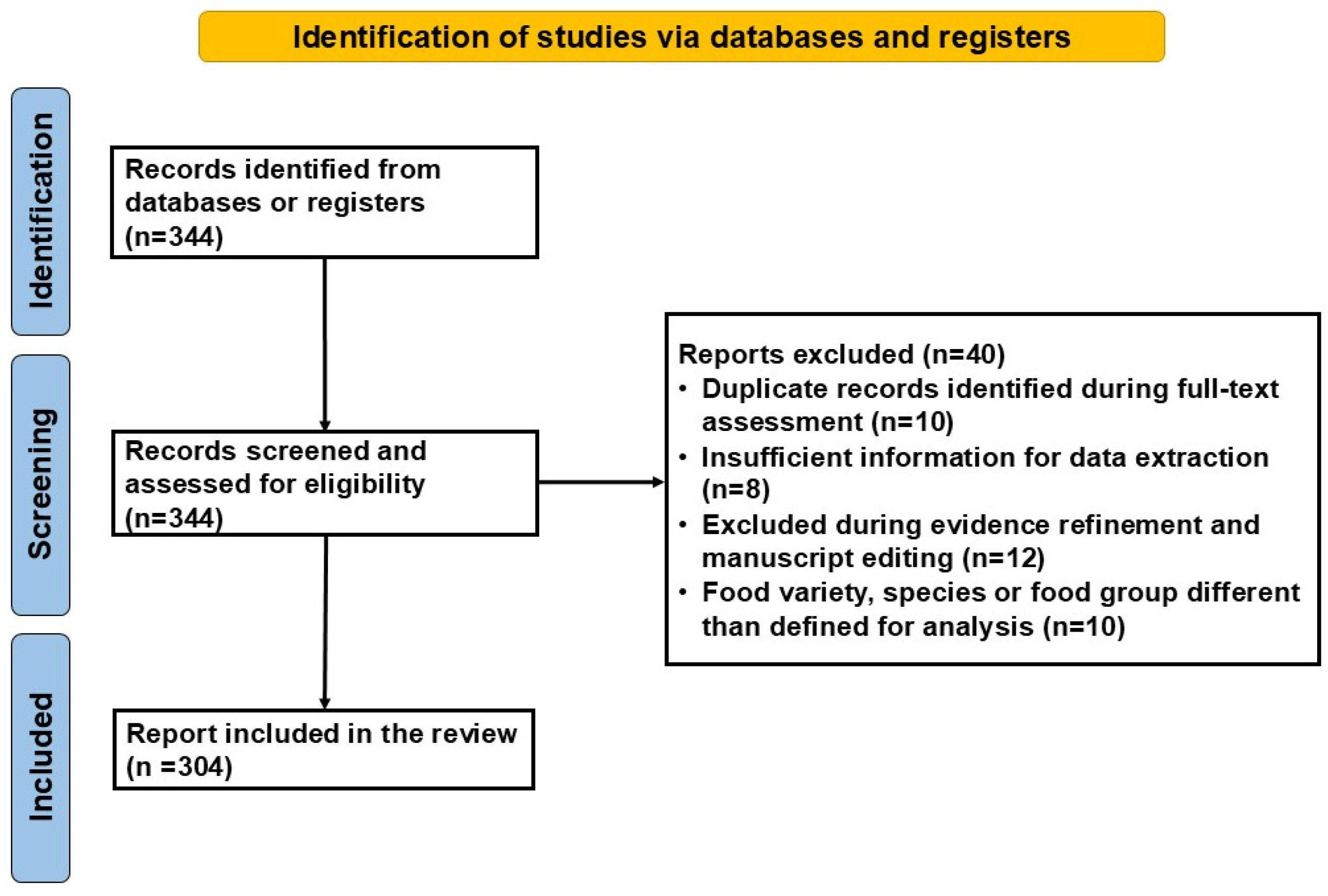
2. Methods
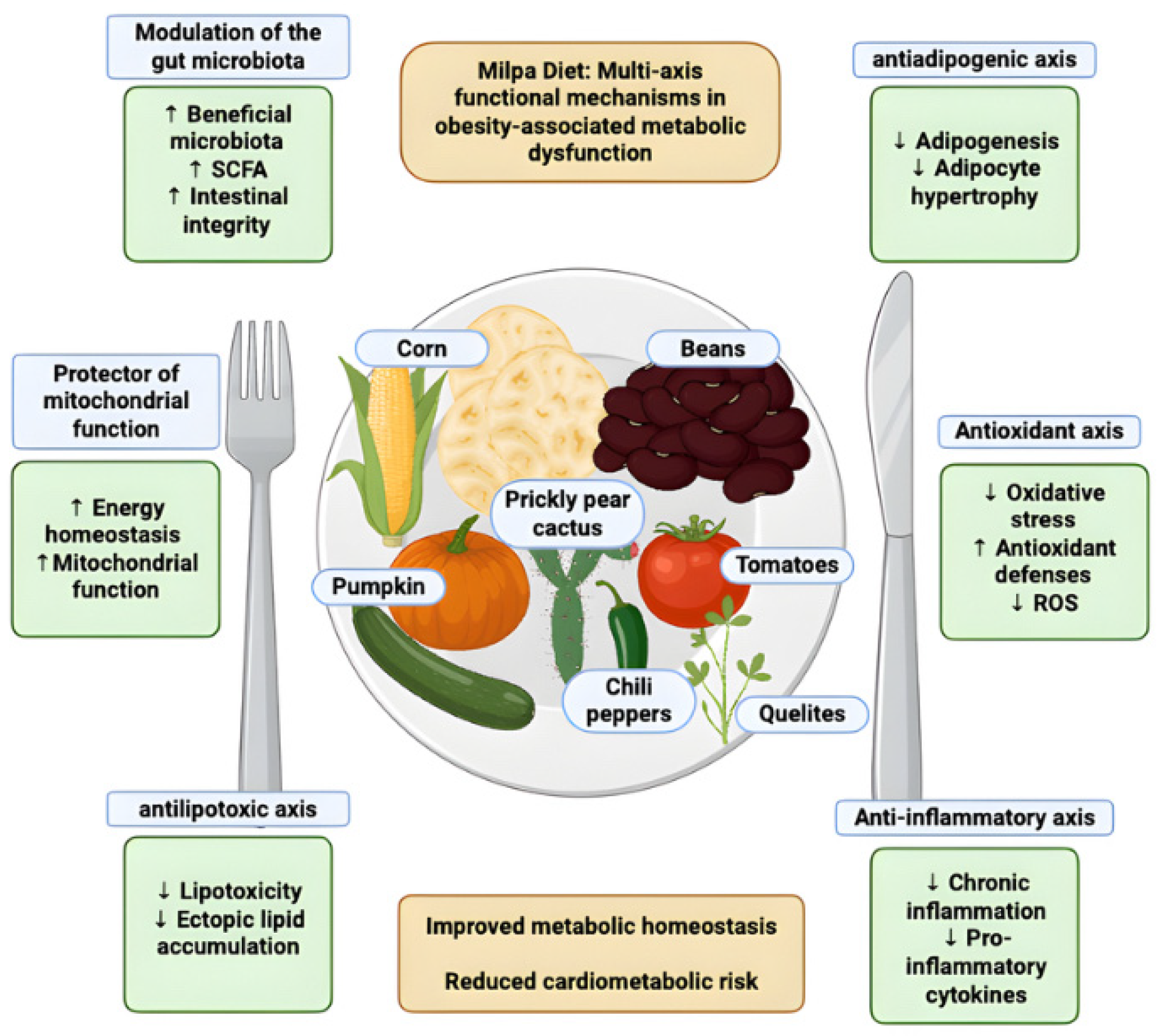
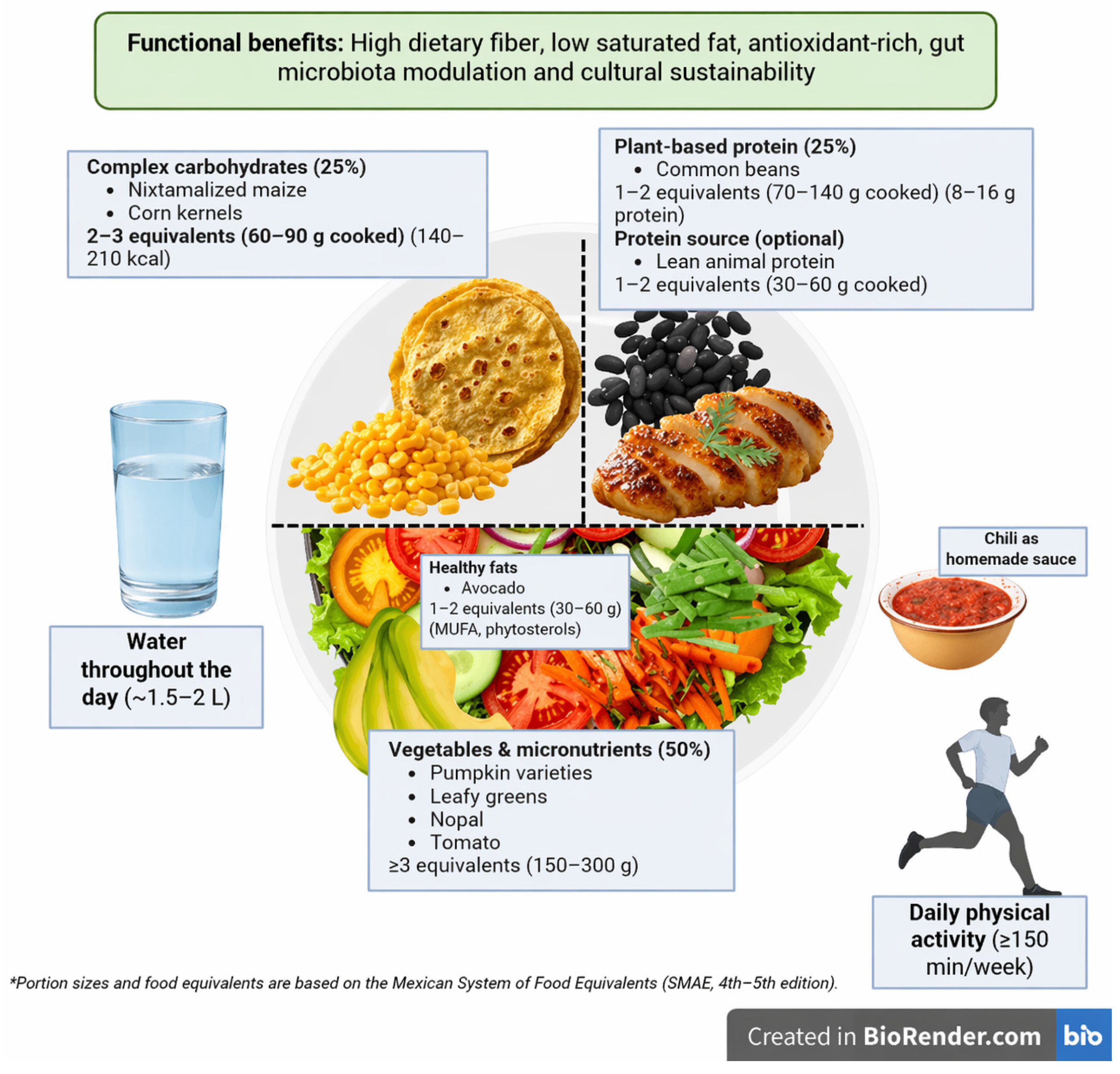
3. Overview of the Milpa Diet
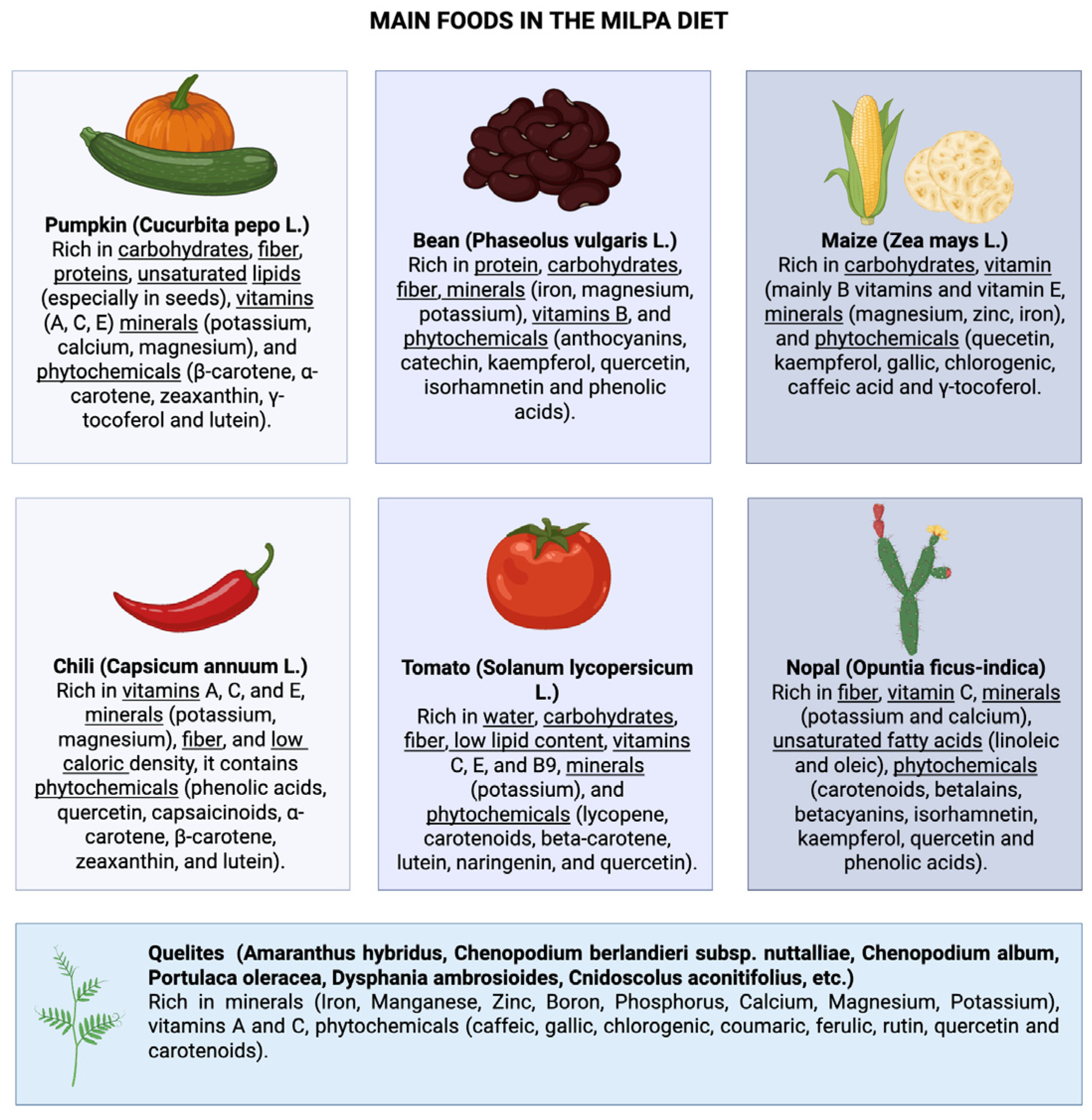
4. Main Foods of the Milpa Diet
5. Major Bioactive Compounds of the Milpa Diet and Their Role in Obesity
- −
- Flavonoids: Quercetin and Quercetin-3-glycoside [86,109,115,117,121,122,123,124,125,126,127,128,129,130,131,132,133]; Kaempferol and Kaempferol-3-O-glucoside [27,86,92,115,130,131,132,134,135,136,137,138,139,140,141,142,143,144,145]; Naringenin [86,92,109,131,132,133,145,146,147,148,149,150,151,152,153]; Anthocyanins [86,131,154,155,156,157,158,159,160,161,162,163,164]; Isorhamnetin and rhamnet-in-3-glucoside [115,165,166,167,168,169,170,171,172,173,174,175,176,177]; Rutin [109,115,117,128,129,177,178,179,180,181,182,183,184,185,186]; Catechin [128,129,133,172,173,174,175,176,178,179,180,181,182,183,184,185,186,187,188,189,190,191,192,193,194,195,196,197,198,199];
- −
- Carotenoids: α-Carotene [99,103,109,200,201,202,203,204,205,206]; β-carotene [29,87,103,109,184,202,205,207,208,209,210,211,212,213,214,215,216,217,218,219]; Lycopene [103,109,111,212,220,221,222,223,224,225]; Lutein [87,103,109,219,226,227,228,229,230,231,232,233,234]; Zeaxanthin [87,103,219,235,236,237,238,239,240,241,242]; Capsanthin [102,103,108,243,244];
- −
- −
- Phenolic acids: Ferulic acid [109,115,117,130,218,219,221,254,255,256,257,258,259,260]; Chlorogenic acid [86,92,109,117,129,132,133,145,261,262,263,264,265]; Caffeic acid [86,92,109,117,130,133,145,186,219,266,267,268,269,270,271]; Gallic acid [29,86,92,115,117,133,145,186,262,272,273,274,275,276,277]; Betalains [234,278,279,280,281,282,283,284,285];
- −
6. Effects of Foods from the Milpa Diet and Their Bioactive Compounds on Obesity: In Vitro and In Vivo Evidence
7. Comparative Overview of the Milpa Diet, Mediterranean Diet, and DASH Diet
Strengths and Limitations
8. Evidence Interpretation and Limitations
9. Conclusions
Supplementary Materials
Author Contributions
Funding
Institutional Review Board Statement
Informed Consent Statement
Data Availability Statement
Acknowledgments
Conflicts of Interest
References
- Elmaleh-Sachs, A.; Schwartz, J.L.; Bramante, C.T.; Nicklas, J.M.; Gudzune, K.A.; Jay, M. Obesity management in adults: A review. JAMA 2023, 330, 2000–2015. [Google Scholar] [CrossRef] [PubMed]
- Gilbert, O.; Gulati, M.; Gluckman, T.J.; Kittleson, M.M.; Rikhi, R.; Saseen, J.J.; Tchang, B.G. 2025 Concise Clinical Guidance: An ACC Expert Consensus Statement on Medical Weight Management for Optimization of Cardiovascular Health: A report of the American College of Cardiology Solution Set Oversight Committee. J. Am. Coll. Cardiol. 2025, 86, 536–555. [Google Scholar] [CrossRef] [PubMed]
- Kittleson, M.M.; Benjamin, E.J.; Blumer, V.; Harrington, J.; Januzzi, J.L.; McMurray, J.J.V. Vest AR2025 ACC Scientific Statement on the Management of Obesity in Adults with Heart Failure: A report of the American College of Cardiology. J. Am. Coll. Cardiol. 2025, 86, 1953–1975. [Google Scholar] [CrossRef] [PubMed]
- Kelly, A.S.; Armstrong, S.C.; Michalsky, M.P.; Fox, C.K. Obesity in adolescents: A review. JAMA 2024, 332, 738–748. [Google Scholar] [CrossRef] [PubMed]
- Abad, Z.; Vezza, T. Obesity: A global health challenge demanding urgent action. Biomedicines 2025, 13, 502. [Google Scholar] [CrossRef] [PubMed]
- Shamah-Levy, T.; Gaona-Pineda, E.B.; Cuevas-Nasu, L.; Valenzuela-Bravo, D.G.; Morales-Ruan, C.; Rodríguez-Ramírez, S.; Méndez-Gómez-Humarán, I.; Ávila-Arcos, M.A.; Álvarez-Sánchez, C.; Ávila-Curiel, A.; et al. Sobrepeso y obesidad en población escolar y adolescente. Salud Publica Mex. 2024, 66, 404–413. [Google Scholar] [CrossRef] [PubMed]
- Hampl, S.E.; Hassink, S.G.; Skinner, A.C.; Armstrong, S.C.; Barlow, S.E.; Bolling, C.F.; Avila Edwards, K.C.; Eneli, I.; Hamre, R.; Joseph, M.M.; et al. Clinical practice guideline for the evaluation and treatment of children and adolescents with obesity. Pediatrics 2023, 151, e2022060640. [Google Scholar] [CrossRef] [PubMed]
- Dicker, D.; Karpati, T.; Promislow, S.; Reges, O. Implications of the European Association for the Study of Obesity’s new framework definition of obesity: Prevalence and association with all-cause mortality. Ann. Intern. Med. 2025, 178, 1065–1072. [Google Scholar] [CrossRef] [PubMed]
- Gudzune, K.A.; Kushner, R.F. Medications for obesity: A review. JAMA 2024, 332, 571–584. [Google Scholar] [CrossRef] [PubMed]
- Janssen, J.A.M.J.L. The pivotal role of the Western diet, hyperinsulinemia, ectopic fat, and diacylglycerol-mediated insulin resistance in type 2 diabetes. Int. J. Mol. Sci. 2025, 26, 9191. [Google Scholar] [CrossRef] [PubMed]
- He, L. Alterations of gut microbiota by overnutrition impact gluconeogenic gene expression and insulin signaling. Int. J. Mol. Sci. 2021, 22, 2121. [Google Scholar] [CrossRef] [PubMed]
- Olivares-Vicente, M.; Herranz-López, M. The interplay between oxidative stress and lipid composition in obesity-induced inflammation: Antioxidants as therapeutic agents in metabolic diseases. Int. J. Mol. Sci. 2025, 26, 8544. [Google Scholar] [CrossRef] [PubMed]
- Apovian, C.M.; Aronne, L.; Barenbaum, S.R. Clinical Management of Obesity, 3rd ed.; The Obesity Society: Rockville, MD, USA, 2025. [Google Scholar]
- Garg, S.S.; Kushwaha, K.; Dubey, R.; Gupta, J. Association between obesity, inflammation and insulin resistance: Insights into signaling pathways and therapeutic interventions. Diabetes Res. Clin. Pr. 2023, 200, 110691. [Google Scholar] [CrossRef] [PubMed]
- Engin, A.B. Mechanism of obesity-related lipotoxicity and clinical perspective. Adv. Exp. Med. Biol. 2024, 1460, 131–166. [Google Scholar] [CrossRef] [PubMed]
- Hammarstedt, A.; Gogg, S.; Hedjazifar, S.; Nerstedt, A.; Smith, U. Impaired adipogenesis and dysfunctional adipose tissue in human hypertrophic obesity. Physiol. Rev. 2018, 98, 1911–1941. [Google Scholar] [CrossRef] [PubMed]
- Das, S.; Mukhuty, A.; Mullen, G.P.; Rudolph, M.C. Adipocyte mitochondria: Deciphering energetic functions across fat depots in obesity and type 2 diabetes. Int. J. Mol. Sci. 2024, 25, 6681. [Google Scholar] [CrossRef] [PubMed]
- Carneiro, F.S.; Katashima, C.K.; Dodge, J.D.; Cintra, D.E.; Pauli, J.R.; Da Silva, A.S.R.; Ropelle, E.R. Tissue-specific roles of mitochondrial unfolded protein response during obesity. Obes. Rev. 2024, 25, e13791. [Google Scholar] [CrossRef] [PubMed]
- García-Gamboa, R.; Díaz-Torres, O.; Senés-Guerrero, C.; Cintra, D.E.; Rodrigo Pauli, J.; Da Silva, A.S.R.; Ropelle, E.R. Associations between bacterial and fungal communities in the human gut microbiota and their implications for nutritional status and body weight. Sci. Rep. 2024, 14, 5703. [Google Scholar] [CrossRef] [PubMed]
- Iqbal, M.J.; Kabeer, A.; Abbas, Z.; Siddiqui, H.A.; Calina, D.; Sharifi-Rad, J.; Cho, W.C. Interplay of Oxidative Stress, Cellular Communication and Signaling Pathways in Cancer. Cell Commun. Signal. 2024, 22, 7. [Google Scholar] [CrossRef] [PubMed]
- Pérez, I.; Castrejón, V.; Soto, M.E.; Rubio, M.E.; Manzano, L.; Guarner, V. Oxidative stress, plant natural antioxidants, and obesity. Int. J. Mol. Sci. 2021, 22, 1786. [Google Scholar] [CrossRef] [PubMed]
- Zizumbo-Villarreal, D.; Colunga-GarcíaMarín, P. La milpa del occidente de Mesoamérica: Profundidad histórica, dinámica evolutiva y rutas de dispersión a Suramérica. Rev. Geogr. Agríc. 2017, 58, 33–46. [Google Scholar] [CrossRef]
- Novotny, I.P.; Tittonell, P.; Fuentes-Ponce, M.H.; López-Ridaura, S.; Rossing, W.A.H. The importance of the traditional milpa in food security and nutritional self-sufficiency in the highlands of Oaxaca, Mexico. PLoS ONE 2021, 16, e0246281. [Google Scholar] [CrossRef] [PubMed]
- Arango-Angarita, A.; Unar-Munguía, M.; Rivera, J.A.; Mackay, S.; Vandevijvere, S.; Swinburn, B.; Batis, C. Environmental impact, nutritional adequacy, and monetary cost of current vs healthy and sustainable diets in Mexico: Modelling study. Am. J. Clin. Nutr. 2025, 122, 1641–1657. [Google Scholar] [CrossRef] [PubMed]
- Dreher, M.L.; Cheng, F.W.; Ford, N.A. A comprehensive review of Hass avocado clinical trials, observational studies, and biological mechanisms. Nutrients 2021, 13, 4376. [Google Scholar] [CrossRef] [PubMed]
- Nascimento, A.P.S.; Duarte, M.E.M.; Rocha, A.P.T.; Barros, A.N. Bioactive compounds, technological advances, and sustainable applications of avocado (Persea americana Mill.): A critical review. Foods 2025, 14, 2746. [Google Scholar] [CrossRef] [PubMed]
- Wang, L.; Tao, L.; Hao, L.; Stanley, T.H.; Huang, K.H.; Lambert, J.D.; Kris-Etherton, P.M. A moderate-fat diet with one avocado per day increases plasma antioxidants and decreases the oxidation of small, dense LDL in adults with overweight and obesity: A randomized controlled trial. J. Nutr. 2020, 150, 276–284. [Google Scholar] [CrossRef] [PubMed]
- Thompson, S.V.; Bailey, M.A.; Taylor, A.M.; Kaczmarek, J.L.; Mysonhimer, A.R.; Edwards, C.G.; Reeser, G.E.; Burd, N.A.; Khan, N.A.; Holscher, H.D. Avocado consumption alters gastrointestinal bacteria abundance and microbial metabolite concentrations among adults with overweight or obesity: A randomized controlled trial. J. Nutr. 2021, 151, 753–762. [Google Scholar] [CrossRef] [PubMed]
- Matthan, N.R.; Lovato, L.; Petersen, K.S.; Lichtenstein, A.H.; Sabate, J.; Rajaram, S.; Li, Z.; Reboussin, D.M.; Lichtenstein, A.H. Effect of daily avocado consumption for 6 months compared with habitual diet on red blood cell fatty acid profiles and association with cardiometabolic risk factors in individuals with abdominal obesity: A randomized trial. Am. J. Clin. Nutr. 2024, 120, 794–803. [Google Scholar] [CrossRef] [PubMed]
- Grajzer, M.; Kozłowska, W.; Zalewski, I.; Kłobus, M.; Wroniak, M. Nutraceutical prospects of pumpkin seeds: A study on the lipid fraction composition and oxidative stability across eleven varieties. Foods 2025, 14, 354. [Google Scholar] [CrossRef] [PubMed]
- Leichtweis, M.G.; Molina, A.K.; Dias, M.I.; Calhelha, R.C.; Pires, T.C.S.P.; Pavli, O.; Oliveira, M.B.P.P.; Ferreira, I.C.F.R.; Petropoulos, S.A.; Barros, L.; et al. Valorisation of pumpkin by-products: Chemical composition and bioactive properties of pumpkin seeds, peels, and fibrous strands from different local landraces of Greece. Food Chem. 2025, 475, 143306. [Google Scholar] [CrossRef] [PubMed]
- Song, H.; Cao, Y.; Huang, Q. The polysaccharide PPS3 from pumpkin alleviates high fat diet-induced obesity in mice by activating the AMPK signaling pathway and regulating the gut microbiota. Mol. Nutr. Food Res. 2025, 69, e70245. [Google Scholar] [CrossRef] [PubMed]
- Hu, Z.; Hu, C.; Li, Y.; Yang, R.; Qin, Y.; Li, J.; Hu, Y.; Cui, Z.; Cui, T. Pumpkin Seed Oil: A Comprehensive Review of Extraction Methods, Nutritional Constituents, and Health Benefits. J. Sci. Food Agric. 2024, 104, 572–582. [Google Scholar] [CrossRef] [PubMed]
- Abdelmonsef, M.; Shawky, E.; Ghareeb, D.A.; El Naggar, E.M.B.; El Newehy, N.M. Comprehensive metabolomics and chemometrics unravel potential anti-diabetic metabolites of pumpkin (Cucurbita pepo L.) fruits through UPLC-QqQ-MS and GC-MS analyses. Food Res. Int. 2024, 192, 114771. [Google Scholar] [CrossRef] [PubMed]
- Sánchez-Velázquez, O.A.; Luna-Vital, D.A.; Morales-Hernandez, N.; Contreras, J.; Villaseñor-Tapia, E.C.; Fragoso-Medina, J.A.; Mojica, L. Nutritional, bioactive components and health properties of the milpa triad system seeds (corn, common bean and pumpkin). Front. Nutr. 2023, 10, 1169675. [Google Scholar] [CrossRef] [PubMed]
- Toimbayeva, D.; Saduakhasova, S.; Kamanova, S.; Kiykbay, A.; Tazhina, S.; Temirova, I.; Muratkhan, M.; Shaimenova, B.; Murat, L.; Khamitova, D.; et al. Prospects for the use of amaranth grain in the production of functional and specialized food products. Foods 2025, 14, 1603. [Google Scholar] [CrossRef] [PubMed]
- Gupta, A.; Singh, G.D.; Gautam, T.T.; Taneja, A.K.; Singh, B.N.; Roy, R.; Sidhu, O.P.; Panda, O.K.; Bhatt, A. Unraveling compositional study, chemometric analysis, and cell-based antioxidant potential of selective high nutraceutical value amaranth cultivars using a GC-MS and NMR-based metabolomics approach. ACS Omega 2023, 8, 47573–47584. [Google Scholar] [CrossRef] [PubMed]
- Sarker, U.; Oba, S. Nutritional and bioactive constituents and scavenging capacity of radicals in Amaranthus hypochondriacus. Sci. Rep. 2020, 10, 19962. [Google Scholar] [CrossRef] [PubMed]
- Khandelwal, A.; Pande, B.; Jyotsana Gupta, P. Potential of Amaranthus tricolor terpenoids in managing obesity by modulating the PI3K/AKT pathway: A network pharmacology approach. Cell Biochem. Biophys. 2025, 3, 5255–5269. [Google Scholar] [CrossRef] [PubMed]
- Ellam, S.; Williamson, G. Cocoa and human health. Annu. Rev. Nutr. 2013, 33, 105–128. [Google Scholar] [CrossRef] [PubMed]
- Lima, G.V.S.; Moura, F.G.; Gofflot, S.; Pinto, A.S.O.; de Souza, J.N.S.; Baeten, V.; Rogez, H. Targeted metabolomics for quantitative assessment of polyphenols and methylxanthines in fermented and unfermented cocoa beans from 18 genotypes of the Brazilian Amazon. Food Res. Int. 2025, 211, 116394. [Google Scholar] [CrossRef] [PubMed]
- Dorenkott, M.R.; Griffin, L.E.; Goodrich, K.M.; Thompson-Witrick, K.A.; Fundaro, G.; Ye, L.; Stevens, J.R.; Ali, M.; O’Keefe, S.F.; Hulver, M.W.; et al. Oligomeric cocoa procyanidins possess enhanced bioactivity compared to monomeric and polymeric cocoa procyanidins for preventing the development of obesity, insulin resistance, and impaired glucose tolerance during high-fat feeding. J. Agric. Food Chem. 2014, 62, 2216–2227. [Google Scholar] [CrossRef] [PubMed]
- Camps-Bossacoma, M.; Garcia-Aloy, M.; Saldaña-Ruiz, S.; Cambras, T.; González-Domínguez, R.; Franch, A.; Pérez-Cano, F.J.; Andres-Lacueva, C.; Castell, M. Role of theobromine in cocoa’s metabolic properties in healthy rats. J. Agric. Food Chem. 2019, 67, 3605–3614. [Google Scholar] [CrossRef] [PubMed]
- Jaramillo Flores, M.E. Cocoa flavanols: Natural agents with attenuating effects on metabolic syndrome risk factors. Nutrients 2019, 11, 751. [Google Scholar] [CrossRef] [PubMed]
- Hidalgo, I.; Ortiz, A.; Sanchez-Pardo, M.; Ramos, S.; Goya, L.; Martín, M.Á. Obesity and cardiovascular risk improvement using cacao by-products in a diet-induced obesity murine model. J. Med. Food 2019, 22, 567–577. [Google Scholar] [CrossRef] [PubMed]
- Jean-Marie, E.; Bereau, D.; Robinson, J.C. Benefits of polyphenols and methylxanthines from cocoa beans on dietary metabolic disorders. Foods 2021, 10, 2049. [Google Scholar] [CrossRef] [PubMed]
- Melo, D.; Machado, T.B.; Oliveira, M.B.P.P. Chia seeds: An ancient grain trending in modern human diets. Food Funct. 2019, 10, 3068–3089. [Google Scholar] [CrossRef] [PubMed]
- Rodríguez Lara, A.; Mesa García, M.D.; Medina, K.A.D.; Quirantes Piné, R.; Casuso, R.A.; Segura Carretero, A.; Rodríguez Huertas, J. Assessment of the phytochemical and nutrimental composition of dark chia seed (Salvia hispanica L.). Foods 2021, 10, 3001. [Google Scholar] [CrossRef] [PubMed]
- Amtaghri, S.; Eddouks, M. Ethnopharmacology, nutritional value, therapeutic effects, phytochemistry, and toxicology of Salvia hispanica L.: A review. Curr. Top. Med. Chem. 2023, 23, 2621–2639. [Google Scholar] [CrossRef] [PubMed]
- Chen, J.; Wu, G.; Zhu, L.; Karrar, E.; Zhang, H. A review of the functional activities of chia seed and the mechanisms of action related to molecular targets. Food Funct. 2024, 15, 1158–1169. [Google Scholar] [CrossRef] [PubMed]
- Morais, V.N.; Gomes, M.J.C.; Grancieri, M.; Moreira, L.P.D.; Toledo, R.C.L.; Costa, N.M.B.; da Silva, B.P.; Martino, H.S.D. Chia (Salvia hispanica L.) flour modulates the intestinal microbiota in Wistar rats fed a high-fat and high-fructose diet. Food Res. Int. 2023, 172, 113095. [Google Scholar] [CrossRef] [PubMed]
- Egea, M.B.; Fernandes, S.S. Unlocking the potential of chia intake in the management of metabolic syndrome and its risk conditions: A narrative review. Plant Foods Hum. Nutr. 2025, 80, 90. [Google Scholar] [CrossRef] [PubMed]
- Santana, L.F.; Inada, A.C.; Espirito Santo, B.L.S.D.; Filiú, W.F.O.; Pott, A.; Alves, F.M.; Guimarães, R.C.A.; Freitas, K.C.; Hiane, P.A. Nutraceutical potential of Annona crassiflora in metabolic syndrome. Nutrients 2019, 11, 1608. [Google Scholar] [CrossRef] [PubMed]
- George, V.C.; Kumar, D.R.; Suresh, P.K.; Kumar, R.A. Antioxidant, DNA protective efficacy and HPLC analysis of Annona muricata (soursop) extracts. J. Food Sci. Technol. 2015, 52, 2328–2335. [Google Scholar] [CrossRef]
- Villacís-Chiriboga, J.; Zaldumbide, E.; Raes, K.; Ruales, J.; Elst, K.; Van Camp, J. Comparative assessment of physicochemical, structural and functional properties of dietary fiber extracted from mango (Mangifera indica L.) and soursop (Annona muricata) peels. Int. J. Biol. Macromol. 2023, 238, 124116. [Google Scholar] [CrossRef] [PubMed]
- Tunç, Y.; Yaman, M.; Yılmaz, K.U.; Khadivi, A.; Mishra, D.S. Biochemical, nutritional, and nutraceutical properties of cactus pear accessions. Sci. Rep. 2025, 15, 19755. [Google Scholar] [CrossRef] [PubMed]
- Amaya-Cruz, D.M.; Pérez-Ramírez, I.F.; Delgado-García, J.; Mondragón-Jacobo, C.; Dector-Espinoza, A.; Reynoso-Camacho, R. An integral profile of bioactive compounds and functional properties of prickly pear (Opuntia ficus-indica L.) peel with different tonalities. Food Chem. 2019, 278, 568–578. [Google Scholar] [CrossRef] [PubMed]
- Eseberri, I.; Gómez-Maqueo, A.; Trepiana, J.; Gómez-López, I.; Proença, C.; Cano, M.P.; Portillo, M.P. In vitro screening and lipid-lowering effect of prickly pear (Opuntia ficus-indica L. Mill.) fruit extracts in 3T3-L1 pre-adipocytes and mature adipocytes. Plant Foods Hum. Nutr. 2024, 79, 143–150. [Google Scholar] [CrossRef] [PubMed]
- Quarta, S.; Calabriso, N.; Carluccio, M.A.; Albano, C.; Khalifa, I.; Wabitsch, M.; Blando, F.; Massaro, M. Shielding human adipocytes from inflammation: The protective potential of polyphenol-rich Opuntia ficus-indica cladode extract. Mol. Nutr. Food Res. 2025, 69, e70114. [Google Scholar] [CrossRef] [PubMed]
- Terzo, S.; Calvi, P.; Restivo, I.; Caldara, G.F.; Massaro, A.; Tesoriere, L.; Fernández-Real, J.M.; Giardina, M.; Amato, A.; Mulè, F.; et al. Opuntia ficus-indica fruit consumption improves insulin resistance in mice with diet-induced obesity. J. Sci. Food Agric. 2025, 105, 7868–7880. [Google Scholar] [CrossRef] [PubMed]
- Sánchez-Tapia, M.; Aguilar-López, M.; Pérez-Cruz, C.; Pichardo-Ontiveros, E.; Wang, M.; Donovan, S.M.; Tovar, A.R.; Torres, N. Nopal (Opuntia ficus-indica) protects from metabolic endotoxemia by modifying gut microbiota in obese rats fed high fat/sucrose diet. Sci. Rep. 2017, 7, 4716. [Google Scholar] [CrossRef] [PubMed]
- Gómez-García, I.; Fernández-Quintela, A.; González, M.; Macarulla, M.T.; Portillo, M.P. Usefulness of Opuntia spp. on the management of obesity and its metabolic co-morbidities. Nutrients 2024, 16, 1282. [Google Scholar] [CrossRef] [PubMed]
- Zhao, S.; Zhong, L.; Li, X.; Wang, L.; Yan, Z.; Liu, X. Comparative analysis of nutrients, phytochemicals, and minerals in colored sweet potato (Ipomoea batatas L.) roots. Foods 2024, 13, 3636. [Google Scholar] [CrossRef] [PubMed]
- Shekhar, S.; Mishra, D.; Buragohain, A.K.; Chakraborty, S.; Chakraborty, N. Comparative analysis of phytochemicals and nutrient availability in two contrasting cultivars of sweet potato (Ipomoea batatas L.). Food Chem. 2015, 173, 957–965. [Google Scholar] [CrossRef] [PubMed]
- Rosell, M.L.Á.; Quizhpe, J.; Ayuso, P.; Peñalver, R.; Nieto, G. Proximate composition, health benefits, and food applications in bakery products of purple-fleshed sweet potato (Ipomoea batatas L.) and its by-products: A comprehensive review. Antioxidants 2024, 13, 954. [Google Scholar] [CrossRef] [PubMed]
- Jiang, T.; Ye, S.; Liao, W.; Wu, M.; He, J.; Mateus, N.; Oliveira, H. The botanical profile, phytochemistry, biological activities and protected-delivery systems for purple sweet potato (Ipomoea batatas (L.) Lam.): An up-to-date review. Food Res. Int. 2022, 161, 111811. [Google Scholar] [CrossRef] [PubMed]
- Laveriano-Santos, E.P.; López-Yerena, A.; Jaime-Rodríguez, C.; González-Coria, J.; Lamuela-Raventós, R.M.; Vallverdú-Queralt, A.; Romanyà, J.; Pérez, M. Sweet potato is not simply an abundant food crop: A comprehensive review of its phytochemical constituents, biological activities, and the effects of processing. Antioxidants 2022, 11, 1648. [Google Scholar] [CrossRef] [PubMed]
- Wang, S.; Nie, S.; Zhu, F. Chemical constituents and health effects of sweet potato. Food Res. Int. 2016, 89, 90–116. [Google Scholar] [CrossRef] [PubMed]
- Liaset, B.; Øyen, J.; Jacques, H.; Kristiansen, K.; Madsen, L. Seafood intake and the development of obesity, insulin resistance and type 2 diabetes. Nutr. Res. Rev. 2019, 32, 146–167. [Google Scholar] [CrossRef] [PubMed]
- Abachi, S.; Pilon, G.; Marette, A.; Bazinet, L.; Beaulieu, L. Beneficial effects of fish and fish peptides on main metabolic syndrome associated risk factors: Diabetes, obesity and lipemia. Crit. Rev. Food Sci. Nutr. 2023, 63, 7896–7944. [Google Scholar] [CrossRef] [PubMed]
- Fjære, E.; Myrmel, L.S.; Dybing, K.; Kuda, O.; Jensen, B.A.H.; Rossmeisl, M.; Frøyland, L.; Kristiansen, K.; Madsen, L. The anti-obesogenic effect of lean fish species is influenced by the fatty acid composition in fish fillets. Nutrients 2020, 12, 3038. [Google Scholar] [CrossRef] [PubMed]
- Myrmel, L.S.; Fjære, E.; Han, M.; Borkowski, K.; Kristiansen, K.; Madsen, L. The food sources in Western diets modulate obesity development, insulin sensitivity, and the plasma and cecal metabolome in mice. Mol. Nutr. Food Res. 2024, 68, e2400246. [Google Scholar] [CrossRef] [PubMed]
- Daskalaki, M.G.; Axarlis, K.; Tsoureki, A.; Michailidou, S.; Efraimoglou, C.; Lapi, J.; Kolliniati, O.; Dermitzaki, E.; Venihaki, M.; Kousoulaki, K.; et al. Fish-derived protein hydrolysates increase insulin sensitivity and alter intestinal microbiome in high-fat-induced obese mice. Mar. Drugs 2023, 21, 343. [Google Scholar] [CrossRef] [PubMed]
- Sharkey, S.J.; Harnedy-Rothwell, P.A.; Allsopp, P.J.; McSorley, E.M.; Fitzgerald, R.J.; O’Harte, F.P.M. A narrative review of the anti-hyperglycemic and satiating effects of fish protein hydrolysates and their bioactive peptides. Mol. Nutr. Food Res. 2020, 64, e2000403. [Google Scholar] [CrossRef] [PubMed]
- Marín-Morales, M.S.; Ibarra-Herrera, C.C.; Luna-Vital, D.A.; Monribot-Villanueva, J.L.; Guerrero-Analco, J.A. Biological activity of extracts and hydrolysates from early- and adult-stage edible grasshopper Sphenarium purpurascens. Front. Nutr. 2022, 9, 1028543. [Google Scholar] [CrossRef] [PubMed]
- Lopez-Ridaura, S.; Barba-Escoto, L.; Reyna-Ramirez, C.A.; Sum, C.; Palacios-Rojas, N.; Gerard, B. Maize intercropping in the milpa system: Diversity, extent and importance for nutritional security in the western highlands of Guatemala. Sci. Rep. 2021, 11, 3696. [Google Scholar] [CrossRef] [PubMed]
- Biruete, A.; Leal-Escobar, G.; Espinosa-Cuevas, Á.; Mojica, L.; Kistler, B.M. Dieta de la milpa: A culturally concordant plant-based dietary pattern for Hispanic/Latine people with chronic kidney disease. Nutrients 2024, 16, 574. [Google Scholar] [CrossRef] [PubMed]
- Vazeux-Blumental, N.; Manicacci, D.; Tenaillon, M. The milpa, from Mesoamerica to present days, a multicropping traditional agricultural system serving agroecology. Comptes Rendus Biol. 2024, 347, 159–173. [Google Scholar] [CrossRef] [PubMed]
- Valerino-Perea, S.; Armstrong, M.E.G.; Papadaki, A. Development of an index to assess adherence to the traditional Mexican diet using a modified Delphi method. Public Health Nutr. 2021, 24, 4387–4396. [Google Scholar] [CrossRef] [PubMed]
- Calderón de la Barca, A.M.; Martínez-Díaz, G.; Ibarra-Pastrana, É.N.; Devi, S.; Kurpad, A.V.; Valencia, M.E. Pinto bean amino acid digestibility and score in a Mexican dish with corn tortilla and guacamole, evaluated in adults using a dual-tracer isotopic method. J. Nutr. 2021, 151, 3151–3157. [Google Scholar] [CrossRef] [PubMed]
- Flores, M.; Macias, N.; Rivera, M.; Lozada, A.; Barquera, S.; Rivera-Dommarco, S.; Tucker, K.L. Dietary patterns in Mexican adults are associated with risk of being overweight or obese. J. Nutr. 2010, 140, 1869–1873. [Google Scholar] [CrossRef] [PubMed]
- García-Chávez, C.G.; Rivera, J.A.; Monterrubio-Flores, E.; Rodríguez-Ramírez, S. Dietary patterns are associated with obesity in Mexican schoolchildren. Eur. J. Clin. Nutr. 2020, 74, 1201–1209. [Google Scholar] [CrossRef] [PubMed]
- Escutia-Gutiérrez, R.; Sandoval-Rodríguez, A.; Galicia-Moreno, M.; Rosas-Campos, R.; Almeida-López, M.; Santos, A.; Armendáriz-Borunda, J. Mexican ancestral foods and supplementation on anthropometric, lipid and glycemic control variables in obese patients: A systematic review and meta-analysis. Foods 2023, 12, 1177. [Google Scholar] [CrossRef] [PubMed]
- Valerino-Perea, S.; Lara-Castor, L.; Armstrong, M.E.G.; Papadaki, A. Definition of the traditional Mexican diet and its role in health: A systematic review. Nutrients 2019, 11, 2803. [Google Scholar] [CrossRef] [PubMed]
- Rodríguez-Morán, M.; Guerrero-Romero, F.; Rascón-Pacheco, R.A. Dietary factors related to the increase of cardiovascular risk factors in traditional Tepehuanos communities from Mexico: A 10 year follow-up study. Nutr. Metab. Cardiovasc. Dis. 2009, 19, 409–416. [Google Scholar] [CrossRef] [PubMed]
- Rodriguez, M.D.; Monsierra, L.; Mansilla, P.S.; Pérez, G.T.; de Pascual-Teresa, S. Phenolic characterization of a purple maize (Zea mays cv. Moragro) by HPLC-QTOF-MS and study of its bioaccessibility using a simulated in vitro digestion/Caco-2 culture model. J. Agric. Food Chem. 2024, 72, 6327–6338. [Google Scholar] [CrossRef] [PubMed]
- Zhang, J.; Liu, J.; Han, Z.; He, X.; Herrera-Balandrano, D.D.; Xiang, J.J. Comprehensive evaluation on phenolic derivatives and antioxidant activities of diverse yellow maize varieties. Food Chem. 2025, 464, 141602. [Google Scholar] [CrossRef] [PubMed]
- Sánchez-Nuño, Y.A.; Zermeño-Ruiz, M.; Vázquez-Paulino, O.D.; Nuño, K.; Villarruel-López, A. Bioactive compounds from pigmented corn (Zea mays L.) and their effect on health. Biomolecules 2024, 14, 338. [Google Scholar] [CrossRef] [PubMed]
- Luna-Vital, D.; Luzardo-Ocampo, I.; Cuellar-Nuñez, M.L.; Loarca-Piña, G.; Gonzalez de Mejia, E. Maize extract rich in ferulic acid and anthocyanins prevents high-fat-induced obesity in mice by modulating SIRT1, AMPK and IL-6 associated metabolic and inflammatory pathways. J. Nutr. Biochem. 2020, 79, 108343. [Google Scholar] [CrossRef] [PubMed]
- Lee-Martínez, S.N.; Luzardo-Ocampo, I.; Vergara-Castañeda, H.A.; Vasco-Leal, J.V.; Gaytán-Martínez, M.; Cuellar-Nuñez, M.L. Native corn (Zea mays L., cv. Elotes Occidentales) polyphenols extract reduced total cholesterol and triglycerides levels, and decreased lipid accumulation in mice fed a high-fat diet. Biomed. Pharmacother. 2024, 180, 117610. [Google Scholar] [CrossRef] [PubMed]
- Zhang, Q.; Gonzalez de Mejia, E.; Luna-Vital, D.; Tao, T.; Chandrasekaran, S.; Chatham, L.; Chandrasekaran, S.; Chatham, L.; Juvik, J.; Singh, V.; et al. Relationship of phenolic composition of selected purple maize (Zea mays L.) genotypes with their anti-inflammatory, anti-adipogenic and anti-diabetic potential. Food Chem. 2019, 289, 739–750. [Google Scholar] [CrossRef] [PubMed]
- Fonseca Hernández, D.; Mojica, L.; Berhow, M.A.; Brownstein, K.; Lugo Cervantes, E.; Gonzalez de Mejia, E. Black and pinto beans (Phaseolus vulgaris L.) unique Mexican varieties exhibit antioxidant and anti-inflammatory potential. Food Res. Int. 2023, 169, 112816. [Google Scholar] [CrossRef] [PubMed]
- Ganesan, K.; Xu, B. Polyphenol-rich dry common beans (Phaseolus vulgaris L.) and their health benefits. Int. J. Mol. Sci. 2017, 18, 2331. [Google Scholar] [CrossRef] [PubMed]
- Upadhyaya, B.; Moreau, R.; Majumder, K. Antioxidant and anti-inflammatory capacities of three dry bean varieties after cooking and in vitro gastrointestinal digestion. J. Agric. Food Chem. 2024, 72, 18445–18454. [Google Scholar] [CrossRef] [PubMed]
- Nina, N.; Bressa, C.; de Lucas, B.; Martin de la Torre, I.; Jiménez-Aspee, F.; Schmeda-Hirschmann, G.; Larrosa, M. Polyphenol metabolism, short-chain fatty acids production, and microbiota changes during in vitro digestion and fermentation of Chilean beans (Phaseolus vulgaris L.). Food Chem. 2025, 486, 144669. [Google Scholar] [CrossRef] [PubMed]
- Thompson, H.J.; McGinley, J.N.; Neil, E.S.; Brick, M.A. Beneficial effects of common bean on adiposity and lipid metabolism. Nutrients 2017, 9, 998. [Google Scholar] [CrossRef] [PubMed]
- Hernández-Ruiz, R.G.; Olivares-Ochoa, X.C.; Salinas-Varela, Y.; Guajardo-Espinoza, D.; Roldán-Flores, L.G.; Rivera-Leon, E.A.; López-Quintero, A. Phenolic compounds and anthocyanins in legumes and their impact on inflammation, oxidative stress, and metabolism: Comprehensive review. Molecules 2025, 30, 174. [Google Scholar] [CrossRef] [PubMed]
- Perez-Hernandez, L.M.; Nugraheni, K.; Benohoud, M.; Sun, Y.; Hernández-Álvarez, A.J.; Morgan, M.R.A.; Boesch, C.; Orfila, C. Starch digestion enhances bioaccessibility of anti-inflammatory polyphenols from Borlotti beans (Phaseolus vulgaris). Nutrients 2020, 12, 295. [Google Scholar] [CrossRef] [PubMed]
- Ninčević Grassino, A.; Rimac Brnčić, S.; Badanjak Sabolović, M.; Šic Žlabur, J.; Marović, R.; Brnčić, M. Carotenoid content and profiles of pumpkin products and by-products. Molecules 2023, 28, 858. [Google Scholar] [CrossRef] [PubMed]
- Gavril Rațu, R.N.; Stoica, F.; Lipșa, F.D.; Constantin, O.E.; Stănciuc, N.; Aprodu, I.; Râpeanu, G. Pumpkin and pumpkin by-products: A comprehensive overview of phytochemicals, extraction, health benefits, and food applications. Foods 2024, 13, 2694. [Google Scholar] [CrossRef] [PubMed]
- Aziz, A.; Noreen, S.; Khalid, W.; Ejaz, A.; Rasool, I.F.; Maham; Munir, A.M.; Farwa; Javed, M.J.; Ercisli, S.; et al. Pumpkin and pumpkin byproducts: Phytochemical constitutes, food application and health benefits. ACS Omega 2023, 8, 23346–23357. [Google Scholar] [CrossRef] [PubMed]
- Bal, S.; Sharangi, A.B.; Upadhyay, T.K.; Khan, F.; Pandey, P.; Siddiqui, S.; Saeed, M.; Lee, H.J.; Yadav, D.K. Biomedical and antioxidant potentialities in chilli: Perspectives and way forward. Molecules 2022, 27, 6380. [Google Scholar] [CrossRef] [PubMed]
- Hassan, M.N.; Yusof, N.A.; Yahaya, A.F.; Rozali, M.N.N.; Othman, R. Carotenoids of chili pepper fruits: Pigment profile and biofunctional attributes beneficial for health. Antioxidants 2019, 8, 469. [Google Scholar] [CrossRef] [PubMed]
- Yang, J.; Li, W.; Wang, Y. Capsaicin reduces obesity by reducing chronic low-grade inflammation. Int. J. Mol. Sci. 2024, 25, 8979. [Google Scholar] [CrossRef] [PubMed]
- Villa-Rivera, M.G.; Ochoa-Alejo, N. Chili pepper carotenoids: Nutraceutical properties and mechanisms of action. Molecules 2020, 25, 5573. [Google Scholar] [CrossRef] [PubMed]
- Hernández-Pérez, T.; Gómez-García, M.D.R.; Valverde, M.E.; Paredes-López, O. Capsicum annuum (hot pepper): An ancient Latin-American crop with outstanding bioactive compounds and nutraceutical potential. A review. Compr. Rev. Food Sci. Food Saf. 2020, 19, 2972–2993. [Google Scholar] [CrossRef] [PubMed]
- Huei, C.S.; Azlan, A.; Ismail, A.; Shafie, N.H.; Sultana, S. Antioxidant and anti-obesity properties of local chilies varieties in Malaysia. J. Food Sci. Technol. 2020, 57, 3677–3687. [Google Scholar] [CrossRef] [PubMed]
- Sinisgalli, C.; Vezza, T.; Diez-Echave, P.; Hidalgo-García, L.; Cenis-Cifuentes, L.; Garrido-Mesa, J.; Russo, D.; Armentano, M.F.; Garrido-Mesa, J.; Rodriguez-Cabezas, M.E.; et al. The beneficial effects of red sun-dried Capsicum annuum L. cv Senise extract with antioxidant properties in experimental obesity are associated with modulation of the intestinal microbiota. Mol. Nutr. Food Res. 2021, 65, e2000812. [Google Scholar] [CrossRef] [PubMed]
- Martí, R.; Roselló, S.; Cebolla-Cornejo, J. Tomato as a source of carotenoids and polyphenols targeted to cancer prevention. Cancers 2016, 8, 58. [Google Scholar] [CrossRef] [PubMed]
- Ali, M.Y.; Sina, A.A.I.; Khandker, S.S.; Neesa, L.; Tanvir, E.M.; Kabir, A.; Kabir, A.; Khalil, M.D.I.; Gan, S.H. Nutritional composition and bioactive compounds in tomatoes and their impact on human health and disease: A review. Foods 2020, 10, 45. [Google Scholar] [CrossRef] [PubMed]
- Fenni, S.; Hammou, H.; Astier, J.; Bonnet, L.; Karkeni, E.; Couturier, C.; Tourniaire, F.; Landrier, J.F. Lycopene and tomato powder supplementation similarly inhibit high-fat diet induced obesity, inflammatory response, and associated metabolic disorders. Mol. Nutr. Food Res. 2017, 61, 1601083. [Google Scholar] [CrossRef] [PubMed]
- Mohri, S.; Takahashi, H.; Sakai, M.; Takahashi, S.; Waki, N.; Aizawa, K.; Suganuma, H.; Ara, T.; Matsumura, Y.; Shibata, D.; et al. Wide-range screening of anti-inflammatory compounds in tomato using LC-MS and elucidating the mechanism of their functions. PLoS ONE 2018, 13, e0191203. [Google Scholar] [CrossRef] [PubMed]
- Breniere, T.; Bournot, L.; Sicard, F.; Astier, J.; Fanciullino, A.L.; Riva, C.; Borel, P.; Bertin, N.; Landrier, J.F. Tomato genotype but not crop water deficit matters for tomato health benefits in diet-induced obesity of C57BL/6JRj male mice. Food Res. Int. 2024, 188, 114512. [Google Scholar] [CrossRef] [PubMed]
- Mohri, S.; Takahashi, H.; Sakai, M.; Ooi, M.; Waki, N.; Takahashi, S.; Aizawa, K.; Suganuma, H.; Ara, T.; Sugawara, T.; et al. Integration of bioassay and non-target metabolite analysis of tomato reveals that β-carotene and lycopene activate the adiponectin signaling pathway, including AMPK phosphorylation. PLoS ONE 2022, 17, e0267248. [Google Scholar] [CrossRef] [PubMed]
- El-Mostafa, K.; El Kharrassi, Y.; Badreddine, A.; Andreoletti, P.; Vamecq, J.; El Kebbaj, M.S.; Latruffe, N.; Lizard, G.; Nasser, B.; Cherkaoui-Malki, M. Nopal Cactus (Opuntia ficus-indica) as a source of bioactive compounds for nutrition, health and disease. Molecules 2014, 19, 14879–14901. [Google Scholar] [CrossRef] [PubMed]
- Moran-Ramos, S.; He, X.; Chin, E.L.; Tovar, A.R.; Torres, N.; Slupsky, C.M.; Raybould, H.E. Nopal feeding reduces adiposity, intestinal inflammation and shifts the cecal microbiota and metabolism in high-fat fed rats. PLoS ONE 2017, 12, e0171672. [Google Scholar] [CrossRef] [PubMed]
- Santiago-Saenz, Y.O.; Hernández-Fuentes, A.D.; Monroy-Torres, R.; Cariño-Cortés, R.; Jiménez-Alvarado, R. Physicochemical, nutritional and antioxidant characterization of three vegetables (Amaranthus hybridus L., Chenopodium berlandieri L., Portulaca oleracea L.) as potential sources of phytochemicals and bioactive compounds. J. Food Meas. Charact. 2018, 12, 2855–2864. [Google Scholar] [CrossRef]
- Santiago-Saenz, Y.O.; Hernández-Fuentes, A.D.; López-Palestina, C.U.; Garrido-Cauich, J.H.; Alatorre-Cruz, J.M.; Monroy-Torres, R. Nutritional importance and biological activity of bioactive compounds of quelites consumed in Mexico. Rev. Chil. Nutr. 2019, 46, 593–605. [Google Scholar] [CrossRef]
- Pascual-Mendoza, S.; Saynes-Vásquez, A.; Pérez-Herrera, A.; Luna-Cavazos, M.; Vibrans, H. Nutritional composition and bioactive compounds of quelites consumed by indigenous communities in the municipality of Juquila Vijanos, Sierra Norte of Oaxaca, Mexico. Plant Foods Hum. Nutr. 2023, 78, 193–200. [Google Scholar] [CrossRef] [PubMed]
- Mateos-Maces, L.; Chávez-Servia, J.L.; Vera-Guzmán, A.M.; Carrillo-Rodríguez, J.C.; López, J.L. Edible leafy plants from Mexico as sources of antioxidant compounds, and their nutritional, nutraceutical and antimicrobial potential: A review. Antioxidants 2020, 9, 541. [Google Scholar] [CrossRef] [PubMed]
- Dong, J.; Zhang, X.; Zhang, L.; Bian, H.X.; Xu, N.; Bao, B.; Liu, J. Quercetin reduces obesity-associated ATM infiltration and inflammation in mice: A mechanism including AMPKα1/SIRT1. J. Lipid Res. 2014, 55, 363–374. [Google Scholar] [CrossRef] [PubMed]
- Tan, Y.; Tam, C.C.; Rolston, M.; Alves, P.; Chen, L.; Meng, S.; Hong, H.; Chang, S.K.C.; Yokoyama, W. Quercetin ameliorates insulin resistance and restores gut microbiome in mice on high-fat diets. Antioxidants 2021, 10, 1251. [Google Scholar] [CrossRef] [PubMed]
- Mirza, M.A.; Mahmood, S.; Hilles, A.R.; Ali, A.; Khan, M.Z.; Zaidi, S.A.A.; Iqbal, Z.; Ge, Y. Quercetin as a therapeutic product: Evaluation of its pharmacological action and clinical applications-a review. Pharmaceuticals 2023, 16, 1631. [Google Scholar] [CrossRef] [PubMed]
- Jiang, H.; Horiuchi, Y.; Hironao, K.Y.; Kitakaze, T.; Yamashita, Y.; Ashida, H. Prevention effect of quercetin and its glycosides on obesity and hyperglycemia through activating AMPKα in high-fat diet-fed ICR mice. J. Clin. Biochem. Nutr. 2020, 67, 74–83. [Google Scholar] [CrossRef] [PubMed]
- Lee, C.W.; Seo, J.Y.; Lee, J.; Choi, J.W.; Cho, S.; Bae, J.Y.; Sohng, J.K.; Kim, S.O.; Kim, J.; Park, Y.I. 3-O-Glucosylation of quercetin enhances inhibitory effects on adipocyte differentiation and lipogenesis. Biomed. Pharmacother. 2017, 95, 589–598. [Google Scholar] [CrossRef] [PubMed]
- Huang, H.; Liao, D.; Dong, Y.; Pu, R. Clinical effectiveness of quercetin supplementation in the management of weight loss: A pooled analysis of randomized controlled trials. Diabetes Metab. Syndr. Obes. 2019, 12, 553–563. [Google Scholar] [CrossRef] [PubMed]
- Otsuka, Y.; Egawa, K.; Kanzaki, N.; Izumo, T.; Rogi, T.; Shibata, H. Quercetin glycosides prevent dexamethasone-induced muscle atrophy in mice. Biochem. Biophys. Rep. 2019, 18, 100618. [Google Scholar] [CrossRef] [PubMed]
- Muvhulawa, N.; Dludla, P.V.; Ziqubu, K.; Mthembu, S.X.H.; Mthiyane, F.; Nkambule, B.B.; Mazibuko-Mbeje, S.E. Rutin ameliorates inflammation and improves metabolic function: A comprehensive analysis of scientific literature. Pharmacol. Res. 2022, 178, 106163. [Google Scholar] [CrossRef] [PubMed]
- Yan, X.; Zhai, Y.; Zhou, W.; Qiao, Y.; Guan, L.; Liu, H.; Jiang, J.; Peng, L. Intestinal flora mediates antiobesity effect of rutin in high-fat-diet mice. Mol. Nutr. Food Res. 2022, 66, e2100948. [Google Scholar] [CrossRef] [PubMed]
- Das, A.K.; Singh, V. Antioxidative free and bound phenolic constituents in botanical fractions of Indian specialty maize (Zea mays L.) genotypes. Food Chem. 2016, 201, 298–306. [Google Scholar] [CrossRef] [PubMed]
- Contreras, J.; Alcázar-Valle, M.; Lugo-Cervantes, E.; Luna-Vital, D.A.; Mojica, L. Mexican native black bean anthocyanin-rich extracts modulate biological markers associated with inflammation. Pharmaceuticals 2023, 16, 874. [Google Scholar] [CrossRef] [PubMed]
- Marincaş, O.; Feher, I.; Magdas, D.A.; Puşcaş, R. Optimized and validated method for simultaneous extraction, identification and quantification of flavonoids and capsaicin, along with isotopic composition, in hot peppers from different regions. Food Chem. 2018, 267, 255–262. [Google Scholar] [CrossRef] [PubMed]
- Piccolo, V.; Maisto, M.; Schiano, E.; Iannuzzo, F.; Keivani, N.; Rigano, M.M.; Santini, A.; Novellino, E.; Tenore, G.C.; Summa, V. Phytochemical investigation and antioxidant properties of unripe tomato cultivars (Solanum lycopersicum L.). Food Chem. 2024, 438, 137863. [Google Scholar] [CrossRef] [PubMed]
- Romero-Juárez, P.A.; Visco, D.B.; Manhães-de-Castro, R.; Urquiza-Martínez, M.V.; Saavedra, L.M.; González-Vargas, M.C.; Mercado-Camargo, R.; Aquino, J.S.; Toscano, A.E.; Torner, L.; et al. Dietary flavonoid kaempferol reduces obesity-associated hypothalamic microglia activation and promotes body weight loss in mice with obesity. Nutr. Neurosci. 2023, 26, 25–39. [Google Scholar] [CrossRef] [PubMed]
- Xu, C.; Zhang, X.; Wang, Y.; Wang, Y.; Zhou, Y.; Li, F.; Li, F.; Hou, X.; Xia, D. Dietary kaempferol exerts anti-obesity effects by inducing the browning of white adipocytes via the AMPK/SIRT1/PGC-1α signaling pathway. Curr. Res. Food Sci. 2024, 8, 100728. [Google Scholar] [CrossRef] [PubMed]
- Ji, X.; Zhang, C.; Yang, J.; Tian, Y.; You, L.; Yang, H.; Li, Y.; Liu, H.; Pan, D.; Liu, Z. Kaempferol improves exercise performance by regulating glucose uptake, mitochondrial biogenesis, and protein synthesis via PI3K/AKT and MAPK signaling pathways. Foods 2024, 13, 1068. [Google Scholar] [CrossRef] [PubMed]
- Xia, C.; Zhang, J.; Chen, H.; Jiang, W.; Zhou, S.; Zheng, H.; Sun, W. Kaempferol improves mitochondrial homeostasis via mitochondrial dynamics and mitophagy in diabetic kidney disease. Int. Immunopharmacol. 2025, 162, 115121. [Google Scholar] [CrossRef] [PubMed]
- Alkandahri, M.Y.; Pamungkas, B.T.; Oktoba, Z.; Shafirany, M.Z.; Sulastri, L.; Arfania, M.; Anggraeny, E.N.; Pratiwi, A.; Astuti, F.D.; Indriyani, I.; et al. Hepatoprotective effect of kaempferol: A review of the dietary sources, bioavailability, mechanisms of action, and safety. Adv. Pharmacol. Pharm. Sci. 2023, 2023, 1387665. [Google Scholar] [CrossRef] [PubMed]
- Shin, S.K.; Kwon, E.Y. Kaempferol ameliorates metabolic syndrome by inhibiting inflammation and oxidative stress in high-fat diet-induced obese mice. Nutr. Res. Pr. 2024, 18, 325–344. [Google Scholar] [CrossRef] [PubMed]
- Chen, J.; Zhong, H.; Huang, Z.; Chen, X.; You, J.; Zou, T. A critical review of kaempferol in intestinal health and diseases. Antioxidants 2023, 12, 1642. [Google Scholar] [CrossRef] [PubMed]
- Zhai, H.; Wang, D.; Wang, Y.; Gu, H.; Jv, J.; Yuan, L.; Wang, C.; Chen, L. Kaempferol alleviates adipose tissue inflammation and insulin resistance in db/db mice by inhibiting the STING/NLRP3 signaling pathway. Endocr. Connect. 2024, 13, e230379. [Google Scholar] [CrossRef] [PubMed]
- Barge, S.; Deka, B.; Kashyap, B.; Bharadwaj, S.; Kandimalla, R.; Ghosh, A.; Dutta, P.P.; Samanta, S.K.; Manna, P.; Borah, J.C.; et al. Astragalin mediates the pharmacological effects of Lysimachia candida Lindl on adipogenesis via downregulating PPARG and FKBP51 signaling cascade. Phytother. Res. 2021, 35, 6990–7003. [Google Scholar] [CrossRef] [PubMed]
- Sun, M.; Ye, H.; Zheng, C.; Zhang, Y.; Li, Q.; Wang, X. Astragalin ameliorates renal injury in diabetic mice by modulating mitochondrial quality control via AMPK-dependent PGC1α pathway. Acta Pharmacol. Sin. 2023, 44, 1676–1686. [Google Scholar] [CrossRef] [PubMed]
- Ganjayi, M.S.; Sankaran, K.R.; Meriga, B.; Bhatia, R.; Sharma, S.; Kondepudi, K.K. Astragalin and rutin restore gut microbiota dysbiosis, alleviate obesity and insulin resistance in high-fat diet-fed C57BL/6J mice. Food Sci. Hum. Wellness 2024, 13, 3256–3265. [Google Scholar] [CrossRef]
- Hernandez, D.F.; Mojica, L.; Cervantes, E.L.; Gonzalez de Mejia, E. Common bean polyphenolic enriched extracts decrease reactive oxygen species induced by heavy metals and polycyclic aromatic hydrocarbons in Hs27 and Hs68 human fibroblasts. Food Chem. 2024, 459, 140371. [Google Scholar] [CrossRef] [PubMed]
- Salah, A.; Mohammed El-Laban, N.; Mafiz Alam, S.; Shahidul Islam, M.; Abdalla Hussein, M.; Roshdy, T. Optimization of naringenin-loaded nanoparticles for targeting of Vanin-1, iNOS, and MCP-1 signaling pathway in HFD-induced obesity. Int. J. Pharm. 2024, 654, 123967. [Google Scholar] [CrossRef] [PubMed]
- López-Almada, G.; Domínguez-Avila, J.A.; Mejía-León, M.E.; Robles-Sánchez, M.; González-Aguilar, G.A.; Salazar-López, N.J. Could naringenin participate as a regulator of obesity and satiety? Molecules 2023, 28, 1450. [Google Scholar] [CrossRef] [PubMed]
- Naeini, F.; Namkhah, Z.; Ostadrahimi, A.; Tutunchi, H.; Hosseinzadeh-Attar, M.J. A comprehensive systematic review of the effects of naringenin, a citrus-derived flavonoid, on risk factors for nonalcoholic fatty liver disease. Adv. Nutr. 2021, 12, 413–428. [Google Scholar] [CrossRef] [PubMed]
- Salehi, B.; Fokou, P.V.T.; Sharifi-Rad, M.; Zucca, P.; Pezzani, R.; Martins, N.; Sharifi-Rad, J. The therapeutic potential of naringenin: A review of clinical trials. Pharmaceuticals 2019, 12, 11. [Google Scholar] [CrossRef] [PubMed]
- Pan, T.; Lee, Y.M.; Takimoto, E.; Ueda, K.; Liu, P.Y.; Shen, H.H. Inhibitory effects of naringenin on estrogen deficiency-induced obesity via regulation of mitochondrial dynamics and AMPK activation associated with white adipose tissue browning. Life Sci. 2024, 340, 122453. [Google Scholar] [CrossRef] [PubMed]
- Coulter, A.A.; Greenway, F.L.; Zhang, D.; Ghosh, S.; Coulter, C.R.; James, S.L.; He, Y.; Cusimano, L.A.; Rebello, C.J. Naringenin and β-carotene convert human white adipocytes to a beige phenotype and elevate hormone-stimulated lipolysis. Front. Endocrinol. 2023, 14, 1148954. [Google Scholar] [CrossRef] [PubMed]
- Sun, J.; Shi, L.; Xu, F.; Sun, H.; Liu, Y.; Sun, J.; Zhou, Q. Naringenin inhibits colorectal cancer associated with a high-fat diet through modulation of gut microbiota and IL-6/STAT3 pathway. J. Microbiol. Biotechnol. 2025, 35, e2412029. [Google Scholar] [CrossRef] [PubMed]
- Zhang, S.; Li, J.; Shi, X.; Tan, X.; Si, Q. Naringenin activates beige adipocyte browning in high fat diet-fed C57BL/6 mice by shaping the gut microbiota. Food Funct. 2022, 13, 9918–9930. [Google Scholar] [CrossRef] [PubMed]
- Santamarina, A.B.; Calder, P.C.; Estadella, D.; Pisani, L.P. Anthocyanins ameliorate obesity-associated metainflammation: Preclinical and clinical evidence. Nutr. Res. 2023, 114, 50–70. [Google Scholar] [CrossRef] [PubMed]
- Randeni, N.; Luo, J.; Xu, B. Critical review on anti-obesity effects of anthocyanins through PI3K/Akt signaling pathways. Nutrients 2025, 17, 1126. [Google Scholar] [CrossRef] [PubMed]
- Sivamaruthi, B.S.; Kesika, P.; Chaiyasut, C. The influence of supplementation of anthocyanins on obesity-associated comorbidities: A concise review. Foods 2020, 9, 687. [Google Scholar] [CrossRef] [PubMed]
- Xie, L.; Su, H.; Sun, C.; Zheng, X.; Chen, W. Recent advances in understanding the anti-obesity activity of anthocyanins and their biosynthesis in microorganisms. Trends Food Sci. Technol. 2018, 72, 13–24. [Google Scholar] [CrossRef]
- Yildiz, E.; Guldas, M.; Ellergezen, P.; Acar, A.G.; Gurbuz, O. Obesity-associated pathways of anthocyanins. Food Sci. Technol. 2021, 41, 1–13. [Google Scholar] [CrossRef]
- Gomes, J.V.P.; Rigolon, T.C.B.; Souza, M.S.S.; Alvarez-Leite, J.I.; Lucia, C.M.; Martino, H.S.D.; Rosa, C.O.B. Antiobesity effects of anthocyanins on mitochondrial biogenesis, inflammation, and oxidative stress: A systematic review. Nutrition 2019, 66, 192–202. [Google Scholar] [CrossRef] [PubMed]
- Park, S.; Choi, M.; Lee, M. Effects of anthocyanin supplementation on reduction of obesity criteria: A systematic review and meta-analysis of randomized controlled trials. Nutrients 2021, 13, 2121. [Google Scholar] [CrossRef] [PubMed]
- Liu, X.; Ge, K.; Shi, H.; Yao, Z.; Zhang, Z. Effects of anthocyanins on human health: An umbrella review of systematic reviews and meta-analyses. Food Funct. 2025, 16, 7531–7544. [Google Scholar] [CrossRef] [PubMed]
- Hester, S.N.; Mastaloudis, A.; Gray, R.; Antony, J.M.; Evans, M.; Wood, S.M. Efficacy of an anthocyanin and prebiotic blend on intestinal environment in obese male and female subjects. J. Nutr. Metab. 2018, 2018, 7497260. [Google Scholar] [CrossRef] [PubMed]
- Liang, A.; Leonard, W.; Beasley, J.T.; Fang, Z.; Zhang, P.; Ranadheera, C.S. Anthocyanins-gut microbiota-health axis: A review. Crit. Rev. Food Sci. Nutr. 2024, 64, 7563–7588. [Google Scholar] [CrossRef] [PubMed]
- Oloyede, F.M.; Obisesan, I.O.; Agbaje, G.O.; Obuotor, E.M. Effect of NPK fertilizer on chemical composition of pumpkin (Cucurbita pepo Linn.) seeds. Sci. World. J. 2012, 2012, 808196. [Google Scholar] [CrossRef] [PubMed][Green Version]
- Alqudah, A.; Qnais, E.Y.; Wedyan, M.A.; Altaber, S.; Bseiso, Y.; Oqal, M.; Dalo, R.A.; Alrosan, K.; Alrosan, A.Z.; Melhim, S.B.; et al. Isorhamnetin reduces glucose level, inflammation, and oxidative stress in high-fat diet/streptozotocin diabetic mice model. Molecules 2023, 28, 502. [Google Scholar] [CrossRef] [PubMed]
- Kalai, F.Z.; Boulaaba, M.; Ferdousi, F.; Isoda, H. Effects of isorhamnetin on diabetes and its associated complications: A review of in vitro and in vivo studies and a post hoc transcriptome analysis of involved molecular pathways. Int. J. Mol. Sci. 2022, 23, 704. [Google Scholar] [CrossRef] [PubMed]
- Mulati, A.; Zhang, X.; Zhao, T.; Ren, B.; Wang, L.; Liu, X.; Lan, Y.; Liu, X. Isorhamnetin attenuates high-fat and high-fructose diet induced cognitive impairments and neuroinflammation by mediating MAPK and NFκB signaling pathways. Food Funct. 2021, 12, 9261–9272. [Google Scholar] [CrossRef] [PubMed]
- González-Arceo, M.; Gomez-Lopez, I.; Carr-Ugarte, H.; Eseberri, I.; González, M.; Cano, M.P.; Portillo, M.P.; Gómez-Zorita, S. Anti-obesity effects of isorhamnetin and isorhamnetin conjugates. Int. J. Mol. Sci. 2023, 24, 299. [Google Scholar] [CrossRef] [PubMed]
- Rana, J.N.; Gul, K.; Mumtaz, S. Isorhamnetin: Reviewing recent developments in anticancer mechanisms and nanoformulation-driven delivery. Int. J. Mol. Sci. 2025, 26, 7381. [Google Scholar] [CrossRef] [PubMed]
- Lee, J.; Jung, E.; Lee, J.; Kim, S.; Huh, S.; Kim, Y.; Kim, Y.; Byun, S.Y.; Kim, Y.S.; Park, D. Isorhamnetin represses adipogenesis in 3T3-L1 cells. Obesity 2009, 17, 226–232. [Google Scholar] [CrossRef] [PubMed]
- Carvajal-Aldaz, D.; McDonough, K.; Losso, J.N. Isorhamnetin at physiologically attainable nanomolar concentrations inhibits adipocyte differentiation and lipid droplet accumulation in vitro. J. Food Bioact. 2022, 17, 73–82. [Google Scholar] [CrossRef]
- Wang, H.; Chen, L.; Yang, B.; Du, J.; Chen, L.; Li, Y. GUOF Structures, sources, identification/quantification methods, health benefits, bioaccessibility, and products of isorhamnetin glycosides as phytonutrients. Nutrients 2023, 15, 1947. [Google Scholar] [CrossRef] [PubMed]
- Du, L.Y.; Zhao, M.; Xu, J.; Qian, D.W.; Jiang, S.; Shang, E.X.; Guo, J.M.; Duan, J.A. Analysis of the metabolites of isorhamnetin 3-O-glucoside produced by human intestinal flora in vitro by applying ultraperformance liquid chromatography/quadrupole time-of-flight mass spectrometry. J. Agric. Food Chem. 2014, 62, 2489–2495. [Google Scholar] [CrossRef] [PubMed]
- Rodríguez-Rodríguez, C.; Torres, N.; Gutiérrez-Uribe, J.A.; Noriega, L.G.; Torre-Villalvazo, I.; Leal-Díaz, A.M.; Antunes-Ricardo, M.; Márquez-Mota, C.; Ordaz, G.; Chavez-Santoscoy, R.A.; et al. The effect of isorhamnetin glycosides extracted from Opuntia ficus-indica in a mouse model of diet induced obesity. Food Funct. 2015, 6, 805–815. [Google Scholar] [CrossRef] [PubMed]
- Kim, T.H.; Ku, S.K.; Bae, J.S. Anti-inflammatory activities of isorhamnetin-3-O-galactoside against HMGB1-induced inflammatory responses in both HUVECs and CLP-induced septic mice. J. Cell Biochem. 2013, 114, 336–345. [Google Scholar] [CrossRef] [PubMed]
- Antunes-Ricardo, M.; Gutiérrez-Uribe, J.A.; Martínez-Vitela, C.; Serna-Saldívar, S.O. Topical anti-inflammatory effects of isorhamnetin glycosides isolated from Opuntia ficus-indica. Biomed. Res. Int. 2015, 2015, 847320. [Google Scholar] [CrossRef] [PubMed]
- Sidorova, Y.; Shipelin, V.; Mazo, V.; Zorin, S.; Petrov, N.; Kochetkova, A. Hypoglycemic and hypolipidemic effect of Vaccinium myrtillus L. leaf and Phaseolus vulgaris L. seed coat extracts in diabetic rats. Nutrition 2017, 41, 107–112. [Google Scholar] [CrossRef] [PubMed]
- Hsu, C.L.; Wu, C.H.; Huang, S.L.; Yen, G.C. Phenolic compounds rutin and o-coumaric acid ameliorate obesity induced by high-fat diet in rats. J. Agric. Food Chem. 2009, 57, 425–431. [Google Scholar] [CrossRef] [PubMed]
- Panchal, S.K.; Poudyal, H.; Arumugam, T.V.; Brown, L. Rutin attenuates metabolic changes, nonalcoholic steatohepatitis, and cardiovascular remodeling in high-carbohydrate, high-fat diet-fed rats. J. Nutr. 2011, 141, 1062–1069. [Google Scholar] [CrossRef] [PubMed]
- Cheng, L.; Shi, L.; He, C.; Wang, C.; Lv, Y.; Li, H.; An, Y.; Dai, H.; Duan, Y.; Zhang, H.; et al. Rutin-activated adipose tissue thermogenesis is correlated with increased intestinal short-chain fatty acid levels. Phytother. Res. 2022, 36, 2495–2510. [Google Scholar] [CrossRef] [PubMed]
- Gao, M.; Ma, Y.; Liu, D. Rutin suppresses palmitic acids-triggered inflammation in macrophages and blocks high fat diet-induced obesity and fatty liver in mice. Pharm. Res. 2013, 30, 2940–2950. [Google Scholar] [CrossRef] [PubMed]
- Guo, X.; Tang, R.; Yang, S.; Lu, Y.; Luo, J.; Liu, Z. Rutin and its combination with inulin attenuate gut dysbiosis, the inflammatory status and endoplasmic reticulum stress in Paneth cells of obese mice induced by high-fat diet. Front. Microbiol. 2018, 9, 2651. [Google Scholar] [CrossRef] [PubMed]
- Yuan, X.; Wei, G.; You, Y.; Huang, Y.; Lee, H.J.; Dong, M.; Lin, J.; Hu, T.; Zhang, T.; Zhang, C.; et al. Rutin ameliorates obesity through brown fat activation. FASEB J. 2017, 31, 333–345. [Google Scholar] [CrossRef] [PubMed]
- Li, Z.; Liang, S.; Sun, H.; Bao, C.; Li, Y. Antilipogenesis effect of rutin-loaded liposomes using a microneedle delivery system. ACS Appl. Mater. Interfaces 2023, 15, 54294–54303. [Google Scholar] [CrossRef] [PubMed]
- Liu, Y.; Sun, Z.; Dong, R.; Liu, P.; Zhang, X.; Li, Y.; Lai, X.; Cheong, H.P.; Wu, Y.; Wang, Y.; et al. Rutin ameliorated lipid metabolism dysfunction of diabetic NAFLD via AMPK/SREBP1 pathway. Phytomedicine 2024, 126, 155437. [Google Scholar] [CrossRef] [PubMed]
- Medina-Juárez, L.Á.; Molina-Quijada, D.M.A.; Toro-Sánchez, C.L.; González-Aguilar, G.A.; Gámez-Meza, N. Antioxidant activity of peppers (Capsicum annuum L.) extracts and characterization of their phenolic constituents. Interciencia 2012, 37, 588–593. [Google Scholar]
- Ashour, M.M.; Mabrouk, M.; Aboelnasr, M.A.; Beherei, H.H.; Tohamy, K.M.; Das, D.B. Anti-obesity drug delivery systems: Recent progress and challenges. Pharmaceutics 2023, 15, 2635. [Google Scholar] [CrossRef] [PubMed]
- Chen, B.; Zhang, W.; Lin, C.; Zhang, L. A comprehensive review on beneficial effects of catechins on secondary mitochondrial diseases. Int. J. Mol. Sci. 2022, 23, 11569. [Google Scholar] [CrossRef] [PubMed]
- Hase, T.; Komine, Y.; Meguro, S.; Takeda, Y.; Takahashi, H.; Matsui, Y.; Inaoka, S.; Katsuragi, Y.; Tokimitsu, I.; Shimasaki, H.; et al. Anti-obesity effects of tea catechins in humans. J. Oleo Sci. 2001, 50, 599–605. [Google Scholar] [CrossRef]
- Nakadate, K.; Kawakami, K.; Yamazaki, N. Anti-obesity and anti-inflammatory synergistic effects of green tea catechins and citrus β-cryptoxanthin ingestion in obese mice. Int. J. Mol. Sci. 2023, 24, 7054. [Google Scholar] [CrossRef] [PubMed]
- Basu, T.; Selman, A.; Reddy, A.P.; Reddy, P.H. Current status of obesity: Protective role of catechins. Antioxidants 2023, 12, 474. [Google Scholar] [CrossRef] [PubMed]
- Benbaibeche, H.; Boumehira, A.Z.; Khan, N.A. Natural bioactive compounds and their mechanisms of action in the management of obesity: A narrative review. Front. Nutr. 2025, 12, 1614947. [Google Scholar] [CrossRef] [PubMed]
- Capasso, L.; De Masi, L.; Sirignano, C.; Maresca, V.; Basile, A.; Nebbioso, A.; Rigano, D.; Bontempo, P. Epigallocatechin gallate (EGCG): Pharmacological properties, biological activities and therapeutic potential. Molecules 2025, 30, 654. [Google Scholar] [CrossRef] [PubMed]
- Gu, Q.; Wang, X.; Xie, L.; Yao, X.; Qian, L.; Yu, Z.; She, N.X. Green tea catechin EGCG could prevent obesity-related precocious puberty through NKB/NK3R signaling pathway. J. Nutr. Biochem. 2022, 108, 109085. [Google Scholar] [CrossRef] [PubMed]
- Cremonini, E.; Iglesias, D.E.; Kang, J.; Lombardo, G.E.; Mostofinejad, Z.; Wang, Z.; Zhu, W.; Oteiza, P.I. (−)-Epicatechin and the comorbidities of obesity. Arch. Biochem. Biophys. 2020, 690, 108505. [Google Scholar] [CrossRef] [PubMed]
- Wen, L.; Wu, D.; Tan, X.; Zhong, M.; Xing, J.; Li, W.; Li, D.; Cao, F. The role of catechins in regulating diabetes: An update review. Nutrients 2022, 14, 4681. [Google Scholar] [CrossRef] [PubMed]
- Kim, J.M.; Heo, H.J. The roles of catechins in regulation of systemic inflammation. Food Sci. Biotechnol. 2022, 31, 957–970. [Google Scholar] [CrossRef] [PubMed]
- Sidhu, D.; Vasundhara, M.; Dey, P. The intestinal-level metabolic benefits of green tea catechins: Mechanistic insights from pre-clinical and clinical studies. Phytomedicine 2024, 123, 155207. [Google Scholar] [CrossRef] [PubMed]
- Stryjecka, M.; Krochmal-Marczak, B.; Cebulak, T.; Kiełtyka-Dadasiewicz, A. Assessment of phenolic acid content and antioxidant properties of the pulp of five pumpkin species cultivated in southeastern Poland. Int. J. Mol. Sci. 2023, 24, 8621. [Google Scholar] [CrossRef] [PubMed]
- Bohn, T.; Balbuena, E.; Ulus, H.; Iddir, M.; Wang, G.; Crook, N.; Eroglu, A. Carotenoids in health as studied by omics-related endpoints. Adv. Nutr. 2023, 14, 1538–1578. [Google Scholar] [CrossRef] [PubMed]
- Sumalla-Cano, S.; Eguren-García, I.; Lasarte-García, Á.; Prola, T.A.; Martínez-Díaz, R.; Elío, I. Carotenoids intake and cardiovascular prevention: A systematic review. Nutrients 2024, 16, 3859. [Google Scholar] [CrossRef] [PubMed]
- Bonet, M.L.; Ribot, J.; Galmés, S.; Serra, F.; Palou, A. Carotenoids and carotenoid conversion products in adipose tissue biology and obesity: Pre-clinical and human studies. Biochim. Biophys. Acta Mol. Cell Biol. Lipids 2020, 1865, 158676. [Google Scholar] [CrossRef] [PubMed]
- Yang, Y.; Xu, H.; Zhang, Y.; Chen, L.; Tian, C.; Huang, B.; Chen, Y.; Ma, L. Associations of dietary antioxidant micronutrients with the prevalence of obesity in adults. Front. Nutr. 2023, 10, 1098761. [Google Scholar] [CrossRef] [PubMed]
- Eroglu, A.; Al’Abri, I.S.; Kopec, R.E.; Crook, N.; Bohn, T. Carotenoids and their health benefits as derived via their interactions with gut microbiota. Adv. Nutr. 2023, 14, 238–255. [Google Scholar] [CrossRef] [PubMed]
- Ademowo, O.S.; Oyebode, O.; Edward, R.; Conway, M.E.; Griffiths, H.R.; Dias, I.H.K. Effects of carotenoids on mitochondrial dysfunction. Biochem. Soc. Trans. 2024, 52, 65–74. [Google Scholar] [CrossRef] [PubMed]
- Lyu, Y.; Bi, J.; Chen, Q.; Wu, X.; Qiao, Y.; Hou, H.; Zhang, X. Bioaccessibility of carotenoids and antioxidant capacity of seed-used pumpkin byproducts powders as affected by particle size and corn oil during in vitro digestion process. Food Chem. 2021, 343, 128541. [Google Scholar] [CrossRef] [PubMed]
- Stojnić, B.; Serrano, A.; Sušak, L.; Palou, A.; Bonet, M.L.; Ribot, J. Protective effects of individual and combined low dose beta-carotene and metformin treatments against high-fat diet-induced responses in mice. Nutrients 2021, 13, 3607. [Google Scholar] [CrossRef] [PubMed]
- Amengual, J.; Gouranton, E.; van Helden, Y.G.J.; Hessel, S.; Ribot, J.; Kramer, E.; Kiec-Wilk, B.; Razny, U.; Lietz, G.; Wyss, A.; et al. Beta-carotene reduces body adiposity of mice via BCMO1. PLoS ONE 2011, 6, e20644. [Google Scholar] [CrossRef] [PubMed]
- Bonet, M.L.; Canas, J.A.; Ribot, J.; Palou, A. Carotenoids and their conversion products in the control of adipocyte function, adiposity and obesity. Arch. Biochem. Biophys. 2015, 572, 112–125. [Google Scholar] [CrossRef] [PubMed]
- Coronel, J.; Pinos, I.; Amengual, J. β-Carotene in obesity research: Technical considerations and current status of the field. Nutrients 2019, 11, 842. [Google Scholar] [CrossRef] [PubMed]
- Mounien, L.; Tourniaire, F.; Landrier, J.F. Anti-obesity effect of carotenoids: Direct impact on adipose tissue and adipose tissue-driven indirect effects. Nutrients 2019, 11, 1562. [Google Scholar] [CrossRef] [PubMed]
- Marcelino, G.; Machate, D.J.; Freitas, K.D.C.; Hiane, P.A.; Maldonade, I.R.; Pott, A.; Asato, M.A.; Candido, C.J.; Guimarães, R.C.A. β-Carotene: Preventive role for type 2 diabetes mellitus and obesity: A review. Molecules 2020, 25, 5803. [Google Scholar] [CrossRef] [PubMed]
- Wu, S.; Chen, R.; Chen, J.; Yang, N.; Li, K.; Zhang, Z.; Zhang, R. Study of the anti-inflammatory mechanism of β-carotene based on network pharmacology. Molecules 2023, 28, 7540. [Google Scholar] [CrossRef] [PubMed]
- Mukherjee, S.; Yun, J.W. β-Carotene stimulates browning of 3T3-L1 white adipocytes by enhancing thermogenesis via the β3-AR/p38 MAPK/SIRT signaling pathway. Phytomedicine 2022, 96, 153857. [Google Scholar] [CrossRef] [PubMed]
- Zhu, L.; Song, Y.; Liu, H.; Wu, M.; Gong, H.; Lan, H.; Zheng, X. Gut microbiota regulation anti-inflammatory effect of β-carotene in dextran sulfate sodium-stimulated ulcerative colitis in rats. J. Food Sci. 2021, 86, 2118–2130. [Google Scholar] [CrossRef] [PubMed]
- Melnikov, N.; Kamari, Y.; Kandel-Kfir, M.; Barshack, I.; Ben-Amotz, A.; Harats, D.; Shaish, A.; Harari, A. β-Carotene from the alga Dunaliella bardawil decreases gene expression of adipose tissue macrophage recruitment markers and plasma lipid concentrations in mice fed a high-fat diet. Mar. Drugs 2022, 20, 433. [Google Scholar] [CrossRef] [PubMed]
- Cheng, J.; Balbuena, E.; Miller, B.; Eroglu, A. The role of β-carotene in colonic inflammation and intestinal barrier integrity. Front. Nutr. 2021, 8, 723480. [Google Scholar] [CrossRef] [PubMed]
- Zilić, S.; Serpen, A.; Akıllıoğlu, G.; Gökmen, V.; Vančetović, J. Phenolic compounds, carotenoids, anthocyanins, and antioxidant capacity of colored maize (Zea mays L.) kernels. J. Agric. Food Chem. 2012, 60, 1224–1231. [Google Scholar] [CrossRef] [PubMed]
- Akin, G.; Arslan, F.N.; Karuk Elmas, S.N.; Yilmaz, I. Cold-pressed pumpkin seed (Cucurbita pepo L.) oils from the Central Anatolia region of Turkey: Characterization of phytosterols, squalene, tocols, phenolic acids, carotenoids and fatty acid bioactive compounds. Grasas Aceites 2018, 69, e232. [Google Scholar] [CrossRef]
- Zhu, R.; Chen, B.; Bai, Y.; Miao, T.; Rui, L.; Zhang, H.; Xia, B.; Li, Y.; Gao, S.; Wang, X.D.; et al. Lycopene in protection against obesity and diabetes: A mechanistic review. Pharmacol. Res. 2020, 159, 104966. [Google Scholar] [CrossRef] [PubMed]
- Wang, J.; Suo, Y.; Zhang, J.; Zou, Q.; Tan, X.; Yuan, T.; Liu, Z.; Liu, X. Lycopene supplementation attenuates western diet-induced body weight gain through increasing the expressions of thermogenic/mitochondrial functional genes and improving insulin resistance in the adipose tissue of obese mice. J. Nutr. Biochem. 2019, 69, 63–72. [Google Scholar] [CrossRef] [PubMed]
- Ni, Y.; Zhuge, F.; Nagashimada, M.; Nagata, N.; Xu, L.; Yamamoto, S.; Fuke, N.; Ushida, Y.; Suganuma, H.; Kaneko, S.; et al. Lycopene prevents the progression of lipotoxicity-induced nonalcoholic steatohepatitis by decreasing oxidative stress in mice. Free Radic. Biol. Med. 2020, 152, 571–582. [Google Scholar] [CrossRef] [PubMed]
- Kulawik, A.; Cielecka-Piontek, J.; Czerny, B.; Kamiński, A.; Zalewski, P. The relationship between lycopene and metabolic diseases. Nutrients 2024, 16, 3708. [Google Scholar] [CrossRef] [PubMed]
- Albrahim, T.; Alonazi, M.A. Lycopene corrects metabolic syndrome and liver injury induced by high fat diet in obese rats through antioxidant, anti-inflammatory, antifibrotic pathways. Biomed. Pharmacother. 2021, 141, 111831. [Google Scholar] [CrossRef] [PubMed]
- Chen, G.; Ni, Y.; Nagata, N.; Zhuge, F.; Xu, L.; Nagashimada, M.; Yamamoto, S.; Ushida, Y.; Fuke, N.; Suganuma, N.; et al. Lycopene alleviates obesity-induced inflammation and insulin resistance by regulating M1/M2 status of macrophages. Mol. Nutr. Food Res. 2019, 63, 1900602. [Google Scholar] [CrossRef] [PubMed]
- Zhao, L.; Zheng, M.; Cai, H.; Chen, J.; Lin, Y.; Wang, F.; Wang, L.; Zhang, X.; Liu, J. The activity comparison of six dietary flavonoids identifies that luteolin inhibits 3T3-L1 adipocyte differentiation through reducing ROS generation. J. Nutr. Biochem. 2023, 112, 109208. [Google Scholar] [CrossRef] [PubMed]
- Hajizadeh-Sharafabad, F.; Tarighat-Esfanjani, A.; Ghoreishi, Z.; Sarreshtedari, M. Lutein supplementation combined with a low-calorie diet in middle-aged obese individuals: Effects on anthropometric indices, body composition and metabolic parameters. Br. J. Nutr. 2021, 126, 1028–1039. [Google Scholar] [CrossRef] [PubMed]
- Gopal, S.S.; Sukhdeo, S.V.; Vallikannan, B.; Ponesakki, G. Lutein ameliorates high-fat diet-induced obesity, fatty liver, and glucose intolerance in C57BL/6J mice. Phytother. Res. 2023, 37, 329–341. [Google Scholar] [CrossRef] [PubMed]
- Gopal, S.S.; Eligar, S.M.; Vallikannan, B.; Ponesakki, G. Inhibitory efficacy of lutein on adipogenesis is associated with blockage of early phase regulators of adipocyte differentiation. Biochim. Biophys. Acta Mol. Cell Biol. Lipids. 2021, 1866, 158812. [Google Scholar] [CrossRef] [PubMed]
- Ahn, Y.J.; Kim, H. Lutein as a modulator of oxidative stress-mediated inflammatory diseases. Antioxidants 2021, 10, 1448. [Google Scholar] [CrossRef] [PubMed]
- Wang, N.; Wang, D.; Luo, G.; Zhou, J.; Tan, Z.; Du, Y.; Xie, H.; Liu, L.; Yang, X.; Hao, L. Lutein attenuates excessive lipid accumulation in differentiated 3T3-L1 cells and abdominal adipose tissue of rats by the SIRT1-mediated pathway. Int. J. Biochem. Cell Biol. 2021, 133, 105932. [Google Scholar] [CrossRef] [PubMed]
- Zhou, J.; Wang, S.; Wang, Q.; Zhao, R.; Wang, D.; Xie, H.; Du, Y.; Xu, Y.; Deng, J.; Huang, Y.; et al. Effect of lutein supplementation on blood lipids and advanced glycation end products in adults with central obesity: A double-blind randomized controlled trial. Food Funct. 2025, 16, 2096–2107. [Google Scholar] [CrossRef] [PubMed]
- Zhou, J.; Zhao, D.; Wang, N.; Zeng, Z.; Wang, C.; Hao, L.; Peng, X. Effects of lutein supplementation on inflammatory biomarkers and metabolic risk factors in adults with central obesity: Study protocol for a randomised controlled study. Trials 2020, 21, 32. [Google Scholar] [CrossRef] [PubMed]
- Angulo-Bejarano, P.I.; Martínez-Cruz, O.; Paredes-Lopez, O. Phytochemical content, nutraceutical potential and biotechnological applications of an ancient Mexican plant: Nopal (Opuntia ficus-indica). Curr. Nutr. Food Sci. 2014, 10, 196–217. [Google Scholar] [CrossRef]
- Liu, M.; Liu, H.; Xie, J.; Xu, Q.; Pan, C.; Wang, J.; Wu, X.; Sanabil; Zhengac, M.; Liu, J. Antiobesity effects of zeaxanthin on 3T3-L1 preadipocytes and high-fat induced obese mice. Food Funct. 2017, 8, 3327–3338. [Google Scholar] [CrossRef] [PubMed]
- Liu, M.; Zheng, M.; Cai, D.; Xie, J.; Jin, Z.; Liu, H.; Liu, J. Zeaxanthin promotes mitochondrial biogenesis and adipocyte browning via AMPKα1 activation. Food Funct. 2019, 10, 2221–2233. [Google Scholar] [CrossRef] [PubMed]
- Xie, J.; Liu, M.; Liu, H.; Jin, Z.; Guan, F.; Ge, S.; Yan, J.; Zheng, M.; Cai, D.; Liu, J. Zeaxanthin ameliorates obesity by activating the β3-adrenergic receptor to stimulate inguinal fat thermogenesis and modulating the gut microbiota. Food Funct. 2021, 12, 12734–12750. [Google Scholar] [CrossRef] [PubMed]
- Xie, J.; Liu, H.; Yin, W.; Ge, S.; Jin, Z.; Zheng, M.; Cai, J.; Liu, M.; Liu, J. Zeaxanthin remodels cytoplasmic lipid droplets via β3-adrenergic receptor signaling and enhances perilipin 5-mediated lipid droplet-mitochondrion interactions in adipocytes. Food Funct. 2022, 13, 8892–8906. [Google Scholar] [CrossRef] [PubMed]
- Zhao, B.; Liu, M.; Liu, H.; Xie, J.; Yan, J.; Hou, X.; Liu, J. Zeaxanthin promotes browning by enhancing mitochondrial biogenesis through the PKA pathway in 3T3-L1 adipocytes. Food Funct. 2021, 12, 6283–6293. [Google Scholar] [CrossRef] [PubMed]
- Liu, H.; Yan, J.; Guan, F.; Jin, Z.; Xie, J.; Wang, C.; Liu, M.; Liu, J. Zeaxanthin prevents ferroptosis by promoting mitochondrial function and inhibiting the p53 pathway in free fatty acid-induced HepG2 cells. Biochim. Biophys. Acta Mol. Cell Biol. Lipids 2023, 1868, 159287. [Google Scholar] [CrossRef] [PubMed]
- Al-Thepyani, M.; Algarni, S.; Gashlan, H.; Elzubier, M.; Baz, L. Evaluation of the anti-obesity effect of zeaxanthin and exercise in HFD-induced obese rats. Nutrients 2022, 14, 4944. [Google Scholar] [CrossRef] [PubMed]
- Jin, Z.; Liu, M.; Zhao, H.; Xie, J.; Yin, W.; Zheng, M.; Cai, D.; Liu, H.; Liu, J. Effects of zeaxanthin on insulin resistance and gut microbiota of high-fat-diet-induced obese mice. Foods 2024, 13, 3388. [Google Scholar] [CrossRef] [PubMed]
- Kennedy, L.E.; Abraham, A.; Kulkarni, G.; Shettigar, N.; Dave, T.; Kulkarni, M. Capsanthin, a plant-derived xanthophyll: A review of pharmacology and delivery strategies. AAPS PharmSciTech 2021, 22, 203. [Google Scholar] [CrossRef] [PubMed]
- Wu, T.; Gao, Y.; Hao, J.; Geng, J.; Zhang, J.; Yin, J.; Liu, R.; Sui, W.; Gong, L.; Zhang, M. Capsanthin extract prevents obesity, reduces serum TMAO levels, and modulates the gut microbiota composition in high-fat-diet-induced obese C57BL/6J mice. Food Res. Int. 2019, 126, 108774. [Google Scholar] [CrossRef]
- Kang, C.; Wang, B.; Kaliannan, K.; Wang, X.; Lang, H.; Hui, S.; Huang, L.; Zhang, Y.; Zhou, M.; Che, M.; et al. Gut microbiota mediates the protective effects of dietary capsaicin against chronic low-grade inflammation and associated obesity induced by high-fat diet. mBio 2017, 8, e00470-17. [Google Scholar] [CrossRef] [PubMed]
- Shen, W.; Shen, M.; Zhao, X.; Zhu, H.; Yang, Y.; Lu, S.; Tan, Y.; Li, G.; Li, M.; Wang, J.; et al. Anti-obesity effect of capsaicin in mice fed with high-fat diet is associated with an increase in population of the gut bacterium Akkermansia muciniphila. Front. Microbiol. 2017, 8, 272. [Google Scholar] [CrossRef] [PubMed]
- Rosca, A.E.; Iesanu, M.I.; Zahiu, C.D.M.; Voiculescu, S.E.; Paslaru, A.C.; Zagrean, A.M. Capsaicin and gut microbiota in health and disease. Molecules 2020, 25, 5681. [Google Scholar] [CrossRef] [PubMed]
- Zheng, J.; Zheng, S.; Feng, Q.; Zhang, Q.; Xiao, X. Dietary capsaicin and its anti-obesity potency: From mechanism to clinical implications. Biosci. Rep. 2017, 37, BSR20170286. [Google Scholar] [CrossRef] [PubMed]
- Silva, J.L.; Santos, E.A.; Alvarez-Leite, J.I. Are we ready to recommend capsaicin for disorders other than neuropathic pain? Nutrients 2023, 15, 4469. [Google Scholar] [CrossRef] [PubMed]
- Ali, U.; Wasner, F.; Fan, J.; Wabitsch, M.; Gregurec, D. Capsaicin, camphor and caffeic acid reduce adipogenesis and promote lipolysis with TRPV1 involvement. Sci. Rep. 2025, 15, 43024. [Google Scholar] [CrossRef] [PubMed]
- Cao, T.; Ho, C.T.; Wang, W.; Lu, M. Capsaicin mitigates Rev-erbα-involved lipid metabolism disorder in HepG2 cells and obese mice through a TRPV1-dependent mechanism. J. Agric. Food Chem. 2025, 73, 5300–5310. [Google Scholar] [CrossRef] [PubMed]
- Materska, M.; Perucka, I. Antioxidant activity of the main phenolic compounds isolated from hot pepper fruit (Capsicum annuum L.). J. Agric. Food Chem. 2005, 53, 1750–1756. [Google Scholar] [CrossRef] [PubMed]
- Chan, K.K.; Hamid, M.S.B.; Webster, R.D. Quantification of capsaicinoids in chillies by solid-phase extraction coupled with voltammetry. Food Chem. 2018, 265, 152–158. [Google Scholar] [CrossRef] [PubMed]
- Khatun, M.M.; Bhuia, M.S.; Chowdhury, R.; Sheikh, S.; Ajmee, A.; Mollah, F.; Al Hasan, M.S.; Coutinho, H.D.M.; Islam, M.T. Potential utilization of ferulic acid and its derivatives in the management of metabolic diseases and disorders: An insight into mechanisms. Cell Signal. 2024, 121, 111291. [Google Scholar] [CrossRef] [PubMed]
- Fu, J.; Yang, J.; He, L.; Yang, C.; He, J.; Hua, Y.; Guo, J.; Liu, S. Ferulic acid alleviates hepatic lipid accumulation and inflammation by improving proximal and distal intestinal barriers in NAFLD mice. Tohoku J. Exp. Med. 2023, 260, 149–163. [Google Scholar] [CrossRef] [PubMed]
- Jacobo-Velázquez, D.A. Ferulic acid: Mechanistic insights and multifaceted applications in metabolic syndrome, food preservation, and cosmetics. Molecules 2025, 30, 3716. [Google Scholar] [CrossRef] [PubMed]
- Kuppusamy, P.; Ilavenil, S.; Hwang, I.H.; Kim, D.; Choi, K.C. Ferulic acid stimulates adipocyte-specific secretory proteins to regulate adipose homeostasis in 3T3-L1 adipocytes. Molecules 2021, 26, 1984. [Google Scholar] [CrossRef] [PubMed]
- Li, Y.; Zhao, W.; Sair, A.T.; Liu, T.; Liu, R.H. Ferulic acid restores mitochondrial dynamics and autophagy via AMPK signaling pathway in a palmitate-induced hepatocyte model of metabolic syndrome. Sci. Rep. 2024, 14, 18970. [Google Scholar] [CrossRef] [PubMed]
- Tian, B.; Geng, Y.; Wang, P.; Cai, P.; Neng, J.; Hu, J.; Xia, D.; Cao, W.; Yang, K.; Sun, P. Ferulic acid improves intestinal barrier function through altering gut microbiota composition in high-fat diet-induced mice. Eur. J. Nutr. 2022, 61, 3767–3783. [Google Scholar] [CrossRef] [PubMed]
- Zhang, L.; Dong, M.; Xu, G.; Tian, Y.; Tang, H.; Wang, Y. Metabolomics reveals that dietary ferulic acid and quercetin modulate metabolic homeostasis in rats. J. Agric. Food Chem. 2018, 66, 1723–1731. [Google Scholar] [CrossRef] [PubMed]
- Zalewska, K.; Kulawik, M.; Gierszewska, J.; Gramala, Z.; Kalus, O.; Karpiński, M.; Maćkowiak, J.; Staniewski, A.; Szymańska, Z.; Zalewska, B.; et al. Chlorogenic acid’s role in metabolic health: Mechanisms and therapeutic potential. Nutrients 2025, 17, 3303. [Google Scholar] [CrossRef] [PubMed]
- Wang, Y.; Sun, J.; Xue, L.; Sun, Y.; Zhang, K.; Fan, M.; Qian, H.; Li, Y.; Wang, L. Chlorogenic acid improves high-fat diet-induced skeletal muscle metabolic disorders by regulating mitochondrial function and lactate metabolism. J. Agric. Food Chem. 2025, 73, 10347–10357. [Google Scholar] [CrossRef] [PubMed]
- Alenezi, R.F.; Abdelkhalek, A.; El-Sayed, G.; Pet, I.; Ahmadi, M.; El-Sherbini, E.S.E.; Pușcașiu, D.; Arisha, A.H. A natural polyphenol, chlorogenic acid, attenuates obesity-related metabolic disorders in male rats via miR-146a-IRAK1-TRAF6 and NRF2-mediated antioxidant pathways. Biomolecules 2025, 15, 1086. [Google Scholar] [CrossRef] [PubMed]
- Ye, X.; Liu, Y.; Hu, J.; Gao, Y.; Ma, Y.; Wen, D. Chlorogenic acid-induced gut microbiota improves metabolic endotoxemia. Front. Endocrinol. 2021, 12, 762691. [Google Scholar] [CrossRef] [PubMed]
- Kong, H.; Han, J.; Meng, X.; Wang, X.; Zhang, X.A. Chlorogenic acid-gut microbiota interactions: New insights for alleviating chronic diseases and health disorders. Nutr. Rev. 2025. [Google Scholar] [CrossRef] [PubMed]
- Zhang, J.; Ouyang, H.; Gu, X.; Dong, S.; Lu, B.; Huang, Z.; Li, J.; Ji, L. Caffeic acid ameliorates metabolic dysfunction-associated steatotic liver disease via alleviating oxidative damage and lipid accumulation in hepatocytes through activating Nrf2 via targeting Keap1. Free Radic. Biol. Med. 2024, 224, 352–365. [Google Scholar] [CrossRef] [PubMed]
- Wan, F.; Zhong, R.; Wang, M.; Zhou, Y.; Chen, Y.; Yi, B.; Hou, F.; Liu, L.; Zhao, Y.; Chen, L.; et al. Caffeic acid supplement alleviates colonic inflammation and oxidative stress potentially through improved gut microbiota community in mice. Front. Microbiol. 2021, 12, 784211. [Google Scholar] [CrossRef] [PubMed]
- Fang, W.; Jin, M.; Qi, W.; Kong, C.; Song, G.; Peng, W.; Wang, Y. Caffeic acid combined with arabinoxylan or β-glucan attenuates diet-induced obesity in mice via modulation of gut microbiota and metabolites. Int. J. Biol. Macromol. 2024, 268, 131683. [Google Scholar] [CrossRef] [PubMed]
- Shin, S.H.; Seo, S.G.; Min, S.; Yang, H.; Lee, E.; Son, J.E.; Kwon, J.Y.; Yue, S.; Chung, M.-Y.; Kim, K.-H.; et al. Caffeic acid phenethyl ester, a major component of propolis, suppresses high-fat diet-induced obesity through inhibiting adipogenesis at the mitotic clonal expansion stage. J. Agric. Food Chem. 2014, 62, 4306–4312. [Google Scholar] [CrossRef] [PubMed]
- Liao, C.C.; Ou, T.T.; Wu, C.H.; Wang, C.J. Prevention of diet-induced hyperlipidemia and obesity by caffeic acid in C57BL/6 mice through regulation of hepatic lipogenesis gene expression. J. Agric. Food Chem. 2013, 61, 11082–11088. [Google Scholar] [CrossRef] [PubMed]
- Mu, H.N.; Zhou, Q.; Yang, R.Y.; Tang, W.Q.; Li, H.X.; Wang, S.M.; Li, J.; Chen, W.X.; Dong, J. Caffeic acid prevents non-alcoholic fatty liver disease induced by a high-fat diet through gut microbiota modulation in mice. Food Res. Int. 2021, 143, 110240. [Google Scholar] [CrossRef] [PubMed]
- Dludla, P.V.; Nkambule, B.B.; Jack, B.; Mkandla, Z.; Mutize, T.; Silvestri, S.; Orlando, P.; Tiano, L.; Louw, J.; Mazibuko-Mbeje, S.E. Inflammation and oxidative stress in an obese state and the protective effects of gallic acid. Nutrients 2019, 11, 23. [Google Scholar] [CrossRef]
- Tanaka, M.; Sugama, A.; Sumi, K.; Shimizu, K.; Kishimoto, Y.; Kondo, K.; Iida, K. Gallic acid regulates adipocyte hypertrophy and suppresses inflammatory gene expression induced by the paracrine interaction between adipocytes and macrophages in vitro and in vivo. Nutr. Res. 2019, 72, 28–39. [Google Scholar] [CrossRef]
- Qiu, J.; Fu, L.; Xue, Y.; Yang, Y.; Qiao, F.; Zhu, W.; Gao, Y.; Fang, M.; Liu, Y.; Gao, Z.; et al. Gallic acid mitigates high-fat and high-carbohydrate diet-induced steatohepatitis by modulating the IRF6/PPARγ signaling pathway. Front. Pharmacol. 2025, 16, 1563561. [Google Scholar] [CrossRef] [PubMed]
- Tian, B.; Ye, P.; Zhou, X.; Hu, J.; Wang, P.; Cai, M.; Yang, K.; Sun, P.; Zou, X. Gallic acid ameliorated chronic DSS-induced colitis through gut microbiota modulation, intestinal barrier improvement, and inflammation attenuation. Mol. Nutr. Food Res. 2025, 69, e70024. [Google Scholar] [CrossRef] [PubMed]
- Doan, K.V.; Ko, C.M.; Kinyua, A.W.; Yang, D.J.; Choi, Y.H.; Oh, I.Y.; Nguyen, N.M.; Ko, A.; Choi, J.W.; Jeong, Y.; et al. Gallic acid regulates body weight and glucose homeostasis through AMPK activation. Endocrinology 2015, 156, 157–168. [Google Scholar] [CrossRef] [PubMed]
- Chao, J.; Huo, T.I.; Cheng, H.Y.; Tsai, J.C.; Liao, J.W.; Lee, M.S.; Qin, X.M.; Hsieh, M.T.; Pao, L.H.; Peng, W.-H. Gallic acid ameliorated impaired glucose and lipid homeostasis in high fat diet-induced NAFLD mice. PLoS ONE 2014, 9, e96969. [Google Scholar] [CrossRef] [PubMed]
- Calvi, P.; Terzo, S.; Amato, A. Betalains: Colours for human health. Nat. Prod. Res. 2022, 37, 1746–1765. [Google Scholar] [CrossRef] [PubMed]
- Fernando, G.S.N.; Sergeeva, N.N.; Vagkidis, N.; Chechik, V.; Marshall, L.J.; Boesch, C. Differential effects of betacyanin and betaxanthin pigments on oxidative stress and inflammatory response in murine macrophages. Mol. Nutr. Food. Res. 2023, 67, e2200583. [Google Scholar] [CrossRef] [PubMed]
- Martinez, R.M.; Melo, C.P.B.; Pinto, I.C.; Mendes-Pierotti, S.; Vignoli, J.A.; Verri, W.A.; Casagrande, R. Betalains: A narrative review on pharmacological mechanisms supporting the nutraceutical potential towards health benefits. Foods 2024, 13, 3909. [Google Scholar] [CrossRef] [PubMed]
- Rahimi, P.; Abedimanesh, S.; Mesbah Namin, S.A.; Ostadrahimi, A. Betalains, the nature-inspired pigments, in health and diseases. Crit. Rev. Food Sci. Nutr. 2018, 59, 2949–2978. [Google Scholar] [CrossRef] [PubMed]
- Sassonia, R.C. Betalains as adjuvant for the treatment of obesity and associated diseases and a simple method to isolate them from beet roots. Int. J. Health Sci. 2023, 2, 2–12. [Google Scholar] [CrossRef]
- Lee, H.S.; Choi, S.M.; Lim, S.H.; Choi, C.I. Betanin from beetroot (Beta vulgaris L.) regulates lipid metabolism and promotes fat browning in 3T3-L1 adipocytes. Pharmaceuticals 2023, 16, 1727. [Google Scholar] [CrossRef] [PubMed]
- Ramírez, V.; Bravo-Reyna, C.C.; Trujillo, J. Editorial: Polyphenols and betalains in obesity and metabolic syndrome. Front. Nutr. 2025, 12, 1682319. [Google Scholar] [CrossRef] [PubMed]
- Castellanos-Santiago, E.; Yahia, E.M. Identification and quantification of betalains from the fruits of 10 Mexican prickly pear cultivars by high-performance liquid chromatography and electrospray ionization mass spectrometry. J. Agric. Food Chem. 2008, 56, 5758–5764. [Google Scholar] [CrossRef] [PubMed]
- Jiang, Q. Natural forms of vitamin E: Metabolism, antioxidant, and anti-inflammatory activities and their role in disease prevention and therapy. Free Radic. Biol. Med. 2014, 72, 76–90. [Google Scholar] [CrossRef] [PubMed]
- Es-Sai, B.; Wahnou, H.; Benayad, S.; Rabbaa, S.; Laaziouez, Y.; El Kebbaj, R.; Limami, Y.; Duval, R.E. Gamma-tocopherol: A comprehensive review of its antioxidant, anti-inflammatory, and anticancer properties. Molecules 2025, 30, 653. [Google Scholar] [CrossRef] [PubMed]
- Liu, K.Y.; Nakatsu, C.H.; Jones-Hall, Y.; Kozik, A.; Jiang, Q. Vitamin E alpha- and gamma-tocopherol mitigate colitis, protect intestinal barrier function and modulate the gut microbiota in mice. Free Radic. Biol. Med. 2021, 163, 180–189. [Google Scholar] [CrossRef] [PubMed]
- Juretić, N.; Sepúlveda, R.; D’Espessailles, A.; Vera, D.B.; Cadagan, C.; de Miguel, M.; González-Mañán, D.; Tapia, G. Dietary alpha- and gamma-tocopherol (1, 5 ratio) supplementation attenuates adipose tissue expansion, hepatic steatosis, and expression of inflammatory markers in a high-fat-diet-fed murine model. Nutrition 2021, 85, 111139. [Google Scholar] [CrossRef] [PubMed]
- Jiang, Q. The effects of different forms of vitamin E on gut microbiota, mechanisms and implications in disease prevention. J. Nutr. Biochem. 2025, 150, 110235. [Google Scholar] [CrossRef] [PubMed]
- Veronezi, C.M.; Jorge, N. Bioactive compounds in lipid fractions of pumpkin (Cucurbita sp.) seeds for use in food. J. Food Sci. 2012, 77, C653–C657. [Google Scholar] [CrossRef] [PubMed]
- Jo, S.J.; Kim, J.W.; Choi, H.O.; Kim, J.H.; Kim, H.J.; Woo, S.H.; Han, B.H. Capsanthin inhibits both adipogenesis in 3T3-L1 preadipocytes and weight gain in high-fat diet-induced obese mice. Biomol. Ther. 2017, 25, 329–336. [Google Scholar] [CrossRef] [PubMed]
- Shanmugham, V.; Subban, R. Comparison of the anti-obesity effect of enriched capsanthin and capsaicin from Capsicum annuum L. fruit in obesity-induced C57BL/6J mouse model. Food Technol. Biotechnol. 2022, 60, 202–212. [Google Scholar] [CrossRef] [PubMed]
- Pérez Guerrero, G.M. Tortillas Elaboradas con Mezcla Extruida de Maíz Azul y Pseudocereales y su Efecto en el Control de la Microbiota Asociada a la Obesidad. Tesis de Maestría, Universidad Autónoma de Querétaro, Querétaro, Mexico, 2023. [Google Scholar]
- Lee Martínez, S.N. Efecto del Extracto de Compuestos Fenólicos de Maíz Criollo Elotes Occidentales Sobre Marcadores de Obesidad Asociados a la vía AMPK en Ratones C57BL/6 Alimentados con una Dieta Alta en Grasa. Tesis de Maestría, Universidad Autónoma de Querétaro, Querétaro, Mexico, 2023. Available online: https://ri-ng.uaq.mx/handle/123456789/9724 (accessed on 12 April 2026).
- Mateos Ramos Tde, J. Valoración de la Respuesta Glucémica en Sujetos con IMC 25 de una Tortilla Funcional a Base de Maíz Adicionada con Nopal, Avena, Linaza y Espinaca. Tesis de Licenciatura, Benemérita Universidad Autónoma de Puebla, Puebla, Mexico, 2022. Available online: https://hdl.handle.net/20.500.12371/18678 (accessed on 12 April 2026).
- Corona-Cervantes, K.; Parra-Carriedo, A.; Hernández-Quiroz, F.; Martínez-Castro, N.; Vélez-Ixta, J.M.; Guajardo-López, D.; García-Mena, J.; Hernández-Guerrero, C. Physical and dietary intervention with Opuntia ficus-indica (nopal) in women with obesity improves health condition through gut microbiota adjustment. Nutrients 2022, 14, 1008. [Google Scholar] [CrossRef] [PubMed]
- Almaguer González, J.A.; García Ramírez, H.J.; Vargas Vite, V.; Padilla Mirazo, M. Fortalecimiento de la Salud con Comida, Ejercicio y Buen Humor: La Dieta de la Milpa. Modelo de Alimentación Mesoamericana Saludable y Culturalmente Pertinente; Secretaría de Salud: Ciudad de México, Mexico, 2020. [Google Scholar]
- Organización Panamericana de la Salud. Nuevas Guías Alimentarias: OPS Celebra un Hito en Salud Pública Para México; Organización Panamericana de la Salud: Washington, DC, USA, 2025; Available online: https://www.paho.org/es/noticias/16-10-2025-nuevas-guias-alimentarias-ops-celebra-hito-salud-publica-para-mexico (accessed on 12 April 2026).
- Urquiaga, I.; Echeverría, G.; Dussaillant, C.; Rigotti, A. Origen, componentes y posibles mecanismos de acción de la dieta mediterránea. Rev. Med. Chile 2017, 145, 85–95. [Google Scholar] [CrossRef] [PubMed]
- Cevallos Rivera, P.A.; Marquina Torres, C.E. Comparación de la Dieta Mediterránea con la Dieta Occidental en Beneficio de la Salud Mental de Adultos Mayores con Depresión. Tesis de Maestría, Universidad de las Américas, Quito, Ecuador, 2024. [Google Scholar]
- Campbell, A. DASH eating plan: An eating pattern for diabetes management. Diabetes Spectr. 2017, 30, 76–81. [Google Scholar] [CrossRef] [PubMed]
- Orozco González, C.N.; Unda-Zavala, D.S.; Sánchez Lázaro, A.S.; Schulz Chávez, M.S.; Olivares Flores, A. Alimentos funcionales adaptados a la dieta mexicana (MILPA) para la prevención del cáncer de mama. Med. Investig. Univ. Autónoma Estado México 2025, 13, 43–52. Available online: https://medicinainvestigacion.uaemex.mx/article/view/23801 (accessed on 12 April 2026).
- Hernández-Galindo, H.; Alanís-García, E.; Omaña-Covarrubias, A. La dieta de la milpa como una alternativa en salud pública en el Valle del Mezquital Hidalguense, después de la pandemia de la COVID-19. Educ. Salud Bol. Cient. Inst. Cienc. Salud Univ. Autónoma Estado Hidalgo 2022, 10, 7–20. [Google Scholar] [CrossRef]



| Compounds | Structure | Dietary Source | Biological Activity | Analytical Methods | Molecular Concentration |
|---|---|---|---|---|---|
| Flavonoids | |||||
| Quercetin (aglycone) Quercetin-3-glucoside (glycosylated) |  | Maize (M) (Zea mays L.) [86,130] Common bean (B) (Phaseolus vulgaris L.) [131] Chili pepper (Ch) (Capsicum annuum L.) [132] Tomato (T) (Solanum lycopersicum L.) [109,133] Nopal cactus (N) (Opuntia ficus-indica) [115] Quelites (Q) (wild edible greens) [117] | Antioxidant; anti-inflammatory; anti-adipogenic; anti-lipotoxic; mitochondrial-protective; gut microbiota-modulator [121,122,123,124,125,126,127,128,129]. | HPLC–QTOF-MS (M)(CH) [86,132] HPLC-DAD/ESI-MS/MS (M) [130] HPLC-PDA (F) [131] HPLC (T) [109,115] HPLC-DAD-FLD (T) [133] HPLC-DAD (Q) [117] | Glycosylated: 14.7 ± 0.6 (μg/g) (M) [86] 3.9–15.2 (mg/L) (F) [131] 14.7 ± 0.6 (μg/g) (CH) [132] Aglycone: 7.6–99.0 (μg/g) (M) [130] 0.7–4.4 (mg/100 g) (T) [109] 5.55 (μg/g) (T) [133] 4.32 (mg/100 g) (N) [115] 135.13 ± 0.01 (μg/g) (Q) [117] |
| Kaempferol (aglycone) Astragalin or Kaempferol-3-O-glucoside (glycosylated) |  | Maize (M)(Zea mays L.) [96,130] Common bean (F) (Phaseolus vulgaris L.) [92,131,145] Chili pepper (CH) (Capsicum annuum L.) [132] Nopal cactus (N) (Opuntia ficus-indica) [115] | Antioxidant; anti-inflammatory; anti-adipogenic; anti-lipotoxic; mitochondrial-protective; gut microbiota-modulator [27,134,135,136,137,138,139,140,141,142,143,144]. | HPLC–QTOF-MS (M) [86] HPLC-PDA (F) [92,145] HPLC-DAD/ESI-MS/MS (M) [130] HPLC (N) [115] | Glycosylated: 25.8 ± 1.5 (μg/g) (M) [86] 1.5–1.9 (mg/g) (F) [92,145] 25.3–39.5 (mg/L) (F) [131] 25.8 ± 1.5 (μg/g) (CH) [132] Aglycone: 11.9–44.0 (μg/g) (M) [130] 0.22–2.7 (mg/100 g) (N) [115] |
| Naringenin |  | Maize (M) (Zea mays L.) [86] Common bean (F) (Phaseolus vulgaris L.) [92,131,145] Chili pepper (CH) (Capsicum annuum L.) [132] Tomato (T) (Solanum lycopersicum L.) [109,133] | Antioxidant; anti-inflammatory; anti-adipogenic; anti-lipotoxic; mitochondrial-protective; gut microbiota-modulator [146,147,148,149,150,151,152,153]. | HPLC–QTOF-MS (M) (CH) [86,132] HPLC-PDA (F) [92,131,145] HPLC (T) [109] HPLC-DAD-FLD (T) [133] | 2.0 ± 0.1 (μg/g) (M) [86] 1.9–2.1 (mg/g) (F) [92,145] 1.9–2.1 (mg/L) (F) [131] 2.0 ± 0.1 (μg/g) (CH) [132] 0–1.3 (mg/100 g) (T) [109] 2.98 (μg/g) (T) [133] |
| Anthocyanins |  | Maize (M) (Zea mays L.) [86] Common bean (F) (Phaseolus vulgaris L.) [131] Squash (CA) (Cucurbita pepo L.) [164] | Antioxidant; anti-inflammatory; anti-adipogenic; anti-lipotoxic; mitochondrial-protective; gut microbiota-modulator [154,155,156,157,158,159,160,161,162,163]. | HPLC–QTOF-MS (M) [86] pH differential (F) (CA) [131,132,133,145,164] | 1460.4 (μg/g) (M) [86] 10.7–66.3 (mg C3GE/L) (F) [131] 0.018–0.098 (CA) (mg/100 g) [164] |
| Isorhamnetin (aglycone) Isorhamnetin-3-glucoside (glycosylated) |  | Maize (M) (Phaseolus vulgaris L.) [177] Nopal (N) (Opuntia ficus-indica) [115] | Antioxidant; anti-inflammatory; anti-adipogenic; anti-lipotoxic; mitochondrial-protective; gut microbiota-modulator [165,166,167,168,169,170,171,172,173,174,175,176]. | HPLC-MS (F) [177] HPLC (N) [115] | Glycosylated: 0.40–0.51 (mg/g) (F) [177] Aglycone: 2.41–91 (mg/100 g) (N) [115] |
| Rutin |  | Common bean (F) (Phaseolus vulgaris L.) [177] Chili pepper (CH) (Capsicum annuum L.) [186] Tomato (T) (Solanum lycopersicum L.) [109] Nopal cactus (N) (Opuntia ficus-indica) [115] Quelites (Q) [117] | Antioxidant; anti-inflammatory; anti-adipogenic; anti-lipotoxic; mitochondrial-protective; gut microbiota-modulator [128,129,178,179,180,181,182,183,184,185]. | HPLC-MS (F) [177] HPLC-UV (CH) [186] HPLC (T) (N) [109,115] HPLC-DAD (Q) [117] | 1.15–1.25 (mg/g) (F) [177] 0.20–7.90 (mg/100 g PF) (CH) [186] 0.5–4.5 (mg/100 g) (T) [109] 2.36–26.17 (mg/100 g) (N) [115] 2683.14 ± 0.50 (μg/g) (Q) [117] |
| Catechin |  | Squash (CA) (Cucurbita pepo L.) [199] Chili pepper (CH) (Capsicum annuum L.) [186] Tomato (T) (Solanum lycopersicum L.) [133] | Antioxidant; anti-inflammatory; anti-adipogenic; anti-lipotoxic; mitochondrial-protective; gut microbiota-modulator [128,129,172,173,174,175,176,178,179,180,181,182,183,184,185,187,188,189,190,191,192,193,194,195,196,197,198]. | HPLC/UV-VIS (CA) [199] HPLC-UV (CH) [186] HPLC-DAD-FLD (T) [133] | 0.11–0.31 (mg/100 g PF) (CA) [199] 0.11–3.68 (mg/100 g PF) (CH) [186] 260.50 (μg/g) (T) [133] |
| Carotenoids | |||||
| α-carotene |  | Squash (CA) (Cucurbita pepo L.) [99,206] Chili pepper (CH) (Capsicum annuum L.) [103] Tomato (T) (Solanum lycopersicum L.) [109] | Antioxidant; anti-inflammatory; anti-adipogenic; anti-lipotoxic; mitochondrial-protective; gut microbiota-modulator [200,201,202,203,204,205]. | HPLC-PDA (CA) [206] HPLC-UV/DAD (CA) [99] HPLC (CH) (T) [103,109] | Not quantified (CA) [206] 0.1–39.48 (µg/g) (CA) [99] 0.79 (mg/100 g) (CH) [103] 0–0.002 (mg/100 g PF) (T) [109] |
| β-carotene |  | Maize (M) (Zea mays L.) [29,87] Squash (CA) (Cucurbita pepo L.) [219] Chili pepper (CH) (Capsicum annuum L.) [103] Tomato (T) (Solanum lycopersicum L.) [109] | Antioxidant; anti-inflammatory; anti-adipogenic; anti-lipotoxic; mitochondrial-protective; gut microbiota-modulator [184,202,205,207,208,209,210,211,212,213,214,215,216,217]. | HPLC-DAD (M) [87,218] HPLC-DAD-ESI/MS/MS (CA) [219] HPLC/Spectrophotometry (CH) [103] HPLC (T) [109] | 0.21–2.42 mg/kg (M) [218] 0.16–7.24 (µg/g) (M) [87] 0.54–0.60 (mg/100 g) (CA) [219] 0.15–28.39 (mg/100 g) (CH) [103] 0.1–1.2 (mg/100 g PF) (T) [109] |
| Lycopene | 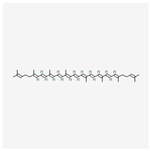 | Chili pepper (CH) (Capsicum annuum L.) [103] Tomato (T) (Solanum lycopersicum L.) [109] | Antioxidant; anti-inflammatory; anti-adipogenic; anti-lipotoxic; mitochondrial-protective; gut microbiota-modulator [111,212,220,221,222,223,224,225]. | Not specified (CH) [103] HPLC (T) [109] | 4.69 (mg/g) (CH) [103] 7.8–18.1 (mg/100 g PF) (T) [109] |
| Lutein |  | Maize (M) (Zea mays L.) [87] Squash (CA) (Cucurbita pepo L.) [219] Chili pepper (CH) (Capsicum annuum L.) [103] Tomato (T) (Solanum lycopersicum L.) [109] Nopal cactus (N) (Opuntia ficus-indica) [234] | Antioxidant; anti-inflammatory; anti-adipogenic; anti-lipotoxic; mitochondrial-protective [226,227,228,229,230,231,232,233]. | HPLC-DAD (M) [87] HPLC-DAD-ESI/MS/MS (CA) [219] HPLC (CH) (T) [103,109] Not specified (N) [234] | 0.16–21.17 µg/g (M) [87] 0.02–0.03 (CA) (mg/100 g) [219] 8.75–21.08 (CH) (mg/100 g) [103] 0.09 (mg/100 g PF) (T) [109] 10.03–21.10 (µg/g) (N) [234] |
| Zeaxanthin | 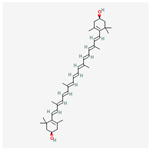 | Maize (M) (Zea mays L.) [87] Squash (CA) (Cucurbita pepo L.) [219] Chili pepper (CH) (Capsicum annuum L.) [103] | Antioxidant; anti-inflammatory; anti-adipogenic; anti-lipotoxic; mitochondrial-protective; gut microbiota-modulator [235,236,237,238,239,240,241,242]. | HPLC-DAD (M) [87] HPLC-DAD-ESI/MS/MS (CA) [219] HPLC (CH) [103] | 0.08–10.71 µg/g (M) [87] 2.65–2.91 (mg/100 g) (CA) [219] (0.63–151.39 mg/100 g) (CH) [103] |
| Capsanthin |  | Chili pepper (Capsicum annuum L.) (CH) [102,103] | Antioxidant; anti-inflammatory; anti-adipogenic; anti-lipotoxic; gut microbiota-modulator [108,243,244,292,293]. | HPLC/Spectrophotometry (CH) [103] HPLC (CH) [102] | 31.8–4442 (mg/100 g) (CH) [103] 6.97 (mg/100 g de DW) (CH) [102] |
| Capsaicinoids | |||||
| Capsaicin | Chili pepper (Capsicum annuum L.) [102,186,252,253] | Antioxidant; anti-inflammatory; anti-adipogenic; anti-lipotoxic; mitochondrial-protective; gut microbiota-modulator [50,104,245,246,247,248,249,250,251]. | HPLC-GC-MS (CH) [102] HPLC-UV (CH) [252,253] UHPLC-PDA/ESI-MS (CH) [186] | 600–13,000 (ppm) (CH) [102] 129–3352 (ppm) (CH) [253] 0.44–0.53 (hot); 0.03–0.05 (semi-hot varieties) (mg/g) (CH) [252] 28.23–2322.35 (µg/g) (CH) [186] | |
| Phenolic acids | |||||
| Ferulic acid |  | Maize (M) (Zea mays L.) [130,218] Squash (CA) (Cucurbita pepo L.) [219] Tomato (T) (Solanum lycopersicum L.) [109] Nopal cactus (N) (Opuntia ficus-indica) [115] Quelites (Q) [117] | Antioxidant; anti-inflammatory; anti-adipogenic; anti-lipotoxic; mitochondrial-protective; gut microbiota-modulator [221,254,255,256,257,258,259,260]. | HPLC-UV (M) [218] HPLC-DAD/ESI-MS/MS (M) [130] HPLC-MS/MS (CA) [219] HPLC (T) (N) [109,115] HPLC-DAD (Q) [117] | 1556.24–4521.26 (µg/g) (M) [218] 3695–5991 (μg/g) (M) [130] 4.72–5.17 (mg/100 g) (CA) [219] 0.2–0.5 (mg/100 g PF) (T) [109] 0.56–34.77 (mg/100 g) (N) [115] 316.95 ± 0.40 (µg/g) (Q) [117] |
| Chlorogenic acid |  | Maize (M) (Zea mays L.) [86] Common bean (F) (Phaseolus vulgaris L.) [92,145] Chili pepper (CH) (Capsicum annuum L.) [132] Tomato (T) (Solanum lycopersicum L.) [109,133] Quelites (Q) [117] | Antioxidant; anti-inflammatory; antiadipogenic; anti-lipotoxic; mitochondrial-protective; gut microbiota-modulator [129,261,262,263,264,265]. | HPLC–QTOF-MS (M) [86] HPLC-PDA (F) [92,145] HPLC-UV (CH) [132] HPLC (T) [198] HPLC-DAD-FLD (T) [133] HPLC-DAD (Q) [117] | 6.6 ± 0.5 (μg/g) (M) [86] 1.1–3.6 (mg/g) (F) [92,145] 0.20–1.79 (CH) (mg/100 g PF) [132] 1.4–3.3 (mg/100 g PF) (T) [109] 1411.59 (μg/g) (T) [133] 270.82 ± 0.07 (μg/g) (Q) [117] |
| Caffeic acid | 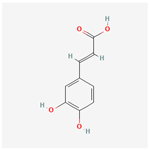 | Maize (M) (Zea mays L.) [86,130] Common bean (F) (Phaseolus vulgaris L.) [92,145] Squash (CA) (Cucurbita pepo L.) [219] Chili pepper (CH) (Capsicum annuum L.) [186] Tomato (T) (Solanum lycopersicum L.) [109,133] Quelites (Q) [117] | Antioxidant; anti-inflammatory; anti-adipogenic; anti-lipotoxic; mitochondrial-protective; gut microbiota-modulator [266,267,268,269,270,271]. | HPLC–QTOF-MS (M) [86] HPLC-DAD (M) (F) (Q) [92,117,130,145] HPLC-MS/MS (CA) [219] HPLC-UV (CH) [186] HPLC (T) [109] HPLC-DAD-FLD (T) [133] | 1296.8 ± 103.7 (μg/g) (M) [86] 93–350 (μg/g) (M) [130] 0.9–3.3 (mg/g) (F) [92,145] 3.41–3.83 (mg/100 g) (CA) [219] 0.20–2.20 (mg/100 g PF) (CH) [186] 0.1–1.3 (mg/100 g PF) (T) [109] 37.72 (μg/g) (T) [133] 130.71 ± 0.05 (μg/g) (Q) [117] |
| Gallic acid |  | Maize (M) (Zea mays L.) [29,86] Common bean (F) (Phaseolus vulgaris L.) [92,145] Chili pepper (CH) (Capsicum annuum L.) [186] Tomato (T) (Solanum lycopersicum L.) [133] Nopal cactus (N) (Opuntia ficus-indica) [115] Quelites (Q) [117] | Antioxidant; anti-inflammatory; antiadipogenic; anti- lipotoxic; mitochondrial-protective; gut microbiota-modulator [262,272,273,274,275,276,277]. | HPLC–QTOF-MS (M) [86] HPLC-PDA (F) [92,145] HPLC-UV (CH) [186] HPLC-DAD-FLD (T) [133] HPLC (N) [115] HPLC-DAD (Q) [117] | 1.3 ± 0.1 (μg/g) (M) [86] 8.2 ± 2.8 (mg/g) (F) [92,145] 49.10–101.30 (mg/100 g PF) (CH) [186] 99.29 (μg/g) (T) [133] 0.64–2.37 (mg/100 g) (N) [115] 45.04 ± 0.06 (μg/g) (Q) [117] |
| Betalains |  | Nopal cactus (N) (Opuntia ficus-indica) [234,285] | Antioxidant; anti-inflammatory; anti-adipogenic; anti-lipotoxic; mitochondrial-protective; gut microbiota-modulator [278,279,280,281,282,283,284]. | HPLC-DAD-ESI-MS (N) [285] HPLC(N) [234] | 0.21–1.16 (mg/g PS) (N) [285] 40.6 (mg/100 g) (N) [234] |
| Vitamins | |||||
| γ-tocoferol |  | Squash (CA) (Cucurbita pepo L.) [291] Nopal cactus (N) (Opuntia ficus-indica) [115] | Antioxidant; anti-inflammatory; anti-adipogenic; anti-lipotoxic; mitochondrial-protective; gut microbiota-modulator [66,286,287,288,289,290]. | HPLC–fluorescence detection (CA) [291] HPLC (N) [115] | 36.0–352.4 (mg/kg lipid fraction) (CA) [291] 7.9–174 (mg/100 g) (N) [115] |
| Diet | Main Characteristics | Key Nutrients | Main Foods |
|---|---|---|---|
| Milpa | Dietary pattern based on foods cultivated within the milpa system. | Potassium, dietary fiber, and phosphorus. | Maize, beans, squash, and chili peppers, along with regional and seasonal foods. |
| Mediterranean | Traditional dietary pattern of Mediterranean countries. | Polyunsaturated and monounsaturated fatty acids, potassium, and dietary fiber | Fruits, vegetables, olive oil, fatty fish, nuts, and dried fruits |
| DASH | Dietary pattern designed to reduce sodium intake and blood pressure. | Potassium, magnesium, calcium, and dietary fiber | Fruits, vegetables, lean meats, and dairy products |
Disclaimer/Publisher’s Note: The statements, opinions and data contained in all publications are solely those of the individual author(s) and contributor(s) and not of MDPI and/or the editor(s). MDPI and/or the editor(s) disclaim responsibility for any injury to people or property resulting from any ideas, methods, instructions or products referred to in the content. |
© 2026 by the authors. Licensee MDPI, Basel, Switzerland. This article is an open access article distributed under the terms and conditions of the Creative Commons Attribution (CC BY) license.
Share and Cite
Ramos, J.; Salas, R.; Salazar-Guerrero, C.; Gaspar, J.; Santos, M.E.; Hernández-Salazar, M.; García, S.; Ródenas-Munar, M.; Montemayor, S.; Rodrigues, D.; et al. Multi-Axis Functional Mechanisms of the Milpa Diet in Obesity: A Scoping Review. Nutrients 2026, 18, 1991. https://doi.org/10.3390/nu18121991
Ramos J, Salas R, Salazar-Guerrero C, Gaspar J, Santos ME, Hernández-Salazar M, García S, Ródenas-Munar M, Montemayor S, Rodrigues D, et al. Multi-Axis Functional Mechanisms of the Milpa Diet in Obesity: A Scoping Review. Nutrients. 2026; 18(12):1991. https://doi.org/10.3390/nu18121991
Chicago/Turabian StyleRamos, Josué, Rogelio Salas, Carolina Salazar-Guerrero, Jimena Gaspar, Mirna E. Santos, Marcelo Hernández-Salazar, Silvia García, Marina Ródenas-Munar, Sofía Montemayor, Daniela Rodrigues, and et al. 2026. "Multi-Axis Functional Mechanisms of the Milpa Diet in Obesity: A Scoping Review" Nutrients 18, no. 12: 1991. https://doi.org/10.3390/nu18121991
APA StyleRamos, J., Salas, R., Salazar-Guerrero, C., Gaspar, J., Santos, M. E., Hernández-Salazar, M., García, S., Ródenas-Munar, M., Montemayor, S., Rodrigues, D., Bouzas, C., & Tur, J. A. (2026). Multi-Axis Functional Mechanisms of the Milpa Diet in Obesity: A Scoping Review. Nutrients, 18(12), 1991. https://doi.org/10.3390/nu18121991