Effects of a Plant-Based Multi-Strain Limosilactobacillus fermentum Probiotic on Weight Loss Outcomes in Overweight and Obese Adults: A Preliminary Study
 , , , , ,

Abstract
1. Introduction
2. Materials and Methods
2.1. Experimental Design
2.2. Participants
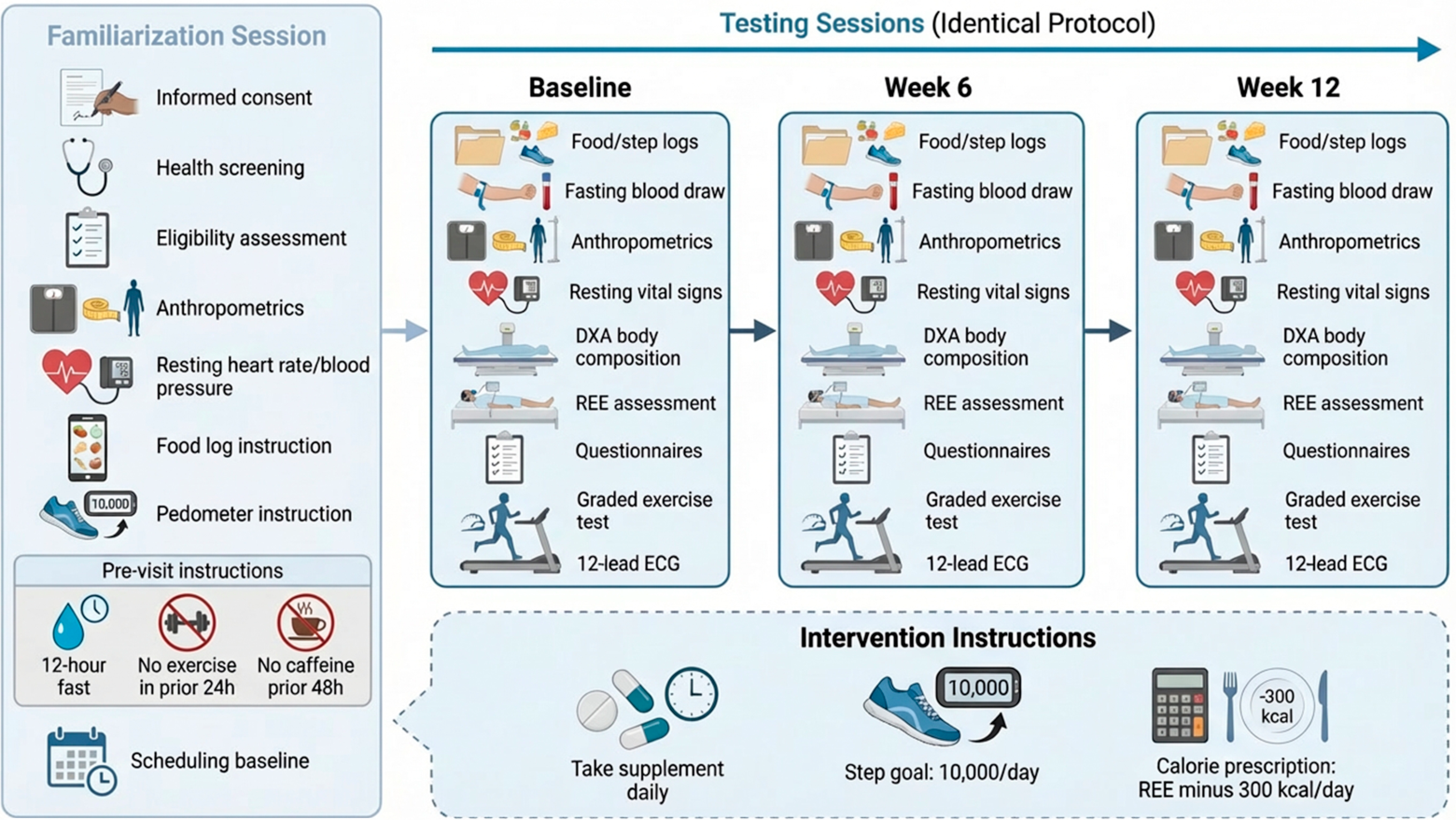
2.3. Study Timeline
2.4. Dietary Program
2.5. Physical Activity
2.6. Supplementation Protocol
2.7. Participant Demographics
2.8. Diet and Physical Activity
2.9. Body Composition
2.10. Phlebotomy and Analysis
2.11. Resting Energy Expenditure
2.12. Maximal Aerobic Capacity
2.13. Quality-of-Life Questionnaire
2.14. Side Effects and Adverse Events Assessment
2.15. Statistical Analysis
3. Results
3.1. Demographics
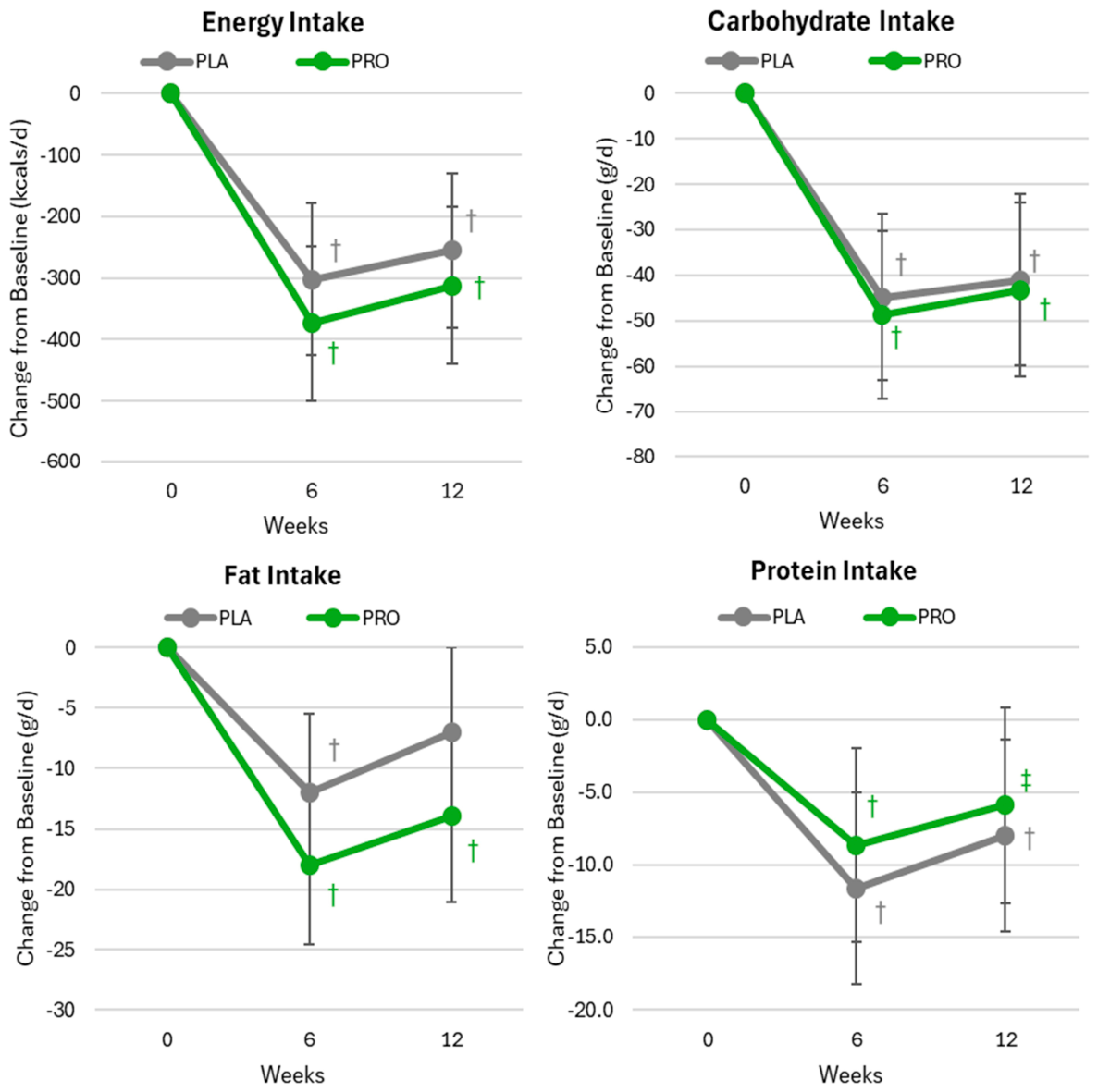
3.2. Energy and Macronutrient Intake
3.3. Body Composition Results
3.4. Visceral Adiposity Tissue Indices
3.5. Bone Measurements
3.6. Resting Energy Expenditure and Substrate Utilization
3.7. Physical Activity and Peak Oxygen Uptake
3.8. Blood Analyses
3.9. Quality of Life and Perceptions of Side Effects
4. Discussion
4.1. Primary Outcomes
Body Mass, Fat Mass, Visceral Adiposity, and Anthropometrics
4.2. Secondary Outcomes
4.2.1. Bone Mineral Content, Area, and Density
4.2.2. Resting Energy Expenditure and Substrate Utilization
4.2.3. Peak Aerobic Capacity and Functionality
4.2.4. Clinical Safety Biomarkers
4.2.5. Quality of Life and Side Effects
4.3. Limitations and Future Directions
5. Conclusions
Supplementary Materials
Author Contributions
Funding
Institutional Review Board Statement
Informed Consent Statement
Data Availability Statement
Acknowledgments
Conflicts of Interest
Abbreviations
| A1C | Hemoglobin A1C |
| ANOVA | Analysis of variance |
| AST | Aspartate aminotransferase |
| α-MSH | Alpha-melanocyte stimulating hormone |
| BD | Becton, Dickinson and Company |
| BF% | Body fat percentage |
| BMI | Body Mass Index |
| BMC | Bone mineral content |
| BMD | Bone mineral density |
| BP | Blood pressure |
| BPM | Beats per minute |
| CFU | Colony-forming units |
| CIs | Confidence intervals |
| ClpB | Caseinolytic protease B |
| cm | Centimeters |
| CONSORT | Consolidated Standards of Reporting Trials |
| CO2 | Carbon dioxide |
| CPT-I | Carnitine palmitoyl transferase I |
| CPXT | Cardiopulmonary exercise test |
| CV | Coefficient of variation |
| CYP7A1 | Cholesterol 7α-hydroxylase |
| DBP | Diastolic blood pressure |
| DEXA | Dual-energy X-ray absorptiometry |
| EDTA | Ethylenediaminetetraacetic acid |
| eGFR | Estimated glomerular filtration rate |
| FeCO2 | Fractional expired content of carbon dioxide |
| FFM | Fat-free mass |
| GI | Gastrointestinal |
| GLM | General Linear Model |
| GLP-I | Glucagon-like peptide 1 |
| HR | Heart rate |
| ICC | Intraclass correlation |
| IRB | Institutional Review Board |
| kcals/d | Kilocalories per day |
| kg | Kilograms |
| kg/m2 | Kilograms per meter squared |
| L. | Limosilactobacillus |
| LL | Lower limit (confidence limit) |
| LSD | Least significant difference |
| PRO | Probiotic (treatment group; also labeled “PRO, Probiotic”) |
| PPAR-α | Peroxisome proliferator-activated receptor alpha |
| PPAR-γ | Peroxisome proliferator-activated receptor gamma |
| PLA | Placebo |
| RBP | Resting blood pressure |
| REE | Resting energy expenditure |
| RER | Respiratory exchange ratio |
| RHR | Resting heart rate |
| RPE | Rating of Perceived Exertion |
| SBP | Systolic blood pressure |
| SD | Standard deviation |
| SF36v2/SF-36v2 | Short Form Health Survey version 2 |
| SST | Serum separation tube(s) |
| steps/d | Steps per day |
| UL | Upper limit (confidence limit) |
| VAT | Visceral adiposity tissue |
References
- Ajumaah, M.; Azizan, K.A.; Ismail, A.; Hamezah, H.S. Probiotic supplementation and cognitive function in elderly: A systematic review and meta-analysis. Nutrients 2022, 14, 4382. [Google Scholar] [CrossRef]
- Emmerich, S.D.; Fryar, C.D.; Stierman, B.; Ogden, C.L. Obesity and Severe Obesity Prevalence in Adults: United States, August 2021–August 2023. Available online: https://stacks.cdc.gov/view/cdc/159281 (accessed on 9 June 2026).
- Warkentin, L.M.; Das, D.; Majumdar, S.R.; Johnson, J.A.; Padwal, R.S. The effect of weight loss on health-related quality of life: Systematic review and meta-analysis of randomized trials. Obes. Rev. 2014, 15, 169–182. [Google Scholar] [CrossRef] [PubMed]
- Arroyo, J.C.; Mincey, K.D. Obesity epidemiology worldwide. Gastroenterol. Clin. N. Am. 2016, 45, 571–579. [Google Scholar] [CrossRef]
- Kim, J.S.; de La Serre, C.B. Diet, gut microbiota composition and feeding behavior. Physiol. Behav. 2018, 192, 177–181. [Google Scholar] [CrossRef]
- Pasquaretta, C.; Gómez-Moracho, T.; Heeb, P.; Lihoreau, M. Exploring interactions between the gut microbiota and social behavior through nutrition. Genes 2018, 9, 534. [Google Scholar] [CrossRef]
- Beam, A.; Clinger, E.; Hao, L. Effect of diet and dietary components on the composition of the gut microbiota. Nutrients 2021, 13, 2795. [Google Scholar] [CrossRef]
- Laue, C.; Papazova, E.; Pannenbeckers, A.; Schrezenmeir, J. Effect of a Probiotic and a Synbiotic on Body Fat Mass, Body Weight and Traits of Metabolic Syndrome in Individuals with Abdominal Overweight: A Human, Double-Blind, Randomised, Controlled Clinical Study. Nutrients 2023, 15, 3039. [Google Scholar] [CrossRef]
- Wu, G.D.; Chen, J.; Hoffmann, C.; Bittinger, K.; Chen, Y.-Y.; Keilbaugh, S.A.; Bewtra, M.; Knights, D.; Walters, W.A.; Knight, R. Linking long-term dietary patterns with gut microbial enterotypes. Science 2011, 334, 105–108. [Google Scholar] [CrossRef]
- Cotillard, A.; Kennedy, S.P.; Kong, L.C.; Prifti, E.; Pons, N.; Le Chatelier, E.; Almeida, M.; Quinquis, B.; Levenez, F.; Galleron, N. Dietary intervention impact on gut microbial gene richness. Nature 2013, 500, 585–588. [Google Scholar] [CrossRef] [PubMed]
- Falony, G.; Joossens, M.; Vieira-Silva, S.; Wang, J.; Darzi, Y.; Faust, K.; Kurilshikov, A.; Bonder, M.J.; Valles-Colomer, M.; Vandeputte, D. Population-level analysis of gut microbiome variation. Science 2016, 352, 560–564. [Google Scholar] [CrossRef] [PubMed]
- Flandroy, L.; Poutahidis, T.; Berg, G.; Clarke, G.; Dao, M.-C.; Decaestecker, E.; Furman, E.; Haahtela, T.; Massart, S.; Plovier, H. The impact of human activities and lifestyles on the interlinked microbiota and health of humans and of ecosystems. Sci. Total Environ. 2018, 627, 1018–1038. [Google Scholar] [CrossRef]
- Marques, C.G.; de Piano Ganen, A.; de Barros, A.Z.; Dos Santos, R.V.T.; dos Santos Quaresma, M.V.L. Weight loss probiotic supplementation effect in overweight and obesity subjects: A review. Clin. Nutr. 2020, 39, 694–704. [Google Scholar] [CrossRef]
- Park, S.; Bae, J.-H. Probiotics for weight loss: A systematic review and meta-analysis. Nutr. Res. 2015, 35, 566–575. [Google Scholar] [CrossRef] [PubMed]
- Czajeczny, D.; Kabzińska, K.; Wójciak, R.W. Does probiotic supplementation aid weight loss? A randomized, single-blind, placebo-controlled study with Bifidobacterium lactis BS01 and Lactobacillus acidophilus LA02 supplementation. Eat. Weight Disord.-Stud. Anorex. Bulim. Obes. 2021, 26, 1719–1727. [Google Scholar] [CrossRef] [PubMed]
- Ben Othman, R.; Ben Amor, N.; Mahjoub, F.; Berriche, O.; El Ghali, C.; Gamoudi, A.; Jamoussi, H. A clinical trial about effects of prebiotic and probiotic supplementation on weight loss, psychological profile and metabolic parameters in obese subjects. Endocrinol. Diabetes Metab. 2023, 6, e402. [Google Scholar] [CrossRef] [PubMed]
- Álvarez-Arraño, V.; Martín-Peláez, S. Effects of probiotics and synbiotics on weight loss in subjects with overweight or obesity: A systematic review. Nutrients 2021, 13, 3627. [Google Scholar] [CrossRef]
- Moludi, J.; Alizadeh, M.; Behrooz, M.; Maleki, V.; Seyed Mohammadzad, M.H.; Golmohammadi, A. Interactive effect of probiotics supplementation and weight loss diet on metabolic syndrome features in patients with coronary artery diseases: A double-blind, placebo-controlled, randomized clinical trial. Am. J. Lifestyle Med. 2021, 15, 653–663. [Google Scholar] [CrossRef]
- Ruan, Y.; Sun, J.; He, J.; Chen, F.; Chen, R.; Chen, H. Effect of probiotics on glycemic control: A systematic review and meta-analysis of randomized, controlled trials. PLoS ONE 2015, 10, e0132121. [Google Scholar] [CrossRef]
- Shimizu, M.; Hashiguchi, M.; Shiga, T.; Tamura, H.-o.; Mochizuki, M. Meta-analysis: Effects of probiotic supplementation on lipid profiles in normal to mildly hypercholesterolemic individuals. PLoS ONE 2015, 10, e0139795. [Google Scholar] [CrossRef]
- Yan, S.; Tian, Z.; Li, M.; Li, B.; Cui, W. Effects of probiotic supplementation on the regulation of blood lipid levels in overweight or obese subjects: A meta-analysis. Food Funct. 2019, 10, 1747–1759. [Google Scholar] [CrossRef]
- Faghfouri, A.H.; Afrakoti, L.G.M.P.; Kavyani, Z.; Nogourani, Z.S.; Musazadeh, V.; Jafarlou, M.; Dehghan, P. The role of probiotic supplementation in inflammatory biomarkers in adults: An umbrella meta-analysis of randomized controlled trials: AH Faghfouri et al. Inflammopharmacology 2023, 31, 2253–2268. [Google Scholar] [CrossRef]
- Ding, L.-N.; Ding, W.-Y.; Ning, J.; Wang, Y.; Yan, Y.; Wang, Z.-B. Effects of probiotic supplementation on inflammatory markers and glucose homeostasis in adults with type 2 diabetes mellitus: A systematic review and meta-analysis. Front. Pharmacol. 2021, 12, 770861. [Google Scholar] [CrossRef] [PubMed]
- Guo, Y.-T.; Peng, Y.-C.; Yen, H.-Y.; Wu, J.-C.; Hou, W.-H. Effects of probiotic supplementation on immune and inflammatory markers in athletes: A meta-analysis of randomized clinical trials. Medicina 2022, 58, 1188. [Google Scholar] [CrossRef]
- López-Moreno, A.; Suárez, A.; Avanzi, C.; Monteoliva-Sánchez, M.; Aguilera, M. Probiotic strains and intervention total doses for modulating obesity-related microbiota dysbiosis: A systematic review and meta-analysis. Nutrients 2020, 12, 1921. [Google Scholar] [CrossRef] [PubMed]
- Chen, A.-C.; Fang, T.-J.; Ho, H.-H.; Chen, J.-F.; Kuo, Y.-W.; Huang, Y.-Y.; Tsai, S.-Y.; Wu, S.-F.; Lin, H.-C.; Yeh, Y.-T. A multi-strain probiotic blend reshaped obesity-related gut dysbiosis and improved lipid metabolism in obese children. Front. Nutr. 2022, 9, 922993. [Google Scholar] [CrossRef]
- Njeru, P.N.; Rösch, N.; Ghadimi, D.; Geis, A.; Bockelmann, W.; de Vrese, M.; Schrezenmeir, J.; Heller, K.J. Identification and characterisation of lactobacilli isolated from Kimere, a spontaneously fermented pearl millet dough from Mbeere, Kenya (East Africa). Benef. Microbes 2010, 1, 243–252. [Google Scholar] [CrossRef]
- Njeru, P.; Rösch, N.; Ghadimi, D.; Schrezenmeir, J.; de Vrese, M.; Heller, K. Isolation, Characterization and Identification of Potentially Probiotic Lactobacilli from Kimere; a Spontaneously Fermented Pearl Millet Dough from Mbeere, Kenya (East Africa). Aktuelle Ernährungsmedizin 2007, 32, P3_6. [Google Scholar] [CrossRef]
- Nduti, N.; McMillan, A.; Seney, S.; Sumarah, M.; Njeru, P.; Mwaniki, M.; Reid, G. Investigating probiotic yoghurt to reduce an aflatoxin B1 biomarker among school children in eastern Kenya: Preliminary study. Int. Dairy J. 2016, 63, 124–129. [Google Scholar] [CrossRef]
- de Luna Freire, M.O.; Do Nascimento, L.C.P.; De Oliveira, K.Á.R.; de Oliveira, A.M.; dos Santos Lima, M.; Napoleão, T.H.; da Costa Silva, J.H.; Lagranha, C.J.; De Souza, E.L.; de Brito Alves, J.L. Limosilactobacillus fermentum strains with claimed probiotic properties exert anti-oxidant and anti-inflammatory properties and prevent cardiometabolic disorder in female rats fed a high-fat diet. Probiotics Antimicrob. Proteins 2023, 15, 601–613. [Google Scholar] [CrossRef]
- de Araújo Henriques Ferreira, G.; Magnani, M.; Cabral, L.; Brandao, L.R.; Noronha, M.F.; de Campos Cruz, J.; de Souza, E.L.; de Brito Alves, J.L. Potentially probiotic Limosilactobacillus fermentum fruit-derived strains alleviate cardiometabolic disorders and gut microbiota impairment in male rats fed a high-fat diet. Probiotics Antimicrob. Proteins 2022, 14, 349–359. [Google Scholar] [CrossRef]
- Kim, J.E.; Lee, J.Y.; Kang, C.-H. Limosilactobacillus fermentum MG4295 improves hyperglycemia in high-fat diet-induced mice. Foods 2022, 11, 231. [Google Scholar] [CrossRef] [PubMed]
- Lim, C.Y.; In, J. Randomization in clinical studies. Korean J. Anesth. Anesthesiol. 2019, 72, 221–232. [Google Scholar] [CrossRef] [PubMed]
- Ghadimi, D.; Hassan, M.; Njeru, P.N.; De Vrese, M.; Geis, A.; Shalabi, S.I.; Abdel-Razek, S.T.; Abdel-Khair, A.E.A.A.; Heller, K.J.; Schrezenmeir, J. Suppression subtractive hybridization identifies bacterial genomic regions that are possibly involved in hBD-2 regulation by enterocytes. Mol. Nutr. Food Res. 2011, 55, 1533–1542. [Google Scholar] [CrossRef]
- Ghadimi, D.; Njeru, P.N.; Guigas, C.; Farghaly, M.H.; Fölster-Holst, R.; Geis, A.; De Vrese, M.; Schrezenmeir, J.; Heller, K.J. Molecular identification of potential Th1/Th2 responses-modulating bacterial genes using suppression subtractive DNA hybridization. Immunobiology 2014, 219, 208–217. [Google Scholar] [CrossRef] [PubMed]
- Ozemek, C.; Bonikowske, A.; Christle, J.; Gallo, P. ACSM’s Guidelines for Exercise Testing and Prescription; Lippincott Williams & Wilkins: Baltimore, MD, USA, 2025. [Google Scholar]
- World Health Organization. Waist Circumference and Waist-Hip Ratio: Report of a WHO Expert Consultation, Geneva, 8–11 December 2008; World Health Organization: Geneva, Switzerland, 2011. [Google Scholar]
- Teixeira, V.; Voci, S.M.; Mendes-Netto, R.S.; Da Silva, D.G. The relative validity of a food record using the smartphone application MyFitnessPal. Nutr. Diet. 2018, 75, 219–225. [Google Scholar] [CrossRef]
- Lohman, T.G.; Harris, M.; Teixeira, P.J.; Weiss, L. Assessing body composition and changes in body composition. Another look at dual-energy X-ray absorptiometry. Ann. N. Y. Acad. Sci. 2000, 904, 45–54. [Google Scholar] [CrossRef]
- Klesges, R.C.; Ward, K.D.; Shelton, M.L.; Applegate, W.B.; Cantler, E.D.; Palmieri, G.M.; Harmon, K.; Davis, J. Changes in bone mineral content in male athletes. Mechanisms of action and intervention effects. JAMA 1996, 276, 226–230. [Google Scholar] [CrossRef]
- Almada, A.L.; Kreider, R.B.; Ransom, J.; Rasmussen, C. Comparison of the reliability of repeated whole body DEXA scans to repeated spine and hip scans. J. Bone Miner. Res. 1999, 14, S369. [Google Scholar]
- World Health Organization. WHO Guidelines on Drawing Blood: Best Practices in Phlebotomy; World Health Organization: Geneva, Switzerland, 2010. [Google Scholar]
- Matarese, L.E. Indirect calorimetry: Technical aspects. J. Am. Diet. Assoc. 1997, 97, S154–S160. [Google Scholar] [CrossRef]
- Feurer, I.D.; Crosby, L.O.; Mullen, J.L. Measured and predicted resting energy expenditure in clinically stable patients. Clin. Nutr. 1984, 3, 27–34. [Google Scholar] [CrossRef]
- Peronnet, F.; Massicotte, D. Table of nonprotein respiratory quotient: An update. Can. J. Sport. Sci. 1991, 16, 23–29. [Google Scholar]
- Gupta, R.D.; Ramachandran, R.; Venkatesan, P.; Anoop, S.; Joseph, M.; Thomas, N. Indirect Calorimetry: From Bench to Bedside. Indian. J. Endocrinol. Metab. 2017, 21, 594–599. [Google Scholar] [CrossRef]
- Mackay, K.J.; Schofield, K.L.; Sims, S.T.; McQuillan, J.A.; Driller, M.W. The Validity of Resting Metabolic Rate-Prediction Equations and Reliability of Measured RMR in Female Athletes. Int. J. Exerc. Sci. 2019, 12, 886–897. [Google Scholar] [CrossRef]
- Liguori, G.; American College of Sports Medicine (ACSM). ACSM’s Guidelines for Exercise Testing and Prescription; Lippincott Williams & Wilkins: Baltimore, MD, USA, 2020. [Google Scholar]
- Taft, C.; Karlsson, J.; Sullivan, M. Performance of the Swedish SF-36 version 2.0. Qual. Life Res. 2004, 13, 251–256. [Google Scholar] [CrossRef] [PubMed]
- Celik, D.; Coban, O. Short Form Health Survey version-2.0 Turkish (SF-36v2) is an efficient outcome parameter in musculoskeletal research. Acta Orthop. Traumatol. Turc. 2016, 50, 558–561. [Google Scholar] [CrossRef] [PubMed]
- Dickerson, B.; Maury, J.; Jenkins, V.; Nottingham, K.; Xing, D.; Gonzalez, D.E.; Leonard, M.; Kendra, J.; Ko, J.; Yoo, C. Effects of Supplementation with Microalgae Extract from Phaeodactylum tricornutum (Mi136) to Support Benefits from a Weight Management Intervention in Overweight Women. Nutrients 2024, 16, 990. [Google Scholar] [CrossRef]
- Grubic, T.J.; Sowinski, R.J.; Nevares, B.E.; Jenkins, V.M.; Williamson, S.L.; Reyes, A.G.; Rasmussen, C.; Greenwood, M.; Murano, P.S.; Earnest, C.P.; et al. Comparison of ingesting a food bar containing whey protein and isomalto-oligosaccharides to carbohydrate on performance and recovery from an acute bout of resistance-exercise and sprint conditioning: An open label, randomized, counterbalanced, crossover pilot study. J. Int. Soc. Sports Nutr. 2019, 16, 34. [Google Scholar] [CrossRef] [PubMed]
- Sowinski, R.; Gonzalez, D.; Xing, D.; Yoo, C.; Jenkins, V.; Nottingham, K.; Dickerson, B.; Humphries, M.; Leonard, M.; Ko, J.; et al. Effects of Inositol-Enhanced Bonded Arginine Silicate Ingestion on Cognitive and Executive Function in Gamers. Nutrients 2021, 13, 3758. [Google Scholar] [CrossRef]
- Yoo, C.; Xing, D.; Gonzalez, D.; Jenkins, V.; Nottingham, K.; Dickerson, B.; Leonard, M.; Ko, J.; Faries, M.; Kephart, W.; et al. Acute Paraxanthine Ingestion Improves Cognition and Short-Term Memory and Helps Sustain Attention in a Double-Blind, Placebo-Controlled, Crossover Trial. Nutrients 2021, 13, 3980. [Google Scholar] [CrossRef]
- Yoo, C.; Xing, D.; Gonzalez, D.E.; Jenkins, V.; Nottingham, K.; Dickerson, B.; Leonard, M.; Ko, J.; Lewis, M.H.; Faries, M.; et al. Paraxanthine provides greater improvement in cognitive function than caffeine after performing a 10-km run. J. Int. Soc. Sports Nutr. 2024, 21, 2352779. [Google Scholar] [CrossRef]
- Galbreath, M. Effects of a High Protein Diet on Weight Loss, Markers of Health, and Functional Capacity in Senior-Aged Females Participating in the Curves® Fitness Program; Baylor University: Waco, TX, USA, 2008. [Google Scholar]
- Kreider, R.; Rasmussen, C.; Kerksick, C.; Campbell, B.; Baer, J.; Slonaker, B.; Pfau, E.; Grimstvedt, M.; Opusunju, J.; Wilborn, C. Effects of the Curves® Fitness & Weight Loss Program on Weight Loss and Resting Energy Expenditure. Med. Sci. Sport Exerc. 2004, 36, S81. [Google Scholar]
- Martinez, V.; McAngus, K.; Dickerson, B.L.; Leonard, M.; Chavez, E.; Chun, J.; Lewis, M.; Xing, D.; Gonzalez, D.E.; Yoo, C.; et al. Effects of 12 Weeks of Chromium, Phyllanthus emblica Fruit Extract, and Shilajit Supplementation on Markers of Cardiometabolic Health, Fitness, and Weight Loss in Men and Women with Risk Factors to Metabolic Syndrome Initiating an Exercise and Diet Intervention: A Randomized Double-Blind, Placebo-Controlled Trial. Nutrients 2025, 17, 2042. [Google Scholar] [CrossRef]
- Jung, Y.P.; Earnest, C.P.; Koozehchian, M.; Galvan, E.; Dalton, R.; Walker, D.; Rasmussen, C.; Murano, P.S.; Greenwood, M.; Kreider, R.B. Effects of acute ingestion of a pre-workout dietary supplement with and without p-synephrine on resting energy expenditure, cognitive function and exercise performance. J. Int. Soc. Sports Nutr. 2017, 14, 3. [Google Scholar] [CrossRef]
- Kang, H. The prevention and handling of the missing data. Korean J. Anesthesiol. 2013, 64, 402–406. [Google Scholar] [CrossRef]
- Quintero, M.; LeBoulluec, A. Missing data imputation for ordinal data. Int. J. Comput. Appl. 2018, 181, 10–16. [Google Scholar] [CrossRef]
- Engels, J.M.; Diehr, P. Imputation of missing longitudinal data: A comparison of methods. J. Clin. Epidemiol. 2003, 56, 968–976. [Google Scholar] [CrossRef] [PubMed]
- Elliott, P.; Hawthorne, G. Imputing missing repeated measures data: How should we proceed? Aust. N. Z. J. Psychiatry 2005, 39, 575–582. [Google Scholar] [CrossRef]
- Morris, T.P.; White, I.R.; Royston, P. Tuning multiple imputation by predictive mean matching and local residual draws. BMC Med. Res. Methodol. 2014, 14, 75. [Google Scholar] [CrossRef] [PubMed]
- Perneger, T.V. What’s wrong with Bonferroni adjustments. BMJ 1998, 316, 1236–1238. [Google Scholar] [CrossRef]
- Rothman, K.J. No adjustments are needed for multiple comparisons. Epidemiology 1990, 1, 43–46. [Google Scholar] [CrossRef]
- Page, P. Beyond statistical significance: Clinical interpretation of rehabilitation research literature. Int. J. Sports Phys. Ther. 2014, 9, 726. [Google Scholar]
- Drinkwater, E. Applications of confidence limits and effect sizes in sport research. Open Sports Sci. J. 2008, 1, 3–4. [Google Scholar] [CrossRef]
- Grabowski, B. “P < 0.05” might not mean what you think: American Statistical Association clarifies P values. JNCI J. Natl. Cancer Inst. 2016, 108, djw194. [Google Scholar]
- Hopkins, W.G.; Marshall, S.W.; Batterham, A.M.; Hanin, J. Progressive statistics for studies in sports medicine and exercise science. Med. Sci. Sports Exerc. 2009, 41, 3–12. [Google Scholar] [CrossRef]
- Baetge, C.; Earnest, C.P.; Lockard, B.; Coletta, A.M.; Galvan, E.; Rasmussen, C.; Levers, K.; Simbo, S.Y.; Jung, Y.P.; Koozehchian, M.; et al. Efficacy of a randomized trial examining commercial weight loss programs and exercise on metabolic syndrome in overweight and obese women. Appl. Physiol. Nutr. Metab. 2017, 42, 216–227. [Google Scholar] [CrossRef] [PubMed]
- Kerksick, C.; Thomas, A.; Campbell, B.; Taylor, L.; Wilborn, C.; Marcello, B.; Roberts, M.; Pfau, E.; Grimstvedt, M.; Opusunju, J.; et al. Effects of a popular exercise and weight loss program on weight loss, body composition, energy expenditure and health in obese women. Nutr. Metab. 2009, 6, 23. [Google Scholar] [CrossRef]
- Ko, J.; Yoo, C.; Xing, D.; Chun, J.; Gonzalez, D.E.; Dickerson, B.L.; Leonard, M.; Jenkins, V.; van der Merwe, M.; Slupsky, C.M.; et al. Effects of Human Milk Oligosaccharide 2′-Fucosyllactose Ingestion on Weight Loss and Markers of Health. Nutrients 2024, 16, 3387. [Google Scholar] [CrossRef]
- Coletta, A.M.; Sanchez, B.; O’Connor, A.; Dalton, R.; Springer, S.; Koozehchian, M.S.; Murano, P.S.; Woodman, C.R.; Rasmussen, C.; Kreider, R.B. Alignment of diet prescription to genotype does not promote greater weight loss success in women with obesity participating in an exercise and weight loss program. Obes. Sci. Pract. 2018, 4, 554–574. [Google Scholar] [CrossRef]
- Galbreath, M.; Campbell, B.; La Bounty, P.; Bunn, J.; Dove, J.; Harvey, T.; Hudson, G.; Gutierrez, J.L.; Levers, K.; Galvan, E.; et al. Effects of Adherence to a Higher Protein Diet on Weight Loss, Markers of Health, and Functional Capacity in Older Women Participating in a Resistance-Based Exercise Program. Nutrients 2018, 10, 1070. [Google Scholar] [CrossRef] [PubMed]
- Kerksick, C.M.; Wismann-Bunn, J.; Fogt, D.; Thomas, A.R.; Taylor, L.; Campbell, B.I.; Wilborn, C.D.; Harvey, T.; Roberts, M.D.; La Bounty, P.; et al. Changes in weight loss, body composition and cardiovascular disease risk after altering macronutrient distributions during a regular exercise program in obese women. Nutr. J. 2010, 9, 59. [Google Scholar] [CrossRef] [PubMed]
- Khanna, D.; Galvan, E.; Baetge, C.; Levers, K.; Simbo, S.; Byrd, M.; Jung, P.; Koozehchian, M.; Rasmussen, C.; Greenwood, M.; et al. Effects of an Exercise and Diet-Induced Weight Loss Program on Resistin and Visfatin in Sedentary Obese Women. FASEB J. 2015, 29, LB254. [Google Scholar] [CrossRef]
- Kreider, R.B.; Ferreira, M.P.; Greenwood, M.; Wilson, M.; Almada, A.L. Effects of Conjugated Linoleic Acid Supplementation During Resistance Training on Body Composition, Bone Density, Strength, and Selected Hematological Markers. J. Strength Cond. Res. 2002, 16, 325–334. [Google Scholar] [PubMed]
- Kreider, R.B.; Rasmussen, C.; Kerksick, C.M.; Wilborn, C.; Taylor, L.; Campbell, B.; Magrans-Courtney, T.; Fogt, D.; Ferreira, M.; Li, R.; et al. A Carbohydrate-Restricted Diet during Resistance Training Promotes More Favorable Changes in Body Composition and Markers of Health in Obese Women with and without Insulin Resistance. Physician Sportsmed. 2011, 39, 27–40. [Google Scholar] [CrossRef]
- Lockard, B.; Mardock, M.; Oliver, J.M.; Byrd, M.; Simbo, S.; Jagim, A.R.; Kresta, J.; Baetge, C.C.; Jung, Y.P.; Koozehchian, M.S.; et al. Comparison of Two Diet and Exercise Approaches on Weight Loss and Health Outcomes in Obese Women. Int. J. Environ. Environ. Res. Public Health 2022, 19, 4877. [Google Scholar] [CrossRef]
- Sherman, A. Q&A: SlimBiotics on its ancient plant-based probiotic strains for weight management. Glob. Food 2023. [Google Scholar]
- Cho, Y.G.; Yang, Y.J.; Yoon, Y.S.; Lee, E.S.; Lee, J.H.; Jeong, Y.; Kang, C.H. Effect of MED-02 containing two probiotic strains, Limosilactobacillus fermentum MG4231 and MG4244, on body fat reduction in overweight or obese subjects: A randomized, multicenter, double-blind, placebo-controlled study. Nutrients 2022, 14, 3583. [Google Scholar] [CrossRef]
- Sohn, M.; Jung, H.; Lee, W.S.; Kim, T.H.; Lim, S. Effect of Lactobacillus plantarum LMT1-48 on body fat in overweight subjects: A randomized, double-blind, placebo-controlled trial. Diabetes Metab. J. 2023, 47, 92–103. [Google Scholar] [CrossRef]
- Lyon, J., III; Connell, M.; Chandrasekaran, K.; Srivastava, S. Effect of synbiotics on weight loss and metabolic health in adults with overweight and obesity: A randomized controlled trial. Obesity 2023, 31, 2009–2020. [Google Scholar] [CrossRef]
- Yazdani, A.M.; Fattahi, M.R.; Eftekhari, M.H.; Ahmadi, A.; Soveid, M.; Zare, M.; Mohsenpour, M.A. Effects of multi-strain synbiotic supplementation on liver enzymes, insulin resistance, anthropometric, and inflammatory indices in overweight and obese adults with fatty liver and diabetes: A randomized controlled trial. J. Diabetes Metab. Disord. 2025, 24, 120. [Google Scholar] [CrossRef]
- Cho, W.-Y.; Hong, G.-E.; Lee, H.-J.; Yeon, S.-J.; Paik, H.-D.; Hosaka, Y.Z.; Lee, C.-H. Effect of Yogurt Fermented by Lactobacillus Fermentum TSI and L. Fermentum S2 Derived from a Mongolian Traditional Dairy Product on Rats with High-Fat-Diet-Induced Obesity. Foods 2020, 9, 594. [Google Scholar] [CrossRef] [PubMed]
- Rani, K.; Ali, S.A.; Kaul, G.; Behare, P.V. Protective effect of probiotic and prebiotic fermented milk containing Lactobacillus fermentum against obesity-induced hepatic steatosis and inflammation. J. Food Biochem. 2022, 46, e14509. [Google Scholar] [CrossRef]
- Mikelsaar, M.; Sepp, E.; Štšepetova, J.; Hütt, P.; Zilmer, K.; Kullisaar, T.; Zilmer, M. Regulation of plasma lipid profile by lactobacillus fermentum (probiotic strain ME-3 DSM14241) in a randomised controlled trial of clinically healthy adults. BMC Nutr. 2015, 1, 27. [Google Scholar] [CrossRef]
- Jeong, S.-Y.; Kang, S.; Hua, C.S.; Ting, Z.; Park, S. Synbiotic effects of β-glucans from cauliflower mushroom and Lactobacillus fermentum on metabolic changes and gut microbiome in estrogen-deficient rats. Genes Nutr. 2017, 12, 31. [Google Scholar] [CrossRef] [PubMed]
- Omar, J.M.; Chan, Y.-M.; Jones, M.L.; Prakash, S.; Jones, P.J. Lactobacillus fermentum and Lactobacillus amylovorus as probiotics alter body adiposity and gut microflora in healthy persons. J. Funct. Foods 2013, 5, 116–123. [Google Scholar] [CrossRef]
- Li, F.; Huang, H.; Zhang, Y.; Chen, H.; Zhou, X.; He, Y.; Meng, X.; Zhao, X. Effect of Lactobacillus fermentum HFY06 combined with arabinoxylan on reducing lipid accumulation in mice fed with high-fat diet. Oxidative Med. Cell. Longev. 2022, 2022, 1068845. [Google Scholar] [CrossRef]
- Ebrahimzadeh, V.; Amani, F.; Ghalami, J.; Roozbeh-Nasiraie, L.; Alaeddini, B. Effects of native Lactobacillus rhamnosus, Lactobacillus fermentum, and Lactobacillus plantarum on serum level of omentin-1, glycemic markers, and lipid profile in obese adults: A triple-blind clinical trial. Preprint 2025. [Google Scholar] [CrossRef]
- Bhathena, J.; Martoni, C.; Malhotra, M.; Kulamarva, A.; Urbanska, A.M.; Paul, A.; Prakash, S.; Tomaro-Duchesneau, C. Effect of Orally Administered Microencapsulated FA-Producing L. fermentum on Markers of Metabolic Syndrome: An In Vivo Analysis; OMICS International: Hyderabad, India, 2012. [Google Scholar]
- Fardet, A. Minimally processed foods are more satiating and less hyperglycemic than ultra-processed foods: A preliminary study with 98 ready-to-eat foods. Food Funct. 2016, 7, 2338–2346. [Google Scholar] [CrossRef]
- Basile, A.J.; Ruiz-Tejada, A.; Mohr, A.E.; Stanley, S.; Hjelm, E.; Sweazea, K.L. Minimally processed foods have a higher total antioxidant content compared to processed and ultra-processed foods: Results from an analysis of 1946 food items. Br. J. Nutr. 2024, 132, 1555–1561. [Google Scholar] [CrossRef] [PubMed]
- Silva Meneguelli, T.; Juvanhol, L.L.; da Silva Leite, A.; Bressan, J.; Hermsdorff, H.H.M. Minimally processed versus processed and ultra-processed food in individuals at cardiometabolic risk. Br. Food J. 2022, 124, 811–832. [Google Scholar] [CrossRef]
- Clemente-Suárez, V.J.; Beltrán-Velasco, A.I.; Redondo-Flórez, L.; Martín-Rodríguez, A.; Tornero-Aguilera, J.F. Global Impacts of Western Diet and Its Effects on Metabolism and Health: A Narrative Review. Nutrients 2023, 15, 2749. [Google Scholar] [CrossRef] [PubMed]
- Li, J.; Zhang, Z.; Xu, Y.; Li, W.; Jiang, S.; Zhang, J.; Xue, H. Limosilactobacillus fermentum HNU312 alleviates lipid accumulation and inflammation induced by a high-fat diet: Improves lipid metabolism pathways and increases short-chain fatty acids in the gut microbiome. Food Funct. 2024, 15, 8878–8892. [Google Scholar] [CrossRef] [PubMed]
- Molina-Tijeras, J.A.; Diez-Echave, P.; Vezza, T.; Hidalgo-García, L.; Ruiz-Malagón, A.J.; Rodríguez-Sojo, M.J.; Romero, M.; Robles-Vera, I.; García, F.; Plaza-Diaz, J.; et al. Lactobacillus fermentum CECT5716 ameliorates high fat diet-induced obesity in mice through modulation of gut microbiota dysbiosis. Pharmacol. Res. 2021, 167, 105471. [Google Scholar] [CrossRef]
- de Luna Freire, M.O.; do Nascimento, L.C.P.; de Oliveira, K.Á.R.; de Oliveira, A.M.; Napoleão, T.H.; Lima, M.d.S.; Lagranha, C.J.; de Souza, E.L.; de Brito Alves, J.L. Effects of a mixed Limosilactobacillus fermentum formulation with claimed probiotic properties on cardiometabolic variables, biomarkers of inflammation and oxidative stress in male rats fed a high-fat diet. Foods 2021, 10, 2202. [Google Scholar] [CrossRef]
- Kim, M.; Kim, M.; Kang, M.; Yoo, H.J.; Kim, M.S.; Ahn, Y.-T.; Sim, J.-H.; Jee, S.H.; Lee, J.H. Effects of weight loss using supplementation with Lactobacillus strains on body fat and medium-chain acylcarnitines in overweight individuals. Food Funct. 2017, 8, 250–261. [Google Scholar] [CrossRef]
- Wu, Y.; Li, X.; Tan, F.; Zhou, X.; Mu, J.; Zhao, X. Lactobacillus fermentum CQPC07 attenuates obesity, inflammation and dyslipidemia by modulating the antioxidant capacity and lipid metabolism in high-fat diet induced obese mice. J. Inflamm. 2021, 18, 5. [Google Scholar] [CrossRef] [PubMed]
- Lacerda, D.C.; Trindade da Costa, P.C.; Pontes, P.B.; Carneiro Dos Santos, L.A.; Cruz Neto, J.P.R.; Silva Luis, C.C.; de Sousa Brito, V.P.; de Brito Alves, J.L. Potential role of Limosilactobacillus fermentum as a probiotic with anti-diabetic properties: A review. World J. Diabetes 2022, 13, 717–728. [Google Scholar] [CrossRef] [PubMed]
- Yadav, H.; Lee, J.-H.; Lloyd, J.; Walter, P.; Rane, S.G. Beneficial metabolic effects of a probiotic via butyrate-induced GLP-1 hormone secretion. J. Biol. Chem. 2013, 288, 25088–25097. [Google Scholar] [CrossRef]
- Cani, P.D.; Knauf, C. A newly identified protein from Akkermansia muciniphila stimulates GLP-1 secretion. Cell Metab. 2021, 33, 1073–1075. [Google Scholar] [CrossRef]
- Adeshirlarijaney, A.; Gewirtz, A.T. Considering gut microbiota in treatment of type 2 diabetes mellitus. Gut Microbes 2020, 11, 253–264. [Google Scholar] [CrossRef]
- Wu, Q.; Chen, J.; Hua, T.; Cai, J. Alpha-Melanocyte-Stimulating Hormone-Mediated Appetite Regulation in the Central Nervous System. Neuroendocrinology 2023, 113, 885–904. [Google Scholar] [CrossRef]
- Arnoriaga-Rodríguez, M.; Mayneris-Perxachs, J.; Burokas, A.; Pérez-Brocal, V.; Moya, A.; Portero-Otin, M.; Ricart, W.; Maldonado, R.; Fernández-Real, J.M. Gut bacterial ClpB-like gene function is associated with decreased body weight and a characteristic microbiota profile. Microbiome 2020, 8, 59. [Google Scholar] [CrossRef]
- Beavers, K.M.; Ambrosius, W.T.; Rejeski, W.J.; Burdette, J.H.; Walkup, M.P.; Sheedy, J.L.; Nesbit, B.A.; Gaukstern, J.E.; Nicklas, B.J.; Marsh, A.P. Effect of Exercise Type During Intentional Weight Loss on Body Composition in Older Adults with Obesity. Obesity 2017, 25, 1823–1829. [Google Scholar] [CrossRef]
- Weiss, E.P.; Albert, S.G.; Reeds, D.N.; Kress, K.S.; McDaniel, J.L.; Klein, S.; Villareal, D.T. Effects of matched weight loss from calorie restriction, exercise, or both on cardiovascular disease risk factors: A randomized intervention trial. Am. J. Clin. Nutr. 2016, 104, 576–586. [Google Scholar] [CrossRef]
- Serra, M.C.; Ryan, A.S. Bone Mineral Density Changes during Weight Regain following Weight Loss with and without Exercise. Nutrients 2021, 13, 2848. [Google Scholar] [CrossRef]
- Hunter, G.R.; Plaisance, E.P.; Fisher, G. Weight loss and bone mineral density. Curr. Opin. Endocrinol. Diabetes Obes. 2014, 21, 358–362. [Google Scholar] [CrossRef]
- Villareal, D.T.; Fontana, L.; Weiss, E.P.; Racette, S.B.; Steger-May, K.; Schechtman, K.B.; Klein, S.; Holloszy, J.O. Bone mineral density response to caloric restriction–induced weight loss or exercise-induced weight loss: A randomized controlled trial. Arch. Intern. Med. 2006, 166, 2502–2510. [Google Scholar] [CrossRef]
- Soltani, S.; Hunter, G.; Kazemi, A.; Shab-Bidar, S. The effects of weight loss approaches on bone mineral density in adults: A systematic review and meta-analysis of randomized controlled trials. Osteoporos. Int. 2016, 27, 2655–2671. [Google Scholar] [CrossRef] [PubMed]
- Han, H.S.; Kim, J.G.; Choi, Y.H.; Lee, K.M.; Kwon, T.H.; Kim, S.H. Effect of Lactobacillus Fermentum as a Probiotic Agent on Bone Health in Postmenopausal Women. J. Bone Metab. 2022, 29, 225–233. [Google Scholar] [CrossRef] [PubMed]
- Jafarnejad, S.; Djafarian, K.; Fazeli, M.R.; Yekaninejad, M.S.; Rostamian, A.; Keshavarz, S.A. Effects of a multispecies probiotic supplement on bone health in osteopenic postmenopausal women: A randomized, double-blind, controlled trial. J. Am. Coll. Nutr. 2017, 36, 497–506. [Google Scholar] [CrossRef] [PubMed]
- Lee, C.; Kim, J.Y.; Kim, B.; Lee, I.; Park, N.; Kim, S. Lactobacillus-fermented milk products attenuate bone loss in an experimental rat model of ovariectomy-induced post-menopausal primary osteoporosis. J. Appl. Microbiol. 2021, 130, 2041–2062. [Google Scholar] [CrossRef]
- Liu, X.; Fan, J.B.; Hu, J.; Li, F.; Yi, R.; Tan, F.; Zhao, X. Lactobacillus Fermentum ZS40 prevents secondary osteoporosis in Wistar Rat. Food Sci. Nutr. 2020, 8, 5182–5191. [Google Scholar] [CrossRef]
- Lee, C.S.; Kim, S.H. Anti-inflammatory and anti-osteoporotic potential of Lactobacillus plantarum A41 and L. fermentum SRK414 as probiotics. Probiotics Antimicrob. Proteins 2020, 12, 623–634. [Google Scholar] [CrossRef] [PubMed]
- He, W.; Bertram, H.C.; Yin, J.-Y.; Nie, S.-P. Lactobacilli and their fermented foods as a promising strategy for enhancing bone mineral density: A review. J. Agric. Food Chem. 2024, 72, 17730–17745. [Google Scholar] [CrossRef]
- Specker, B.L.; Wey, H.E.; Smith, E.P. Rates of bone loss in young adult males. Int. J. Clin. Rheumtol 2010, 5, 215–228. [Google Scholar] [CrossRef]
- Haseltine, K.N.; Chukir, T.; Smith, P.J.; Jacob, J.T.; Bilezikian, J.P.; Farooki, A. Bone Mineral Density: Clinical Relevance and Quantitative Assessment. J. Nucl. Med. 2021, 62, 446–454. [Google Scholar] [CrossRef]
- ten Haaf, T.; Verreijen, A.M.; Memelink, R.G.; Tieland, M.; Weijs, P.J.M. Reduction in energy expenditure during weight loss is higher than predicted based on fat free mass and fat mass in older adults. Clin. Nutr. 2018, 37, 250–253. [Google Scholar] [CrossRef] [PubMed]
- Schwartz, A.; Doucet, E. Relative changes in resting energy expenditure during weight loss: A systematic review. Obes. Rev. 2010, 11, 531–547. [Google Scholar] [CrossRef] [PubMed]
- Weigle, D.S.; Sande, K.J.; Iverius, P.-H.; Monsen, E.R.; Brunzell, J.D. Weight loss leads to a marked decrease in nonresting energy expenditure in ambulatory human subjects. Metabolism 1988, 37, 930–936. [Google Scholar] [CrossRef]
- Yoon, Y.; Kim, G.; Noh, M.G.; Park, J.H.; Jang, M.; Fang, S.; Park, H. Lactobacillus fermentum promotes adipose tissue oxidative phosphorylation to protect against diet-induced obesity. Exp. Mol. Med. 2020, 52, 1574–1586. [Google Scholar] [CrossRef]
- Yi, R.; Tan, F.; Zhou, X.; Mu, J.; Li, L.; Du, X.; Yang, Z.; Zhao, X. Effects of Lactobacillus fermentum CQPC04 on Lipid Reduction in C57BL/6J Mice. Front. Microbiol. 2020, 11, 573586. [Google Scholar] [CrossRef]
- Guo, C.; Luo, S.; You, Y. The impact of probiotic supplementation on aerobic capacity and muscle mass in athletes: A meta-analysis. Sci. Sports 2025, 40, 603–611. [Google Scholar] [CrossRef]
- Mazur-Kurach, P.; Frączek, B.; Klimek, A.T. Does Multi-Strain Probiotic Supplementation Impact the Effort Capacity of Competitive Road Cyclists? Int. J. Environ. Res. Public Health 2022, 19, 12205. [Google Scholar] [CrossRef] [PubMed]
- Wang, Z.B.; Xin, S.S.; Ding, L.N.; Ding, W.Y.; Hou, Y.L.; Liu, C.Q.; Zhang, X.D. The Potential Role of Probiotics in Controlling Overweight/Obesity and Associated Metabolic Parameters in Adults: A Systematic Review and Meta-Analysis. Evid.-Based Complement. Altern. Med. 2019, 2019, 3862971. [Google Scholar] [CrossRef] [PubMed]



Disclaimer/Publisher’s Note: The statements, opinions and data contained in all publications are solely those of the individual author(s) and contributor(s) and not of MDPI and/or the editor(s). MDPI and/or the editor(s) disclaim responsibility for any injury to people or property resulting from any ideas, methods, instructions or products referred to in the content. |
© 2026 by the authors. Licensee MDPI, Basel, Switzerland. This article is an open access article distributed under the terms and conditions of the Creative Commons Attribution (CC BY) license.
Share and Cite
Johnson, S.; Dickerson, B.L.; Chun, J.; Haskell, O.; Chavez, E.; Kirkegaard, L.; Hines, K.E.; Yoo, C.; Ko, J.; Xing, D.; et al. Effects of a Plant-Based Multi-Strain Limosilactobacillus fermentum Probiotic on Weight Loss Outcomes in Overweight and Obese Adults: A Preliminary Study. Nutrients 2026, 18, 1908. https://doi.org/10.3390/nu18121908
Johnson S, Dickerson BL, Chun J, Haskell O, Chavez E, Kirkegaard L, Hines KE, Yoo C, Ko J, Xing D, et al. Effects of a Plant-Based Multi-Strain Limosilactobacillus fermentum Probiotic on Weight Loss Outcomes in Overweight and Obese Adults: A Preliminary Study. Nutrients. 2026; 18(12):1908. https://doi.org/10.3390/nu18121908
Chicago/Turabian StyleJohnson, Sarah, Broderick L. Dickerson, Jisun Chun, Olivia Haskell, Elena Chavez, Leah Kirkegaard, Kelly Elizabeth Hines, Choongsung Yoo, Joungbo Ko, Dante Xing, and et al. 2026. "Effects of a Plant-Based Multi-Strain Limosilactobacillus fermentum Probiotic on Weight Loss Outcomes in Overweight and Obese Adults: A Preliminary Study" Nutrients 18, no. 12: 1908. https://doi.org/10.3390/nu18121908
APA StyleJohnson, S., Dickerson, B. L., Chun, J., Haskell, O., Chavez, E., Kirkegaard, L., Hines, K. E., Yoo, C., Ko, J., Xing, D., Purpura, M., Jäger, R., Sowinski, R. J., Gonzalez, D. E., Rasmussen, C. J., & Kreider, R. B. (2026). Effects of a Plant-Based Multi-Strain Limosilactobacillus fermentum Probiotic on Weight Loss Outcomes in Overweight and Obese Adults: A Preliminary Study. Nutrients, 18(12), 1908. https://doi.org/10.3390/nu18121908