Herbal Neurotherapeutics for Cognitive Disorders: Integrative Mechanisms Linking Neurotransmitter Systems, Neurodegeneration, and the Gut-Brain Axis


 and
and 
Abstract
1. Introduction
2. Methods
3. Neurotransmitter Interaction and Cognitive Functions
Neurotransmitters and Central Neurocognitive Abnormalities
4. Disease-Related Cognitive Impairment
4.1. Cognitive Impairment in Degenerative Brain Disease
4.1.1. Etiology of Alzheimer’s Disease
4.1.2. Acetylcholine and Alzheimer’s Disease
4.1.3. Cholinergic System-Targeting Drug in Alzheimer’s Disease
4.1.4. Acetylcholinesterase Inhibitors
4.2. Cognitive Impairment in Parkinson’s Disease
4.2.1. Etiology of Parkinson’s Disease
4.2.2. Dopamine and Parkinson’s Disease
4.2.3. Current Therapeutic Strategies in Parkinson’s Disease
4.2.4. Dopaminergic Strategies for the Treatment of Parkinson’s Disease
4.3. Serotonin and Cognitive Impairments
4.4. Cognitive Impairments in Schizophrenia
4.4.1. Etiology of Schizophrenia
4.4.2. Glutamate Hypothesis of Schizophrenia and Its Implication for the Treatment
4.5. Cognitive Impairment in Depression
4.5.1. Gamma-Aminobutyric Acid (GABA) and Cognitive Function in Depression
4.5.2. GABAergic Hypothesis in Depression and Its Implications for Treatment
4.6. Vascular Dementia and Glutamatergic Dysfunction
4.7. Emerging Integrative Mechanisms Linking Cognitive Impairment, Neurodegeneration, and the Gut–Brain Axis
5. Herbal Medicine in Promoting Cognitive Health and Memory Resilience: Mechanisms

5.1. Herbal Medicines in Cognitive Enhancement and Disorder Management
5.2. Mechanism of Action of Herbal Medicine in Disorder Management


| Category/Intervation | Source/Bioactive Chemical constituents | Family/Type | Therapeutic Properties | Mechanism of Action | Ref. |
|---|---|---|---|---|---|
| A. Nutrients and Endogenous Compounds | |||||
| Amino acids and proteins | L-carnitine, L-cysteine, L-glutamine, L-phenylalanine, L-tryptophan, L-tyrosine | Amino acid | Neurotransmission, brain metabolism, fatigue reduction, neuroprotection | ↑ Synaptic plasticity, neurotransmission, memory formation, neuroprotection | [271,272] |
| Glucose | Fruits, vegetables, and Honey | saccharides | Neuronal energy metabolism | ↑ Glycosylation, metabolic sensing, neuronal activity | [273] |
| Iron | Legumes, Nuts and seeds, dried fruits, red meats | Mineral | Oxidative stress regulation | ROS balance, ferroptosis modulation | [274,275] |
| Omega-3 Fatty Acids | A-linolenic acid (ALA), Docosahexaenoic acid (DHA) | Fatty acid | Neurodevelopment, anti-inflammatory effects | ↑ Neurogenesis, synaptic plasticity, ↓ neuroinflammation | [276] |
| Vitamins | B1, B2, B3, Folic acid, Choline | Vitamins | Neuroprotection, cognition | ↓ oxidative stress, ↑ mitochondrial function, Aβ clearance | [277,278] |
| Hormones | DHEA, pregnenolone, vasopressin | Endogenous hormones | Cognitive regulation, stress response | Neuroendocrine modulation via receptor signaling | [279,280] |
| B. Isolated Phytochemicals. | |||||
| Antixidants | Flavonoids, anthocyanins, phenolics, tannins | Polyphenols | Neuroprotection | ↓ Oxidative stress, anti-inflammatory effects | [281,282,283,284] |
| DMAE and cholinergic compounds | DMAE, ALCAR, phosphatidylserine, L-theanine | Amino alcohols | Cognitive enhancement | ↑ Cholinergic signaling, immune modulation | [285,286] |
| Caffeine compounds | Caffeine, polyphenols | Alkaloid | Cognitive stimulation | ↑ Dopamine release, synaptic activity | [287,288] |
| Phospholipid derivatives | Phosphatidylcholine, phosphatidylserine | Lipids | Brain membrane function | ↓ Microglial activation, signaling regulation | [289,290] |
| C. Whole Herbal Extracts/Medicinal Plants. | |||||
| Amla (Emblica officinalis) | Vitamin C, flavonoids | Phyllanthaceae | Antioxidant, neuroprotective | ↑ Acetylcholine, ↓ Oxidative stress | [291,292] |
| Bacopa monnieri (Brahmi) | Bacosides | Plantaginaceae | Memory enhancement | ↑ Acetylcholine synthesis, ↓ Aβ aggregation | [293,294] |
| Curcuma longa | Curcuminoids | Zingiberaceae | Neuroprotection | ↑ BDNF, ↓ neuroinflammation | [295,296,297,298,299] |
| Ginkgo biloba | Flavonoids, bilobalide | Ginkgoaceae | Cognitive enhancement | ↑ Mitochondrial function, ↓ Aβ | [300,301] |
| Ginseng (Panax ginseng) | Ginsenosides | Araliaceae | Neuroprotection | ↑ Synaptic plasticity, ↓ AChE | [302] |
| Ginger (Zingiber officinale) | Gingerols | Zingiberaceae | Anti-inflammatory | ↓ oxidative stress | [303,304,305] |
| Gotu kola (Centella asiatica) | Triterpenoids | Apiaceae | Memory enhancement | ↓ NF-κB, ↑ neuroprotection genes | [306,307,308] |
| Green tea (Camellia sinensis) | EGCG | Theaceae | Neuroprotection | ↓ oxidative stress | [298,309,310] |
| Guduchi (Tinospora cordifolia) | Alkaloids | Menispermaceae | Immunomodulation | ↑ Neurotransmitters | [311,312,313] |
| Moringa oleifera | Polyphenols | Moringaceae | Neuroprotection | ↓ ROS, ↑ AChE inhibition | [314,315,316] |
| Magnolia officinalis | Magnolol, honokiol | Magnoliaceae | Anti-stress | ↓ apoptosis, ↑ cholinergic activity | [317,318] |
| Ashwagandha (Withania somnifera) | Withanolides | Solanaceae | Cognitive enhancement | ↓ oxidative stress, ↓ Aβ aggregation | [319,320] |
| D. Clinically Validated Interventions (Human Trials). | |||||
| Ashwagandha | Withanolides | RCT | Improve memory, attention | ↓ stress, ↑ synaptic plasticity | [321,322] |
| Bacopa monnieri | Bacosides | Clinical trial | Improve cognition | ↑ cholinergic function | [323] |
| Ginkgo biloba (EGb 761) | Flavonoids, terpenes | RCTs | Improve memory | ↑ cerebral blood flow | [324,325] |
| Spearmint extract | Polyphenols | RCT | Improve working memory | Neuromodulation | [326,327] |
| Diosgenin yam extract | Diosgenin | Human study | Cognitive improvement | Neuroplasticity enhancement | [328,329] |
5.2.1. Mitochondrial Dysfunction and Cellular Energetics in Neurodegeneration
5.2.2. Epigenetic and Gene-Regulatory Mechanisms of Herbal Medicines in Neurodegeneration
5.2.3. Herbal Medicines as Modulators of Gut Microbiota and Their Impact on Brain Function
5.2.4. Proteostasis and Autophagy-Regulating Mechanisms of Herbal Medicines in Neurodegeneration
5.2.5. Synaptic Plasticity and Neurotrophic Mechanisms of Herbal Medicines
5.2.6. Blood–Brain Barrier Permeability and CNS Bioavailability of Phytochemicals
5.3. Herbal Medicine for the Prevention and Treatment of Alzheimer’s Disease
5.4. Clinical Applications of Plant-Based Interventions for Alzheimer’s Management
5.5. Limitations of Clinical or Preclinical Trial
5.5.1. Herb–Drug Interactions and Standardization Challenges
5.5.2. Ashwagandha (Withania somnifera)
5.5.3. Brahmi (Bacopa monnieri)
5.5.4. Cat’s Claw (Uncaria tomentosa)
5.5.5. Moringa olifera
5.5.6. Ginseng
5.5.7. Ginkgo biloba
5.5.8. Glycyrrhiza glabra
5.5.9. Curcuma Plants
5.5.10. Pistachio vera
5.5.11. Phyllanthus acidus
5.5.12. Emerging Herbal Candidates for Cognitive Protection
6. Conventional Herbal Medicine Treatment for Moderate Cognitive Impairment and Early-Stage AD Based on Syndrome Differentiation
6.1. Overview of Syndrome Differentiation in Cognitive Impairment and AD
6.2. Finding Transcriptomic Peripheral Blood Indicators and Creating Herbal Medicine Treatments for Every Stage of Cognitive Decline
6.3. Finding Biomarkers for Neuroimaging and Creating a Natural Medicine Treatment for Cognitive Impairment
6.4. Gut Microbiota, SD Phenotypes, and Personalized Herbal Therapy
6.5. Improvements in Formulation and Delivery
6.6. Regulatory and Quality Control Challenges in SD-Based Herbal Neurotherapeutics
6.7. Safety Considerations and Herb–Drug Interactions in AD Patients
6.8. Integration of Multi-Omics and Biomarkers in Precision Medicine for Neurodegeneration Protection
6.9. Challenges and Limitations
6.10. Safety Concerns and Herb-Induced Liver Injury
6.11. Future Directions
7. Conclusions
Author Contributions
Funding
Institutional Review Board Statement
Informed Consent Statement
Data Availability Statement
Conflicts of Interest
References
- Hebert, L.E.; Weuve, J.; Scherr, P.A.; Evans, D.A. Alzheimer disease in the United States (2010–2050) estimated using the 2010 census. Neurology 2013, 80, 1778–1783. [Google Scholar] [CrossRef]
- Qian, W.; Schweizer, T.; Munoz, D.; Fischer, C.E. O3-04-06: Misdiagnosis of Alzheimer’s Disease: Inconsistencies Between Clinical Diagnosis and Neuropathological Confirmation. Alzheimer’s Dement. 2016, 12, P293. [Google Scholar] [CrossRef]
- Pais, R.; Ruano, L.; P. Carvalho, O.; Barros, H. Global cognitive impairment prevalence and incidence in community dwelling older adults—A systematic review. Geriatrics 2020, 5, 84. [Google Scholar] [CrossRef]
- Palmer, N.P.; Ortega, B.T.; Joshi, P. Cognitive impairment in older adults: Epidemiology, diagnosis, and treatment. Psychiatr. Clin. 2022, 45, 639–661. [Google Scholar]
- Heo, H.-M.; Lee, K.-H.; Heo, K.-H.; Hwang, Y.-C.; Lee, H.-G.; Kwon, S.; Cho, S.-Y.; Park, S.-U.; Jung, W.-S.; Moon, S.-K. Analysis of the relationship between brain activation and clinical indicators in amnestic mild cognitive impairment. Brain Imaging Behav. 2025, 19, 732–745. [Google Scholar] [CrossRef] [PubMed]
- Luchsinger, J.A. Type 2 diabetes and cognitive impairment: Linking mechanisms. J. Alzheimer’s Dis. 2012, 30, S185–S198. [Google Scholar] [CrossRef]
- Park, M.; Kwon, D.; Jung, J.; Han, C.; Jo, I.; Jo, S. Mini-Mental Status Examination as predictors of mortality in the elderly. Acta Psychiatr. Scand. 2013, 127, 298–304. [Google Scholar] [CrossRef]
- Roberts, R.; Knopman, D.S. Classification and epidemiology of MCI. Clin. Geriatr. Med. 2013, 29, 753–772. [Google Scholar] [CrossRef]
- Park, K.; Lee, W.H.; Cho, E.; Kong, C.H.; Min, H.S.; Kim, M.S.; Han, J.E.; Jung, S.Y.; Kim, D.H.; Ryu, J.H. The effects of Cheonwangbosim-dan, a traditional herbal medicine prescription, on scopolamine-induced cognitive dysfunction in mice. J. Ethnopharmacol. 2025, 343, 119500. [Google Scholar] [CrossRef]
- Liu, L.-Y.; Lu, Y.; Shen, L.; Li, C.-B.; Yu, J.-T.; Yuan, C.R.; Ye, K.X.; Chao, Y.X.; Shen, Q.-F.; Mahendran, R. Prevalence, risk and protective factors for mild cognitive impairment in a population-based study of Singaporean elderly. J. Psychiatr. Res. 2022, 145, 111–117. [Google Scholar] [CrossRef]
- Xu, T.; Bu, G.; Yuan, L.; Zhou, L.; Yang, Q.; Zhu, Y.; Zhang, S.; Liu, Q.; Ouyang, Z.; Yang, X. The prevalence and risk factors study of cognitive impairment: Analysis of the elderly population of Han nationality in Hunan province, China. CNS Neurosci. Ther. 2024, 30, e14478. [Google Scholar] [CrossRef] [PubMed]
- Pessoa, R.M.P.; Bomfim, A.J.L.; Ferreira, B.L.C.; Chagas, M.H.N. Diagnostic criteria and prevalence of mild cognitive impairment in older adults living in the community: A systematic review and meta-analysis. Arch. Clin. Psychiatry 2019, 46, 72–79. [Google Scholar] [CrossRef]
- Sharma, C.; Kim, S.; Nam, Y.; Jung, U.J.; Kim, S.R. Mitochondrial dysfunction as a driver of cognitive impairment in Alzheimer’s disease. Int. J. Mol. Sci. 2021, 22, 4850. [Google Scholar] [CrossRef]
- Jack, C.R., Jr.; Knopman, D.S.; Chételat, G.; Dickson, D.; Fagan, A.M.; Frisoni, G.B.; Jagust, W.; Mormino, E.C.; Petersen, R.C.; Sperling, R.A. Suspected non-Alzheimer disease pathophysiology—Concept and controversy. Nat. Rev. Neurol. 2016, 12, 117–124. [Google Scholar] [CrossRef] [PubMed]
- Dourlen, P.; Kilinc, D.; Malmanche, N.; Chapuis, J.; Lambert, J.-C. The new genetic landscape of Alzheimer’s disease: From amyloid cascade to genetically driven synaptic failure hypothesis? Acta Neuropathol. 2019, 138, 221–236. [Google Scholar] [CrossRef]
- Kim, J.; Chakrabarty, P.; Hanna, A.; March, A.; Dickson, D.W.; Borchelt, D.R.; Golde, T.; Janus, C. Normal cognition in transgenic BRI2-Aβ mice. Mol. Neurodegener. 2013, 8, 15. [Google Scholar] [CrossRef]
- Kametani, F.; Hasegawa, M. Reconsideration of amyloid hypothesis and tau hypothesis in Alzheimer’s disease. Front. Neurosci. 2018, 12, 328460. [Google Scholar] [CrossRef]
- Kozlov, S.; Afonin, A.; Evsyukov, I.; Bondarenko, A. Alzheimer’s disease: As it was in the beginning. Rev. Neurosci. 2017, 28, 825–843. [Google Scholar] [CrossRef]
- Chakravorty, A.; Jetto, C.T.; Manjithaya, R. Dysfunctional mitochondria and mitophagy as drivers of Alzheimer’s disease pathogenesis. Front. Aging Neurosci. 2019, 11, 311. [Google Scholar] [CrossRef]
- Albensi, B.C. Dysfunction of mitochondria: Implications for Alzheimer’s disease. Int. Rev. Neurobiol. 2019, 145, 13–27. [Google Scholar]
- Marois, A.; Lafond, D. Augmenting cognitive work: A review of cognitive enhancement methods and applications for operational domains. Cogn. Technol. Work 2022, 24, 589–608. [Google Scholar] [CrossRef]
- Malík, M.; Tlustoš, P. Nootropics as cognitive enhancers: Types, dosage and side effects of smart drugs. Nutrients 2022, 14, 3367. [Google Scholar] [CrossRef] [PubMed]
- Dresler, M.; Sandberg, A.; Ohla, K.; Bublitz, C.; Trenado, C.; Mroczko-Wąsowicz, A.; Kühn, S.; Repantis, D. Non-pharmacological cognitive enhancement. Neuropharmacology 2013, 64, 529–543. [Google Scholar] [CrossRef] [PubMed]
- Chen, M.; Ruan, G.; Chen, L.; Ying, S.; Li, G.; Xu, F.; Xiao, Z.; Tan, Y.; Lv, L.; Ping, Y. Neurotransmitter and intestinal interactions: Focus on the microbiota-gut-brain axis in irritable bowel syndrome. Front. Endocrinol. 2022, 13, 817100. [Google Scholar] [CrossRef]
- Hamamah, S.; Aghazarian, A.; Nazaryan, A.; Hajnal, A.; Covasa, M. Role of microbiota-gut-brain axis in regulating dopaminergic signaling. Biomedicines 2022, 10, 436. [Google Scholar] [CrossRef] [PubMed]
- Dicks, L.M. Gut bacteria and neurotransmitters. Microorganisms 2022, 10, 1838. [Google Scholar] [CrossRef] [PubMed]
- Di Vincenzo, F.; Del Gaudio, A.; Petito, V.; Lopetuso, L.R.; Scaldaferri, F. Gut microbiota, intestinal permeability, and systemic inflammation: A narrative review. Intern. Emerg. Med. 2024, 19, 275–293. [Google Scholar] [CrossRef]
- Mou, Y.; Du, Y.; Zhou, L.; Yue, J.; Hu, X.; Liu, Y.; Chen, S.; Lin, X.; Zhang, G.; Xiao, H. Gut microbiota interact with the brain through systemic chronic inflammation: Implications on neuroinflammation, neurodegeneration, and aging. Front. Immunol. 2022, 13, 796288. [Google Scholar] [CrossRef]
- Dong, Y.; Cui, C. The role of short-chain fatty acids in central nervous system diseases. Mol. Cell. Biochem. 2022, 477, 2595–2607. [Google Scholar] [CrossRef]
- Li, C.; Yao, J.; Yang, C.; Yu, S.; Yang, Z.; Wang, L.; Li, S.; He, N. Gut microbiota-derived short chain fatty acids act as mediators of the gut-liver-brain axis. Metab. Brain Dis. 2025, 40, 122. [Google Scholar] [CrossRef]
- Alpino, G.d.C.Á.; Pereira-Sol, G.A.; Dias, M.d.M.e.; Aguiar, A.S.d.; Peluzio, M.d.C.G. Beneficial effects of butyrate on brain functions: A view of epigenetic. Crit. Rev. Food Sci. Nutr. 2024, 64, 3961–3970. [Google Scholar] [CrossRef]
- Rahman, Z.; Dandekar, M.P. Implication of paraprobiotics in age-associated gut dysbiosis and neurodegenerative diseases. NeuroMol. Med. 2023, 25, 14–26. [Google Scholar] [CrossRef]
- Grant, H.; Anderton, R.; Gasson, N.; Lawrence, B.J. The gut microbiome and cognition in Parkinson’s disease: A systematic review. Nutr. Neurosci. 2023, 26, 932–941. [Google Scholar] [CrossRef]
- Kim, N.Y.; Gowda, S.G.S.; Lee, S.-G.; Sethi, G.; Ahn, K.S. Cannabidiol induces ERK activation and ROS production to promote autophagy and ferroptosis in glioblastoma cells. Chem.-Biol. Interact. 2024, 394, 110995. [Google Scholar] [CrossRef] [PubMed]
- Yadav, D.; Kumar, P. Restoration and targeting of aberrant neurotransmitters in Parkinson’s disease therapeutics. Neurochem. Int. 2022, 156, 105327. [Google Scholar] [CrossRef]
- Banerjee, S.; McCracken, S.; Hossain, M.F.; Slaughter, G. Electrochemical detection of neurotransmitters. Biosensors 2020, 10, 101. [Google Scholar] [CrossRef] [PubMed]
- Jameson, K.G.; Olson, C.A.; Kazmi, S.A.; Hsiao, E.Y. Toward understanding microbiome-neuronal signaling. Mol. Cell 2020, 78, 577–583. [Google Scholar] [CrossRef] [PubMed]
- Harilal, S.; Kumar, R.; Mathew, G.E.; Jose, J.; Uddin, M.S.; Mathew, B. Neurochemicals in nervous system and exploring the chemical make-up of human brain. In Principles of Neurochemistry; Springer: Singapore, 2020; pp. 19–39. [Google Scholar]
- Xia, X.; Wang, Y.; Qin, Y.; Zhao, S.; Zheng, J.C. Exosome: A novel neurotransmission modulator or non-canonical neurotransmitter? Ageing Res. Rev. 2022, 74, 101558. [Google Scholar] [CrossRef]
- Bhat, S.; El-Kasaby, A.; Freissmuth, M.; Sucic, S. Functional and biochemical consequences of disease variants in neurotransmitter transporters: A special emphasis on folding and trafficking deficits. Pharmacol. Ther. 2021, 222, 107785. [Google Scholar] [CrossRef]
- García-Cazorla, À.; Artuch, R. Neurotransmitter disorders. In Rosenberg’s Molecular and Genetic Basis of Neurological and Psychiatric Disease; Elsevier: Amsterdam, The Netherlands, 2020; pp. 917–929. [Google Scholar]
- Mastrangelo, M. Epilepsy in inherited neurotransmitter disorders: Spotlights on pathophysiology and clinical management. Metab. Brain Dis. 2021, 36, 29–43. [Google Scholar] [CrossRef]
- Pichai, E.; Lakshmanan, M. Neurotransmitters and Neurotransmission. In Introduction to Basics of Pharmacology and Toxicology; Essentials of Systemic Pharmacology: From Principles to Practice; Springer: Singapore, 2021; Volume 2, pp. 69–95. [Google Scholar]
- Talebi, M.; Talebi, M.; Samarghandian, S. Association of Crocus sativus with cognitive dysfunctions and Alzheimer’s disease: A systematic review. Biointerface Res. Appl. Chem. 2021, 11, 7468–7492. [Google Scholar]
- Dinparast, L.; Zengin, G.; Bahadori, M.B. Cholinesterases inhibitory activity of 1H-benzimidazole derivatives. Biointerface Res. Appl. Chem. 2021, 11, 10739–10745. [Google Scholar]
- Zhao, X.; Li, C.; Ding, G.; Heng, Y.; Li, A.; Wang, W.; Hou, H.; Wen, J.; Zhang, Y. The burden of Alzheimer’s disease mortality in the United States, 1999–2018. J. Alzheimer’s Dis. 2021, 82, 803–813. [Google Scholar] [CrossRef] [PubMed]
- Liang, C.-S.; Li, D.-J.; Yang, F.-C.; Tseng, P.-T.; Carvalho, A.F.; Stubbs, B.; Thompson, T.; Mueller, C.; Shin, J.I.; Radua, J. Mortality rates in Alzheimer’s disease and non-Alzheimer’s dementias: A systematic review and meta-analysis. Lancet Healthy Longev. 2021, 2, e479–e488. [Google Scholar] [CrossRef] [PubMed]
- Lin, S.-Y.; Lin, P.-C.; Lin, Y.-C.; Lee, Y.-J.; Wang, C.-Y.; Peng, S.-W.; Wang, P.-N. The clinical course of early and late mild cognitive impairment. Front. Neurol. 2022, 13, 685636. [Google Scholar] [CrossRef]
- Hou, Y.; Dan, X.; Babbar, M.; Wei, Y.; Hasselbalch, S.G.; Croteau, D.L.; Bohr, V.A. Ageing as a risk factor for neurodegenerative disease. Nat. Rev. Neurol. 2019, 15, 565–581. [Google Scholar] [CrossRef]
- Uddin, M.S.; Hasana, S.; Hossain, M.F.; Islam, M.S.; Behl, T.; Perveen, A.; Hafeez, A.; Ashraf, G.M. Molecular genetics of early-and late-onset Alzheimer’s disease. Curr. Gene Ther. 2021, 21, 43–52. [Google Scholar]
- Zhang, X.; Tian, Y.; Wang, Z.; Ma, Y.; Tan, L.; Yu, J. The epidemiology of Alzheimer’s disease modifiable risk factors and prevention. J. Prev. Alzheimers Dis. 2021, 8, 313–321. [Google Scholar] [CrossRef]
- Adani, G.; Filippini, T.; Garuti, C.; Malavolti, M.; Vinceti, G.; Zamboni, G.; Tondelli, M.; Galli, C.; Costa, M.; Vinceti, M. Environmental risk factors for early-onset Alzheimer’s dementia and frontotemporal dementia: A case-control study in northern Italy. Int. J. Environ. Res. Public Health 2020, 17, 7941. [Google Scholar] [CrossRef]
- de Lange, A.M.G.; Barth, C.; Kaufmann, T.; Maximov, I.I.; van der Meer, D.; Agartz, I.; Westlye, L.T. Women’s brain aging: Effects of sex-hormone exposure, pregnancies, and genetic risk for Alzheimer’s disease. Hum. Brain Mapp. 2020, 41, 5141–5150. [Google Scholar] [CrossRef]
- Kapoor, M.; Chinnathambi, S. TGF-β1 signalling in Alzheimer’s pathology and cytoskeletal reorganization: A specialized Tau perspective. J. Neuroinflamm. 2023, 20, 72. [Google Scholar] [CrossRef]
- Urban, A.S.; Pavlov, K.V.; Kamynina, A.V.; Okhrimenko, I.S.; Arseniev, A.S.; Bocharov, E.V. Structural studies providing insights into production and conformational behavior of amyloid-β peptide associated with Alzheimer’s disease development. Molecules 2021, 26, 2897. [Google Scholar] [CrossRef]
- Corsi, A.; Bombieri, C.; Valenti, M.T.; Romanelli, M.G. Tau isoforms: Gaining insight into MAPT alternative splicing. Int. J. Mol. Sci. 2022, 23, 15383. [Google Scholar] [CrossRef]
- Costa, H.N.; Esteves, A.R.; Empadinhas, N.; Cardoso, S.M. Parkinson’s disease: A multisystem disorder. Neurosci. Bull. 2023, 39, 113–124. [Google Scholar] [CrossRef]
- Fang, C.; Lv, L.; Mao, S.; Dong, H.; Liu, B. Cognition deficits in Parkinson’s disease: Mechanisms and treatment. Park. Dis. 2020, 2020, 2076942. [Google Scholar] [CrossRef]
- Bhatia, V.; Sharma, S. Role of mitochondrial dysfunction, oxidative stress and autophagy in progression of Alzheimer’s disease. J. Neurol. Sci. 2021, 421, 117253. [Google Scholar] [CrossRef]
- Perluigi, M.; Di Domenico, F.; Butterfield, D.A. Oxidative damage in neurodegeneration: Roles in the pathogenesis and progression of Alzheimer disease. Physiol. Rev. 2024, 104, 103–197. [Google Scholar] [CrossRef]
- Bai, R.; Guo, J.; Ye, X.-Y.; Xie, Y.; Xie, T. Oxidative stress: The core pathogenesis and mechanism of Alzheimer’s disease. Ageing Res. Rev. 2022, 77, 101619. [Google Scholar] [CrossRef]
- Misrani, A.; Tabassum, S.; Yang, L. Mitochondrial dysfunction and oxidative stress in Alzheimer’s disease. Front. Aging Neurosci. 2021, 13, 617588. [Google Scholar] [CrossRef]
- Pfundstein, G.; Nikonenko, A.G.; Sytnyk, V. Amyloid precursor protein (APP) and amyloid β (Aβ) interact with cell adhesion molecules: Implications in Alzheimer’s disease and normal physiology. Front. Cell Dev. Biol. 2022, 10, 969547. [Google Scholar] [CrossRef]
- Zhang, Y.; Wang, M.; Chang, W. Iron dyshomeostasis and ferroptosis in Alzheimer’s disease: Molecular mechanisms of cell death and novel therapeutic drugs and targets for AD. Front. Pharmacol. 2022, 13, 983623. [Google Scholar] [CrossRef]
- Ma, H.; Dong, Y.; Chu, Y.; Guo, Y.; Li, L. The mechanisms of ferroptosis and its role in alzheimer’s disease. Front. Mol. Biosci. 2022, 9, 965064. [Google Scholar] [CrossRef]
- Reggiori, F.; Molinari, M. ER-phagy: Mechanisms, regulation, and diseases connected to the lysosomal clearance of the endoplasmic reticulum. Physiol. Rev. 2022, 102, 1393–1448. [Google Scholar] [CrossRef]
- Sahoo, S.; Padhy, A.A.; Kumari, V.; Mishra, P. Role of ubiquitin–proteasome and autophagy-lysosome pathways in α-synuclein aggregate clearance. Mol. Neurobiol. 2022, 59, 5379–5407. [Google Scholar] [CrossRef]
- Patabendige, A.; Janigro, D. The role of the blood–brain barrier during neurological disease and infection. Biochem. Soc. Trans. 2023, 51, 613–626. [Google Scholar] [CrossRef]
- Andjelkovic, A.V.; Situ, M.; Citalan-Madrid, A.F.; Stamatovic, S.M.; Xiang, J.; Keep, R.F. Blood-brain barrier dysfunction in normal aging and neurodegeneration: Mechanisms, impact, and treatments. Stroke 2023, 54, 661–672. [Google Scholar] [CrossRef]
- Ahlawat, A.; Walia, V.; Garg, M. Brain insulin resistance mediated cognitive impairment and neurodegeneration: Type-3 diabetes or Alzheimer’s Disease. Acta Neurol. Belg. 2025, 125, 941–969. [Google Scholar] [CrossRef]
- González, A.; Calfío, C.; Churruca, M.; Maccioni, R.B. Glucose metabolism and AD: Evidence for a potential diabetes type 3. Alzheimer’s Res. Ther. 2022, 14, 56. [Google Scholar] [CrossRef]
- Alzarea, S.I. Non-coding RNA-mediated gene regulation in Alzheimer’s disease pathogenesis: Molecular insights and emerging innovations. Saudi Pharm. J. 2025, 33, 33. [Google Scholar] [CrossRef]
- Lossi, L.; Castagna, C.; Merighi, A. An overview of the epigenetic modifications in the brain under normal and pathological conditions. Int. J. Mol. Sci. 2024, 25, 3881. [Google Scholar] [CrossRef]
- Mehder, R.H. Neuronal Oxidative Stress and Dendritic Trimming in a Mouse Model of Late Onset Alzheimer’s Disease. Ph.D. Thesis, Queen’s University, Kingston, ON, Canada, 2020. [Google Scholar]
- Huang, Q.; Liao, C.; Ge, F.; Ao, J.; Liu, T. Acetylcholine bidirectionally regulates learning and memory. J. Neurorestoratology 2022, 10, 100002. [Google Scholar] [CrossRef]
- Bekdash, R.A. The cholinergic system, the adrenergic system and the neuropathology of Alzheimer’s disease. Int. J. Mol. Sci. 2021, 22, 1273. [Google Scholar] [CrossRef]
- Gunday, E.; Deniz, F.S.S. Alzheimer’s Disease and Contemporary Therapeutic Approaches: Recent Advances in Natural Products. Drugs Drug Candidates 2026, 5, 21. [Google Scholar] [CrossRef]
- Madav, Y.; Wairkar, S.; Prabhakar, B. Recent therapeutic strategies targeting beta amyloid and tauopathies in Alzheimer’s disease. Brain Res. Bull. 2019, 146, 171–184. [Google Scholar] [CrossRef]
- Roy, P. Cerebrovascular Disease Related to Hypertension: Effects of Antioxidant and Cholinergic Precursor Molecules. Ph.D. Thesis, University of Camerino, Camerino, Italy, 2023. [Google Scholar]
- Wang, W.; Zhao, F.; Ma, X.; Perry, G.; Zhu, X. Mitochondria dysfunction in the pathogenesis of Alzheimer’s disease: Recent advances. Mol. Neurodegener. 2020, 15, 30. [Google Scholar] [CrossRef]
- Giorgi, F.S.; Galgani, A.; Gaglione, A.; Ferese, R.; Fornai, F. Effects of prolonged seizures on basal forebrain cholinergic neurons: Evidence and potential clinical relevance. Neurotox. Res. 2020, 38, 249–265. [Google Scholar] [CrossRef]
- Govind, N. Donepezil for dementia due to Alzheimer’s disease. Br. J. Community Nurs. 2020, 6, CD001190. [Google Scholar] [CrossRef]
- Grutzendler, J.; Morris, J.C. Cholinesterase inhibitors for Alzheimer’s disease. Drugs 2001, 61, 41–52. [Google Scholar] [CrossRef]
- Moreira, N.C.d.S.; Lima, J.E.B.d.F.; Marchiori, M.F.; Carvalho, I.; Sakamoto-Hojo, E.T. Neuroprotective effects of cholinesterase inhibitors: Current scenario in therapies for Alzheimer’s disease and future perspectives. J. Alzheimer’s Dis. Rep. 2022, 6, 177–193. [Google Scholar] [CrossRef]
- Yiannopoulou, K.G.; Papageorgiou, S.G. Current and future treatments for Alzheimer’s disease. Ther. Adv. Neurol. Disord. 2013, 6, 19–33. [Google Scholar] [CrossRef]
- Bayo Jimenez, M.T.; Rivas-García, L.; Sánchez-González, C.; Grosso, G.; Lipari, V.; Vera-Ramírez, L.; Battino, M.; Giampieri, F.; Quiles, J.L.; Forbes-Hernández, T.Y. Natural Products in Alzheimer’s Disease: A Systematic Review of Clinical Trials and Underlying Molecular Mechanisms. Int. J. Mol. Sci. 2025, 26, 10631. [Google Scholar] [CrossRef]
- Nahar, L.; Charoensup, R.; Kalieva, K.; Habibi, E.; Guo, M.; Wang, D.; Kvasnica, M.; Onder, A.; Sarker, S. Natural products in neurodegenerative diseases: Recent advances and future outlook. Front. Pharmacol. 2025, 16, 1529194. [Google Scholar] [CrossRef]
- Alanko, V.; Udeh-Momoh, C.; Kivipelto, M.; Sandebring-Matton, A. Mechanisms underlying non-pharmacological dementia prevention strategies: A translational perspective. J. Prev. Alzheimer’s Dis. 2022, 9, 3–11. [Google Scholar] [CrossRef]
- Direito, R.; Barbalho, S.M.; Sepodes, B.; Figueira, M.E. Plant-derived bioactive compounds: Exploring neuroprotective, metabolic, and hepatoprotective effects for health promotion and disease prevention. Pharmaceutics 2024, 16, 577. [Google Scholar] [CrossRef]
- Vecchio, I.; Sorrentino, L.; Paoletti, A.; Marra, R.; Arbitrio, M. The state of the art on acetylcholinesterase inhibitors in the treatment of Alzheimer’s disease. J. Cent. Nerv. Syst. Dis. 2021, 13, 11795735211029113. [Google Scholar] [CrossRef] [PubMed]
- Cheng, Y.-J.; Lin, C.-H.; Lane, H.-Y. Involvement of cholinergic, adrenergic, and glutamatergic network modulation with cognitive dysfunction in Alzheimer’s disease. Int. J. Mol. Sci. 2021, 22, 2283. [Google Scholar] [CrossRef]
- Yang, Z.; Zou, Y.; Wang, L. Neurotransmitters in prevention and treatment of Alzheimer’s disease. Int. J. Mol. Sci. 2023, 24, 3841. [Google Scholar] [CrossRef] [PubMed]
- Begines, P.; Fernández-Bolaños, J.G.; López, Ó. An updated patent review of acetylcholinesterase inhibitors for the treatment of alzheimer’s disease (2021–present). Expert Opin. Ther. Pat. 2026, 36, 159–190. [Google Scholar] [CrossRef]
- Marucci, G.; Buccioni, M.; Dal Ben, D.; Lambertucci, C.; Volpini, R.; Amenta, F. Efficacy of acetylcholinesterase inhibitors in Alzheimer’s disease. Neuropharmacology 2021, 190, 108352. [Google Scholar] [CrossRef] [PubMed]
- Haake, A.; Nguyen, K.; Friedman, L.; Chakkamparambil, B.; Grossberg, G.T. An update on the utility and safety of cholinesterase inhibitors for the treatment of Alzheimer’s disease. Expert Opin. Drug Saf. 2020, 19, 147–157. [Google Scholar] [CrossRef]
- Akıncıoğlu, H.; Gülçin, İ. Potent acetylcholinesterase inhibitors: Potential drugs for Alzheimer’s disease. Mini Rev. Med. Chem. 2020, 20, 703–715. [Google Scholar] [CrossRef]
- d’Angremont, E.; Begemann, M.J.; Van Laar, T.; Sommer, I.E. Cholinesterase inhibitors for treatment of psychotic symptoms in Alzheimer disease and Parkinson disease: A meta-analysis. JAMA Neurol. 2023, 80, 813–823. [Google Scholar] [CrossRef]
- Wang, H.J.; Chinna-Meyyappan, A.; Feldman, O.J.; Lanctôt, K.L. Emerging therapies for treatment of agitation, psychosis, or apathy in Alzheimer’s disease. Expert Opin. Emerg. Drugs 2024, 29, 289–303. [Google Scholar] [CrossRef]
- Kim, M.G.; Woo, S.-H.; Kim, G.-W.; Choi, H.-K.; Kim, K.K.; Koo, B.S. Efficacy and safety of Woohwangchungsimwon in combination with donepezil for behavioral and psychological symptoms of dementia in probable Alzheimer’s disease: An assessor-blinded randomized controlled trial. J. Alzheimer’s Dis. 2026, 111, 13872877261431692. [Google Scholar] [CrossRef] [PubMed]
- Garcia Ribas, G.; Ferrer-Picón, E. Tolerability of rivastigmine transdermal patch in patients with Alzheimer’s disease: A narrative review. Expert Opin. Drug Saf. 2026, 25, 643–655. [Google Scholar] [CrossRef]
- Frangež, R.; Rouleau, J.; Molgó, J.; Žužek, M.C.; Benoit, E.; Guillou, C. Novel short-acting non-depolarizing muscle relaxants derived from galantamine: Design, synthesis, and pharmacological evaluation. Biomed. Pharmacother. 2026, 196, 119099. [Google Scholar] [CrossRef] [PubMed]
- Shir, D.; Lachner, C. Alzheimer’s disease: A clinical update on diagnosis and treatment. Neurol. I Neurochir. Pol. 2026, 60, 128–137. [Google Scholar] [CrossRef]
- Hussein, A.; Guevara, C.A.; Del Valle, P.; Gupta, S.; Benson, D.L.; Huntley, G.W. Non-motor symptoms of Parkinson’s disease: The neurobiology of early psychiatric and cognitive dysfunction. Neuroscientist 2023, 29, 97–116. [Google Scholar] [CrossRef]
- Eichel, H.v.; Heine, J.; Wegner, F.; Rogozinski, S.; Stiel, S.; Groh, A.; Krey, L.; Höglinger, G.U.; Klietz, M. Neuropsychiatric symptoms in Parkinson’s disease patients are associated with reduced health-related quality of life and increased caregiver burden. Brain Sci. 2022, 12, 89. [Google Scholar] [CrossRef] [PubMed]
- Bae, Y.J.; Kim, J.-M.; Sohn, C.-H.; Choi, J.-H.; Choi, B.S.; Song, Y.S.; Nam, Y.; Cho, S.J.; Jeon, B.; Kim, J.H. Imaging the substantia nigra in Parkinson disease and other Parkinsonian syndromes. Radiology 2021, 300, 260–278. [Google Scholar] [CrossRef]
- Afitska, K.; Fucikova, A.; Shvadchak, V.V.; Yushchenko, D.A. α-Synuclein aggregation at low concentrations. Biochim. Biophys. Acta (BBA)-Proteins Proteom. 2019, 1867, 701–709. [Google Scholar] [CrossRef]
- Pan, L.; Meng, L.; He, M.; Zhang, Z. Tau in the pathophysiology of Parkinson’s disease. J. Mol. Neurosci. 2021, 71, 2179–2191. [Google Scholar] [CrossRef]
- Negi, S.; Khurana, N.; Duggal, N. The Misfolding Mystery: α-syn and the Pathogenesis of Parkinson’s Disease. Neurochem. Int. 2024, 177, 105760. [Google Scholar] [CrossRef] [PubMed]
- Nguyen, M.; Wong, Y.C.; Ysselstein, D.; Severino, A.; Krainc, D. Synaptic, mitochondrial, and lysosomal dysfunction in Parkinson’s disease. Trends Neurosci. 2019, 42, 140–149. [Google Scholar] [CrossRef]
- Grassi, D.; Howard, S.; Zhou, M.; Diaz-Perez, N.; Urban, N.T.; Guerrero-Given, D.; Kamasawa, N.; Volpicelli-Daley, L.A.; LoGrasso, P.; Lasmézas, C.I. Identification of a highly neurotoxic α-synuclein species inducing mitochondrial damage and mitophagy in Parkinson’s disease. Proc. Natl. Acad. Sci. USA 2018, 115, E2634–E2643. [Google Scholar] [CrossRef] [PubMed]
- Burbulla, L.F.; Song, P.; Mazzulli, J.R.; Zampese, E.; Wong, Y.C.; Jeon, S.; Santos, D.P.; Blanz, J.; Obermaier, C.D.; Strojny, C. Dopamine oxidation mediates mitochondrial and lysosomal dysfunction in Parkinson’s disease. Science 2017, 357, 1255–1261. [Google Scholar] [CrossRef]
- Himmelberg, M.M.; West, R.J.; Elliott, C.J.; Wade, A.R. Abnormal visual gain control and excitotoxicity in early-onset Parkinson’s disease Drosophila models. J. Neurophysiol. 2018, 119, 957–970. [Google Scholar] [CrossRef]
- Anand David, A.; Arulmoli, R.; Parasuraman, S. Overviews of biological importance of quercetin: A bioactive flavonoid. Pharmacogn. Rev. 2016, 10, 84–89. [Google Scholar] [CrossRef]
- Mekhalfi, M.; Berteina-Raboin, S. Mucuna pruriens: A Dietary Supplement with Balancing Properties That Can Limit Neurological Disorders and Associated Depressive States. Sci. Pharm. 2026, 94, 16. [Google Scholar] [CrossRef]
- Yang, G.; Wang, Y.; Sun, J.; Zhang, K.; Liu, J. Ginkgo biloba for mild cognitive impairment and Alzheimer’s disease: A systematic review and meta-analysis of randomized controlled trials. Curr. Top. Med. Chem. 2016, 16, 520–528. [Google Scholar] [CrossRef]
- Balestrino, R.; Schapira, A.H. Parkinson disease. Eur. J. Neurol. 2020, 27, 27–42. [Google Scholar] [CrossRef] [PubMed]
- Kolodkin, A.N.; Sharma, R.P.; Colangelo, A.M.; Ignatenko, A.; Martorana, F.; Jennen, D.; Briedé, J.J.; Brady, N.; Barberis, M.; Mondeel, T.D. ROS networks: Designs, aging, Parkinson’s disease and precision therapies. npj Syst. Biol. Appl. 2020, 6, 34. [Google Scholar] [CrossRef]
- Pervin, M.; Unno, K.; Ohishi, T.; Tanabe, H.; Miyoshi, N.; Nakamura, Y. Beneficial effects of green tea catechins on neurodegenerative diseases. Molecules 2018, 23, 1297. [Google Scholar] [CrossRef] [PubMed]
- Armstrong, M.J.; Okun, M.S. Diagnosis and treatment of Parkinson disease: A review. JAMA 2020, 323, 548–560. [Google Scholar] [CrossRef] [PubMed]
- Stocchi, F.; Antonini, A.; Berg, D.; Bergmans, B.; Jost, W.; Katzenschlager, R.; Kulisevsky, J.; Odin, P.; Valldeoriola, F.; Ray Chaudhuri, K. Safinamide in the treatment pathway of Parkinson’s disease: A European Delphi consensus. npj Park. Dis. 2022, 8, 17. [Google Scholar] [CrossRef]
- Lang, A.E.; Espay, A.J. Disease modification in Parkinson’s disease: Current approaches, challenges, and future considerations. Mov. Disord. 2018, 33, 660–677. [Google Scholar] [CrossRef]
- Vijiaratnam, N.; Simuni, T.; Bandmann, O.; Morris, H.R.; Foltynie, T. Progress towards therapies for disease modification in Parkinson’s disease. Lancet Neurol. 2021, 20, 559–572. [Google Scholar] [CrossRef]
- Radder, D.L.; Lígia Silva de Lima, A.; Domingos, J.; Keus, S.H.; van Nimwegen, M.; Bloem, B.R.; de Vries, N.M. Physiotherapy in Parkinson’s disease: A meta-analysis of present treatment modalities. Neurorehabilit. Neural Repair 2020, 34, 871–880. [Google Scholar] [CrossRef]
- Nuzzo, D. Role of natural antioxidants on neuroprotection and neuroinflammation. Antioxidants 2021, 10, 608. [Google Scholar] [CrossRef]
- Cilia, R.; Laguna, J.; Cassani, E.; Cereda, E.; Pozzi, N.G.; Isaias, I.U.; Contin, M.; Barichella, M.; Pezzoli, G. Mucuna pruriens in Parkinson disease: A double-blind, randomized, controlled, crossover study. Neurology 2017, 89, 432–438. [Google Scholar] [CrossRef]
- Goyal, R.; Mittal, P.; Gautam, R.K.; Kamal, M.A.; Perveen, A.; Garg, V.; Alexiou, A.; Saboor, M.; Haque, S.; Farhana, A. Natural products in the management of neurodegenerative diseases. Nutr. Metab. 2024, 21, 26. [Google Scholar] [CrossRef]
- Cheong, S.L.; Federico, S.; Spalluto, G.; Klotz, K.-N.; Pastorin, G. The current status of pharmacotherapy for the treatment of Parkinson’s disease: Transition from single-target to multitarget therapy. Drug Discov. Today 2019, 24, 1769–1783. [Google Scholar] [CrossRef]
- Kulisevsky, J.; Oliveira, L.; Fox, S.H. Update in therapeutic strategies for Parkinson’s disease. Curr. Opin. Neurol. 2018, 31, 439–447. [Google Scholar] [CrossRef]
- Mantovani, E.; Zucchella, C.; Argyriou, A.A.; Tamburin, S. Treatment for cognitive and neuropsychiatric non-motor symptoms in Parkinson’s disease: Current evidence and future perspectives. Expert Rev. Neurother. 2023, 23, 25–43. [Google Scholar] [CrossRef]
- Gonzalez-Latapi, P.; Bhowmick, S.S.; Saranza, G.; Fox, S.H. Non-dopaminergic treatments for motor control in Parkinson’s disease: An update. CNS Drugs 2020, 34, 1025–1044. [Google Scholar] [CrossRef] [PubMed]
- Jing, X.-Z.; Yuan, X.-Z.; Luo, X.; Zhang, S.-Y.; Wang, X.-P. An Update on Nondopaminergic Treatments for Motor and Non-motor symptoms of Parkinson’s disease. Curr. Neuropharmacol. 2023, 21, 1806. [Google Scholar] [CrossRef]
- Haddad, H.; Malone, G.W.; Comardelle, N.J.; Degueure, A.E.; Poliwoda, S.; Kaye, R.J.; Murnane, K.S.; Kaye, A.M.; Kaye, A.D. Aduhelm, a novel anti-amyloid monoclonal antibody, for the treatment of Alzheimer’s disease: A comprehensive review. Health Psychol. Res. 2022, 10, 37023. [Google Scholar] [CrossRef] [PubMed]
- Dunn, B.; Stein, P.; Cavazzoni, P. Approval of aducanumab for Alzheimer disease—The FDA’s perspective. JAMA Intern. Med. 2021, 181, 1276–1278. [Google Scholar] [CrossRef] [PubMed]
- Uslaner, J.M.; Herring, W.J.; Coleman, P.J. The discovery of suvorexant: Lessons learned that can be applied to other CNS drug development efforts. ACS Pharmacol. Transl. Sci. 2020, 3, 161–168. [Google Scholar] [CrossRef]
- Varadharajan, A.; Davis, A.D.; Ghosh, A.; Jagtap, T.; Xavier, A.; Menon, A.J.; Roy, D.; Gandhi, S.; Gregor, T. Guidelines for pharmacotherapy in Alzheimer’s disease–A primer on FDA-approved drugs. J. Neurosci. Rural Pract. 2023, 14, 566. [Google Scholar] [CrossRef]
- Larkin, H.D. First donepezil transdermal patch approved for Alzheimer disease. JAMA 2022, 327, 1642. [Google Scholar] [CrossRef]
- Chopade, P.; Chopade, N.; Zhao, Z.; Mitragotri, S.; Liao, R.; Chandran Suja, V. Alzheimer’s and Parkinson’s disease therapies in the clinic. Bioeng. Transl. Med. 2023, 8, e10367. [Google Scholar] [CrossRef]
- Kurkinen, M. Lecanemab (Leqembi) is not the right drug for patients with Alzheimer’s disease. Adv. Clin. Exp. Med. 2023, 32, 943–947. [Google Scholar] [CrossRef]
- Adepoju, V.A.; Onyezue, O.I.; Jamil, S.; Okesanya, O.J.; Don, E. Lecanemab Unveiled: Exploring Alzheimer’s Treatment Advancements, Assessing Strengths, Limitations, and Its Therapeutic Landscape Position. Biomed. Environ. Sci. 2024, 37, 428–431. [Google Scholar]
- Robinson, D.M.; Keating, G.M. Memantine: A review of its use in Alzheimer’s disease. Drugs 2006, 66, 1515–1534. [Google Scholar] [CrossRef]
- Nguyen, K.; Hoffman, H.; Chakkamparambil, B.; Grossberg, G.T. Evaluation of rivastigmine in Alzheimer’s disease. Neurodegener. Dis. Manag. 2021, 11, 35–48. [Google Scholar] [CrossRef]
- Kumar, D.; Ashraf, G.M.; Bilgrami, A.L.; Hassan, M.I. Emerging therapeutic developments in neurodegenerative diseases: A clinical investigation. Drug Discov. Today 2022, 27, 103305. [Google Scholar] [CrossRef]
- Laifenfeld, D.; Yanover, C.; Ozery-Flato, M.; Shaham, O.; Rosen-Zvi, M.; Lev, N.; Goldschmidt, Y.; Grossman, I. Emulated clinical trials from longitudinal real-world data efficiently identify candidates for neurological disease modification: Examples from parkinson’s disease. Front. Pharmacol. 2021, 12, 631584. [Google Scholar] [CrossRef]
- Kriebel-Gasparro, A. Parkinson’s disease: Update on medication management. J. Nurse Pract. 2016, 12, e81–e89. [Google Scholar] [CrossRef]
- Jenner, P.; Rocha, J.-F.; Ferreira, J.J.; Rascol, O.; Soares-da-Silva, P. Redefining the strategy for the use of COMT inhibitors in Parkinson’s disease: The role of opicapone. Expert Rev. Neurother. 2021, 21, 1019–1033. [Google Scholar] [CrossRef]
- Meglio, M. FDA Issues Complete Response Letter for AbbVie’s 24-Hour Continuous Carbidopa/Levodopa Pump. Neurology Live, 22 March 2023.
- Mehta, S.H.; Pahwa, R.; Tanner, C.M.; Hauser, R.A.; Johnson, R. Effects of Gocovri (amantadine) extended release capsules on non-motor symptoms in patients with Parkinson’s disease and dyskinesia. Neurol. Ther. 2021, 10, 307–320. [Google Scholar] [CrossRef]
- Lipp, M.M.; Hickey, A.J.; Langer, R.; LeWitt, P.A. A technology evaluation of CVT-301 (Inbrija): An inhalable therapy for treatment of Parkinson’s disease. Expert Opin. Drug Deliv. 2021, 18, 1559–1569. [Google Scholar] [CrossRef]
- Agbo, F.; Isaacson, S.H.; Gil, R.; Chiu, Y.-Y.; Brantley, S.J.; Bhargava, P.; Navia, B. Pharmacokinetics and comparative bioavailability of apomorphine sublingual film and subcutaneous apomorphine formulations in patients with Parkinson’s disease and “OFF” episodes: Results of a randomized, three-way crossover, open-label study. Neurol. Ther. 2021, 10, 693–709. [Google Scholar] [CrossRef]
- Wilson, S.M.; Wurst, M.G.; Whatley, M.F.; Daniels, R.N. Classics in chemical neuroscience: Pramipexole. ACS Chem. Neurosci. 2020, 11, 2506–2512. [Google Scholar] [CrossRef]
- McFarthing, K.; Buff, S.; Rafaloff, G.; Dominey, T.; Wyse, R.K.; Stott, S.R. Parkinson’s disease drug therapies in the clinical trial pipeline: 2020. J. Park. Dis. 2020, 10, 757–774. [Google Scholar] [CrossRef]
- St. Onge, E.; Vanderhoof, M.; Miller, S. Opicapone (Ongentys): A New COMT Inhibitor for the Treatment of Parkinson’s Disease. Ann. Pharmacother. 2021, 55, 1159–1166. [Google Scholar] [CrossRef]
- Aradi, S.D.; Hauser, R.A. Medical management and prevention of motor complications in Parkinson’s disease. Neurotherapeutics 2020, 17, 1339–1365. [Google Scholar] [CrossRef]
- Hauser, R.A.; Espay, A.J.; Ellenbogen, A.L.; Fernandez, H.H.; Isaacson, S.H.; LeWitt, P.A.; Ondo, W.G.; Pahwa, R.; Schwarz, J.; Stocchi, F. IPX203 vs immediate-release carbidopa-levodopa for the treatment of motor fluctuations in Parkinson disease: The RISE-PD randomized clinical trial. JAMA Neurol. 2023, 80, 1062–1069. [Google Scholar] [CrossRef]
- Hansen, C.A.; Miller, D.R.; Annarumma, S.; Rusch, C.T.; Ramirez-Zamora, A.; Khoshbouei, H. Levodopa-induced dyskinesia: A historical review of Parkinson’s disease, dopamine, and modern advancements in research and treatment. J. Neurol. 2022, 269, 2892–2909. [Google Scholar] [CrossRef]
- Cowen, P.J.; Browning, M. What has serotonin to do with depression? World Psychiatry 2015, 14, 158. [Google Scholar] [CrossRef]
- Meneses, A. 5-HT systems: Emergent targets for memory formation and memory alterations. Rev. Neurosci. 2013, 24, 629–664. [Google Scholar] [CrossRef]
- Badawy, A.A.; Dawood, S.; Bano, S. Kynurenine pathway of tryptophan metabolism in pathophysiology and therapy of major depressive disorder. World J. Psychiatry 2023, 13, 141. [Google Scholar] [CrossRef]
- Artigas, F. Serotonin receptors involved in antidepressant effects. Pharmacol. Ther. 2013, 137, 119–131. [Google Scholar] [CrossRef]
- Hoyer, D.; Hannon, J.P.; Martin, G.R. Molecular, pharmacological and functional diversity of 5-HT receptors. Pharmacol. Biochem. Behav. 2002, 71, 533–554. [Google Scholar] [CrossRef]
- de Andrade Teles, R.B.; Diniz, T.C.; Costa Pinto, T.C.; de Oliveira Junior, R.G.; Gama e Silva, M.; de Lavor, É.M.; Fernandes, A.W.C.; de Oliveira, A.P.; de Almeida Ribeiro, F.P.R.; da Silva, A.A.M. Flavonoids as therapeutic agents in Alzheimer’s and Parkinson’s diseases: A systematic review of preclinical evidences. Oxidative Med. Cell. Longev. 2018, 2018, 7043213. [Google Scholar] [CrossRef]
- Carhart-Harris, R.L.; Nutt, D.J. Serotonin and brain function: A tale of two receptors. J. Psychopharmacol. 2017, 31, 1091–1120. [Google Scholar] [CrossRef]
- Carvalho, A.F.; Sharma, M.S.; Brunoni, A.R.; Vieta, E.; Fava, G.A. The safety, tolerability and risks associated with the use of newer generation antidepressant drugs: A critical review of the literature. Psychother. Psychosom. 2016, 85, 270–288. [Google Scholar] [CrossRef]
- Kern, D.M.; Cepeda, M.S.; Defalco, F.; Etropolski, M. Treatment patterns and sequences of pharmacotherapy for patients diagnosed with depression in the United States: 2014 through 2019. BMC Psychiatry 2020, 20, 4. [Google Scholar] [CrossRef]
- Yu, Z.; Zhang, J.; Zheng, Y.; Yu, L. Trends in antidepressant use and expenditure in six major cities in China from 2013 to 2018. Front. Psychiatry 2020, 11, 551. [Google Scholar] [CrossRef]
- Baune, B.T.; Brignone, M.; Larsen, K.G. A network meta-analysis comparing effects of various antidepressant classes on the digit symbol substitution test (DSST) as a measure of cognitive dysfunction in patients with major depressive disorder. Int. J. Neuropsychopharmacol. 2018, 21, 97–107. [Google Scholar] [CrossRef]
- Mickymaray, S. Efficacy and mechanism of traditional medicinal plants and bioactive compounds against clinically important pathogens. Antibiotics 2019, 8, 257. [Google Scholar] [CrossRef]
- Maia, M.E.; Carvalho, M.; Sousa Gomes, C.; Arruda, M.; Antunes de Magalhães, A.J.L.; Farias, D. Plant-Derived Peptides with Neuroprotective Activity: Advances and Perspectives in the Prevention of Neurodegenerative Diseases. ACS Omega 2026, 11, 22458–22478. [Google Scholar] [CrossRef]
- McCutcheon, R.A.; Marques, T.R.; Howes, O.D. Schizophrenia—An overview. JAMA Psychiatry 2020, 77, 201–210. [Google Scholar] [CrossRef]
- Carrà, G.; Crocamo, C.; Angermeyer, M.; Brugha, T.; Toumi, M.; Bebbington, P. Positive and negative symptoms in schizophrenia: A longitudinal analysis using latent variable structural equation modelling. Schizophr. Res. 2019, 204, 58–64. [Google Scholar] [CrossRef]
- Chang, C.-Y.; Luo, D.-Z.; Pei, J.-C.; Kuo, M.-C.; Hsieh, Y.-C.; Lai, W.-S. Not just a bystander: The emerging role of astrocytes and research tools in studying cognitive dysfunctions in schizophrenia. Int. J. Mol. Sci. 2021, 22, 5343. [Google Scholar] [CrossRef]
- Ni, Y.; Zhang, W.; Sun, P.; Xu, Y.; Zhang, Q. Aromatic plant-derived essential oils: Bioactive compounds and their neuroprotective functions in neurological health. J. Food Bioact. 2026, 33, 16–31. [Google Scholar] [CrossRef]
- Xie, T.; Zhang, X.; Tang, X.; Zhang, H.; Yu, M.; Gong, G.; Wang, X.; Evans, A.; Zhang, Z.; He, Y. Mapping convergent and divergent cortical thinning patterns in patients with deficit and nondeficit schizophrenia. Schizophr. Bull. 2019, 45, 211–221. [Google Scholar] [CrossRef]
- Planchuelo-Gómez, Á.; Lubeiro, A.; Núñez-Novo, P.; Gomez-Pilar, J.; de Luis-García, R.; Del Valle, P.; Martín-Santiago, Ó.; Pérez-Escudero, A.; Molina, V. Identificacion of MRI-based psychosis subtypes: Replication and refinement. Prog. Neuro-Psychopharmacol. Biol. Psychiatry 2020, 100, 109907. [Google Scholar] [CrossRef]
- Madre, M.; Canales-Rodríguez, E.J.; Fuentes-Claramonte, P.; Alonso-Lana, S.; Salgado-Pineda, P.; Guerrero-Pedraza, A.; Moro, N.; Bosque, C.; Gomar, J.J.; Ortíz-Gil, J. Structural abnormality in schizophrenia versus bipolar disorder: A whole brain cortical thickness, surface area, volume and gyrification analyses. NeuroImage Clin. 2020, 25, 102131. [Google Scholar] [CrossRef]
- Song, R.; Xu, H.; Dintica, C.S.; Pan, K.-Y.; Qi, X.; Buchman, A.S.; Bennett, D.A.; Xu, W. Associations between cardiovascular risk, structural brain changes, and cognitive decline. J. Am. Coll. Cardiol. 2020, 75, 2525–2534. [Google Scholar] [CrossRef]
- Smucny, J.; Dienel, S.J.; Lewis, D.A.; Carter, C.S. Mechanisms underlying dorsolateral prefrontal cortex contributions to cognitive dysfunction in schizophrenia. Neuropsychopharmacology 2022, 47, 292–308. [Google Scholar] [CrossRef]
- Ji, J.L.; Diehl, C.; Schleifer, C.; Tamminga, C.A.; Keshavan, M.S.; Sweeney, J.A.; Clementz, B.A.; Hill, S.K.; Pearlson, G.; Yang, G. Schizophrenia exhibits bi-directional brain-wide alterations in cortico-striato-cerebellar circuits. Cereb. Cortex 2019, 29, 4463–4487. [Google Scholar] [CrossRef]
- Hawiset, T.; Inkeaw, P. Effects of Stress and Cortisol on the Brain Behavioral Functions: Mood and Memory. Srinagarind Med. J. 2020, 35, 496–511. [Google Scholar]
- Martínez, A.L.; Brea, J.; Rico, S.; De los Frailes, M.T.; Loza, M.I. Cognitive deficit in schizophrenia: From etiology to novel treatments. Int. J. Mol. Sci. 2021, 22, 9905. [Google Scholar] [CrossRef]
- Fiocco, A.J.; D’Amico, D.; De Beaumont, L.; Poirier, J.; Lupien, S. Association between BDNF polymorphism and hypothalamic-pituitary-adrenal activity in later adulthood. Gerontology 2020, 66, 131–137. [Google Scholar] [CrossRef] [PubMed]
- Labad, J. The role of cortisol and prolactin in the pathogenesis and clinical expression of psychotic disorders. Psychoneuroendocrinology 2019, 102, 24–36. [Google Scholar] [CrossRef] [PubMed]
- Duc Nguyen, H.; Oh, H.; Yu, B.P.; Hoang, N.M.H.; Jo, W.H.; Young Chung, H.; Kim, M.-S. Associations between Prolactin, Diabetes, and Cognitive Impairment: A literature review. Neuroendocrinology 2022, 112, 856–873. [Google Scholar] [CrossRef] [PubMed]
- Chien, H.-Y.; Chen, S.-M.; Li, W.-C. Dopamine receptor agonists mechanism of actions on glucose lowering and their connections with prolactin actions. Front. Clin. Diabetes Healthc. 2023, 4, 935872. [Google Scholar] [CrossRef]
- Bansal, V.; Chatterjee, I. Role of neurotransmitters in schizophrenia: A comprehensive study. Kuwait J. Sci. 2021, 48, 1–27. [Google Scholar] [CrossRef]
- Teleanu, R.I.; Niculescu, A.-G.; Roza, E.; Vladâcenco, O.; Grumezescu, A.M.; Teleanu, D.M. Neurotransmitters—Key factors in neurological and neurodegenerative disorders of the central nervous system. Int. J. Mol. Sci. 2022, 23, 5954. [Google Scholar] [CrossRef]
- Schoonover, K.E.; Dienel, S.J.; Lewis, D.A. Prefrontal cortical alterations of glutamate and GABA neurotransmission in schizophrenia: Insights for rational biomarker development. Biomark. Neuropsychiatry 2020, 3, 100015. [Google Scholar] [CrossRef]
- Shu, I.-W.; Granholm, E.L.; Singh, F. Targeting frontal gamma activity with neurofeedback to improve working memory in schizophrenia. In Cognitive Functioning in Schizophrenia: Leveraging the RDoC Framework; Springer: Cham, Switzerland, 2022; pp. 153–172. [Google Scholar]
- Zhang, T.; Liu, C.; Zhong, N.; Wang, Y.; Huang, Y.; Zhang, X. Advances in the treatment of cognitive impairment in schizophrenia: Targeting NMDA receptor pathways. Int. J. Mol. Sci. 2024, 25, 10668. [Google Scholar] [CrossRef]
- Billard, J.-M. Changes in serine racemase-dependent modulation of NMDA receptor: Impact on physiological and pathological brain aging. Front. Mol. Biosci. 2018, 5, 106. [Google Scholar] [CrossRef]
- Pei, J.-C.; Luo, D.-Z.; Gau, S.-S.; Chang, C.-Y.; Lai, W.-S. Directly and indirectly targeting the glycine modulatory site to modulate NMDA receptor function to address unmet medical needs of patients with schizophrenia. Front. Psychiatry 2021, 12, 742058. [Google Scholar] [CrossRef]
- Kindler, J.; Lim, C.K.; Weickert, C.S.; Boerrigter, D.; Galletly, C.; Liu, D.; Jacobs, K.R.; Balzan, R.; Bruggemann, J.; O’Donnell, M. Dysregulation of kynurenine metabolism is related to proinflammatory cytokines, attention, and prefrontal cortex volume in schizophrenia. Mol. Psychiatry 2020, 25, 2860–2872. [Google Scholar] [CrossRef] [PubMed]
- Carvalho, C.; Vieira-Coelho, M.A. Cannabis induced psychosis: A systematic review on the role of genetic polymorphisms. Pharmacol. Res. 2022, 181, 106258. [Google Scholar] [CrossRef] [PubMed]
- Kruse, A.O.; Bustillo, J.R. Glutamatergic dysfunction in Schizophrenia. Transl. Psychiatry 2022, 12, 500. [Google Scholar] [CrossRef]
- Coyle, J.T.; Ruzicka, W.B.; Balu, D.T. Fifty years of research on schizophrenia: The ascendance of the glutamatergic synapse. Am. J. Psychiatry 2020, 177, 1119–1128. [Google Scholar] [CrossRef] [PubMed]
- Krystal, J.H.; D’Souza, D.C.; Mathalon, D.; Perry, E.; Belger, A.; Hoffman, R. NMDA receptor antagonist effects, cortical glutamatergic function, and schizophrenia: Toward a paradigm shift in medication development. Psychopharmacology 2003, 169, 215–233. [Google Scholar] [CrossRef]
- McCutcheon, R.A.; Krystal, J.H.; Howes, O.D. Dopamine and glutamate in schizophrenia: Biology, symptoms and treatment. World Psychiatry 2020, 19, 15–33. [Google Scholar] [CrossRef]
- Adell, A. Brain NMDA receptors in schizophrenia and depression. Biomolecules 2020, 10, 947. [Google Scholar] [CrossRef]
- Moghaddam, B.; Javitt, D. From revolution to evolution: The glutamate hypothesis of schizophrenia and its implication for treatment. Neuropsychopharmacology 2012, 37, 4–15. [Google Scholar] [CrossRef]
- Venkataramaiah, C.; Payani, S.; Priya, B.L.; Pradeepkiran, J.A. Therapeutic potentiality of a new flavonoid against ketamine induced glutamatergic dysregulation in schizophrenia: In vivo and in silico approach. Biomed. Pharmacother. 2021, 138, 111453. [Google Scholar] [CrossRef] [PubMed]
- Shi, W.; Li, M.; Zhang, T.; Yang, C.; Zhao, D.; Bai, J. GABA system in the prefrontal cortex involved in psychostimulant addiction. Cereb. Cortex 2024, 34, bhae319. [Google Scholar] [CrossRef] [PubMed]
- Chiu, C.Q.; Barberis, A.; Higley, M.J. Preserving the balance: Diverse forms of long-term GABAergic synaptic plasticity. Nat. Rev. Neurosci. 2019, 20, 272–281. [Google Scholar] [CrossRef] [PubMed]
- Jiménez-Balado, J.; Eich, T.S. GABAergic dysfunction, neural network hyperactivity and memory impairments in human aging and Alzheimer’s disease. Semin. Cell Dev. Biol. 2021, 116, 146–159. [Google Scholar] [CrossRef]
- Liwinski, T.; Lang, U.E.; Brühl, A.B.; Schneider, E. Exploring the therapeutic potential of gamma-aminobutyric acid in stress and depressive disorders through the gut–brain axis. Biomedicines 2023, 11, 3128. [Google Scholar] [CrossRef]
- Prévot, T.; Sibille, E. Altered GABA-mediated information processing and cognitive dysfunctions in depression and other brain disorders. Mol. Psychiatry 2021, 26, 151–167. [Google Scholar] [CrossRef]
- Korczak, M.; Kurowski, P.; Leśniak, A.; Grönbladh, A.; Filipowska, A.; Bujalska-Zadrożny, M. GABAB receptor intracellular signaling: Novel pathways for depressive disorder treatment? Eur. J. Pharmacol. 2020, 885, 173531. [Google Scholar] [CrossRef]
- Spiering, M.J. The discovery of GABA in the brain. J. Biol. Chem. 2018, 293, 19159–19160. [Google Scholar] [CrossRef]
- Sanacora, G.; Yan, Z.; Popoli, M. The stressed synapse 2.0: Pathophysiological mechanisms in stress-related neuropsychiatric disorders. Nat. Rev. Neurosci. 2022, 23, 86–103. [Google Scholar] [CrossRef] [PubMed]
- Kilb, W. When are depolarizing GABAergic responses excitatory? Front. Mol. Neurosci. 2021, 14, 747835. [Google Scholar] [CrossRef]
- Rocha, L.; Alonso-Vanegas, M.; Martínez-Juárez, I.E.; Orozco-Suárez, S.; Escalante-Santiago, D.; Feria-Romero, I.A.; Zavala-Tecuapetla, C.; Cisneros-Franco, J.M.; Buentello-García, R.M.; Cienfuegos, J. GABAergic alterations in neocortex of patients with pharmacoresistant temporal lobe epilepsy can explain the comorbidity of anxiety and depression: The potential impact of clinical factors. Front. Cell. Neurosci. 2015, 8, 442. [Google Scholar] [CrossRef] [PubMed]
- Schür, R.R.; Draisma, L.W.; Wijnen, J.P.; Boks, M.P.; Koevoets, M.G.; Joels, M.; Klomp, D.W.; Kahn, R.S.; Vinkers, C.H. Brain GABA levels across psychiatric disorders: A systematic literature review and meta-analysis of 1H-MRS studies. Hum. Brain Mapp. 2016, 37, 3337–3352. [Google Scholar] [CrossRef]
- McIntyre, R.S.; Carvalho, I.P.; Lui, L.M.; Majeed, A.; Masand, P.S.; Gill, H.; Rodrigues, N.B.; Lipsitz, O.; Coles, A.C.; Lee, Y. The effect of intravenous, intranasal, and oral ketamine in mood disorders: A meta-analysis. J. Affect. Disord. 2020, 276, 576–584. [Google Scholar] [CrossRef] [PubMed]
- Nikolin, S.; Rodgers, A.; Schwaab, A.; Bahji, A.; Zarate, C.; Vazquez, G.; Loo, C. Ketamine for the treatment of major depression: A systematic review and meta-analysis. eClinicalMedicine 2023, 62, 102127. [Google Scholar] [CrossRef]
- Jiang, Y.; Peng, T.; Gaur, U.; Silva, M.; Little, P.; Chen, Z.; Qiu, W.; Zhang, Y.; Zheng, W. Role of corticotropin releasing factor in the neuroimmune mechanisms of depression: Examination of current pharmaceutical and herbal therapies. Front. Cell. Neurosci. 2019, 13, 290. [Google Scholar] [CrossRef]
- Marwaha, S.; Palmer, E.; Suppes, T.; Cons, E.; Young, A.H.; Upthegrove, R. Novel and emerging treatments for major depression. Lancet 2023, 401, 141–153. [Google Scholar] [CrossRef]
- Hofmeijer, J.; Van Putten, M.J. Ischemic cerebral damage: An appraisal of synaptic failure. Stroke 2012, 43, 607–615. [Google Scholar] [CrossRef]
- Lee, S.Y.; Kim, J.H. Mechanisms underlying presynaptic Ca2+ transient and vesicular glutamate release at a CNS nerve terminal during in vitro ischaemia. J. Physiol. 2015, 593, 2793–2806. [Google Scholar] [CrossRef]
- Molinaro, P.; Cataldi, M.; Cuomo, O.; Viggiano, D.; Pignataro, G.; Sirabella, R.; Secondo, A.; Boscia, F.; Pannaccione, A.; Scorziello, A. Genetically modified mice as a strategy to unravel the role played by the Na+/Ca2+ exchanger in brain ischemia and in spatial learning and memory deficits. In Sodium Calcium Exchange: A Growing Spectrum of Pathophysiological Implications: Proceedings of the 6th International Conference on Sodium Calcium Exchange; Springer: Boston, MA, USA, 2012; pp. 213–222. [Google Scholar]
- Carlson, A.P.; Hänggi, D.; Macdonald, R.L.; Shuttleworth, C.W. Nimodipine reappraised: An old drug with a future. Curr. Neuropharmacol. 2020, 18, 65–82. [Google Scholar] [CrossRef] [PubMed]
- Krasil’nikova, I.; Surin, A.; Sorokina, E.; Fisenko, A.; Boyarkin, D.; Balyasin, M.; Demchenko, A.; Pomytkin, I.; Pinelis, V. Insulin protects cortical neurons against glutamate excitotoxicity. Front. Neurosci. 2019, 13, 1027. [Google Scholar] [CrossRef] [PubMed]
- Viejo, L.; Rubio-Alarcón, M.; Arribas, R.L.; Moreno-Castro, M.; Pérez-Marín, R.; Braun-Cornejo, M.; Estrada-Valencia, M.; de Los Ríos, C. Synthesis and biological assessment of 4, 1-benzothiazepines with neuroprotective activity on the Ca2+ overload for the treatment of neurodegenerative diseases and stroke. Molecules 2021, 26, 4473. [Google Scholar] [CrossRef]
- Wang, J.; Gan, Y.; Han, P.; Yin, J.; Liu, Q.; Ghanian, S.; Gao, F.; Gong, G.; Tang, Z. Ischemia-induced neuronal cell death is mediated by chemokine receptor CX3CR1. Sci. Rep. 2018, 8, 556. [Google Scholar] [CrossRef] [PubMed]
- Tamer, C.E.; Temel, Ş.G.; Suna, S.; Karabacak, A.Ö.; Özcan, T.; Ersan, L.Y.; Kaya, B.T.; Çopur, Ö.U. Evaluation of bioaccessibility and functional properties of kombucha beverages fortified with different medicinal plant extracts. Turk. J. Agric. For. 2021, 45, 13–32. [Google Scholar] [CrossRef]
- Pandey, S.N.; Rangra, N.K.; Singh, S.; Arora, S.; Gupta, V. Evolving role of natural products from traditional medicinal herbs in the treatment of Alzheimer’s disease. ACS Chem. Neurosci. 2021, 12, 2718–2728. [Google Scholar] [CrossRef]
- Lawate, V.N.; Kore, K.J.; Bhagat, V.; Shete, R.V. The Comprehensive Review of Amlyiod Hypothesis in Alzheimer’s (AD). World 2026, 5, 360–367. [Google Scholar]
- Howes, M.J.R.; Perry, N.S.; Houghton, P.J. Plants with traditional uses and activities, relevant to the management of Alzheimer’s disease and other cognitive disorders. Phytother. Res. Int. J. Devoted Pharmacol. Toxicol. Eval. Nat. Prod. Deriv. 2003, 17, 1–18. [Google Scholar] [CrossRef]
- Bayattork, M.; Rahman, M.; Hossain, M.I.; Zhang, Y.; Haque, A.N.M.A.; Kim, B.; Naebe, M. Impact of Textile-Derived Micro-and Nanoplastics on Brain Health: An Emerging Environmental Risk. Environ. Sci. Technol. 2026, 60, 2863–2895. [Google Scholar] [CrossRef]
- Kofoed, R.H.; Hvingelby, V.S.; Pineda-Pardo, J.A.; Blesa, J.; Paschen, S.; Tandon, A.; Joutsa, J.; Glud, A.N. Focused Ultrasound for the Treatment of Circuit and Molecular Pathology in Parkinson’s Disease. Mov. Disord. 2026, 41, 826–842. [Google Scholar] [CrossRef]
- Mythri, R.B.; Bharath, M.M. Curcumin: A potential neuroprotective agent in Parkinson’s disease. Curr. Pharm. Des. 2012, 18, 91–99. [Google Scholar] [CrossRef]
- Zhang, X.; Cao, K.; Wan, J.; Liu, Z.; Ren, Z.; Wang, W.; Wang, H. Neuroprotective effects and mechanism of ginseng aqueous extract against Alzheimer’s disease. Phytomedicine 2026, 153, 157943. [Google Scholar] [CrossRef]
- Oso, T.A.; Adeleye, S.J.; Sikiru, B.M.; Ganiyu, B.W.; Owolagba, O.A.; Okesanya, O.J.; Ogunwale, A.; Adeyemi, J.D.; Akinloye, O. Redox-oxidative stress and micronutrients interplay in the clinical phenotype of schizophrenia in Nigerian subjects. Explor. Neurosci. 2026, 5, 1006134. [Google Scholar] [CrossRef]
- Llorca-Bofí, V.; Parellada, E.; Morén, C.; Sellgren, C.M.; Bioque, M. Neuroinflammation: An unfortunate term to describe schizophrenia. Mol. Psychiatry 2026, 31, 3336–3344. [Google Scholar] [CrossRef]
- Moosavi, F.; Hosseini, R.; Saso, L.; Firuzi, O. Modulation of neurotrophic signaling pathways by polyphenols. Drug Des. Dev. Ther. 2015, 10, 23–42. [Google Scholar] [CrossRef]
- Rs, D. Synaptic dysfunction in depression: Potential therapeutic targets. Science 2012, 38, 68–72. [Google Scholar] [CrossRef]
- Marx, W.; Penninx, B.W.; Solmi, M.; Furukawa, T.A.; Firth, J.; Carvalho, A.F.; Berk, M. Major depressive disorder. Nat. Rev. Dis. Primers 2023, 9, 44. [Google Scholar] [CrossRef]
- Lopresti, A.L.; Maes, M.; Maker, G.L.; Hood, S.D.; Drummond, P.D. Curcumin for the treatment of major depression: A randomised, double-blind, placebo controlled study. J. Affect. Disord. 2014, 167, 368–375. [Google Scholar] [CrossRef]
- Sachdev, P.S.; Bentvelzen, A.C.; Gustafson, D.; Hansra, G.K.; Hosoki, S.; Jiang, J.; Lennon, M.J.; Moro, M.A.; Saks, D.G.; Samaras, K. Vascular Cognitive Impairment and Dementia: Clinical Features, Neuropathology, and Biomarkers. J. Am. Coll. Cardiol. 2026, 87, 52–76. [Google Scholar] [CrossRef]
- Kim, H.J.; Kim, P.; Shin, C.Y. A comprehensive review of the therapeutic and pharmacological effects of ginseng and ginsenosides in central nervous system. J. Ginseng Res. 2013, 37, 8. [Google Scholar] [CrossRef]
- Spencer, J.P. The impact of flavonoids on memory: Physiological and molecular considerations. Chem. Soc. Rev. 2009, 38, 1152–1161. [Google Scholar] [CrossRef]
- Yurko-Mauro, K.; McCarthy, D.; Rom, D.; Nelson, E.B.; Ryan, A.S.; Blackwell, A.; Salem, N., Jr.; Stedman, M.; Investigators, M. Beneficial effects of docosahexaenoic acid on cognition in age-related cognitive decline. Alzheimer’s Dement. 2010, 6, 456–464. [Google Scholar] [CrossRef]
- Mix, J.A.; Crews, W.D., Jr. An examination of the efficacy of Ginkgo biloba extract EGb 761 on the neuropsychologic functioning of cognitively intact older adults. J. Altern. Complement. Med. Paradig. Pract. Policy Adv. Integr. Health 2000, 6, 219–229. [Google Scholar] [CrossRef]
- Dwivedi, A.; Anjali, A.; Narzari, H.; Kumar, Y.; Sharma, H.P.; Dubey, A.; Nilima, N.; Rajan, R.; Singh, M.B.; Vishnu, V.Y. Efficacy of Bacopa monnieri (Linn.) on Cognitive Function and Alterations in Blood Metabolites in Patients with Amnestic Mild Cognitive Impairment and Early Alzheimer Disease: Protocol for an Exploratory Double-Blind, Randomized, Placebo-Controlled Trial. JMIR Res. Protoc. 2026, 15, e82891. [Google Scholar] [CrossRef]
- Salari, N.; Lotfi, F.; Abdolmaleki, A.; Heidarian, P.; Rasoulpoor, S.; Fazeli, J.; Najafi, H.; Mohammadi, M. The global prevalence of mild cognitive impairment in geriatric population with emphasis on influential factors: A systematic review and meta-analysis. BMC Geriatr. 2025, 25, 313. [Google Scholar] [CrossRef]
- Gregory, J.; Vengalasetti, Y.V.; Bredesen, D.E.; Rao, R.V. Neuroprotective herbs for the management of Alzheimer’s disease. Biomolecules 2021, 11, 543. [Google Scholar] [CrossRef]
- Banerjee, S.; Anand, U.; Ghosh, S.; Ray, D.; Ray, P.; Nandy, S.; Deshmukh, G.D.; Tripathi, V.; Dey, A. Bacosides from Bacopa monnieri extract: An overview of the effects on neurological disorders. Phytother. Res. 2021, 35, 5668–5679. [Google Scholar] [CrossRef]
- Tandon, B.; Anand, U.; Alex, B.K.; Kaur, P.; Nandy, S.; Shekhawat, M.S.; Sanyal, R.; Pandey, D.K.; Koshy, E.P.; Dey, A. Statistical optimization of in vitro callus induction of wild and cultivated varieties of Mucuna pruriens L. (DC.) using response surface methodology and assessment of L-Dopa biosynthesis. Ind. Crops Prod. 2021, 169, 113626. [Google Scholar] [CrossRef]
- Anand, U.; Jacobo-Herrera, N.; Altemimi, A.; Lakhssassi, N. A comprehensive review on medicinal plants as antimicrobial therapeutics: Potential avenues of biocompatible drug discovery. Metabolites 2019, 9, 258. [Google Scholar] [CrossRef]
- Schifano, F.; Catalani, V.; Sharif, S.; Napoletano, F.; Corkery, J.M.; Arillotta, D.; Fergus, S.; Vento, A.; Guirguis, A. Benefits and harms of ‘smart drugs’ (nootropics) in healthy individuals. Drugs 2022, 82, 633–647. [Google Scholar] [CrossRef]
- Greenfield, B. Boundless: Upgrade Your Brain, Optimize Your Body & Defy Aging; Victory Belt Publishing: Las Vegas, NV, USA, 2020. [Google Scholar]
- Suliman, N.A.; Mat Taib, C.N.; Mohd Moklas, M.A.; Adenan, M.I.; Hidayat Baharuldin, M.T.; Basir, R. Establishing natural nootropics: Recent molecular enhancement influenced by natural nootropic. Evid.-Based Complement. Altern. Med. 2016, 2016, 4391375. [Google Scholar]
- Manetti, D.; Dei, S.; Arias, H.R.; Braconi, L.; Gabellini, A.; Teodori, E.; Romanelli, M.N. Recent advances in the discovery of nicotinic acetylcholine receptor allosteric modulators. Molecules 2023, 28, 1270. [Google Scholar] [CrossRef]
- Phogat, J.; Bali, A.; Kapoor, N. Smart Drugs in Cognitive Disorders. In Applications of Synthetic Biology in Health, Energy, and Environment; IGI Global Scientific Publishing: Hershey, PA, USA, 2023; pp. 188–211. [Google Scholar]
- Colovic, M.B.; Krstic, D.Z.; Lazarevic-Pasti, T.D.; Bondzic, A.M.; Vasic, V.M. Acetylcholinesterase inhibitors: Pharmacology and toxicology. Curr. Neuropharmacol. 2013, 11, 315–335. [Google Scholar] [CrossRef]
- Fernando, W.M.A.D.B.; Martins, I.J.; Goozee, K.; Brennan, C.S.; Jayasena, V.; Martins, R.N. The role of dietary coconut for the prevention and treatment of Alzheimer’s disease: Potential mechanisms of action. Br. J. Nutr. 2015, 114, 1–14. [Google Scholar] [CrossRef]
- Molz, P.; Schröder, N. Potential therapeutic effects of lipoic acid on memory deficits related to aging and neurodegeneration. Front. Pharmacol. 2017, 8, 849. [Google Scholar] [CrossRef]
- Srivastava, A.; Srivastava, P.; Pandey, A.; Khanna, V.; Pant, A. Phytomedicine: A potential alternative medicine in controlling neurological disorders. In New Look to Phytomedicine; Elsevier: Amsterdam, The Netherlands, 2019; pp. 625–655. [Google Scholar]
- Kennedy, D.O.; Scholey, A.; Wesnes, K.A. Dose dependent changes in cognitive performance and mood following acute administration of Ginseng to healthy young volunteers. Nutr. Neurosci. 2001, 4, 295–310. [Google Scholar] [CrossRef]
- Kennedy, D.O.; Scholey, A.; Wesnes, K.A. Differential, dose dependent changes in cognitive performance following acute administration of a Ginkgo biloba/Panax ginseng combination to healthy young volunteers. Nutr. Neurosci. 2001, 4, 399–412. [Google Scholar] [CrossRef]
- Dar, N.J.; Ahmad, M. Neurodegenerative diseases and Withania somnifera (L.): An update. J. Ethnopharmacol. 2020, 256, 112769. [Google Scholar] [CrossRef]
- Baddaoui, S.; Saalaoui, E.; Khibech, O.; Salagre, D.; Fernández-Ochoa, Á.; Mamri, S.; Aktary, N.; Rahman, M.; Rani, A.; Asehraou, A. HPLC-ESI-QTOF-MS/MS-Guided Profiling of Bioactive Compounds in Fresh and Stored Saffron Corms Reveals Potent Anticancer Activity Against Colorectal Cancer. Pharmaceuticals 2026, 19, 149. [Google Scholar] [CrossRef]
- Guan, Y.; Tang, G.; Li, L.; Shu, J.; Zhao, Y.; Huang, L.; Tang, J. Herbal medicine and gut microbiota: Exploring untapped therapeutic potential in neurodegenerative disease management. Arch. Pharmacal Res. 2024, 47, 146–164. [Google Scholar] [CrossRef]
- Zheng, S.-Y.; Zhou, X.-Q. A perspective on the mechanisms of herbal medicine for cognitive impairment. Front. Neurol. 2025, 16, 1610542. [Google Scholar] [CrossRef]
- Abbaszadeh, F.; Fakhri, S.; Varnamkhasti, B.S.; Moradi, S.Z.; Olfati, M.H.; Moradi, Z.; Khirehgesh, M.R.; Khan, H. Restoring Gut-brain Function by Medicinal Herbs Offering Neuroprotection through Suppressing Inflammatory Pathways: A Systematic Review. Curr. Neuropharmacol. 2025, 23, 1551–1574. [Google Scholar] [CrossRef]
- Ji, X.; Wang, J.; Lan, T.; Zhao, D.; Xu, P. Gut microbial metabolites and the brain–gut axis in Alzheimer’s disease: A review. Biomol. Biomed. 2025, 26, 240. [Google Scholar] [CrossRef]
- Koga-Batko, J.; Antosz-Popiołek, K.; Suchecki, W.; Szyller, H.; Wrześniewska, M.; Dyda, M.; Leszek, J. Influence of the Gut Microbiota on the Pathogenesis of Alzheimer’s Disease: A Literature Review. Cells 2025, 14, 1578. [Google Scholar] [CrossRef] [PubMed]
- Akter, K.; Hong, Y.J.; Han, I.; Choi, E.H. Nonthermal plasma jet mitigates viral replication and inflammation in human coronavirus 229E-infected lung cells by targeting the NF-κB and MAPK pathways. Microb. Pathog. 2025, 206, 107838. [Google Scholar] [CrossRef]
- Tkaczenko, H.; Buyun, L.; Kołodziejska, R.; Kamiński, P.; Kurhaluk, N. Neuroactive phytochemicals as multi-target modulators of mental health and cognitive function: An integrative review. Int. J. Mol. Sci. 2025, 26, 8907. [Google Scholar] [CrossRef]
- Meng, W.; Chao, W.; Kaiwei, Z.; Sijia, M.; Jiajia, S.; Shijie, X. Bioactive compounds from Chinese herbal plants for neurological health: Mechanisms, pathways, and functional food applications. Front. Nutr. 2025, 12, 1537363. [Google Scholar] [CrossRef] [PubMed]
- Fu, Y.; Yang, J.; Wang, X.; Yang, P.; Zhao, Y.; Li, K.; Chen, Y.; Xu, Y. Herbal compounds play a role in neuroprotection through the inhibition of microglial activation. J. Immunol. Res. 2018, 2018, 9348046. [Google Scholar] [CrossRef]
- Chen, C.; Wang, G.-Q.; Li, D.-D.; Zhang, F. Microbiota–gut–brain axis in neurodegenerative diseases: Molecular mechanisms and therapeutic targets. Mol. Biomed. 2025, 6, 64. [Google Scholar] [CrossRef] [PubMed]
- Koike, A.; Takagi, T. Gene/protein/family name recognition in biomedical literature. In Proceedings of the HLT-NAACL 2004 Workshop: Linking Biological Literature, Ontologies and Databases, Boston, MA, USA, 6 May 2004; pp. 9–16. [Google Scholar]
- Odia, A.; Esezobor, O.Z. Therapeutic uses of amino acids. In Amino Acid—New Insights and Roles in Plant and Animal; IntechOpen: London, UK, 2017; pp. 4–14. [Google Scholar]
- Bukke, V.N.; Villani, R.; Archana, M.; Wawrzyniak, A.; Balawender, K.; Orkisz, S.; Ferraro, L.; Serviddio, G.; Cassano, T. The glucose metabolic pathway as a potential target for therapeutics: Crucial role of glycosylation in Alzheimer’s disease. Int. J. Mol. Sci. 2020, 21, 7739. [Google Scholar] [CrossRef] [PubMed]
- Hatcher, H.C.; Singh, R.N.; Torti, F.M.; Torti, S.V. Synthetic and natural iron chelators: Therapeutic potential and clinical use. Future Med. Chem. 2009, 1, 1643–1670. [Google Scholar] [CrossRef] [PubMed]
- Yan, N.; Zhang, J. Iron metabolism, ferroptosis, and the links with Alzheimer’s disease. Front. Neurosci. 2020, 13, 1443. [Google Scholar] [CrossRef] [PubMed]
- Ali, A.H.; Hachem, M.; Ahmmed, M.K. Docosahexaenoic acid-loaded nanoparticles: A state-of-the-art of preparation methods, characterization, functionality, and therapeutic applications. Heliyon 2024, 10, e30946. [Google Scholar] [CrossRef]
- Rai, S.N.; Singh, P.; Steinbusch, H.W.; Vamanu, E.; Ashraf, G.; Singh, M.P. The role of vitamins in neurodegenerative disease: An update. Biomedicines 2021, 9, 1284. [Google Scholar] [CrossRef]
- Plantone, D.; Pardini, M.; Caneva, S.; De Stefano, N. Is There a Role of Vitamin D in Alzheimer’s disease? CNS Neurol. Disord.-Drug Targets 2024, 23, 545–553. [Google Scholar] [CrossRef]
- Mishra, S.; Grewal, J.; Wal, P.; Bhivshet, G.U.; Tripathi, A.K.; Walia, V. Therapeutic potential of vasopressin in the treatment of neurological disorders. Peptides 2024, 174, 171166. [Google Scholar] [CrossRef]
- Szczepanska-Sadowska, E. Neuromodulation of Cardiac Ischemic Pain: Role of the Autonomic Nervous System and Vasopressin. J. Integr. Neurosci. 2024, 23, 49. [Google Scholar] [CrossRef]
- Harborne, J. Flavonoids. In Natural Products of Woody Plants: Chemicals Extraneous to the Lignocellulosic Cell Wall; Springer: Berlin/Heidelberg, Germany, 1989; pp. 533–570. [Google Scholar]
- Mattioli, R.; Francioso, A.; Mosca, L.; Silva, P. Anthocyanins: A comprehensive review of their chemical properties and health effects on cardiovascular and neurodegenerative diseases. Molecules 2020, 25, 3809. [Google Scholar] [CrossRef]
- dos Santos, N.M.; Batista, P.B.; Batista, A.G.; Júnior, M.R.M. Current evidence on cognitive improvement and neuroprotection promoted by anthocyanins. Curr. Opin. Food Sci. 2019, 26, 71–78. [Google Scholar] [CrossRef]
- Zahi, A.; Rani, A.; Aktary, N.; Rahman, M.; Mekhfi, H.; Ziyyat, A.; Park, M.N.; Legssyer, A.; Kim, B. Cardiovascular Effects, Phytochemistry, Drug Interactions, and Safety Profile of Foeniculum vulgare Mill. (Fennel): A Comprehensive Review. Pharmaceuticals 2025, 18, 1761. [Google Scholar] [CrossRef]
- Bindra, S.; Bose, K.; Thekkantavida, A.C.; Alsahli, T.G.; Pant, M.; Pappachen, L.K.; Kim, H.; Mathew, B. FDA-approved drugs containing dimethylamine pharmacophore: A review of the last 50 years. RSC Adv. 2024, 14, 27657–27696. [Google Scholar] [CrossRef]
- King, C.; Plakke, B. Maternal choline supplementation modulates cognition and induces anti-inflammatory signaling in the prefrontal cortices of adolescent rats exposed to maternal immune activation. Brain Behav. Immun.-Health 2024, 40, 100836. [Google Scholar] [CrossRef]
- Cadoná, F.C.; Weis, G.C.C.; Assmann, C.E.; de Oliveira Alves, A.; Bonadiman, B.d.S.R.; Machado, A.K.; Montano, M.A.E.; da Cruz, I.B.M. Functional and medicinal properties of caffeine-based common beverages. In Caffeinated and Cocoa Based Beverages; Elsevier: Amsterdam, The Netherlands, 2019; pp. 1–46. [Google Scholar]
- Patel, J.; King, A.; Malempati, M.; Patel, M. Understanding nootropics and cognitive enhancement: Mechanism of action and ethical considerations. Health Open Res. 2024, 6, 2. [Google Scholar] [CrossRef]
- Hachem, M.; Ahmmed, M.K.; Nacir-Delord, H. Phospholipidomics in clinical trials for brain disorders: Advancing our understanding and therapeutic potentials. Mol. Neurobiol. 2024, 61, 3272–3295. [Google Scholar] [CrossRef] [PubMed]
- Pethe, A.; Joshi, S.; Ali Dar, T.; Poddar, N.K. Revisiting the role of phospholipases in alzheimer’s: Crosstalk with processed food. Crit. Rev. Food Sci. Nutr. 2024, 65, 3928–3946. [Google Scholar] [CrossRef]
- Mirunalini, S.; Krishnaveni, M. Therapeutic potential of Phyllanthus emblica (amla): The ayurvedic wonder. J. Basic Clin. Physiol. Pharmacol. 2010, 21, 93–105. [Google Scholar] [CrossRef]
- Husain, I.; Zameer, S.; Madaan, T.; Minhaj, A.; Ahmad, W.; Iqubaal, A.; Ali, A.; Najmi, A.K. Exploring the multifaceted neuroprotective actions of Emblica officinalis (Amla): A review. Metab. Brain Dis. 2019, 34, 957–965. [Google Scholar] [CrossRef]
- Mishra, S.; Yadav, A.; Rajan, N. Medicinal uses of Brahmi. In Traditional Utilization and Pharmacological Properties of Medicinal Plants; Scripown Publications: Delhi, India, 2021; p. 14. [Google Scholar]
- Dubey, T.; Chinnathambi, S. Brahmi (Bacopa monnieri): An ayurvedic herb against the Alzheimer’s disease. Arch. Biochem. Biophys. 2019, 676, 108153. [Google Scholar] [CrossRef] [PubMed]
- Beevers, C.S.; Huang, S. Pharmacological and clinical properties of curcumin. Bot. Targets Ther. 2011, 2011, 5–18. [Google Scholar] [CrossRef] [PubMed]
- Perales-Salinas, V.; Purushotham, S.S.; Buskila, Y. Curcumin as a potential therapeutic agent for treating neurodegenerative diseases. Neurochem. Int. 2024, 178, 105790. [Google Scholar] [CrossRef] [PubMed]
- Esmaealzadeh, N.; Miri, M.S.; Mavaddat, H.; Peyrovinasab, A.; Ghasemi Zargar, S.; Sirous Kabiri, S.; Razavi, S.M.; Abdolghaffari, A.H. The regulating effect of curcumin on NF-κB pathway in neurodegenerative diseases: A review of the underlying mechanisms. Inflammopharmacology 2024, 32, 2125–2151. [Google Scholar] [CrossRef] [PubMed]
- Rahman, M.; Akter, K.; Ahmed, K.R.; Fahim, M.M.H.; Aktary, N.; Park, M.N.; Shin, S.-W.; Kim, B. Synergistic Strategies for Castration-Resistant Prostate Cancer: Targeting AR-V7, Exploring Natural Compounds, and Optimizing FDA-Approved Therapies. Cancers 2024, 16, 2777. [Google Scholar] [CrossRef]
- Akter, K.; Gul, K.; Mumtaz, S. Revisiting Curcumin in cancer therapy: Recent insights into molecular Mechanisms, Nanoformulations, and synergistic combinations. Curr. Issues Mol. Biol. 2025, 47, 716. [Google Scholar] [CrossRef]
- Liu, Q.; Wang, J.; Gu, Z.; Ouyang, T.; Gao, H.; Kan, H.; Yang, Y. Comprehensive exploration of the neuroprotective mechanisms of Ginkgo biloba leaves in treating neurological disorders. Am. J. Chin. Med. 2024, 52, 1053–1086. [Google Scholar] [CrossRef] [PubMed]
- Singh, B.; Kaur, P.; Singh, R.; Ahuja, P. Biology and chemistry of Ginkgo biloba. Fitoterapia 2008, 79, 401–418. [Google Scholar] [CrossRef]
- Wang, Z.; Zhang, Z.; Liu, J.; Guo, M.; Li, H. Panax ginseng in the treatment of Alzheimer’s disease and vascular dementia. J. Ginseng Res. 2023, 47, 506–514. [Google Scholar] [CrossRef]
- Kausar, T.; Anwar, S.; Hanan, E.; Yaseen, M.; Aboelnaga, S.M.; Azad, Z. Therapeutic role of ginger (Zingiber officinale)—A review. J. Pharm. Res. Int. 2021, 33, 9–16. [Google Scholar] [CrossRef]
- Chnadrashekhar, C.; Sharma, S.; Mukopadayay, S. A Review on Memory Enhancing Activity of Ginger. Int. J. Health Sci. 2022, 6, 14114–14127. [Google Scholar] [CrossRef]
- Arcusa, R.; Villaño, D.; Marhuenda, J.; Cano, M.; Cerdà, B.; Zafrilla, P. Potential role of ginger (Zingiber officinale Roscoe) in the prevention of neurodegenerative diseases. Front. Nutr. 2022, 9, 809621. [Google Scholar] [CrossRef]
- Sun, B.; Wu, L.; Wu, Y.; Zhang, C.; Qin, L.; Hayashi, M.; Kudo, M.; Gao, M.; Liu, T. Therapeutic potential of Centella asiatica and its triterpenes: A review. Front. Pharmacol. 2020, 11, 568032. [Google Scholar] [CrossRef]
- Zweig, J.A.; Brandes, M.S.; Brumbach, B.H.; Caruso, M.; Wright, K.M.; Quinn, J.F.; Soumyanath, A.; Gray, N.E. Prolonged treatment with Centella asiatica improves memory, reduces amyloid-β pathology, and activates NRF2-regulated antioxidant response pathway in 5xFAD Mice. J. Alzheimer’s Dis. 2021, 81, 1453–1468. [Google Scholar] [CrossRef] [PubMed]
- Thakurdesai, P.A. Centella asiatica (Gotu kola) leaves: Potential in neuropsychiatric conditions. In Nutraceuticals in Brain Health and Beyond; Elsevier: Amsterdam, The Netherlands, 2021; pp. 307–328. [Google Scholar]
- Azami, S.; Forouzanfar, F. Therapeutic potentialities of green tea (Camellia sinensis) in ischemic stroke: Biochemical and molecular evidence. Metab. Brain Dis. 2024, 39, 347–357. [Google Scholar] [CrossRef]
- Pandit, N.; Kulkarni, S.; Singhvi, G. Effect of green tea on human brain health. In Nutraceutical Fruits and Foods for Neurodegenerative Disorders; Elsevier: Amsterdam, The Netherlands, 2024; pp. 301–331. [Google Scholar]
- Krishna, K.; Jigar, B.; Jagruti, P. Guduchi (Tinospora cordifolia): Biological and Medicinal properties, a review. Internet J. Altern. Med. 2009, 6, 1–8. [Google Scholar] [CrossRef]
- Singh, R.; Bhattacharyya, C.; Prashar, V.; Arora, T.; Sharma, A.; Changotra, H.; Parkash, J. Tinospora cordifolia: A potential neuroprotective agent against various neurodegenerative diseases. J. Herb. Med. 2023, 42, 100775. [Google Scholar] [CrossRef]
- Saha, S.; Ghosh, S. Tinospora cordifolia: One plant, many roles. Anc. Sci. Life 2012, 31, 151–159. [Google Scholar] [CrossRef]
- Al Housseini, I.; Dakdouk, H.; El Natour, H.; Borjac, J. Dual Neuroprotective and Nephroprotective Effects of Mucuna pruriens, Moringa oleifera, and Silybum marianum (Milk Thistle) via Modulation of PI3K/AKT/mTOR and Nrf2/NF-κB Pathways in a Murine Comorbid PD–AKI Model. Int. J. Mol. Sci. 2026, 27, 4021. [Google Scholar] [CrossRef]
- Fakurazi, S.; Hairuszah, I.; Nanthini, U. Moringa oleifera Lam prevents acetaminophen induced liver injury through restoration of glutathione level. Food Chem. Toxicol. 2008, 46, 2611–2615. [Google Scholar] [CrossRef]
- Aljadaan, A.M.; AlSaadi, A.M.; Shaikh, I.A.; Whitby, A.; Ray, A.; Kim, D.-H.; Carter, W.G. Characterization of the Anticholinesterase and Antioxidant Properties of Phytochemicals from Moringa oleifera as a Potential Treatment for Alzheimer’s Disease. Biomedicines 2025, 13, 2148. [Google Scholar] [CrossRef]
- Lee, Y.-J.; Lee, Y.M.; Lee, C.-K.; Jung, J.K.; Han, S.B.; Hong, J.T. Therapeutic applications of compounds in the Magnolia family. Pharmacol. Ther. 2011, 130, 157–176. [Google Scholar] [CrossRef]
- Zhu, S.; Liu, F.; Zhang, R.; Xiong, Z.; Zhang, Q.; Hao, L.; Chen, S. Neuroprotective potency of neolignans in Magnolia officinalis cortex against brain disorders. Front. Pharmacol. 2022, 13, 857449. [Google Scholar] [CrossRef]
- Lopresti, A.L.; Smith, S.J.; Malvi, H.; Kodgule, R. An investigation into the stress-relieving and pharmacological actions of an ashwagandha (Withania somnifera) extract: A randomized, double-blind, placebo-controlled study. Medicine 2019, 98, e17186. [Google Scholar] [CrossRef]
- Kumar, P. Neurotherapeutic Potential of Withania somnifera: Insights from Ayurvedic Medicine. In Ashwagandha; CRC Press: Boca Raton, FL, USA, 2026; pp. 292–304. [Google Scholar]
- Lopresti, A.L.; Smith, S.J. Ashwagandha (Withania somnifera) for the treatment and enhancement of mental and physical conditions: A systematic review of human trials. J. Herb. Med. 2021, 28, 100434. [Google Scholar] [CrossRef]
- Pérez-Gómez, J.; Villafaina, S.; Adsuar, J.C.; Merellano-Navarro, E.; Collado-Mateo, D. Effects of Ashwagandha (Withania somnifera) on VO2max: A systematic review and meta-analysis. Nutrients 2020, 12, 1119. [Google Scholar] [CrossRef]
- Pradeep, H.L.N.R.; Perera, P.K.; Waratenne, P.R.; Samaranayake, N.; Dissanayake, W.D.N. Effects of Bacopa monnieri herbal supplement on aging and neurocognitive functions, including neurophysiological assessments, in relation to constitution (Prakriti) in healthy adults: Clinical trial protocol. Front. Med. 2026, 13, 1702773. [Google Scholar] [CrossRef]
- Feng, J.-X.; Zheng, M.-Q.; Tian, X.; Zimmermann, A.; Wang, A.-X.; Meng, X. Ginkgo biloba extract EGb 761 in patients with dementia and a history of cerebral infarction—Meta-analysis of pooled data from randomised clinical trials. Front. Neurol. 2025, 16, 1658064. [Google Scholar] [CrossRef]
- Riepe, M.; Hoerr, R.; Schlaefke, S. Ginkgo biloba extract EGb 761 is safe and effective in the treatment of mild dementia–a meta-analysis of patient subgroups in randomised controlled trials. World J. Biol. Psychiatry 2025, 26, 119–129. [Google Scholar] [CrossRef]
- Herrlinger, K.A.; Nieman, K.M.; Sanoshy, K.D.; Fonseca, B.A.; Lasrado, J.A.; Schild, A.L.; Maki, K.C.; Wesnes, K.A.; Ceddia, M.A. Spearmint extract improves working memory in men and women with age-associated memory impairment. J. Altern. Complement. Med. 2018, 24, 37–47. [Google Scholar] [CrossRef]
- Howes, M.J.R.; Perry, N.S.; Vásquez-Londoño, C.; Perry, E.K. Role of phytochemicals as nutraceuticals for cognitive functions affected in ageing. Br. J. Pharmacol. 2020, 177, 1294–1315. [Google Scholar] [CrossRef]
- Yang, X.; Nomoto, K.; Tohda, C. Diosgenin content is a novel criterion to assess memory enhancement effect of yam extracts. J. Nat. Med. 2021, 75, 207–216. [Google Scholar] [CrossRef]
- Inada, Y.; Tohda, C.; Sasabayashi, D.; Suzuki, M. Diosgenin-rich Yam (rhizome of Dioscorea batatas) extract ameliorates cognitive functions and plasma biomarkers for mild cognitive impairment and mild Alzheimer’s disease: A randomized controlled trial. Phytomed. Plus 2024, 4, 100613. [Google Scholar] [CrossRef]
- Nowell, J.; Crook, H.; de Leon, M.J.; Edison, P. Advances in the drug treatment of Alzheimer’s disease: Pathophysiology and mechanisms of action. BMJ 2026, 393, 078881. [Google Scholar] [CrossRef]
- Reiss, A.B.; Gulkarov, S.; Jacob, B.; Srivastava, A.; Pinkhasov, A.; Gomolin, I.H.; Stecker, M.M.; Wisniewski, T.; De Leon, J. Mitochondria in Alzheimer’s disease pathogenesis. Life 2024, 14, 196. [Google Scholar] [CrossRef]
- Lanzillotta, S.; Rolfi, L.R.; Zulli, B.; Barone, E. Metabolic breakdown: Linking insulin resistance and mitochondrial dysfunction to neurodegeneration in Alzheimer’s disease. Neural Regen. Res. 2026, 21, 2227–2237. [Google Scholar] [CrossRef]
- Chen, J.; Liu, B.; Yao, X.; Yang, X.; Sun, J.; Yi, J.; Xue, F.; Zhang, J.; Shen, Y.; Chen, B. AMPK/SIRT1/PGC-1α Signaling Pathway: Molecular Mechanisms and Targeted Strategies From Energy Homeostasis Regulation to Disease Therapy. CNS Neurosci. Ther. 2025, 31, e70657. [Google Scholar] [CrossRef]
- Pickrell, A.M.; Youle, R.J. The roles of PINK1, parkin, and mitochondrial fidelity in Parkinson’s disease. Neuron 2015, 85, 257–273. [Google Scholar] [CrossRef]
- Palikaras, K.; Lionaki, E.; Tavernarakis, N. Mitophagy: In sickness and in health. Mol. Cell. Oncol. 2016, 3, e1056332. [Google Scholar] [CrossRef]
- Price, N.L.; Gomes, A.P.; Ling, A.J.; Duarte, F.V.; Martin-Montalvo, A.; North, B.J.; Agarwal, B.; Ye, L.; Ramadori, G.; Teodoro, J.S. SIRT1 is required for AMPK activation and the beneficial effects of resveratrol on mitochondrial function. Cell Metab. 2012, 15, 675–690. [Google Scholar] [CrossRef]
- Islam, M.R.; Rauf, A.; Akter, S.; Akter, H.; Al-Imran, M.I.K.; Fakir, M.N.H.; Thufa, G.K.; Islam, M.T.; Hemeg, H.A.; Abdulmonem, W.A. Neuroprotective potential of curcumin in neurodegenerative diseases: Clinical insights into cellular and molecular signaling pathways. J. Biochem. Mol. Toxicol. 2025, 39, e70369. [Google Scholar] [CrossRef]
- Akter, K.; Lim, J.S.; Choi, E.H. Investigating the Synergistic Effect of Nitric Oxide Plasma-treated Water and Curcumin on Apoptosis in Lung Cancer Cells via intrinsic and ATR/ATM/p53-Dependent Pathways: An In Vitro Study. Plasma Chem. Plasma Process. 2026, 46, 14. [Google Scholar] [CrossRef]
- Ahn, C.-H.; Myong, J.S.; Ahmed, K.R.; Rahman, M.A.; Fahim, M.M.H.; Choi, M.; Rahman, M.; Choi, J.; Kim, K.; Moon, S. A pharmacoinformatic approach for studying Atractylodes Lancea DC’s anticancer potential and control ROS-mediated apoptosis against prostate cancer cells. Front. Oncol. 2025, 15, 1471110. [Google Scholar] [CrossRef]
- Estremor-Rodríguez, R.; Redondo-Barrera, A.; Gil-Cure, S.; Garcés-Barraza, J.; Contreras-Puentes, N. Use of curcumin as a potential therapeutic agent in Alzheimer’s disease: A systematic review. J. Pharm. Pharmacogn. Res. 2026, 14, 2274. [Google Scholar] [CrossRef]
- Huang, Z.; Zheng, Y.; Fan, Z.; Wei, Z.; Cai, J. Effects and mechanisms of ginsenoside Rg1 in alleviating hypothalamic oxidative stress and metabolic dysfunction via Nrf2-Tyrosine metabolism axis. Mol. Cell. Endocrinol. 2026, 616, 112775. [Google Scholar] [CrossRef]
- Oriquat, G.; Abdulsahib, W.K.; Jyothi, S.R.; Nayak, P.P.; Chauhan, A.S.; Singla, S.; Sead, F.F.; Polatova, D. miR-132 and Its Exosomal Form in Alzheimer’s Disease: Linking Epigenetic Regulation to Neurodegeneration. Mol. Neurobiol. 2026, 63, 185. [Google Scholar] [CrossRef]
- Wu, Y.; Dou, J.; Wan, X.; Leng, Y.; Liu, X.; Chen, L.; Shen, Q.; Zhao, B.; Meng, Q.; Hou, J. Histone deacetylase inhibitor MS-275 alleviates postoperative cognitive dysfunction in rats by inhibiting hippocampal neuroinflammation. Neuroscience 2019, 417, 70–80. [Google Scholar] [CrossRef]
- Ma, Y.; Wang, W.; Liu, S.; Qiao, X.; Xing, Y.; Zhou, Q.; Zhang, Z. Epigenetic regulation of neuroinflammation in Alzheimer’s disease. Cells 2023, 13, 79. [Google Scholar] [CrossRef]
- Qazi, T.J.; Quan, Z.; Mir, A.; Qing, H. Epigenetics in Alzheimer’s disease: Perspective of DNA methylation. Mol. Neurobiol. 2018, 55, 1026–1044. [Google Scholar] [CrossRef]
- Zingale, V.D.; Gugliandolo, A.; Mazzon, E. MiR-155: An important regulator of neuroinflammation. Int. J. Mol. Sci. 2021, 23, 90. [Google Scholar] [CrossRef]
- Çelik, H.; Dalkılınç, E.; Aydın, Ş.; Çelik, O.; Küçükler, S.; Topal, A.; Akay, R.; Gönüllü, S.; Yıldız, M.O.; Alım, B. Delivery of miR-25802 via Small Vesicles Protects Against Mitochondrial Injury, Oxidative Stress, and Neuroinflammation in Alzheimer’s Disease. Mol. Neurobiol. 2026, 63, 583. [Google Scholar] [CrossRef]
- Park, J.-Y.; Sohn, H.-Y.; Koh, Y.H.; Jo, C. Curcumin activates Nrf2 through PKCδ-mediated p62 phosphorylation at Ser351. Sci. Rep. 2021, 11, 8430. [Google Scholar] [CrossRef]
- Islam, F.; Nafady, M.H.; Islam, M.R.; Saha, S.; Rashid, S.; Akter, A.; Or-Rashid, M.H.; Akhtar, M.F.; Perveen, A.; Md Ashraf, G.; et al. Resveratrol and neuroprotection: An insight into prospective therapeutic approaches against Alzheimer’s disease from bench to bedside. Mol. Neurobiol. 2022, 59, 4384–4404. [Google Scholar] [CrossRef]
- Merlo, S.; Lipari, C.L.R.; Patti, A.; Sortino, M.A. Microglial Activation Under Hypoxic Conditions in Early Alzheimer’s Disease: Can Natural SIRT1 Activators Be Therapeutic Allies in the Inflammation–Energy Axis? Phytother. Res. 2026. online ahead of print. [Google Scholar] [CrossRef]
- Yang, X.; Zhou, P.; Zhao, Z.; Li, J.; Fan, Z.; Li, X.; Cui, Z.; Fu, A. Improvement effect of mitotherapy on the cognitive ability of Alzheimer’s disease through NAD+/SIRT1-mediated autophagy. Antioxidants 2023, 12, 2006. [Google Scholar] [CrossRef]
- Wang, R.; Wu, Y.; Liu, R.; Liu, M.; Li, Q.; Ba, Y.; Huang, H. Deciphering therapeutic options for neurodegenerative diseases: Insights from SIRT1. J. Mol. Med. 2022, 100, 537–553. [Google Scholar] [CrossRef]
- Wu, W.-F.; Chen, C.; Lin, J.-T.; Jiao, X.-H.; Dong, W.; Wan, J.; Liu, Q.; Qiu, Y.-K.; Sun, A.; Liu, Y.-Q. Impaired synaptic plasticity and decreased glutamatergic neuron excitability induced by SIRT1/BDNF downregulation in the hippocampal CA1 region are involved in postoperative cognitive dysfunction. Cell. Mol. Biol. Lett. 2024, 29, 79. [Google Scholar] [CrossRef]
- Qian, X.-H.; Xie, R.-Y.; Liu, X.-L.; Chen, S.-D.; Tang, H.-D. Mechanisms of short-chain fatty acids derived from gut microbiota in Alzheimer’s disease. Aging Dis. 2022, 13, 1252. [Google Scholar] [CrossRef]
- Haq, S.; Grondin, J.A.; Khan, W.I. Tryptophan-derived serotonin-kynurenine balance in immune activation and intestinal inflammation. FASEB J. 2021, 35, e21888. [Google Scholar] [CrossRef]
- Ghosh, S.S.; Wang, J.; Yannie, P.J.; Ghosh, S. Intestinal barrier dysfunction, LPS translocation, and disease development. J. Endocr. Soc. 2020, 4, bvz039. [Google Scholar] [CrossRef]
- Koemel, N.A.; Senior, A.M.; Celermajer, D.S.; Grech, A.; Gill, T.P.; Simpson, S.J.; Raubenheimer, D.; Skilton, M.R. Multi-nutrient analysis of dietary macronutrients with all-cause, cardiovascular, and cancer mortality: Data from NHANES 1999–2014. Nutrients 2023, 15, 345. [Google Scholar] [CrossRef]
- Iqbal, H.; Kim, Y.; Jin, M.; Rhee, D.-K. Ginseng as a therapeutic target to alleviate gut and brain diseases via microbiome regulation. J. Ginseng Res. 2025, 49, 12–21. [Google Scholar] [CrossRef]
- Scazzocchio, B.; Minghetti, L.; D’Archivio, M. Interaction between gut microbiota and curcumin: A new key of understanding for the health effects of curcumin. Nutrients 2020, 12, 2499. [Google Scholar] [CrossRef]
- Morato-Martínez, M.; López-Plaza, B.; Santurino, C.; Palma-Milla, S.; Gómez-Candela, C. A dairy product to reconstitute enriched with bioactive nutrients stops bone loss in high-risk menopausal women without pharmacological treatment. Nutrients 2020, 12, 2203. [Google Scholar] [CrossRef]
- Mouchtoglou, C.; Cherlet, M.; Dehau, T.; Aluwe, M.; Ducatelle, R.; Goossens, E.; Croubels, S.; Van Immerseel, F. A Low Dose of Berberine Is Metabolized in Weaned Piglets Without Major Changes to Gut Morphology or Gut Microbiota. Animals 2025, 15, 2450. [Google Scholar] [CrossRef] [PubMed]
- Chen, B.; Yu, X.; Zhang, L.; Huang, W.; Lyu, H.; Xu, Y.; Shen, J.; Yuan, W.; Fang, M.; Li, M.; et al. Clinical efficacy of Jingyin granules, a Chinese patent medicine, in treating patients infected with coronavirus disease 2019. Phytomedicine 2023, 108, 154496. [Google Scholar] [CrossRef]
- Wang, H.; Zhao, T.; Liu, Z.; Danzengquzhen; Cisangzhuoma; Ma, J.; Li, X.; Huang, X.; Li, B. The neuromodulatory effects of flavonoids and gut Microbiota through the gut-brain axis. Front. Cell. Infect. Microbiol. 2023, 13, 1197646. [Google Scholar] [CrossRef]
- Shen, C.-L.; Santos, J.M.; Elmassry, M.M.; Chen, F.; Ji, G.; Presto, P.; Kiritoshi, T.; Liu, X.; Neugebauer, V. Crosstalk Among Gut Microbiota, Fecal Metabolites, and Amygdala Neuropathology Genes After Ginger Polyphenol Administration in Female Rats with Neuropathic Pain: Evidence for Microbiota–Gut–Brain Connection. Nutrients 2025, 17, 1444. [Google Scholar] [CrossRef] [PubMed]
- Shang, A.; Cao, S.-Y.; Xu, X.-Y.; Gan, R.-Y.; Tang, G.-Y.; Corke, H.; Mavumengwana, V.; Li, H.-B. Bioactive compounds and biological functions of garlic (Allium sativum L.). Foods 2019, 8, 246. [Google Scholar] [CrossRef]
- Cryan, J.F.; Dinan, T.G. Mind-altering microorganisms: The impact of the gut microbiota on brain and behaviour. Nat. Rev. Neurosci. 2012, 13, 701–712. [Google Scholar] [CrossRef]
- Panwar, S.; Uniyal, P.; Kukreti, N.; Hashmi, A.; Verma, S.; Arya, A.; Joshi, G. Role of autophagy and proteostasis in neurodegenerative diseases: Exploring the therapeutic interventions. Chem. Biol. Drug Des. 2024, 103, e14515. [Google Scholar] [CrossRef]
- Le Guerroué, F.; Youle, R.J. Ubiquitin signaling in neurodegenerative diseases: An autophagy and proteasome perspective. Cell Death Differ. 2021, 28, 439–454. [Google Scholar] [CrossRef] [PubMed]
- Yu, X.; Ni, Q.; Han, L.; Zhang, S.; Xu, H.; Xie, J.; Liu, Y. Decode the Ubiquitinome in Parkinson’s Disease: From Pathological Aggregates to Targeted DUB Therapeutics. Neurosci. Bull. 2026. [Google Scholar] [CrossRef]
- Pohl, C.; Dikic, I. Cellular quality control by the ubiquitin-proteasome system and autophagy. Science 2019, 366, 818–822. [Google Scholar] [CrossRef] [PubMed]
- Mueed, Z.; Tandon, P.; Maurya, S.K.; Deval, R.; Kamal, M.A.; Poddar, N.K. Tau and mTOR: The hotspots for multifarious diseases in Alzheimer’s development. Front. Neurosci. 2019, 12, 1017. [Google Scholar] [CrossRef]
- Nourbakhsh, F.; Read, M.I.; Barreto, G.E.; Sahebkar, A. Boosting the autophagy-lysosomal pathway by phytochemicals: A potential therapeutic strategy against Alzheimer’s disease. IUBMB Life 2020, 72, 2360–2281. [Google Scholar] [CrossRef]
- Cuanalo-Contreras, K.; Moreno-Gonzalez, I. Natural products as modulators of the proteostasis machinery: Implications in neurodegenerative diseases. Int. J. Mol. Sci. 2019, 20, 4666. [Google Scholar] [CrossRef] [PubMed]
- Wang, C.; Yu, J.-T.; Miao, D.; Wu, Z.-C.; Tan, M.-S.; Tan, L. Targeting the mTOR signaling network for Alzheimer’s disease therapy. Mol. Neurobiol. 2014, 49, 120–135. [Google Scholar] [CrossRef]
- Selkoe, D.J. Alzheimer’s disease is a synaptic failure. Science 2002, 298, 789–791. [Google Scholar] [CrossRef] [PubMed]
- Abuelezz, S.A.; Hendawy, N. Spotlight on Coenzyme Q10 in scopolamine-induced Alzheimer’s disease: Oxidative stress/PI3K/AKT/GSK 3ß/CREB/BDNF/TrKB. J. Pharm. Pharmacol. 2023, 75, 1119–1129. [Google Scholar] [CrossRef]
- Yoshii, A.; Constantine-Paton, M. Postsynaptic BDNF-TrkB signaling in synapse maturation, plasticity, and disease. Dev. Neurobiol. 2010, 70, 304–322. [Google Scholar] [CrossRef]
- Bortolotto, V.C.; Dahleh, M.M.M.; Marques, L.S.; Borstmann, S.M.A.; Viana, C.E.; Pinheiro, F.C.; Balok, F.R.M.; Meichtry, L.B.; Boeira, S.P.; Guerra, G.P. Chrysin modulates the BDNF/TrkB/AKT/Creb neuroplasticity signaling pathway: Acting in the improvement of cognitive flexibility and declarative, working and aversive memory deficits caused by hypothyroidism in C57BL/6 female mice. Neuroscience 2025, 566, 28–38. [Google Scholar] [CrossRef]
- Adeeba; Razi, U.; Rahman, A. Phytochemicals in Neurodegenerative Diseases. In Nourishing the Brain: Diet and Nutrition Strategies in Managing Neurological Disorders; Springer: Singapore, 2026; pp. 289–306. [Google Scholar]
- Cipriano, G.L.; Raffaele, I.; Floramo, A.; Argento, V.; Astorino, M.F.; Lui, M.; Calabrò, M.; Anchesi, I. Phytochemical and Fungal Bioactive Compounds in the “Brain Health Triad”: A Narrative Review on Neurostimulating, Neurotrophic, and Neuroprotective Synergy. Int. J. Mol. Sci. 2026, 27, 3607. [Google Scholar] [CrossRef]
- Akter, K.; Kim, Y.; Choi, E.H.; Han, I. Nonthermal biocompatible plasma in stimulating osteogenic differentiation by targeting p38/FOXO1 and PI3K/AKT pathways in hBMSCs. J. Biol. Eng. 2024, 18, 35. [Google Scholar] [CrossRef]
- Karad, V.; Gupta, G.L. Phytochemicals encouraging neurotrophic pathways: Brain-derived neurotrophic factors as molecular targets in depression. Naunyn-Schmiedeberg’s Arch. Pharmacol. 2025, 398, 15075–15094. [Google Scholar] [CrossRef]
- Xiao, X.; Yan, X.; Chunhua, L.; Yang, Y. Metabolic dysfunction and mitochondrial failure in Alzheimer’s disease: Integrating pathophysiology, clinical evidence and emerging interventions. Front. Neurol. 2026, 17, 1772036. [Google Scholar] [CrossRef]
- Xiang, Y.; Gu, Q.; Liu, D. Brain endothelial cells in blood–brain barrier regulation and neurological therapy. Int. J. Mol. Sci. 2025, 26, 5843. [Google Scholar] [CrossRef] [PubMed]
- Alkhalifa, A.E.; Al-Ghraiybah, N.F.; Odum, J.; Shunnarah, J.G.; Austin, N.; Kaddoumi, A. Blood–brain barrier breakdown in Alzheimer’s disease: Mechanisms and targeted strategies. Int. J. Mol. Sci. 2023, 24, 16288. [Google Scholar] [CrossRef] [PubMed]
- Liu, Y.; Chen, Z.; Li, A.; Liu, R.; Yang, H.; Xia, X. The phytochemical potential for brain disease therapy and the possible nanodelivery solutions for brain access. Front. Oncol. 2022, 12, 936054. [Google Scholar] [CrossRef]
- Tsai, M.-M.; Chen, J.-L.; Lee, T.-H.; Liu, H.; Shanmugam, V.; Hsieh, H.-L. Brain protective effect of resveratrol via ameliorating interleukin-1β-induced MMP-9-mediated disruption of ZO-1 arranged integrity. Biomedicines 2022, 10, 1270. [Google Scholar] [CrossRef] [PubMed]
- Gowrikumar, S.; Tarudji, A.; McDonald, B.Z.; Balusa, S.S.; Kievit, F.M.; Dhawan, P. Claudin-1 impairs blood–brain barrier by downregulating endothelial junctional proteins in traumatic brain injury. Tissue Barriers 2025, 13, 2470482. [Google Scholar] [CrossRef]
- Godos, J.; Carota, G.; Caruso, G.; Micek, A.; Frias-Toral, E.; Giampieri, F.; Brito-Ballester, J.; Velasco, C.L.R.; Quiles, J.L.; Battino, M. Molecular mechanisms underlying the neuroprotective effects of polyphenols: Implications for cognitive function. EXCLI J. 2025, 24, 1262. [Google Scholar]
- Naim, A.; Farooqui, A.M.; Badruddeen; Khan, M.I.; Akhtar, J.; Ahmad, A.; Ashique, S.; Islam, A. Nanoengineered phytochemicals overcome blood–brain barrier constraints in neurodegenerative disorders. Front. Neurol. 2026, 17, 1792829. [Google Scholar] [CrossRef] [PubMed]
- Naqvi, S.; Panghal, A.; Flora, S. Nanotechnology: A promising approach for delivery of neuroprotective drugs. Front. Neurosci. 2020, 14, 498007. [Google Scholar] [CrossRef]
- Batool, M.; Ain, Q.U.; Rauf, S.; David, M.; Jalil, S.; Afzal, M.; Zulfiqar, S.; Bibi, M. Nanotechnology-Based Delivery of Natural Products. In Natural Products in Biomedical Research; FahumSci: Lahore, Pakistan, 2025; pp. 206–215. [Google Scholar]
- Chang, C.-W.; Shao, E.; Mucke, L. Tau: Enabler of diverse brain disorders and target of rapidly evolving therapeutic strategies. Science 2021, 371, eabb8255. [Google Scholar] [CrossRef]
- Calabrò, M.; Rinaldi, C.; Santoro, G.; Crisafulli, C. The biological pathways of Alzheimer disease: A review. AIMS Neurosci. 2021, 8, 86. [Google Scholar] [CrossRef]
- Aktary, N.; Jeong, Y.; Oh, S.; Shin, Y.; Sung, Y.; Rahman, M.; Ramos Santiago, L.; Choi, J.; Song, H.G.; Nurkolis, F. Unveiling the therapeutic potential of natural products in Alzheimer’s disease: Insights from in vitro, in vivo, and clinical studies. Front. Pharmacol. 2025, 16, 1601712. [Google Scholar] [CrossRef]
- Barkat, M.A.; Goyal, A.; Barkat, H.A.; Salauddin, M.; Pottoo, F.H.; Anwer, E.T. Herbal medicine: Clinical perspective and regulatory status. Comb. Chem. High Throughput Screen. 2021, 24, 1573–1582. [Google Scholar] [CrossRef]
- Singh, A.K.; Rai, S.N.; Maurya, A.; Mishra, G.; Awasthi, R.; Shakya, A.; Chellappan, D.K.; Dua, K.; Vamanu, E.; Chaudhary, S.K. Therapeutic potential of phytoconstituents in management of Alzheimer’s disease. Evid.-Based Complement. Altern. Med. 2021, 2021, 5578574. [Google Scholar] [CrossRef]
- Alzobaidi, N.; Quasimi, H.; Emad, N.A.; Alhalmi, A.; Naqvi, M. Bioactive compounds and traditional herbal medicine: Promising approaches for the treatment of dementia. Degener. Neurol. Neuromuscul. Dis. 2021, 11, 1–14. [Google Scholar] [CrossRef] [PubMed]
- Bachurin, S.O.; Bovina, E.V.; Ustyugov, A.A. Drugs in clinical trials for Alzheimer’s disease: The major trends. Med. Res. Rev. 2017, 37, 1186–1225. [Google Scholar] [CrossRef] [PubMed]
- Tohda, C.; Yang, X.; Matsui, M.; Inada, Y.; Kadomoto, E.; Nakada, S.; Watari, H.; Shibahara, N. Diosgenin-rich yam extract enhances cognitive function: A placebo-controlled, randomized, double-blind, crossover study of healthy adults. Nutrients 2017, 9, 1160. [Google Scholar] [CrossRef]
- Lee, W.-J.; Shin, Y.-W.; Kim, D.-E.; Kweon, M.-H.; Kim, M. Effect of desalted Salicornia europaea L. ethanol extract (PM-EE) on the subjects complaining memory dysfunction without dementia: A 12 week, randomized, double-blind, placebo-controlled clinical trial. Sci. Rep. 2020, 10, 19914. [Google Scholar] [CrossRef]
- Choudhary, D.; Bhattacharyya, S.; Bose, S. Efficacy and safety of Ashwagandha (Withania somnifera (L.) Dunal) root extract in improving memory and cognitive functions. J. Diet. Suppl. 2017, 14, 599–612. [Google Scholar] [CrossRef]
- Kennedy, D.; Wightman, E.; Khan, J.; Grothe, T.; Jackson, P. The acute and chronic cognitive and cerebral blood-flow effects of nepalese pepper (Zanthoxylum armatum dc.) extract—A randomized, double-blind, placebo-controlled study in healthy humans. Nutrients 2019, 11, 3022. [Google Scholar] [CrossRef] [PubMed]
- Ali, D.; Verma, S.; Malviya, R.; Mishra, S.; Sundram, S. Implications of herbal components in the treatment of neurological disorders. Curr. Nutr. Food Sci. 2024, 20, 677–686. [Google Scholar] [CrossRef]
- Zhang, W.; Xiao, D.; Mao, Q.; Xia, H. Role of neuroinflammation in neurodegeneration development. Signal Transduct. Target. Ther. 2023, 8, 267. [Google Scholar] [CrossRef]
- Chen, G.; Su, Y.; Chen, S.; Lin, T.; Lin, X. Polyphenols and Alzheimer’s Disease: A Review on Molecular and Therapeutic Insights with In Silico Support. Food Sci. Nutr. 2025, 13, e70496. [Google Scholar] [CrossRef]
- Lehoczki, A.; Fekete, M.; Jarecsny, T.; Zábó, V.; Szappanos, Á.; Csípő, T.; Lipécz, Á.; Major, D.; Fazekas-Pongor, V.; Varga, P. The Neuroprotective Role of Curcumin: From Molecular Pathways to Clinical Translation—A Narrative Review. Nutrients 2025, 17, 2884. [Google Scholar] [CrossRef] [PubMed]
- Bučević Popović, V.; Karahmet Farhat, E.; Banjari, I.; Jeličić Kadić, A.; Puljak, L. Bioavailability of oral curcumin in systematic reviews: A methodological study. Pharmaceuticals 2024, 17, 164. [Google Scholar] [CrossRef]
- Wang, J.; Liu, T.; Chen, P.; Yin, D.; Zhang, H.; Qiu, X.; Zou, S.; Li, W. Pharmacokinetic evaluation of two oral Resveratrol formulations in a randomized, open-label, crossover study in healthy fasting subjects. Sci. Rep. 2025, 15, 24515. [Google Scholar] [CrossRef]
- Al Mamun, A.; Shao, C.; Geng, P.; Wang, S.; Xiao, J. Polyphenols targeting NF-κB pathway in neurological disorders: What we know so far? Int. J. Biol. Sci. 2024, 20, 1332. [Google Scholar] [CrossRef]
- Aldekhail, N.M.; Khojah, H.; Alsaadoun, N.H.; Al-Sanea, M.M.; Alshammari, S.B.; Alhazeemi, A.H.; Aldekhail, A.M.; Aldekhail, K.M.; Alazmi, B.H.; Alrayes, R.A. Herbal Medicines in Autism Spectrum Disorder: Therapeutic Potential, Plant Components, and Dosage Guidelines. Altern. Ther. Health Med. 2025, 31, 76–89. [Google Scholar]
- Monagas, M.; Brendler, T.; Brinckmann, J.; Dentali, S.; Gafner, S.; Giancaspro, G.; Johnson, H.; Kababick, J.; Ma, C.; Oketch-Rabah, H. Understanding plant to extract ratios in botanical extracts. Front. Pharmacol. 2022, 13, 981978. [Google Scholar] [CrossRef]
- Liang, N.; Chen, Y.; Yang, S.; Liang, C.; Gao, L.; Wang, S.; Wang, Y.; Zhang, Z.; Shi, N. Chinese herbal medicine for mild cognitive impairment: A systematic review of randomized controlled trials. Front. Neurol. 2022, 13, 903224. [Google Scholar] [CrossRef]
- Cottart, C.H.; Nivet-Antoine, V.; Laguillier-Morizot, C.; Beaudeux, J.L. Resveratrol bioavailability and toxicity in humans. Mol. Nutr. Food Res. 2010, 54, 7–16. [Google Scholar] [CrossRef]
- Paliwal, H.; Prajapati, B.G.; Srichana, T. Nanotechnology-Based Drug Delivery Systems for the Treatment of Neurodegenerative Disorders. In Nanomedicine for Neurodegenerative Disorders; Apple Academic Press: Oakville, ON, Canada, 2025; pp. 147–186. [Google Scholar]
- Izzo, A.A.; Ernst, E. Interactions between herbal medicines and prescribed drugs: An updated systematic review. Drugs 2009, 69, 1777–1798. [Google Scholar] [CrossRef]
- Tan, M.-S.; Yu, J.-T.; Tan, C.-C.; Wang, H.-F.; Meng, X.-F.; Wang, C.; Jiang, T.; Zhu, X.-C.; Tan, L. Efficacy and adverse effects of ginkgo biloba for cognitive impairment and dementia: A systematic review and meta-analysis. J. Alzheimer’s Dis. 2014, 43, 589–603. [Google Scholar] [CrossRef]
- Shanaida, M.; Oleshchuk, O.; Shevchuk, O.; Posokhova, K.; Ivankiv, Y.; Mocherniuk, K.; Klantsa, M.; Korda, M. Herbal Medicines and Drugs Interactions: Cytochrome P450 Responsibility. Curr. Med. Chem. 2026, 33, 3614–3643. [Google Scholar] [CrossRef]
- Sidahmed, T.S.M.; Hassan, A.A.E.; El-Haj, A.-R.M.O.K.; Almosilhy, N.A.; Mahmoud, S.A.S.; Mohammed, M.O.O.; Ali, A.E.O.; Hassan, F.A.O.; Ibrahim, W.S.M.; Abedalla, M.M.H.; et al. Patterns of herbal medicine utilization for hypertension during the Sudanese crisis of 2025. Sci. Rep. 2026, 16, 6539. [Google Scholar] [CrossRef]
- Bakare, O.A.; Okonkwo, C.N.; Ibrahim, A.Y.; Adesanya, F.O. Liver failure induced by hepatotoxic drugs: Prevention and treatment strategies. Int. J. Hepatol. Sci. 2025, 7, 15–22. [Google Scholar] [CrossRef]
- Dubey, A.; Ghosh, N.S.; Agnihotri, N.; Kumar, A.; Pandey, M.; Nishad, S. Herbs Derived Bioactive Compounds and their Potential for the Treatment of Neurological Disorders. Clin. Schizophr. Relat. Psychoses 2022, 16, 1–11. [Google Scholar]
- Mohd Sairazi, N.S.; Sirajudeen, K. Natural products and their bioactive compounds: Neuroprotective potentials against neurodegenerative diseases. Evid.-Based Complement. Altern. Med. 2020, 2020, 6565396. [Google Scholar] [CrossRef]
- Camilo, C.J.; Leite, D.O.; da S. Mendes, J.W.; Dantas, A.R.; de Carvalho, N.K.; Castro, J.W.; Salazar, G.J.; Ferreira, M.K.A.; de Meneses, J.E.A.; da Silva, A.W.; et al. Analysis toxicity by different methods and anxiolytic effect of the aqueous extract Lippia sidoides Cham. Sci. Rep. 2022, 12, 20626. [Google Scholar] [CrossRef]
- Elshafie, H.S.; Camele, I.; Mohamed, A.A. A comprehensive review on the biological, agricultural and pharmaceutical properties of secondary metabolites based-plant origin. Int. J. Mol. Sci. 2023, 24, 3266. [Google Scholar] [CrossRef]
- Paul, S.; Chakraborty, S.; Anand, U.; Dey, S.; Nandy, S.; Ghorai, M.; Saha, S.C.; Patil, M.T.; Kandimalla, R.; Proćków, J. Withania somnifera (L.) Dunal (Ashwagandha): A comprehensive review on ethnopharmacology, pharmacotherapeutics, biomedicinal and toxicological aspects. Biomed. Pharmacother. 2021, 143, 112175. [Google Scholar] [CrossRef]
- Zahiruddin, S.; Basist, P.; Parveen, A.; Parveen, R.; Khan, W.; Ahmad, S. Ashwagandha in brain disorders: A review of recent developments. J. Ethnopharmacol. 2020, 257, 112876. [Google Scholar] [CrossRef]
- Mikulska, P.; Malinowska, M.; Ignacyk, M.; Szustowski, P.; Nowak, J.; Pesta, K.; Szeląg, M.; Szklanny, D.; Judasz, E.; Kaczmarek, G. Ashwagandha (Withania somnifera)—Current research on the health-promoting activities: A narrative review. Pharmaceutics 2023, 15, 1057. [Google Scholar] [CrossRef]
- Srikantha, S.; Jain, A. Investigation of water-soluble coenzyme-Q10 combined with root extract of ashwagandha as a potential therapy for Alzheimer’s Disease. In UWill Discover Student Research Conference; University of Windsor: Windsor, ON, Canada, 2024. [Google Scholar]
- Lerose, V.; Ponticelli, M.; Benedetto, N.; Carlucci, V.; Lela, L.; Tzvetkov, N.T.; Milella, L. Withania somnifera (L.) Dunal, a Potential Source of Phytochemicals for Treating Neurodegenerative Diseases: A Systematic Review. Plants 2024, 13, 771. [Google Scholar] [CrossRef]
- Singh, H.; Dhawan, B. Neuropsychopharmacological effects of the ayurvedic nootroplc Bacopa monnlera linn. (Brahmi). Indian J. Pharmacol. 1997, 29, 359–365. [Google Scholar]
- Valotto Neto, L.J.; Reverete de Araujo, M.; Moretti Junior, R.C.; Mendes Machado, N.; Joshi, R.K.; dos Santos Buglio, D.; Barbalho Lamas, C.; Direito, R.; Fornari Laurindo, L.; Tanaka, M. Investigating the neuroprotective and cognitive-enhancing effects of Bacopa monnieri: A systematic review focused on inflammation, oxidative stress, mitochondrial dysfunction, and apoptosis. Antioxidants 2024, 13, 393. [Google Scholar] [CrossRef]
- Chaudhari, K.S.; Tiwari, N.R.; Tiwari, R.R.; Sharma, R.S. Neurocognitive effect of nootropic drug Brahmi (Bacopa monnieri) in Alzheimer’s disease. Ann. Neurosci. 2017, 24, 111–122. [Google Scholar] [CrossRef]
- Delfan, M.; Kordestani-Moghaddam, P.; Gholami, M.; Kazemi, K.; Mohammadi, R. Evaluating the effects of Bacopa monnieri on cognitive performance and sleep quality of patients with mild cognitive impairment: A triple-blinded, randomized, placebo-controlled trial. Explore 2024, 20, 102990. [Google Scholar] [CrossRef]
- Shalini, V.T.; Neelakanta, S.J.; Sriranjini, J.S. Neuroprotection with Bacopa monnieri—A review of experimental evidence. Mol. Biol. Rep. 2021, 48, 2653–2668. [Google Scholar] [CrossRef]
- Batiha, G.E.-S.; Magdy Beshbishy, A.; Wasef, L.; Elewa, Y.H.; Abd El-Hack, M.E.; Taha, A.E.; Al-Sagheer, A.A.; Devkota, H.P.; Tufarelli, V. Uncaria tomentosa (Willd. ex Schult.) DC.: A review on chemical constituents and biological activities. Appl. Sci. 2020, 10, 2668. [Google Scholar] [CrossRef]
- Xu, Q.-Q.; Shaw, P.C.; Hu, Z.; Yang, W.; Ip, S.-P.; Xian, Y.-F.; Lin, Z.-X. Comparison of the chemical constituents and anti-Alzheimer’s disease effects of Uncaria rhynchophylla and Uncaria tomentosa. Chin. Med. 2021, 16, 110. [Google Scholar] [CrossRef]
- Baker, K.; Marcus, C.B.; Huffman, K.; Kruk, H.; Malfroy, B.; Doctrow, S.R. Synthetic combined superoxide dismutase/catalase mimetics are protective as a delayed treatment in a rat stroke model: A key role for reactive oxygen species in ischemic brain injury. J. Pharmacol. Exp. Ther. 1998, 284, 215–221. [Google Scholar] [CrossRef]
- Kirisattayakul, W.; Wattanathorn, J.; Tong-Un, T.; Muchimapura, S.; Wannanon, P.; Jittiwat, J. Cerebroprotective effect of Moringa oleifera against focal ischemic stroke induced by middle cerebral artery occlusion. Oxidative Med. Cell. Longev. 2013, 2013, 951415. [Google Scholar] [CrossRef]
- Gopalakrishnan, L.; Doriya, K.; Kumar, D.S. Moringa oleifera: A review on nutritive importance and its medicinal application. Food Sci. Hum. Wellness 2016, 5, 49–56. [Google Scholar] [CrossRef]
- Ghimire, S.; Subedi, L.; Acharya, N.; Gaire, B.P. Moringa oleifera: A tree of life as a promising medicinal plant for neurodegenerative diseases. J. Agric. Food Chem. 2021, 69, 14358–14371. [Google Scholar] [CrossRef]
- Manogna, C.; Margesan, T. In silico and pharmacokinetic studies of glucomoringin from Moringa oleifera root for Alzheimer’s disease like pathology. Future Sci. OA 2024, 10, FSO961. [Google Scholar] [CrossRef]
- Lee, R.; Kim, J.-H.; Kim, W.-W.; Hwang, S.-H.; Choi, S.-H.; Kim, J.-H.; Cho, I.-H.; Kim, M.; Nah, S.-Y. Emerging evidence that ginseng components improve cognition in subjective memory impairment, mild cognitive impairment, and early Alzheimer’s disease dementia. J. Ginseng Res. 2024, 48, 245–252. [Google Scholar] [CrossRef]
- Ha, Y.; Lee, R.; Jeon, S.H.; Kim, J.-H.; Jo, H.-S.; Kwon, T.W.; Hwang, S.-H.; Lee, J.K.; Nah, S.-Y.; Cho, I.-H. Korean Red Ginseng Marc-Derived Gintonin Improves Alzheimer’s Cognitive Dysfunction by Upregulating LPAR1. Am. J. Chin. Med. 2025, 53, 17–41. [Google Scholar] [CrossRef]
- Lee, M.Y.; Kim, M. Effects of Red ginseng on neuroinflammation in neurodegenerative diseases. J. Ginseng Res. 2024, 48, 20–30. [Google Scholar] [CrossRef]
- Parmar, S.A.; Mayasa, V.; Nelson, V.K.; Divecha, J. A Systemic Review of Ginseng and Its Activity on Coronary Heart Disease. Pharmacol. Res.-Mod. Chin. Med. 2024, 12, 100480. [Google Scholar] [CrossRef]
- Zhang, L.; Li, D.; Cao, F.; Xiao, W.; Zhao, L.; Ding, G. Identification of human acetylcholinesterase inhibitors from the constituents of EGb761 by modeling docking and molecular dynamics simulations. Comb. Chem. High Throughput Screen. 2018, 21, 41–49. [Google Scholar] [CrossRef]
- Song, W.; Zhao, J.; Yan, X.-S.; Fang, X.; Huo, D.-S.; Wang, H.; Jia, J.-X.; Yang, Z.-J. Mechanisms associated with protective effects of ginkgo biloba leaf extracton in rat cerebral ischemia reperfusion injury. J. Toxicol. Environ. Health Part A 2019, 82, 1045–1051. [Google Scholar] [CrossRef]
- Nowak, A.; Kojder, K.; Zielonka-Brzezicka, J.; Wróbel, J.; Bosiacki, M.; Fabiańska, M.; Wróbel, M.; Sołek-Pastuszka, J.; Klimowicz, A. The use of Ginkgo biloba L. as a neuroprotective agent in the Alzheimer’s disease. Front. Pharmacol. 2021, 12, 775034. [Google Scholar] [CrossRef]
- Peng, Y.; Chen, Q.; Xue, Y.-H.; Jin, H.; Liu, S.; Du, M.-Q.; Yao, S.-Y. Ginkgo biloba and Its Chemical Components in the Management of Alzheimer’s Disease. Am. J. Chin. Med. 2024, 52, 625–666. [Google Scholar] [CrossRef]
- Pagotto, G.L.d.O.; Santos, L.M.O.d.; Osman, N.; Lamas, C.B.; Laurindo, L.F.; Pomini, K.T.; Guissoni, L.M.; Lima, E.P.d.; Goulart, R.d.A.; Catharin, V.M.S. Ginkgo biloba: A Leaf of Hope in the Fight against Alzheimer’s Dementia: Clinical Trial Systematic Review. Antioxidants 2024, 13, 651. [Google Scholar] [CrossRef]
- Pastorino, G.; Cornara, L.; Soares, S.; Rodrigues, F.; Oliveira, M.B.P. Liquorice (Glycyrrhiza glabra): A phytochemical and pharmacological review. Phytother. Res. 2018, 32, 2323–2339. [Google Scholar] [CrossRef] [PubMed]
- Damle, M. Glycyrrhiza glabra (Liquorice)-a potent medicinal herb. Int. J. Herb. Med. 2014, 2, 132–136. [Google Scholar]
- Tripathi, P.N.; Lodhi, A.; Rai, S.N.; Nandi, N.K.; Dumoga, S.; Yadav, P.; Tiwari, A.K.; Singh, S.K.; El-Shorbagi, A.-N.A.; Chaudhary, S. Review of Pharmacotherapeutic Targets in Alzheimer’s Disease and Its Management Using Traditional Medicinal Plants. Degener. Neurol. Neuromuscul. Dis. 2024, 2024, 47–74. [Google Scholar] [CrossRef] [PubMed]
- John, O.O.; Amarachi, I.S.; Chinazom, A.P.; Adaeze, E.; Kale, M.B.; Umare, M.D.; Upaganlawar, A.B. Phytotherapy: A promising approach for the treatment of Alzheimer’s disease. Pharmacol. Res.-Mod. Chin. Med. 2022, 2, 100030. [Google Scholar] [CrossRef]
- Cole, G.M.; Teter, B.; Frautschy, S.A. Neuroprotective effects of curcumin. In The Molecular Targets and Therapeutic Uses of Curcumin in Health and Disease; Springer: New York, NY, USA, 2007; pp. 197–212. [Google Scholar]
- Issuriya, A.; Kumarnsit, E.; Wattanapiromsakul, C.; Vongvatcharanon, U. Histological studies of neuroprotective effects of Curcuma longa Linn. on neuronal loss induced by dexamethasone treatment in the rat hippocampus. Acta Histochem. 2014, 116, 1443–1453. [Google Scholar] [CrossRef]
- Manhas, A.; Khanna, V.; Prakash, P.; Goyal, D.; Malasoni, R.; Naqvi, A.; Dwivedi, A.K.; Dikshit, M.; Jagavelu, K. Curcuma oil reduces endothelial cell-mediated inflammation in postmyocardial ischemia/reperfusion in rats. J. Cardiovasc. Pharmacol. 2014, 64, 228–236. [Google Scholar] [CrossRef]
- Meesarapee, B.; Thampithak, A.; Jaisin, Y.; Sanvarinda, P.; Suksamrarn, A.; Tuchinda, P.; Morales, N.P.; Sanvarinda, Y. Curcumin I mediates neuroprotective effect through attenuation of quinoprotein formation, p-p38 MAPK expression, and caspase-3 activation in 6-hydroxydopamine treated SH-SY5Y cells. Phytother. Res. 2014, 28, 611–616. [Google Scholar] [CrossRef]
- Omosa, L.; Midiwo, J.; Kuete, V. Curcuma longa. In Medicinal Spices and Vegetables from Africa; Elsevier: Amsterdam, The Netherlands, 2017; pp. 425–435. [Google Scholar]
- Meneses, A.K.S.; Salazar, G.J.T.; de Freitas, M.M.; de Lima, S.G. Curcuma longa: A Natural Ally in Alzheimer’s Disease Management. In Curcumin and Neurodegenerative Diseases: From Traditional to Translational Medicines; Springer: Singapore, 2024; pp. 177–191. [Google Scholar]
- Seeram, N.P.; Zhang, Y.; Henning, S.M.; Lee, R.; Niu, Y.; Lin, G.; Heber, D. Pistachio skin phenolics are destroyed by bleaching resulting in reduced antioxidative capacities. J. Agric. Food Chem. 2006, 54, 7036–7040. [Google Scholar] [CrossRef]
- Bozorgi, M.; Memariani, Z.; Mobli, M.; Surmaghi, M.S.; Shams-Ardekani, M.; Rahimi, R.F. A review of their traditional uses, phytochemistry, and pharmacology. Sci. World J. 2013, 2013, 33. [Google Scholar] [CrossRef]
- Polo-Hernandez, E.; Tello, V.; Arroyo, A.A.; Domínguez-Prieto, M.; de Castro, F.; Tabernero, A.; Medina, J.M. Oleic acid synthesized by stearoyl-CoA desaturase (SCD-1) in the lateral periventricular zone of the developing rat brain mediates neuronal growth, migration and the arrangement of prospective synapses. Brain Res. 2014, 1570, 13–25. [Google Scholar] [CrossRef]
- Gao, H.; Yan, P.; Zhang, S.; Nie, S.; Huang, F.; Han, H.; Deng, Q.; Huang, Q.; Yang, W.; Wu, H. Chronic alpha-linolenic acid treatment alleviates age-associated neuropathology: Roles of PERK/eIF2α signaling pathway. Brain Behav. Immun. 2016, 57, 314–325. [Google Scholar] [CrossRef]
- Golchin, L.; Shabani, M.; Harandi, S.; Razavinasab, M. Pistachio supplementation attenuates motor and cognition impairments induced by cisplatin or vincristine in rats. Adv. Biomed. Res. 2015, 4, 92. [Google Scholar] [CrossRef]
- Hossain, M.M.A.S.; Sarker, J.; Rahman, S.A.; Rahman, M.R.M. In vitro antioxidant and cholinesterase inhibitory activities of methanolic fruit extract of Phyllanthus acidus. BMC Complement. Med. Ther. 2015, 15, 403. [Google Scholar]
- Uddin, M.S.; Mamun, A.A.; Hossain, M.S.; Akter, F.; Iqbal, M.A.; Asaduzzaman, M. Exploring the effect of Phyllanthus emblica L. on cognitive performance, brain antioxidant markers and acetylcholinesterase activity in rats: Promising natural gift for the mitigation of Alzheimer’s disease. Ann. Neurosci. 2016, 23, 218–229. [Google Scholar] [CrossRef] [PubMed]
- Kennedy, D.; Scholey, A.B.; Tildesley, N.; Perry, E.; Wesnes, K. Modulation of mood and cognitive performance following acute administration of Melissa officinalis (lemon balm). Pharmacol. Biochem. Behav. 2002, 72, 953–964. [Google Scholar] [CrossRef] [PubMed]
- Kaczmarek-Kryszak, K.A.; Dobrzyńska, M.; Banaszak, M.; Drzymała-Czyż, S. A comprehensive systematic review of human trials investigating herbal treatments for Alzheimer’s disease and dementia. Acta Neuropsychiatr. 2026, online. [Google Scholar] [CrossRef]
- Balkrishna, A.; Joshi, S.; Shankar, R.; Prajapati, U.B.; Joshi, R.A. Edible plants: Promising source for prevention and management of Parkinson’s and Alzheimer’s disease. Arch. Alzheimer’s Park. Dis. 2026, 1, 22–28. [Google Scholar]
- Mori, K.; Inatomi, S.; Ouchi, K.; Azumi, Y.; Tuchida, T. Improving effects of the mushroom Yamabushitake (Hericium erinaceus) on mild cognitive impairment: A double-blind placebo-controlled clinical trial. Phytother. Res. Int. J. Devoted Pharmacol. Toxicol. Eval. Nat. Prod. Deriv. 2009, 23, 367–372. [Google Scholar] [CrossRef]
- Daoust, J.; Farrar, S.; Grant, A.; Erfe, M.; Oliver, P.; Luna, V.; Moos, J.; Craft, N. A randomized, double blind, placebo controlled study evaluating the impact of Hericium erinaceus (Lion’s Mane) on cognitive performance and subjective wellbeing. medRxiv 2026. [Google Scholar] [CrossRef]
- Tayarani-Najaran, Z.; Hadipour, E.; Ramazani, S.; Taghizadeh, L.; Ramazani, E. Antioxidant, anti-inflammatory and cytoprotective effects of crocin, a bioactive constituent of saffron, in Alzheimer’s and Parkinson’s diseases with a focus on molecular mechanisms: A systematic review. Avicenna J. Phytomed. 2026, 16, 13. [Google Scholar]
- Maggi, M.A.; Mastromartino, R.; Piccardi, M.; Minnella, A.M.; Marangoni, D.; Di Marco, S.; Falsini, B.; Bisti, S. Saffron as a Retinal Neuroprotectant: A Narrative Review of Preclinical Studies and Clinical Results. Antioxidants 2026, 15, 501. [Google Scholar] [CrossRef]
- Scholey, A.; Cox, K.; Pipingas, A.; White, D. Curcumin improves hippocampal function in healthy older adults: A three month randomised controlled trial. Proc. Nutr. Soc. 2020, 79, E440. [Google Scholar] [CrossRef]
- Zeppa, L.; Aguzzi, C.; Morelli, M.B. Exploring the Therapeutic Potential of Natural Compounds and Plant Extracts in Human Health. Biomolecules 2025, 15, 774. [Google Scholar] [CrossRef]
- Deding, U.; Baatrup, G.; Kaalby, L.; Kobaek-Larsen, M. Carrot intake and risk of developing cancer: A prospective cohort study. Nutrients 2023, 15, 678. [Google Scholar] [CrossRef]
- Du, M.; Liu, X.; Ji, X.; Wang, Y.; Liu, X.; Zhao, C.; Jin, E.; Gu, Y.; Wang, H.; Zhang, F. Berberine alleviates enterotoxigenic Escherichia coli-induced intestinal mucosal barrier function damage in a piglet model by modulation of the intestinal microbiome. Front. Nutr. 2025, 11, 1494348. [Google Scholar] [CrossRef]
- Ozorowski, M.; Wiciński, M.; Kuźmiński, O.; Wojciechowski, P.; Siedlecki, Z.; Śniegocki, M.; Włodarczyk, E. The Effects of Quercetin on Vascular Endothelium, Inflammation, Cardiovascular Disease and Lipid Metabolism—A Review. Nutrients 2025, 17, 1579. [Google Scholar] [CrossRef]
- Li, F.; Huang, W.; Yang, C.; Yu, B.; Wu, Q.; Du, Z. Epigallocatechin gallate induces an up-regulation of LDLR accompanied by a reduction of idol in Hepg2 cells. Nuclleus 2025, 68, 133–141. [Google Scholar] [CrossRef]
- Wang, Z.-y.; Deng, Y.-l.; Zhou, T.-y.; Liu, Y.; Cao, Y. Effects of natural extracts in cognitive function of healthy adults: A systematic review and network meta-analysis. Front. Pharmacol. 2025, 16, 1573034. [Google Scholar] [CrossRef]
- Dolan, E.W. Study Identifies Top-Performing Natural Extracts for Improving Cognitive Function. Available online: https://www.psypost.org/study-identifies-top-performing-natural-extracts-for-improving-cognitive-function/ (accessed on 9 June 2025).
- The Good Trade. 10 Natural Supplements For Better Brain Health. 2025. Available online: https://www.thegoodtrade.com/features/brain-focus-supplements/ (accessed on 6 October 2025).
- Lee, J.; Kwon, S.; Jin, C.; Cho, S.-Y.; Park, S.-U.; Jung, W.-S.; Moon, S.-K.; Park, J.-M.; Ko, C.-N.; Cho, K.-H. Traditional east asian herbal medicine treatment for Alzheimer’s Disease: A systematic review and meta-analysis. Pharmaceuticals 2022, 15, 174. [Google Scholar] [CrossRef]
- Dong, L.; May, B.H.; Feng, M.; Hyde, A.J.; Tan, H.Y.; Guo, X.; Zhang, A.L.; Lu, C.; Xue, C.C. Chinese herbal medicine for mild cognitive impairment: A systematic review and meta-analysis of cognitive outcomes. Phytother. Res. 2016, 30, 1592–1604. [Google Scholar] [CrossRef]
- Tian, J.-Z.; Shi, J.; Ni, J.-N.; Wei, M.-Q.; Zhang, X.-K.; Chen, K.-J.; Wang, Y.-Y. Sequential therapy based on evolvement of patterns: A new model for treatment of Alzheimer’s disease. Chin. J. Integr. Med. 2019, 25, 565–573. [Google Scholar] [CrossRef]
- Lin, Z.; Huang, T.; Zheng, G.; Chen, R.; Yao, M.; Liu, W.; Li, S. Study on the correlation between Chinese medicine syndrome and cognitive dysfunction in mild cognitive impairment. Evid.-Based Complement. Altern. Med. 2022, 2022, 7117704. [Google Scholar] [CrossRef]
- Chen, K.-D.; Chang, P.-T.; Ping, Y.-H.; Lee, H.-C.; Yeh, C.-W.; Wang, P.-N. Gene expression profiling of peripheral blood leukocytes identifies and validates ABCB1 as a novel biomarker for Alzheimer’s disease. Neurobiol. Dis. 2011, 43, 698–705. [Google Scholar] [CrossRef]
- Yang, Z.; Xie, D.; Chen, S.; Ou, A.; Lao, Y. Initial study on disposition of chinese medical symptoms and signs of mild cognitive impairment for Elder People. World J. Integr. Tradit. West. Med. 2007, 2, 219–221. [Google Scholar]
- Yeh, C.-W.; Liu, H.-K.; Lin, L.-C.; Liou, K.-T.; Huang, Y.-C.; Lin, C.-H.; Tzeng, T.-T.; Shie, F.-S.; Tsay, H.-J.; Shiao, Y.-J. Xuefu Zhuyu decoction ameliorates obesity, hepatic steatosis, neuroinflammation, amyloid deposition and cognition impairment in metabolically stressed APPswe/PS1dE9 mice. J. Ethnopharmacol. 2017, 209, 50–61. [Google Scholar] [CrossRef]
- Naughton, B.J.; Duncan, F.J.; Murrey, D.A.; Meadows, A.S.; Newsom, D.E.; Stoicea, N.; White, P.; Scharre, D.W.; Mccarty, D.M.; Fu, H. Blood genome-wide transcriptional profiles reflect broad molecular impairments and strong blood-brain links in Alzheimer’s disease. J. Alzheimer’s Dis. 2014, 43, 93–108. [Google Scholar] [CrossRef]
- Han, G.; Wang, J.; Zeng, F.; Feng, X.; Yu, J.; Cao, H.-Y.; Yi, X.; Zhou, H.; Jin, L.-W.; Duan, Y. Characteristic transformation of blood transcriptome in Alzheimer’s disease. J. Alzheimer’s Dis. 2013, 35, 373–386. [Google Scholar] [CrossRef]
- Bottero, V.; Potashkin, J.A. Meta-analysis of gene expression changes in the blood of patients with mild cognitive impairment and Alzheimer’s disease dementia. Int. J. Mol. Sci. 2019, 20, 5403. [Google Scholar] [CrossRef]
- Leandro, G.S.; Evangelista, A.F.; Lobo, R.R.; Xavier, D.J.; Moriguti, J.C.; Sakamoto-Hojo, E.T. Changes in expression profiles revealed by transcriptomic analysis in peripheral blood mononuclear cells of Alzheimer’s disease patients. J. Alzheimer’s Dis. 2018, 66, 1483–1495. [Google Scholar] [CrossRef]
- Moradi, E.; Marttinen, M.; Häkkinen, T.; Hiltunen, M.; Nykter, M. Supervised pathway analysis of blood gene expression profiles in Alzheimer’s disease. Neurobiol. Aging 2019, 84, 98–108. [Google Scholar] [CrossRef]
- Song, L.; Chen, J.; Lo, C.-Y.Z.; Guo, Q.; Feng, J.; Zhao, X.-M. Impaired type I interferon signaling activity implicated in the peripheral blood transcriptome of preclinical Alzheimer’s disease. eBioMedicine 2022, 82, 104175. [Google Scholar] [CrossRef]
- Proitsi, P.; Lee, S.H.; Lunnon, K.; Keohane, A.; Powell, J.; Troakes, C.; Al-Sarraj, S.; Furney, S.; Soininen, H.; Kłoszewska, I. Alzheimer’s disease susceptibility variants in the MS4A6A gene are associated with altered levels of MS4A6A expression in blood. Neurobiol. Aging 2014, 35, 279–290. [Google Scholar] [CrossRef]
- Shigemizu, D.; Mori, T.; Akiyama, S.; Higaki, S.; Watanabe, H.; Sakurai, T.; Niida, S.; Ozaki, K. Identification of potential blood biomarkers for early diagnosis of Alzheimer’s disease through RNA sequencing analysis. Alzheimer’s Res. Ther. 2020, 12, 87. [Google Scholar] [CrossRef]
- Roed, L.; Grave, G.; Lindahl, T.; Rian, E.; Horndalsveen, P.O.; Lannfelt, L.; Nilsson, C.; Swenson, F.; Lönneborg, A.; Sharma, P. Prediction of mild cognitive impairment that evolves into Alzheimer’s disease dementia within two years using a gene expression signature in blood: A pilot study. J. Alzheimer’s Dis. 2013, 35, 611–621. [Google Scholar] [CrossRef]
- Lunnon, K.; Sattlecker, M.; Furney, S.J.; Coppola, G.; Simmons, A.; Proitsi, P.; Lupton, M.K.; Lourdusamy, A.; Johnston, C.; Soininen, H. A blood gene expression marker of early Alzheimer’s disease. J. Alzheimer’s Dis. 2013, 33, 737–753. [Google Scholar] [CrossRef]
- Pievani, M.; de Haan, W.; Wu, T.; Seeley, W.W.; Frisoni, G.B. Functional network disruption in the degenerative dementias. Lancet Neurol. 2011, 10, 829–843. [Google Scholar] [CrossRef]
- Balthazar, M.L.F.; de Campos, B.M.; Franco, A.R.; Damasceno, B.P.; Cendes, F. Whole cortical and default mode network mean functional connectivity as potential biomarkers for mild Alzheimer’s disease. Psychiatry Res. Neuroimaging 2014, 221, 37–42. [Google Scholar] [CrossRef]
- Zhang, J.; Liu, Z.; Zhang, H.; Yang, C.; Li, H.; Li, X.; Chen, K.; Zhang, Z. A two-year treatment of amnestic mild cognitive impairment using a compound Chinese medicine: A placebo controlled randomized trial. Sci. Rep. 2016, 6, 28982. [Google Scholar] [CrossRef]
- Szelies, B.; Mielke, R.; Herholz, K.; Heiss, W.-D. Quantitative topographical EEG compared to FDG PET for classification of vascular and degenerative dementia. Electroencephalogr. Clin. Neurophysiol. 1994, 91, 131–139. [Google Scholar] [CrossRef]
- Smailovic, U.; Koenig, T.; Kåreholt, I.; Andersson, T.; Kramberger, M.G.; Winblad, B.; Jelic, V. Quantitative EEG power and synchronization correlate with Alzheimer’s disease CSF biomarkers. Neurobiol. Aging 2018, 63, 88–95. [Google Scholar] [CrossRef]
- Matsuoka, T.; Narumoto, J.; Shibata, K.; Okamura, A.; Taniguchi, S.; Kitabayashi, Y.; Fukui, K. Effect of Toki-Shakuyaku-San on Regional Cerebral Blood Flow in Patients with Mild Cognitive Impairment and Alzheimer′ s Disease. Evid.-Based Complement. Altern. Med. 2012, 2012, 245091. [Google Scholar] [CrossRef]
- Yamaguchi, S.; Matsubara, M.; Kobayashi, S. Event-related brain potential changes after Choto-san administration in stroke patients with mild cognitive impairments. Psychopharmacology 2004, 171, 241–249. [Google Scholar] [CrossRef]
- Oishi, M.; Mochizuki, Y.; Takasu, T.; Chao, E.; Nakamura, S. Effectiveness of traditional Chinese medicine in Alzheimer disease. Alzheimer Dis. Assoc. Disord. 1998, 12, 247–253. [Google Scholar] [CrossRef]
- Heo, J.-H.; Park, M.-H.; Lee, J.-H. Effect of Korean red ginseng on cognitive function and quantitative EEG in patients with Alzheimer’s disease: A preliminary study. J. Altern. Complement. Med. 2016, 22, 280–285. [Google Scholar] [CrossRef]
- Zhang, J.; Wang, Z.; Xu, S.; Chen, Y.; Chen, K.; Liu, L.; Wang, Y.; Guo, R.; Zhang, Z. The effects of CCRC on cognition and brain activity in aMCI patients: A pilot placebo controlled BOLD fMRI study. Curr. Alzheimer Res. 2014, 11, 484–493. [Google Scholar] [CrossRef]
- Warren, A.; Wynia, Z.; Corr, P.G.; Devin, M.F.; Celikkol, Z.; Gordon, L.; Farah, M.; Karam, M.; Villarreal, D.; Jackson, S.A. The microbiota–gut–brain axis in mild cognitive impairment and Alzheimer’s disease: A scoping review of human studies. Alzheimer’s Dement. 2026, 22, e71023. [Google Scholar] [CrossRef]
- Wu, W.; Meng, T.; Han, L.; Jin, F.; Han, P.; Zhou, Y. Bridging traditional Chinese medicine and Alzheimer’s disease: The pivotal role of gut microbiota in multitarget therapeutic mechanisms. Front. Pharmacol. 2025, 16, 1630205. [Google Scholar] [CrossRef]
- Rajini, P.; Muralidhara, M. Therapeutic efficacy of ayurvedic polyherbal formulations (PHF): Interactive mechanisms and broad-spectrum activities against neurological disorders. In Ayurvedic Herbal Preparations in Neurological Disorders; Elsevier: Amsterdam, The Netherlands, 2023; pp. 89–111. [Google Scholar]
- Bhajan, S.K.; Bishwas, A.K.; Dutta, B.; Bala, A.; Aktary, N.; Park, S.; Rahman, M.; Choi, M.; Choi, J.; Akter, S. Recent Advancements in Bioactive Natural Products and Nanoparticle-Mediated Drug Delivery in Cancer Therapy. Int. J. Mol. Sci. 2026, 27, 1356. [Google Scholar] [CrossRef]
- Anand, A.; Gautam, P.; Ojha, S. Application of nanotechnology for herbal medicine development: A review. Lett. Drug Des. Discov. 2024, 21, 1325–1333. [Google Scholar] [CrossRef]
- Halim, P.; Tan, M.L.; Yumiko; Lu, F.C.; Dalimunthe, A.; Tallei, T.E.; Rahman, M.; Rani, A.; Kim, B.; de Azambuja Ribeiro, R.I.M.; et al. Nanotechnology in Lung Cancer: Enhancing Targeted Drug Delivery and Diagnostic Precision. Results Surf. Interfaces 2026, 23, 100773. [Google Scholar] [CrossRef]
- Chakraborty, K.; Shivakumar, A.; Ramachandran, S. Nano-technology in herbal medicines: A review. Int. J. Herb. Med. 2016, 4, 21–27. [Google Scholar] [CrossRef]
- Pan, R.; Liu, G.; Zeng, Y.; He, X.; Ma, Z.; Wei, Y.; Chen, S.; Yang, L.; Tao, L. A multi-responsive self-healing hydrogel for controlled release of curcumin. Polym. Chem. 2021, 12, 2457–2463. [Google Scholar] [CrossRef]
- Kumar, M.; Keshwania, P.; Chopra, S.; Mahmood, S.; Bhatia, A. Therapeutic potential of nanocarrier-mediated delivery of phytoconstituents for wound healing: Their current status and future perspective. Aaps Pharmscitech 2023, 24, 155. [Google Scholar] [CrossRef]
- Zhou, G.; Xu, R.; Groth, T.; Wang, Y.; Yuan, X.; Ye, H.; Dou, X. The combination of bioactive herbal compounds with biomaterials for regenerative medicine. Tissue Eng. Part B Rev. 2024, 30, 607–630. [Google Scholar] [CrossRef]
- Shishir, M.R.I.; Gowd, V.; Suo, H.; Wang, M.; Wang, Q.; Chen, F.; Cheng, K.W. Advances in smart delivery of food bioactive compounds using stimuli-responsive carriers: Responsive mechanism, contemporary challenges, and prospects. Compr. Rev. Food Sci. Food Saf. 2021, 20, 5449–5488. [Google Scholar] [CrossRef]
- Patel, P.; Garala, K.; Singh, S.; Prajapati, B.G.; Chittasupho, C. Lipid-based nanoparticles in delivering bioactive compounds for improving therapeutic efficacy. Pharmaceuticals 2024, 17, 329. [Google Scholar] [CrossRef]
- Priya, V.M.H.; Kumaran, A. Recent trends in phytosome nanocarriers for improved bioavailability and uptake of herbal drugs. Pharm. Sci. 2023, 29, 298–319. [Google Scholar] [CrossRef]
- Jain, S.D.; Shrivastava, S.K.; Agrawal, A.; Gupta, A.K. WHO guidelines for quality control of herbal medicines: From cultivation to consumption. Int. J. Pharm. Chem. Anal. 2024, 11, 212–225. [Google Scholar] [CrossRef]
- Dawoud, A.D.H. Standardization of Medicinal Plants: Ensuring Quality, Safety, and Global Regulatory Compliance in Herbal Drug Development. Plant Biotechnol. Persa 2025, 7, 22–23. [Google Scholar] [CrossRef]
- Senapati, A.; Basak, S.; Rangan, L. A review on application of DNA barcoding technology for rapid molecular diagnostics of adulterants in herbal medicine. Drug Saf. 2022, 45, 193–213. [Google Scholar] [CrossRef]
- Khan, A.; Abdulaziz Al-Hamoud, G.; Amina, M.; Alam, P.; Hawwal, M.F.; Fantoukh, O.I. Role of herbal extracts in modulating drug metabolism: Implications for pharmacokinetics, enzyme regulation, and therapeutic outcome. Drug Metab. Rev. 2026, 58, 49–68. [Google Scholar] [CrossRef]
- Soni, S.; Rathee, S.; Tekade, M.; Bharti, A.; Gupta, R.; Tekade, R.K. Translational Case Studies on Marketed Phytomedicines: From Traditional Knowledge to Global Therapeutics. In Biomolecular and Safety Considerations of Phytopharmaceuticals; CRC Press: Boca Raton, FL, USA, 2026; pp. 387–407. [Google Scholar]
- Badria, F.A.; Elgazar, A.A. The Burden of Inappropriate Polypharmacy: Approaches to Improve Medication Safety. In Polypharmacy and Inappropriate Medication Use; IntechOpen: London, UK, 2026. [Google Scholar]
- Kumar, A. Potential Herb-Drug Interaction and Their Clinical Implications: Pharmacokoinetics and Pharmacodynamic Considerations. Int. J. Multidiscip. Res. 2026, 8, 1–16. [Google Scholar] [CrossRef]
- Mai, N.T.Q.; Hieu, N.V.; Ngan, T.T.; Van Anh, T.; Van Linh, P.; Thu Phuong, N.T. Impact of Ginkgo biloba drug interactions on bleeding risk and coagulation profiles: A comprehensive analysis. PLoS ONE 2025, 20, e0321804. [Google Scholar] [CrossRef]
- Sefidmooye Azar, P.; Akhlaghi, S.; Shariat-Madar, Z.; Mahdi, F. Cognitive-Enhancing Effects of Bioactive Compounds and Traditional Herbal Medicines in Elderly Patients with Metabolic Syndrome. Biomolecules 2026, 16, 535. [Google Scholar] [CrossRef]
- Stough, C.; Lloyd, J.; Clarke, J.; Downey, L.; Hutchison, C.; Rodgers, T.; Nathan, P. The chronic effects of an extract of Bacopa monniera (Brahmi) on cognitive function in healthy human subjects. Psychopharmacology 2001, 156, 481–484. [Google Scholar] [CrossRef]
- Birks, J.; Evans, J.G. Ginkgo biloba for cognitive impairment and dementia. Cochrane Database Syst. Rev. 2009, 2, CD013661. [Google Scholar] [CrossRef]
- Halegoua-DeMarzio, D.; Navarro, V. Challenges in herbal-induced liver injury identification and prevention. Liver Int. 2025, 45, e16071. [Google Scholar] [CrossRef]
- Remenapp, A.; Coyle, K.; Orange, T.; Lynch, T.; Hooper, D.; Hooper, S.; Conway, K.; Hausenblas, H. Efficacy of Withania somnifera supplementation on adult’s cognition and mood. J. Ayurveda Integr. Med. 2022, 13, 100510. [Google Scholar] [CrossRef]
- Scholey, A.; De Longis, E.; Hudry, J.; Owen, L. Effects of Panax ginseng and Panax quinquefolius on Cognitive Function: A Systematic Review. J. Cogn. Enhanc. 2026, 10, 201–213. [Google Scholar] [CrossRef]
- Lee, S.-T.; Chu, K.; Sim, J.-Y.; Heo, J.-H.; Kim, M. Panax ginseng enhances cognitive performance in Alzheimer disease. Alzheimer Dis. Assoc. Disord. 2008, 22, 222–226. [Google Scholar] [CrossRef]
- Yang, J.; Zhu, H.; Zhang, Q.; Dai, Y.; Yao, Q.; Nie, X. Charting the Phytopharmacological Frontier of Centella asiatica: A Quarter-Century Bibliometric Atlas Unlocking Translational Potential. Rev. Bras. De Farmacogn. 2026, 36, 33. [Google Scholar] [CrossRef]
- Yu, L.; Li, N.; Li, B.; Ye, K.X.; Guo, J.; Shan, J.; Cao, L.; Song, M.; Wang, Y.; Lee, T.-S. Targeting cognitive aging with curcumin supplementation: A systematic review and meta-analysis. J. Prev. Alzheimer’s Dis. 2025, 12, 100248. [Google Scholar] [CrossRef]
- Rashid, A.; Umer, A.; Bashir, M.; Awan, A.; Maqbool, W.; Khalid, N.; Altaf, M.; Kharl, H.A.A. Multi-Target Hepatoprotective Mechanisms of Glycyrrhiza glabra: Molecular Pathways, Experimental Evidence, and Clinical Translation. J. Health Wellness Community Res. 2026, 4, 1–17. [Google Scholar] [CrossRef]
- Hatayama, K.; Kono, K.; Okuma, K.; Masuyama, H. Effect of a specific food intervention with Tamogitake mushroom, Moringa leaves, or rice bran on intestinal microbiota and cognitive function in elderly Japanese. Front. Nutr. 2025, 12, 1585111. [Google Scholar] [CrossRef]
- González-Sánchez, M.; Ramírez-Expósito, M.J.; Martínez-Martos, J.M. Pathophysiology, clinical heterogeneity, and therapeutic advances in amyotrophic lateral sclerosis: A comprehensive review of molecular mechanisms, diagnostic challenges, and multidisciplinary management strategies. Life 2025, 15, 647. [Google Scholar] [CrossRef]
- Dong, J.M.; Zhong, H. Systematic Review: Proteomics-Driven Multi-Omics Integration for Alzheimer’s Disease Pathology and Precision Medicine. Neurol. Int. 2025, 17, 197. [Google Scholar] [CrossRef]
- Sheng, C.; Du, W.; Liang, Y.; Xu, P.; Ding, Q.; Chen, X.; Jia, S.; Wang, X. An integrated neuroimaging-omics approach for the gut-brain communication pathways in Alzheimer’s disease. Front. Aging Neurosci. 2023, 15, 1211979. [Google Scholar] [CrossRef] [PubMed]
- Loh, J.S.; Mak, W.Q.; Tan, L.K.S.; Ng, C.X.; Chan, H.H.; Yeow, S.H.; Foo, J.B.; Ong, Y.S.; How, C.W.; Khaw, K.Y. Microbiota–gut–brain axis and its therapeutic applications in neurodegenerative diseases. Signal Transduct. Target. Ther. 2024, 9, 37. [Google Scholar] [CrossRef] [PubMed]
- Wu, D.; Wang, H.; Ni, Y.; Lu, Y.; Wang, Y.; Li, H.; Chen, L. Decoding the gut–brain axis: Toward AI-driven integration of neuroimaging and gut microbiota in human health. Vis. Comput. 2025, 41, 9793–9804. [Google Scholar] [CrossRef]
- Kumar, R.; Nagraik, R.; Lakhanpal, S.; Abomughaid, M.M.; Jha, N.K.; Gupta, R. Artificial intelligence in gut microbiome research: Toward predictive diagnostics for neurodegenerative disorders. Acta Microbiol. Immunol. Hung. 2025, 72, 296–312. [Google Scholar] [CrossRef]
- Ness, S.; Adom, S.; Shepherd, N.J. AI-Driven Detection of Inherited Neurological Disorders Using Genomic and Multi-Omics Data. Int. Neuropsychiatr. Dis. J. 2026, 23, 32–44. [Google Scholar] [CrossRef]
- Balkrishna, A.; Sharma, N.; Srivastava, D.; Kukreti, A.; Srivastava, S.; Arya, V. Exploring the Safety, Efficacy, and Bioactivity of Herbal Medicines: Bridging Traditional Wisdom and Modern Science in Healthcare. Future Integr. Med. 2024, 3, 35–49. [Google Scholar] [CrossRef]
- Rudrapal, M.; Chetia, D. Herbal Drugs: Efficacy, Toxicity, and Safety Issues. In Evidence Based Validation of Traditional Medicines; Springer: Singapore, 2021; pp. 537–553. [Google Scholar]
- Koonrungsesomboon, N.; Sakuludomkan, C.; Na Takuathung, M.; Klinjan, P.; Sawong, S.; Perera, P.K. Study design of herbal medicine clinical trials: A descriptive analysis of published studies investigating the effects of herbal medicinal products on human participants. BMC Complement. Med. Ther. 2024, 24, 391. [Google Scholar] [CrossRef]
- Birks, J.S. Cholinesterase inhibitors for Alzheimer’s disease. Cochrane Database Syst. Rev. 2006, 2006, CD005593. [Google Scholar] [CrossRef]
- Gagnier, J.J.; DeMelo, J.; Boon, H.; Rochon, P.; Bombardier, C. Quality of reporting of randomized controlled trials of herbal medicine interventions. Am. J. Med. 2006, 119, 800.e1–800.e11. [Google Scholar] [CrossRef]
- Wilson, V.; Maulik, S.K. Herb-drug interactions in neurological disorders: A critical appraisal. Curr. Drug Metab. 2018, 19, 443–453. [Google Scholar] [CrossRef] [PubMed]
- Bhattacharya, T.; Soares, G.A.B.E.; Chopra, H.; Rahman, M.M.; Hasan, Z.; Swain, S.S.; Cavalu, S. Applications of phyto-nanotechnology for the treatment of neurodegenerative disorders. Materials 2022, 15, 804. [Google Scholar] [CrossRef]
- Gagnier, J.J.; Boon, H.; Rochon, P.; Moher, D.; Barnes, J.; Bombardier, C.; CONSORT Group. Reporting randomized, controlled trials of herbal interventions: An elaborated CONSORT statement. Ann. Intern. Med. 2006, 144, 364–367. [Google Scholar] [CrossRef]
- Ballotin, V.R.; Bigarella, L.G.; de Mello Brandão, A.B.; Balbinot, R.A.; Balbinot, S.S.; Soldera, J. Herb-induced liver injury: Systematic review and meta-analysis. World J. Clin. Cases 2021, 9, 5490. [Google Scholar] [CrossRef] [PubMed]
- Ma, Z.-T.; Shi, Z.; Xiao, X.-H.; Wang, J.-B. New insights into herb-induced liver injury. Antioxid. Redox Signal. 2023, 38, 1138–1149. [Google Scholar] [CrossRef] [PubMed]
- Shen, C.; Ren, Z.Y.; Lan, H.D.; Kong, L.Y.; Yang, M.; Su, Y.Z.; Yue, X.L.; Wan, Z.L.; Xiao, L.X.; Chen, P.P. Perspectives, experiences, and practices of healthcare professionals and patients towards herb–drug interaction: A systematic review of qualitative studies. Phytother. Res. 2025, 39, 505–520. [Google Scholar] [CrossRef]
- Puthiyedath, R.; Pillai, Z.S. Drug–herb interactions: A challenge and clinical concern in primary healthcare. Front. Med. 2025, 12, 1657005. [Google Scholar] [CrossRef]
- Park, J.-H. Evidence-based herbal medicine in efficacy and safety assessments. Adv. Tradit. Med. 2008, 8, 103–110. [Google Scholar] [CrossRef]
- Soldera, J. Insights into skullcap herb-induced liver injury. World J. Hepatol. 2024, 16, 120. [Google Scholar] [CrossRef]
- Kunle, O.F.; Egharevba, H.O.; Ahmadu, P.O. Standardization of herbal medicines-A review. Int. J. Biodivers. Conserv. 2012, 4, 101–112. [Google Scholar] [CrossRef]
- Cave, A.E.; Chang, D.H.; Münch, G.W.; Steiner-Lim, G.Z. A systematic review of the safety and efficacy on cognitive function of herbal and nutritional medicines in older adults with and without subjective cognitive impairment. Syst. Rev. 2023, 12, 143. [Google Scholar] [CrossRef]
- Moradi, S.Z.; Momtaz, S.; Bayrami, Z.; Farzaei, M.H.; Abdollahi, M. Nanoformulations of herbal extracts in treatment of neurodegenerative disorders. Front. Bioeng. Biotechnol. 2020, 8, 238. [Google Scholar] [CrossRef]
- Yadav, V.; Guin, S.; Nayak, S.; Mishra, A. Herbal Approaches for the Management of Neurological Disorders. In Drug Delivery Strategies in Neurological Disorders: Challenges and Opportunities; Springer: Singapore, 2024; pp. 219–247. [Google Scholar]
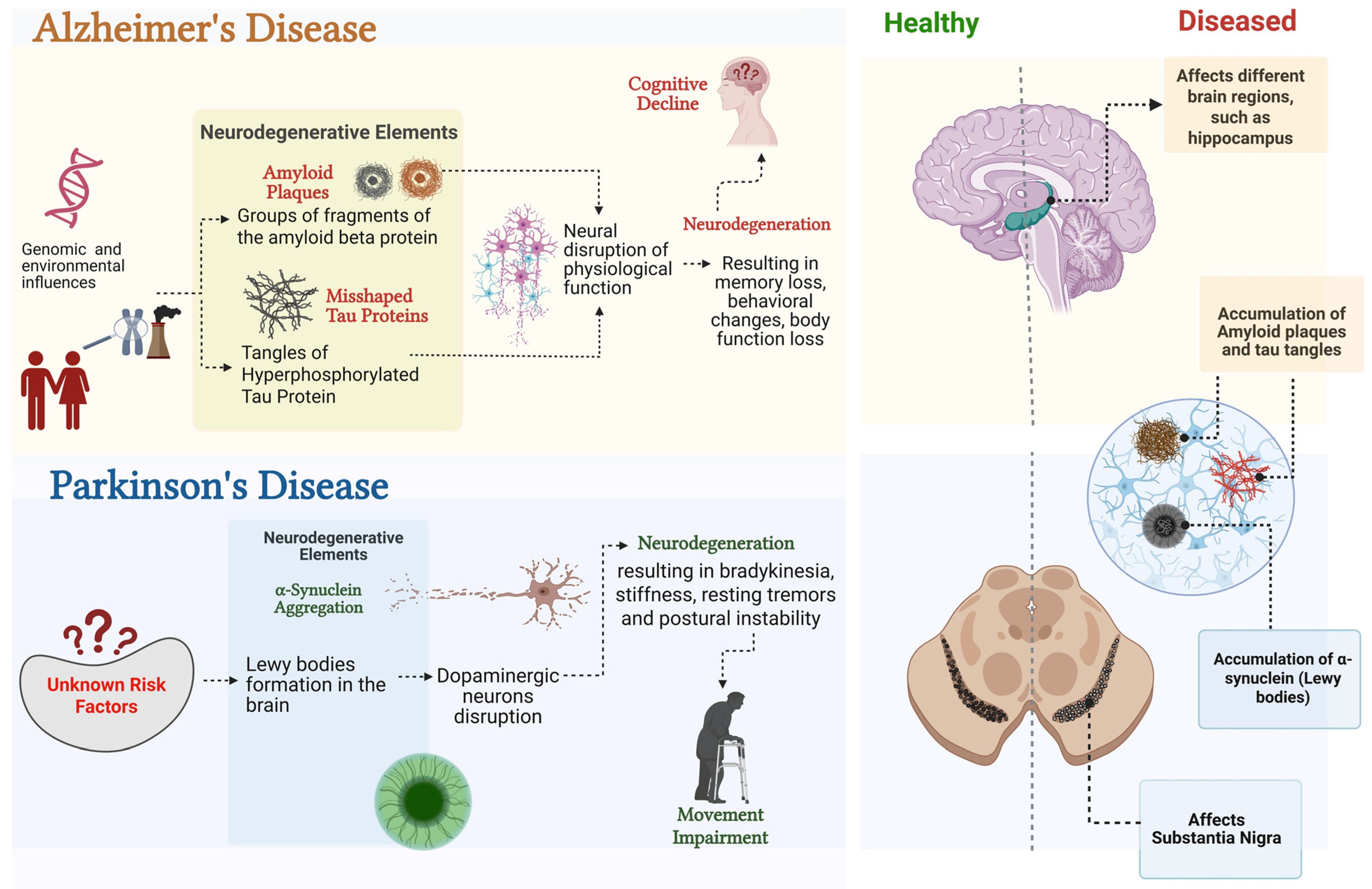

| Brand Name | Active Ingredient | Route of Administration | Indication | Approval Year | Mechanism of Action | Target | Ref. |
|---|---|---|---|---|---|---|---|
| Aduhelm | Aducanumab-avwa | Intravenous infusion | AD | 2021 | ↓ Amyloid-beta plaques | Monoclonal antibody | [132,133] |
| Belsomra | Suvorexant | Oral | AD | 2014 | ↓ Orexin A and Orexin B | Orexin receptors (OX1R and OX2R) | [134,135] |
| Aricep | Donepezil hydrochloride | Oral | AD | 1996 | ↓ Acetylcholinesterase, ↑ acetylcholine | Acetylcholinesterase enzyme | [94,136] |
| Razadyne | Galantamine hydrobromide | Oral | AD | 2001 | ↓ Acetylcholinesterase, ↑ acetylcholine | Acetylcholinesterase enzyme, nicotinic acetylcholine receptors | [137] |
| Leqembi | Lecanemab-irmb | Intravenous (IV) infusion | AD | 2023 | ↓ Amyloid-beta protofibrils | Monoclonal antibody | [138,139] |
| Namenda | Memantine hydrochloride | Oral | AD | 2003 | ↓ Glutamate activity, NMDA receptors | NMDA (N-methyl-D-aspartate) receptor | [140] |
| Exelon | Rivastigmine tartrate | Oral, Transdermal patch | AD | 2000 | ↓ Acetylcholinesterase, butyrylcholinesterase | Acetylcholinesterase enzyme, Butyrylcholinesterase enzyme | [94,141] |
| Azilect | Rasagiline | Oral | PD | 2006 | ↓ Monoamine Oxidase-B (MAO-B), ↑ Dopamine | Monoamine Oxidase-B (MAO-B) Enzyme | [142,143] |
| Apokyn | Apomorphine | Subcutaneous (injection) | PD | 2004 | ↑ Dopamine activity | Dopamine D2 receptors | [144] |
| Comtan | Entacapone | Oral | PD | 1999 | ↑ Dopamine availability | Catechol-O-methyltransferase (COMT) enzyme | [144,145] |
| Duopa | Levodopa and Carbidopa | Intestinal infusion | PD | 2015 | ↑ levodopa, Dopamine | Dopaminergic neurons | [146] |
| Gocovri | Amantadine | Oral | PD | 2017 | ↓ Excitatory neurotransmission | N-Methyl-D-Aspartate (NMDA) receptors | [147] |
| Inbrija | Levodopa | Inhalation | PD | 2018 | ↑ Dopamine | Dopaminergic neurons | [148] |
| Kynmobi | Apomorphine | Sublingual | PD | 2020 | ↑ Dopamine | Dopamine receptors | [149] |
| Mirapex ER | Pramipexole | Oral | PD | 1997 | ↑ Dopamine | Dopamine D2 and D3 receptors | [150] |
| Nourianz | Istradefylline | Oral | PD | 2019 | ↑ Dopaminergic signaling | Adenosine A2A receptors | [151] |
| Ongentys | Opicapone | Oral | PD | 2020 | ↓ levodopa-metabolizing | COMT enzyme | [152] |
| Osmolex ER | Amantadine | Oral | PD | 2018 | ↑ Glutamatergic neurotransmission | NMDA receptors | [153] |
| Rytary | Levodopa and Carbidopa | Oral | PD | 2015 | ↓ Peripheral conversion of levodopa | Dopaminergic neurons | [154] |
| Sinemet | Levodopa and Carbidopa | Oral | PD | 1975 | ↓ levodopa | Dopaminergic neurons | [155] |
| Xadago | Safinamide | Oral | PD | 2017 | ↑ Glutamate release, dopaminergic activity | MAO-B and sodium channels | [137] |
| Zelapar | Selegiline | Oral | PD | 2006 | ↑ Dopamine | MAO-B | [144] |
| Disorder | Major Pathological Mechanisms | Neurotransmitter Alterations | Representative Herbal Therapeutic Targets/Compounds | Ref. |
|---|---|---|---|---|
| AD |
| ↓ ACh, Glutamate dysregulation | Ginkgo biloba, Bacopa monnieri, curcumin, resveratrol | [225,226,227] |
| PD |
| ↓ Dopamine | Curcumin, Panax ginseng, green tea polyphenols, resveratrol | [228,229,230] |
| Schizophrenia |
| Dopamine dysregulation, glutamate imbalance, GABA alterations | Flavonoids, alkaloids, antioxidant phytochemicals | [231,232,233] |
| Depression |
| ↓ GABA, serotonin alterations, glutamate dysregulation | Crocus sativus, Withania somnifera, curcumin | [234,235,236] |
| Vascular dementia |
| Glutamate excitotoxicity, cholinergic dysfunction | Antioxidant-rich herbs, ginseng, and polyphenols | [237,238,239] |
| Mild cognitive impairment |
| Cholinergic decline, neurotransmitter imbalance | Bacopa monnieri, Ginkgo biloba, omega-rich botanicals | [240,241,242,243] |
| Herbal Compound | Gut Microbiota Alterations | Gut-Level Mechanism | Neuroprotective Effect | Ref. |
|---|---|---|---|---|
| Polyphenol-rich herbs | ↑ Lactobacillus, ↑ Bifidobacterium | Prebiotic-like activity and microbial fermentation |
| [357] |
| Ginseng | ↑ Akkermansia muciniphila, ↑ SCFA producers | Enhances mucosal integrity and microbial diversity |
| [358] |
| Curcumin | ↑ Lactobacillus, ↓ Pathogenic bacteria | Modulates gut inflammation and oxidative stress |
| [359] |
| Resveratrol | ↑ Bifidobacterium, ↑ Butyrate-producing bacteria | Enhances SCFA production and gut barrier integrity |
| [360] |
| Berberine | ↑ Akkermansia, ↓ Escherichia–Shigella | Improves gut permeability and metabolic balance |
| [361] |
| Traditional Chinese herbal mixtures | ↑ Lactobacillus, ↑ Bifidobacterium | Restores microbial balance and SCFA metabolism |
| [362] |
| Flavonoid rich herbs | ↑ SCFA-producing bacteria | Increases butyrate and propionate production |
| [363] |
| Ginger | ↑ Beneficial Firmicutes | Anti-inflammatory modulation of gut microbiota |
| [364] |
| Garlic | ↑ Lactobacillus, ↓ pathogenic bacteria | Antimicrobial and prebiotic effects |
| [365] |
| Herbal polysaccharides | ↑ Bifidobacterium, ↑ Akkermansia | Enhances SCFA production |
| [366] |
| Compound/Extract | Dose/Duration | Efficacy | Mechanism | Reference |
|---|---|---|---|---|
| Curcumin | 500 mg/day for 3 months | ↑ cognitive functions in older adults | ↓ NF-κB pathway, ↓ neuroinflammation | [297,475] |
| Resveratrol | 150 mg/day for 1 year | ↑ memory function | ↑ mitochondrial function by activating SIRT1 | [476,477] |
| Berberine | 500 mg × 3/day for 12 weeks | ↓ blood lipid and glucose level, ↑ cognitive function | Activates AMPK, ↓ neuroinflammation | [478] |
| Quercetin | 500 mg/day for 3 months | ↓ blood pressure, ↑ memory function | Inhibits lipid peroxidation, antioxidant activity | [479] |
| Epigallocatechin gallate | 300–800 mg/day for 3 months | ↑ cholesterol metabolism, ↓ mental fatigue | ↑ LDL receptor expression, ↑ neurogenesis, ↓ oxidative stress | [480] |
| Polygala tenuifolia | 100–300 mg/day for 3 months | ↑ memory function and attention | Enhances neuroplasticity, ↓ oxidative stress | [481] |
| Cistanche tubulosa | 300–600 mg/day for 84 days | ↑ learning and memory performance | ↑ acetylcholine levels | [482] |
| Ginkgo biloba | 120–140 mg/day for 24 weeks | Slowing cognitive decline in MCI and aging | ↑ cerebral blood flow | [483] |
| Bacopa monnieri | 300 mg/day for 3 months | ↑ memory retention | ↓ β-amyloid accumulation | [483] |
| Herb | Evidence Level | Meta-Analytical Evidence | Adverse Effects/Interactions | Hepatotoxicity/Safety Signal | Standardized Formulation | Ref. |
|---|---|---|---|---|---|---|
| Bacopa monnieri | Preclinical + clinical | Limited | Mild GI effects, minimal drug–herb interaction risk | Rare | Partially standardized extracts available | [533] |
| Ginkgo biloba | Preclinical + clinical | Yes | Headache, dizziness, bleeding risk | Rare | Standardized EGb 761 available | [534] |
| Withania somnifera | Preclinical + clinical | Limited | Drowsiness, GI upset | Reported HILI cases | Partially standardized | [535,536] |
| Panax ginseng | Preclinical + clinical | Limited | Insomnia, hypertension | Rare | standardized extracts available | [537,538] |
| Centella asiatica | Preclinical | Limited | Allergic reactions | Limited reports | Not fully standardized | [539] |
| Curcumin | Preclinical + clinical | Multiple meta-analysis | GI discomfort | Rare | Advanced formulations available | [540] |
| Glycyrrhiza glabra | Preclinical + clinical | Limited | Hypertension, hypokalemia | Possible hepatic interaction | Variable | [541] |
| Moringa oleifera | Mainly preclinical | Limited | GI discomfort | Limited reports | Not standardized | [542] |
Disclaimer/Publisher’s Note: The statements, opinions and data contained in all publications are solely those of the individual author(s) and contributor(s) and not of MDPI and/or the editor(s). MDPI and/or the editor(s) disclaim responsibility for any injury to people or property resulting from any ideas, methods, instructions or products referred to in the content. |
© 2026 by the authors. Licensee MDPI, Basel, Switzerland. This article is an open access article distributed under the terms and conditions of the Creative Commons Attribution (CC BY) license.
Share and Cite
Rahman, M.; Akter, K.; Rani, A.; Park, M.N.; Kim, B. Herbal Neurotherapeutics for Cognitive Disorders: Integrative Mechanisms Linking Neurotransmitter Systems, Neurodegeneration, and the Gut-Brain Axis. Nutrients 2026, 18, 1796. https://doi.org/10.3390/nu18111796
Rahman M, Akter K, Rani A, Park MN, Kim B. Herbal Neurotherapeutics for Cognitive Disorders: Integrative Mechanisms Linking Neurotransmitter Systems, Neurodegeneration, and the Gut-Brain Axis. Nutrients. 2026; 18(11):1796. https://doi.org/10.3390/nu18111796
Chicago/Turabian StyleRahman, Muntajin, Khadija Akter, Amama Rani, Moon Nyeo Park, and Bonglee Kim. 2026. "Herbal Neurotherapeutics for Cognitive Disorders: Integrative Mechanisms Linking Neurotransmitter Systems, Neurodegeneration, and the Gut-Brain Axis" Nutrients 18, no. 11: 1796. https://doi.org/10.3390/nu18111796
APA StyleRahman, M., Akter, K., Rani, A., Park, M. N., & Kim, B. (2026). Herbal Neurotherapeutics for Cognitive Disorders: Integrative Mechanisms Linking Neurotransmitter Systems, Neurodegeneration, and the Gut-Brain Axis. Nutrients, 18(11), 1796. https://doi.org/10.3390/nu18111796