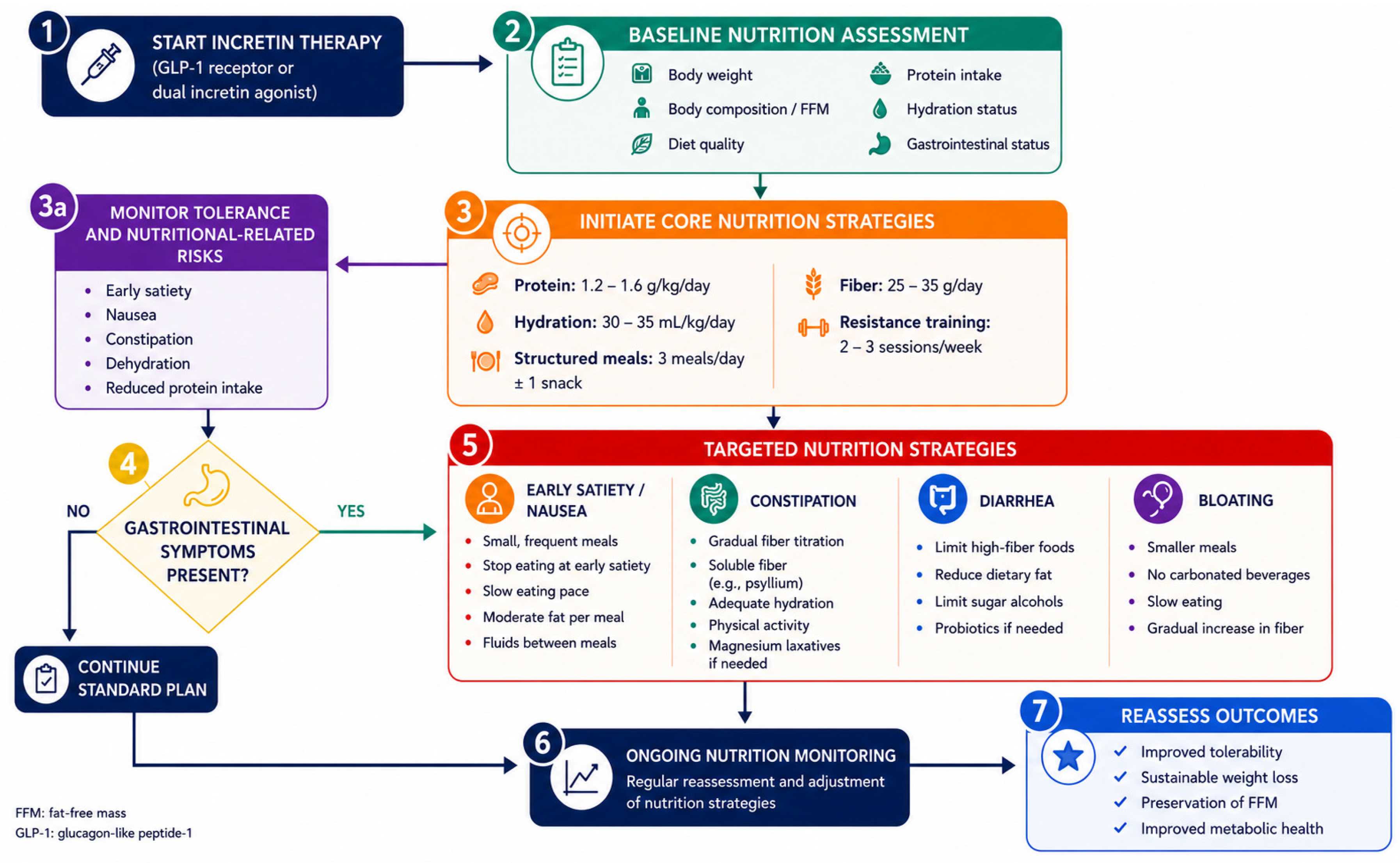
Nutrition-First Support for GLP-1 and Dual Incretin Therapy in Obesity: A Practical Framework for Dietary Management, Symptom Tolerability, and Long-Term Weight Maintenance

 , , , ,
Abstract
1. Introduction
2. Methodology
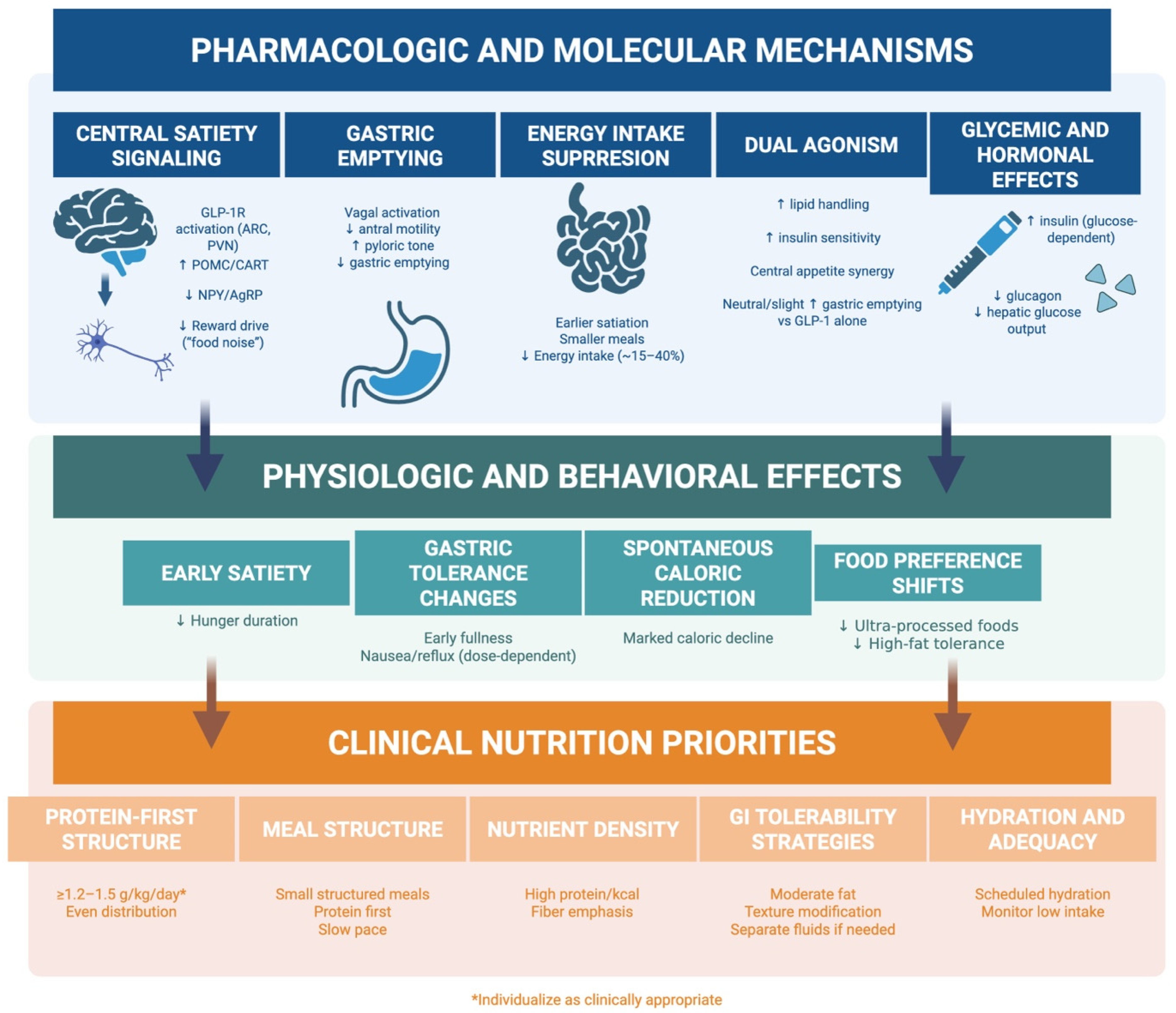
3. From Pharmacology to Nutrition Priorities
3.1. Appetite Suppression and Early Satiety: Implications for Intake Structure
3.2. Delayed Gastric Emptying and Gastrointestinal Signaling
3.3. Dual Agonism and the Role of GIP
3.4. Energy Intake Reduction and Body Composition Considerations
3.5. Translating Pharmacology into Practical Nutrition Priorities
4. Pre-Treatment Assessment and Readiness
4.1. Setting the Nutritional Foundation Prior to Pharmacotherapy
4.2. Baseline Diet Quality and Meal Structure
4.3. Constipation Risk, Gastrointestinal History, and Meal Timing Patterns
4.4. Screening for Restrictive or Disordered Eating Risk
5. Symptom-Targeted Nutrition Considerations to Improve Tolerability
5.1. The Clinical Importance of Symptom-Directed Nutrition Management
5.2. Nausea and Vomiting
5.3. Constipation
5.4. Diarrhea and Bloating

| Symptom | Likely Mechanism | Common Dietary Triggers | Targeted Nutrition Strategies | Escalate if Persistent or Severe |
|---|---|---|---|---|
| Nausea [16,27,56,72,73,124,125,126,127,128,135] | Delayed gastric emptying; gastric distension; dose escalation effects | Large meals; high-fat meals; rapid eating; dehydration; strong food odors | Small, structured meals; stop at early satiety; moderate fat per meal; slow eating; scheduled fluids between meals if tolerated; cold/room-temperature foods when helpful | Persistent symptoms limiting intake or hydration despite dietary modification |
| Vomiting/Reflux [16,27,56,72,73,101,124,125,126,136] | Reduced gastric clearance; increased gastric volume; LES relaxation | Large evening meals; high-fat foods; large fluid + meal combinations | Smaller evening meals; upright posture after eating; moderate fat; avoid over-distension | Recurrent vomiting, weight instability, or refractory reflux symptoms |
| Constipation [27,56,72,98,127,131,132] | Slowed transit; reduced intake volume; low hydration | Low fiber baseline; low fluid intake; sedentary behavior | Gradual fiber titration; emphasize soluble fiber when tolerated; optimize hydration; encourage movement; consider osmotic agents or medical management if persistent | No bowel movement >3–4 days, significant discomfort, or failure of dietary measures |
| Diarrhea [27,56,72,73,126,131,132,135,136] | Altered intestinal motility; fat sensitivity; bile acid changes | High-fat foods; spicy foods; sugar alcohols; excess caffeine | Emphasize soluble fiber; reduce dietary fat temporarily; limit sugar alcohols and irritants; gradual diet normalization | Persistent symptoms, dehydration, electrolyte disturbance, bleeding, fever, or inability to maintain intake |
| Bloating [27,56,72,125,131,132] | Fermentation of rapidly introduced fiber; slowed gastric emptying | Rapid fiber increase; large mixed meals; carbonated beverages | Gradual fiber increase; smaller meals; reduce carbonation; slow eating | Severe pain, progressive distension, vomiting, inability to pass stool/flatus, or concern for obstruction |
6. Dietary Pattern and Macronutrient Approaches During Therapy
6.1. Protein Prioritization and Body Composition Monitoring
6.2. Dietary Pattern Selection and Macronutrient Quality
7. Maintenance, Special Populations, and Implementation
7.1. Maintenance and Discontinuation Planning
7.2. Considerations for Special Populations
7.2.1. Sex as a Biological Variable
7.2.2. Chronic Kidney Disease
7.2.3. Metabolic Dysfunction-Associated Steatotic Liver Disease
7.3. Implementation and Clinic Workflow
8. Limitations and Evidence Gaps
Clinical Take-Home Messages
9. Conclusions
Author Contributions
Funding
Data Availability Statement
Conflicts of Interest
References
- Frías, J.P. Tirzepatide: A glucose-dependent insulinotropic polypeptide (GIP) and glucagon-like peptide-1 (GLP-1) dual agonist in development for the treatment of type 2 diabetes. Expert Rev. Endocrinol. Metab. 2020, 15, 379–394. [Google Scholar] [CrossRef]
- DE Oca, A.P.-M.; Pellitero, S.; Puig-Domingo, M. Obesity and GLP-1. Minerva Endocrinol. 2021, 46, 168–176. [Google Scholar] [CrossRef]
- Quarenghi, M.; Capelli, S.; Galligani, G.; Giana, A.; Preatoni, G.; Quarenghi, R.T. Weight Regain After Liraglutide, Semaglutide or Tirzepatide Interruption: A Narrative Review of Randomized Studies. J. Clin. Med. 2025, 14, 3791. [Google Scholar] [CrossRef]
- Wen, J.; How-Volkman, C.; Truong, A.; Nadora, D.; Bernstein, E.M.; Akhtar, M.; Puglisi, J.; Frezza, E. Comparative Efficacy of Semaglutide Versus Liraglutide or Efinopegdutide on Weight Loss in Obese Patients: A Systematic Review and Meta-Analysis. Cureus 2024, 16, e75304. [Google Scholar] [CrossRef]
- Aronne, L.J.; Horn, D.B.; le Roux, C.W.; Ho, W.; Falcon, B.L.; Valderas, E.G.; Das, S.; Lee, C.J.; Glass, L.C.; Senyucel, C.; et al. Tirzepatide as Compared with Semaglutide for the Treatment of Obesity. N. Engl. J. Med. 2025, 393, 26–36. [Google Scholar] [CrossRef]
- Jensen, T.L.; Brønden, A.; Karstoft, K.; Sonne, D.P.; Christensen, M.B. The Body weight Reducing Effects of Tirzepatide in People with and without Type 2 Diabetes: A Review on Efficacy and Adverse Effects. Patient Prefer. Adherence 2024, 18, 373–382. [Google Scholar] [CrossRef]
- Jastreboff, A.M.; Aronne, L.J.; Ahmad, N.N.; Wharton, S.; Connery, L.; Alves, B.; Kiyosue, A.; Zhang, S.; Liu, B.; Bunck, M.C.; et al. Tirzepatide Once Weekly for the Treatment of Obesity. N. Engl. J. Med. 2022, 387, 205–216. [Google Scholar] [CrossRef] [PubMed]
- Bergmann, N.C.; Davies, M.J.; Lingvay, I.; Knop, F.K. Semaglutide for the treatment of overweight and obesity: A review. Diabetes Obes. Metab. 2023, 25, 18–35. [Google Scholar] [CrossRef] [PubMed]
- McGowan, B.; Ciudin, A.; Baker, J.L.; Busetto, L.; Dicker, D.; Frühbeck, G.; Goossens, G.H.; Monami, M.; Sbraccia, P.; Martinez-Tellez, B.; et al. A systematic review and meta-analysis of the efficacy and safety of pharmacological treatments for obesity in adults. Nat. Med. 2025, 31, 3317–3329. [Google Scholar] [CrossRef] [PubMed]
- Webb, V.L.; Wadden, T.A. Intensive Lifestyle Intervention for Obesity: Principles, Practices, and Results. Gastroenterology 2017, 152, 1752–1764. [Google Scholar] [CrossRef]
- Wadden, T.A.; Chao, A.M.; Machineni, S.; Kushner, R.; Ard, J.; Srivastava, G.; Halpern, B.; Zhang, S.; Chen, J.; Bunck, M.C.; et al. Tirzepatide after intensive lifestyle intervention in adults with overweight or obesity: The SURMOUNT-3 phase 3 trial. Nat. Med. 2023, 29, 2909–2918. [Google Scholar] [CrossRef]
- Muralidharan, J.; Romain, C.; Martínez-Noguera, F.J.; Marín-Cascales, E.; Chung, L.; Alcaraz, P.; Cases, J. A 16-week supplementation with a polyphenol-rich supplement, Sinetrol ® Xpur, aids in fat loss of overweight and obese volunteers: A randomised, double-blind, parallel trial. Int. J. Food Sci. Nutr. 2026, 77, 40–47. [Google Scholar] [CrossRef]
- Morán, L.J.; Aparicio, V.A.; Flor-Alemany, M.; Fernández-Bergés, D.; Nestares, T.; Nebot-Valenzuela, E.; Felix-Redondo, F.J. The influence of Mediterranean diet and physical activity-related energy expenditure on weight status and cardiometabolic risk. What “weights” more? The HERMEX study. Int. J. Food Sci. Nutr. 2025, 76, 73–83. [Google Scholar] [CrossRef]
- Biter, L.U.; ‘t Hart, J.W.; Noordman, B.J.; Smulders, J.F.; Nienhuijs, S.; Dunkelgrün, M.; Zengerink, J.F.; Birnie, E.; Friskes, I.A.; Mannaerts, G.H.; et al. Long-term effect of sleeve gastrectomy vs Roux-en-Y gastric bypass in people living with severe obesity: A phase III multicentre randomised controlled trial (SleeveBypass). Lancet Reg. Health-Eur. 2024, 38, 100836. [Google Scholar] [CrossRef] [PubMed]
- O’brien, P.E.; Hindle, A.; Brennan, L.; Skinner, S.; Burton, P.; Smith, A.; Crosthwaite, G.; Brown, W. Long-Term Outcomes After Bariatric Surgery: A Systematic Review and Meta-analysis of Weight Loss at 10 or More Years for All Bariatric Procedures and a Single-Centre Review of 20-Year Outcomes After Adjustable Gastric Banding. Obes. Surg. 2019, 29, 3–14. [Google Scholar] [CrossRef]
- Wilding, J.P.H.; Batterham, R.L.; Calanna, S.; Davies, M.; Van Gaal, L.F.; Lingvay, I.; McGowan, B.M.; Rosenstock, J.; Tran, M.T.; Wadden, T.A.; et al. Once-Weekly Semaglutide in Adults with Overweight or Obesity. N. Engl. J. Med. 2021, 384, 989–1002. [Google Scholar] [CrossRef]
- Reytor-González, C.; Campuzano-Donoso, M.; Sarno, G.; Montalvan, M.; Horowitz, R.; Rossetti, G.; Pilone, V.; Barrea, L.; Muscogiuri, G.; Schiavo, L.; et al. Single vs. Dual Agonist Pharmacotherapy for Managing Insufficient Weight Loss and Weight Regain Following Metabolic and Bariatric Surgery: A Comparative Review. Nutrients 2026, 18, 553. [Google Scholar] [CrossRef]
- Aslam, B.; BIN Zafar, M.D.; Changez, M.I.K.; Abdullah, M.; Safwan, M.; Qamar, B.; Shinwari, A.; Rai, S. Exploring the potential impact of GLP-1 receptor agonists in cancer therapy. Minerva Endocrinol. 2025, 50, 302–311. [Google Scholar] [CrossRef] [PubMed]
- Yılmaz, N.; Bastemir, M. Gastrointestinal Adverse Effects of GLP-1 and Dual GLP-1/GIP Receptor Agonists: A Comprehensive Update in Diabetic and Obese Populations. Diabetes Metab. Syndr. Obes. Targets Ther. 2026, 19, 584175. [Google Scholar] [CrossRef]
- Rodriguez, P.J.; Zhang, V.; Gratzl, S.; Do, D.; Cartwright, B.G.; Baker, C.; Gluckman, T.J.; Stucky, N.; Emanuel, E.J. Discontinuation and Reinitiation of Dual-Labeled GLP-1 Receptor Agonists Among US Adults with Overweight or Obesity. JAMA Netw. Open 2025, 8, e2457349. [Google Scholar] [CrossRef] [PubMed]
- Sarno, G.; Reytor-González, C.; Frias-Toral, E.; Campuzano-Donoso, M.; Katsanos, C.S.; Simancas-Racines, D. Navigating the Weight: The Impact of Obesity on Gastrointestinal Cancer Surgery and Strategies for Improved Outcomes. Semin. Cancer Biol. 2025, 114, 138–149. [Google Scholar] [CrossRef] [PubMed]
- Simancas-Racines, D.; Reytor-González, C.; Frias-Toral, E.; Katsanos, C.S.; Hidalgo, R. Weighty matters: Unraveling the impact of obesity on colorectal cancer and nutritional interventions. Semin. Cancer Biol. 2025, 114, 29–40. [Google Scholar] [CrossRef]
- Kantilafti, M.; Magiakou, E.; Chrysostomou, S. Ultra-processed foods and cancer risk: A narrative review of epidemiological findings and biological mechanisms. Int. J. Food Sci. Nutr. 2025, 76, 843–852. [Google Scholar] [CrossRef]
- De Silva, A.; Bloom, S.R. Gut Hormones and Appetite Control: A Focus on PYY and GLP-1 as Therapeutic Targets in Obesity. Gut Liver 2012, 6, 10–20. [Google Scholar] [CrossRef] [PubMed]
- Pratama, K.G.; Nugroho, H.; Hengky, A.; Tandry, M.; Pauliana, P. Glucagon-like peptide-1 receptor agonists for post-bariatric surgery weight regain and insufficient weight loss: A systematic review. Obes. Med. 2024, 46, 100533. [Google Scholar] [CrossRef]
- Kolli, R.T.; Aoutla, S.; Jyothi, N.; Kalifa, M.R.H.M.; Raju, A.; Muralidharan, K.C. Rebound or Retention: A Meta-Analysis of Weight Regain After the Discontinuation of Glucagon-Like Peptide-1 (GLP-1) Receptor Agonists and Other Anti-obesity Drugs. Cureus 2025, 17, e94926. [Google Scholar] [CrossRef] [PubMed]
- Mozaffarian, D.; Agarwal, M.; Aggarwal, M.; Alexander, L.; Apovian, C.M.; Bindlish, S.; Bonnet, J.; Butsch, W.S.; Christensen, S.; Gianos, E.; et al. Nutritional priorities to support GLP-1 therapy for obesity: A joint Advisory from the American College of Lifestyle Medicine, the American Society for Nutrition, the Obesity Medicine Association, and The Obesity Society. Am. J. Clin. Nutr. 2025, 122, 344–367. [Google Scholar] [CrossRef]
- Sibal, R.; Balamurugan, G.; Langley, J.; Graham, Y.; Mahawar, K. Macronutrient, Micronutrient Supplementation and Monitoring for Patients on GLP-1 Agonists: Can We Learn from Metabolic and Bariatric Surgery? Nutrients 2025, 17, 3659. [Google Scholar] [CrossRef]
- Shankar, A.; Sharma, A.; Vinas, A.; Chilton, R.J. GLP-1 receptor agonists and delayed gastric emptying: Implications for invasive cardiac interventions and surgery. Cardiovasc. Endocrinol. Metab. 2024, 14, e00321. [Google Scholar] [CrossRef]
- Sievenpiper, J.; Ard, J.; Blüher, M.; Chen, W.; Dixon, J.; Fitch, A.; Gigliotti, L.; Khunti, K.; Lecube, A.; Lean, M.; et al. Nutritional and lifestyle supportive care recommendations for management of obesity with GLP-1—Based therapies: An expert consensus statement using a modified Delphi approach. Obes. Pillars 2026, 17, 100228. [Google Scholar] [CrossRef]
- García-Gorrita, C.; Onofre, N.S.; Merino-Torres, J.F.; Soriano, J.M. Beyond GLP-1 Agonists: An Adaptive Ketogenic–Mediterranean Protocol to Counter Metabolic Adaptation in Obesity Management. Nutrients 2025, 17, 2699. [Google Scholar] [CrossRef]
- van Gassel, R.J.; Bels, J.L.; van de Poll, M.C. Nutritional strategies during gastrointestinal dysfunction. Curr. Opin. Crit. Care 2023, 29, 354–359. [Google Scholar] [CrossRef]
- Reiss, A.B.; Gulkarov, S.; Lau, R.; Klek, S.P.; Srivastava, A.; Renna, H.A.; De Leon, J. Weight Reduction with GLP-1 Agonists and Paths for Discontinuation While Maintaining Weight Loss. Biomolecules 2025, 15, 408. [Google Scholar] [CrossRef]
- Choi, W.; Woo, G.H.; Kwon, T.-H.; Jeon, J.-H. Obesity-Driven Metabolic Disorders: The Interplay of Inflammation and Mitochondrial Dysfunction. Int. J. Mol. Sci. 2025, 26, 9715. [Google Scholar] [CrossRef]
- Seino, Y.; Fukushima, M.; Yabe, D. GIP and GLP-1, the two incretin hormones: Similarities and differences. J. Diabetes Investig. 2010, 1, 8–23. [Google Scholar] [CrossRef]
- Tongta, S.; Sungkaworn, T.; Pathomthongtaweechai, N. Neurobiological Mechanisms and Therapeutic Potential of Glucagon-like Peptide-1 Receptor Agonists in Binge Eating Disorder: A Narrative Review. Int. J. Mol. Sci. 2025, 26, 10974. [Google Scholar] [CrossRef] [PubMed]
- Alharbi, A.G. GLP-1 receptor agonism: A transformative approach for managing type-2 diabetes and obesity. Saudi Pharm. J. 2025, 33, 34. [Google Scholar] [CrossRef] [PubMed]
- Liu, Q.K. Mechanisms of action and therapeutic applications of GLP-1 and dual GIP/GLP-1 receptor agonists. Front. Endocrinol. 2024, 15, 1431292. [Google Scholar] [CrossRef]
- Yao, H.; Zhang, A.; Li, D.; Wu, Y.; Wang, C.-Z.; Wan, J.-Y.; Yuan, C.-S. Comparative effectiveness of GLP-1 receptor agonists on glycaemic control, body weight, and lipid profile for type 2 diabetes: Systematic review and network meta-analysis. BMJ 2024, 384, e076410. [Google Scholar] [CrossRef]
- Jalleh, R.J.; Plummer, M.P.; Marathe, C.S.; Umapathysivam, M.M.; Quast, D.R.; Rayner, C.K.; Jones, K.L.; Wu, T.; Horowitz, M.; Nauck, M.A. Clinical Consequences of Delayed Gastric Emptying With GLP-1 Receptor Agonists and Tirzepatide. J. Clin. Endocrinol. Metab. 2024, 110, 1–15. [Google Scholar] [CrossRef] [PubMed]
- Skibicka, K.P. The central GLP-1: Implications for food and drug reward. Front. Neurosci. 2013, 7, 181. [Google Scholar] [CrossRef] [PubMed]
- Park, J.S.; Kim, K.S.; Choi, H.J. Glucagon-Like Peptide-1 and Hypothalamic Regulation of Satiation: Cognitive and Neural Insights from Human and Animal Studies. Diabetes Metab. J. 2025, 49, 333–347. [Google Scholar] [CrossRef]
- Dang, V.; Sambuco, N.; Yammine, L.; Versace, F. Do GLP-1 Receptor Agonists Alter Brain Responses to Reward-Related Cues? A Systematic Review. bioRxiv 2026. [Google Scholar] [CrossRef]
- Christensen, S.; Robinson, K.; Thomas, S.; Williams, D.R. Dietary intake by patients taking GLP-1 and dual GIP/GLP-1 receptor agonists: A narrative review and discussion of research needs. Obes. Pillars 2024, 11, 100121. [Google Scholar] [CrossRef]
- Hayashi, D.; Edwards, C.; Emond, J.A.; Gilbert-Diamond, D.; Butt, M.; Rigby, A.; Masterson, T.D. What Is Food Noise? A Conceptual Model of Food Cue Reactivity. Nutrients 2023, 15, 4809. [Google Scholar] [CrossRef]
- Johnson, B.; Milstead, M.; Thomas, O.; McGlasson, T.; Green, L.; Kreider, R.; Jones, R. Investigating nutrient intake during use of glucagon-like peptide-1 receptor agonist: A cross-sectional study. Front. Nutr. 2025, 12, 1566498. [Google Scholar] [CrossRef] [PubMed]
- Steger, F.L.; Jamshed, H.; Martin, C.K.; Richman, J.S.; Bryan, D.R.; Hanick, C.J.; Salvy, S.; Warriner, A.H.; Peterson, C.M. Impact of early time-restricted eating on diet quality, meal frequency, appetite, and eating behaviors: A randomized trial. Obesity 2022, 31, 127–138. [Google Scholar] [CrossRef]
- Bina, J.D.; Tonsor, G.T.; Richards, T.J. GLP-1 use and protein demand. Food Policy 2026, 138, 103026. [Google Scholar] [CrossRef]
- Johnson, B.V.; Milstead, M.; Green, L.; Kreider, R.; Jones, R. Diet quality and nutrient distribution while using glucagon-like-peptide-1 receptor agonist: A secondary cross-sectional analysis. Obes. Pillars 2025, 16, 100195. [Google Scholar] [CrossRef]
- Nguyen, T.L.; Trinh, K.S. Evaluation of the Obesity Prevention, Blood Glucose, and Blood Lipid Control of Vietnamese Rice Varieties in High-Fat Diet-Induced Obese Mice. Int. J. Food Sci. 2021, 2021, 4880603. [Google Scholar] [CrossRef]
- Cheney, C.; Hunter, K.; Klein, M. Impact of GLP-1 Receptor Agonists on Perceived Eating Behaviors in Response to Stimuli. Diabetes Metab. Syndr. Obes. Targets Ther. 2025, 18, 1411–1418. [Google Scholar] [CrossRef]
- Kim, J.A.; Yoo, H.J. Exploring the Side Effects of GLP-1 Receptor Agonist: To Ensure Its Optimal Positioning. Diabetes Metab. J. 2025, 49, 525–541. [Google Scholar] [CrossRef]
- Al Mushref, M.; Srinivasan, S. Effect of high fat-diet and obesity on gastrointestinal motility. Ann. Transl. Med. 2013, 1, 14. [Google Scholar] [CrossRef]
- Shu, Y.; He, X.; Wu, P.; Liu, Y.; Ding, Y.; Zhang, Q. Gastrointestinal adverse events associated with semaglutide: A pharmacovigilance study based on FDA adverse event reporting system. Front. Public Health 2022, 10, 996179. [Google Scholar] [CrossRef] [PubMed]
- Gentinetta, S.; Sottotetti, F.; Manuelli, M.; Cena, H. Dietary Recommendations for the Management of Gastrointestinal Symptoms in Patients Treated with GLP-1 Receptor Agonist. Diabetes Metab. Syndr. Obes. Targets Ther. 2024, 17, 4817–4824. [Google Scholar] [CrossRef] [PubMed]
- Gorgojo-Martínez, J.J.; Mezquita-Raya, P.; Carretero-Gómez, J.; Castro, A.; Cebrián-Cuenca, A.; de Torres-Sánchez, A.; García-De-Lucas, M.D.; Núñez, J.; Obaya, J.C.; Soler, M.J.; et al. Clinical Recommendations to Manage Gastrointestinal Adverse Events in Patients Treated with Glp-1 Receptor Agonists: A Multidisciplinary Expert Consensus. J. Clin. Med. 2022, 12, 145. [Google Scholar] [CrossRef] [PubMed]
- Valicente, V.M.; Peng, C.-H.; Pacheco, K.N.; Lin, L.; Kielb, E.I.; Dawoodani, E.; Abdollahi, A.; Mattes, R.D. Ultraprocessed Foods and Obesity Risk: A Critical Review of Reported Mechanisms. Adv. Nutr. Int. Rev. J. 2023, 14, 718–738. [Google Scholar] [CrossRef]
- Samms, R.J.; Coghlan, M.P.; Sloop, K.W. How May GIP Enhance the Therapeutic Efficacy of GLP-1? Trends Endocrinol. Metab. 2020, 31, 410–421. [Google Scholar] [CrossRef]
- Mohammad, S.; Ramos, L.S.; Buck, J.; Levin, L.R.; Rubino, F.; McGraw, T.E. Gastric Inhibitory Peptide Controls Adipose Insulin Sensitivity via Activation of cAMP-response Element-binding Protein and p110β Isoform of Phosphatidylinositol 3-Kinase. J. Biol. Chem. 2011, 286, 43062–43070. [Google Scholar] [CrossRef]
- Yusni, Y.; Yusuf, H.; Murzalina, C.; Mahmudati, N. Synergistic Modulation of Lipid Levels by Coffee and Swimming with Evidence of a Strong Obesity–Dyslipidemia Link: A Preclinical Study. Int. J. Food Sci. 2026, 2026, 8436448. [Google Scholar] [CrossRef]
- Edholm, T.; Degerblad, M.; Grybäck, P.; Hilsted, L.; Holst, J.J.; Jacobsson, H.; Efendic, S.; Schmidt, P.T.; Hellström, P.M. Differential incretin effects of GIP and GLP-1 on gastric emptying, appetite, and insulin-glucose homeostasis. Neurogastroenterol. Motil. 2010, 22, 1191-e315. [Google Scholar] [CrossRef]
- Xie, X.; Yang, S.; Deng, S.; Liu, Y.; Xu, Z.; He, B. Comparative gastrointestinal adverse effects of GLP-1 receptor agonists and multi-target analogs in type 2 diabetes: A Bayesian network meta-analysis. Front. Pharmacol. 2025, 16, 1613610. [Google Scholar] [CrossRef]
- Min, T.; Bain, S.C. The Role of Tirzepatide, Dual GIP and GLP-1 Receptor Agonist, in the Management of Type 2 Diabetes: The SURPASS Clinical Trials. Diabetes Ther. 2021, 12, 143–157. [Google Scholar] [CrossRef]
- Barana, L.; De Fano, M.; Cavallo, M.; Manco, M.; Prete, D.; Fanelli, C.G.; Porcellati, F.; Pippi, R. Nutrition and Physical Activity in Optimizing Weight Loss and Lean Mass Preservation in the Incretin-Based Medications Era: A Narrative Review. Nutrients 2025, 18, 131. [Google Scholar] [CrossRef]
- Karl, J.P.; Roberts, S.B. Energy Density, Energy Intake, and Body Weight Regulation in Adults. Adv. Nutr. Int. Rev. J. 2014, 5, 835–850. [Google Scholar] [CrossRef] [PubMed]
- Nicklas, B.J.; Chmelo, E.; Delbono, O.; Carr, J.J.; Lyles, M.F.; Marsh, A.P. Effects of resistance training with and without caloric restriction on physical function and mobility in overweight and obese older adults: A randomized controlled trial. Am. J. Clin. Nutr. 2015, 101, 991–999. [Google Scholar] [CrossRef] [PubMed]
- Cava, E.; Yeat, N.C.; Mittendorfer, B. Preserving Healthy Muscle during Weight Loss. Adv. Nutr. Int. Rev. J. 2017, 8, 511–519. [Google Scholar] [CrossRef]
- Jacob, E.; Moura, A.; Avery, A. A systematic review of physical activity and nutritional interventions for the management of normal weight and overweight obesity. Nutr. Metab. Cardiovasc. Dis. 2024, 34, 2642–2658. [Google Scholar] [CrossRef] [PubMed]
- Çelik, Ö.; Yıldız, B.O. Obesity and physical exercise. Minerva Endocrinol. 2021, 46, 131–144. [Google Scholar] [CrossRef]
- Fitch, A.; Gigliotti, L.; Bays, H.E. Application of nutrition interventions with GLP-1 based therapies: A narrative review of the challenges and solutions. Obes. Pillars 2025, 16, 100205. [Google Scholar] [CrossRef]
- Miller, G.D. Appetite Regulation: Hormones, Peptides, and Neurotransmitters and Their Role in Obesity. Am. J. Lifestyle Med. 2019, 13, 586–601. [Google Scholar] [CrossRef] [PubMed]
- Hoffmann, L.; Egert, S.; Allgaier, J.; Kohlenberg-Müller, K. Review of Validated Methods to Evaluate Diet History in Diet Therapy and Counselling: An Overview and Analysis of Screeners Based on Food-Based Dietary Guidelines. Nutrients 2023, 15, 4654. [Google Scholar] [CrossRef] [PubMed]
- Hauser, M.E.; Hartle, J.C.; Landry, M.J.; Fielding-Singh, P.; Shih, C.W.; Qin, F.; Rigdon, J.; Gardner, C.D. Association of dietary adherence and dietary quality with weight loss success among those following low-carbohydrate and low-fat diets: A secondary analysis of the DIETFITS randomized clinical trial. Am. J. Clin. Nutr. 2024, 119, 174–184. [Google Scholar] [CrossRef]
- Simancas-Racines, D.; Frias-Toral, E.; Campuzano-Donoso, M.; Ramos-Sarmiento, D.; Zambrano-Villacres, R.; Reytor-González, C.; Schiavo, L. Preoperative Nutrition in Bariatric Surgery: A Narrative Review on Enhancing Surgical Success and Patient Outcomes. Nutrients 2025, 17, 566. [Google Scholar] [CrossRef] [PubMed]
- Reytor-González, C.; Simancas-Racines, D.; Campuzano-Donoso, M.; Jimenez, J.C.; Román-Galeano, N.M.; Sarno, G.; Frias-Toral, E. Harnessing nutrition to combat MASLD: A comprehensive guide to food-based therapeutic strategies. Food Agric. Immunol. 2025, 36, 2496499. [Google Scholar] [CrossRef]
- Thomsen, R.W.; Mailhac, A.; Løhde, J.B.; Pottegård, A. Real-world evidence on the utilization, clinical and comparative effectiveness, and adverse effects of newer GLP-1RA-based weight-loss therapies. Diabetes Obes. Metab. 2025, 27, 66–88. [Google Scholar] [CrossRef]
- Dagan, S.S.; Goldenshluger, A.; Globus, I.; Schweiger, C.; Kessler, Y.; Sandbank, G.K.; Ben-Porat, T.; Sinai, T. Nutritional Recommendations for Adult Bariatric Surgery Patients: Clinical Practice. Adv. Nutr. Int. Rev. J. 2017, 8, 382–394. [Google Scholar] [CrossRef]
- Ben-Porat, T.; Sherf-Dagan, S.; Côté, M.; Miner, C.J.; Buch, A. Nutritional Challenges of Incretin-Based Obesity Management Medications: Implications for Clinical Practice. Adv. Nutr. Int. Rev. J. 2025, 16, 100522. [Google Scholar] [CrossRef]
- Blake, M.R.; Raker, J.M.; Whelan, K. Validity and reliability of the Bristol Stool Form Scale in healthy adults and patients with diarrhoea-predominant irritable bowel syndrome. Aliment. Pharmacol. Ther. 2016, 44, 693–703. [Google Scholar] [CrossRef] [PubMed]
- Revicki, D.A.; Wood, M.; Wiklund, I.; Crawley, J. Reliability and validity of the gastrointestinal symptom rating scale in patients with gastroesophageal reflux disease. Qual. Life Res. 1997, 7, 75–83. [Google Scholar] [CrossRef]
- Shankar, V.; Thompson, K.H.; Wylie-Rosett, J.; Segal-Isaacson, C.J. Validation and reliability for the updated REAP-S dietary screener, (Rapid Eating Assessment of Participants, Short Version, v.2). BMC Nutr. 2023, 9, 88. [Google Scholar] [CrossRef]
- Segal-Isaacson, C.J.; Wylie-Rosett, J.; Gans, K.M. Validation of a Short Dietary Assessment Questionnaire: The Rapid Eating and Activity Assessment for Participants Short Version (REAP-S). Diabetes Educ. 2004, 30, 774–781. [Google Scholar] [CrossRef]
- Al-Najim, W.; Raposo, A.; BinMowyna, M.N.; le Roux, C.W. Unintended Consequences of Obesity Pharmacotherapy: A Nutritional Approach to Ensuring Better Patient Outcomes. Nutrients 2025, 17, 1934. [Google Scholar] [CrossRef]
- Westbury, L.D.; Durdin, R.; Robinson, S.M.; Cooper, C.; Cooper, R.; Ward, K.A. Diet quality from mid-life and body composition in older age: Findings from a British birth cohort. Br. J. Nutr. 2025, 133, 262–268. [Google Scholar] [CrossRef]
- Muscogiuri, G.; Verde, L.; Sulu, C.; Katsiki, N.; Hassapidou, M.; Frias-Toral, E.; Cucalón, G.; Pazderska, A.; Yumuk, V.D.; Colao, A.; et al. Mediterranean Diet and Obesity-related Disorders: What is the Evidence? Curr. Obes. Rep. 2022, 11, 287–304. [Google Scholar] [CrossRef]
- Reytor-González, C.; Zambrano, A.K.; Frias-Toral, E.; Campuzano-Donoso, M.; Simancas-Racines, D. Mediterranean diet and breast cancer: A narrative review. Medwave 2025, 25, e3027. [Google Scholar] [CrossRef]
- Yoon, D.Y.; Sunwoo, J.; Shin, N.; Kim, A.R.; Kim, B.T.; Song, G.S.; Jang, I.; Lee, S. Effect of meal timing on pharmacokinetics and pharmacodynamics of tegoprazan in healthy male volunteers. Clin. Transl. Sci. 2021, 14, 934–941. [Google Scholar] [CrossRef]
- Silva, N.; Gomes, N.; Teixeira, B. Systematic review: Mediterranean diet adherence and health outcomes in children and adolescents with ADHD and OCTD. Mediterr. J. Nutr. Metab. 2026, 19, 141–152. [Google Scholar] [CrossRef]
- Godos, J.; Micek, A.; Di Venuta, C.; Di Mauro, A.; Furnari, F.; Balzano, R.M.; Di Giorgio, J.; Leonardi, A.; Caruso, G.; Grosso, G. Role of Mediterranean diet in the prevention of cognitive decline: Biological mechanisms behind longevity promotion. Mediterr. J. Nutr. Metab. 2025, 18, 227–243. [Google Scholar] [CrossRef]
- Gigliotti, L.; Warshaw, H.; Evert, A.; Dawkins, C.; Schwartz, J.; Susie, C.; Kushner, R.; Subramanian, S.; Handu, D.; Rozga, M. Incretin-Based Therapies and Lifestyle Interventions: The Evolving Role of Registered Dietitian Nutritionists in Obesity Care. J. Acad. Nutr. Diet. 2025, 125, 408–421. [Google Scholar] [CrossRef]
- Tinsley, G.M.; Nadolsky, S. Preservation of lean soft tissue during weight loss induced by GLP-1 and GLP-1/GIP receptor agonists: A case series. SAGE Open Med. Case Rep. 2025, 13, 2050313X251388724. [Google Scholar] [CrossRef]
- Beasley, J.M.; Shikany, J.M.; Thomson, C.A. The Role of Dietary Protein Intake in the Prevention of Sarcopenia of Aging. Nutr. Clin. Pract. 2013, 28, 684–690. [Google Scholar] [CrossRef]
- Bopp, M.J.; Houston, D.K.; Lenchik, L.; Easter, L.; Kritchevsky, S.B.; Nicklas, B.J. Lean Mass Loss Is Associated with Low Protein Intake during Dietary-Induced Weight Loss in Postmenopausal Women. J. Am. Diet. Assoc. 2008, 108, 1216–1220. [Google Scholar] [CrossRef]
- Kerlikowsky, F.; Krämer, K.; Eggersdorfer, M.; Hahn, A. GLP-1 Receptor Agonists—Good for Body Weight, Bad for Micronutrient Status? Curr. Dev. Nutr. 2025, 9, 107587. [Google Scholar] [CrossRef]
- Spreckley, M.; Ruggiero, C.F.; Brown, A. Bridging the nutrition guidance gap for GLP-1 receptor agonist therapy assisted weight loss: Lessons from bariatric surgery. Int. J. Obes. 2026, 50, 265–267. [Google Scholar] [CrossRef]
- Rubino, D.M.; Pedersen, S.D.; Connery, L.; Cao, D.; Chigutsa, F.; Stefanski, A.; Brumm, J.F.; Griffin, R.; Gerber, C. Gastrointestinal tolerability and weight reduction associated with tirzepatide in adults with obesity or overweight with and without type 2 diabetes in the SURMOUNT-1 to -4 trials. Diabetes Obes. Metab. 2025, 27, 1826–1835. [Google Scholar] [CrossRef]
- Ghusn, W.; Hurtado, M.D. Glucagon-like Receptor-1 agonists for obesity: Weight loss outcomes, tolerability, side effects, and risks. Obes. Pillars 2024, 12, 100127. [Google Scholar] [CrossRef]
- Bellini, M.; Tonarelli, S.; Barracca, F.; Rettura, F.; Pancetti, A.; Ceccarelli, L.; Ricchiuti, A.; Costa, F.; de Bortoli, N.; Marchi, S.; et al. Chronic Constipation: Is a Nutritional Approach Reasonable? Nutrients 2021, 13, 3386. [Google Scholar] [CrossRef]
- Rollet, M.; Bohn, T.; Vahid, F.; on behalf of the ORISCAV Working Group. Association between Dietary Factors and Constipation in Adults Living in Luxembourg and Taking Part in the ORISCAV-LUX 2 Survey. Nutrients 2021, 14, 122. [Google Scholar] [CrossRef]
- Valitova, E.R.; Bayrakci, B.; Bor, S. The effect of the speed of eating on acid reflux and symptoms of patients with gastroesophageal reflux disease. Turk. J. Gastroenterol. 2013, 24, 377–381. [Google Scholar] [CrossRef]
- Kang, J.-E.; Kang, J. Lifestyle measures in the management of gastro-oesophageal reflux disease: Clinical and pathophysiological considerations. Ther. Adv. Chronic Dis. 2015, 6, 51–64. [Google Scholar] [CrossRef]
- Ismaiel, A.; Scarlata, G.G.M.; Boitos, I.; Leucuta, D.-C.; Popa, S.-L.; Al Srouji, N.; Abenavoli, L.; Dumitrascu, D.L. Gastrointestinal adverse events associated with GLP-1 RA in non-diabetic patients with overweight or obesity: A systematic review and network meta-analysis. Int. J. Obes. 2025, 49, 1946–1957. [Google Scholar] [CrossRef]
- Atlantis, E.; Wu, R.; Dixon, J. Incretin-based therapies for obesity and disordered eating: Optimising care in general practice. Fam. Med. Community Health 2026, 14, e003622. [Google Scholar] [CrossRef]
- Aoun, L.; Almardini, S.; Saliba, F.; Haddadin, F.; Mourad, O.; Jdaidani, J.; Morcos, Z.; Al Saidi, I.; Sanayeh, E.B.; Saliba, S.; et al. GLP-1 receptor agonists: A novel pharmacotherapy for binge eating (Binge eating disorder and bulimia nervosa)? A systematic review. J. Clin. Transl. Endocrinol. 2024, 35, 100333. [Google Scholar] [CrossRef]
- Bartel, S.; McElroy, S.L.; Levangie, D.; Keshen, A. Use of glucagon-like peptide-1 receptor agonists in eating disorder populations. Int. J. Eat. Disord. 2024, 57, 286–293. [Google Scholar] [CrossRef]
- Lister, N.B.; Baur, L.A.; Paxton, S.J.; Garnett, S.P.; Ahern, A.L.; Wilfley, D.E.; Maguire, S.; Sainsbury, A.; Steinbeck, K.; Braet, C.; et al. Eating Disorders In weight-related Therapy (EDIT) Collaboration: Rationale and study design. Nutr. Res. Rev. 2024, 37, 32–42. [Google Scholar] [CrossRef] [PubMed]
- Marucci, S.; Busetto, L.; Chianelli, M.; Fusco, A.; Carpentieri, M.; Armellini, M.; Tassone, F.; Sciaraffia, M.; Ponziani, M.C.; Nelva, A.; et al. Screening, Diagnosis, and Treatment of Patients with Binge Eating Disorder and Obesity: What the Endocrinologist Needs to Know. Endocrines 2024, 5, 87–101. [Google Scholar] [CrossRef]
- Krabbenborg, M.A.M.; Danner, U.N.; Larsen, J.K.; van der Veer, N.; van Elburg, A.A.; de Ridder, D.T.D.; Evers, C.; Stice, E.; Engels, R.C.M.E. The Eating Disorder Diagnostic Scale: Psychometric Features Within a Clinical Population and a Cut-off Point to Differentiate Clinical Patients from Healthy Controls. Eur. Eat. Disord. Rev. 2012, 20, 315–320. [Google Scholar] [CrossRef]
- Morgan, J.F.; Reid, F.; Lacey, J.H. The SCOFF questionnaire: A new screening tool for eating disorders. West. J. Med. 2000, 172, 164–165. [Google Scholar] [CrossRef] [PubMed]
- Solmi, F.; Hatch, S.L.; Hotopf, M.; Treasure, J.; Micali, N. Validation of the SCOFF questionnaire for eating disorders in a multiethnic general population sample. Int. J. Eat. Disord. 2015, 48, 312–316. [Google Scholar] [CrossRef]
- Espel-Huynh, H.; Thompson-Brenner, H.; Boswell, J.F.; Zhang, F.; Juarascio, A.S.; Lowe, M.R. Development and validation of a progress monitoring tool tailored for use in intensive eating disorder treatment. Eur. Eat. Disord. Rev. 2020, 28, 223–236. [Google Scholar] [CrossRef]
- Freiberger, E.; Goisser, S.; Porzel, S.; Volkert, D.; Kemmler, W.; Sieber, C.; Bollheimer, C. Sarcopenic obesity and complex interventions with nutrition and exercise in community-dwelling older persons—A narrative review. Clin. Interv. Aging 2015, 10, 1267–1282. [Google Scholar] [CrossRef] [PubMed]
- Morley, J.E.; Anker, S.D.; von Haehling, S. Prevalence, incidence, and clinical impact of sarcopenia: Facts, numbers, and epidemiology—Update 2014. J. Cachexia Sarcopenia Muscle 2014, 5, 253–259. [Google Scholar] [CrossRef]
- Villareal, D.T.; Aguirre, L.; Gurney, A.B.; Waters, D.L.; Sinacore, D.R.; Colombo, E.; Armamento-Villareal, R.; Qualls, C. Aerobic or Resistance Exercise, or Both, in Dieting Obese Older Adults. N. Engl. J. Med. 2017, 376, 1943–1955. [Google Scholar] [CrossRef] [PubMed]
- Fuchs, C.J.; van Loon, L.J. Muscle preservation during hospitalization: Energy balance, protein intake, and habitual physical activity. Curr. Opin. Clin. Nutr. Metab. Care 2025, 28, 439–444. [Google Scholar] [CrossRef] [PubMed]
- Bruyere, O.; Beaudart, C.; Reginster, J.-Y.; Buckinx, F.; Schoene, D.; Hirani, V.; Cooper, C.; Kanis, J.A.; Rizzoli, R.; McCloskey, E.; et al. Assessment of muscle mass, muscle strength and physical performance in clinical practice: An international survey. Eur. Geriatr. Med. 2016, 7, 243–246. [Google Scholar] [CrossRef]
- Cruz-Jentoft, A.J.; Bahat, G.; Bauer, J.; Boirie, Y.; Bruyère, O.; Cederholm, T.; Cooper, C.; Landi, F.; Rolland, Y.; Sayer, A.A.; et al. Sarcopenia: Revised European consensus on definition and diagnosis. Age Ageing 2019, 48, 16–31. [Google Scholar] [CrossRef]
- Cohen, R.; Fernie, G.; Fekr, A.R. Fluid Intake Monitoring Systems for the Elderly: A Review of the Literature. Nutrients 2021, 13, 2092. [Google Scholar] [CrossRef]
- Chen, X.; Kamavuako, E.N. Vision-Based Methods for Food and Fluid Intake Monitoring: A Literature Review. Sensors 2023, 23, 6137. [Google Scholar] [CrossRef]
- Frias-Toral, E.; Chapela, S.; Gonzalez, V.; Martinuzzi, A.; Locatelli, J.; Llobera, N.; Manrique, E.; Sarno, G.; Mingo, M.; Marchese, F.; et al. Optimizing Nutritional Management Before and After Bariatric Surgery: A Comprehensive Guide for Sustained Weight Loss and Metabolic Health. Nutrients 2025, 17, 688. [Google Scholar] [CrossRef]
- Wharton, S.; Calanna, S.; Davies, M.; Dicker, D.; Goldman, B.; Lingvay, I.; Mosenzon, O.; Rubino, D.M.; Thomsen, M.; Wadden, T.A.; et al. Gastrointestinal tolerability of once-weekly semaglutide 2.4 mg in adults with overweight or obesity, and the relationship between gastrointestinal adverse events and weight loss. Diabetes Obes. Metab. 2022, 24, 94–105. [Google Scholar] [CrossRef]
- Laudisio, D.; Muscogiuri, G.; Barrea, L.; Savastano, S.; Colao, A. Obesity and breast cancer in premenopausal women: Current evidence and future perspectives. Eur. J. Obstet. Gynecol. Reprod. Biol. 2018, 230, 217–221. [Google Scholar] [CrossRef]
- Cifuentes, L.; Camilleri, M.; Acosta, A. Gastric Sensory and Motor Functions and Energy Intake in Health and Obesity—Therapeutic Implications. Nutrients 2021, 13, 1158. [Google Scholar] [CrossRef]
- Feinle-Bisset, C.; Azpiroz, F. Dietary Lipids and Functional Gastrointestinal Disorders. Am. J. Gastroenterol. 2013, 108, 737–747. [Google Scholar] [CrossRef] [PubMed]
- Manne-Goehler, J.; Franco, J. Side effects of GLP-1 receptor agonists. BMJ 2025, 390, r1606. [Google Scholar] [CrossRef]
- van Nieuwenhoven, M.A.; Vriens, B.E.P.J.; Brummer, R.-J.M.; Brouns, F. Effect of dehydration on gastrointestinal function at rest and during exercise in humans. Eur. J. Appl. Physiol. 2000, 83, 578–584. [Google Scholar] [CrossRef] [PubMed]
- Liska, D.; Mah, E.; Brisbois, T.; Barrios, P.L.; Baker, L.B.; Spriet, L.L. Narrative Review of Hydration and Selected Health Outcomes in the General Population. Nutrients 2019, 11, 70. [Google Scholar] [CrossRef]
- Trapanese, V.; Dagostino, A.; Natale, M.R.; Giofrè, F.; Vatalaro, C.; Melina, M.; Cosentino, F.; Sergi, S.; Imoletti, F.; Spagnuolo, R.; et al. Bidirectional Interactions Between the Gut Microbiota and Incretin-Based Therapies. Life 2025, 15, 843. [Google Scholar] [CrossRef] [PubMed]
- Garvey, W.T.; Batterham, R.L.; Bhatta, M.; Buscemi, S.; Christensen, L.N.; Frias, J.P.; Jódar, E.; Kandler, K.; Rigas, G.; Wadden, T.A.; et al. Two-year effects of semaglutide in adults with overweight or obesity: The STEP 5 trial. Nat. Med. 2022, 28, 2083–2091. [Google Scholar] [CrossRef] [PubMed]
- van der Schoot, A.; Drysdale, C.; Whelan, K.; Dimidi, E. The Effect of Fiber Supplementation on Chronic Constipation in Adults: An Updated Systematic Review and Meta-Analysis of Randomized Controlled Trials. Am. J. Clin. Nutr. 2022, 116, 953–969. [Google Scholar] [CrossRef]
- Dahl, W.J.; Stewart, M.L. Position of the Academy of Nutrition and Dietetics: Health Implications of Dietary Fiber. J. Acad. Nutr. Diet. 2015, 115, 1861–1870. [Google Scholar] [CrossRef]
- McRorie, J.W. Evidence-Based Approach to Fiber Supplements and Clinically Meaningful Health Benefits, Part 2. Nutr. Today 2015, 50, 90–97. [Google Scholar] [CrossRef]
- Rao, S.S.; Brenner, D.M. Efficacy and Safety of Over-the-Counter Therapies for Chronic Constipation: An Updated Systematic Review. Am. J. Gastroenterol. 2021, 116, 1156–1181. [Google Scholar] [CrossRef] [PubMed]
- Wan, J.; Ferrari, C.; Tadros, M. GLP-1RA Essentials in Gastroenterology: Side Effect Management, Precautions for Endoscopy and Applications for Gastrointestinal Disease Treatment. Gastroenterol. Insights 2024, 15, 191–212. [Google Scholar] [CrossRef]
- Amerikanou, C.; Kleftaki, S.-A.; Valsamidou, E.; Chroni, E.; Biagki, T.; Sigala, D.; Koutoulogenis, K.; Anapliotis, P.; Gioxari, A.; Kaliora, A.C. Food, Dietary Patterns, or Is Eating Behavior to Blame? Analyzing the Nutritional Aspects of Functional Dyspepsia. Nutrients 2023, 15, 1544. [Google Scholar] [CrossRef]
- Mäkinen, K.K. Gastrointestinal Disturbances Associated with the Consumption of Sugar Alcohols with Special Consideration of Xylitol: Scientific Review and Instructions for Dentists and Other Health-Care Professionals. Int. J. Dent. 2016, 2016, 5967907. [Google Scholar] [CrossRef]
- Wilding, J.P.H.; Batterham, R.L.; Davies, M.; Van Gaal, L.F.; Kandler, K.; Konakli, K.; Lingvay, I.; McGowan, B.M.; Oral, T.K.; Rosenstock, J.; et al. Weight regain and cardiometabolic effects after withdrawal of semaglutide: The STEP 1 trial extension. Diabetes Obes. Metab. 2022, 24, 1553–1564. [Google Scholar] [CrossRef] [PubMed]
- Heymsfield, S.B.; Gonzalez, M.C.C.; Shen, W.; Redman, L.; Thomas, D. Weight loss composition is one-fourth fat-free mass: A critical review and critique of this widely cited rule. Obes. Rev. 2014, 15, 310–321. [Google Scholar] [CrossRef]
- Look, M.; Dunn, J.P.; Kushner, R.F.; Cao, D.; Harris, C.; Gibble, T.H.; Stefanski, A.; Griffin, R. Body composition changes during weight reduction with tirzepatide in the SURMOUNT-1 study of adults with obesity or overweight. Diabetes Obes. Metab. 2025, 27, 2720–2729. [Google Scholar] [CrossRef] [PubMed]
- Hall, K.D.; Kahan, S. Maintenance of Lost Weight and Long-Term Management of Obesity. Med. Clin. N. Am. 2018, 102, 183–197. [Google Scholar] [CrossRef]
- American Diabetes Association Professional Practice Committee. 8. Obesity and Weight Management for the Prevention and Treatment of Type 2 Diabetes: Standards of Care in Diabetes–2025. Diabetes Care 2024, 48, S167–S180. [Google Scholar] [CrossRef]
- Kim, J.Y. Optimal Diet Strategies for Weight Loss and Weight Loss Maintenance. J. Obes. Metab. Syndr. 2021, 30, 20–31. [Google Scholar] [CrossRef]
- Haaf, D.S.T.; Eijsvogels, T.M.; Bongers, C.C.; Horstman, A.M.; Timmers, S.; de Groot, L.C.; Hopman, M.T. Protein supplementation improves lean body mass in physically active older adults: A randomized placebo-controlled trial. J. Cachexia Sarcopenia Muscle 2019, 10, 298–310. [Google Scholar] [CrossRef]
- Nunes, E.A.; Colenso-Semple, L.; McKellar, S.R.; Yau, T.; Ali, M.U.; Fitzpatrick-Lewis, D.; Sherifali, D.; Gaudichon, C.; Tomé, D.; Atherton, P.J.; et al. Systematic review and meta-analysis of protein intake to support muscle mass and function in healthy adults. J. Cachexia Sarcopenia Muscle 2022, 13, 795–810. [Google Scholar] [CrossRef] [PubMed]
- Schiavo, L.; Santella, B.; Paolini, B.; Rahimi, F.; Giglio, E.; Martinelli, B.; Boschetti, S.; Bertolani, L.; Gennai, K.; Arolfo, S.; et al. Adding Branched-Chain Amino Acids and Vitamin D to Whey Protein Is More Effective than Protein Alone in Preserving Fat Free Mass and Muscle Strength in the First Month after Sleeve Gastrectomy. Nutrients 2024, 16, 1448. [Google Scholar] [CrossRef]
- Leidy, H.J.; Clifton, P.M.; Astrup, A.; Wycherley, T.P.; Westerterp-Plantenga, M.S.; Luscombe-Marsh, N.D.; Woods, S.C.; Mattes, R.D. The role of protein in weight loss and maintenance. Am. J. Clin. Nutr. 2015, 101, 1320S–1329S. [Google Scholar] [CrossRef] [PubMed]
- Kim, J.E.; O’connor, L.E.; Sands, L.P.; Slebodnik, M.B.; Campbell, W.W. Effects of dietary protein intake on body composition changes after weight loss in older adults: A systematic review and meta-analysis. Nutr. Rev. 2016, 74, 210–224. [Google Scholar] [CrossRef] [PubMed]
- Bauer, J.; Biolo, G.; Cederholm, T.; Cesari, M.; Cruz-Jentoft, A.J.; Morley, J.E.; Phillips, S.; Sieber, C.; Stehle, P.; Teta, D.; et al. Evidence-Based Recommendations for Optimal Dietary Protein Intake in Older People: A Position Paper From the PROT-AGE Study Group. J. Am. Med. Dir. Assoc. 2013, 14, 542–559. [Google Scholar] [CrossRef]
- Donini, L.M.; Poggiogalle, E.; Migliaccio, S.; Aversa, A.; Pinto, A. Body composition in sarcopenic obesity: Systematic review of the literature. Mediterr. J. Nutr. Metab. 2013, 6, 191–198. [Google Scholar] [CrossRef]
- Prokopidis, K.; Daly, R.M.; Suetta, C. Weighing the risk of GLP-1 treatment in older adults: Should we be concerned about sarcopenic obesity? J. Nutr. Health Aging 2025, 29, 100652. [Google Scholar] [CrossRef]
- Schoenfeld, B.J.; Aragon, A.A. How much protein can the body use in a single meal for muscle-building? Implications for daily protein distribution. J. Int. Soc. Sports Nutr. 2018, 15, 10. [Google Scholar] [CrossRef]
- Paddon-Jones, D.; Rasmussen, B.B. Dietary protein recommendations and the prevention of sarcopenia. Curr. Opin. Clin. Nutr. Metab. Care 2009, 12, 86–90. [Google Scholar] [CrossRef]
- Layman, D.K. Impacts of protein quantity and distribution on body composition. Front. Nutr. 2024, 11, 1388986. [Google Scholar] [CrossRef]
- Rondanelli, M.; Nichetti, M.; Peroni, G.; Faliva, M.A.; Naso, M.; Gasparri, C.; Perna, S.; Oberto, L.; Di Paolo, E.; Riva, A.; et al. Where to Find Leucine in Food and How to Feed Elderly With Sarcopenia in Order to Counteract Loss of Muscle Mass: Practical Advice. Front. Nutr. 2021, 7, 622391. [Google Scholar] [CrossRef]
- Massimino, E.; Izzo, A.; Castaldo, C.; Amoroso, A.P.; Rivellese, A.A.; Capaldo, B.; Della Pepa, G. Protein and Leucine Intake at Main Meals in Elderly People with Type 2 Diabetes. Nutrients 2023, 15, 1345. [Google Scholar] [CrossRef]
- Volek, J.S.; Kackley, M.L.; Buga, A. Nutritional Considerations During Major Weight Loss Therapy: Focus on Optimal Protein and a Low-Carbohydrate Dietary Pattern. Curr. Nutr. Rep. 2024, 13, 422–443. [Google Scholar] [CrossRef]
- Van Vliet, S.; Beals, J.W.; Martinez, I.G.; Skinner, S.K.; Burd, N.A. Achieving Optimal Post-Exercise Muscle Protein Remodeling in Physically Active Adults through Whole Food Consumption. Nutrients 2018, 10, 224. [Google Scholar] [CrossRef]
- Moon, J.; Koh, G. Clinical Evidence and Mechanisms of High-Protein Diet-Induced Weight Loss. J. Obes. Metab. Syndr. 2020, 29, 166–173. [Google Scholar] [CrossRef]
- Pasiakos, S.M.; Cao, J.J.; Margolis, L.M.; Sauter, E.R.; Whigham, L.D.; McClung, J.P.; Rood, J.C.; Carbone, J.W.; Combs, G.F., Jr.; Young, A.J. Effects of high-protein diets on fat-free mass and muscle protein synthesis following weight loss: A randomized controlled trial. FASEB J. 2013, 27, 3837–3847. [Google Scholar] [CrossRef]
- Morton, R.W.; Murphy, K.T.; McKellar, S.R.; Schoenfeld, B.J.; Henselmans, M.; Helms, E.; Aragon, A.A.; Devries, M.C.; Banfield, L.; Krieger, J.W.; et al. A systematic review, meta-analysis and meta-regression of the effect of protein supplementation on resistance training-induced gains in muscle mass and strength in healthy adults. Br. J. Sports Med. 2018, 52, 376–384. [Google Scholar] [CrossRef]
- Esmarck, B.; Andersen, J.L.; Olsen, S.; Richter, E.A.; Mizuno, M.; Kjær, M. Timing of postexercise protein intake is important for muscle hypertrophy with resistance training in elderly humans. J. Physiol. 2001, 535, 301–311. [Google Scholar] [CrossRef]
- Jäger, R.; Kerksick, C.M.; Campbell, B.I.; Cribb, P.J.; Wells, S.D.; Skwiat, T.M.; Purpura, M.; Ziegenfuss, T.N.; Ferrando, A.A.; Arent, S.M.; et al. International Society of Sports Nutrition Position Stand: Protein and exercise. J. Int. Soc. Sports Nutr. 2017, 14, 20. [Google Scholar] [CrossRef]
- Lowe, D.A.; Wu, N.; Rohdin-Bibby, L.; Moore, A.H.; Kelly, N.; Liu, Y.E.; Philip, E.; Vittinghoff, E.; Heymsfield, S.B.; Olgin, J.E.; et al. Effects of Time-Restricted Eating on Weight Loss and Other Metabolic Parameters in Women and Men With Overweight and Obesity. JAMA Intern. Med. 2020, 180, 1491–1499. [Google Scholar] [CrossRef] [PubMed]
- Mesinovic, J.; Hurst, C.; Leung, G.K.W.; Ryan, J.R.; Daly, R.M.; Scott, D. Exercise and dietary recommendations to preserve musculoskeletal health during weight loss in adults with obesity: A practical guide. Rev. Endocr. Metab. Disord. 2025, 26, 785–803. [Google Scholar] [CrossRef]
- Miller, T.; Mull, S.; Aragon, A.A.; Krieger, J.; Schoenfeld, B.J. Resistance Training Combined With Diet Decreases Body Fat While Preserving Lean Mass Independent of Resting Metabolic Rate: A Randomized Trial. Int. J. Sport Nutr. Exerc. Metab. 2018, 28, 46–54. [Google Scholar] [CrossRef]
- Oliveira, G.S.; Vieira, F.T.; Lamarca, F.; Lima, R.M.; Carvalho, K.M.B.; Dutra, E.S. Resistance Training Improves Muscle Strength and Function, Regardless of Protein Supplementation, in the Mid- to Long-Term Period after Gastric Bypass. Nutrients 2021, 14, 14. [Google Scholar] [CrossRef]
- Whaikid, P.; Piaseu, N. The effectiveness of protein supplementation combined with resistance exercise programs among community-dwelling older adults with sarcopenia: A systematic review and meta-analysis. Epidemiol. Health 2024, 46, e2024030. [Google Scholar] [CrossRef] [PubMed]
- Binmahfoz, A.; Dighriri, A.; Gray, C.; Gray, S.R. Effect of resistance exercise on body composition, muscle strength and cardiometabolic health during dietary weight loss in people living with overweight or obesity: A systematic review and meta-analysis. BMJ Open Sport Exerc. Med. 2025, 11, e002363. [Google Scholar] [CrossRef] [PubMed]
- Huiberts, R.O.; Wüst, R.C.I.; van der Zwaard, S. Concurrent Strength and Endurance Training: A Systematic Review and Meta-Analysis on the Impact of Sex and Training Status. Sports Med. 2024, 54, 485–503. [Google Scholar] [CrossRef]
- Lundberg, T.R.; Feuerbacher, J.F.; Sünkeler, M.; Schumann, M. The Effects of Concurrent Aerobic and Strength Training on Muscle Fiber Hypertrophy: A Systematic Review and Meta-Analysis. Sports Med. 2022, 52, 2391–2403. [Google Scholar] [CrossRef]
- Brown, J.; Clarke, C.; Johnson, S.C.; Sievenpiper, J. Canadian Adult Obesity Clinical Practice Guidelines: Medical Nutrition Therapy in Obesity Management. 2022. Available online: https://obesitycanada.ca/guidelines/nutrition (accessed on 20 February 2026).
- Smethers, A.D.; Rolls, B.J. Dietary Management of Obesity. Med. Clin. N. Am. 2018, 102, 107–124. [Google Scholar] [CrossRef]
- Godos, J.; Guglielmetti, M.; Ferraris, C.; Frias-Toral, E.; Azpíroz, I.D.; Lipari, V.; Di Mauro, A.; Furnari, F.; Castellano, S.; Galvano, F.; et al. Mediterranean Diet and Quality of Life in Adults: A Systematic Review. Nutrients 2025, 17, 577. [Google Scholar] [CrossRef]
- Barrea, L.; Muscogiuri, G.; Frias-Toral, E.; Laudisio, D.; Pugliese, G.; Castellucci, B.; Garcia-Velasquez, E.; Savastano, S.; Colao, A. Nutrition and immune system: From the Mediterranean diet to dietary supplementary through the microbiota. Crit. Rev. Food Sci. Nutr. 2021, 61, 3066–3090. [Google Scholar] [CrossRef] [PubMed]
- Barrea, L.; Pugliese, G.; Laudisio, D.; Colao, A.; Savastano, S.; Muscogiuri, G. Mediterranean diet as medical prescription in menopausal women with obesity: A practical guide for nutritionists. Crit. Rev. Food Sci. Nutr. 2021, 61, 1201–1211. [Google Scholar] [CrossRef]
- Monaco, A.; Verde, L.; Pignatelli, M.F.; Docimo, A.; Ferrandes, S.; Barrea, L.; Calisti, F.; Cozzolino, G.; Muscogiuri, G.; Docimo, G. Adherence to Mediterranean diet and prevalence of differentiated thyroid cancer: A single-center Unit of Thyroid Surgery experience in a Southern-Italy cohort. Minerva Endocrinol. 2025, 49, 356–365. [Google Scholar] [CrossRef]
- Savanelli, M.C.; Barrea, L.; Macchia, P.E.; Savastano, S.; Falco, A.; Renzullo, A.; Scarano, E.; Nettore, I.C.; Colao, A.; Di Somma, C. Preliminary results demonstrating the impact of Mediterranean diet on bone health. J. Transl. Med. 2017, 15, 81. [Google Scholar] [CrossRef]
- Di Mauro, A.; Tuccinardi, D.; Watanabe, M.; Del Toro, R.; Monte, L.; Giorgino, R.; Rampa, L.; Rossini, G.; Kyanvash, S.; Soare, A.; et al. The Mediterranean diet increases glucagon-like peptide 1 and oxyntomodulin compared with a vegetarian diet in patients with type 2 diabetes: A randomized controlled cross-over trial. Diabetes/Metab. Res. Rev. 2021, 37, e3406. [Google Scholar] [CrossRef] [PubMed]
- Barrea, L.; Tarantino, G.; Di Somma, C.; Muscogiuri, G.; Macchia, P.E.; Falco, A.; Colao, A.; Savastano, S. Adherence to the Mediterranean Diet and Circulating Levels of Sirtuin 4 in Obese Patients: A Novel Association. Oxid. Med. Cell. Longev. 2017, 2017, 6101254. [Google Scholar] [CrossRef] [PubMed]
- Tosti, V.; Bertozzi, B.; Fontana, L. Health Benefits of the Mediterranean Diet: Metabolic and Molecular Mechanisms. J. Gerontol. Ser. A 2018, 73, 318–326. [Google Scholar] [CrossRef]
- Tolomeo, M.; De Carli, L.; Guidi, S.; Zanardi, M.; Giacomini, D.; Devecchi, C.; Pistone, E.; Ponta, M.; Simonetti, P.; Sykes, K.; et al. The Mediterranean Diet: From the pyramid to the circular model. Mediterr. J. Nutr. Metab. 2023, 16, 257–270. [Google Scholar] [CrossRef]
- Gofron, K.K.; Wasilewski, A.; Małgorzewicz, S. Effects of GLP-1 Analogues and Agonists on the Gut Microbiota: A Systematic Review. Nutrients 2025, 17, 1303. [Google Scholar] [CrossRef]
- Kamath, S.; Chan, N.S.L.; Joyce, P. GLP-1 agonists and the gut microbiome: A bidirectional relationship. Br. J. Clin. Pharmacol. 2026, 92, 1309–1325. [Google Scholar] [CrossRef] [PubMed]
- Sato, J.; Kanazawa, A.; Makita, S.; Hatae, C.; Komiya, K.; Shimizu, T.; Ikeda, F.; Tamura, Y.; Ogihara, T.; Mita, T.; et al. A randomized controlled trial of 130 g/day low-carbohydrate diet in type 2 diabetes with poor glycemic control. Clin. Nutr. 2017, 36, 992–1000. [Google Scholar] [CrossRef]
- Ludwig, D.S.; Dickinson, S.L.; Henschel, B.; Ebbeling, C.B.; Allison, D.B. Do Lower-Carbohydrate Diets Increase Total Energy Expenditure? An Updated and Reanalyzed Meta-Analysis of 29 Controlled-Feeding Studies. J. Nutr. 2021, 151, 482–490. [Google Scholar] [CrossRef]
- Gomez-Arbelaez, D.; Crujeiras, A.B.; Castro, A.I.; Martinez-Olmos, M.A.; Canton, A.; Ordoñez-Mayan, L.; Sajoux, I.; Galban, C.; Bellido, D.; Casanueva, F.F. Resting metabolic rate of obese patients under very low calorie ketogenic diet. Nutr. Metab. 2018, 15, 18. [Google Scholar] [CrossRef]
- Reytor-González, C.; Simancas-Racines, D.; Román-Galeano, N.M.; Campuzano-Donoso, M.; Carella, A.M.; Zambrano-Villacres, R.; Marinelli, T.; Coppola, L.; Marchetti, M.; Galasso, M.; et al. Obesity and breast cancer: Exploring the nexus of chronic inflammation, metabolic dysregulation, and nutritional strategies. Food Agric. Immunol. 2025, 36, 2521270. [Google Scholar] [CrossRef]
- Muscogiuri, G.; Verde, L.; Frias-Toral, E.; Reytor-González, C.; Annunziata, G.; Proganò, M.; Savastano, S.; Simancas-Racines, D.; Colao, A.; Barrea, L. Weight loss, changes in body composition and inflammatory status after a very low-energy ketogenic therapy (VLEKT): Does gender matter? J. Transl. Med. 2024, 22, 949. [Google Scholar] [CrossRef]
- Pilone, V.; Tramontano, S.; Renzulli, M.; Romano, M.; Cobellis, L.; Berselli, T.; Schiavo, L. Metabolic effects, safety, and acceptability of very low-calorie ketogenic dietetic scheme on candidates for bariatric surgery. Surg. Obes. Relat. Dis. 2018, 14, 1013–1019. [Google Scholar] [CrossRef]
- Schiavo, L.; Santella, B.; Mingo, M.; Rossetti, G.; Orio, M.; Cobellis, L.; Maurano, A.; Iannelli, A.; Pilone, V. Preliminary Evidence Suggests That a 12-Week Treatment with Tirzepatide Plus Low-Energy Ketogenic Therapy Is More Effective than Its Combination with a Low-Calorie Diet in Preserving Fat-Free Mass, Muscle Strength, and Resting Metabolic Rate in Patients with Obesity. Nutrients 2025, 17, 1216. [Google Scholar] [CrossRef]
- Bai, M.R.; Abirami, K.; Gayathri, R.; Vedantham, S.; Shobana, S.; Nagarajan, L.P.; Gunasekaran, G.; Nagamuthu, G.; Malini, H.M.; Gokulakrishnan, K.; et al. Effect of low vs. high dietary-advanced glycation end products on insulin-sensitivity and inflammatory- markers among overweight/obese Asian-Indian adults-A randomised controlled trial. Int. J. Food Sci. Nutr. 2024, 75, 835–845. [Google Scholar] [CrossRef]
- Karras, S.N.; Koufakis, T.; Dimakopoulos, G.; Popovic, D.S.; Adamidou, L.; Makedou, K.; Kotsa, K. The Mediterranean diet, but not time-restricted eating, mediates the effects of nesfatin on beta cell function among overweight, metabolically healthy individuals. Int. J. Food Sci. Nutr. 2024, 75, 445–448. [Google Scholar] [CrossRef] [PubMed]
- Kooij, K.L.; Koster, D.I.; Eeltink, E.; Luijendijk, M.; Drost, L.; Ducrocq, F.; Adan, R.A. GLP-1 receptor agonist semaglutide reduces appetite while increasing dopamine reward signaling. Neurosci. Appl. 2024, 3, 103925. [Google Scholar] [CrossRef]
- Caprara, G. Diet and longevity: The effects of traditional eating habits on human lifespan extension. Mediterr. J. Nutr. Metab. 2018, 11, 261–294. [Google Scholar] [CrossRef]
- Koide, Y.; Kato, T.; Hayashi, M.; Daido, H.; Maruyama, T.; Ishihara, T.; Nishimura, K.; Tsunekawa, S.; Yabe, D. Association between eating behavior patterns and the therapeutic efficacy of GLP-1 receptor agonists in individuals with type 2 diabetes: A multicenter prospective observational study. Front. Clin. Diabetes Health 2025, 6, 1638681. [Google Scholar] [CrossRef] [PubMed]
- Fitzpatrick, S.L.; Appel, L.J.; Bray, B.; Brooks, N.; Stevens, V.J. Predictors of Long-Term Adherence to Multiple Health Behavior Recommendations for Weight Management. Health Educ. Behav. 2018, 45, 997–1007. [Google Scholar] [CrossRef]
- Karfopoulou, E.; Brikou, D.; Mamalaki, E.; Bersimis, F.; Anastasiou, C.A.; Hill, J.O.; Yannakoulia, M. Dietary patterns in weight loss maintenance: Results from the MedWeight study. Eur. J. Nutr. 2017, 56, 991–1002. [Google Scholar] [CrossRef]
- Suresh, A.; Shobna; Salaria, M.; Morya, S.; Khalid, W.; Afzal, F.A.; Khan, A.A.; Safdar, S.; Khalid, M.Z.; Kasongo, E.L.M. Dietary fiber: An unmatched food component for sustainable health. Food Agric. Immunol. 2024, 35, 2384420. [Google Scholar] [CrossRef]
- von Muhlenbrock, C.; Aronsohn, F.; Quera, R.; Madrid, A.M. The role of dietary fiber in the gastrointestinal tract: When, how and why? Best Pract. Res. Clin. Gastroenterol. 2025, 79, 102080. [Google Scholar] [CrossRef]
- Reytor-González, C.; Zambrano, A.K.; Montalvan, M.; Frias-Toral, E.; Simancas-Racines, A.; Simancas-Racines, D. Adherence to the Mediterranean Diet and its association with gastric cancer: Health benefits from a Planeterranean perspective. J. Transl. Med. 2024, 22, 483. [Google Scholar] [CrossRef]
- Scaglione, S.; Di Chiara, T.; Daidone, M.; Tuttolomondo, A. Effects of the Mediterranean Diet on the Components of Metabolic Syndrome Concerning the Cardiometabolic Risk. Nutrients 2025, 17, 358. [Google Scholar] [CrossRef] [PubMed]
- Locatelli, J.C.; Costa, J.G.; Haynes, A.; Naylor, L.H.; Fegan, P.G.; Yeap, B.B.; Green, D.J. Incretin-Based Weight Loss Pharmacotherapy: Can Resistance Exercise Optimize Changes in Body Composition? Diabetes Care 2024, 47, 1718–1730. [Google Scholar] [CrossRef] [PubMed]
- Gualano, B.; Kirwan, J.P.; Roschel, H. Exercise Is Key to Sustaining Metabolic Gains After Bariatric Surgery. Exerc. Sport Sci. Rev. 2021, 49, 197–204. [Google Scholar] [CrossRef]
- Harris, S.; DePalma, J.; Barkoukis, H. Protein and Aging: Practicalities and Practice. Nutrients 2025, 17, 2461. [Google Scholar] [CrossRef]
- Ikizler, T.A.; Burrowes, J.D.; Byham-Gray, L.D.; Campbell, K.L.; Carrero, J.-J.; Chan, W.; Fouque, D.; Friedman, A.N.; Ghaddar, S.; Goldstein-Fuchs, D.J.; et al. KDOQI Clinical Practice Guideline for Nutrition in CKD: 2020 Update. Am. J. Kidney Dis. 2020, 76, S1–S107. [Google Scholar] [CrossRef]
- Ko, G.J.; Obi, Y.; Tortorici, A.R.; Kalantar-Zadeh, K. Dietary protein intake and chronic kidney disease. Curr. Opin. Clin. Nutr. Metab. Care 2017, 20, 77–85. [Google Scholar] [CrossRef]
- Aronne, L.J.; Sattar, N.; Horn, D.B.; Bays, H.E.; Wharton, S.; Lin, W.-Y.; Ahmad, N.N.; Zhang, S.; Liao, R.; Bunck, M.C.; et al. Continued Treatment With Tirzepatide for Maintenance of Weight Reduction in Adults With Obesity. JAMA 2024, 331, 38–48. [Google Scholar] [CrossRef]
- Brufani, C.; Morviducci, L. Semaglutide in a real-world outpatient setting: Discontinuation patterns and weight maintenance. Obes. Endocrinol. 2025, 1, wjaf011. [Google Scholar] [CrossRef]
- Wu, C.C.; Cengiz, A.; Lawley, S.D. Less frequent dosing of GLP-1 receptor agonists as a viable weight maintenance strategy. Obesity 2025, 33, 1232–1236. [Google Scholar] [CrossRef]
- Cengiz, A.; Wu, C.C.; Lawley, S.D. Alternative dosing regimens of GLP-1 receptor agonists may reduce costs and maintain weight loss efficacy. Diabetes Obes. Metab. 2025, 27, 2251–2258. [Google Scholar] [CrossRef]
- Holt, J.; Sandsdal, R.M.; Byberg, S.; Janus, C.; Juhl, C.R.; Jørgensen, J.R.; Hartmann, B.; Stallknecht, B.; Holst, J.J.; Madsbad, S.; et al. One Year of Exercise After Weight Loss Increases Postprandial GLP-1 Secretion in Contrast to Usual Activity or GLP-1 Receptor Agonist Treatment. Obesity 2026, 34, 51–57. [Google Scholar] [CrossRef]
- Annunziata, G.; Paoli, A.; Manzi, V.; Camajani, E.; Laterza, F.; Verde, L.; Capó, X.; Padua, E.; Bianco, A.; Carraro, A.; et al. The Role of Physical Exercise as a Therapeutic Tool to Improve Lipedema: A Consensus Statement from the Italian Society of Motor and Sports Sciences (Società Italiana di Scienze Motorie e Sportive, SISMeS) and the Italian Society of Phlebology (Società Italiana di Flebologia, SIF). Curr. Obes. Rep. 2024, 13, 667–679. [Google Scholar] [CrossRef]
- Yang, Y.; He, L.; Han, S.; Yang, N.; Liu, Y.; Wang, X.; Li, Z.; Ping, F.; Xu, L.; Li, W.; et al. Sex Differences in the Efficacy of Glucagon-Like Peptide-1 Receptor Agonists for Weight Reduction: A Systematic Review and Meta-Analysis. J. Diabetes 2025, 17, e70063. [Google Scholar] [CrossRef]
- Rentzeperi, E.; Pegiou, S.; Koufakis, T.; Grammatiki, M.; Kotsa, K. Sex Differences in Response to Treatment with Glucagon-like Peptide 1 Receptor Agonists: Opportunities for a Tailored Approach to Diabetes and Obesity Care. J. Pers. Med. 2022, 12, 454. [Google Scholar] [CrossRef]
- Millward, D.J.; Truby, H.; Fox, K.R.; Livingstone, M.B.E.; Macdonald, I.A.; Tothill, P. Sex differences in the composition of weight gain and loss in overweight and obese adults. Br. J. Nutr. 2013, 111, 933–943. [Google Scholar] [CrossRef]
- MacIsaac, R.J.; Trevella, P.; Ekinci, E.I. Glucagon-like peptide-1 receptor agonists and kidney outcomes. J. Diabetes 2024, 16, e13609. [Google Scholar] [CrossRef]
- Meier, M.; Cummings, J.; Abdelsaid, M.; Feliciano, J.; Eusebe, J.; Stirn, H.; Coucha, M. Glucagon-Like Peptide-1 Receptor Agonists in Chronic Kidney Disease: Mechanisms and Clinical Perspectives. Kidney Med. 2026, 8, 101282. [Google Scholar] [CrossRef]
- Chen, J.-Y.; Hsu, T.-W.; Liu, J.-H.; Pan, H.-C.; Lai, C.-F.; Yang, S.-Y.; Wu, V.-C. Kidney and Cardiovascular Outcomes Among Patients with CKD Receiving GLP-1 Receptor Agonists: A Systematic Review and Meta-Analysis of Randomized Trials. Am. J. Kidney Dis. 2025, 85, 555–569.e1. [Google Scholar] [CrossRef]
- De la Flor, J.C.; Lorenzo, J.D.; Marschall, A.; Valga, F.; Vázquez, T.M.; Cícero, E.R. Efficacy and Safety of Semaglutide, a Glucagon-Like Peptide-1 Receptor Agonist in Real-Life: A Case Series of Patients in Maintenance Incremental Hemodialysis. Case Rep. Nephrol. Dial. 2022, 12, 238–247. [Google Scholar] [CrossRef]
- Begum, F.; Chang, K.; Kapoor, K.; Vij, R.; Phadke, G.; Hiser, W.M.; Wanchoo, R.; Sharma, P.; Sutaria, N.; Jhaveri, K.D. Semaglutide-associated kidney injury. Clin. Kidney J. 2024, 17, sfae250. [Google Scholar] [CrossRef]
- Filippatos, T.D.; Panagiotopoulou, T.V.; Elisaf, M.S. Adverse Effects of GLP-1 Receptor Agonists. Rev. Diabet. Stud. 2014, 11, 202–230. [Google Scholar] [CrossRef]
- Schiavo, L.; Santella, B.; Mingo, M.; Rossetti, G.; Orio, M.; Pilone, V. Beyond Weight Loss: Comparative Effects of Tirzepatide Plus Low-Energy Ketogenic Versus Low-Calorie Diet on Hepatic Steatosis and Stiffness in MASLD. Nutrients 2025, 17, 2409. [Google Scholar] [CrossRef]
- Loomba, R.; Hartman, M.L.; Lawitz, E.J.; Vuppalanchi, R.; Boursier, J.; Bugianesi, E.; Yoneda, M.; Behling, C.; Cummings, O.W.; Tang, Y.; et al. Tirzepatide for Metabolic Dysfunction–Associated Steatohepatitis with Liver Fibrosis. N. Engl. J. Med. 2024, 391, 299–310. [Google Scholar] [CrossRef]
- Newsome, P.N.; Buchholtz, K.; Cusi, K.; Linder, M.; Okanoue, T.; Ratziu, V.; Sanyal, A.J.; Sejling, A.-S.; Harrison, S.A. A Placebo-Controlled Trial of Subcutaneous Semaglutide in Nonalcoholic Steatohepatitis. N. Engl. J. Med. 2021, 384, 1113–1124. [Google Scholar] [CrossRef]
- Grosso, G.; Laudisio, D.; Frias-Toral, E.; Barrea, L.; Muscogiuri, G.; Savastano, S.; Colao, A. Anti-Inflammatory Nutrients and Obesity-Associated Metabolic-Inflammation: State of the Art and Future Direction. Nutrients 2022, 14, 1137. [Google Scholar] [CrossRef]
- Sheikh, M.Y.; Younus, M.F.; Shergill, A.; Hasan, M.N. Diet and Lifestyle Interventions in Metabolic Dysfunction-Associated Fatty Liver Disease: A Comprehensive Review. Int. J. Mol. Sci. 2025, 26, 9625. [Google Scholar] [CrossRef]
- Reytor-González, C.; Annunziata, G.; Campuzano-Donoso, M.; Morales-López, T.; Basantes-Tituaña, C.; Fascì-Spurio, F.; Verde, L.; Muscogiuri, G.; Barrea, L.; Frias-Toral, E.; et al. Endocrinologist’s crucial role in metabolic dysfunction-associated steatotic liver disease: A comprehensive review. Minerva Endocrinol. 2025, 50, 209–226. [Google Scholar] [CrossRef]
- Barrea, L.; Muscogiuri, G.; Macchia, P.E.; Di Somma, C.; Falco, A.; Savanelli, M.C.; Colao, A.; Savastano, S. Mediterranean Diet and Phase Angle in a Sample of Adult Population: Results of a Pilot Study. Nutrients 2017, 9, 151. [Google Scholar] [CrossRef]
- Foster, D.; Sanchez-Collins, S.; Cheskin, L.J. Multidisciplinary Team–Based Obesity Treatment in Patients With Diabetes: Current Practices and the State of the Science. Diabetes Spectr. 2017, 30, 244–249. [Google Scholar] [CrossRef]
- Savas, O.; Kaya, A. The impact of the number and frequency of visits on weight loss success in patients attending the obesity outpatient clinic. Medicine 2026, 105, e47120. [Google Scholar] [CrossRef]
- Marra, M.V.; Lilly, C.L.; Nelson, K.R.; Woofter, D.R.; Malone, J. A Pilot Randomized Controlled Trial of a Telenutrition Weight Loss Intervention in Middle-Aged and Older Men with Multiple Risk Factors for Cardiovascular Disease. Nutrients 2019, 11, 229. [Google Scholar] [CrossRef]
- Alolayan, R.A.; Aldisi, D.A.; Hussain, D.S.; Alafif, N.; Abulmeaty, M.M.A. The Efficacy of Telehealth Versus In-Person Management Delivery in Adult Patients with Obesity. Healthcare 2024, 12, 2190. [Google Scholar] [CrossRef] [PubMed]
- Chiavarini, M.; Giacchetta, I.; Rosignoli, P.; Fabiani, R. E-Health and M-Health in Obesity Management: A Systematic Review and Meta-Analysis of RCTs. Nutrients 2025, 17, 2200. [Google Scholar] [CrossRef]
- Auster-Gussman, L.A.; Rikhy, M.; Lockwood, K.G.; Branch, O.H.; Graham, S.A. The Effects of Providing a Connected Scale in an App-Based Digital Health Program: Cross-sectional Examination. JMIR mHealth uHealth 2023, 11, e40865. [Google Scholar] [CrossRef] [PubMed]
- Przybyłowski, A.; Górski, M.; Gwioździk, W.; Polaniak, R. Redefining Obesity: A Narrative Review of Diagnostic Evolution, Therapeutic Strategies and Psychosocial Determinants. Healthcare 2025, 13, 1967. [Google Scholar] [CrossRef]
- Simancas-Racines, D.; Campuzano-Donoso, M.; Román-Galeano, N.M.; Zambrano-Villacres, R.; Memoli, P.; Verde, L.; Reytor-González, C.; Carbone, L. Obesity and endometrial cancer: Biological mechanisms, nutritional strategies, and clinical perspectives. Food Agric. Immunol. 2025, 36, 2510961. [Google Scholar] [CrossRef]
- Ufholz, K.; Werner, J. The Efficacy of Mobile Applications for Weight Loss. Curr. Cardiovasc. Risk Rep. 2023, 17, 83–90. [Google Scholar] [CrossRef]
- Ahn, J.S.; Lee, H.; Kim, J.; Park, H.; Kim, D.W.; Lee, J.E. Use of a Smartphone App for Weight Loss Versus a Paper-Based Dietary Diary in Overweight Adults: Randomized Controlled Trial. JMIR mHealth uHealth 2020, 8, e14013. [Google Scholar] [CrossRef] [PubMed]
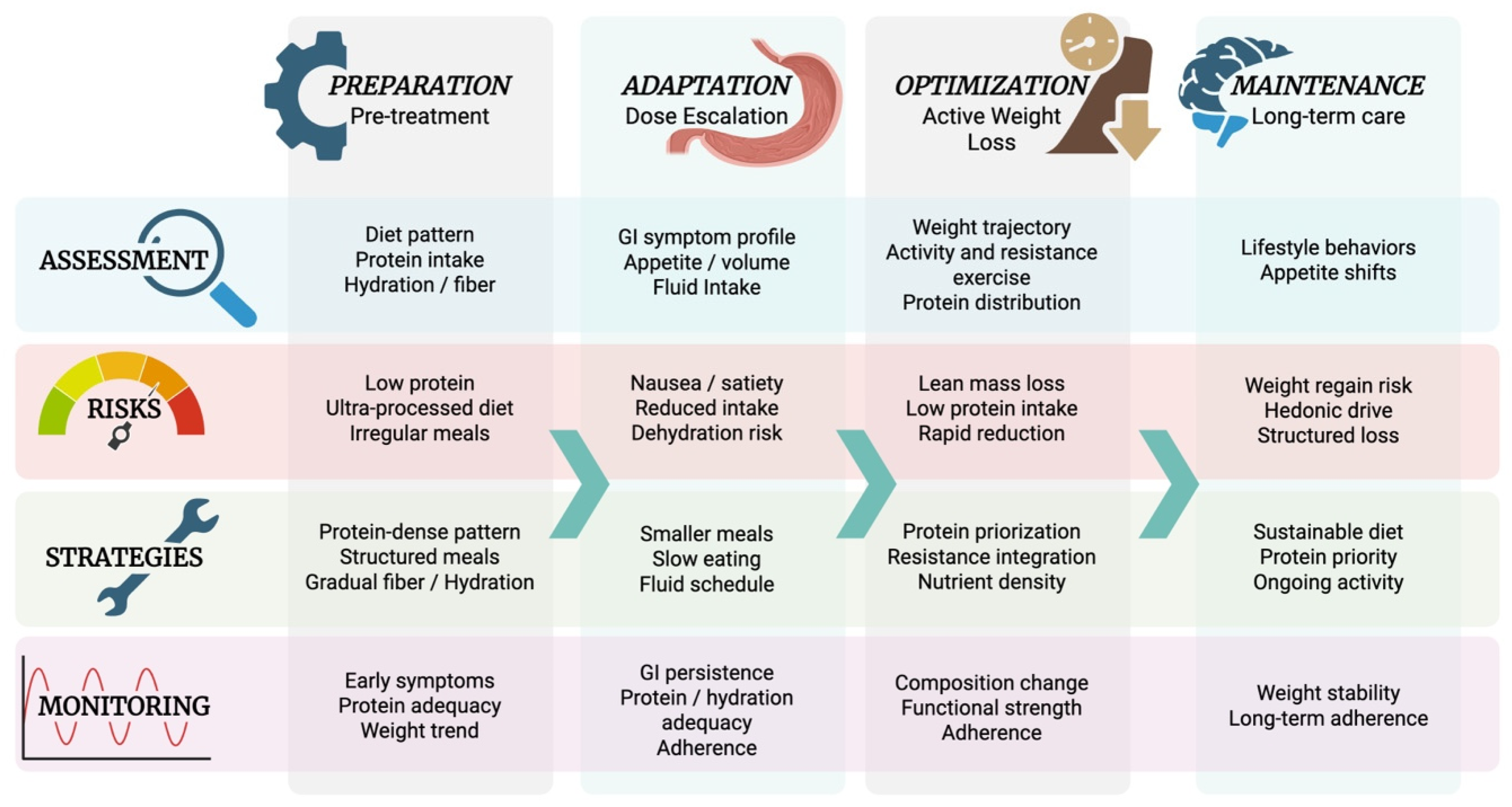

| What to Assess | Clinical Relevance During Therapy | Practical Action | |
|---|---|---|---|
| Overall Diet Quality [27,44,68,83] | Ultra-processed food reliance; protein density; high-fat meal frequency; fruit/vegetable intake | Low-quality, high-fat patterns increase GI intolerance and dietary inadequacy once intake declines | Shift toward protein-dense, nutrient-rich pattern; reduce large/high-fat meals; establish structured eating |
| Protein Intake and Distribution [27,49,68,70,78,91,92] | Total grams/day; meal distribution; breakfast protein; tolerance to solid protein | Appetite suppression may reduce protein intake below levels commonly recommended during active weight loss; targets are extrapolated from broader weight-loss and body-composition literature | Set minimum protein target; distribute across meals; prioritize high-quality protein sources |
| Baseline Muscle Mass and Function [112,113,114,115,116,117] | Bioimpedance or DXA (if available); handgrip strength; chair-stand performance | Identifies sarcopenic obesity and patients who may be at higher risk of functional decline or excessive fat-free mass loss during rapid weight reduction | Prioritize higher protein targets; initiate resistance training early; monitor functional performance |
| Hydration Status [56,70,78,118,119] | Total fluid intake; prolonged gaps without fluids; caffeine-heavy intake | Low fluid intake may worsen nausea, fatigue, constipation, and dehydration risk during periods of reduced intake | Implement scheduled hydration; adjust timing if reflux occurs |
| Fiber Intake and Bowel Pattern [27,56,78,90,98] | Baseline fiber intake; stool frequency; constipation or IBS history | Slowed gastric emptying increases constipation risk | Gradual fiber titration; optimize hydration; monitor bowel changes |
| Meal Timing and Portion Pattern [27,30,90] | Skipped meals; large evening meals; rapid eating | Large, infrequent meals poorly tolerated with delayed gastric emptying | Encourage smaller structured meals; slow eating pace; avoid large late meals |
| Pre-existing GI Symptoms [27,70,90] | Reflux, chronic constipation, bloating, fat intolerance | Baseline GI dysfunction predicts early intolerance and dose reduction | Preemptive symptom strategies; moderate fat per meal; individualized titration pacing |
| Restrictive or Disordered Eating Risk [106,107,108,111] | History of binge eating or restrictive dieting; weight suppression; screening tools | History of binge eating, restrictive dieting, weight suppression, compensatory behaviors, or prior eating disorder treatment; screening tools | Use screening for risk identification and care planning; establish minimum intake targets; monitor closely; involve multidisciplinary support when risk is identified |
| Target | Clinical Purpose | Practical Focus | |
|---|---|---|---|
| Protein (daily) [27,146,147,148] | 1.2–1.6 g/kg/day * | Support protein adequacy and help attenuate excessive fat-free mass loss during active weight reduction | Set minimum target; individualize for age/CKD/sarcopenia risk |
| Protein (per meal) [27,153,154,155] | 25–35 g high-quality protein | Support muscle protein synthesis using high-quality protein sources; evidence extrapolated from exercise, aging, and sarcopenia literature | Anchor meals around dairy, eggs, fish, poultry, soy |
| Fiber [27,130,132,170,197,198,199] | ~25–35 g/day (titrate gradually) | Reduce constipation risk with slowed gastric emptying | Emphasize soluble fiber; adjust to tolerance |
| Hydration [27,56,127,131] | ~1.5–2.5 L/day (individualized) | Prevent nausea, fatigue, constipation | Scheduled sipping; separate large fluids from meals if needed |
| Meal Structure [27,72,163] | 3 structured meals ± 1 protein snack | Support intake adequacy and meal-related GI tolerability; reduce risk of under-eating | Small portions; protein-first; moderate fat per meal |
| Dietary Pattern [85,89,173,175,178,180,181,200,201] | Mediterranean or higher-protein Mediterranean | Cardiometabolic benefit + sustainability | Vegetables, legumes, fish, olive oil; limit ultra-processed foods |
| Exercise Synergy [93,114,162,164,165,202,203] | Resistance training 2–3 times//week | Support strength, physical function, and attenuation of excessive fat-free mass loss; evidence primarily extrapolated from broader weight-loss and resistance-training literature | Combine with adequate protein; moderate endurance volume |
Disclaimer/Publisher’s Note: The statements, opinions and data contained in all publications are solely those of the individual author(s) and contributor(s) and not of MDPI and/or the editor(s). MDPI and/or the editor(s) disclaim responsibility for any injury to people or property resulting from any ideas, methods, instructions or products referred to in the content. |
© 2026 by the authors. Licensee MDPI, Basel, Switzerland. This article is an open access article distributed under the terms and conditions of the Creative Commons Attribution (CC BY) license.
Share and Cite
Zambrano-Villacres, R.; Campuzano-Donoso, M.; Reytor-González, C.; Rossetti, G.; Cobellis, L.; Cobellis, F.; Pilone, V.; Simancas-Racines, D.; Schiavo, L. Nutrition-First Support for GLP-1 and Dual Incretin Therapy in Obesity: A Practical Framework for Dietary Management, Symptom Tolerability, and Long-Term Weight Maintenance. Nutrients 2026, 18, 1751. https://doi.org/10.3390/nu18111751
Zambrano-Villacres R, Campuzano-Donoso M, Reytor-González C, Rossetti G, Cobellis L, Cobellis F, Pilone V, Simancas-Racines D, Schiavo L. Nutrition-First Support for GLP-1 and Dual Incretin Therapy in Obesity: A Practical Framework for Dietary Management, Symptom Tolerability, and Long-Term Weight Maintenance. Nutrients. 2026; 18(11):1751. https://doi.org/10.3390/nu18111751
Chicago/Turabian StyleZambrano-Villacres, Raynier, Martín Campuzano-Donoso, Claudia Reytor-González, Gianluca Rossetti, Luigi Cobellis, Francesco Cobellis, Vincenzo Pilone, Daniel Simancas-Racines, and Luigi Schiavo. 2026. "Nutrition-First Support for GLP-1 and Dual Incretin Therapy in Obesity: A Practical Framework for Dietary Management, Symptom Tolerability, and Long-Term Weight Maintenance" Nutrients 18, no. 11: 1751. https://doi.org/10.3390/nu18111751
APA StyleZambrano-Villacres, R., Campuzano-Donoso, M., Reytor-González, C., Rossetti, G., Cobellis, L., Cobellis, F., Pilone, V., Simancas-Racines, D., & Schiavo, L. (2026). Nutrition-First Support for GLP-1 and Dual Incretin Therapy in Obesity: A Practical Framework for Dietary Management, Symptom Tolerability, and Long-Term Weight Maintenance. Nutrients, 18(11), 1751. https://doi.org/10.3390/nu18111751