Gastrointestinal Symptoms After Sport-Related Concussion: Prevalence and Patterns in a Multi-Cohort Analysis




Abstract
1. Introduction
2. Materials and Methods
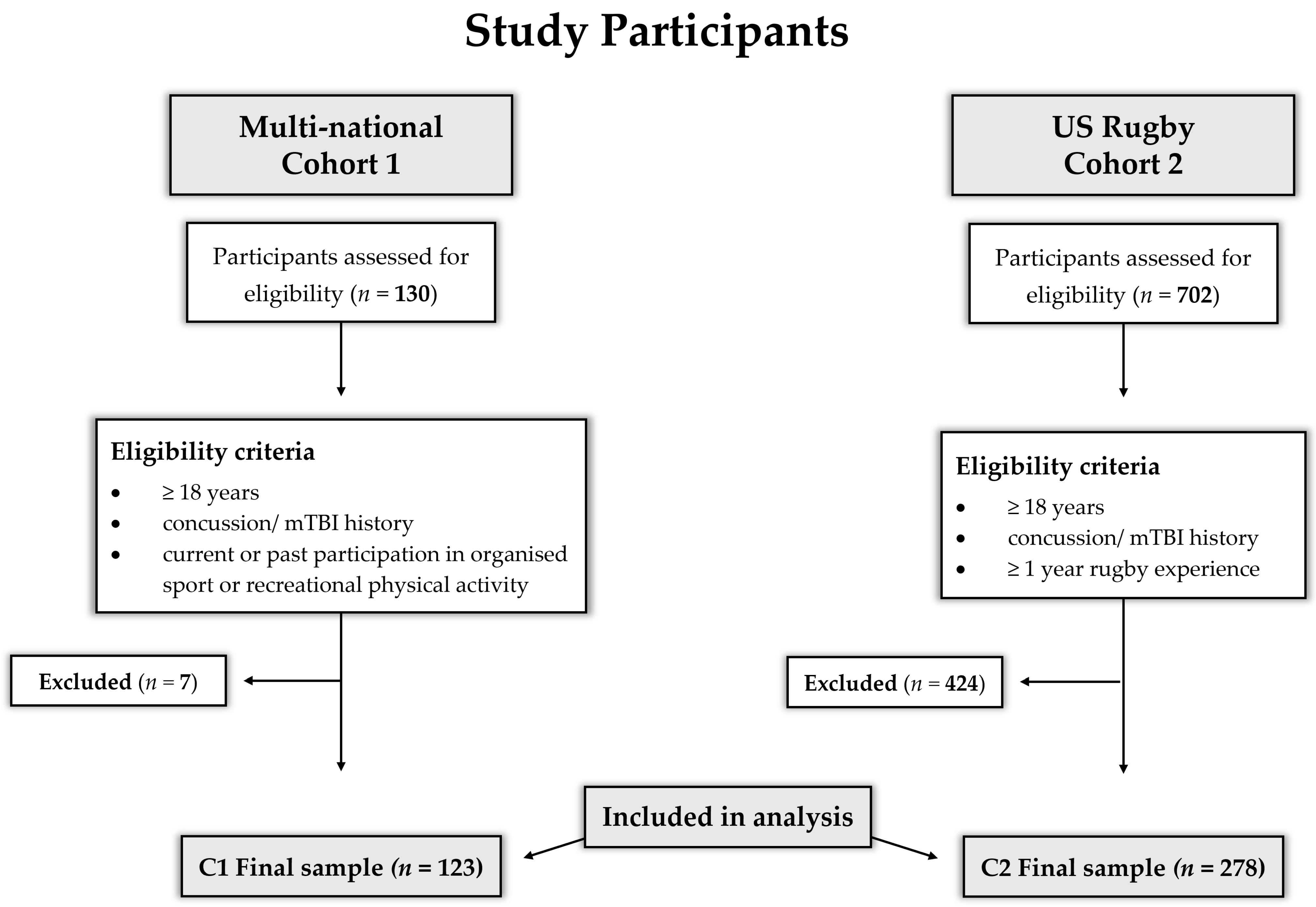
2.1. Participants and Study Design
2.1.1. Cohort 1 (n = 123)
2.1.2. Cohort 2 (n= 278)
2.1.3. Cohort Integration and Data Harmonisation
2.2. Survey Instruments and Measures
Post-Concussion Symptom Assessment
- General Post-Concussion Symptoms
- GI-Specific Symptoms
2.3. Statistical Analysis
3. Results
3.1. Concussion History
3.2. Sport Participation by Contact Level
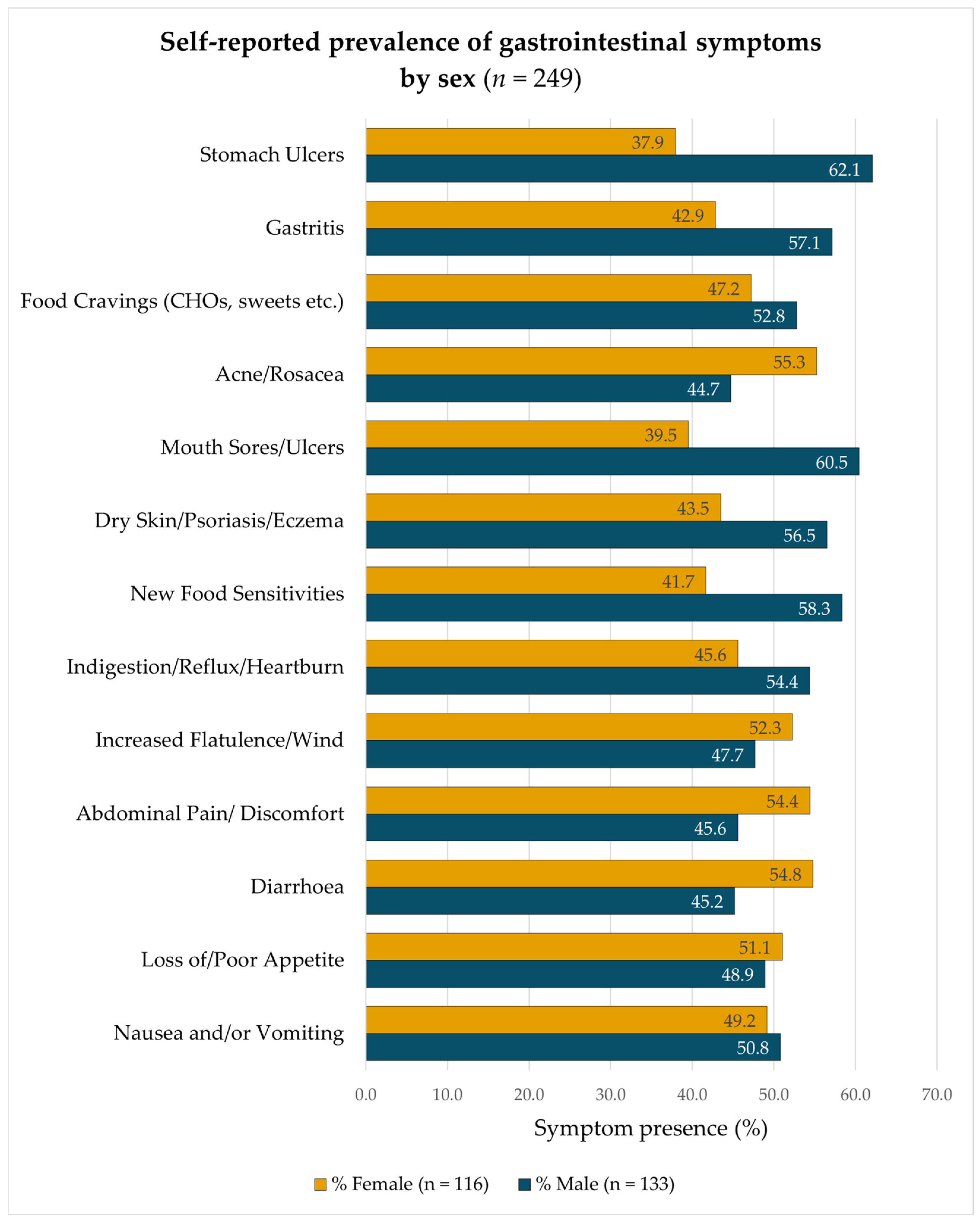
3.3. Gastrointestinal Symptom Presence Post-Concussion

| GI-Specific Symptom | Total, N (%) (n = 249) | Male, N (%) (n = 133) | Female, N (%) (n = 116) | ARD | OR | 95%CI | χ2 (df = 1) | p |
|---|---|---|---|---|---|---|---|---|
| Nausea and/or Vomiting | 185 (74.3) | 94 (70.7) | 91 (78.4) | +7.8 | 0.66 | 0.37–1.18 | 1.96 | 0.162 |
| Loss of/Poor Appetite | 141 (56.6) | 69 (51.9) | 72 (62.1) | +10.2 | 0.66 | 0.40–1.09 | 2.62 | 0.106 |
| Diarrhoea | 73 (29.3) | 33 (24.8) | 40 (34.5) | +9.7 | 0.63 | 0.36–1.09 | 2.80 | 0.094 |
| Abdominal Pain/Discomfort | 68 (27.3) | 31 (23.3) | 37 (31.9) | +8.6 | 0.65 | 0.37–1.14 | 2.30 | 0.129 |
| Increased Flatulence/Wind | 65 (26.1) | 31 (23.3) | 34 (29.3) | +6.0 | 0.73 | 0.42–1.29 | 1.16 | 0.282 |
| Indigestion/Reflux/Heartburn | 57 (22.9) | 31 (23.3) | 26 (22.4) | −0.9 | 1.05 | 0.58–1.90 | 0.03 | 0.867 |
| New Food Sensitivities | 48 (19.3) | 28 (20.9) | 20 (17.2) | −3.8 | 1.28 | 0.68–2.42 | 0.58 | 0.447 |
| Dry Skin/Psoriasis/Eczema | 46 (18.5) | 26 (19.5) | 20 (17.2) | −2.3 | 1.17 | 0.61–2.22 | 0.22 | 0.640 |
| Mouth Sores/Ulcers | 43 (17.3) | 26 (19.5) | 17 (14.7) | −4.9 | 1.42 | 0.72–2.76 | 1.04 | 0.308 |
| Acne/Rosacea | 38 (15.3) | 17 (12.8) | 21 (18.1) | +5.3 | 0.66 | 0.33–1.33 | 1.36 | 0.244 |
| Food Cravings (CHOs, sweets, etc.) | 36 (14.5) | 19 (14.3) | 17 (14.7) | +0.4 | 0.97 | 0.48–1.97 | 0.01 | 0.934 |
| Gastritis | 35 (14.1) | 20 (15.0) | 15 (12.9) | −2.1 | 1.19 | 0.58–2.45 | 0.23 | 0.633 |
| Stomach Ulcers | 29 (11.6) | 18 (13.5) | 11 (9.5) | −4.1 | 1.49 | 0.67–3.31 | 0.99 | 0.320 |
| Total GI symptom observations | 864 | 443 (51.3) | 421 (48.7) |
3.3.1. Gastrointestinal Symptom Burden
3.3.2. Sex-Based Differences in GI Symptom Reporting
3.3.3. Country Differences in GI Symptom Reporting
3.4. Post-Concussion Symptoms Reported (RPQ and SCAT)
Nausea/Vomiting Severity Ratings by Sex
4. Discussion
4.1. Concussion History and GI Symptom Prevalence
4.1.1. Sex Differences
4.1.2. Country Differences
4.2. Critical Gaps in Care: RPQ/SCAT vs. GI Limitations
4.3. Clinical Implications and Future Directions
4.4. Limitations
5. Conclusions
6. Practical Applications
- Screen for GI symptoms routinely. Clinicians should monitor a broader spectrum of GI symptoms beyond nausea/vomiting following concussion, as these may influence recovery and readiness for RTP.
- Use multi-domain assessments. Evaluations should include GI, somatic, cognitive, emotional, sleep, and autonomic domains to avoid underestimating overall symptom burden.
- Consider contextual differences. Geographic and cultural factors may influence symptom awareness and reporting; clinicians should adapt assessment strategies accordingly.
- Integrate nutrition expertise. Collaboration with sports dietitians and nutritionists may support the management of appetite loss, hydration challenges, and energy deficits associated with GI symptoms following concussion.
- Refine concussion assessment tools. Incorporating GI-specific symptom items into the SCAT-6, RPQ, and future concussion assessment frameworks may improve symptom capture and clinical relevance.
Supplementary Materials
Author Contributions
Funding
Institutional Review Board Statement
Informed Consent Statement
Data Availability Statement
Acknowledgments
Conflicts of Interest
Abbreviations
| ARD | Absolute risk difference |
| CISG | Concussion in Sport Group |
| FGD | Functional Gastrointestinal Disorders Symptom Questionnaire |
| GBA | Gut–brain axis |
| GCS | Glasgow Coma Scale |
| GI | Gastrointestinal |
| GSRS | Gastrointestinal Symptom Rating Scale |
| IQR | Interquartile range |
| LEA | Low energy availability |
| mTBI | Mild traumatic brain injury |
| OR | Odds ratio |
| RPQ | Rivermead Post-Concussion Symptoms Questionnaire |
| RTP | Return to play |
| SCAT | Sport Concussion Assessment Tool |
| SD | Standard deviation |
| ToSC | Time of survey completion |
| US | United States |
| UK | United Kingdom |
| USA | United States of America |
| U | Mann–Whitney U |
| χ2 | Chi-square test |
| Z | Z score |
References
- Patricios, J.S.; Schneider, K.J.; Dvorak, J.; Ahmed, O.H.; Blauwet, C.; Cantu, R.C.; Davis, G.A.; Echemendia, R.J.; Makdissi, M.; McNamee, M.; et al. Consensus statement on concussion in sport: The 6th international conference on concussion in sport–Amsterdam. Br. J. Sports Med. 2023, 57, 695–711. [Google Scholar] [CrossRef]
- Dewan, M.C.; Rattani, A.; Gupta, S.; Baticulon, R.E.; Hung, Y.C.; Punchak, M.; Agrawal, A.; Adeleye, A.O.; Shrime, M.G.; Rubiano, A.M.; et al. Estimating the global incidence of traumatic brain injury. J. Neurosurg. 2018, 130, 1080–1097. [Google Scholar] [CrossRef]
- Gardner, R.C.; Yaffe, K. Epidemiology of mild traumatic brain injury and neurodegenerative disease. Mol. Cell Neurosci. 2015, 66, 75–80. [Google Scholar] [CrossRef] [PubMed]
- Theadom, A.; Mahon, S.; Hume, P.; Starkey, N.; Barker-Collo, S.; Jones, K.; Majdan, M.; Feigin, V.L. Incidence of sports-related traumatic brain injury of all severities: A systematic review. Neuroepidemiology 2020, 54, 192–199. [Google Scholar] [CrossRef]
- Eather, N.; Wade, L.; Pankowiak, A.; Eime, R. The impact of sports participation on mental health and social outcomes in adults: A systematic review and the ‘Mental Health through Sport’ conceptual model. Syst. Rev. 2023, 12, 102. [Google Scholar] [CrossRef]
- Finnegan, E.; Daly, E.; Ryan, L. Nutritional considerations of Irish performance dietitians and nutritionists in concussion injury management. Nutrients 2024, 16, 497. [Google Scholar] [CrossRef]
- Van Pelt, K.L.; Puetz, T.; Swallow, J.; Lapointe, A.P.; Broglio, S.P. Data-driven risk classification of concussion rates: A systematic review and meta-analysis. Sports Med. 2021, 51, 1227–1244. [Google Scholar] [CrossRef] [PubMed]
- Hardwicke, J.; Hurst, H.; Matthews, C. “Getting back on the bike”: Risk, injury, and sport-related concussion in competitive road cycling. Sociol. Sport J. 2025, 42, 66–76. [Google Scholar] [CrossRef]
- Picon, E.L.; Perez, D.L.; Burke, M.J.; Debert, C.T.; Iverson, G.L.; Panenka, W.J.; Silverberg, N.D. Unexpected symptoms after concussion: Potential links to functional neurological and somatic symptom disorders. J. Psychosom. Res. 2021, 151, 110661. [Google Scholar] [CrossRef] [PubMed]
- Echemendia, R.; Burma, J.; Bruce, J.; Davis, G.; Giza, C.; Guskiewicz, K.; Naidu, D.; Black, A.; Broglio, S.; Kemp, S.; et al. Acute evaluation of sport-related concussion and implications for the Sport Concussion Assessment Tool (SCAT6) for adults, adolescents and children: A systematic review. Br. J. Sports Med. 2023, 57, 722–735. [Google Scholar] [CrossRef]
- Fielding, M.; Piantella, S.; Johnston, R.D.; McGuckian, T.B. Concussion perceptions and reporting behaviours of community sport athletes. J. Sci. Med. Sport. 2026, 29, 59–64. [Google Scholar] [CrossRef]
- Daly, E.; Ryan, L. Athlete perspectives on concussion recognition and management in Gaelic games: A qualitative analysis. Healthcare 2024, 12, 1974. [Google Scholar] [CrossRef]
- Finnegan, E.; Daly, E.; Hunzinger, K.J.; Ryan, L. Gastrointestinal symptoms after sport-related concussion in Irish athletes. Nutrients 2026, 18, 914. [Google Scholar] [CrossRef]
- Stubbs, J.L.; Green, K.E.; Silverberg, N.D.; Howard, A.; Dhariwal, A.K.; Brubacher, J.R.; Garraway, N.; Heran, M.K.S.; Sekhon, M.S.; Aquino, A.; et al. Atypical somatic symptoms in adults with prolonged recovery from mild traumatic brain injury. Front. Neurol. 2020, 11, 43. [Google Scholar] [CrossRef] [PubMed]
- Danielli, E.; Simard, N.; DeMatteo, C.A.; Kumbhare, D.; Ulmer, S.; Noseworthy, M.D. A review of brain regions and associated post-concussion symptoms. Front. Neurol. 2023, 14, 1136367. [Google Scholar] [CrossRef] [PubMed]
- Pertab, J.L.; Merkley, T.L.; Winiarski, H.; Carmond, K.M.J.; Cramond, A.J. Concussion and the autonomic, immune, and endocrine systems: An introduction to the field and a treatment framework for persisting symptoms. J. Pers. Med. 2025, 15, 33. [Google Scholar] [CrossRef]
- Koerte, I.K.; Schultz, V.; Sydnor, V.J.; Howell, D.R.; Guenette, J.P.; Dennis, E.; Kochsiek, J.; Kaufmann, D.; Sollmann, N.; Mondello, S.; et al. Sex-related differences in the effects of sports-related concussion: A review. J. Neuroimaging 2020, 30, 387–409. [Google Scholar] [CrossRef]
- Edelstein, R.; Schmidt, K.M.; Van Horn, J.D. Revealing gender differences in concussion reporting: A detailed analysis of SCAT assessment self-report symptom ratings. Front. Neurol. 2025, 16, 1584875. [Google Scholar] [CrossRef] [PubMed]
- Naumenko, Y.; Yuryshinetz, I.; Zabenko, Y.; Pivneva, T. Mild traumatic brain injury as a pathological process. Heliyon 2023, 9, e18342. [Google Scholar] [CrossRef]
- Giza, C.C.; Hovda, D.A. The new neurometabolic cascade of concussion. Neurosurgery 2014, 75, S24–S33. [Google Scholar] [CrossRef]
- Cotoia, A.; Charitos, I.A.; Corriero, A.; Tamburrano, S.; Cinnella, G. The role of macronutrients and gut microbiota in neuroinflammation post-traumatic brain injury: A narrative review. Nutrients 2024, 16, 4359. [Google Scholar] [CrossRef]
- Finnegan, E.; Daly, E.; Pearce, A.J.; Ryan, L. Nutritional interventions to support acute mTBI recovery. Front. Nutr. 2022, 9, 977728. [Google Scholar] [CrossRef]
- Lin, Y.; Hou, C.; Wang, C.; Chen, R.; Zhu, Y.; Zhou, Q.; Shao, B.; Huang, Y.; Li, S. Research progress on digestive disorders following traumatic brain injury. Front. Immunol. 2024, 15, 1524495. [Google Scholar] [CrossRef]
- El Baassiri, M.G.; Raouf, Z.; Badin, S.; Escobosa, A.; Sodhi, C.P.; Nasr, I.W. Dysregulated brain-gut axis in the setting of traumatic brain injury: Review of mechanisms and anti-inflammatory pharmacotherapies. J. Neuroinflamm. 2024, 21, 124. [Google Scholar] [CrossRef] [PubMed]
- Shah, R.K.; Lin, J.J.; Makkapati, T.; Berkowitz, A.A.; Greenwald, B.D. The effect of traumatic brain injury on the gastrointestinal system: A comprehensive review. Brain Sci. 2026, 16, 254. [Google Scholar] [CrossRef]
- Soriano, S.; Curry, K.; Sadrameli, S.S.; Wang, Q.; Nute, M.; Reeves, E.; Kabir, R.; Wiese, J.; Criswell, A.; Schodrof, S.; et al. Alterations to the gut microbiome after sport-related concussion in a collegiate football players cohort: A pilot study. Brain Behav. Immun. Health 2022, 21, 100438. [Google Scholar] [CrossRef] [PubMed]
- Anish, E.J.; Thomas, G.; Zynda, A.J.; French, J.; Collins, M.W.; Trbovich, A.M.; Kontos, A.P. Effect of co-morbid anxiety and depression history on multidomain concussion clinical outcomes and recovery time. Neurol. Sci. 2026, 47, 321. [Google Scholar] [CrossRef]
- Wardenaar, F.C.; Schott, K.D.; Mohr, A.E.; Ortega-Santos, C.P.; Connolly, J.E. An exploratory study investigating the prevalence of gastrointestinal symptoms in collegiate division I American football athletes. Int. J. Environ. Res. Public Health 2023, 20, 6453. [Google Scholar] [CrossRef]
- Haworth, J.J.; Bhatt, N.; Johnson, K.O.; Close, G.L.; Kasper, A.M.; Wardenaar, F.C.; Hobson, A.R.; Fearn, R.; Mancin, L.; Pugh, J. Gastrointestinal symptoms in athletes beyond endurance sports: A scoping review. Perform. Nutr. 2026, 2, 4. [Google Scholar] [CrossRef]
- Bivans, S.; Beitchman, J.A.; Hicks, C.; Woods, C.; Cullum, C.M.; Stokes, M. An analysis on how socioeconomic and geographical factors influence recognition of sport related concussion in the lone star state. Sage Open Pediatr. 2025, 12, 30502225251403608. [Google Scholar] [CrossRef] [PubMed]
- Malcom, D. The impact of the concussion crisis on safeguarding in sport. Front. Sports Act. Living 2021, 3, 589341. [Google Scholar] [CrossRef]
- Monti, K.; Conkright, M.W.; Eagle, S.R.; Lawrence, D.W.; Dretsch, L.M. The role of nutrition in mild traumatic brain injury rehabilitation for service members and veterans. NeuroRehabilitation 2024, 55, 281–294. [Google Scholar] [CrossRef] [PubMed]
- Kontos, A.P.; Zynda, A.J.; Trbovich, A.M.; French, J.; Kegel, N.; Burley, C.; Patel, S.; Mucha, A.; Womble, M.N.; Jennings, S.; et al. Clinical utility of the sport concussion office assessment tool 6 (SCOAT6) and other select multidomain assessments for subacute sport-related concussion. Sports Med. 2025, 55, 2915–2932. [Google Scholar] [CrossRef]
- King, N.S.; Crawford, S.; Wenden, F.J.; Moss, N.E.; Wade, D.T. The Rivermead post-concussion symptoms questionnaire: A measure of symptoms commonly experienced after head injury and its reliability. J. Neurol. 1995, 242, 587–592. [Google Scholar] [CrossRef]
- Zeldovich, M.; Bockhop, F.; Covic, A.; Cunitz, K.; Polinder, S.; Haagsma, J.A.; von Steinbuechel, N. Reference values for the Rivermead post-concussion symptoms questionnaire (RPQ) from general population samples in the United Kingdom, Italy, and The Netherlands. J. Clin. Med. 2022, 11, 4658. [Google Scholar] [CrossRef] [PubMed]
- Svedlund, J.; Sjödin, I.; Dotevall, G. GSRS—A clinical rating scale for gastrointestinal symptoms in patients with irritable bowel syndrome and peptic ulcer disease. Dig. Dis. Sci. 1988, 33, 129–134. [Google Scholar] [CrossRef]
- Wardenaar, F.C.; Chan, Y.; Clear, A.M.; Schott, K.; Mohr, A.E.; Ortega-Santos, C.P.; Seltzer, R.G.N.; Pugh, J.M. The gastrointestinal symptom rating scale has a good test-retest reliability in well-trained athletes with and without previously self-identified gastrointestinal complaints. Sports Med. 2025, 55, 513–524. [Google Scholar] [CrossRef]
- Wiklund, I.K.; Fullerton, S.; Hawkey, C.J.; Jones, R.H.; Longstreth, G.F.; Mayer, E.A.; Peacock, R.A.; Wilson, I.K.; Naesdal, J. An irritable bowel syndrome-specific symptom questionnaire: Development and validation. Scand. J. Gastroenterol. 2003, 38, 947–954. [Google Scholar] [CrossRef]
- Rice, S.G. American Academy of Pediatrics Council on Sports Medicine and Fitness. Medical conditions affecting sports participation. Pediatrics 2008, 121, 841–848. [Google Scholar] [CrossRef] [PubMed]
- Hanscom, M.; Loane, D.J.; Shea-Donohue, T. Brain-gut axis dysfunction in the pathogenesis of traumatic brain injury. J. Clin. Investig. 2021, 131, e143777. [Google Scholar] [CrossRef]
- Pugh, J.N.; Lydon, K.M.; O’Donovan, C.M.; O’Sullivan, O.; Madigan, S.M. More than a gut feeling: What is the role of the gastrointestinal tract in female athlete health? Eur. J. Sport Sci. 2022, 22, 755–764. [Google Scholar] [CrossRef] [PubMed]
- Ghaemi, M.; Kheradmand, D. The gut-brain axis in traumatic brain injury: Literature review. J. Clin. Neurosci. 2025, 136, 111258. [Google Scholar] [CrossRef]
- Carr, G.; Fleddermann, M.T. The influence of menstrual cycle phases on post-concussion outcomes and symptom reporting: A scoping review. Scand. J. Med. Sci. Sports 2025, 35, e70093. [Google Scholar] [CrossRef]
- Anto-Ocrah, M.; Mannix, R.; Bazarian, J.J. Age and sex interactions in recovery from mild traumatic brain injury: More questions than answers. JAMA Netw. Open 2021, 4, e213068. [Google Scholar] [CrossRef]
- Chantler, S.; Wood-Martin, R.; Holliday, A.; Davison, G.; Crabtree, D.R.; Readhead, C.; Jones, B. The frequency and severity of gastrointestinal symptoms in rugby players. Int. J. Sports Med. 2024, 45, 323-221. [Google Scholar] [CrossRef]
- De Oliveira, E.P.; Burini, R.C.; Jeukendrup, A. Gastrointestinal complaints during exercise: Prevalence, etiology, and nutritional recommendations. Sports Med. 2014, 44, S79–S85. [Google Scholar] [CrossRef]
- Topan, R.; Scott, S.M. Sleep: An overlooked lifestyle factor in disorders of gut-brain interaction. Curr. Treat. Options Gastro 2023, 21, 435–446. [Google Scholar] [CrossRef]
- Tai, F.W.D.; McAlindon, M.E. Non-steroidal anti-inflammatory drugs and the gastrointestinal tract. Clin. Med. 2021, 21, 131–134. [Google Scholar] [CrossRef] [PubMed]
- Sohail, R.; Mathew, M.; Patel, K.K.; Reddy, S.A.; Haider, Z.; Naria, M.; Habib, A.; Abdin, Z.U.; Chaudhry, R.; Akbar, A.; et al. Effects of non-steroidal anti-inflammatory drugs (NSAIDs) and gastroprotective NSAIDs on the gastrointestinal tract: A narrative review. Cureus 2023, 15, e37080. [Google Scholar] [CrossRef]
- Langer, L.K.; Comper, P.; Ruttan, L.; Saverino, C.; Alavinia, S.M.; Inness, E.L.; Kam, A.; Lawrence, D.W.; Tam, A.; Chandra, T.; et al. Can sport concussion assessment tool (SCAT) symptom scores be converted to Rivermead post-concussion symptoms questionnaire (RPQ) scores and vice versa? Findings from the Toronto concussion study. Front. Sports Act. Living 2021, 3, 737402. [Google Scholar] [CrossRef]
- Hasan, A.; Scuderi, S.A.; Capra, A.P.; Giosa, D.; Bonomo, A.; Ardizzone, A.; Esposito, E. An updated and comprehensive review exploring the gut-brain axis in neurodegenerative disorders and neurotraumas: Implications for therapeutic strategies. Brain Sci. 2025, 15, 654. [Google Scholar] [CrossRef]
- Finnegan, E.; Daly, E.; Ryan, L. Contrasting realities in injury management: Strategies employed by performance nutritionists and dietitians in Ireland (Part A). Curr. Dev. Nutr. 2025, 9, 107507. [Google Scholar] [CrossRef]
- Smulligan, K.L.; Armento, A.M.; Brna, M.L.; Meehan, W.P., III; Wilson, J.C.; Howell, D.R. Low-energy availability indicators among female adolescents after concussion: A comparison with uninjured controls. Orthop. J. Sports Med. 2025, 13, 23259671251380877. [Google Scholar] [CrossRef]

| Variable | Total (N = 401) | Male | Female |
|---|---|---|---|
| Sex assigned at birth, n (%) | - | 225 (56.1) ᵃ | 176 (43.9) |
| Age (years), mean ± SD | 32.4 ± 11.3 | 34.7 ± 12.7 | 29.3 ± 8.3 |
| Country, n (%) | |||
| Australia | 3 (0.7) | 3 (2.3) | - |
| Ireland | 99 (24.7) | 46 (46.5) | 53 (53.5) |
| United Kingdom | 17 (4.2) | 11 (64.7) | 6 (35.3) |
| New Zealand | 1 (0.2) | 1 (100.0) | - |
| United States b | 281 (70.1) | 164 (58.4) | 117 (41.6) |
| Contact Sport, n (%) c | |||
| High Contact | 379 (94.5) | 214 (56.5) | 165 (43.5) |
| Moderate Contact | 17 (4.2) | 9 (52.9) | 13 (47.1) |
| Non-to-Minimal | 5 (1.2) | 2 (40.0) | 3 (60.0) |
| Concussion History | |||
| Total reported, n (%) d | 1553 | 1073 (69.1) | 480 (30.9) |
| Mean ± SD | 3.9 ± 6.5 | 4.8 ± 8.4 | 2.7 ± 2.1 |
| Median [IQR] | 3 [1–4] | 3 [1–5] | 3 [1–4] |
| Domain | Concussion Symptom | Symptom Present, n (%) | Mild [1–2] | Moderate [3–4] | Severe [5–6] | Mean ± SD | Median [IQR] | Min–Max | 95% CI |
|---|---|---|---|---|---|---|---|---|---|
| Somatic | Fatigue, tired more easily | 299 (74.6) | 117 | 166 | 16 | 2.1 (±1.6) | 2.0 [3] | 0–6 | 0.16 |
| Headaches | 292 (72.8) | 108 | 168 | 16 | 2.0 (±1.6) | 2.0 [3] | 0–6 | 0.15 | |
| Noise sensitivity | 251 (62.6) | 129 | 112 | 10 | 1.5 (±1.5) | 1.0 [3] | 0–6 | 0.15 | |
| Light sensitivity | 247 (61.6) | 116 | 119 | 12 | 1.6 (±1.6) | 1.0 [3] | 0–6 | 0.15 | |
| Dizziness | 245 (61.1) | 100 | 122 | 23 | 1.7 (±1.7) | 2.0 [3] | 0–6 | 0.16 | |
| Blurred vision (unfocused) | 215 (53.6) | 121 | 85 | 9 | 1.3 (±1.5) | 1.0 [2] | 0–6 | 0.14 | |
| Nausea and/or vomiting * | 206 (51.4) | 104 | 84 | 18 | 1.3 (±1.6) | 1.0 [3] | 0–6 | 0.16 | |
| Cognitive | Poor concentration * | 299 (74.6) | 142 | 135 | 22 | 2.0 (±1.6) | 2.0 [3] | 0–6 | 0.16 |
| Forgetful/poor memory | 270 (67.3) | 130 | 123 | 17 | 1.8 (±1.6) | 1.0 [3] | 0–6 | 0.15 | |
| Slowed thinking | 253 (63.1) | 119 | 124 | 10 | 1.7 (±1.6) | 1.5 [3] | 0–6 | 0.16 | |
| Emotional | Irritability | 280 (69.8) | 136 | 119 | 25 | 1.8 (±1.6) | 1.0 [3] | 0–6 | 0.16 |
| Sadness/depression | 260 (64.8) | 156 | 89 | 15 | 1.6 (±1.6) | 1.0 [3] | 0–6 | 0.15 | |
| Emotional/frustration | 247 (61.6) | 111 | 125 | 11 | 1.6 (±1.6) | 1.0 [3] | 0–6 | 0.16 | |
| Sleep | Sleep disturbance/ trouble falling asleep | 271 (67.6) | 148 | 108 | 15 | 1.7 (±1.5) | 1.0 [3] | 0–6 | 0.15 |
| Nausea/Vomiting Severity | None (0) | Mild (1–2) | Moderate (3–4) | Severe (5–6) | Total (n) | % |
|---|---|---|---|---|---|---|
| All participants | 195 | 104 | 84 | 18 | 401 | 100.0 |
| - GI-specific item | 29 | 73 | 70 | 13 | 185 | 46.1 |
| Female (n = 176) | 84 | 41 | 44 | 7 | 176 | 43.9 |
| - GI-specific item | 18 | 32 | 35 | 6 | 91 | 22.7 |
| Male (n = 225) | 111 | 63 | 40 | 11 | 225 | 56.1 |
| - GI-specific item | 11 | 41 | 35 | 7 | 94 | 23.4 |
| Sex differences in nausea/vomiting reporting across symptom items (N = 401). | ||||||
| Reporting Category | Total (N = 401) | Male (n = 225) | Female (n = 176) | |||
| Present–GI-specific & RPQ | 156 (38.9) | 83 (36.9) | 83 (36.9) | |||
| Present–GI-specific only | 29 (7.2) | 11 (4.9) | 11 (4.9) | |||
| Present–RPQ only | 50 (12.5) | 31 (13.8) | 31 (13.8) | |||
| Absent–both | 166 (41.4) | 100 (44.4) | 100 (44.4) | |||
| Total | 401 (100.0) | 225 (56.1) | 225 (56.1) | |||
Disclaimer/Publisher’s Note: The statements, opinions and data contained in all publications are solely those of the individual author(s) and contributor(s) and not of MDPI and/or the editor(s). MDPI and/or the editor(s) disclaim responsibility for any injury to people or property resulting from any ideas, methods, instructions or products referred to in the content. |
© 2026 by the authors. Licensee MDPI, Basel, Switzerland. This article is an open access article distributed under the terms and conditions of the Creative Commons Attribution (CC BY) license.
Share and Cite
Finnegan, E.; Daly, E.; Hunzinger, K.J.; Ryan, L. Gastrointestinal Symptoms After Sport-Related Concussion: Prevalence and Patterns in a Multi-Cohort Analysis. Nutrients 2026, 18, 1740. https://doi.org/10.3390/nu18111740
Finnegan E, Daly E, Hunzinger KJ, Ryan L. Gastrointestinal Symptoms After Sport-Related Concussion: Prevalence and Patterns in a Multi-Cohort Analysis. Nutrients. 2026; 18(11):1740. https://doi.org/10.3390/nu18111740
Chicago/Turabian StyleFinnegan, Emma, Ed Daly, Katherine J. Hunzinger, and Lisa Ryan. 2026. "Gastrointestinal Symptoms After Sport-Related Concussion: Prevalence and Patterns in a Multi-Cohort Analysis" Nutrients 18, no. 11: 1740. https://doi.org/10.3390/nu18111740
APA StyleFinnegan, E., Daly, E., Hunzinger, K. J., & Ryan, L. (2026). Gastrointestinal Symptoms After Sport-Related Concussion: Prevalence and Patterns in a Multi-Cohort Analysis. Nutrients, 18(11), 1740. https://doi.org/10.3390/nu18111740