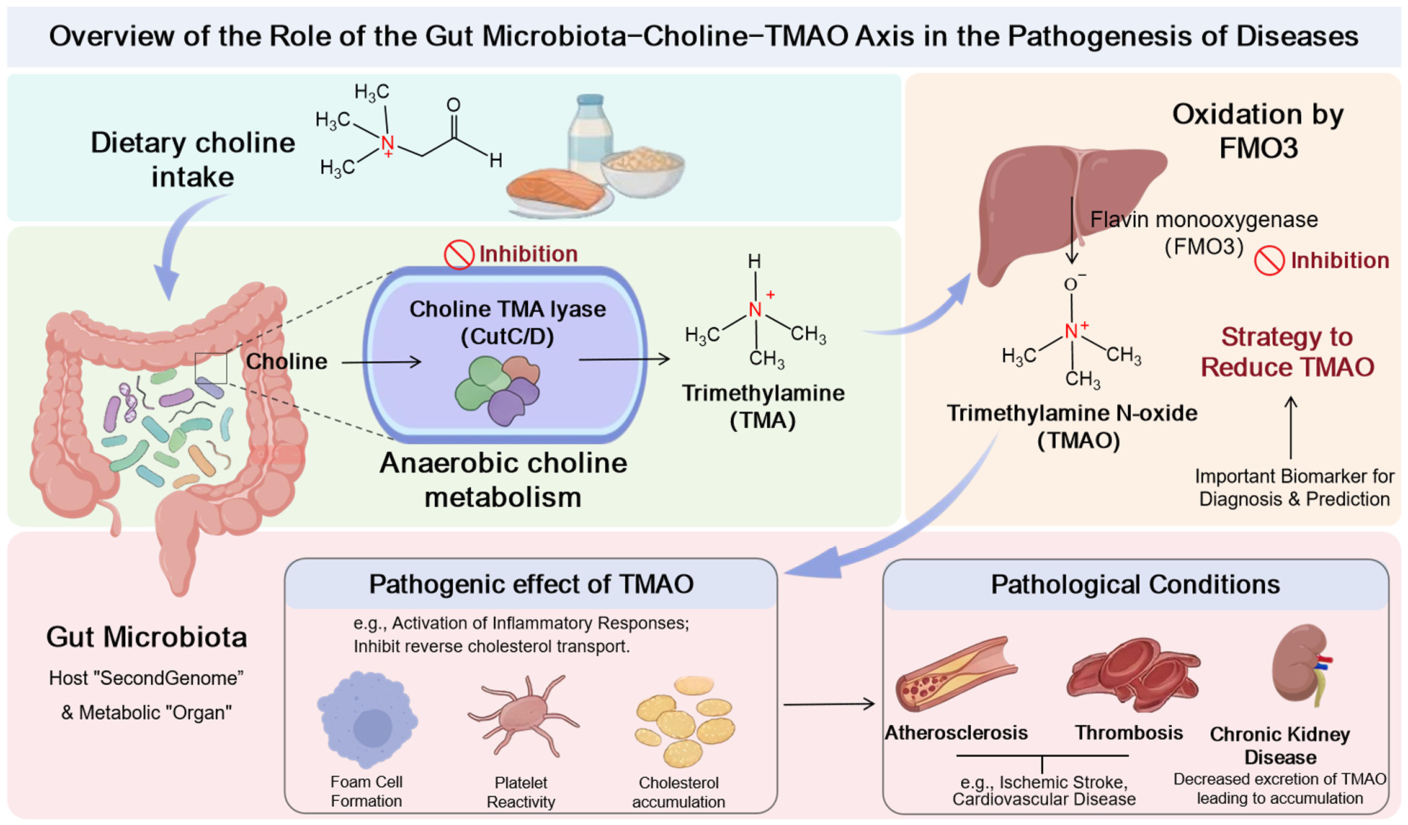
Gut Microbial Choline TMA-Lyase CutC: From Metabolic Mechanism to a Novel Therapeutic Target for Diseases


Abstract
1. Introduction
2. Discovery and Biogenetic Characteristics of Choline TMA-Lyase CutC
2.1. Discovery of the Cut Gene Cluster
2.2. Phylogenetic Distribution and Ecophysiological Characteristics of CutC in the Gut Microbiota
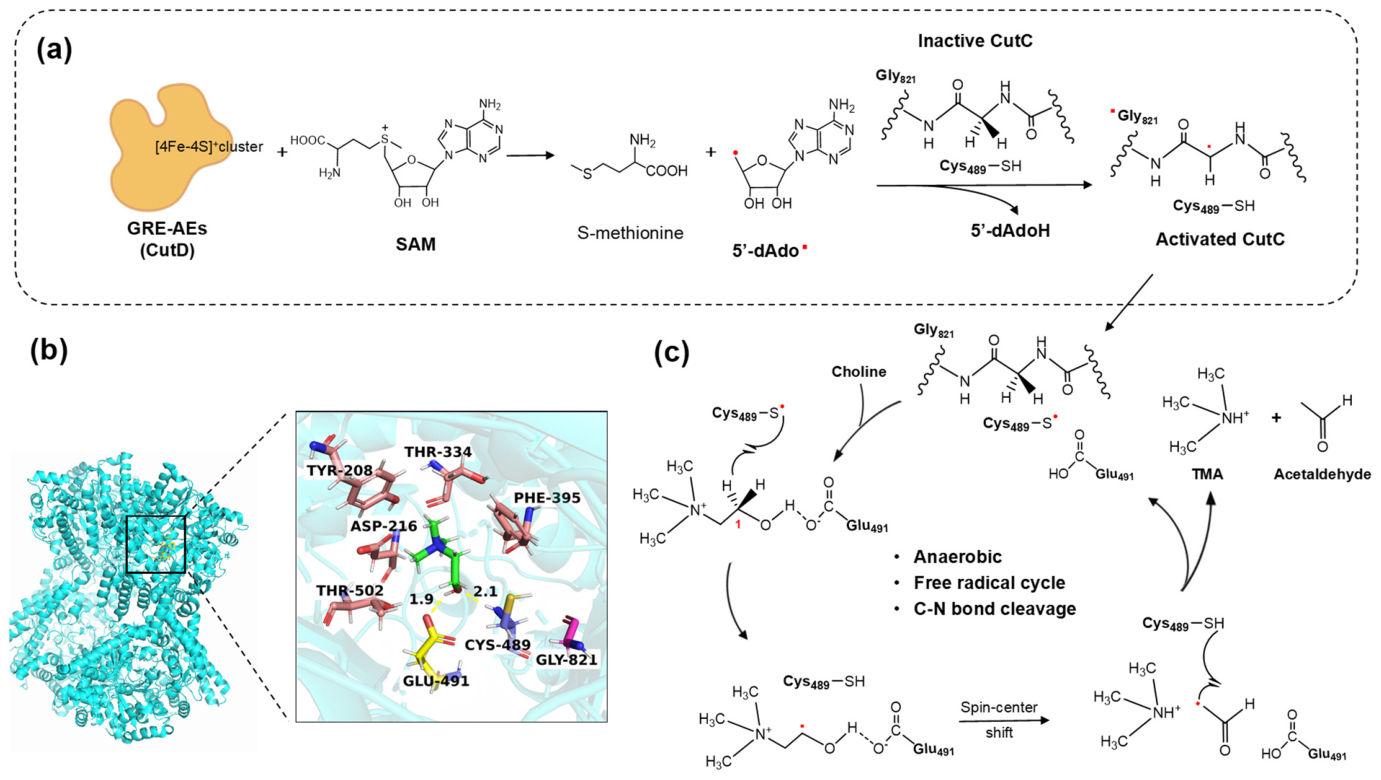
3. Structural Characteristics and Catalytic Mechanism of CutC
4. From Mechanism to Therapy: Implications and Challenges of the TMAO Causality Hypothesis
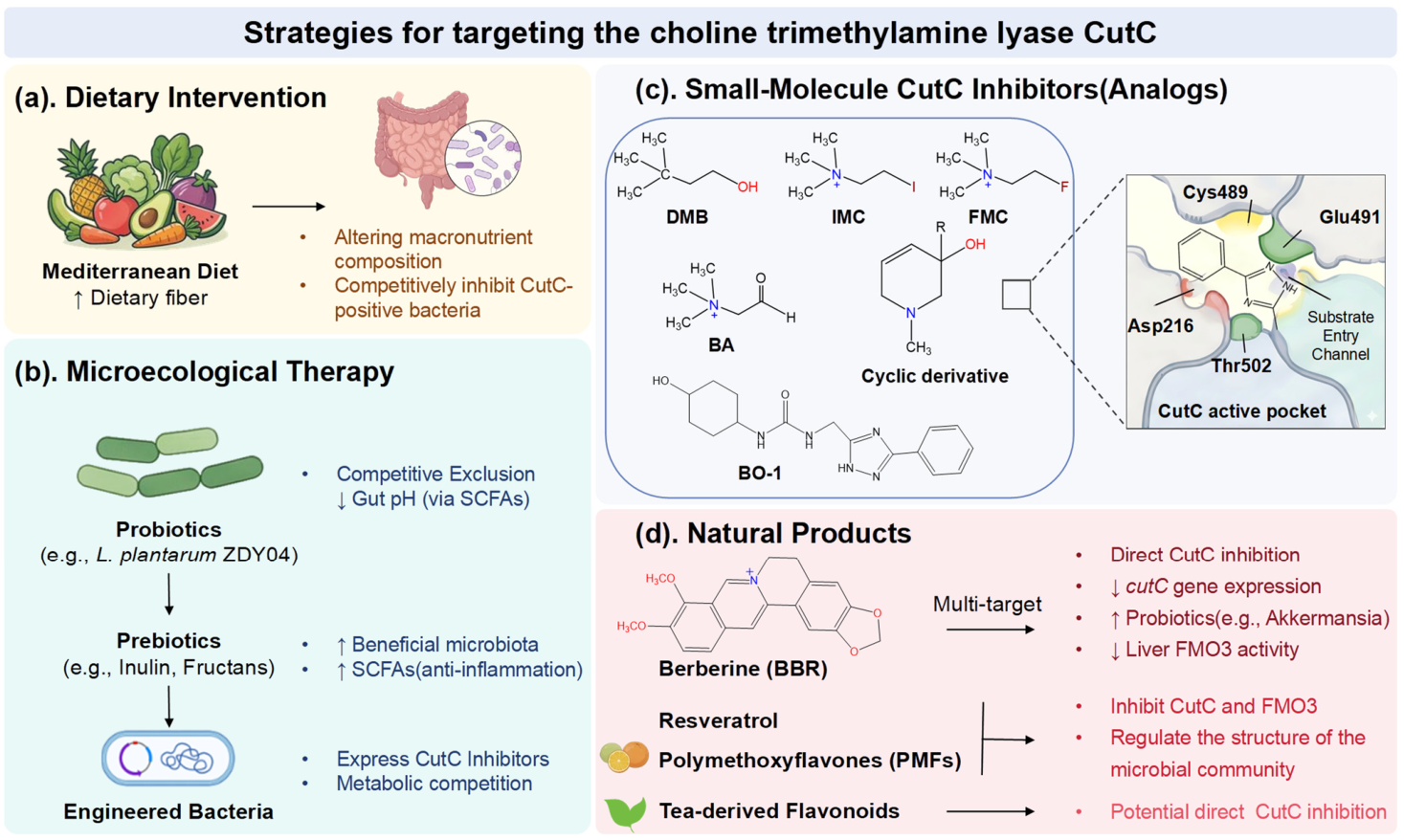
5. Intervention Strategies and Inhibitor Development Targeting CutC
5.1. Dietary Intervention
5.2. Gut Microecological Therapy
5.3. Small-Molecule Inhibitors of CutC
5.3.1. Substrate Choline Analogs
5.3.2. Natural Products
5.4. Summary of Clinical and Preclinical Evidence for TMAO Reduction
6. Conclusions and Outlook
Author Contributions
Funding
Institutional Review Board Statement
Informed Consent Statement
Data Availability Statement
Acknowledgments
Conflicts of Interest
References
- Fan, Y.; Pedersen, O. Gut microbiota in human metabolic health and disease. Nat. Rev. Microbiol. 2021, 19, 55–71. [Google Scholar] [CrossRef]
- Rastelli, M.; Cani, P.D.; Knauf, C. The gut microbiome influences host endocrine functions. Endocr. Rev. 2019, 40, 1271–1284. [Google Scholar] [CrossRef]
- Zhao, S.; Fu, D.; Lin, Y.; Sun, X.; Wang, X.; Wu, X.; Zhang, X. The role of the microbiome on immune homeostasis of the host nervous system. Front. Immunol. 2025, 16, 1609960. [Google Scholar] [CrossRef]
- Wu, Y.; Wang, Y.; Zhang, Q.; Yao, L.; Ma, Z.; Chen, L. Gut microbiota: New links between exercise and disease. Front. Microbiol. 2026, 17, 1746359. [Google Scholar] [CrossRef] [PubMed]
- Ding, Y.; Zhang, Z.; Wang, K.; Jiang, C. The microbiome regulates host metabolic health and diseases through microbial enzymes. Nat. Rev. Gastroenterol. Hepatol. 2026. ahead of print. [Google Scholar] [CrossRef]
- Gil-Cruz, C.; Perez-Shibayama, C.; De Martin, A.; Ronchi, F.; van der Borght, K.; Niederer, R.; Onder, L.; Lütge, M.; Novkovic, M.; Nindl, V.; et al. Microbiota-derived peptide mimics drive lethal inflammatory cardiomyopathy. Science 2019, 366, 881–886. [Google Scholar] [CrossRef] [PubMed]
- Agus, A.; Clément, K.; Sokol, H. Gut microbiota-derived metabolites as central regulators in metabolic disorders. Gut 2021, 70, 1174–1182. [Google Scholar] [CrossRef]
- Wang, M.; Li, X.S.; Wang, Z.; de Oliveira Otto, M.C.; Lemaitre, R.N.; Fretts, A.; Sotoodehnia, N.; Budoff, M.; Nemet, I.; DiDonato, J.A.; et al. Trimethylamine N-oxide is associated with long-term mortality risk: The multi-ethnic study of atherosclerosis. Eur. Heart J. 2023, 44, 1608–1618. [Google Scholar] [CrossRef]
- Tang, W.H.W.; Li, X.S.; Wu, Y.; Wang, Z.; Khaw, K.T.; Wareham, N.J.; Nieuwdorp, M.; Boekholdt, S.M.; Hazen, S.L. Plasma trimethylamine N-oxide (TMAO) levels predict future risk of coronary artery disease in apparently healthy individuals in the EPIC-Norfolk prospective population study. Am. Heart J. 2021, 236, 80–86. [Google Scholar] [CrossRef]
- Tang, W.H.; Wang, Z.; Kennedy, D.J.; Wu, Y.; Buffa, J.A.; Agatisa-Boyle, B.; Li, X.S.; Levison, B.S.; Hazen, S.L. Gut microbiota-dependent trimethylamine N-oxide (TMAO) pathway contributes to both development of renal insufficiency and mortality risk in chronic kidney disease. Circ. Res. 2015, 116, 448–455. [Google Scholar] [CrossRef] [PubMed]
- Sun, X.; Jiao, X.; Ma, Y.; Liu, Y.; Zhang, L.; He, Y.; Chen, Y. Trimethylamine N-oxide induces inflammation and endothelial dysfunction in human umbilical vein endothelial cells via activating ROS-TXNIP-NLRP3 inflammasome. Biochem. Biophys. Res. Commun. 2016, 481, 63–70. [Google Scholar] [CrossRef]
- Geng, J.; Yang, C.; Wang, B.; Zhang, X.; Hu, T.; Gu, Y.; Li, J. Trimethylamine N-oxide promotes atherosclerosis via CD36-dependent MAPK/JNK pathway. Biomed. Pharmacother. 2018, 97, 941–947. [Google Scholar] [CrossRef]
- Zhu, W.; Gregory, J.C.; Org, E.; Buffa, J.A.; Gupta, N.; Wang, Z.; Li, L.; Fu, X.; Wu, Y.; Mehrabian, M.; et al. Gut microbial metabolite TMAO enhances platelet hyperreactivity and thrombosis risk. Cell 2016, 165, 111–124. [Google Scholar] [CrossRef]
- Ding, S.; Xue, J.; Zhang, Q.; Zheng, L. Trimethylamine-N-oxide is an important target for heart and brain diseases. Med. Rev. 2022, 2, 321–323. [Google Scholar] [CrossRef]
- Praveenraj, S.S.; Sonali, S.; Anand, N.; Tousif, H.A.; Vichitra, C.; Kalyan, M.; Kanna, P.V.; Chandana, K.A.; Shasthara, P.; Mahalakshmi, A.M.; et al. The role of a gut microbial-derived metabolite, Trimethylamine N-Oxide (TMAO), in neurological disorders. Mol. Neurobiol. 2022, 59, 6684–6700. [Google Scholar] [CrossRef]
- Yuan, J.; Liu, X.; Liu, C.; Ang, A.F.A.; Massaro, J.; Devine, S.A.; Auerbach, S.H.; Blusztajn, J.K.; Au, R.; Jacques, P.F. Is dietary choline intake related to dementia and Alzheimer’s disease risks? Results from the Framingham Heart Study. Am. J. Clin. Nutr. 2022, 116, 1201–1207. [Google Scholar] [CrossRef]
- Benson, T.W.; Conrad, K.A.; Li, X.S.; Wang, Z.; Helsley, R.N.; Schugar, R.C.; Coughlin, T.M.; Wadding-Lee, C.; Fleifil, S.; Russell, H.M.; et al. Gut microbiota–derived Trimethylamine N-Oxide contributes to abdominal aortic aneurysm through inflammatory and apoptotic mechanisms. Circulation 2023, 147, 1079–1096. [Google Scholar] [CrossRef]
- Florea, C.M.; Baldea, I.; Rosu, R.; Moldovan, R.; Decea, N.; Filip, G.A. The acute effect of Trimethylamine-N-Oxide on vascular Function, oxidative stress, and inflammation in rat aortic rings. Cardiovasc. Toxicol. 2023, 23, 198–206. [Google Scholar] [CrossRef]
- Oktaviono, Y.H.; Dyah Lamara, A.; Saputra, P.B.T.; Arnindita, J.N.; Pasahari, D.; Saputra, M.E.; Suasti, N.M.A. The roles of Trimethylamine-N-oxide in Atherosclerosis and its potential therapeutic aspect: A literature review. Biomol. Biomed. 2023, 23, 936–948. [Google Scholar] [CrossRef]
- Qiao, C.; Quan, W.; Zhou, Y.; Niu, G.; Hong, H.; Wu, J.; Zhao, L.-P.; Li, T.; Cui, C.; Zhao, W.-J.; et al. Orally induced high serum level of Trimethylamine N-oxide worsened glial reaction and neuroinflammation on MPTP-induced acute Parkinson’s disease model mice. Mol. Neurobiol. 2023, 60, 5137–5154. [Google Scholar] [CrossRef]
- Zhou, A.; Peng, N.; Yang, L.; Yang, S.; Wang, J. Tanshinone regulated gut microbiota and TMAO to improve high-fat diet induced atherosclerosis in APOE−/− mice. BMC Microbiol. 2025, 25, 432. [Google Scholar] [CrossRef]
- Roberts, A.B.; Gu, X.; Buffa, J.A.; Hurd, A.G.; Wang, Z.; Zhu, W.; Gupta, N.; Skye, S.M.; Cody, D.B.; Levison, B.S.; et al. Development of a gut microbe–targeted nonlethal therapeutic to inhibit thrombosis potential. Nat. Med. 2018, 24, 1407–1417. [Google Scholar] [CrossRef]
- Xu, J.; Cheng, A.; Song, B.; Zhao, M.; Xue, J.; Wang, A.; Dai, L.; Jing, J.; Meng, X.; Li, H.; et al. Trimethylamine N-Oxide and stroke recurrence depends on ischemic stroke subtypes. Stroke 2022, 53, 1207–1215. [Google Scholar] [CrossRef]
- Zhu, W.; Romano, K.A.; Li, L.; Buffa, J.A.; Sangwan, N.; Prakash, P.; Tittle, A.N.; Li, X.S.; Fu, X.; Androjna, C.; et al. Gut microbes impact stroke severity via the trimethylamine N-oxide pathway. Cell Host Microbe 2021, 29, 1199–1208.e5. [Google Scholar] [CrossRef] [PubMed]
- Yang, S.; Li, X.; Yang, F.; Zhao, R.; Pan, X.; Liang, J.; Tian, L.; Li, X.; Liu, L.; Xing, Y.; et al. Gut microbiota-dependent marker TMAO in promoting cardiovascular disease: Inflammation mechanism, clinical prognostic, and potential as a therapeutic target. Front. Pharmacol. 2019, 10, 1360. [Google Scholar] [CrossRef]
- Shih, D.M.; Wang, Z.; Lee, R.; Meng, Y.; Che, N.; Charugundla, S.; Qi, H.; Wu, J.; Pan, C.; Brown, J.M.; et al. Flavin containing monooxygenase 3 exerts broad effects on glucose and lipid metabolism and atherosclerosis. J. Lipid. Res. 2015, 56, 22–37. [Google Scholar] [CrossRef] [PubMed]
- Flaherty, C.C.; Phillips, I.R.; Janmohamed, A.; Shephard, E.A. Living with trimethylaminuria and body and breath malodour: Personal perspectives. BMC Public Health 2024, 24, 222. [Google Scholar] [CrossRef]
- Ramezani, A.; Nolin, T.D.; Barrows, I.R.; Serrano, M.G.; Buck, G.A.; Regunathan-Shenk, R.; West, R.E.; Latham, P.S.; Amdur, R.; Raj, D.S. Gut colonization with methanogenic archaea lowers plasma Trimethylamine N-oxide concentrations in apolipoprotein e−/− Mice. Sci. Rep. 2018, 8, 14752. [Google Scholar] [CrossRef] [PubMed]
- Craciun, S.; Balskus, E.P. Microbial conversion of choline to trimethylamine requires a glycyl radical enzyme. Proc. Natl. Acad. Sci. USA 2012, 109, 21307–21312. [Google Scholar] [CrossRef]
- Craciun, S.; Marks, J.A.; Balskus, E.P. Characterization of choline trimethylamine-lyase expands the chemistry of glycyl radical enzymes. ACS Chem. Biol. 2014, 9, 1408–1413. [Google Scholar] [CrossRef]
- Kalnins, G.; Kuka, J.; Grinberga, S.; Makrecka-Kuka, M.; Liepinsh, E.; Dambrova, M.; Tars, K. Structure and function of CutC choline lyase from human microbiota bacterium klebsiella pneumoniae. J. Biol. Chem. 2015, 290, 21732–21740. [Google Scholar] [CrossRef]
- Bodea, S.; Funk, M.A.; Balskus, E.P.; Drennan, C.L. Molecular basis of C–N bond cleavage by the glycyl radical enzyme choline trimethylamine-lyase. Cell Chem. Biol. 2016, 23, 1206–1216. [Google Scholar] [CrossRef]
- Bodea, S.; Balskus, E.P. Purification and characterization of the choline trimethylamine-lyase (CutC)-activating protein CutD. In Radical SAM Enzymes; Bandarian, V., Ed.; Methods in Enzymology; Academic Press: New York, NY, USA, 2018; pp. 73–94. [Google Scholar]
- Shibata, N.; Tamagaki, H.; Hieda, N.; Akita, K.; Komori, H.; Shomura, Y.; Terawaki, S.; Mori, K.; Yasuoka, N.; Higuchi, Y.; et al. Crystal structures of ethanolamine ammonia-lyase complexed with coenzyme B12 analogs and substrates. J. Biol. Chem. 2010, 285, 26484–26493. [Google Scholar] [CrossRef]
- Garsin, D.A. Ethanolamine utilization in bacterial pathogens: Roles and regulation. Nat. Rev. Microbiol. 2010, 8, 290–295. [Google Scholar] [CrossRef] [PubMed]
- Martínez-del Campo, A.; Bodea, S.; Hamer, H.A.; Marks, J.A.; Haiser, H.J.; Turnbaugh, P.J.; Balskus, E.P.; Wright, G.D. Characterization and detection of a widely distributed gene cluster that predicts anaerobic choline utilization by human gut bacteria. MBio 2015, 6, 12. [Google Scholar] [CrossRef]
- Herring Taylor, I.; Harris Tiffany, N.; Chowdhury, C.; Mohanty Sujit, K.; Bobik Thomas, A. A bacterial microcompartment is used for choline fermentation by Escherichia coli 536. J. Bacteriol. 2018, 200, 13. [Google Scholar] [CrossRef] [PubMed]
- Kerfeld, C.A.; Aussignargues, C.; Zarzycki, J.; Cai, F.; Sutter, M. Bacterial microcompartments. Nat. Rev. Microbiol. 2018, 16, 277–290. [Google Scholar] [CrossRef]
- Hao, J. Bacterial microcompartments. Chin. Sci. Bull. 2022, 68, 596–605. [Google Scholar] [CrossRef]
- Rath, S.; Heidrich, B.; Pieper, D.H.; Vital, M. Uncovering the trimethylamine-producing bacteria of the human gut microbiota. Microbiome 2017, 5, 54. [Google Scholar] [CrossRef]
- Falony, G.; Vieira-Silva, S.; Raes, J. Microbiology meets big data: The case of gut microbiota–derived trimethylamine. Annu. Rev. Microbiol. 2015, 69, 305–321. [Google Scholar] [CrossRef]
- Cai, Y.Y.; Huang, F.Q.; Lao, X.; Lu, Y.; Gao, X.; Alolga, R.N.; Yin, K.; Zhou, X.; Wang, Y.; Liu, B.; et al. Integrated metagenomics identifies a crucial role for trimethylamine-producing Lachnoclostridium in promoting atherosclerosis. npj Biofilms Microbiomes 2022, 8, 11. [Google Scholar] [CrossRef] [PubMed]
- Bhat, M.A.; Mishra, A.K.; Tantray, J.A.; Alatawi, H.A.; Saeed, M.; Rahman, S.; Jan, A.T. Gut microbiota and cardiovascular system: An intricate balance of health and the diseased state. Life 2022, 12, 1986. [Google Scholar] [CrossRef] [PubMed]
- Skye, S.M.; Zhu, W.; Romano, K.A.; Guo, C.J.; Wang, Z.; Jia, X.; Kirsop, J.; Haag, B.; Lang, J.M.; DiDonato, J.A.; et al. Microbial transplantation with human gut commensals containing CutC is sufficient to transmit enhanced platelet reactivity and thrombosis potential. Circ. Res. 2018, 123, 1164–1176. [Google Scholar] [CrossRef]
- Dalla Via, A.; Gargari, G.; Taverniti, V.; Rondini, G.; Velardi, I.; Gambaro, V.; Visconti, G.L.; De Vitis, V.; Gardana, C.; Ragg, E.; et al. Urinary TMAO levels are associated with the taxonomic composition of the gut microbiota and with the choline TMA-lyase gene (cutC) harbored by Enterobacteriaceae. Nutrients 2019, 12, 62. [Google Scholar] [CrossRef] [PubMed]
- Buckley, A.M.; Zaidan, S.; Sweet, M.G.; Ewin, D.J.; Ratliff, J.G.; Alkazemi, A.; Davis Birch, W.; McAmis, A.M.; Neilson, A.P. Choline metabolism to the proatherogenic metabolite trimethylamine occurs primarily in the distal colon microbiome in vitro. Metabolites 2025, 15, 552. [Google Scholar] [CrossRef] [PubMed]
- Backman, L.R.F.; Funk, M.A.; Dawson, C.D.; Drennan, C.L. New tricks for the glycyl radical enzyme family. Crit. Rev. Biochem. Mol. 2017, 52, 674–695. [Google Scholar] [CrossRef]
- Peng, Y.; Veneziano, S.E.; Gillispie, G.D.; Broderick, J.B. Pyruvate formate-lyase, evidence for an open conformation favored in the presence of its activating enzyme. J. Biol. Chem. 2010, 285, 27224–27231. [Google Scholar] [CrossRef]
- Vey, J.L.; Yang, J.; Li, M.; Broderick, W.E.; Broderick, J.B.; Drennan, C.L. Structural basis for glycyl radical formation by pyruvate formate-lyase activating enzyme. Proc. Natl. Acad. Sci. USA 2008, 105, 16137–16141. [Google Scholar] [CrossRef]
- Booker, S.J.; Lloyd, C.T. Twenty years of radical SAM! The genesis of the superfamily. ACS Bio. Med. Chem. Au 2022, 2, 538–547. [Google Scholar] [CrossRef]
- Bollenbach, M.; Ortega, M.; Orman, M.; Drennan, C.L.; Balskus, E.P. Discovery of a cyclic choline analog that inhibits anaerobic choline metabolism by human gut bacteria. ACS Med. Chem. Lett. 2020, 11, 1980–1985. [Google Scholar] [CrossRef]
- Orman, M.; Bodea, S.; Funk, M.A.; Campo, A.M.-d.; Bollenbach, M.; Drennan, C.L.; Balskus, E.P. Structure-guided identification of a small molecule that inhibits anaerobic choline metabolism by human gut bacteria. J. Am. Chem. Soc. 2018, 141, 33–37. [Google Scholar] [CrossRef]
- Yoo, W.; Zieba, J.K.; Foegeding, N.J.; Torres, T.P.; Shelton, C.D.; Shealy, N.G.; Byndloss, A.J.; Cevallos, S.A.; Gertz, E.; Tiffany, C.R.; et al. High-fat diet-induced colonocyte dysfunction escalates microbiota-derived trimethylamine N-oxide. Science 2021, 373, 813–818. [Google Scholar] [CrossRef]
- Ma, S.; Tong, Q.; Lin, Y.; Pan, L.; Fu, J.; Peng, R.; Zhang, X.-F.; Zhao, Z.-X.; Li, Y.; Yu, J.-B.; et al. Berberine treats atherosclerosis via a vitamine-like effect down-regulating Choline-TMA-TMAO production pathway in gut microbiota. Signal Transduct. Target. Ther. 2022, 7, 207. [Google Scholar] [CrossRef]
- Cho, C.E.; Caudill, M.A. Trimethylamine-N-Oxide: Friend, Foe, or Simply Caught in the Cross-Fire? Trends Endocrinol. Metab. 2017, 28, 121–130. [Google Scholar] [CrossRef]
- Aldana-Hernández, P.; Leonard, K.A.; Zhao, Y.Y.; Curtis, J.M.; Field, C.J.; Jacobs, R.L. Dietary choline or Trimethylamine N-oxide supplementation does not influence atherosclerosis development in Ldlr−/− and Apoe−/− male mice. J. Nutr. 2020, 150, 249–255. [Google Scholar] [CrossRef]
- Chilloux, J.; Brial, F.; Everard, A.; Smyth, D.; Andrikopoulos, P.; Zhang, L.; Plovier, H.; Myridakis, A.; Hoyles, L.; Moreno-Navarrete, J.M.; et al. Inhibition of IRAK4 by microbial trimethylamine blunts metabolic inflammation and ameliorates glycemic control. Nat. Metab. 2025, 7, 2531–2547. [Google Scholar] [CrossRef]
- Mazidi, M.; Katsiki, N.; Mikhailidis, D.P.; Banach, M. Adiposity May Moderate the Link Between Choline Intake and Non-alcoholic Fatty Liver Disease. J. Am. Coll. Nutr. 2019, 38, 633–639. [Google Scholar] [CrossRef]
- Dave, N.; Judd, J.M.; Decker, A.; Winslow, W.; Sarette, P.; Villarreal Espinosa, O.; Tallino, S.; Bartholomew, S.K.; Bilal, A.; Sandler, J.; et al. Dietary choline intake is necessary to prevent systems-wide organ pathology and reduce Alzheimer’s disease hallmarks. Aging Cell 2023, 22, e13775. [Google Scholar] [CrossRef]
- García-Gavilán, J.F.; Atzeni, A.; Babio, N.; Liang, L.; Belzer, C.; Vioque, J.; Corella, D.; Fitó, M.; Vidal, J.; Moreno-Indias, I.; et al. Effect of 1-year lifestyle intervention with energy-reduced Mediterranean diet and physical activity promotion on the gut metabolome and microbiota: A randomized clinical trial. Am. J. Clin. Nutr. 2024, 119, 1143–1154. [Google Scholar] [CrossRef] [PubMed]
- Gao, P.; Rinott, E.; Dong, D.; Mei, Z.; Wang, F.; Liu, Y.; Kamer, O.; Yaskolka Meir, A.; Tuohy, K.M.; Blüher, M.; et al. Gut microbial metabolism of bile acids modifies the effect of Mediterranean diet interventions on cardiometabolic risk in a randomized controlled trial. Gut Microbes 2024, 16, 2426610. [Google Scholar] [CrossRef]
- Mao, Y.Q.; Song, S.Y.; Xu, Q.; Zang, T.T.; Wang, L.S.; Shen, L.; Ge, J.B. Dietary fiber pectin supplement attenuates atherosclerosis through promoting Akkermansia-related acetic acid metabolism. Phytomedicine 2025, 148, 157373. [Google Scholar] [CrossRef]
- Lu, M.; Yang, Y.; Xu, Y.; Wang, X.; Li, B.; Le, G.; Xie, Y. Dietary methionine restriction alleviates choline-induced Tri-Methylamine-N-Oxide (TMAO) elevation by manipulating gut microbiota in mice. Nutrients 2023, 15, 206. [Google Scholar] [CrossRef]
- Qiu, L.; Tao, X.; Xiong, H.; Yu, J.; Wei, H. Lactobacillus plantarum ZDY04 exhibits a strain-specific property of lowering TMAO via the modulation of gut microbiota in mice. Food Funct. 2018, 9, 4299–4309. [Google Scholar] [CrossRef]
- Wang, Q.; Guo, M.; Liu, Y.; Xu, M.; Shi, L.; Li, X.; Zhao, J.; Zhang, H.; Wang, G.; Chen, W. Bifidobacterium breve and Bifidobacterium longum attenuate choline-induced plasma Trimethylamine N-Oxide production by modulating gut microbiota in mice. Nutrients 2022, 14, 1222. [Google Scholar] [CrossRef]
- Xiong, Q.; Li, L.; Xiao, Y.; He, S.; Zhao, J.; Lin, X.; He, Y.; Wang, J.; Guo, X.; Liang, W.; et al. The effect of inulin-Type fructans on plasma Trimethylamine N-Oxide levels in peritoneal dialysis patients: A randomized crossover trial. Mol. Nutr. Food Res. 2023, 67, e2200531. [Google Scholar] [CrossRef]
- Wang, Z.; Roberts, A.B.; Buffa, J.A.; Levison, B.S.; Zhu, W.; Org, E.; Gu, X.; Huang, Y.; Zamanian-Daryoush, M.; Culley, M.K.; et al. Non-lethal inhibition of gut microbial trimethylamine production for the treatment of atherosclerosis. Cell 2015, 163, 1585–1595. [Google Scholar] [CrossRef]
- Gupta, N.; Buffa, J.A.; Roberts, A.B.; Sangwan, N.; Skye, S.M.; Li, L.; Ho, K.J.; Varga, J.; DiDonato, J.A.; Tang, W.H.W.; et al. Targeted inhibition of gut microbial trimethylamine N-Oxide production reduces renal tubulointerstitial fibrosis and functional impairment in a murine model of chronic kidney disease. Arter. Thromb. Vasc. Biol. 2020, 40, 1239–1255. [Google Scholar] [CrossRef] [PubMed]
- Gabr, M.T.; Deganutti, G.; Reynolds, C.A. Peptidomimetic-based approach toward inhibitors of microbial trimethylamine lyases. Chem. Biol. Drug Des. 2021, 97, 231–236. [Google Scholar] [CrossRef] [PubMed]
- Gabr, M.; Świderek, K. Discovery of a histidine-based scaffold as an inhibitor of gut microbial choline trimethylamine-lyase. ChemMedChem 2020, 15, 2273–2279. [Google Scholar] [CrossRef]
- Gabr, M.T.; Machalz, D.; Pach, S.; Wolber, G. A benzoxazole derivative as an inhibitor of anaerobic choline metabolism by human gut microbiota. RSC Med. Chem. 2020, 11, 1402–1412. [Google Scholar] [CrossRef] [PubMed]
- Li, X.; Su, C.; Jiang, Z.; Yang, Y.; Zhang, Y.; Yang, M.; Zhang, X.; Du, Y.; Zhang, J.; Wang, L.; et al. Berberine attenuates choline-induced atherosclerosis by inhibiting trimethylamine and trimethylamine-N-oxide production via manipulating the gut microbiome. npj Biofilms Microbiomes 2021, 7, 36. [Google Scholar] [CrossRef]
- Li, J.; Huang, P.; Cheng, W.; Niu, Q. Stilbene-based derivatives as potential inhibitors of trimethylamine (TMA)-lyase affect gut microbiota in coronary heart disease. Food Sci. Nutr. 2022, 11, 93–100. [Google Scholar] [CrossRef]
- Chen, M.L.; Yi, L.; Zhang, Y.; Zhou, X.; Ran, L.; Yang, J.; Zhu, J.D.; Zhang, Q.Y.; Mi, M.T. Resveratrol attenuates Trimethylamine-N-Oxide (TMAO)-induced atherosclerosis by regulating TMAO synthesis and bile acid metabolism via remodeling of the gut microbiota. mBio 2016, 7, e02210–02215. [Google Scholar] [CrossRef] [PubMed]
- Lee, H.; Liu, X.; An, J.P.; Wang, Y. Identification of Polymethoxyflavones (PMFs) from orange peel and their inhibitory effects on the formation of Trimethylamine (TMA) and Trimethylamine-N-oxide (TMAO) using cntA/B and cutC/D enzymes and molecular docking. J. Agric. Food Chem. 2023, 71, 16114–16124. [Google Scholar] [CrossRef]
- Hua, F.; Zhou, P.; Bao, G.H.; Ling, T.J. Flavonoids in Lu’an GuaPian tea as potential inhibitors of TMA-lyase in acute myocardial infarction. J. Food Biochem. 2022, 46, e14110. [Google Scholar] [CrossRef] [PubMed]
- Krishnan, S.; O’Connor, L.E.; Wang, Y.; Gertz, E.R.; Campbell, W.W.; Bennett, B.J. Adopting a Mediterranean-style eating pattern with low, but not moderate, unprocessed, lean red meat intake reduces fasting serum trimethylamine N-oxide (TMAO) in adults who are overweight or obese. Br. J. Nutr. 2021, 128, 1738–1746. [Google Scholar] [CrossRef]
- Deniz, M.; Baş, M. Short-Term Mediterranean dietary intervention reduces plasma Trimethylamine-N-Oxide levels in healthy individuals. Nutrients 2025, 17, 3135. [Google Scholar] [CrossRef]
- Haas, M.; Brandl, B.; Neuhaus, K.; Wudy, S.; Kleigrewe, K.; Hauner, H.; Skurk, T. Effect of dietary fiber on trimethylamine-N-oxide production after beef consumption and on gut microbiota: MEATMARK―A randomized cross-over study. Eur. J. Clin. Nutr. 2025, 79, 980–990. [Google Scholar] [CrossRef]
- Baugh, M.E.; Steele, C.N.; Angiletta, C.J.; Mitchell, C.M.; Neilson, A.P.; Davy, B.M.; Hulver, M.W.; Davy, K.P. Inulin supplementation does not reduce plasma Trimethylamine N-Oxide concentrations in individuals at risk for type 2 diabetes. Nutrients 2018, 10, 793. [Google Scholar] [CrossRef]
- Chen, S.; Jiang, P.P.; Yu, D.; Liao, G.C.; Wu, S.L.; Fang, A.P.; Chen, P.Y.; Wang, X.Y.; Luo, Y.; Long, J.A.; et al. Effects of probiotic supplementation on serum trimethylamine-N-oxide level and gut microbiota composition in young males: A double-blinded randomized controlled trial. Eur. J. Nutr. 2021, 60, 747–758. [Google Scholar] [CrossRef]
- Salamat, S.; Jahan-Mihan, A.; Tabandeh, M.R.; Mansoori, A. Randomized clinical trial evaluating the efficacy of synbiotic supplementation on serum endotoxin and trimethylamine N-oxide levels in patients with dyslipidaemia. Arch. Med. Sci. Atheroscler. Dis. 2024, 9, e18–e25. [Google Scholar] [CrossRef] [PubMed]
- Wang, Z.; Shao, Y.; Wu, F.; Luo, D.; He, G.; Liang, J.; Quan, X.; Chen, X.; Xia, W.; Chen, Y.; et al. Berberine ameliorates vascular dysfunction by downregulating TMAO-endoplasmic reticulum stress pathway via gut microbiota in hypertension. Microbiol. Res. 2024, 287, 127824. [Google Scholar] [CrossRef] [PubMed]


| Compound/ Class | Mechanism of Action | In Vitro Potency/ Key Features | In Vivo Evidence (Model, Effect) | Limitations | References |
|---|---|---|---|---|---|
| DMB (3,3-Dimethyl-1-butanol) | Non-lethal inhibition of bacterial CutC. | Moderate potency, significant differences exist among different strains (IC50 > 1 mM) | Animal models: Significantly reduced plasma TMAO; attenuated atherosclerotic plaque formation without altering cholesterol levels. | Moderate potency, requires long-term intervention; clinical translation potential is still under evaluation. | [67] |
| FMC/IMC (Fluoro/Iodomethylcholine) | Mechanism-based/irreversible inhibitor. | Potent (superior to DMB) (IC50 ≈ 1.4 nM) | Animal models: Potently lowered TMAO, inhibited platelet hyperreactivity, and reduced thrombosis risk. | Difficult synthesis; potential off-target toxicity; currently in preclinical development. | [22,68] |
| BA (Betaine Aldehyde) | Mechanism-based design. | Effective in whole-cell experiments of multiple human gut bacteria (IC50 ≈ 26 μM) | No clear in vivo pharmacodynamic data reported. | Metabolically unstable (easily oxidized to betaine); poor drug-like properties. | [52] |
| Cyclic Choline Analogs | Based on CutC mechanism and structural information optimization. | Optimized analogs showed effective CutC inhibitory activity (IC50 ≈ 2.9 μM) | No clear in vivo pharmacodynamic data reported. | Synthesis is challenging, stability, specificity, and safety issues need to be addressed. | [51] |
| Peptidomimetic Compound 5 | Non-covalent binding of the active site of CutC, blocking choline binding. | Effective in multi-strain and fecal suspension solutions (IC50 ≈ 5.9 μM) | No clear in vivo pharmacodynamic data reported. | Requires further structural optimization. | [69] |
| Histidine scaffold-based inhibitor | Competitive inhibitors occupy the substrate pocket of CutC. | In a complex microbial community environment, it can significantly reduce TMA (IC50 ≈ 1.9 μM) | No clear in vivo pharmacodynamic data reported. | Limited exploration of chemical space. | [70] |
| BO-I (Benzoxazole) | Non-competitive inhibitors bind to the allosteric sites of the non-active center of the enzyme. | Effective in multi-strain and fecal suspension solutions (IC50 ≈ 2.4 μM) | No clear in vivo pharmacodynamic data reported. | The physiological relevance of the non-competitive mechanism remains unclear. | [71] |
| Compound/ Class | Primary Mechanism of Action Targeting CutC/TMAO Pathway | Level of Evidence for CutC/TMAO Inhibition | Key Experimental Findings (In Vitro/In Vivo/Clinical) | Limitations | References |
|---|---|---|---|---|---|
| Berberine | 1. Direct Inhibition: Its gut microbial metabolite dihydroberberine (dhBBR) may occupy the CutC active pocket. 2. Microbiota Modulation: Downregulates cutC/cntA gene abundance; alters community structure. 3. Multi-target Regulation: Also modulates host hepatic FMO3 activity. | Strong (Multi-level & Clinical) • Clinical efficacy: Reduced plaque score in AS patients. • In vivo efficacy (Animal): Reduced plasma TMAO & atherosclerotic plaques. • Microbiota remodeling & gene downregulation. • Direct inhibition via dhBBR. | In vitro: Inhibits TMA production in human fecal microbiota cultures. In vivo (ApoE−/− mice): Significantly lowers plasma TMAO; attenuates choline diet-induced atherosclerosis. Clinical: Reducing plasma TMAO leads to a 3.2% reduction in plaques | Very low oral bioavailability; relies on local gut action; may cause GI discomfort. | [54,72] |
| Resveratrol (Stilbenes) | 1. Indirect: Remodels gut microbiota (inhibiting TMA-producing bacteria); increases bile salt hydrolase (BSH) activity. 2. Potential direct inhibition (docking prediction) | Moderate • In vivo efficacy (Animal): Reduced TMAO & atherosclerosis. • Microbiota remodeling. • In vitro activity: Inhibits TMA production in cecal content. • Resveratroloside had the highest Vina score. | In vitro: Reduces TMA yield from gut microbiota cultures. In vivo (ApoE−/− mice): Attenuates TMAO-induced atherosclerosis; associated with increased beneficial bacteria. | Low bioavailability; efficacy is highly dependent on the presence of gut microbiota. | [73,74] |
| PMFs (Polymethoxylated Flavones) | Potential Direct Inhibition: Molecular docking suggests binding to CutC active site; directly inhibits cntA/B and cutC/D enzyme activity in vitro. | Moderate (Biochemical) • In vitro direct enzymatic inhibition. • Molecular docking prediction. • Cellular efficacy (HepG2): Down-regulates FMO3 mRNA, reduces TMAO formation. | In vitro: Significantly inhibits cntA/B and cutC/D enzyme activity; reduces TMA generation in microbial assays. Cellular (HepG2): Reduces TMAO formation in TMA-induced cells. | Lacks in vivo atherosclerosis model data. Mechanism and potency need strict validation. | [75] |
| Tea-derived Flavonoids | Potential Direct Inhibition (Predicted only): Molecular docking suggests binding to TMA-lyase (CutC). | Preliminary • Molecular docking prediction only (e.g., Kaempferol 3-O-rutinoside had the highest Vina score). | In silico: Docking studies indicate potential interaction with CutC active site. | Evidence is entirely computational. Requires biochemical and biological validation. | [76] |
| Intervention Type | Intervention | Study Design | Population/ Sample Size | TMAO Changes | Key Conclusions/ Mechanisms | References |
|---|---|---|---|---|---|---|
| Dietary Intervention | Mediterranean Diet (Red Meat Restriction) | RCT Feeding Trial | Overweight/ Obese Adults (n = 39) | Significantly Decreased (3.1 vs. 5.0 μM) | Restricting red meat intake (200 g/w vs. 500 g/w) can effectively reduce fasting serum TMAO. | [77] |
| Short-term Mediterranean Diet | Randomized Crossover Trial | Healthy Volunteers (n = 20) | Significantly Decreased | Short-term intervention can reduce plasma TMAO, supporting its cardiovascular protective effect. | [78] | |
| Dietary fiber | Randomized Crossover Double-blind | Healthy Volunteers (n = 13) | Subgroup effective | No overall difference, but can attenuate TMAO elevation after a beef meal in low-meat consumers, cutC. | [79] | |
| Inulin | RCT | T2DM high-risk population (n = 18) | No significant change | No decrease in fasting/postprandial TMAO after 6 weeks (negative result). | [80] | |
| Microecological Intervention | Probiotics | Double-blind RCT | Healthy Males (n = 40) | Trend of decrease | Did not significantly reduce postprandial TMAO AUC, but the proportion showing a downward trend was higher than the control group. | [81] |
| Synbiotics | Double-blind RCT | Patients with Dyslipidemia (n = 56) | Significantly Decreased | 12-week intervention significantly reduced serum TMAO and endotoxin. | [82] | |
| Natural Products | Berberine | RCT | Patients with Hyperlipidemia and AS (n = 21) | Decreased by 35% (blood) 29% (feces) | Directly inhibits CutC/CutD enzyme activity and improves arterial plaques. | [54] |
| Berberine | Intervention Study | Hypertensive Patients (n = 15) | Decreased by 8.8–16.7% | Binds to and inhibits CutC enzyme activity, inhibiting the biosynthesis of TMAO precursors in the gut microbiota. | [83] |
Disclaimer/Publisher’s Note: The statements, opinions and data contained in all publications are solely those of the individual author(s) and contributor(s) and not of MDPI and/or the editor(s). MDPI and/or the editor(s) disclaim responsibility for any injury to people or property resulting from any ideas, methods, instructions or products referred to in the content. |
© 2026 by the authors. Licensee MDPI, Basel, Switzerland. This article is an open access article distributed under the terms and conditions of the Creative Commons Attribution (CC BY) license.
Share and Cite
Zhang, N.; Wang, Y.; Luo, G.; Gao, X. Gut Microbial Choline TMA-Lyase CutC: From Metabolic Mechanism to a Novel Therapeutic Target for Diseases. Nutrients 2026, 18, 1659. https://doi.org/10.3390/nu18111659
Zhang N, Wang Y, Luo G, Gao X. Gut Microbial Choline TMA-Lyase CutC: From Metabolic Mechanism to a Novel Therapeutic Target for Diseases. Nutrients. 2026; 18(11):1659. https://doi.org/10.3390/nu18111659
Chicago/Turabian StyleZhang, Na, Ying Wang, Gan Luo, and Xiaoyan Gao. 2026. "Gut Microbial Choline TMA-Lyase CutC: From Metabolic Mechanism to a Novel Therapeutic Target for Diseases" Nutrients 18, no. 11: 1659. https://doi.org/10.3390/nu18111659
APA StyleZhang, N., Wang, Y., Luo, G., & Gao, X. (2026). Gut Microbial Choline TMA-Lyase CutC: From Metabolic Mechanism to a Novel Therapeutic Target for Diseases. Nutrients, 18(11), 1659. https://doi.org/10.3390/nu18111659