Review

Nutraceutical Potential of Astaxanthin in Muscle Metabolism, Exercise Adaptation, and Obesity

by
Juliana Silva Siqueira
1,†,
Serena Castelli
2,3,†,
Thiago Luiz Novaga Palacio
1,
Gilda Aiello
2,*,
Sara Baldelli
2,3,*,
Alfonsina D’Amato
4,
Alessandra De Bruno
2,
Mauro Lombardo
2 and
Gianluca Tripodi
2
1
Medical School, São Paulo State University (UNESP), Botucatu 18618-687, Brazil
2
Department for the Promotion of Human Science and Quality of Life, San Raffaele Open University, Rome, Via di Val Cannuta, 247, 00166 Rome, Italy
3
IRCCS San Raffaele Roma, 00166 Rome, Italy
4
Department of Pharmaceutical Sciences, University of Milan, Via L. Mangiagalli 25, 20133 Milan, Italy
*
Authors to whom correspondence should be addressed.
These authors contributed equally to this work.
Nutrients 2026, 18(1), 80; https://doi.org/10.3390/nu18010080
Submission received: 20 November 2025 / Revised: 17 December 2025 / Accepted: 23 December 2025 / Published: 26 December 2025
(This article belongs to the Section Nutrition and Metabolism)

Abstract

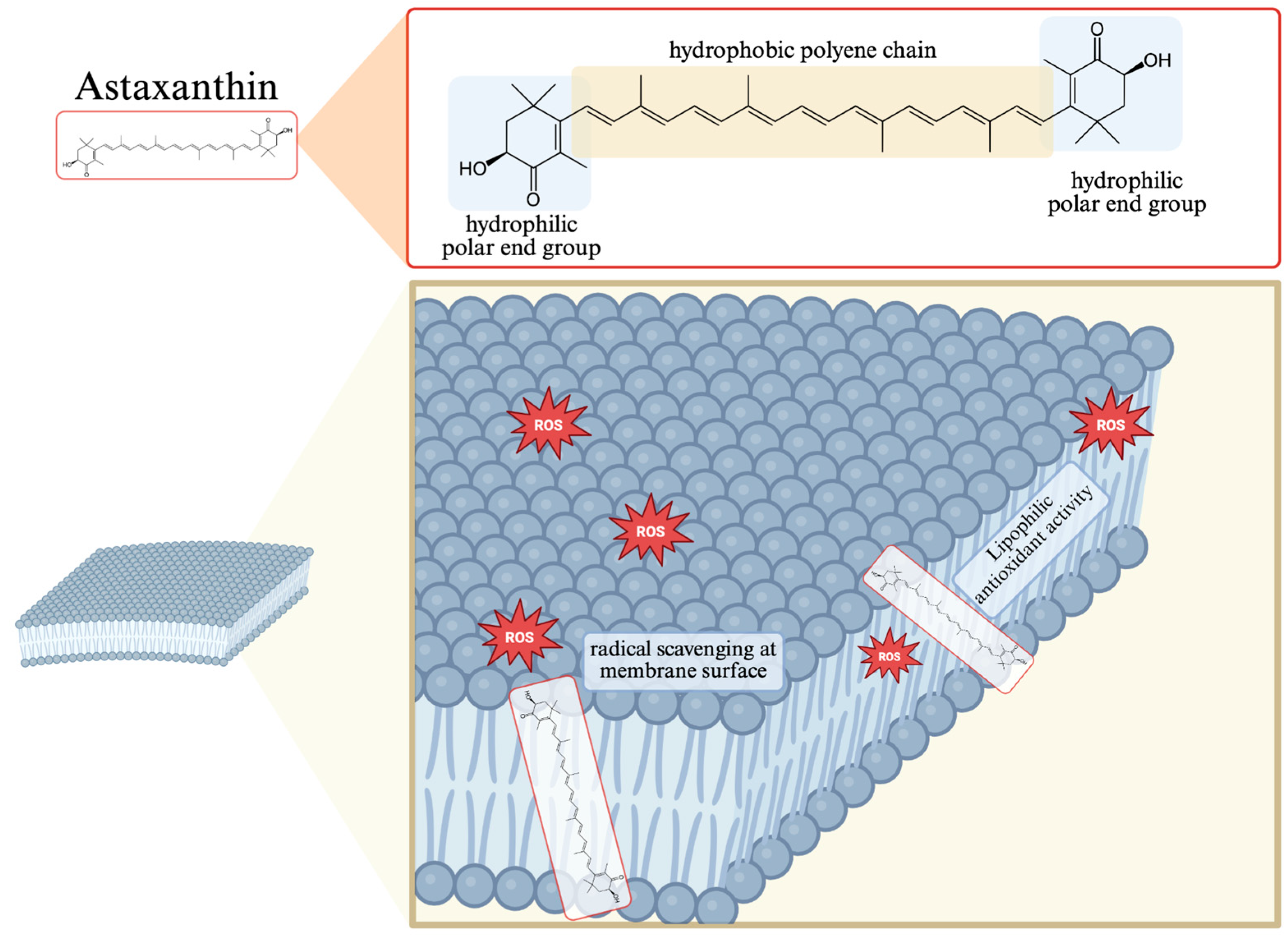
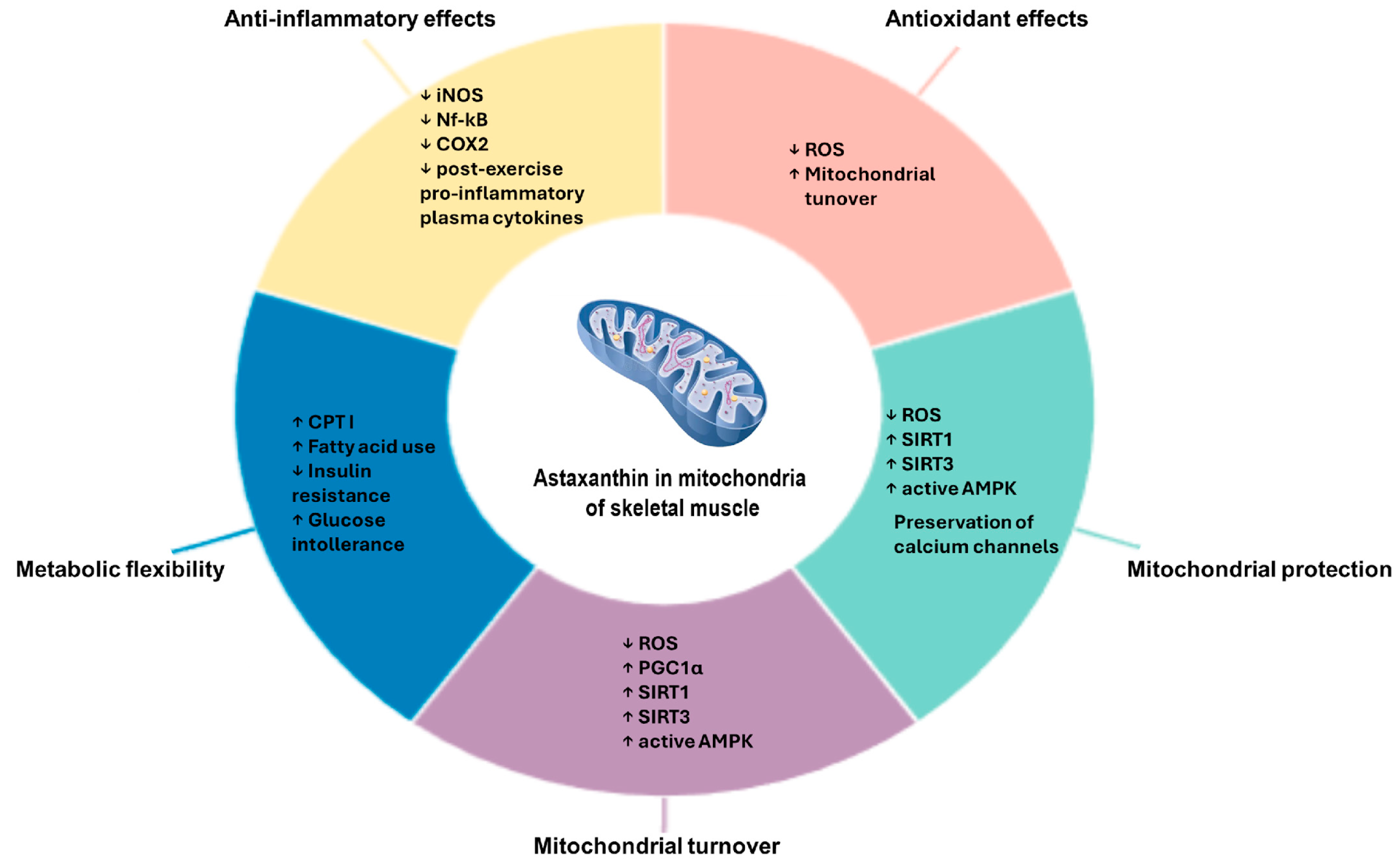
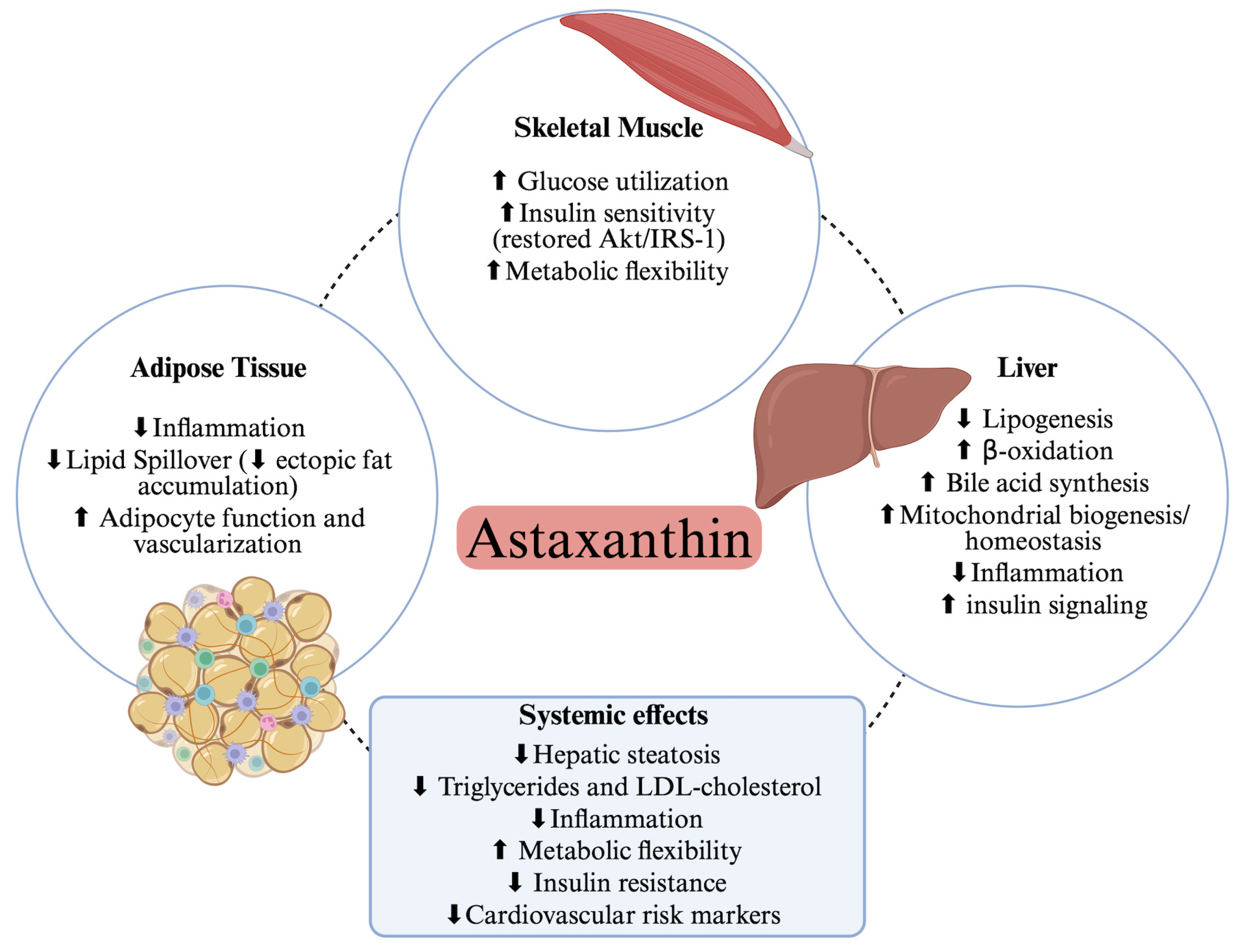
Astaxanthin (AX), a naturally occurring xanthophyll carotenoid, has attracted growing scientific interest due to its potent antioxidant, anti-inflammatory, and metabolic-regulatory properties. This review provides a critical appraisal of the current evidence regarding the nutraceutical potential of AX in muscle metabolism, exercise adaptation, and obesity management. Preclinical and clinical findings indicate that AX enhances lipid utilization, promotes mitochondrial biogenesis through AMPK activation, and improves endurance and muscle strength, particularly among older adults. Moreover, AX mitigates exercise-induced oxidative stress and muscle damage, thereby supporting recovery and physiological adaptation. In obesity models, AX reduces adipose tissue inflammation, improves insulin sensitivity, and modulates adipokine secretion, suggesting a multifaceted role in metabolic syndrome prevention. Despite robust preclinical data, human trials remain limited and often yield inconsistent outcomes, highlighting the need for well-designed, long-term clinical studies. Emerging evidence highlights the importance of optimized delivery strategies to enhance AX bioavailability and mitochondrial targeting. Nanoemulsions, liposomes, and lipid-based carriers improve stability, absorption, and tissue distribution, thereby potentiating AX’s effects on mitochondrial function and exercise adaptation. Overall, AX emerges as a promising nutraceutical candidate for enhancing muscle function, supporting exercise performance, and managing obesity-related metabolic disease, with delivery innovations representing a critical frontier for future translational applications.
Keywords: astaxanthin; muscle and exercise metabolism; obesity; formulation technologies; nutraceuticals astaxanthin; muscle and exercise metabolism; obesity; formulation technologies; nutraceuticals