
Ubiquinol in Fertility and Reproduction: A Conditionally Essential Nutrient for Critical Early-Life Stages




Abstract
1. Introduction
2. Essential or Conditionally Essential?
3. Endogenous Biosynthesis of Ubiquinol

4. Dietary Sources
5. Life Stages Where Ubiquinol May Be Conditionally Essential
6. Ubiquinol and Male Fertility

| Author (Year) | Study Design | Patients/Controls | Intervention and Dose | Parameters Assessed | Outcome |
|---|---|---|---|---|---|
| Gamal El Din S.F. et al. (2025) [63] | 3-month DB PC RS. | N = 75 infertile patients. | 200 mg/d Ubiquinol + 2660 mg/d d-aspartic acid + 10 mg zinc (n = 24). Placebo (starch granules) (n = 24). | Semen parameters | The active intervention showed sig. improvements in progressive sperm motility after 3 months. |
| Nedeljkovic D. et al. (2025) [64] | 8-week randomized controlled pilot trial. | n = 15 including n = 5 oligospermic patients. | 200 mg/d Ubiquinol + 5 g/d creatine monohydrate plus. | Sperm quality biomarkers. | Oligospermic men receiving creatine-plus-Ubiquinol had improved sperm concentration at follow-up. |
| Alahmar A.T. et al. (2022a) [58] | 6-month prospective controlled clinical study. | n = 178 with idiopathic OA. n = 84 fertile men (controls). | 200 mg/d of CoQ10 as Ubiquinol. | Semen parameters. Time to pregnancy. | Ubiquinol therapy sig. improved semen parameters (sperm concentration and motility) antioxidant measures and reduced SDF. |
| Alahmar A.T. et al. (2022b) [62] | 3-month prospective controlled study. | n = 50 with idiopathic OA. n = 35 fertile controls. | 300 mg/d oral CoQ10 as Ubiquinol. | Sperm motility. Antioxidant status. | The intervention resulted in sig. ↑ sperm progressive motility, total motility, seminal TAC, SOD, GPx, and ↓ ROS compared to baseline. |
| Alahmar A.T. et al. (2021) [60] | 3-month prospective controlled study. | n = 50 with OAT n= 50 fertile men (controls). | 200 mg/d of oral CoQ10 as Ubiquinol. | Sperm DNA damage. | Ubiquinol administration to men with idiopathic OAT sig. improved sperm quality, antioxidant status and ↓ ROS and SDF levels. |
| Alahmar A.T. et al. (2019) [59] | 3-month prospective controlled clinical study. | n = 65 patients with idiopathic OAT received. | 200 mg/d (n = 35) 400 mg/d (n = 30) of CoQ10 as Ubiquinol. | Semen parameters. Antioxidant status. | Ubiquinol improved semen parameters (sperm concentration, progressive and total motility) and antioxidant status with a greater improvement in those taking 400 mg/d. |
| Safarinejad M.R. et al. (2012) [61] | 26-week DB PC RS. | n = 228 men with unexplained infertility. | 200 mg/d Ubiquinol or placebo. | Semen parameters. | Ubiquinol sig. improved sperm density, sperm motility, and sperm morphology. |
7. Ubiquinol and Female Fertility
| Author (Year) | Study Design | Patients/Controls | Intervention and Dose | Parameters Assessed | Outcome |
|---|---|---|---|---|---|
| Kinoshita T. et al. (2025) [68] | 7 menstrual cycles—open-label pilot study. | n = 86 healthcare workers 21–48 yrs. | 150 mg/d Ubiquinol as two soft 75 mg capsules. | Menstrual symptoms. | In those aged ≥36 ys, Ubiquinol may reduce premenstrual irritability and improve sleep quality. |
| Lin P.H. et al. (2023) [70] | 8-week supplement intervention before undergoing IVF. | n = 75 with ovarian senescence. | Ubiquinol CoQ10 Capsules (dose not specified), DHEA capsules, and Cleo-20 triiodothyronine soft capsules. | Ovarian aging. | The supplement regimen containing Ubiquinol was associated with improved mitochondrial energy-metabolism markers in ovarian cells. |
| Ammar I.M.M. et al. (2021) [71] | RCT. | n = 148 women with PCOS and Clomiphene Citrate resistance. | 100 mg/d Ubiquinol starting on cycle day 2 and continued until the day of hCG triggering. | Ovulation induction. | Ubiquinol addition to Clomiphene Citrate improved ovarian responsiveness in Clomiphene-Citrate-resistant patients when compared to conventional hMG stimulation. |
| Ozdemir A. et al. (2019) [69] | 8-week supplementation intervention before ovarian stimulation. | n = 299 patients undergoing IVF-ICSI for unexplained infertility. | 100 mg/d Ubiquinol + omega-3 fatty acids (300 mg/d EPA and 230 mg/d DHA) (n = 135). No supplement control (n = 164). | Pregnancy rate. | The pregnancy rate of patients using Ubiquinol was sig. higher than those not using the supplement. |
8. Advanced Paternal and Maternal Aging
9. Pregnancy and Early Life
10. Bioavailability and Safety
11. Discussion
12. Future Frontiers
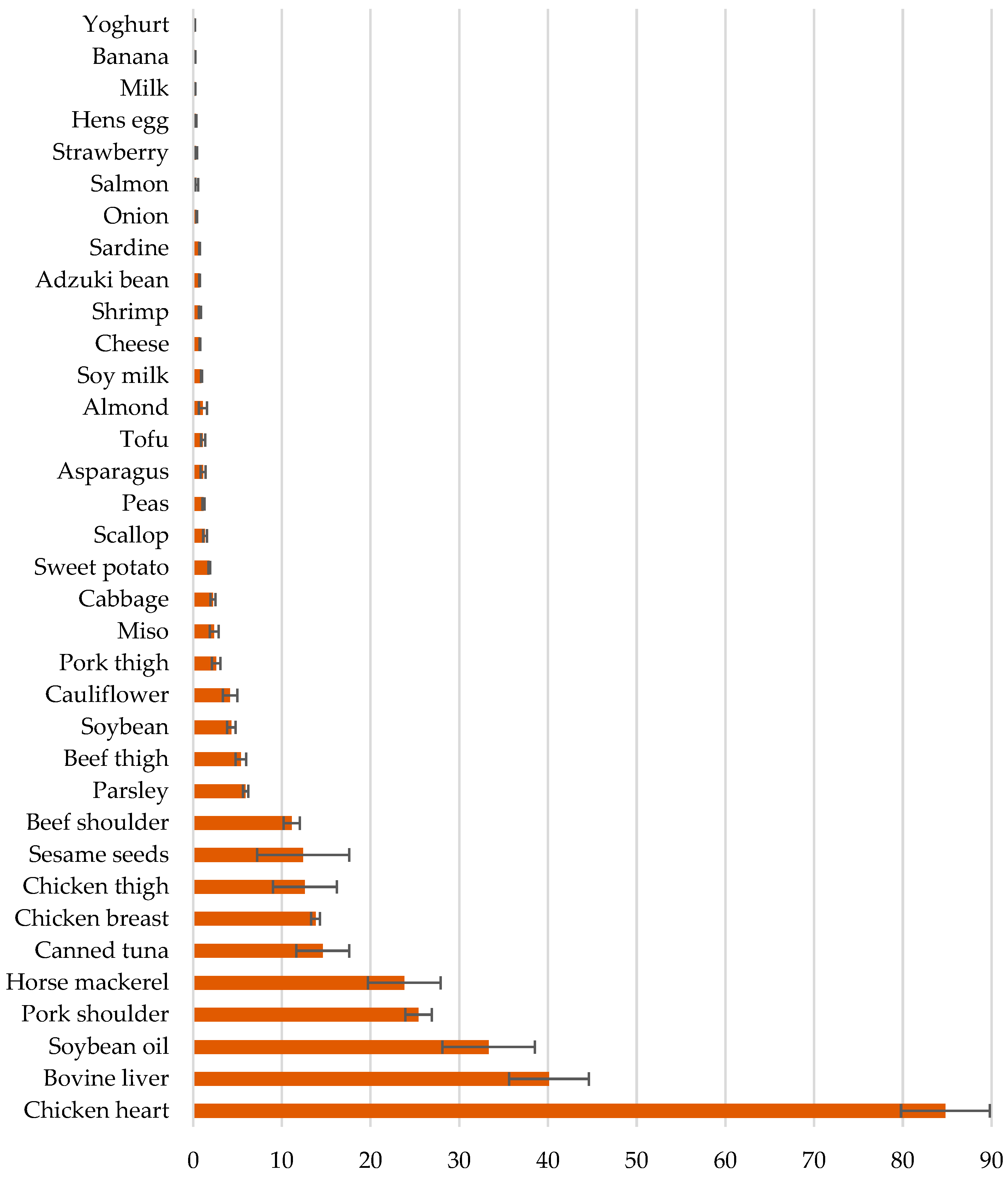
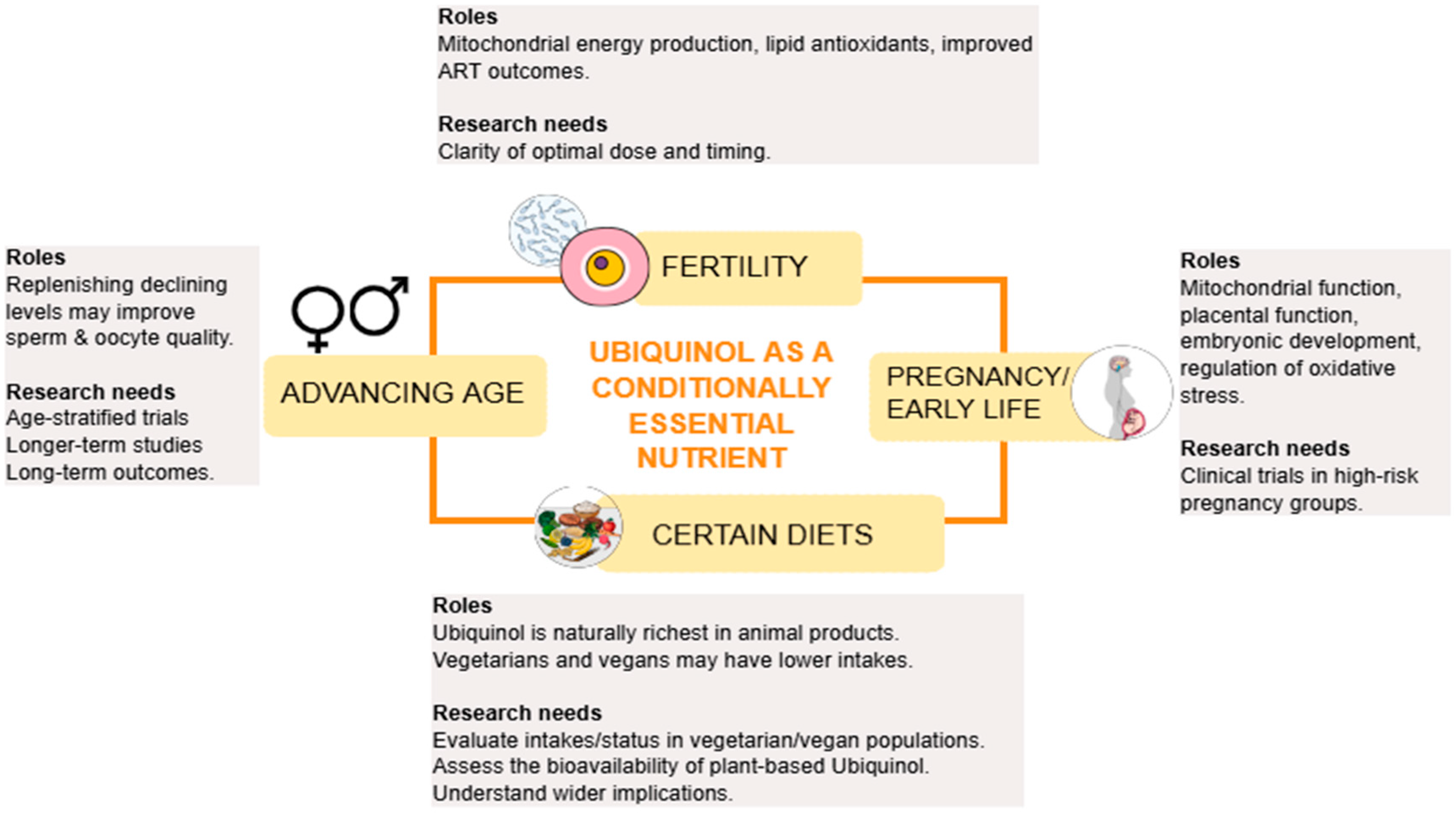
- There are not yet official intake recommendations for Ubiquinol, but some of the most predominant food sources include meat, fish, eggs, and dairy [38]. Consequently, individuals following plant-based diets or restricting these food groups may be at risk of lower habitual intakes, potentially resulting in reduced Ubiquinol consumption.
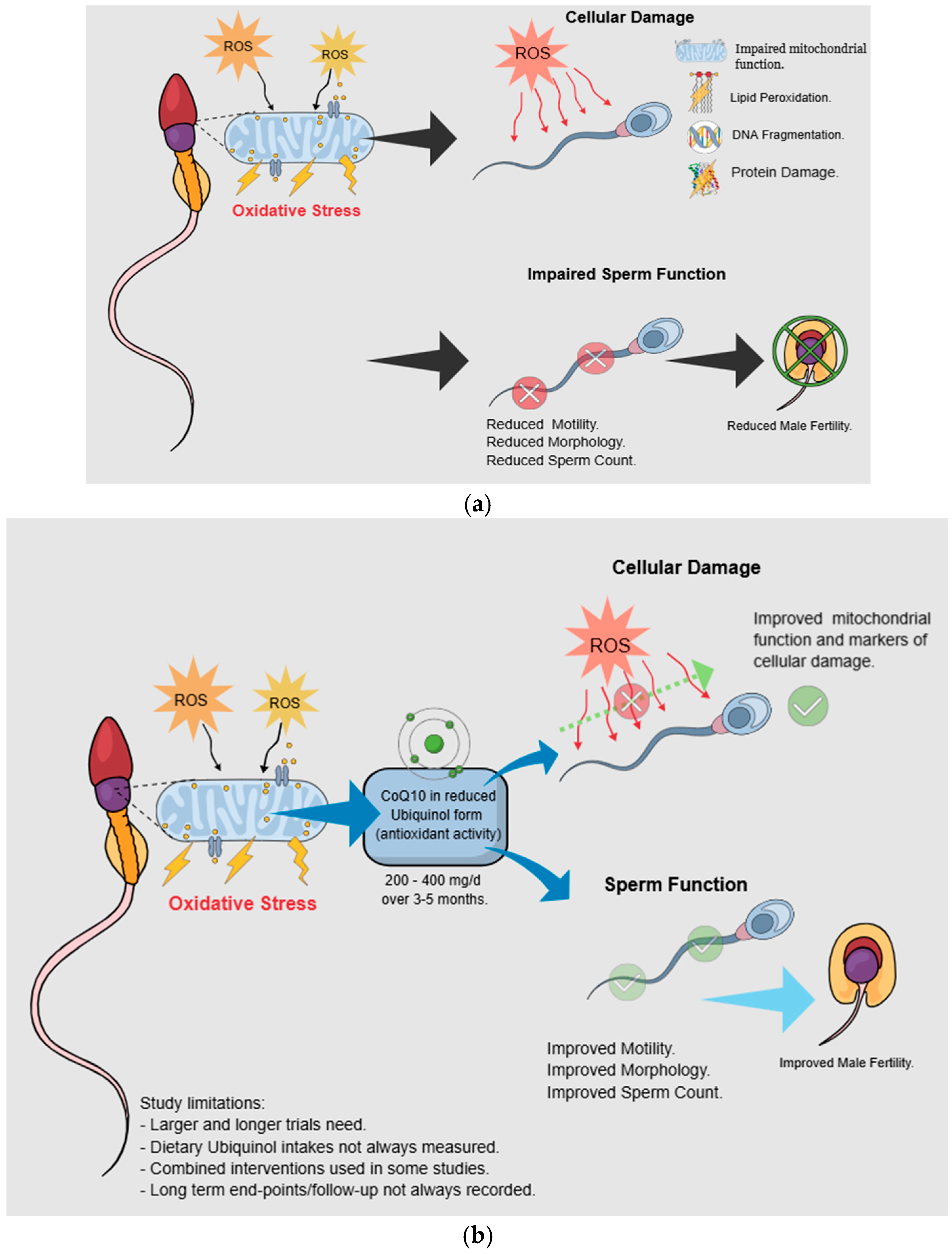
- It has been advised that to reduce sperm damage and improve sperm motility, count and morphology 200 mg CoQ10 (as Ubiquinol) could be taken daily, increasing to 400 mg per day for those with serious difficulties [54]; however, consensus is lacking across scientific domains regarding the optimal dose and duration of Ubiquinol therapy.
- It would be useful to obtain more data on “long-term” Ubiquinol intakes using food frequency questionnaires across a range of European regions to help build a reliable picture of habitual Ubiquinol intakes.
- Greater efforts are needed to educate healthcare professionals and consumers about the importance of Ubiquinol, how it can be obtained, and the life stages during which its supply is most critical.
- If Ubiquinol is not obtained in the levels needed from dietary sources per se, then supplementation strategies may be required, especially at certain key life stages such as conception, pregnancy, and advanced maternal/paternal age. Food supplements can play a useful role in helping to offset gaps, helping to improve fertility-related wellbeing [116].
13. Conclusions
Author Contributions
Funding
Data Availability Statement
Conflicts of Interest
Abbreviations
| ART | Assisted Reproductive Technology |
| ATP | Adenosine Triphosphate |
| CC | Clomiphene Citrate |
| CoQ10 | Coenzyme Q10 |
| DHEA | Dehydroepiandrosterone |
| FDX1 | Ferredoxin 1 |
| hMG | Human Menopausal Gonadotropin |
| IVF | In Vitro Fertilization |
| NADH | Nicotinamide Adenine Dinucleotide (Hydrogen) |
| PCOS | Polycystic Ovary Syndrome |
| POI | Premature Ovarian Insufficiency |
| ROS | Reactive Oxygen Species |
| TCA | Tricarboxylic Acid Cycle |
| T3 | Triiodothyronine |
| UQCRC1 | Ubiquinol-Cytochrome c Reductase Core Protein I |
References
- Mircea, C.N.; Lujan, M.E.; Pierson, R.A. Metabolic fuel and clinical implications for female reproduction. J. Obstet. Gynaecol. Can. 2007, 29, 887–902. [Google Scholar] [CrossRef] [PubMed]
- Mantle, D.; Dewsbury, M.; Hargreaves, I.P. The Ubiquinone-Ubiquinol Redox Cycle and Its Clinical Consequences: An Overview. Int. J. Mol. Sci. 2024, 25, 6765. [Google Scholar] [CrossRef]
- Matsuo, K.; Kasai, K.; Hosoe, K.; Funahashi, I. Stability of ubiquinol-10 (reduced form of coenzyme Q10) in human blood. Biomed. Chromatogr. 2016, 30, 500–502. [Google Scholar] [CrossRef] [PubMed]
- Babayev, E.; Seli, E. Oocyte mitochondrial function and reproduction. Curr. Opin. Obstet. Gynecol. 2015, 27, 175–181. [Google Scholar] [CrossRef] [PubMed]
- Pizzorno, J. Mitochondria-Fundamental to Life and Health. Integr. Med. 2014, 13, 8–15. [Google Scholar]
- Hirata, S.; Hoshi, K.; Shoda, T.; Mabuchi, T. Spermatozoon and mitochondrial DNA. Reprod. Med. Biol. 2002, 1, 41–47. [Google Scholar] [CrossRef] [PubMed]
- Ankel-Simons, F.; Cummins, J.M. Misconceptions about mitochondria and mammalian fertilization: Implications for theories on human evolution. Proc. Natl. Acad. Sci. USA 1996, 93, 13859–13863. [Google Scholar] [CrossRef]
- Aitken, R.J.; Bromfield, E.G.; Gibb, Z. Oxidative Stress and Reproductive Function: The impact of oxidative stress on reproduction: A focus on gametogenesis and fertilization. Reproduction 2022, 164, F79–F94. [Google Scholar] [CrossRef]
- Sies, H. Oxidative stress: Oxidants and antioxidants. Exp. Physiol. 1997, 82, 291–295. [Google Scholar] [CrossRef]
- Miles, M.V.; Horn, P.S.; Tang, P.H.; Morrison, J.A.; Miles, L.; DeGrauw, T.; Pesce, A.J. Age-related changes in plasma coenzyme Q10 concentrations and redox state in apparently healthy children and adults. Clin. Chim. Acta 2004, 347, 139–144. [Google Scholar] [CrossRef]
- Lakoma, K.; Kukharuk, O.; Sliz, D. The Influence of Metabolic Factors and Diet on Fertility. Nutrients 2023, 15, 1180. [Google Scholar] [CrossRef] [PubMed]
- Derbyshire, E. CoQ10: The Potential Role in Female and Male Subfertility. A Narrative Review of RCTs and Controlled Clinical Trials. Gynecol. Women’s Health Res. 2024, 4, 1–8. [Google Scholar] [CrossRef]
- Erdman, J.W., Jr. Health and nutrition beyond essential nutrients: The evolution of the bioactives concept for human health. Mol. Asp. Med. 2023, 89, 101116. [Google Scholar] [CrossRef]
- Jew, S.; Antoine, J.; Bourlioux, P. Nutrient essentiality revisited. J. Funct. Foods 2015, 14, 203–209. [Google Scholar] [CrossRef]
- EFSA. Essential Nutrient. Available online: https://www.efsa.europa.eu/en/glossary/essential-nutrient (accessed on 26 December 2025).
- Mischley, L. Conditionally Essential Nutrients: The State of the Science. J. Food Nutr. 2014, 1, 1–4. [Google Scholar]
- Ostojic, S.M.; Forbes, S.C. Perspective: Creatine, a Conditionally Essential Nutrient: Building the Case. Adv. Nutr. 2022, 13, 34–37. [Google Scholar] [CrossRef]
- Post, A.; Tsikas, D.; Bakker, S.J.L. Creatine is a Conditionally Essential Nutrient in Chronic Kidney Disease: A Hypothesis and Narrative Literature Review. Nutrients 2019, 11, 1044. [Google Scholar] [CrossRef] [PubMed]
- Ostojic, S.M. Establishing Reference Intakes for Creatine in Infants Aged 0 to 12 Months. Nutr. Rev. 2025, 83, e2139–e2143. [Google Scholar] [CrossRef] [PubMed]
- Ernster, L.; Forsmark-Andree, P. Ubiquinol: An endogenous antioxidant in aerobic organisms. Clin. Investig. 1993, 71, S60–S65. [Google Scholar] [CrossRef] [PubMed]
- Deng, H.; Zhao, L.; Ge, H.; Gao, Y.; Fu, Y.; Lin, Y.; Masoodi, M.; Losmanova, T.; Medova, M.; Ott, J.; et al. Ubiquinol-mediated suppression of mitochondria-associated ferroptosis is a targetable function of lactate dehydrogenase B in cancer. Nat. Commun. 2025, 16, 2597. [Google Scholar] [CrossRef]
- Gan, B. Mitochondrial regulation of ferroptosis. J. Cell Biol. 2021, 220, e202105043. [Google Scholar] [CrossRef] [PubMed]
- Enriquez, J. Metabolic channeling in the electron transport chain. In Proceedings of the ICQA 11th Conference of Copenhague, Copenhagen, Denmark, 6–19 June 2025. [Google Scholar]
- Mohr, D.; Bowry, V.W.; Stocker, R. Dietary supplementation with coenzyme Q10 results in increased levels of ubiquinol-10 within circulating lipoproteins and increased resistance of human low-density lipoprotein to the initiation of lipid peroxidation. Biochim. Biophys. Acta 1992, 1126, 247–254. [Google Scholar] [CrossRef] [PubMed]
- Pyo, Y. Coenzyme Q10 and Q9 contents in 6 commercial vegetable oils and their average daily intakes in Korea. Food Sci. Biotechnol. 2010, 19, 837–841. [Google Scholar] [CrossRef]
- Mantle, D.; Dybring, A. Bioavailability of Coenzyme Q(10): An Overview of the Absorption Process and Subsequent Metabolism. Antioxidants 2020, 9, 386. [Google Scholar] [CrossRef]
- Lambelet, P.; Loeliger, J.; Saucy, F.; Bracco, U. Antioxidant properties of coenzyme Q10 in food systems. J. Agric. Food Chem. 1992, 40, 581–584. [Google Scholar] [CrossRef]
- Desbats, M.A.; Lunardi, G.; Doimo, M.; Trevisson, E.; Salviati, L. Genetic bases and clinical manifestations of coenzyme Q10 (CoQ 10) deficiency. J. Inherit. Metab. Dis. 2015, 38, 145–156. [Google Scholar] [CrossRef]
- Salviati, L.; Trevisson, E.; Agosto, C.; Doimo, M.; Navas, P. Primary Coenzyme Q(10) Deficiency Overview. In GeneReviews((R)); Adam, M.P., Bick, S., Mirzaa, G.M., Pagon, R.A., Wallace, S.E., Amemiya, A., Eds.; University of Washington: Seattle, WA, USA, 2023. [Google Scholar]
- Fernandez-Ayala, D.J.; Jimenez-Gancedo, S.; Guerra, I.; Navas, P. Invertebrate models for coenzyme q10 deficiency. Mol. Syndr. 2014, 5, 170–179. [Google Scholar] [CrossRef] [PubMed]
- Diaz-Casado, M.E.; Quiles, J.L.; Barriocanal-Casado, E.; Gonzalez-Garcia, P.; Battino, M.; Lopez, L.C.; Varela-Lopez, A. The Paradox of Coenzyme Q(10) in Aging. Nutrients 2019, 11, 2221. [Google Scholar] [CrossRef]
- Piantadosi, C.A.; Suliman, H.B. Redox regulation of mitochondrial biogenesis. Free Radic. Biol. Med. 2012, 53, 2043–2053. [Google Scholar] [CrossRef]
- Liu, L.; Li, Y.; Chen, G.; Chen, Q. Crosstalk between mitochondrial biogenesis and mitophagy to maintain mitochondrial homeostasis. J. Biomed. Sci. 2023, 30, 86. [Google Scholar] [CrossRef]
- Tian, G.; Sawashita, J.; Kubo, H.; Nishio, S.Y.; Hashimoto, S.; Suzuki, N.; Yoshimura, H.; Tsuruoka, M.; Wang, Y.; Liu, Y.; et al. Ubiquinol-10 supplementation activates mitochondria functions to decelerate senescence in senescence-accelerated mice. Antioxid. Redox Signal 2014, 20, 2606–2620. [Google Scholar] [CrossRef]
- Kontush, A.; Schippling, S.; Spranger, T.; Beisiegel, U. Plasma ubiquinol-10 as a marker for disease: Is the assay worthwhile? Biofactors 1999, 9, 225–229. [Google Scholar] [CrossRef]
- Wada, H.; Goto, H.; Hagiwara, S.; Yamamoto, Y. Redox status of coenzyme Q10 is associated with chronological age. J. Am. Geriatr. Soc. 2007, 55, 1141–1142. [Google Scholar] [CrossRef] [PubMed]
- Podar, A.S.; Semeniuc, C.A.; Ionescu, S.R.; Socaciu, M.I.; Fogarasi, M.; Farcas, A.C.; Vodnar, D.C.; Socaci, S.A. An Overview of Analytical Methods for Quantitative Determination of Coenzyme Q10 in Foods. Metabolites 2023, 13, 272. [Google Scholar] [CrossRef]
- Kubo, H.; Fujii, K.; Kawabe, T.; Matsumoto, S.; Kishida, H.; Hosoe, K. Food content of ubiquinol-10 and ubiquinone-10 in the Japanese diet. J. Food Compos. Anal. 2008, 21, 199–210. [Google Scholar] [CrossRef]
- Suzuki, T. Effect of a Two-Week Diet without Meat and Poultry on Serum Coenzyme Q10 Levels. Dietetics 2024, 3, 227–234. [Google Scholar] [CrossRef]
- Bentinger, M.; Tekle, M.; Dallner, G. Coenzyme Q—Biosynthesis and functions. Biochem. Biophys. Res. Commun. 2010, 396, 74–79. [Google Scholar] [CrossRef]
- Bahety, D.; Boke, E.; Rodriguez-Nuevo, A. Mitochondrial morphology, distribution and activity during oocyte development. Trends Endocrinol. Metab. 2024, 35, 902–917. [Google Scholar] [CrossRef]
- Onur, S.; Niklowitz, P.; Jacobs, G.; Nothlings, U.; Lieb, W.; Menke, T.; Doring, F. Ubiquinol reduces gamma glutamyltransferase as a marker of oxidative stress in humans. BMC Res. Notes 2014, 7, 427. [Google Scholar] [CrossRef] [PubMed]
- Bisht, S.; Faiq, M.; Tolahunase, M.; Dada, R. Oxidative stress and male infertility. Nat. Rev. Urol. 2017, 14, 470–485. [Google Scholar] [CrossRef]
- Aitken, R.J.; Gibb, Z.; Baker, M.A.; Drevet, J.; Gharagozloo, P. Causes and consequences of oxidative stress in spermatozoa. Reprod. Fertil. Dev. 2016, 28, 1–10. [Google Scholar] [CrossRef]
- Toledano, J.M.; Puche-Juarez, M.; Galvez-Navas, J.M.; Moreno-Fernandez, J.; Diaz-Castro, J.; Ochoa, J.J. Pregnancy Disorders: A Potential Role for Mitochondrial Altered Homeostasis. Antioxidants 2024, 13, 979. [Google Scholar] [CrossRef]
- Mistry, H.D.; Williams, P.J. The importance of antioxidant micronutrients in pregnancy. Oxid. Med. Cell. Longev. 2011, 2011, 841749. [Google Scholar] [CrossRef]
- Schniertshauer, D.; Gebhard, D.; Bergemann, J. Age-Dependent Loss of Mitochondrial Function in Epithelial Tissue Can Be Reversed by Coenzyme Q(10). J. Aging Res. 2018, 2018, 6354680. [Google Scholar] [CrossRef]
- Eurostat. Childbirth at Older Age: Regions Compared. Available online: https://ec.europa.eu/eurostat/web/products-eurostat-news/-/ddn-20201021-1 (accessed on 26 December 2025).
- Esposito, G.; Parazzini, F.; Chatenoud, L.; Santucci, C.; La Vecchia, C.; Negri, E. Parents’ age and total fertility rate in selected high-income countries from Europe and North America, 1990–2020. Eur. J. Obstet. Gynecol. Reprod. Biol. 2024, 299, 32–36. [Google Scholar] [CrossRef] [PubMed]
- Sengupta, P.; Dutta, S.; Alahmar, A.T. Reductive Stress and Male Infertility. Adv. Exp. Med. Biol. 2022, 1391, 311–321. [Google Scholar] [CrossRef] [PubMed]
- Gvozdjakova, A.; Kucharska, J.; Dubravicky, J.; Mojto, V.; Singh, R.B. Coenzyme Q(1)(0), alpha-tocopherol, and oxidative stress could be important metabolic biomarkers of male infertility. Dis. Markers 2015, 2015, 827941. [Google Scholar] [CrossRef] [PubMed]
- Agarwal, A.; Parekh, N.; Selvam, M.K.P.; Henkel, R.; Shah, R.; Homa, S.T.; Ramasamy, R.; Ko, E.; Tremellen, K.; Esteves, S.; et al. Male Oxidative Stress Infertility (MOSI): Proposed Terminology and Clinical Practice Guidelines for Management of Idiopathic Male Infertility. World J. Men’s Health 2019, 37, 296–312. [Google Scholar] [CrossRef]
- Palani, A.; Alahmar, A. Impact of oxidative stress on semen parameters in normozoospermic infertile men: A case–control study. Afr. J. Urol. 2020, 26, 1–7. [Google Scholar] [CrossRef]
- Fett, R. It Starts with the Egg: The Science of Egg Quality for Fertility, Miscarriage, and IVF (Third Edition); Franklin Fox Publishing LLC: London, UK, 2023. [Google Scholar]
- Tirabassi, G.; Vignini, A.; Tiano, L.; Buldreghini, E.; Bruge, F.; Silvestri, S.; Orlando, P.; D’Aniello, A.; Mazzanti, L.; Lenzi, A.; et al. Protective effects of coenzyme Q10 and aspartic acid on oxidative stress and DNA damage in subjects affected by idiopathic asthenozoospermia. Endocrine 2015, 49, 549–552. [Google Scholar] [CrossRef]
- Alahmar, A.T.; Calogero, A.E.; Singh, R.; Cannarella, R.; Sengupta, P.; Dutta, S. Coenzyme Q10, oxidative stress, and male infertility: A review. Clin. Exp. Reprod. Med. 2021, 48, 97–104. [Google Scholar] [CrossRef]
- Mancini, A.; Balercia, G. Coenzyme Q(10) in male infertility: Physiopathology and therapy. Biofactors 2011, 37, 374–380. [Google Scholar] [CrossRef]
- Alahmar, A.T.; Naemi, R. Predictors of pregnancy and time to pregnancy in infertile men with idiopathic oligoasthenospermia pre- and post-coenzyme Q10 therapy. Andrologia 2022, 54, e14385. [Google Scholar] [CrossRef]
- Alahmar, A.T. The impact of two doses of coenzyme Q10 on semen parameters and antioxidant status in men with idiopathic oligoasthenoteratozoospermia. Clin. Exp. Reprod. Med. 2019, 46, 112–118. [Google Scholar] [CrossRef]
- Alahmar, A.T.; Sengupta, P.; Dutta, S.; Calogero, A.E. Coenzyme Q10, oxidative stress markers, and sperm DNA damage in men with idiopathic oligoasthenoteratospermia. Clin. Exp. Reprod. Med. 2021, 48, 150–155. [Google Scholar] [CrossRef] [PubMed]
- Safarinejad, M.R.; Safarinejad, S.; Shafiei, N.; Safarinejad, S. Effects of the reduced form of coenzyme Q10 (ubiquinol) on semen parameters in men with idiopathic infertility: A double-blind, placebo controlled, randomized study. J. Urol. 2012, 188, 526–531. [Google Scholar] [CrossRef] [PubMed]
- Alahmar, A.T. Coenzyme Q10 improves sperm motility and antioxidant status in infertile men with idiopathic oligoasthenospermia. Clin. Exp. Reprod. Med. 2022, 49, 277–284. [Google Scholar] [CrossRef]
- Din, S.F.G.; Elnashar, A.M.; Elkhiat, Y.; Hussein, T.; AbdElSalam, M.A.; Alam, A.; Ramzy, D.; Moatamed, I.; Zeidan, A.; Elahwany, A.; et al. Evaluation of in vivo supplementation of 2660 mg D-aspartic acid and 200 mg ubiquinol and 10 mg zinc on different semen parameters in idiopathic male infertility: A randomized double blind placebo controlled study. Arch. Ital. Urol. Androl. 2025, 97, 13554. [Google Scholar] [CrossRef]
- Nedeljkovic, D.; Todorovic, N.; Javorac, D.; Baltic, S.; Vranes, M.; Panic, J.; Kladar, N.; Ratgeber, L.; Betlehem, J.; Acs, P.; et al. The effects of 8-week creatine supplementation with and without ubiquinol on sperm quality biomarkers in normospermic and oligospermic men: A randomized controlled pilot trial. Nutr. Health 2025, 2601060251385000. [Google Scholar] [CrossRef]
- Zhang, Z.; Wu, T.; Sang, Q.; Wang, L. Human oocyte quality and reproductive health. Sci. Bull. 2025, 70, 2365–2376. [Google Scholar] [CrossRef] [PubMed]
- Sharma, R.; Biedenharn, K.R.; Fedor, J.M.; Agarwal, A. Lifestyle factors and reproductive health: Taking control of your fertility. Reprod. Biol. Endocrinol. 2013, 11, 66. [Google Scholar] [CrossRef]
- Palan, P.R.; Strube, F.; Letko, J.; Sadikovic, A.; Mikhail, M.S. Effects of oral, vaginal, and transdermal hormonal contraception on serum levels of coenzyme q(10), vitamin e, and total antioxidant activity. Obstet. Gynecol. Int. 2010, 2010, 1–5. [Google Scholar] [CrossRef]
- Kinoshita, T.; Maruyama, K.; Katakami, K.; Sakiyama, T. Effects of ubiquinol intake on improving menstrual symptoms among female healthcare workers: An open-label pilot study. J. Obstet. Gynaecol. Res. 2025, 51, e16279. [Google Scholar] [CrossRef]
- Ozdemir, A.; Ayas, B.; Guven, D.; Gakay, A.; Karli, P. Antioxidant Supplement Improves the Pregnancy Rate in Patients Undergoing in Vitro Fertilization for Unexplained Infertility. Open J. Obstet. Gynecol. 2019, 9, 1–9. [Google Scholar] [CrossRef]
- Lin, P.H.; Su, W.P.; Li, C.J.; Lin, L.T.; Sheu, J.J.; Wen, Z.H.; Cheng, J.T.; Tsui, K.H. Investigating the Role of Ferroptosis-Related Genes in Ovarian Aging and the Potential for Nutritional Intervention. Nutrients 2023, 15, 2461. [Google Scholar] [CrossRef]
- Ammar, I.M.M.; Abdou, A.H. Effect of Ubiquinol supplementation on ovulation induction in Clomiphene Citrate resistance. Middle East Fertil. Soc. J. 2021, 26, 22. [Google Scholar] [CrossRef]
- Kobayashi, H.; Imanaka, S. Mitochondrial DNA Damage and Its Repair Mechanisms in Aging Oocytes. Int. J. Mol. Sci. 2024, 25, 13144. [Google Scholar] [CrossRef]
- Ma, H.; Hayama, T.; Van Dyken, C.; Darby, H.; Koski, A.; Lee, Y.; Gutierrez, N.M.; Yamada, S.; Li, Y.; Andrews, M.; et al. Deleterious mtDNA mutations are common in mature oocytes. Biol. Reprod. 2020, 102, 607–619. [Google Scholar] [CrossRef]
- Niu, Y.J.; Zhou, W.; Nie, Z.W.; Zhou, D.; Xu, Y.N.; Ock, S.A.; Yan, C.G.; Cui, X.S. Ubiquinol-10 delays postovulatory oocyte aging by improving mitochondrial renewal in pigs. Aging 2020, 12, 1256–1271. [Google Scholar] [CrossRef] [PubMed]
- Ben-Meir, A.; Burstein, E.; Borrego-Alvarez, A.; Chong, J.; Wong, E.; Yavorska, T.; Naranian, T.; Chi, M.; Wang, Y.; Bentov, Y.; et al. Coenzyme Q10 restores oocyte mitochondrial function and fertility during reproductive aging. Aging Cell 2015, 14, 887–895. [Google Scholar] [CrossRef]
- Nguyen-Powanda, P.; Robaire, B. Oxidative Stress and Reproductive Function in the Aging Male. Biology 2020, 9, 282. [Google Scholar] [CrossRef]
- Fernandes, M.S.S.; Fidelis, D.; Aidar, F.J.; Badicu, G.; Greco, G.; Cataldi, S.; Santos, G.C.J.; de Souza, R.F.; Ardigo, L.P. Coenzyme Q10 Supplementation in Athletes: A Systematic Review. Nutrients 2023, 15, 3990. [Google Scholar] [CrossRef]
- Niklowitz, P.; Onur, S.; Fischer, A.; Laudes, M.; Palussen, M.; Menke, T.; Doring, F. Coenzyme Q10 serum concentration and redox status in European adults: Influence of age, sex, and lipoprotein concentration. J. Clin. Biochem. Nutr. 2016, 58, 240–245. [Google Scholar] [CrossRef]
- Kalen, A.; Appelkvist, E.L.; Dallner, G. Age-related changes in the lipid compositions of rat and human tissues. Lipids 1989, 24, 579–584. [Google Scholar] [CrossRef]
- Zhu, Z.; Xu, W.; Liu, L. Ovarian aging: Mechanisms and intervention strategies. Med. Rev. 2022, 2, 590–610. [Google Scholar] [CrossRef]
- Zhang, X.; Zhang, L.; Xiang, W. The impact of mitochondrial dysfunction on ovarian aging. J. Transl. Med. 2025, 23, 211. [Google Scholar] [CrossRef] [PubMed]
- Bentov, Y.; Hannam, T.; Jurisicova, A.; Esfandiari, N.; Casper, R.F. Coenzyme Q10 Supplementation and Oocyte Aneuploidy in Women Undergoing IVF-ICSI Treatment. Clin. Med. Insights Reprod. Health 2014, 8, 31–36. [Google Scholar] [CrossRef]
- Wu, C.C.; Li, C.J.; Lin, L.T.; Wen, Z.H.; Cheng, J.T.; Tsui, K.H. Examining the Effects of Nutrient Supplementation on Metabolic Pathways via Mitochondrial Ferredoxin in Aging Ovaries. Nutrients 2024, 16, 1470. [Google Scholar] [CrossRef] [PubMed]
- Ma, L.; Li, X.; Li, C.; Chen, P.; Lan, Y.; Huang, Y.; Xu, W.; Zhou, J. Association of Coenzyme Q10 with Premature Ovarian Insufficiency. Reprod. Sci. 2023, 30, 1548–1554. [Google Scholar] [CrossRef] [PubMed]
- Grzeszczak, K.; Lanocha-Arendarczyk, N.; Malinowski, W.; Zietek, P.; Kosik-Bogacka, D. Oxidative Stress in Pregnancy. Biomolecules 2023, 13, 1768. [Google Scholar] [CrossRef]
- Haruna, M.; Matsuzaki, M.; Ota, E.; Honda, Y.; Tanizaki, T.; Sekine, K.; Tabata, N.; Yeo, S.; Murashima, S. Positive correlation between maternal serum coenzyme Q10 levels and infant birth weight. Biofactors 2010, 36, 312–318. [Google Scholar] [CrossRef]
- Noia, G.; Littarru, G.P.; De Santis, M.; Oradei, A.; Mactromarino, C.; Trivellini, C.; Caruso, A. Coenzyme Q10 in pregnancy. Fetal Diagn. Ther. 1996, 11, 264–270. [Google Scholar] [CrossRef] [PubMed]
- Giannubilo, S.R.; Tiano, L.; Ciavattini, A.; Landi, B.; Carnevali, P.; Principi, F.; Littarru, G.P.; Mazzanti, L. Amniotic coenzyme Q10: Is it related to pregnancy outcomes? Antioxid. Redox Signal. 2014, 21, 1582–1586. [Google Scholar] [CrossRef]
- Teran, E.; Hernandez, I.; Nieto, B.; Tavara, R.; Ocampo, J.E.; Calle, A. Coenzyme Q10 supplementation during pregnancy reduces the risk of pre-eclampsia. Int. J. Gynaecol. Obstet. 2009, 105, 43–45. [Google Scholar] [CrossRef]
- Xu, X.; Pan, J.R.; Zhang, Y.Z. CoQ10 alleviate preeclampsia symptoms by enhancing the function of mitochondria in the placenta of pregnant rats with preeclampsia. Hypertens. Pregnancy 2019, 38, 217–222. [Google Scholar] [CrossRef]
- Cao, S.; Yan, H.; Tang, W.; Zhang, H.; Liu, J. Effects of dietary coenzyme Q10 supplementation during gestation on the embryonic survival and reproductive performance of high-parity sows. J. Anim. Sci. Biotechnol. 2023, 14, 75. [Google Scholar] [CrossRef]
- Matsuzaki, M.; Haruna, M.; Hasumi, Y.; Sekine, K.; Tanizaki, T.; Watanabe, E.; Murashima, S. Ubiquinol-10 and ubiquinone-10 levels in umbilical cord blood of healthy foetuses and the venous blood of their mothers. Free Radic. Res. 2010, 44, 1338–1344. [Google Scholar] [CrossRef] [PubMed]
- Cucinotta, F.; Ricciardello, A.; Turriziani, L.; Mancini, A.; Keller, R.; Sacco, R.; Persico, A.M. Efficacy and Safety of Q10 Ubiquinol With Vitamins B and E in Neurodevelopmental Disorders: A Retrospective Chart Review. Front. Psychiatry 2022, 13, 829516. [Google Scholar] [CrossRef]
- Langsjoen, P.H.; Langsjoen, A.M. Comparison study of plasma coenzyme Q10 levels in healthy subjects supplemented with ubiquinol versus ubiquinone. Clin. Pharmacol. Drug Dev. 2014, 3, 13–17. [Google Scholar] [CrossRef]
- Failla, M.L.; Chitchumroonchokchai, C.; Aoki, F. Increased bioavailability of ubiquinol compared to that of ubiquinone is due to more efficient micellarization during digestion and greater GSH-dependent uptake and basolateral secretion by Caco-2 cells. J. Agric. Food Chem. 2014, 62, 7174–7182. [Google Scholar] [CrossRef] [PubMed]
- Hosoe, K.; Kitano, M.; Kishida, H.; Kubo, H.; Fujii, K.; Kitahara, M. Study on safety and bioavailability of ubiquinol (Kaneka QH) after single and 4-week multiple oral administration to healthy volunteers. Regul. Toxicol. Pharmacol. 2007, 47, 19–28. [Google Scholar] [CrossRef]
- Littarru, G.P.; Tiano, L. Bioenergetic and antioxidant properties of coenzyme Q10: Recent developments. Mol. Biotechnol. 2007, 37, 31–37. [Google Scholar] [CrossRef]
- Garcia-Corzo, L.; Luna-Sanchez, M.; Doerrier, C.; Ortiz, F.; Escames, G.; Acuna-Castroviejo, D.; Lopez, L.C. Ubiquinol-10 ameliorates mitochondrial encephalopathy associated with CoQ deficiency. Biochim. Biophys. Acta 2014, 1842, 893–901. [Google Scholar] [CrossRef] [PubMed]
- Kubo, H.; Yamamoto, Y.; Fujisawa, A. Orally ingested ubiquinol-10 or ubiquinone-10 reaches the intestinal tract and is absorbed by the small intestine of mice mostly in its original form. J. Clin. Biochem. Nutr. 2023, 72, 101–106. [Google Scholar] [CrossRef]
- Mizuno, K.; Sasaki, A.T.; Watanabe, K.; Watanabe, Y. Ubiquinol-10 Intake Is Effective in Relieving Mild Fatigue in Healthy Individuals. Nutrients 2020, 12, 1640. [Google Scholar] [CrossRef]
- Mitsui, J.; Matsukawa, T.; Uemura, Y.; Kawahara, T.; Chikada, A.; Porto, K.J.L.; Naruse, H.; Tanaka, M.; Ishiura, H.; Toda, T.; et al. High-dose ubiquinol supplementation in multiple-system atrophy: A multicentre, randomised, double-blinded, placebo-controlled phase 2 trial. EClinicalMedicine 2023, 59, 101920. [Google Scholar] [CrossRef]
- Martin, W. Supply and Demand of Energy in the Oocyte and the Role of Mitochondria. Results Probl. Cell Differ. 2017, 63, 373–387. [Google Scholar] [CrossRef]
- Smits, M.A.J.; Schomakers, B.V.; van Weeghel, M.; Wever, E.J.M.; Wust, R.C.I.; Dijk, F.; Janssens, G.E.; Goddijn, M.; Mastenbroek, S.; Houtkooper, R.H.; et al. Human ovarian aging is characterized by oxidative damage and mitochondrial dysfunction. Hum. Reprod. 2023, 38, 2208–2220. [Google Scholar] [CrossRef]
- Boguenet, M.; Bouet, P.E.; Spiers, A.; Reynier, P.; May-Panloup, P. Mitochondria: Their role in spermatozoa and in male infertility. Hum. Reprod. Update 2021, 27, 697–719. [Google Scholar] [CrossRef] [PubMed]
- Piomboni, P.; Focarelli, R.; Stendardi, A.; Ferramosca, A.; Zara, V. The role of mitochondria in energy production for human sperm motility. Int. J. Androl. 2012, 35, 109–124. [Google Scholar] [CrossRef] [PubMed]
- Alleva, R.; Scararmucci, A.; Mantero, F.; Bompadre, S.; Leoni, L.; Littarru, G.P. The protective role of ubiquinol-10 against formation of lipid hydroperoxides in human seminal fluid. Mol. Asp. Med. 1997, 18, S221–S228. [Google Scholar] [CrossRef]
- Sikka, S.C.; Rajasekaran, M.; Hellstrom, W.J. Role of oxidative stress and antioxidants in male infertility. J. Androl. 1995, 16, 464–468. [Google Scholar] [CrossRef]
- Nie, X.; Dong, X.; Hu, Y.; Xu, F.; Hu, C.; Shu, C. Coenzyme Q10 Stimulate Reproductive Vatality. Drug Des. Dev. Ther. 2023, 17, 2623–2637. [Google Scholar] [CrossRef]
- Forsmark-Andree, P.; Ernster, L. Evidence for a protective effect of endogenous ubiquinol against oxidative damage to mitochondrial protein and DNA during lipid peroxidation. Mol. Asp. Med. 1994, 15, s73–s81. [Google Scholar] [CrossRef] [PubMed]
- Ernster, L.; Forsmark, P.; Nordenbrand, K. The mode of action of lipid-soluble antioxidants in biological membranes: Relationship between the effects of ubiquinol and vitamin E as inhibitors of lipid peroxidation in submitochondrial particles. Biofactors 1992, 3, 241–248. [Google Scholar] [CrossRef]
- Owen, A.; Carlson, K.; Sparzak, P.B. Age-Related Fertility Decline. In StatPearls; StatPearls Publishing: Treasure Island, FL, USA, 2025. [Google Scholar]
- da Silva, S.M.; Anderson, R.A. Reproductive axis ageing and fertility in men. Rev. Endocr. Metab. Disord. 2022, 23, 1109–1121. [Google Scholar] [CrossRef] [PubMed]
- Wang, J.J.; Wang, S.X.; Tehmina; Feng, Y.; Zhang, R.F.; Li, X.Y.; Sun, Q.; Ding, J. Age-Related Decline of Male Fertility: Mitochondrial Dysfunction and the Antioxidant Interventions. Pharmaceuticals 2022, 15, 519. [Google Scholar] [CrossRef]
- Shan, W.; Li, J.; Xu, W.; Li, H.; Zuo, Z. Critical role of UQCRC1 in embryo survival, brain ischemic tolerance and normal cognition in mice. Cell. Mol. Life Sci. 2019, 76, 1381–1396. [Google Scholar] [CrossRef] [PubMed]
- Balercia, G.; Buldreghini, E.; Vignini, A.; Tiano, L.; Paggi, F.; Amoroso, S.; Ricciardo-Lamonica, G.; Boscaro, M.; Lenzi, A.; Littarru, G. Coenzyme Q10 treatment in infertile men with idiopathic asthenozoospermia: A placebo-controlled, double-blind randomized trial. Fertil. Steril. 2009, 91, 1785–1792. [Google Scholar] [CrossRef]
- Christie, S.; Crooks, D.; Thomson-Selibowitz, R.; Green-Woolard, A.; Mantantzis, K. Micronutrient inadequacy in Europe: The overlooked role of food supplements in health resilience. Front. Nutr. 2025, 12, 1686365. [Google Scholar] [CrossRef]


Disclaimer/Publisher’s Note: The statements, opinions and data contained in all publications are solely those of the individual author(s) and contributor(s) and not of MDPI and/or the editor(s). MDPI and/or the editor(s) disclaim responsibility for any injury to people or property resulting from any ideas, methods, instructions or products referred to in the content. |
© 2026 by the authors. Licensee MDPI, Basel, Switzerland. This article is an open access article distributed under the terms and conditions of the Creative Commons Attribution (CC BY) license.
Share and Cite
Derbyshire, E.J.; Ostojic, S.M.; Alahmar, A.T. Ubiquinol in Fertility and Reproduction: A Conditionally Essential Nutrient for Critical Early-Life Stages. Nutrients 2026, 18, 156. https://doi.org/10.3390/nu18010156
Derbyshire EJ, Ostojic SM, Alahmar AT. Ubiquinol in Fertility and Reproduction: A Conditionally Essential Nutrient for Critical Early-Life Stages. Nutrients. 2026; 18(1):156. https://doi.org/10.3390/nu18010156
Chicago/Turabian StyleDerbyshire, Emma J., Sergej M. Ostojic, and Ahmed T. Alahmar. 2026. "Ubiquinol in Fertility and Reproduction: A Conditionally Essential Nutrient for Critical Early-Life Stages" Nutrients 18, no. 1: 156. https://doi.org/10.3390/nu18010156
APA StyleDerbyshire, E. J., Ostojic, S. M., & Alahmar, A. T. (2026). Ubiquinol in Fertility and Reproduction: A Conditionally Essential Nutrient for Critical Early-Life Stages. Nutrients, 18(1), 156. https://doi.org/10.3390/nu18010156