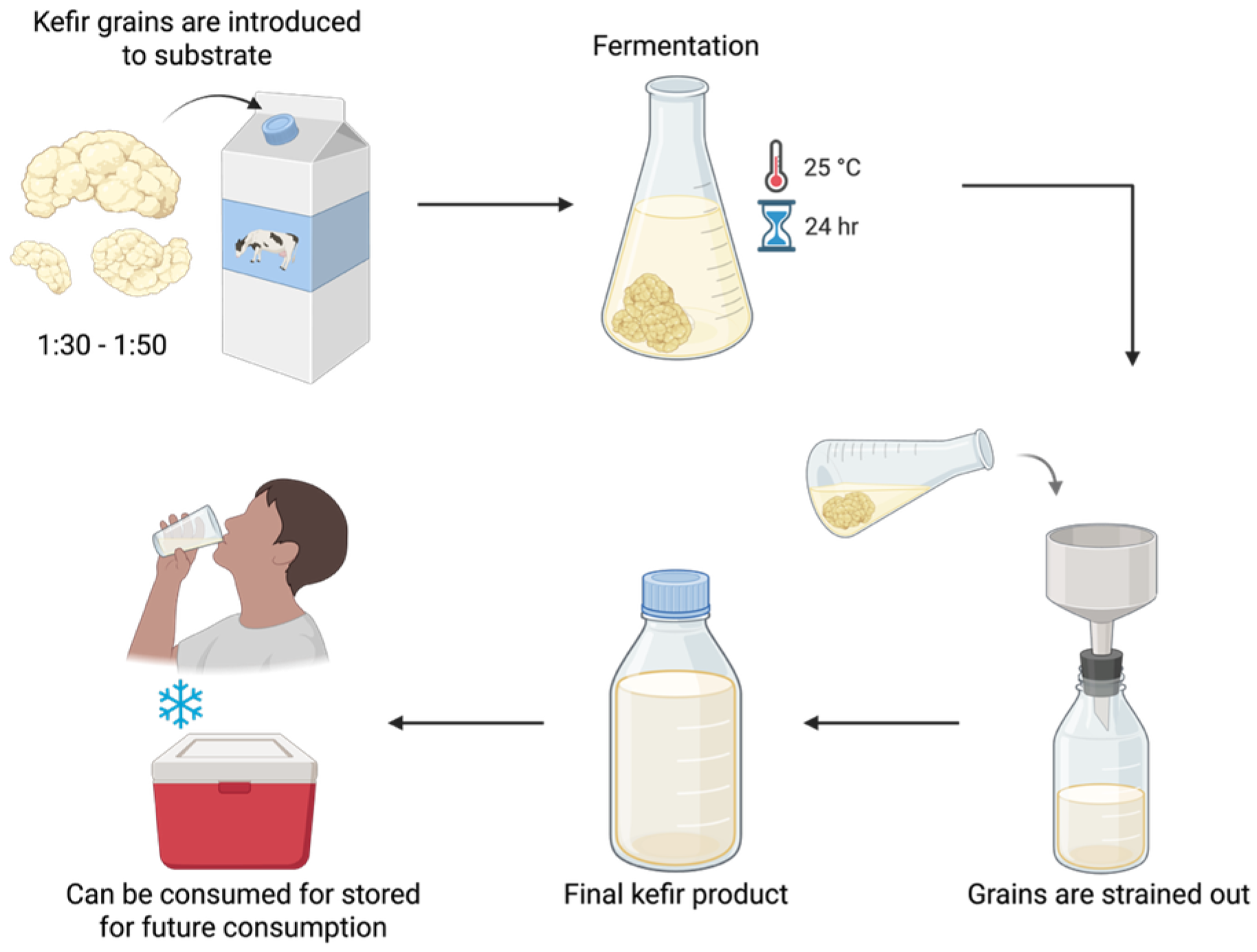
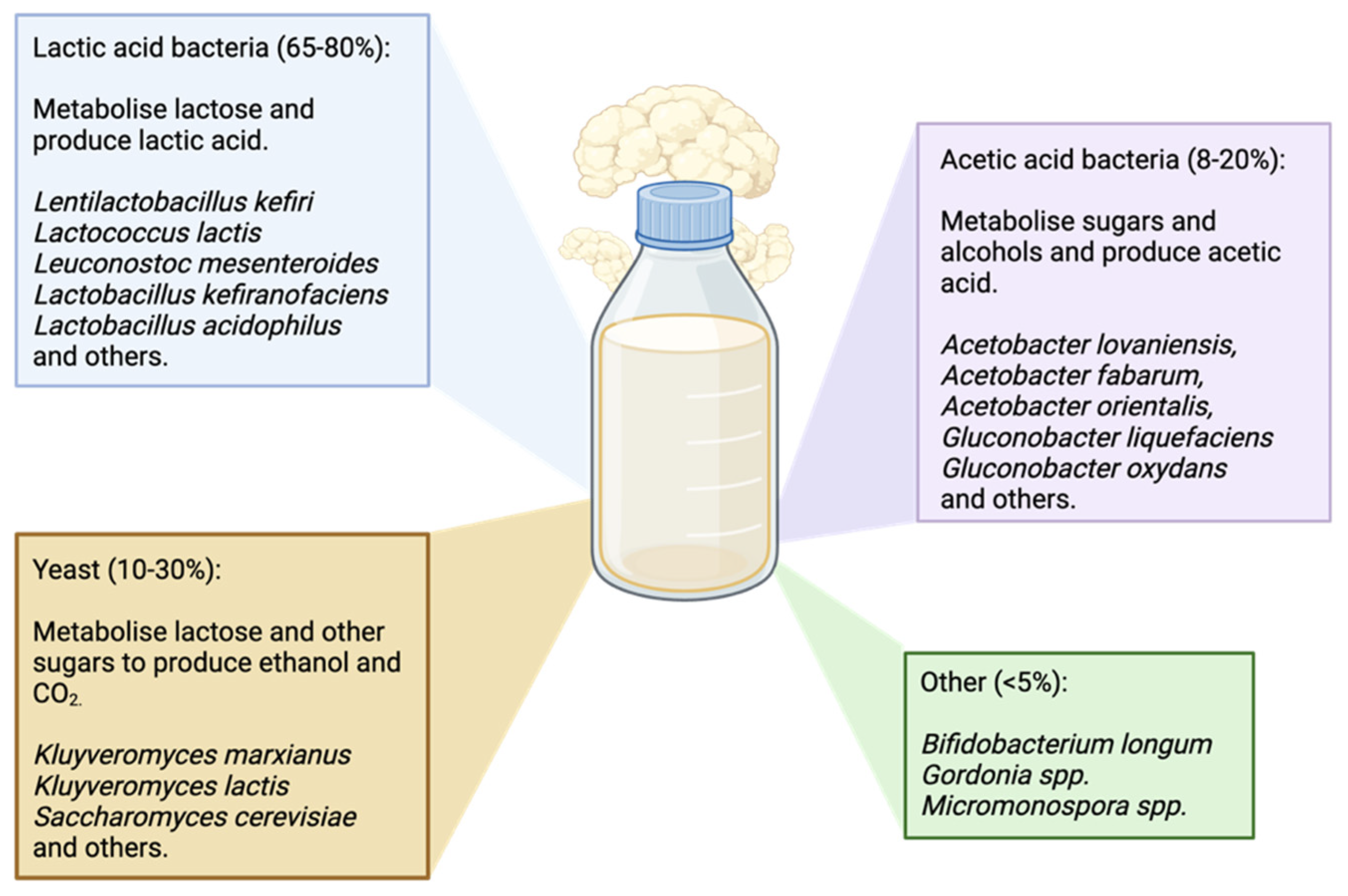
The Effects of Kefir on the Human Oral and Gut Microbiome




Abstract
1. Introduction
2. Methods
3. Results
4. Discussion
4.1. Changes in the Gut Microbiome Induced by Kefir Consumption
4.2. Changes in the Oral Microbiome Induced by Kefir Consumption
5. Conclusions
6. Future Directions
Author Contributions
Funding
Data Availability Statement
Conflicts of Interest
References
- Whipps, J.M.; Lewis, K.; Cooke, R. Mycoparasitism and plant disease control. Fungi Biol. Control Syst. 1988, 1988, 161–187. [Google Scholar]
- Hou, K.; Wu, Z.-X.; Chen, X.-Y.; Wang, J.-Q.; Zhang, D.; Xiao, C.; Zhu, D.; Koya, J.B.; Wei, L.; Li, J.; et al. Microbiota in health and diseases. Signal Transduct. Target. Ther. 2022, 7, 135. [Google Scholar] [CrossRef]
- Jandhyala, S.M.; Talukdar, R.; Subramanyam, C.; Vuyyuru, H.; Sasikala, M.; Nageshwar Reddy, D. Role of the normal gut microbiota. World J. Gastroenterol. 2015, 21, 8787–8803. [Google Scholar] [CrossRef]
- Flint, H.J. The impact of nutrition on the human microbiome. Nutr. Rev. 2012, 70, S10–S13. [Google Scholar] [CrossRef]
- Dethlefsen, L.; Huse, S.; Sogin, M.L.; Relman, D.A. The pervasive effects of an antibiotic on the human gut microbiota, as revealed by deep 16S rRNA sequencing. PLoS Biol. 2008, 6, e280. [Google Scholar] [CrossRef]
- Krishnan, K.; Chen, T.; Paster, B.J. A practical guide to the oral microbiome and its relation to health and disease. Oral Dis. 2017, 23, 276–286. [Google Scholar] [CrossRef]
- Fernandez, B.; Le Lay, C.; Jean, J.; Fliss, I. Growth, acid production and bacteriocin production by probiotic candidates under simulated colonic conditions. J. Appl. Microbiol. 2013, 114, 877–885. [Google Scholar] [CrossRef] [PubMed]
- Tejero-Sariñena, S.; Barlow, J.; Costabile, A.; Gibson, G.R.; Rowland, I. In vitro evaluation of the antimicrobial activity of a range of probiotics against pathogens: Evidence for the effects of organic acids. Anaerobe 2012, 18, 530–538. [Google Scholar] [CrossRef] [PubMed]
- Dobson, A.; Cotter, P.D.; Ross, R.P.; Hill, C. Bacteriocin production: A probiotic trait? Appl. Environ. Microbiol. 2012, 78, 1–6. [Google Scholar] [CrossRef] [PubMed]
- Isolauri, E.; Sütas, Y.; Kankaanpää, P.; Arvilommi, H.; Salminen, S. Probiotics: Effects on immunity123. Am. J. Clin. Nutr. 2001, 73, 444s–450s. [Google Scholar] [CrossRef]
- Cristofori, F.; Dargenio, V.N.; Dargenio, C.; Miniello, V.L.; Barone, M.; Francavilla, R. Anti-Inflammatory and Immunomodulatory Effects of Probiotics in Gut Inflammation: A Door to the Body. Front. Immunol. 2021, 12, 578386. [Google Scholar] [CrossRef]
- Guo, N.; Lv, L.L. Mechanistic insights into the role of probiotics in modulating immune cells in ulcerative colitis. Immun. Inflamm. Dis. 2023, 11, e1045. [Google Scholar] [CrossRef]
- Sarita, B.; Samadhan, D.; Hassan, M.Z.; Kovaleva, E.G. A comprehensive review of probiotics and human health-current prospective and applications. Front. Microbiol. 2025, 15, 1487641. [Google Scholar] [CrossRef]
- Liu, Y.; Tran, D.Q.; Rhoads, J.M. Probiotics in Disease Prevention and Treatment. J. Clin. Pharmacol. 2018, 58, S164–S179. [Google Scholar] [CrossRef]
- Liu, Y.; Miao, B.; Li, W.; Hu, X.; Bai, F.; Abuduresule, Y.; Liu, Y.; Zheng, Z.; Wang, W.; Chen, Z.; et al. Bronze Age cheese reveals human-Lactobacillus interactions over evolutionary history. Cell 2024, 187, 5891–5900.e8. [Google Scholar] [CrossRef]
- Beshkova, D.; Simova, E.; Simov, Z.; Frengova, G.; Spasov, Z. Pure cultures for making kefir. Food Microbiol. 2002, 19, 537–544. [Google Scholar] [CrossRef]
- Otles, S.; Cagindi, O. Kefir: A probiotic dairy-composition, nutritional and therapeutic aspects. Pak. J. Nutr. 2003, 2, 54–59. [Google Scholar] [CrossRef]
- Nilsson, L.-E.; Lyck, S.; Tamime, A.Y. Production of Drinking Products. In Fermented Milks; Blackwell Publishing Ltd.: Hoboken, NJ, USA, 2006; pp. 95–127. [Google Scholar]
- Spizzirri, U.G.; Loizzo, M.R.; Aiello, F.; Prencipe, S.A.; Restuccia, D. Non-dairy kefir beverages: Formulation, composition, and main features. J. Food Compos. Anal. 2023, 117, 105130. [Google Scholar] [CrossRef]
- La Torre, C.; Caputo, P.; Cione, E.; Fazio, A. Comparing Nutritional Values and Bioactivity of Kefir from Different Types of Animal Milk. Molecules 2024, 29, 2710. [Google Scholar] [CrossRef]
- Kök-Taş, T.; Seydim, A.C.; Özer, B.; Guzel-Seydim, Z.B. Effects of different fermentation parameters on quality characteristics of kefir. J. Dairy Sci. 2013, 96, 780–789. [Google Scholar] [CrossRef]
- de Oliveira Leite, A.M.; Miguel, M.A.; Peixoto, R.S.; Rosado, A.S.; Silva, J.T.; Paschoalin, V.M. Microbiological, technological and therapeutic properties of kefir: A natural probiotic beverage. Braz. J. Microbiol. 2013, 44, 341–349. [Google Scholar] [CrossRef]
- Londero, A.; Hamet, M.F.; De Antoni, G.L.; Garrote, G.L.; Abraham, A.G. Kefir grains as a starter for whey fermentation at different temperatures: Chemical and microbiological characterisation. J Dairy Res. 2012, 79, 262–271. [Google Scholar] [CrossRef]
- Apalowo, O.E.; Adegoye, G.A.; Mbogori, T.; Kandiah, J.; Obuotor, T.M. Nutritional Characteristics, Health Impact, and Applications of Kefir. Foods 2024, 13, 1026. [Google Scholar] [CrossRef]
- Bourrie, B.C.T.; Forgie, A.J.; Makarowski, A.; Cotter, P.D.; Richard, C.; Willing, B.P. Consumption of kefir made with traditional microorganisms resulted in greater improvements in LDL cholesterol and plasma markers of inflammation in males when compared to a commercial kefir: A randomized pilot study. Appl. Physiol. Nutr. Metab. 2023, 48, 668–677. [Google Scholar] [CrossRef]
- Kairey, L.; Leech, B.; El-Assaad, F.; Bugarcic, A.; Dawson, D.; Lauche, R. The effects of kefir consumption on human health: A systematic review of randomized controlled trials. Nutr. Rev. 2022, 81, 267–286. [Google Scholar] [CrossRef]
- Sindi, A.; Badsha, M.B.; Ünlü, G. Bacterial Populations in International Artisanal Kefirs. Microorganisms 2020, 8, 1318. [Google Scholar] [CrossRef] [PubMed]
- Rosa, D.D.; Dias, M.M.S.; Grześkowiak, Ł.M.; Reis, S.A.; Conceição, L.L.; Peluzio, M. Milk kefir: Nutritional, microbiological and health benefits. Nutr. Res. Rev. 2017, 30, 82–96. [Google Scholar] [CrossRef] [PubMed]
- Magalhães, K.T.; de Melo Pereira, G.V.; Campos, C.R.; Dragone, G.; Schwan, R.F. Brazilian kefir: Structure, microbial communities and chemical composition. Braz. J. Microbiol. 2011, 42, 693–702. [Google Scholar] [CrossRef] [PubMed]
- Simova, E.; Beshkova, D.; Angelov, A.; Hristozova, T.; Frengova, G.; Spasov, Z. Lactic acid bacteria and yeasts in kefir grains and kefir made from them. J. Ind. Microbiol. Biotechnol. 2002, 28, 1–6. [Google Scholar] [CrossRef] [PubMed]
- Ibrahim, S.A.; Ayivi, R.D.; Zimmerman, T.; Siddiqui, S.A.; Altemimi, A.B.; Fidan, H.; Esatbeyoglu, T.; Bakhshayesh, R.V. Lactic Acid Bacteria as Antimicrobial Agents: Food Safety and Microbial Food Spoilage Prevention. Foods 2021, 10, 3131. [Google Scholar] [CrossRef]
- Khan, I.; Bai, Y.; Zha, L.; Ullah, N.; Ullah, H.; Shah, S.R.H.; Sun, H.; Zhang, C. Mechanism of the Gut Microbiota Colonization Resistance and Enteric Pathogen Infection. Front. Cell. Infect. Microbiol. 2021, 11, 716299. [Google Scholar] [CrossRef]
- Bourrie, B.C.T.; Willing, B.P.; Cotter, P.D. The Microbiota and Health Promoting Characteristics of the Fermented Beverage Kefir. Front. Microbiol. 2016, 7, 647. [Google Scholar] [CrossRef]
- Alraddadi, F.A.J.; Ross, T.; Powell, S.M. Evaluation of the microbial communities in kefir grains and kefir over time. Int. Dairy J. 2023, 136, 105490. [Google Scholar] [CrossRef]
- Carasi, P.; Malamud, M.; Serradell, M.A. Potentiality of Food-Isolated Lentilactobacillus kefiri Strains as Probiotics: State-of-Art and Perspectives. Curr. Microbiol. 2021, 79, 21. [Google Scholar] [CrossRef]
- de Paula, A.T.; Beatriz Jeronymo-Ceneviva, A.; Todorov, S.D.; Penna, A.L.B. The Two Faces of Leuconostoc mesenteroides in Food Systems. Food Rev. Int. 2015, 31, 147–171. [Google Scholar] [CrossRef]
- Carasi, P.; Díaz, M.; Racedo, S.M.; De Antoni, G.; Urdaci, M.C.; Serradell Mde, L. Safety characterization and antimicrobial properties of kefir-isolated Lactobacillus kefiri. Biomed. Res. Int. 2014, 2014, 208974. [Google Scholar] [CrossRef]
- Taheur, F.B.; Fedhila, K.; Chaieb, K.; Kouidhi, B.; Bakhrouf, A.; Abrunhosa, L. Adsorption of aflatoxin B1, zearalenone and ochratoxin A by microorganisms isolated from Kefir grains. Int. J. Food Microbiol. 2017, 251, 1–7. [Google Scholar] [CrossRef]
- Gerbino, E.; Carasi, P.; Tymczyszyn, E.E.; Gómez-Zavaglia, A. Removal of cadmium by Lactobacillus kefir as a protective tool against toxicity. J. Dairy Res. 2014, 81, 280–287. [Google Scholar] [CrossRef] [PubMed]
- Vieira, C.P.; Cabral, C.C.; da Costa Lima, B.R.C.; Paschoalin, V.M.F.; Leandro, K.C.; Conte-Junior, C.A. Lactococcus lactis ssp. cremoris MRS47, a potential probiotic strain isolated from kefir grains, increases cis-9, trans-11-CLA and PUFA contents in fermented milk. J. Funct. Foods 2017, 31, 172–178. [Google Scholar] [CrossRef]
- Song, A.A.-L.; In, L.L.A.; Lim, S.H.E.; Rahim, R.A. A review on Lactococcus lactis: From food to factory. Microb. Cell Factories 2017, 16, 55. [Google Scholar] [CrossRef] [PubMed]
- Steidler, L.; Hans, W.; Schotte, L.; Neirynck, S.; Obermeier, F.; Falk, W.; Fiers, W.; Remaut, E. Treatment of murine colitis by Lactococcus lactis secreting interleukin-10. Science 2000, 289, 1352–1355. [Google Scholar] [CrossRef] [PubMed]
- Steidler, L.; Robinson, K.; Chamberlain, L.; Schofield, K.M.; Remaut, E.; Le Page, R.W.; Wells, J.M. Mucosal delivery of murine interleukin-2 (IL-2) and IL-6 by recombinant strains of Lactococcus lactis coexpressing antigen and cytokine. Infect. Immun. 1998, 66, 3183–3189. [Google Scholar] [CrossRef]
- Bermúdez-Humarán, L.G.; Kharrat, P.; Chatel, J.-M.; Langella, P. Lactococci and lactobacilli as mucosal delivery vectors for therapeutic proteins and DNA vaccines. Microb. Cell Factories 2011, 10, S4. [Google Scholar] [CrossRef]
- Zhang, X.; Hu, S.; Du, X.; Li, T.; Han, L.; Kong, J. Heterologous expression of carcinoembryonic antigen in Lactococcus lactis via LcsB-mediated surface displaying system for oral vaccine development. J. Microbiol. Immunol. Infect. 2016, 49, 851–858. [Google Scholar] [CrossRef]
- Bermúdez-Humarán, L.G.; Motta, J.-P.; Aubry, C.; Kharrat, P.; Rous-Martin, L.; Sallenave, J.-M.; Deraison, C.; Vergnolle, N.; Langella, P. Serine protease inhibitors protect better than IL-10 and TGF-β anti-inflammatory cytokines against mouse colitis when delivered by recombinant lactococci. Microb. Cell Factories 2015, 14, 26. [Google Scholar] [CrossRef]
- Prado, M.R.; Blandón, L.M.; Vandenberghe, L.P.S.; Rodrigues, C.; Castro, G.R.; Thomaz-Soccol, V.; Soccol, C.R. Milk kefir: Composition, microbial cultures, biological activities, and related products. Front. Microbiol. 2015, 6, 1177. [Google Scholar] [CrossRef] [PubMed]
- Slattery, C.; Cotter, P.D.; O’Toole, P.W. Analysis of Health Benefits Conferred by Lactobacillus Species from Kefir. Nutrients 2019, 11, 1252. [Google Scholar] [CrossRef]
- Plessas, S.; Nouska, C.; Mantzourani, I.; Kourkoutas, Y.; Alexopoulos, A.; Bezirtzoglou, E. Microbiological Exploration of Different Types of Kefir Grains. Fermentation 2017, 3, 1. [Google Scholar] [CrossRef]
- Guzel-Seydim, Z.B.; Gökırmaklı, Ç.; Greene, A.K. A comparison of milk kefir and water kefir: Physical, chemical, microbiological and functional properties. Trends Food Sci. Technol. 2021, 113, 42–53. [Google Scholar] [CrossRef]
- Lynch, K.M.; Wilkinson, S.; Daenen, L.; Arendt, E.K. An update on water kefir: Microbiology, composition and production. Int. J. Food Microbiol. 2021, 345, 109128. [Google Scholar] [CrossRef]
- Zhang, Q.; Guan, G.; Liu, J.; Hu, W.; Jin, P. Gut microbiota dysbiosis and decreased levels of acetic and propionic acid participate in glucocorticoid-induced glycolipid metabolism disorder. mBio 2024, 15, e0294323. [Google Scholar] [CrossRef] [PubMed]
- Tingirikari, J.M.R.; Sharma, A.; Lee, H.-J. Kefir: A fermented plethora of symbiotic microbiome and health. J. Ethn. Foods 2024, 11, 35. [Google Scholar] [CrossRef]
- Shen, Y.; Kim, D.-H.; Chon, J.-W.; Kim, H.; Song, K.-Y.; Seo, K.-H. Nutritional effects and antimicrobial activity of kefir (Grains). J. Milk Sci. Biotechnol. 2018, 36, 1–13. [Google Scholar] [CrossRef]
- Scheppach, W. Effects of short chain fatty acids on gut morphology and function. Gut 1994, 35, S35–S38. [Google Scholar] [CrossRef]
- Rivière, A.; Selak, M.; Lantin, D.; Leroy, F.; De Vuyst, L. Bifidobacteria and Butyrate-Producing Colon Bacteria: Importance and Strategies for Their Stimulation in the Human Gut. Front. Microbiol. 2016, 7, 979. [Google Scholar] [CrossRef]
- Li, M.; Ding, Y.; Wei, J.; Dong, Y.; Wang, J.; Dai, X.; Yan, J.; Chu, F.; Zhang, K.; Meng, F.; et al. Gut microbiota metabolite indole-3-acetic acid maintains intestinal epithelial homeostasis through mucin sulfation. Gut Microbes 2024, 16, 2377576. [Google Scholar] [CrossRef]
- Diosma, G.; Romanin, D.E.; Rey-Burusco, M.F.; Londero, A.; Garrote, G.L. Yeasts from kefir grains: Isolation, identification, and probiotic characterization. World J. Microbiol. Biotechnol. 2014, 30, 43–53. [Google Scholar] [CrossRef]
- Zanirati, D.F.; Abatemarco, M., Jr.; de Cicco Sandes, S.H.; Nicoli, J.R.; Nunes, Á.C.; Neumann, E. Selection of lactic acid bacteria from Brazilian kefir grains for potential use as starter or probiotic cultures. Anaerobe 2015, 32, 70–76. [Google Scholar] [CrossRef] [PubMed]
- Belloch, C.; Querol, A.; Barrio, E. Yeasts and Molds|Kluyveromyces spp. In Encyclopedia of Dairy Sciences, 2nd ed.; Fuquay, J.W., Ed.; Academic Press: San Diego, CA, USA, 2011; pp. 754–764. [Google Scholar]
- Parapouli, M.; Vasileiadis, A.; Afendra, A.S.; Hatziloukas, E. Saccharomyces cerevisiae and its industrial applications. AIMS Microbiol 2020, 6, 1–31. [Google Scholar] [CrossRef] [PubMed]
- Moslehi-Jenabian, S.; Pedersen, L.L.; Jespersen, L. Beneficial effects of probiotic and food borne yeasts on human health. Nutrients 2010, 2, 449–473. [Google Scholar] [CrossRef]
- Ansari, F.; Shohre, A.S.; Ali, B.; Maedeh, J.S.; Mojtaba, Z.; Taghi, K.M.; Pourjafar, H. Health-promoting properties of Saccharomyces cerevisiae var. boulardii as a probiotic; characteristics, isolation, and applications in dairy products. Crit. Rev. Food Sci. Nutr. 2023, 63, 457–485. [Google Scholar] [CrossRef] [PubMed]
- Guslandi, M. Role of probiotics in Crohn’s disease and in pouchitis. J. Clin. Gastroenterol. 2015, 49, S46–S49. [Google Scholar] [CrossRef]
- Leventogiannis, K.; Gkolfakis, P.; Spithakis, G.; Tsatali, A.; Pistiki, A.; Sioulas, A.; Giamarellos-Bourboulis, E.J.; Triantafyllou, K. Effect of a preparation of four probiotics on symptoms of patients with irritable bowel syndrome: Association with intestinal bacterial overgrowth. Probiotics Antimicrob. Proteins 2019, 11, 627–634. [Google Scholar] [CrossRef]
- Xie, N.; Zhou, T.; Li, B. Kefir yeasts enhance probiotic potentials of Lactobacillus paracasei H9: The positive effects of coaggregation between the two strains. Food Res. Int. 2012, 45, 394–401. [Google Scholar] [CrossRef]
- Wong, C.B.; Odamaki, T.; Xiao, J.-z. Beneficial effects of Bifidobacterium longum subsp. longum BB536 on human health: Modulation of gut microbiome as the principal action. J. Funct. Foods 2019, 54, 506–519. [Google Scholar] [CrossRef]
- Patterson, E.; Tan, H.T.T.; Groeger, D.; Andrews, M.; Buckley, M.; Murphy, E.F.; Groeger, J.A. Bifidobacterium longum 1714 improves sleep quality and aspects of well-being in healthy adults: A randomized, double-blind, placebo-controlled clinical trial. Sci. Rep. 2024, 14, 3725. [Google Scholar] [CrossRef]
- Öneş, E.; Zavotçu, M.; Nisan, N.; Baş, M.; Sağlam, D. Effects of Kefir Consumption on Gut Microbiota and Athletic Performance in Professional Female Soccer Players: A Randomized Controlled Trial. Nutrients 2025, 17, 512. [Google Scholar] [CrossRef]
- Çıtar Dazıroğlu, M.E.; Acar Tek, N.; Cevher Akdulum, M.F.; Yılmaz, C.; Yalınay, A.M. Effects of kefir consumption on gut microbiota and health outcomes in women with polycystic ovary syndrome. Food Sci. Nutr. 2024, 12, 5632–5646. [Google Scholar] [CrossRef] [PubMed]
- Gupta, V.K.; Rajendraprasad, S.; Ozkan, M.; Ramachandran, D.; Ahmad, S.; Bakken, J.S.; Laudanski, K.; Gajic, O.; Bauer, B.; Zec, S.; et al. Safety, feasibility, and impact on the gut microbiome of kefir administration in critically ill adults. BMC Med. 2024, 22, 80. [Google Scholar] [CrossRef]
- Walsh, L.H.; Walsh, A.M.; Garcia-Perez, I.; Crispie, F.; Costabile, A.; Ellis, R.; Finlayson, J.; Finnegan, L.A.; Claesson, M.J.; Holmes, E.; et al. Comparison of the relative impacts of acute consumption of an inulin-enriched diet, milk kefir or a commercial probiotic product on the human gut microbiome and metabolome. npj Sci. Food 2023, 7, 41. [Google Scholar] [CrossRef]
- Bellikci-Koyu, E.; Sarer-Yurekli, B.P.; Akyon, Y.; Aydin-Kose, F.; Karagozlu, C.; Ozgen, A.G.; Brinkmann, A.; Nitsche, A.; Ergunay, K.; Yilmaz, E.; et al. Effects of Regular Kefir Consumption on Gut Microbiota in Patients with Metabolic Syndrome: A Parallel-Group, Randomized, Controlled Study. Nutrients 2019, 11, 2089. [Google Scholar] [CrossRef]
- Yılmaz, İ.; Dolar, M.E.; Özpınar, H. Effect of administering kefir on the changes in fecal microbiota and symptoms of inflammatory bowel disease: A randomized controlled trial. Turk. J. Gastroenterol. 2019, 30, 242–253. [Google Scholar] [CrossRef]
- Reddy, S.; Madhu, V.; Punithavathy, R.; Satyam, M.; Chowdary, U.K.; Mythraiye, R. Comparative Evaluation of Efficacy of Kefir Milk Probiotic Curd and Probiotic Drink on Streptococcus mutans in 8–12-year-old Children: An In Vivo Study. Int. J. Clin. Pediatr. Dent. 2021, 14, 120–127. [Google Scholar] [CrossRef]
- Alp, S.; Baka, Z.M. Effects of probiotics on salivary Streptecoccus mutans and Lactobacillus levels in orthodontic patients. Am. J. Orthod. Dentofac. Orthop. 2018, 154, 517–523. [Google Scholar] [CrossRef] [PubMed]
- Ghasempour, M.; Sefdgar, S.; Moghadamnia, A.A.; Ghadimi, R.; Gharekhani, S.; Shirkhani, L. Comparative study of Kefir yogurt-drink and sodium fluoride mouth rinse on salivary mutans streptococci. J. Contemp. Dent. Pract. 2014, 15, 214–217. [Google Scholar] [PubMed]
- Cogulu, D.; Topaloglu-Ak, A.; Caglar, E.; Sandalli, N.; Karagozlu, C.; Ersin, N.; Yerlikaya, O. Potential effects of a multistrain probiotic-kefir on salivary Streptococcus mutans and Lactobacillus spp. J. Dent. Sci. 2010, 5, 144–149. [Google Scholar] [CrossRef]
- Maruta, H.; Abe, R.; Yamashita, H. Effect of Long-Term Supplementation with Acetic Acid on the Skeletal Muscle of Aging Sprague Dawley Rats. Int. J. Mol. Sci. 2022, 23, 4691. [Google Scholar] [CrossRef] [PubMed]
- Yang, Y.; Luo, L.; Li, Y.; Shi, X.; Li, C.; Chai, J.; Jiang, S.; Zheng, R. Succinic Acid Improves the Metabolism of High-Fat Diet-Induced Mice and Promotes White Adipose Browning. Nutrients 2024, 16, 3828. [Google Scholar] [CrossRef]
- Lendvai, A.; Béke, G.; Hollósi, E.; Becker, M.; Völker, J.M.; Schulze Zur Wiesche, E.; Bácsi, A.; Bíró, T.; Mihály, J. N,N-Dimethylglycine Sodium Salt Exerts Marked Anti-Inflammatory Effects in Various Dermatitis Models and Activates Human Epidermal Keratinocytes by Increasing Proliferation, Migration, and Growth Factor Release. Int. J. Mol. Sci. 2023, 24, 11264. [Google Scholar] [CrossRef]



| Reference, Country | Participants | Treatments | Dosage | Treatment Duration | Kefir Product and Substrate Used | Sampling Methods | Identification Methods | Key Findings | Limitations |
|---|---|---|---|---|---|---|---|---|---|
| Öneş et al., 2025 [69] Turkey | Professional female soccer players n (intervention) = 12 n (control) = 9 Age(intervention) = 24.42 ± 2.52 years Age (control) = 22.14 ± 3.61 years Gender (intervention) = 100% female Gender (control) = 100% female | Intervention received kefir; control received nothing. | 200 mL once daily | 4 weeks | Altınkılıç Lactose-free Kefir, cow’s milk | External faecal sample processed using DiaRex stool senomic DNA extraction kit | V3–V4 region of 16S rRNA | ↑ Microbial richness and diversity in intervention group only (ns) ↑ Finishing speed and VO2max (ns) Minor changes in relative abundance in intervention group only (ns) | Short duration; small sample size; no placebo control; no wash-out period; no analysis of dose-dependent effects; specific population |
| Dazıroğlu et al., 2024 [70] Turkey | Females with PCOS n (intervention) = 17 Age (intervention) = 24.7 ± 5.44 years Gender (intervention) = 100% female | Participants received kefir | 250 mL once daily | 8 weeks | Authors formulated their own kefir through traditional practices using grains from Danem, substrate unclear | External faecal sample processed using DiaRex stool genomic DNA extraction kit | V3-V4 region of 16S rRNA | ↓ IL-6 ↑ Bacilli ↑ Lactococcus ↑ Holdemania | Small sample size; no placebo control; no wash-out period; no analysis of dose dependent effects |
| Gupta et al., 2024 [71] USA | Critically ill males and females n (intervention) = 54 n (microbiota analysis) = 13 Age (intervention) = 64.6 ± 15.3 years Gender (intervention) = 39% female | Patients received kefir | 60 mL, followed by 120 mL after 12 h, then 240 mL daily | Until discharge of patient | Lifeway Foods Kefir, whole cow’s milk | External faecal sample processed using Qiagen DNeasy 96 PowerSoil pro QIAcube HT kit | Shotgun metagenomic sequencing | ↑ Lactobacillus plantarum, L. reuteri, and L. rhamnosus from T1 to T2 ↑ GMWI scores in critically ill adults. ↓ Shannon diversity and species richness Administration was safe and feasible | Small sample size; no placebo control; no wash-out period; no analysis of dose-dependent effects; duration of intervention limited by LOS and death; high rate of antibiotic use |
| Walsh et al., 2023 [72] Ireland | Healthy individuals n (inulin) = 10 n (probiotic) = 10 n (kefir) = 9 Age (inulin) = NR Age (probiotic) = NR Age (kefir) = NR Gender (inulin) = NR Gender (probiotic) = NR Gender (kefir) = NR | Inulin group received inulin; kefir group received kefir; probiotic group received probiotic | 247 mL once daily | 4 weeks | Nourish Kefir, substrate unclear | External faecal sample processed using Qiagen QIAamp DNA stool mini kit | Shotgun metagenomic sequencing | ↑ Lactococcus raffinolactis in kefir group only (ns) | Short duration; small sample size; no placebo control; no wash-out period; no analysis of dose-dependent effects |
| Bellikci-Koyu et al., 2019 [73] Turkey | Males and females with metabolic syndrome n (intervention) = 12 n (control) = 10 Age (intervention) = 52 (range 47.5–60.5) Age (control) = 53 (range 45–60) Gender (intervention) = 83% female Gender (control) = 60% female | Intervention received kefir; control received unfermented milk | 180 mL once daily | 12 weeks | Authors formulated their own kefir using grains from Danisco, full-fat whole cow’s milk | External faecal sample processed using Qiagen QIAamp DNA stool mini kit | V3-V4 region of 16S rRNA | ↑ Actinobacteria; ↑ Lactobacillales (ns) Positive changes in fasting insulin, TNF-a, IFN-y and blood pressure in kefir group (ns between groups) | Small sample size; no wash-out period; no analysis of dose-dependent effects; dietary confounding; no mechanistic explanation for changes in biological parameters studied |
| Yılmaz et al., 2019 [74] Turkey | Individuals with IBD n (intervention, CD) = 10 n (intervention, UC) = 15 n (control, CD) = 10 n (control, UC) = 10 Age (intervention, CD) = 33 (range 24–65) Age (intervention, UC) = 33 (range 19–68) Age (control, CD) = 42 (range 21–66) Age (control, UC) = 43.5 (range 29–76) Gender (intervention, CD) = 60% female Gender (intervention, UC) = 40% female Gender (control, CD) = 40% female Gender (control, UC) = 60% female | Intervention groups received kefir; control received nothing. | 400 mL twice daily | 4 weeks | NR, substrate unclear | External faecal sample processed using Qiagen QIAamp DNA stool mini kit | Quantitative polymerase chain reaction and Sanger sequencing | ↑ Lactobacillus (CD/UC patients in kefir group only) | Short duration; small sample size; no placebo control; no wash-out period; no analysis of dose-dependent effects; analysis limited to Lactobacillus; statistically significant differences in levels of faecal Lactobacillus between UC control and UC treatment groups at baseline |
| Reference, Country | Participants | Treatments | Dosage | Treatment Duration | Kefir Product and Substrate Used | Sampling Methods | Identification Methods | Key Findings | Limitations |
|---|---|---|---|---|---|---|---|---|---|
| Reddy et al., 2021 [75] India | Children with carious lesions post-restoration n = 80 n (kefir) = NR n (probiotic curd) = NR n (probiotic drink) = NR n (control) = NR Age (kefir) = NR Age (probiotic curd) = NR Age (probiotic drink) = NR Age (control) = NR Gender (kefir) = NR Gender (probiotic curd) = NR Gender (probiotic drink) = NR Gender (control) = NR | Kefir group received kefir; probiotic curd group received probiotic curd; probiotic drink group received probiotic drinks; control group received nothing. | 100 mL once daily | 4 weeks | NR, substrate unclear | Unstimulated saliva sample | Culture-based identification | ↓ Salivary Streptococcus mutans in kefir compared to the control group at 4 weeks. | Group allocation NR; no wash-out period; limited outcome measures; no analysis of dose-dependent effects; dietary and behavioural confounding; control group had higher CFU Streptococcus mutans at baseline. |
| Alp et al., 2018 [76] Turkey | Children undergoing orthodontic treatment n (kefir) = 15 n (probiotic toothpaste) = 15 n (control) = 15 Age (kefir) = 14.3 ± 1.7 years Age (probiotic toothpaste) = 14.9 ± 2.0 years Age (control) = 14.1 ± 2.1 years Gender (kefir) = 47% female Gender (probiotic toothpaste) = 67% female Gender (control) = 67% female | Kefir group received kefir; probiotic toothpaste group brushed with probiotic toothpaste; control group brushed with regular toothpaste | 100 mL twice daily | 6 weeks | Atatürk Orman Çiftliği (Atatürk Forest Farm) Kefir, substrate unclear | Stimulated saliva samples | Caries risk test | ↓ Salivary Streptococcus mutans in kefir and probiotic toothpaste groups compared to control at 3 weeks and 6 weeks. | Short duration; small sample size; no wash-out period; limited outcome measures; no analysis of dose-dependent effects; dietary and behavioural confounding. |
| Ghasempour et al., 2014 [77] Iran | Healthy individuals n = 22 n (Group A) = 11 n (Group B) = 11 Age (Group A) = NR Age (Group B) = NR Gender (Group A) = NR Gender (Group B) = NR | Crossover design. Participants in group A received kefir for two weeks, then 0.05% sodium fluoride for two weeks. Participants in group B received the same treatments in a reverse-parallel manner. | 100 mL once daily | 2 weeks | Authors formulated their own kefir, although did not specify manufacturer of grains used, cow’s milk. | Unstimulated saliva sample | Culture-based identification | ↓ Salivary Streptococcus mutans in intervention and control compared with baseline after 2 weeks. Equal inhibitory effect was found between study groups. | Short duration; small sample size; no analysis of baseline characteristics; limited outcome measures; no analysis of dose-dependent effects; dietary confounding. |
| Cogulu et al., 2010 [78] Turkey | Healthy individuals n (intervention, single dose) = 35 n (intervention, double dose) = 35 n (control) = 34 Age (intervention single dose) = NR Age (intervention double dose) = NR Age (control) = NR Gender (intervention single dose) = NR Gender (intervention double dose) = NR Gender (control) = NR | Single dose group received kefir; double dose received twice the amount of kefir twice daily for 3 weeks; control group received 100 mL milk once daily for 3 weeks. | 100 mL; once daily for single-dose, twice daily for double-dose | 3 weeks | Sakipaga Kefir, substrate unclear | Stimulated saliva samples | Caries risk test | ↓ Salivary Streptococcus mutans in double-dose compared to single-dose and control after 3 weeks. ↓ Salivary Lactobacillus in double-dose compared to single-dose and control after 3 weeks. | Short duration; no wash-out period; limited outcome measures; dietary and behavioural confounding. |
Disclaimer/Publisher’s Note: The statements, opinions and data contained in all publications are solely those of the individual author(s) and contributor(s) and not of MDPI and/or the editor(s). MDPI and/or the editor(s) disclaim responsibility for any injury to people or property resulting from any ideas, methods, instructions or products referred to in the content. |
© 2025 by the authors. Licensee MDPI, Basel, Switzerland. This article is an open access article distributed under the terms and conditions of the Creative Commons Attribution (CC BY) license (https://creativecommons.org/licenses/by/4.0/).
Share and Cite
Black, E.G.; Bugarcic, A.; Lauche, R.; El-Omar, E.; El-Assaad, F. The Effects of Kefir on the Human Oral and Gut Microbiome. Nutrients 2025, 17, 3861. https://doi.org/10.3390/nu17243861
Black EG, Bugarcic A, Lauche R, El-Omar E, El-Assaad F. The Effects of Kefir on the Human Oral and Gut Microbiome. Nutrients. 2025; 17(24):3861. https://doi.org/10.3390/nu17243861
Chicago/Turabian StyleBlack, Eleni Grace, Andrea Bugarcic, Romy Lauche, Emad El-Omar, and Fatima El-Assaad. 2025. "The Effects of Kefir on the Human Oral and Gut Microbiome" Nutrients 17, no. 24: 3861. https://doi.org/10.3390/nu17243861
APA StyleBlack, E. G., Bugarcic, A., Lauche, R., El-Omar, E., & El-Assaad, F. (2025). The Effects of Kefir on the Human Oral and Gut Microbiome. Nutrients, 17(24), 3861. https://doi.org/10.3390/nu17243861