Consensus Document of the Spanish Nutrition Society (SEÑ) on Nutritional Strategies in Sports

 ,
,  , ,
, ,  , ,
, ,  , ,
, ,  and
and 
Abstract
1. Introduction
- To critically and comprehensively review the principal dietary strategies used in sports, the scientific foundations, physiological mechanisms, and contexts of their applications are described.
- To analyze the impact of each strategy on sports performance, its application in endurance sports, strength and power sports, sprint, aesthetic, weight-category, and team sports, while considering the specific characteristics of each type of sport.
- To provide practical and applicable recommendations based on the best available evidence for the safe and effective implementation of each strategy, highlighting the importance of individualization and professional supervision.
- To identify current controversies and methodological limitations and propose future lines of research that will strengthen the scientific foundation and improve both clinical and sports practice.
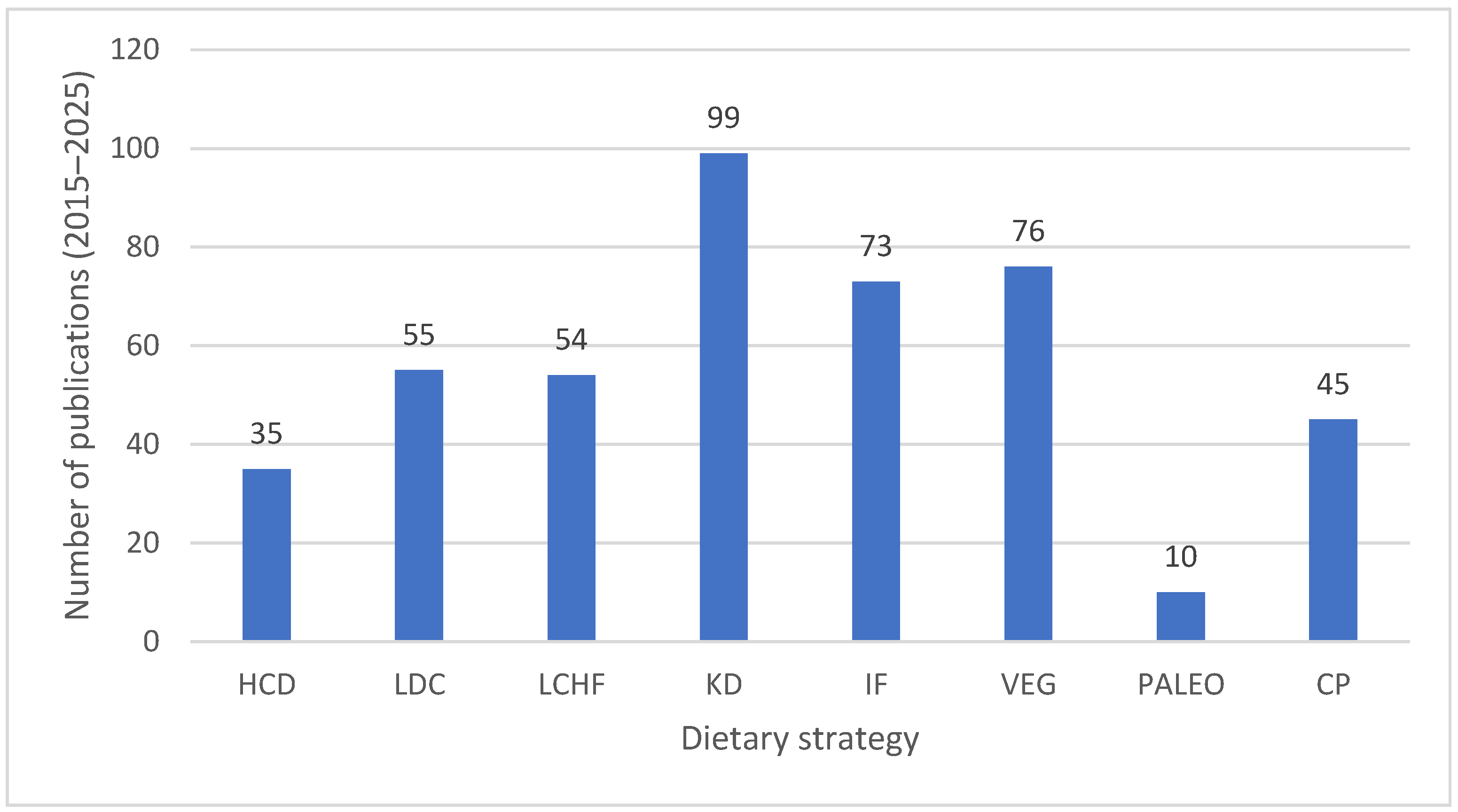
2. Dietary Strategies Used in Sports
- (i)
- the recommended context of application,
- (ii)
- potential benefits,
- (iii)
- limitations or risks, and
- (iv)
- key practical recommendations.

| Strategy (Abbreviation) | Recommended Context | Potential Benefits | Limitations/Risks | Key Recommendations |
|---|---|---|---|---|
| High-carbohydrate diet (HCD) | High glycolytic demand; rapid recovery needs; prolonged/intense sessions. Common in endurance and team sports. | Maximizes glycogen stores; supports high-intensity performance and recovery. | Excess caloric intake, if poorly adjusted, may be unnecessary for low-intensity training. | Adjust intake to session volume and intensity; emphasize timing. |
| Low-carbohydrate diet (LCD) | Aerobic base training; metabolic-flexibility goals; fat-loss phases; ultra-endurance preparation. | Increases fat oxidation and metabolic flexibility. | Reduced anaerobic performance; micronutrient-deficiency risk. | Use short-term; avoid in high-intensity phases; monitor adaptation. |
| Low-carbohydrate high-fat diet (LCHF) | Same contexts as LCD, but with higher fat intake and more pronounced metabolic shifting. | Greater reliance on fat oxidation; possible endurance benefits in specific contexts. | Poor tolerance at high intensities; adherence challenges; potential nutrient deficiencies. | Implement with monitoring; assess training demands carefully. |
| Ketogenic diet (KD) | Weight reduction; specific metabolic management; selected preparatory phases. | Promotes fat oxidation; decreases fat mass; may reduce inflammation. | Impairs high-intensity performance; gastrointestinal issues; nutrient deficits. | Apply short cycles; require supervision; track biomarkers. |
| Intermittent fasting (IF) | Body recomposition; metabolic-health improvement; recreational athletes; off-season phases. | Fat loss; improved metabolic markers; enhanced insulin sensitivity. | Risk of lean-mass loss; reduced tolerance to heavy training loads. | Individualize; avoid during competition periods or very intense training. |
| Vegetarian/Vegan diet (VEG) | Cardiovascular health; ethical/sustainability motivations; structured long-term planning. | Compatible with performance; lower cardiovascular risk. | Risk of B12, iron, and omega-3 deficiencies; lower energy density; sustainability varies. | Ensure complete proteins; monitor critical nutrients; supplement when needed. |
| Paleolithic diet (PALEO) | Body-composition improvement; glycemic management; off-season phases. | Nutrient-dense foods; supports glycemic control. | Restricted carbohydrate intake; potential calcium and vitamin D inadequacy. | Avoid during high-intensity cycles; individualize planning. |
| Carbohydrate periodization (CP) | Enhancing metabolic adaptations by modulating carbohydrate availability across sessions. | Improves metabolic efficiency and substrate flexibility. | Complex application; risk of excessive fatigue if misapplied. | Use in selected sessions (“train-low”); alternate with high-availability days. |
2.1. High-Carbohydrate Diets (HCD)
2.1.1. General Description and Scientific Foundations
2.1.2. Impact on Athletic Performance
Endurance Sports
Strength and Power Sports
Team Sports
Sprint Sports
Aesthetic Sports
Weight-Category Sports
2.1.3. Diet-Specific Limitations
2.1.4. Practical Recommendations
Daily Intake of CHO
Intake During Exercise
Recovery
Practical Aspects
2.1.5. Considerations
2.2. Low-Carbohydrate Diets (LCD)
2.2.1. General Description and Scientific Principles
2.2.2. Impact on Athletic Performance
Endurance Sports
Strength and Power Sports
Team Sports
Sprint Sports
Aesthetic Sports
Weight-Category Sports
2.2.3. Diet-Specific Limitations
2.2.4. Practical Recommendations
2.3. Ketogenic Diet (KD)
2.3.1. Overview and Scientific Principles
2.3.2. Impact on Athletic Performance
Endurance Sports
Strength and Power Sports
Team Sports
Sprint Sports
Aesthetic Sports
Weight-Category Sports
2.3.3. Diet-Specific Limitations
2.3.4. Practical Recommendations
2.4. Intermittent Fasting (IF)
2.4.1. General Description and Scientific Foundations
2.4.2. Impact on Athletic Performance
Endurance Sports
Strength and Power Sports
Team Sports
Sprint Sports
Aesthetic Sports
Weight-Category Sports
2.4.3. Diet-Specific Limitations
2.4.4. Practical Recommendations
2.5. Diets Based on Plant Foods (VEG)
2.5.1. General Description and Scientific Foundations
2.5.2. Impact on Athletic Performance
Endurance Sports
Strength and Power Sports
Team Sports
Sprint Sports
Aesthetic Sports
Weight-Category Sports
2.5.3. Diet-Specific Limitations
2.5.4. Practical Recommendations
Proteins
Omega-3 Fatty Acids
Vitamin B12
Vitamin D and Calcium
Iron and Zinc
Iodine
Specific Supplements
Monitoring and Control
2.6. Paleolithic Diets (PALEO)
2.6.1. General Description and Scientific Basis
2.6.2. Impact on Athletic Performance
Endurance Sports
Strength and Power Sports
Team Sports
Sprint Sports
Aesthetic Sports
Weight-Category Sports
2.6.3. Diet-Specific Limitations
2.6.4. Practical Recommendations
2.7. Carbohydrate Periodization (CP)
2.7.1. General Overview and Scientific Foundations
- “Sleep low”: perform an evening session at high intensity without subsequent CHO replenishment, sleeping with reduced glycogen, followed by a fasted session the next day [87].
- Double training session: two sessions on the same day, consuming little CHO between them, to train the second session with low reserves [119].
2.7.2. Impact on Athletic Performance
Endurance Sports
Strength and Power Sports
Team Sports
Sprint Sports
Aesthetic Sports
Weight-Category Sports
2.7.3. Diet-Specific Limitations
2.7.4. Practical Recommendations
3. Key Factors in the Application of Dietary Strategies
3.1. Individual Needs and Biological Variability
3.2. Type of Sport and Effort Profile
3.3. Health Status and Clinical Situation
3.4. Nutritional Periodization
3.5. Body Composition and Aesthetic Goals
3.6. Psychological Factors and Adherence
3.7. Control and Monitoring
3.8. Ethical Considerations and Sustainability
3.9. Sex-Specific Considerations in Female Athletes
4. Controversies and Limitations
4.1. Heterogeneity in Studies and Limited Evidence
4.2. Inter-Individual Variability
4.3. Potential Risks and Nutritional Deficiencies
4.4. Influence of External and Social Factors
4.5. Controversies Surrounding Timing and Periodization
4.6. Difficulty in Evaluating Performance
4.7. Integrative Perspective and Future Outlook
5. Conclusions and Final Recommendations
5.1. Individualization as a Key Principle
5.2. Importance of Adequate Carbohydrate Intake
5.3. Role of Low-Carbohydrate and Ketogenic Diets
5.4. Intermittent Fasting and Time-Restricted Eating
5.5. Vegetarian and Vegan Diets
5.6. Paleolithic Diet
5.7. Role of Supervision and Monitoring
5.8. Final Considerations and Future Lines of Research
- Longitudinal studies in real training and competition conditions.
- Evaluating the long-term impact of specific strategies on health and performance.
- Exploring the role of genetics and gut microbiota in the dietary response.
- Analysis of the interaction between nutrition, chronobiology, and circadian rhythm.
- Assessing sustainable and ethical dietary strategies in high-performance athletes.
Author Contributions
Funding
Acknowledgments
Conflicts of Interest
References
- Thomas, D.; Erdman, K.; Burke, L. American College of Sports Medicine Joint Position Statement. Nutrition and Athletic Performance. Med. Sci. Sports Exerc. 2016, 48, 543–568. [Google Scholar] [CrossRef]
- Kerksick, C.M.; Arent, S.; Schoenfeld, B.J.; Stout, J.R.; Campbell, B.; Wilborn, C.D.; Taylor, L.; Kalman, D.; Smith-Ryan, A.E.; Kreider, R.B.; et al. International Society of Sports Nutrition Position Stand: Nutrient Timing. J. Int. Soc. Sports Nutr. 2017, 14, 33. [Google Scholar] [CrossRef]
- González-Gross, M. Nutrición Deportiva: Desde La Fisiología a La Práctica, 1st ed.; Editorial Médica Panamericana: Madrid, Spain, 2021; ISBN 978-84-9110-604-6. [Google Scholar]
- Phillips, S.M.; van Loon, L.J.C. Dietary Protein for Athletes: From Requirements to Optimum Adaptation. J. Sports Sci. 2011, 29, S29–S38. [Google Scholar] [CrossRef] [PubMed]
- Burke, L.M.; Hawley, J.A.; Wong, S.H.S.; Jeukendrup, A.E. Carbohydrates for Training and Competition. J. Sports Sci. 2011, 29, S17–S27. [Google Scholar] [CrossRef]
- Marquet, L.A.; Hausswirth, C.; Molle, O.; Hawley, J.A.; Burke, L.M.; Tiollier, E.; Brisswalter, J. Periodization of Carbohydrate Intake: Short-Term Effect on Performance. Nutrients 2016, 8, 755. [Google Scholar] [CrossRef]
- Holway, F.E.; Spriet, L.L. Sport-Specific Nutrition: Practical Strategies for Team Sports. J. Sports Sci. 2011, 29, 115–125. [Google Scholar] [CrossRef]
- Maughan, R.J.; Burke, L.M.; Dvorak, J.; Larson-Meyer, D.E.; Peeling, P.; Phillips, S.M.; Rawson, E.S.; Walsh, N.P.; Garthe, I.; Geyer, H.; et al. IOC Consensus Statement: Dietary Supplements and the High-Performance Athlete. Br. J. Sports Med. 2018, 52, 439–455. [Google Scholar] [CrossRef]
- Jeukendrup, A.E. Periodized Nutrition for Athletes. Sports Med. 2017, 47, 51–63. [Google Scholar] [CrossRef]
- Gejl, K.D.; Nybo, L. Performance Effects of Periodized Carbohydrate Restriction in Endurance Trained Athletes—A Systematic Review and Meta-Analysis. J. Int. Soc. Sports Nutr. 2021, 18, 37. [Google Scholar] [CrossRef]
- Baroni, L.; Pelosi, E.; Giampieri, F.; Battino, M. The VegPlate for Sports: A Plant-Based Food Guide for Athletes. Nutrients 2023, 15, 1746. [Google Scholar] [CrossRef]
- Burke, L.M.; Ross, M.L.; Garvican-Lewis, L.A.; Welvaert, M.; Heikura, I.A.; Forbes, S.G.; Mirtschin, J.G.; Cato, L.E.; Strobel, N.; Sharma, A.P.; et al. Low Carbohydrate, High Fat Diet Impairs Exercise Economy and Negates the Performance Benefit from Intensified Training in Elite Race Walkers. J. Physiol. 2017, 595, 2785–2807. [Google Scholar] [CrossRef]
- O’Brien, L.T. Keto or Carbo? Low- versus High-Carbohydrate Diets for Fuelling Elite Endurance Sport Performance. J. Physiol. 2021, 599, 731–732. [Google Scholar] [CrossRef] [PubMed]
- Volek, J.S.; Freidenreich, D.J.; Saenz, C.; Kunces, L.J.; Creighton, B.C.; Bartley, J.M.; Davitt, P.M.; Munoz, C.X.; Anderson, J.M.; Maresh, C.M.; et al. Metabolic Characteristics of Keto-Adapted Ultra-Endurance Runners. Metabolism 2016, 65, 100–110. [Google Scholar] [CrossRef] [PubMed]
- Damasceno, Y.O.; Leitão, C.V.F.S.; De Oliveira, G.M.; Andrade, F.A.B.; Pereira, A.B.; Viza, R.S.; Correia, R.C.; Campos, H.O.; Drummond, L.R.; Leite, L.H.R.; et al. Plant-Based Diets Benefit Aerobic Performance and Do Not Compromise Strength/Power Performance: A Systematic Review and Meta-Analysis. Br. J. Nutr. 2024, 131, 829–840. [Google Scholar] [CrossRef] [PubMed]
- Moro, T.; Tinsley, G.; Longo, G.; Grigoletto, D.; Bianco, A.; Ferraris, C.; Guglielmetti, M.; Veneto, A.; Tagliabue, A.; Marcolin, G.; et al. Time-Restricted Eating Effects on Performance, Immune Function, and Body Composition in Elite Cyclists: A Randomized Controlled Trial. J. Int. Soc. Sports Nutr. 2020, 17, 65. [Google Scholar] [CrossRef]
- Zdzieblik, D.; Waldvogel, T.; Zierke, A.; Gollhofer, A.; König, D. Effect of a Modern Palaeolithic Diet in Combination with Sprint Interval Training on Metabolic and Performance-Related Parameters in Male Athletes: A Pilot Trial. Nutr. Metab. Insights 2024, 17, 11786388241299896. [Google Scholar] [CrossRef]
- Impey, S.G.; Hearris, M.A.; Hammond, K.M.; Bartlett, J.D.; Louis, J.; Close, G.L.; Morton, J.P. Fuel for the Work Required: A Theoretical Framework for Carbohydrate Periodization and the Glycogen Threshold Hypothesis. Sports Med. 2018, 48, 1031–1048. [Google Scholar] [CrossRef]
- Jeukendrup, A. A Step towards Personalized Sports Nutrition: Carbohydrate Intake during Exercise. Sports Med. 2014, 44, 25–33. [Google Scholar] [CrossRef]
- Rollo, I.; Williams, C. Carbohydrate Nutrition and Skill Performance in Soccer. Sports Med. 2023, 53, 7–14. [Google Scholar] [CrossRef]
- Urdampilleta, A.; Arribalzaga, S.; Viribay, A.; Castañeda-Babarro, A.; Seco-Calvo, J.; Mielgo-Ayuso, J. Effects of 120 vs. 60 and 90 g/h Carbohydrate Intake during a Trail Marathon on Neuromuscular Function and High Intensity Run Capacity Recovery. Nutrients 2020, 12, 2094. [Google Scholar] [CrossRef]
- Viribay, A.; Arribalzaga, S.; Mielgo-Ayuso, J.; Castañeda-Babarro, A.; Seco-Calvo, J.; Urdampilleta, A. Effects of 120 g/h of Carbohydrates Intake during a Mountain Marathon on Exercise-Induced Muscle Damage in Elite Runners. Nutrients 2020, 12, 1367. [Google Scholar] [CrossRef] [PubMed]
- Arribalzaga, S.; Viribay, A.; Calleja-González, J.; Fernández-Lázaro, D.; Castañeda-Babarro, A.; Mielgo-Ayuso, J. Relationship of Carbohydrate Intake during a Single-Stage One-Day Ultra-Trail Race with Fatigue Outcomes and Gastrointestinal Problems: A Systematic Review. Int. J. Environ. Res. Public Health 2021, 18, 5737. [Google Scholar] [CrossRef] [PubMed]
- Jeukendrup, A.E. Training the Gut for Athletes. Sports Med. 2017, 47, 101–110. [Google Scholar] [CrossRef] [PubMed]
- Burke, L.M.; Kiens, B.; Ivy, J.L. Carbohydrates and Fat for Training and Recovery. J. Sports Sci. 2004, 22, 15–30. [Google Scholar] [CrossRef]
- Bergström, J.; Hermansen, L.; Hultman, E.; Saltin, B. Diet, Muscle Glycogen and Physical Performance. Acta Physiol. Scand. 1967, 71, 140–150. [Google Scholar] [CrossRef]
- Mata, F.; Valenzuela, P.L.; Gimenez, J.; Tur, C.; Ferreria, D.; Domínguez, R.; Sanchez-Oliver, A.J.; Sanz, J.M.M. Carbohydrate Availability and Physical Performance: Physiological Overview and Practical Recommendations. Nutrients 2019, 11, 1084. [Google Scholar] [CrossRef]
- Murphy, N.E.; Carrigan, C.T.; Margolis, L.M. High-Fat Ketogenic Diets and Physical Performance: A Systematic Review. Adv. Nutr. 2021, 12, 223–233. [Google Scholar] [CrossRef]
- Borszcz, F.K.; Gabiatti, M.P.; De Lucas, R.D.; Hansen, F. Ketogenic Diets, Exercise Performance, and Training Adaptations. Curr. Opin. Clin. Nutr. Metab. Care 2023, 26, 364–368. [Google Scholar] [CrossRef]
- Leaf, A.; Rothschild, J.A.; Sharpe, T.M.; Sims, S.T.; Macias, C.J.; Futch, G.G.; Roberts, M.D.; Stout, J.R.; Ormsbee, M.J.; Aragon, A.A.; et al. International Society of Sports Nutrition Position Stand: Ketogenic Diets. J. Int. Soc. Sports Nutr. 2024, 21, 2368167. [Google Scholar] [CrossRef]
- Prins, P.J.; Noakes, T.D.; Buga, A.; D’Agostino, D.P.; Volek, J.S.; Buxton, J.D.; Heckman, K.; Jones, D.W.; Tobias, N.E.; Grose, H.M.; et al. Low and High Carbohydrate Isocaloric Diets on Performance, Fat Oxidation, Glucose and Cardiometabolic Health in Middle Age Males. Front. Nutr. 2023, 10, 1084021. [Google Scholar] [CrossRef]
- Prins, P.J.; Noakes, T.D.; Buga, A.; Gerhart, H.D.; Cobb, B.M.; D’Agostino, D.P.; Volek, J.S.; Buxton, J.D.; Heckman, K.; Plank, E.; et al. Carbohydrate Ingestion Eliminates Hypoglycemia and Improves Endurance Exercise Performance in Triathletes Adapted to Very Low- and High-Carbohydrate Isocaloric Diets. Am. J. Physiol. Cell Physiol. 2025, 328, C710–C727. [Google Scholar] [CrossRef] [PubMed]
- Pilis, K.; Pilis, A.; Stec, K.; Pilis, W.; Langfort, J.; Letkiewicz, S.; Michalski, C.; Czuba, M.; Zych, M.; Chalimoniuk, M. Three-Year Chronic Consumption of Low-Carbohydrate Diet Impairs Exercise Performance and Has a Small Unfavorable Effect on Lipid Profile in Middle-Aged Men. Nutrients 2018, 10, 1914. [Google Scholar] [CrossRef] [PubMed]
- McKay, A.K.A.; Pyne, D.B.; Peeling, P.; Sharma, A.P.; Ross, M.L.R.; Burke, L.M. The Impact of Chronic Carbohydrate Manipulation on Mucosal Immunity in Elite Endurance Athletes. J. Sports Sci. 2019, 37, 553–559. [Google Scholar] [CrossRef] [PubMed]
- McKay, A.K.A.; Peeling, P.; Pyne, D.B.; Tee, N.; Whitfield, J.; Sharma, A.P.; Heikura, I.D.A.A.; Burke, L.M. Six Days of Low Carbohydrate, Not Energy Availability, Alters the Iron and Immune Response to Exercise in Elite Athletes. Med. Sci. Sports Exerc. 2022, 54, 377–387. [Google Scholar] [CrossRef]
- Cholewa, J.M.; Newmire, D.E.; Zanchi, N.E. Carbohydrate Restriction: Friend or Foe of Resistance-Based Exercise Performance? Nutrition 2019, 60, 136–146. [Google Scholar] [CrossRef]
- Heatherly, A.J.; Killen, L.G.; Smith, A.F.; Waldman, H.S.; Seltmann, C.L.; Hollingsworth, A.; O’Neal, E.K. Effects of Ad Libitum Low-Carbohydrate High-Fat Dieting in Middle-Age Male Runners. Med. Sci. Sports Exerc. 2018, 50, 570–579. [Google Scholar] [CrossRef]
- Stables, R.; Anderson, L.; Sale, C.; Hannon, M.P.; Dunn, R.; Tang, J.C.Y.; Fraser, W.D.; Costello, N.B.; Close, G.L.; Morton, J.P. Training with Reduced Carbohydrate Availability Affects Markers of Bone Resorption and Formation in Male Academy Soccer Players from the English Premier League. Eur. J. Appl. Physiol. 2024, 124, 3767–3780. [Google Scholar] [CrossRef]
- Michalczyk, M.M.; Chycki, J.; Zajac, A.; Maszczyk, A.; Zydek, G.; Langfort, J. Anaerobic Performance after a Low-Carbohydrate Diet (LCD) Followed by 7 Days of Carbohydrate Loading in Male Basketball Players. Nutrients 2019, 11, 778. [Google Scholar] [CrossRef]
- Sitko, S.; Sastre, R.C.; Soler, F.C.; Laval, I.L. Effects of a Low-Carbohydrate Diet on Body Composition and Performance in Road Cycling: A Randomized, Controlled Trial. Nutr. Hosp. 2020, 37, 1022–1027. [Google Scholar] [CrossRef]
- Baranauskas, M.N.; Miller, B.; Olson, J.T.; Boltz, M.; Richardson, L.; Juravich, M.; Otterstetter, R. Differential in Maximal Aerobic Capacity by Sex in Collegiate Endurance Athletes Consuming a Marginally Low Carbohydrate Diet. J. Am. Coll. Nutr. 2017, 36, 370–377. [Google Scholar] [CrossRef]
- Macedo, R.C.O.; Santos, H.O.; Tinsley, G.M.; Reischak-Oliveira, A. Low-Carbohydrate Diets: Effects on Metabolism and Exercise—A Comprehensive Literature Review. Clin. Nutr. ESPEN 2020, 40, 17–26. [Google Scholar] [CrossRef] [PubMed]
- Antonio Paoli, A.; Mancin, L.; Caprio, M.; Monti, E.; Narici, M.V.; Cenci, L.; Piccini, F.; Pincella, M.; Grigoletto, D.; Marcolin, G. Effects of 30 Days of Ketogenic Diet on Body Composition, Muscle Strength, Muscle Area, Metabolism, and Performance in Semi-Professional Soccer Players. J. Int. Soc. Sports Nutr. 2021, 18, 62. [Google Scholar] [CrossRef] [PubMed]
- Burke, L.M.; Whitfield, J.; Heikura, I.A.; Ross, M.L.R.; Tee, N.; Forbes, S.F.; Hall, R.; McKay, A.K.A.; Wallett, A.M.; Sharma, A.P. Adaptation to a Low Carbohydrate High Fat Diet Is Rapid but Impairs Endurance Exercise Metabolism and Performance despite Enhanced Glycogen Availability. J. Physiol. 2021, 599, 771–790. [Google Scholar] [CrossRef] [PubMed]
- Burke, L.M. Re-Examining High-Fat Diets for Sports Performance: Did We Call the ‘Nail in the Coffin’ Too Soon? Sports Med. 2015, 45, 33–49. [Google Scholar] [CrossRef]
- Volek, J.S.; Noakes, T.; Phinney, S.D. Rethinking Fat as a Fuel for Endurance Exercise. Eur. J. Sport. Sci. 2015, 15, 13–20. [Google Scholar] [CrossRef]
- Howard, E.E.; Margolis, L.M. Intramuscular Mechanisms Mediating Adaptation to Low-Carbohydrate, High-Fat Diets during Exercise Training. Nutrients 2020, 12, 2496. [Google Scholar] [CrossRef]
- Sun, K.; Choi, Y.T.; Yu, C.C.W.; Nelson, E.A.S.; Goh, J.; Dai, S.; Hui, L.L. The Effects of Ketogenic Diets and Ketone Supplements on the Aerobic Performance of Endurance Runners: A Systematic Review. Sports Health 2025, 17, 906–918. [Google Scholar] [CrossRef]
- Koerich, A.C.C.; Borszcz, F.K.; Thives Mello, A.; de Lucas, R.D.; Hansen, F. Effects of the Ketogenic Diet on Performance and Body Composition in Athletes and Trained Adults: A Systematic Review and Bayesian Multivariate Multilevel Meta-Analysis and Meta-Regression. Crit. Rev. Food Sci. Nutr. 2023, 63, 11399–11424. [Google Scholar] [CrossRef]
- Cao, J.; Lei, S.; Wang, X.; Cheng, S. The Effect of a Ketogenic Low-Carbohydrate, High-Fat Diet on Aerobic Capacity and Exercise Performance in Endurance Athletes: A Systematic Review and Meta-Analysis. Nutrients 2021, 13, 2896. [Google Scholar] [CrossRef]
- Bailey, C.P.; Hennessy, E. A Review of the Ketogenic Diet for Endurance Athletes: Performance Enhancer or Placebo Effect? J. Int. Soc. Sports Nutr. 2020, 17, 33. [Google Scholar] [CrossRef]
- Moro, T.; Tinsley, G.; Bianco, A.; Marcolin, G.; Pacelli, Q.F.; Battaglia, G.; Palma, A.; Gentil, P.; Neri, M.; Paoli, A. Effects of Eight Weeks of Time-Restricted Feeding (16/8) on Basal Metabolism, Maximal Strength, Body Composition, Inflammation, and Cardiovascular Risk Factors in Resistance-Trained Males. J. Transl. Med. 2016, 14, 290. [Google Scholar] [CrossRef] [PubMed]
- Vasim, I.; Majeed, C.N.; DeBoer, M.D. Intermittent Fasting and Metabolic Health. Nutrients 2022, 14, 631. [Google Scholar] [CrossRef] [PubMed]
- Zouhal, H.; Saeidi, A.; Salhi, A.; Li, H.; Essop, M.F.; Laher, I.; Rhibi, F.; Amani-Shalamzari, S.; Abderrahman, A. Ben Exercise Training and Fasting: Current Insights. Open Access J. Sports Med. 2020, 11, 1–28. [Google Scholar] [CrossRef] [PubMed]
- Stannard, S.R.; Buckley, A.J.; Edge, J.A.; Thompson, M.W. Adaptations to Skeletal Muscle with Endurance Exercise Training in the Acutely Fed versus Overnight-Fasted State. J. Sci. Med. Sport. 2010, 13, 465–469. [Google Scholar] [CrossRef]
- Cornford, E.; Metcalfe, R. Omission of Carbohydrate-Rich Breakfast Impairs Evening 2000-m Rowing Time Trial Performance. Eur. J. Sport Sci. 2019, 19, 133–140. [Google Scholar] [CrossRef]
- Bin Naharudin, M.N.; Yusof, A. The Effect of 10 Days of Intermittent Fasting on Wingate Anaerobic Power and Prolonged High-Intensity Time-to-Exhaustion Cycling Performance. Eur. J. Sport. Sci. 2018, 18, 667–676. [Google Scholar] [CrossRef]
- da Silva, R.A.D.; Szmuchrowski, L.A.; Rosa, J.P.P.; dos Santos, M.A.P.; de Mello, M.T.; Savoi, L.; Porto, Y.F.; de Assis Dias Martins Júnior, F.; Drummond, M.D.M. Intermittent Fasting Promotes Weight Loss without Decreasing Performance in Taekwondo. Nutrients 2023, 15, 3131. [Google Scholar] [CrossRef]
- Abaïdia, A.E.; Daab, W.; Bouzid, M.A. Effects of Ramadan Fasting on Physical Performance: A Systematic Review with Meta-Analysis. Sports Med. 2020, 50, 1009–1026. [Google Scholar] [CrossRef]
- Mandal, S.; Simmons, N.; Awan, S.; Chamari, K.; Ahmed, I. Intermittent Fasting: Eating by the Clock for Health and Exercise Performance. BMJ Open Sport Exerc. Med. 2022, 8, e001206. [Google Scholar] [CrossRef]
- Kolnes, K.J.; Nilsen, E.T.F.; Brufladt, S.; Meadows, A.M.; Jeppesen, P.B.; Skattebo, Ø.; Johansen, E.I.; Birk, J.B.; Højlund, K.; Hingst, J.; et al. Effects of Seven Days’ Fasting on Physical Performance and Metabolic Adaptation during Exercise in Humans. Nat. Commun. 2025, 16, 122. [Google Scholar] [CrossRef]
- Correia, J.M.; Santos, I.; Pezarat-Correia, P.; Minderico, C.; Mendonca, G.V. Effects of Intermittent Fasting on Specific Exercise Performance Outcomes: A Systematic Review Including Meta-Analysis. Nutrients 2020, 12, 1390. [Google Scholar] [CrossRef] [PubMed]
- Terada, T.; Toghi Eshghi, S.R.; Liubaoerjijin, Y.; Kennedy, M.; Myette-Côté, É.; Fletcher, K.; Boulé, N.G. Overnight Fasting Compromises Exercise Intensity and Volume during Sprint Interval Training but Improves High-Intensity Aerobic Endurance. J. Sports Med. Phys. Fit. 2019, 59, 357–365. [Google Scholar] [CrossRef] [PubMed]
- Conde-Pipó, J.; Mora-Fernandez, A.; Martinez-Bebia, M.; Gimenez-Blasi, N.; Lopez-Moro, A.; Latorre, J.A.; Almendros-Ruiz, A.; Requena, B.; Mariscal-Arcas, M. Intermittent Fasting: Does It Affect Sports Performance? A Systematic Review. Nutrients 2024, 16, 168. [Google Scholar] [CrossRef] [PubMed]
- Hargreaves, S.M.; Rosenfeld, D.L.; Moreira, A.V.B.; Zandonadi, R.P. Plant-Based and Vegetarian Diets: An Overview and Definition of These Dietary Patterns. Eur. J. Nutr. 2023, 62, 1109–1121. [Google Scholar] [CrossRef]
- Shaw, K.A.; Zello, G.A.; Rodgers, C.D.; Warkentin, T.D.; Baerwald, A.R.; Chilibeck, P.D. Benefits of a Plant-Based Diet and Considerations for the Athlete. Eur. J. Appl. Physiol. 2022, 122, 1163–1178. [Google Scholar] [CrossRef]
- Leitzmann, C. Vegetarian Nutrition: Past, Present, Future. Am. J. Clin. Nutr. 2014, 100, 496S–502S. [Google Scholar] [CrossRef]
- Oussalah, A.; Levy, J.; Berthezène, C.; Alpers, D.H.; Guéant, J.L. Health Outcomes Associated with Vegetarian Diets: An Umbrella Review of Systematic Reviews and Meta-Analyses. Clin. Nutr. 2020, 39, 3283–3307. [Google Scholar] [CrossRef]
- Boutros, G.H.; Landry-Duval, M.A.; Garzon, M.; Karelis, A.D. Is a Vegan Diet Detrimental to Endurance and Muscle Strength? Eur. J. Clin. Nutr. 2020, 74, 1550–1555. [Google Scholar] [CrossRef]
- Presti, N.; Mansouri, T.; Maloney, M.K.; Hostler, D. The Impact Plant-Based Diets Have on Athletic Performance and Body Composition: A Systematic Review. J. Am. Nutr. Assoc. 2024, 43, 636–643. [Google Scholar] [CrossRef]
- Rogerson, D. Vegan Diets: Practical Advice for Athletes and Exercisers. J. Int. Soc. Sports Nutr. 2017, 14, 36. [Google Scholar] [CrossRef]
- Luna, F.; Rossi, E.V.; Arrieta, E.M. Nutritional Considerations for Vegetarian Athletes: A Narrative Review. Hum. Nutr. Metab. 2024, 37, 200267. [Google Scholar] [CrossRef]
- Bakaloudi, D.R.; Halloran, A.; Rippin, H.L.; Oikonomidou, A.C.; Dardavesis, T.I.; Williams, J.; Wickramasinghe, K.; Breda, J.; Chourdakis, M. Intake and Adequacy of the Vegan Diet. A Systematic Review of the Evidence. Clin. Nutr. 2021, 40, 3503–3521. [Google Scholar] [CrossRef]
- Bickelmann, F.V.; Leitzmann, M.F.; Keller, M.; Baurecht, H.; Jochem, C. Calcium Intake in Vegan and Vegetarian Diets: A Systematic Review and Meta-Analysis. Crit. Rev. Food Sci. Nutr. 2022, 63, 10659–10677. [Google Scholar] [CrossRef] [PubMed]
- Raj, S.; Guest, N.S.; Landry, M.J.; Mangels, A.R.; Pawlak, R.; Rozga, M. Vegetarian Dietary Patterns for Adults: A Position Paper of the Academy of Nutrition and Dietetics. J. Acad. Nutr. Diet. 2025, 125, 831–846.e2. [Google Scholar] [CrossRef] [PubMed]
- Zazpe, I.; Martínez, J.A.; Santiago, S.; Carlos, S.; Zulet, M.Á.; Ruiz-Canela, M. Scoping Review of Paleolithic Dietary Patterns: A Definition Proposal. Nutr. Res. Rev. 2021, 34, 78–106. [Google Scholar] [CrossRef]
- Eaton, S.B.; Konner, M. Paleolithic Nutrition. A Consideration of Its Nature and Current Implications. N. Engl. J. Med. 1985, 312, 283–289. [Google Scholar] [CrossRef]
- Cordain, L.; Eaton, S.B.; Sebastian, A.; Mann, N.; Lindeberg, S.; Watkins, B.A.; O’Keefe, J.H.; Brand-Miller, J. Origins and Evolution of the Western Diet: Health Implications for the 21st Century. Am. J. Clin. Nutr. 2005, 81, 341–354. [Google Scholar] [CrossRef]
- Cordain, L.; Eaton, S.B.; Miller, J.B.; Mann, N.; Hill, K. The Paradoxical Nature of Hunter-Gatherer Diets: Meat-Based, yet Non-Atherogenic. Eur. J. Clin. Nutr. 2002, 56, S42–S52. [Google Scholar] [CrossRef]
- Cordain, L.; Miller, J.B.; Eaton, S.B.; Mann, N.; Holt, S.H.A.; Speth, J.D. Plant-Animal Subsistence Ratios and Macronutrient Energy Estimations in Worldwide Hunter-Gatherer Diets. Am. J. Clin. Nutr. 2000, 71, 682–692. [Google Scholar] [CrossRef]
- Frączek, B.; Pięta, A. Does the Paleo Diet Affect an Athlete’s Health and Sport Performance? Biol. Sport 2023, 40, 1125–1139. [Google Scholar] [CrossRef]
- Pięta, A.; Frączek, B.; Wiecek, M.; Mazur-Kurach, P. Impact of Paleo Diet on Body Composition, Carbohydrate and Fat Metabolism of Professional Handball Players. Nutrients 2023, 15, 4155. [Google Scholar] [CrossRef]
- Frączek, B.; Pięta, A.; Burda, A.; Mazur-Kurach, P.; Tyrała, F. Paleolithic Diet—Effect on the Health Status and Performance of Athletes? Nutrients 2021, 13, 1019. [Google Scholar] [CrossRef] [PubMed]
- Manheimer, E.W.; Van Zuuren, E.J.; Fedorowicz, Z.; Pijl, H. Paleolithic Nutrition for Metabolic Syndrome: Systematic Review and Meta-Analysis. Am. J. Clin. Nutr. 2015, 102, 922–932. [Google Scholar] [CrossRef] [PubMed]
- Beals, K.A. Pondering Paleo. ACSMs Health Fit. J. 2016, 20, 18–25. [Google Scholar] [CrossRef]
- Daley, S.F.; Challa, H.J.; Uppaluri, K.R. Paleolithic Diet. In Nutrition and Cardiometabolic Health; CRC Press: Boca Raton, FL, USA, 2025; pp. 493–516. [Google Scholar] [CrossRef]
- Bennett, S.; Tiollier, E.; Brocherie, F.; Owens, D.J.; Morton, J.P.; Louis, J. Three Weeks of a Home-Based “Sleep Low-Train Low” Intervention Improves Functional Threshold Power in Trained Cyclists: A Feasibility Study. PLoS ONE 2021, 16, e0260959. [Google Scholar] [CrossRef]
- Marquet, L.A.; Brisswalter, J.; Louis, J.; Tiollier, E.; Burke, L.M.; Hawley, J.A.; Hausswirth, C. Enhanced Endurance Performance by Periodization of Carbohydrate Intake: “Sleep Low” Strategy. Med. Sci. Sports Exerc. 2016, 48, 663–672. [Google Scholar] [CrossRef]
- Van Proeyen, K.; Szlufcik, K.; Nielens, H.; Pelgrim, K.; Deldicque, L.; Hesselink, M.; Van Veldhoven, P.P.; Hespel, P. Training in the Fasted State Improves Glucose Tolerance during Fat-Rich Diet. J. Physiol. 2010, 588, 4289–4302. [Google Scholar] [CrossRef]
- Bartlett, J.D.; Hawley, J.A.; Morton, J.P. Carbohydrate Availability and Exercise Training Adaptation: Too Much of a Good Thing? Eur. J. Sport Sci. 2015, 15, 3–12. [Google Scholar] [CrossRef]
- Coyle, E.F.; Coggan, A.R.; Hopper, M.K.; Walters, T.J. Determinants of Endurance in Well-Trained Cyclists. J. Appl. Physiol. 1988, 64, 2622–2630. [Google Scholar] [CrossRef]
- Davis, J.M.; Welsh, R.S.; De Volve, K.L.; Alderson, N.A. Effects of Branched-Chain Amino Acids and Carbohydrate on Fatigue during Intermittent, High-Intensity Running. Int. J. Sports Med. 1999, 20, 309–314. [Google Scholar] [CrossRef]
- Slater, G.; Phillips, S.M. Nutrition Guidelines for Strength Sports: Sprinting, Weightlifting, Throwing Events, and Bodybuilding. J. Sports Sci. 2011, 29, S67–S77. [Google Scholar] [CrossRef]
- Kerksick, C.M.; Wilborn, C.D.; Roberts, M.D.; Smith-Ryan, A.; Kleiner, S.M.; Jäger, R.; Collins, R.; Cooke, M.; Davis, J.N.; Galvan, E.; et al. ISSN Exercise & Sports Nutrition Review Update: Research & Recommendations. J. Int. Soc. Sports Nutr. 2018, 15, 38. [Google Scholar] [CrossRef] [PubMed]
- Wolfe, R.R.; Cifelli, A.M.; Kostas, G.; Kim, I.Y. Optimizing Protein Intake in Adults: Interpretation and Application of the Recommended Dietary Allowance Compared with the Acceptable Macronutrient Distribution Range. Adv. Nutr. 2017, 8, 266–275. [Google Scholar] [CrossRef] [PubMed]
- Sutehall, S.; Pitsiladis, Y. Personalized Nutrition for the Enhancement of Elite Athletic Performance. Scand. J. Med. Sci. Sports 2025, 35, e70044. [Google Scholar] [CrossRef] [PubMed]
- Franzago, M.; Alessandrelli, E.; Notarangelo, S.; Stuppia, L.; Vitacolonna, E. Chrono-Nutrition: Circadian Rhythm and Personalized Nutrition. Int. J. Mol. Sci. 2023, 24, 2571. [Google Scholar] [CrossRef]
- Mountjoy, M.; Sundgot-Borgen, J.; Burke, L.; Carter, S.; Constantini, N.; Lebrun, C.; Meyer, N.; Sherman, R.; Steffen, K.; Budgett, R.; et al. The IOC Consensus Statement: Beyond the Female Athlete Triad-Relative Energy Deficiency in Sport (RED-S). Br. J. Sports Med. 2014, 48, 491–497. [Google Scholar] [CrossRef]
- Close, G.L.; Hamilton, D.L.; Philp, A.; Burke, L.M.; Morton, J.P. New Strategies in Sport Nutrition to Increase Exercise Performance. Free Radic. Biol. Med. 2016, 98, 144–158. [Google Scholar] [CrossRef]
- Norman, K.; Klaus, S. Veganism, Aging and Longevity: New Insight into Old Concepts. Curr. Opin. Clin. Nutr. Metab. Care 2020, 23, 145–150. [Google Scholar] [CrossRef]
- Phillips, S.M.; Chevalier, S.; Leidy, H.J. Protein “Requirements” beyond the RDA: Implications for Optimizing Health. Appl. Physiol. Nutr. Metab. 2016, 41, 565–572. [Google Scholar] [CrossRef]
- Rothschild, J.; Earnest, C.P. Dietary Manipulations Concurrent to Endurance Training. J. Funct. Morphol. Kinesiol. 2018, 3, 41. [Google Scholar] [CrossRef]
- Ramos-Jiménez, A.; Zavala-Lira, R.A.; Moreno-Brito, V.; González-Rodríguez, E. FAT/CD36 Participation in Human Skeletal Muscle Lipid Metabolism: A Systematic Review. J. Clin. Med. 2023, 12, 318. [Google Scholar] [CrossRef] [PubMed]
- Rodríguez-Martín, B.; Castillo, C.A. Hidratos de Carbono y Práctica Deportiva: Una Etnografía Virtual En Twitter. Nutr. Hosp. 2017, 34, 144–153. [Google Scholar] [CrossRef] [PubMed]
- Moreno-Sepúlveda, J.; Capponi, M.; Moreno-Sepúlveda, J.; Capponi, M. Dieta Baja En Carbohidratos y Dieta Cetogénica: Impacto En Enfermedades Metabólicas y Reproductivas. Rev. Med. Chil. 2020, 148, 1630–1639. [Google Scholar] [CrossRef] [PubMed]
- Amini, M.R.; Aminianfar, A.; Naghshi, S.; Larijani, B.; Esmaillzadeh, A. The Effect of Ketogenic Diet on Body Composition and Anthropometric Measures: A Systematic Review and Meta-Analysis of Randomized Controlled Trials. Crit. Rev. Food Sci. Nutr. 2022, 62, 3644–3657. [Google Scholar] [CrossRef]
- Vargas-Molina, S.; Murri, M.; Gonzalez-Jimenez, A.; Gómez-Urquiza, J.L.; Benítez-Porres, J. Effects of the Ketogenic Diet on Strength Performance in Trained Men and Women: A Systematic Review and Meta-Analysis. Nutrients 2024, 16, 2200. [Google Scholar] [CrossRef]
- Varady, K.A.; Cienfuegos, S.; Ezpeleta, M.; Gabel, K. Clinical Application of Intermittent Fasting for Weight Loss: Progress and Future Directions. Nat. Rev. Endocrinol. 2022, 18, 309–321. [Google Scholar] [CrossRef]
- Lira, V.A.; Okutsu, M.; Zhang, M.; Greene, N.P.; Laker, R.C.; Breen, D.S.; Hoehn, K.L.; Yan, Z. Autophagy Is Required for Exercise Training-Induced Skeletal Muscle Adaptation and Improvement of Physical Performance. FASEB J. 2013, 27, 4184. [Google Scholar] [CrossRef]
- Jäger, R.; Kerksick, C.M.; Campbell, B.I.; Cribb, P.J.; Wells, S.D.; Skwiat, T.M.; Purpura, M.; Ziegenfuss, T.N.; Ferrando, A.A.; Arent, S.M.; et al. International Society of Sports Nutrition Position Stand: Protein and Exercise. J. Int. Soc. Sports Nutr. 2017, 14, 20. [Google Scholar] [CrossRef]
- Jäger, R.; Heileson, J.L.; Abou Sawan, S.; Dickerson, B.L.; Leonard, M.; Kreider, R.B.; Kerksick, C.M.; Cornish, S.M.; Candow, D.G.; Cordingley, D.M.; et al. International Society of Sports Nutrition Position Stand: Long-Chain Omega-3 Polyunsaturated Fatty Acids. J. Int. Soc. Sports Nutr. 2025, 22, 2441775. [Google Scholar] [CrossRef]
- Murdock, G.P. Ethnographic Atlas; University of Pittsburgh Press: Pittsburgh, PA, USA, 1967. [Google Scholar]
- Wrangham, R. Catching Fire: How Cooking Made Us Human; Basic Books: New York, NY, USA, 2009. [Google Scholar]
- Brisebois, M.; Kramer, S.; Lindsay, K.G.; Wu, C.T.; Kamla, J. Dietary Practices and Supplement Use among Cross-Fit® Participants. J. Int. Soc. Sports Nutr. 2022, 19, 316–335. [Google Scholar] [CrossRef]
- Bujko, J.; Kowalski, L.M. The Question of Ergogenic Potential of the Paleolithic Diet. Trends Sport Sci. 2014, 4, 213–219. [Google Scholar]
- Ackerman, K.E.; Misra, M. Bone Health and the Female Athlete Triad in Adolescent Athletes. Physician Sport. Sportsmed. 2011, 39, 131–141. [Google Scholar] [CrossRef] [PubMed]
- Roberts, B.M.; Helms, E.R.; Trexler, E.T.; Fitschen, P.J. Nutritional Recommendations for Physique Athletes. J. Hum. Kinet. 2020, 71, 79–108. [Google Scholar] [CrossRef] [PubMed]
- Close, G.L.; Kasper, A.M.; Walsh, N.P.; Maughan, R.J. “Food First but Not Always Food Only”: Recommendations for Using Dietary Supplements in Sport. Int. J. Sport. Nutr. Exerc. Metab. 2022, 32, 371–386. [Google Scholar] [CrossRef]
- Van Hooren, B.; Aagaard, P.; Blazevich, A.J. Optimizing Resistance Training for Sprint and Endurance Athletes: Balancing Positive and Negative Adaptations. Sports Med. 2024, 54, 3019. [Google Scholar] [CrossRef]
- Mirtschin, J.G.; Forbes, S.F.; Cato, L.E.; Heikura, I.A.; Strobel, N.; Hall, R.; Burke, L.M. Organization of Dietary Control for Nutrition-Training Intervention Involving Periodized Carbohydrate Availability and Ketogenic Low-Carbohydrate High-Fat Diet. Int. J. Sport. Nutr. Exerc. Metab. 2018, 28, 480–489. [Google Scholar] [CrossRef]
- Wohlgemuth, K.J.; Arieta, L.R.; Brewer, G.J.; Hoselton, A.L.; Gould, L.M.; Smith-Ryan, A.E. Sex Differences and Considerations for Female Specific Nutritional Strategies: A Narrative Review. J. Int. Soc. Sports Nutr. 2021, 18, 27. [Google Scholar] [CrossRef]
- Arya, A.P.; Choudhary, I.S. The Interplay of Nutrition and Psychological Factors in Enhancing Athletes Performance: An Overview. Paripex Indian J. Res. 2023, 5, 41–43. [Google Scholar] [CrossRef]
- Martínez, A.E.D.; Martín, M.J.A.; González-Gross, M. Basal Values of Biochemical and Hematological Parameters in Elite Athletes. Int. J. Environ. Res. Public Health 2022, 19, 3059. [Google Scholar] [CrossRef]
- O’Connor, L.E.; Paddon-Jones, D.; Wright, A.J.; Campbell, W.W. A Mediterranean-Style Eating Pattern with Lean, Unprocessed Red Meat Has Cardiometabolic Benefits for Adults Who Are Overweight or Obese in a Randomized, Crossover, Controlled Feeding Trial. Am. J. Clin. Nutr. 2018, 108, 33–40. [Google Scholar] [CrossRef]
- Heikura, I.A.; Uusitalo, A.L.T.; Stellingwerff, T.; Bergland, D.; Mero, A.A.; Burke, L.M. Low Energy Availability Is Difficult to Assess but Outcomes Have Large Impact on Bone Injury Rates in Elite Distance Athletes. Int. J. Sport. Nutr. Exerc. Metab. 2018, 28, 403–411. [Google Scholar] [CrossRef] [PubMed]
- Goldenstein, S.J.; Shriver, L.H.; Wideman, L. Female Athlete Triad Knowledge and the Risk of Low Energy Availability and Disordered Eating in Recreationally Active and Competitive Adult Females. J. Womens Health 2025, 34, 677–684. [Google Scholar] [CrossRef] [PubMed]
- Samuels, C. Sleep, Recovery, and Performance: The New Frontier in High-Performance Athletics. Phys. Med. Rehabil. Clin. N. Am. 2009, 20, 149–159. [Google Scholar] [CrossRef]
- Graybeal, A.J.; Kreutzer, A.; Rack, P.; Moss, K.; Augsburger, G.; Willis, J.L.; Braun-Trocchio, R.; Shah, M. Perceptions of Appetite Do Not Match Hormonal Measures of Appetite in Trained Competitive Cyclists and Triathletes Following a Ketogenic Diet Compared to a High-Carbohydrate or Habitual Diet: A Randomized Crossover Trial. Nutr. Res. 2021, 93, 111–123. [Google Scholar] [CrossRef] [PubMed]
- Melin, A.K.; Heikura, I.A.; Tenforde, A.; Mountjoy, M. Energy Availability in Athletics: Health, Performance, and Physique. Int. J. Sport. Nutr. Exerc. Metab. 2019, 29, 152–164. [Google Scholar] [CrossRef]

| Strategy | Endurance Sports | Strength/Power Sports | Team Sports | Sprint Sports | Weight-Category Sports | Aesthetic Sports |
|---|---|---|---|---|---|---|
| HCD | Highly recommended; maximizes glycogen and supports prolonged high-intensity effort. | Useful around high-volume training days; less critical in maximal efforts. | Recommended for match days and congested schedules requiring repeated sprints. | Supports repeated sprint ability; useful pre-competition. | Requires careful energy control; may increase weight if poorly periodized. | Appropriate when portion-controlled; risk of energy surplus if misapplied. |
| LCD | Useful for base training and enhancing fat oxidation; not suitable for competition phases. | Limited benefit; may impair high-intensity or explosive output. | Not recommended due to the metabolic cost of accelerations and sprints. | Generally not compatible with maximal speed requirements. | May assist short-term weight reduction; monitor fatigue. | Can reduce training quality and increase perceived exertion. |
| LCHF | Potential benefit in ultra-endurance; reduces reliance on CHO during long events. | Not recommended; compromises anaerobic and phosphagen systems. | Poor fit due to intermittent high-intensity demands. | Contraindicated for pure sprinters. | May assist weight-cutting phases; risk of performance decline. | Not suitable due to the need for high intensity, jump, and power outputs. |
| KD | Effective for extreme endurance or body-mass reduction phases; not recommended near competition. | Markedly reduces power output; not advised. | Not suitable; reduces high-intensity performance. | Contraindicated; impairs peak power and sprint speed. | May be used short-term for rapid weight reduction with supervision. | Increases fatigue; may reduce lean mass; not advisable. |
| IF | Possible use during low-intensity phases; monitor energy availability. | Risk of reduced strength gains and impaired recovery. | May compromise performance in afternoon/evening sessions with long fasting windows. | Not advised; low energy availability impairs neuromuscular performance. | Can be considered for short weight-cut periods under professional oversight. | Risk of inadequate energy availability and RED-S; caution required. |
| VEG | Suitable with adequate energy and nutrient planning; supports cardiovascular health. | Compatible with strength sports, provided protein quality and iron/B12 are monitored. | Appropriate if energy intake meets training demands. | Viable with optimized protein timing; creatine/beta-alanine supplementation recommended. | Suitable for individualized planning; attention to protein density. | Common choice; requires monitoring of iron, B12, and omega-3. |
| PALEO | Can improve glycemic control and body composition; CHO intake may be insufficient for high-intensity events. | Acceptable in off-season phases; may limit glycogen availability for power training. | Not recommended in season due to low CHO availability. | Typically inadequate for sprint fueling. | Useful for fat reduction phases; ensure calcium/vitamin D intake. | May assist leanness goals but risks nutrient deficiencies. |
| CP | Strong evidence for enhancing metabolic adaptations; “broadly applicable across sport categories. | Useful for optimizing training stimuli; maintain high CHO on explosive days. | Ideal for alternating heavy and light training loads. | Supports glycogen optimization around sprint sessions. | Allows flexible fueling while maintaining weight targets. | Suitable if energy availability is protected. |
Disclaimer/Publisher’s Note: The statements, opinions and data contained in all publications are solely those of the individual author(s) and contributor(s) and not of MDPI and/or the editor(s). MDPI and/or the editor(s) disclaim responsibility for any injury to people or property resulting from any ideas, methods, instructions or products referred to in the content. |
© 2025 by the authors. Licensee MDPI, Basel, Switzerland. This article is an open access article distributed under the terms and conditions of the Creative Commons Attribution (CC BY) license (https://creativecommons.org/licenses/by/4.0/).
Share and Cite
Mielgo-Ayuso, J.; Macho-González, A.; Úbeda, N.; Sánchez-Oliver, A.J.; Martínez-Ferrán, M.; Fernández-Lázaro, D.; Aparicio-Ugarriza, R.; Roche, E.; González-Gross, M. Consensus Document of the Spanish Nutrition Society (SEÑ) on Nutritional Strategies in Sports. Nutrients 2025, 17, 3862. https://doi.org/10.3390/nu17243862
Mielgo-Ayuso J, Macho-González A, Úbeda N, Sánchez-Oliver AJ, Martínez-Ferrán M, Fernández-Lázaro D, Aparicio-Ugarriza R, Roche E, González-Gross M. Consensus Document of the Spanish Nutrition Society (SEÑ) on Nutritional Strategies in Sports. Nutrients. 2025; 17(24):3862. https://doi.org/10.3390/nu17243862
Chicago/Turabian StyleMielgo-Ayuso, Juan, Adrián Macho-González, Natalia Úbeda, Antonio Jesús Sánchez-Oliver, María Martínez-Ferrán, Diego Fernández-Lázaro, Raquel Aparicio-Ugarriza, Enrique Roche, and Marcela González-Gross. 2025. "Consensus Document of the Spanish Nutrition Society (SEÑ) on Nutritional Strategies in Sports" Nutrients 17, no. 24: 3862. https://doi.org/10.3390/nu17243862
APA StyleMielgo-Ayuso, J., Macho-González, A., Úbeda, N., Sánchez-Oliver, A. J., Martínez-Ferrán, M., Fernández-Lázaro, D., Aparicio-Ugarriza, R., Roche, E., & González-Gross, M. (2025). Consensus Document of the Spanish Nutrition Society (SEÑ) on Nutritional Strategies in Sports. Nutrients, 17(24), 3862. https://doi.org/10.3390/nu17243862