

The Role of Nutrition in the Development, Management, and Prevention of Rheumatoid Arthritis: A Comprehensive Review


Abstract
1. Introduction
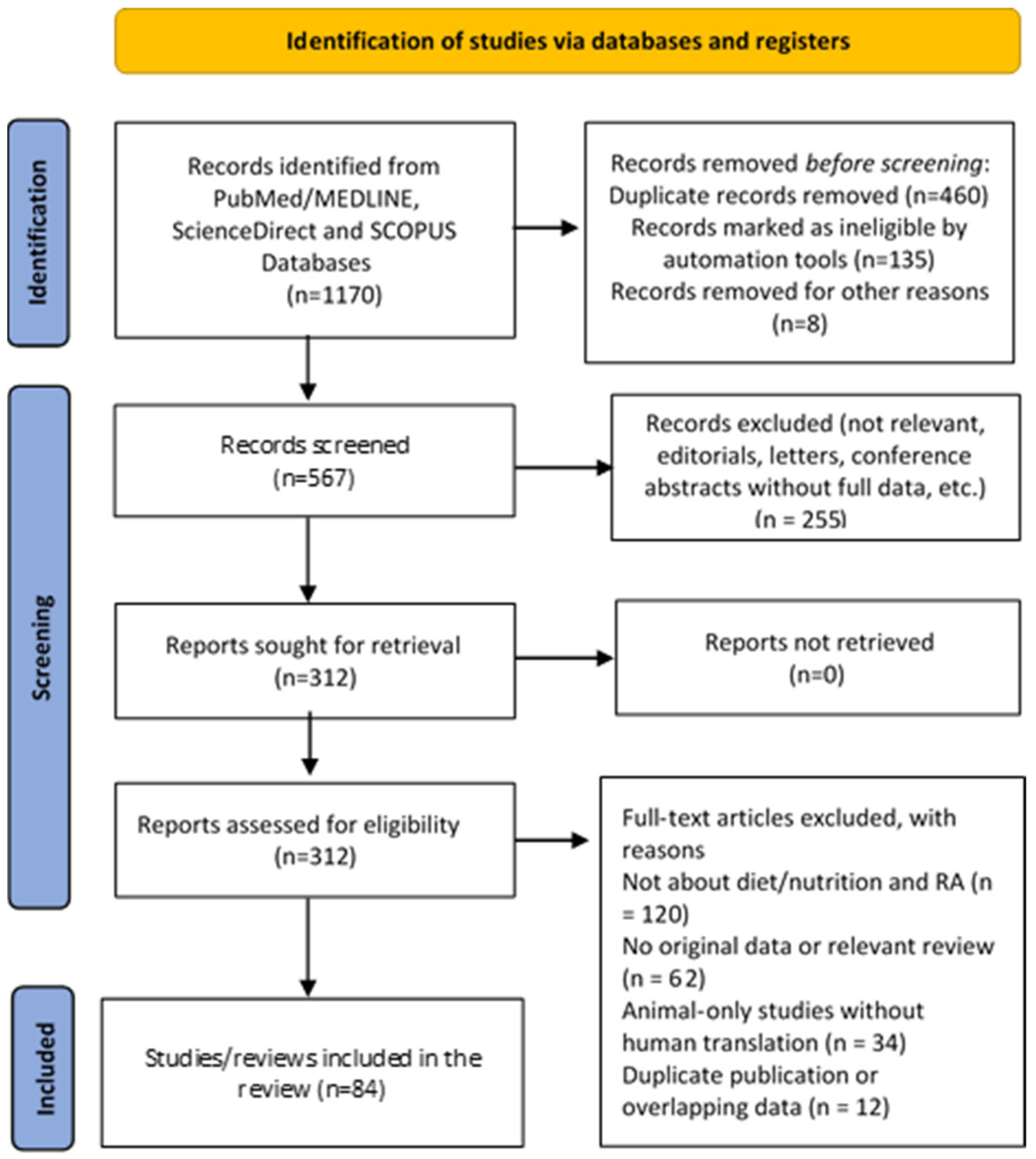
2. Methods and Review Strategy
3. Examining the Role of Nutrition in RA: Results
3.1. Beverages
- (i).
- Water and juices
- (ii).
- Coffee and tea
- (iii).
- Cocoa and polyphenol flavanol
3.2. Alcohol
3.3. Fruits and Herbs
3.4. Omega-3
3.5. Vitamin D
3.6. Meat
3.7. Gluten and Casein
3.8. Curcumin
3.9. Mediterranean Diet
3.10. Fasting and Caloric Restriction
3.11. Maintaining Normal Body Weight
3.12. Sugar and Glucose
4. Discussion and Future Directions
- Very well-structured research studies, which will consider the genetic and microbiome characteristics of patients who participate, in combination with their dietary habits;
- An efficient sample size to cover a wide clinical spectrum of RA patients and provide sufficient data with the potential for generalizability of the results.
- To understand the mechanisms through which nutrition can affect the immune response and inflammation of rheumatoid arthritis, as well as the interaction between the dietary components and the clinical picture and progression of the disease. Such insights offer the possibility for adequate and safe documentation of the effectiveness of the proposed nutritional interventions.
- To study the Interactions of RA with other associated conditions or diseases and assess the effect of nutrition on these diseases as well.
- To create conditions for personalized nutritional recommendations that will consider individuals’ genetic and immunological profiles.
5. Conclusions
- Diet is not, and therefore cannot be, characterized as a cure for rheumatoid arthritis. However, certain foods, such as the Mediterranean diet and, in general, any diet rich in omega-3, vitamin D, antioxidants, fish, and olive oil, can function as an important adjunctive therapy, since they contribute to a steady reduction in disease activity and to an improvement in quality of life.
- However, there are certain foods, such as red/processed meat, sugary drinks, and an overall poor diet—especially when combined with obesity or smoking—that significantly increase the risk and severity of RA.
- Current evidence is promising but still limited. Therefore, large, well-designed studies that incorporate genetics and the microbiome are needed before definitive, personalized dietary recommendations can be made with great certainty.
Author Contributions
Funding
Institutional Review Board Statement
Informed Consent Statement
Data Availability Statement
Conflicts of Interest
References
- El-dadamony, N.F.; Taha, M.N.; Mahmoud, S.F. Nutritional Status and Life Style among Rheumatoid Arthritis Clients at Zagazig University Hospitals. Zagazig Nurs. J. 2018, 14, 80–96. [Google Scholar]
- Mueller, A.-L.; Payandeh, Z.; Mohammadkhani, N.; Mubarak, S.M.H.; Zakeri, A.; Bahrami, A.A.; Brockmueller, A.; Shakibaei, M. Recent Advances in Understanding the Pathogenesis of Rheumatoid Arthritis: New Treatment Strategies. Cells 2021, 10, 3017. [Google Scholar] [CrossRef]
- Alivernini, S.; Firestein, G.; McInnes, J. The pathogenesis of rheumatoid arthritis. Immunity 2022, 55, 2255–2270. [Google Scholar] [CrossRef]
- Smolen, J.S.; Aletaha, D.; Bijlsma, J.W.J.; Breedveld, F.C.; Boumpas, D.; Burmester, G.; Combe, B.; Cutolo, M.; de Wit, M.; Dougados, M.; et al. Treating rheumatoid arthritis to target: Recommendations of an international task force. Ann. Rheum. Dis. 2010, 69, 631–637. [Google Scholar] [CrossRef]
- Hofman, Z.; Roodenrijs, N.M.T.; Nikiphorou, E.; Kent, A.L.; Nagy, G.; Welsing, P.M.J.; van Laar, J.M. Difficult-to-treat rheumatoid arthritis: What have we learned and what do we still need to learn? Rheumatology 2024, 64, 65–73. [Google Scholar] [CrossRef]
- Butola, L.-K.; Anjanker, A.; Vagga, A.; Kaple, M. Endogenous Factor and Pathophysiology of Rheumatoid Arthritis: An Autoimmune Disease from Decades. Int. J. Curr. Res. Rev. 2018, 12, 34–40. [Google Scholar] [CrossRef]
- Jahid, M.; Khan, K.U.; Haq, R.U.; Ahmed, R.S. Overview of Rheumatoid Arthritis and Scientific Understanding of the Disease. Mediterr. J. Rheumatol. 2023, 34, 284–291. [Google Scholar] [CrossRef]
- Cutolo, M.; Nikiphorou, E. Nutrition and Diet in Rheumatoid Arthritis. Nutrients 2022, 14, 888. [Google Scholar] [CrossRef] [PubMed]
- Gwinnutt, J.; Wieczorek, M.; Balanescu, A.; A Bischoff-Ferrari, H.; Boonen, A.; Cavalli, G.; de Souza, S.; de Thurah, A.; E Dorner, T.; Moe, R.H.; et al. 2021 EULAR recommendations regarding lifestyle behaviours and work participation to prevent progression of rheumatic and musculoskeletal diseases. Ann. Rheum. Dis. 2023, 82, 48–56. [Google Scholar] [CrossRef]
- Page, M.; McKenzie, J.; Bossuyt, P.; Boutron, I.; Hoffmann, T.C.; Mulrow, C.D.; Shamseer, L.; Tetzlaff, J.M.; Akl, E.A.; Brennan, S.E.; et al. The PRISMA 2020 statement: An updated guideline for reporting systematic reviews. BMJ 2021, 372, n71. [Google Scholar] [CrossRef]
- Dey, M.; Cutolo, M.; Nikiphorou, E. Beverages in Rheumatoid Arthritis: What to Prefer or to Avoid. Nutrients 2020, 12, 3155. [Google Scholar] [CrossRef]
- Ko, S.H.; Choi, S.W.; Ye, S.K.; Cho, B.L.; Kim, H.S.; Chung, M.H. Comparison of the antioxidant activities of nine different fruits in human plasma. J. Med. Food 2005, 8, 41–46. [Google Scholar] [CrossRef]
- Danesi, F.; Ferguson, L.R. Could pomegranate juice help in the control of inflammatory diseases? Nutrients 2017, 9, 958. [Google Scholar] [CrossRef]
- Majeed, M.; Borole, K. Evaluation of Anti- inflammatory Effect of Pineapple Juice in Rheumatoid arthritis And Osteoarthritis Models in Rats. Int. J. Med. Health Sci. 2015, 4, 70–76. [Google Scholar]
- Nasef, A.; Yossef, H.; Abo El-Magd, Y. Evaluation of the Anti-Rheumatic Activity of Custard Apples Fruit on Rats with Rheumatoid Arthritis Induced by Complete Freund’s Adjuvant. J. Home Econ.-Menofia Univ. 2024, 34, 93–108. [Google Scholar]
- Aviram, M.; Dornfeld, L.; Rosenblat, M.; Volkova, N.; Kaplan, M.; Coleman, R. Pomegranate juice consumption reduces oxidative stress, atherogenic modifications to LDL, and platelet aggregation: Studies in humans and in atherosclerotic apolipoprotein E–deficient mice. Am. J. Clin. Nutr. 2000, 71, 1062–1076. [Google Scholar] [CrossRef] [PubMed]
- Kim, H.; Banerjee, N.; Sirven, M.A.; Minamoto, Y.; Markel, M.E.; Suchodolski, J.S.; Talcott, S.T.; Mertens-Talcott, S.U. Pomegranate polyphenolics reduce inflammation and ulceration in intestinal colitis—Involvement of the miR-145/p70S6K1/HIF1 axis in vivo and in vitro. J. Nutr. Biochem. 2017, 43, 107–115. [Google Scholar] [CrossRef] [PubMed]
- Pattison, D.J.; Symmons, D.; Lunt, M.; Welch, A.; Bingham, S.; Day, N.; Silman, A. Dietary-cryptoxanthin and inflammatory polyarthritis: Results from a population-based prospective study. Am. J. Clin. Nutr. 2005, 82, 451–455. [Google Scholar] [CrossRef] [PubMed]
- Assimiti, D. The Use of Beetroot as Natural Solutions for Reducing Inflammation—Case Studies from Thailand (P12-046-19). Curr. Dev. Nutr. 2019, 3, nzz035-P12. [Google Scholar] [CrossRef]
- Thimóteo, N.S.B.; Iryioda, T.M.V.; Alfieri, D.F.; Rego, B.E.F.; Scavuzzi, B.M.; Fatel, E.; Lozovoy, M.A.B.; Simão, A.N.C.; Dichi, I. Cranberry juice decreases disease activity in women with rheumatoid arthritis. Nutrition 2019, 60, 112–117. [Google Scholar] [CrossRef]
- Asoudeh, F.; Dashti, F.; Jayedi, A.; Hemmati, A.; Fadel, A.; Mohammadi, H. Caffeine, Coffee, Tea and Risk of Rheumatoid Arthritis: Systematic Review and Dose-Response Meta-analysis of Prospective Cohort Studies. Front. Nutr. 2022, 9, 822557. [Google Scholar] [CrossRef] [PubMed]
- Lu, R.-B.; Huang, J. Testing relationship between tea intake and the risk of rheumatoid arthritis and systemic lupus erythematosus: A Mendelian randomization study. Adv. Rheumatol. 2023, 63, 10. [Google Scholar] [CrossRef]
- Dong, Y.; Webster, J.; Uzokwe, C.; Greenwood, D.; Hardie, L.; Cade, J. Associations of tea, coffee, and caffeine intake on rheumatoid arthritis risk: A dose-response meta-analysis of cohort studies. Proc. Nutr. Soc. 2023, 82, E331. [Google Scholar] [CrossRef]
- Westerlind, H.; Dukuzimana, J.; Lu, X.; Alfredsson, L.; Klareskog, L.; Di Giuseppe, D. Investigation of the association between coffee and risk of RA—Results from the Swedish EIRA study. Arthritis Res. Ther. 2022, 24, 178. [Google Scholar] [CrossRef]
- Sung, S.; Kwon, D.; Um, E.; Kim, B. Could Polyphenols Help Control Rheumatoid Arthritis? Molecules 2019, 24, 1589. [Google Scholar] [CrossRef]
- Andujar, I.; Recio, M.C.; Giner, R.M.; Rıos, J.L. Cocoa Polyphenols and Their Potential Benefits for Human Health. Oxidative Med. Cell. Longev. 2012, 23, 906252. [Google Scholar] [CrossRef]
- Ramos-Romero, S.; Perez-Cano, F.; Perez-Berezo, T.; Castellote, C.; Franch, A.; Castell, M. Effect of a cocoa flavonoid-enriched diet on experimental autoimmune arthritis. Br. J. Nutr. 2012, 107, 523–532. [Google Scholar] [CrossRef]
- Long, Z.; Xiang, W.; He, Q.; Xiao, W.; Wei, H.; Li, H.; Guo, H.; Chen, Y.; Yuan, M.; Yuan, X.; et al. Efficacy and safety of dietary polyphenols in rheumatoid arthritis: A systematic review and meta-analysis of 47 randomized controlled trials. Front. Immunol. 2023, 14, 1024120. [Google Scholar] [CrossRef]
- Azizov, V.; Zaiss, M.M. Alcohol Consumption in Rheumatoid Arthritis: A Path through the Immune System. Nutrients 2021, 13, 1324. [Google Scholar] [CrossRef] [PubMed]
- Alfredsson, L.; Klareskog, L.; Hedström, K. Disease Activity and Health-Related Quality of Life Among Patients With Rheumatoid Arthritis With Different Alcohol Consumption Habits. Arthritis Rheumatol. 2023, 75, 872–878. [Google Scholar] [CrossRef]
- Maxwell, A.; Zapien, M.; Pearce, G.; MacCallum, G.; Stone, P. Randomized Trial of a Medical Food for the Dietary Management of Chronic, Stable Angina. J. Am. Coll. Cardiol. 2002, 39, 37–45. [Google Scholar] [CrossRef]
- Di Giuseppe, D.; Alfredsson, L.; Bottai, M.; Askling, J.; Wolk, A. Long term alcohol intake and risk of rheumatoid arthritis in women: A population based cohort study. BMJ 2012, 345, e4230. [Google Scholar] [CrossRef]
- Turk, M.; Murray, K.; Alammari, Y.; Gorman, A.; Young, F.; Gallagher, P.; Saber, T.; Freeman, L.; Maguire, S.; O’shea, F.; et al. The effects of alcohol consumption and its associations with disease activity among 979 patients with inflammatory arthritis. RMD Open 2021, 7, e001510. [Google Scholar] [CrossRef]
- Jyoti, B.; Wadekar, J.; Sawant, R.; Patel, U. Rheumatoid arthritis and herbal drugs: A review. J. Phytopharm. 2015, 4, 311–318. [Google Scholar]
- Singh, A.; Kaushik, M.; Sinha, S.; Oraon, R.K.K.; Sharma, N.; Rautela, I. Herbal Allies for Rheumatoid Arthritis: A Comprehensive Review of Natural Products. Plant Sci. Today 2023, 10, 152–163. [Google Scholar] [CrossRef]
- Marquez, A.-M.; Evans, C.; Boltson, K.; Kesselman, M. Nutritional interventions and supplementation for rheumatoid arthritis patients: A systematic review for clinical application, Part 3: Fruits and Herbs. Curr. Rheumatol. Res. 2020, 1, 39–48. [Google Scholar]
- Basu, A.; Schell, J.; Scofield, H. Dietary fruits and arthritis. Food Funct. 2018, 9, 70–77. [Google Scholar] [CrossRef] [PubMed]
- Backlund, R.-T.; Drake, I.; Bergstrom, U.; Compagno, M.; Sonestedt, E.; Turesson, C. Adherence to dietary guidelines, and the risk of developing rheumatoid arthritis: Results from a nested case-control study. Rheumatology 2024, 63, 407–413. [Google Scholar] [CrossRef]
- Raad, T.; Griffin, A.; George, E.S.; Larkin, L.; Fraser, A.; Kennedy, N.; Tierney, A.C. Dietary Interventions with or without Omega-3 Supplementation for the Management of Rheumatoid Arthritis: A Systematic Review. Nutrients 2021, 13, 3506. [Google Scholar] [CrossRef] [PubMed]
- Kostoglou-Athanassiou, I.; Athanassiou, L.; Athanassiou, P. The Effect of Omega-3 Fatty Acids on Rheumatoid Arthritis. Mediterr. J. Rheumatol. 2020, 31, 190–194. [Google Scholar] [CrossRef]
- Espersen, G.T.; Ngrunnet, N.; Lervang, H.H.; Nielsen, G.L.; Thomsen, B.S.; Faarvang, K.L.; Dyerberg, J.; Ernst, E. Decreased interleukin-1 beta levels in plasma from rheumatoid arthritis patients after dietary supplementation with n-3 polyunsaturated fatty acids. Clin. Rheumatol. 1992, 11, 393–395. [Google Scholar] [CrossRef]
- Caughey, G.E.; Mantzioris, E.; Gibson, R.A.; Cleland, L.G.; James, M.J. The effect on human tumor necrosis factor alpha and interleukin 1 beta production of diets enriched in n-3 fatty acids from vegetable oil or fish oil. Am. J. Clin. Nutr. 1996, 63, 116–122. [Google Scholar] [CrossRef]
- Hong, K. Association between Omega-3 fatty acids and autoimmune disease: Evidence from the umbrella review and Mendelian randomization analysis. Autoimmun. Rev. 2024, 23, 103651. [Google Scholar] [CrossRef]
- Senftleber, N.K.; Nielsen, S.M.; Andersen, J.R.; Bliddal, H.; Tarp, S.; Lauritzen, L.; Furst, D.E.; Suarez-Almazor, M.E.; Lyddiatt, A.; Christensen, R. Marine oil supplements for arthritis pain: A systematic review and Meta-analysis of randomized trials. Nutrients 2017, 9, 42. [Google Scholar] [CrossRef] [PubMed]
- Proudman, S.; James, M.J.; Spargo, L.D.; Metcalf, R.G.; Sullivan, T.R.; Rischmueller, M.; Flabouris, K.; Wechalekar, M.D.; Lee, A.T.; Cleland, L.G. Fish oil in recent onset rheumatoid arthritis: A randomised, double-blind controlled trial within algorithm-based drug use. Ann. Rheum. Dis. 2015, 74, 89–95. [Google Scholar] [CrossRef] [PubMed]
- Holick, M. Vitamin D: A D-Rightful Solution for Health. J. Investig. Med. 2011, 59, 872–880. [Google Scholar] [CrossRef] [PubMed]
- Harrison, S.; Li, D.; Jeffery, L.; Raza, K.; Hewison, M. Vitamin D, Autoimmune Disease and Rheumatoid Arthritis. Calcif. Tissue Int. 2020, 106, 58–75. [Google Scholar] [CrossRef]
- Lee, Y.H.; Bae, S.-C. Vitamin D level in rheumatoid arthritis and its correlation with the disease activity: A meta-analysis. Clin. Exp. Rheumatol. 2016, 34, 827–833. [Google Scholar]
- Lin, J.; Liu, J.; Davies, M.L.; Chen, W. Serum Vitamin D Level and Rheumatoid Arthritis Disease Activity: Review and Meta-Analysis. PLoS ONE 2016, 11, e0146351. [Google Scholar] [CrossRef]
- Grant, W. The role of meat in the expression of rheumatoid arthritis. Br. J. Nutr. 2000, 84, 589–595. [Google Scholar] [CrossRef]
- Benito-Garcia, E.; Feskanich, D.; Hu, F.; Mandl, L.; Karlson, E. Protein, iron, and meat consumption and risk for rheumatoid arthritis: A prospective cohort study. Arthritis Res. Ther. 2007, 9, R16. [Google Scholar] [CrossRef]
- Sallstrom, T.; Barebring, L.; Hulander, E.; Gjertsson, I.; Winkvist, A.; Lindqvist, H. Inflammatory and lipemic response to red meat intake in women with and without Rheumatoid Arthritis: A single meal study within a randomized controlled trial. BMC Nutr. 2025, 11, 74. [Google Scholar] [CrossRef] [PubMed]
- Sundström, B.; Ljung, L.; Di Giuseppe, D. Consumption of Meat and Dairy Products Is Not Associated with the Risk for Rheumatoid Arthritis among Women: A Population-Based Cohort Study. Nutrients 2019, 11, 2825. [Google Scholar] [CrossRef]
- Chen, W.; Liu, K.; Huang, L.; Mao, Y.; Wen, C.; Ye, D.; He, Z. Beef intake and risk of rheumatoid arthritis: Insights from a cross-sectional study and two-sample Mendelian randomization. Front. Nutr. 2022, 9, 923472. [Google Scholar] [CrossRef]
- Jin, J.; Li, J.; Gan, Y.; Liu, J.; Zhao, X.; Chen, J.; Zhang, R.; Zhong, Y.; Chen, X.; Wu, L.; et al. Red meat intake is associated with early onset of rheumatoid arthritis: A cross-sectional study. Sci. Rep. 2021, 11, 5681. [Google Scholar] [CrossRef]
- El-Chammas, K.; Danner, E. Gluten-Free Diet in Nonceliac Disease. Nutr. Clin. Pract. 2011, 26, 294–299. [Google Scholar] [CrossRef]
- Lerner, B.; Green, P.; Lebwohl, B. Going Against the Grains: Gluten-Free Diets in Patients Without Celiac Disease—Worthwhile or Not? Dig. Dis. Sci. 2019, 64, 1740–1747. [Google Scholar] [CrossRef] [PubMed]
- Bruzzese, V.; Scolieri, P.; Pepe, J. Efficacy of gluten-free diet in patients with rheumatoid arthritis. Reumatismo 2020, 72, 213–217. [Google Scholar] [CrossRef] [PubMed]
- Lidón, A.-C.; Patricia, M.-L.; Vinesh, D.; Marta, M.-S. Evaluation of Gluten Exclusion for the Improvement of Rheumatoid Arthritis in Adults. Nutrients 2022, 14, 5396. [Google Scholar] [CrossRef]
- Elkan, A.C.; Sjöberg, B.; Kolsrud, B.; Ringertz, B.; Hafström, I.; Frostegård, J. Gluten-free vegan diet induces decreased LDL and oxidized LDL levels and raised atheroprotective natural antibodies against phosphorylcholine in patients with rheumatoid arthritis: A randomized study. Arthritis. Res. Ther. 2008, 10, R34. [Google Scholar] [CrossRef] [PubMed]
- Letarouilly, J.G.; Sanchez, P.; Nguyen, Y.; Sigaux, J.; Czernichow, S.; Flipo, R.-M.; Sellam, J.; Daïen, C. Efficacy of Spice Supplementation in Rheumatoid Arthritis: A Systematic Literature Review. Nutrients 2020, 12, 3800. [Google Scholar] [CrossRef] [PubMed]
- Sun, Y.; Liu, W.; Zhang, H.; Li, H.; Liu, J.; Zhang, F.; Jiang, T.; Jiang, S. Curcumin Prevents Osteoarthritis by Inhibiting the Activation of Inflammasome NLRP3. J. Interf. Cytok. Res. 2017, 37, 439–455. [Google Scholar] [CrossRef] [PubMed]
- Zeng, L.; Yang, T.; Yang, K.; Yu, G.; Li, J.; Xiang, W.; Chen, H. Efficacy and Safety of Curcumin and Curcuma longa Extract in the Treatment of Arthritis: A Systematic Review and Meta-Analysis of Randomized Controlled Trial. Front Immunol. 2022, 13, 891822. [Google Scholar] [CrossRef]
- Pourhabibi-Zarandi, F.; Shojaei-Zarghani, S.; Rafraf, M. Curcumin and rheumatoid arthritis: A systematic review of literature. Int. J. Clin. Pract. 2021, 75, e14280. [Google Scholar] [CrossRef]
- Drosos, A.; Lanchbury, J.S.; Panayi, G.S.; Moutsopoulos, H.M. Rheumatoid Arthritis in Greek and British Patients. A comparative clinical, radiologic, and serologic study. Arthritis Rheum. 1992, 35, 745–748. [Google Scholar] [CrossRef]
- Aparicio-Soto, M.; Sánchez-Hidalgo, M.; Ángeles Rosillo, M.; Luisa Castejón, M.; Alarcón-De-La-Lastra, C. Extra virgin olive oil: A key functional food for prevention of immune-inflammatory diseases. Food Funct. 2016, 7, 4492–4505. [Google Scholar] [CrossRef]
- Hu, P.; Lee, E.K.-P.; Li, Q.; Tam, L.-S.; Wong, S.Y.-S.; Poon, P.K.-M.; Yip, B.H.-K. Mediterranean diet and rheumatoid arthritis: A nine-year cohort study and systematic review with meta-analysis. Eur. J. Clin. Nutr. 2025, 79, 888–896. [Google Scholar] [CrossRef]
- Forsyth, C.; Kouvari, M.; D’cUnha, N.M.; Georgousopoulou, E.N.; Panagiotakos, D.B.; Mellor, D.D.; Kellett, J.; Naumovski, N. The effects of the Mediterranean diet on rheumatoid arthritis prevention and treatment: A systematic review of human prospective studies. Rheumatol. Int. 2018, 38, 737–747. [Google Scholar] [CrossRef]
- Hagfors, L. Mediterranean dietary intervention study of patients with rheumatoid arthritis. Scand. J. Nutr. 2005, 49, 42. [Google Scholar] [CrossRef][Green Version]
- Rosillo, M.A.; Sánchez-Hidalgo, M.; Sánchez-Fidalgo, S.; Aparicio-Soto, M.; Villegas, I.; Alarcón-de-la-Lastra, C. Dietary extra-virgin olive oil prevents inflammatory response and cartilage matrix degradation in murine collagen-induced arthritis. Eur. J. Nutr. 2016, 55, 315–325. [Google Scholar] [CrossRef] [PubMed]
- Hansen, B.; Sánchez-Castro, M.; Schintgen, L.; Khakdan, A.; Schneider, J.G.; Wilmes, P. The impact of fasting and caloric restriction on rheumatoid arthritis in humans: A narrative review. Clin. Nutr. 2025, 49, 178–186. [Google Scholar] [CrossRef]
- Coradduzza, D.; Bo, M.; Congiargiu, A.; Azara, E.; De Miglio, M.R.; Erre, G.L.; Carru, C. Decoding the Microbiome’s Influence on Rheumatoid Arthritis. Microorganisms 2023, 11, 2170. [Google Scholar] [CrossRef] [PubMed]
- Hofer, S.; Carmona-Gutierrez, D.; Mueller, M.; Madeo, F. The ups and downs of caloric restriction and fasting: From molecular effects to clinical application. EMBO Mol. Med. 2022, 14, e14418. [Google Scholar] [CrossRef] [PubMed]
- Gharbia, O.M.; El-Bahnasawy, A.S.; Okasha, A.E.; Abd El-Karim, S.A. Impact of obesity on rheumatoid arthritis: Relation with disease activity, joint damage, functional impairment and response to therapy. Int. J. Clin. Rheumatol. 2018, 13, 346–352. [Google Scholar]
- Feng, X.; Xu, X.; Shi, Y.; Liu, X.; Liu, H.; Hou, H.; Ji, L.; Li, Y.; Wang, W.; Wang, Y.; et al. Body Mass Index and the Risk of Rheumatoid Arthritis: An Updated Dose-Response Meta-Analysis. BioMed Res. Int. 2019, 2019, 3579081. [Google Scholar] [CrossRef]
- Min Son, K.; Hun Kang, S.; Il Seo, Y.; Ah Kim, H. Association of body composition with disease activity and disability in rheumatoid arthritis. Korean J. Intern. Med. 2021, 36, 214–222. [Google Scholar] [CrossRef]
- Khan, F.; Aziz, W.; Farrukh, S.; Rasheed, U.; Zammarrud, S. Correlation of Body Mass Index with Disease Activity in Rheumatoid Arthritis. Ann. Pak. Inst. Med. Sci. 2021, 18, 56–60. [Google Scholar] [CrossRef]
- Alvarez-Nemegyei, J.; Pacheco-Pantoja, E.; González-Salazar, M.; López-Villanueva, R.F.; May-Kim, S.; Martínez-Vargas, L.; Quintal-Gutiérrez, D. Association between overweight/obesity and clinical activity in rheumatoid arthritis. Rheumatol. Clin. 2020, 16, 462–467. [Google Scholar] [CrossRef]
- Lu, B.; Rho, Y.H.; Cui, J.; Iannaccone, C.K.; Frits, M.L.; Karlson, E.W.; Shadick, N.A. Associations of Smoking and Alcohol Consumption with Disease Activity and Functional Status in Rheumatoid Arthritis. J. Rheumatol. 2014, 41, 1. [Google Scholar] [CrossRef]
- Albrecht, K.; Richter, A.; Callhoff, J.; Huscher, D.; Schett, G.; Strangfeld, A.; Zink, A. Body mass index distribution in rheumatoid arthritis: A collaborative analysis from three large German rheumatoid arthritis databases. Arthritis Res. Ther. 2016, 18, 149. [Google Scholar] [CrossRef]
- Stavropoulos-Kalinoglou, A.; Metsios, G.; Koutedakis, Y.; Kitas, G. Body-size phenotypes and cardiometabolic risk in Rheumatoid Arthritis. Mediterr. J. Rheumatol. 2016, 27, 48–54. [Google Scholar] [CrossRef]
- Seung-Jae, K.; Chen, Z.; Essani, A.B.; A Elshabrawy, H.; Volin, M.V.; Fantuzzi, G.; McInnes, I.B.; Baker, J.F.; Finn, P.; Kondos, G.; et al. Differential impact of obesity on the pathogenesis of RA or preclinical models is contingent on the disease status. Ann. Rheum. Dis. 2017, 76, 731–739. [Google Scholar] [CrossRef] [PubMed]
- Ah Lim, S.; Su, W.; Chapman, N.M.; Chi, H. Lipid metabolism in T cell signaling and function. Nat. Chem. Biol. 2022, 18, 470–481. [Google Scholar] [CrossRef] [PubMed]
- Hu, Y.; Costenbader, K.H.; Gao, X.; Al-Daabil, M.; A Sparks, J.; Solomon, D.H.; Hu, F.B.; Karlson, E.W.; Lu, B. Sugar-sweetened soda consumption and risk of developing rheumatoid arthritis in women. Am. J. Clin. Nutr. 2014, 100, 959–967. [Google Scholar] [CrossRef] [PubMed]
- Masuko, K. Glucose as a Potential Key to Fuel Inflammation in Rheumatoid Arthritis. Nutrients 2022, 14, 2349. [Google Scholar] [CrossRef]


| Nutrient | Primary Clinical Uses/Health Benefits | Related Mechanism of Action/Associated Conditions | References |
|---|---|---|---|
| Water and Juices | Hydration is essential for maintaining normal bodily functions, such as temperature regulation, lubrication of joints, and kidney function, while juices provide vitamins (such as vitamin C) and minerals, which support overall health status. | Adequate water intake is vital for transporting nutrients, removing waste, and reducing the risk of kidney stones and constipation; it helps maintain cell volume and blood pressure, while juices provide immediate absorption of water-soluble vitamins (e.g., vitamin C) and electrolytes. | [11,13,14,15,20] |
| Coffee and tea | Both beverages are rich in antioxidants, which protect cells from damage; moderate coffee consumption reduces the risk of diseases such as Parkinson’s/Alzheimer’s disease and type 2 diabetes, while caffeine improves cognitive functions and cardiovascular health. | Improves mental alertness, concentration, and reaction time. Caffeine blocks adenosine receptors, reducing fatigue and increasing neuronal firing. Polyphenols (e.g., EGCG in tea, chlorogenic acid in coffee) act as antioxidants, reduce inflammation, and improve endothelial function. | [11,21,22,23] |
| Cocoa and polyphenol flavanol | Support cardiovascular health by improving blood flow and lowering blood pressure; cocoa can enhance cognitive function and memory, offer neuroprotection, and have anti-inflammatory effects. | Flavanols are compounds found in cocoa that support heart health and cognitive function by improving brain blood flow); they may reduce the risk of cardiovascular mortality and inflammation. | [26,27] |
| Alcohol | There is no safe level of consumption; excessive consumption can lead to addiction and liver disease; moderate consumption may be associated with a lower risk of cardiovascular disease and social anxiety. | Risk factor for many chronic diseases, including cancer and liver disease, even at mild/moderate levels. Some studies have shown that, in small amounts, it has a positive effect on heart function, reduces platelet aggregation and fibrinogen levels, and promotes NO release. | [29,32,33] |
| Fruits and herbs | They promote health because they are rich in nutrients and contain essential vitamins (such as A and C), minerals, and fibers; they have anti-inflammatory effects, since many fruits and herbs contain compounds that reduce inflammation and the risk of chronic diseases, such as cancer and heart disease. | They have positive effects on many conditions, such as cardiovascular disease and chronic inflammation, because they contain phytonutrients and many vitamins/minerals. Compounds such as flavonoids, carotenoids, and essential oils (in herbs) neutralize free radicals, regulate inflammatory pathways (e.g., NF-κB), and have direct antimicrobial effects. | [15,37] |
| Omega-3 and fatty acids | Management of hypertriglyceridemia, reduction in blood pressure and risk of heart disease, anti-inflammatory properties, support of brain health and neurodevelopment, alleviation of depression and anxiety, and improvement of cognitive functions. | They are incorporated into cell membranes and converted into anti-inflammatory (e.g., resolvins) rather than pro-inflammatory mediators; PPAR-α activation reduces hepatic triglyceride production and supports neuronal membrane fluidity; potential positive effect for treating conditions such as rheumatoid arthritis and inflammatory bowel disease (IBD). | [40,42,43] |
| Vitamin D | Essential for calcium absorption, osteoporosis prevention, immune function regulation; some studies suggest a link between vitamin D and mood, particularly in seasonal affective disorder (SAD). | Acting as a steroid hormone, binding to vitamin D receptor (VDR); regulation of genes involved in calcium transport (e.g., in the intestines) by modifying the function of immune cells (T-cells, macrophages). | [46,47,48,49] |
| Meat | Source of high-quality protein, iron, zinc, and B vitamins (especially B12); supports muscle recovery and growth, prevents anemia, especially important for active individuals. | High-quality protein containing essential amino acids, which participate in protein synthesis, enzyme function, and neurotransmitter production; a major dietary source of vitamin B12, essential for nerve function and blood formation. Excessive intake of red/processed meat is associated with an increased risk of certain types of cancer. | [50,51,54,55] |
| Gluten and casein | Gluten restriction is recommended for celiac disease to prevent serious gastrointestinal and systemic complications; casein found in dairy can cause digestive and inflammatory problems in people with intolerances or allergies. | In celiac disease, gluten triggers an autoimmune response that damages the intestinal villi. In allergy, casein/proteins are treated as antigens, triggering IgE-mediated inflammation. | [56,57,58] |
| Curcumin | Strong anti-inflammatory and antioxidant properties; it is used to manage arthritis; it improves cognitive function and reduces the risk of neurodegenerative diseases | Inhibits the main inflammatory pathways by reducing cytokine production; it increases the function of the body’s antioxidant enzymes; direct removal of free radicals | [63,64] |
| Mediterranean diet | Positive effect on reducing risk of cardiovascular disease, weight management, cognitive decline, and diabetes; linked to improved longevity and reduced risk of chronic diseases | Anti-inflammatory (fruits, vegetables, olive oil) and anti-oxidant (polyphenols) properties, improvement of lipid profile (healthy fats); fiber-rich diet | [8,66,68,69] |
| Fasting and caloric restriction | Improvement of insulin resistance and reduction in the risk of type 2 diabetes; weight management | Improves metabolic health and promotes longevity through cellular repair mechanisms. Depletes glycogen stores, forcing a shift to ketone bodies for energy. | [71] |
| Maintaining normal body weight | Risk reduction in diabetes, heart disease, and some forms of cancer; improvement of physical condition, mental health, and overall well-being. | Reduction in stress upon organs (heart, joints); prevention and management of osteoarthritis; normalization of insulin signaling; reduction in chronic inflammation from adipose tissue (adipokines) and improvement of hormonal balance. | [75,77,78,80,81,82,83] |
| Sugar and glucose | Frequent sugar consumption is associated with accelerated epigenetic aging, tooth decay, gout, and increased all-cause mortality. | At typical levels of consumption, sugar promotes de novo lipogenesis, visceral obesity, hyperuricemia, and low-grade systemic inflammation through AGE formation and activation of the NLRP3 inflammasome. | [84,85] |
Disclaimer/Publisher’s Note: The statements, opinions and data contained in all publications are solely those of the individual author(s) and contributor(s) and not of MDPI and/or the editor(s). MDPI and/or the editor(s) disclaim responsibility for any injury to people or property resulting from any ideas, methods, instructions or products referred to in the content. |
© 2025 by the authors. Licensee MDPI, Basel, Switzerland. This article is an open access article distributed under the terms and conditions of the Creative Commons Attribution (CC BY) license (https://creativecommons.org/licenses/by/4.0/).
Share and Cite
Polyzou, M.; Goules, A.V.; Tzioufas, A.G. The Role of Nutrition in the Development, Management, and Prevention of Rheumatoid Arthritis: A Comprehensive Review. Nutrients 2025, 17, 3826. https://doi.org/10.3390/nu17243826
Polyzou M, Goules AV, Tzioufas AG. The Role of Nutrition in the Development, Management, and Prevention of Rheumatoid Arthritis: A Comprehensive Review. Nutrients. 2025; 17(24):3826. https://doi.org/10.3390/nu17243826
Chicago/Turabian StylePolyzou, Maria, Andreas V. Goules, and Athanasios G. Tzioufas. 2025. "The Role of Nutrition in the Development, Management, and Prevention of Rheumatoid Arthritis: A Comprehensive Review" Nutrients 17, no. 24: 3826. https://doi.org/10.3390/nu17243826
APA StylePolyzou, M., Goules, A. V., & Tzioufas, A. G. (2025). The Role of Nutrition in the Development, Management, and Prevention of Rheumatoid Arthritis: A Comprehensive Review. Nutrients, 17(24), 3826. https://doi.org/10.3390/nu17243826