1. Introduction
Over the past 50 years, female athlete participation has increased, with the Paris Olympics in 2024 being the first gender-balanced games [
1]. However, the volume of research focused on the female athlete does not reflect this increased participation. For instance, carbohydrate (CHO) intake is well-established as a means of supporting training and competition demands [
2]; however, as highlighted in a recent audit of 937 research studies which examined CHO intake recommendations [
3], 11% (197/937 studies) of the participants in these studies were female. This raises concerns over the applicability of current evidence to women, which is largely extrapolated from data collected in males.
Maintaining energy balance (EB) appears to be a challenge for athletes with high training volumes. Studies indicate that negative EB is common among female athletes, particularly during periods of high training volume [
4]. From a nutritional perspective, one major contributor to inadequate energy intake (EI) appears to be insufficient CHO intake, which is shown to be relatively low in female athletes, when compared to current recommendations. Studies have revealed that 50% of female soccer players and 85% of collegiate runners do not meet the daily CHO intake guidelines [
5,
6]. This trend is present in multiple ages and abilities, demonstrated by a study of young and elite female athletes, in which they report the prevalence of CHO intake below recommendations (<4 g·kg
−1 BW·day
−1) to be 49.2% in young female athletes and 33.3% in elite female athletes [
7]. Further, the prevalence of CHO intake below the upper end of daily recommendations (<8 g·kg
−1 BW·day
−1) was 98.3% in young female athletes and 83.3% in elite female athletes [
7]. Recently, it has been shown that knowledge of CHO guidelines does not correlate with CHO intake [
8]. Using the CHO for endurance athletes in competition questionnaire (CEAC-Q), a third of athletes correctly identify the CHO loading and pre-competition CHO recommendations, whilst two thirds of the athletes (
n = 32, 64%) were able to identify the CHO guidelines for during exercise. Despite this, 32% of participants consumed the recommended CHO for events lasting >2.5 h in duration (60–90 g·h
−1), with two athletes consuming >90 g·h
−1. In contrast, suboptimal CHO intakes during competition were observed in 64% of athletes, with CHO intake for eight athletes (16%) classified as very low (<30 g·h
−1) [
8]. This suggests there is a disconnect between knowledge and application of nutrition guidelines. One recent study explored elite female soccer players’ perceptions of nutrition, specifically CHO, and highlighted confusion and misconceptions as key drivers to under-consumption of CHO. This study revealed that these behaviours appear to stem from external pressures, social media, and the implementation of body composition testing [
9]. This fear of CHO is suggested to lead to intentional CHO restriction, despite CHO-fuelling strategies being well-documented as beneficial for health and sports performance [
9]. However, the applicability of these findings to endurance athletes are not known and this remains an unexplored area of research.
Beyond CHO, there is a general lack of understanding around other nutrient requirements for female athletes. For instance, much of the research around protein is conducted in male athletes, where protein plays a vital role in muscle repair, synthesis, and recovery following endurance exercise [
10]. Whilst it has previously been shown that females are more likely to under-consume protein [
11,
12], the reasons behind these lower intakes are not fully detailed, and habitual protein habits are not reported. Holtzman et al. [
13], highlight the importance of adequate protein intake among female athletes, emphasising its role in promoting lean muscle mass maintenance and optimising training adaptations. Despite the recognition of protein’s benefits, little research has been conducted in female athletes, and there is currently no evidence to suggest that there are any sex differences in protein requirements [
14]. Fat is also a vital nutrient for athletes, playing a crucial role in energy production, hormone regulation, and cellular function. For athletes, fat provides a sustained energy source, especially during prolonged endurance activities, and is also essential for the absorption of fat-soluble vitamins (A, D, E, K) and for maintaining cell membranes and nerve function. Female athletes’ current habits and behaviours around fat intake are not well-explored, but some insights suggest that female athletes could be at risk of under consuming fat, especially in sports where leanness is prioritised [
15].
Endurance athletes’ macronutrient requirements vary according to training status, session duration, and intensity. CHO remains the principal substrate supporting moderate to high-intensity endurance exercise, with daily needs typically ranging from 3–5 g·kg
−1·day
−1 during low-volume phases to 8–12 g·kg
−1·day
−1 during periods of heavy load or competition [
2,
16,
17]. Protein requirements may fluctuate to a lesser extent, increasing modestly during phases focused on strength development or body-composition changes, while adequate dietary fat supports energy provision and endocrine function. These demands also vary within and between days as training intensity and recovery needs shift [
18]. While endurance disciplines such as triathlon, cycling, and running differ in training volume, session structure, and logistical demands, their underlying principles remain similar: each presents the overarching challenge of matching fluctuating energy expenditure (EE) with sufficient nutritional intake [
19,
20].
Among female athletes, the effect of hormonal fluctuations across the menstrual cycle on fuelling and hydration strategies is often reported as a topic of interest. Current evidence suggests these variations may influence nutrition subtly, through thermoregulation, gastrointestinal comfort, and fluid balance, with potential behavioural implications for food choice and appetite, rather than large shifts in substrate requirements per se [
21,
22]. Beyond physiological influences, psychosocial factors have emerged as powerful determinants of female athletes’ nutrition behaviour. Research increasingly highlights the influence of diet culture, body image, and social comparison, often amplified through social media, as drivers of restrained eating, CHO avoidance, and “clean eating” ideologies [
9,
23,
24]. Such factors may contribute to transient periods of low energy availability (LEA) and, in some cases, to the broader syndrome of relative energy deficiency in sport (RED-S). However, the aetiology of RED-S is multifactorial, and EI alone rarely explains the full picture; psychological stress, training load, and recovery practices also play important roles [
25,
26]. Chronic mismatches between EI and expenditure can negatively influence bone turnover, hormonal regulation, and training adaptation. Yet despite growing recognition of these issues, the long-term consequences of underfuelling and macronutrient imbalance remain under-researched, particularly in women.
The dietary behaviours of female endurance athletes are multifaceted and influenced by a combination of physiological, psychological, social, and environmental factors. Addressing these complex interactions is essential to implement support and guidelines for this population. It is important to understand the real-world challenges and perspectives of female athletes to develop effective interventions. Accordingly, this study aims to comprehensively investigate the nutrition practices, habits, and perceptions of female endurance athletes using a multi-methods approach. Quantitative assessments will provide insights into macronutrient intake, EE, and nutrient timing. The qualitative interviews will explore athletes’ experiences and perceptions, and aim to understand contextual factors that influence dietary behaviours. The integration of multi-methods seeks to elucidate the complex interplay between nutritional intake, psychological factors, social influences, and athletic performance in female endurance athletes. A degree of underfuelling, with CHO intake falling below recommendations, particularly amidst greater training demands, was hypothesised. Protein intake was also anticipated to be inconsistent, with athletes likely failing to meet or distribute recommended amounts. Finally, we hypothesised behaviours to be shaped by a combination of practical and psychosocial factors, reflecting the complex interplay between knowledge, behaviour, and real-world contexts.
4. Combined Discussion
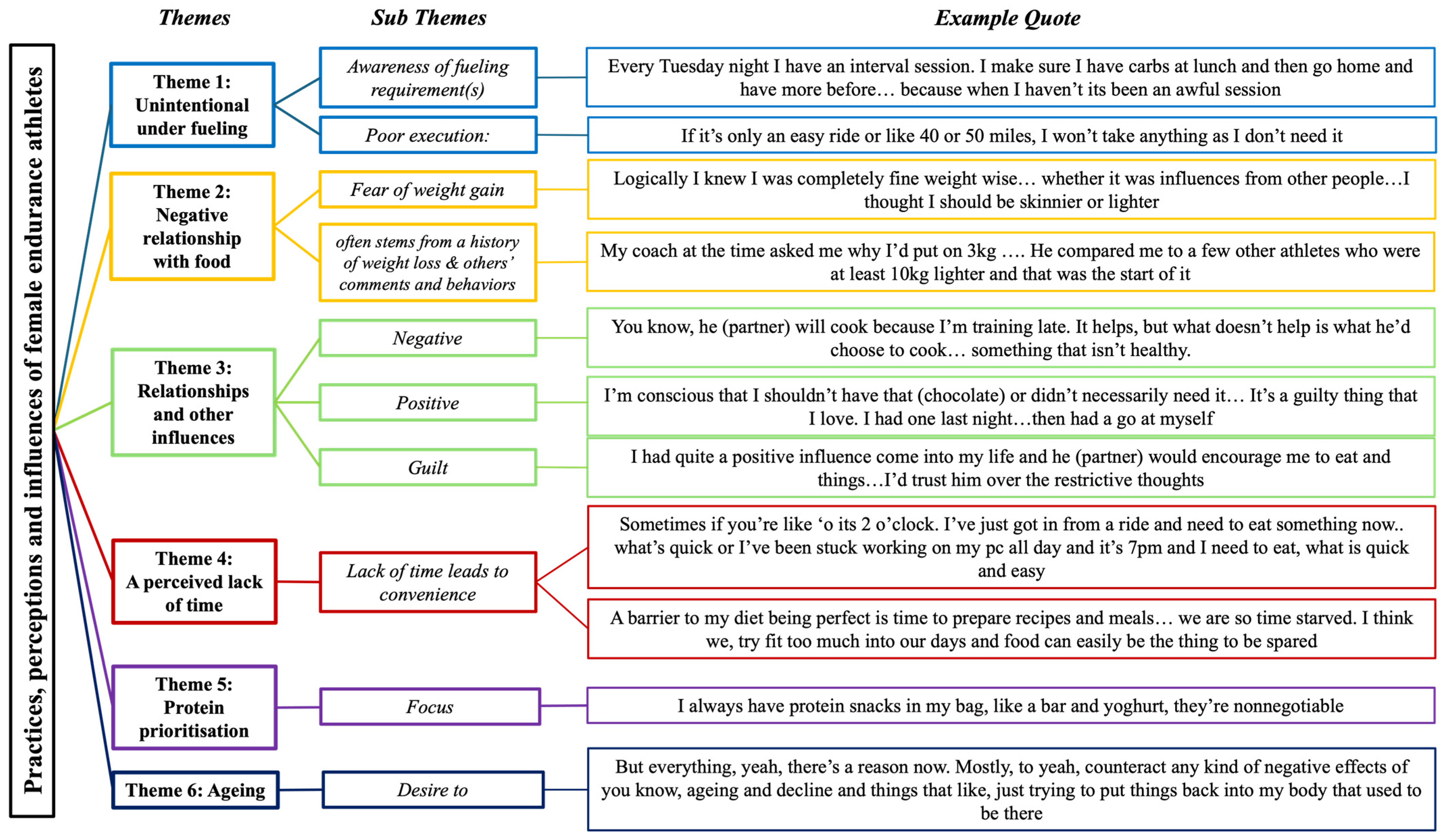
This study used quantitative and qualitative methods to explore female endurance athletes’ nutrition practices, influences, and perceptions. A key finding was the gap between female athletes’ nutritional knowledge and behaviour, particularly regarding CHO intake. Despite understanding its role in performance and recovery, athletes were unconsciously underfuelling with CHO. This behaviour appears to be influenced by factors such as personal relationships with food, time constraints, and “health halos”, a term used to describe misperceptions about the healthfulness of foods based on labelling or marketing [
64].
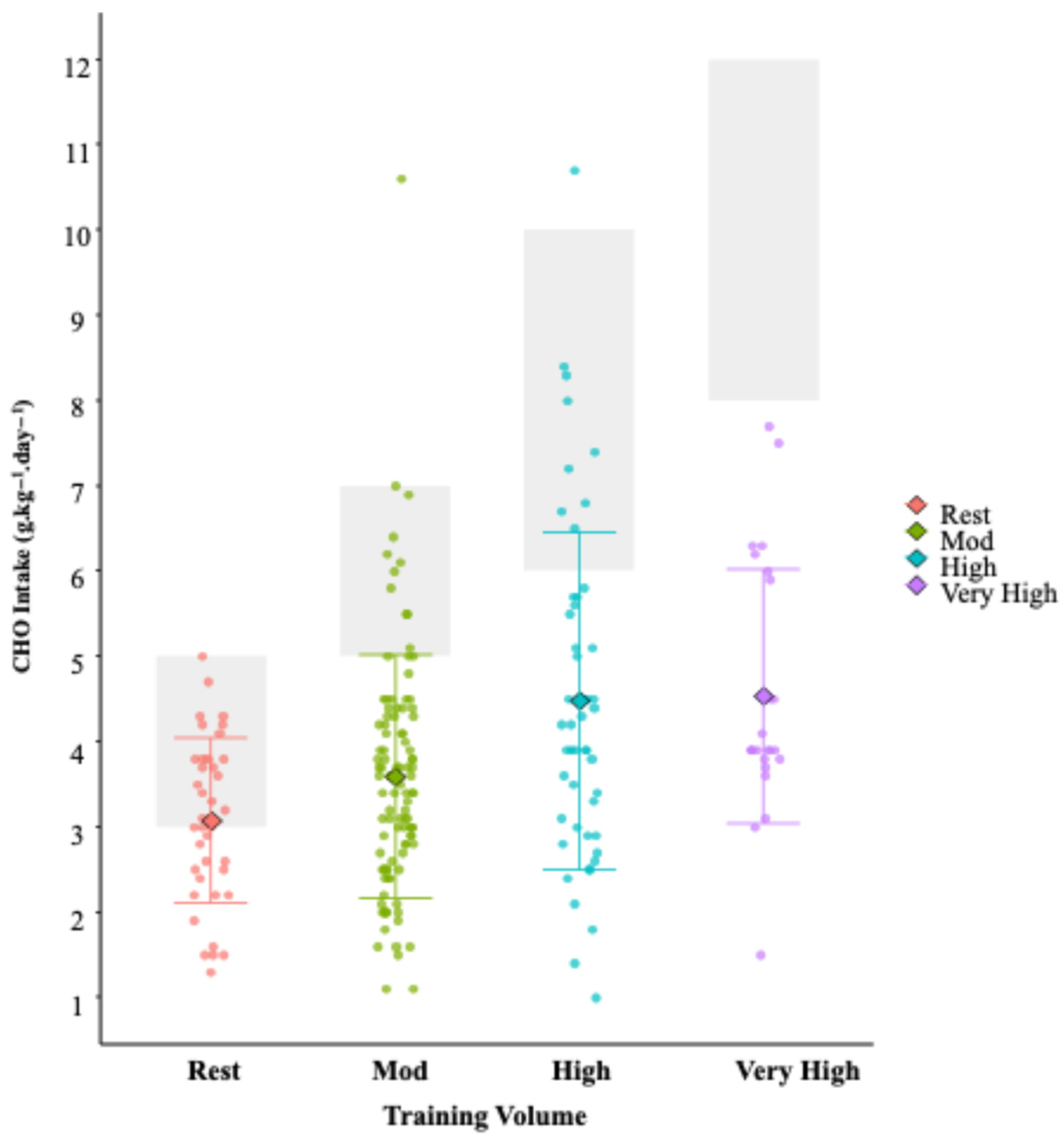
Despite athletes’ awareness of the importance of CHO in their diet to support training, our data suggests that this does not translate into adequate CHO consumption. When comparing CHO intakes to the guidelines, even on days that are classified as ‘rest’, 50% of athletes adhere to the CHO guidelines, and on average, this amount equates to the lower end of the guideline range (3 g·kg
−1 BM). The magnitude by which CHO practices fail to meet their respective guidelines increases from ‘moderate’ (−1.4 g·kg
−1 BM), to ‘high’ (−3.5 g·kg
−1 BM), to ‘very high’ (−5.5 g·kg
−1 BM). This under-consumption can have significant implications for athletic performance, as inadequate CHO intake is associated with compromised glycogen replenishment, may impair muscle adaptation [
65], and is linked with suboptimal recovery [
66]. Chronic CHO inadequacy has been associated with disruptions in hormonal balance, bone health, metabolic function, immune response, and recovery, being a major risk factor [
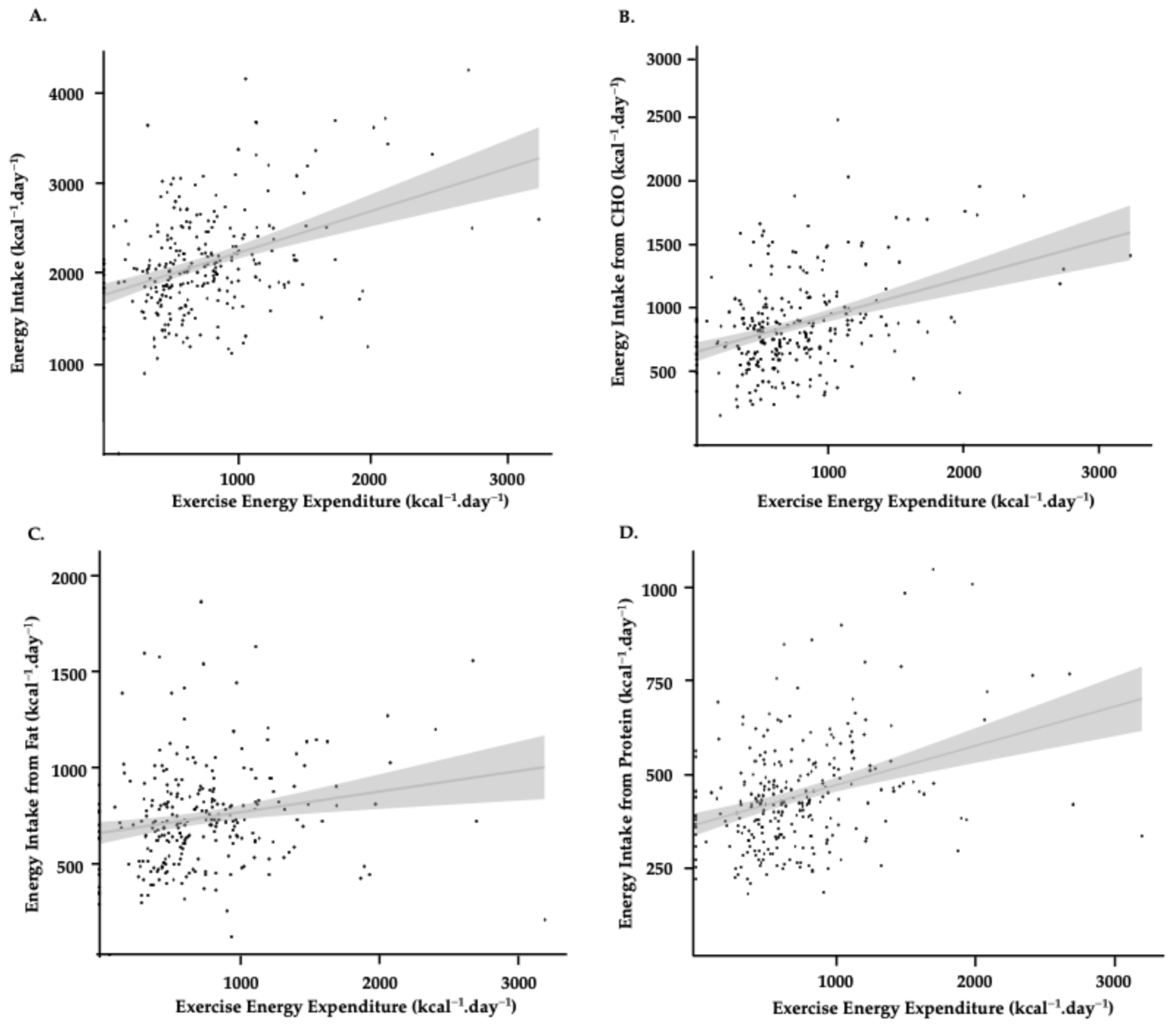
3,
66,
67]. In the present study, although total EI and energy derived from CHO increases as training volume and EEE increases, the magnitude by which EE exceeds EI is also further increased, suggesting that EEE is accompanied by increasing negative EB that does not appear to be compensated for through increased dietary CHO (nor any other macronutrient) intake. This gap between knowledge and practice aligns with previous research, which has highlighted similar trends in various athletic populations [
2,
8,
68]. Previous research also suggests that while athletes may be educated on the benefits of CHO and recognise their importance, translating knowledge into dietary behaviour remains challenging [
69,
70,
71,
72]. The reasons for this discrepancy are likely multifaceted, including misconceptions about dietary needs, poor dietary planning, and possibly the influence of prevailing dietary trends that undervalue CHO consumption. The increasing energy deficit associated with higher training volumes observed in our study suggests that athletes are not adjusting their CHO intake to match their elevated EE, which is consistent with previous research indicating that athletes, particularly female athletes, are at risk of underfuelling relative to their energy needs [
73,
74], particularly in CHO intake [
46,
68]. The consequences of such deficits are potentially significant, such as being negatively linked with affecting performance, recovery, and overall health [
75]. Historically, much of the work in relation to nutrition for female athletes surrounds the topic of LEA, a condition whereby insufficient energy is consumed to support the demands of exercise, potentially resulting in compromised physiological processes such as menstrual irregularities and impaired bone health [
76,
77]. The prevalence of LEA is reported as >60% in various female athlete groups [
25,
26,
78,
79]. More recently, the concept of LEA has been expanded into the RED-S model, which describes a broader spectrum of physiological and performance-related consequences. However, recent critiques highlight challenges in accurately measuring energy availability and isolating its direct effects from other influencing factors [
25,
80]. Many symptoms associated with RED-S, such as fatigue, impaired recovery, and metabolic disturbances, are multifaceted and may not always be solely attributable to LEA. Despite these complexities, prolonged or chronic periods of energy deficiency have been linked to negative health and performance outcomes. Regardless of terminologies or categorisation, the results of our study demonstrate that this energy gap is prevalent and a cause for concern. There is a clear need for more practical, hands-on education for athletes to bridge the gap between knowledge and application of CHO guidelines.
While athletes were found to have low CHO intake, protein consumption, in contrast, appeared to be more consciously prioritised. During interviews, protein was commonly referred to as the macronutrient athletes are most mindful of, supporting previous findings which report female athletes to perceive protein as critical for muscle repair and maintenance [
81]. Our data suggest that this mindset leads to adequate protein intake with a mean intake of 1.7 g·kg
−1 BM
−1·d
−1, thus falling comfortably within the recommendations for endurance athletes, 1.2–2 g·kg
−1 BM
−1·d
−1 [
10,
16,
82,
83,
84]. Previously, research documents varying protein intake patterns among female endurance athletes, with both adequate and inadequate protein intakes being reported [
11,
13], highlighting individual variability of protein intakes, likely influenced by training volume, dietary preferences, and nutritional knowledge. General recommendations for protein doses suggest that 0.25 g·kg
−1 BM of a high-quality protein should be evenly distributed, every 3–4 h, across the day to maximise muscle protein synthesis (MPS) [
10,
85,
86,
87,
88,
89]. This generally matches athletes’ practices in the present study across the day. Interestingly, athletes in this study placed emphasis on high-protein snacks, which could be by virtue of increased availability of these items due to marketing and promotion of protein to consumers. The health halo effects from “protein”-labelled products have been found to be perceived as being healthier compared to control products without this label [
90,
91]. This cultural shift could therefore be influencing athletes’ perceptions and dietary behaviours, encouraging them to incorporate protein-rich foods and supplements to support their daily routines and athletic goals [
84,
92]. Whilst this appears to have a positive impact on protein habits, this prioritisation may impinge on CHO and overall EI. Protein is highly satiating [
93], which could contribute to reduce total EI and the potential displacement of CHO, presenting a potential “catch-22” scenario. We highlight a potential role for promoting balance rather than avoidance, with practitioners encouraged to adopt simple, evidence-based strategies that pair CHO with protein, whether through specific recovery products, whole foods, or common options such as flavoured milk, protein smoothies, or yoghurt with granola, to optimise refuelling and recovery.
In this study, the athletes’ diets were influenced by several factors. Firstly, some athletes in the study reported negative attributions to body image, with a particular fear of future weight gain. A common theme amongst participants was the feeling of guilt associated with certain foods. Whilst it is not clear whether calorie deficits were driven intentionally, the qualitative data would suggest that these are largely unintentional, with most athletes stating the importance of adequate fuelling and reporting no intention to lose BM. The fear of weight gain observed aligns with the existing literature indicating that athletes, particularly women, are susceptible to body image concerns and weight-related anxieties. This is especially prevalent in sports that emphasise leanness or aesthetic appearance, where female athletes face unique pressures to maintain specific body weights or compositions [
94,
95]. Body weight is also often attributed to athletic success and personal value [
96,
97,
98], which may be associated with more restrictive eating behaviours [
99]. Such pressures contribute to a heightened risk of disordered eating and body image disturbances compared to non-athletes [
100]. Whilst athletes in this study were not diagnosed with any eating disorders, many athletes exhibited traits of disordered eating, a subclinical condition composed of a range of irregular eating behaviours and negative body image. Participants would categorise foods as ‘good’ or ‘bad,’ which can result in feelings of guilt when ‘bad’ foods are consumed [
101]. This dichotomous thinking not only fosters a negative relationship with food but also impairs nutritional adequacy [
102].
Athletes’ behaviours are not only driven by personal perceptions but are also influenced by external factors such as coaching advice, societal norms, and the perceived ideals within their specific sport [
96,
103,
104]. High levels of perfectionism and goal setting, often seen in athletes, can drive these perceptions and contribute to unrealistic and potentially unnecessary standards surrounding body image, leading to pressure, fear of weight gain, and lower self-esteem [
105,
106]. Positive reinforcement for weight loss or comments about body size can reinforce the belief that thinner is better [
107]. Peer influence also plays a role; as seen in our data, athletes often compare themselves to their peers, leading to pressure to conform to perceived body norms within their sport [
96].
Our findings underscore the considerable impact of others on athletes’ dietary practices, reflecting both challenges and opportunities for improvement. Many athletes reported conflicts stemming from the differing food preferences of partners or family members, which athletes reported to often make it more challenging to meet nutritional needs. This aligns with prior research showing that reliance on others for meal preparation, particularly in time-constrained athletes, can lead to suboptimal dietary choices and the phenomenon of dietary convergence, where athletes adjust their eating habits to match those around them, often to their detriment [
108,
109]. Such compromises not only impact nutrient intake but also contribute to feelings of guilt and frustration when athletes deviate from their intended practices. On the other hand, our findings highlight the importance of positive influences in shaping athletes’ nutrition. Supportive partners, family members, and qualified nutrition professionals were described by athletes as helpful influences that appeared to support healthier eating behaviours. Athletes described how professional guidance, such as tailored meal plans and education, improved their understanding of nutrition and helped them make informed decisions, consistent with previous research [
110]. Supportive environments also alleviated time pressures and promoted adherence to dietary strategies, particularly for those with a negative history with food. These findings emphasise the need for evidence-based advice, as misinformation from social media continues to negatively influence athletes’ perceptions and behaviours [
111,
112]. Developing strategies to mitigate these external pressures and enhance access to reliable, science-based nutrition guidance is crucial for improving dietary practices. Beyond highlighting nutritional imbalances, these findings provide several applied implications for practitioners and identify key areas of potential intervention to be mindful of and potentially focus on. Time constraints and competing priorities repeatedly being identified as a barrier, suggests a need for simple, scalable meal-preparation strategies, for example, promoting batch cooking, ready-to-eat CHO options, or pre-prepared recovery snacks that align with athletes’ schedules. Furthermore, given the social influences observed, education for both athletes and their close networks (partners, coaches, teammates) may help create environments that normalise flexible and supportive fuelling practices. Integrating behavioural strategies, such as planning CHO–protein combinations post-exercise and using visual or app-based reminders, could help translate knowledge into consistent practice. Collectively, these insights highlight practical touchpoints where practitioners can direct future interventions to promote balanced, accessible, and contextually appropriate fuelling behaviours, rather than prescriptive or restrictive approaches.
5. Limitations
This study highlights participant compliance and challenges with food photography methods. Burrows et al. [
113] noted that participant burden affects compliance and data quality, while Martin et al. [
31] found that photo quality (lighting, resolution, angle) impacts reliability. Estimating portion sizes introduces variability and potential errors [
114]. To address these issues, athletes in this study received training, weighed all food and drink items alongside photos, and could also use audio descriptions for efficiency and context. High-quality food diaries were combined with interviews for a broader understanding of nutritional behaviours. Participants could choose any 4-day period, including optional weekend days, to enhance inclusion and adherence, with weekday/weekend patterns analysed where relevant.
While individual cycling efficiency can vary between approximately 18–25%, sensitivity analyses showed that this had minimal impact on the overall relationships between EEE and EI. However, small shifts in estimated EEE (~<100 kcal·day−1 across plausible GE ranges) may still represent meaningful discrepancies at the individual level, particularly in applied monitoring of energy availability. This reinforces the importance of combining standardised analytical approaches with practical, athlete-specific interpretation when evaluating fuelling adequacy.
Estimating EEE from HR data carries several limitations that should be acknowledged. Although chest- and arm-based HR monitors (e.g., Polar, Garmin, COROS) provide relatively accurate HR measurements, variability in the HR–VO
2 relationship across individuals, environmental influences, and day-to-day physiological variation can affect precision. HR-based algorithms may overestimate EE during non-steady-state exercise or underestimate it during high-intensity bouts due to delayed HR kinetics. Moreover, these methods assume a fixed linear HR–VO
2 relationship, which may not hold across all intensities or modalities. While the average estimation error is expected to fall within ±10–15%, small inaccuracies could accumulate when interpreting day-level EB data [
39,
40,
41,
42]. Nevertheless, this approach provides a practical and validated method for quantifying EEE across diverse endurance training modalities in field settings.
It is acknowledged that participants self-selected the 4-day recording period, which may introduce bias toward reporting days perceived as more representative or favourable in terms of dietary habits. Although participants were encouraged to include at least one weekend day to capture the variability typically seen in training and nutrition patterns, self-selection was included to optimise feasibility and compliance given participants’ diverse work, family, and training commitments. Weekend days often constitute higher training volumes and therefore greater nutritional challenges; consequently, if underfuelling was observed despite self-selection, the true magnitude of this issue may be even more pronounced across the broader training week. Additionally, self-report methods carry the possibility of under-reporting, particularly on high-training-load days when time constraints and fatigue may reduce accuracy, representing a potential confounding factor that should be considered when interpreting the observed associations. Lastly, as daily entries were analysed independently, it is possible that some within-participant correlation exists. However, the study objective was not to model change over time, but to describe observational day-level relationships between EE and intake.




 ,
,