Community Pharmacists’ Knowledge, Attitudes, and Readiness to Provide Counseling on Food Supplements—A Scoping Review


Abstract
1. Introduction
2. Materials and Methods
2.1. Search Strategy and Selection Criteria
2.2. Eligibility Criteria
2.3. Data Extraction
- Primary author and year of publication,
- Country,
- Study design,
- Sample size,
- Objective,
- Study outcomes and main results.
3. Results
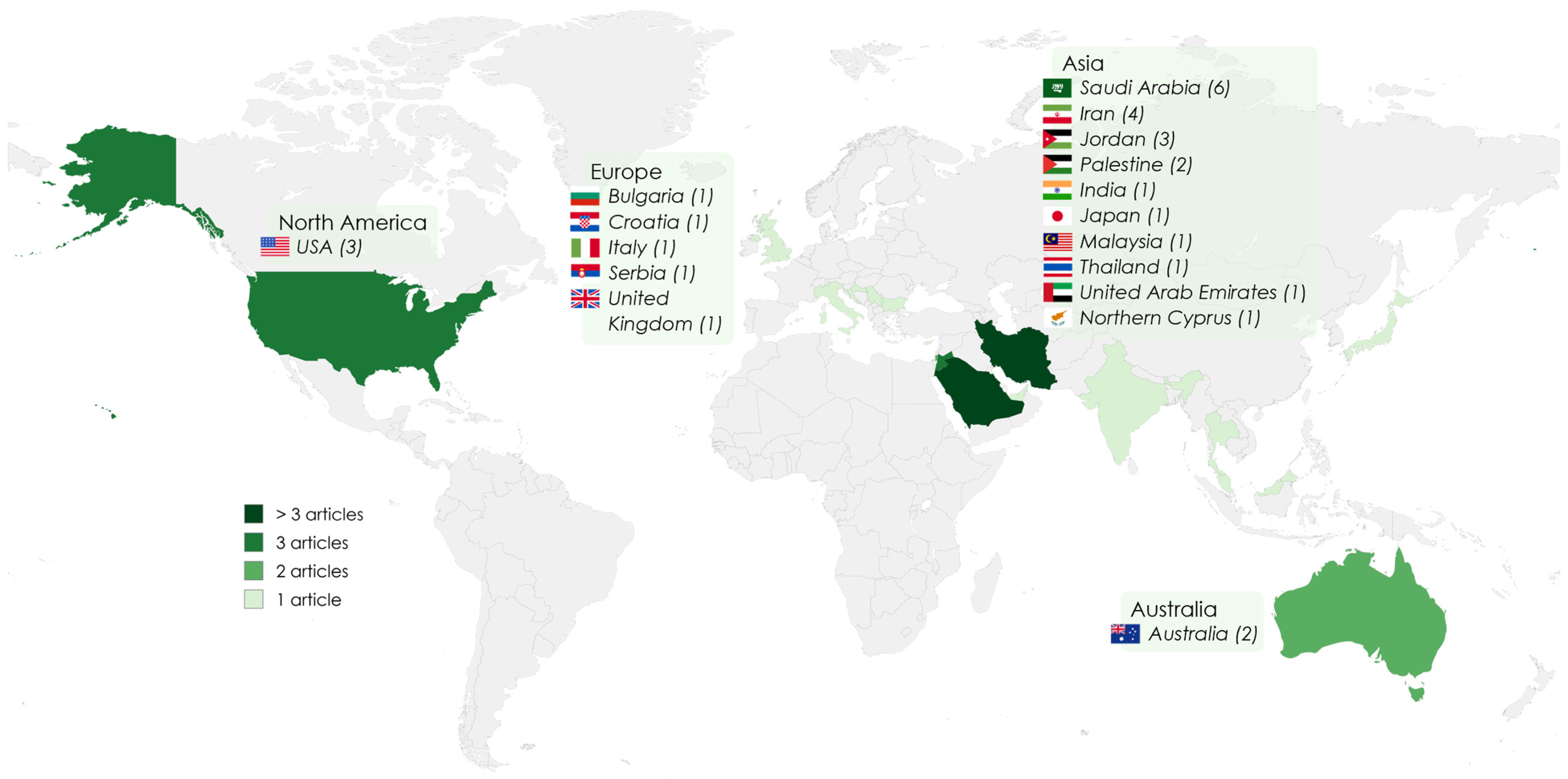
3.1. Characteristics of Studies Included in the Review

| Authors, Year | Country | Study Design | Sample Size and Participants | Objective | Study Outcomes and Main Results |
|---|---|---|---|---|---|
| Kemper et al., 2003 [30] | The United States of America | Cross-sectional questionnaire-based study | n = 537 - physicians (n = 111) - nurses (n = 30), - pharmacists (n = 46), - dietitians (n = 350) | To investigate healthcare professionals’ (HCPs) knowledge, attitudes, and practices related to herbs (H) and FSs. | Although participants showed interest and prior training in H/FSs, their knowledge, attitudes, and practices remained suboptimal, highlighting the need for further education and supportive institutional policies. |
| Shilbayeh, 2011 [31] | Jordan | Cross-sectional questionnaire-based study | n = 388 community pharmacists | To give a platform for analyzing the professional practices, attitudes, and knowledge of Jordanian community pharmacists in providing patients with safe vitamin consumption advice. | Community pharmacists were sufficiently aware of their role in counseling. |
| Robinson et al., 2011 [50] | The United Kingdom | Qualitative study using interviews | n = 4 community pharmacists | To investigate attitudes and behavior of community pharmacists regarding children’s use of herbal and nutritional products. | Pharmacists seem to understand the customer’s need for herbal and nutritional products for children. However, pharmacists may require additional information to maintain their professionalism. |
| Asahina et al., 2012 [54] | Japan | Qualitative study using focus group interviews | n = 16 community pharmacists | To investigate how Japanese community pharmacists perceive patients’ use of herbal and dietary supplements. | A number of participants voiced opinions supporting their use, while others disagreed. Some participants agreed as long as it was for preventative purposes. The safety of health products and the lack of scientific proof for their effectiveness were the main arguments against use. |
| Mehralian et al., 2014 [32] | Iran | Cross-sectional questionnaire-based study | n = 500 community pharmacists | To assess the knowledge and measure the professional attitude and practice of pharmacists about FSs. | Although various factors, such as pharmacy ownership, educational background, and professional experience, influence pharmacy practice in relation to FSs, pharmacists’ knowledge should be recognized as the principal determinant. Accordingly, more emphasis should be placed on enhancing FS-related education and training to improve professional practice. |
| El-Mani et al., 2014 [33] | Australia | Cross-sectional questionnaire-based study | n = 41 community pharmacists | To assess pharmacists’ knowledge about folic acid and iodine supplementation during pregnancy and to conduct an audit of pregnancy supplements available online. | There was little awareness among pharmacists regarding the mandatory fortification program and the dietary sources of iodine and folic acid. |
| Shraim et al., 2017 [34] | Palestine | Cross-sectional questionnaire-based study | n = 281 community pharmacists | To evaluate the knowledge, attitudes, and practices of Palestinian community pharmacists regarding CAM. | Despite having fair to average knowledge scores, pharmacists still require additional CAM education to be better equipped to provide pharmaceutical care and enhance patient outcomes. |
| Bastani et al., 2017 [35] | South of Iran | Cross-sectional questionnaire-based study | n = 200 community pharmacists | To ascertain pharmacists’ performance, attitude, and level of knowledge regarding FSs. | The findings suggested that more knowledgeable pharmacists perform better and have a more positive attitude toward FSs. |
| Dabaghzadeh et al., 2018 [55] | Iran | Cross-sectional study, using simulated patient method | n = 84 community pharmacists | To evaluate the counseling practices of community pharmacists relating to typical use, interactions, contraindications, and adverse effects of multivitamin supplements using simulated patients. | The inadequate pharmacy practices identified in this study concerning multivitamin supplements may be explained by insufficient collection of patient information, inadequate counseling competencies, and communication deficiencies. |
| Ung et al., 2019 [52] | The United States of America | Qualitative study using in-depth interviews | n = 22 - pharmacists (n = 12); - key stakeholders (n = 10) | To assess pharmacists’ and other key stakeholders’ perceptions and opinions about assuming roles that ensure the appropriate and safe use of FSs. | A significant gap persists between pharmacists’ awareness of FS use and their professional responsibilities in this field, highlighting the need for collaborative strategies to enhance their role in ensuring the safe and appropriate use of FSs. |
| Harnett et al., 2019 [53] | The United States of America | Qualitative study using in-depth interviews | n = 22 pharmacists (n = 12) and organizational representatives (n = 10) | To gather the views of pharmacists and key stakeholders on what is needed for pharmacists to fulfill their professional role related to the use of FSs by Americans. | Despite existing challenges, pharmacists and stakeholders recognize opportunities to strengthen pharmacists’ professional role and promote the safe and appropriate use of FSs in the USA. |
| Ghosn et al., 2019 [17] | Saudi Arabia | Cross-sectional questionnaire-based study | n = 102 community pharmacists | To evaluate knowledge, attitudes, and practices of Saudi community pharmacists in counseling patients regarding the safe usage of vitamins. | The study revealed a positive attitude of community pharmacists on their role in patients’ counseling about the safe usage of FS, but their level of knowledge about these products needs to be improved to meet consumer’s needs. |
| Wahab et al., 2019 [51] | Thailand | Qualitative study using interviews | n = 22 community pharmacists | To evaluate how pharmacists perceive the use of food and herbal supplements and what factors or underlying beliefs affect community pharmacists’ provision of these products. | Although the pharmacists interviewed agreed that providing pharmacist care to users of herbal and FSs had advantages, there were many obstacles to its implementation. |
| Zeković et al., 2019 [36] | Serbia | Cross-sectional questionnaire-based study | n = 730 valid questionnaires - community pharmacists (n = 450), - intern pharmacists (n = 74) - pharmacy technicians (n = 206) | To evaluate community pharmacists’ and pharmacy technicians’ knowledge, attitudes, and practices (KAP) regarding advising women on the appropriate intake of FSs containing folic acid. | Despite participants’ generally positive attitudes regarding the importance of folic acid for maternal and fetal health and their recognition of their role in promoting preconception health, some knowledge gaps were identified. |
| Alshahrani SM., 2020 [37] | Saudi Arabia | Cross-sectional questionnaire-based study | n = 1041 community pharmacists | To ascertain the Saudi Arabian community pharmacists’ knowledge, attitudes, and practices regarding vitamin and nutritional supplement counseling. | Saudi Arabian community pharmacists are knowledgeable about vitamins and nutritional supplements and have a positive attitude toward them. |
| Altamimi et al., 2021 [39] | Palestine | Cross-sectional questionnaire-based study | n = 194 community pharmacists | To assess community pharmacists’ knowledge, attitudes, and practices regarding FSs. | Participants’ knowledge of FSs was found to be moderate, according to the study. Knowledge and practices were also closely related. |
| Bukic et al., 2021 [16] | Croatia | Cross-sectional questionnaire-based study | n = 102 community pharmacists | To investigate factors that might affect pharmacists’ recommendations of FSs and to compare their perspectives and understanding of these products across pharmacists with varying years of work experience. | On the general knowledge test regarding FS, all of the participating pharmacists received high scores. Senior pharmacists who may have missed that component of their formal education should receive extra instruction on evidence-based pharmacy practice. |
| Brunelli et al., 2022 [14] | Italy | Cross-sectional questionnaire-based study | n = 232 - with degree in pharmacy (n = 179) - with degree in chemistry and pharmaceutical technologies (n = 53) | To evaluate the FS knowledge, attitudes, and practices of pharmacists working in both public and private licensed pharmacists. | Pharmacists have little understanding of FSs, and young professionals need to keep learning in order to provide patients with safe and useful advice regarding these products. |
| Jalil et al., 2022 [40] | Jordan | Cross-sectional questionnaire-based study | n = 401 community pharmacists | To explore Jordanian community pharmacists’ perspectives and knowledge of herbal supplements available in pharmacies. | The mean knowledge score regarding knowledge of use, regulation, adverse reactions, and drug interactions was 3.7, 3.5, 3.6, and 3.6 (out of 5), respectively. Total knowledge scores significantly differed based on work experience (p < 0.05). |
| Alqahtani et al., 2022 [41] | Saudi Arabia | Cross-sectional questionnaire-based study | n = 246 community pharmacists | To assess community pharmacists’ knowledge, attitudes, and practices about vitamin D and other FSs. | Pharmacists demonstrated a highly positive attitude toward vitamin D and other FSs, and their overall knowledge levels were correspondingly high. The study demonstrated a significant correlation between the pharmacists’ attitude and practice and their level of knowledge about vitamin D and other FSs. |
| Balkanska-Mitkova et al., 2022 [15] | Bulgaria | Cross-sectional questionnaire-based study | n = 151 community pharmacists | To examine the tendency of pharmacists to correctly recommend FSs to chronically ill patients in order to extend the pharmaceutical care and prevent adverse effects. | Most pharmacists are willing to recommend FSs and are able to take part in monitoring the usage of them by patients who are chronically ill. |
| Tobaiqy et al., 2023 [42] | Saudi Arabia | Cross-sectional questionnaire-based study | n = 300 community pharmacists | To assess community pharmacists’ knowledge and attitudes toward dispensing melatonin supplements and their perceived safety and effectiveness. | Awareness rates about melatonin supplement pharmacokinetics and pharmacodynamics among community pharmacists were low. |
| Patil et al., 2024 [43] | India | Cross-sectional questionnaire-based study | n = 226 community pharmacists | To assess community pharmacists’ knowledge, awareness, and attitudes regarding the use of vitamin supplements. | Accurate and sufficient awareness, knowledge, and attitude regarding vitamin deficiencies, their effectiveness, the recommended daily allowance, toxicity, and interactions among pharmacists are lacking. |
| Xin RK et al., 2024 [44] | Malaysia | Cross-sectional study | n = 260 community pharmacists | To assess the knowledge, attitudes, and practices of community pharmacists regarding the provision of counseling services on vitamins and FSs. | Although most Malaysian pharmacists have a sufficient understanding of vitamins and FSs, this study revealed knowledge gaps, especially with regard to less common products. |
| Şendal et al., 2024 [45] | Northern Cyprus | Cross-sectional questionnaire-based study | n = 348 - community pharmacists (n = 24) - physicians/dieticians (n = 21) - public (n = 303) | To evaluate the knowledge, attitudes, and practices of community pharmacists, physicians/dieticians, and general public regarding herbal products used for weight control and slimming. | Approximately half of the pharmacists recommended senna and green tea for weight loss. However, a substantial knowledge gap was observed regarding their safe use, potential interactions, and adverse effects. |
| Naja et al., 2024 [46] | The United Arab Emirates | Cross-sectional questionnaire-based study | n = 373 community pharmacists | To evaluate community pharmacists’ knowledge, attitudes, and practices regarding CAM. | The study findings demonstrated that community pharmacists have generally positive attitudes and practices, as well as good knowledge of CAM functions. |
| Alshahrani SM, 2024 [47] | Saudi Arabia | Cross-sectional questionnaire-based study | n = 224 community pharmacists | To evaluate the attitudes and knowledge of community pharmacists working in the Aseer Region of Saudi Arabia with regard to probiotics. | Probiotics were correctly defined by more than half of the participants, and most of them were able to differentiate between the various potentially dangerous bacterial strains. |
| Bidoki et al., 2025 [48] | Iran | Cross-sectional questionnaire-based study | n = 147 - community pharmacists (n = 93) - pharmacy students (n = 54) | To investigate pharmacists’ knowledge, attitudes, and practice regarding FSs. | Knowledge and practice scores correlated with pharmacists’ age, education, experience, and professional title. Most pharmacists demonstrated a positive attitude toward providing FS counseling. |
| Al-Shawabkeh et al., 2025 [49] | Jordan | Cross-sectional questionnaire-based study | n = 322 community pharmacists | To evaluate community pharmacists’ attitudes toward the distribution, safety, and efficacy of melatonin supplements, as well as existing knowledge gaps, and suggested educational measures to promote safer use. | Community pharmacists in Jordan demonstrated non-optimal knowledge and awareness regarding melatonin supplements, indicating a need for improvement in their dispensing practices. |
| Elsayed et al., 2025 [56] | Australia | Mixed-methods study (self-completion of questionnaire and semi-structured interviews) | n = 107 - community pharmacists (n = 73) - hospital pharmacists (n = 17) - specialist pharmacy area (n = 9) - other (n = 8) | To investigate the attitudes and practices of Australian pharmacists regarding nutrition counseling and the provision of advice on vitamin and mineral supplements, including the adequacy of their education and training in this area. | Pharmacists expressed willingness and potential to provide nutrition counseling; however, improved nutrition education is required to improve confidence in this area. |
3.2. Knowledge and Awareness of Community Pharmacists Regarding FSs
3.3. Attitude and Perceived Role of Community Pharmacists Regarding FSs
4. Discussion
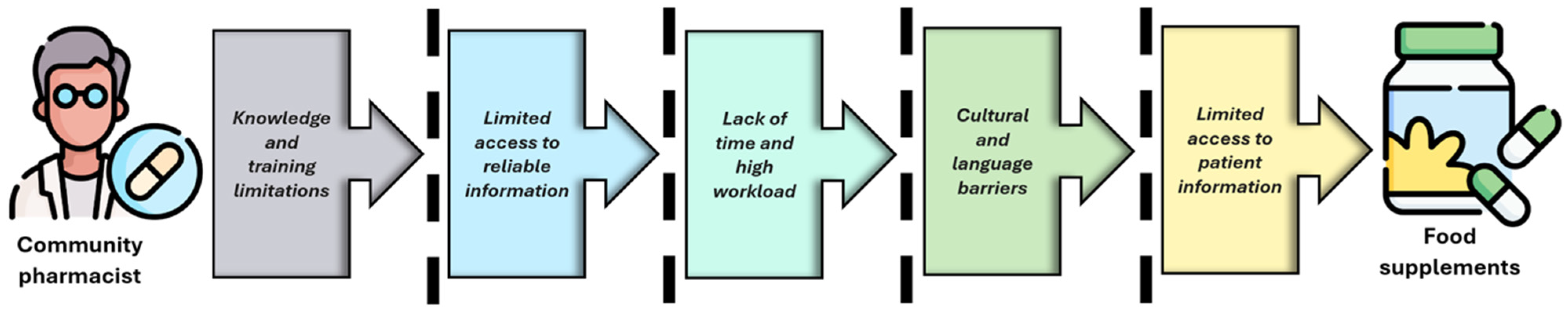
4.1. Knowledge and Training Limitations
4.2. Limited Access to Reliable Information
4.3. Lack of Time and High Workload
4.4. Cultural and Language Barriers
4.5. Limited Access to Patient Information
4.6. Implications for Practice, Policy, and Future Research
4.7. Limitations
5. Conclusions
Author Contributions
Funding
Institutional Review Board Statement
Informed Consent Statement
Data Availability Statement
Conflicts of Interest
Abbreviations
| CAM | Complementary and alternative medicine |
| DS | Dietary supplement |
| EFSA | European Food Safety Authority |
| FS | Food supplement |
| HCP | Healthcare professionals |
References
- Tran, S.; Calabretto, J.P.; Sorich, M. Consumer–Pharmacist Interactions Around Complementary Medicines: Agreement Between Pharmacist and Consumer Expectations, Satisfaction, and Pharmacist Influence. Int. J. Pharm. Pract. 2013, 21, 378–385. [Google Scholar] [CrossRef] [Scilit]
- Grand View Research. Dietary Supplements Market, Industry Report, 2025–2033. Available online: https://www.grandviewresearch.com/industry-analysis/dietary-supplements-market-report (accessed on 22 September 2025).
- European Food Safety Authority (EFSA). Food Supplements. Available online: https://www.efsa.europa.eu/en/topics/topic/food-supplements (accessed on 5 August 2025).
- Thakkar, S.; Anklam, E.; Xu, A.; Ulberth, F.; Li, J.; Li, B.; Hugas, M.; Sarma, N.; Crerar, S.; Swift, S.; et al. Regulatory Landscape of Dietary Supplements and Herbal Medicines from a Global Perspective. Regul. Toxicol. Pharmacol. 2020, 114, 104647. [Google Scholar] [CrossRef] [Scilit]
- U.S. Food and Drug Administration (FDA). Questions and Answers on Dietary Supplements; U.S. Food and Drug Administration, 2024. Available online: https://www.fda.gov/food/information-consumers-using-dietary-supplements/questions-and-answers-dietary-supplements (accessed on 25 September 2025).
- Djaoudene, O.; Romano, A.; Bradai, Y.D.; Zebiri, F.; Ouchene, A.; Yousfi, Y.; Amrane-Abider, M.; Sahraoui-Remini, Y.; Madani, K. A Global Overview of Dietary Supplements: Regulation, Market Trends, Usage During the COVID-19 Pandemic, and Health Effects. Nutrients 2023, 15, 3320. [Google Scholar] [CrossRef] [Scilit] [PubMed]
- Antonio, J.; Antonio, B.; Aragon, A.; Bustillo, E.; Candow, D.; Collins, R.; Davila, E.; Durkin, B.; Kalman, D.; Lockwood, C.; et al. Common Questions and Misconceptions About Dietary Supplements and the Industry—What Does Science and the Law Really Say? J. Int. Soc. Sports Nutr. 2025, 22, 2534128. [Google Scholar] [CrossRef] [Scilit] [PubMed]
- Zovi, A.; Vitiello, A.; Sabbatucci, M.; Musazzi, U.M.; Sagratini, G.; Cifani, C.; Vittori, S. Food Supplements Marketed Worldwide: A Comparative Analysis Between the European and the US Regulatory Frameworks. J. Diet. Suppl. 2025, 22, 25–40. [Google Scholar] [CrossRef] [Scilit]
- Sura, S.; Chabria, A.; Sansgiry, S.S. Pharmacy Students’ Knowledge and Attitude Towards Herbal Medications. Int. J. Pharm. Pract. 2010, 3, 301–307. [Google Scholar]
- Tangkiatkumjai, M.; Boardman, H.; Walker, D.M. Potential Factors that Influence Usage of Complementary and Alternative Medicine Worldwide: A Systematic Review. BMC Complement. Med. Ther. 2020, 20, 363. [Google Scholar] [CrossRef] [Scilit]
- Food Supplements Europe. Consumer Survey on Food Supplements in the EU; Ipsos: Brussels, Belgium, 2022; Available online: https://foodsupplementseurope.org/wp-content/uploads/2022/07/FSE-Consumer_Survey-Ipsos-2022.pdf (accessed on 20 October 2025).
- Axon, D.R.; Vanova, J.; Edel, C.; Slack, M. Dietary Supplement Use, Knowledge, and Perceptions Among Student Pharmacists. Am. J. Pharm. Educ. 2017, 81, 92. [Google Scholar] [CrossRef] [Scilit]
- De Balzo, V.; Vitiello, V.; Germani, A.; Donini, L.M.; Poggiogalle, E.; Pinto, A. A Cross-Sectional Survey on Dietary Supplements Consumption Among Italian Teenagers. PLoS ONE 2014, 9, e100508. [Google Scholar]
- Brunelli, L.; Arnoldo, L.; Mazzilis, G.; D’Angelo, M.; Colautti, L.; Cojutti, P.G.; Parpinel, M. The Knowledge and Attitudes of Pharmacists Related to the Use of Dietary Supplements: An Observational Study in Northeastern Italy. Prev. Med. Rep. 2022, 30, 101986. [Google Scholar] [CrossRef] [Scilit]
- Balkanska-Mitkova, A.; Yaneva, A.; Kondeva-Burdina, M.; Dimitrova, M. Pharmacists’ Attitudes to Dispensing Food Supplements to Chronically Ill Patients: A Pilot Survey Among Community Pharmacies in Bulgaria. Pharmacia 2022, 69, 589–593. [Google Scholar] [CrossRef] [Scilit]
- Bukic, J.; Kuzmanic, B.; Rusic, D.; Portolan, M.; Mihanovic, A.; Seselja Perisin, A.; Leskur, D.; Petric, A.; Bozic, J.; Tomic, S.; et al. Community Pharmacists’ Use, Perception and Knowledge on Dietary Supplements: A Cross-Sectional Study. Pharm. Pract. 2021, 19, 2251. [Google Scholar] [CrossRef] [Scilit]
- Ghosn, S.A.; Addison, B.; Ali, M.D. Community Pharmacists’ Knowledge, Attitude, and Practices Towards Vitamin Supplements in Al-Khobar Region, Saudi Arabia: A Descriptive Cross-Sectional Study. J. Pharm. Bioallied Sci. 2019, 11, 333–340. [Google Scholar]
- Staynova, R.; Gvozdeva, Y.; Peikova, L.; Mihaylova, A. Bulgarian Community Pharmacists’ Attitudes and Barriers Towards Pharmaceutical Care Provision for Pregnant Women. Pharmacia 2021, 68, 511–516. [Google Scholar] [CrossRef] [Scilit]
- Bell, J.; Dziekan, G.; Pollack, C.; Mahachai, V. Self-Care in the Twenty-First Century: A Vital Role for the Pharmacist. Adv. Ther. 2016, 33, 1691–1703. [Google Scholar] [CrossRef] [Scilit] [PubMed]
- Bertsche, T.; Alexa, J.M.; Eickhoff, C.; Schulz, M. Self-Care and Self-Medication as Central Components of Healthcare in Germany—On the Way to Evidence-Based Pharmacy. Explor. Res. Clin. Soc. Pharm. 2023, 9, 100257. [Google Scholar] [CrossRef] [Scilit] [PubMed]
- Mirkazemi, C.; Williams, M.; Berbecaru, M.; Stubbings, T.; Murray, S.; Veal, F.; Cooper, N.; Bereznicki, L. Practising Pharmacists Want More Nutrition Education. Curr. Pharm. Teach. Learn. 2022, 14, 1420–1430. [Google Scholar] [CrossRef] [Scilit]
- Dujaili, J.A.; Blebil, A.; Chong, D. Assessment of the Nutritional Knowledge of Undergraduate Pharmacy Students: The Need to Advance Nutrition Education in the Training of Pharmacy Students. Pharm. Educ. 2021, 21, 310–314. [Google Scholar] [CrossRef] [Scilit]
- Medhat, M.; Sabry, N.; Ashoush, N. Knowledge, Attitude and Practice of Community Pharmacists Towards Nutrition Counseling. Int. J. Clin. Pharm. 2020, 42, 1456–1468. [Google Scholar] [CrossRef] [Scilit]
- Douglas, P.L.; McCarthy, H.; McCotter, L.E.; Gallen, S.; McClean, S.; Gallagher, A.M.; Ray, S. Nutrition Education and Community Pharmacy: A First Exploration of Current Attitudes and Practices in Northern Ireland. Pharmacy 2019, 7, 27. [Google Scholar] [CrossRef] [Scilit]
- Kelly, D.; Chawke, J.; Keane, M.; Conway, H.; Douglas, P.; Griffin, A. An Exploration of the Self-Perceived Nutrition Competencies of Pharmacists. Explor. Res. Clin. Soc. Pharm. 2022, 8, 100203. [Google Scholar] [CrossRef] [Scilit]
- Hijazi, M.A.; Shatila, H.; El-Lakany, A.; El-Ala, M.; Kharroubi, S.; Alameddine, M. Beliefs, Practices, and Knowledge of Community Pharmacists Regarding Complementary and Alternative Medicine: A National Cross-Sectional Study in Lebanon. BMJ Open 2019, 9, e025074. [Google Scholar] [CrossRef] [Scilit] [PubMed]
- Coon, S.A.; Stevens, V.W.; Brown, J.E.; Wolff, S.E.; Wrobel, M.J. Comparison of Dietary Supplement Product Knowledge and Confidence Between Pharmacists and Health Food Store Employees. J. Am. Pharm. Assoc. 2015, 55, 161–168. [Google Scholar] [CrossRef] [Scilit] [PubMed]
- Stoimenova, A.; Manova, M.; Savova, A.; Kundurzhiev, T.; Stoycheva, M.; Georgieva, S.; Dimitrova, M.; Petrova, G. Educational Project on Food Supplements for Community Pharmacists. Acta Med. Bulg. 2010, 37, 51–57. [Google Scholar]
- Page, M.J.; McKenzie, J.E.; Bossuyt, P.M.; Boutron, I.; Hoffmann, T.C.; Mulrow, C.D.; Shamseer, L.; Tetzlaff, J.M.; Akl, E.A.; Brennan, S.E.; et al. The PRISMA 2020 Statement: An Updated Guideline for Reporting Systematic Reviews. Int. J. Surg. 2021, 88, 105906. [Google Scholar] [CrossRef] [PubMed]
- Kemper, K.J.; Amata-Kynvi, A.; Dvorkin, L.; Whelan, J.S.; Woolf, A.; Samuels, R.C.; Hibberd, P. Herbs and Other Dietary Supplements: Healthcare Professionals’ Knowledge, Attitudes, and Practices. Altern. Ther. Health Med. 2003, 9, 42–49. [Google Scholar]
- Shilbayeh, S.A. Exploring Knowledge and Attitudes Towards Counselling About Vitamin Supplements in Jordanian Community Pharmacies. Pharm. Pract. 2011, 9, 242. [Google Scholar] [CrossRef] [Scilit]
- Mehralian, G.; Yousefi, N.; Hashemian, F.; Maleksabet, H. Knowledge, Attitude and Practice of Pharmacists Regarding Dietary Supplements: A Community Pharmacy-Based Survey in Tehran. Iran. J. Pharm. Res. 2014, 13, 1457. [Google Scholar]
- El-Mani, S.F.; Mullan, J.; Charlton, K.E.; Flood, V.M. Folic Acid and Iodine Supplementation During Pregnancy: How Much Do Pharmacists Know and Which Products Are Readily Available? J. Pharm. Pract. Res. 2014, 44, 113–119. [Google Scholar] [CrossRef] [Scilit]
- Shraim, N.Y.; Shawahna, R.; Sorady, M.A.; Aiesh, B.M.; Alashqar, G.S.; Jitan, R.I.; Abu Hanieh, W.M.; Hotari, Y.B.; Sweileh, W.M.; Zyoud, S.E. Community Pharmacists’ Knowledge, Practices and Beliefs About Complementary and Alternative Medicine in Palestine: A Cross-Sectional Study. BMC Complement. Altern. Med. 2017, 17, 429. [Google Scholar] [CrossRef] [Scilit]
- Bastani, P.; Jooybar, M.; Zadeh, M.A.; Samadbeik, M. Community Pharmacy-Based Survey on Pharmacists’ Knowledge, Attitude, and Performance Regarding Dietary Supplements: Evidence from South of Iran. Natl. J. Physiol. Pharm. Pharmacol. 2017, 7, 396–402. [Google Scholar] [CrossRef] [Scilit]
- Zeković, M.T.; Krajnović, D.; Nikolić, M.; Stojković, T.; Gurinović, M.; Glibetić, M. Periconceptional Folic Acid Supplementation: Knowledge, Attitudes and Counselling Practice of Serbian Pharmacists and Pharmacy Technicians. Vojnosanit. Pregl. 2019, 76, 1127–1138. [Google Scholar] [CrossRef] [Scilit]
- Alshahrani, S.M. Assessment of Knowledge, Attitudes, and Practice of Community Pharmacists Regarding Weight Reduction Agents and Supplements in Aseer Region, Saudi Arabia. Risk Manag. Healthc. Policy 2020, 13, 347–353. [Google Scholar] [CrossRef] [Scilit]
- Alshahrani, A. Knowledge, Attitudes, and Practice of Community Pharmacists Towards Providing Counseling on Vitamins and Nutritional Supplements in Saudi Arabia. AIMS Public Health 2020, 7, 697. [Google Scholar] [CrossRef] [Scilit]
- Altamimi, M.; Hamdan, M.; Badrasawi, M.; Allahham, S. Knowledge, Attitudes and Practices Related to Dietary Supplements Among a Group of Palestinian Pharmacists. Sultan Qaboos Univ. Med. J. 2021, 21, 613. [Google Scholar] [CrossRef] [Scilit]
- Jalil, B.; Naser, A.Y.; Prieto, J.M.; Heinrich, M. Herbal Supplements in Jordan: A Cross-Sectional Survey of Pharmacists’ Perspectives and Knowledge. BMJ Open 2022, 12, e057405. [Google Scholar] [CrossRef] [Scilit]
- Alqahtani, S.S.; Alam, N.; Alharbi, S.M.; Najmi, W.H.; Daghriri, S.H.; Ahmad, S.; Banji, O.J.; Syed, N.K.; Syed, M.H.; Thaibah, H.A.; et al. Knowledge, Attitude, and Practice Regarding Vitamin D and Dietary Supplements Use: A Community Pharmacy-Based Cross-Sectional Study in Jazan, Saudi Arabia. Curr. Top. Nutraceutical Res. 2022, 20, 431–437. [Google Scholar] [CrossRef] [Scilit]
- Tobaiqy, M.; AlZahrani, F.A.; Hassan, A.S.; Alirbidi, A.H.; Alraddadi, O.A.; AlSadah, O.A.; Yamani, M.B.; Alqutub, S.T. Community Pharmacists’ Knowledge, Attitudes and the Perceived Safety and Effectiveness of Melatonin Supplements: A Cross-Sectional Survey. Pharmacy 2023, 11, 147. [Google Scholar] [CrossRef] [Scilit]
- Patil, P.J.; Patil, V.S.; Malu, J.S.; Aswale, D.M. Community Pharmacist’s Awareness, Knowledge and Attitude Towards Use of Vitamin Supplements in Pimpri-Chinchwad Municipal Corporation (PCMC) Area of Pune, India: A Descriptive Cross-Sectional Study. Indian J. Community Med. 2024, 49, 223–227. [Google Scholar] [CrossRef] [Scilit] [PubMed]
- Xin, R.K.; Yee, T.W.; Qin, W.Z.; Kaiyee, L.; Mohammed, A.H.; Blebil, A.; Dujaili, J.; Hassan, B.A.; Lim, A. Community Pharmacists’ Knowledge, Attitudes, and Practices Regarding Counselling on Vitamins and Dietary Supplements in Malaysia: A Study on Complementary Medicines. Explor. Res. Clin. Soc. Pharm. 2024, 13, 100410. [Google Scholar] [CrossRef] [Scilit] [PubMed]
- Şendal, B.; Yavuz, H.U.; Yavuz, D.Ö. Evaluation of the Knowledge, Opinion, and Approaches of Pharmacists, Physicians, Dieticians, and the Public on Herbal Products Used for Weight Control and Slimming in Northern Cyprus. Indian J. Pharm. Educ. Res. 2024, 58, 1318–1327. [Google Scholar] [CrossRef] [Scilit]
- Naja, F.; Abbas, N.; Khaleel, S.; Zeb, F.; Osaili, T.A.H.; Obaid, R.S.; Faris, M.; Radwan, H.; Ismail, L.C.; Hassan, H.; et al. Beyond Pillbox: A National Cross-Sectional Study on the Attitudes, Practices, and Knowledge of Community Pharmacists Regarding Complementary and Alternative Medicine. BMC Complement. Med. Ther. 2024, 24, 107. [Google Scholar] [CrossRef] [Scilit]
- Alshahrani, S.M. Community Pharmacists’ Knowledge, Attitudes, and Barriers Toward Prescribing Probiotics in Aseer Region, Saudi Arabia. Curr. Top. Nutraceutical Res. 2024, 22, 612–616. [Google Scholar] [CrossRef] [Scilit]
- Bidoki, M.Z.; Morowatisharifabad, M.A.; Afzal, G.; Aghabagheri, M.; Meybodi, M.N. Knowledge, Attitude, and Practice Analysis of Dietary Supplements Among Pharmacists: A Promising Outlook from Yazd, Iran. J. Res. Pharm. Pract. 2025, 14, 27–34. [Google Scholar] [CrossRef] [Scilit]
- Al-Shawabkeh, J.D.; Laban, N.M.; Shawagfeh, M.T.; Al Rimawi, M.; Makahleh, H.A.; Alfakhouri, M. Community Pharmacists’ Current Safe Practice and Educational Needs in Dispensing Melatonin Supplements in Jordan: A Cross-Sectional Study. Pharm. Pract. 2025, 23, 3171. [Google Scholar] [CrossRef] [Scilit]
- Robinson, N.; Lorenc, A. Responding to Patient Demand: Community Pharmacists and Herbal and Nutritional Products for Children. Phytother. Res. 2011, 25, 892–896. [Google Scholar] [CrossRef] [Scilit] [PubMed]
- Wahab, M.S.; Sakthong, P.; Winit-Watjana, W. Qualitative Exploration of Pharmacist Care for Herbal and Dietary Supplement Users in Thai Community Pharmacies. J. Pharm. Health Serv. Res. 2019, 10, 57–66. [Google Scholar] [CrossRef] [Scilit]
- Ung, C.O.L.; Harnett, J.E.; Hu, H.; Desselle, S.P. Barriers to Pharmacists Adopting Professional Responsibilities That Support the Appropriate and Safe Use of Dietary Supplements in the United States: Perspectives of Key Stakeholders. Am. J. Health-Syst. Pharm. 2019, 76, 980–990. [Google Scholar] [CrossRef] [Scilit] [PubMed]
- Harnett, J.E.; Ung, C.O.L.; Hu, H.; Sultani, M.; Desselle, S.P. Advancing the Pharmacist’s Role in Promoting the Appropriate and Safe Use of Dietary Supplements. Complement. Ther. Med. 2019, 44, 174–181. [Google Scholar] [CrossRef] [Scilit]
- Asahina, Y.; Hori, S.; Sawada, Y. Community Pharmacists’ Attitudes Relating to Patients’ Use of Health Products in Japan. Int. J. Clin. Pharm. 2012, 34, 529–537. [Google Scholar] [CrossRef] [Scilit]
- Dabaghzadeh, F.; Hajjari, R. Practice of Community Pharmacists Related to Multivitamin Supplements: A Simulated Patient Study in Iran. Int. J. Clin. Pharm. 2018, 40, 190–195. [Google Scholar] [CrossRef] [Scilit]
- Elsayed, S.; Ibrahim, D.; Harnett, J.E.; Pace, J.; Krass, I.; Gelissen, I.C. Nutrition Counseling in Pharmacy Practice in Australia: A Mixed Methods Study. Curr. Pharm. Teach. Learn. 2025, 17, 102416. [Google Scholar] [CrossRef] [Scilit]
- Clauson, K.; McQueen, C.; Shields, K.; Bryant, P. Knowledge and Attitudes of Pharmacists in Missouri Regarding Natural Products. Am. J. Pharm. Educ. 2003, 67, 301. [Google Scholar] [CrossRef] [Scilit]
- Kwan, D.; Hirschkorn, K.; Boon, H. US and Canadian Pharmacists’ Attitudes, Knowledge, and Professional Practice Behaviors Toward Dietary Supplements: A Systematic Review. BMC Complement. Altern. Med. 2006, 6, 31. [Google Scholar] [CrossRef] [Scilit]
- Waddington, F.; Naunton, M.; Kyle, G.; Thomas, J.; Cooper, G.; Waddington, A. A Systematic Review of Community Pharmacist Therapeutic Knowledge of Dietary Supplements. Int. J. Clin. Pharm. 2015, 37, 439–446. [Google Scholar] [CrossRef] [Scilit]
- Culverhouse, S.E.; Wohlmuth, H. Factors Affecting Pharmacists’ Recommendation of Complementary Medicines: A Qualitative Pilot Study of Australian Pharmacists. BMC Complement. Altern. Med. 2012, 12, 183. [Google Scholar] [CrossRef] [Scilit] [PubMed]
- McKee, P.; Hughes, C.; Hanna, L.A. Views of Pharmacy Graduates and Pharmacist Tutors on Evidence-Based Practice in Relation to Over-the-Counter Consultations: A Qualitative Study. J. Eval. Clin. Pract. 2015, 21, 1040–1046. [Google Scholar] [CrossRef] [Scilit] [PubMed]
- Barnes, J.; Butler, R. Community Pharmacists’ Professional Practices for Complementary Medicines: A Qualitative Study in New Zealand. Int. J. Clin. Pharm. 2020, 42, 1109–1117. [Google Scholar] [CrossRef] [Scilit] [PubMed]
- Shin, J.; Moczygemba, L.R.; Barner, J.C.; Garza, A.; Linedecker-Smith, S.; Srinivasa, M. Patient Experience with Clinical Pharmacist Services in Travis County Federally Qualified Health Centers. Pharm. Pract. 2020, 18, 1751. [Google Scholar] [CrossRef] [Scilit]
- Gvozdeva, Y.; Georgieva, P. Therapeutic Potential of Essential Oils and Their Bioactive Compounds against Colon Cancer: Focus on Colon-Specific Micro- and Nanocarriers. BioChem 2025, 5, 26. [Google Scholar] [CrossRef] [Scilit]
- Syed-Abdul, M.M.; Kabir, S.S.; Soni, D.S.; Faber, T.J.; Barnes, J.T.; Timlin, M.T. Role of Nutrition Education in Pharmacy Curriculum—Students’ Perspectives and Attitudes. Pharmacy 2021, 9, 26. [Google Scholar] [CrossRef] [Scilit]
- Rakvaag, H.; Søreide, G.E.; Meland, E.; Kjome, R.L. Complementing or Conflicting? How Pharmacists and Physicians Position the Community Pharmacist. Pharm. Pract. 2020, 18, 2078. [Google Scholar] [CrossRef] [Scilit]
- Perisin, A.S.; Mestrovic, A.; Bozic, J.; Kacic, J.; Bukic, J.; Leskur, D.; Rusic, D.; Zekan, L.; Stipic, M.; Modun, D. Interprofessional Pharmacotherapy Workshop: Intervention to Improve Health Professionals’ and Students’ Attitudes Towards Collaboration between Physicians and Pharmacists. J. Interprof. Care 2019, 33, 456–463. [Google Scholar] [CrossRef] [Scilit]
- Tommelein, E.; De Boevre, M.; Vanhie, L.; Van Tongelen, I.; Boussery, K.; De Saeger, S. Revisiting the Food- and Nutrition-Related Curriculum in Healthcare Education: An Example for Pharmacy Education. Pharmacy 2021, 9, 104. [Google Scholar] [CrossRef] [Scilit] [PubMed]
- Miere, D.; Stanciu, O.; Filip, L. The Evolution of Nutrition and Dietetics Bachelor Program from Faculty of Pharmacy, “Iuliu Hațieganu” University of Medicine and Pharmacy Cluj-Napoca. Procedia-Soc. Behav. Sci. 2015, 180, 1398–1405. [Google Scholar] [CrossRef] [Scilit]
- Available online: https://www.ehu.eus/documents/d/farmazia-fakultatea/2024_02_17_facultad-farmacia_en-gb-def (accessed on 24 November 2025).
- Available online: https://www.uv.es/double-degree-pharmacy-human-nutrition-dietetics/en/doble-degree-pharmacy-human-nutrition-dietetics.html (accessed on 24 November 2025).
- Available online: https://en.unav.edu/web/degree-in-pharmacy/doble-grado-en-farmacia-y-nutricion-humana-y-dietetica (accessed on 24 November 2025).
- Available online: https://www.uspceu.com/en/academic-programs/degree/pharmacy-human-nutrition-and-dietetics (accessed on 24 November 2025).
- Available online: https://pharmfac.mu-sofia.bg/wp-content/uploads/2024/04/3_Bromatology_ENG_2022.pdf (accessed on 24 November 2025).
- Available online: https://sigarra.up.pt/ffup/en/ucurr_geral.ficha_uc_view?pv_ocorrencia_id=523608 (accessed on 24 November 2025).
- Available online: https://www.uah.es/export/shared/es/estudios/.galleries/Archivos-estudios/GR/Unico/AG577_2_6_1_E_G577.pdf (accessed on 24 November 2025).
- Available online: http://pharmacy.bg.ac.rs/en/departments/department-of-bromatology/503/general-information/ (accessed on 24 November 2025).
- Available online: https://www.dsf.unict.it/courses/lm-13/course-units?seuid=D9F34355-2D77-4AE8-AE99-79BE9D4AE410 (accessed on 24 November 2025).
- Walji, R.; Boon, H.; Barnes, J.; Welsh, S.; Austin, Z.; Baker, G.R. Reporting Natural Health Product Related Adverse Drug Reactions: Is It the Pharmacist’s Responsibility? Int. J. Pharm. Pract. 2011, 19, 383–391. [Google Scholar] [CrossRef] [Scilit] [PubMed]
- Al-Jamei, S.; Abu Farha, R.; Zawiah, M.; Kadi, T.; Al-Sonidar, A. Perceptions, Knowledge, and Perceived Barriers of Yemeni Pharmacists and Pharmacy Technicians Towards Evidence-Based Practice. J. Eval. Clin. Pract. 2019, 25, 585–590. [Google Scholar] [CrossRef] [Scilit]
- Tan, S.Y.; Hatah, E. Knowledge, Attitudes, Practices, and Barriers Related to Research Utilization: A Survey Among Pharmacists in Malaysia. Int. J. Clin. Pharm. 2017, 39, 450–458. [Google Scholar] [CrossRef] [Scilit]
- Bradshaw, M.; Tomany-Korman, S.; Flores, G. Language Barriers to Prescriptions for Patients with Limited English Proficiency: A Survey of Pharmacies. Pediatrics 2007, 120, e225–e235. [Google Scholar] [CrossRef] [Scilit]
- Watermeyer, J.; Penn, C. “Come, Let Me Show You”: The Use of Props to Facilitate Communication of Antiretroviral Dosage Instructions in Multilingual Pharmacy Interactions. In Health Communication in Southern Africa: Engaging with Social and Cultural Diversity; Rozenberg: Amsterdam, The Netherlands, 2009; pp. 191–216. [Google Scholar]
- Roberts, M.F.; Reeves, K.; Divine, H. Community Pharmacists’ Lack of Access to Health Records and Its Impact on Targeted MTM Interventions. J. Am. Pharm. Assoc. 2019, 59, S81–S84. [Google Scholar] [CrossRef] [Scilit]


| Parameter | Description |
|---|---|
| Population | Community pharmacists (only pharmacists who have a university degree were considered). |
| Intervention | Assessment of pharmacists’ knowledge, attitudes, and practices related to FSs counseling and dispensing. |
| Comparison | Differences in pharmacists’ knowledge or attitudes regarding age, sex, education level, additional training, work experience, or region/country. |
| Outcome | Level of knowledge regarding FSs, attitudes toward FSs counseling and dispensing, perceived barriers, and educational needs. |
| Study design | Quantitative (e.g., cross-sectional), qualitative, or mixed-methods studies |
Disclaimer/Publisher’s Note: The statements, opinions and data contained in all publications are solely those of the individual author(s) and contributor(s) and not of MDPI and/or the editor(s). MDPI and/or the editor(s) disclaim responsibility for any injury to people or property resulting from any ideas, methods, instructions or products referred to in the content. |
© 2025 by the authors. Licensee MDPI, Basel, Switzerland. This article is an open access article distributed under the terms and conditions of the Creative Commons Attribution (CC BY) license (https://creativecommons.org/licenses/by/4.0/).
Share and Cite
Slavcheva, K.; Staynova, R.; Neycheva, N.; Kafalova, D. Community Pharmacists’ Knowledge, Attitudes, and Readiness to Provide Counseling on Food Supplements—A Scoping Review. Nutrients 2025, 17, 3754. https://doi.org/10.3390/nu17233754
Slavcheva K, Staynova R, Neycheva N, Kafalova D. Community Pharmacists’ Knowledge, Attitudes, and Readiness to Provide Counseling on Food Supplements—A Scoping Review. Nutrients. 2025; 17(23):3754. https://doi.org/10.3390/nu17233754
Chicago/Turabian StyleSlavcheva, Katerina, Radiana Staynova, Nelina Neycheva, and Daniela Kafalova. 2025. "Community Pharmacists’ Knowledge, Attitudes, and Readiness to Provide Counseling on Food Supplements—A Scoping Review" Nutrients 17, no. 23: 3754. https://doi.org/10.3390/nu17233754
APA StyleSlavcheva, K., Staynova, R., Neycheva, N., & Kafalova, D. (2025). Community Pharmacists’ Knowledge, Attitudes, and Readiness to Provide Counseling on Food Supplements—A Scoping Review. Nutrients, 17(23), 3754. https://doi.org/10.3390/nu17233754