Effect of Probiotics Supplementation on Cortisol Levels: A Systematic Review and Meta-Analysis

 , , and
Highlights
- Current knowledge: Probiotics’ effect on cortisol levels shows mixed results in both healthy and diseased participants. It is unclear which population subgroup is most affected.
- Study questions: What is the effect of probiotics on cortisol levels, and how does it vary by health status, region, treatment duration, use of other medications, and number of probiotic strains?
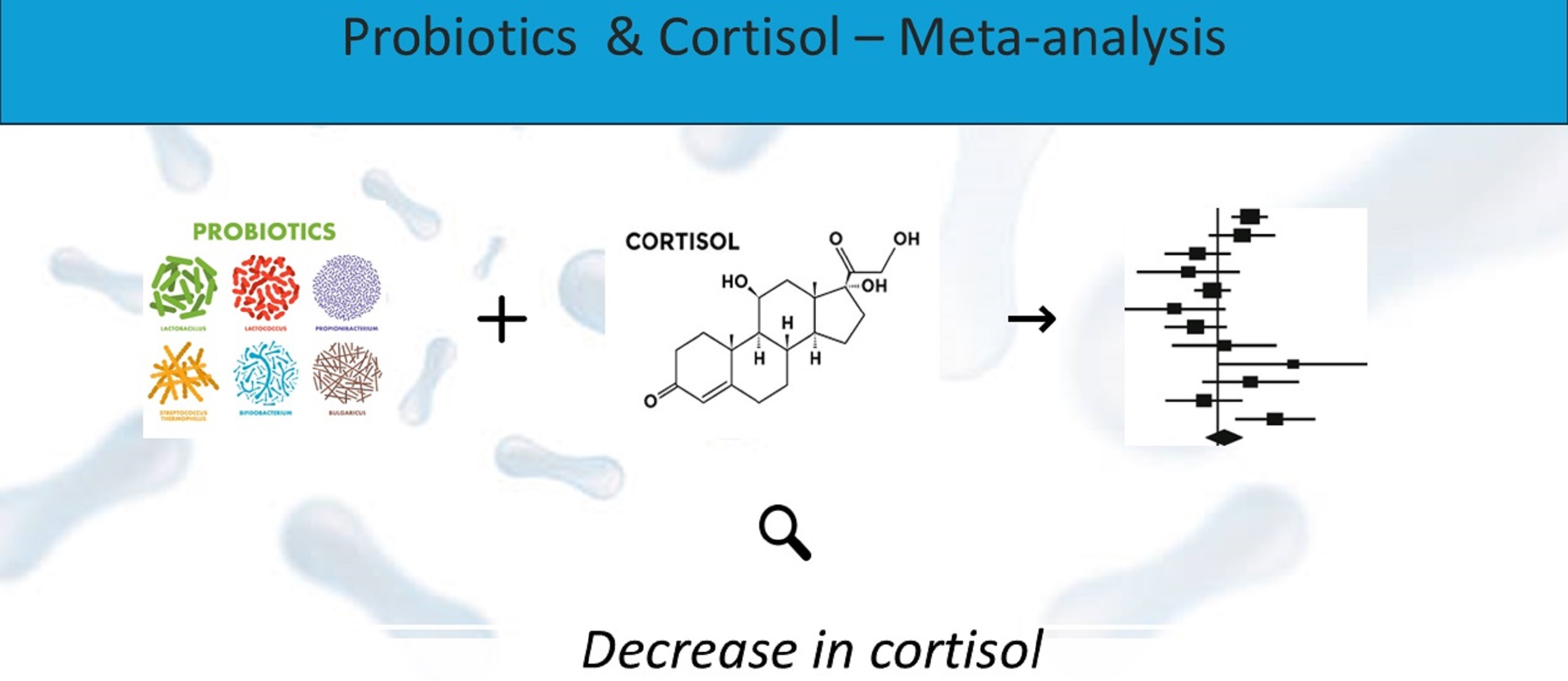
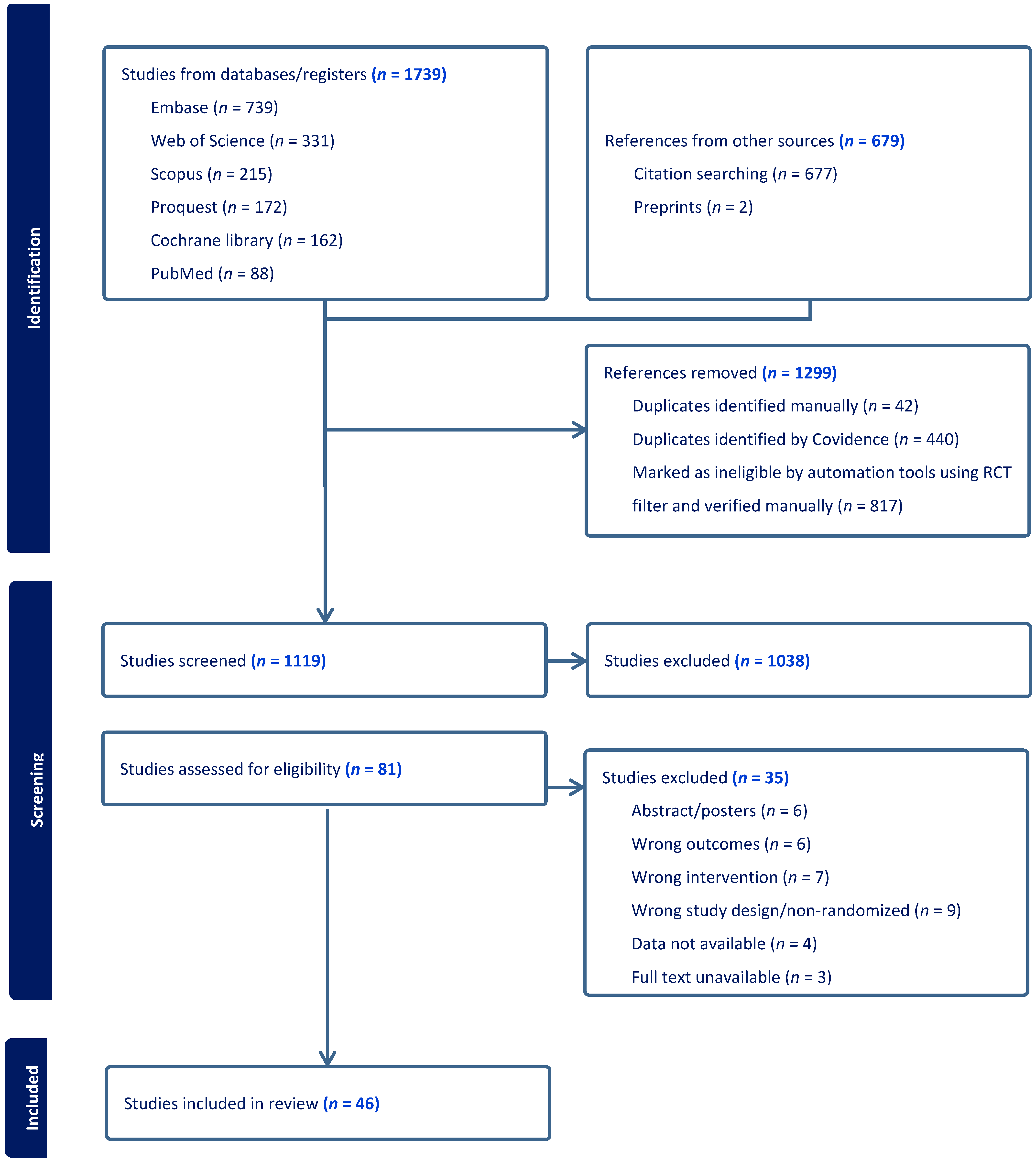
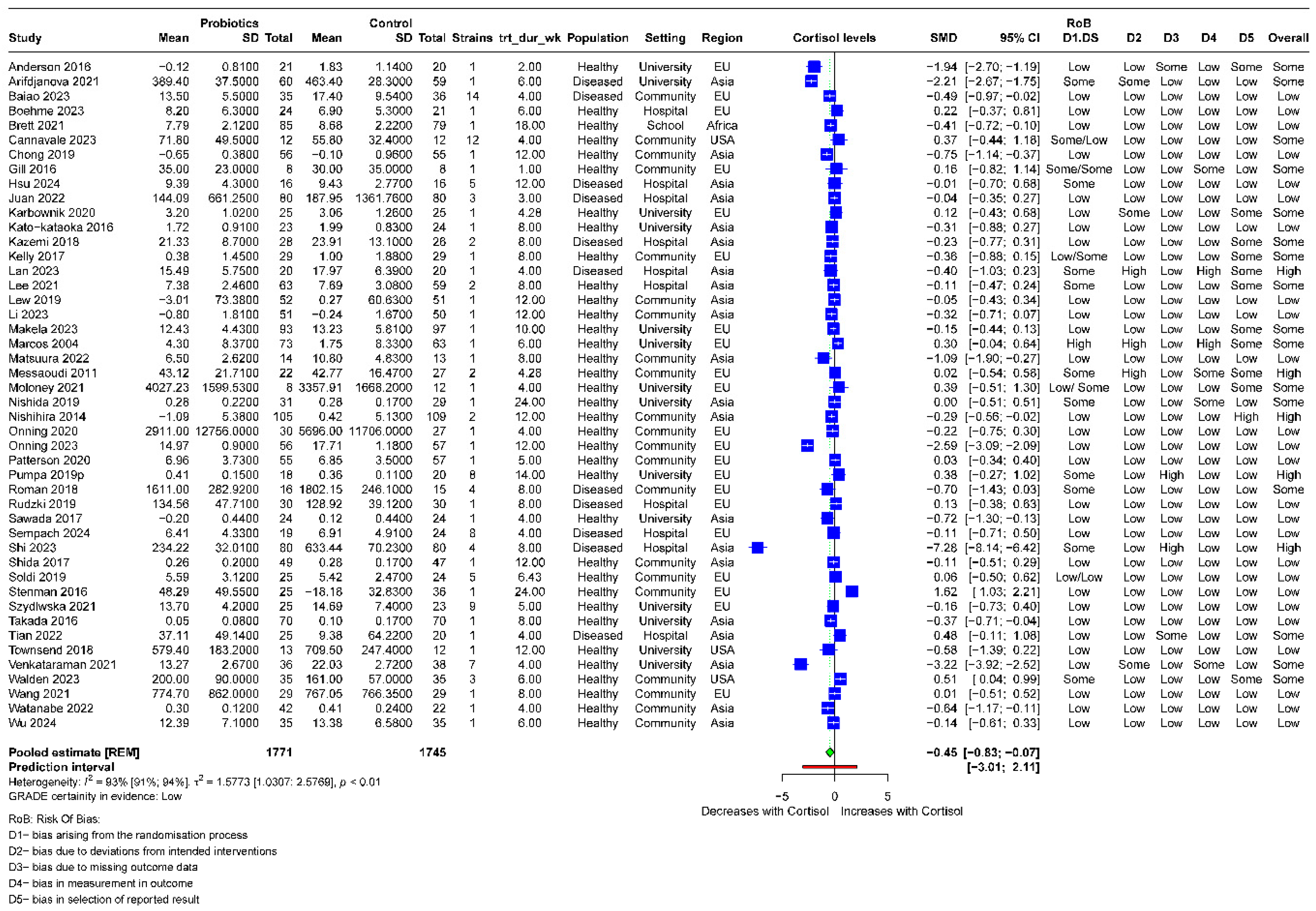
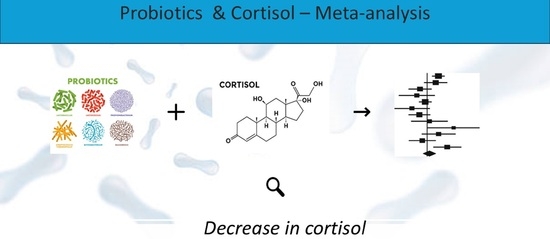
- Study findings: The analysis of 46 RCTs shows that probiotics lower cortisol levels, especially in healthy individuals, in Asia, without other medications, and when using a single strain.
- Implications: Probiotics may help manage stress in healthy people, but more research is needed on treatment duration, strain type, dosage, and how cortisol reduction affects diseases.
Abstract
Share and Cite
Jain, M.; Anand, A.; Sharma, N.; Shamim, M.A.; Enioutina, E.Y. Effect of Probiotics Supplementation on Cortisol Levels: A Systematic Review and Meta-Analysis. Nutrients 2024, 16, 3564. https://doi.org/10.3390/nu16203564
Jain M, Anand A, Sharma N, Shamim MA, Enioutina EY. Effect of Probiotics Supplementation on Cortisol Levels: A Systematic Review and Meta-Analysis. Nutrients. 2024; 16(20):3564. https://doi.org/10.3390/nu16203564
Chicago/Turabian StyleJain, Manav, Aishwarya Anand, Nisha Sharma, Muhammad Aaqib Shamim, and Elena Y. Enioutina. 2024. "Effect of Probiotics Supplementation on Cortisol Levels: A Systematic Review and Meta-Analysis" Nutrients 16, no. 20: 3564. https://doi.org/10.3390/nu16203564
APA StyleJain, M., Anand, A., Sharma, N., Shamim, M. A., & Enioutina, E. Y. (2024). Effect of Probiotics Supplementation on Cortisol Levels: A Systematic Review and Meta-Analysis. Nutrients, 16(20), 3564. https://doi.org/10.3390/nu16203564