


Effectiveness of Dietary Interventions in Prevention and Treatment of Iron-Deficiency Anemia in Pregnant Women: A Systematic Review of Randomized Controlled Trials



Abstract
1. Introduction
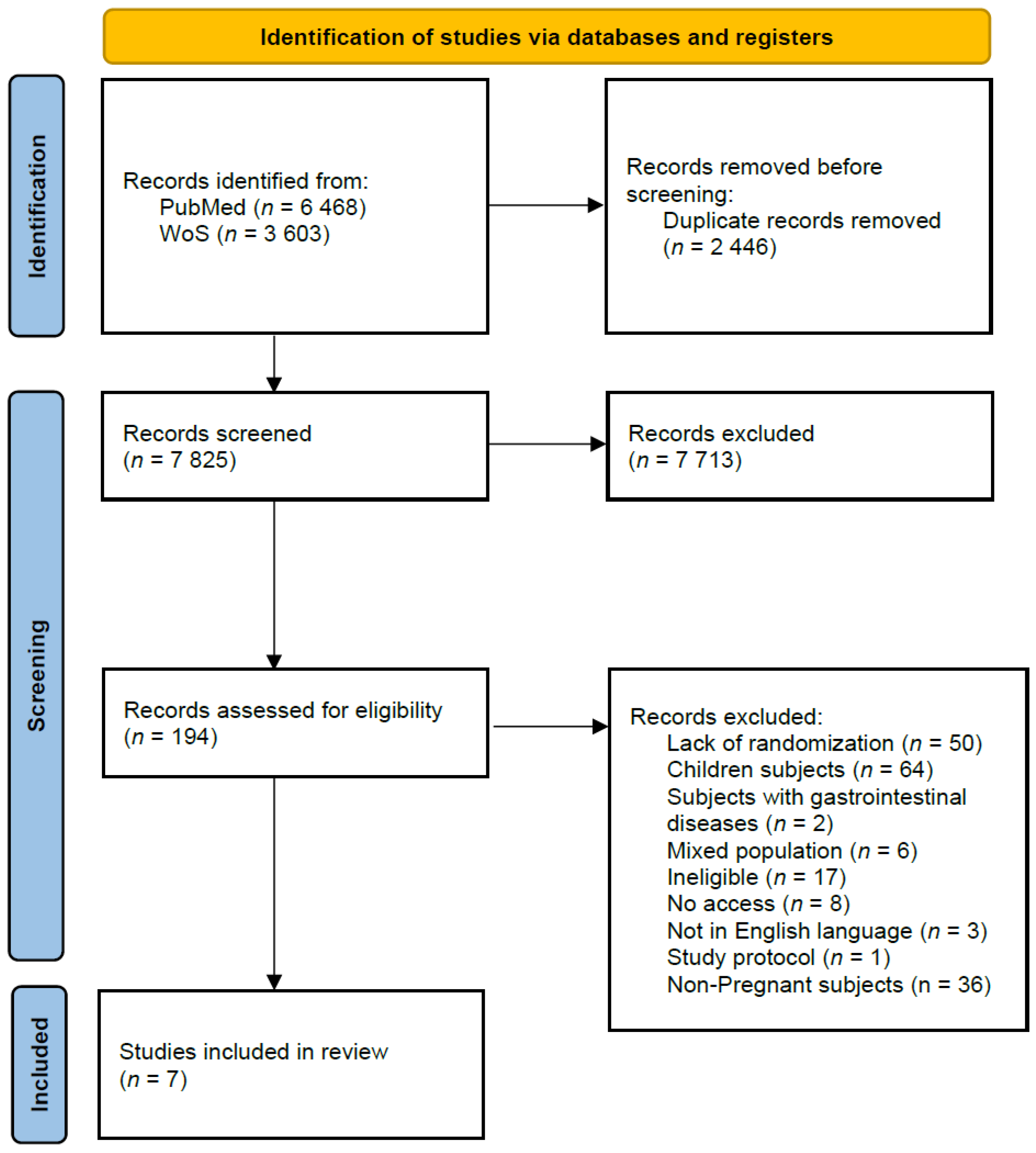
2. Materials and Methods
2.1. Study Design
2.2. Inclusion and Exclusion Criteria
- (1)
- Research study;
- (2)
- Randomized controlled trial;
- (3)
- Study conducted in a group of pregnant women;
- (4)
- Study conducted in a group of subjects with either adequate iron status (prevention of iron-deficiency anemia) or inadequate iron status defined (treatment of iron-deficiency anemia);
- (5)
- Dietary intervention applied within the study, using either regular food products, or fortified food products;
- (6)
- The effectiveness of dietary intervention in either prevention or treatment, assessed within the study, using any biochemical measure of anemia/iron stores;
- (7)
- The effectiveness of dietary intervention, assessed within the study, compared with the effectiveness of the other dietary approach or placebo or control or supplementation;
- (8)
- Full text of the study published in English, in a peer-reviewed journal.
- (1)
- Study conducted in animal model;
- (2)
- Study conducted in a mixed population (e.g., pregnant and nonpregnant women), unless presenting results separately for sub-groups;
- (3)
- Study conducted in a group of subjects with any condition which may influence iron status (e.g., celiac disease, bariatric surgery);
- (4)
- Study conducted in a group of subjects with any eating disorder which may influence the reliability of results;
- (5)
- Study conducted in a group of subjects with any intellectual disability which may influence the reliability of results;
- (6)
- Applied dietary intervention not described within the study;
- (7)
- The effectiveness of dietary intervention not defined (e.g., no baseline data presented), or influenced by any interfering factor applied within the study (e.g., pharmacological intervention, physical activity intervention).
2.3. Searching Strategy
2.4. Procedure of Data Extraction
- (1)
- Basic characteristics (authors of the study, compared interventions, studied group of women, country/location, time);
- (2)
- Characteristics of the participants (number of participants, age, inclusion criteria, exclusion criteria);
- (3)
- Description of the intervention applied (characteristics of applied intervention, iron intake within diet, vitamin C intake within diet, study duration, biochemical measure);
- (4)
- Observations and conclusions formulated within the randomized controlled trials included in the systematic review.
3. Results
4. Discussion
5. Conclusions
Author Contributions
Funding
Institutional Review Board Statement
Conflicts of Interest
References
- World Health Organization. Focusing on Anaemia: Towards an Integrated Approach for Effective Anaemia Control; World Health Organization: Geneva, Switzerland, 2004. [Google Scholar]
- Miller, J.L. Iron deficiency anemia: A common and curable disease. Cold Spring Harb. Perspect. Med. 2013, 3, a011866. [Google Scholar] [CrossRef] [PubMed]
- Chaparro, C.M.; Suchdev, P.S. Anemia epidemiology, pathophysiology, and etiology in low-and middle-income countries. Ann. N.Y. Acad. Sci. 2019, 1450, 15–31. [Google Scholar] [CrossRef] [PubMed]
- World Health Organization. Anaemia. Available online: https://www.who.int/data/nutrition/nlis/info/anaemia (accessed on 13 April 2022).
- Abu-Ouf, N.M.; Jan, M.M. The impact of maternal iron deficiency and iron deficiency anemia on child’s health. Saudi Med. J. 2015, 36, 146. [Google Scholar] [CrossRef] [PubMed]
- Azami, M.; Badfar, G.; Khalighi, Z.; Qasemi, P.; Shohani, M.; Soleymani, A.; Abbasalizadeh, S. The association between anemia and postpartum depression: A systematic review and meta-analysis. Caspian J. Intern. Med. 2019, 10, 115. [Google Scholar] [CrossRef]
- World Health Organization. Global Nutrition Targets 2025, Policy Brief Series; WHO/NMH/NHD/14.2; World Health Organization: Geneva, Switzerland, 2014. [Google Scholar]
- Turner, J.; Parsi, M.; Badireddy, M. Anemia. In StatPearls; StatPearls Publishing: Treasure Island, FL, USA, 2022. Available online: https://www.ncbi.nlm.nih.gov/books/NBK499994/ (accessed on 25 April 2022).
- Garzon, S.; Cacciato, P.M.; Certelli, C.; Salvaggio, C.; Magliarditi, M.; Rizzo, G. Iron deficiency anemia in pregnancy: Novel approaches for an old problem. Oman Med. J. 2020, 35, e166. [Google Scholar] [CrossRef]
- Gibore, N.S.; Ngowi, A.F.; Munyogwa, M.J.; Ali, M.M. Dietary habits associated with anemia in pregnant women attending antenatal care services. Curr. Dev. Nutr. 2021, 5, nzaa178. [Google Scholar] [CrossRef]
- Nana, A.; Zema, T. Dietary practices and associated factors during pregnancy in northwestern Ethiopia. BMC Pregnancy Childbirth 2018, 18, 1–8. [Google Scholar] [CrossRef]
- AlQuaiz, A.M.; Gad Mohamed, A.; Khoja, T.A.; AlSharif, A.; Shaikh, S.A.; Al Mane, H.; Aldiris, A.; Kazi, A.; Hammad, D. Prevalence of anemia and associated factors in child bearing age women in Riyadh, Saudi Arabia. J. Nutr. Metab. 2013, 2013, 636585. [Google Scholar] [CrossRef]
- Api, O.; Breyman, C.; Çetiner, M.; Demir, C.; Ecder, T. Diagnosis and treatment of iron deficiency anemia during pregnancy and the postpartum period: Iron deficiency anemia working group consensus report. Turk. J. Obstet. Gynecol. 2015, 12, 173. [Google Scholar] [CrossRef]
- Institute of Medicine (US) Committee on Nutritional Status During Pregnancy and Lactation. Nutrition During Pregnancy: Part I Weight Gain: Part II Nutrient Supplements; Iron Nutrition During Pregnancy; National Academies Press (US): Washington, DC, USA, 1990; p. 14. Available online: https://www.ncbi.nlm.nih.gov/books/NBK235217/ (accessed on 13 April 2022).
- da Silva Lopes, K.; Yamaji, N.; Rahman, M.O.; Suto, M.; Takemoto, Y.; Garcia-Casal, M.N.; Ota, E. Nutrition-specific interventions for preventing and controlling anaemia throughout the life cycle: An overview of systematic reviews. Cochrane Database Syst. Rev. 2021, 9. [Google Scholar] [CrossRef]
- World Health Organization; Food, Agriculture Organization of the United Nations. Guidelines on Food Fortification with Micronutrients; World Health Organization: Geneva, Switzerland, 2006; Available online: https://apps.who.int/iris/bitstream/handle/10665/43412/9241594012_eng.pdf?sequence=1 (accessed on 13 April 2022).
- Page, M.J.; McKenzie, J.E.; Bossuyt, P.M.; Boutron, I.; Hoffmann, T.C.; Mulrow, C.D.; Shamseer, L.; Tetzlaff, J.M.; Akl, E.A.; Brennan, S.E.; et al. The PRISMA 2020 statement: An updated guideline for reporting systematic reviews. BMJ 2021, 372, 71. [Google Scholar] [CrossRef] [PubMed]
- Liberati, A.; Altman, D.G.; Tetzlaff, J.; Mulrow, C.; Gøtzsche, P.C.; Ioannidis, J.P.; Clarke, M.; Devereaux, P.J.; Kleijnen, J.; Moher, D. The PRISMA statement for reporting systematic reviews and meta-analyses of studies that evaluate health care interventions: Explanation and elaboration. PLoS Med. 2009, 21, e1000100. [Google Scholar] [CrossRef]
- Assessing Risk of Bias in Non-Randomized Studies. Chapter 13.5.2.3. Available online: http://handbook-5-1.cochrane.org/ (accessed on 16 November 2021).
- RoB 2: A Revised Cochrane Risk-of-Bias Tool for Randomized Trials. Available online: https://methods.cochrane.org/bias/resources/rob-2-revised-cochrane-risk-bias-tool-randomized-trials (accessed on 10 June 2022).
- Minozzi, S.; Cinquini, M.; Gianola, S.; Gonzalez-Lorenzo, M.; Banzi, R. The revised Cochrane risk of bias tool for randomized trials (RoB 2) showed low interrater reliability and challenges in its application. J. Clin. Epidemiol. 2020, 126, 37–44. [Google Scholar] [CrossRef] [PubMed]
- Susheela, A.K.; Mondal, N.K.; Gupta, R.; Ganesh, K.; Brahmankar, S.; Bhasin, S.; Gupta, G. Effective interventional approach to control anaemia in pregnant women. Curr. Sci. 2010, 98, 1320–1330. [Google Scholar]
- Darwish, A.M.; Fouly, H.A.; Saied, W.H.; Farah, E. Lactoferrin plus health education versus total dose infusion (TDI) of low-molecular weight (LMW) iron dextran for treating iron deficiency anemia (IDA) in pregnancy: A randomized controlled trial. J. Matern. Fetal Neonatal. Med. 2019, 32, 2214–2220. [Google Scholar] [CrossRef]
- Makola, D.; Ash, D.M.; Tatala, S.R.; Latham, M.C.; Ndossi, G.; Mehansho, H. A micronutrient-fortified beverage prevents iron deficiency, reduces anemia and improves the hemoglobin concentration of pregnant Tanzanian women. J. Nutr. 2003, 133, 1339–1346. [Google Scholar] [CrossRef]
- Hoa, P.T.; Khan, N.C.; van Beusekom, C.; Gross, R.; Conde, W.L.; Khoi, H.D. Milk Fortif Ed with Iron or Iron Supplementation to Improve Nutritional Status of Pregnant Women: An Intervention Trial from Rural Vietnam. Food Nutr. Bull. 2005, 26, 32–38. [Google Scholar] [CrossRef]
- Wijaya-Erhardt, M.; Muslimatun, S.; Erhardt, J.G. Fermented soyabean and vitamin C-rich fruit: A possibility to circumvent the further decrease of iron status among iron-deficient pregnant women in Indonesia. Public Health Nutr. 2011, 14, 2185–2196. [Google Scholar] [CrossRef]
- Shivalli, S.; Srivastava, R.K.; Singh, G.P. Trials of improved practices (TIPs) to enhance the dietary and iron-folate intake during pregnancy-a quasi experimental study among rural pregnant women of Varanasi, India. PLoS ONE 2015, 10, e0137735. [Google Scholar] [CrossRef]
- Janmohamed, A.; Karakochuk, C.D.; Boungnasiri, S.; Chapman, G.E.; Janssen, P.A.; Brant, R.; Green, T.J.; McLean, J. Prenatal supplementation with Corn Soya Blend Plus reduces the risk of maternal anemia in late gestation and lowers the rate of preterm birth but does not significantly improve maternal weight gain and birth anthropometric measurements in rural Cambodian women: A randomized trial. Am. J. Clin. Nutr. 2016, 103, 559–566. [Google Scholar] [CrossRef]
- Hansen, M.; Bæch, S.B.; Thomsen, A.D.; Tetens, I.; Sandström, B. Long-term intake of iron fortified wholemeal rye bread appears to benefit iron status of young women. J. Cereal Sci. 2005, 42, 165–171. [Google Scholar] [CrossRef]
- Navas-Carretero, S.; Pérez-Granados, A.M.; Schoppen, S.; Sarria, B.; Carbajal, A.; Vaquero, M.P. Iron status biomarkers in iron deficient women consuming oily fish versus red meat diet. J. Physiol. Biochem. 2009, 65, 165–174. [Google Scholar] [CrossRef] [PubMed]
- Blanco-Rojo, R.; Pérez-Granados, A.M.; Toxqui, L.; González-Vizcayno, C.; Delgado, M.A.; Vaquero, M.P. Efficacy of a microencapsulated iron pyrophosphate-fortified fruit juice: A randomised, double-blind, placebo-controlled study in Spanish iron-deficient women. Br. J. Nutr. 2011, 105, 1652–1659. [Google Scholar] [CrossRef] [PubMed]
- Garcia, O.P.; Diaz, M.; Rosado, J.L.; Allen, L.H. Ascorbic acid from lime juice does not improve the iron status of iron-deficient women in rural Mexico. Am. J. Clin. Nutr. 2003, 78, 267–273. [Google Scholar] [CrossRef] [PubMed]
- Beck, K.; Conlon, C.A.; Kruger, R.; Coad, J.; Stonehouse, W. Gold kiwifruit consumed with an iron-fortified breakfast cereal meal improves iron status in women with low iron stores: A 16-week randomised controlled trial. Br. J. Nutr. 2011, 105, 101–109. [Google Scholar] [CrossRef]
- Heath, A.L.; Skeaff, C.M.; O’Brien, S.M.; Williams, S.M.; Gibson, R.S. Can dietary treatment of non-anemic iron deficiency improve iron status? J. Am. Coll. Nutr. 2001, 20, 477–484. [Google Scholar] [CrossRef]
- Patterson, A.J.; Brown, W.J.; Roberts, D.C.; Seldon, M.R. Dietary treatment of iron deficiency in women of childbearing age. Am. J. Clin. Nutr. 2001, 74, 650–656. [Google Scholar] [CrossRef]
- Mousa, A.; Naqash, A.; Lim, S. Macronutrient and Micronutrient Intake during Pregnancy: An Overview of Recent Evidence. Nutrients 2019, 11, 443. [Google Scholar] [CrossRef]
- Ahmed, W.A.M.; Ahmed, E.A.; Arafa, K.A.O.; El-Amin, E.I.S.; Alostaz, Z.M.; Khalid, K.E. Nutritional status of mothers and its determinants in Alemtidad area, Khartoum. Nutr. Food Sci. 2014, 5, 2203. [Google Scholar] [CrossRef]
- Sifakis, S.; Pharmakides, G. Anemia in pregnancy. Ann. N.Y. Acad. Sci. 2000, 900, 125–136. [Google Scholar] [CrossRef]
- Picciano, M.F. Pregnancy and lactation: Physiological adjustments, nutritional requirements and the role of dietary supplements. J. Nutr. 2003, 133, 1997–2002. [Google Scholar] [CrossRef] [PubMed]
- Friedrisch, J.R.; Friedrisch, B.K. Prophylactic iron supplementation in pregnancy: A controversial issue. Biochem. Insights 2017, 10, 1178626417737738. [Google Scholar] [CrossRef] [PubMed]
- Barrett, J.F.; Whittaker, P.G.; Williams, J.G.; Lind, T. Absorption of non-haem iron from food during normal pregnancy. BMJ 1994, 309, 79–82. [Google Scholar] [CrossRef] [PubMed]
- Fisher, A.L.; Nemeth, E. Iron homeostasis during pregnancy. Am. J. Clin. Nutr. 2017, 106, 1567–1574. [Google Scholar] [CrossRef] [PubMed]
- World Health Organization. Antenatal Iron Supplementation. Available online: https://www.who.int/data/nutrition/nlis/info/antenatal-iron-supplementation (accessed on 19 June 2022).
- Fouelifack, F.Y.; Sama, J.D.; Sone, C.E. Assessment of adherence to iron supplementation among pregnant women in the Yaounde gynaeco-obstetric and paediatric hospital. Pan. Afr. Med. J. 2019, 34. [Google Scholar] [CrossRef]
- Aspuru, K.; Villa, C.; Bermejo, F.; Herrero, P.; López, S.G. Optimal management of iron deficiency anemia due to poor dietary intake. Int. J. Gen. Med. 2011, 4, 741. [Google Scholar] [CrossRef]
- Skolmowska, D.; Głąbska, D. Analysis of Heme and Non-Heme Iron Intake and Iron Dietary Sources in Adolescent Menstruating Females in a National Polish Sample. Nutrients 2019, 11, 1049. [Google Scholar] [CrossRef]
- Hurrell, R.; Egli, I. Iron bioavailability and dietary reference values. Am. J. Clin. Nutr. 2010, 91, 1461S–1467S. [Google Scholar] [CrossRef]
- Uauy, R.; Hertrampf, E.; Reddy, M. Iron fortification of foods: Overcoming technical and practical barriers. J. Nutr. 2002, 132, 849S–852S. [Google Scholar] [CrossRef]
- Hurrell, R.F. Preventing iron deficiency through food fortification. Nutr. Rev. 1997, 55, 210–222. [Google Scholar] [CrossRef]
- Huma, N.; Salim-Ur-Rehman; Anjum, F.M.; Murtaza, M.A.; Sheikh, M.A. Food Fortification Strategy—Preventing Iron Deficiency Anemia: A Review. Crit. Rev. Food Sci. Nutr. 2007, 47, 259–265. [Google Scholar] [CrossRef] [PubMed]
- Hurrell, R.F. Iron Fortification Practices and Implications for Iron Addition to Salt. J. Nutr. 2021, 151, 3–14. [Google Scholar] [CrossRef] [PubMed]
- World Health Organization. WHO Recommendations on Antenatal Care for a Positive Pregnancy Experience; World Health Organization: Geneva, Switzerland, 2016. [Google Scholar]
- Nahrisah, P.; Somrongthong, R.; Viriyautsahakul, N.; Viwattanakulvanid, P.; Plianbangchang, S. Effect of integrated pictorial handbook education and counseling on improving anemia status, knowledge, food intake, and iron tablet compliance among anemic pregnant women in Indonesia: A quasi-experimental study. J. Multidiscip. Healthc. 2020, 13, 43. [Google Scholar] [CrossRef] [PubMed]

| PICOS | Inclusion Criteria | Exclusion Criteria |
|---|---|---|
| Population | Anemic and non-anemic pregnant women | Pregnant women with diseases and conditions, which may influence either iron status or reliability of results |
| Intervention/exposure | Dietary intervention applied to prevent or treat anemia | Undefined dietary intervention |
| Comparison | Effectiveness of dietary intervention vs. effectiveness of supplementation/placebo/control, or the other dietary approach | Effectiveness of dietary intervention not defined, or influenced by interfering factors |
| Outcome | Biochemical parameters of anemia/iron stores/iron status | Biochemical parameters of anemia/iron stores/iron status for a mixed population of pregnant and non-pregnant women |
| Study design | Randomized controlled trials | Results not published peer-reviewed journals, not published in English, and retracted articles |
| Database | The Detailed Strategy of the Electronic Searching |
|---|---|
| PubMed | (“anaemia” [Title/Abstract] OR “anemia” [Title/Abstract] OR “anaemic” [Title/Abstract] OR “anemic” [Title/Abstract] OR “low haemoglobin” [Title/Abstract] OR “iron status” [Title/Abstract]) AND (“iron” [Title/Abstract]) AND (“nutrition” [Title/Abstract] OR “diet” [Title/Abstract] OR “diets” [Title/Abstract] OR “nutritional” [Title/Abstract] OR “dietary” [Title/Abstract]) |
| Web of Science | AB = (anaemia OR anemia OR anaemic OR anemic OR low haemoglobin OR iron status) AND AB = (iron) AND AB = (nutrition OR diet OR diets OR nutritional OR dietary) |
| Ref. | Authors, Year | Compared Interventions | Studied Group of Women | Country/Location | Time |
|---|---|---|---|---|---|
| [24] | Makola et al., 2003 | Diet with fortified beverage vs. diet with placebo beverage | Pregnant anemic and non-anemic women | Tanzania/Mpwapwa and Kongwa districts | August–October 1999 |
| [25] | Hoa et al., 2005 | Diet with milk fortified with iron vs. diet with nonfortified milk vs. supplement vs. placebo | Pregnant anemic and non-anemic women | Vietnam/Thai Binh province | 1996–1997 |
| [22] | Susheela et al., 2010 | Diet vs. control | Pregnant anemic women | India/Delhi | Beginning: 2005; for 2.5 years |
| [26] | Wijaya-Erhardt et al., 2011 | Diet vs. control | Pregnant anemic and non-anemic women | Indonesia/Central Java province | November 2007–October 2008 |
| [27] | Shivalli et al., 2015 | Diet vs. control | Pregnant anemic and non-anemic women | India/Varanasi district | May 2010–April 2011 |
| [28] | Janmohamed et al., 2016 | Diet with corn soya blend vs. control | Pregnant anemic and non-anemic women | Cambodia/Kampong Chhnang province | Recruitment: August 2011–June 2012 |
| [23] | Darwish et al., 2018 | Diet with lactoferrin vs. total dose infusion of low-molecular weight iron dextran | Pregnant anemic women | Egypt/Assiut | September 2015–October 2017 |
| Ref. | Number of Participants | Age (Mean/Median/Range) | Inclusion Criteria | Exclusion Criteria |
|---|---|---|---|---|
| [24] | 259 | 25.4 years | Pregnancy; 12–34 week of gestation; attending prenatal clinics in the hospitals and surrounding health centers of Mpwapwa and Kongwa districts | Hemoglobin concentration of <80 g/L; serious medical condition; complication of pregnancy such as cardiac disease, pneumonia, and threatened abortion |
| [25] | 168 | 25.0–25.8 years, depending on group | Pregnancy; age of 20–32 years; no more than two prior pregnancies; hemoglobin > 70 g/L | Stillbirths, premature births, or hemorrhage in previous pregnancies; manifestations of chronic or infectious diseases, including hookworm infection; planned travel or plans to move out of the area during the study period |
| [22] | 205 | Not specified | Pregnancy; anemia (hemoglobin 50–90 g/L); urinary fluoride > 1.0 mg/L | Gestation > 20 weeks; diabetes; tuberculosis; bleeding during pregnancy; high blood pressure; HIV/AIDS; malaria; other medical problems |
| [26] | 227 | 15–49 years | Pregnancy; age of 15–49 years; 12–20 weeks of gestation; predicted singleton neonates | Severe maternal illness |
| [27] | 86 | 22.9–23.2 years, depending on group | Pregnancy; age of 15–45 years; a history of amenorrhea; 13–28 week of gestation | Acute illness; severe medical or obstetrical complications; multiple pregnancy; gestational diabetes; not staying for a minimum period of 12 weeks in the study area |
| [28] | 495 | 26.2–26.9 years, depending on group | Pregnancy; age of ≥18 years; being in the first trimester of pregnancy; planning to stay in the home village for the duration of the pregnancy | Fetal loss; migration |
| [23] | 93 | 27.3–29.5 years, depending on group | Pregnancy; age of ≥18 years; 14–28 weeks of gestation; iron-deficiency anemia (hemoglobin level of 70–100 g/L) | Anemia predominantly caused by factors other than iron-deficiency (e.g., anemia with untreated B12 or folate deficiency, hemolytic anemia); iron overload or disturbances in utilization of iron (e.g., hemochromatosis and hemosiderosis); decompensated liver cirrhosis and active hepatitis; active acute or chronic infections; rheumatoid arthritis with symptoms or signs of active inflammation; history of multiple allergies; gastrointestinal tract diseases; known hypersensitivity to parenteral iron or any recipients in the investigational drug products; receiving erythropoietin treatment within 8 weeks prior to the screening visit or other iron treatment or blood transfusion within 4 weeks prior to the screening visit |
| Ref. | Characteristics of Applied Intervention | Iron Intake within Diet | Vitamin C Intake within Diet | Study Duration | Biochemical Measure |
|---|---|---|---|---|---|
| [24] | (1) Diet with fortified beverage: orange-flavored micronutrient-fortified powdered beverage mix containing 11 micronutrients (iron, iodine, zinc, vitamin A, vitamin C, vitamin E, riboflavin, niacin, vitamin B6, folic acid, and vitamin B12) (176 kcal/day; iron: 10.8 mg/day; vitamin C: 144 mg/day); (2) Diet with placebo beverage (176 kcal/day) | Not specified | Not specified | 8 weeks | Hemoglobin, serum ferritin |
| [25] | (1) Diet with milk powder fortified with iron: 400 mL of milk fortified with iron (15 mg/day), fortified with vitamin C and folic acid; (2) Diet with iron nonfortified milk powder: 400 mL of nonfortified milk, fortified with vitamin C and folic acid; (3) Supplement: daily iron-folic acid supplement in pill form (60 mg/day); 250 μg of folic acid; (4) Placebo: placebo tablet | At baseline: 9.7–10.3 mg/day, depending on group (no differences) | At baseline: 41.1–50.4 mg/day, depending on group (no differences) | 16 weeks | Hemoglobin, transferrin saturation |
| [22] | (1) Diet: counselling based on intake of calcium, iron, folic acid, vitamins C, E and other antioxidants through dairy products, vegetables, and fruits, accompanied by removal of fluoride from ingestion through drinking water, food, and other sources; (2) Control: no dietary intervention | Not specified | Not specified | 20 weeks | Hemoglobin |
| [26] | (1) Diet: 600 g of tempeh, 30 g of meat, 30 g of dry anchovies, 30 g of chicken liver, 350 g of guava, 300 g of papaya, 100 g of orange provided weekly as a supplementary products (providing 3.97 mg of iron and 173 mg of vitamin C per day); free access to receive tablets containing 60 mg of Fe and 250 mg of folic acid; (2) Control: no dietary intervention; free access to receive tablets containing 60 mg of Fe and 250 mg of folic acid | Not specified | Not specified | Not specified | Hemoglobin, ferritin, transferrin receptor, body iron concentration |
| [27] | (1) Diet: Trials of Improved Practices (TIPs) applied through 3 home visits (assessment, negotiation, and evaluation) to interview, counsel and assess the results of implementing novel dietary practices; (2) Control: no dietary intervention applied within TIPs (2 home visits for assessment and evaluation) | At baseline: Diet: 19 ± 7.02 mg/day; control: 19.05 ± 6.63 mg/day After intervention: Diet: 21.58 ± 7.25 mg/day; control: 19.96 ± 6.59 mg/day | Not controlled * | 12 weeks | Hemoglobin |
| [28] | (1) Diet: counselling focused on best practices related to diet, anemia prevention and management; Corn Soya Blend Plus supplements (CSB Plus) provided from the first trimester to delivery (6.75 kg of CSB Plus and 300 mL of vitamin A- and vitamin D-fortified palmolein oil to be added during cooking, monthly—daily ration of 200 g of CSB Plus and 10 mL of oil—850 kcal, 13 mg of iron, 200 mg of vitamin C); receiving daily tablets containing iron (60 mg) and folic acid (400 mg) and if anemic—2 iron-folic acid tablets per day for 14 days; (2) Control: counselling focused on best practices related to diet, anemia prevention and management; no CSB Plus provided; receiving daily tablets containing iron (60 mg) and folic acid (400 mg) and if anemic—2 iron-folic acid tablets per day for 14 days | Not specified | Not specified | 6–8 months | Hemoglobin |
| [23] | (1) Diet with lactoferrin: pineapple flavored lactoferrin oral sachets (100 mg) two times per day for 4 weeks accompanied with health education (including treatment for anemia during pregnancy); avoiding coffee and tea particularly immediately after meals; increasing dietary intake of iron-rich food and vitamin C-rich food; (2) Total dose infusion of low-molecular weight iron dextran (individually calculated using Ganzoni formula); avoiding coffee and tea, particularly immediately after meals; increasing dietary intake of iron-rich food and vitamin C-rich food | Not controlled * | Not controlled * | 4 weeks | Hemoglobin, mean corpuscular volume (MCV), mean corpuscular hemoglobin (MCH), serum iron, ferritin, and total iron binding capacity |
| Ref. | Observations | Conclusions |
|---|---|---|
| [24] | The supplement resulted in a 4.16 g/L increase in hemoglobin concentration and a 3 µg/L increase in ferritin and reduced the risk of anemia and iron deficiency anemia by 51 and 56%, respectively. The risk of iron deficiency was reduced by 70% among those who had iron deficiency at baseline and by 92% among those who had adequate stores. | The micronutrient-fortified beverage may be a useful and convenient preventative measure, one that could help improve the nutritional status of women both before and during pregnancy and thereby help avoid some of the potential maternal and fetal consequences of micronutrient deficiencies. |
| [25] | After the 16th week of intervention, the changes in hemoglobin concentrations in both treatment groups (the iron-fortified milk and the iron tablet groups) were not significantly different (−0.5 ± 0.9 and −0.3 ± 0.9 g/L, respectively), but the changes were significantly greater in the nonfortified milk and placebo groups (−1.2 ± 0.9 and −1.1 ± 0.8 g/L, respectively; p < 0.01). The change in transferrin saturation in the iron-fortified milk group (3.4 ± 12.9%) was greater than that in the placebo and nonfortified milk groups (−10.1 ± 9.8% and −11.6 ± 10.7%, respectively) (p < 0.01). | Applying iron-fortified milk and the iron tablets may prevent deterioration of iron status. |
| [22] | An increase in hemoglobin upon nutritional intervention in 73% during the 1st trimester and in 83% during the 2nd trimester of pregnancy has been recorded. | An intervention approach has scope for reducing anemia in pregnancy. |
| [26] | At near term, mean hemoglobin, ferritin and body iron decreased, whereas mean transferrin receptor increased significantly in both groups. The mean changes in iron status were similar in both groups. In Fe-deficient women, consumption of an optimized diet was associated with smaller decreases in hemoglobin (1.02 (95% CI 0.98, 1.07) g/L; p = 0.058), ferritin (1.42 (95% CI 1.16, 1.75) µg/L; p = 0.046) and body iron (2.57 (95% CI 1.71, 3.43) mg/kg; p = 0.073) concentrations, compared with a state of no intervention. Fe-deficient women at baseline benefited more from supplementary food compared with Fe-replete women. | Daily supplementary food containing tempeh and vitamin C-rich fruits during pregnancy might have positive effects on maternal iron deficiency. |
| [27] | At the end, mean hemoglobin levels were 115 ± 12.4 g/L and 103.7 ± 13.8 g/L in the TIPs group and control group, respectively. The prevalence of anemia was reduced by half in the TIPs group and increased by 2.4% in the control group. | Trials of Improved Practices (TIPs) were found to be an effective approach to improve the nutritional status of pregnant women in the study area. |
| [28] | Significant reductions were observed in anemia at 36–38 week (OR = 0.51; 95% CI: 0.34, 0.77). | In Cambodian women, Corn Soya Blend Plus consumed during pregnancy significantly reduced maternal anemia in late gestation in comparison with women consuming a normal diet. |
| [23] | There was no statistically significant difference in mean hemoglobin level improvement in both groups after one month of therapy. However, MCV and MCH improved significantly more in group receiving infusions of iron dextran than diet with lactoferrin while iron indices (serum iron and serum ferritin) were significantly more in group receiving diet with lactoferrin than group receiving infusions of iron dextran. | Pineapple flavored lactoferrin oral sachets plus health education can be widely used as an alternative to total dose infusion iron dextran supplementation due to clinical as well as laboratory improvement of iron-deficiency anemia during pregnancy after one month of treatment. |
| Dietary Approach | Ref. | Group of Studied Women | Conclusion * |
|---|---|---|---|
| Providing an increased amount of iron | [25] | Anemic and non-anemic women | Supporting |
| [23] | Anemic women | Supporting | |
| Providing an increased amount of multiple nutrients | [24] | Anemic and non-anemic women | Supporting |
| [22] | Anemic women | Supporting | |
| [26] | Anemic and non-anemic women | Supporting | |
| [28] | Anemic and non-anemic women | Supporting | |
| General counselling only | [27] | Anemic and non-anemic women | Supporting |
| Ref. | Ref. | D1 | D2 | D3 | D4 | D5 | Overall Bias |
|---|---|---|---|---|---|---|---|
| Providing an increased amount of iron | [25] |  |  | | |  | |
| [23] | | | | | | | |
| Providing an increased amount of multiple nutrients | [24] | | | | | | |
| [22] | | | | | | | |
| [26] | | | | | | | |
| [28] | | | | | | | |
| General counselling only | [27] | | | | | | |
—Low risk; —Some concerns —High risk; Domains as follows: D1—risk of bias arising from the randomization process; D2—risk of bias due to deviations from the intended interventions; D3—risk of bias due to missing outcome data; D4—risk of bias in measurement of the outcome; D5—risk of bias in selection of the reported result.Publisher’s Note: MDPI stays neutral with regard to jurisdictional claims in published maps and institutional affiliations. |
© 2022 by the authors. Licensee MDPI, Basel, Switzerland. This article is an open access article distributed under the terms and conditions of the Creative Commons Attribution (CC BY) license (https://creativecommons.org/licenses/by/4.0/).
Share and Cite
Skolmowska, D.; Głąbska, D.; Kołota, A.; Guzek, D. Effectiveness of Dietary Interventions in Prevention and Treatment of Iron-Deficiency Anemia in Pregnant Women: A Systematic Review of Randomized Controlled Trials. Nutrients 2022, 14, 3023. https://doi.org/10.3390/nu14153023
Skolmowska D, Głąbska D, Kołota A, Guzek D. Effectiveness of Dietary Interventions in Prevention and Treatment of Iron-Deficiency Anemia in Pregnant Women: A Systematic Review of Randomized Controlled Trials. Nutrients. 2022; 14(15):3023. https://doi.org/10.3390/nu14153023
Chicago/Turabian StyleSkolmowska, Dominika, Dominika Głąbska, Aleksandra Kołota, and Dominika Guzek. 2022. "Effectiveness of Dietary Interventions in Prevention and Treatment of Iron-Deficiency Anemia in Pregnant Women: A Systematic Review of Randomized Controlled Trials" Nutrients 14, no. 15: 3023. https://doi.org/10.3390/nu14153023
APA StyleSkolmowska, D., Głąbska, D., Kołota, A., & Guzek, D. (2022). Effectiveness of Dietary Interventions in Prevention and Treatment of Iron-Deficiency Anemia in Pregnant Women: A Systematic Review of Randomized Controlled Trials. Nutrients, 14(15), 3023. https://doi.org/10.3390/nu14153023

