Review

Caffeine during High-Intensity Whole-Body Exercise: An Integrative Approach beyond the Central Nervous System

by
Adriano E. Lima-Silva
1,
Gislaine Cristina-Souza
1,2,
Marcos D. Silva-Cavalcante
3,
Romulo Bertuzzi
4 and
David J. Bishop
5,*
1
Human Performance Research Group, Federal University of Technology Parana (UTFPR), Curitiba 81310900, PR, Brazil
2
Nutrition and Exercise Research Group, State University of Minas Gerais (UEMG), Passos 37902092, MG, Brazil
3
Postgraduate Program in Nutrition (PPGNUT), Faculty of Nutrition (FANUT), Federal University of Alagoas (UFAL), Maceio 57072900, AL, Brazil
4
Endurance Sports Research Group (GEDAE-USP), University of São Paulo, Sao Paulo 05508030, SP, Brazil
5
Institute for Health and Sport (IHES), Victoria University, Melbourne, VIC 8001, Australia
*
Author to whom correspondence should be addressed.
Nutrients 2021, 13(8), 2503; https://doi.org/10.3390/nu13082503
Submission received: 19 June 2021 / Revised: 15 July 2021 / Accepted: 19 July 2021 / Published: 22 July 2021
(This article belongs to the Collection Coffee and Caffeine Consumption for Health and Performance)

Abstract

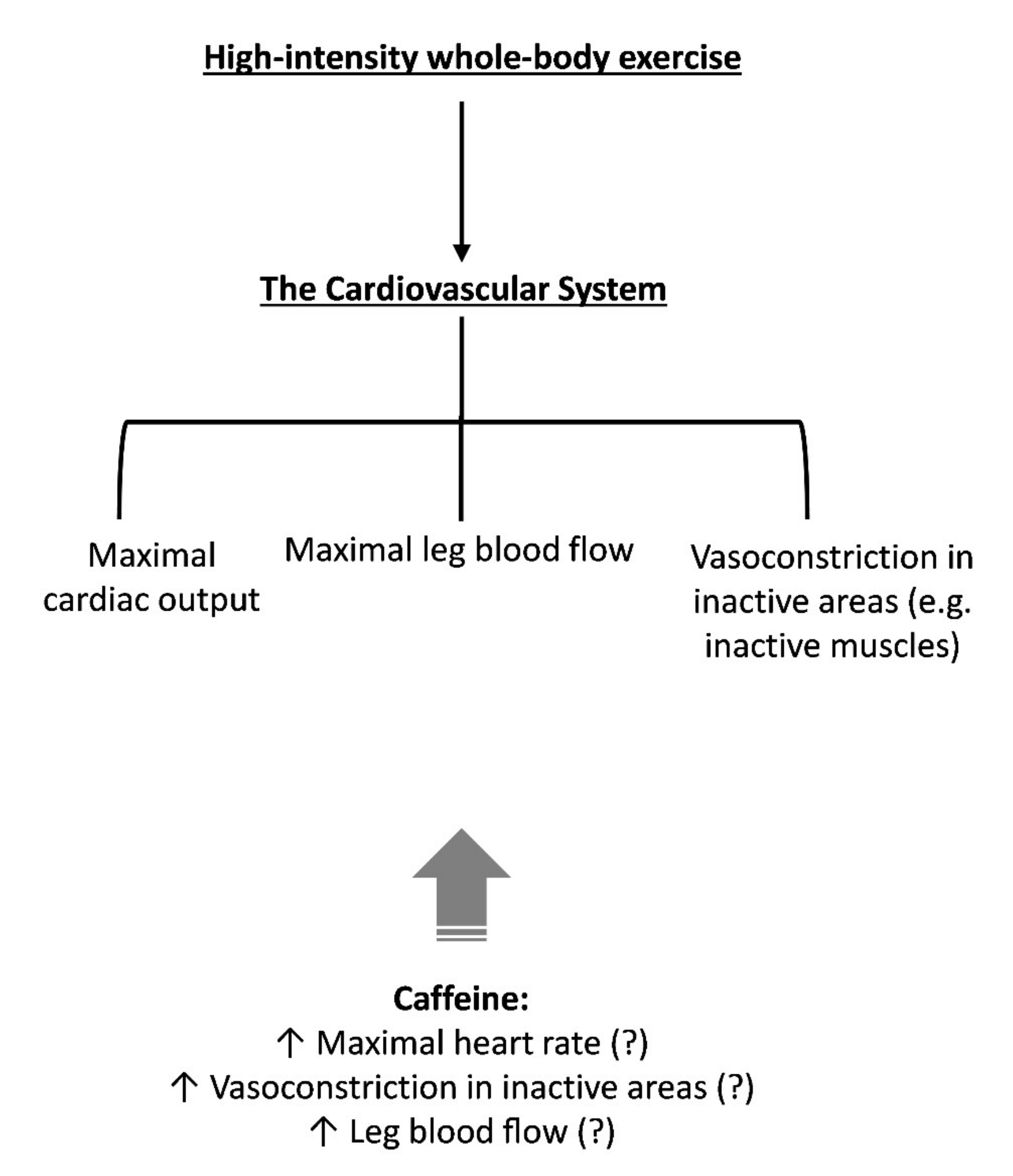
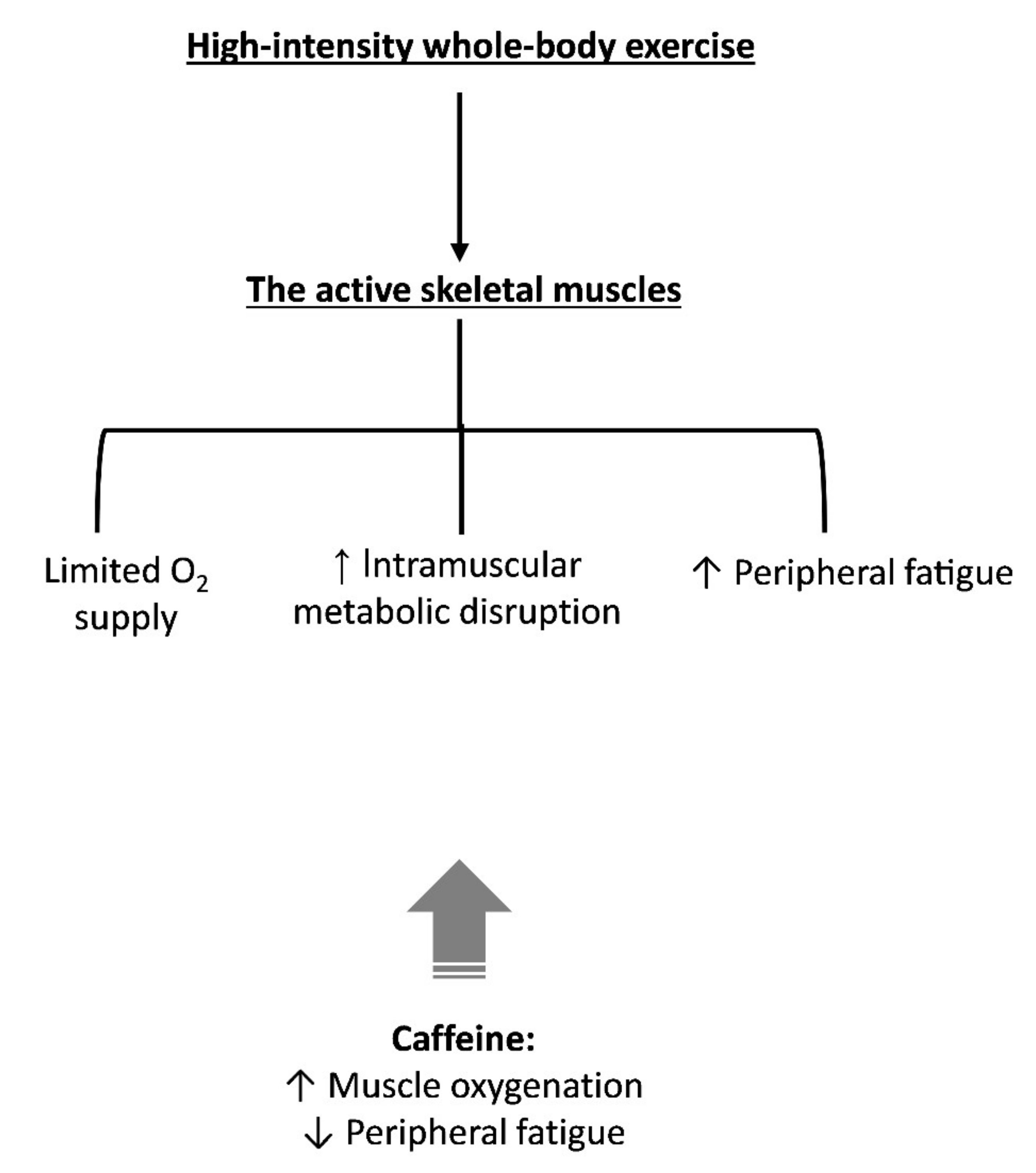
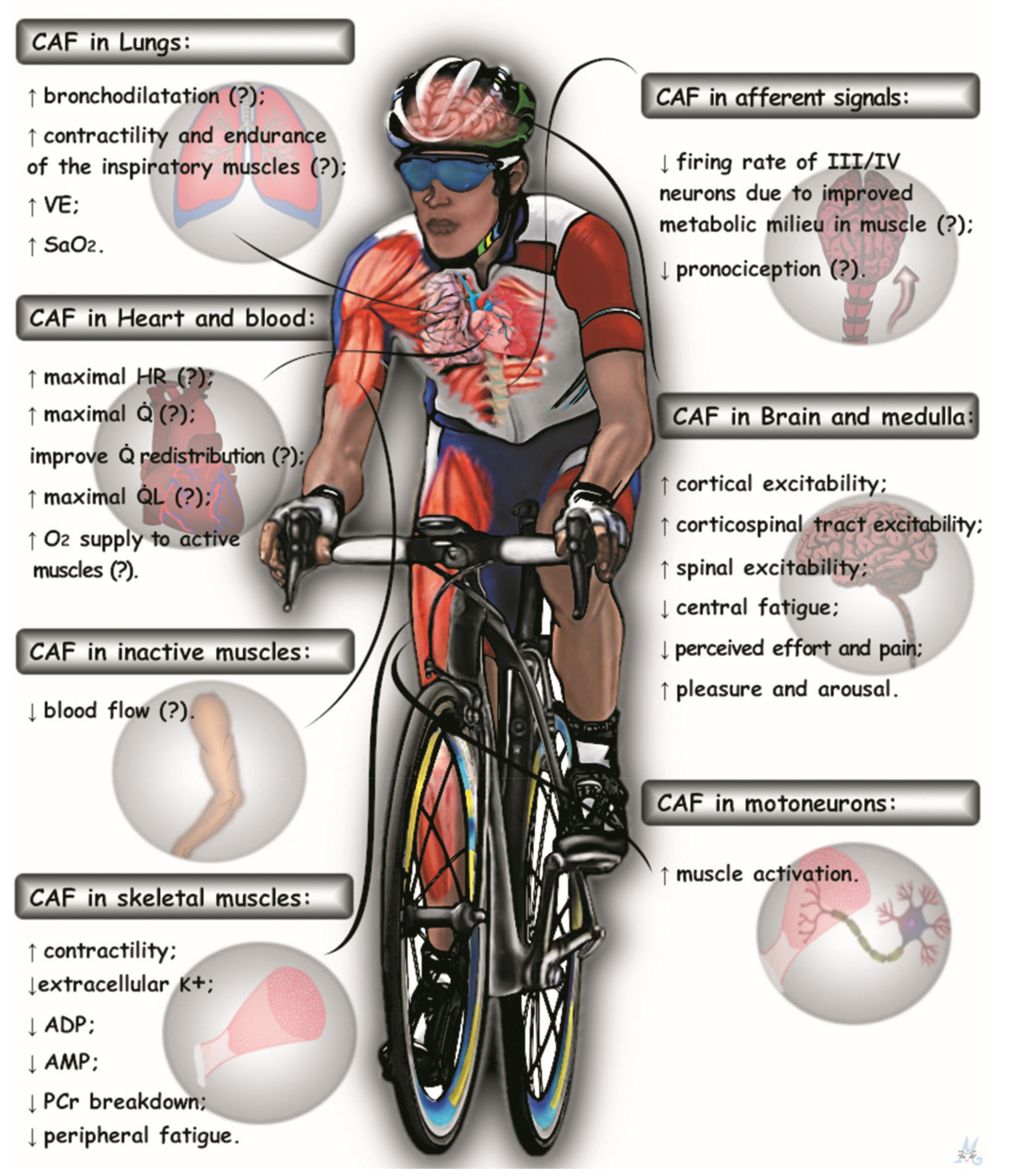
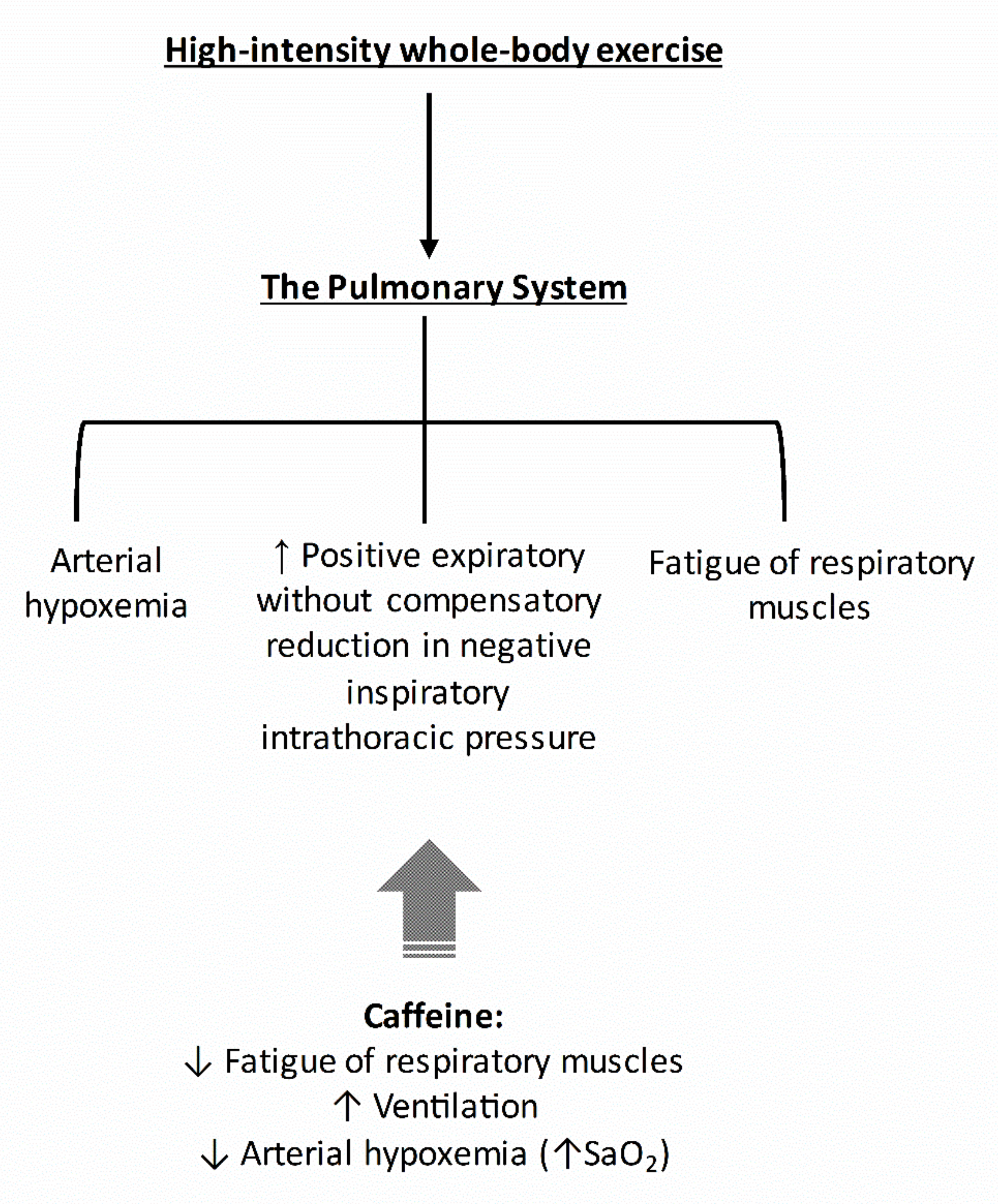
Caffeine is one of the most consumed ergogenic aids around the world. Many studies support the ergogenic effect of caffeine over a large spectrum of exercise types. While the stimulatory effect of caffeine on the central nervous system is the well-accepted mechanism explaining improvements in exercise performance during high-intensity whole-body exercise, in which other physiological systems such as pulmonary, cardiovascular, and muscular systems are maximally activated, a direct effect of caffeine on such systems cannot be ignored. A better understanding of the effects of caffeine on multiple physiological systems during high-intensity whole-body exercise might help to expand its use in different sporting contexts (e.g., competitions in different environments, such as altitude) or even assist the treatment of some diseases (e.g., chronic obstructive pulmonary disease). In the present narrative review, we explore the potential effects of caffeine on the pulmonary, cardiovascular, and muscular systems, and describe how such alterations may interact and thus contribute to the ergogenic effects of caffeine during high-intensity whole-body exercise. This integrative approach provides insights regarding how caffeine influences endurance performance and may drive further studies exploring its mechanisms of action in a broader perspective.
Keywords: methylxanthines; exercise performance; exercise-induced hypoxemia; muscle blood flow; central fatigue; peripheral fatigue methylxanthines; exercise performance; exercise-induced hypoxemia; muscle blood flow; central fatigue; peripheral fatigue

Graphical Abstract