Review

Bee Pollen: Current Status and Therapeutic Potential
1
Department of Molecular Biosciences, The Wenner-Gren Institute, Stockholm University, SE-106 91 Stockholm, Sweden
2
Department of Chemistry, Faculty of Science, Menoufia University, Shebin El-Kom 32512, Egypt
3
School of Food and Biological Engineering, Jiangsu University, Zhenjiang 212013, China
4
School of Food Science and Technology, National Engineering Research Center of Seafood, Dalian Polytechnic University, Dalian 116024, China
5
H.E.J. Research Institute of Chemistry, International Center for Chemical and Biological Sciences, University of Karachi, Karachi 75270, Pakistan
6
Laboratory of Growth Regulators, Institute of Experimental Botany ASCR & Palacký University, Šlechtitelů 27, 78371 Olomouc, Czech Republic
7
Centre for Natural Products Discovery (CNPD), School of Pharmacy and Biomolecular Sciences, Liverpool John Moores University, James Parsons Building, Byrom Street, Liverpool L3 3AF, UK
8
College of Food Science and Technology, Northwest University, Xi’an 710069, China
9
Department of Bee Research, Plant Protection Research Institute, Agricultural Research Centre, Giza 12627, Egypt
10
Nutrition and Bromatology Group, Department of Analytical Chemistry and Food Science, Faculty of Food Science and Technology, University of Vigo—Ourense Campus, E-32004 Ourense, Spain
11
College of Pharmacy, University of Sharjah, Sharjah, P.O.Box 27272, United Arab Emirates
12
Chemistry of Medicinal Plants Department, National Research Centre, 33 El-Bohouth St., Dokki, Giza 12622, Egypt
13
International Research Center for Food Nutrition and Safety, Jiangsu University, Zhenjiang 212013, China
14
Pharmacognosy Group, Department of Pharmaceutical Biosciences, Biomedical Centre, Uppsala University, Box 591, SE-751 24 Uppsala, Sweden
*
Authors to whom correspondence should be addressed.
Nutrients 2021, 13(6), 1876; https://doi.org/10.3390/nu13061876
Submission received: 7 May 2021 / Revised: 23 May 2021 / Accepted: 28 May 2021 / Published: 31 May 2021
(This article belongs to the Special Issue Diet, Liver, Oxidative Stress and Metabolic Syndrome)

Abstract

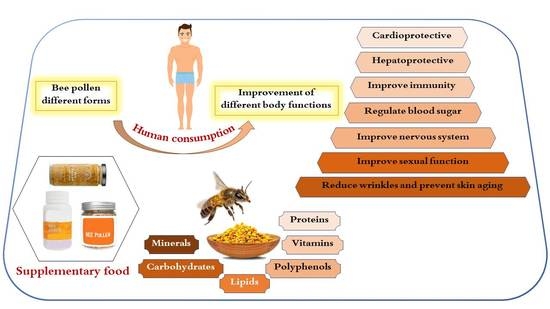
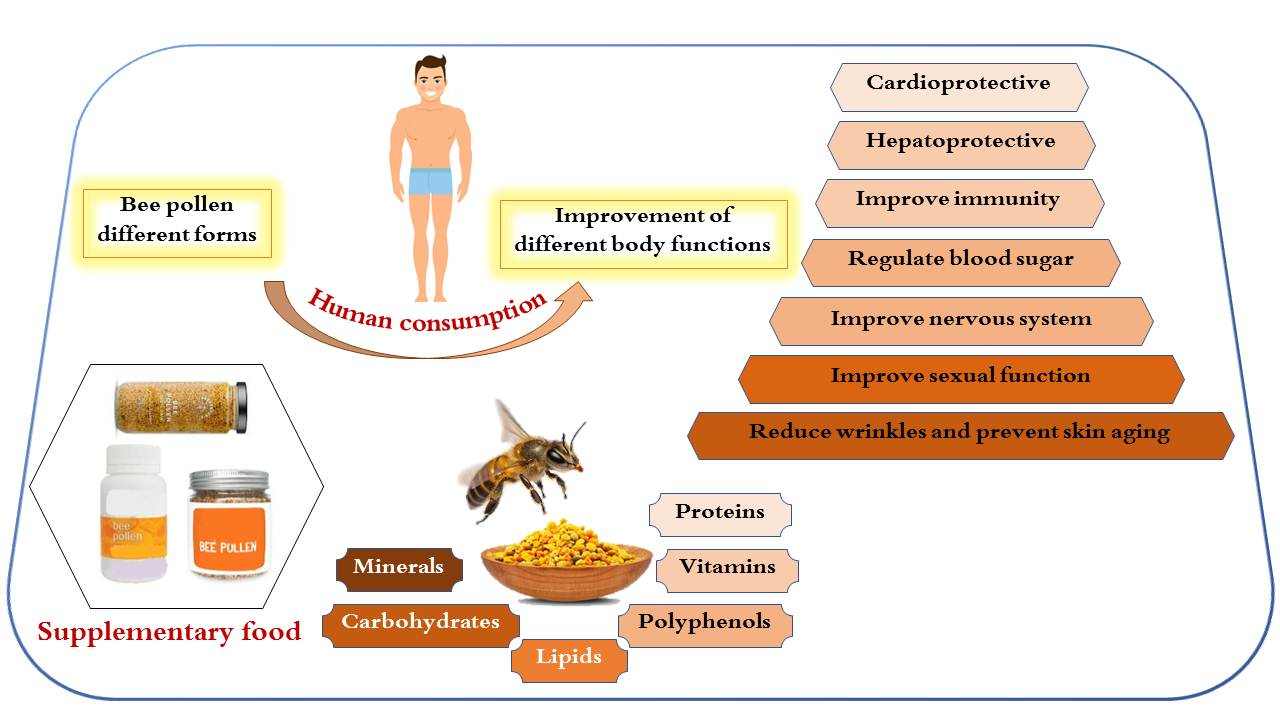
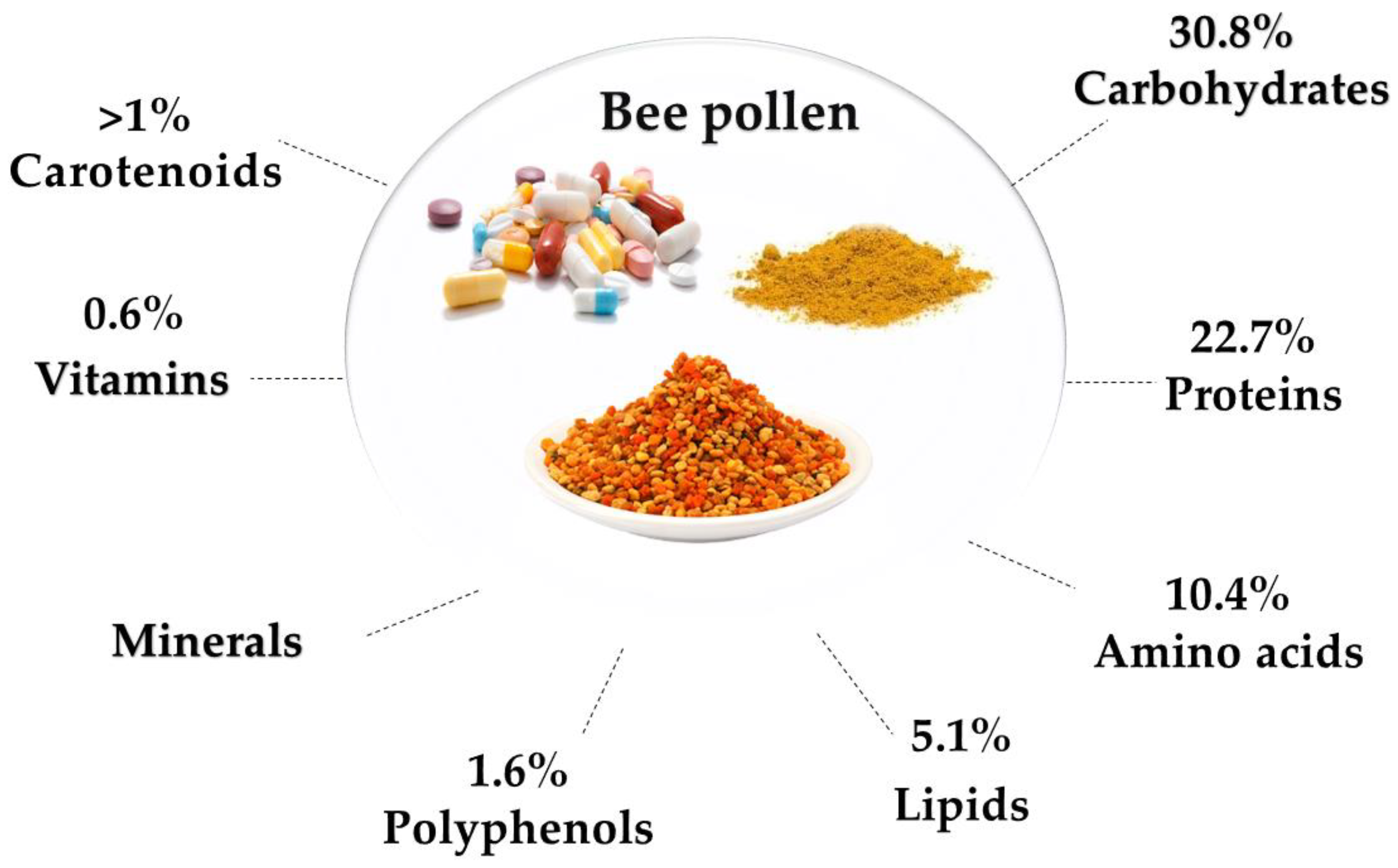
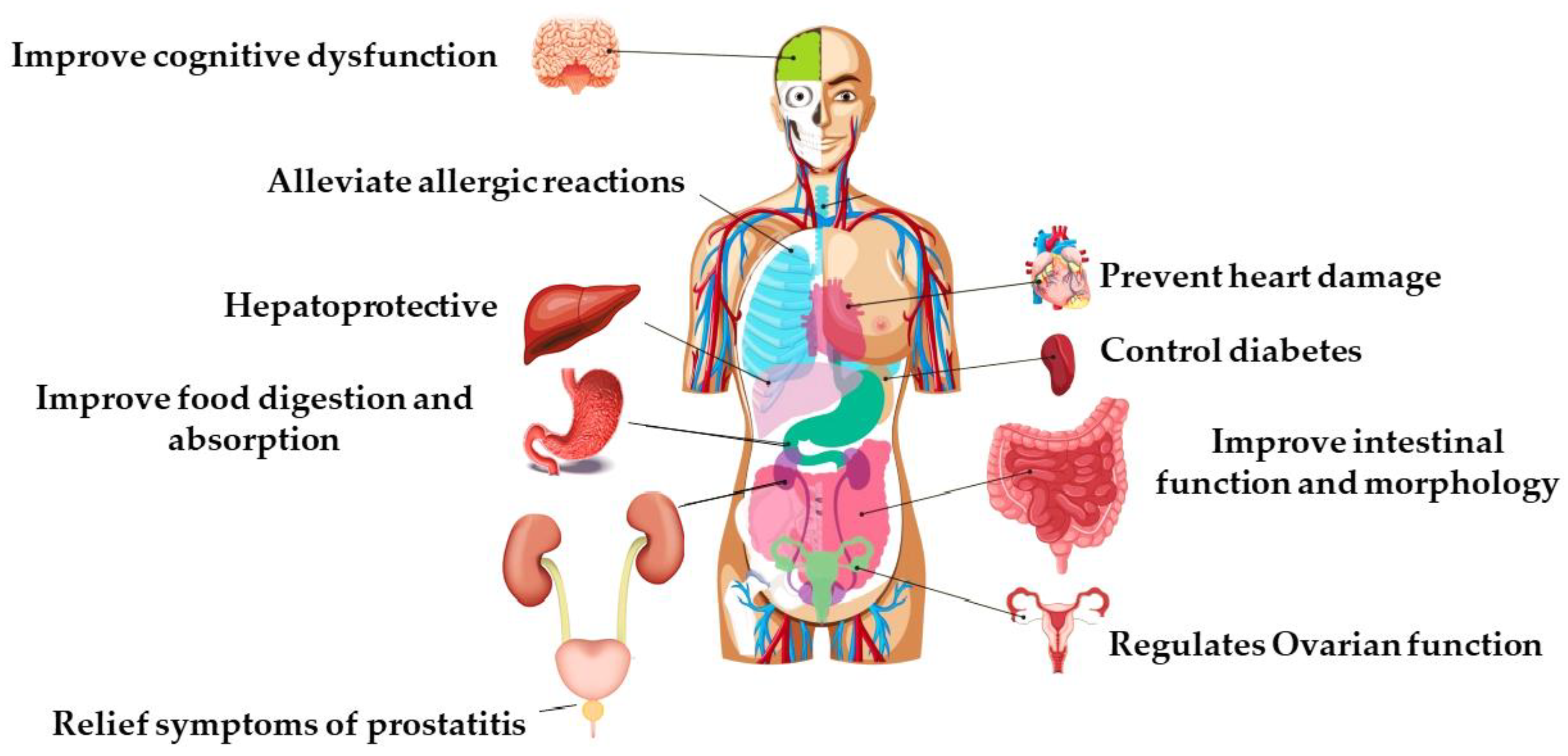
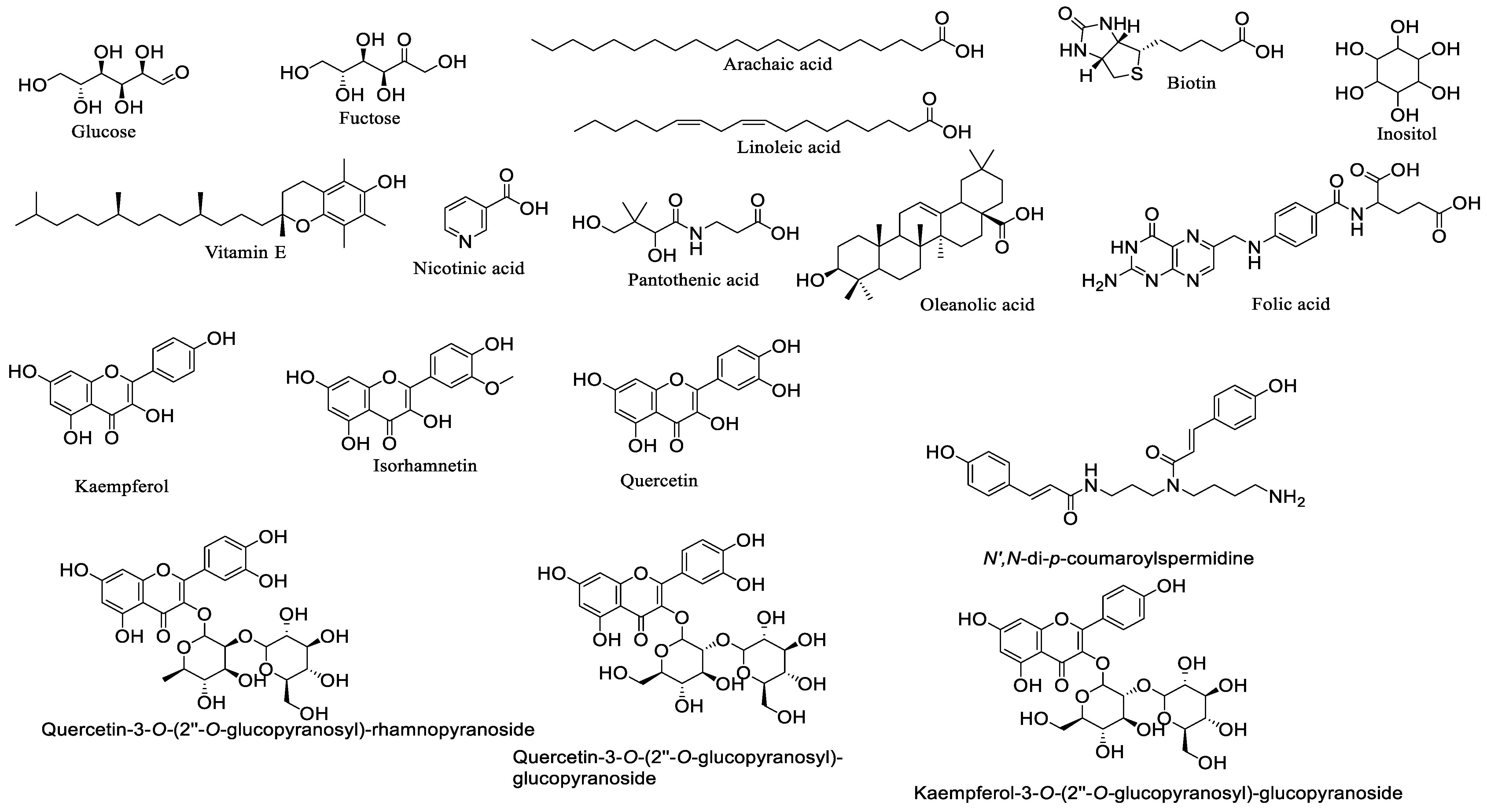
Bee pollen is a combination of plant pollen and honeybee secretions and nectar. The Bible and ancient Egyptian texts are documented proof of its use in public health. It is considered a gold mine of nutrition due to its active components that have significant health and medicinal properties. Bee pollen contains bioactive compounds including proteins, amino acids, lipids, carbohydrates, minerals, vitamins, and polyphenols. The vital components of bee pollen enhance different bodily functions and offer protection against many diseases. It is generally marketed as a functional food with affordable and inexpensive prices with promising future industrial potentials. This review highlights the dietary properties of bee pollen and its influence on human health, and its applications in the food industry.
Keywords: bee pollen; metabolic syndromes; human health; functional food; nutritional value bee pollen; metabolic syndromes; human health; functional food; nutritional value
Graphical Abstract