Article

Socioeconomic Characteristics and Trends in the Consumption of Ultra-Processed Foods in Korea from 2010 to 2018

1
Department of Preventive Medicine, Yonsei University College of Medicine, Seoul 03722, Korea
2
Department of Public Health, Graduate School, Yonsei University, Seoul 03722, Korea
3
Department of Preventive Medicine and Public Health, Ajou University School of Medicine, Suwon 16499, Korea
*
Author to whom correspondence should be addressed.
Nutrients 2021, 13(4), 1120; https://doi.org/10.3390/nu13041120
Submission received: 3 February 2021 / Revised: 26 March 2021 / Accepted: 26 March 2021 / Published: 29 March 2021

Abstract

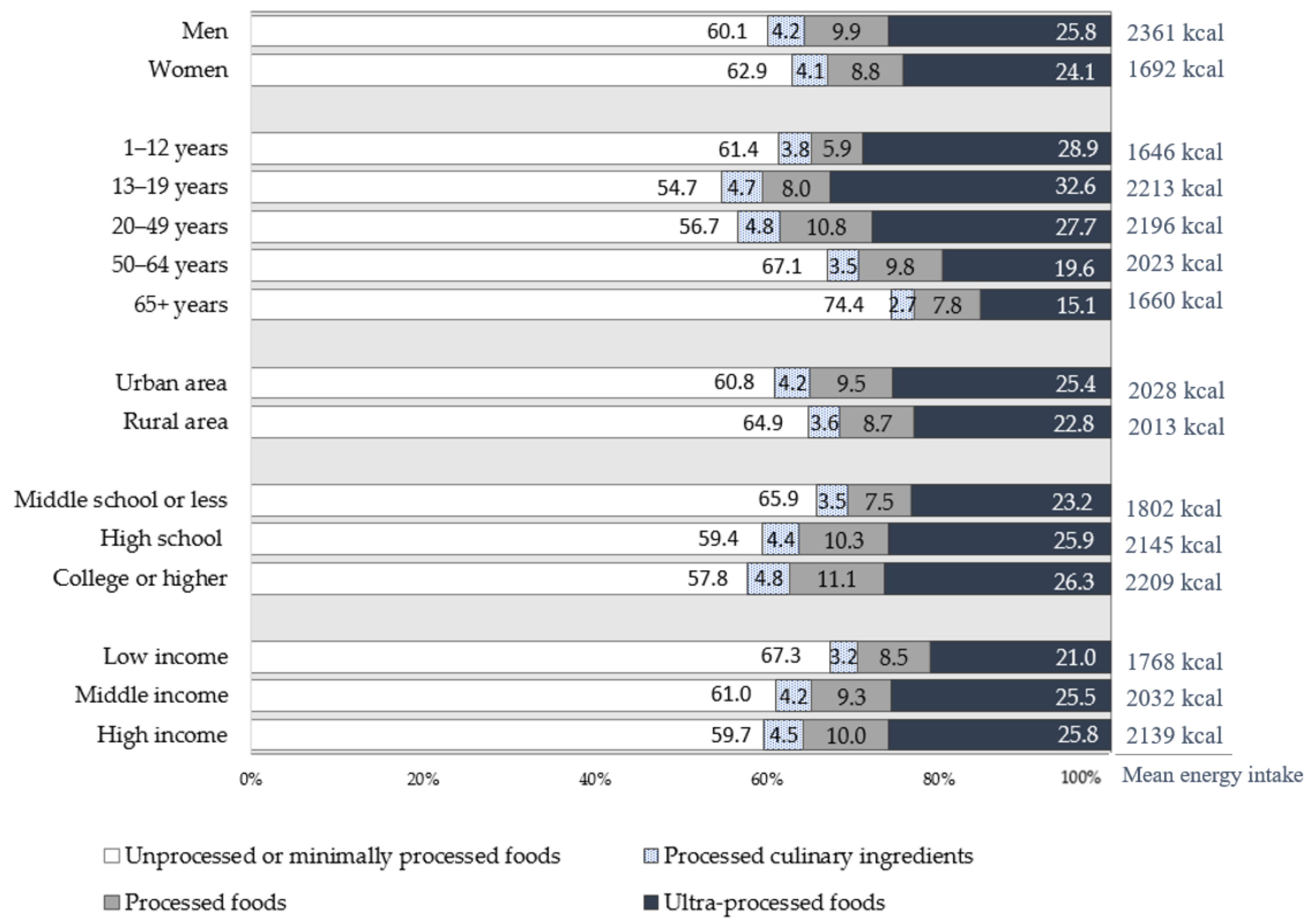
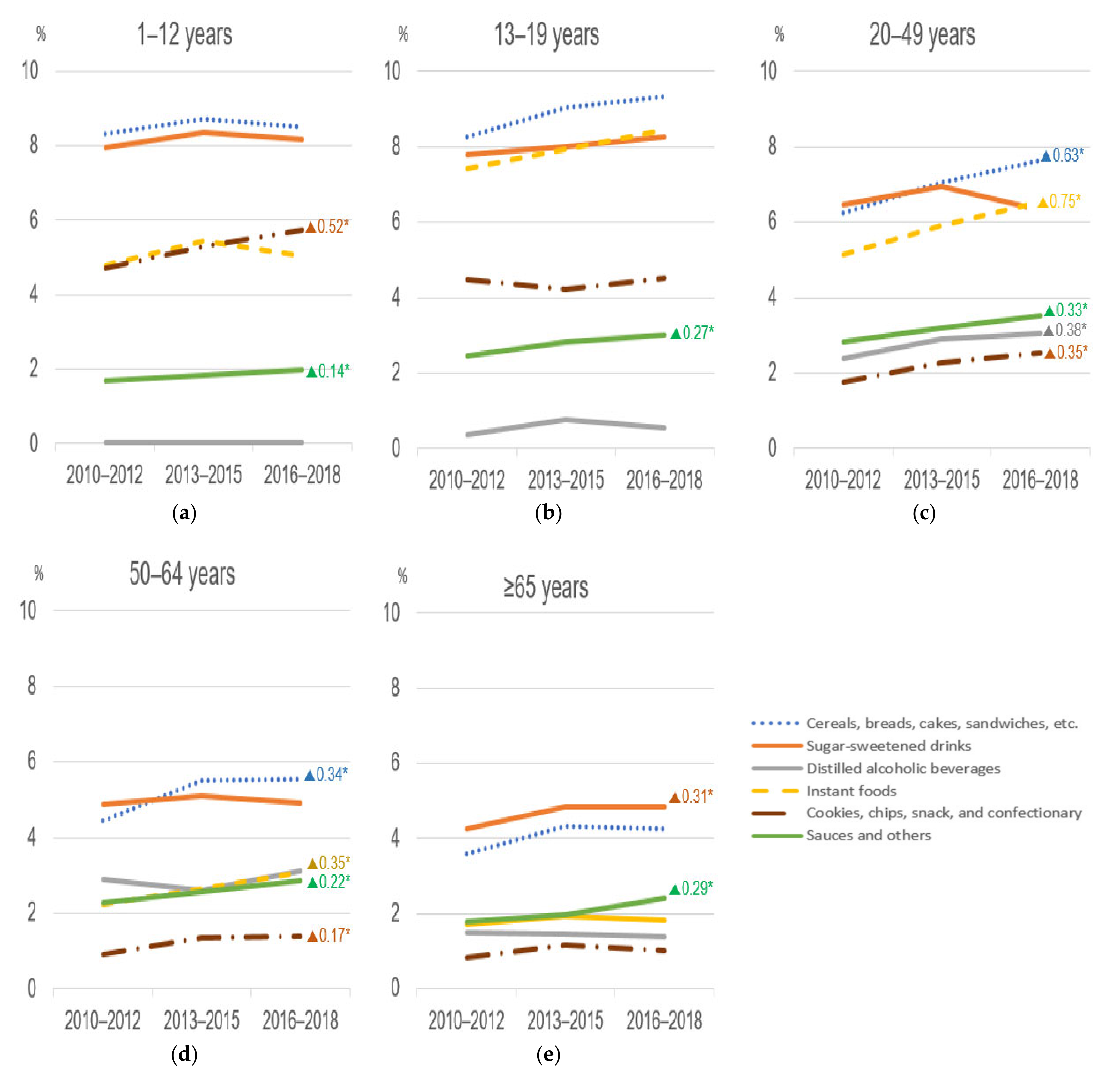
There is growing evidence for a global transition to a more highly processed diet. While the dietary share of ultra-processed foods depends on a country’s economic status, food choice and consumption are also influenced by the socioeconomic situation of individuals. This study investigated whether ultra-processed food consumption differed across socioeconomic subgroups and over time (2010–2018) in Korea. Cross-sectional data from the Korea National Health and Nutrition Examination Survey 2010–2018 were analyzed. Food and beverages reported in a one-day 24 h recall were classified according to the NOVA food classification criteria. The dietary energy contribution of ultra-processed foods was high among men and urban residents, and increased with education and income level; additionally, it reached its peak in adolescents and thereafter decreased with increasing age. After adjusting the socioeconomic variables, such associations remained significant, except for income level. The overall contribution of ultra-processed foods increased from 23.1% (2010–2012) to 26.1% (2016–2018), and the same trend over time was observed in all age groups and socioeconomic strata. In the Korean population, ultra-processed food consumption differed by individual socioeconomic characteristics, but gradually increased over time, and this trend was consistently found in all socioeconomic subgroups. Future strategies to promote healthy food choices are needed for the Korean population.
Keywords: ultra-processed foods; trends; socioeconomic characteristics; Korean; 24-h recall; NOVA food classification ultra-processed foods; trends; socioeconomic characteristics; Korean; 24-h recall; NOVA food classification