Review

Efficacy of Polyphenols in the Management of Dyslipidemia: A Focus on Clinical Studies
1
Research Centre, Sainte-Justine University Health Center, Montreal, QC H3T 1C5, Canada
2
Department of Nutrition, Montreal University, Montreal, QC H3T 1A8, Canada
3
Institute of Nutrition and Functional Foods, Laval University, Quebec, QC G1V 4L3, Canada
4
Department of Biochemistry, Montreal University, Montreal, QC H3T 1J4, Canada
*
Author to whom correspondence should be addressed.
Nutrients 2021, 13(2), 672; https://doi.org/10.3390/nu13020672
Submission received: 30 December 2020 / Revised: 15 February 2021 / Accepted: 16 February 2021 / Published: 19 February 2021

Abstract

Polyphenols (PLPs), phytochemicals found in a wide range of plant-based foods, have gained extensive attention in view of their antioxidant, anti-inflammatory, immunomodulatory and several additional beneficial activities. The health-promoting effects noted in animal models of various non-communicable diseases explain the growing interest in these molecules. In particular, in vitro and animal studies reported an attenuation of lipid disorders in response to PLPs. However, despite promising preclinical investigations, the effectiveness of PLPs in human dyslipidemia (DLP) is less clear and necessitates revision of available literature. Therefore, the present review analyzes the role of PLPs in managing clinical DLP, notably by dissecting their potential in ameliorating lipid/lipoprotein metabolism and alleviating hyperlipidemia, both postprandially and in long-term interventions. To this end, PubMed was used for article search. The search terms included polyphenols, lipids, triglycerides, cholesterol, LDL-cholesterol and /or HDL-cholesterol. The critical examination of the trials published to date illustrates certain benefits on blood lipids along with co-morbidities in participant’s health status. However, inconsistent results document significant research gaps, potentially owing to study heterogeneity and lack of rigor in establishing PLP bioavailability during supplementation. This underlines the need for further efforts in order to elucidate and support a potential role of PLPs in fighting DLP.
Keywords: polyphenols; dyslipidemia; lipoproteins; nutrition; oxidative stress; inflammation; microbiota; metabolic syndrome; type 2 diabetes polyphenols; dyslipidemia; lipoproteins; nutrition; oxidative stress; inflammation; microbiota; metabolic syndrome; type 2 diabetes
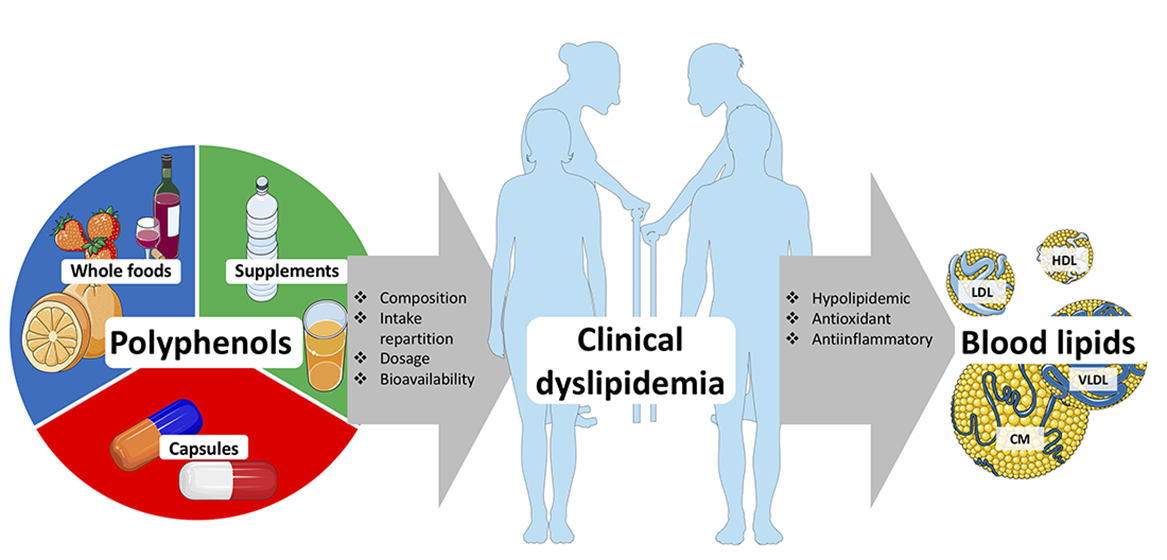
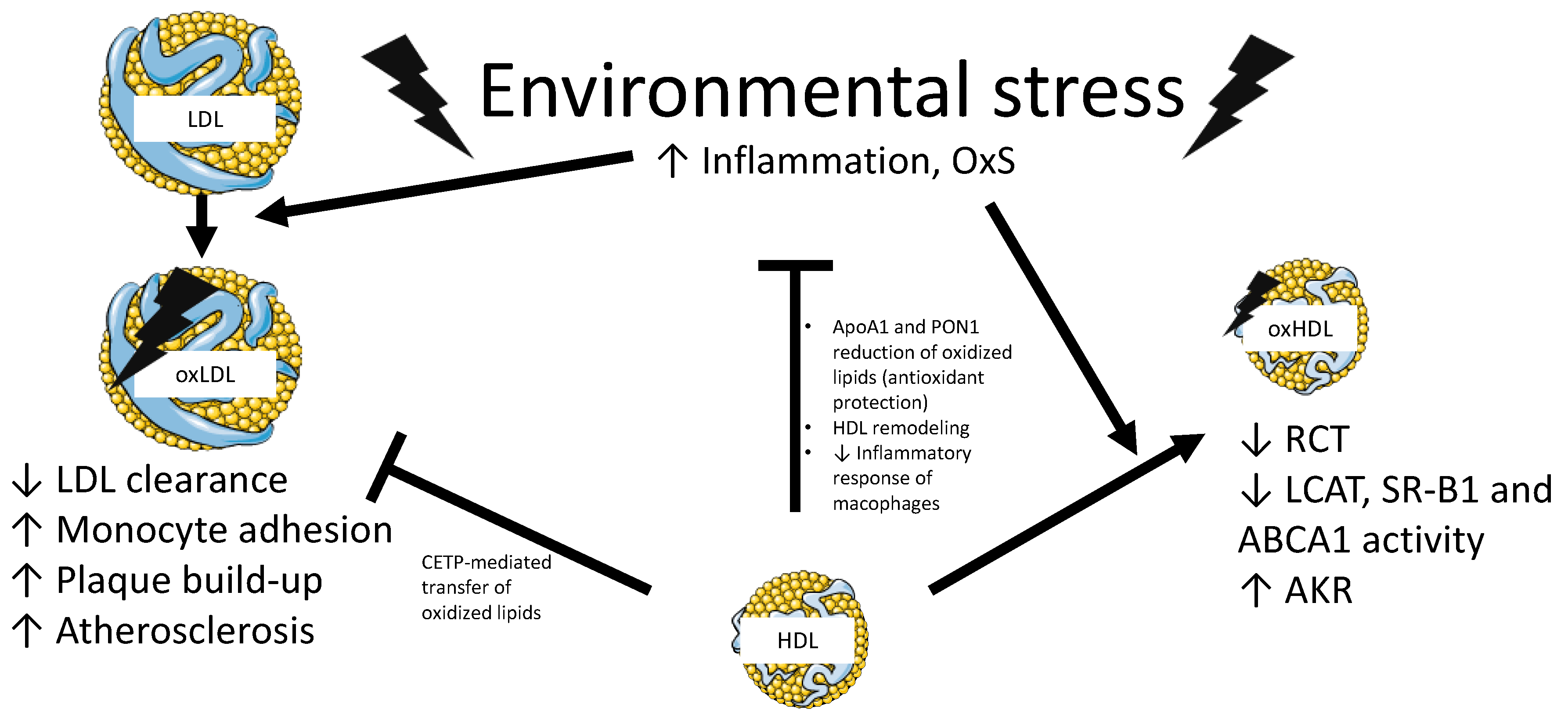
Graphical Abstract