Review

Magnesium in Aging, Health and Diseases
Geriatric Unit, Department of Medicine, University of Palermo, 90127 Palermo, Italy
*
Author to whom correspondence should be addressed.
Nutrients 2021, 13(2), 463; https://doi.org/10.3390/nu13020463
Submission received: 31 December 2020 / Revised: 26 January 2021 / Accepted: 28 January 2021 / Published: 30 January 2021
(This article belongs to the Section Micronutrients and Human Health)

Abstract

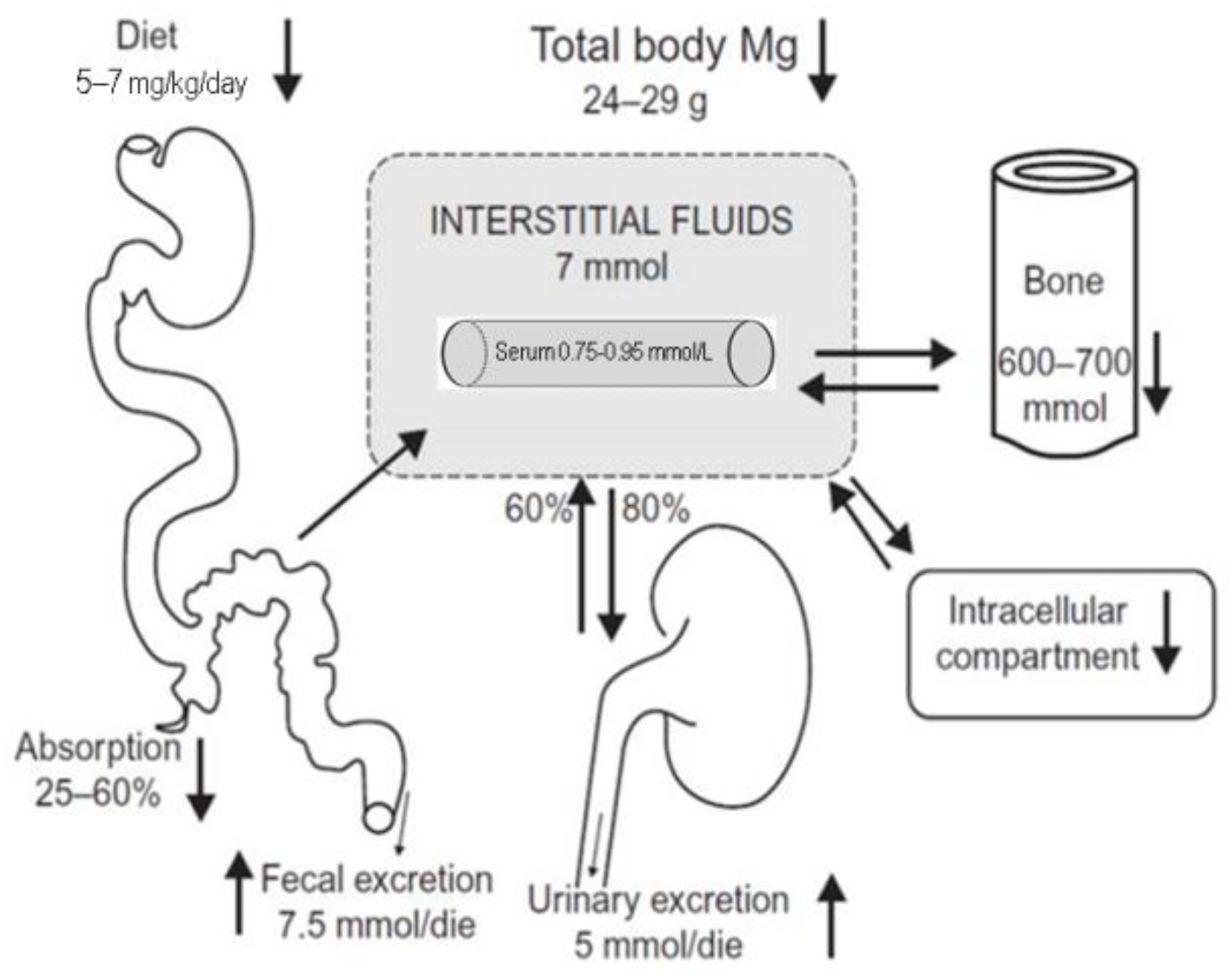
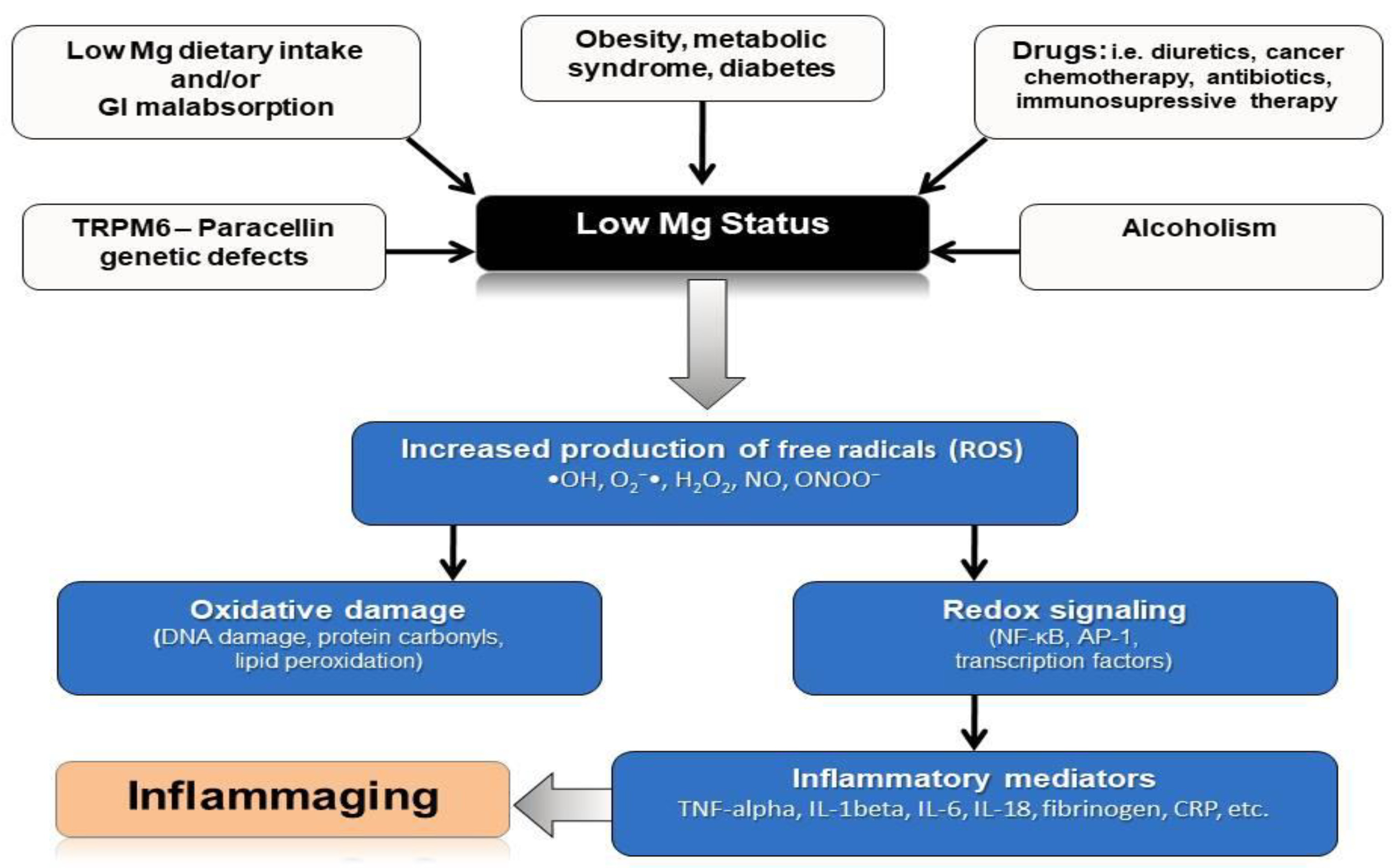
Several changes of magnesium (Mg) metabolism have been reported with aging, including diminished Mg intake, impaired intestinal Mg absorption and renal Mg wasting. Mild Mg deficits are generally asymptomatic and clinical signs are usually non-specific or absent. Asthenia, sleep disorders, hyperemotionality, and cognitive disorders are common in the elderly with mild Mg deficit, and may be often confused with age-related symptoms. Chronic Mg deficits increase the production of free radicals which have been implicated in the development of several chronic age-related disorders. Numerous human diseases have been associated with Mg deficits, including cardiovascular diseases, hypertension and stroke, cardio-metabolic syndrome and type 2 diabetes mellitus, airways constrictive syndromes and asthma, depression, stress-related conditions and psychiatric disorders, Alzheimer’s disease (AD) and other dementia syndromes, muscular diseases (muscle pain, chronic fatigue, and fibromyalgia), bone fragility, and cancer. Dietary Mg and/or Mg consumed in drinking water (generally more bioavailable than Mg contained in food) or in alternative Mg supplements should be taken into consideration in the correction of Mg deficits. Maintaining an optimal Mg balance all through life may help in the prevention of oxidative stress and chronic conditions associated with aging. This needs to be demonstrated by future studies.
Keywords: magnesium; oxidative stress; diseases; dementia; diabetes; osteoporosis; aging; hypertension; health; longevity magnesium; oxidative stress; diseases; dementia; diabetes; osteoporosis; aging; hypertension; health; longevity