Article

Associations between Feeding Patterns and Infant Health in China: A Propensity Score Matching Approach

Key Laboratory of Trace Element Nutrition of National Health and Family Planning Commission, National Institute for Nutrition and Health, Chinese Center for Disease Control and Prevention, No. 29 Nanwei Road, Xicheng District, Beijing 100050, China
*
Author to whom correspondence should be addressed.
Nutrients 2021, 13(12), 4518; https://doi.org/10.3390/nu13124518
Submission received: 5 November 2021 / Revised: 10 December 2021 / Accepted: 15 December 2021 / Published: 17 December 2021
(This article belongs to the Section Pediatric Nutrition)

Abstract

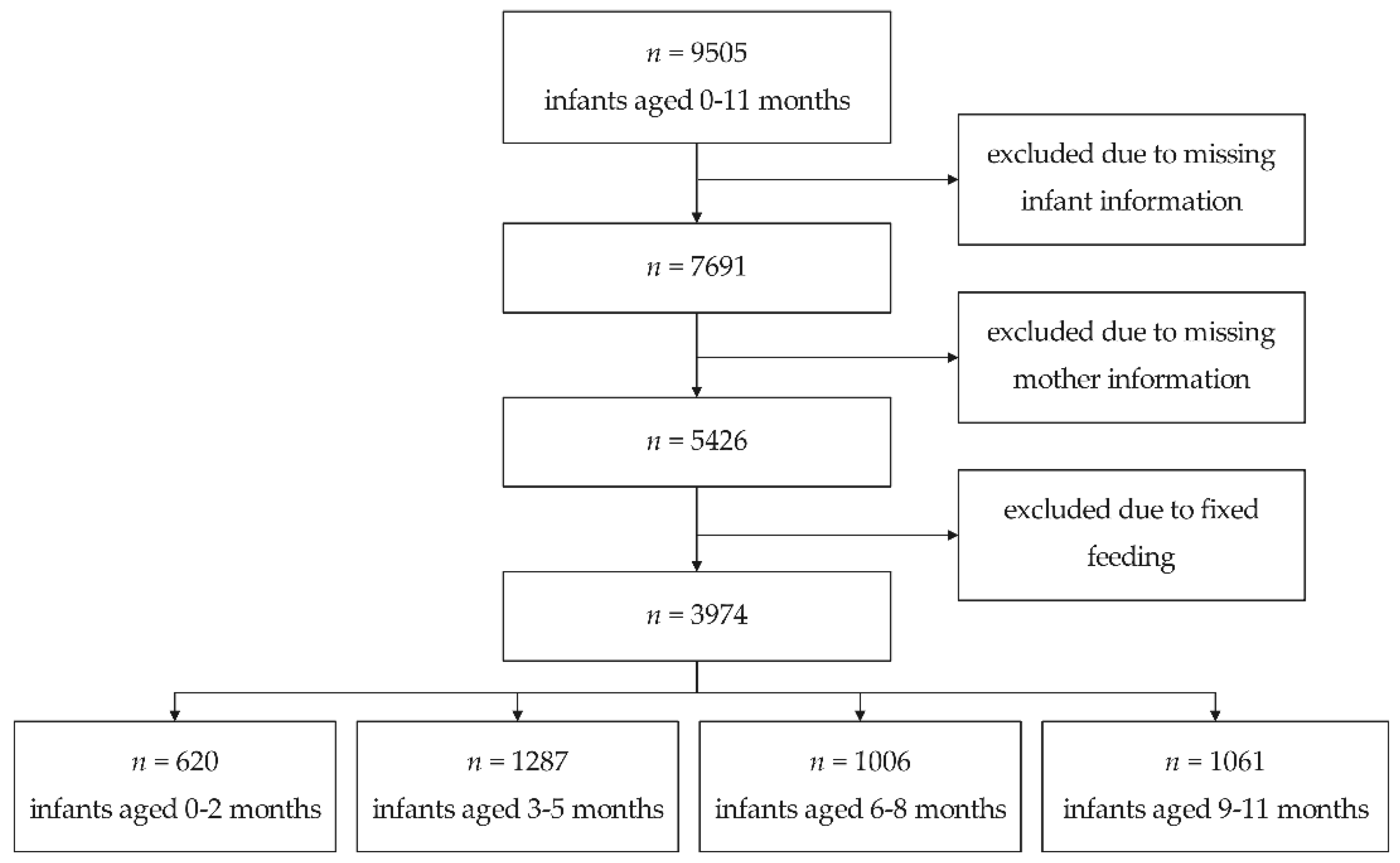
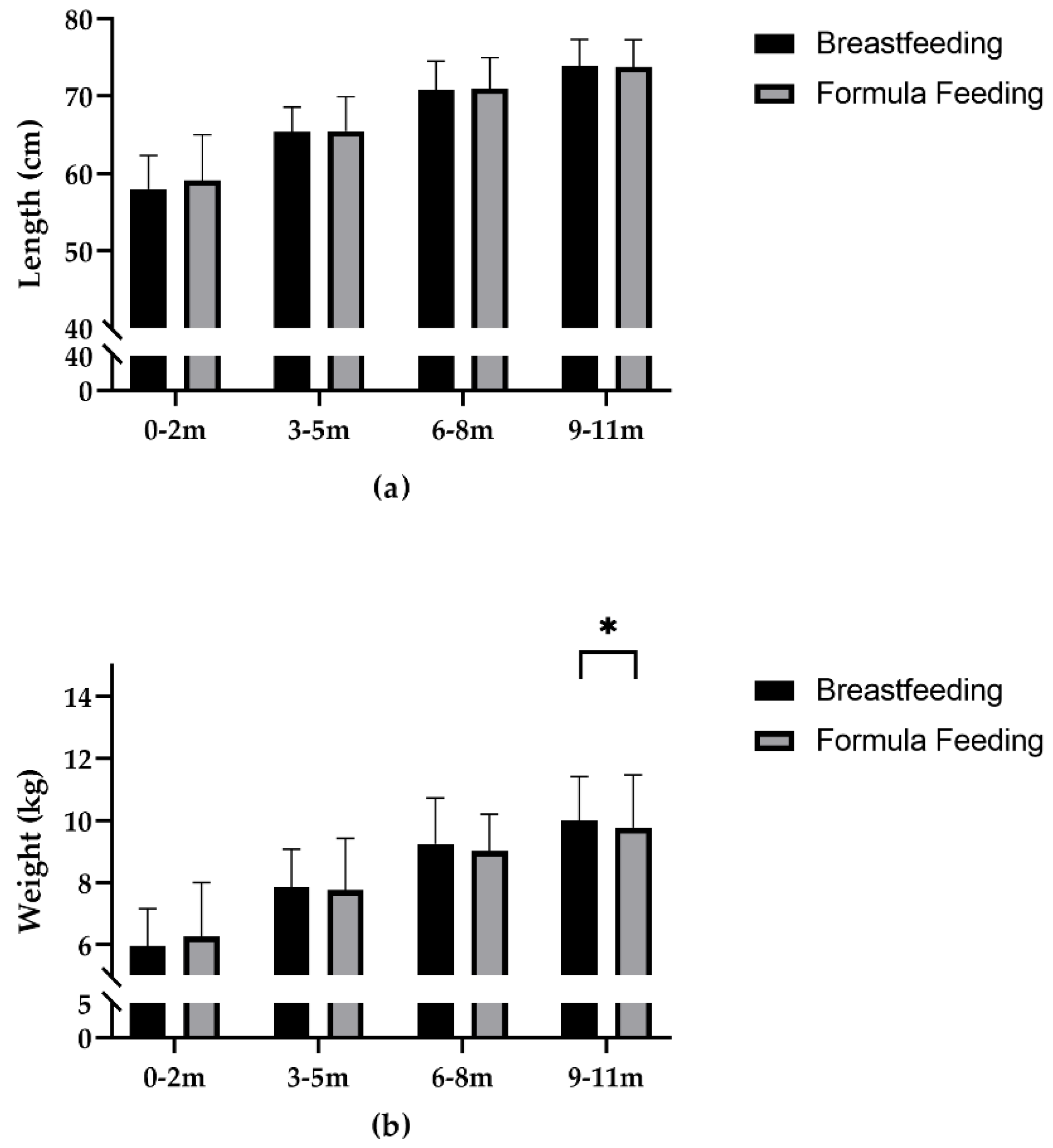
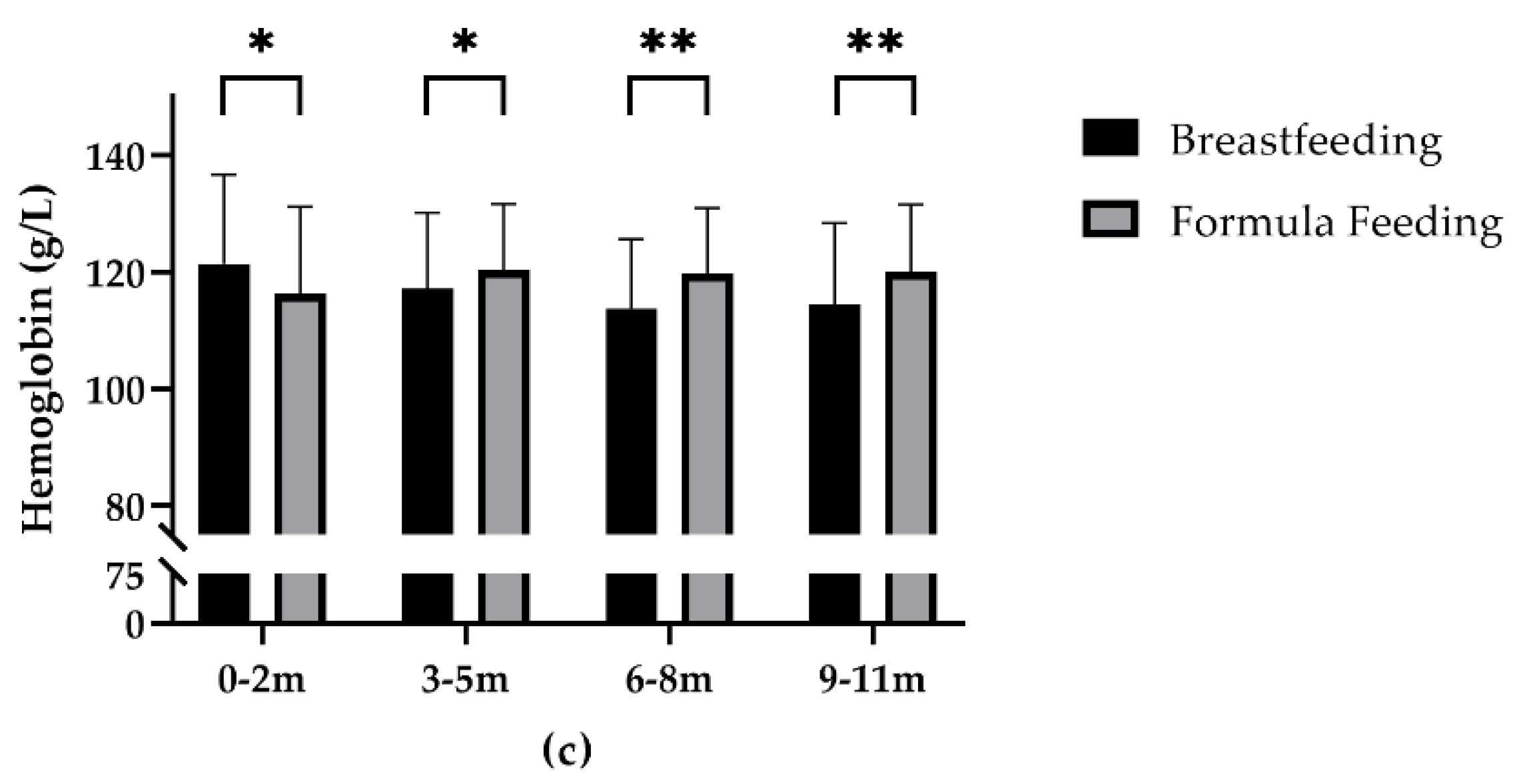
Breastmilk is the optimal food for infants. Feeding pattern is closely related to physical development and health during infancy. Understanding the associations between feeding patterns and health status can inform related policy interventions and advocacy in China. This study aimed to investigate the relationship between infant feeding patterns and health status in China infants. The China National Nutrition and Health Surveillance 2013 was a national-representative cross-sectional study performed particularly for children aged 0–5 years. A total of 3974 infants aged under 1 year were included in the analysis, of whom 1082 (27.2%) made up the formula feeding group, and 2892 (72.8%) made up the breastfeeding group. The associations between feeding patterns and physical development and health were investigated using propensity score matching and multivariable logistic regression models. Among breastfeeding and formula feeding infants aged 9–11 months old, weight-for-age z score was 1.1 ± 1.1 and 0.9 ± 1.3, respectively, and weight-for-length z score was 1.0 ± 1.3 and 0.7 ± 1.4, respectively. Hemoglobin in 0–2, 3–5, 6–8, and 9–11 months old breastfeeding infants was 121.4 ± 15.2 g/L, 117.1 ± 13.0 g/L, 113. 9 ± 11.9 g/L, and 114.4 ± 14.0 g/L, while in 0–2, 3–5, 6–8, and 9–11 months formula feeding infants was 116.3 ± 14.8 g/L, 120.4 ± 11.3 g/L, 119.8 ± 11.2 g/L, and 120.0 ± 11.5 g/L, respectively. Breastfeeding was associated with lower risk of respiratory disease (OR: 0.79; 95% CI: 0.64, 0.99) and diarrhea (OR: 0.75; 95% CI: 0.57, 0.98). Breastfeeding could slightly improve infant physical development, and had a protective effect on the diarrheal and respiratory diseases. Infants aged 3–11 months who were breastfeeding showed lower hemoglobin than that of formula-fed infants and thus should increase intake of iron rich complementary foods.
Keywords: infant; feeding pattern; cross-sectional study; propensity score matching infant; feeding pattern; cross-sectional study; propensity score matching