

Antiviral Functional Foods and Exercise Lifestyle Prevention of Coronavirus


Abstract
1. Introduction
2. Antiviral Role of Exercise Immunology
Exercise Recommendations for COVID-19 Prevention
3. Importance of Functional Foods in Preventing Communicable Disease and COVID-19
4. Functional Foods Mechanisms of Optimizing the Immune System Antiviral Defence
4.1. Potential Antiviral Benefits of Olive Oil Nutraceuticals
4.2. Vitamin D Antiviral Role
4.3. Antiviral Role of Functional Foods in Popular Traditional Medicine
4.3.1. Traditional Herbs and Roots
4.3.2. Peptide and Amino Acids
4.3.3. Plant Cyclotides
4.3.4. Coffee and Caffeine
5. Conclusions and Recommendations
Author Contributions
Conflicts of Interest
References
- Zhu, N.; Zhang, D.; Wang, W.; Li, X.; Yang, B.; Song, J.; Zhao, X.; Huang, B.; Shi, W.; Lu, R.; et al. Novel Coronavirus from Patients with Pneumonia in China, 2019. New Engl. J. Med. 2020, 382, 727–733. [Google Scholar] [CrossRef]
- World Health Organization (WHO). Fact Sheets. Influenza (Seasonal). 2018. Available online: https://www.who.int/news-room/fact-sheets/detail/influenza-(seasonal) (accessed on 2 March 2020).
- Enquist, L.W. Editors of the Journal of Virology. Virology in the 21st century. J. Virol. 2009, 83, 5296–5308. [Google Scholar] [CrossRef] [PubMed]
- U.S. Centers for Disease Control and Prevention. Seasonal Influenza Vaccine Effectiveness, 2018–2019. 2019. Available online: https://www.cdc.gov/flu/vaccines-work/2018-2019.html (accessed on 2 March 2020).
- Mahmoud, A. New vaccines: Challenges of discovery. Microb. Biotechnol. 2016, 9, 549–552. [Google Scholar] [CrossRef] [PubMed]
- Hui, D.S.C.; Lee, N.; Chan, P.K.S. A clinical approach to the threat of emerging influenza viruses in the Asia-Pacific region. Respirology 2017, 22, 1300–1312. [Google Scholar] [CrossRef] [PubMed]
- Calder, P.C.; Carr, A.C.; Gombart, A.F.; Eggersdorfer, M. Optimal Nutritional Status for a Well-Functioning Immune System Is an Important Factor to Protect against Viral Infections. Nutrients 2020, 12, 1181. [Google Scholar] [CrossRef]
- Nieman, D.C. Exercise immunology: Practical applications. Int. J. Sports Med. 1997, 18, 91–100. [Google Scholar] [CrossRef] [PubMed]
- Alkhatib, A.; Tsang, C.; Tiss, A.; Theeshan, B.; Arefanian, H.; Barake, R.; Khadir, A.; Tuomilehto, J. Functional Foods and Lifestyle Approaches for Diabetes Prevention and Management. Nutrients 2017, 9, 1310. [Google Scholar] [CrossRef]
- Booth, F.W.; Roberts, C.K.; Thyfault, J.P.; Ruegsegger, G.N.; Toedebusch, R.G. Role of Inactivity in Chronic Diseases: Evolutionary Insight and Pathophysiological Mechanisms. Physiol Rev. 2017, 97, 1351–1402. [Google Scholar] [CrossRef]
- Alkhatib, A. Lactate, Carbohydrate, and Fat Utilisation during Exercise: Interrelationship, and Applications in Exercise Testing; Lambert Academic Publishing: Saarbrucken, Germany, 2010; Chapter 1; pp. 1–10. [Google Scholar]
- Nieman, D.C.; Wentz, L.M. The compelling link between physical activity and the body’s defense system. J. Sport Health Sci. 2019, 8, 201–217. [Google Scholar] [CrossRef]
- Sellami, M.; Gasmi, M.; Denham, J.; Hayes, L.D.; Stratton, D.; Padulo, J.; Bragazzi, N. Effects of Acute and Chronic Exercise on Immunological Parameters in the Elderly Aged: Can Physical Activity Counteract the Effects of Aging? Front. Immunol. 2018, 9, 2187. [Google Scholar] [CrossRef]
- Ulven, S.M.; Foss, S.S.; Skjølsvik, A.M.; Stadheim, H.K.; Myhrstad, M.C.; Raael, E.; Sandvik, M.; Narverud, I.; Andersen, L.F.; Jensen, J.; et al. An acute bout of exercise modulate the inflammatory response in peripheral blood mononuclear cells in healthy young men. Arch. Physiol. Biochem. 2015, 121, 41–49. [Google Scholar] [CrossRef] [PubMed]
- Hou, W.; Gibbs, J.S.; Lu, X.; Brooke, C.B.; Roy, D.; Modlin, R.L.; Bennink, J.R.; Yewdell, J.W. Viral infection triggers rapid differentiation of human blood monocytes into dendritic cells. Blood 2012, 119, 3128–3131. [Google Scholar] [CrossRef] [PubMed]
- Shimizu, K.; Kimura, F.; Akimoto, T.; Akama, T.; Tanabe, K.; Nishijima, T.; Kuno, S.; Kono, I. Effect of moderate exercise training on T-helper cell subpopulations in elderly people. Exerc. Immunol. Rev. 2008, 14, 24–37. [Google Scholar] [PubMed]
- Fairey, A.S.; Courneya, K.S.; Field, C.J.; Bell, G.J.; Jones, L.W.; Mackey, J.R. Randomized controlled trial of exercise and blood immune function in postmenopausal breast cancer survivors. J. Appl. Physiol. 2005, 98, 1534–1540. [Google Scholar] [CrossRef] [PubMed]
- van der Geest, K.S.M.; Wang, Q.; Eijsvogels, T.M.H.; Koenen, H.J.P.; Joosten, I.; Brouwer, E.; Hopman, M.T.E.; Jacobs, J.F.M.; Boots, A.M.H. Changes in peripheral immune cell numbers and functions in octogenarian walkers—An acute exercise study. Immun. Ageing 2017, 14, 5. [Google Scholar] [CrossRef]
- National Health Service (NHS). Who’s at Higher Risk from Coronavirus. Available online: https://www.nhs.uk/conditions/coronavirus-covid-19/people-at-higher-risk-from-coronavirus/whos-at-higher-risk-from-coronavirus (accessed on 11 May 2020).
- U.S. Department of Health & Human Services; Centre for Disease Control and Prevention. People Who Are at Increased Risk for Severe Illness. Available online: https://www.cdc.gov/coronavirus/2019-ncov/need-extra-precautions/people-at-higher-risk.html (accessed on 11 May 2020).
- Morgado, J.M.; Rama, L.; Silva, I.; de Jesus Inácio, M.; Henriques, A.; Laranjeira, P.; Pedreiro, S.; Rosado, F.; Alves, F.; Gleeson, M.; et al. Cytokine production by monocytes, neutrophils, and dendritic cells is hampered by long-term intensive training in elite swimmers. Eur. J. Appl. Physiol. 2012, 112, 471–482. [Google Scholar] [CrossRef]
- Gleeson, M.; McDonald, W.A.; Pyne, D.B.; Cripps, A.W.; Francis, J.L.; Fricker, P.A.; Clancy, R.L. Salivary IgA levels and infection risk in elite swimmers. Med. Sci. Sports Exerc. 1999, 31, 67–73. [Google Scholar] [CrossRef]
- Gannon, G.A.; Shek, P.N.; Shephard, R.J. Natural killer cells: Modulation by intensity and duration of exercise. Exerc. Immunol. Rev. 1995, 1, 26–48. [Google Scholar]
- Alkhatib, A.; Feng, W.H.; Huang, Y.J.; Kuo, C.H.; Hou, C.W. Anserine reverses exercise-induced oxidative stress and preserves cellular homeostasis in healthy men. Nutrients 2020, 12, 1146. [Google Scholar] [CrossRef]
- Chen, C.Y.; Chou, W.Y.; Ko, J.Y.; Lee, M.S.; Wu, R.W. Early Recovery of Exercise-Related Muscular Injury by HBOT. Biomed. Res. Int. 2019, 29, 6289380. [Google Scholar] [CrossRef]
- Fiatarone, M.A.; Morley, J.E.; Bloom, E.T.; Benton, D.; Solomon, G.F.; Makinodan, T. The effect of exercise on natural killer cell activity in young and old subjects. J. Gerontol. 1989, 44, 37–45. [Google Scholar] [CrossRef] [PubMed]
- Cannon, J.G.; Orencole, S.F.; Fielding, R.A.; Meydani, M.; Meydani, S.N.; Fiatarone, M.A.; Blumberg, J.B.; Evans, W.J. Acute phase response in exercise: Interaction of age and vitamin E on neutrophils and muscle enzyme release. Am. J. Physiol. 1990, 259(Pt. 2), R1214–R1219. [Google Scholar] [CrossRef]
- Cao Dinh, H.; Beyer, I.; Mets, T.; Onyema, O.O.; Njemini, R.; Renmans, W.; De Waele, M.; Jochmans, K.; Vander Meeren, S.; Bautmans, I. Effects of Physical Exercise on Markers of Cellular Immunosenescence: A Systematic Review. Calcif. Tissue Int. 2017, 100, 193–215. [Google Scholar] [CrossRef] [PubMed]
- Edwards, K.M.; Burns, V.E.; Allen, L.M.; McPhee, J.S.; Bosch, J.A.; Carroll, D.; Drayson, M.; Ring, C. Eccentric exercise as an adjuvant to influenza vaccination in humans. Brain Behav. Immun. 2017, 21, 209–217. [Google Scholar] [CrossRef] [PubMed]
- Lavie, C.J.; Ozemek, C.; Carbone, S.; Katzmarzyk, P.T.; Blair, S.N. Sedentary behavior, exercise, and cardiovascular health. Circ. Res. 2019, 124, 799–815. [Google Scholar] [CrossRef] [PubMed]
- Alkhatib, A. Sedentary Lifestyle, Predictive Factors, Health Risks and Physiological Implications; Nova Science Publishers: New York, NY, USA, 2016; ISBN 978-1-63484-673-8. [Google Scholar]
- Luzi, L.; Radaelli, M.G. Influenza and obesity: Its odd relationship and the lessons for COVID-19 pandemic. Acta Diabetol. 2020, 57, 759–764. [Google Scholar] [CrossRef] [PubMed]
- Wedell-Neergaard, A.S.; Krogh-Madsen, R.; Petersen, G.L.; Hansen, A.M.; Pedersen, B.K.; Lund, R. Cardiorespiratory fitness and the metabolic syndrome: Roles of inflammation and abdominal obesity. PLoS ONE 2018, 13, e0194991. [Google Scholar] [CrossRef] [PubMed]
- Cameron, A.; Alkhatib, A. Physical Inactivity in Diabetes: A case for home-based exercise prescription. In Sedentary Lifestyle, Predictive Factors, Health Risks and Physiological Implications; Alkhatib, A., Ed.; Nova Science Publishers: New York, NY, USA, 2016; ISBN 978-1-63484-673-8. [Google Scholar]
- Chen, P.; Mao, L.; Nassis, G.P.; Harmer, P.; Ainsworth, B.E.; Li, F. Coronavirus disease (COVID-19): The need to maintain regular physical activity while taking precautions. J. Sport Health Sci. 2020, 9, 103–104. [Google Scholar] [CrossRef]
- Jiménez-Pavón, D.; Carbonell-Baeza, A.; Lavie, C.J. Physical exercise as therapy to fight against the mental and physical consequences of COVID-19 quarantine: Special focus in older people. Prog. Cardiovasc. Dis. 2020, 63, 386–388. [Google Scholar] [CrossRef]
- Zbinden-Foncea, H.; Francaux, M.; Deldicque, L.; Hawley, J.A. Does high cardiorespiratory fitness confer some protection against pro-inflammatory responses after infection by SARS-CoV-2? Obesity (Silver Spring) 2020, 23, 1378–1381. [Google Scholar] [CrossRef]
- Alkhatib, A. Personalising exercise and nutrition behaviours in diabetes lifestyle prevention. Eur. Med. J. 2020, 5, 67–77. [Google Scholar]
- Johnston, C. Functional Foods as Modifiers of Cardiovascular Disease. Am. J. Lifestyle Med. 2009, 3 (Suppl. 1), 39S–43S. [Google Scholar] [CrossRef] [PubMed]
- Alkhatib, A.; Tsang, C.; Tuomilehto, J. Olive Oil Nutraceuticals in the Prevention and Management of Diabetes: From Molecules to Lifestyle. Int. J. Mol. Sci. 2018, 19, 2024. [Google Scholar] [CrossRef] [PubMed]
- Alkhatib, A.; Tuomilehto, J. Lifestyle Diabetes Prevention. In Encyclopaedia of Endocrine Diseases; Huhtaniemi, I., Martini, L., Eds.; Elsevier: Amsterdam, The Netherlands, 2019; Volume 1, pp. 148–159. [Google Scholar] [CrossRef]
- Acquah, C.; Agyei, D.; Obeng, E.M.; Pan, S.; Tan, K.X.; Danquah, M.K. Aptamers: An emerging class of bioaffinity ligands in bioactive peptide applications. Crit. Rev. Food Sci. Nutr. 2020, 60, 1195–1206. [Google Scholar] [CrossRef] [PubMed]
- López-Varela, S.; González-Gross, M.; Marcos, A. Functional foods and the immune system: A review. Eur. J. Clin. Nutr. 2002, 56 (Suppl. 3), S29–S33. [Google Scholar] [CrossRef] [PubMed]
- Calder, P.C.; Kew, S. The immune system: A target for functional foods? Br. J. Nutr. 2002, 88 (Suppl. 2), S165–S177. [Google Scholar] [CrossRef] [PubMed]
- Gombart, A.F.; Pierre, A.; Maggini, S. A review of micronutrients and the immune system–working in harmony to reduce the risk of infection. Nutrients 2020, 12, 236. [Google Scholar] [CrossRef]
- Grant, W.B.; Lahore, H.; McDonnell, S.L.; Baggerly, C.A.; French, C.B.; Aliano, J.L.; Bhattoa, H.P. Evidence that Vitamin D Supplementation Could Reduce Risk of Influenza and COVID-19 Infections and Deaths. Nutrients 2020, 12, 988. [Google Scholar] [CrossRef]
- Wu, C.; Chen, X.; Cai, Y.; Xia, J.; Zhou, X.; Xu, S.; Huang, H.; Zhang, L.; Zhou, X.; Du, C.; et al. Risk factors associated with acute respiratory distress syndrome and death in patients with coronavirus disease 2019 pneumonia in Wuhan, China. Jama Intern. Med. 2020, 180, 1–11. [Google Scholar] [CrossRef]
- Fang, L.; Karakiulakis, G.; Roth, M. Are patients with hypertension and diabetes mellitus at increased risk for COVID-19 infection? Lancet Respir. Med. 2020, 8, e21. [Google Scholar] [CrossRef]
- Diabetes UK. Latest Statistics on Coronavirus Deaths in People with Diabetes. 2020. Available online: https://www.diabetes.org.uk/about_us/news/coronavirus-statistics (accessed on 26 May 2020).
- Simonnet, A.; Chetboun, M.; Poissy, J.; Raverdy, V.; Noulette, J.; Duhamel, A.; Labreuche, J.; Mathieu, D.; Pattou, F.; Jourdain, M. LICORN and the Lille COVID-19 and Obesity study group. High prevalence of obesity in severe acute respiratory syndrome coronavirus-2 (SARS-CoV-2) requiring invasive mechanical ventilation. Obesity (Silver Spring) 2020, 28, 1195–1199. [Google Scholar] [CrossRef] [PubMed]
- Hussain, A.; Bhowmik, B.; do Vale Moreira, N.C. COVID-19 and diabetes: Knowledge in progress. Diabetes Res. Clin. Pract. 2020, 162, 108142. [Google Scholar] [CrossRef] [PubMed]
- Guo, W.; Li, M.; Dong, Y.; Zhou, H.; Zhang, Z.; Tian, C.; Qin, R.; Wang, H.; Shen, Y.; Du, K.; et al. Diabetes is a risk factor for the progression and prognosis of COVID-19. Diabetes Metab. Res. Rev. 2020, 31, e3319. [Google Scholar] [CrossRef] [PubMed]
- Estruch, R.; Ros, E.; Salas-Salvado, J.; Covas, M.I.; Corella, D.; Aros, F.; Gómez-Gracia, E.; Ruiz-Gutiérrez, V.; Fiol, M.; Lapetra, J.; et al. Primary prevention of cardiovascular disease with a Mediterranean diet. N. Engl. J. Med. 2013, 368, 1279–1290. [Google Scholar] [CrossRef] [PubMed]
- Alkhatib, A. Effective intervention strategies combining Mediterranean diet and exercise for reducing obesity, metabolic and cardiovascular risks in high-risk populations: Mini review. Obes. Res. Open J. 2015, 1, 4–9. [Google Scholar] [CrossRef]
- Martinez-Gonzalez, M.A.; Garcia-Arellano, A.; Toledo, E.; Salas-Salvado, J.; Buil-Cosiales, P.; Corella, D.; Covas, M.I.; Schröder, H.; Arós, F.; Gómez-Gracia, E.; et al. A 14-item Mediterranean diet assessment tool and obesity indexes among high-risk subjects: The PREDIMED trial. PLoS ONE 2012, 7, e43134. [Google Scholar] [CrossRef] [PubMed]
- Middleton, G.; Keegan, R.; Smith, M.F.; Alkhatib, A.; Klonizakis, M. Brief report: Implementing a Mediterranean diet intervention into a RCT: Lessons learned from a non-Mediterranean based country. J. Nutr. Healthy Aging 2015, 19, 1019–1022. [Google Scholar] [CrossRef] [PubMed]
- Martinez-Gonzalez, M.A. Benefits of the Mediterranean diet beyond the Mediterranean Sea and beyond food patterns. BMC Med. 2016, 14, 157. [Google Scholar] [CrossRef]
- Klonizakis, M.; Alkhatib, A.; Middleton, G. Commentary on: “Implementing a Mediterranean-Style Diet Outside the Mediterranean Region”. Current Atherosclerosis Reports. Curr. Atheroscler. Rep. 2018, 20, 45. [Google Scholar] [CrossRef]
- Alkhatib, A.; Klonizakis, M. Effects of Exercise Training and Mediterranean Diet on Reducing Post-Menopausal Vascular Risk. Clin. Hemorheol. Microcirc. 2014, 57, 33–47. [Google Scholar] [CrossRef]
- García-Burgos, M.; Moreno-Fernández, J.; Alférez, M.J.M.; Díaz-Castro, J.; López-Aliaga, I. New perspectives in fermented dairy products and their health relevance. J. Funct. Foods 2020, 72, 104059. [Google Scholar]
- Calder, P.C. Nutrition, immunity and COVID-19. BMJ Nutr. Prev. Health 2020, 3, e000085. [Google Scholar] [CrossRef]
- Dhar, D.; Mohanty, A. Gut microbiota and Covid-19- possible link and implications. Virus Res. 2020, 285, 198018. [Google Scholar] [CrossRef] [PubMed]
- Chandra, R.K. Effect of vitamin and trace-element supplementation on immune responses and infection in elderly subjects. Lancet 1992, 340, 1124–1127. [Google Scholar] [CrossRef]
- Martineau, A.R.; Jolliffe, D.A.; Hooper, R.L.; Greenberg, L.; Aloia, J.F.; Bergman, P.; Dubnov-Raz, G.; Esposito, S.; Ganmaa, D.; Ginde, A.A.; et al. Vitamin D supplementation to prevent acute respiratory tract infections: Systematic review and meta-analysis of individual participant data. BMJ 2017, 15, i6583. [Google Scholar] [CrossRef] [PubMed]
- Muscogiuri, G.; Barrea, L.; Savastano, S.; Colao, A. Nutritional recommendations for CoVID-19 quarantine. Eur. J. Clin. Nutr. 2020, 14, 1–2. [Google Scholar] [CrossRef] [PubMed]
- Martineau, A.R.; Jolliffe, D.A.; Greenberg, L.; Aloia, J.F.; Bergman, P.; Dubnov-Raz, G.; Esposito, S.; Ganmaa, D.; Ginde, A.A.; Goodall, E.C.; et al. Vitamin D supplementation to prevent acute respiratory infections: Individual participant data meta-analysis. Health Technol. Assess. 2019, 23, 1–44. [Google Scholar] [CrossRef] [PubMed]
- Romano, F.; Muscogiuri, G.; Di Benedetto, E.; Zhukouskaya, V.V.; Barrea, L.; Savastano, S.; Colao, A.; Di Somma, C. Vitamin D and sleep regulation: Is there a role for vitamin D? Curr. Pharm. Des. 2020, 26, 2492–2496. [Google Scholar] [CrossRef]
- Alkhatib, A. Olive oil nutraceuticals: More than an offshoot of the Mediterranean diet. In The Mediterranean Diet: An Evidence-Based Approach, 2nd ed.; Watson, R., Preedy, V., Eds.; Elsevier: Amsterdam, The Netherlands, 2020. [Google Scholar]
- Ma, S.C.; He, Z.D.; Deng, X.L.; But, P.P.; Ooi, V.E.; Xu, H.X.; Lee, S.H.; Lee, S.F. In vitro evaluation of secoiridoid glucosides from the fruits of Ligustrum lucidum as antiviral agents. Chem. Pharm. Bull. (Tokyo) 2001, 49, 1471–1473. [Google Scholar] [CrossRef]
- Soret, M.G. Antiviral activity of calcium elenolate on parainfluenza infection of hamsters. Antimicrob. Agents Chemother. (Bethesda) 1969, 9, 160–166. [Google Scholar]
- Paiva-Martins, F.; Fernandes, J.; Santos, V.; Silva, L.; Borges, F.; Rocha, S.; Belo, L.; Santos-Silva, A. Powerful Protective Role of 3,4-dihydroxyphenylethanol-elenolic Acid Dialdehyde Against Erythrocyte Oxidative-Induced Hemolysis. J. Agric. Food Chem. 2010, 58, 135–140. [Google Scholar] [CrossRef] [PubMed]
- Yamada, K.; Ogawa, H.; Hara, A.; Yoshida, Y.; Yonezawa, Y.; Karibe, K.; Nghia, V.B.; Yoshimura, H.; Yamamoto, Y.; Yamada, M.; et al. Mechanism of the antiviral effect of hydroxytyrosol on influenza virus appears to involve morphological change of the virus. Antivir. Res. 2009, 83, 35–44. [Google Scholar] [CrossRef] [PubMed]
- Bedoya, L.M.; Beltrán, M.; Obregón-Calderón, P.; García-Pérez, J.; de la Torre, H.E.; González, N.; Pérez-Olmeda, M.; Auñón, D.; Capa, L.; Gómez-Acebo, E.; et al. Hydroxytyrosol: A new class of microbicide displaying broad anti-HIV-1 activity. AIDS 2016, 30, 2767–2776. [Google Scholar] [CrossRef] [PubMed]
- Somerville, V.S.; Braakhuis, A.J.; Hopkins, W.G. Effect of Flavonoids on Upper Respiratory Tract Infections and Immune Function: A Systematic Review and Meta-Analysis. Adv. Nutr. 2016, 7, 488–497. [Google Scholar] [CrossRef] [PubMed]
- Somerville, V.; Moore, R.; Braakhuis, A. The Effect of Olive Leaf Extract on Upper Respiratory Illness in High School Athletes: A Randomised Control Trial. Nutrients 2019, 11, 358. [Google Scholar] [CrossRef]
- Vallès, X.; Alonso, M.H.; López-Caleya, J.F.; Díez-Obrero, V.; Dierssen-Sotos, T.; Lope, V.; Molina-Barceló, A.; Chirlaque, M.D.; Jiménez-Moleón, J.J.; Fernández Tardón, G.; et al. Colorectal cancer, sun exposure and dietary vitamin D and calcium intake in the MCC-Spain study. Environ. Int. 2018, 121(Pt. 1), 428–434. [Google Scholar]
- Majid, M.S.; Ahmad, H.S.; Bizhan, H.; Hosein, H.Z.M.; Mohammad, A. The effect of vitamin D supplement on the score and quality of sleep in 20-50 year-old people with sleep disorders compared with control group. Nutr. Neurosci. 2018, 21, 511–519. [Google Scholar] [CrossRef]
- Piovezan, R.D.; Hirotsu, C.; Feres, M.C.; Cintra, F.D.; Andersen, M.L.; Tufik, S.; Poyares, D. Obstructive sleep apnea and objective short sleep duration are independently associated with the risk of serum vitamin D deficiency. PLoS ONE 2017, 12, e0180901. [Google Scholar] [CrossRef]
- Mousa, H.A. Prevention and Treatment of Influenza, Influenza-Like Illness, and Common Cold by Herbal, Complementary, and Natural Therapies. J. Evid. Based Complem. Altern. Med. 2017, 22, 166–174. [Google Scholar] [CrossRef]
- Nabeshima, S.; Kashiwagi, K.; Ajisaka, K.; Masui, S.; Takeoka, H.; Ikematsu, H.; Kashiwagi, S. A randomized, controlled trial comparing traditional herbal medicine and neuraminidase inhibitors in the treatment of seasonal influenza. J. Infect. Chemother. 2012, 18, 534–543. [Google Scholar] [CrossRef]
- Wolkerstorfer, A.; Kurz, H.; Bachhofner, N.; Szolar, O.H. Glycyrrhizin inhibits influenza A virus uptake into the cell. Antivir. Res. 2009, 83, 171–178. [Google Scholar] [CrossRef] [PubMed]
- Yang, F.; Zhang, Y.; Tariq, A.; Jiang, X.; Ahmed, Z.; Zhihao, Z.; Idrees, M.; Azizullah, A.; Adnan, M.; Bussmann, R.W. Food as medicine: A possible preventive measure against coronavirus disease (COVID-19). Phytother. Res. 2020. [Google Scholar] [CrossRef] [PubMed]
- Kang, H.J.; Baik, H.W.; Kim, S.J.; Lee, S.G.; Ahn, H.Y.; Park, J.S.; Park, S.J.; Jang, E.J.; Park, S.W.; Choi, J.Y.; et al. Cordyceps militaris Enhances Cell-Mediated Immunity in Healthy Korean Men. J. Med. Food 2015, 18, 1164–1172. [Google Scholar] [CrossRef] [PubMed]
- Wu, J.F.; Saovieng, S.; Cheng, I.S.; Jensen, J.; Jean, W.H.; Alkhatib, A.; Kao, C.L.; Huang, C.Y.; Kuo, C.H. Satellite cells depletion in exercising human skeletal muscle is restored by ginseng component Rg1 supplementation. J. Funct. Foods 2019, 58, 27–33. [Google Scholar] [CrossRef]
- Rahman, I.; MacNee, W. Oxidative stress and regulation of glutathione in lung inflammation. Eur. Respir. J. 2008, 16, 534–554. [Google Scholar] [CrossRef]
- Wu, G. Important roles of dietary taurine, creatine, carnosine, anserine and 4-hydroxyproline in human nutrition and health. Amino Acids 2020, 52, 329–360. [Google Scholar] [CrossRef] [PubMed]
- Wu, H.C.; Shiau, C.Y.; Chen, H.M.; Chiou, T.K. Antioxidant activities of carnosine, anserine, some free amino acids and their combination. J. Food Drug Anal. 2003, 11, 148–153. [Google Scholar] [CrossRef]
- Yimit, D.; Hoxur, P.; Amat, N.; Uchikawa, K.; Yamaguchi, N. Effects of soybean peptide on immune function, brain function, and neurochemistry in healthy volunteers. Nutrition 2011, 28, 154–159. [Google Scholar] [CrossRef]
- Li, Y.F.; He, R.R.; Tsoi, B.; Kurihara, H. Bioactivities of chicken essence. J. Food Sci. 2012, 77, R105–R110. [Google Scholar] [CrossRef]
- Vilas Boas, L.C.P.; Campos, M.L.; Berlanda, R.L.A.; de Carvalho Neves, N.; Franco, O.L. Antiviral peptides as promising therapeutic drugs. Cell. Mol. Life Sci. 2019, 76, 3525–3542. [Google Scholar] [CrossRef]
- Gründemann, C.; Koehbach, J.; Huber, J.; Gruber, C.W. Do Plant Cyclotides Have Potential As Immunosuppressant Peptides? J. Nat. Prod. 2012, 75, 167–174. [Google Scholar] [CrossRef] [PubMed]
- Chen, X.M.; Ma, Z.; Kitts, D.D. Effects of processing method and age of leaves on phytochemical profiles and bioactivity of coffee leaves. Food Chem. 2018, 249, 143–153. [Google Scholar] [CrossRef] [PubMed]
- Namba, T.; Matsuse, T. A historical study of coffee in Japanese and Asian countries: Focusing the medicinal uses in Asian traditional medicines. Yakushigaku Zasshi 2002, 37, 65–75. [Google Scholar] [PubMed]
- Tuomilehto, J.; Hu, G.; Bidel, S.; Lindström, J.; Jousilahti, P. Coffee consumption and risk of type 2 diabetes mellitus among middle-aged Finnish men and women. JAMA 2004, 291, 1213–1219. [Google Scholar] [CrossRef] [PubMed]
- Utsunomiya, H.; Ichinose, M.; Uozaki, M.; Tsujimoto, K.; Yamasaki, H.; Koyama, A.H. Antiviral activities of coffee extracts in vitro. Food Chem. Toxicol. 2008, 46, 1919–1924. [Google Scholar] [CrossRef] [PubMed]
- Utsunomiya, H.; Ichinose, M.; Ikeda, K.; Uozaki, M.; Morishita, J.; Kuwahara, T.; Koyama, A.H.; Yamasaki, H. Inhibition by caffeic acid of the influenza A virus multiplication in vitro. Int. J. Mol. Med. 2014, 34, 1020–1024. [Google Scholar] [CrossRef]
- Melamed, I.; Kark, J.D.; Spirer, Z. Coffee and the immune system. Int. J. Immunopharmacol. 1990, 12, 129–134. [Google Scholar] [CrossRef]
- Al Reef, T.; Ghanem, E. Caffeine: Well-known as psychotropic substance, but little as immunomodulator. Immunobiology 2018, 223, 818–825. [Google Scholar] [CrossRef]
- Horrigan, L.A.; Kelly, J.P.; Connor, T.J. Immunomodulatory effects of caffeine: Friend or foe? Pharmacol. Ther. 2006, 111, 877–892. [Google Scholar] [CrossRef]
- Hwang, J.H.; Kim, K.J.; Ryu, S.J.; Lee, B.Y. Caffeine prevents LPS-induced inflammatory responses in RAW264.7 cells and zebrafish. Chem. Biol. Interact. 2016, 25, 1–7. [Google Scholar] [CrossRef]
- Zanin, M.; Baviskar, P.; Webster, R.; Webby, R. The Interaction between Respiratory Pathogens and Mucus. Cell Host Microbe 2016, 19, 159–168. [Google Scholar] [CrossRef] [PubMed]
- Alkhatib, A.; Hsieh, M.J.; Kuo, C.H.; Hou, C.W. Caffeine Optimizes HIIT Benefits on Obesity-associated Metabolic Adversity in Women. Med. Sci. Sports Exerc. 2020, 52, 1793–1800. [Google Scholar] [CrossRef] [PubMed]
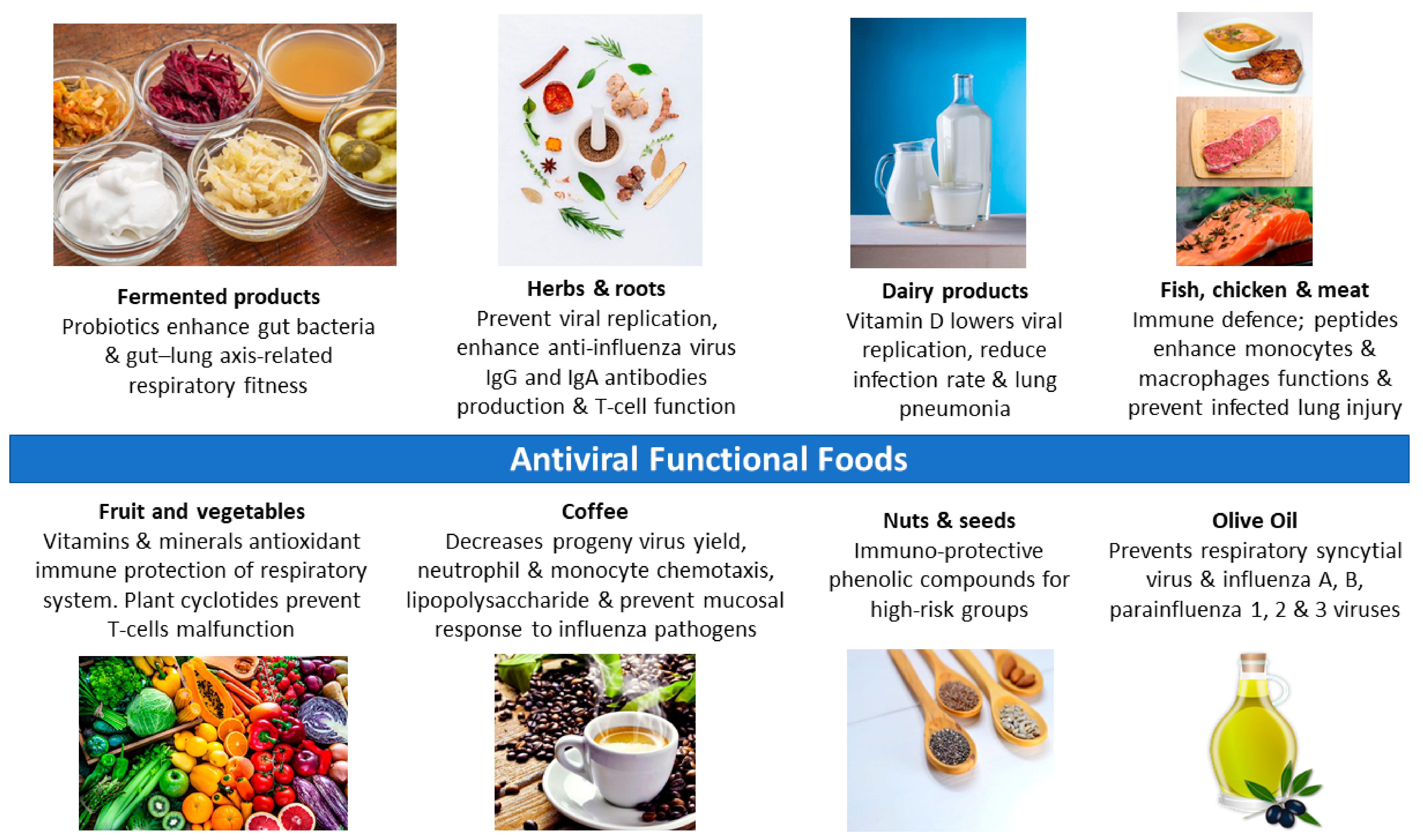

| Antiviral Functional Foods | Immune-Promoting Nutraceuticals | Key Mechanisms of Action | Antiviral Targeted Recommendations |
|---|---|---|---|
| Fruit & vegetables | Vitamins: C, B2, B6, and B12, folic acid, beta carotene, iron, plant cyclotides | Promote antioxidation and anti-inflammation properties, protect the respiratory system, and reduce risks of infection and re-infection [44]. Cyclotides protect against infections and pathogens by preventing malfunctioning of the immune cells (T-cell lymphocytes), which reduces over-reactivity of this defence machinery during infections [91]. | Intake is highly recommended as part of a balanced diet. Complements an active lifestyle, supports circadian rhythm, and sleep quality |
| Dairy products | Vitamins D, A, & E | Vitamin D reduces the risk of contracting respiratory infections and COVID-19 [46,64]. Lowers viral replication rates through cathelicidins and defensins, and prevents lung injures that lead to pneumonia through anti-inflammatory cytokines [66]. | Dietary intake is preferred. Supplements (zinc, selenium, and vitamin D) are recommended in older adults and the most deficient. Enhances sleep quality. |
| Seeds and nuts | Zinc, selenium, copper, trace minerals | Contain phenolic compounds that are immunoprotective particularly through antioxidative and anti-inflammatory properties in high-risk adults [9]. | Supplementation is recommended when dietary intake is low, especially in older and high-risk individuals |
| Fish & seafood | EPA & DHA Omega-3 | Support inflammatory resolution and healing of infected sites including the respiratory tract, which could prevent acute lung injury, mainly through pro-resolving mediators (SPMs) such as resolvins, protectins, and maresins [7]. | Increased intake is recommended in high-risk individuals |
| Protein rich foods (e.g., red meat, chicken, seafood) | Amino acids and peptides: Anserine, carnosine, taurine, creatine, and 4-hydroxyproline, vitamins, iron, copper | Dietary intake of anserine and carnosine promote immunological defence against infections by bacteria, fungi, parasites, and viruses (and coronavirus) through enhanced immune cell functions of monocytes and macrophages [24,86]. Plant peptides (e.g., soybean) increase lymphocytes and granulocytes; enhance natural killer activity [88]. | Dietary intake is sufficient, but an increased intake is recommended in high-risk individuals and infected patients. Can be obtained from both animal and plant sources. |
| Olive based products (olive oil, olive leaves) | Oleuropein, hydroxytyrosol, elenolic acid, vitamin E | Reduced upper respiratory infection attributed to antioxidative property of oleanolic acid in oleuropein, especially influenza A and B, parainfluenza 1, 2, and 3 viruses, and herpes [69]. | Dietary intake (20–30 g/day), especially from extra-virgin olive oil, which is high in polyphenol content. Increase benefits with physical activity. |
| Coffee (coffee leaves, differently fermented) | Caffeic acid, caffeine, polyphenols, chlorogenic acid | Caffeic acid decreases the progeny virus yield (especially within 3 h post-infection) and suppresses the degeneration of the virus-infected cells; caffeine can suppress of neutrophil and monocyte chemotaxis, and pro-inflammatory cytokines (e.g., TNF-α) [96]. It suppresses endotoxins LPS-induced inflammatory responses (regulates NF-κB activation and MAPK phosphorylation) [102], and prevents mucosal response to pathogens infecting the respiratory tract and influenza viruses [101]. | Coffee intake (2–3 cups/daily) is recommended and has superior immunological benefit to caffeine supplementation since it is more wholesome (contains both caffeic acid and caffeine). |
| Roots & fungi, traditional herbs, and medicinal plants | Maoto, licorice roots, cordyceps mushrooms, Chinese mushrooms, ginseng | Herbs and roots prevent viral replication, enhance anti-influenza virus IgG and IgA antibodies production, and improve T-cell function [80]. Glycyrrhizin (in Maoto) helps progeny influenza viruses to leave without re-infecting, inhibits influenza A virus uptake into the cell and reduces CCID50 by 90% [82]. Ginseng and cordyceps have antioxidative (GSH, SOD) and cell senescence angiogenesis properties [84]. | Dietary intake is highly recommended. Supplement when dietary intake is low (e.g., cordyceps, 1.5 g/day). |
| Fermented foods & probiotics | Yoghurt, kaffir, pickles, fermented fruits, vegetables and plants, probiotic drinks | Microbiota especially lactobacilli and bifidobacterial enhance gut bacteria profile and gut–lung axis-related respiratory fitness [61,62]. | Dietary intake of fermented foods is recommended |
© 2020 by the author. Licensee MDPI, Basel, Switzerland. This article is an open access article distributed under the terms and conditions of the Creative Commons Attribution (CC BY) license (http://creativecommons.org/licenses/by/4.0/).
Share and Cite
Alkhatib, A. Antiviral Functional Foods and Exercise Lifestyle Prevention of Coronavirus. Nutrients 2020, 12, 2633. https://doi.org/10.3390/nu12092633
Alkhatib A. Antiviral Functional Foods and Exercise Lifestyle Prevention of Coronavirus. Nutrients. 2020; 12(9):2633. https://doi.org/10.3390/nu12092633
Chicago/Turabian StyleAlkhatib, Ahmad. 2020. "Antiviral Functional Foods and Exercise Lifestyle Prevention of Coronavirus" Nutrients 12, no. 9: 2633. https://doi.org/10.3390/nu12092633
APA StyleAlkhatib, A. (2020). Antiviral Functional Foods and Exercise Lifestyle Prevention of Coronavirus. Nutrients, 12(9), 2633. https://doi.org/10.3390/nu12092633

