Review

Multi-Temporal InSAR and Machine Learning for Geohazard Monitoring: A Systematic Review with Emphasis on Noise Mitigation and Model Transferability

by
Alex Alonso-Díaz
1,*,
Miguel Fontes
2,3,
Ana Cláudia Teixeira
2,3,
Shimon Wdowinski
4 and
Joaquim J. Sousa
2,3
1
The Spanish Naval Academy, Defense University Center, Plaza de España, s/n, 36920 Marín, Spain
2
Institute for Systems and Computer Engineering, Technology and Science, Porto, Portugal
3
Engineering Department, School of Science and Technology, University of Trás-os-Montes e Alto Douro, 5000-801 Vila Real, Portugal
4
Institute of Environment, Department of Earth and Environment, Florida International University, Miami, FL 33199, USA
*
Author to whom correspondence should be addressed.
Remote Sens. 2026, 18(9), 1356; https://doi.org/10.3390/rs18091356
Submission received: 24 February 2026 / Revised: 10 April 2026 / Accepted: 21 April 2026 / Published: 28 April 2026

Abstract

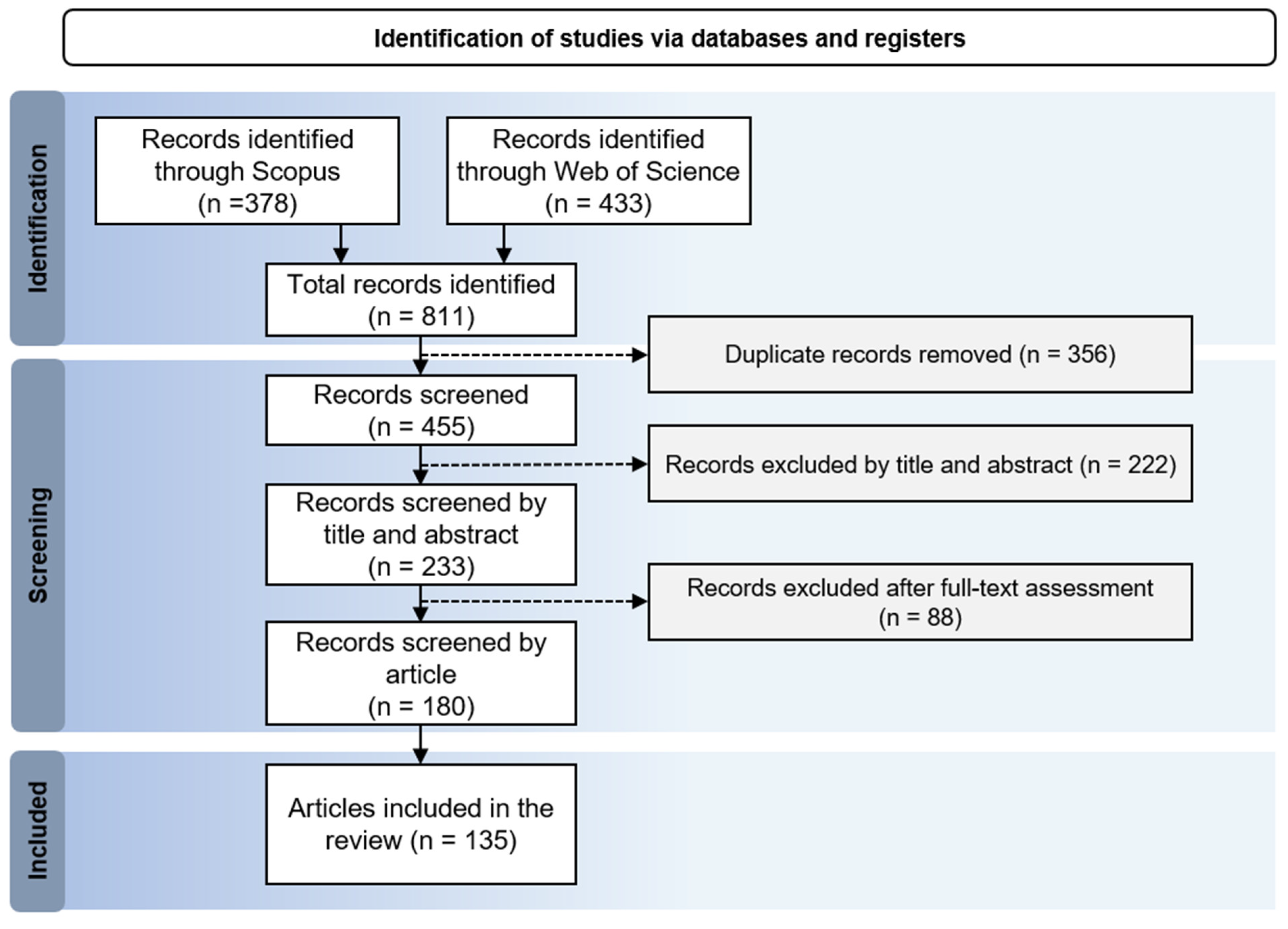
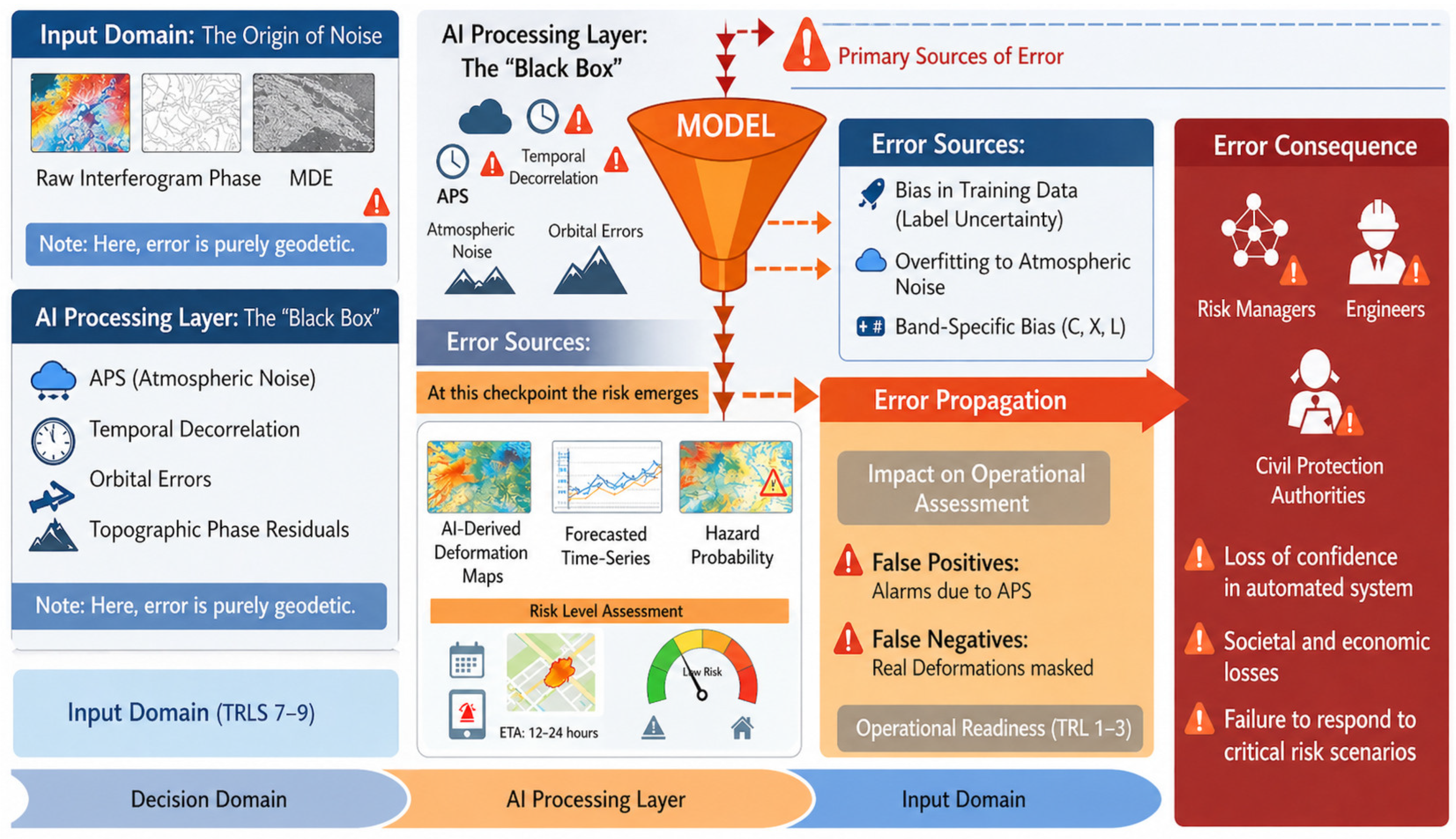
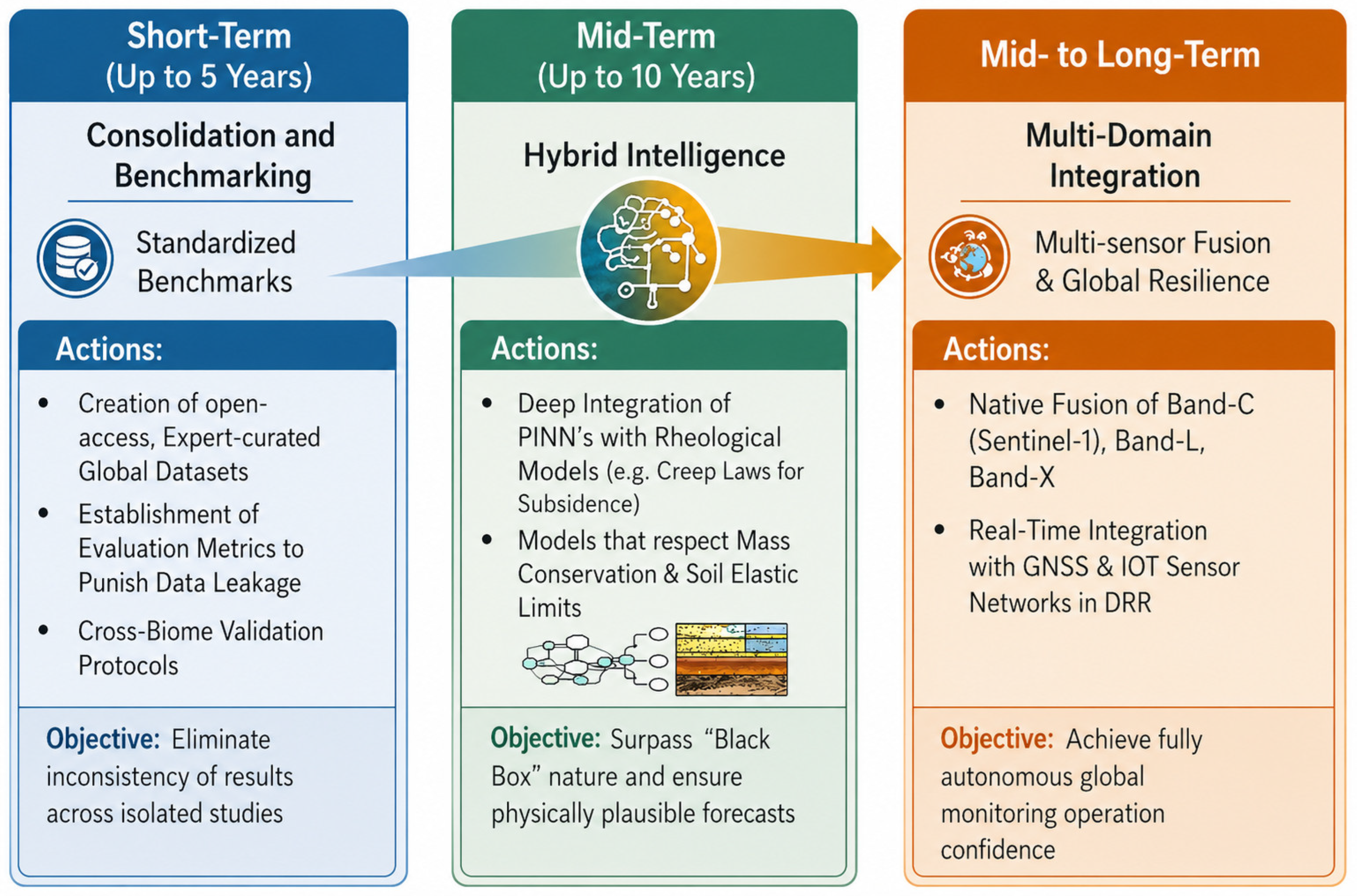
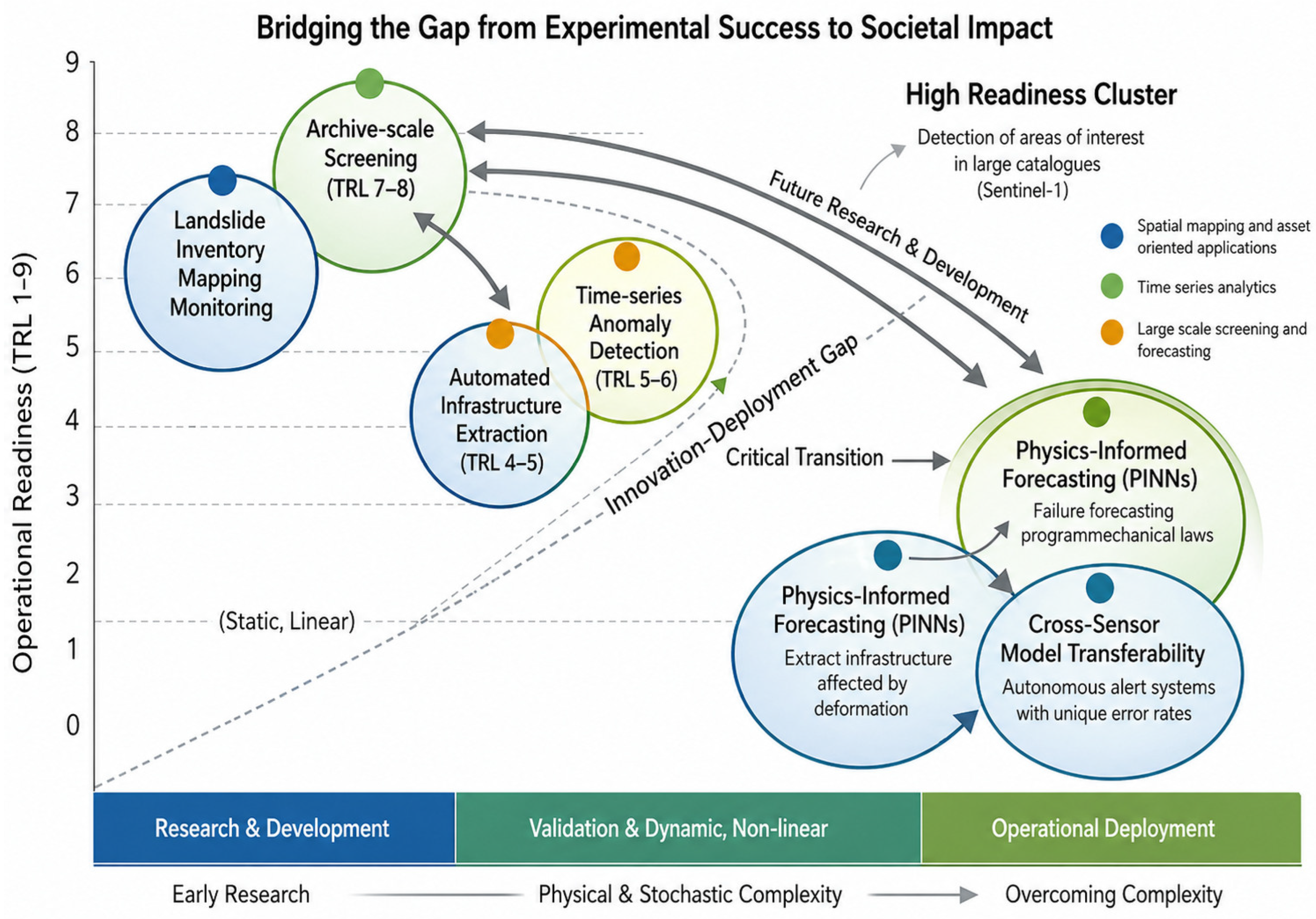
Interferometric Synthetic Aperture Radar (InSAR) enables regional monitoring of ground deformation, but operational geohazard analysis remains challenged by atmospheric artefacts, temporal decorrelation, and the need for scalable interpretation of multi-temporal products. A systematic review was conducted through searches in Scopus and Web of Science, resulting in 135 peer-reviewed scientific articles on the integration of Machine Learning (ML) and Deep Learning (DL) with multi-temporal InSAR (MT-InSAR). The literature is dominated by applications to landslides and land subsidence, with additional studies addressing volcanic unrest and other deformation-related hazards. Persistent Scatterer (PS) and Small-Baseline Subset (SBAS) approaches are frequently used to derive deformation time series, which are then coupled with ML/DL for the detection and mapping of active phenomena and for short-horizon forecasting. Convolutional architectures, such as Convolutional Neural Networks (CNNs), are commonly reported for spatial recognition tasks, while recurrent models like Long Short-Term Memory (LSTM) networks are often applied to time-series prediction. Reported benefits include improved automation and predictive performance, although sensitivity to noise sources remains a challenge. Overall, the evidence supports AI-enabled InSAR workflows for scalable geohazard monitoring, while highlighting the need for standardized benchmarks and systematic transferability assessment. This review provides a roadmap for transitioning from research prototypes to operational early-warning systems.
Keywords: Interferometric Synthetic Aperture Radar (InSAR); multi-temporal InSAR; PS-InSAR; SBAS; machine learning; deep learning; atmospheric phase screen; temporal decorrelation; model transferability; time-series forecasting Interferometric Synthetic Aperture Radar (InSAR); multi-temporal InSAR; PS-InSAR; SBAS; machine learning; deep learning; atmospheric phase screen; temporal decorrelation; model transferability; time-series forecasting