


Highlights
What are the main findings?
- We developed an interpretable integrated surface–satellite post-processing approach for the operational GK2A fog detection product over South Korea using 2021–2023 observations and optimized it for six sub-algorithms (inland/coastal × daytime/nighttime/twilight).
- The proposed post-processing substantially reduced over-detection with only minimal changes in POD (POD decrease: 0.08–0.27%), while notably decreasing FAR (5.13–13.68%) and bias (16.13–52.61%). The greatest improvement was observed in the and step, and the improvement was more pronounced during drier seasons.
What are the implications of the main findings?
- This study demonstrates the scientific value of integrating satellite and surface observations to address key limitations of satellite-based fog detection, particularly false alarms under region- and time-dependent conditions.
- The proposed approach provides a practical and transferable means for improving real-time GK2A fog monitoring and for adapting operational fog products to local environments and user needs.
Abstract
In this study, a post-processing algorithm was developed to mitigate the over-detection tendency of the Geo-KOMPSAT-2A fog detection algorithm (GK2A_FDA) by integrating surface observations, facilitated by the recent availability of high-resolution gridded surface analysis data. The method was optimized for six sub-algorithms (inland/coastal × daytime/nighttime/twilight) using an interpretable decision tree model with data from 2021 to 2023. The (relative humidity) and (clear-sky background minus fog-top brightness temperature) step defines detection boundaries in a two-dimensional decision space using joint false alarm-to-hit ratio and hit count distributions to effectively remove false-alarm-dominated regions with minimal impact on the probability of detection (POD). The post-processing steps were sequenced according to independently quantified accuracy gains ( and >> > wind speed > solar zenith angle), with thresholds conservatively derived and seasonally optimized for South Korea. Following post-processing, the POD decreased only slightly (0.08–0.27%), while the false alarm ratio (FAR) and bias were reduced by 5.13–13.68% and 16.13–52.61%, respectively. Improvements were more pronounced during drier seasons than wet seasons; however, the residual high daytime bias (3.348–5.319) indicated the need for further GK2A_FDA refinement. This study demonstrated that integrating satellite and surface observations could effectively address the limitations of satellite-based fog detection.
1. Introduction
Satellite observations allow periodic monitoring over extensive areas at consistent spatial resolution, making them effective for fog detection [1,2]. Compared to subjective ground-based visual observations or instrumental measurements such as visibility meters or transmissometers, which objectively estimate visibility using light-extinction properties, satellite-based fog observations are more objective, exhibit less inter-satellite variability, and show greater spatial coherence, thereby providing relatively homogeneous spatiotemporal data [3,4]. Fog detection studies around the Korean Peninsula have been conducted continuously using geostationary meteorological satellites such as GMS-5, GOES-9, MTSAT (Multi-Functional Transport Satellite), Himawari, the Communication, Ocean and Meteorological Satellite (COMS), and Geo-KOMPSAT-2A (GK2A) [4,5,6,7,8,9,10,11].
Recently, the demand for accurate and reliable fog detection information has continued to grow, not only in weather forecasting and climate applications but also across various sectors such as transportation, ports, and aviation [3,12,13,14,15]. Accordingly, the utility of satellite-based fog detection products that are capable of monitoring extensive areas continuously throughout the day and night have further increased. Therefore, research is required to improve the accuracy and reliability of the GK2A fog detection algorithm (GK2A_FDA) based on a detailed analysis of its detection performance.
As presented by Lee and Suh [16], the accuracy of the GK2A_FDA fog product over the recent three years (2021–2023), evaluated using 10 min ground visibility data with the nearest-pixel approach, yielded a probability of detection (POD) of 0.59, a false alarm ratio (FAR) of 0.86, and a bias of 4.25. GK2A fog detection performance improved when fog intensity was stronger and the occurrence area was larger, where in an evaluation of the top 10% of fog-occurrence days using a nearest-pixel (3 × 3 neighborhood pixels) approach, POD was 0.72 (0.82), FAR was 0.65 (0.59), and bias was 2.08 (2.02). These three-year operational results showed lower POD and higher FAR and bias than fog-case-centered evaluations conducted during algorithm development [4,11]. From an operational perspective, although GK2A_FDA detects fog consistently, it exhibits an overall tendency toward over-detection and shows discontinuities in fog detection by location and time [11,16,17,18]. Satellite-based fog detection also encounters difficulties in distinguishing fog from stratus clouds due to cloud shielding, cloud edges, and fog dissipation phases [1,6,9,19,20]. Furthermore, false detections in reflectance-based daytime fog detection can be exacerbated by cloud shadows or satellite navigation errors [4].
To address these limitations while maintaining the advantages of satellite-based fog monitoring, various approaches using machine learning techniques and fusion with surface observations such as METAR (Meteorological Aerodrome Report) and automatic visibility meters have been explored [18,21,22,23,24]. Jahani et al. [25] applied machine learning to SEVIRI (Spinning Enhanced Visible and InfraRed Imager) observations from the European MSG (Meteosat Second Generation) satellite together with METAR data; their results showed slightly lower POD than the existing Satellite-based Operational Fog Observation Scheme (SOFOS) but demonstrated improved performance in reducing FAR and bias. Similarly, Lu et al. [15] integrated advanced deep learning architectures, such as transformers, CNNs (Convolutional Neural Networks), and attention mechanisms, to more accurately differentiate sea fog from low-level stratus. These studies would suggest that combining surface observations with machine learning/AI (Artificial Intelligence) techniques is effective for mitigating the over-detection tendency of satellite products and improving reliability.
Following improvements in the observation environment and data fusion with other agencies, the Korea Meteorological Administration (KMA) began releasing high-resolution (500 m) gridded surface analysis data for South Korea in 2024 [26]. This development enables the complementary use of GK2A fog detection products and surface-based analysis data. Among surface variables, is a fundamental condition for cloud and fog formation and generally shows stronger correlations than other meteorological elements [27]. Although high does not always result in cloud or fog formation, clouds and fog cannot form without local supersaturation [28]. For example, the Himawari fog detection algorithm identifies fog only where is ≥85% in mesoscale numerical model forecast data [2]. Similarly, the GOES fog and stratus algorithm probabilistically estimates fog and stratus occurrence using maximum by model level from numerical prediction data [29].
GK2A_FDA consists of nine sub-algorithms classified spatially into land, coast, and sea domains and temporally into day, twilight, and night. This study follows previous research [16] that evaluated accuracy and analyzed the characteristics of GK2A fog products. Because ground-based visibility observations are limited over the ocean, this study focuses on six sub-algorithms for inland and coastal regions under daytime, twilight, and nighttime conditions, selected based on the performance evaluation results reported in Lee and Suh [16]. The objective of this study is to improve the accuracy of the GK2A fog detection product through post-processing using surface observation and satellite metrics. Section 2 describes the data and methods, Section 3 presents the post-processing results and performance evaluation, Section 4 discusses considerations for applying the gridded analyses, and Section 5 summarizes the main findings and conclusions.
2. Materials and Methods
2.1. Data
The study period spanned three years, from 1 January 2021 to 31 December 2023, and the analysis domain was South Korea, consistent with the previous evaluation of GK2A_FDA performance [16]. The data used for post-processing GK2A fog detection included the 10 min GK2A fog detection product, land–sea mask, solar zenith angle (), 1 min visibility meter observations, and 10 min surface observations (Table 1). Along with the fog flag from the GK2A fog detection product, was used as a key index to distinguish fog from low-level stratus in the GK2A_FDA. Here, CSR denoted the clear-sky radiance product, and was defined operationally as = CSR_BT11.2 − BT11.2, where BT11.2 represents the brightness temperature (BT) at 11.2 μm, and CSR_BT11.2 is the CSR-derived clear-sky background brightness temperature at 11.2 μm [4].
Table 1.
Summary of the data used for post-processing the GK2A_FDA.
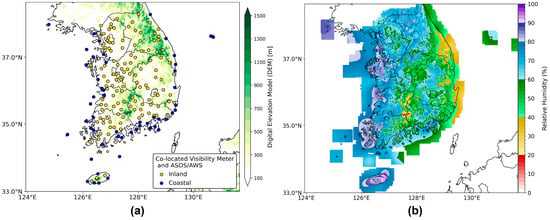
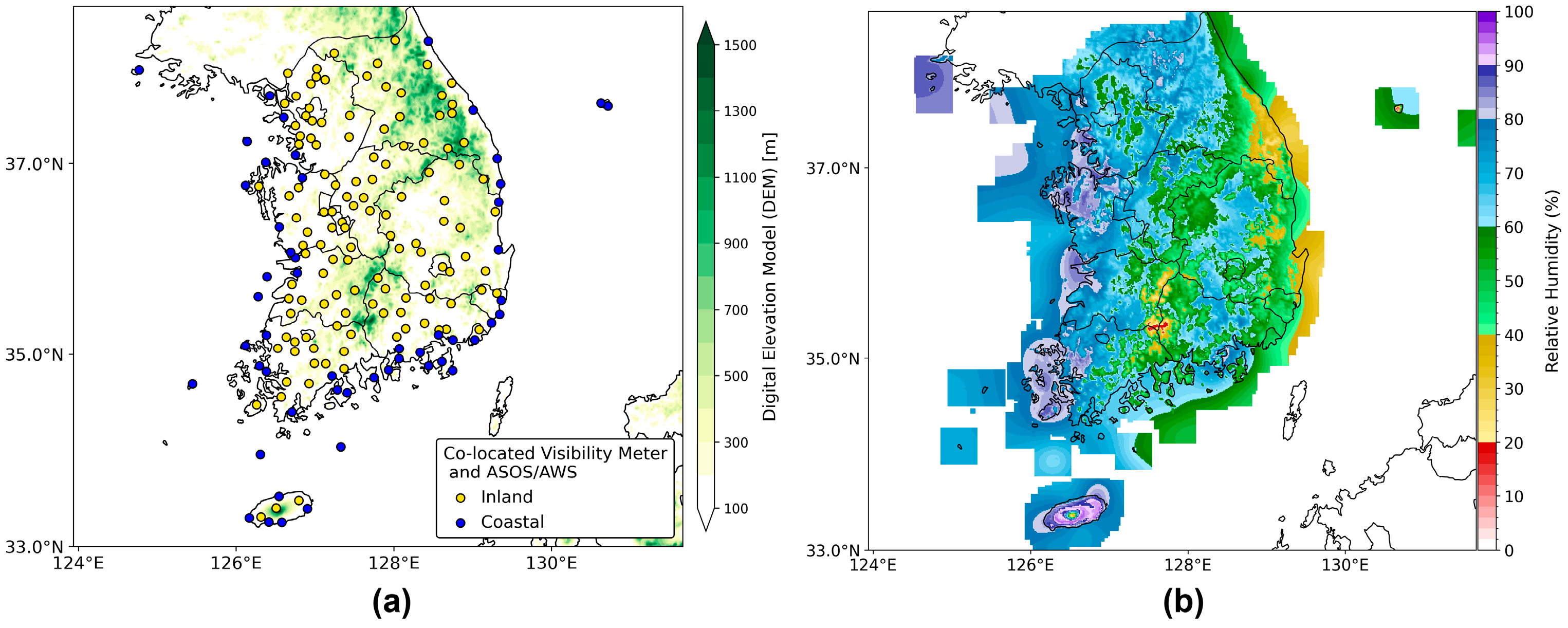
The accuracy evaluation of the post-processing was performed using data from 176 visibility meter sites known for their high observational quality [16]. To determine the post-processing algorithm and to derive and optimize the optimal thresholds for the GK2A fog detection product, surface meteorological observations, including , surface air temperature (), and 1 min average wind speed at 10 m height (), from ASOS and AWS stations collocated with 176 visibility meters were utilized (Figure 1a). For the spatial distribution analysis and case studies evaluating the GK2A fog detection before and after post-processing, 500 m high-resolution gridded surface analysis data were applied (Figure 1b). This gridded dataset was generated from 1274 ASOS/AWS (Automated Surface Observing System/Automatic Weather Station) sites, covering inland (including mountainous terrain), coastal, and island regions [30].
Figure 1.
Surface observation data sources used for post-processing: (a) locations with 176 visibility meters and ASOS/AWS sites utilized in post-processing, and (b) an example of high-resolution gridded surface analysis data () generated from 1274 ASOS/AWS.
2.2. Methods
2.2.1. Post-Processing Algorithm
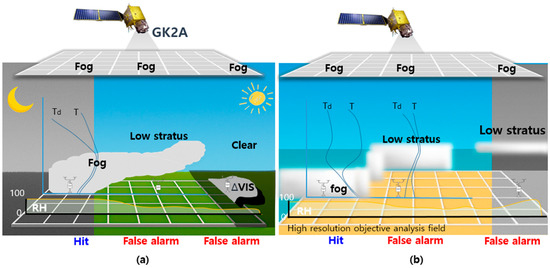
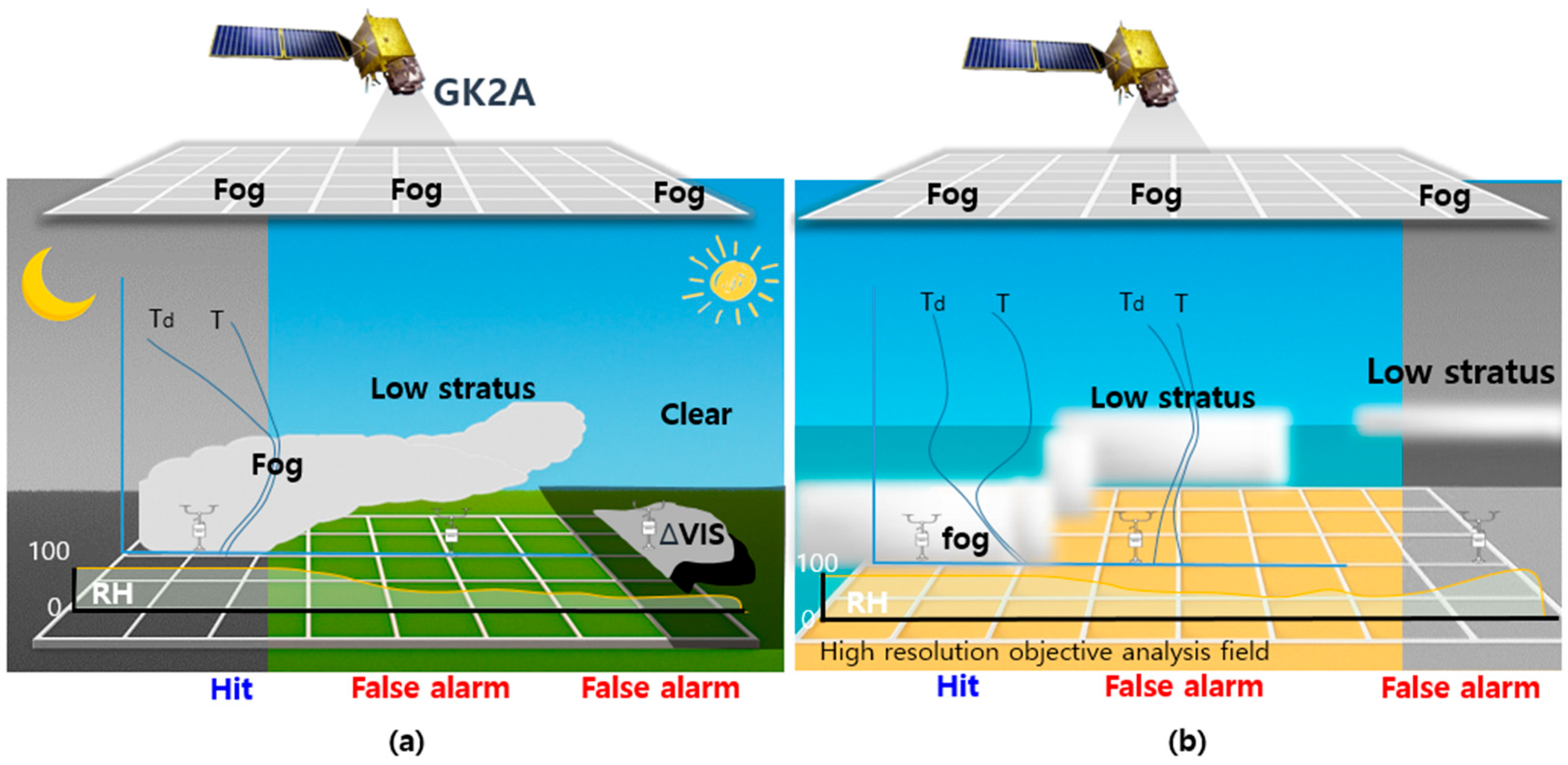
The concepts of a hit and a false alarm in satellite fog detection are illustrated in Figure 2 [16]. A hit is defined as a case in which both the satellite product and visibility-meter observations indicate fog, whereas a false alarm occurs when the satellite detects fog but the surface visibility is ≥1 km. As shown in Figure 2, false alarms can arise from multiple sources, including the misclassification of stratiform clouds as fog during the fog dissipation stage [31], cloud shadow effects or navigation errors, and false detections over clear-sky regions associated with artifacts in the daytime reflectance composite [4]. Furthermore, Figure 2 highlights false alarms arising from advection fog lifting from the surface as it moves inland over relatively warmer surfaces and from low stratus clouds forming in stable wintertime atmospheric layers [32].
Figure 2.
Conceptual illustration of satellite-based fog detection compared with ground-based observations by (a) time and (b) location [16,31]. ΔVIS is defined as the difference between the observed 0.64 μm reflectance and the daytime reflectance composite [4].
In this study, ground-based visibility-meter observations were used as a binary reference for fog validation rather than for detailed weather-type classification. Fog was defined as visibility < 1 km, whereas non-fog was defined as visibility ≥ 1 km. Post-processing was applied only to pixels flagged as fog by GK2A_FDA.
The post-processing algorithm of the GK2A fog detection product was constructed separately for six sub-algorithms; specifically, a combined and factor was defined. is an indicator of near-surface saturation [27,28,29], whereas is a GK2A_FDA metric used to distinguish fog from low stratus [4]. was selected because fog composed of water droplets can occur within specific temperature ranges [2,33], as fog formation and maintenance are difficult at high temperatures [34]. was included given the requirement of weak winds for the formation and maintenance of radiation fog [35]. As a final step, was used to remove false alarms associated with stratus clouds during inland fog dissipation around sunrise and to enhance the reliability of daytime fog detection [11].
First, the GK2A fog detection product over the Korean Peninsula (900 × 900 pixels) was spatially collocated with visibility meter stations using the nearest-pixel method. The fog/non-fog flag and required for post-processing were extracted from the GK2A product [11]. The was computed for each pixel from its location and observation time. Temporal matching between the GK2A data and visibility meters used the median value within ±2 min of the nominal time [16], considering the GK2A AMI (Advanced Meteorological Imager) scanning time over the Korean Peninsula and the variability of visibility observations. For ASOS/AWS data, 10 mins data were used. When applying post-processing to gridded fields, the 0.5 km gridded surface analysis data were aggregated to 2 km resolution by combining 4 × 4 pixels, using the maximum value for and spatial means for and , to match the GK2A spatial resolution.
To minimize the over-detection tendency of satellite products, the statistical post-processing method based on the false alarm-to-hit ratio (FHR), originally proposed for lightning detection by Lee and Suh [36], was adapted to improve fog detection (Equation (1)). In this study, to mitigate over-detection in GK2A_FDA, regions exhibiting extremely high FHR values (e.g., tens to hundreds) were defined as false-alarm-dominated zones—where false alarms substantially outweighed hits—and were subsequently isolated:
Considering the operational importance of GK2A_FDA, the post-processing was designed to minimize the loss of hits by jointly considering the hit count in the same bin used to compute FHR.
2.2.2. Accuracy Metrics and Improvement Rates
The quantitative improvement of the GK2A fog detection product after post-processing was evaluated using visibility-meter observations and the nearest-pixel collocation approach, based on the 2 × 2 contingency table in Table 2. POD, FAR, and bias (Equations (2)–(4)) were computed, and changes were assessed relative to the original GK2A fog detection product (Equations (5)–(7)).
where a positive ΔPOD, together with a negative ΔFAR, indicates improved fog detection performance, while Δbias indicates improvement when it moves toward 1.0 (i.e., reduced over-detection or under-detection).
POD = H/(H + M),
FAR = F/(H + F),
bias = (H + F)/(H + M),
Table 2.
A 2 × 2 Contingency table to evaluate the change in GK2A fog detection accuracy before and after post-processing.
3. Results
3.1. Determination of Thresholds
3.1.1. Step 1: and
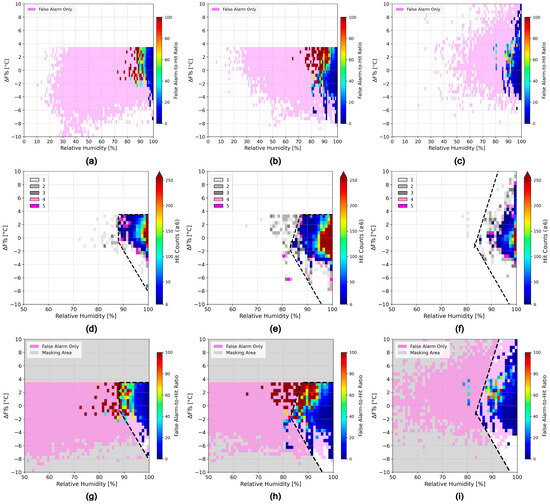
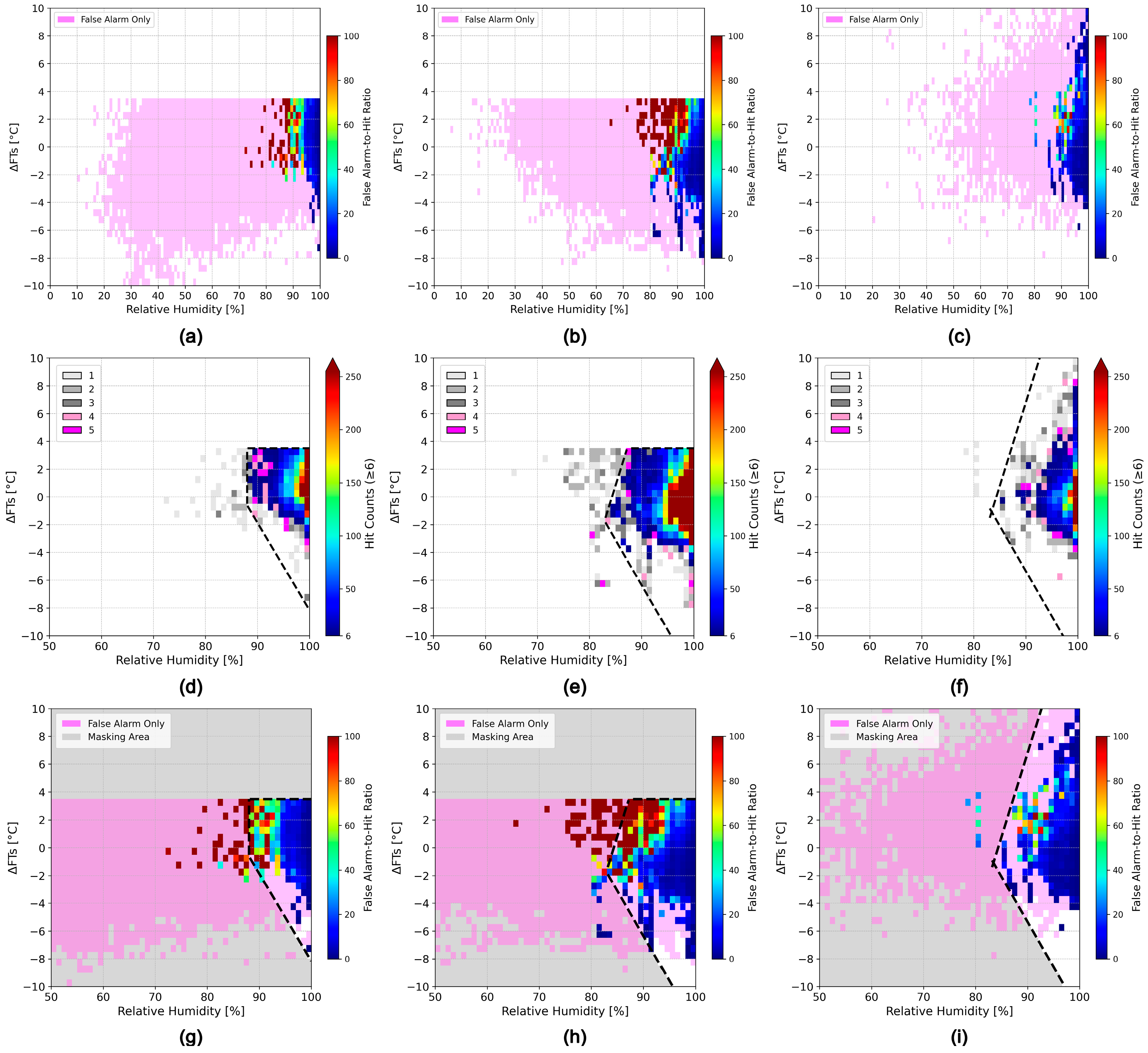
Figure 3 and Figure 4 show the binned distributions of FHR and hit counts as functions of surface (1% bins) and (0.5 °C bins) for inland and coastal regions under daytime, nighttime, and twilight conditions. The pink-shaded area denotes an over-detection regime consisting only of false alarms, where the satellite product indicated fog while surface observations indicated low stratus or visibility ≥ 1 km. As reported by Lee and Suh [16], GK2A_FDA tended to misclassify wintertime low stratus formed under low surface and a stable boundary layer as fog. A substantial fraction of these false detections can be removed using alone. However, as shown in Figure 3d–f and Figure 4d–f, removing false detections using a single threshold involves an inherent trade-off: an overly stringent threshold (e.g., 90%) may eliminate correctly detected fog cases when is small, whereas a relaxed threshold (e.g., 70%) can retain many false alarms. Moreover, even with a high threshold, some false detections may persist in high- regimes depending on , highlighting the limitation of an -only criterion. Therefore, we jointly considered the binned FHR and hit count distributions in the and decision space and applied a post-processing scheme using two to three boundary lines to suppress false alarms while minimizing the loss of hits.
Figure 3.
Heatmaps illustrating the determination of boundary thresholds for Step 1: (a–c) show inland FHR heatmaps as a function of and ; (d–f) show the corresponding hit count heatmaps with detection boundaries overlaid; (g–i) show final ratio heatmaps with detection boundaries overlaid and filtered (masked) regions shaded in gray. Left, middle, and right columns represent daytime, nighttime, and twilight, respectively.
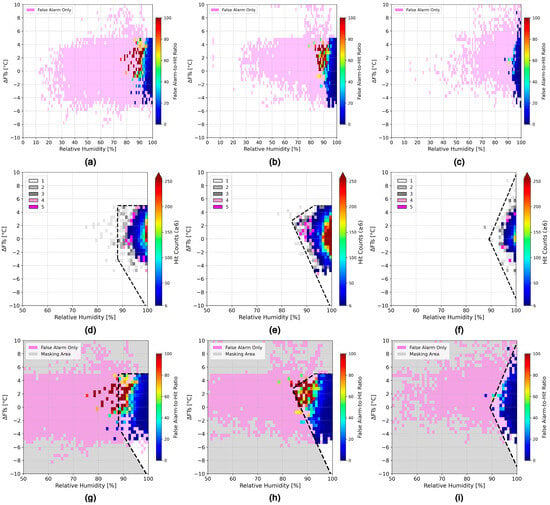
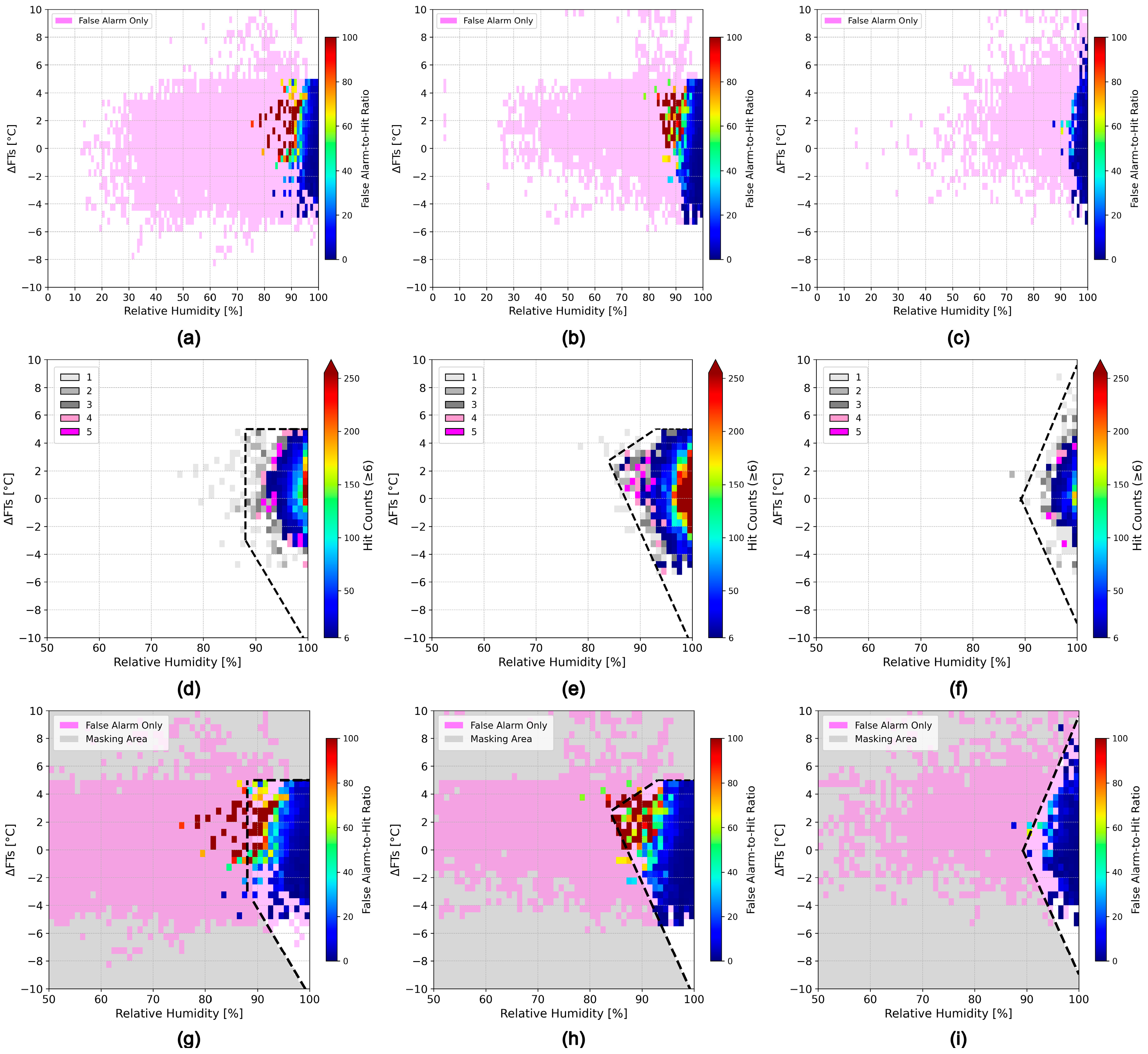
Figure 4.
Same as Figure 3 but for the coastal area.
values close to 0 generally indicated a low-topped fog layer with only a small thermal contrast relative to the surface (Figure 3 and Figure 4). Positive values occurred when the CSR-based clear-sky background brightness temperature (a proxy for the clear-sky surface temperature) exceeded the fog-top brightness temperature; when exceeded a prescribed upper threshold, the scene was more likely to be classified as low stratus. Negative ΔFTs values indicated the opposite relationship, with the CSR-derived background brightness temperature lower than the fog-top brightness temperature, suggesting inversion-like stratification [11].
In the FHR heatmaps, the upper threshold was set to 3.5 °C for inland daytime and nighttime conditions and to 5.0 °C for coastal daytime and nighttime conditions, whereas no upper-limit constraint was applied during twilight (Figure 3 and Figure 4). However, for oceanic regions, the threshold in the GK2A_FDA land-to-sea fog module was increased to 10 °C to capture rapidly developing sea fog near the Bohai Bay [37]. Consequently, in coastal applications that combined land and ocean fog-detection results [11], the pink-shaded area indicating false alarms only appeared even when exceeded 5 °C across all time periods. Here, bins with FHR ≥ 100 indicated a high proportion of low stratus misclassified as fog, i.e., that a large fraction of detections were false alarms. These bins were concentrated mainly in the positive domain. The threshold boundaries were determined to effectively reduce false alarms while retaining as many hits as possible by jointly considering the binned hit count distribution.
The final boundary lines for the six sub-algorithms are shown in Figure 3g–i and Figure 4g–i. The pink and gray areas above, below, and to the left of the dashed boundaries were excluded during post-processing. The thresholds for Step 1 were derived from three-year statistics and tuned to each sub-algorithm to maximize hit retention while removing false-alarm-dominated regions.
3.1.2. Steps 2–3: and
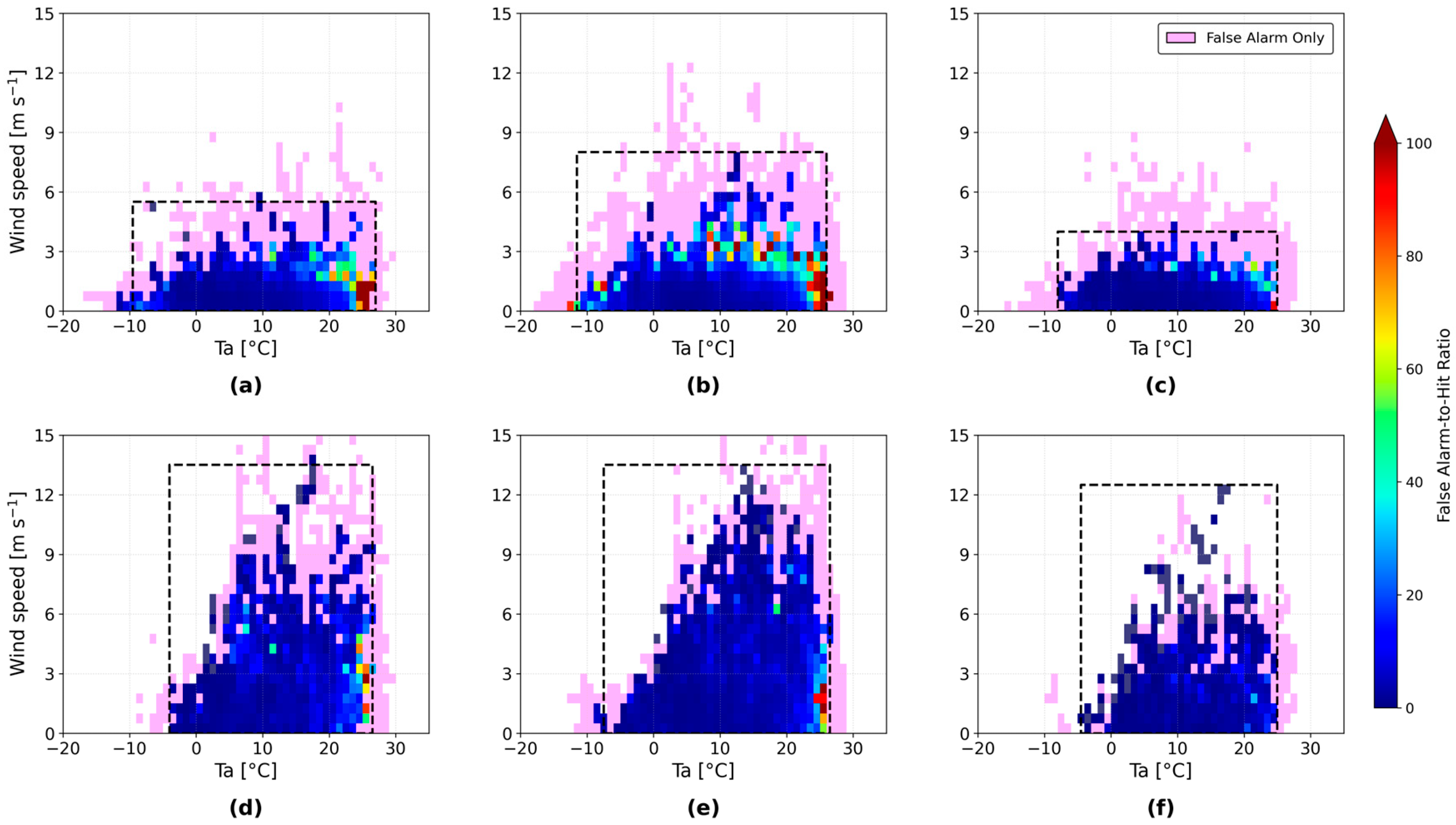
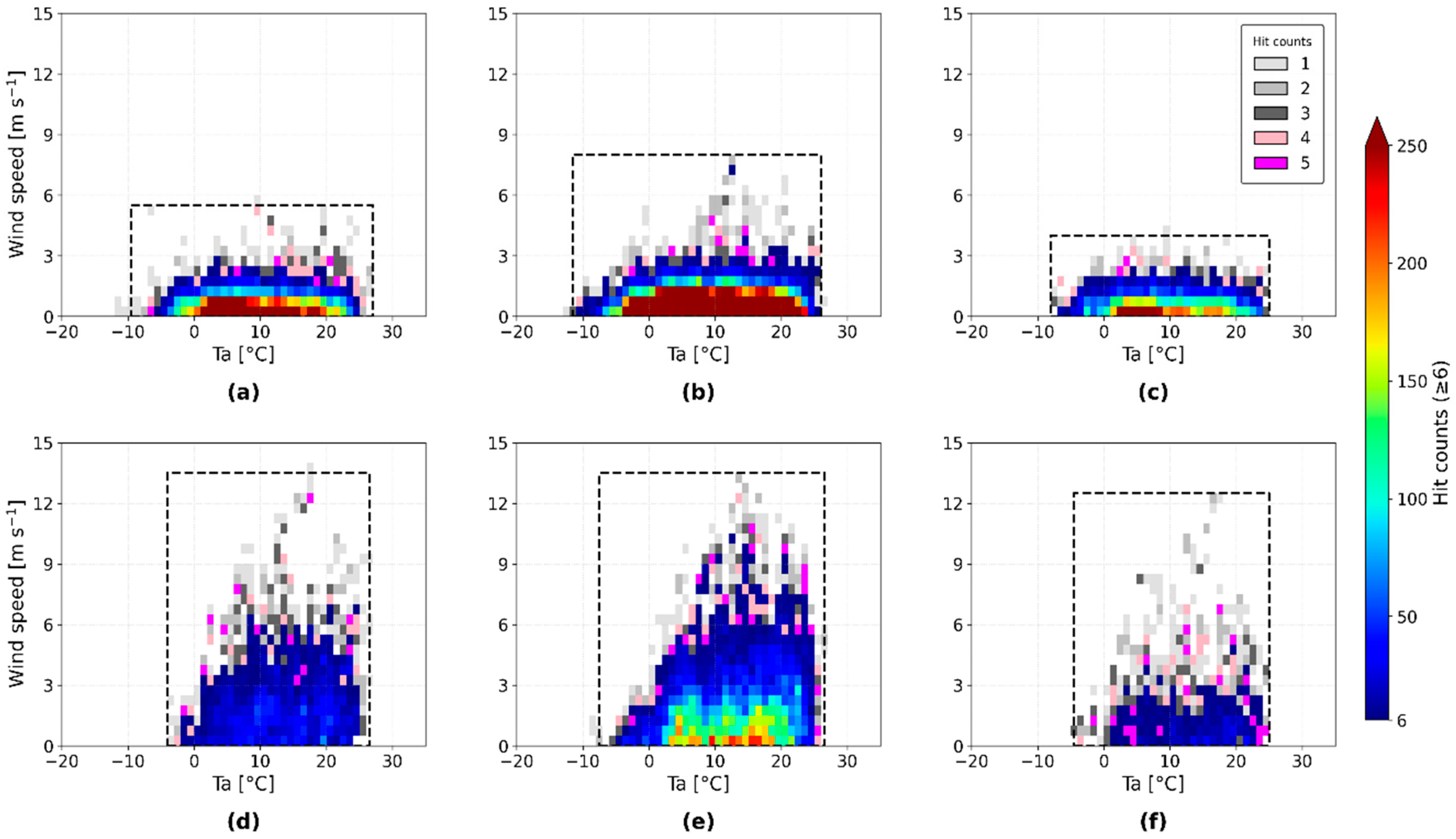
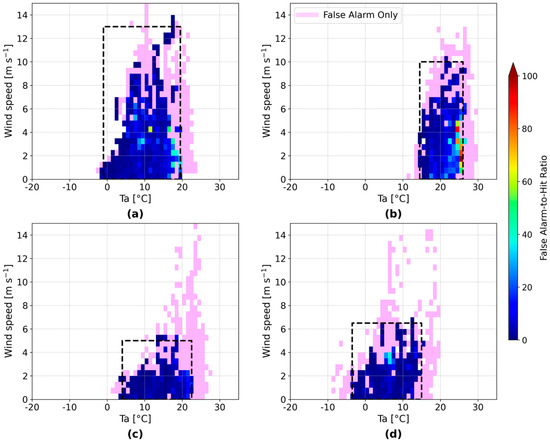
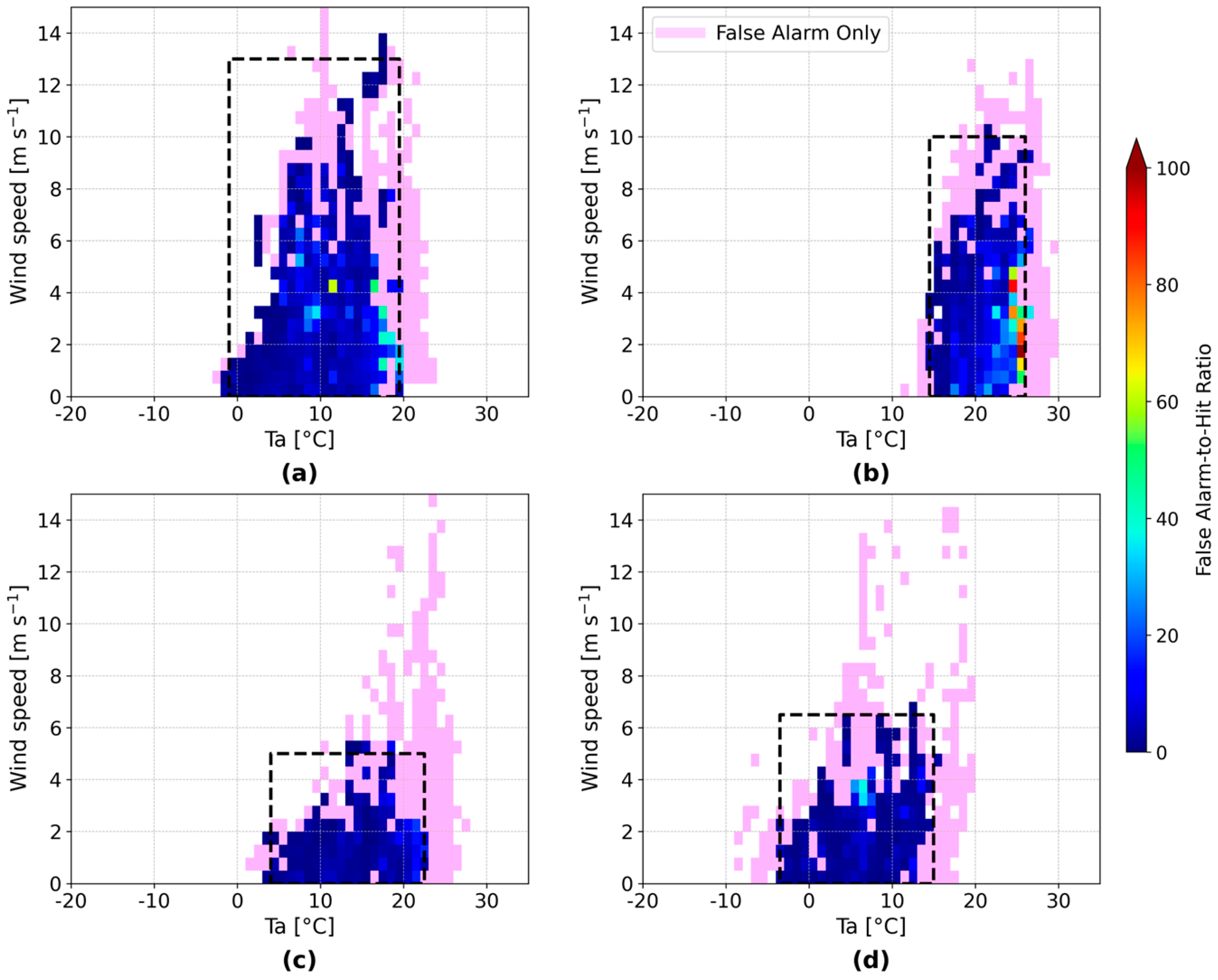
Post-processing using and was performed on the dataset after applying the and boundary lines in Step 1. For each of the six sub-algorithms, the lower and upper thresholds for (0.5 °C intervals) and an upper threshold for (0.5 m s−1 intervals) were determined by considering only the bins with an annual mean hit frequency of ≤1 (Table 3), without considering FHR. Figure 5 and Figure 6 present the binned FHR and hit count heatmaps for and across each time period in the inland and coastal regions with the selected thresholds for each sub-algorithm overlaid.
Table 3.
Threshold values of , , and for the six sub-algorithms.
Figure 5.
FHR heatmaps as a function of and WS. The black dashed boxes indicate the selected and WS threshold ranges: (a) inland daytime; (b) inland nighttime; (c) inland twilight; (d) coastal daytime; (e) coastal nighttime; (f) coastal twilight.
Figure 6.
Same as Figure 5 but for the hit counts.
3.1.3. Step 4:
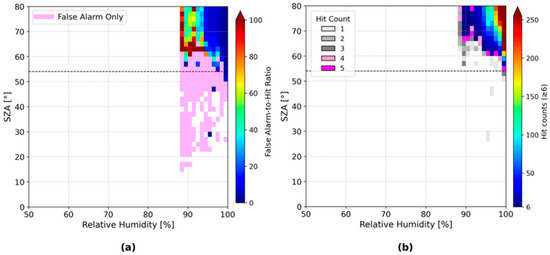
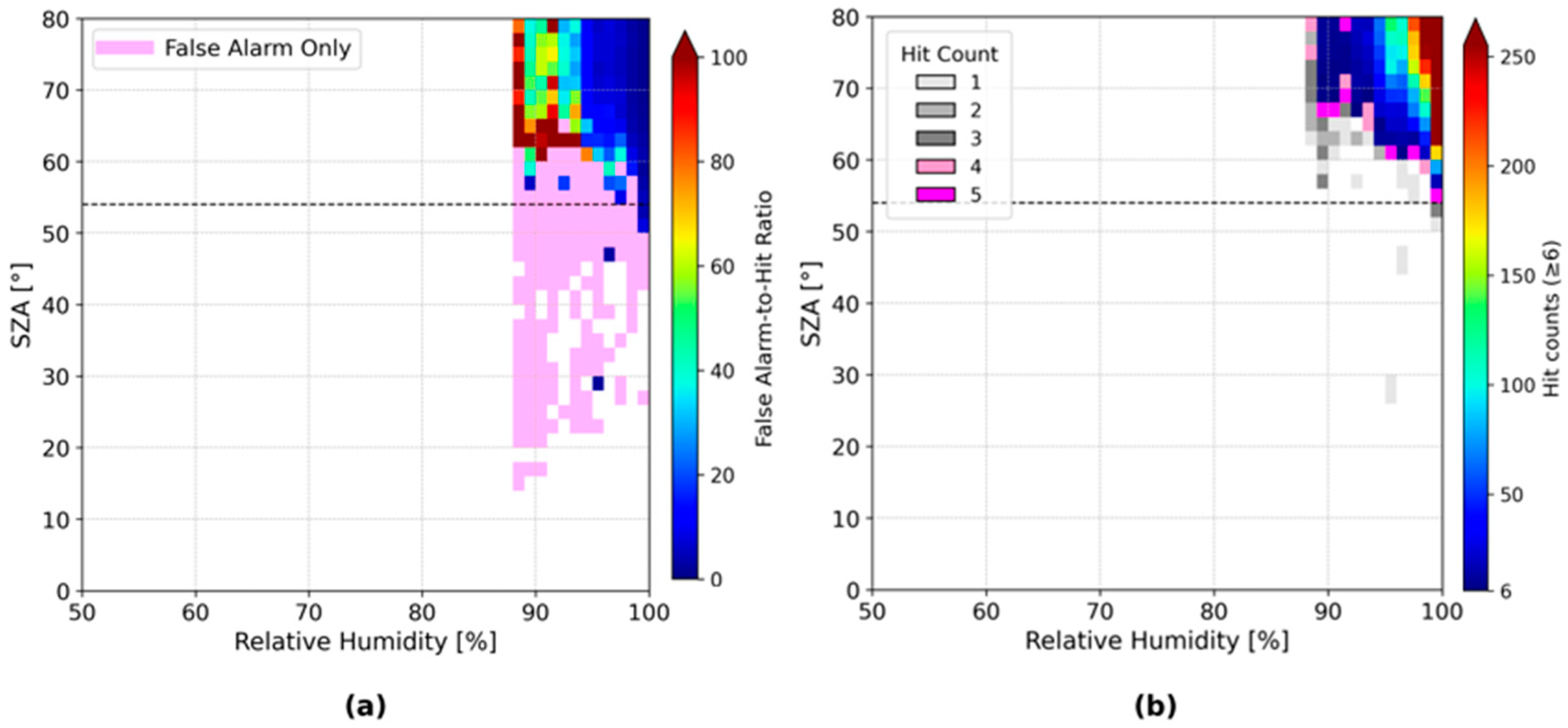
GK2A_FDA incorporates post-processing that can account for the fog life cycle; for instance, it can apply stricter thresholds when the exceeds 60° and filters out discontinuous fog detections in pixels where fog was not present in the preceding time step [11,18]. Figure 7 presents the FHR and hit count heatmaps for , which were generated utilizing as auxiliary data. As indicated in Figure 7a, a lower SZA threshold can effectively mitigate false alarms within 1–3 h after sunrise, a period typically associated with the rapid dissipation of inland radiation fog [38,39]. However, since coastal advection fog can often persist throughout the day [35,40], the lower threshold was restricted to the inland daytime sub-algorithm only (Table 3). This fourth step of post-processing utilized fog detection data that had successfully passed through Steps 1–3. Consistent with the methodology used in Steps 2 and 3, the thresholds for this step were established by identifying bins with an annual mean hit count of one or fewer.
Figure 7.
Daytime heatmaps of (a) FHR and (b) hit count as a function of and . The black dashed line denotes the threshold for the inland daytime area.
Based on the binned FHR and hit count analyses, the final threshold values of and for the six sub-algorithms and the thresholds applied only during daytime (Steps 2–4) are compiled in Table 3.
A comparison between the results before seasonal optimization (Table A1 and Table A2) and after optimization (Table 4 and Table 5) indicated that, although the overall improvement was modest, variations were evident depending on region and time zone. Particularly, under coastal daytime conditions, Δbias improved from −50.54% to −52.61% and ΔFAR from −7.83% to −8.48%, representing the largest additional improvement. Relatively meaningful improvements were also observed under coastal nighttime and inland twilight conditions. In contrast, only marginal changes were found under inland nighttime conditions. These results suggested that the effect of seasonal optimization was not uniform across all conditions but was more pronounced in environments with strong seasonal variability, such as coastal regions influenced by advection fog.
Table 4.
Change rates after GK2A_FDA post-processing in inland area. Raw indicates baseline performance after excluding cases with missing meteorological data. Steps 1–4 represent sequential application of threshold-based filters based on and , , , and , respectively.
Table 5.
Same as Table 4 but for coastal region.
3.2. Optimization and Performance for the Six Sub-Algorithms
3.2.1. Stepwise Selection
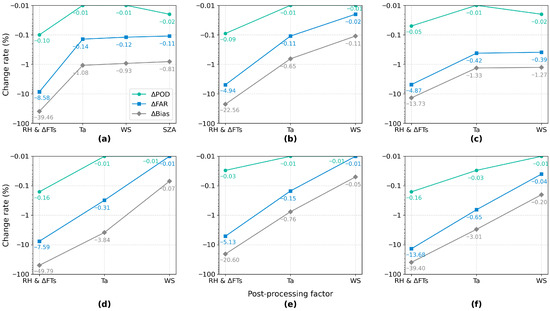
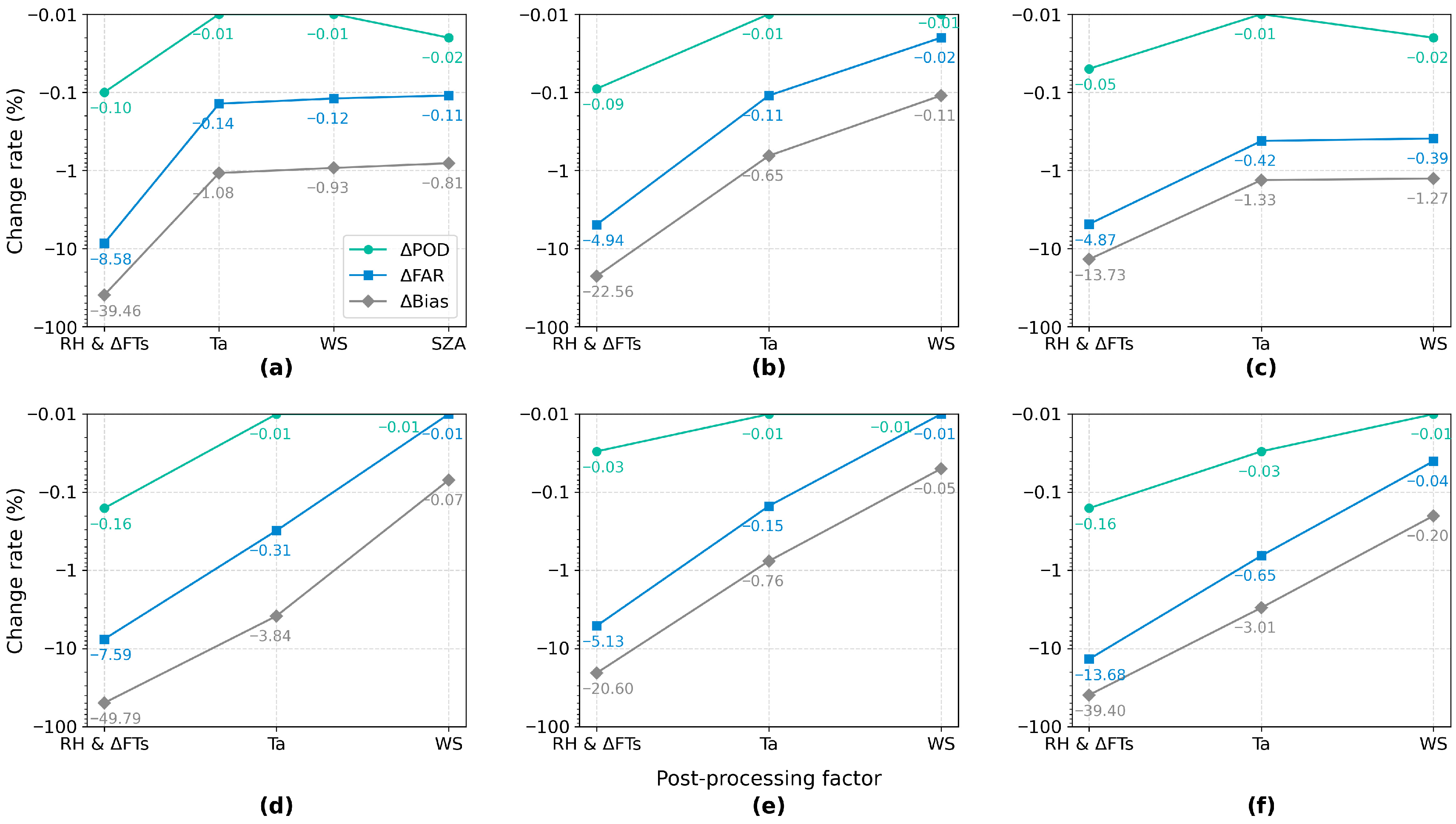
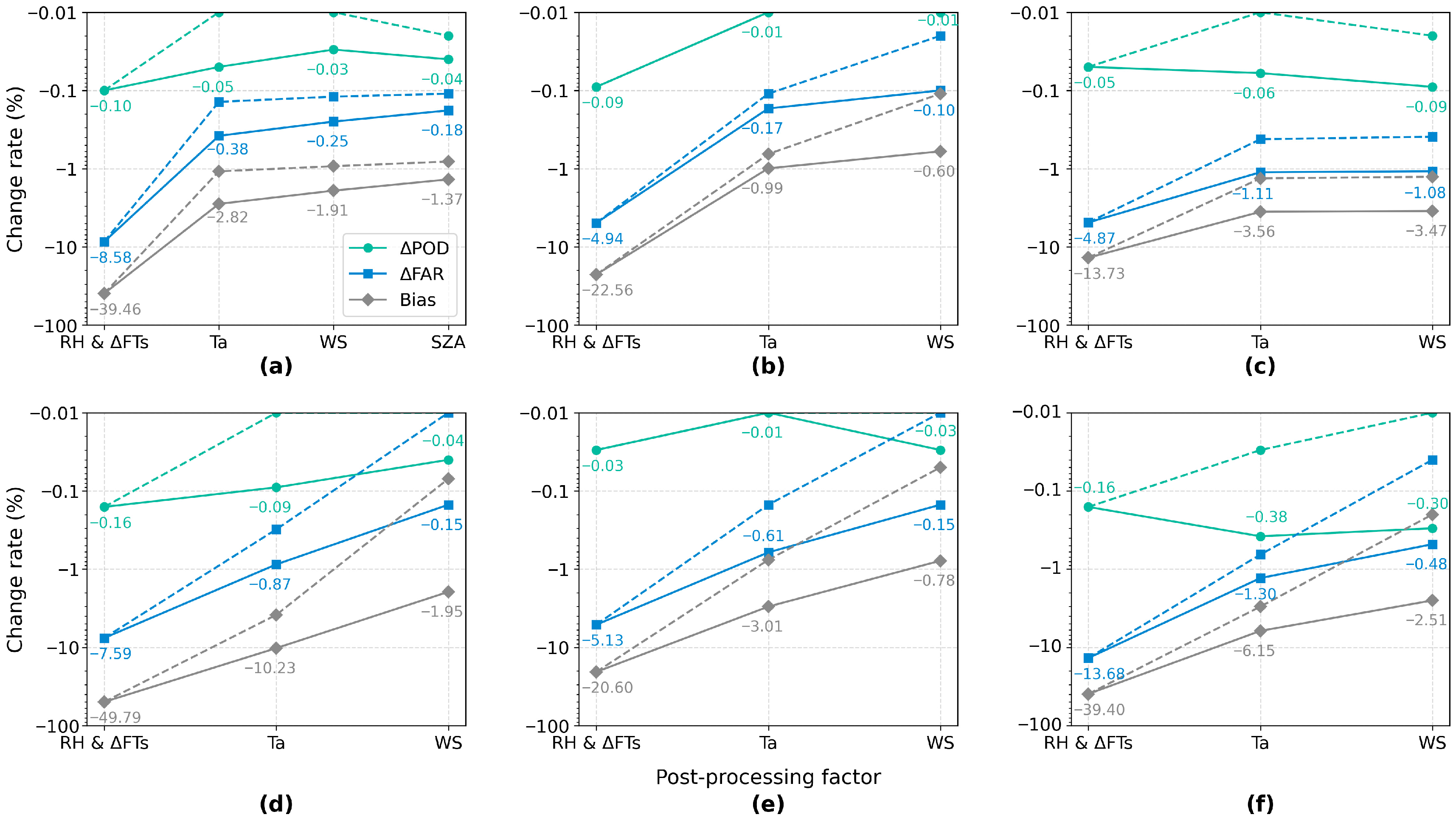
To determine the post-processing steps of the decision tree method (DTM) for the six sub-algorithms, the relative changes in accuracy metrics at each step were calculated with respect to the original GK2A_FDA and are presented in Figure 8. For all steps, the change rates of each metric were computed independently using GK2A_FDA as the reference. The y-axis in Figure 8 shows the change rates on a logarithmic scale, where larger negative changes indicated improvements (reduced over-detection) for FAR and bias, while indicating reduced correct detections for POD. Because conservative thresholds were applied at all four post-processing steps, ΔPOD exhibited only a small decrease (−0.01% to −0.16%). The and post-processing yielded the largest improvement, with ΔFAR decreasing by −4.87% to −13.68% and Δbias by −13.73% to −49.79%. For the step, ΔFAR and Δbias decreased by −0.11% to −0.65% and −0.65% to −3.84%, respectively, while the step reduced ΔFAR and Δbias by −0.01% to −0.39% and −0.05% to −0.93%, respectively. For the step, which was applied only to inland daytime conditions, ΔFAR and Δbias decreased by −0.11% and −0.81%, respectively. Although the daytime reductions in ΔFAR and Δbias were larger than those at nighttime, fog generally occurred more frequently at night [35,39,41,42]; thus, the operational benefit of reducing over-detection was expected to be greater during nighttime.
Figure 8.
Stepwise change rates (ΔPOD, ΔFAR, and Δbias; %) of the GK2A fog detection performance relative to the original algorithm for individual post-processing factors: (a) inland daytime; (b) inland nighttime; (c) inland twilight; (d) coastal daytime; (e) coastal nighttime; and (f) coastal twilight. Step 1, Step 2, Step 3, and Step 4 denote and , , , and , respectively, with Step 4 applied only to inland daytime. The y-axis is logarithmic, and negative annotations indicate reductions relative to the raw algorithm.
Based on the stepwise analysis of FAR and bias changes relative to GK2A_FDA (Figure 8), the post-processing steps for the six sub-algorithms were ordered and applied as Step 1 ( and ), Step 2 (), Step 3 (), and Step 4 ().
3.2.2. Seasonal Optimization
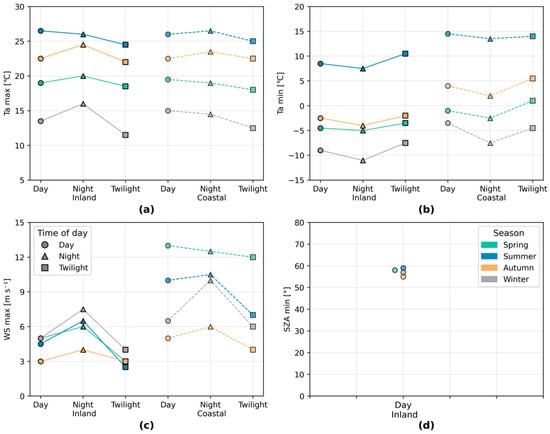
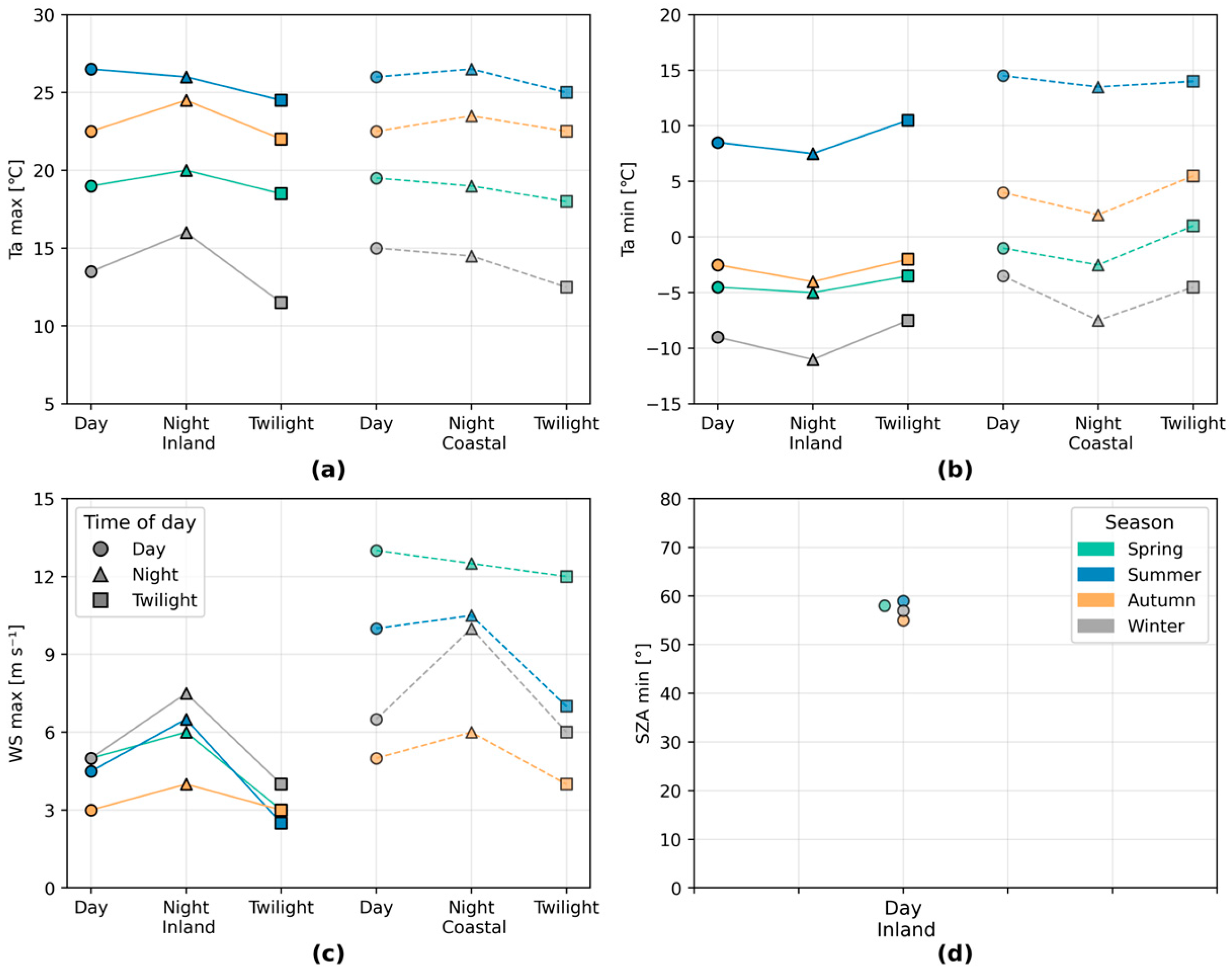
The Korean Peninsula is geographically located in the mid-latitude temperate climate zone and exhibits four distinct seasons: spring, summer, autumn, and winter. Spring and autumn are generally clear and dry under the influence of migratory anticyclones, summer is hot and humid under the North Pacific subtropical high, and winter is cold and dry under the influence of a continental anticyclone [43]. As a result, varied substantially by season, and distributions also differed. Considering these characteristics, the thresholds for , , and were seasonally optimized, and the post-processing steps of the DTM were selected for each of the six sub-algorithms. Figure 9 shows seasonal binned FHR heatmaps constructed from the coastal daytime distributions of (1 °C bins) and (0.5 m s−1 bins) (Figure 5d). The season-specific thresholds derived with reference to the hit count heatmaps are presented in Figure 10. The post-processing step followed the same procedure to determine seasonally optimized thresholds.
Figure 9.
Seasonal FHR heatmaps based on and for coastal daytime in the GK2A_FDA algorithm (corresponding to Figure 5d): (a) spring; (b) summer; (c) autumn; and (d) winter.
Figure 10.
Seasonal thresholds used in the GK2A_FDA post-processing: (a) maximum; (b) minimum; (c) maximum; and (d) minimum.
The GK2A_FDA post-processing procedure was finalized by considering the stepwise change rates of POD, FAR, and bias for the six sub-algorithms (Figure 11). Consequently, four steps were applied to inland daytime conditions, whereas three steps were applied to inland nighttime, coastal daytime, and coastal nighttime conditions. For twilight, where POD was generally lower than in other periods [11,16], additional post-processing using and increased the POD reduction rate up to 0.38%. Therefore, to preserve POD as much as possible, the procedure was adjusted by applying up to Step 2 for inland twilight and only Step 1 for coastal twilight.
Figure 11.
Stepwise change rates (ΔPOD, ΔFAR, and Δbias; %) of the GK2A fog detection performance relative to the original algorithm for the application of seasonal thresholds for , , and : (a) inland daytime; (b) inland nighttime; (c) inland twilight; (d) coastal daytime; (e) coastal nighttime; and (f) coastal twilight. The solid lines indicate the results after seasonal optimization, whereas the dashed lines indicate the results before seasonal optimization. The y-axis is logarithmic, and negative annotations indicate reductions relative to the raw algorithm.
3.2.3. Accuracy Improvement
The accuracy of the change rates of GK2A_FDA after post-processing optimization considering seasonal variability are summarized separately for inland and coastal regions in Table 4 and Table 5, respectively. Here, a more negative ΔFAR indicated a larger reduction in the false alarm ratio, and Δbias indicated reduced over-detection when it decreased in magnitude and moved toward 1.0. The raw results represented the accuracy of the original GK2A fog product after excluding cases with missing or unavailable surface observations. The dataset used for the raw calculation corresponded to 97.55% of the total dataset, with 2.45% removed through quality control. The removal rates were 2.75% for inland regions and 1.72% for coastal regions, with mean absolute deviations across time periods of 0.07%p and 0.09%p, respectively. For each post-processing step, the pixels removed as false alarms in the previous step were excluded. The remaining input data were used to compute the accuracy metrics for the subsequent step. The improvement rates prior to seasonal optimization are provided in Appendix A.
As shown in Table 4 and Table 5, Δbias exhibited the largest reductions during daytime for both inland and coastal regions (−41.22% and −52.61%, respectively), indicating substantial mitigation of the over-detection tendency. ΔFAR also showed the most pronounced decreases for inland daytime (−9.20%) and coastal twilight (−13.68%). In contrast, ΔPOD only marginally decreased by −0.22% and −0.27% for inland and coastal daytime, respectively, indicating that detection capability was largely preserved. Nevertheless, for coastal daytime, bias remained high (5.319) even after post-processing, suggesting that further improvements beyond post-processing, including fundamental refinement of the GK2A_FDA algorithm itself, were still required [4,16].
When a single annual threshold was applied, different seasonal characteristics tended to be mixed in the threshold determination process. This indicated that a single threshold may not adequately represent the season-specific characteristics of GK2A fog over-detection. A comparison between the results before seasonal optimization (Table A1 and Table A2) and after optimization (Table 4 and Table 5) indicated that, although the overall improvement was modest, variations were evident depending on the region and time zone. Particularly, under coastal daytime conditions, Δbias improved from −50.54% to −52.61% and ΔFAR from −7.83% to −8.48%, representing the relatively largest additional improvement. In contrast, only marginal changes were found under inland nighttime conditions.
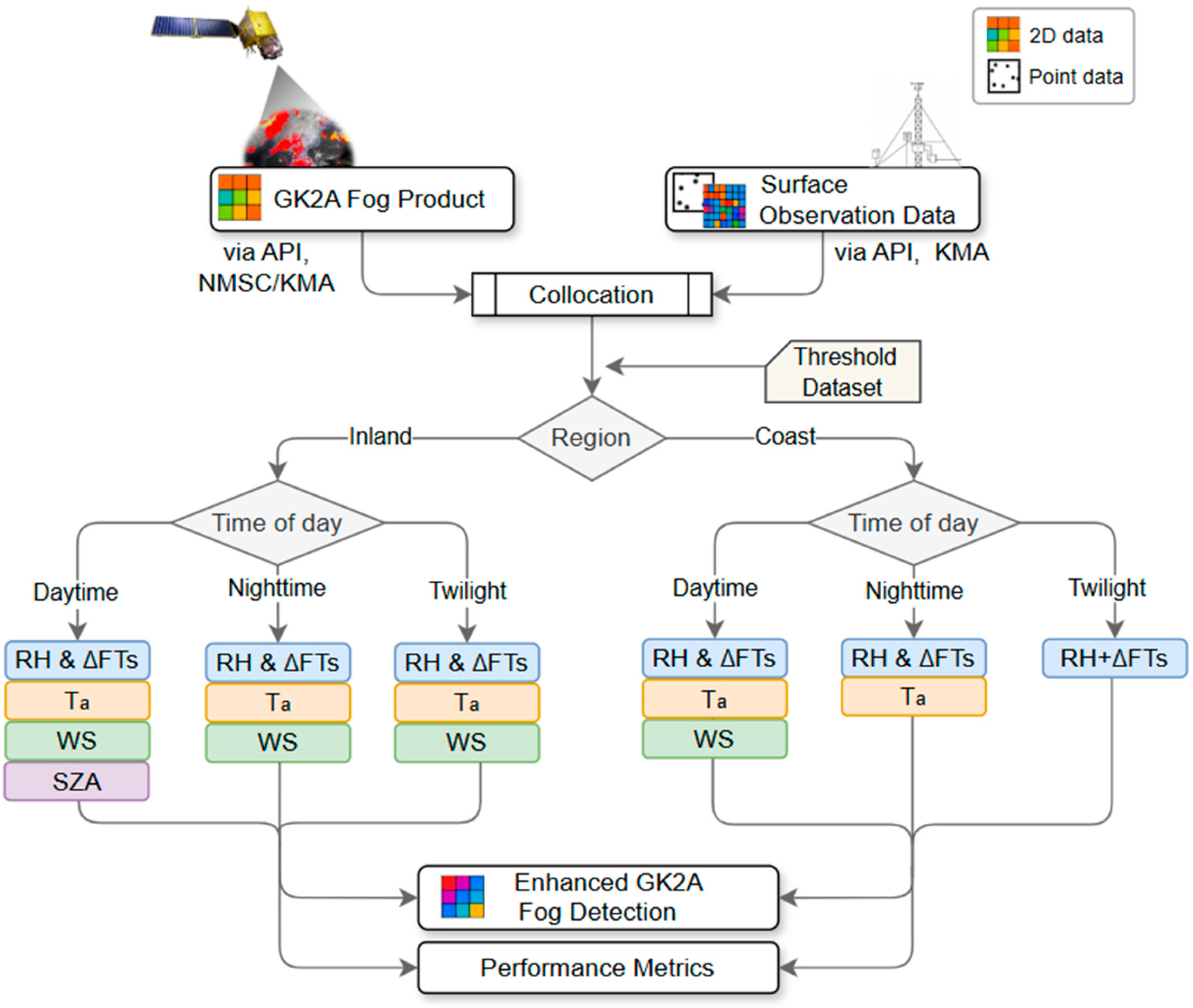
A schematic of the final post-processing procedure for GK2A fog detection product is presented in Figure 12. The post-processing workflow for each of the six sub-algorithms varies with geographic region and time period, reflecting the fog occurrence characteristics and the relative influence of and , , and , while prioritizing the preservation of POD.
Figure 12.
Post-processing procedure for GK2A fog detection using ground-based observations. The post-processing procedure was applied differently depending on the geographical location, time-of-day fog occurrence characteristics, and the influence of surface observations. API; Application Programming Interface.
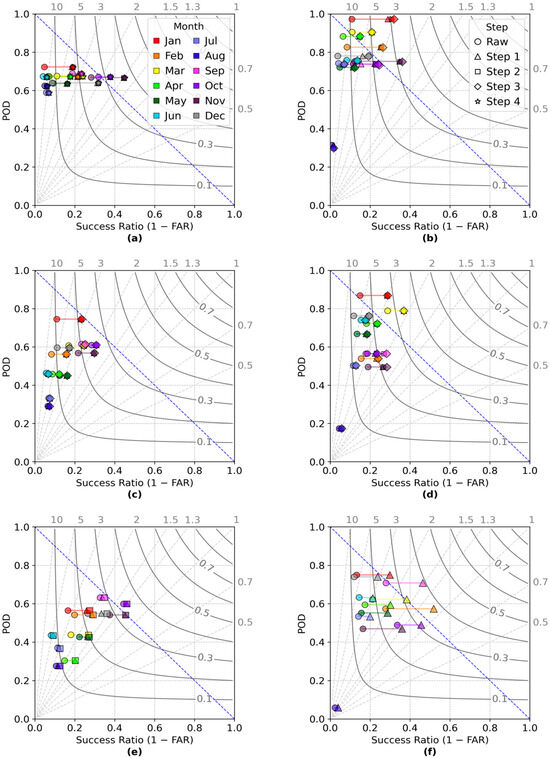
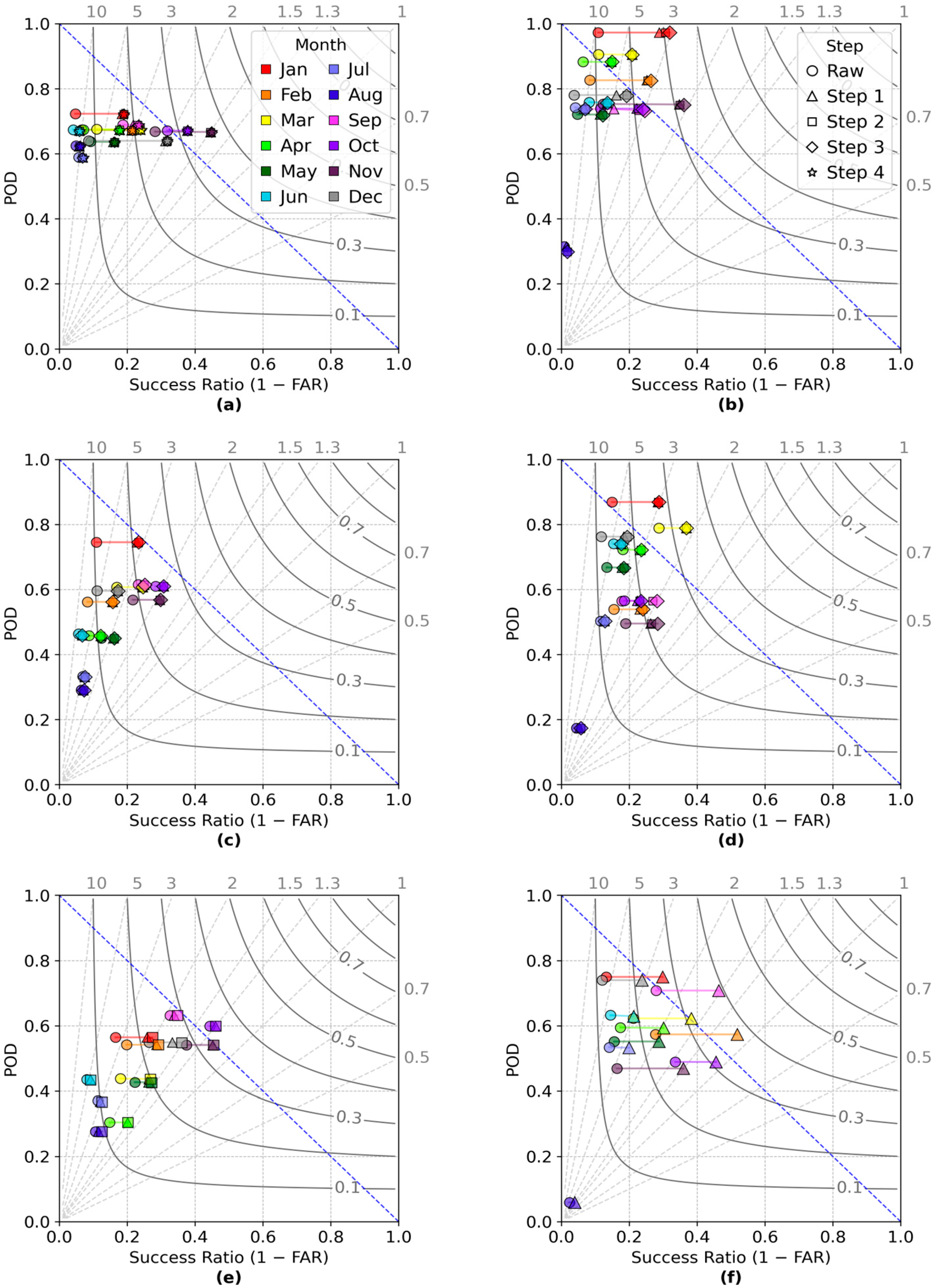
The performance diagrams for the six sub-algorithms illustrate the three-year mean monthly improvements achieved through post-processing (Figure 13). Performance diagrams typically indicate improved performance by an upward and rightward shift in data points, corresponding to higher POD and higher success ratio (1 − FAR). In these diagrams, while POD remained relatively stable across all six sub-algorithms, the increase in the success ratio was driven primarily by Step 1, which used and (Figure 8).
Figure 13.
Performance diagrams for the six sub-algorithms (region × time zone): (a) inland daytime, (b) coastal daytime; (c) inland nighttime; (d) coastal nighttime; (e) inland twilight; and (f) coastal twilight. Each panel shows the relationship between POD and the success ratio (1 − FAR) for monthly cases. Gray dashed lines: bias; gray solid lines: CSI (Critical Success Index, defined as hits divided by hits, misses, and false alarms); blue dashed line: no-skill line.
Across all six sub-algorithms, most of the increases in the success ratio occurred after Step 1 ( and ), whereas subsequent steps yielded comparatively smaller incremental changes (Figure 8). In inland regions, the most substantial improvements in the success ratio were generally observed from late winter to early spring (December–March), with additional gains in late autumn (October–November). In contrast, the effectiveness of post-processing was comparatively limited from late spring to early autumn (May–September); notably, August, which corresponded to the peak summer season, showed the smallest improvement. Coastal regions, which were frequently influenced by advection sea fog [35,40], also exhibited pronounced improvements in the success ratio from winter to early spring (December–April), following a pattern similar to that observed over inland areas. Regarding diurnal variations, the magnitude of improvement during daytime and twilight tended to be more pronounced in spring (March–May) than in autumn (September–November).
3.3. Case Studies
3.3.1. Winter Case
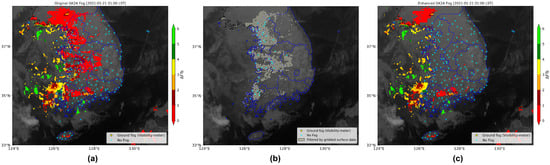
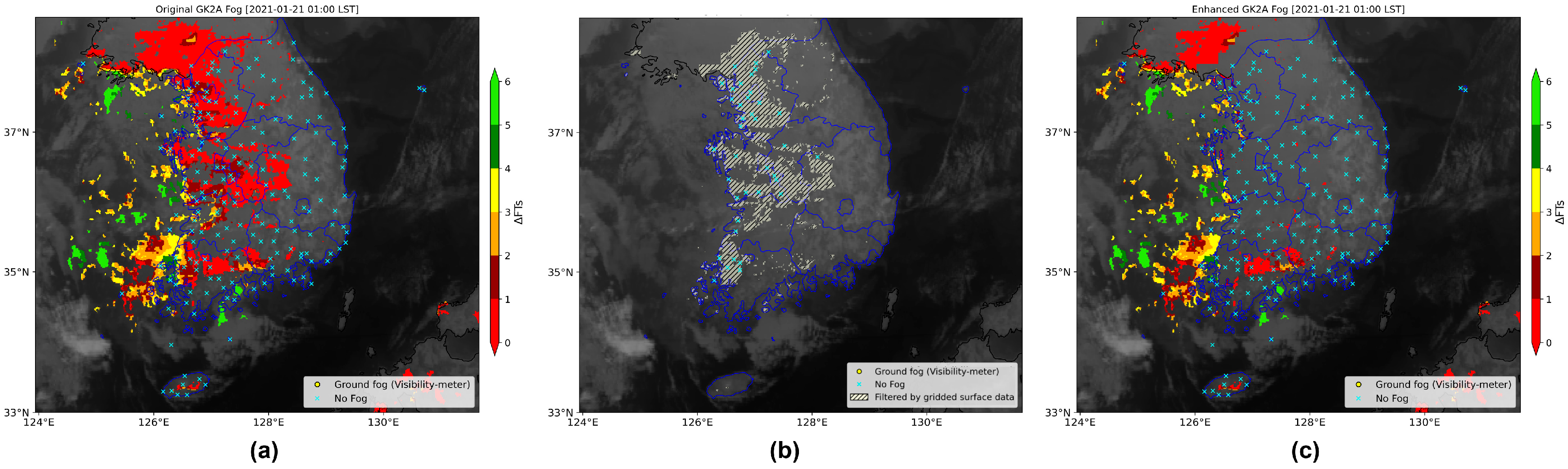
The optimized post-processing procedure was applied to a winter case characterized by the misclassification of low stratus as fog [16], which occurred at 01:00 LST on 21 January 2021 (Figure 14). The gray-hatched regions in Figure 14b indicate the false alarm areas eliminated during the post-processing steps, while Figure 14c presents the refined fog detection product. In this case, the post-processing removed false fog detections in the GK2A fog product over most areas, except for parts of the southern region. An inland mask including the coastal region was applied in the case analysis (Figure 1b), thereby retaining fog and low-cloud areas over the ocean.
Figure 14.
GK2A fog detection post-processing at 01:00 LST on 21 January 2021 (winter low stratiform cloud case): (a) original GK2A_FDA detection; (b) areas removed after applying Steps 1–3; and (c) final product. The overlaid markers indicate ground-truth visibility: yellow circles and light-blue crosses denote visibility below 1 km (fog) and ≥1 km (non-fog), respectively. Blue lines indicate the national and provincial boundaries.
3.3.2. Summer Case
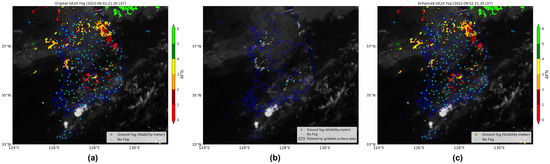
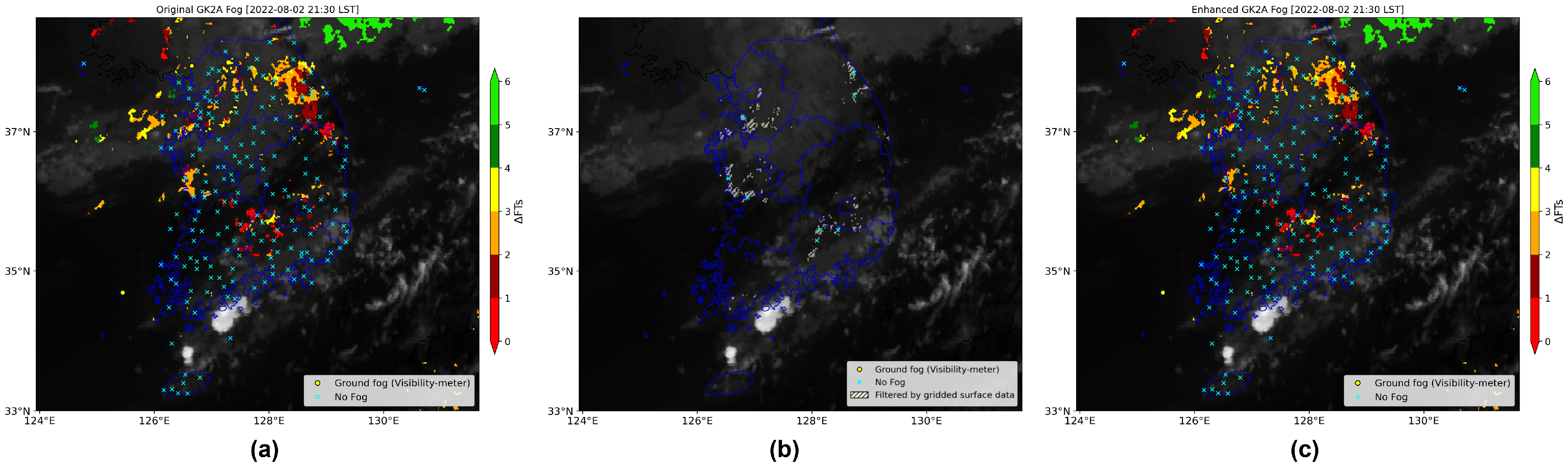
A summer case with low clouds detected as fog occurred on 2 August 2022 at 21:30 LST (Figure 15). Although August showed the lowest monthly improvement rate in the GK2A_FDA post-processing statistics, this example demonstrated that the post-processing could still remove a portion of false fog detections in an individual scene, as shown in Figure 15b.
Figure 15.
Same as Figure 14, but for 21:30 LST on 2 August 2022 (summer case of false detection due to low clouds).
4. Discussion
This study proposed a threshold-based post-processing approach that integrally combined key satellite fog-detection metrics with surface observations to mitigate the over-detection tendency of GK2A_FDA reported in a previous study [16]. To minimize POD loss for operational GK2A_FDA, conservative boundary lines were defined in a two-dimensional and decision space by jointly considering the distributions of FHR and hit counts. Thresholds were also determined for the , , and steps based on the FHR and hit count distributions and were seasonally optimized to reflect the seasonal characteristics of fog occurrence over the Korean Peninsula. This threshold-based DTM has the advantages of being physically interpretable and relatively easy to implement operationally [44].
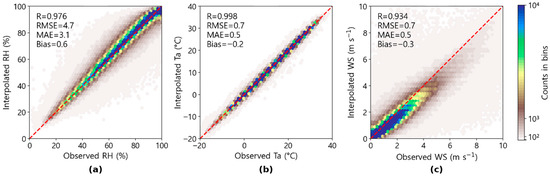
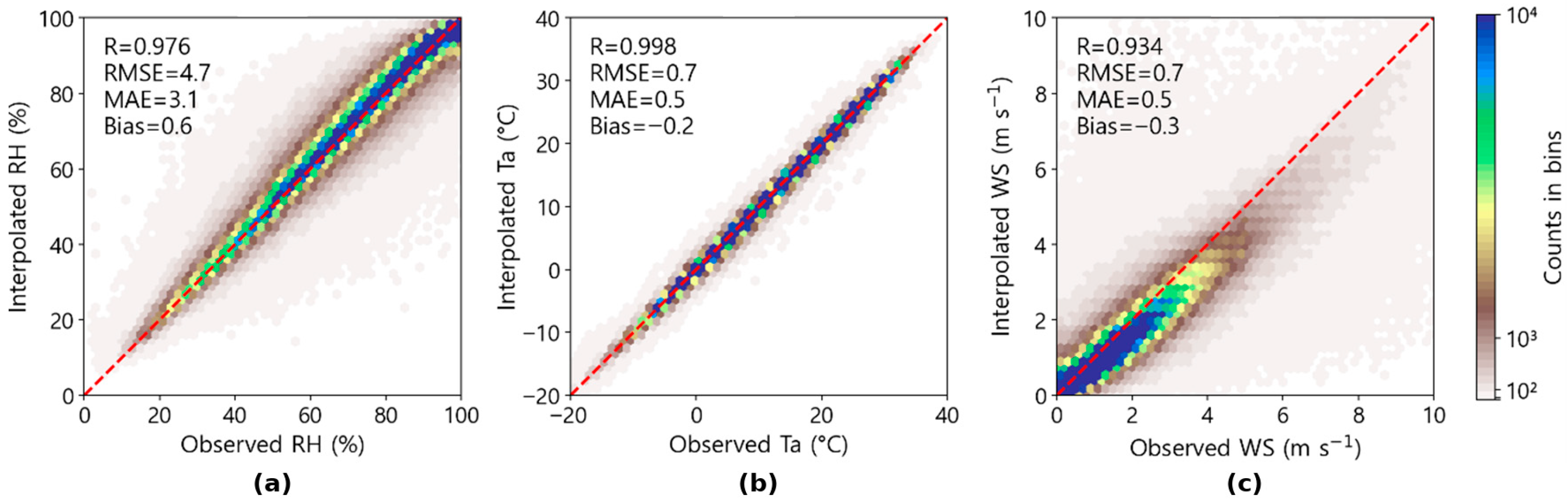
The GK2A fog product was gridded; therefore, post-processing was performed using gridded surface analysis data rather than point observations. The differences between AWS/ASOS observations and the corresponding grid values should be considered. Figure 16 analyzes these differences using hourly data from 2021 to 2023 for the objective analysis grids and 78 ASOS stations, presenting density scatter plots comparing the station observations and objective analysis values for each meteorological variable. showed the highest annual correlation coefficient (0.998), followed by (0.976) and (0.934). The root mean square error (RMSE) and mean absolute error (MAE) for were 4.7% and 3.1%, respectively, reflecting occasional discrepancies between point observations and grid values. A bias of 0.6% indicated a slight overestimation in the nearest grid values relative to station observations. For , the RMSE and MAE were 0.7 °C and 0.5 °C, respectively, with a negative bias of −0.2 °C. For , RMSE and MAE were 0.7 m s−1 and 0.5 m s−1, respectively, with a negative bias of −0.3 m s−1.
Figure 16.
Hexbin scatter plots between ground observations and gridded surface analysis data (2021–2023): (a) , (b) , and (c) .
Seasonal variability in the station–grid differences for each meteorological variable is summarized in Table 6. For , , and , errors were generally small, with MAE varying by approximately 0.4–0.5% for and by about 0.1 (in the corresponding units) for both and . These station–grid representativeness differences, together with biases in the objective analysis grids (a positive bias for and negative biases for and ) and their seasonal variability, may increase uncertainty in fog classification near the threshold boundaries.
Table 6.
Seasonal comparison of the accuracy of , , and between surface observations and gridded surface analysis data (2021–2023).
Furthermore, weak or localized fog may still be mistakenly removed as false alarms, resulting in a small reduction in POD (−0.08% to −0.27%). also retained limitations that may cause missed detections, such as shallow fog beneath multilayer clouds, insufficient representation of nocturnal radiative cooling, and sub-grid-scale fog [4,11]. Considering these issues, as the number of fog cases increases, classification uncertainty near the threshold boundaries may become more pronounced; thus, further refinement of the thresholds using larger datasets is required. Moreover, the adoption of machine learning and AI approaches is recommended to advance the DTM framework.
5. Conclusions
This study developed a post-processing algorithm that integrated surface observations with satellite-derived variables to effectively mitigate the over-detection tendency of the GK2A fog product. Although the overall detection capability of GK2A_FDA was adequate, as shown in our previous study (Part I) [16], a pronounced over-detection tendency appeared across varying regions and time periods. Such over-detection mainly occurred under conditions in which low stratus and fog were difficult to distinguish, and it was particularly evident in coastal areas and during daytime. In coastal regions, the relaxed criterion in the GK2A_FDA sea-fog algorithm could induce false alarms, whereas during daytime, residual low stratus persisting during fog dissipation was frequently misclassified as fog. In addition, discontinuities in the detection results between time periods were observed during the transition from twilight to daytime, especially in spring when the solar elevation can increase rapidly.
To complement these limitations, this study jointly utilized surface meteorological variables—, , and —together with key GK2A_FDA variables, including and . With operational applications in mind, the post-processing framework was designed to improve FAR and bias while preserving POD as much as possible. Conservative thresholds were derived from heatmap analyses of FHR and hit counts, using bins with an annual mean hit frequency of ≤1 as the primary criterion, while retaining bins with at least two hit occurrences over the study period. In particular, the combined use of surface and satellite-derived enabled effective removal of false alarms with minimal POD degradation. The contribution of each post-processing component was largest for the and step (Step 1), followed by the (Step 2), (Step 3), and (Step 4) steps. Accordingly, the post-processing steps were applied selectively across the six sub-algorithms across inland/coastal and daytime/nighttime/twilight conditions.
Applying the proposed post-processing to GK2A_FDA during 2021–2023 yielded the largest reductions in bias during daytime, when fog commonly dissipated. This quantitative evaluation was performed using a collocated dataset of 176 visibility meters and ASOS/AWS sites, where the GK2A fog detection results were matched with ground-based observations using the nearest-pixel collocation approach. The coastal daytime case showed the greatest improvement, with Δbias decreasing by −52.61%. The largest decrease in ΔFAR occurred for coastal twilight (−13.68%), whereas the smallest decrease occurred for inland nighttime (−5.13%). By contrast, ΔPOD decreased by −0.27% for coastal daytime and by only −0.08% for coastal nighttime. After post-processing, POD ranged from 0.505 to 0.799, FAR from 0.714 to 0.850, and bias from 1.764 to 5.319. Among the meteorological variables, contributed most to mitigating over-detection, followed by and . Consequently, the improvement was more pronounced during relatively dry seasons, whereas the benefit was limited during humid seasons.
This research addressed the pronounced over-detection tendency that appeared across varying regions and time periods. Crucially, the recent availability of high-resolution gridded surface analysis data enabled the point-optimized algorithm to be applied across South Korea, facilitating its immediate integration into operational GK2A fog detection systems. While discrepancies between point observations and grid values (e.g., an MAE of 3.1% and a bias of 0.6% for ) may introduce some uncertainty near threshold boundaries during operational use, the overall reliability of the product was substantially enhanced. These results demonstrated that the integrated use of satellite and surface observations could reduce key limitations of satellite-only fog detection.
Recent studies have increasingly explored machine learning and AI approaches to improve the accuracy of fog detection products from geostationary meteorological satellites. Future research should focus on developing advanced post-processing frameworks that use , , , , and —identified here as influential predictors—as core input features and apply modern AI techniques such as multimodal learning and cross-attention-based transformers. In addition, improvements in surface observing infrastructure, including visibility meters and ceilometers, are expected to further enhance the detection performance of GK2A_FDA.
Author Contributions
Conceptualization, H.-K.L.; methodology, M.-S.S. and H.-K.L.; software, H.-K.L.; validation, H.-K.L. and M.-S.S.; formal analysis M.-S.S., H.-K.L. and J.-H.H.; investigation, H.-K.L.; resources, M.-S.S. and H.-K.L.; data curation, H.-K.L., M.-S.S. and J.-H.H.; writing—original draft preparation, H.-K.L.; writing—review and editing, M.-S.S. and H.-K.L.; visualization, H.-K.L.; supervision, M.-S.S.; project administration, M.-S.S.; funding acquisition, M.-S.S. All authors have read and agreed to the published version of the manuscript.
Funding
This work was funded by the Korea Meteorological Administration Research and Development Program “Developing Service Platform Technology for AI and Data Convergence” under Grant (KMA2021-00122).
Data Availability Statement
Data from GK2A/AMI level 2 data, visibility data, AWS/ASOS data, and high-resolution gridded surface analysis data are freely available from the Korea Meteorological Administration (KMA) API Hub (https://apihub.kma.go.kr/), accessed on 8 February 2026.
Acknowledgments
We gratefully acknowledge the National Meteorological Satellite Center (NMSC) for providing the GK2A satellite data. We also thank the Korea Meteorological Administration (KMA) for making the surface observation and high-resolution gridded surface analysis data available.
Conflicts of Interest
The authors declare no conflicts of interest.
Appendix A. Supplementary Performance Table
Change Rates After GK2A_FDA Post-Processing, Prior to Seasonal Optimization
Table A1.
Change rates after post-processing without seasonal optimization (in inland areas). Raw indicates baseline performance after excluding cases with missing meteorological data. Steps 1–4 represent sequential application of threshold-based filters based on and , , , and .
Table A2.
Same as Table A1 but for the coastal area.
References
- Ellrod, G.P. Advances in the Detection and Analysis of Fog at Night Using GOES Multispectral Infrared Imagery. Weather Forecast. 1995, 10, 606–619. [Google Scholar] [CrossRef] [Scilit]
- Maruyama, T.; Ishida, H.; Chubachi, K. Himawari-8 Fog Detection Product Development (Technical Note) No. 66; Japan Meteorological Agency: Tokyo, Japan, 2022; pp. 2–10. [Google Scholar]
- Gultepe, I.; Tardif, R.; Michaelides, S.C.; Cermak, J.; Bott, A.; Bendix, J.; Müller, M.D.; Pagowski, M.; Hansen, B.; Ellrod, G.; et al. Fog Research: A Review of Past Achievements and Future Perspectives. Pure Appl. Geophys. 2007, 164, 1121–1159. [Google Scholar] [CrossRef] [Scilit]
- Han, J.-H.; Suh, M.-S.; Yu, H.-Y.; Kim, S.-H. Improvement of High-Resolution Daytime Fog Detection Algorithm Using GEO-KOMPSAT-2A/Advanced Meteorological Imager Data with Optimization of Background Field and Threshold Values. Remote Sens. 2024, 16, 2031. [Google Scholar] [CrossRef] [Scilit]
- Ahn, M.-H.; Sohn, E.-H.; Hwang, B.-J. A New Algorithm for Sea Fog/Stratus Detection Using GMS-5 IR Data. Adv. Atmos. Sci. 2003, 20, 899–913. [Google Scholar] [CrossRef] [Scilit]
- Yoo, J.-M.; Jeong, M.-J.; Yoo, H.-L.; Rhee, J.-E.; Hur, Y.-M.; Ahn, M.-H. Fog Sensing over the Korean Peninsula Derived from Satellite Observation of MODIS and GOES-9. Korean J. Remote Sens. 2006, 22, 373–377. [Google Scholar] [CrossRef]
- Heo, K.-Y.; Min, S.-Y.; Ha, K.-J.; Kim, J.-H. Discrimination between Sea Fog and Low Stratus Using Texture Structure of MODIS Satellite Images. Korean J. Remote Sens. 2008, 24, 571–581. [Google Scholar] [CrossRef]
- Shin, D.; Park, H.; Kim, J.H. Analysis of the Fog Detection Algorithm of DCD Method with SST and CALIPSO Data. Atmosphere 2013, 23, 471–483. [Google Scholar] [CrossRef] [Scilit]
- Suh, M.-S.; Kim, S.-H.; Seo, E.-K. Development of Land Fog Detection Algorithm Based on the Optical and Textural Properties of Fog Using COMS Data. Korean J. Remote Sens. 2017, 33, 359–375. [Google Scholar] [CrossRef]
- Han, J.-H.; Suh, M.-S.; Kim, S.-H. Development of Day Fog Detection Algorithm Based on the Optical and Textural Characteristics Using Himawari-8 Data. Korean J. Remote Sens. 2019, 35, 117–136. [Google Scholar] [CrossRef]
- Han, J.-H.; Suh, M.-S.; Yu, H.-Y.; Roh, N.-Y. Development of Fog Detection Algorithm Using GK2A/AMI and Ground Data. Remote Sens. 2020, 12, 3181. [Google Scholar] [CrossRef] [Scilit]
- Bendix, J.; Thies, B.; Cermak, J.; Nauß, T. Ground Fog Detection from Space Based on MODIS Daytime Data—A Feasibility Study. Weather Forecast. 2005, 20, 989–1005. [Google Scholar] [CrossRef] [Scilit]
- Amani, M.; Mahdavi, S.; Bullock, T.; Beale, S. Automatic Nighttime Sea Fog Detection Using GOES-16 Imagery. Atmos. Res. 2020, 238, 104712. [Google Scholar] [CrossRef] [Scilit]
- Bartok, J.; Šišan, P.; Ivica, L.; Bartoková, I.; Malkin Ondík, I.; Gaál, L. Machine Learning-Based Fog Nowcasting for Aviation with the Aid of Camera Observations. Atmosphere 2022, 13, 1684. [Google Scholar] [CrossRef] [Scilit]
- Lu, H.; Ma, Y.; Zhang, S.; Yu, X.; Zhang, J. Daytime Sea Fog Identification Based on Multi-Satellite Information and the ECA-TransUnet Model. Remote Sens. 2023, 15, 3949. [Google Scholar] [CrossRef] [Scilit]
- Lee, H.-K.; Suh, M.-S. A Detailed Performance Evaluation of the GK2A Fog Detection Algorithm Using Ground-Based Visibility Meter Data (2021–2023, Part I). Remote Sens. 2025, 17, 2596. [Google Scholar] [CrossRef] [Scilit]
- Yu, H.-Y.; Suh, M.-S. Development of a High-Resolution Fog Detection Algorithm for Daytime by Fusing GK2A/AMI and GK2B/GOCI-II Data. Korean J. Remote Sens. 2023, 39, 1779–1790. [Google Scholar] [CrossRef]
- Suh, M.-S.; Han, J.-H.; Yu, H.-Y.; Kang, T.-H. Generation of High-Resolution Blending Data Using Gridded Visibility Data and GK2A Fog Product. Remote Sens. 2024, 16, 2350. [Google Scholar] [CrossRef] [Scilit]
- Pavolonis, M.J.; Heidinger, A.K.; Uttal, T. Daytime Global Cloud Typing from AVHRR and VIIRS: Algorithm Description, Validation, and Comparisons. J. Appl. Meteorol. 2005, 44, 804–826. [Google Scholar] [CrossRef] [Scilit]
- Egli, S.; Thies, B.; Bendix, J. A Hybrid Approach for Fog Retrieval Based on a Combination of Satellite and Ground Truth Data. Remote Sens. 2018, 10, 628. [Google Scholar] [CrossRef] [Scilit]
- Guidard, V.; Tzanos, D. Analysis of Fog Probability from a Combination of Satellite and Ground Observation Data. Pure Appl. Geophys. 2007, 164, 1207–1220. [Google Scholar] [CrossRef] [Scilit]
- Yi, L.; Li, M.; Liu, S.; Shi, X.; Li, K.-F.; Bendix, J. Detection of Dawn Sea Fog/Low Stratus Using Geostationary Satellite Imagery. Remote Sens. Environ. 2023, 294, 113622. [Google Scholar] [CrossRef] [Scilit]
- Lim, H.-C.; Kim, H.-S.; Lee, M.-H. Development of Road Fog Information for Road Weather Services Based on the Meteorological Satellite (GK2A). Int. J. Highw. Eng. 2024, 26, 107–113. [Google Scholar] [CrossRef] [Scilit]
- Pauli, E.; Cermak, J.; Andersen, H. A Satellite-based Climatology of Fog and Low Stratus Formation and Dissipation Times in Central Europe. Q. J. R. Meteorol. Soc. 2022, 148, 1439–1454. [Google Scholar] [CrossRef] [Scilit]
- Jahani, B.; Karalus, S.; Fuchs, J.; Zech, T.; Zara, M.; Cermak, J. Algorithm for Continual Monitoring of Fog Based on Geostationary Satellite Imagery. Atmos. Meas. Tech. 2025, 18, 1927–1941. [Google Scholar] [CrossRef] [Scilit]
- Korea Meteorological Administration (KMA). High-Resolution Gridded Surface Analysis Data. Available online: https://apihub.kma.go.kr/apiList.do?seqApi=971 (accessed on 14 February 2026).
- Walcek, C.J. Cloud Cover and Its Relationship to Relative Humidity during a Springtime Midlatitude Cyclone. Mon. Weather Rev. 1994, 122, 1021–1035. [Google Scholar] [CrossRef] [Scilit]
- Haynes, J.M.; Noh, Y.-J.; Miller, S.D.; Haynes, K.D.; Ebert-Uphoff, I.; Heidinger, A. Low Cloud Detection in Multilayer Scenes Using Satellite Imagery with Machine Learning Methods. J. Atmos. Ocean. Technol. 2022, 39, 319–334. [Google Scholar] [CrossRef] [Scilit]
- Calvert, C.; Pavolonis, M. GOES-R Advanced Baseline Imager (ABI) Algorithm Theoretical Basis Document for Low Cloud and Fog, version 1.0; NOAA NESDIS Center for Satellite Applications and Research (STAR): College Park, MD, USA, 2010. Available online: https://www.star.nesdis.noaa.gov/goesr/documents/ATBDs/Baseline/ATBD_GOES-R_Fog_v1.0_Sep2010.pdf (accessed on 24 March 2026).
- Lee, J.-H.; Kim, J.-S.; Lee, E.-J.; Kim, J.-W.; Kim, G.-O. Development of 3D Objective Analysis Technology for Meteorological Data; Korea Meteorological Administration: Daejeon, Republic of Korea, 2022; pp. 21–22. Available online: https://apihub.kma.go.kr/getAttachFile.do?fileName=%EA%B8%B0%EC%83%81%EC%9E%90%EB%A3%8C%203%EC%B0%A8%EC%9B%90%20%EA%B0%9D%EA%B4%80%EB%B6%84%EC%84%9D%20%EA%B8%B0%EC%88%A0%20%EA%B0%9C%EB%B0%9C%20%EA%B8%B0%EC%88%A0%EB%85%B8%ED%8A%B8.pdf (accessed on 24 March 2026).
- Dione, C.; Haeffelin, M.; Burnet, F.; Lac, C.; Canut, G.; Delanoë, J.; Dupont, J.-C.; Jorquera, S.; Martinet, P.; Ribaud, J.-F.; et al. Role of Thermodynamic and Turbulence Processes on the Fog Life Cycle during SOFOG3D Experiment. Atmos. Chem. Phys. 2023, 23, 15711–15731. [Google Scholar] [CrossRef] [Scilit]
- Klein, S.A.; Hartmann, D.L. The Seasonal Cycle of Low Stratiform Clouds. J. Clim. 1993, 6, 1587–1606. [Google Scholar] [CrossRef] [Scilit]
- Gultepe, I.; Pagowski, M.; Reid, J. A Satellite-Based Fog Detection Scheme Using Screen Air Temperature. Weather Forecast. 2007, 22, 444–456. [Google Scholar] [CrossRef] [Scilit]
- Wærsted, E.G.; Haeffelin, M.; Dupont, J.-C.; Delanoë, J.; Dubuisson, P. Radiation in Fog: Quantification of the Impact on Fog Liquid Water Based on Ground-Based Remote Sensing. Atmos. Chem. Phys. 2017, 17, 10811–10835. [Google Scholar] [CrossRef] [Scilit]
- Tardif, R.; Rasmussen, R.M. Event-Based Climatology and Typology of Fog in the New York City Region. J. Appl. Meteorol. Climatol. 2007, 46, 1141–1168. [Google Scholar] [CrossRef] [Scilit]
- Lee, S.-H.; Suh, M.-S. Lightning Detection Using GEO-KOMPSAT-2A/Advanced Meteorological Imager and Ground-Based Lightning Observation Sensor LINET Data. Remote Sens. 2024, 16, 4243. [Google Scholar] [CrossRef] [Scilit]
- Suh, M.-S.; Han, J.-H.; Kim, S.-H.; Noh, N.-Y.; Yu, H.-Y. GK2A/AMI Algorithm Theoretical Basis Document (ATBD)—Fog Detection, version 2.0; National Meteorological Satellite Center: Jincheon-gun, Republic of Korea, 2026. Available online: http://nmsc.kma.go.kr/homepage/html/base/cmm/selectPage.do?page=static.edu.atbdGk2a (accessed on 14 February 2026).
- Jhun, J.-G.; Lee, E.-J.; Ryu, S.-A.; Yoo, S.-H. Characteristics of Regional Fog Occurrence and Its Relation to Concentration of Air Pollutants in South Korea. Asia-Pac. J. Atmos. Sci. 1998, 34, 486–496. [Google Scholar]
- Kim, E.-J.; Park, S.-Y.; Yoo, J.-W.; Lee, S.-H. Fog Type Classification and Occurrence Characteristics Based on Fog Generation Mechanism in the Korean Peninsula. J. Environ. Sci. Int. 2023, 32, 883–898. [Google Scholar] [CrossRef] [Scilit]
- Cho, Y.-K.; Kim, M.-O.; Kim, B.-C. Sea Fog around the Korean Peninsula. J. Appl. Meteorol. 2000, 39, 2473–2479. [Google Scholar] [CrossRef] [Scilit]
- Lee, Y.-H.; Lee, J.-S.; Park, S.-K.; Chang, D.-E.; Lee, H.-S. Temporal and Spatial Characteristics of Fog Occurrence over the Korean Peninsula. J. Geophys. Res. Atmos. 2010, 115, D14117. [Google Scholar] [CrossRef] [Scilit]
- Lee, H.-K.; Suh, M.-S. Objective Classification of Fog Type and Analysis of Fog Characteristics Using Visibility Meter and Satellite Observation Data Over South Korea. Atmosphere 2019, 29, 639–658. [Google Scholar] [CrossRef]
- Korea Meteorological Administration. Climate Characteristics by Region in Korea. Available online: https://www.weather.go.kr/w/climate/statistics/korea.do (accessed on 14 February 2026).
- Bruce, P.; Bruce, A. Practical Statistics for Data Scientists: 50 Essential Concepts, 1st ed.; O’Reilly Media: Sebastopol, CA, USA, 2017; pp. 277–287. [Google Scholar]

Disclaimer/Publisher’s Note: The statements, opinions and data contained in all publications are solely those of the individual author(s) and contributor(s) and not of MDPI and/or the editor(s). MDPI and/or the editor(s) disclaim responsibility for any injury to people or property resulting from any ideas, methods, instructions or products referred to in the content. |
© 2026 by the authors. Licensee MDPI, Basel, Switzerland. This article is an open access article distributed under the terms and conditions of the Creative Commons Attribution (CC BY) license.