Seasonal Varied Responses of Block-Scale Land Surface Temperature to Multidimensional Urban Canopy Morphology Interpreted by SHAP Approach



Highlights
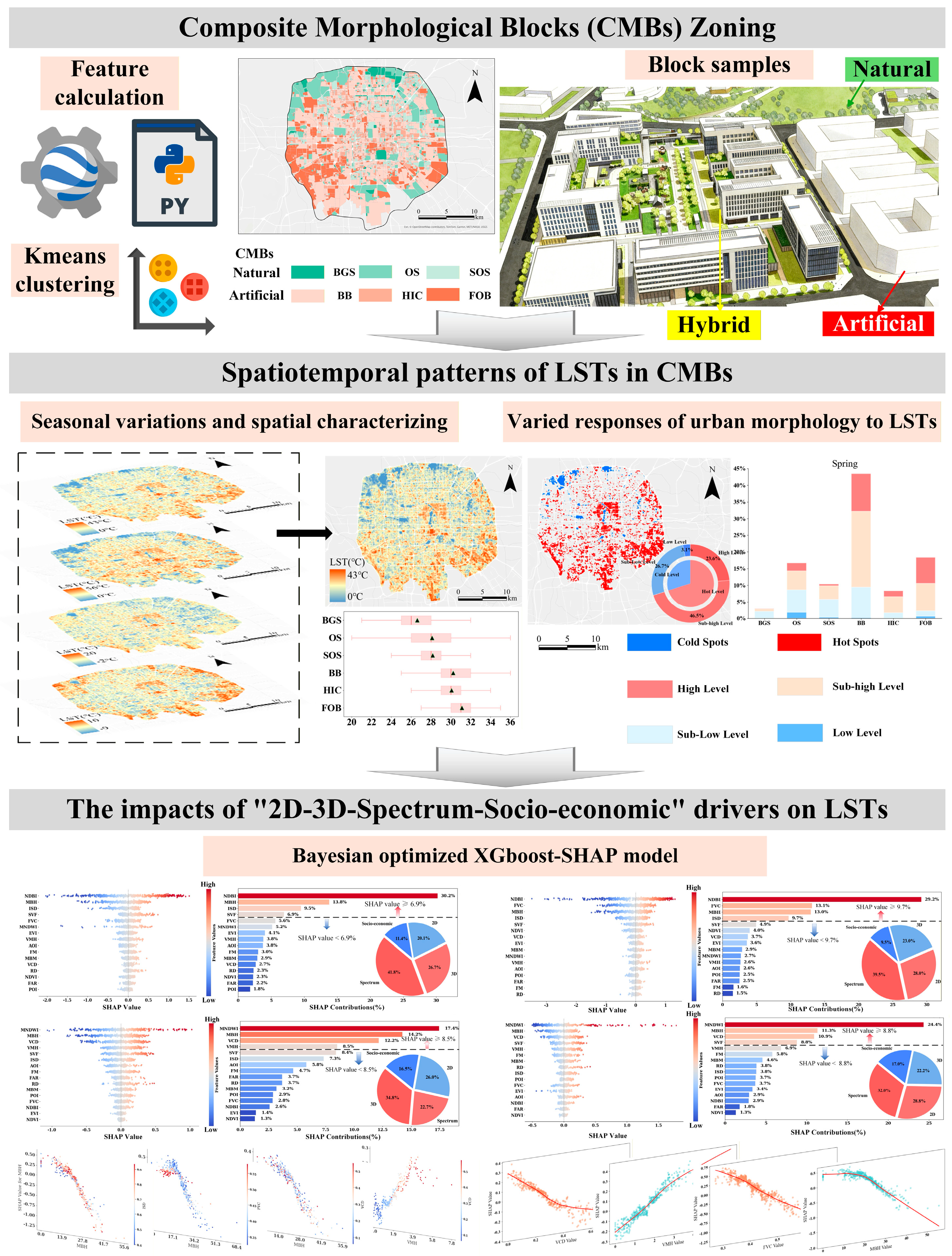
- A composite morphological block (CMB) zoning scheme for thermal characterization.
- Factors related to the artificial landscape are the dominant driver of LST during the warm months. 2D and 3D vegetation canopy morphology contributed more to LST in the cold months.
- CMBs can more accurately classify and analyze the temperature at the block scale.
- The impact analysis based on 2D and 3D urban factors can be more reliable to evaluate the contribution degree.
Abstract
1. Introduction
- (1)
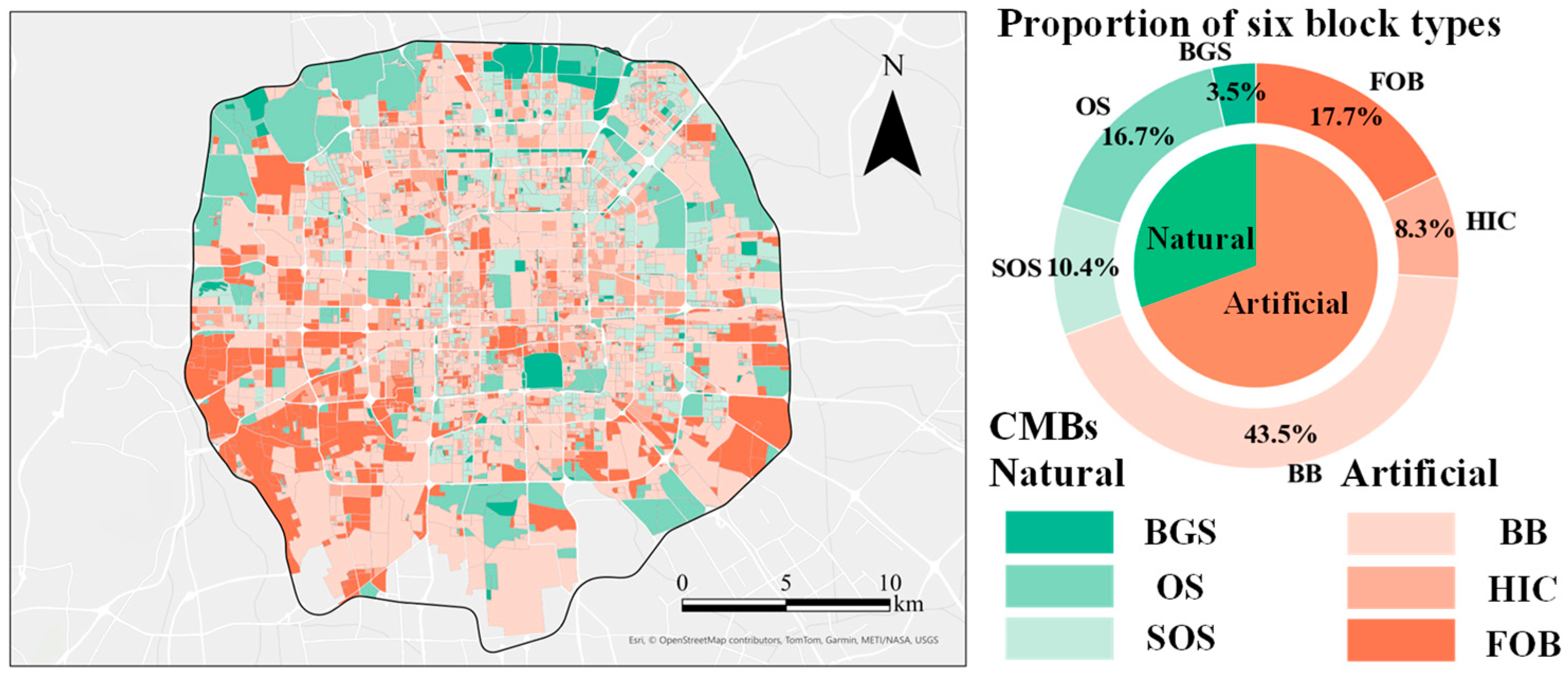
- How to design a flexible block zoning scheme that depicts the integrated two- and three-dimensional morphologies of architecture and vegetation?
- (2)
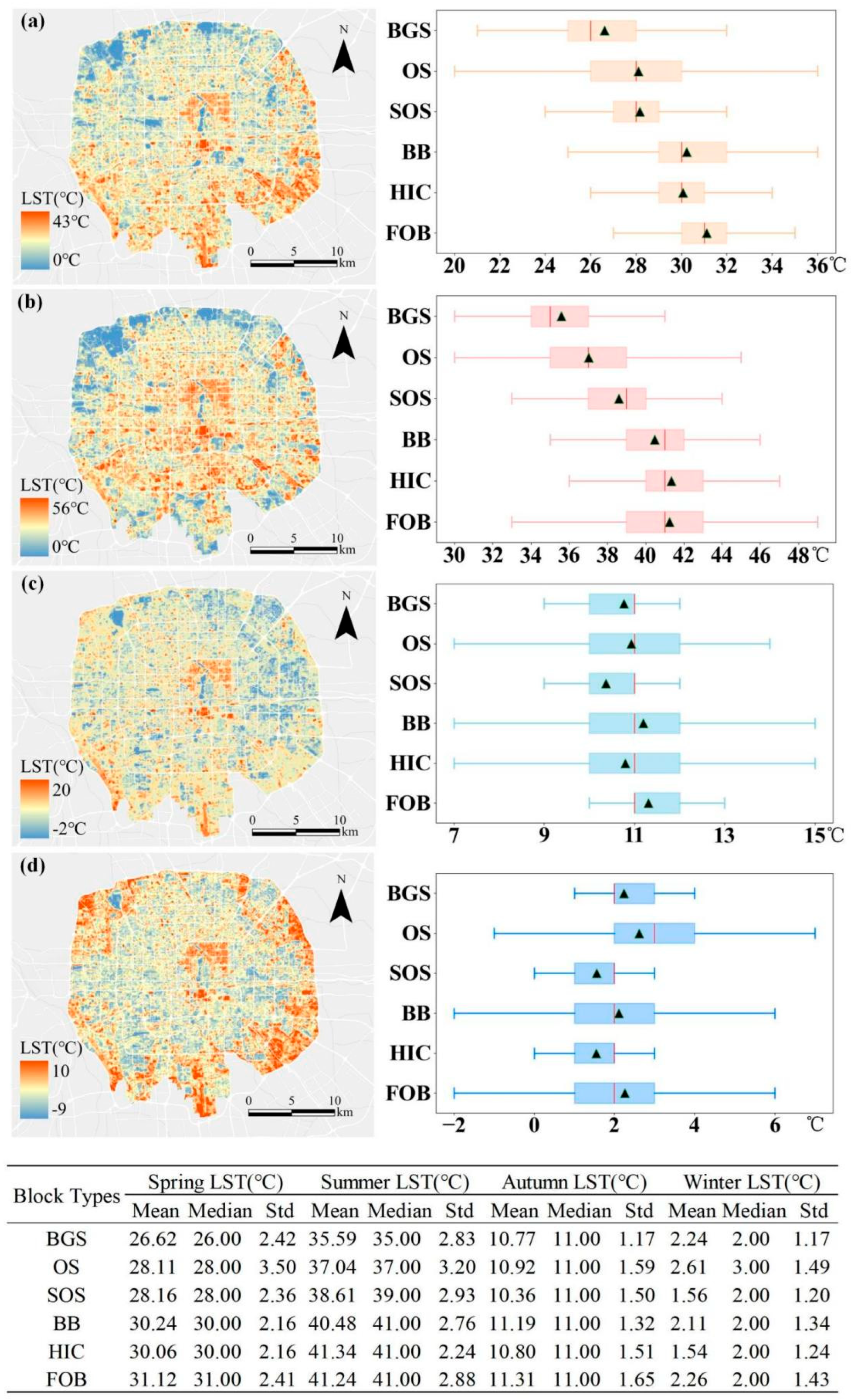
- What LST patterns do these blocks (i.e., CMBs) exhibit across different seasons?
- (3)
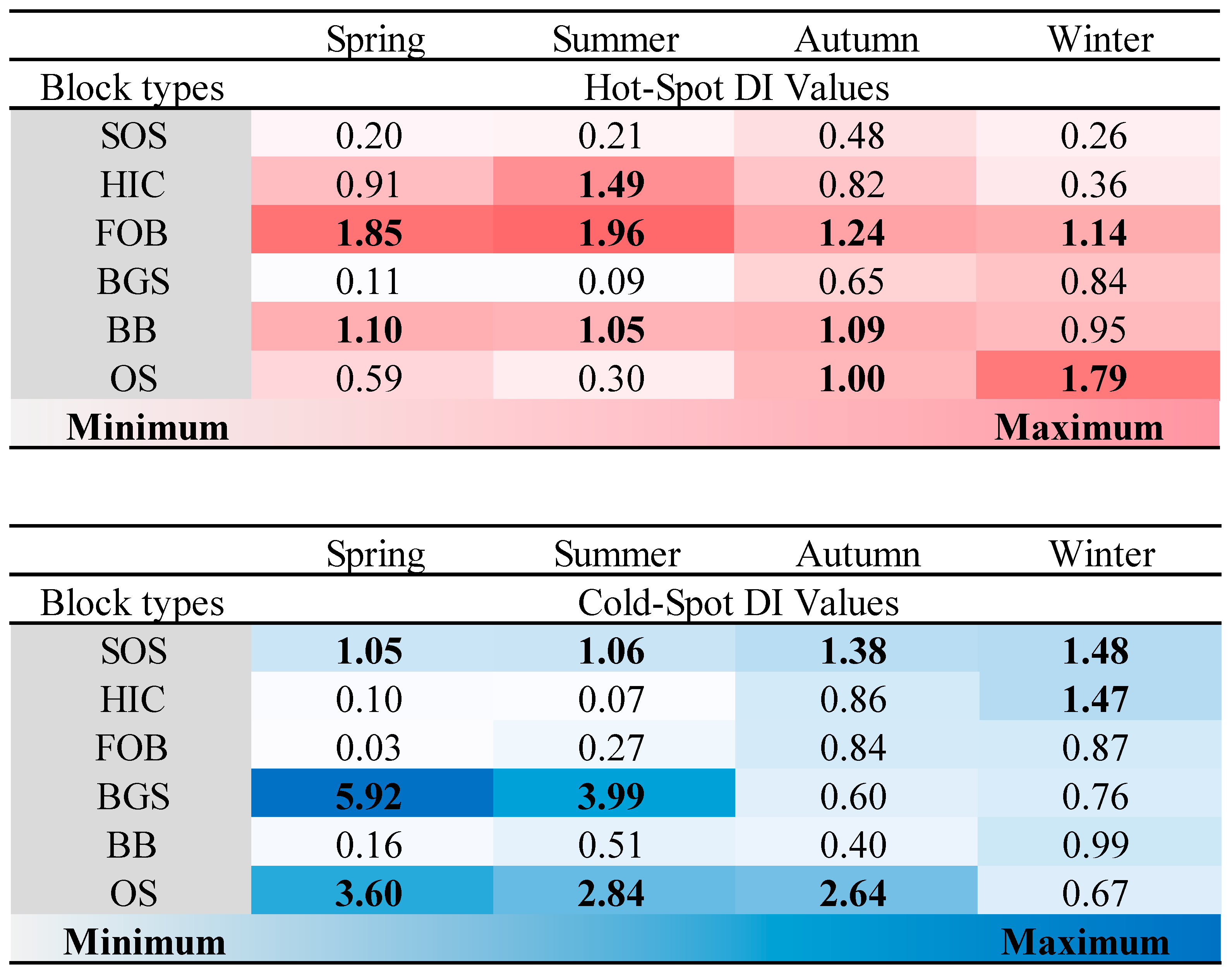
- How do multidimensional factors drive LST through nonlinear interactions?
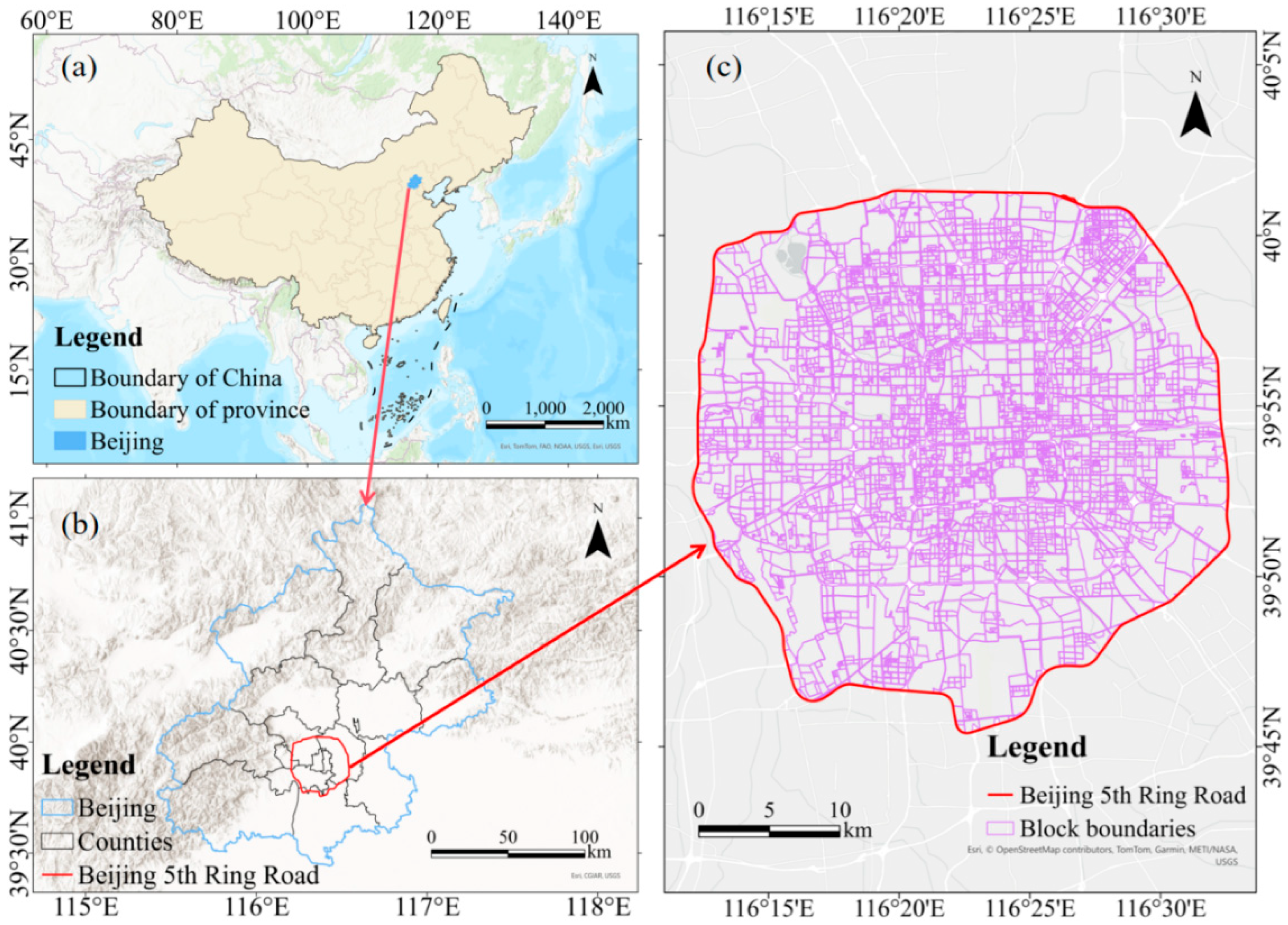
2. Study Area and Data
2.1. Study Area
2.2. Data Sources and Preprocessing
3. Methods
3.1. Research Framework
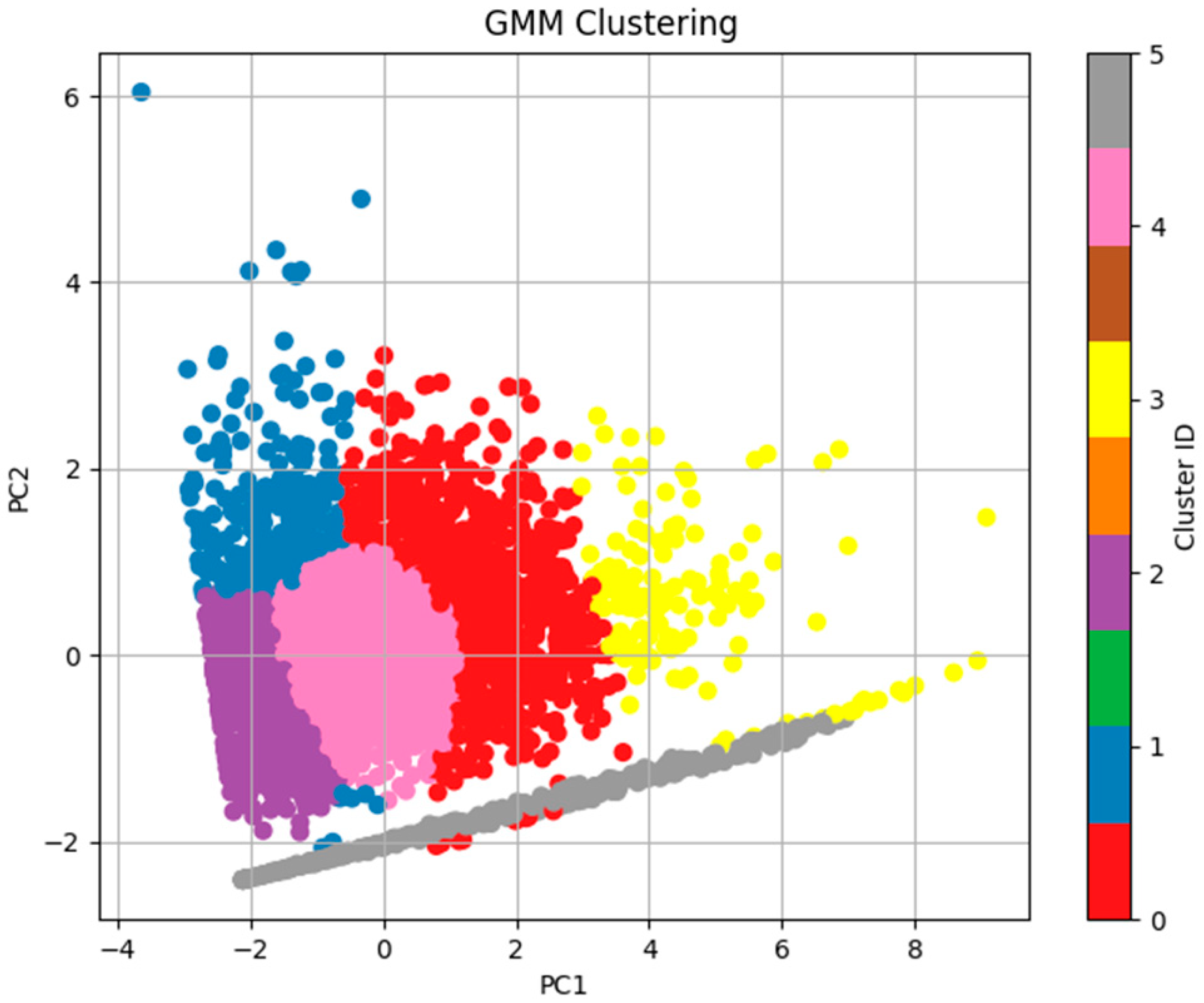
3.2. Flexible Zoning Approach Based on Unsupervised Clustering
3.3. Detections of Hotspots and Coldspots
3.4. Analysis of Multifactorial Drivers of LST
3.4.1. Potential LST Driving Factors of Four Hierarchies
3.4.2. Bayesian-Optimized XGBoost-SHAP Model
4. Results
4.1. Block-Scale Multidimensional Canopy Morphology Characteristics
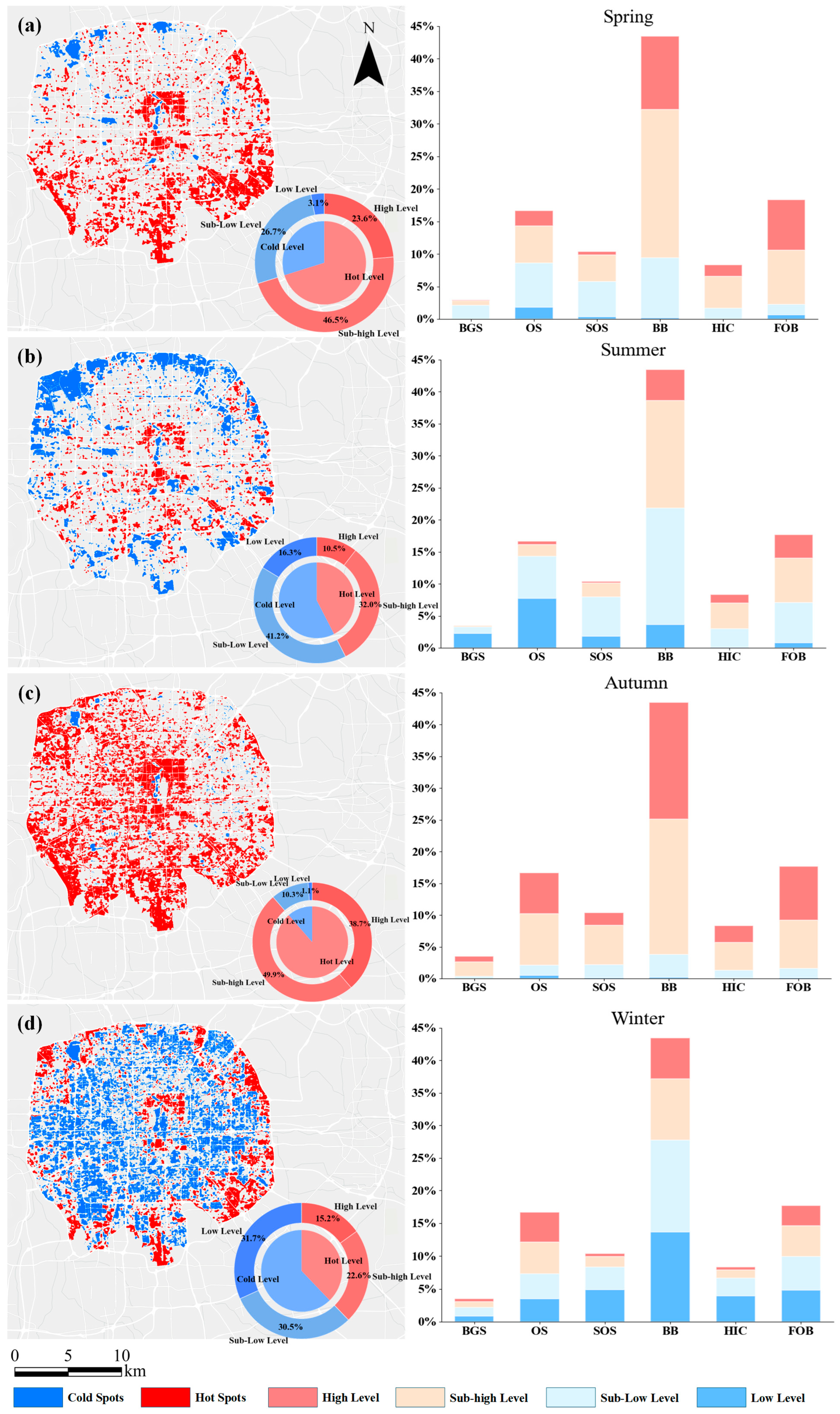
4.2. Spatiotemporal LST Patterns in CMBs
4.2.1. Seasonal LST Variations
4.2.2. Varied Responses of LSTs to CMBs
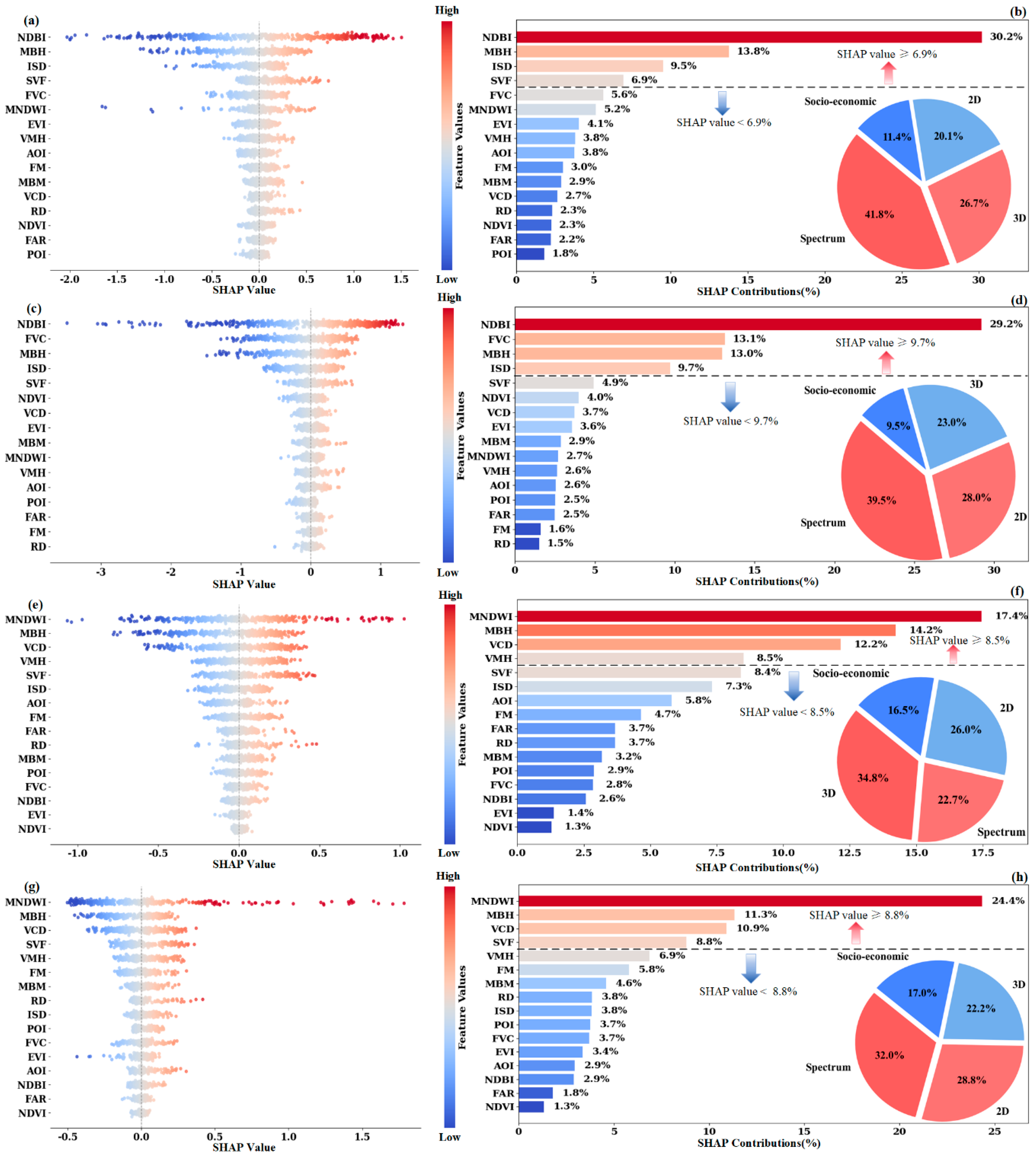
4.3. Block-Scale LST Driving Forces Across Different Seasons
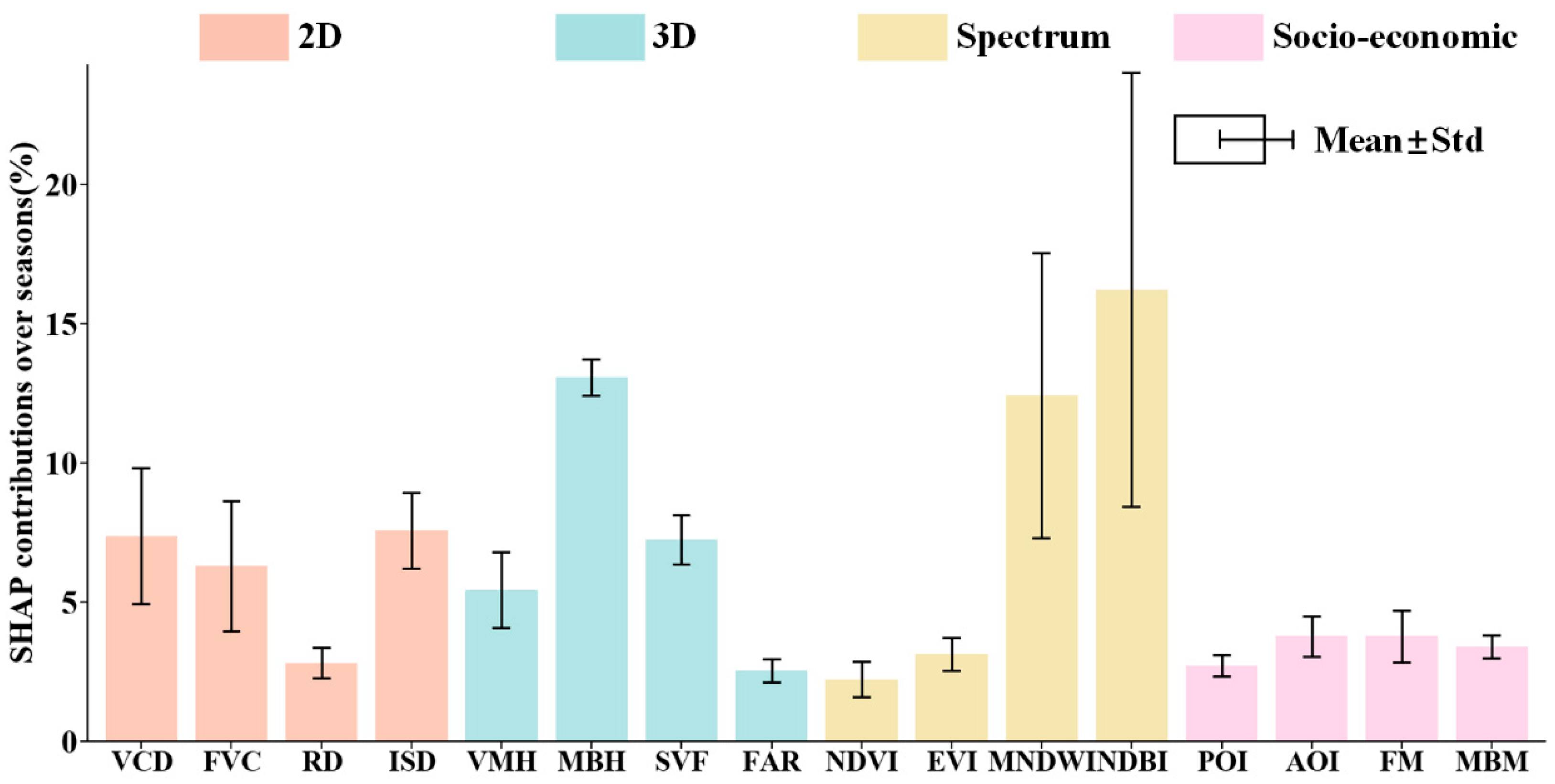
4.3.1. The Relative Contribution Rank of 16 Factors
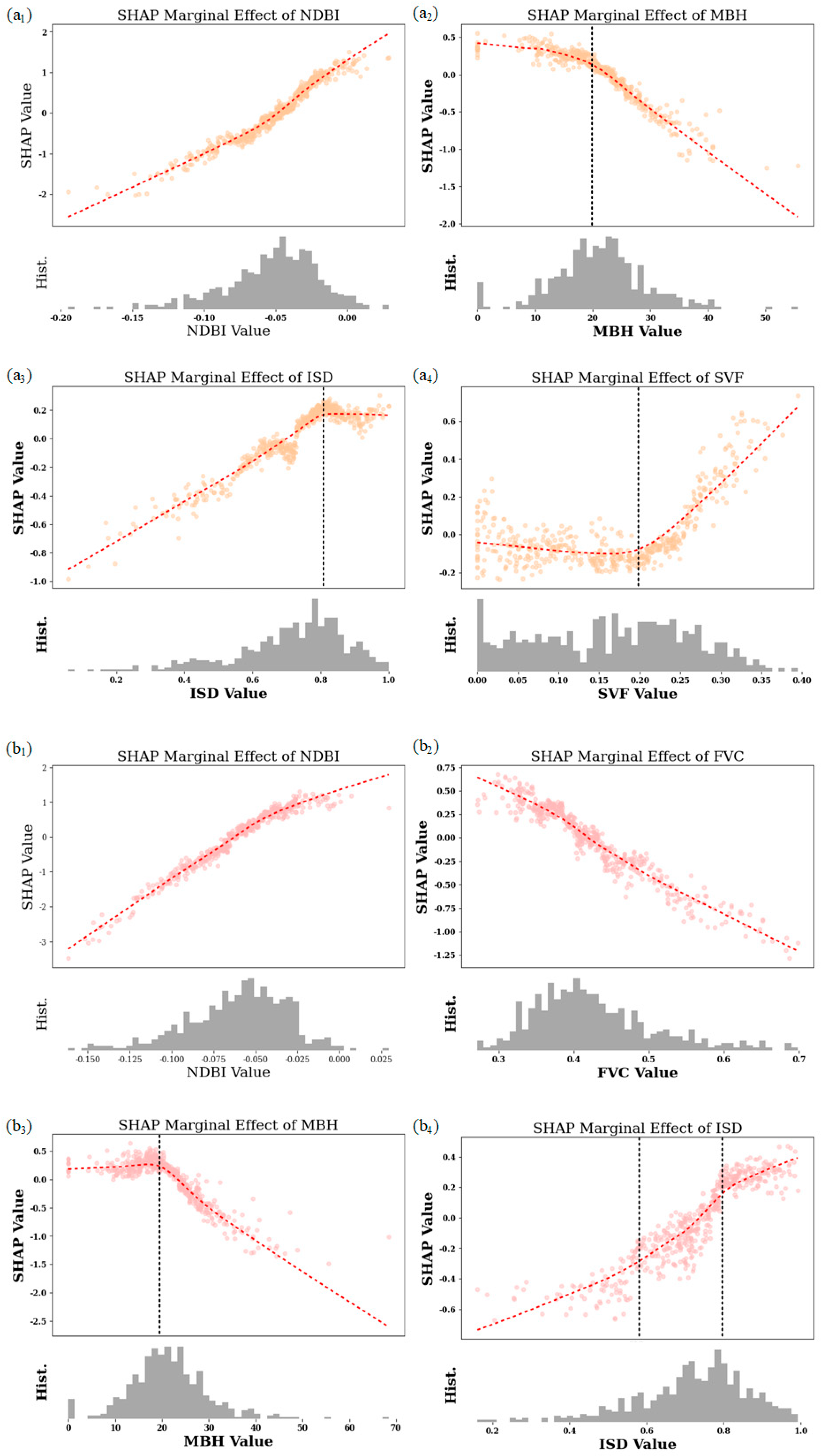
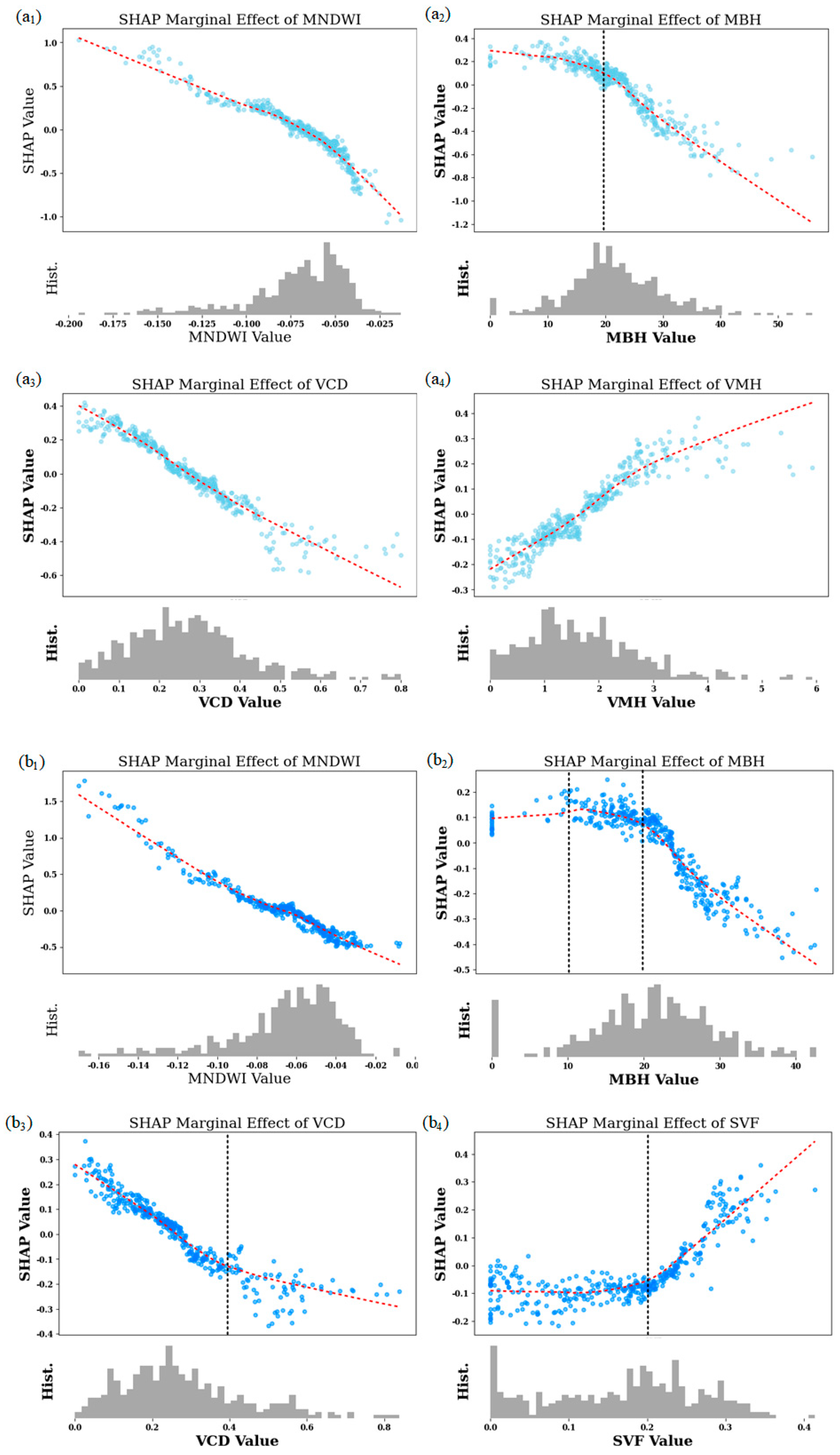
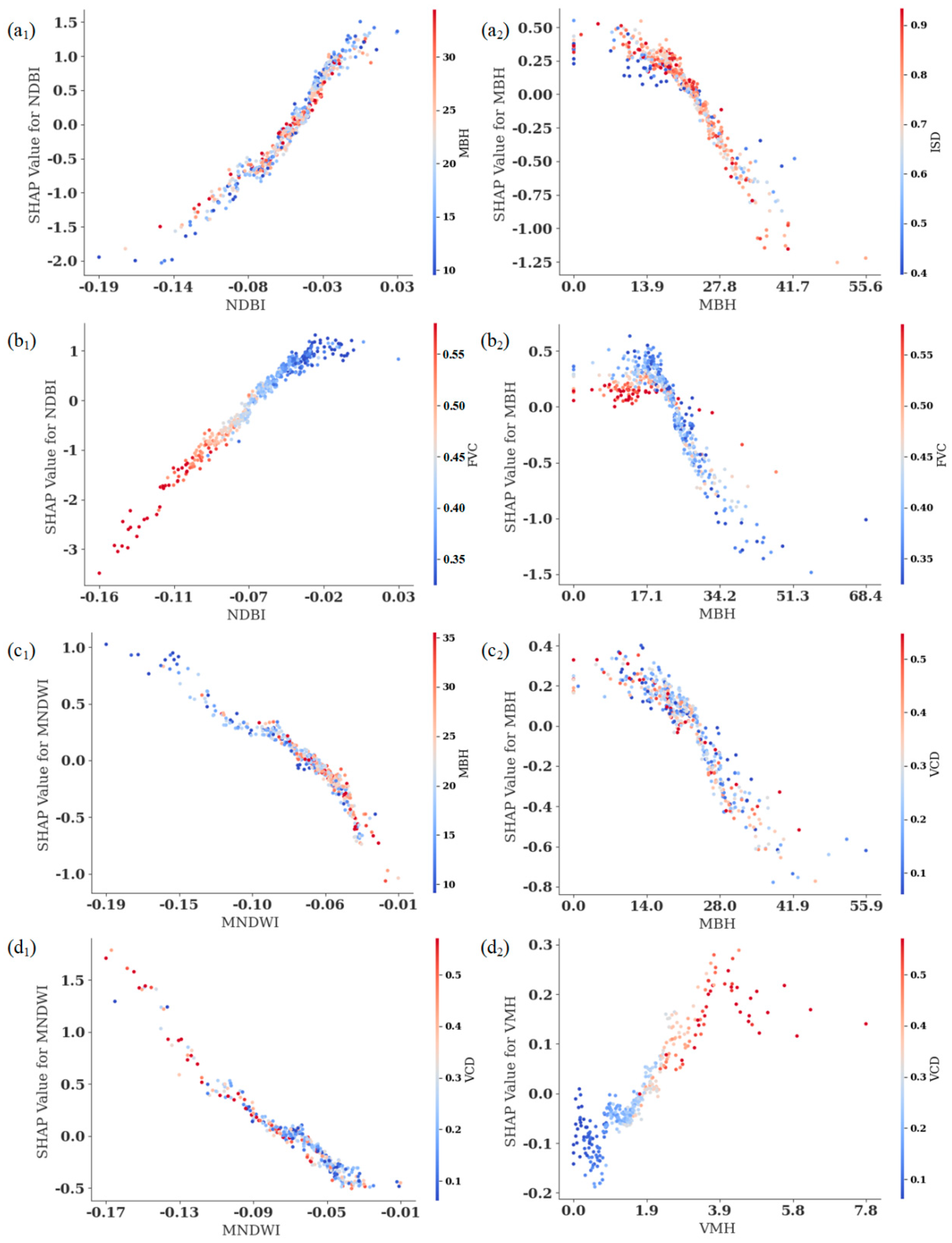
4.3.2. The Marginal Effects of Dominant Driving Factors
4.3.3. Interaction Effect Analysis
5. Discussion
5.1. Seasonal Effect of Block-Scale LST Driving Mechanisms
5.2. Potential Applications of CMB Zoning Scheme
5.3. Implications for Urban Planning
5.4. Limitations and Future Prospects
6. Conclusions
Author Contributions
Funding
Data Availability Statement
Acknowledgments
Conflicts of Interest
Abbreviations
| CMB | Composite morphological block |
| LST | Land surface temperature |
| BH | Building height |
| NDBI | Normalized difference built-up index |
| SDG 11 | Sustainable Development Goal 11 |
| UHI | Urban heat island |
| UCL | Urban canopy layer |
| RS | Rmote sensing |
| AT | Air temperature |
| LCZ | Local climate zone |
| 2D | Two-dimensional |
| 3D | Three-dimensional |
| RMSE | Root mean square error |
| OSM | OpenStreetMap |
| GADM | Global Administrative Areas |
| GEE | Google Earth Engine |
| OLI | Operational Land Imager |
| VCD | Vegetation canopy density |
| VMH | Vegetation mean height |
| FAR | Floor area ratio |
| MBH | Mean building height |
| SVF | Sky view factor |
| FM | Functional mix |
| MBM | Mean building mass |
| ISD | Impervious surface density |
| RD | Road density |
| NDVI | Normalized difference vegetation index |
| MNDWI | Modified normalized difference water index |
| EVI | Enhanced vegetation index |
| FVC | Fractional vegetation cover |
| SOS | Semi-open Space |
| HIC | High-rise impervious core |
| FOB | Function-oriented Blocks |
| BGS | Blue-Green space |
| BB | Balanced Built–Green Blocks |
| OS | Open Space |
| DI | Distribution index |
| MAE | Mean absolute error |
| MRT | Mean radiant temperature |
| UTCI | Universal thermal climate index |
| PET | Physiologically equivalent temperature |
Appendix A
Appendix A.1. Data Source

| Data | Composition | Scale | Sources | Time (Day Month Year) | Apply | Related Factors |
|---|---|---|---|---|---|---|
| Vegetation canopy | Gaofen-7 stereo satellite data; On-site measurement data | 1 m | https://github.com/Jiahao-WW/3Dvegetation-mt2unetplus (accessed on 4 August 2025) | 1 January 2021 | Calculation of average vegetation height in blocks | Vegetation canopy density (VCD), vegetation mean height (VMH) |
| Building data | Google Earth image; POI | 1 m | https://doi.org/10.6084/m9.figshare.27992417.v2 (accessed on 4 August 2025) | 1 January 2022 | Calculation of average building heights in blocks | Floor area ratio (FAR), mean building height (MBH), sky view factor (SVF), functional mix (FM), mean building mass (MBM) |
| Impervious surface data | Vegetation canopy data; water distribution data | 1 m | https://www.openstreetmap.org (accessed on 4 August 2025) | 1 January 2021 | Impervious surface density calculation | Impervious surface density (ISD) |
| Block parcel data | Road data; administrative area data | 1 m | https://figshare.com/articles/dataset/MSDCW_Dataset_and_Code/26021314 (accessed on 4 August 2025) | 1 January 2021 | Complex morphological block clustering | Road density (RD) |
| Land surface temperature | Landsat 8 TIRS | 30 m | https://developers.google.com/earth-engine/datasets/catalog/LANDSAT_LC08_C02_T1_L2 (accessed on 4 August 2025) | 2 May 2021 6 August 2021 26 November 2021 10 January 2022 | Spatial and temporal variations of thermal conditions within blocks | LST |
| Spectral image | Landsat 8 OLI | 30 m | https://developers.google.com/earth-engine/datasets/catalog/LANDSAT_LC08_C02_T1_L2 (accessed on 4 August 2025) | 2 May 2021 6 August 2021 26 November 2021 10 January 2022 | Calculation of spectral factors | Normalized difference vegetation index (NDVI), normalized difference built-up index (NDBI), modified normalized difference water index (MNDWI), enhanced vegetation index (EVI), fractional vegetation cover (FVC) |
| AOI; POI | OSM map | 1 m | https://www.openstreetmap.org (accessed on 4 August 2025) | 1 January 2021 | Calculation of urban functional factors | AOI, POI |
| Level | Factors | Computing Equation |
|---|---|---|
| Spectral | NDVI | |
| EVI | ||
| NDBI | ||
| MNDWI | ||
| Two- dimensional (2D) | VCD | |
| FVC | ||
| RD | is total length of road; S is standard block area | |
| ISD | where A denotes impervious surface area and Var(X) and Var(Y) represent variances in the X-coordinate and Y-coordinate directions, respectively | |
| Three- dimensional (3D) | VMH | |
| FAR | and are the total building and site area respectively | |
| MBH | ||
| SVF | is the area of sky obscured by obstacles is the total area of the hemispherical sky | |
| Urban functional characteristics | POI | : Number of points in the region : Area of the region |
| AOI | : Proportion of area occupied by the i: Land use type in block : Number of land use types | |
| FM | : Proportion of i-th land use type in the block : Total number of land use types | |
| MBM | : Total count of buildings within the buffer zone surrounding each building centroid : Total count in viewpoint m in year y : Type of building disorder : Score (0 or 1, indicating presence or absence) of the n-th streetscape image in viewpoint m for disorder type k in year y : Total disorder score for all streetscape viewpoints in buffer zone of building for disorder type in year y |
Appendix A.2. Model Validation Metrics
| Season | RMSE | MAE | SHAP Variance Values | SHAP Ranking Stability |
|---|---|---|---|---|
| Spring | 1.13 | 0.86 | 0.554 | 0.999 |
| Summer | 1.13 | 0.89 | 0.6977 | 0.996 |
| Autumn | 0.95 | 0.63 | 0.3462 | 0.997 |
| Winter | 0.63 | 0.50 | 0.5017 | 0.997 |
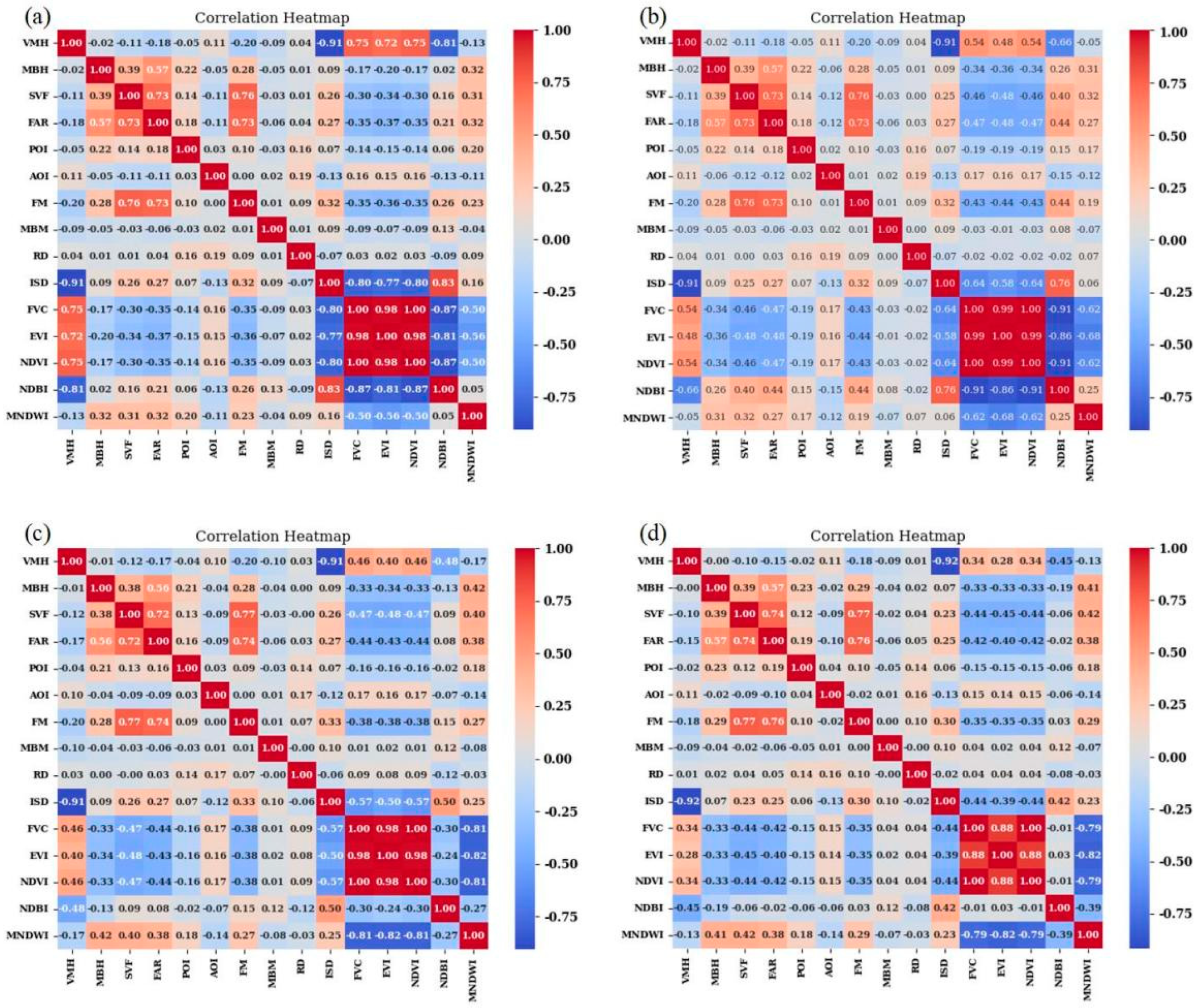
Appendix A.3. Autocorrelation Between Potential Driving Factors

Appendix A.4. Other Metrics or Methods
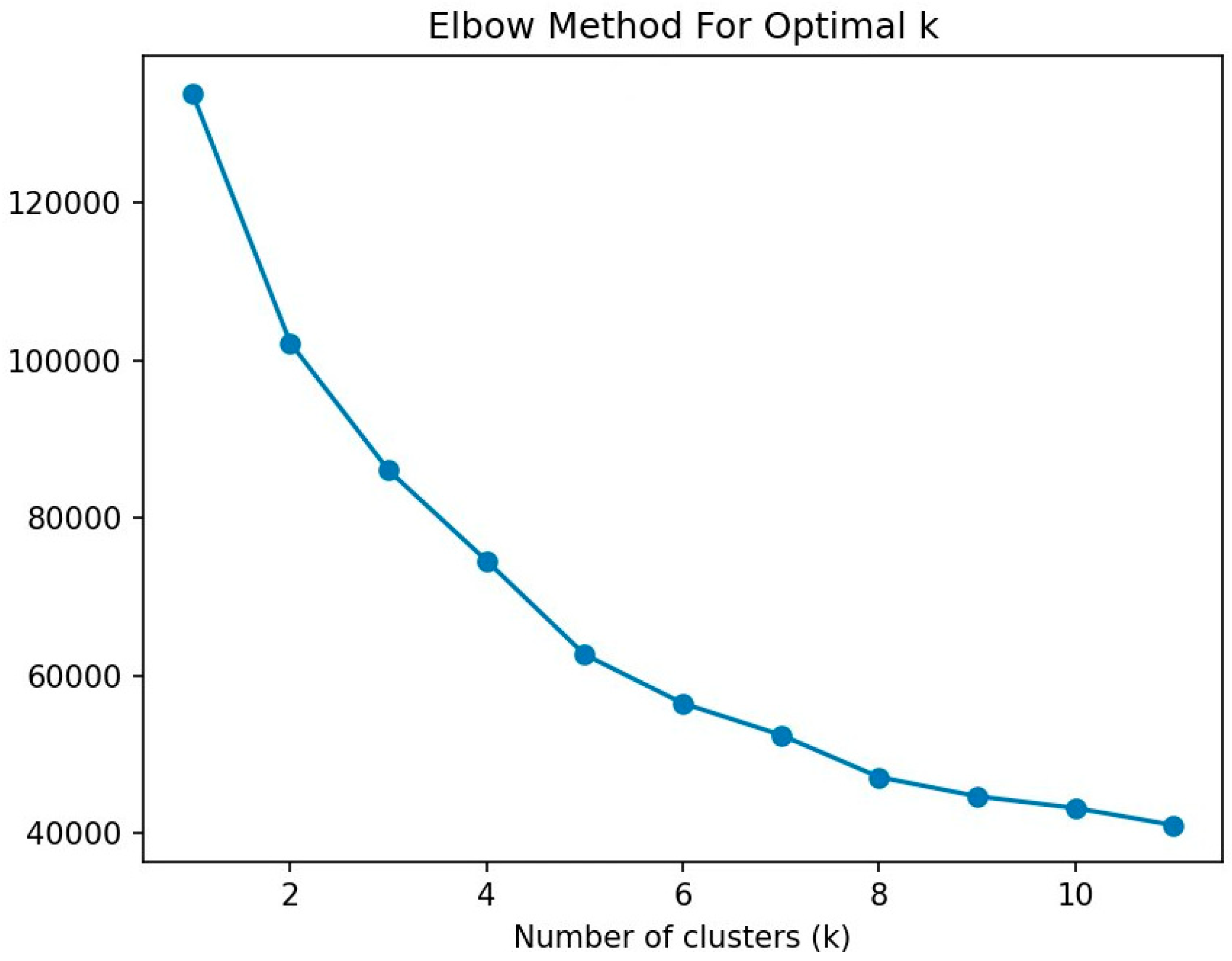
| K | Silhouette Score | Calinski–Harabasz |
|---|---|---|
| 4 | 0.27 | 2316.83 |
| 5 | 0.30 | 2335.92 |
| 6 | 0.31 | 2271.61 |
| 7 | 0.30 | 2200.81 |
| 8 | 0.30 | 2140.71 |
| 9 | 0.29 | 2051.10 |


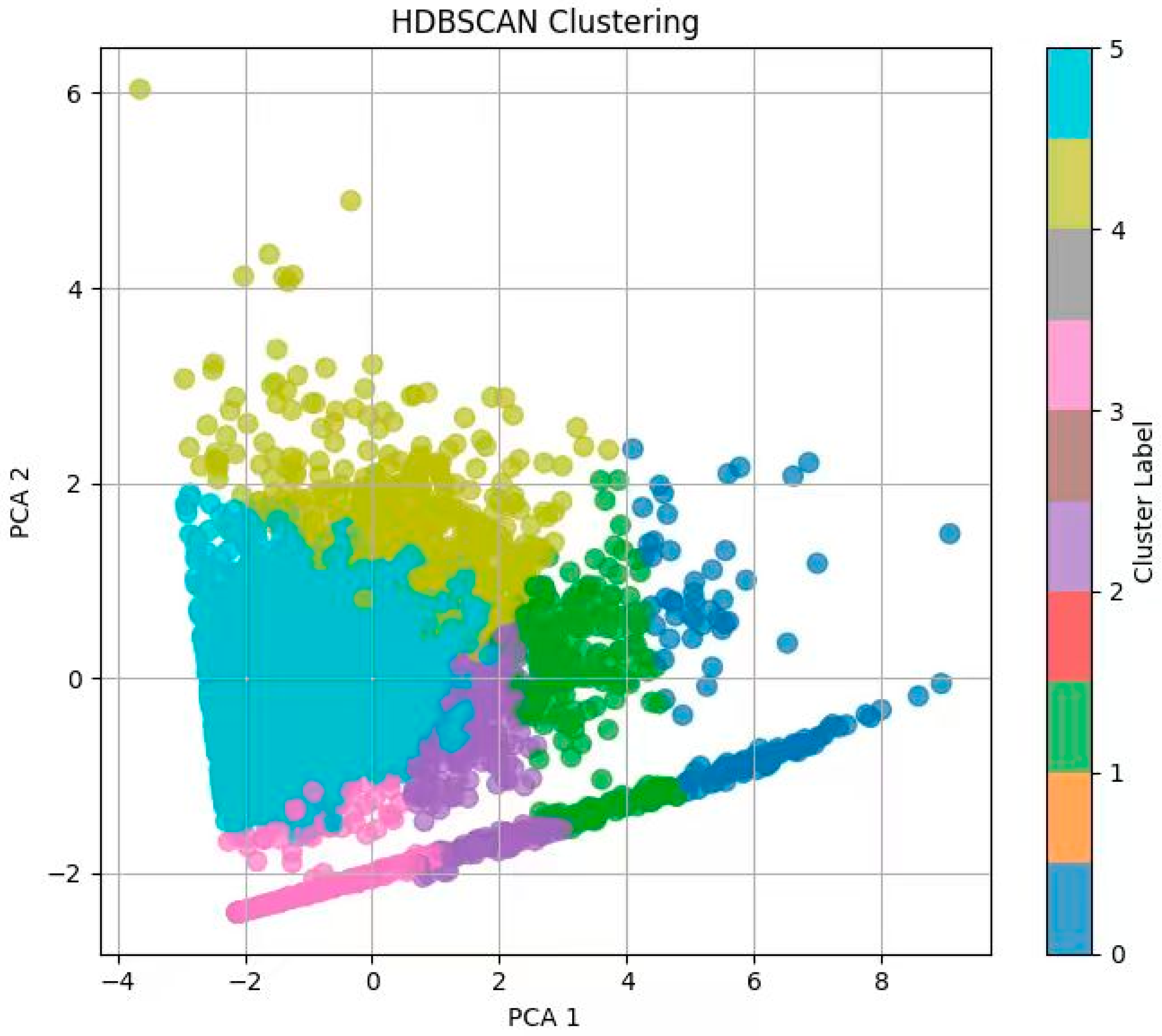
| Method | Principle | Silhouette Score | Calinski–Harabasz Index | Advantages |
|---|---|---|---|---|
| H D B S C A N | HDBSCAN is a hierarchical extension of DBSCAN, combining the principles of density-based clustering and hierarchical clustering. Its core lies in representing the clustering structure of data through a density hierarchy tree. | 0.05 | 459.22 | 1. HDBSCAN is a density-based hierarchical clustering algorithm capable of automatically determining the number of clusters without requiring prior specification of cluster size or reliance on alternative methods to assess potential cluster counts. 2. The HDBSCAN algorithm is capable of handling datasets with significant variations in density distribution. 3. Provides an automated cluster extraction mechanism, eliminating the need for manual parameter adjustment or observation of the reachability map. 4. With fewer parameter dependencies, HDBSCAN requires only one primary parameter: MinClusterSize. |
| G M M | GMM posits that data is generated by a mixture of Gaussian distributions (normal distributions), with each Gaussian distribution corresponding to a cluster. Unlike K-means, GMM is a probabilistic model where the probability of each point belonging to each cluster can be calculated, rather than being rigidly assigned to a single cluster. | 0.25 | 1492.12 | 1. Supports soft clustering (outputting probabilities), yielding more flexible results. 2. Capable of capturing complex nonspherical distributions, offering broader applicability. 3. Model parameters may be selected objectively using metrics such as AIC/BIC. |
Appendix A.5. Model Validation Parameters
| Parameter | Description | Effect | Typical Value Range |
|---|---|---|---|
| max_depth | Maximum depth of a tree | Control the complexity of the model; deeper trees can capture more feature interactions but are prone to overfitting. | [3, 10] |
| n_estimators | Number of trees in the integration | Determines the model’s learning ability and training time; excessive amounts may lead to overfitting. | [50, 1000] |
| learning_rate | Learning rate/shrinkage factor | Control the contribution of each tree to the final prediction. Smaller values require more trees but may yield better generalization. | [0.01, 0.3] |
| subsample | Subsampling ratio of training instances | Randomly select a portion of the data to train each tree, preventing overfitting. | [0.5, 1.0] |
| reg_alpha | L1 regularization term | Control model complexity to aid feature selection. | [0, 1] |
| min_child_weight | Minimum instance weight required for child nodes | Control tree splitting; larger values make the model more conservative. | [1, 20] |
| colsample_bynode | Feature sampling ratio during node splitting | Increase randomness to prevent overfitting. | [0.5, 1.0] |
Appendix A.6. CMB Category
| CMB | Core Features | Aerial Imagery |
|---|---|---|
| BB | The distribution of buildings and vegetation is relatively uniform. Among the three artificial categories, this type has the lowest impervious surface density and the highest vegetation density and height, while building height is moderate. | 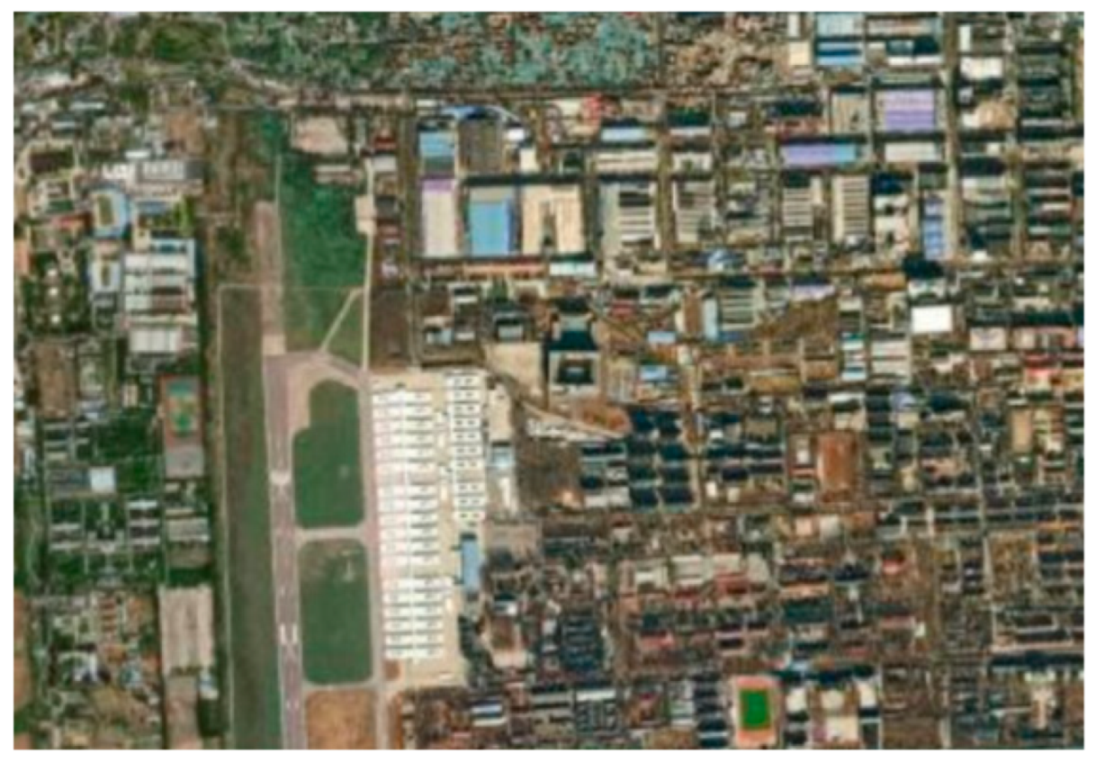 |
| BGS | Vegetation features are clearly visible. Among the three natural types, building height is moderate, vegetation height and density are the highest, and impervious surface density is the lowest. |  |
| FOB | This category is characterized by significant human activity and a high degree of impervious surfaces. Among the three artificial categories, impervious surface density is the highest, while building height, vegetation density, and vegetation height are the lowest. |  |
| HIC | Buildings in this category are tall and densely concentrated. Among the three artificial categories, impervious surface density, vegetation density, and vegetation height are intermediate, while building height is the highest. |  |
| OS | Green space is widely distributed. Among the three natural types, building and vegetation height are the lowest, while vegetation and impervious surface density are intermediate. | 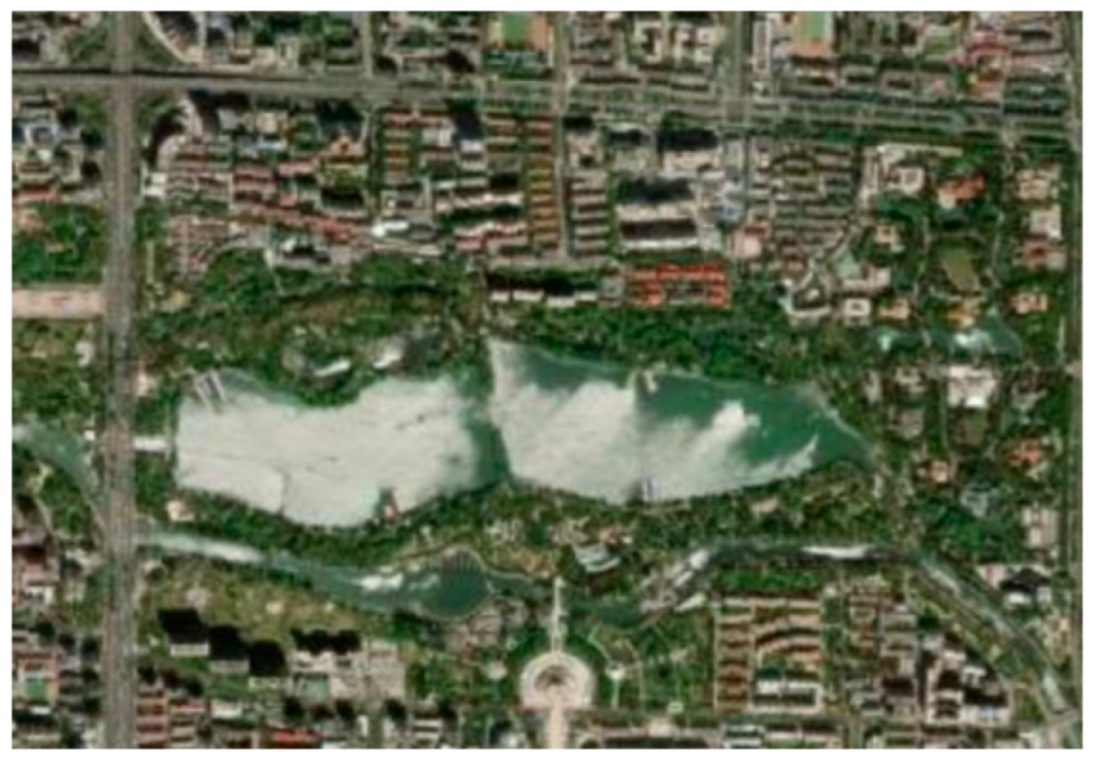 |
| SOS | Mixed-use green spaces within high-rise buildings. Among the three natural types, building height and impervious surface density are the highest and vegetation height is intermediate; vegetation density is the lowest. |  |
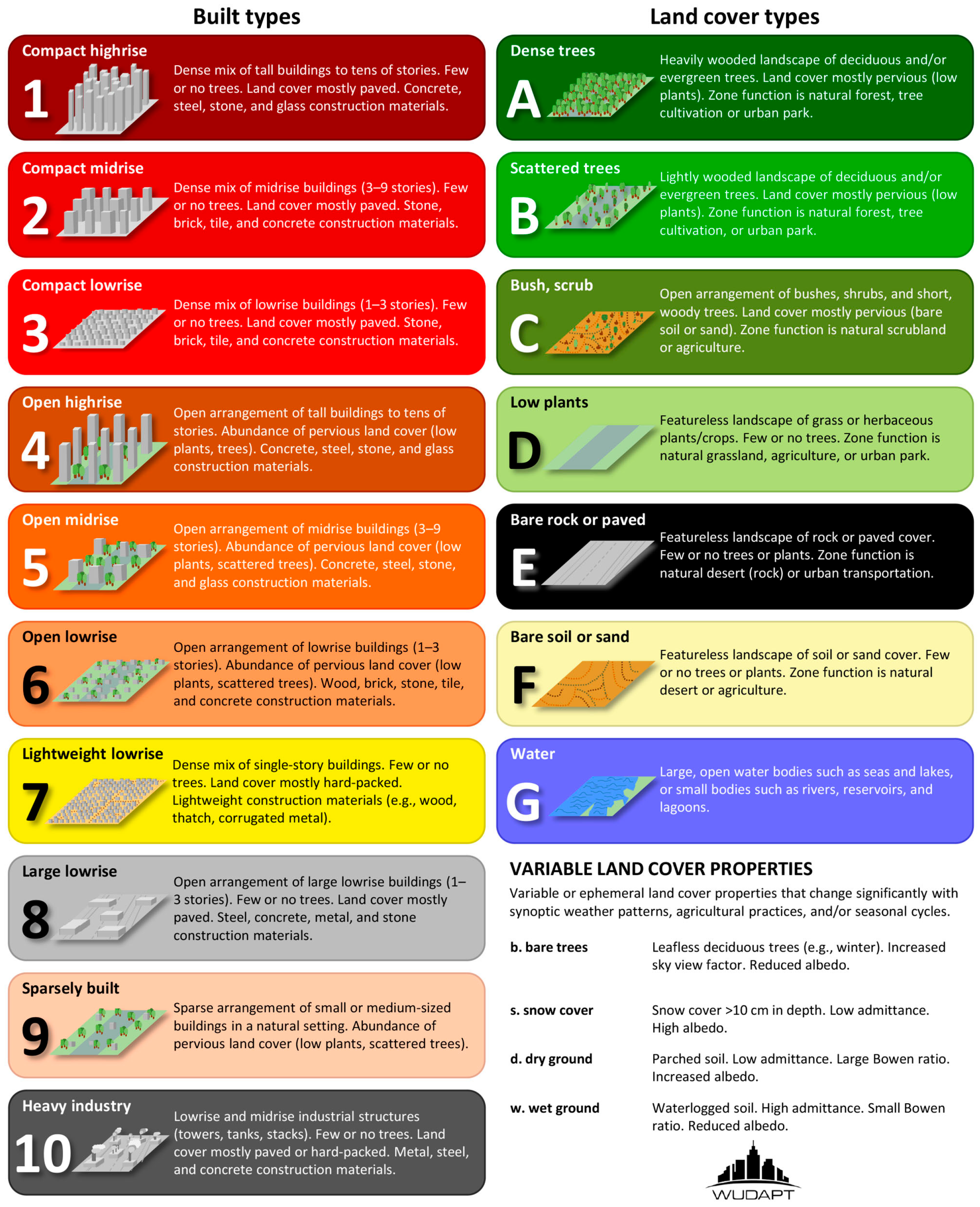
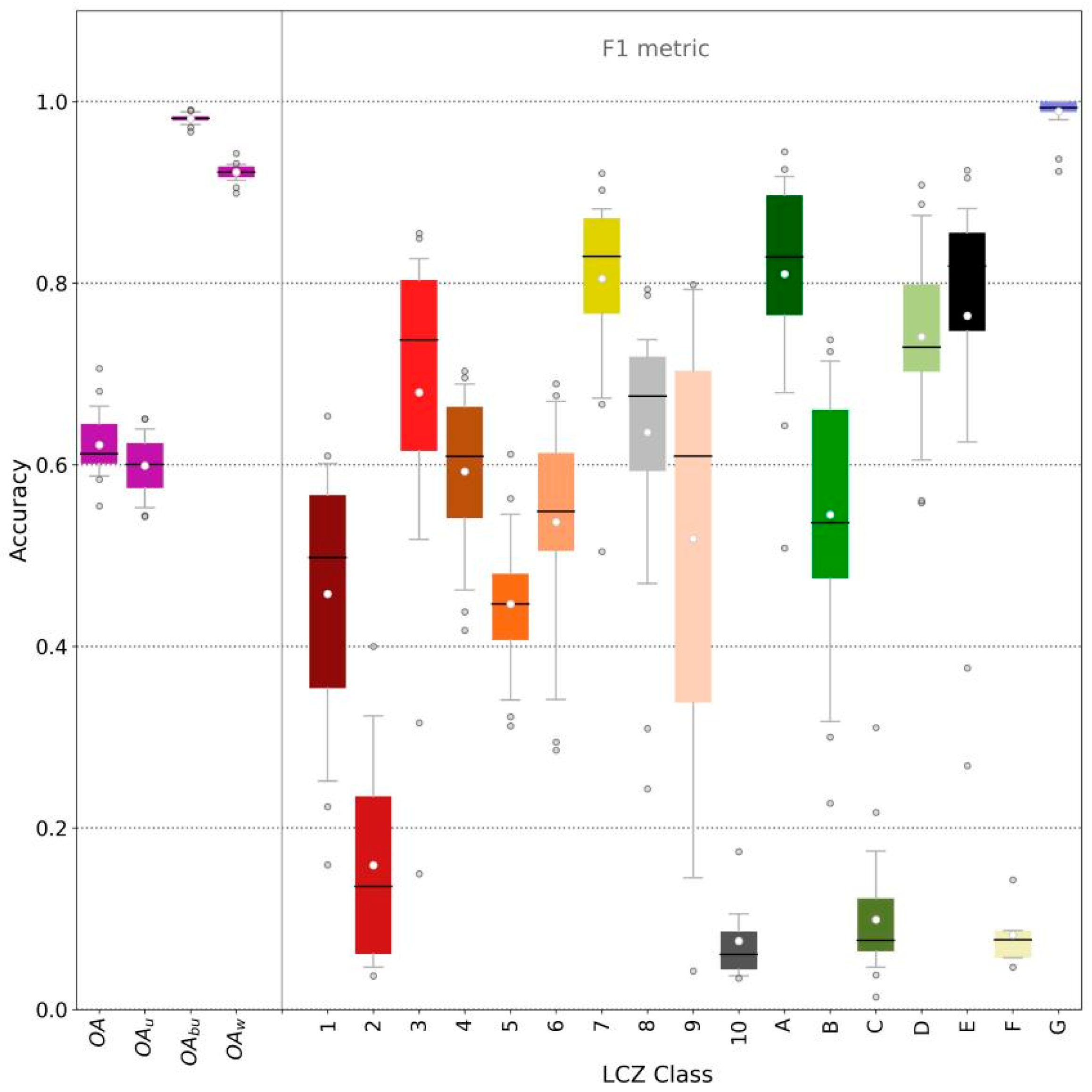
Appendix A.7. Local Climate Zones (LCZs)
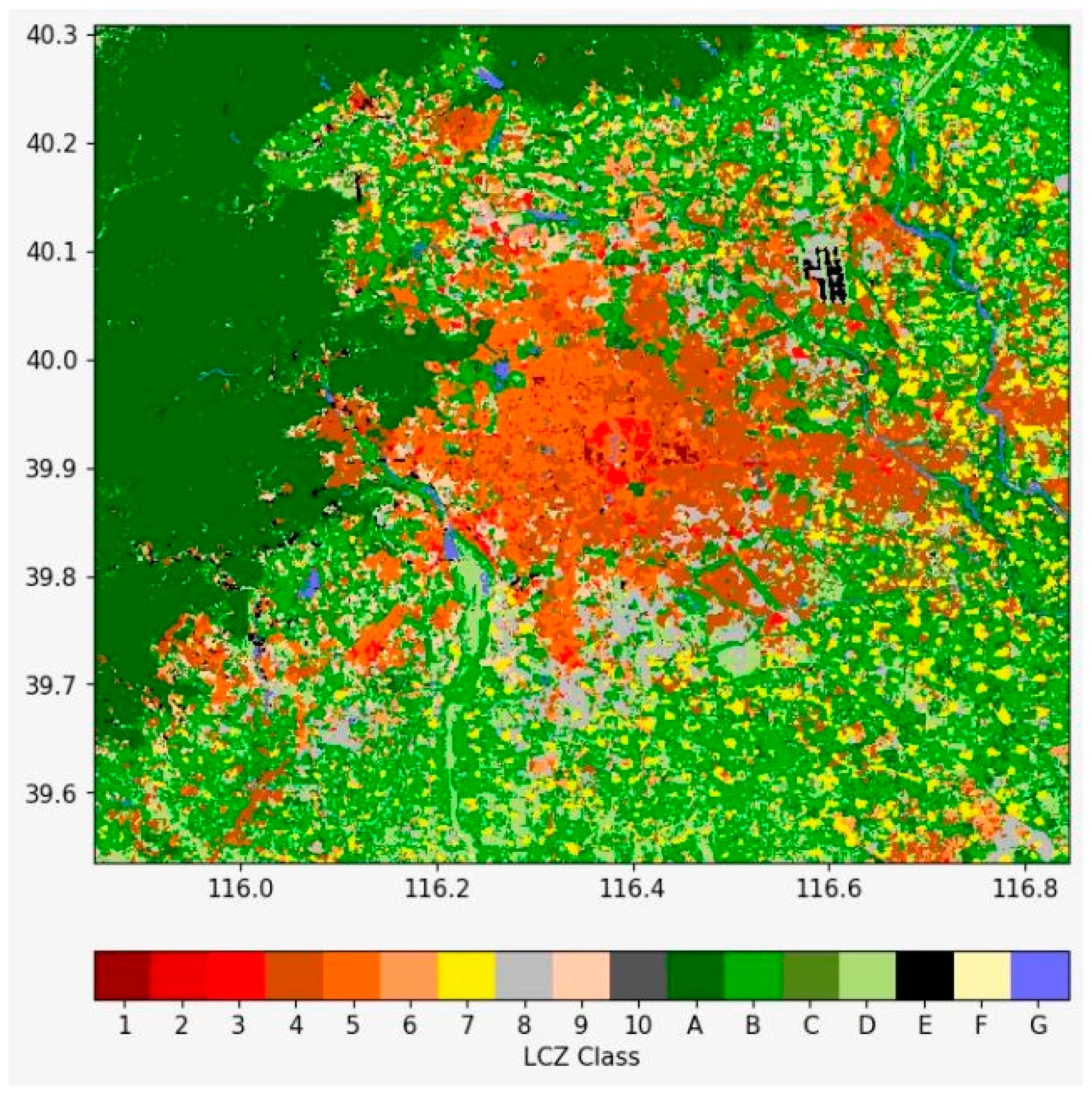

| LCZ Class | Count | Avg. Area (km2) | Total Area (km2) | Perimeter (km) | Shape | Vertices |
|---|---|---|---|---|---|---|
| 1 | 15 | 0.35 | 5.21 | 2.57 | 1.79 | 8.87 |
| 2 | 6 | 0.28 | 1.67 | 2.54 | 1.85 | 10.67 |
| 3 | 13 | 0.53 | 6.88 | 3.09 | 1.59 | 9.00 |
| 4 | 35 | 0.96 | 33.69 | 4.28 | 1.81 | 10.00 |
| 5 | 21 | 1.06 | 22.28 | 4.35 | 1.61 | 9.90 |
| 6 | 22 | 0.53 | 11.73 | 3.08 | 1.50 | 7.64 |
| 7 | 23 | 0.47 | 10.87 | 2.99 | 1.57 | 9.91 |
| 8 | 10 | 0.74 | 7.42 | 3.65 | 1.62 | 9.10 |
| 9 | 5 | 0.64 | 3.18 | 3.53 | 1.62 | 10.80 |
| 10 | 5 | 0.43 | 2.16 | 2.60 | 1.47 | 6.00 |
| 11 | 18 | 1.10 | 19.79 | 3.23 | 1.71 | 13.39 |
| 12 | 14 | 0.48 | 6.66 | 2.66 | 1.55 | 7.86 |
| 13 | 11 | 0.23 | 2.54 | 2.11 | 1.86 | 11.55 |
| 14 | 28 | 0.27 | 7.68 | 2.25 | 1.66 | 8.71 |
| 15 | 19 | 0.28 | 5.26 | 3.01 | 4.04 | 12.74 |
| 16 | 6 | 0.09 | 0.56 | 1.31 | 1.60 | 9.83 |
| 17 | 21 | 0.21 | 4.31 | 1.81 | 1.52 | 6.33 |

Appendix A.8. Results of the Elbow Rule

References
- Deepthi, S.; Sudalaimani, K.; Radhakrishnan, S. Evaluating urban heat island to achieve sustainable development goals: A case study of Tiruchirappalli city, India. Sustain. Cities Soc. 2024, 116, 105865. [Google Scholar] [CrossRef]
- Guo, X.; Du, H.; Zhan, W.; Ji, Y.; Wang, C.; Wang, C.; Ge, S.; Wang, S.; Li, J.; Jiang, S.; et al. Global patterns and determinants of year-to-year variations in surface urban heat islands. ISPRS J. Photogramm. Remote Sens. 2025, 223, 399–412. [Google Scholar] [CrossRef]
- Bao, Y.; Li, Y.; Gu, J.; Shen, C.; Zhang, Y.; Deng, X.; Han, L.; Ran, J. Urban heat island impacts on mental health in middle-aged and older adults. Environ. Int. 2025, 199, 109470. [Google Scholar] [CrossRef]
- Oke, T.R.; Mills, G.; Christen, A.; Voogt, J.A. Urban Climates; Cambridge University Press: Cambridge, UK, 2017. [Google Scholar]
- Wang, M.; Wang, X.; Luan, Q.; Xu, X. A new perspective to assess urban heat islands by incorporating both canopy and boundary layer air temperature from the view of satellite remote sensing. Sustain. Cities Soc. 2025, 125, 106315. [Google Scholar] [CrossRef]
- Gao, Y.; Zhan, W.; Du, H.; Wang, C.; Wang, S.; Ji, Y.; Ge, S.; Wang, C.; Li, J. Comprehensive assessments of a diagnostic equation for estimating diurnally maximum canopy urban heat island intensity. Build. Environ. 2025, 271, 112618. [Google Scholar] [CrossRef]
- Liang, C.; Serge, A.; Zhang, X.; Wang, H.; Wang, W. Assessment of street forest characteristics in four African cities using google street view measurement: Potentials and implications. Environ. Res. 2023, 221, 115261. [Google Scholar] [CrossRef] [PubMed]
- Lai, J.; Zhan, W.; Quan, J.; Bechtel, B.; Wang, K.; Zhou, J.; Huang, F.; Chakraborty, T.; Liu, Z.; Lee, X. Statistical estimation of next-day nighttime surface urban heat islands. ISPRS J. Photogramm. Remote Sens. 2021, 176, 182–195. [Google Scholar] [CrossRef]
- Xu, Z.; Rui, J. The mitigating effect of green Space’s spatial and temporal patterns on the urban heat island in the context of urban densification: A case study of Xi’an. Sustain. Cities Soc. 2024, 117, 105974. [Google Scholar] [CrossRef]
- Mix, C.; Hunt, N.; Stuart, W.; Hossain, A.A.; Bishop, B.W. A Spatial Analysis of Urban Tree Canopy Using High-Resolution Land Cover Data for Chattanooga, Tennessee. Appl. Sci. 2024, 14, 4861. [Google Scholar] [CrossRef]
- Guo, F.; Sun, J.; Hu, D. Surface energy balance-based surface urban heat island decomposition at high resolution. Remote Sens. Environ. 2024, 315, 114447. [Google Scholar] [CrossRef]
- Yang, L.; Yang, X.; Zhang, H.; Ma, J.; Zhu, H.; Huang, X. Urban morphological regionalization based on 3D building blocks—A case in the central area of Chengdu, China. Comput. Environ. Urban Syst. 2022, 94, 101800. [Google Scholar] [CrossRef]
- Zhang, Z.; Luan, W.; Yang, J.; Guo, A.; Su, M.; Tian, C. The influences of 2D/3D urban morphology on land surface temperature at the block scale in Chinese megacities. Urban Clim. 2023, 49, 101553. [Google Scholar] [CrossRef]
- Wang, J.; Yang, J.; Xiao, X.; Bai, Y.; Zou, Q.; He, B. Assessing summer thermal environment in humid cities: Local climate zone perspective. iScience 2025, 28, 112758. [Google Scholar] [CrossRef] [PubMed]
- Wang, B.; Gao, M.; Li, Y.; Li, Z.; Liu, Z.; Zhang, X.; Wen, Y. Unraveling the effects of extreme heat conditions on urban heat environment: Insights from local climate zones and integrated temperature data. Sustain. Cities Soc. 2025, 122, 106254. [Google Scholar] [CrossRef]
- Deng, H.; Feng, J.; Liu, K.; Xiong, Y.; Cao, J. Local climate zone framework: Seasonal dynamics of surface urban heat island and its influencing factors in three Chinese urban agglomerations. GIScience Remote Sens. 2025, 62, 2490317. [Google Scholar] [CrossRef]
- Jing, Y.; Sun, R.; Chen, L. A Method for Identifying Urban Functional Zones Based on Landscape Types and Human Activities. Sustainability 2022, 14, 4130. [Google Scholar] [CrossRef]
- Qi, J.; Xiong, W.; Li, J.; Zheng, J.; Ye, Q.; Hu, M. Investigating non-linear and synergistic effects of urban functional zone morphology on land surface temperature. Sustain. Cities Soc. 2025, 130, 106546. [Google Scholar] [CrossRef]
- Cheng, H.; Cai, Y.; Zhang, D.; Luo, S.; Li, M.; Hu, Y.; Ma, S. Neighboring matters: Quantifying internal morphology and external spatial interactions on land surface temperature among urban functional zones. Sustain. Cities Soc. 2025, 131, 106689. [Google Scholar] [CrossRef]
- Wu, J.; Liu, C.; Wang, H. Analysis of Spatio-temporal patterns and related factors of thermal comfort in subtropical coastal cities based on local climate zones. Build. Environ. 2022, 207, 108568. [Google Scholar] [CrossRef]
- Luo, P.; Yu, B.; Li, P.; Liang, P.; Zhang, Q.; Yang, L. Understanding the relationship between 2D/3D variables and land surface temperature in plain and mountainous cities: Relative importance and interaction effects. Build. Environ. 2023, 245, 110959. [Google Scholar] [CrossRef]
- Wang, Z.; Zhou, R.; Yu, Y. The impact of urban morphology on land surface temperature under seasonal and diurnal variations: Marginal and interaction effects. Build. Environ. 2025, 272, 112673. [Google Scholar] [CrossRef]
- Rizwan, A.M.; Dennis, L.Y.; Chunho, L. A review on the generation, determination and mitigation of Urban Heat Island. J. Environ. Sci. 2008, 20, 120–128. [Google Scholar] [CrossRef] [PubMed]
- Liu, Y.; Huang, X.; Yang, Q.; Jing, W.; Yang, J. Effects of landscape on thermal livability at the community scale based on fine-grained geographic information: A case study of Shenzhen. Sci. Total. Environ. 2023, 905, 167091. [Google Scholar] [CrossRef]
- Wang, K.; Du, J.; Li, C.; Li, M.; Chen, C.; Wang, Z.; Chen, J. Uncovering the coupling mechanisms among urban form, surface thermal environments and air pollution. Sustain. Cities Soc. 2025, 130, 106537. [Google Scholar] [CrossRef]
- Lin, L.; Zhao, Y.; Zhao, J.; Wang, D. Comprehensively assessing seasonal variations in the impact of urban greenspace morphology on urban heat island effects: A multidimensional analysis. Sustain. Cities Soc. 2025, 118, 106014. [Google Scholar] [CrossRef]
- Jia, J.; Jing, Z.; Wang, L.; Yao, Y.; Zhai, Y.; Li, R.; Chang, B.; Lee, S.; Brown, R.D.; Ren, Z. Unraveling the 3D structure of urban green spaces: Key drivers of cooling effects across urban heat scenarios. Environ. Impact Assess. Rev. 2026, 120, 108409. [Google Scholar] [CrossRef]
- Ma, W.; Yu, Z.; Chen, J.; Yang, W.; Zhang, Y.; Hu, Y.; Shao, M.; Hu, J.; Zhang, Y.; Zhang, H.; et al. What drives the cooling dynamics of urban vegetation via evapotranspiration and shading under extreme heat? Sustain. Cities Soc. 2025, 130, 106659. [Google Scholar] [CrossRef]
- Wang, X.; Rahman, M.A.; Mokroš, M.; Rötzer, T.; Pattnaik, N.; Pang, Y.; Zhang, Y.; Da, L.; Song, K. The influence of vertical canopy structure on the cooling and humidifying urban microclimate during hot summer days. Landsc. Urban Plan. 2023, 238, 104841. [Google Scholar] [CrossRef]
- Mun, D.; Kang, G.; Yang, M.; Kim, J. How trees’ drag and cooling effects influence airflow and temperature distributions around a street canyon. Build. Environ. 2024, 264, 111913. [Google Scholar] [CrossRef]
- Li, H.; Zhao, Y.; Wang, C.; Ürge-Vorsatz, D.; Carmeliet, J.; Bardhan, R. Cooling efficacy of trees across cities is determined by background climate, urban morphology, and tree trait. Commun. Earth Environ. 2024, 5, 1–14. [Google Scholar] [CrossRef]
- Peng, M.; Huang, H. The Synergistic Effect of Urban Canyon Geometries and Greenery on Outdoor Thermal Comfort in Humid Subtropical Climates. Front. Environ. Sci. 2022, 10, 851810. [Google Scholar] [CrossRef]
- Chen, Y.; Ma, W.; Shao, Y.; Wang, N.; Yu, Z.; Li, H.; Hu, Q. The impacts and thresholds detection of 2D/3D urban morphology on the heat island effects at the functional zone in megacity during heatwave event. Sustain. Cities Soc. 2024, 118, 106002. [Google Scholar] [CrossRef]
- Wang, A.; Dai, Y.; Zhang, M.; Chen, E. Exploring the cooling intensity of green cover on urban heat island: A case study of nine main urban districts in Chongqing. Sustain. Cities Soc. 2025, 124, 106299. [Google Scholar] [CrossRef]
- Chen, J.; Jin, S.; Du, P. Roles of horizontal and vertical tree canopy structure in mitigating daytime and nighttime urban heat island effects. Int. J. Appl. Earth Obs. Geoinf. 2020, 89, 102060. [Google Scholar] [CrossRef]
- Liu, J.; Zhang, S.; Yin, L.; Li, B.; Zhang, B. Exploring the relationship between seasonal variations of land surface temperature and urban morphological factors in complex urban areas. Environ. Sci. Pollut. Res. 2023, 30, 59861–59876. [Google Scholar] [CrossRef] [PubMed]
- Yao, X.; Zeng, X.; Zhu, Z.; Lan, Y.; Shen, Y.; Liu, Q.; Yang, F. Exploring the diurnal variations of the driving factors affecting block-based LST in a “Furnace city” using ECOSTRESS thermal imaging. Sustain. Cities Soc. 2023, 98, 104841. [Google Scholar] [CrossRef]
- Wang, L.; Hou, H.; Weng, J. Ordinary least squares modelling of urban heat island intensity based on landscape composition and configuration: A comparative study among three megacities along the Yangtze River. Sustain. Cities Soc. 2020, 62, 102381. [Google Scholar] [CrossRef]
- Zhang, Q.; Wu, Z.; Yu, H.; Zhu, X.; Shen, Z. Variable Urbanization Warming Effects across Metropolitans of China and Relevant Driving Factors. Remote Sens. 2020, 12, 1500. [Google Scholar] [CrossRef]
- Li, L.; Zha, Y.; Zhang, J. Spatially non-stationary effect of underlying driving factors on surface urban heat islands in global major cities. Int. J. Appl. Earth Obs. Geoinf. 2020, 90, 102131. [Google Scholar] [CrossRef]
- Wu, Z.; Yao, L.; Ren, Y. Characterizing the spatial heterogeneity and controlling factors of land surface temperature clusters: A case study in Beijing. Build. Environ. 2020, 169, 106598. [Google Scholar] [CrossRef]
- Zang, Y.; Huang, G.; Liu, W.; Chen, L.; Wu, D.; Wang, C.; Li, J. DEEPURBANMODELLER (DUM): A PROCESS-INFORMED NEURAL ARCHITECTURE FOR HIGH-PRECISION URBAN SURFACE TEMPERATURE PREDICTION. ISPRS Int. Arch. Photogramm. Remote Sens. Spat. Inf. Sci. 2023, XLVIII-1/W, 71–76. [Google Scholar] [CrossRef]
- Wan, Y.; Du, H.; Yuan, L.; Xu, X.; Tang, H.; Zhang, J. Exploring the influence of block environmental characteristics on land surface temperature and its spatial heterogeneity for a high-density city. Sustain. Cities Soc. 2025, 118, 105973. [Google Scholar] [CrossRef]
- Chen, Y.; Yang, J.; Yu, W.; Ren, J.; Xiao, X.; Xia, J.C. Relationship between urban spatial form and seasonal land surface temperature under different grid scales. Sustain. Cities Soc. 2023, 89, 104374. [Google Scholar] [CrossRef]
- He, J.; Shi, Y.; Xu, L.; Lu, Z.; Feng, M.; Tang, J.; Guo, X. Exploring the scale effect of urban thermal environment through XGBoost model. Sustain. Cities Soc. 2024, 114, 105763. [Google Scholar] [CrossRef]
- Li, H.; Yang, J.; Xin, J.; Yu, W.; Ren, J.; Yu, H.; Xiao, X.; Xia, J. Investigating the effect of urban form on land surface temperature at block and grid scales based on XGBoost-SHAP. Environ. Model. Softw. 2026, 195, 106738. [Google Scholar] [CrossRef]
- Cheng, J.; Yang, D.; Qie, K.; Wang, J. Analysis of land surface temperature drivers in Beijing’s central urban area across multiple spatial scales: An explainable ensemble learning approach. Energy Build. 2025, 338, 115704. [Google Scholar] [CrossRef]
- Shin, H. XGBoost Regression of the Most Significant Photoplethysmogram Features for Assessing Vascular Aging. IEEE J. Biomed. Health Inform. 2022, 26, 3354–3361. [Google Scholar] [CrossRef] [PubMed]
- Ma, X.; Yang, J.; Zhang, R.; Yu, W.; Ren, J.; Xiao, X.; Xia, J. XGBoost-Based Analysis of the Relationship Between Urban 2-D/3-D Morphology and Seasonal Gradient Land Surface Temperature. IEEE J. Sel. Top. Appl. Earth Obs. Remote Sens. 2024, 17, 4109–4124. [Google Scholar] [CrossRef]
- Wu, J.; Meng, Q.; Gao, L.; Zhang, L.; Zhao, M.; Su, C. A deep learning framework for 3D vegetation extraction in complex urban environments. Int. J. Appl. Earth Obs. Geoinf. 2024, 129, 103798. [Google Scholar] [CrossRef]
- Zhang, Y.; Zhao, H.; Long, Y. CMAB: A Multi-Attribute Building Dataset of China. Sci. Data 2025, 12, 1–18. [Google Scholar] [CrossRef]
- Tang, J.; Xu, L.; Yu, H.; Jiang, H.; He, D.; Li, T.; Xiao, W.; Zheng, X.; Liu, K.; Li, Y.; et al. A dataset of multi-level street-block divisions of 985 cities worldwide. Sci. Data 2025, 12, 1–15. [Google Scholar] [CrossRef]
- Liu, Z.; Lai, J.; Zhan, W.; Bechtel, B.; Voogt, J.; Quan, J.; Hu, L.; Fu, P.; Huang, F.; Li, L.; et al. Urban Heat Islands Significantly Reduced by COVID-19 Lockdown. Geophys. Res. Lett. 2022, 49, e2021GL096842. [Google Scholar] [CrossRef]
- Wang, Y.-Q.; Li, J.-Y.; Liu, B.; Wang, F. [Spatial Heterogeneity of Carbon Emissions from Construction Projects Based on XGBoost-SHAP]. Environ. Sci. 2024, 46, 4090–4100. [Google Scholar] [CrossRef]
- Gao, Y.; Lin, T.; Zhang, Y.; Luo, S.; Nie, F. Robust principal component analysis based on discriminant information. IEEE Trans. Knowl. Data Eng. 2021, 35, 1991–2003. [Google Scholar]
- Gupta, M.K.; Chandra, P. An Empirical Evaluation of K-Means Clustering Algorithm Using Different Distance/Similarity Metrics. In Proceedings of ICETIT 2019: Emerging Trends in Information Technology, New Delhi, India, 21–22 June 2019; Springer: Berlin/Heidelberg, Germany, 2019; pp. 884–892. [Google Scholar]
- Ye, J.; Yao, X.; Shi, X.; Yang, F. Global vs. local heat patches: Toward a more comprehensive perspective on managing urban overheating—A Shanghai case study. Sustain. Cities Soc. 2025, 129, 106503. [Google Scholar] [CrossRef]
- Li, B.; Liu, K.; Wang, M.; Wang, Y.; Zhuang, L.; Zhu, W.; Li, C.; Zhang, L.; Chen, Y. Evaluating the performance of pixel-based and object-based multidimensional clustering algorithms for automated surface water mapping. Geo-Spat. Inf. Sci. 2025, 1–21. [Google Scholar] [CrossRef]
- Stewart, G.; Al-Khassaweneh, M. An Implementation of the HDBSCAN* Clustering Algorithm. Appl. Sci. 2022, 12, 2405. [Google Scholar] [CrossRef]
- Najar, F.; Bourouis, S.; Bouguila, N.; Belghith, S. A Comparison Between Different Gaussian-Based Mixture Models. In Proceedings of the 2017 IEEE/ACS 14th International Conference on Computer Systems and Applications (AICCSA), Hammamet, Tunisia, 30 October–3 November 2017; IEEE: New York, NY, USA, 2017; pp. 704–708. [Google Scholar]
- Liu, J.; Tian, Y.; Yang, Y.; Zhang, T.; Deng, Y.; Chen, W.; Yin, L.; Zhang, B. Constructing an urban cooling network based on multidimensional influencing factors of urban heat island and local climate zones. Build. Environ. 2025, 289, 114090. [Google Scholar] [CrossRef]
- Huang, X.; Wang, Y. Investigating the effects of 3D urban morphology on the surface urban heat island effect in urban functional zones by using high-resolution remote sensing data: A case study of Wuhan, Central China. ISPRS J. Photogramm. Remote Sens. 2019, 152, 119–131. [Google Scholar] [CrossRef]
- Mottet, A.; Ladet, S.; Coqué, N.; Gibon, A. Agricultural land-use change and its drivers in mountain landscapes: A case study in the Pyrenees. Agric. Ecosyst. Environ. 2006, 114, 296–310. [Google Scholar] [CrossRef]
- Li, W.; Cao, Q.; Lang, K.; Wu, J. Linking potential heat source and sink to urban heat island: Heterogeneous effects of landscape pattern on land surface temperature. Sci. Total. Environ. 2017, 586, 457–465. [Google Scholar] [CrossRef]
- Hu, D.; Meng, Q.; Zhang, L.; Zhang, Y. Spatial quantitative analysis of the potential driving factors of land surface temperature in different “Centers” of polycentric cities: A case study in Tianjin, China. Sci. Total. Environ. 2020, 706, 135244. [Google Scholar] [CrossRef]
- Jiang, Z.; Huete, A.R.; Didan, K.; Miura, T. Development of a two-band enhanced vegetation index without a blue band. Remote Sens. Environ. 2008, 112, 3833–3845. [Google Scholar] [CrossRef]
- Zha, Y.; Gao, J.; Ni, S. Use of normalized difference built-up index in automatically mapping urban areas from TM imagery. Int. J. Remote Sens. 2010, 24, 583–594. [Google Scholar] [CrossRef]
- Carson, T.N.; Ripley, D.A. On the Relation between NDVI, Fractional Vegetation Cover, and Leaf Area Index. Remote Sens. Environ. 1997, 62, 241–252. [Google Scholar] [CrossRef]
- Weng, Q.; Liu, H.; Liang, B.; Lu, D. The Spatial Variations of Urban Land Surface Temperatures: Pertinent Factors, Zoning Effect, and Seasonal Variability. IEEE J. Sel. Top. Appl. Earth Obs. Remote Sens. 2008, 1, 154–166. [Google Scholar] [CrossRef]
- Arnold, C.L., Jr.; Gibbons, C.J. Impervious Surface Coverage: The Emergence of a Key Environmental Indicator. J. Am. Plan. Assoc. 1996, 62, 243–258. [Google Scholar] [CrossRef]
- Sun, Y.; Gao, C.; Li, J.; Wang, R.; Liu, J. Quantifying the Effects of Urban Form on Land Surface Temperature in Subtropical High-Density Urban Areas Using Machine Learning. Remote Sens. 2019, 11, 959. [Google Scholar] [CrossRef]
- Zakšek, K.; Oštir, K.; Kokalj, Ž. Sky-View Factor as a Relief Visualization Technique. Remote Sens. 2011, 3, 398–415. [Google Scholar] [CrossRef]
- Tang, G.; Du, X.; Wang, S. Impact mechanisms of 2D and 3D spatial morphologies on urban thermal environment in high-density urban blocks: A case study of Beijing’s Core Area. Sustain. Cities Soc. 2025, 123, 106285. [Google Scholar] [CrossRef]
- Wang, L.; Li, R.; Jia, J.; Zhai, Y.; Tian, Y.; Xu, D.; Chen, Y.; Zhang, X.; Ren, Z.; Ye, Z.; et al. Integrating morphology and vitality to quantify seasonal contributions of urban functional zones to thermal environment. Sustain. Cities Soc. 2025, 120, 106136. [Google Scholar] [CrossRef]
- Kavzoglu, T.; Teke, A. Predictive Performances of Ensemble Machine Learning Algorithms in Landslide Susceptibility Mapping Using Random Forest, Extreme Gradient Boosting (XGBoost) and Natural Gradient Boosting (NGBoost). Arab. J. Sci. Eng. 2022, 47, 7367–7385. [Google Scholar] [CrossRef]
- Deb, D.; Smith, R.M. Application of Random Forest and SHAP Tree Explainer in Exploring Spatial (In)Justice to Aid Urban Planning. ISPRS Int. J. Geo-Inf. 2021, 10, 629. [Google Scholar] [CrossRef]
- Ionita, M.; Vaideanu, P.; Nichita, D.; Nagavciuc, V. Breaking records under clear skies: The impact of sunshine duration and atmospheric dynamics on the 2024 Eastern European extreme summer temperatures. npj Nat. Hazards 2025, 2, 82. [Google Scholar] [CrossRef]
- Tian, R.; Li, J.; Zheng, J.; Liu, L.; Han, W.; Liu, Y. Changes in vegetation phenology and its response to different layers of soil moisture in the dry zone of Central Asia, 1982–2022. J. Hydrol. 2025, 646, 132314. [Google Scholar] [CrossRef]
- Xiang, Y.; Tang, Y.; Wang, Z.; Peng, C.; Huang, C.; Dian, Y.; Teng, M.; Zhou, Z. Seasonal Variations of the Relationship between Spectral Indexes and Land Surface Temperature Based on Local Climate Zones: A Study in Three Yangtze River Megacities. Remote Sens. 2023, 15, 870. [Google Scholar] [CrossRef]
- Chen, Z.; Ye, J.; Liu, Y.; Hu, T.; Dong, J. Global assessment in the effect of urban built-up environment on cooling efficiency of green spaces. Commun. Earth Environ. 2025, 6, 968. [Google Scholar] [CrossRef]
- Chen, W.; Zhang, J.; Shi, X.; Liu, S. Impacts of Building Features on the Cooling Effect of Vegetation in Community-Based MicroClimate: Recognition, Measurement and Simulation from a Case Study of Beijing. Int. J. Environ. Res. Public Health 2020, 17, 8915. [Google Scholar] [CrossRef]
- Pandey, A.; Mondal, A.; Guha, S. Assess the relationship of land surface temperature with nine land surface indices in a northeast Indian city using summer and winter Landsat 8 data. Cogent Eng. 2024, 11, 2382885. [Google Scholar] [CrossRef]
- Hu, D.; Meng, Q.; Schlink, U.; Hertel, D.; Liu, W.; Zhao, M.; Guo, F. How do urban morphological blocks shape spatial patterns of land surface temperature over different seasons? A multifactorial driving analysis of Beijing, China. Int. J. Appl. Earth Obs. Geoinf. 2022, 106, 102648. [Google Scholar] [CrossRef]
- Pritipadmaja; Garg, R.D.; Sharma, A.K. Assessing the Cooling Effect of Blue-Green Spaces: Implications for Urban Heat Island Mitigation. Water 2023, 15, 2983. [Google Scholar] [CrossRef]
- Wang, J.; Zhou, W.; Jiao, M.; Zheng, Z.; Ren, T.; Zhang, Q. Significant effects of ecological context on urban trees’ cooling efficiency. ISPRS J. Photogramm. Remote Sens. 2020, 159, 78–89. [Google Scholar] [CrossRef]
- Zhao, J.; Guo, F.; Zhang, H.; Dong, J. Mechanisms of non-stationary influence of urban form on the diurnal thermal environment based on machine learning and MGWR analysis. Sustain. Cities Soc. 2024, 101, 105194. [Google Scholar] [CrossRef]
- He, T.; Hu, Y.; Guo, A.; Chen, Y.; Yang, J.; Li, M.; Zhang, M. Quantifying the impact of urban trees on land surface temperature in global cities. ISPRS J. Photogramm. Remote Sens. 2024, 210, 69–79. [Google Scholar] [CrossRef]
- Guo, A.; Yang, J.; Sun, W.; Xiao, X.; Cecilia, J.X.; Jin, C.; Li, X. Impact of urban morphology and landscape characteristics on spatiotemporal heterogeneity of land surface temperature. Sustain. Cities Soc. 2020, 63, 102443. [Google Scholar] [CrossRef]
- Chen, X.; Wang, Z.; Bao, Y.; Luo, Q.; Wei, W. Combined impacts of buildings and urban remnant mountains on thermal environment in multi-mountainous city. Sustain. Cities Soc. 2022, 87, 104247. [Google Scholar] [CrossRef]
- Xu, H.; Li, C.; Hu, Y.; Li, S.; Kong, R.; Zhang, Z. Quantifying the effects of 2D/3D urban landscape patterns on land surface temperature: A perspective from cities of different sizes. Build. Environ. 2023, 233, 110085. [Google Scholar] [CrossRef]
- Sun, F.; Zhang, J.; Takeda, S.; Cui, J.; Yang, R. Vertical Plant Configuration: Its Impact on Microclimate and Thermal Comfort in Urban Small Green Spaces. Land 2024, 13, 1715. [Google Scholar] [CrossRef]
- Soydan, O. Effects of landscape composition and patterns on land surface temperature: Urban heat island case study for Nigde, Turkey. Urban Clim. 2020, 34, 100688. [Google Scholar] [CrossRef]
- Banerjee, S.; Yik, S.K.; Dzyuban, Y.; Crank, P.J.; Yi, R.P.X.; Chow, W.T. Analysing impacts of urban morphological variables and density on outdoor microclimate for tropical cities: A review and a framework proposal for future research directions. Build. Environ. 2022, 225, 109646. [Google Scholar] [CrossRef]
- Lin, Z.; Xu, H.; Han, L.; Zhang, H.; Peng, J.; Yao, X. Day and night: Impact of 2D/3D urban features on land surface temperature and their spatiotemporal non-stationary relationships in urban building spaces. Sustain. Cities Soc. 2024, 108, 105507. [Google Scholar] [CrossRef]
- Wang, R.; Murayama, Y.; Liu, F.; Zhang, X.; Hou, H.; Morimoto, T.; Derdouri, A. Impact of urban morphology on land surface temperature: A case study of the central Tokyo, Japan. City Environ. Interact. 2025, 28, 100227. [Google Scholar] [CrossRef]
- González, J.E.; Ramamurthy, P.; Bornstein, R.D.; Chen, F.; Bou-Zeid, E.R.; Ghandehari, M.; Luvall, J.; Mitra, C.; Niyogi, D. Urban climate and resiliency: A synthesis report of state of the art and future research directions. Urban Clim. 2021, 38, 100858. [Google Scholar] [CrossRef]
- Du, S.; Zhang, Y.; Sun, W.; Liu, B. Quantifying heterogeneous impacts of 2D/3D built environment on carbon emissions across urban functional zones: A case study in Beijing, China. Energy Build. 2024, 319, 114513. [Google Scholar] [CrossRef]
- Ding, X.; Feng, B.; Wu, J. The influence of two and three-dimensional spatial characteristics of industrial parks on the emotional well-being of employees: A case study of Shenzhen. Appl. Geogr. 2024, 171, 103367. [Google Scholar] [CrossRef]
- Zheng, Z.; Zhao, C.; Yang, G.; Zhou, W.; Wei, B.; Xie, Y.; Peng, Y.; Chen, L.; Yang, Y. Partial offset of soil greenhouse gases emissions by enhanced vegetation carbon uptake upon thermokarst formation. Natl. Sci. Rev. 2025, 12, nwaf340. [Google Scholar] [CrossRef]
- Jaung, W.; Carrasco, L.R.; Richards, D.R.; Shaikh, S.F.E.A.; Tan, P.Y. The role of urban nature experiences in sustainable consumption: A transboundary urban ecosystem service. Environ. Dev. Sustain. 2022, 25, 601–621. [Google Scholar] [CrossRef]
- Xiong, S.; Yang, F.; Gu, C. Exploring spatiotemporal coupling effects between built environment and ecosystem health: Toward static–dynamic sustainable management in waterfront cities. J. Clean. Prod. 2025, 503, 145389. [Google Scholar] [CrossRef]
- Xing, J.; Hu, Z.; Xia, F.; Xu, J.; Zou, E. Urban Forests: Environmental Health Values and Risks; National Bureau of Economic Research: Cambridge, MA, USA, 2025. [Google Scholar]
- Zhang, H.; Wang, Z.; Chai, J. Land use∖cover change and influencing factors inside the urban development boundary of different level cities: A case study in Hubei Province, China. Heliyon 2022, 8, e10408. [Google Scholar] [CrossRef]
- Yang, J.; Yu, W.; Baklanov, A.; He, B.; Ge, Q. Mainstreaming the local climate zone framework for climate-resilient cities. Nat. Commun. 2025, 16, 1–5. [Google Scholar] [CrossRef]
- Joshi, K.; Khan, A.; Anand, P.; Santamouris, M. Linking inter- and intra-LCZ morphological characteristics with outdoor thermal stress and building cooling demand during heatwave conditions. Energy Build. 2026, 352, 116773. [Google Scholar] [CrossRef]
- Demuzere, M.; Kittner, J.; Bechtel, B. LCZ Generator: A Web Application to Create Local Climate Zone Maps. Front. Environ. Sci. 2021, 9, 637455. [Google Scholar] [CrossRef]
- Fu, B.; Liu, Y.; Zhao, W.; Wu, J. The emerging “pattern-process-service-sustainability” paradigm in landscape ecology. Landsc. Ecol. 2025, 40, 54. [Google Scholar] [CrossRef]
- Chen, H. How to assess realized ecosystem services: Indicators, challenges in determining actual use, and suggestions. Ecosyst. Serv. 2025, 76, 101796. [Google Scholar] [CrossRef]
- Ye, Y.; Li, D.; Liu, X. How block density and typology affect urban vitality: An exploratory analysis in Shenzhen, China. Urban Geogr. 2018, 39, 631–652. [Google Scholar] [CrossRef]
- Guo, H.; Dong, L.; Wu, L.; Liu, Y. Tackling spatial heterogeneity in geographical analysis: An overview. Acta Geogr. Sin. 2025, 80, 567–585. [Google Scholar]
- Deng, X.; Yu, W.; Shi, J.; Huang, Y.; Li, D.; He, X.; Xie, Z. Characteristics of surface urban heat islands in global cities of different scales: Trends and drivers. Sustain. Cities Soc. 2024, 107, 105483. [Google Scholar] [CrossRef]
- Qiao, Z.; Lu, Y.; He, T.; Wu, F.; Xu, X.; Liu, L.; Wang, F.; Sun, Z.; Han, D. Spatial expansion paths of urban heat islands in Chinese cities: Analysis from a dynamic topological perspective for the improvement of climate resilience. Resour. Conserv. Recycl. 2023, 188, 106680. [Google Scholar] [CrossRef]
- Feng, R.; Wang, F.; Liu, S.; Qi, W.; Zhao, Y.; Wang, Y. How urban ecological land affects resident heat exposure: Evidence from the mega-urban agglomeration in China. Landsc. Urban Plan. 2023, 231, 104643. [Google Scholar] [CrossRef]
- Lian, D.; Yuan, B.; Li, X.; Shi, Z.; Ma, Q.; Hu, T.; Miao, S.; Huang, J.; Dong, G.; Liu, Y. The contrasting trend of global urbanization-induced impacts on day and night land surface temperature from a time-series perspective. Sustain. Cities Soc. 2024, 109, 105521. [Google Scholar] [CrossRef]
- Kim, J.; Yeom, S.; Hong, T. Analyzing the cooling effect, thermal comfort, and energy consumption of integrated arrangement of high-rise buildings and green spaces on urban heat island. Sustain. Cities Soc. 2025, 119, 106105. [Google Scholar] [CrossRef]
- Zhao, H.; Hu, M.; Zhu, J.; Huang, T.; Zhang, Y.; Li, Y.; Yan, M. Blue-green space cooling effect and its influencing factors in metropolitan area: A case study on the area within the Fifth Ring Road in Beijing. Acta Ecol. Sin. 2023, 43, 4904–4919. [Google Scholar] [CrossRef]
- Yilmaz, S.; Irmak, M.A.; Qaid, A. Assessing the effects of different urban landscapes and built environment patterns on thermal comfort and air pollution in Erzurum city, Turkey. Build. Environ. 2022, 219, 109210. [Google Scholar] [CrossRef]
- Valencia-Caballero, D.; Bouchakour, S.; Luna, A.; Garcia-Marco, B.; Huidobro, A.; Flores-Abascal, I.; Sanz, A.; Román, E. Experimental energy performance assessment of a bifacial photovoltaic system and effect of cool roof coating. J. Build. Eng. 2023, 80, 108009. [Google Scholar] [CrossRef]
- Gradinaru, S.R.; Onose, D.A.; Oliveira, E.; Slave, A.R.; Popa, A.M.; Gavrilidis, A.A. Equity in urban greening: Evidence from strategic planning in Romania. Landsc. Urban Plan. 2023, 230, 104614. [Google Scholar] [CrossRef]
- Li, J.; Li, C. Characterizing urban spatial structure through built form typologies: A new framework using clustering ensembles. Land Use Policy 2024, 141, 107166. [Google Scholar] [CrossRef]
- Yang, X.; Hao, Y.; Ding, H.; Yu, C.; Liu, J.; Li, L.; Chen, J. Explainable Artificial Intelligence (XAI) framework using XGBoost and SHAP for assessing urban fire risk based on spatial distribution features. Int. J. Disaster Risk Reduct. 2025, 129, 105798. [Google Scholar] [CrossRef]
- Wang, N.; Shen, L.; Fei, W.; Liu, Y.; Zhao, H.; Liu, L.; Wang, A.; He, B.-J. Seasonal Effects of Urban Morphology on the Thermal Environment Based on Automated Machine Learning: A Case Study of Beijing. Remote Sens. 2025, 17, 3150. [Google Scholar] [CrossRef]
- Jing, W.; Qin, Z.; Mu, T.; Ge, Z.; Dong, Y. Evaluating thermal comfort indices for outdoor spaces on a university campus. Sci. Rep. 2024, 14, 21253. [Google Scholar] [CrossRef] [PubMed]
- Chang, W.; Ji, X.; Wang, L.; Liu, H.; Zhang, Y.; Chen, B.; Zhou, S. A Machine-Learning Method of Predicting Vital Capacity Plateau Value for Ventilatory Pump Failure Based on Data Mining. Healthcare 2021, 9, 1306. [Google Scholar] [CrossRef]


| Level | Factors | Meaning | References |
|---|---|---|---|
| Spectral | NDVI | Indicates vegetation growth status | [65] |
| EVI | Vegetation indices for urban contexts. EVI measures the greenness or physiological activity of vegetation | [66] | |
| NDBI | Indicates the distribution of buildings in the city | [67] | |
| MNDWI | Indicates the distribution of water bodies in an urban context | [65] | |
| Two- dimensional (2D) | VCD | Degree of vegetation cover. VCD measures the degree of vegetation shading or coverage proportion | [26] |
| FVC | Block greening levels | [68] | |
| RD | Length or area of road network | [69] | |
| ISD | Proportion of artificial surface to area of block | [70] | |
| Three- dimensional (3D) | VMH | Vertical height of vegetation | [26] |
| FAR | The proportion of building area to block area | [71] | |
| MBH | Vertical distance of the buildings | [26] | |
| SVF | Influence of buildings on sky shading | [72] | |
| Urban functional characteristics | POI | Places of particular significance or function | [73] |
| AOI | An information layer, which also encompasses four fundamental attributes. It is primarily used to represent area-based geographic entities on maps | [74] | |
| FM | Degree of compositing of different functional types in the block | [74] | |
| MBM | Quantification of the degree of disorder in built environment | [51] |
| Block Type | Acronym | Description | Typical Landscape |
|---|---|---|---|
| Blue–Green Space | BGS | Highest average height and density of vegetation | Olsen Park, Temple of Heaven |
| Open Space | OS | Large green areas in the suburbs | Summer Palace, Yuyuantan Park |
| Semi-open Space | SOS | Sparse patches, mixed with small parks; highest median average building heights | Beihai Park |
| Balanced Built–Green Blocks | BB | Large patches, evenly distributed, mixed architectural vegetation | Nanyuan, Forbidden City |
| High-rise Impervious Core | HIC | High building density; highest mean average building heights | School |
| Function-orientated Blocks | FOB | Highest impervious surface density | South West Fourth Ring Road area, Coking Plant |
| Block Type | Average Building Height (m) | Mean Vegetation Height (m) | ||||
| Mean | Median | Std. | Mean | Median | Std. | |
| BGS | 9.65 | 9.89 | 10.08 | 5.28 | 5.02 | 1.46 |
| OS | 6.73 | 7.31 | 6.36 | 2.58 | 2.51 | 0.83 |
| SOS | 26.16 | 24.58 | 6.97 | 2.87 | 2.77 | 0.66 |
| BB | 20.56 | 20.42 | 4.61 | 1.64 | 1.62 | 0.39 |
| HIC | 29.41 | 27.84 | 7.35 | 0.76 | 0.77 | 0.42 |
| FOB | 12.06 | 14.21 | 7.03 | 0.61 | 0.62 | 0.38 |
| Block Type | Impervious Surface Density (%) | Vegetation Density (%) | ||||
| Mean | Median | Std. | Mean | Median | Std. | |
| BGS | 0.22 | 0.23 | 0.12 | 0.77 | 0.76 | 0.12 |
| OS | 0.52 | 0.54 | 0.14 | 0.44 | 0.43 | 0.11 |
| SOS | 0.58 | 0.59 | 0.08 | 0.42 | 0.41 | 0.08 |
| BB | 0.74 | 0.74 | 0.05 | 0.26 | 0.26 | 0.05 |
| HIC | 0.87 | 0.86 | 0.07 | 0.13 | 0.14 | 0.07 |
| FOB | 0.89 | 0.88 | 0.07 | 0.11 | 0.12 | 0.06 |
Disclaimer/Publisher’s Note: The statements, opinions and data contained in all publications are solely those of the individual author(s) and contributor(s) and not of MDPI and/or the editor(s). MDPI and/or the editor(s) disclaim responsibility for any injury to people or property resulting from any ideas, methods, instructions or products referred to in the content. |
© 2026 by the authors. Licensee MDPI, Basel, Switzerland. This article is an open access article distributed under the terms and conditions of the Creative Commons Attribution (CC BY) license.
Share and Cite
Luo, X.; Wu, J.; Peng, W.; Xu, M.; Guo, F.; Hu, D. Seasonal Varied Responses of Block-Scale Land Surface Temperature to Multidimensional Urban Canopy Morphology Interpreted by SHAP Approach. Remote Sens. 2026, 18, 1012. https://doi.org/10.3390/rs18071012
Luo X, Wu J, Peng W, Xu M, Guo F, Hu D. Seasonal Varied Responses of Block-Scale Land Surface Temperature to Multidimensional Urban Canopy Morphology Interpreted by SHAP Approach. Remote Sensing. 2026; 18(7):1012. https://doi.org/10.3390/rs18071012
Chicago/Turabian StyleLuo, Xinxin, Jiahao Wu, Wentao Peng, Minghan Xu, Fengxiang Guo, and Die Hu. 2026. "Seasonal Varied Responses of Block-Scale Land Surface Temperature to Multidimensional Urban Canopy Morphology Interpreted by SHAP Approach" Remote Sensing 18, no. 7: 1012. https://doi.org/10.3390/rs18071012
APA StyleLuo, X., Wu, J., Peng, W., Xu, M., Guo, F., & Hu, D. (2026). Seasonal Varied Responses of Block-Scale Land Surface Temperature to Multidimensional Urban Canopy Morphology Interpreted by SHAP Approach. Remote Sensing, 18(7), 1012. https://doi.org/10.3390/rs18071012