Article

High-Performance Parallel Direct Georeferencing for Massive ULS LiDAR Measurements

School of Surveying and Geoinformation Engineering, East China University of Technology, Nanchang 330013, China
*
Author to whom correspondence should be addressed.
Remote Sens. 2026, 18(6), 949; https://doi.org/10.3390/rs18060949
Submission received: 26 January 2026 / Revised: 18 March 2026 / Accepted: 19 March 2026 / Published: 20 March 2026
(This article belongs to the Special Issue Point Cloud Data Analysis and Applications)

Abstract

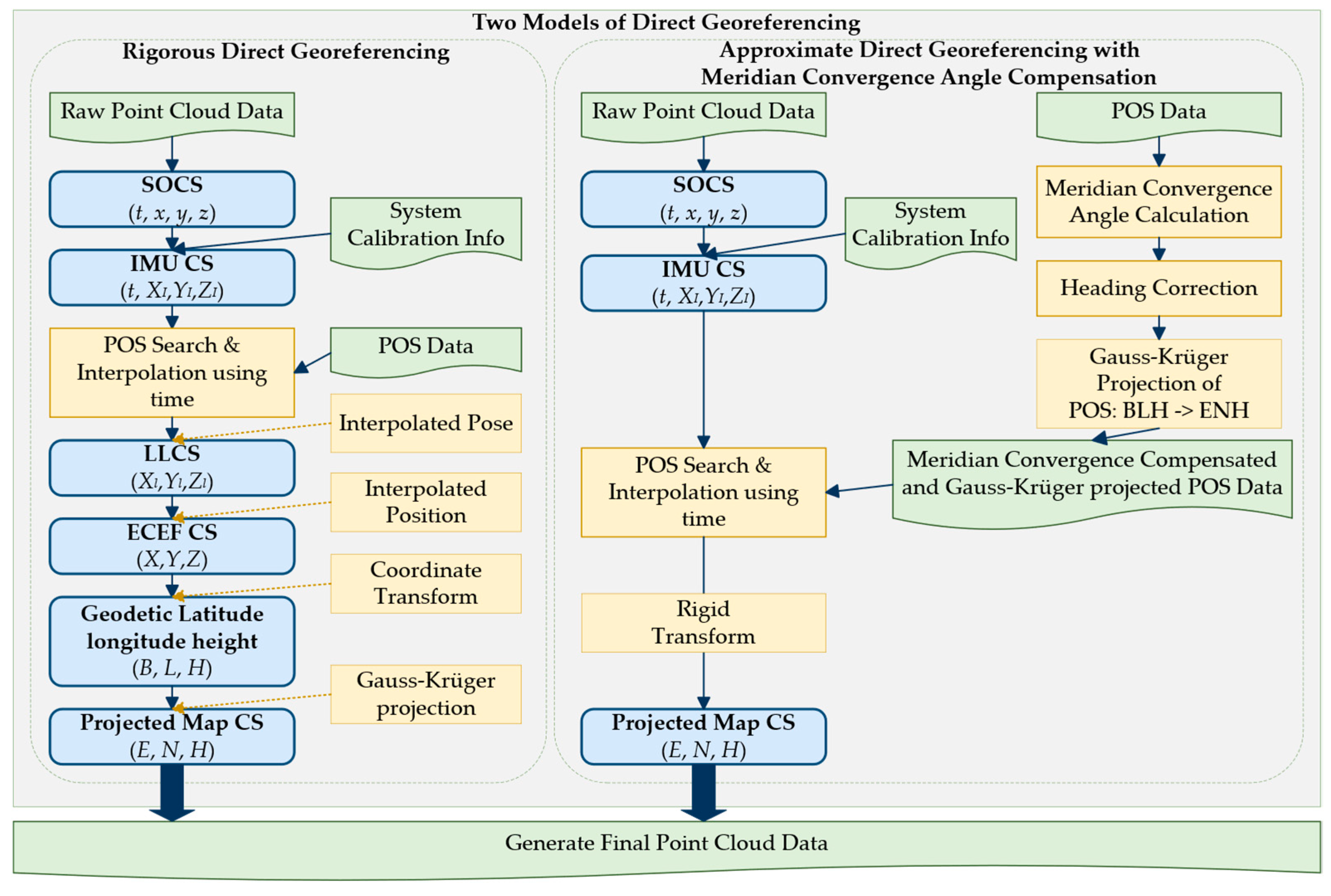
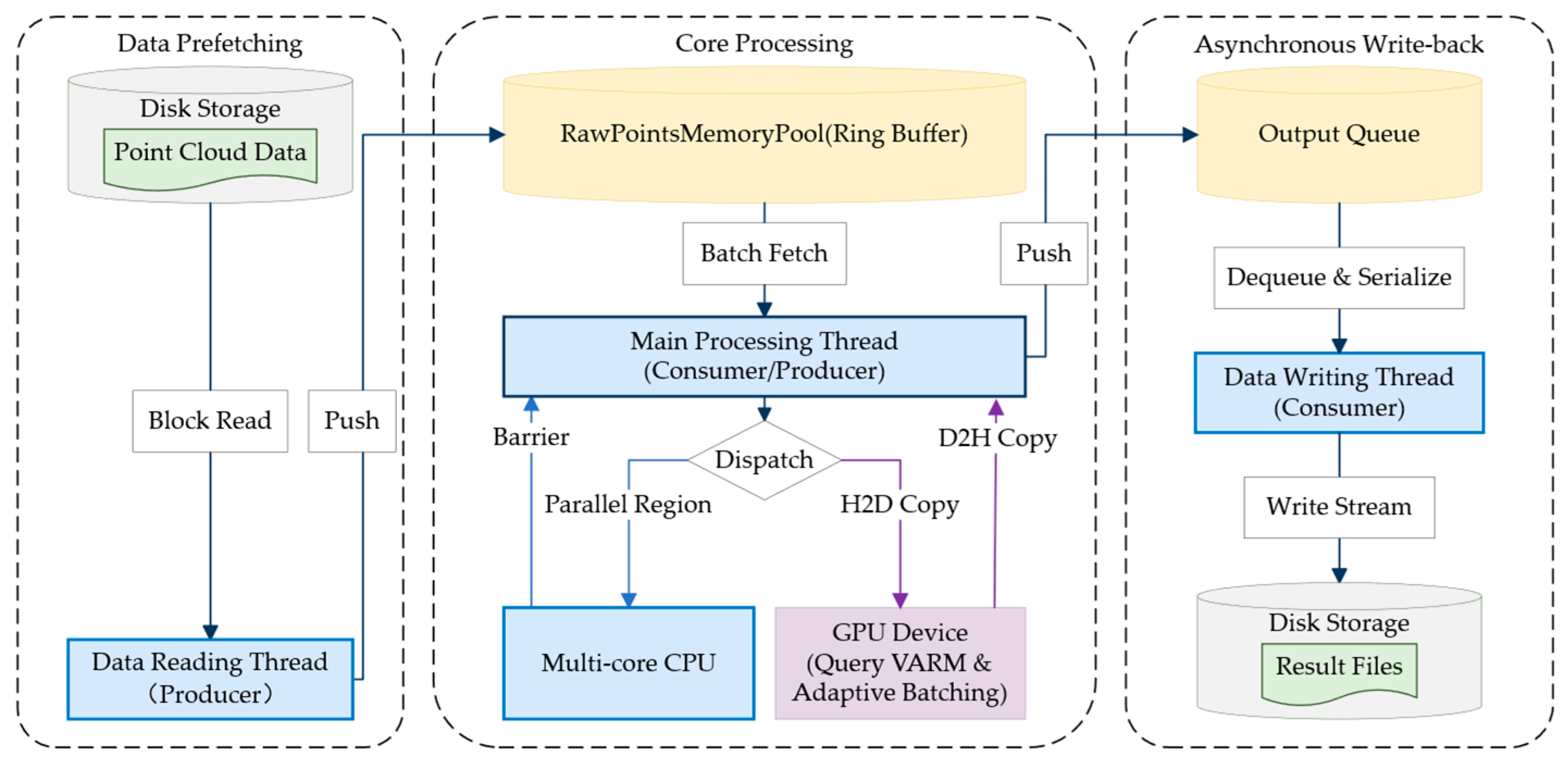
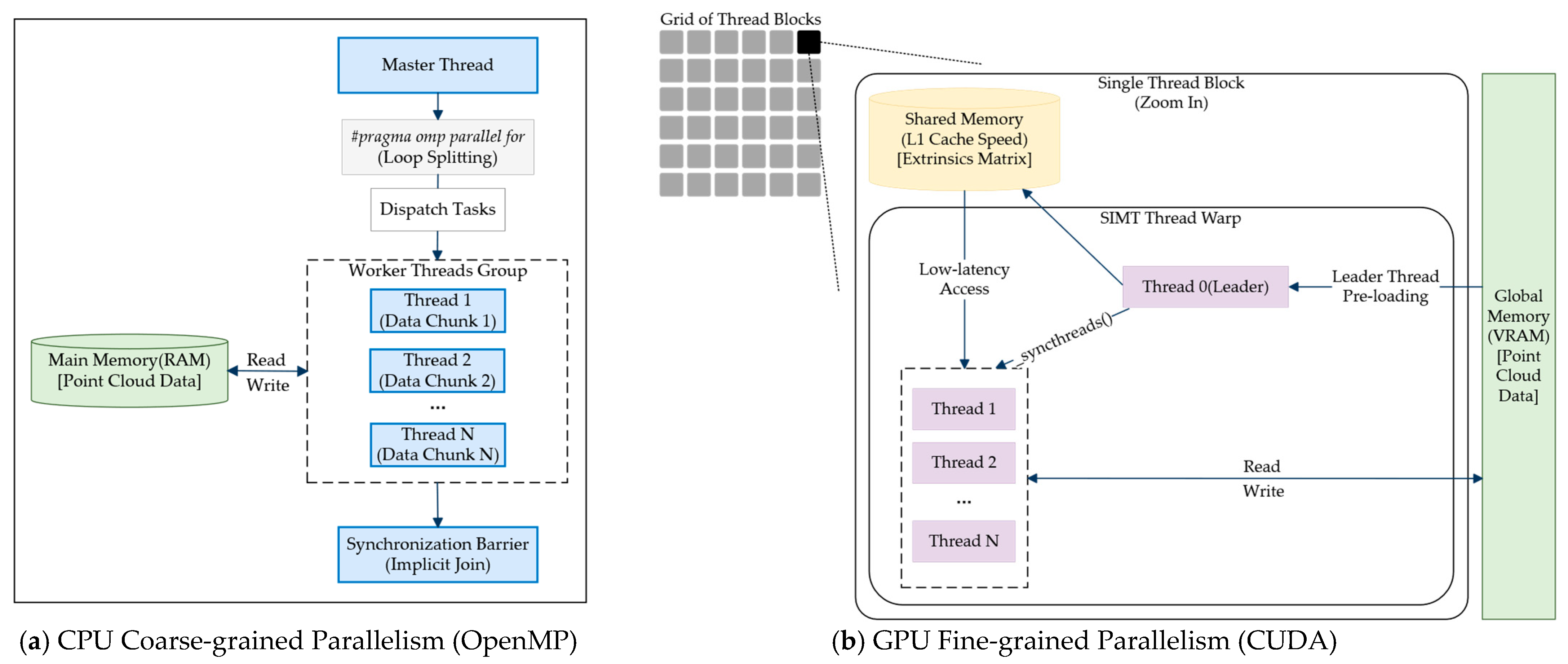
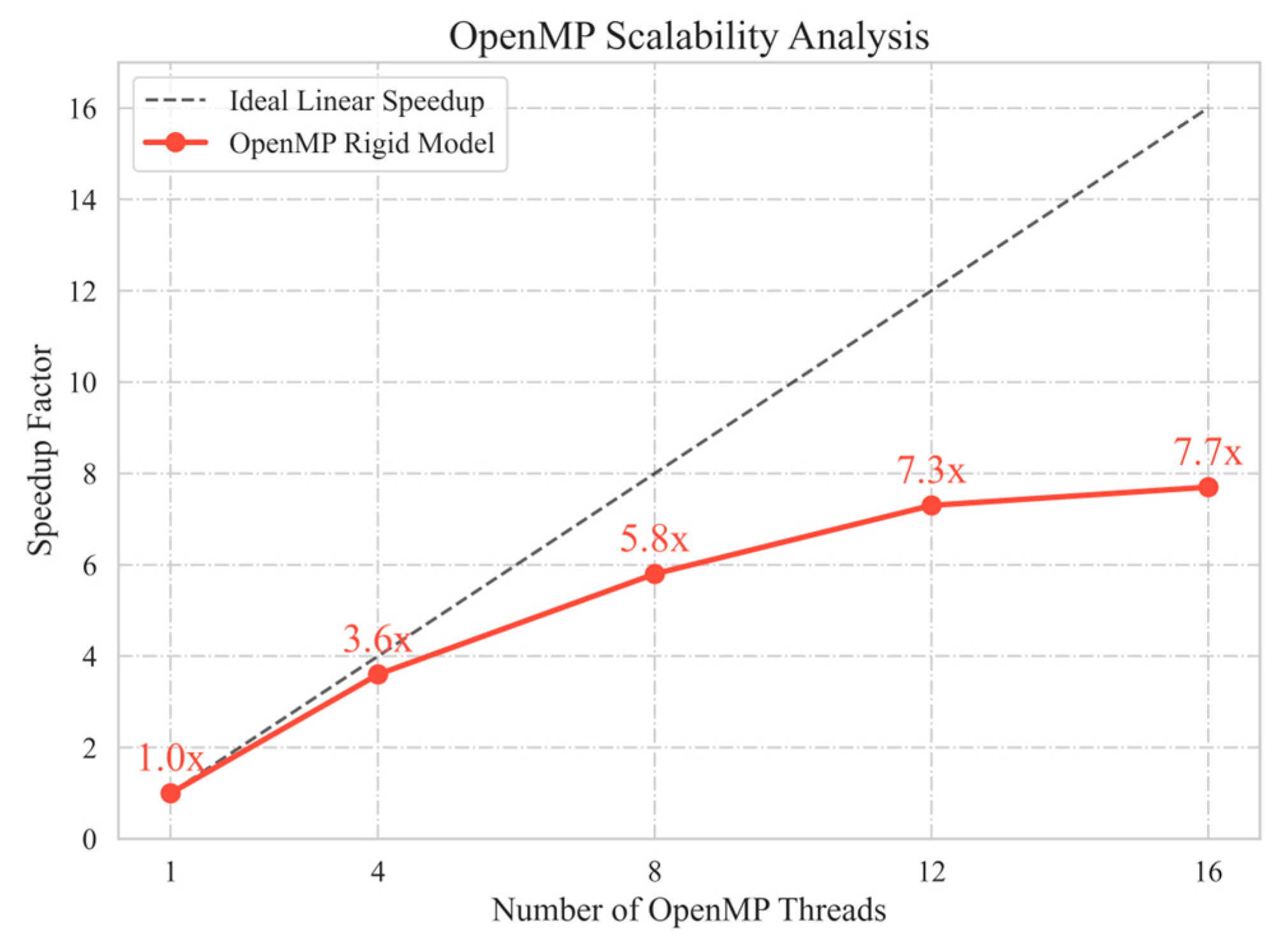
The rapid increase in point density and acquisition rate of UAV laser scanning (ULS) systems has shifted the primary bottleneck of LiDAR workflows from data acquisition to post-processing, particularly during direct georeferencing of massive LiDAR measurements. This study presents a systematic evaluation of parallel computing strategies for accelerating ULS direct georeferencing while preserving geodetic accuracy. Two georeferencing models are investigated: (1) a rigorous model that strictly follows the full geodetic transformation chain from sensor owned coordinates system (SOCS) to projected map coordinates, and (2) an approximate model that incorporates meridian convergence angle compensation and preprocessing of platform trajectories to reduce per-point computational complexity. For each model, a shared-memory multicore CPU implementation based on OpenMP and a heterogeneous GPU implementation based on CUDA are designed. Experiments were conducted on seven real-world ULS datasets, ranging from 2.9 × 10⁷ to 7.0 × 10⁸ points and covering diverse terrain types. Accuracy analysis shows that, in typical urban, plain, and industrial scenarios, the approximate model achieves millimeter-level mean errors and centimeter-level RMSEs relative to the rigorous model, satisfying the requirements of most engineering surveying applications. Performance evaluation demonstrates that parallelization yields substantial speedups: OpenMP-based method achieves 7–9 times acceleration, while GPU computing attains up to 24.6 times acceleration for the rigorous model and up to 16.7 times for the approximate model. The results highlight the complementary strengths of the two models and provide practical guidance for selecting accuracy-efficiency trade-offs in large-scale ULS production workflows.
Keywords: ULS; direct georeferencing; parallel computing; OpenMP; CUDA; GPU ULS; direct georeferencing; parallel computing; OpenMP; CUDA; GPU