Differentiable Physical Modeling for Forest Above-Ground Biomass Retrieval by Unifying a Water Cloud Model and Deep Learning

 , ,
, ,  ,
,  ,
,
Highlights
- The proposed DPM framework, which integrates the WCM with deep neural networks, achieved superior forest AGB retrieval performance in both subtropical and temperate forest regions, with R2 values of 0.60 and 0.48, outperforming traditional physical models and purely data-driven approaches, and demonstrating strong generalization across northern and southern forests.
- By incorporating automatic differentiation, DPM enables joint optimization of the WCM’s physical constraints and neural network parameters, preserving the physical plausibility of the model while flexibly capturing complex nonlinear relationships, thereby significantly reducing overfitting under limited training data.
- DPM offers a novel framework for remote sensing-based forest AGB estimation, fully leveraging neural networks’ capacity to model complex nonlinear relationships while maintaining the interpretability of physical models, resulting in improved retrieval accuracy and stability.
- This study was conducted using C-band SAR data. Due to its relatively short wavelength, C-band has limited penetration ability within dense vegetation canopies, and its backscattering signal is prone to saturation in areas with high biomass, which restricts the model’s inversion performance in complex forest environments. Future work could enhance this framework in two ways: first, by integrating longer wavelengths, such as L-band and P-band SAR data; second, by adopting physical models that better describe multiple scattering mechanisms, like the MIMICS model. This study offers a methodological reference for combining deep learning with physical scattering models, and these improvements are expected to further overcome the limitations of C-band in dense vegetation conditions.
Abstract
1. Introduction
2. Materials and Methods
2.1. Overview of the Study Areas
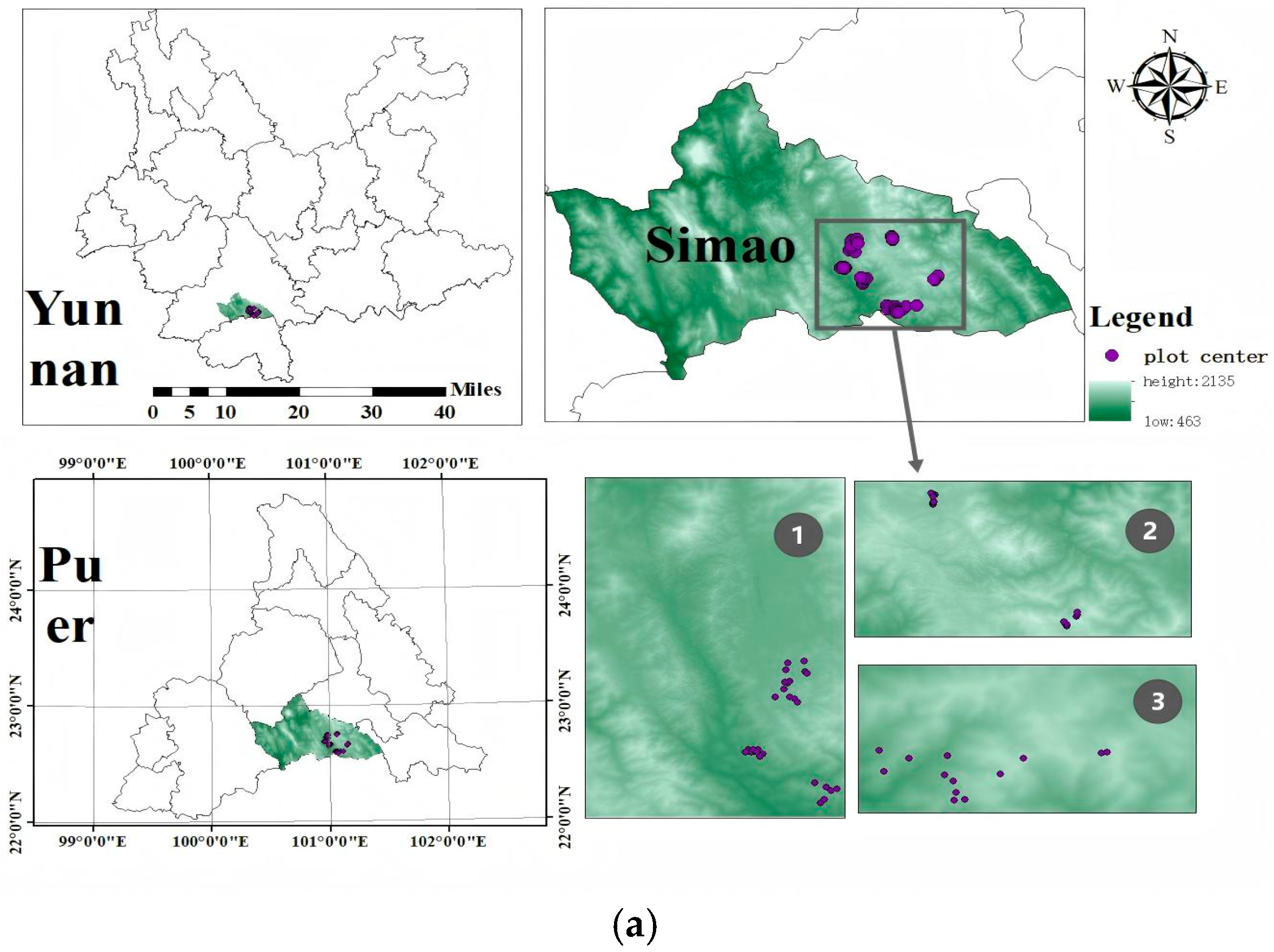
2.1.1. Simao Study Area
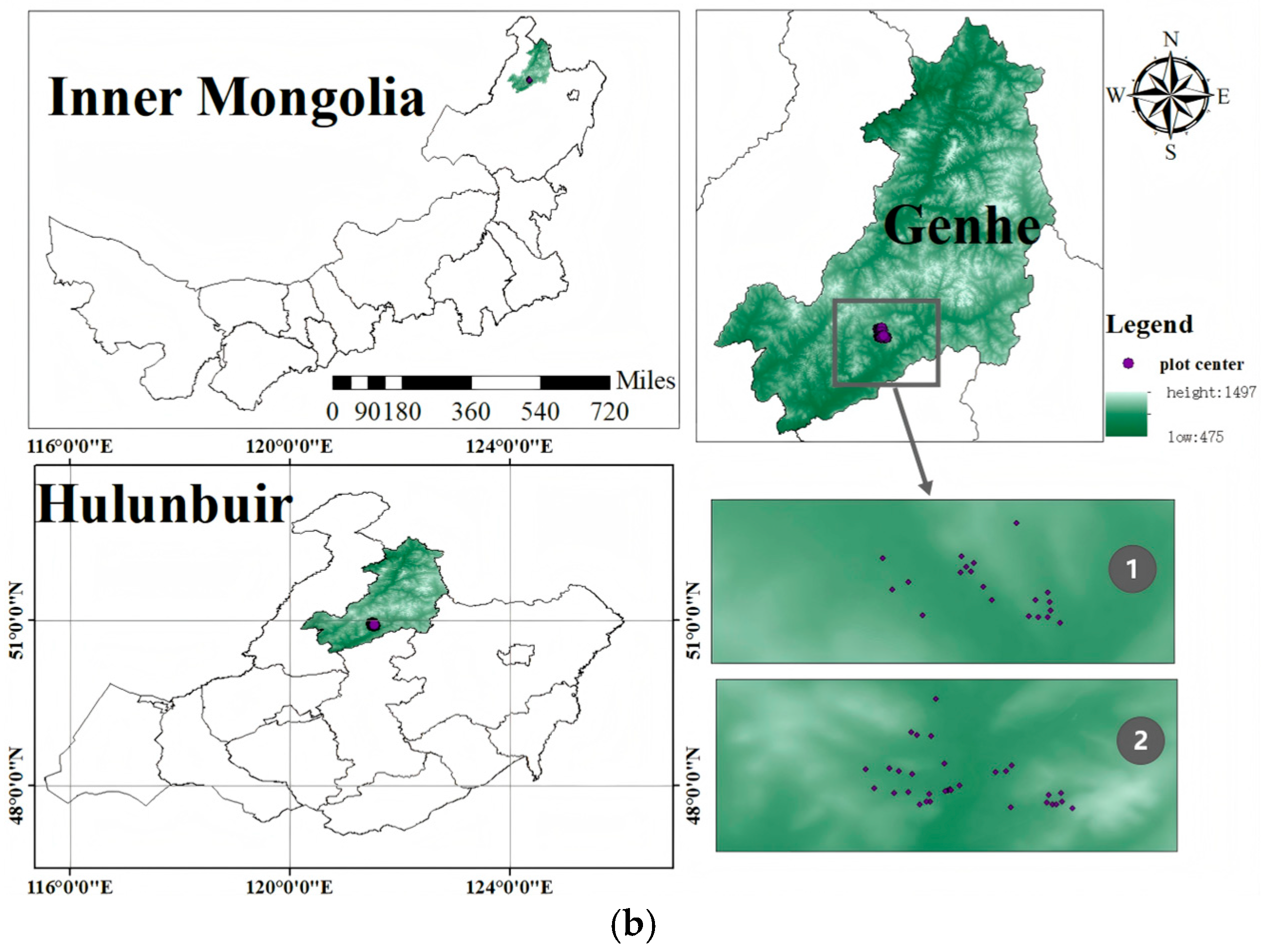
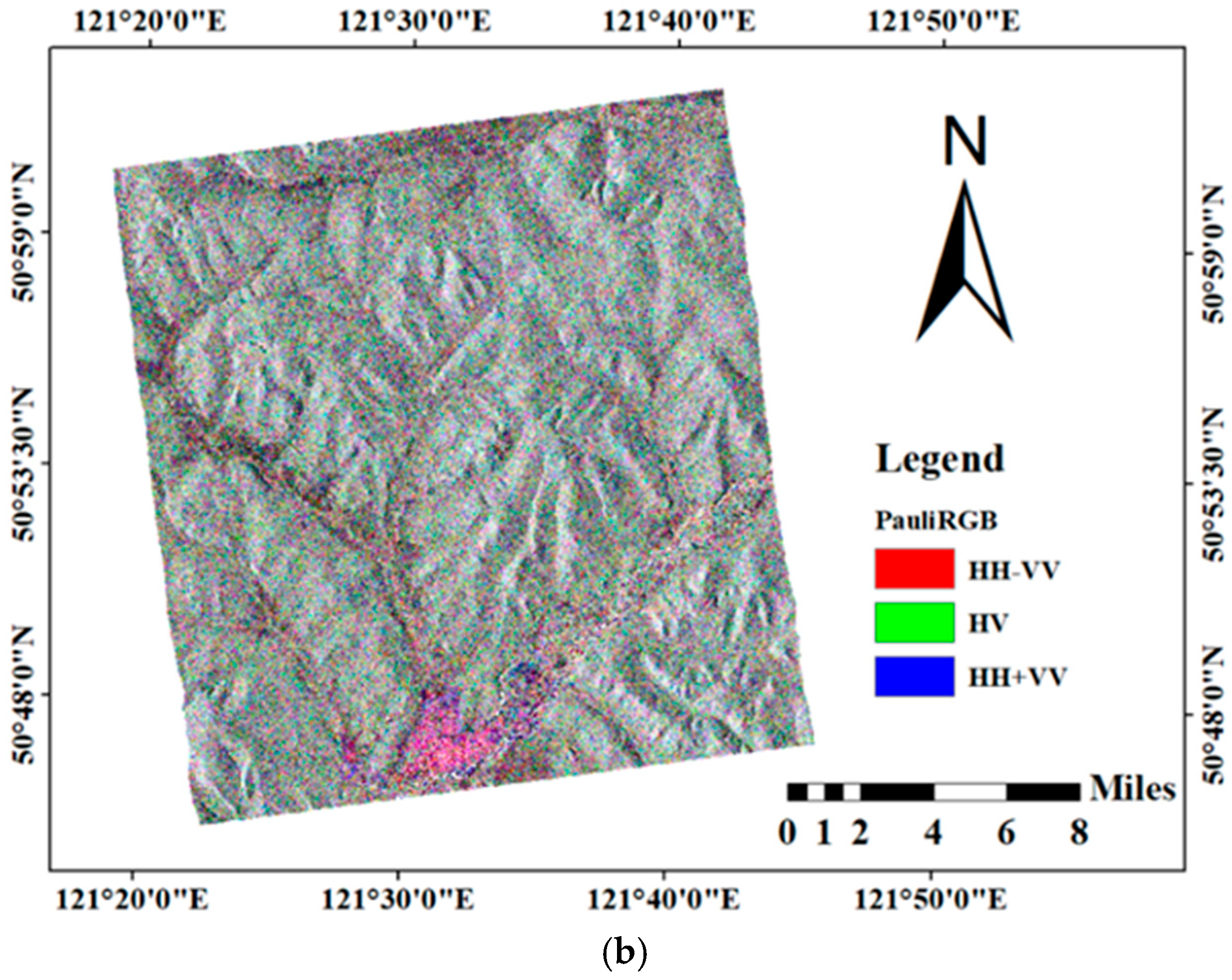
2.1.2. Genhe Study Area
2.2. Remote Sensing Data
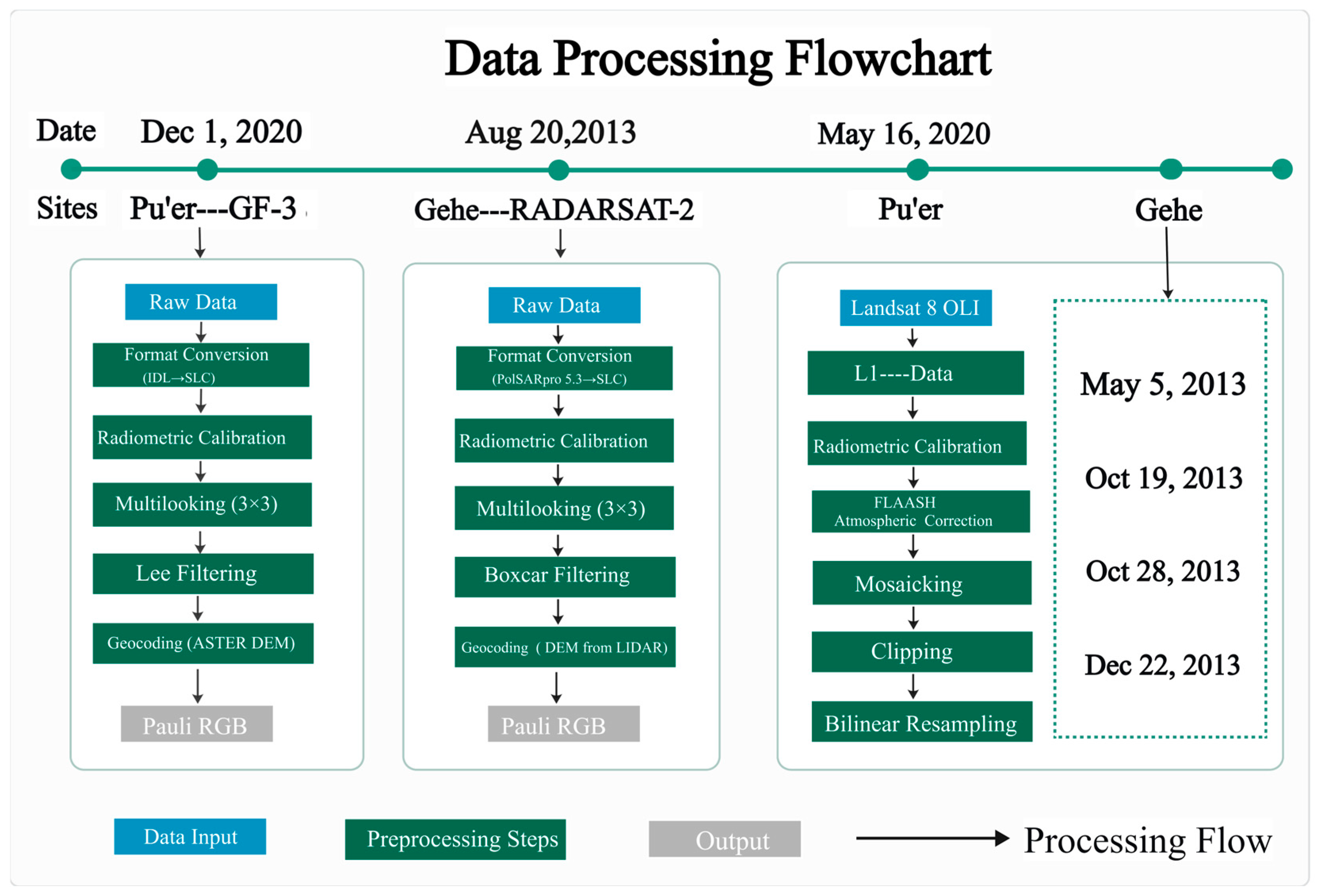
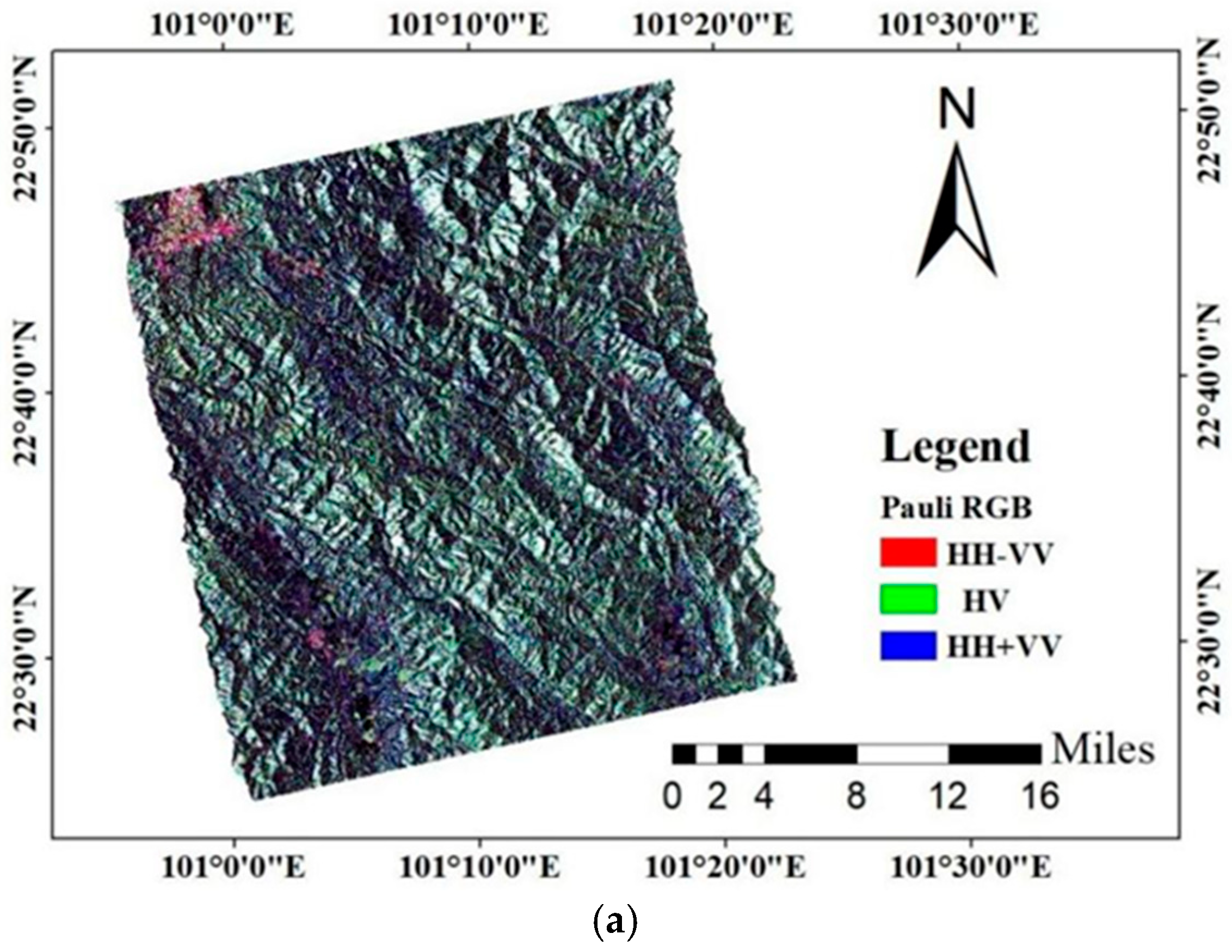
2.2.1. GF-3 PolSAR Data
2.2.2. RADARSAT-2 Data
2.2.3. Landsat-8 OLI Data
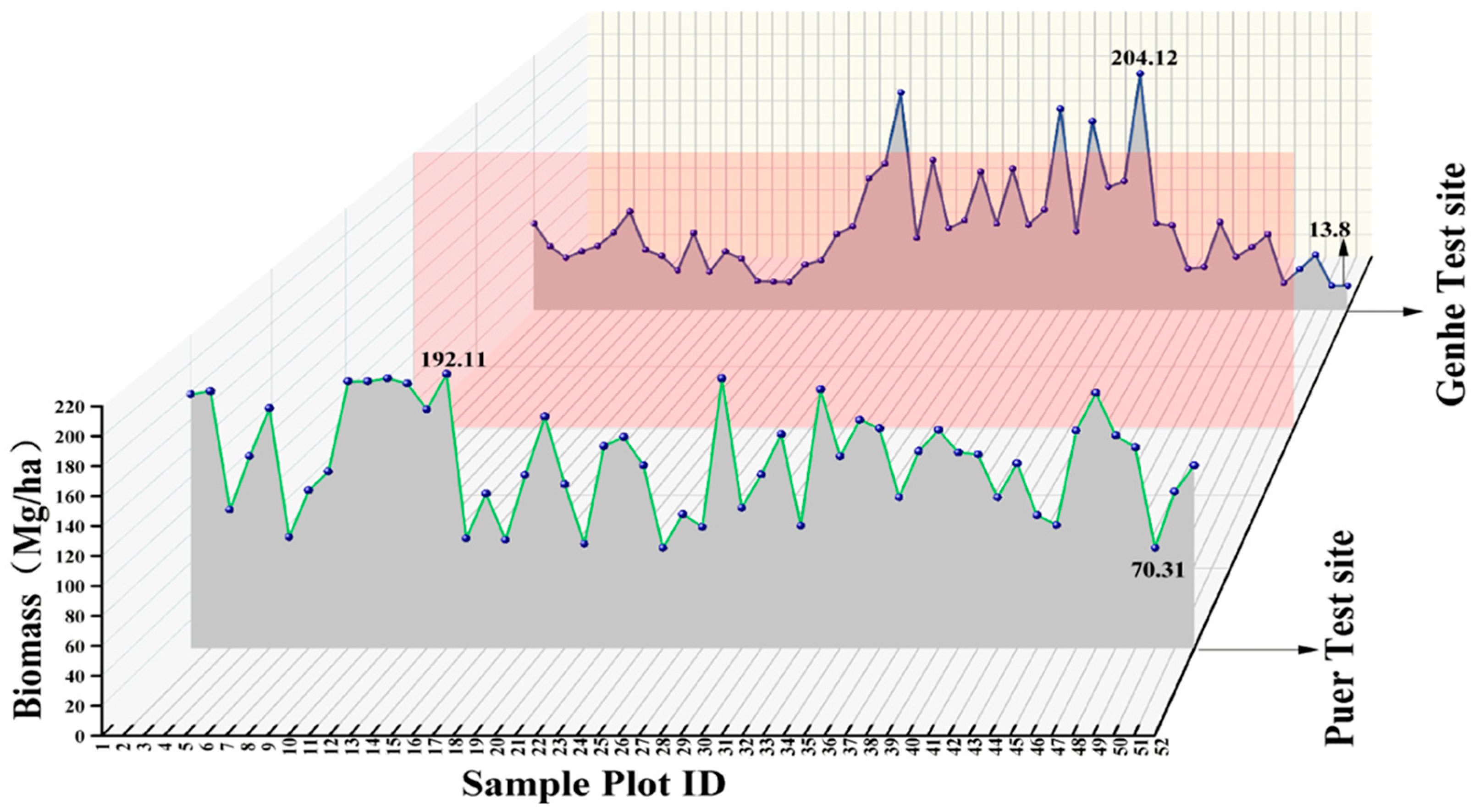
2.3. Ground Survey Data
2.3.1. Pu’er Ground Data
2.3.2. Genhe Ground Data
2.4. Methods
2.4.1. Water Cloud Model
2.4.2. Deep Fully Connected Neural Network
2.4.3. Principle and Method of DPM
Fundamental Principle of DPM
Data for DPM Training Process
Model Construction Process
2.4.4. Model Comparison and Evaluation
3. Results
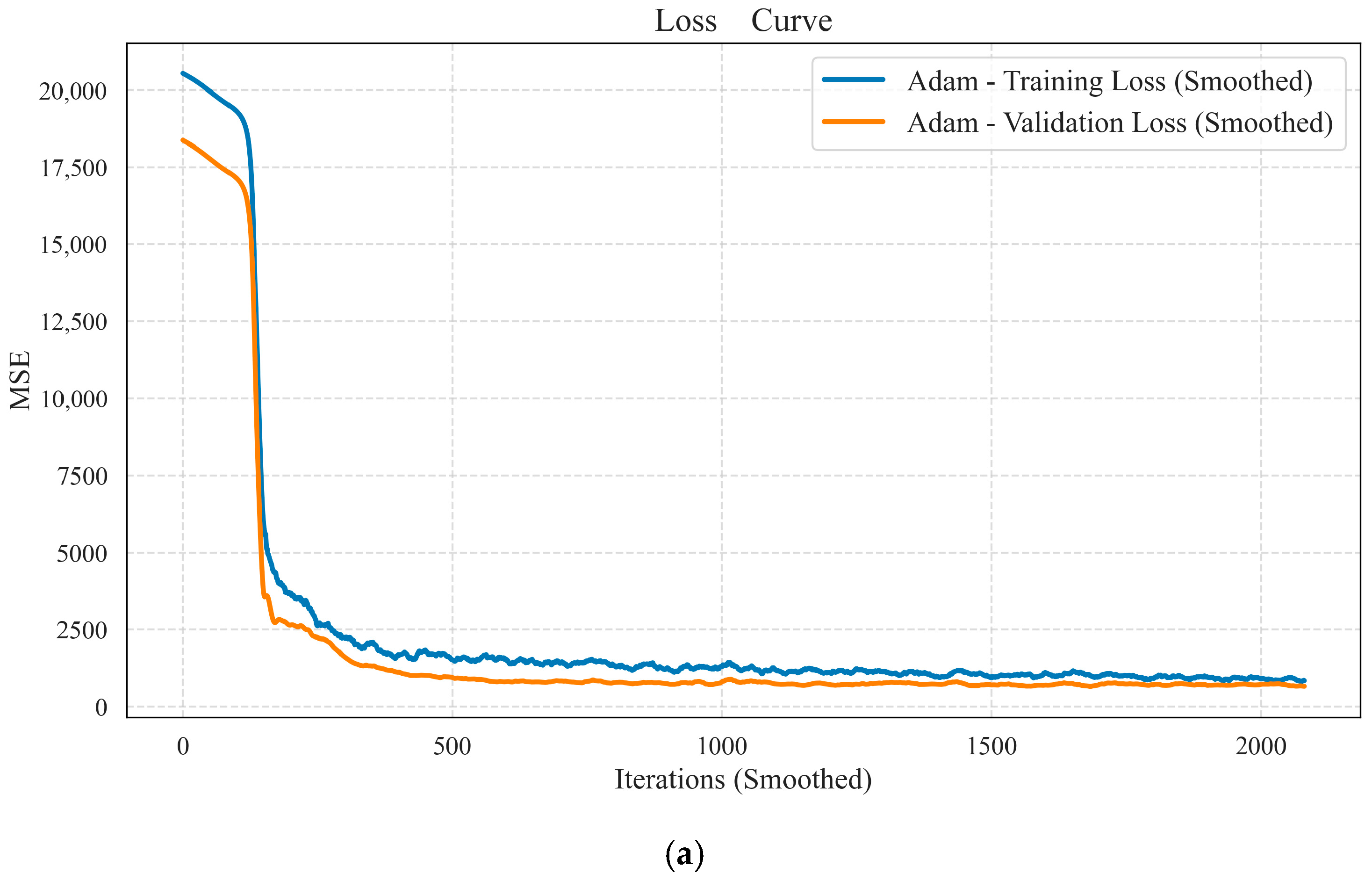
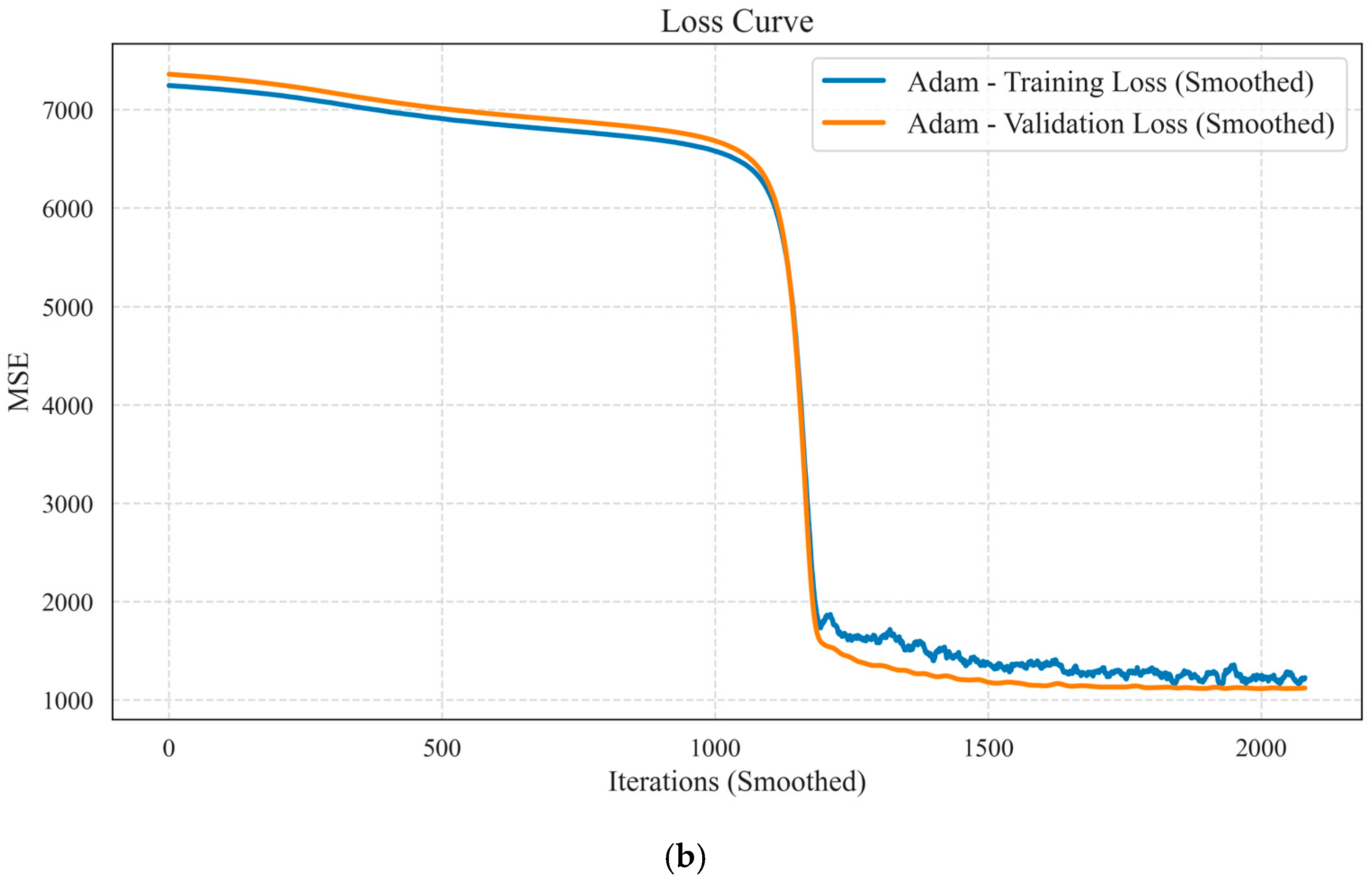
3.1. Analysis of the Forest AGB Loss Function
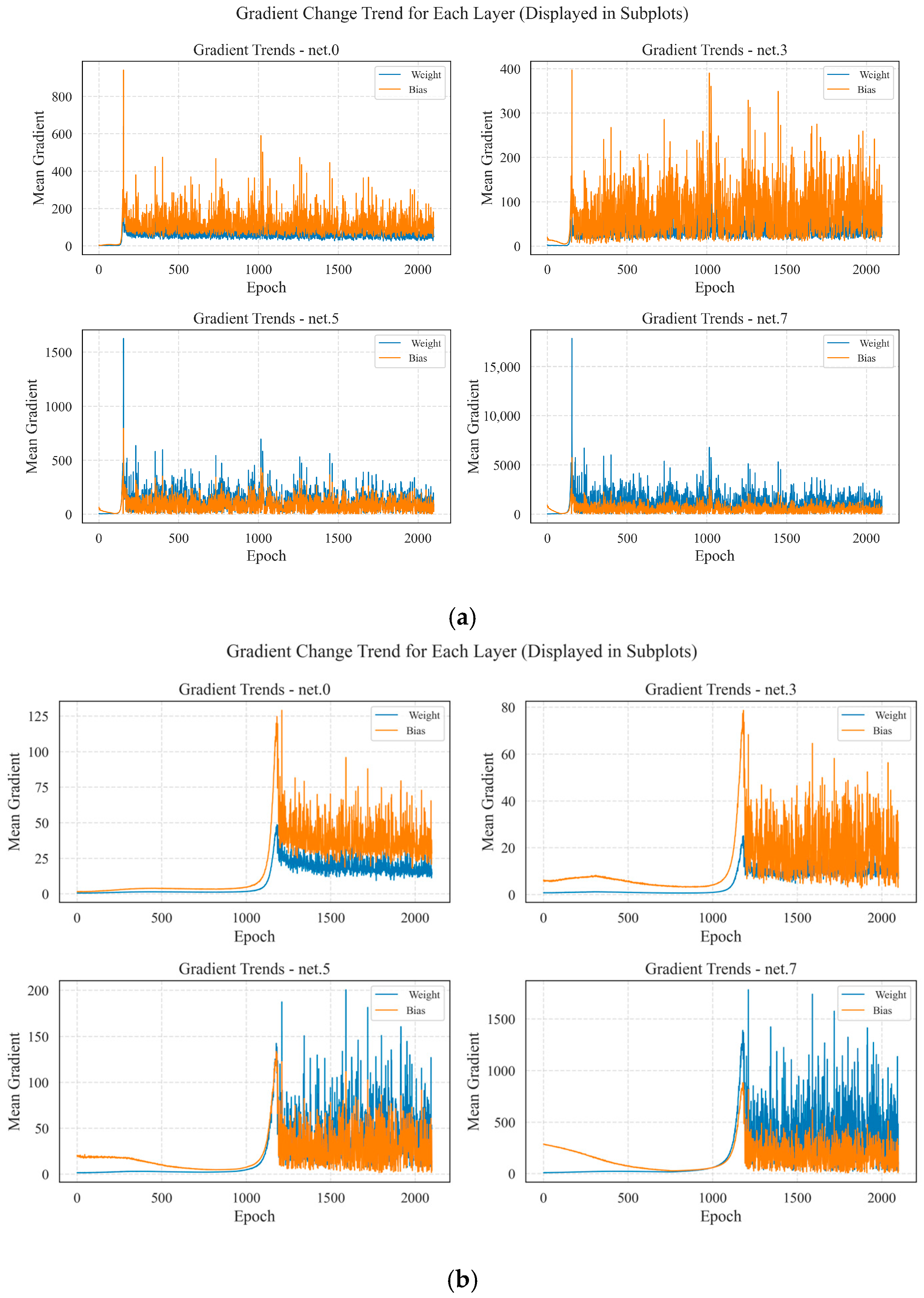
3.2. Visualization of Intermediate Variable Updates via the Backpropagation Mechanism
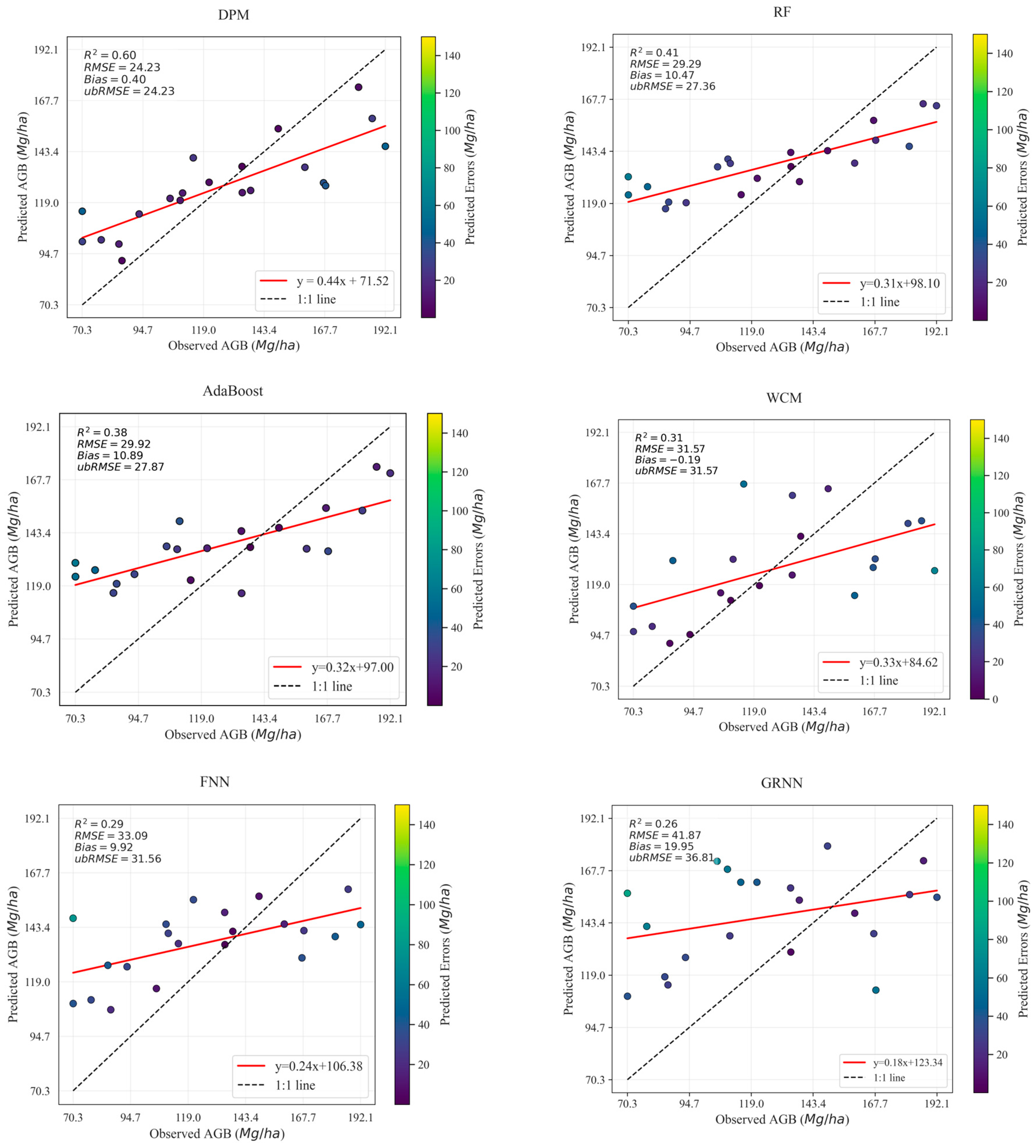
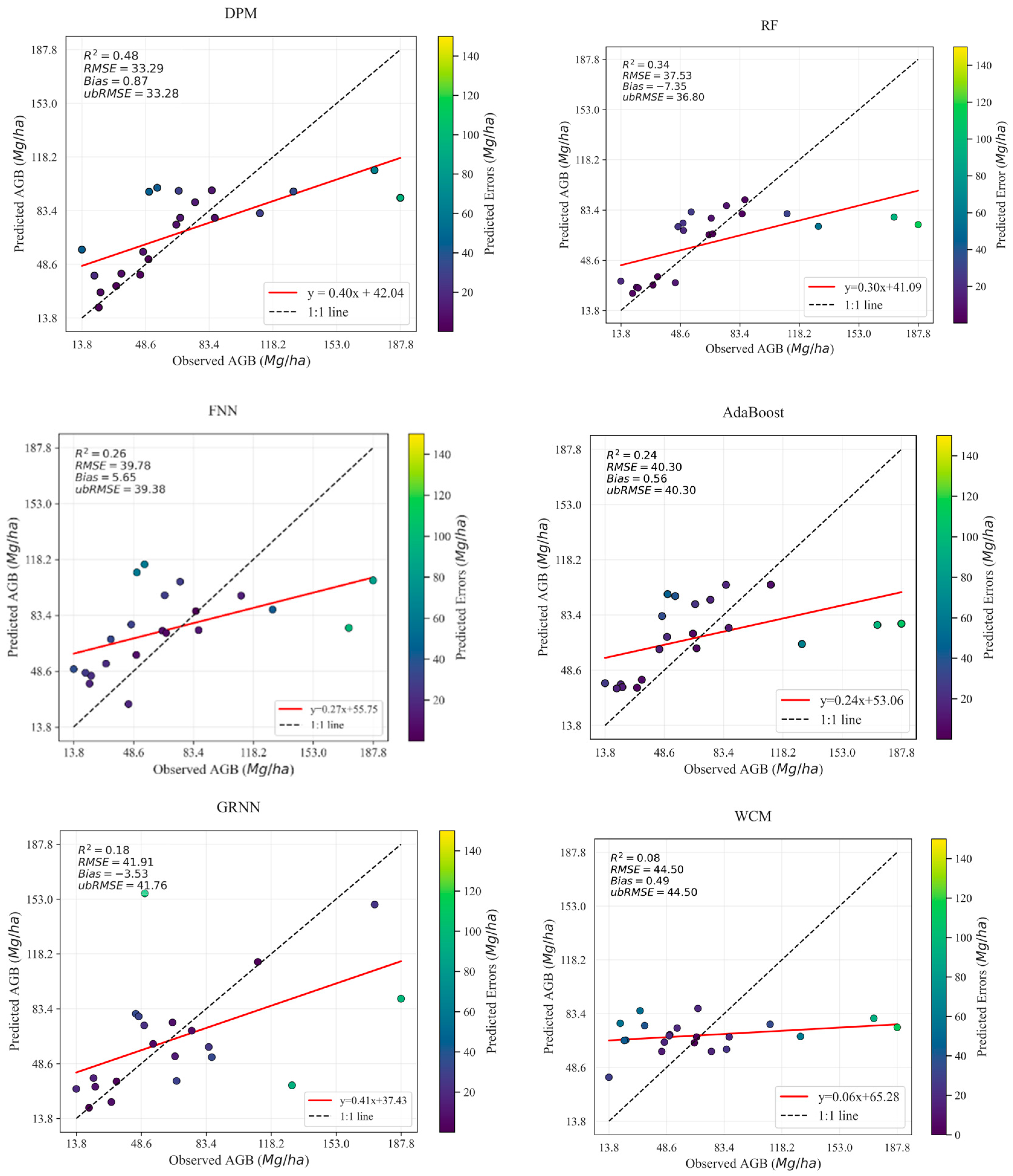
3.3. Random Sampling Validation
3.4. Statistical Significance Testing
4. Discussion
- (1)
- This study independently validated the DPM model in two regions with markedly different ecological conditions: the Simao District in Pu’er, Yunnan, and the Genhe District in Inner Mongolia. The results indicate that DPM achieved the best retrieval performance in both study areas. In the Simao study area, DPM attained an R2 of 0.60, consistently higher than RF of 0.41, AdaBoost of 0.38, FNN of 0.31, GRNN of 0.26, and WCM of 0.29. Its RMSE and ubRMSE were both 24.23 Mg/ha, the lowest among all models, indicating that the predicted AGB values were highly consistent with the observed values in terms of both overall trend and variability. The DPM bias was 0.40 Mg/ha, close to zero, indicating virtually no systematic overestimation or underestimation, whereas the bias of RF, AdaBoost, GRNN, and FNN approached or exceeded 10 Mg/ha, reflecting the significant systematic errors in purely data-driven models due to the lack of physical constraints. In the Genhe study area, overall retrieval proved to be more challenging than in the Simao area, and the accuracy of all models decreased. Nevertheless, the DPM model still achieved the best performance. The DPM model reached an R2 of 0.48, consistently higher than an RF of 0.34, FNN of 0.26, AdaBoost of 0.24, GRNN of 0.18, and WCM of 0.08. Its RMSE of 33.29 Mg/ha was approximately 11% lower than that of RF of 37.5 Mg/ha and 25% lower than that of the WCM of 44.50 Mg/ha. The bias of DPM was 0.87 Mg/ha, remaining close to zero, whereas the bias of RF of −7.35 Mg/ha, FNN of 5.65 Mg/ha, and GRNN of 19.95 Mg/ha indicated notable systematic deviations.
- (2)
- As typical ensemble learning algorithms, RF and AdaBoost generally outperform the GRNN and FNN in forest AGB retrieval, as neural networks tend to underperform when trained on small datasets. Although AdaBoost achieved a slightly higher R2 than the FNN in the Genhe study area, the difference was minimal. The DPM model integrates the WCM into the neural network, applying physical constraints to ensure prediction plausibility while leveraging deep learning to capture complex nonlinear relationships. This integration of physical modeling and data-driven learning allows the DPM model to deliver forest AGB retrieval results with high accuracy, strong stability, and minimal systematic bias.
- (3)
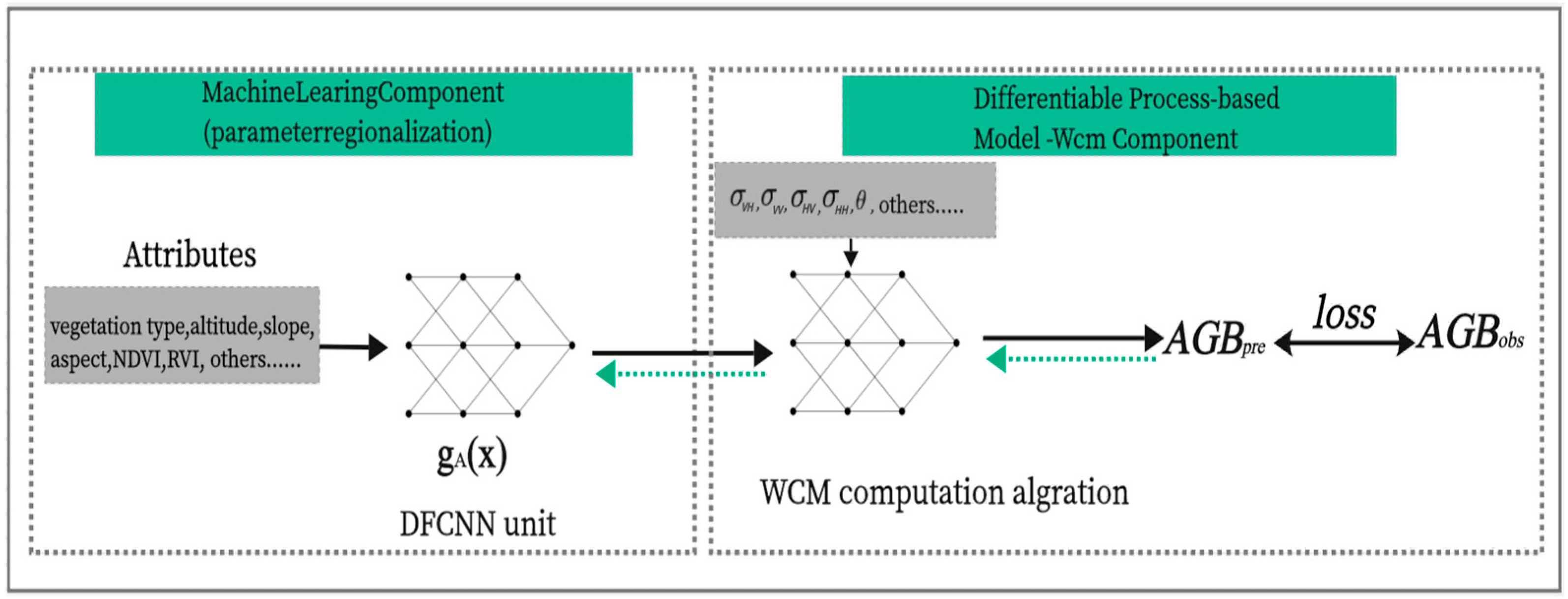
- The advantages of the DPM model lie not only in its accuracy in forest AGB prediction but also in its joint optimization of physical constraints and data-driven learning. The differentiable WCM equations enable prediction errors to be effectively backpropagated to the neural network, allowing the network parameters to be optimized while maintaining physical consistency. Meanwhile, the outputs of intermediate variables are a key factor enabling the DPM model to achieve acceptable accuracy, relatively low systematic bias, and strong interpretability.
- (4)
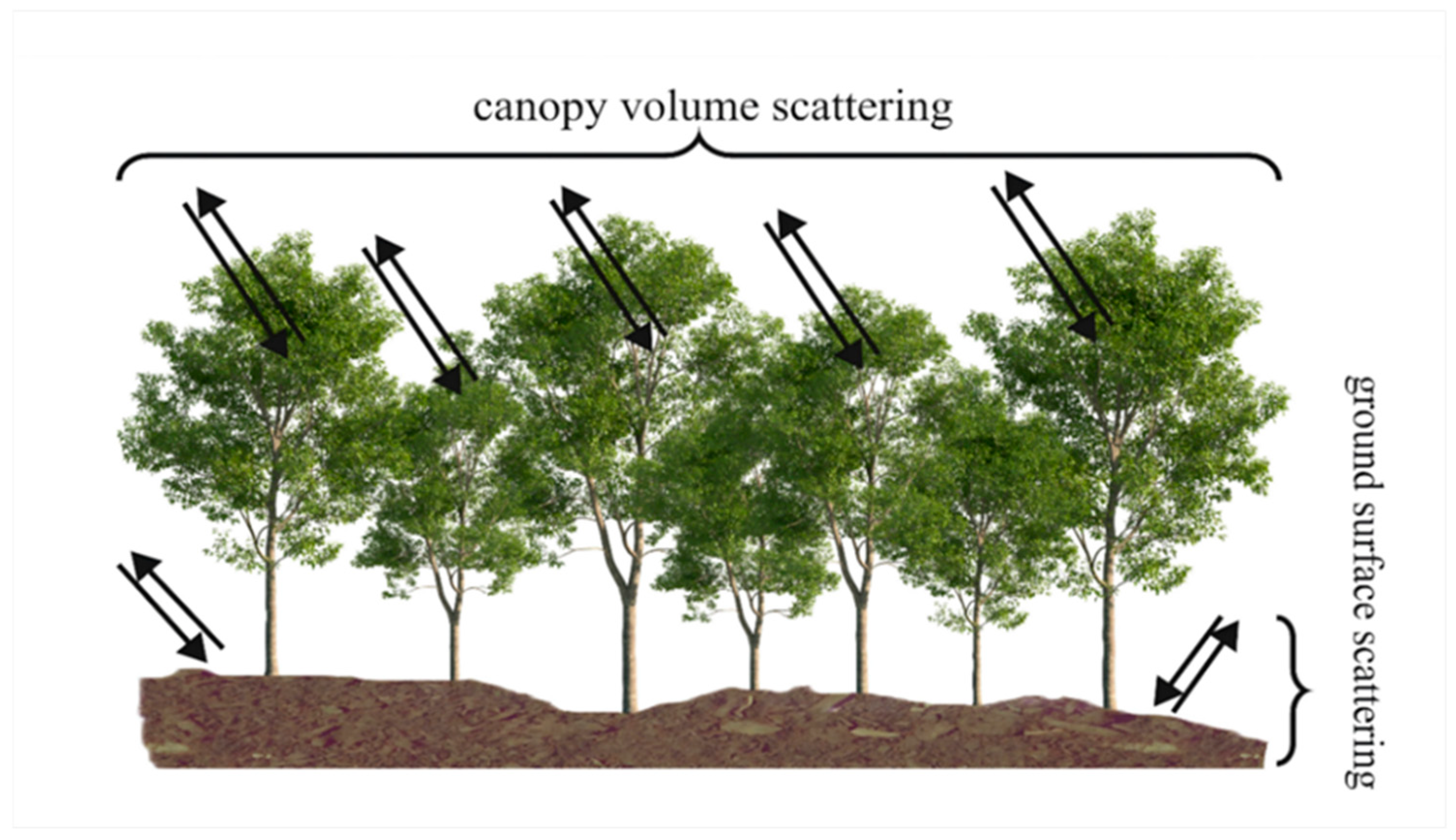
- C-band radar signals exhibit limited performance in densely vegetated areas and are less sensitive for forest AGB retrievals [52]. In such environments, the radar signal may not penetrate the canopy effectively to reach the ground, reducing the accuracy of AGB estimation [53,54]. In this study, the saturation threshold of C-band SAR was quantitatively assessed by analyzing the relationship between predicted AGB and measured AGB. The results indicate that in the Simao study area, when measured AGB exceeds approximately 120 Mg/ha, the DPM model predictions start to systematically deviate below the 1:1 line, showing an underestimation trend; when measured AGB exceeds 150 Mg/ha, predictions stabilize and mostly fall within 120–140 Mg/ha, suggesting the signal has entered saturation. Therefore, the saturation threshold in the Simao area is roughly 120–150 Mg/ha. In the Genhe study area, this occurs at a lower level, as predictions begin to deviate when measured AGB exceeds around 100 Mg/ha. For high-biomass ranges (>150 Mg/ha), predicted values are confined to 100–120 Mg/ha, indicating a saturation threshold near 100 Mg/ha. Previous studies have shown that the saturation threshold of L-band SAR can reach 150–200 Mg/ha [55], while the theoretical saturation threshold of P-band SAR is even higher, approximately 300–400 Mg/ha [56]. By comparing our results with these findings, future research may consider integrating L-band or P-band data to enhance canopy penetration and further mitigate saturation effects in high-biomass forests. Further analysis shows that the differences in saturation thresholds between the two study areas are closely related to forest structural complexity. The Simao study area consists of multi-layer mixed forests with distinct vertical canopy stratification and a relatively high proportion of volume scattering, which may, to some extent, delay the saturation process of C-band backscatter signals. In contrast, the Genhe study area is dominated by single-layer coniferous forests with relatively simple structures and scattering mechanisms, exhibiting a faster saturation trend under the conditions of this study. These findings indicate that the saturation characteristics of C-band SAR-based biomass retrieval are not only associated with total biomass but may also be influenced by forest structural attributes. Forest structural complexity may affect the manifestation of saturation thresholds by altering the relative contributions of different scattering mechanisms.
- (5)
- In this study, the acquisition times of the field survey data aligned with those of the SAR imagery. The field survey in the Simao study area was carried out in December 2020, coinciding with the collection of the GF-3 imagery, while the field survey in the Genhe study area took place in August 2013, corresponding to the acquisition of the RADARSAT-2 imagery. The year of acquisition for the Landsat-8 optical imagery also matched these datasets, ensuring temporal consistency among the main data sources. However, potential spatiotemporal mismatches still exist in some auxiliary datasets. From a temporal perspective, the SMCI1.0 climate data are daily-scale products. Although their acquisition year matches the SAR and field data, they cannot exactly represent the meteorological conditions at the specific time of the SAR overpass. In the Genhe study area, SAR data were acquired in August, coinciding with a period of heavy rainfall. If rainfall occurred on the day of the satellite overpass, rapid changes in temperature and soil moisture might affect the radar backscatter coefficients, adding uncertainties to the AGB inversion results. From a spatial perspective, the original spatial resolutions of the datasets differ significantly, with SAR data at meter-level resolution, optical imagery and DEM at 30 m, and climate data at 1 km. Although all datasets were resampled to a common spatial resolution during preprocessing, differences in their original scales may still cause spatial biases due to forest stand heterogeneity.
- (6)
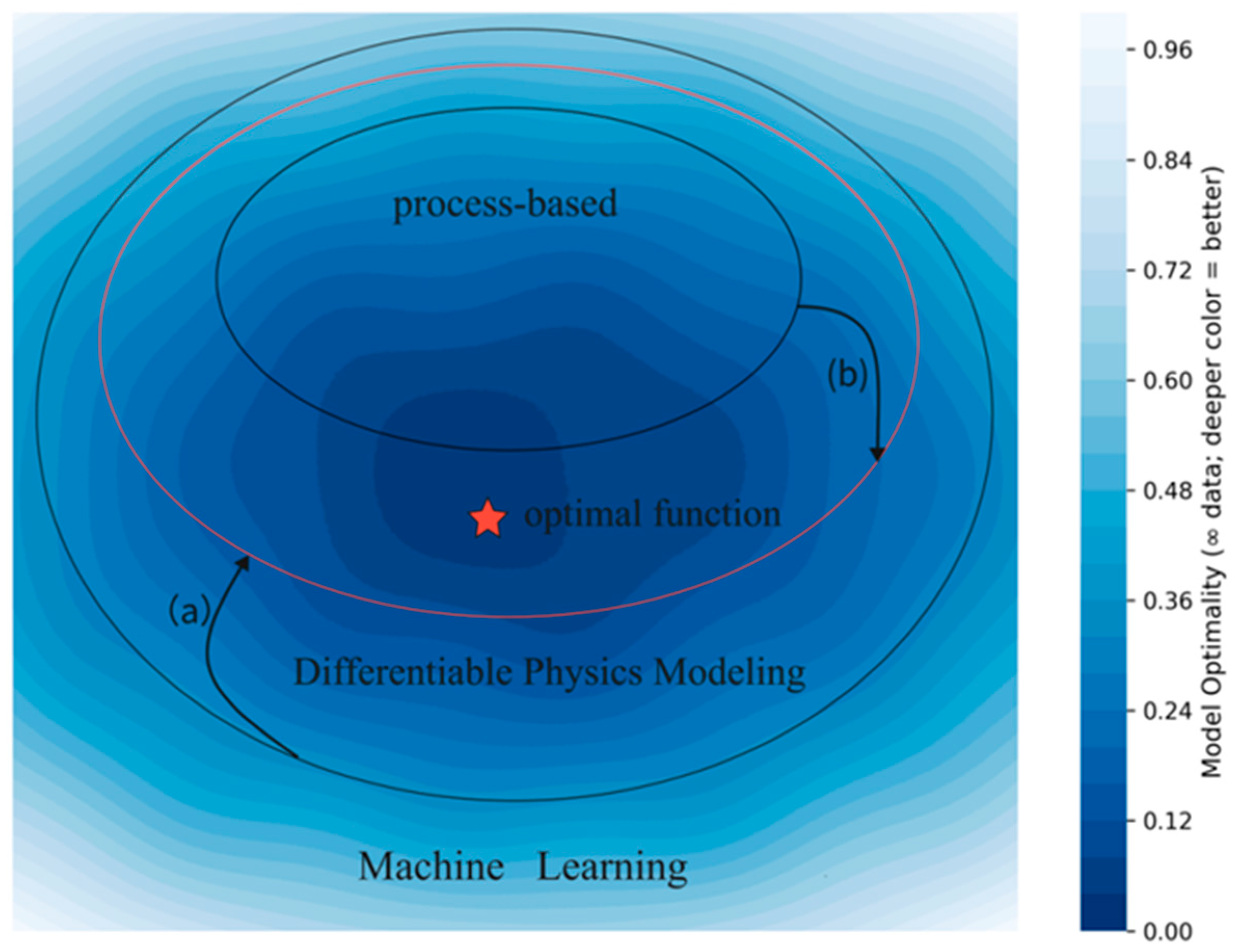
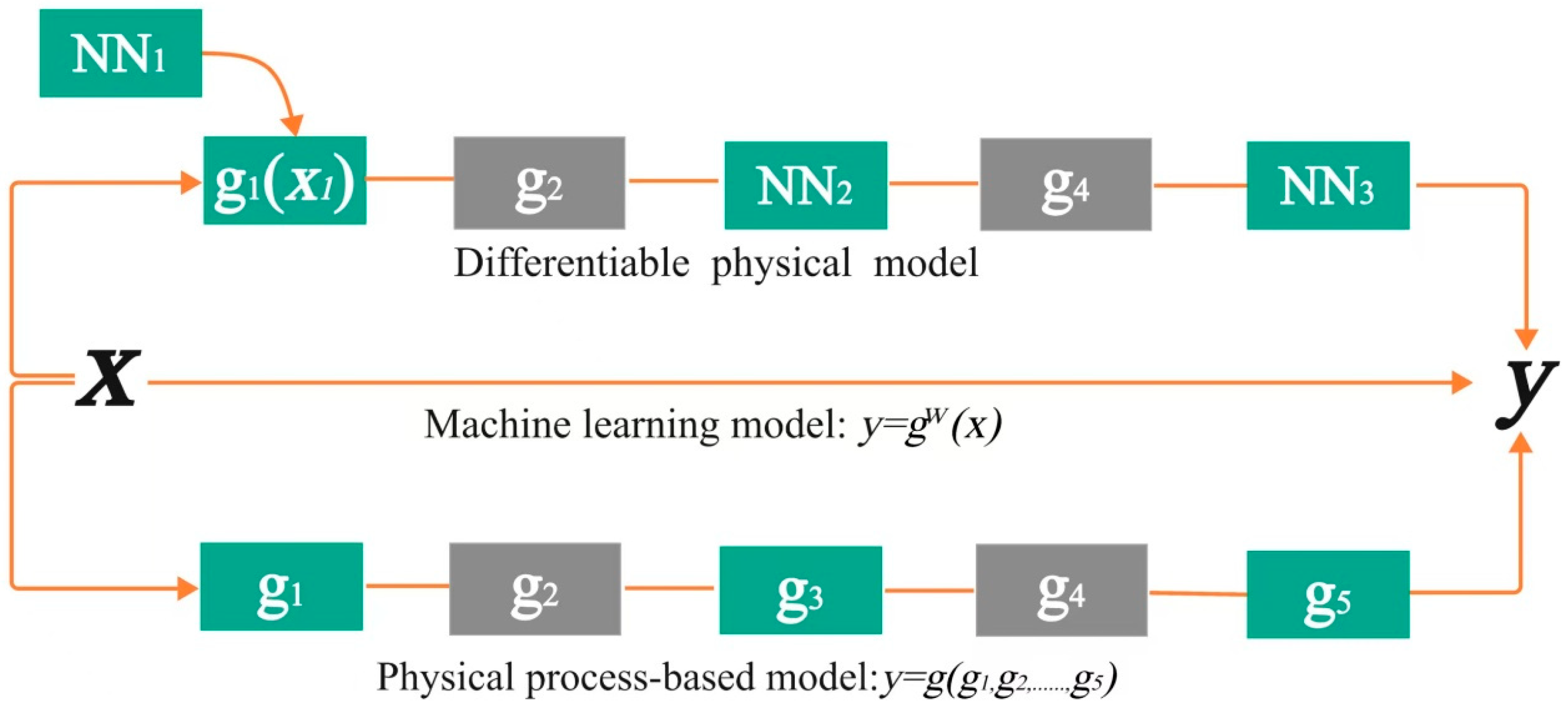
- Although the DPM retrieval model uses a data-driven training approach similar to deep neural networks, it stands apart by explicitly incorporating physical knowledge constraints into its structure. This effectively narrows the learning space and allows the DPM to capture data features while adhering to forest scattering mechanisms and radiative transfer principles. As a result, the model achieves robust performance even with small training datasets. To sum up, compared with traditional data-driven models and conventional physical radiative transfer models, the DPM framework connects physical priors to neural networks, advancing the field of physics-informed machine learning.
5. Conclusions
- (1)
- The traditional WCM was re-coded on a deep learning platform and made differentiable using PyTorch’s AD capabilities, reconstructing its differentiability and successfully unifying the WCM with a neural network. Although the DPM model consists of both a machine learning module and a differentiable physics-based model module, the training and retrieval processes have been fully integrated, forming an end-to-end trainable joint model. Within this framework, the neural network dynamically parameterizes key parameters of the physical model and output intermediate variables. It simultaneously optimizes the network weights and biases through backpropagation and gradient descent, thereby achieving a deep integration of physics-driven and data-driven methods.
- (2)
- The DPM model was preliminarily validated using the WCM as its physical model framework, which improved the retrieval accuracy to a certain extent. However, the WCM has a relatively simplified structure and provides an incomplete representation of the multiple scattering and absorption mechanisms of electromagnetic waves within the vegetation canopy, thereby limiting its applicability in regions with complex forest structures. To further enhance the model’s physical consistency and generalization capability, future research could consider adopting other radiative transfer equations, such as the MIMICS model, to replace the current physical model framework and explore the retrieval accuracy and generalization performance achievable through joint optimization with neural networks under a differentiable framework.
- (3)
- This study focused on two small-scale, representative forest areas in southern and northern China—the Simao District in Pu’er and the Genhe District in Inner Mongolia—to develop and validate a forest AGB retrieval approach integrating DPM across contrasting ecological regions. The two study areas exhibit marked differences in climate, forest type, stand structure, and biomass levels, making them highly suitable for evaluating model performance. Experimental results show that the DPM model consistently outperforms the traditional WCM, FNN, GRNN, RF, and AdaBoost methods in estimating forest AGB across both subtropical multi-species forests and northern temperate forests. These results demonstrate the robustness and adaptability of the proposed method to forests with diverse ecological conditions. With further refinement, this approach has the potential for application at larger spatial scales, particularly in regions with pronounced spatial heterogeneity, offering a promising pathway for large-scale forest biomass estimation using remote sensing.
Author Contributions
Funding
Data Availability Statement
Acknowledgments
Conflicts of Interest
Appendix A

| Symbol | Unit |
|---|---|
| , , , | dB |
| dB | |
| dB | |
| Mg/ha | |
| Mg/ha | |
| RMSE | Mg/ha |
| Bias | Mg/ha |
| ubRMSE | Mg/ha |
| Forest AGB | Mg/ha |
| MD | Mg/ha |
| SD | Mg/ha |
| Slope | ° |
| Aspect | ° |
| Angle () | ° |
| Longitude | ° |
| Latitude | ° |
| Temperature | °C |
| Precipitation | mm |
| Altitude | m |
| Range | m |
| Azimuth | m |
| Wavelength | cm |
| DBH | cm |
| H | m |
References
- Konstantinavičienė, J.; Vitunskienė, V. Definition and Classification of Potential of Forest Wood Biomass in Terms of Sustainable Development: A Review. Sustainability 2023, 15, 9311. [Google Scholar] [CrossRef]
- Zhang, Q.; Song, J.; Mayuka, R.N. Climate Change and Forestry Carbon Sink: A Literature Review and Visualization Perspective. Front. For. Glob. Change 2025, 8, 1487503. [Google Scholar] [CrossRef]
- Cai, Y.; Zhu, P.; Li, X.; Liu, X.; Chen, Y.; Shen, Q.; Xu, X.; Zhang, H.; Nie, S.; Wang, C.; et al. Dynamics of China’s Forest Carbon Storage: The First 30 m Annual Aboveground Biomass Mapping from 1985 to 2023. Earth Syst. Sci. Data 2025, 17, 6993–7018. [Google Scholar] [CrossRef]
- Papucci, E.; Valbuena, R.; Roberge, C.; Mensah, A.A.; Ståhl, G. A Review of Forest Biomass Assessments Based on Remote Sensing Reveals Progress in Methodological Quality—But Major Challenges Remain. For. Int. J. For. Res. 2026, 99, cpag007. [Google Scholar] [CrossRef]
- Hunka, N.; May, P.; Babcock, C.; De La Rosa, J.A.A.; De Los Ángeles Soriano-Luna, M.; Saucedo, R.M.; Armston, J.; Santoro, M.; Suarez, D.R.; Herold, M.; et al. A Geostatistical Approach to Enhancing National Forest Biomass Assessments with Earth Observation to Aid Climate Policy Needs. Remote Sens. Environ. 2025, 318, 114557. [Google Scholar] [CrossRef]
- Faqe Ibrahim, G.R.; Rasul, A.; Abdullah, H. Improving Crop Classification Accuracy with Integrated Sentinel-1 and Sentinel-2 Data: A Case Study of Barley and Wheat. J. Geovisualization Spat. Anal. 2023, 7, 22. [Google Scholar] [CrossRef]
- Abowarda, A.S.; Bai, L.; Zhang, C.; Long, D.; Li, X.; Huang, Q.; Sun, Z. Generating Surface Soil Moisture at 30 m Spatial Resolution Using Both Data Fusion and Machine Learning toward Better Water Resources Management at the Field Scale. Remote Sens. Environ. 2021, 255, 112301. [Google Scholar] [CrossRef]
- Lei, F.; Senyurek, V.; Kurum, M.; Gurbuz, A.C.; Boyd, D.; Moorhead, R.; Crow, W.T.; Eroglu, O. Quasi-Global Machine Learning-Based Soil Moisture Estimates at High Spatio-Temporal Scales Using CYGNSS and SMAP Observations. Remote Sens. Environ. 2022, 276, 113041. [Google Scholar] [CrossRef]
- Nandy, S.; Srinet, R.; Padalia, H. Mapping Forest Height and Aboveground Biomass by Integrating ICESat-2, Sentinel-1 and Sentinel-2 Data Using Random Forest Algorithm in Northwest Himalayan Foothills of India. Geophys. Res. Lett. 2021, 48, e2021GL093799. [Google Scholar] [CrossRef]
- Zhang, Y.; Ma, J.; Liang, S.; Li, X.; Li, M. An Evaluation of Eight Machine Learning Regression Algorithms for Forest Aboveground Biomass Estimation from Multiple Satellite Data Products. Remote Sens. 2020, 12, 4015. [Google Scholar] [CrossRef]
- Zhang, X.; Shen, H.; Huang, T.; Wu, Y.; Guo, B.; Liu, Z.; Luo, H.; Tang, J.; Zhou, H.; Wang, L.; et al. Improved Random Forest Algorithms for Increasing the Accuracy of Forest Aboveground Biomass Estimation Using Sentinel-2 Imagery. Ecol. Indic. 2024, 159, 111752. [Google Scholar] [CrossRef]
- Doshi-Velez, F.; Kim, B. Towards A Rigorous Science of Interpretable Machine Learning 2017. arXiv 2017, arXiv:1702.08608. [Google Scholar]
- Osei Darko, P.; Metari, S.; Arroyo-Mora, J.P.; Fagan, M.E.; Kalacska, M. Application of Machine Learning for Aboveground Biomass Modeling in Tropical and Temperate Forests from Airborne Hyperspectral Imagery. Forests 2025, 16, 477. [Google Scholar] [CrossRef]
- Ma, T.; Zhang, C.; Ji, L.; Zuo, Z.; Beckline, M.; Hu, Y.; Li, X.; Xiao, X. Development of Forest Aboveground Biomass Estimation, Its Problems and Future Solutions: A Review. Ecol. Indic. 2024, 159, 111653. [Google Scholar] [CrossRef]
- Ulaby, F.T.; McDonald, K.; Sarabandi, K.; Dobson, M.C. Michigan Microwave Canopy Scattering Models (MIMICS). In Proceedings of the International Geoscience and Remote Sensing Symposium, “Remote Sensing: Moving Toward the 21st Century”; IEEE: London, UK, 1988; Volume 2, p. 1009. [Google Scholar]
- Liang, P.; Pierce, L.E.; Moghaddam, M. Radiative Transfer Model for Microwave Bistatic Scattering from Forest Canopies. IEEE Trans. Geosci. Remote Sens. 2005, 43, 2470–2483. [Google Scholar] [CrossRef]
- Kumar, S.; Garg, R.D.; Govil, H.; Kushwaha, S.P.S. PolSAR-Decomposition-Based Extended Water Cloud Modeling for Forest Aboveground Biomass Estimation. Remote Sens. 2019, 11, 2287. [Google Scholar] [CrossRef]
- Santoro, M.; Cartus, O.; Fransson, J.E.S. Integration of Allometric Equations in the Water Cloud Model towards an Improved Retrieval of Forest Stem Volume with L-Band SAR Data in Sweden. Remote Sens. Environ. 2021, 253, 112235. [Google Scholar] [CrossRef]
- Dolatabadi, N.; Nasseri, M.; Zahraie, B. Comparative Assessment of Surface Soil Moisture Simulations by the Coupled Wcm-Iem vs. Data-Driven Models Using the Sentinel 1 and 2 Satellite Images. Earth Sci. Inf. 2023, 16, 1563–1584. [Google Scholar] [CrossRef]
- Inoubli, R.; Bennaceur, L.; Jarray, N.; Ben Abbes, A.; Farah, I.R. A Comparison between the Use of Machine Learning Techniques and the Water Cloud Model for the Retrieval of Soil Moisture from Sentinel-1A and Sentinel-2A Products. Remote Sens. Lett. 2022, 13, 980–990. [Google Scholar] [CrossRef]
- Shen, C.; Appling, A.; Gentine, P.; Bandai, T.; Gupta, H.; Tartakovsky, A.; Baity-Jesi, M.; Fenicia, F.; Kifer, D.; Liu, X.; et al. Differentiable Modeling to Unify Machine Learning and Physical Models and Advance Geosciences. Nat. Rev. Earth Environ. 2023, 4, 552–567. [Google Scholar] [CrossRef]
- El Hajj, M.; Baghdadi, N.; Zribi, M.; Belaud, G.; Cheviron, B.; Courault, D.; Charron, F. Soil Moisture Retrieval over Irrigated Grassland Using X-Band SAR Data. Remote Sens. Environ. 2016, 176, 202–218. [Google Scholar] [CrossRef]
- Li, Z.; Yuan, Q.; Yang, Q.; Li, J.; Zhao, T. Differentiable Modeling for Soil Moisture Retrieval by Unifying Deep Neural Networks and Water Cloud Model. Remote Sens. Environ. 2024, 311, 114281. [Google Scholar] [CrossRef]
- Abbes, A.B.; Jarray, N.; Farah, I.R. Advances in Remote Sensing Based Soil Moisture Retrieval: Applications, Techniques, Scales and Challenges for Combining Machine Learning and Physical Models. Artif. Intell. Rev. 2024, 57, 224. [Google Scholar] [CrossRef]
- Feng, D.; Liu, J.; Lawson, K.; Shen, C. Differentiable, Learnable, Regionalized Process-Based Models With Multiphysical Outputs Can Approach State-Of-The-Art Hydrologic Prediction Accuracy. Water Resour. Res. 2022, 58, e2022WR032404. [Google Scholar] [CrossRef]
- Baghdadi, N.; Holah, N.; Zribi, M. Soil Moisture Estimation Using Multi-incidence and Multi-polarization ASAR Data. Int. J. Remote Sens. 2006, 27, 1907–1920. [Google Scholar] [CrossRef]
- Pouryousefi-Markhali, S.; Poulin, A.; Boucher, M.-A. Spatio-Temporal Discretization Uncertainty of Distributed Hydrological Models. Hydrol. Process. 2021, 36, e14635. [Google Scholar] [CrossRef]
- Zhang, G.; Wang, S.; Chen, Z.; Zheng, Y.; Zhao, R.; Wang, T.; Zhu, Y.; Yuan, X.; Wu, W.; Chen, W. Development of China’s Spaceborne SAR Satellite, Processing Strategy, and Application: Take Gaofen-3 Series as an Example. Geo-Spat. Inf. Sci. 2024, 27, 221–236. [Google Scholar] [CrossRef]
- Li, X.; Chen, Y.; Tong, L.; Luo, S. A Study on Vegetation Cover Extraction Using a Wishart H-α Classifier Based on Fully Polarimetric Radarsat-2 Data. Int. J. Remote Sens. 2016, 37, 2844–2859. [Google Scholar] [CrossRef]
- Capaldo, P.; Crespi, M.; Fratarcangeli, F.; Nascetti, A.; Pieralice, F.; Porfiri, M.; Toutin, T. Dsms Generation From Cosmo-Skymed, Radarsat-2 and Terrasar-x Imagery on Beauport (Canada) Test Site: Evaluation and Comparison of Different Radargrammetric Approaches. Int. Arch. Photogramm. Remote Sens. Spat. Inf. Sci. 2013, XL-1/W1, 41–46. [Google Scholar] [CrossRef]
- Storey, J.; Choate, M.; Moe, D. Landsat 8 Thermal Infrared Sensor Geometric Characterization and Calibration. Remote Sens. 2014, 6, 11153–11181. [Google Scholar] [CrossRef]
- Morfitt, R.; Barsi, J.; Levy, R.; Markham, B.; Micijevic, E.; Ong, L.; Scaramuzza, P.; Vanderwerff, K. Landsat-8 Operational Land Imager (OLI) Radiometric Performance On-Orbit. Remote Sens. 2015, 7, 2208–2237. [Google Scholar] [CrossRef]
- Bindlish, R.; Barros, A.P. Parameterization of Vegetation Backscatter in Radar-Based, Soil Moisture Estimation. Remote Sens. Environ. 2001, 76, 130–137. [Google Scholar] [CrossRef]
- Dobson, M.; Ulaby, F. Active Microwave Soil Moisture Research. IEEE Trans. Geosci. Remote Sens. 1986, GE-24, 23–36. [Google Scholar] [CrossRef]
- Attema, E.P.W.; Ulaby, F.T. Vegetation Modeled as a Water Cloud. Radio Sci. 1978, 13, 357–364. [Google Scholar] [CrossRef]
- Singh, S.K.; Prasad, R.; Srivastava, P.K.; Yadav, S.A.; Yadav, V.P.; Sharma, J. Incorporation of First-Order Backscattered Power in Water Cloud Model for Improving the Leaf Area Index and Soil Moisture Retrieval Using Dual-Polarized Sentinel-1 SAR Data. Remote Sens. Environ. 2023, 296, 113756. [Google Scholar] [CrossRef]
- Vereecken, H.; Weihermüller, L.; Jonard, F.; Montzka, C. Characterization of Crop Canopies and Water Stress Related Phenomena Using Microwave Remote Sensing Methods: A Review. Vadose Zone J. 2012, 11, vzj2011.0138ra. [Google Scholar] [CrossRef]
- Heffernan, S.; Strimbu, B.M. Estimation of Surface Canopy Water in Pacific Northwest Forests by Fusing Radar, Lidar, and Meteorological Data. Forests 2021, 12, 339. [Google Scholar] [CrossRef]
- Lu, D.; Chen, Q.; Wang, G.; Liu, L.; Li, G.; Moran, E. A Survey of Remote Sensing-Based Aboveground Biomass Estimation Methods in Forest Ecosystems. Int. J. Digit. Earth 2016, 9, 63–105. [Google Scholar] [CrossRef]
- Saatchi, S.S.; Harris, N.L.; Brown, S.; Lefsky, M.; Mitchard, E.T.A.; Salas, W.; Zutta, B.R.; Buermann, W.; Lewis, S.L.; Hagen, S.; et al. Benchmark Map of Forest Carbon Stocks in Tropical Regions across Three Continents. Proc. Natl. Acad. Sci. USA 2011, 108, 9899–9904. [Google Scholar] [CrossRef]
- Bandai, T.; Ghezzehei, T.A. Forward and Inverse Modeling of Water Flow in Unsaturated Soils with Discontinuous Hydraulic Conductivities Using Physics-Informed Neural Networks with Domain Decomposition. Hydrol. Earth Syst. Sci. 2022, 26, 4469–4495. [Google Scholar] [CrossRef]
- Karniadakis, G.E.; Kevrekidis, I.G.; Lu, L.; Perdikaris, P.; Wang, S.; Yang, L. Physics-Informed Machine Learning. Nat. Rev. Phys. 2021, 3, 422–440. [Google Scholar] [CrossRef]
- Watt-Meyer, O.; Brenowitz, N.D.; Clark, S.K.; Henn, B.; Kwa, A.; McGibbon, J.; Perkins, W.A.; Harris, L.; Bretherton, C.S. Neural Network Parameterization of Subgrid-Scale Physics From a Realistic Geography Global Storm-Resolving Simulation. J. Adv. Model. Earth Syst. 2024, 16, e2023MS003668. [Google Scholar] [CrossRef]
- Deshpande, A. Learning Biomolecular Motion: The Physics-Informed Machine Learning Paradigm. arXiv 2025, arXiv:2511.06585. [Google Scholar] [CrossRef]
- Qu, Y.; Bhouri, M.A.; Gentine, P. Joint Parameter and Parameterization Inference with Uncertainty Quantification through Differentiable Programming. arXiv 2024, arXiv:2403.02215. [Google Scholar] [CrossRef]
- Baydin, A.G.; Pearlmutter, B.A.; Radul, A.A.; Siskind, J.M. Automatic Differentiation in Machine Learning: A Survey. J. Mach. Learn. Res. 2018, 18, 1–43. [Google Scholar]
- Verma, A. An Introduction to Automatic Differentiation. Curr. Sci. 2000, 78, 804–807. [Google Scholar]
- Whitney, H. Differentiable Functions and Singularities. In Hassler Whitney Collected Papers; Eells, J., Toledo, D., Eds.; Contemporary Mathematicians; Birkhäuser: Boston, MA, USA, 1992; pp. 227–454. ISBN 978-1-4612-7740-8. [Google Scholar]
- Cybenko, G. Approximation by Superpositions of a Sigmoidal Function. Math. Control Signal Syst. 1989, 2, 303–314. [Google Scholar] [CrossRef]
- Specht, D.F. A General Regression Neural Network. IEEE Trans. Neural Netw. 1991, 2, 568–576. [Google Scholar] [CrossRef] [PubMed]
- Li, W.; Suhayb, M.K.; Thangavelu, L.; Abdulameer Marhoon, H.; Pustokhina, I.; Alqsair, U.F.; El-Shafay, A.S.; Alashwal, M. Implementation of AdaBoost and Genetic Algorithm Machine Learning Models in Prediction of Adsorption Capacity of Nanocomposite Materials. J. Mol. Liq. 2022, 350, 118527. [Google Scholar] [CrossRef]
- Magagi, R.; Jammali, S.; Goïta, K.; Wang, H.; Colliander, A. Potential of L- and C- Bands Polarimetric SAR Data for Monitoring Soil Moisture over Forested Sites. Remote Sens. 2022, 14, 5317. [Google Scholar] [CrossRef]
- Bauer-Marschallinger, B.; Freeman, V.; Cao, S.; Paulik, C.; Schaufler, S.; Stachl, T.; Modanesi, S.; Massari, C.; Ciabatta, L.; Brocca, L.; et al. Toward Global Soil Moisture Monitoring With Sentinel-1: Harnessing Assets and Overcoming Obstacles. IEEE Trans. Geosci. Remote Sens. 2019, 57, 520–539. [Google Scholar] [CrossRef]
- Huang, S.; Ding, J.; Zou, J.; Liu, B.; Zhang, J.; Chen, W. Soil Moisture Retrival Based on Sentinel-1 Imagery under Sparse Vegetation Coverage. Sensors 2019, 19, 589. [Google Scholar] [CrossRef]
- Mermoz, S.; Réjou-Méchain, M.; Villard, L.; Le Toan, T.; Rossi, V.; Gourlet-Fleury, S. Decrease of L-Band SAR Backscatter with Biomass of Dense Forests. Remote Sens. Environ. 2015, 159, 307–317. [Google Scholar] [CrossRef]
- Sandberg, G.; Ulander, L.M.H.; Fransson, J.E.S.; Holmgren, J.; Le Toan, T. L- and P-Band Backscatter Intensity for Biomass Retrieval in Hemiboreal Forest. Remote Sens. Environ. 2011, 115, 2874–2886. [Google Scholar] [CrossRef]






| Parameters | GF-3 | RADARSAT-2 |
|---|---|---|
| Band | C | C |
| Imaging mode | QPSI | FQP |
| Polarization | HH, HV, VH, VV | HH, HV, VH, VV |
| Incidence angle | 23.35 | 37.4 |
| Range | 2.25 | 4.96 |
| Azimuth | 4.68 | 4.73 |
| Wavelength | 5.55 | |
| Orbit direction | Ascending | |
| Study Site | Acquisition Date | Path/Row | Cloud Cover | Data Product | Image Level |
|---|---|---|---|---|---|
| Pu’er | 16 May 2020 | 130-044 | 2.01% | LC08_L1TP | Level-1 |
| Genhe | 5 May 2013 | 122-024 | 4.20% | ||
| 28 October 2013 | 122-025 | 8.05% | |||
| 19 October 2013 | 123-024 | 0.01% | |||
| 22 December 2013 | 123-025 | 2.11% |
| Vegetation Type | Biomass Model |
|---|---|
| Simao Pine (Pinus kesiya) | |
| Various Betula species in Southwest China | |
| Michelia species | |
| Quercus species (oak) | |
| Eucalyptus species | |
| Quercus species | |
| Cupressus species (cypress) | |
| Cunninghamia species (Chinese fir) | |
| Hard broadleaf species | |
| Soft broadleaf species |
| Parameters | Setting |
|---|---|
| layers | 4 |
| units | 128 → 64 → 32 → 3 |
| dropout | 0.3 |
| initial learning rate | 0.001 |
| epochs | 2100 |
| random seeds | 42 |
| parameter counts | 12355 |
| loss function | MSE |
| batch size | Full-batch |
| activation function | LeakyReLU |
| normalization | Min-Max |
| optimizer | Adam |
| Category | Dataset | Variable | Spatial Resolution |
|---|---|---|---|
| Satellite Data | Landsat8 OLI | NDVI DVI SAVI | 30 m |
| ASTER GDEM | Slope Aspect | 30 m | |
| GF-3 | Angle RVI | 8 m | |
| RADARSAT-2 | 10 m | ||
| Ground-based data | In situ | Forest AGB Vegetation type Altitude Latitude Longitude | Point |
| Auxiliary data | SMCI1.0 | Temperature | 1 km |
| SMCI1.0 | Precipitation | 1 km |
| Model | R2 | RMSE | Bias | ubRMSE |
|---|---|---|---|---|
| DPM | 0.60 | 24.23 | 0.4 | 24.23 |
| RF | 0.41 | 29.29 | 10.47 | 27.36 |
| AdaBoost | 0.38 | 29.92 | 10.89 | 27.87 |
| WCM | 0.31 | 31.57 | −0.19 | 31.57 |
| FNN | 0.29 | 33.09 | 9.92 | 31.56 |
| GRNN | 0.26 | 41.87 | 19.95 | 36.81 |
| Model | R2 | RMSE | Bias | ubRMSE |
|---|---|---|---|---|
| DPM | 0.48 | 33.29 | 0.87 | 33.28 |
| RF | 0.34 | 37.53 | −7.35 | 36.8 |
| FNN | 0.26 | 39.78 | 5.65 | 39.38 |
| AdaBoost | 0.24 | 40.30 | 0.56 | 40.30 |
| GRNN | 0.18 | 41.91 | 19.95 | 36.81 |
| WCM | 0.08 | 44.5 | 0.49 | 44.5 |
| Models | MD | SD | t | df | p | Significance |
|---|---|---|---|---|---|---|
| DPM & RF | −4.87 | 7.45 | −2.99 | 20 | <0.01 | ** |
| DPM & AdaBoost | −5.52 | 8.12 | −3.11 | 20 | <0.01 | ** |
| DPM & FNN | −9.23 | 9.88 | −4.28 | 20 | <0.001 | *** |
| DPM & GRNN | −17.85 | 18.30 | −4.47 | 20 | <0.001 | *** |
| DPM & WCM | −7.68 | 8.76 | −4.01 | 20 | <0.01 | ** |
| Models | MD | SD | t | df | p | Significance |
|---|---|---|---|---|---|---|
| DPM & RF | −4.12 | 8.45 | −2.23 | 20 | <0.05 | * |
| DPM & FNN | −6.53 | 9.28 | −3.22 | 20 | <0.01 | ** |
| DPM & AdaBoost | −6.87 | 9.51 | −3.31 | 20 | <0.01 | ** |
| DPM & GRNN | −9.18 | 10.62 | −3.96 | 20 | <0.001 | *** |
| DPM & WCM | −11.43 | 11.87 | −4.41 | 20 | <0.001 | *** |
Disclaimer/Publisher’s Note: The statements, opinions and data contained in all publications are solely those of the individual author(s) and contributor(s) and not of MDPI and/or the editor(s). MDPI and/or the editor(s) disclaim responsibility for any injury to people or property resulting from any ideas, methods, instructions or products referred to in the content. |
© 2026 by the authors. Licensee MDPI, Basel, Switzerland. This article is an open access article distributed under the terms and conditions of the Creative Commons Attribution (CC BY) license.
Share and Cite
Zhao, C.; Shi, R.; Ji, Y.; Zhang, W.; Zhang, W.; He, X.; Zhao, H. Differentiable Physical Modeling for Forest Above-Ground Biomass Retrieval by Unifying a Water Cloud Model and Deep Learning. Remote Sens. 2026, 18, 912. https://doi.org/10.3390/rs18060912
Zhao C, Shi R, Ji Y, Zhang W, Zhang W, He X, Zhao H. Differentiable Physical Modeling for Forest Above-Ground Biomass Retrieval by Unifying a Water Cloud Model and Deep Learning. Remote Sensing. 2026; 18(6):912. https://doi.org/10.3390/rs18060912
Chicago/Turabian StyleZhao, Cui, Rui Shi, Yongjie Ji, Wei Zhang, Wangfei Zhang, Xiahong He, and Han Zhao. 2026. "Differentiable Physical Modeling for Forest Above-Ground Biomass Retrieval by Unifying a Water Cloud Model and Deep Learning" Remote Sensing 18, no. 6: 912. https://doi.org/10.3390/rs18060912
APA StyleZhao, C., Shi, R., Ji, Y., Zhang, W., Zhang, W., He, X., & Zhao, H. (2026). Differentiable Physical Modeling for Forest Above-Ground Biomass Retrieval by Unifying a Water Cloud Model and Deep Learning. Remote Sensing, 18(6), 912. https://doi.org/10.3390/rs18060912