Deciphering Multi-Scale Anthropogenic Drivers of River Water Quality: A Synergistic ML-GAM Cascade Framework with Sentinel-2

 ,
,
Highlights
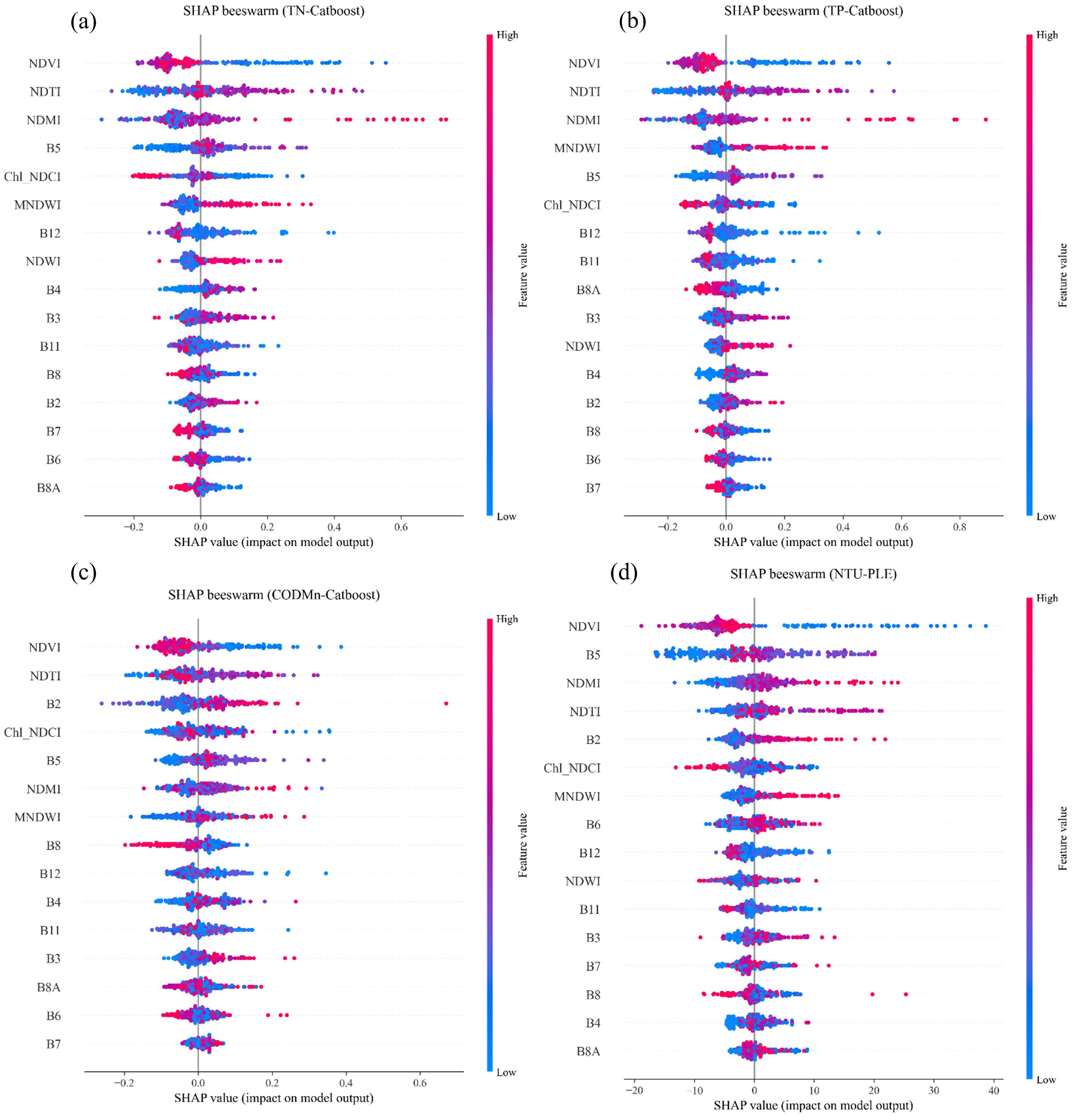
- CatBoost was identified as the optimal model for retrieving key water quality parameters (TN, TP, CODMn, and turbidity) from Sentinel-2 imagery, demonstrating superior accuracy and robustness in a dynamic fluvial system.
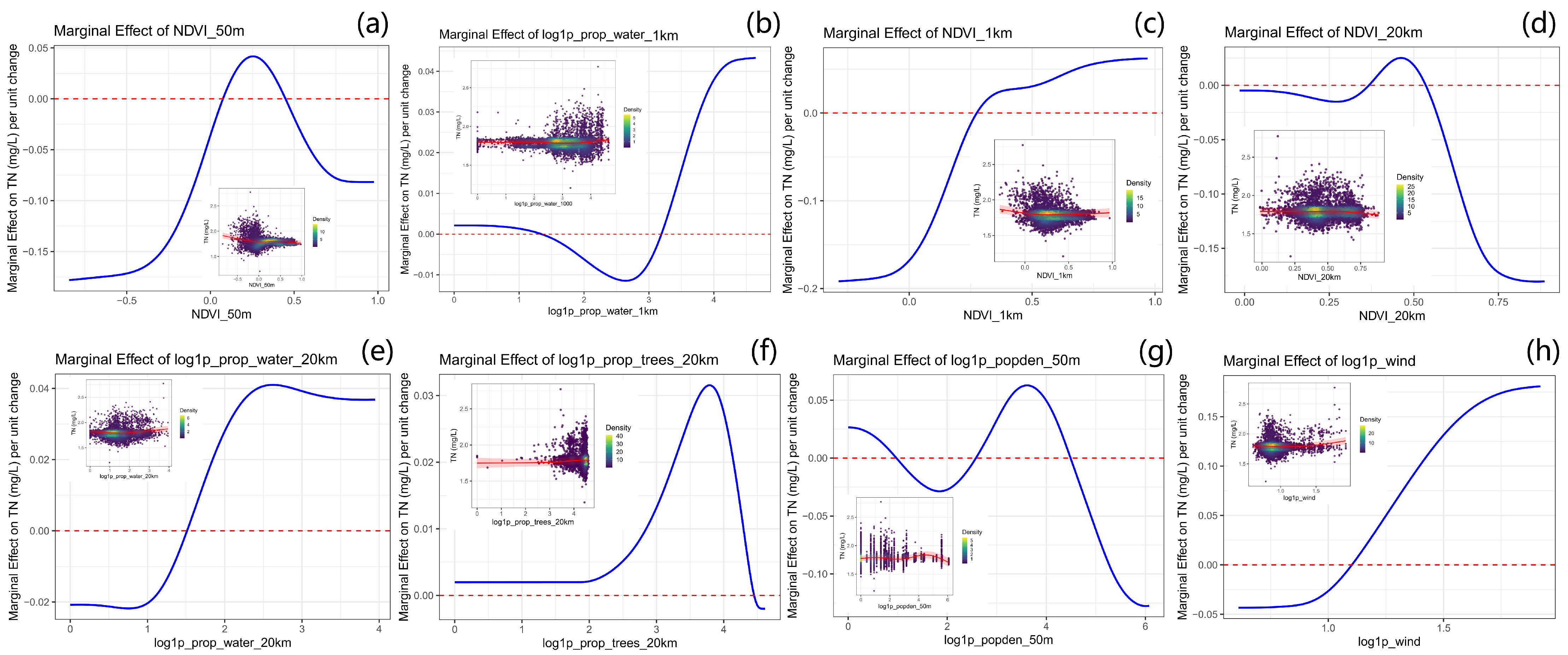
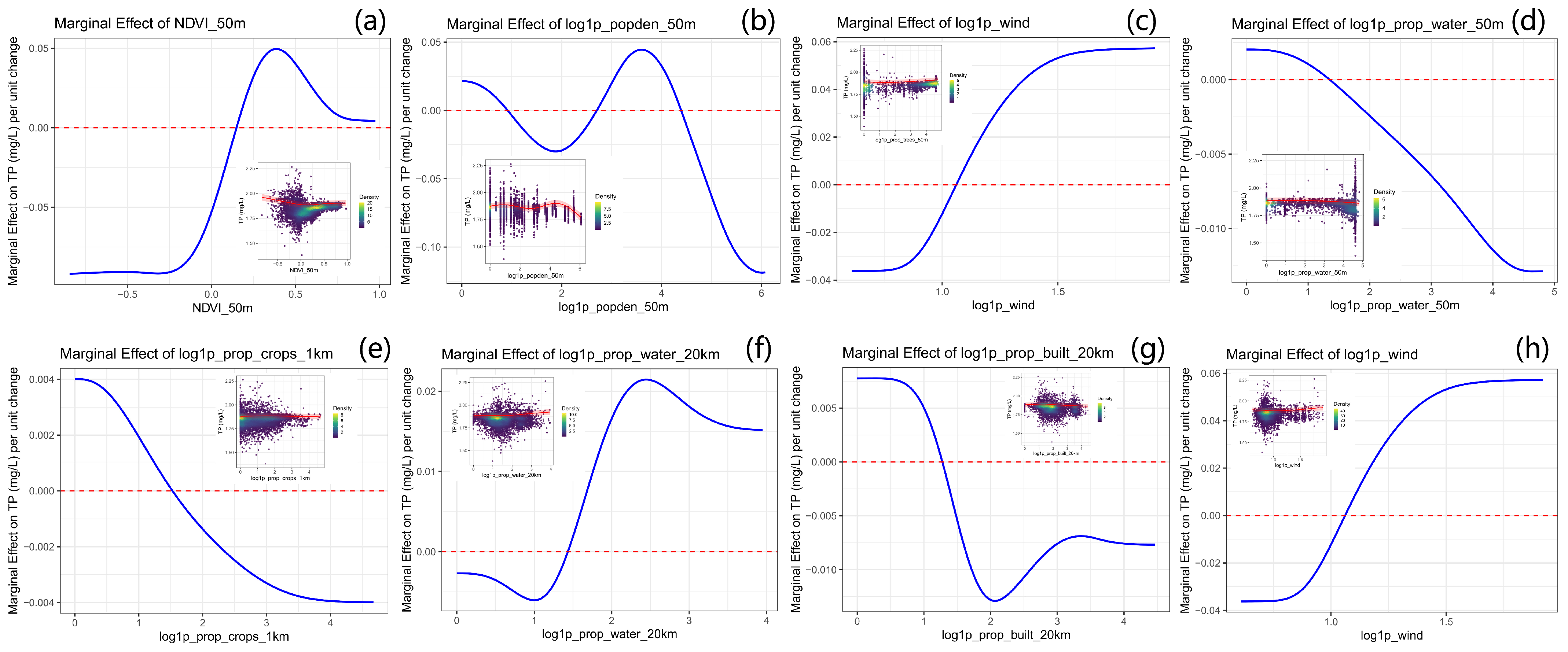
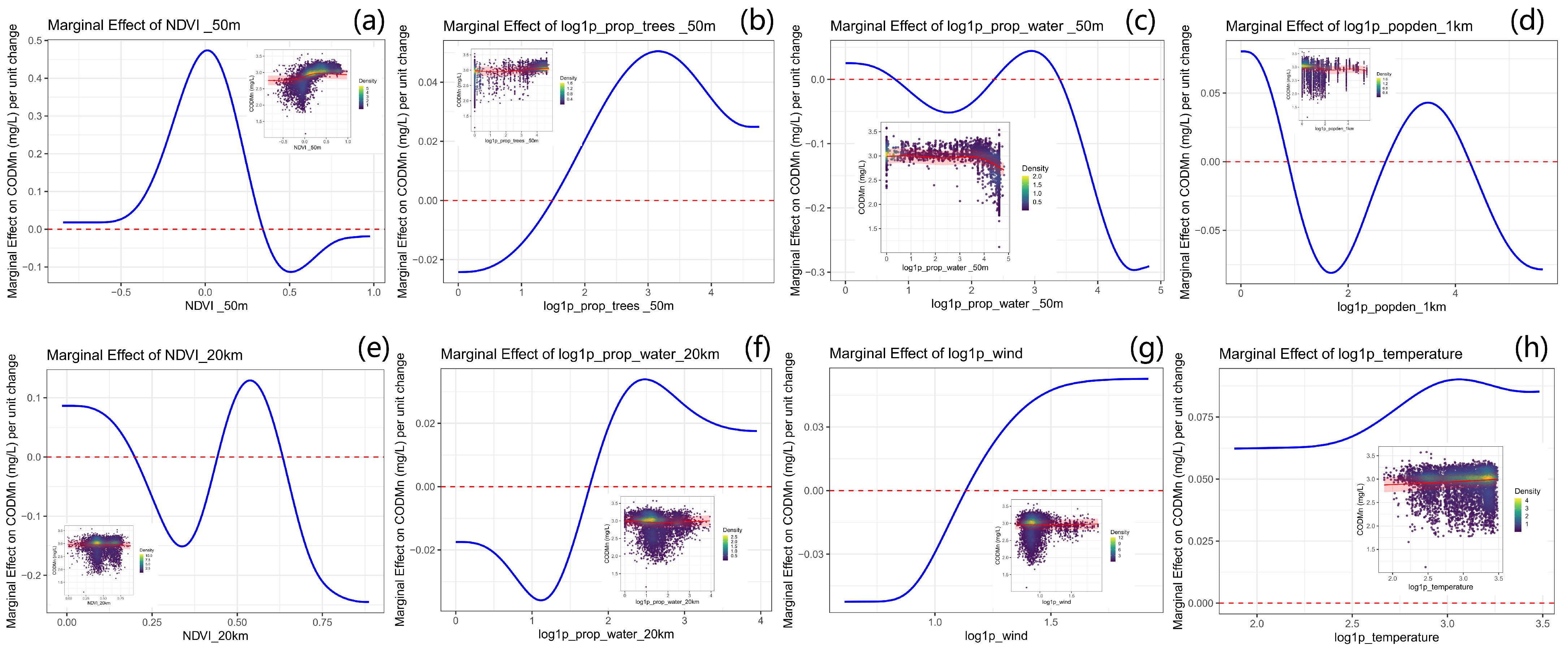
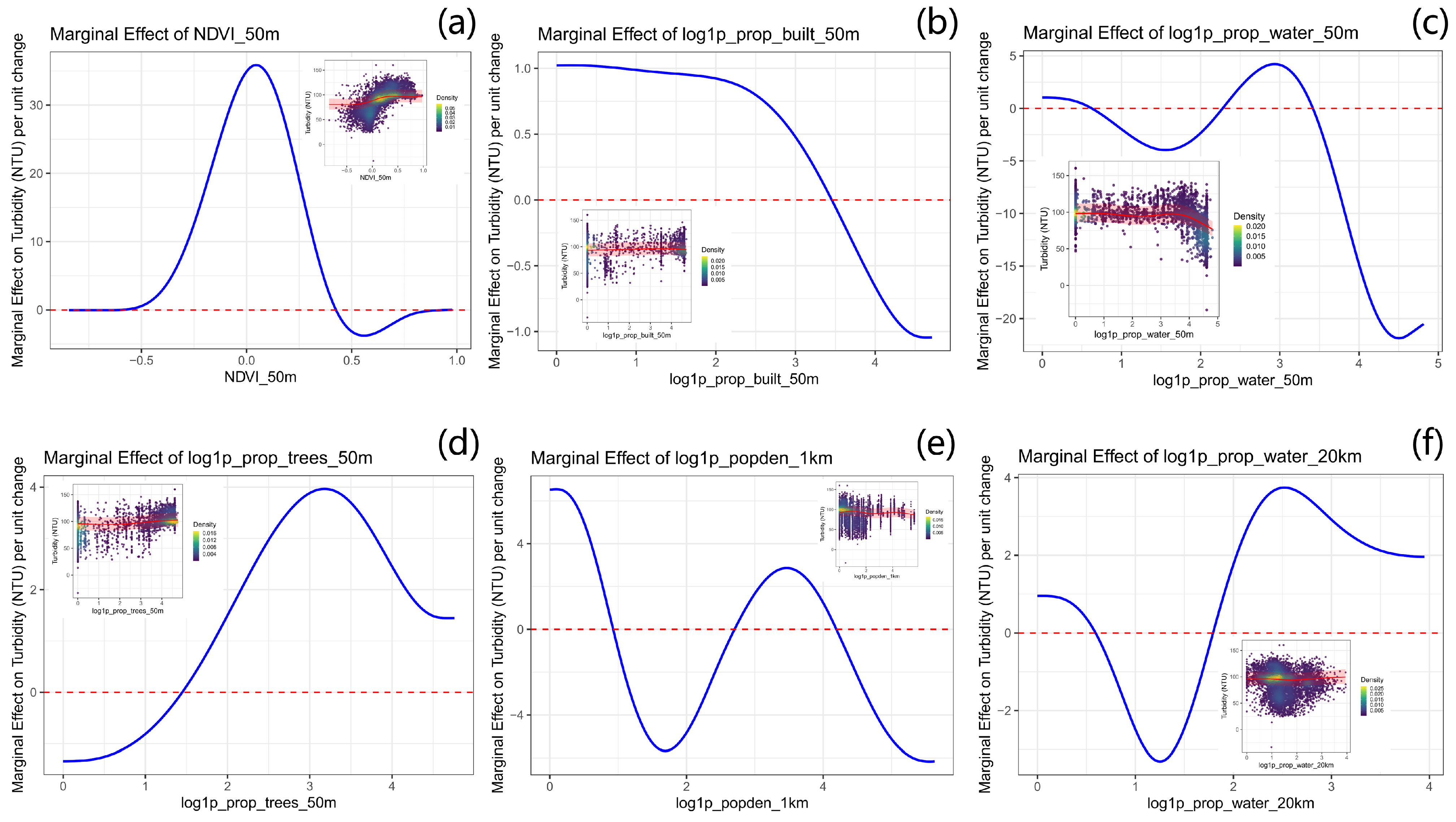
- Generalized additive models (GAMs) revealed scale-dependent and nonlinear responses of water quality to natural and anthropogenic drivers across buffer zones ranging from 50 m to 20 km, highlighting the multiphasic effects of factors such as forest cover, land use, and population density.
- This study provides a transferable remote sensing–ML-GAM framework that moves beyond water quality mapping to quantitatively decipher multi-scale driver thresholds, supporting spatially explicit watershed zoning and targeted management strategies.
- The findings offer actionable insights for differentiated pollution control—such as optimizing riparian buffers for nitrogen and phosphorus interception—and establish a basis for real-time, satellite-based monitoring to track management effectiveness in subtropical coastal rivers.
Abstract
1. Introduction
2. Materials and Methods
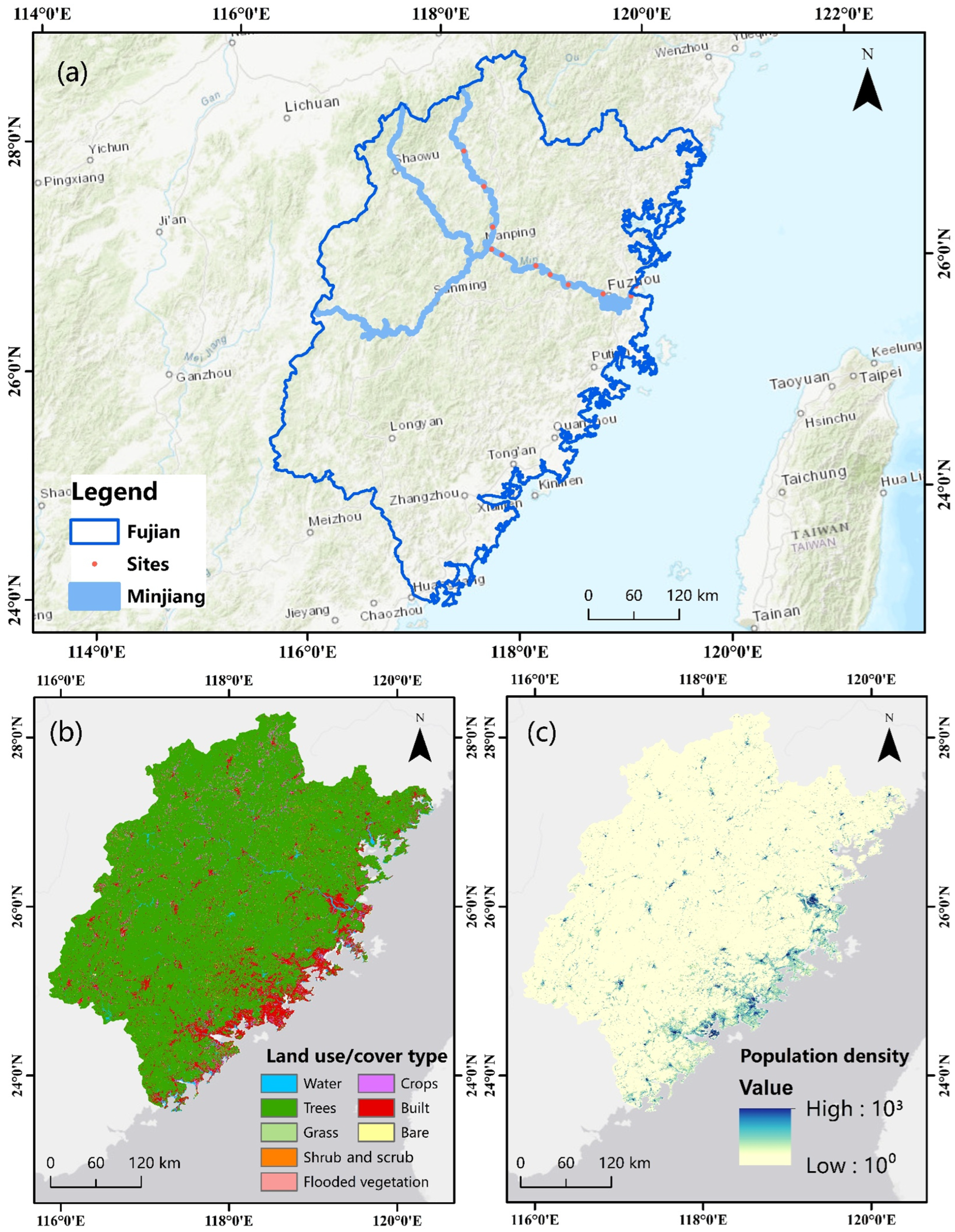
2.1. Study Area: The Minjiang River as a Representative Fluvial System
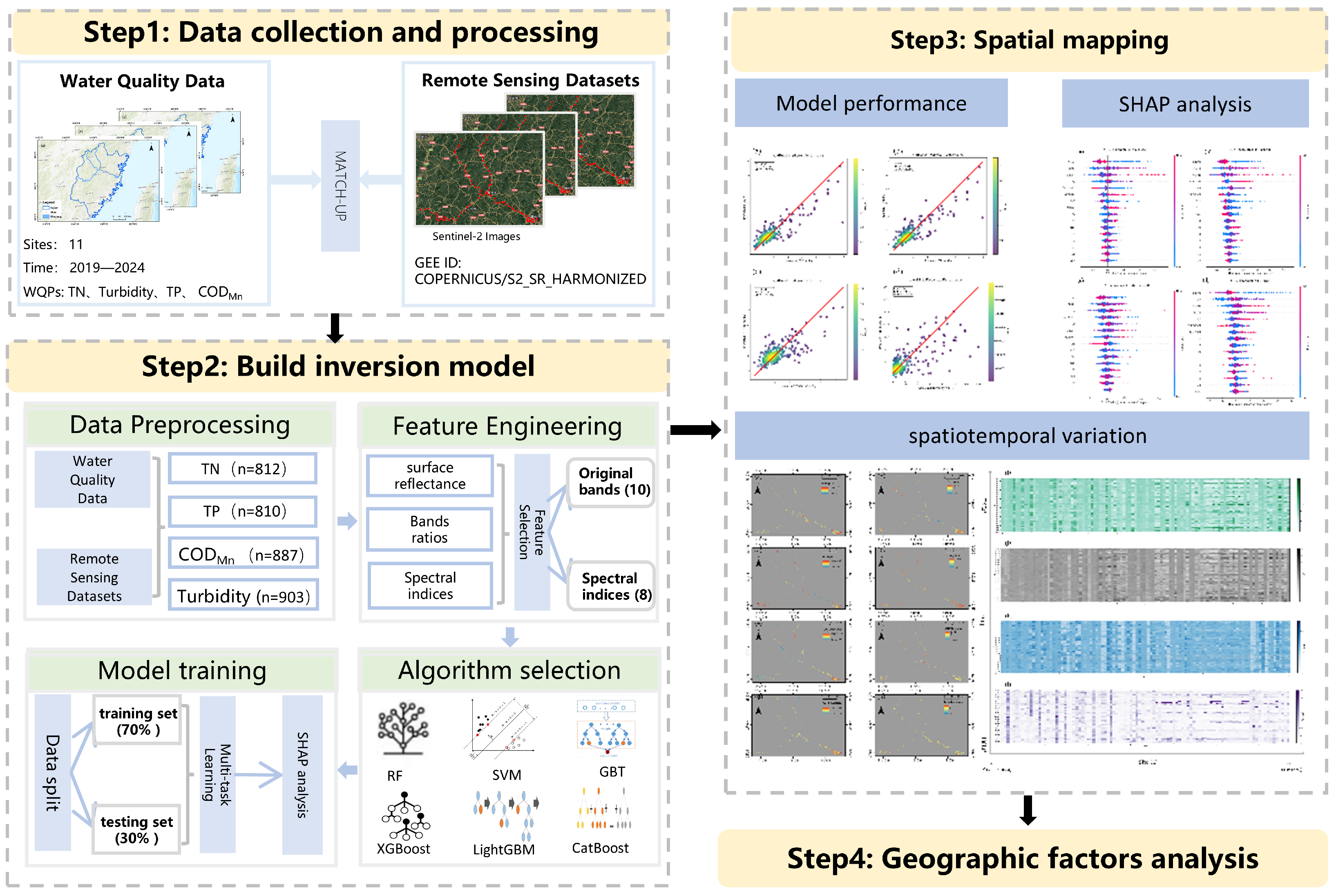
2.2. Data Acquisition and Preprocessing
2.2.1. In Situ Water Quality Parameters
2.2.2. Satellite Imagery and Cloud Masking
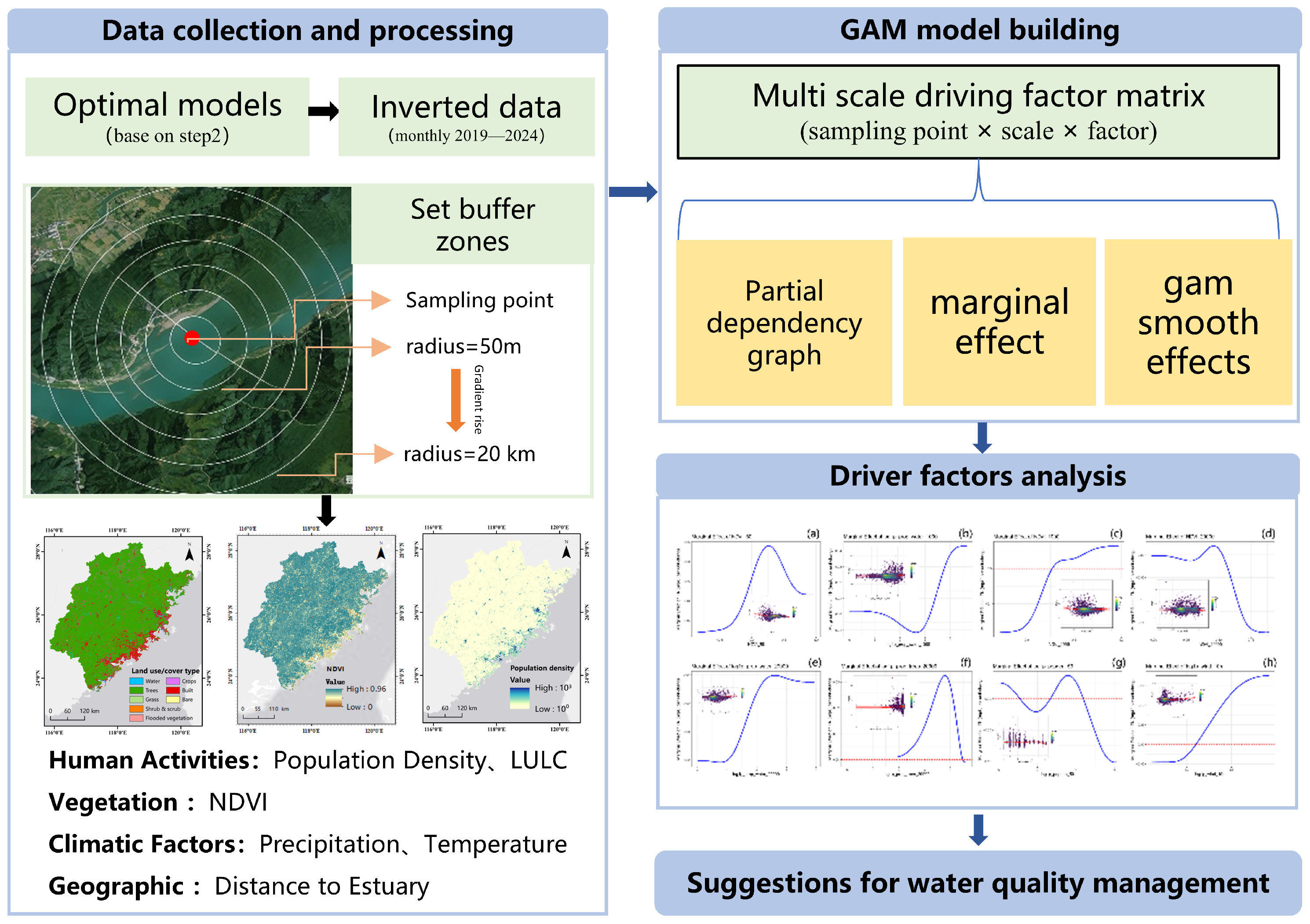
2.2.3. Multi-Scale Geospatial Driver Dataset
2.3. Methods
2.3.1. WQP Retrieval Using Machine Learning Methods
2.3.2. Quantifying Driving Mechanisms Using GAMs
3. Results
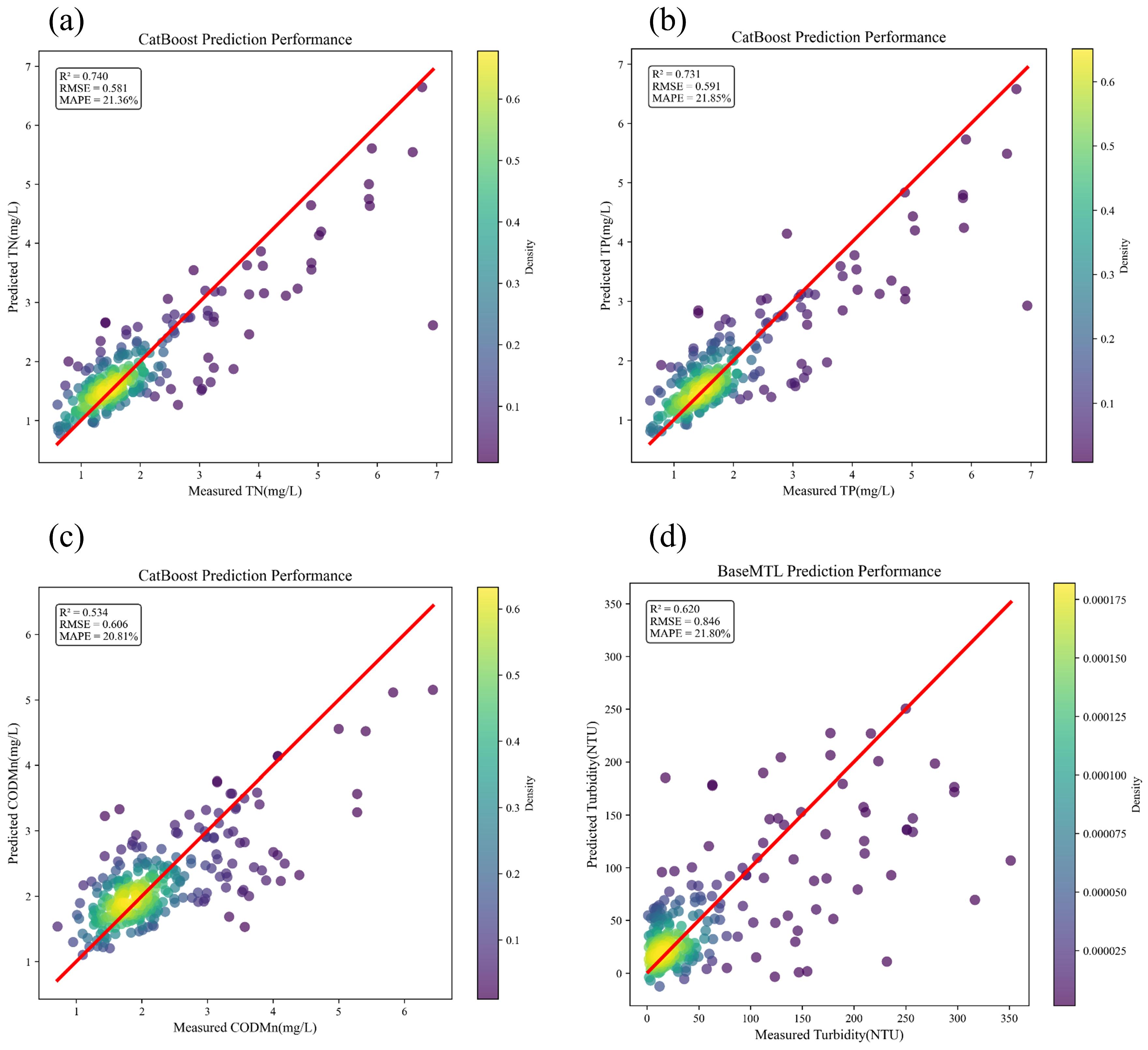
3.1. Comparative Performance of Machine Learning Retrieval Models
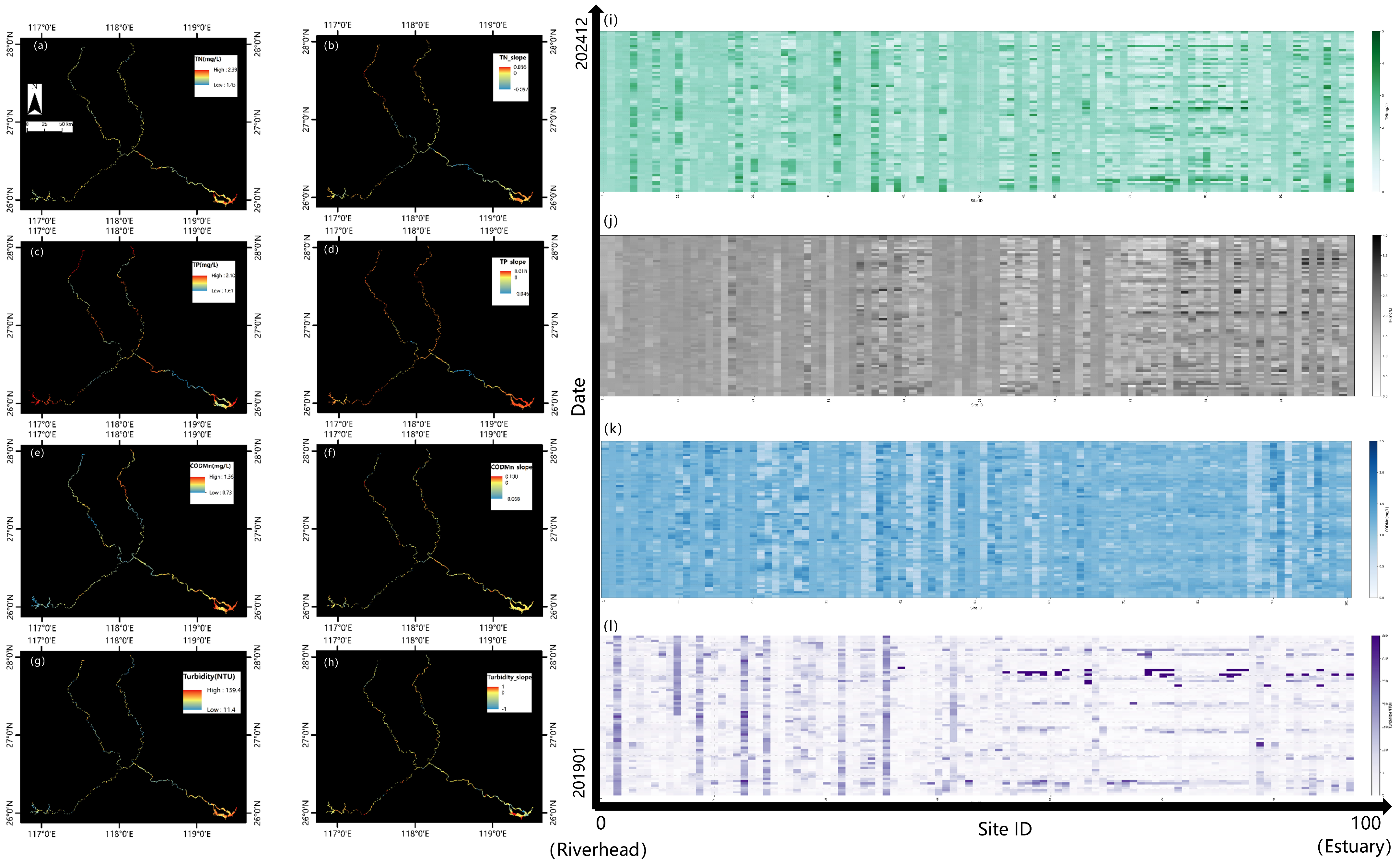
3.2. Spatiotemporal Patterns and Trends of Water Quality Parameters
3.3. Scale-Dependent Responses of Water Quality to Geospatial Drivers
4. Discussion
4.1. Superiority of CatBoost and the Value of Multi-Task Learning in Fluvial Remote Sensing
4.2. Mechanistic Interpretation of Scale-Dependent Driver Effects
4.3. Implications for Watershed Zoning and Differentiated Management Strategies
4.4. Limitations and Future Research Directions
5. Conclusions
Supplementary Materials
Author Contributions
Funding
Data Availability Statement
Conflicts of Interest
References
- Cheng, C.; Zhang, F.; Shi, J.; Kung, H.-T. What is the relationship between land use and surface water quality? A review and prospects from remote sensing perspective. Environ. Sci. Pollut. Res. 2022, 29, 56887–56907. [Google Scholar] [CrossRef]
- Wu, J.; Lu, J. Spatial scale effects of landscape metrics on stream water quality and their seasonal changes. Water Res. 2021, 191, 116811. [Google Scholar] [CrossRef]
- Huisman, J.; Codd, G.A.; Paerl, H.W.; Ibelings, B.W.; Verspagen, J.M.H.; Visser, P.M. Cyanobacterial blooms. Nat. Rev. Microbiol. 2018, 16, 471–483. [Google Scholar] [CrossRef]
- Oliveira Santos, V.; Guimarães, B.M.; Neto, I.E.; de Souza Filho, F.D.; Costa Rocha, P.A.; Thé, J.V.; Gharabaghi, B. Chlorophyll-a Estimation in 149 Tropical Semi-Arid Reservoirs Using Remote Sensing Data and Six Machine Learning Methods. Remote Sens. 2024, 16, 1870. [Google Scholar] [CrossRef]
- Harvey, E.T.; Kratzer, S.; Philipson, P. Satellite-based water quality monitoring for improved spatial and temporal retrieval of chlorophyll-a in coastal waters. Remote Sens. Environ. 2015, 158, 417–430. [Google Scholar] [CrossRef]
- Sahoo, D.P.; Sahoo, B.; Tiwari, M.K. MODIS-Landsat fusion-based single-band algorithms for TSS and turbidity estimation in an urban-waste-dominated river reach. Water Res. 2022, 224, 119082. [Google Scholar] [CrossRef] [PubMed]
- Terry, J.A.; Sadeghian, A.; Lindenschmidt, K.-E. Modelling Dissolved Oxygen/Sediment Oxygen Demand under Ice in a Shallow Eutrophic Prairie Reservoir. Water 2017, 9, 131. [Google Scholar] [CrossRef]
- Cai, X.; Li, Y.; Lei, S.; Zeng, S.; Zhao, Z.; Lyu, H.; Dong, X.; Li, J.; Wang, H.; Xu, J.; et al. A hybrid remote sensing approach for estimating chemical oxygen demand concentration in optically complex waters: A case study in inland lake waters in eastern China. Sci. Total Environ. 2023, 856, 158869. [Google Scholar] [CrossRef]
- Du, C.; Wang, Q.; Li, Y.; Lyu, H.; Zhu, L.; Zheng, Z.; Wen, S.; Liu, G.; Guo, Y. Estimation of total phosphorus concentration using a water classification method in inland water. Int. J. Appl. Earth Obs. Geoinf. 2018, 71, 29–42. [Google Scholar] [CrossRef]
- Sowrav, S.F.F.; Debsarma, S.K.; Das, M.K.; Ibtehal, K.M.; Rahman, M.; Hridita, N.T.; Broty, A.A.; Hoque, M.S.A. Developing a semi-automated technique of surface water quality analysis using GEE and machine learning: A case study for Sundarbans. Heliyon 2025, 11, e42404. [Google Scholar] [CrossRef]
- Feng, L.; Hou, X.; Zheng, Y. Monitoring and understanding the water transparency changes of fifty large lakes on the Yangtze Plain based on long-term MODIS observations. Remote Sens. Environ. 2019, 221, 675–686. [Google Scholar] [CrossRef]
- Zhang, J.; Li, S.; Dong, R.; Jiang, C.; Ni, M. Influences of land use metrics at multi-spatial scales on seasonal water quality: A case study of river systems in the Three Gorges Reservoir Area, China. J. Clean. Prod. 2019, 206, 76–85. [Google Scholar] [CrossRef]
- Zhang, S.; Yan, X.; Feng, T.; Zhang, X.; Qiao, R.; Ren, Y.; Chen, Q. Unraveling nonlinear impacts of land use change on riverine water quality under future scenarios. Ecol. Indic. 2025, 179, 114258. [Google Scholar] [CrossRef]
- Shi, P.; Zhang, Y.; Li, Z.; Li, P.; Xu, G. Influence of land use and land cover patterns on seasonal water quality at multi-spatial scales. Catena 2017, 151, 182–190. [Google Scholar] [CrossRef]
- Xiao, M.; Yi, Y.; Zhang, W.; Yue, F. Spatial scale effects of the relationships between land use and water quality: Example from the urban rivers, Northern China. Earth Crit. Zone 2025, 2, 100049. [Google Scholar] [CrossRef]
- Mello, K.D.; Randhir, T.O.; Valente, R.A.; Vettorazzi, C.A. Riparian restoration for protecting water quality in tropical agricultural watersheds. Ecol. Eng. 2017, 108, 514–524. [Google Scholar] [CrossRef]
- Aparicio-Ibáñez, J.; Pimentel, R.; Bonet-García, F.J.; Polo, M.J. Using NDVI-derived vegetation vigour as a proxy for soil water content in Mediterranean-mountain traditional water management systems: Seasonal variability and restoration impacts. Ecol. Indic. 2025, 174, 113468. [Google Scholar] [CrossRef]
- Yang, H.; Kong, J.; Hu, H.; Du, Y.; Gao, M.; Chen, F. A Review of Remote Sensing for Water Quality Retrieval: Progress and Challenges. Remote Sens. 2022, 14, 1770. [Google Scholar] [CrossRef]
- Salah, M.; Salem, S.I.; Utsumi, N.; Higa, H.; Ishizaka, J.; Oki, K. 3LATNet: Attention based deep learning model for global Chlorophyll-a retrieval from GCOM-C satellite. ISPRS J. Photogramm. Remote Sens. 2025, 220, 490–508. [Google Scholar] [CrossRef]
- Shang, Y.; Song, K.; Lai, F.; Lyu, L.; Liu, G.; Fang, C.; Hou, J.; Qiang, S.; Yu, X.; Wen, Z. Remote sensing of fluorescent humification levels and its potential environmental linkages in lakes across China. Water Res. 2023, 230, 119540. [Google Scholar] [CrossRef]
- Pahlevan, N.; Smith, B.; Schalles, J.; Binding, C.; Cao, Z.; Ma, R.; Alikas, K.; Kangro, K.; Gurlin, D.; Hà, N.; et al. Seamless retrievals of chlorophyll-a from Sentinel-2 (MSI) and Sentinel-3 (OLCI) in inland and coastal waters: A machine-learning approach. Remote Sens. Environ. 2020, 240, 111604. [Google Scholar] [CrossRef]
- Dong, L.; Gong, C.; Huai, H.; Wu, E.; Lu, Z.; Hu, Y.; Li, L.; Yang, Z. Retrieval of Water Quality Parameters in Dianshan Lake Based on Sentinel-2 MSI Imagery and Machine Learning: Algorithm Evaluation and Spatiotemporal Change Research. Remote Sens. 2023, 15, 5001. [Google Scholar] [CrossRef]
- Smith, M.E.; Robertson Lain, L.; Bernard, S. An optimized Chlorophyll a switching algorithm for MERIS and OLCI in phytoplankton-dominated waters. Remote Sens. Environ. 2018, 215, 217–227. [Google Scholar] [CrossRef]
- Aurin, D.; Mannino, A.; Franz, B. Spatially resolving ocean color and sediment dispersion in river plumes, coastal systems, and continental shelf waters. Remote Sens. Environ. 2013, 137, 212–225. [Google Scholar] [CrossRef]
- He, H.; Li, X.; Wang, D.; Qiao, W.; Sun, Y.; Han, Y.; Zhang, F.; Zhao, X. A novel quad-modality deep neural network for estimating chlorophyll-a concentrations in Lianyungang’s lakes and reservoirs using Sentinel-2 MSI data. Water Res. 2025, 286, 124246. [Google Scholar] [CrossRef]
- Shi, X.; Yu, H.; Zhao, S.; Sun, B.; Liu, Y.; Huo, J.; Wang, S.; Wang, J.; Wu, Y.; Wang, Y.; et al. Impacts of environmental factors on Chlorophyll-a in lakes in cold and arid regions: A 10-year study of Wuliangsuhai Lake, China. Ecol. Indic. 2023, 148, 110133. [Google Scholar] [CrossRef]
- Kumar, A.; Equeenuddin, S.M.; Mishra, D.R.; Acharya, B.C. Remote monitoring of sediment dynamics in a coastal lagoon: Long-term spatio-temporal variability of suspended sediment in Chilika. Estuar. Coast. Shelf Sci. 2016, 170, 155–172. [Google Scholar] [CrossRef]
- Zhang, Y.; Wu, L. Quantify water quality variation of urban river from hyperspectral images through ripple propagation network with spatially inconsecutive sampling. J. Hydrol. Reg. Stud. 2025, 62, 102765. [Google Scholar] [CrossRef]
- Qiao, Z.; Sun, S.; Jiang, Q.O.; Xiao, L.; Wang, Y.; Yan, H. Retrieval of Total Phosphorus Concentration in the Surface Water of Miyun Reservoir Based on Remote Sensing Data and Machine Learning Algorithms. Remote Sens. 2021, 13, 4662. [Google Scholar] [CrossRef]
- Guo, H.; Huang, J.J.; Chen, B.; Guo, X.; Singh, V.P. A machine learning-based strategy for estimating non-optically active water quality parameters using Sentinel-2 imagery. Int. J. Remote Sens. 2021, 42, 1841–1866. [Google Scholar] [CrossRef]
- Shen, L.Q.; Amatulli, G.; Sethi, T.; Raymond, P.; Domisch, S. Estimating nitrogen and phosphorus concentrations in streams and rivers, within a machine learning framework. Sci. Data 2020, 7, 161. [Google Scholar] [CrossRef]
- Kirk, J.T.O. Light and Photosynthesis in Aquatic Ecosystems, 3rd ed.; Cambridge University Press: Cambridge, UK, 2010. [Google Scholar]
- Mobley, C. Light and Water: Radiative Transfer in Natural Waters; Academic Press: Cambridge, MA, USA, 1994. [Google Scholar]
- Zhang, Y.; He, X.; Lian, G.; Bai, Y.; Yang, Y.; Gong, F.; Wang, D.; Zhang, Z.; Li, T.; Jin, X. Monitoring and spatial traceability of river water quality using Sentinel-2 satellite images. Sci. Total Environ. 2023, 894, 164862. [Google Scholar] [CrossRef]
- Zhao, Y.; He, X.; Pan, S.; Bai, Y.; Wang, D.; Li, T.; Gong, F.; Zhang, X. Satellite retrievals of water quality for diverse inland waters from Sentinel-2 images: An example from Zhejiang Province, China. Int. J. Appl. Earth Obs. Geoinf. 2024, 132, 104048. [Google Scholar] [CrossRef]
- Sherjah, P.Y.; Sajikumar, N.; Nowshaja, P.T. Quality monitoring of inland water bodies using Google Earth Engine. J. Hydroinform. 2023, 25, 432–450. [Google Scholar] [CrossRef]
- Aschbacher, J.; Milagro-Pérez, M.P. The European Earth monitoring (GMES) programme: Status and perspectives. Remote Sens. Environ. 2012, 120, 3–8. [Google Scholar] [CrossRef]
- Drusch, M.; Del Bello, U.; Carlier, S.; Colin, O.; Fernandez, V.; Gascon, F.; Hoersch, B.; Isola, C.; Laberinti, P.; Martimort, P.; et al. Sentinel-2: ESA’s Optical High-Resolution Mission for GMES Operational Services. Remote Sens. Environ. 2012, 120, 25–36. [Google Scholar] [CrossRef]
- Zhao, Y.; Chen, M.; He, J.; Ma, Y. Monitoring water quality parameters using multi-source data-driven machine learning models. Eng. Appl. Comput. Fluid Mech. 2025, 19, 2509658. [Google Scholar] [CrossRef]
- Breiman, L. Random forests. Mach. Learn. 2001, 45, 5–32. [Google Scholar] [CrossRef]
- Friedman, J.H. Greedy function approximation: A gradient boosting machine. Ann. Stat. 2001, 29, 1189–1232. [Google Scholar] [CrossRef]
- Awad, M.; Khanna, R. Support Vector Regression. In Efficient Learning Machines: Theories, Concepts, and Applications for Engineers and System Designers; Awad, M., Khanna, R., Eds.; Apress: Berkeley, CA, USA, 2015; pp. 67–80. [Google Scholar]
- Georganos, S.; Grippa, T.; Vanhuysse, S.; Lennert, M.; Shimoni, M.; Wolff, E. Very High Resolution Object-Based Land Use–Land Cover Urban Classification Using Extreme Gradient Boosting. IEEE Geosci. Remote Sens. Lett. 2018, 15, 607–611. [Google Scholar] [CrossRef]
- Ke, G.; Meng, Q.; Finley, T.; Wang, T.; Chen, W.; Ma, W.; Ye, Q.; Liu, T.-Y. LightGBM: A Highly Efficient Gradient Boosting Decision Tree. In Proceedings of the Neural Information Processing Systems, Long Beach, CA, USA, 4–9 December 2017; Curran Associates, Inc.: Red Hook, NY, USA, 2017. [Google Scholar]
- Ostroumova, L.; Gusev, G.; Vorobev, A.; Dorogush, A.V.; Gulin, A. CatBoost: Unbiased Boosting with Categorical Features. In Proceedings of the Neural Information Processing Systems, Long Beach, CA, USA, 4–9 December 2017; Curran Associates, Inc.: Red Hook, NY, USA, 2017. [Google Scholar]
- Tang, H.; Liu, J.; Zhao, M.; Gong, X. Progressive Layered Extraction (PLE): A Novel Multi-Task Learning (MTL) Model for Personalized Recommendations. In Proceedings of the 14th ACM Conference on Recommender Systems, Virtual Event, Brazil, 22–26 September 2020; pp. 269–278. [Google Scholar]
- Román-Herrera, J.C.; Rodríguez-Peces, M.J.; Garzón-Roca, J. Comparison between Machine Learning and Physical Models Applied to the Evaluation of Co-Seismic Landslide Hazard. Appl. Sci. 2023, 13, 8285. [Google Scholar] [CrossRef]
- Wood, S.N. Generalized Additive Models. Annu. Rev. Stat. Its Appl. 2025, 12, 497–526. [Google Scholar] [CrossRef]
- Dorogush, A.V.; Ershov, V.; Gulin, A. CatBoost: Gradient boosting with categorical features support. arXiv 2018, arXiv:1810.11363. [Google Scholar] [CrossRef]
- Ji, J.; Xu, M.; Wang, S.; Cao, C.; Zhang, X.; Tian, F.; Zheng, J.; Sang, Y. Analysis of spatial pattern of vegetation resilience and influencing factors in Hubei Province based on long time series remote sensing data. Environ. Sustain. Indic. 2025, 27, 100742. [Google Scholar] [CrossRef]
- Ai, L.; Shi, Z.H.; Yin, W.; Huang, X. Spatial and seasonal patterns in stream water contamination across mountainous watersheds: Linkage with landscape characteristics. J. Hydrol. 2015, 523, 398–408. [Google Scholar] [CrossRef]
- Liu, J.; Shen, Z.; Chen, L. Assessing how spatial variations of land use pattern affect water quality across a typical urbanized watershed in Beijing, China. Landsc. Urban Plan. 2018, 176, 51–63. [Google Scholar] [CrossRef]
- Sun, W.; Song, X.; Mu, X.; Gao, P.; Wang, F.; Zhao, G. Spatiotemporal vegetation cover variations associated with climate change and ecological restoration in the Loess Plateau. Agric. For. Meteorol. 2015, 209–210, 87–99. [Google Scholar] [CrossRef]
- Chen, J.; Xiao, H.; Li, Z.; Liu, C.; Wang, D.; Wang, L.; Tang, C. Threshold effects of vegetation coverage on soil erosion control in small watersheds of the red soil hilly region in China. Ecol. Eng. 2019, 132, 109–114. [Google Scholar] [CrossRef]
- Liu, J.; Gao, G.; Wang, S.; Jiao, L.; Wu, X.; Fu, B. The effects of vegetation on runoff and soil loss: Multidimensional structure analysis and scale characteristics. J. Geogr. Sci. 2018, 28, 59–78. [Google Scholar] [CrossRef]
- Zhang, Y.; Wu, L. Surveillance of urban river environment by quantifying distributions of water quality parameters using hyperspectral remote sensing-based ripple propagation graph network. Environ. Pollut. 2025, 384, 126875. [Google Scholar] [CrossRef] [PubMed]
- Chen, X.; Strokal, M.; van Vliet, M.; Liu, L.; Bai, Z.; Ma, L.; Kroeze, C. Keeping Nitrogen Use in China within the Planetary Boundary Using a Spatially Explicit Approach. Environ. Sci. Technol. 2024, 58, 9689–9700. [Google Scholar] [CrossRef] [PubMed]
- Hong, S.; Morgan, B.J.; Stocker, M.D.; Smith, J.; Pachepsky, Y.A. Spatial patterns of water quality and remote sensing indices from UAV-based multispectral imagery across an irrigation pond. Heliyon 2025, 11, e42622. [Google Scholar] [CrossRef] [PubMed]
- Ukwuoma, C.C.; Cai, D.; Bamisile, O.; Ukwuoma, C.D.; Otuka, C.I.; Anyanwu, N.O.; Ukwuoma, C.O.; Huang, Q. Optimised multi-hierarchical feature fusion with multi-kernel CNN and spectral-spatial convolutions for remote sensing image classification. Remote Sens. Appl. Soc. Environ. 2025, 40, 101727. [Google Scholar] [CrossRef]
- Chen, Y.; Yao, K.; Zhu, B.; Gao, Z.; Xu, J.; Li, Y.; Hu, Y.; Lin, F.; Zhang, X. Water Quality Inversion of a Typical Rural Small River in Southeastern China Based on UAV Multispectral Imagery: A Comparison of Multiple Machine Learning Algorithms. Water 2024, 16, 553. [Google Scholar] [CrossRef]



| Water Quality Parameters | Maximum | Minimum | Mean | Sample Size |
|---|---|---|---|---|
| TP, mg L−1 | 5.90 | 0.59 | 1.90 | 812 |
| TN, mg L−1 | 4.95 | 0.58 | 1.90 | 810 |
| CODMn, mg L−1 | 4.68 | 0.75 | 2.16 | 887 |
| Turbidity, NTU | 351 | 1.85 | 50.0 | 903 |
| Category | Factor | GEE ImageCollection ID | Resolution | Time Interval | Time Range |
|---|---|---|---|---|---|
| Human Activities | Population Density | WorldPop/GP/100m/pop (https://developers.google.com/earth-engine/datasets/catalog/WorldPop_GP_100m_pop?hl=th, accessed on 15 June 2025) | 100 m | / | 2020 |
| LULC | GOOGLE/DYNAMICWORLD/V1 (https://developers.google.com/earth-engine/datasets/catalog/GOOGLE_DYNAMICWORLD_V1, accessed on 15 June 2025) | 10 m | Month | 2019–2024 | |
| Vegetation | NDVI | COPERNICUS/S2_SR_HARMONIZED (https://developers.google.com/earth-engine/datasets/catalog/COPERNICUS_S2_SR_HARMONIZED?hl=zh-cn, accessed on 15 June 2025) | 10 m | Month | 2019–2024 |
| Climatic Factors | Precipitation | ECMWF/ERA5/HOURLY (https://developers.google.com/earth-engine/datasets/catalog/ECMWF_ERA5_LAND_HOURLY, accessed on 15 June 2025) | 0.25° | Month | 2019–2024 |
| Temperature | ECMWF/ERA5/HOURLY (https://developers.google.com/earth-engine/datasets/catalog/ECMWF_ERA5_LAND_HOURLY?hl=th, accessed on 15 June 2025) | 0.25° | Month | 2019–2024 |
| Remote Sensing Index | Calculation Formula (Sentinel 2) | Advantage |
|---|---|---|
| Normalized Difference Moisture Index (NDMI) | NDMI = (B8 − B11)/(B8 + B11) | Displays moisture |
| Normalized Difference Turbidity Index (NDTI) | NDTI = (B4 − B3)/(B4 + B3) | Assesses water turbidity |
| Normalized Difference Wetland Index (NDWI) | NDWI = (B3 − B11)/(B3 + B11) | Identifies water body |
| Shortwave Infrared Vegetation Index (SWIRVI) | SWIRVI = (B8 − B11)/(B8 + B11) | Detects vegetation water stress |
| Normalized Difference Vegetation Index (NDVI) | NDVI = (B8 − B4)/(B8 + B4) | Quantifies green vegetation |
| Normalized Difference Water Index (NDWI) | NDWI = (B3 − B8)/(B3 + B8) | Monitors changes to water content |
| Normalized Difference Chlorophyll Index (NDCI) | NDCI = (B5 − B4)/(B5 + B4) | Retrieves chlorophyll concentration |
| Modified Normalized Difference Water Index (MNDWI) | MNDWI = (B3 − B11)/(B3 + B11) | Enhances water extraction accuracy |
| Model Performance | WQPs | ||||
|---|---|---|---|---|---|
| TN | TP | Turbidity | CODMn | ||
| CatBoost | R2 | 0.740 | 0.731 | 0.496 | 0.534 |
| RMSE | 0.581 | 0.591 | 0.821 | 0.606 | |
| MAPE (%) | 21.36 | 21.75 | 23.12 | 20.81 | |
| NRMSE | 0.095 | 0.0941 | 0.1670 | 0.110 | |
| PLE | R2 | 0.673 | 0.294 | 0.620 | 0.378 |
| RMSE | 0.640 | 0.046 | 0.846 | 0.791 | |
| MAPE (%) | 24.72 | 34.88 | 21.80 | 33.4 | |
| NRMSE | 0.101 | 0.0135 | 0.099 | 0.187 | |
| Quantitative Indicators | Water Quality Parameters | |||
|---|---|---|---|---|
| TN | TP | CODMn | Turbidity | |
| Adjusted R-Squared (R-sq.(adj)) | 0.241 | 0.293 | 0.658 | 0.678 |
| Deviance Explained (%) | 25.3 | 30.4 | 66.3 | 68.2 |
| Akaike Information Criterion | 0.253 | 0.304 | 0.663 | 0.682 |
| Bayesian Information Criterion | 0.241 | 0.293 | 0.658 | 0.678 |
Disclaimer/Publisher’s Note: The statements, opinions and data contained in all publications are solely those of the individual author(s) and contributor(s) and not of MDPI and/or the editor(s). MDPI and/or the editor(s) disclaim responsibility for any injury to people or property resulting from any ideas, methods, instructions or products referred to in the content. |
© 2026 by the authors. Licensee MDPI, Basel, Switzerland. This article is an open access article distributed under the terms and conditions of the Creative Commons Attribution (CC BY) license.
Share and Cite
Du, J.; Xiao, X.; Lin, D.; Zhang, G.; Li, H.; Lei, Y.; Liu, J.; Lu, H.; Li, Y.; Hong, H. Deciphering Multi-Scale Anthropogenic Drivers of River Water Quality: A Synergistic ML-GAM Cascade Framework with Sentinel-2. Remote Sens. 2026, 18, 840. https://doi.org/10.3390/rs18050840
Du J, Xiao X, Lin D, Zhang G, Li H, Lei Y, Liu J, Lu H, Li Y, Hong H. Deciphering Multi-Scale Anthropogenic Drivers of River Water Quality: A Synergistic ML-GAM Cascade Framework with Sentinel-2. Remote Sensing. 2026; 18(5):840. https://doi.org/10.3390/rs18050840
Chicago/Turabian StyleDu, Jinfang, Xilin Xiao, Da Lin, Guanglong Zhang, Hanyi Li, Yiming Lei, Jingchun Liu, Haoliang Lu, Yi Li, and Hualong Hong. 2026. "Deciphering Multi-Scale Anthropogenic Drivers of River Water Quality: A Synergistic ML-GAM Cascade Framework with Sentinel-2" Remote Sensing 18, no. 5: 840. https://doi.org/10.3390/rs18050840
APA StyleDu, J., Xiao, X., Lin, D., Zhang, G., Li, H., Lei, Y., Liu, J., Lu, H., Li, Y., & Hong, H. (2026). Deciphering Multi-Scale Anthropogenic Drivers of River Water Quality: A Synergistic ML-GAM Cascade Framework with Sentinel-2. Remote Sensing, 18(5), 840. https://doi.org/10.3390/rs18050840