Environmental Degradation in Iraq: Attribution of Climatic Change and Human Influences Through Multi-Factor Analysis



Highlights
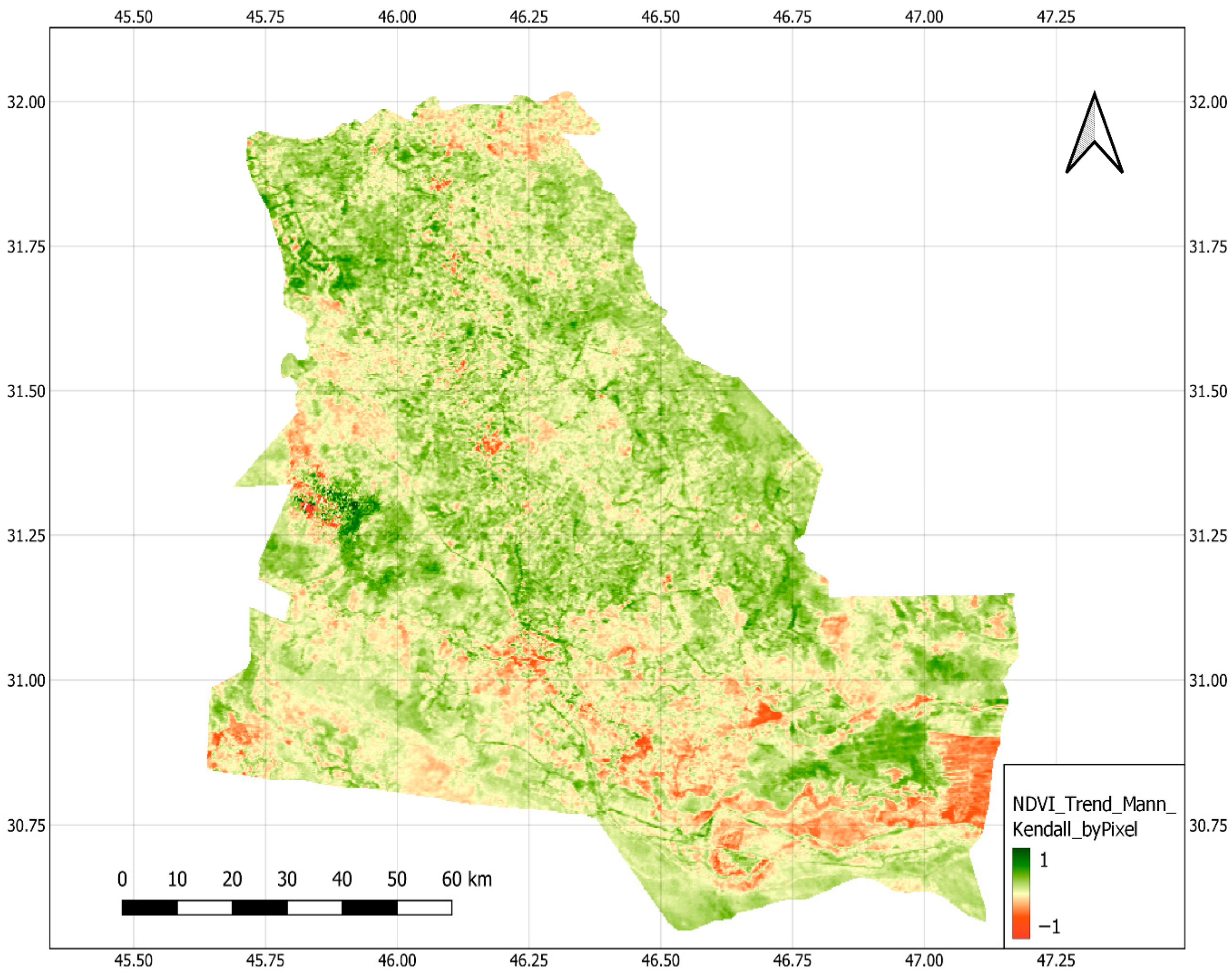
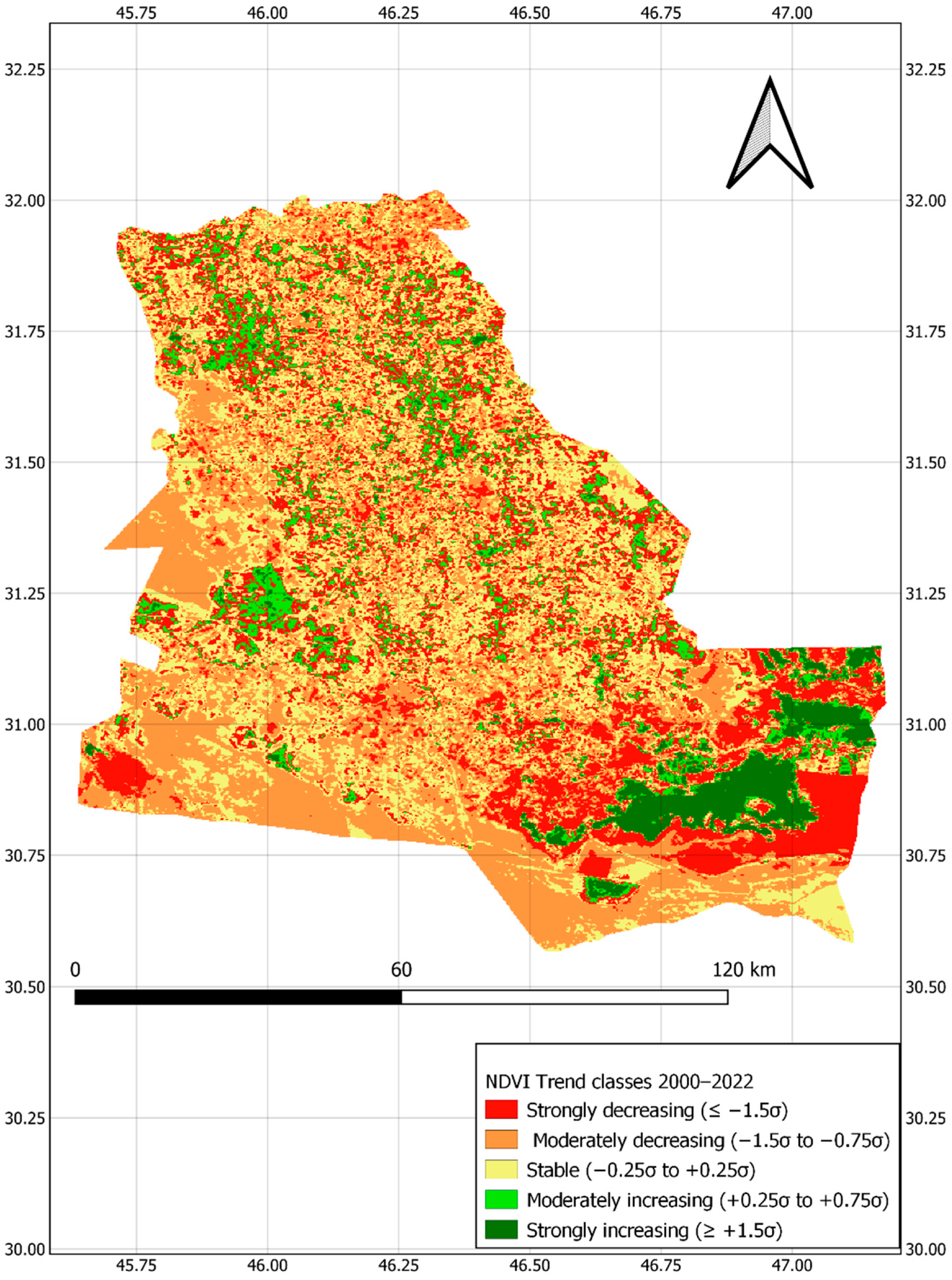
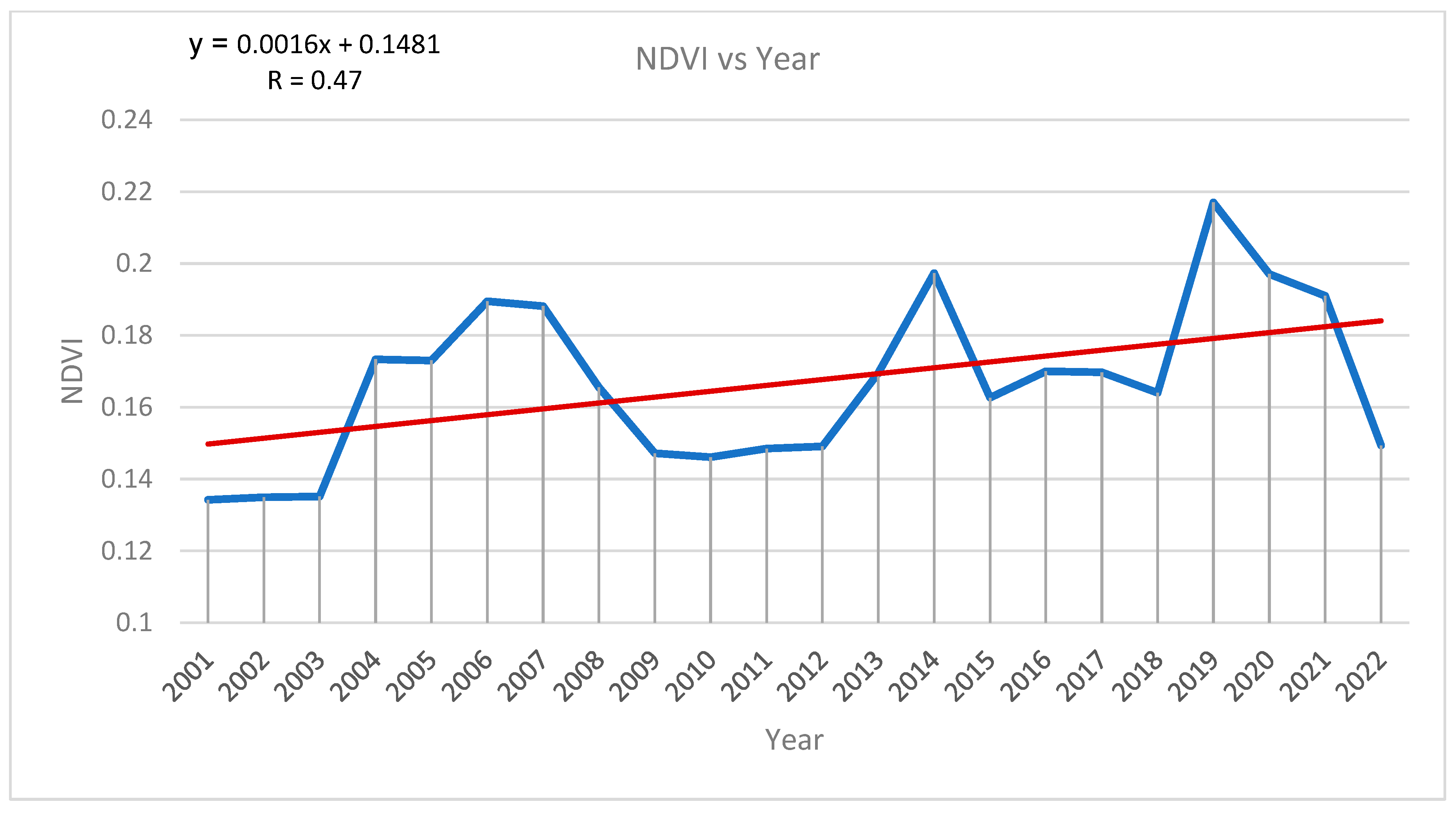
- Over half (56.5%) of Thi-Qar’s vegetation cover showed a decrease from 2001 to 2022, showing widespread degradation.
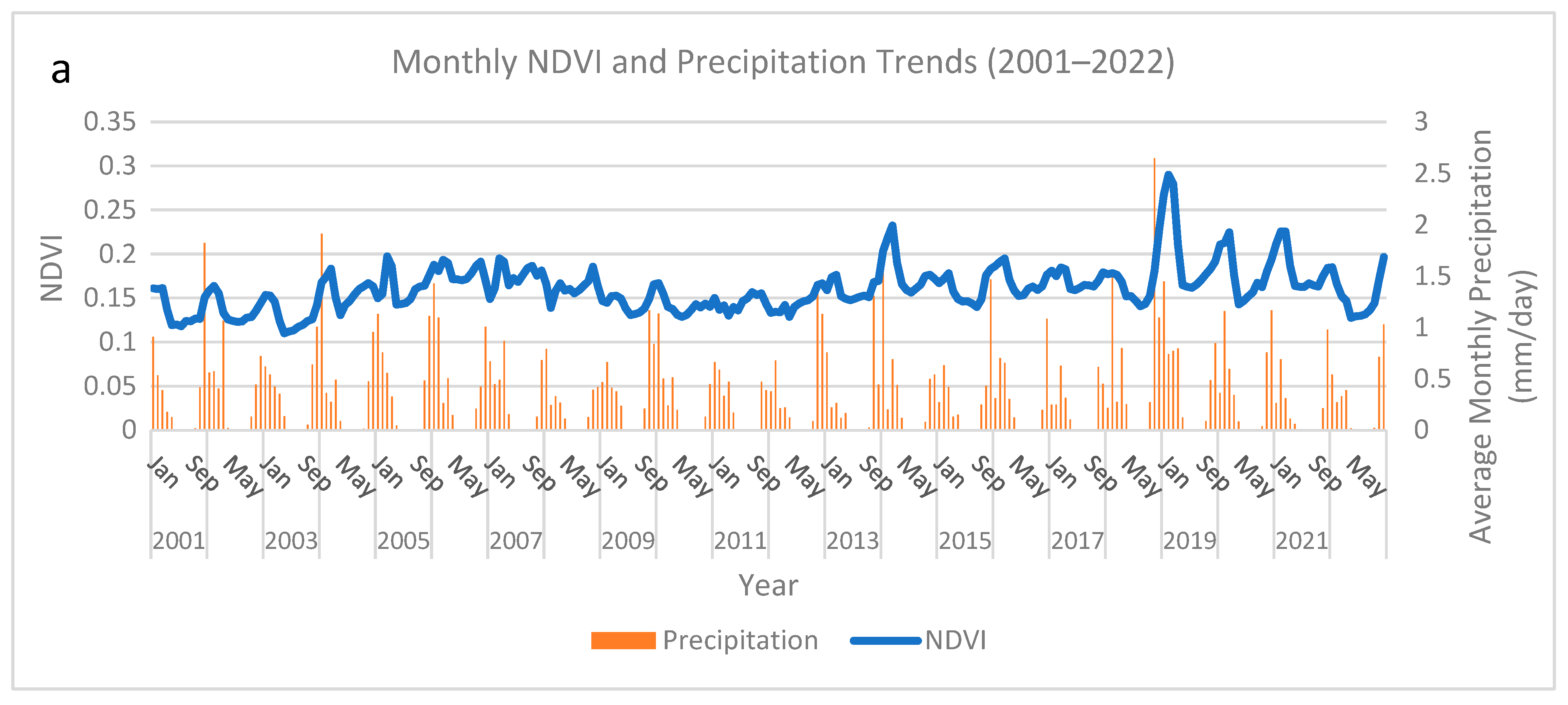
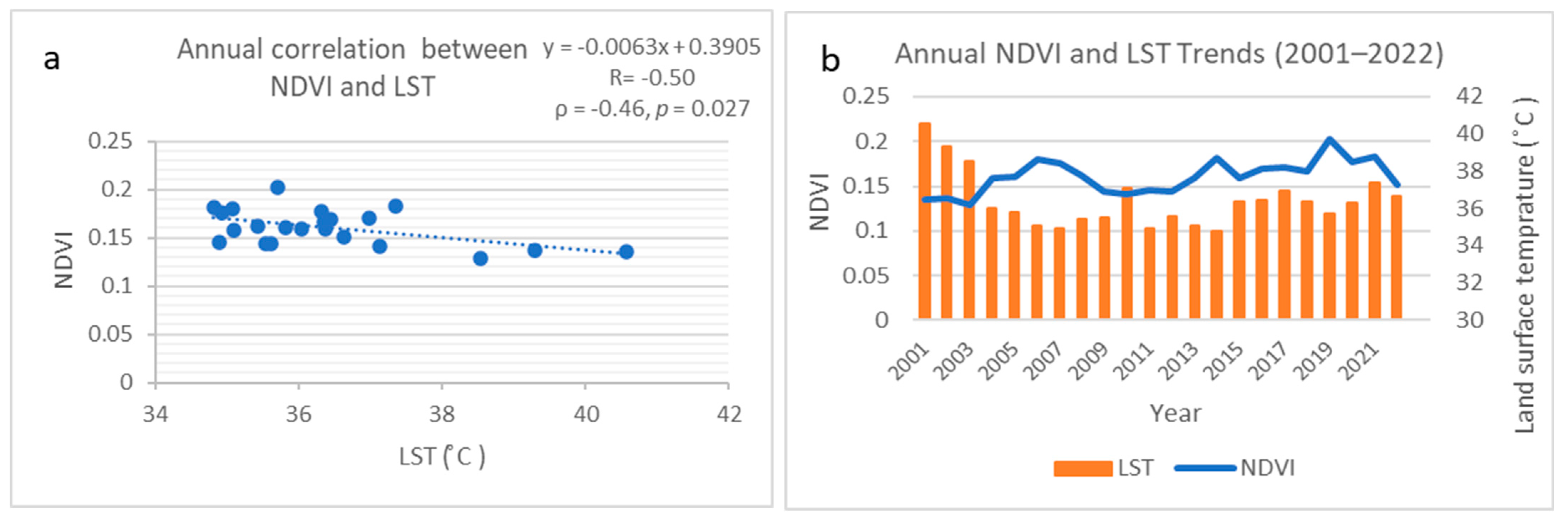
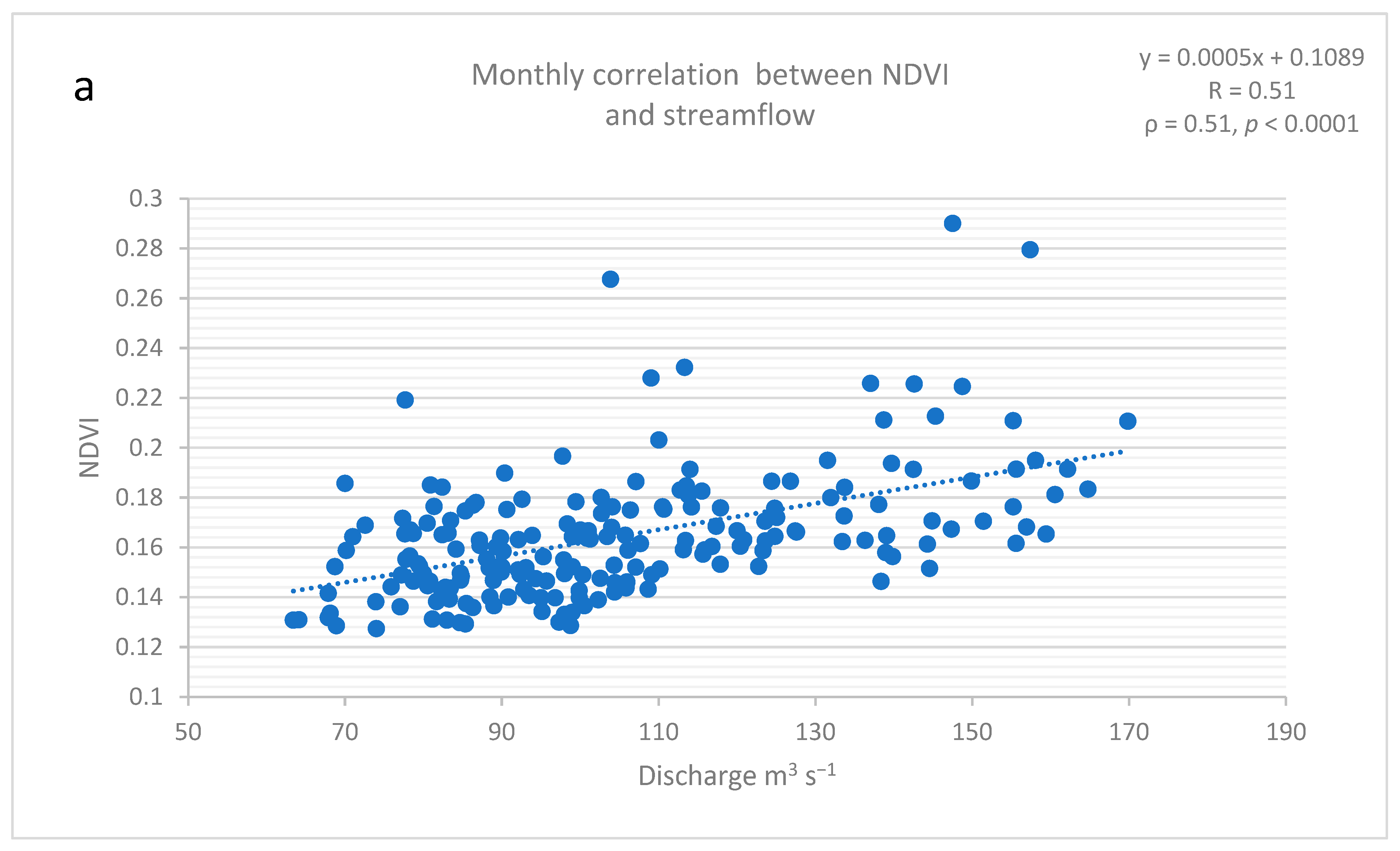
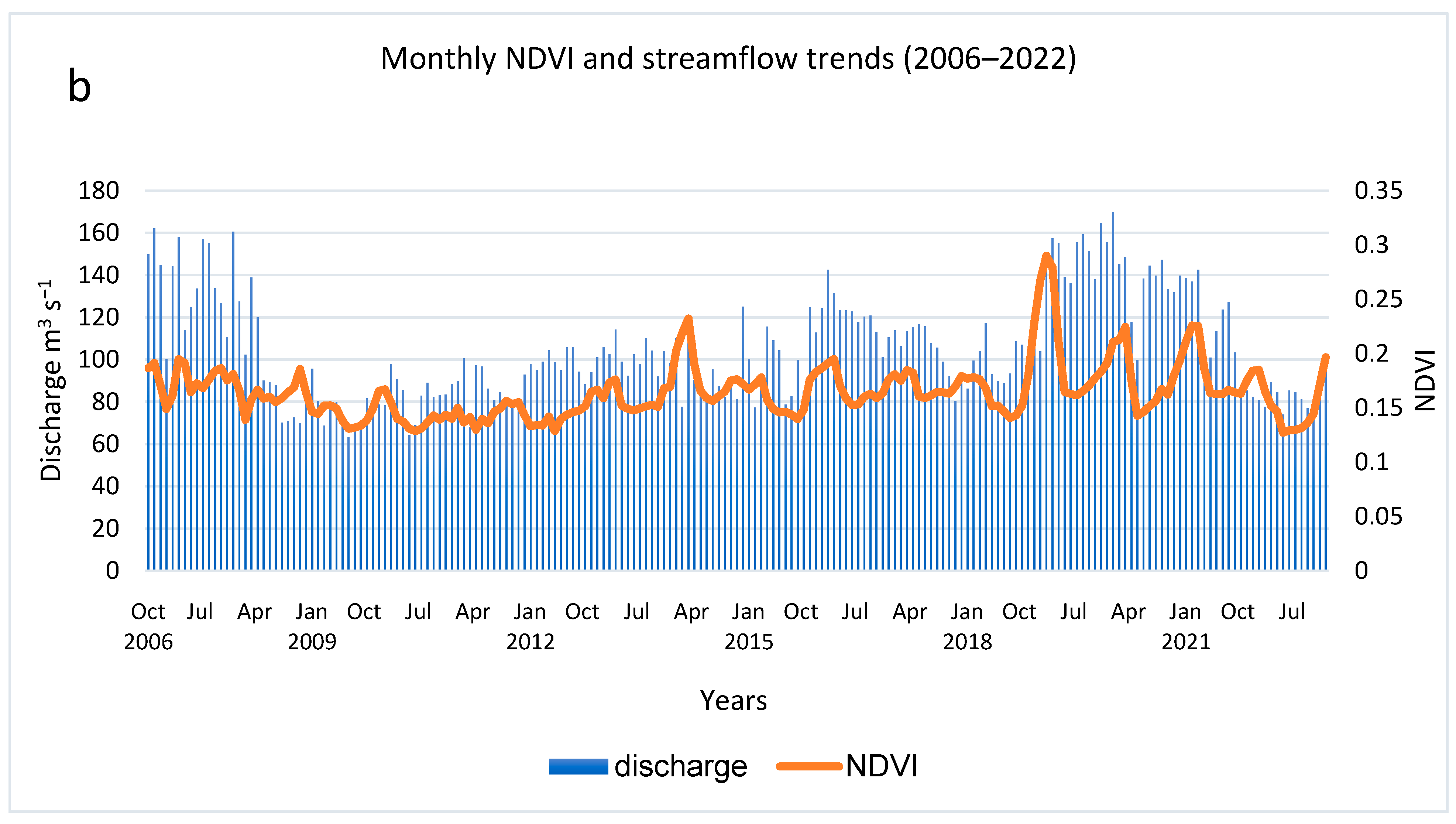
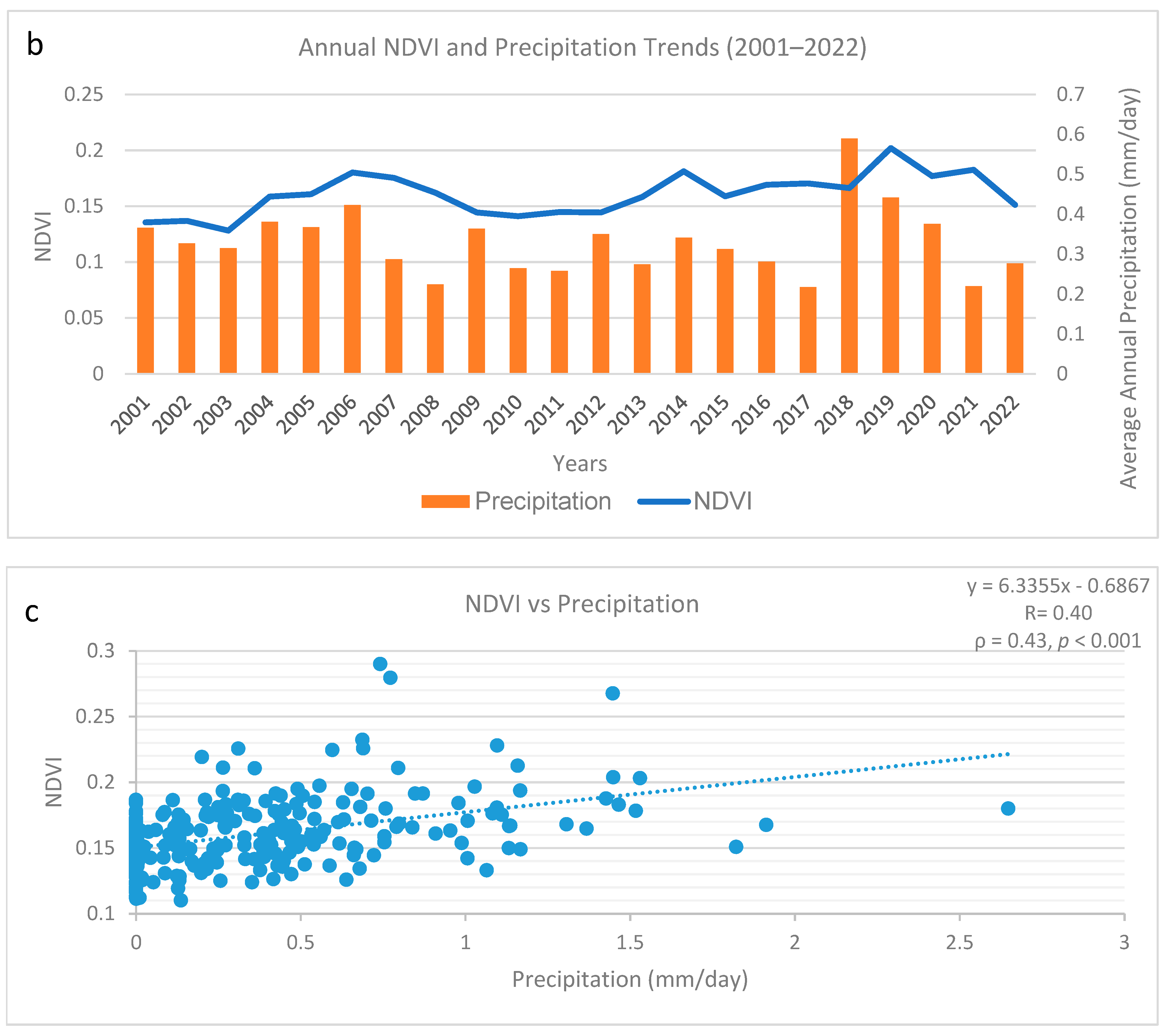
- Regression analysis showed that the NDVI was influenced more by streamflow than by LST or rainfall.
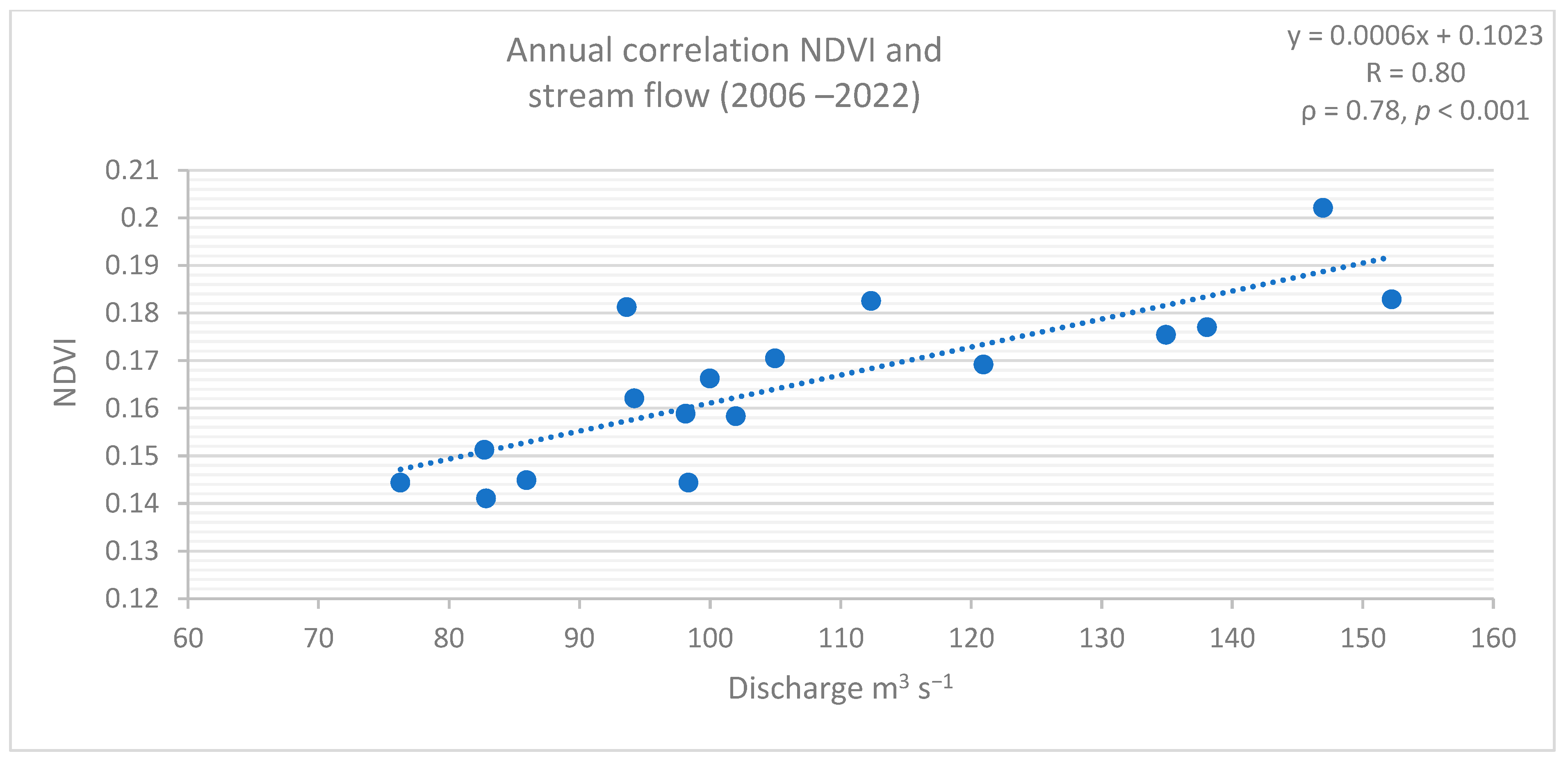
- The strong correlation between the NDVI and streamflow suggests that water management is more critical than climate patterns in preventing land degradation in this region.
- This study presents a replicable model for monitoring the effects of hydrological–climatic interactions on vegetation cover in similar arid places around the globe.
- Vegetation degradation is widespread: over half (56.5%) of Thi-Qar experienced vegetation loss from 2001 to 2022, with only 12% of the region showing improvement.
- Streamflow outweighs climate factors: hydrological control, particularly river discharge, is a stronger determinant of vegetation cover than rainfall or temperature, underscoring the importance of human water management as a key driver of land degradation or recovery.
- Water management is critical for land restoration: the strong link between streamflow and the NDVI suggests that improving water distribution and irrigation efficiency could mitigate degradation more effectively than climate adaptation alone.
- A scalable monitoring framework for arid regions: the study provides a replicable, satellite-based model to assess vegetation responses to hydrological and climatic changes, supporting evidence-based policy in vulnerable drylands worldwide.
Abstract
1. Introduction
- (1)
- Vegetation dynamics in Thi-Qar are governed by the interaction between hydrological changes (streamflow) and climatic factors (precipitation, temperature).
- (2)
- Areas with consistent water availability—whether from river flow or managed irrigation—will exhibit stable or improving vegetation trends, whereas water-scarce areas will show degradation, especially under rising temperatures.
- What are the spatiotemporal trends in vegetation represented by the NDVI across Thi-Qar Governorate over the past two decades?
- What is the impact of streamflow and precipitation change on the different vegetation and non-vegetation classes?
2. Materials and Methods
2.1. Materials
2.1.1. Study Area
2.1.2. Data Sources
Moderate-Resolution Imaging Spectroradiometer (MODIS) Satellite Data
Satellite-Based Rainfall Data
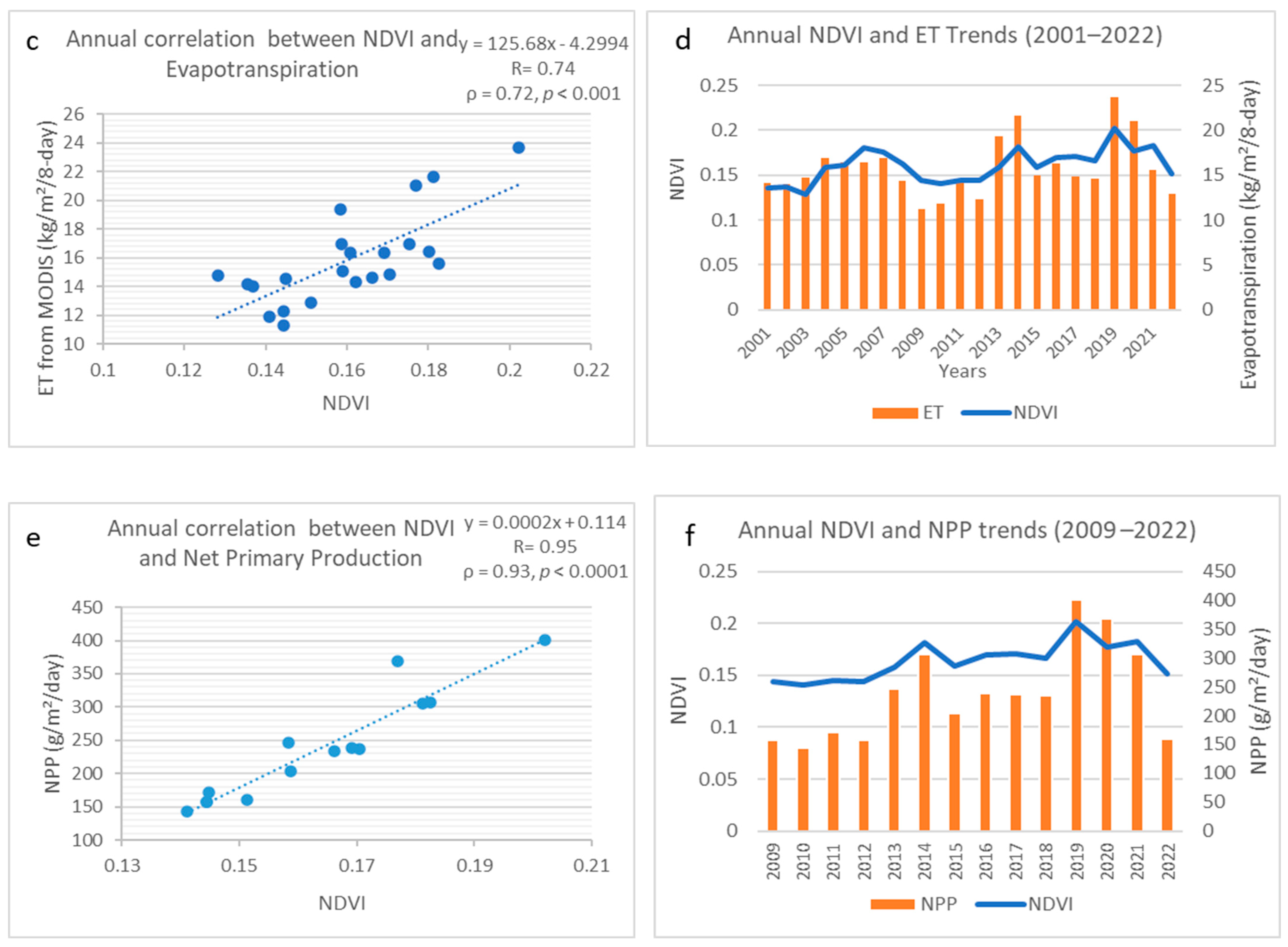
WAPOR Dekadal Net Primary Production 2.0
Evapotranspiration
Streamflow Data
Land Surface Temperature (LST)
2.2. Methods
2.2.1. Mann–Kendall
2.2.2. NDVI Linear Fit
2.2.3. Land Cover Classification and Grouping into Vegetated and Non-Vegetated Classes
2.2.4. Single and Multiple Regression Models
- , , and are the regression coefficients showing the contribution of each factor.
- In addition to multiple regression, partial correlation analysis [55,56] was employed to quantify the unique relationship between the NDVI and each predictor variable while controlling for the others. The first-order partial correlation coefficient between variables X and Y, while controlling for a third variable Z, is calculated as follows [57,58]:
- ▪
- PXY = Correlation between variable X and Y
- ▪
- PXZ = Correlation of the third variable Z with the variable X
- ▪
- PYZ = Correlation of the third variable Z with the variable Y
2.2.5. Data Harmonization
3. Results
4. Discussion
4.1. Spatial Analysis of Vegetation Changes
4.2. Temporal Analysis of Vegetation Changes
4.3. Impact of Individual Climate Drivers
4.4. Implications of Multiple Regression Analysis
4.5. Limitations and the Role of Land-Use Change
4.6. Importance of Streamflow to Vegetation Change
4.7. Implications for Management and Ecology of the Region
5. Conclusions
Author Contributions
Funding
Data Availability Statement
Acknowledgments
Conflicts of Interest
Abbreviations
| GEE | Google Earth Engine |
| MODIS | Moderate-Resolution Imaging Spectroradiometer |
| NDVI | Normalized Difference Vegetation Index |
| LST | Land Surface Temperature |
| ET | Evapotranspiration |
| NPP | Net Primary Productivity |
| MENA | Middle East–North Africa |
| DDP | Dahlem Desertification Paradigm |
| RUE | Rain Use Efficiency |
| UNDB | United Nations Development Business |
| CHIRPS | Climate Hazards Group InfraRed Precipitation with Station |
| WaPOR | Water Productivity through Open access Remotely sensed derived data |
| FAO | Food and Agriculture Organization |
References
- Hamed, M.M.; Al-Hasani, A.A.J.; Nashwan, M.S.; Sa’adi, Z.; Shahid, S. Assessing the Growing Threat of Heat Stress in the North Africa and Arabian Peninsula Region Connected to Climate Change. J. Clean. Prod. 2024, 447, 141639. [Google Scholar] [CrossRef]
- Adamo, N.; Al-Ansari, N.; Sissakian, V.; Fahmi, K.J.; Abed, S.A. Climate Change: Droughts and Increasing Desertification in the Middle East, with Special Reference to Iraq. Engineering 2022, 14, 235–273. [Google Scholar] [CrossRef]
- Djebou, D.C.S.; Singh, V.P.; Frauenfeld, O.W. Vegetation Response to Precipitation Across the Aridity Gradient of the Southwestern United States. J. Arid Environ. 2015, 115, 35–43. [Google Scholar] [CrossRef]
- Cherlet, M.; Hutchinson, C.; Reynolds, J.; Hill, J.; Sommer, S.; von Maltitz, G. World Atlas of Desertification; Publications Office of the European Union: Luxembourg, 2018; JRC111155. [Google Scholar] [CrossRef]
- Rivera-Marin, D.; Dash, J.; Ogutu, B. The Use of Remote Sensing for Desertification Studies: A Review. J. Arid Environ. 2022, 206, 104829. [Google Scholar] [CrossRef]
- Almalki, R.; Khaki, M.; Saco, P.M.; Rodriguez, J.F. Monitoring and Mapping Vegetation Cover Changes in Arid and Semi-arid Areas Using Remote Sensing Technology: A Review. Remote Sens. 2022, 14, 5143. [Google Scholar] [CrossRef]
- Piao, S.L.; Fang, J.Y.; Zhou, L.M.; Guo, Q.H.; Henderson, M.; Ji, W.; Li, Y.; Tao, S. Interannual Variations of Monthly and Seasonal Normalized Difference Vegetation Index (NDVI) in China From 1982 to 1999. J. Geophys. Res. Atmos. 2003, 108, 4401. [Google Scholar] [CrossRef]
- Chen, X.; Wang, Y.; Chen, Y.; Fu, S.; Zhou, N. NDVI-based Assessment of Land Degradation Trends in Balochistan, Pakistan, and Analysis of the Drivers. Remote Sens. 2023, 15, 2388. [Google Scholar] [CrossRef]
- Los, S.O.; Justice, C.O.; Tucker, C.J. A global 1° × 1° NDVI Dataset for Climate Studies Derived from the GIMMS Continental NDVI Data. Int. J. Remote Sens. 1994, 15, 3493–3518. [Google Scholar] [CrossRef]
- North, P.R.J. Estimation of fAPAR, LAI, and Vegetation Fractional Cover From ATSR-2 Imagery. Remote Sens. Environ. 2002, 80, 114–121. [Google Scholar] [CrossRef]
- Symeonakis, E.; Drake, N. Monitoring Desertification and Land Degradation Over Sub-Saharan Africa. Int. J. Remote Sens. 2004, 25, 573–592. [Google Scholar] [CrossRef]
- Huber-Sannwald, E.; Maestre, F.T.; Herrick, J.E.; Reynolds, J.F. Ecohydrological Feedbacks and Linkages Associated with Land Degradation: A Case Study from Mexico. Hydrol. Process. 2006, 20, 3395–3411. [Google Scholar] [CrossRef]
- Aladejana, O.O.; Salami, A.T.; Adetoro, O.I.O. Hydrological Responses to Land Degradation in the Northwest Benin Owena River Basin, Nigeria. J. Environ. Manag. 2018, 225, 300–312. [Google Scholar] [CrossRef] [PubMed]
- Rahman, G.; Farooq, U.; Jung, M.-K.; Kwon, H.-H. Spatiotemporal Vegetation Dynamics in South Asia (2001–2023): Roles of Climate and Anthropogenic Activities. Geosci. Lett. 2025, 12, 31. [Google Scholar] [CrossRef]
- Anwer, H.A.; Mohamed, T.; Hassan, A. Assessing Vegetation Dynamics in Al Jazirah, Sudan using NDVI-based Remote Sensing Techniques. J. Saudi Soc. Agric. Sci. 2025, 24, 18. [Google Scholar] [CrossRef]
- Moses, O.; Blamey, R.C.; Reason, C.J. Relationships Between NDVI, River Discharge and Climate in the Okavango River Basin Region. Int. J. Climatol. 2022, 42, 691–713. [Google Scholar] [CrossRef]
- Zhang, H.; Li, L.; Zhao, X.; Chen, F.; Wei, J.; Feng, Z.; Hou, T.; Chen, Y.; Yue, W.; Shang, H.; et al. Changes in Vegetation NDVI and its Response to Climate Change and Human Activities in the Ferghana Basin From 1982 to 2015. Remote Sens. 2024, 16, 1296. [Google Scholar] [CrossRef]
- Chen, S.; Ji, L.; Li, P.; Zhang, Y.; Tang, H.; Liu, X.; Wang, J. The Spatio-Temporal Variation of Vegetation and its Driving Factors During the Recent 20 Years in Beijing. Remote Sens. 2024, 16, 851. [Google Scholar] [CrossRef]
- Cheng, Y.; He, G.; Luo, J.; Gu, H.; Zhang, Z.; Liu, Y. Effects of Climate Change on Temperature Sensitivity of Vegetation Growth in the Huang–Huai–Hai Plain: Spatial–Temporal Dynamics and Ecological Adaptability. Remote Sens. 2024, 16, 4024. [Google Scholar] [CrossRef]
- Al-Obaidi, J.R.; Allawi, M.Y.; Al-Taie, B.S.; Alobaidi, K.H.; Al-Khayri, J.M.; Abdullah, S.; Ahmad-Kamil, E.I. The Environmental, Economic, and Social Development Impact of Desertification in Iraq: A Review on Desertification Control Measures and Mitigation Strategies. Environ. Monit. Assess. 2022, 194, 440. [Google Scholar] [CrossRef]
- Ethaib, S.; Zubaidi, S.L.; Al-Ansari, N. Evaluation Water Scarcity Based on GIS Estimation and Climate-Change Effects: A Case Study of Thi-Qar Governorate, Iraq. Cogent Eng. 2022, 9, 2075301. [Google Scholar] [CrossRef]
- Sun, P.; Liu, S.; Jiang, H.; Lü, Y.; Liu, J.; Lin, Y.; Liu, X. Hydrologic Effects of NDVI Time Series in a Context of Climatic Variability in an Upstream Catchment of the Minjiang River. J. Am. Water Resour. Assoc. 2008, 44, 1132–1143. [Google Scholar] [CrossRef]
- Jia, M.; Hu, S.; Hu, X.; Long, Y. Response Mechanism of Annual Streamflow Decline to Vegetation Growth and Climate Change in the Han River Basin, China. Forests 2023, 14, 2132. [Google Scholar] [CrossRef]
- Al-Maliki, L.A.; Al-Mamoori, S.K.; Al-Ansari, N.; El-Tawel, K.; Comair, F.G. Climate Change Impact on Water Resources of Iraq: A review. IOP Conf. Ser. Earth Environ. Sci. 2022, 1120, 012025. [Google Scholar] [CrossRef]
- Ali, H.M.; Shakir, R.R. Geotechnical Map of Thi Qar Governorate Using Geographical Information Systems. Mater. Today Proc. 2022, 60, 1286–1296. [Google Scholar] [CrossRef]
- Al-Ansari, N.; Abbas, N.; Laue, J.; Knutsson, S. Water scarcity: Problems and Possible Solutions. J. Earth Sci. Geotech. Eng. 2021, 11, 243–315. [Google Scholar] [CrossRef]
- Didan, K. MODIS/Terra Vegetation Indices 16-Day L3 Global 250 m SIN Grid V061; NASA Land Processes Distributed Active Archive Center: Sioux Falls, SD, USA, 2021. [CrossRef]
- Alemayehu, B.; Suarez-Minguez, J.; Rosette, J.; Khan, S.A. Vegetation Trend Detection Using Time-Series Satellite Data as Ecosystem Condition Indicators for Analysis in the Northwestern Highlands of Ethiopia. Remote Sens. 2023, 15, 5032. [Google Scholar] [CrossRef]
- Funk, C.; Peterson, P.; Landsfeld, M.; Pedreros, D.; Verdin, J.; Shukla, S.; Michaelsen, J. The Climate Hazards Infrared Precipitation with Stations—A New Environmental Record for Monitoring Extremes. Sci. Data 2015, 2, 150066. [Google Scholar] [CrossRef]
- Enyew, F.B.; Wassie, S.B. Rainfall Trends and Spatiotemporal Patterns of Meteorological Drought in Menna Watershed, Northwestern Ethiopia. Heliyon 2024, 10, e26038. [Google Scholar] [CrossRef]
- FAO. WaPOR V2 Database Methodology: Remote Sensing for Water Productivity; FAO: Rome, Italy, 2020; Available online: https://developers.google.com/earth-engine/datasets/catalog/FAO_WAPOR_2_L1_NPP_D (accessed on 15 February 2025).
- Liu, X.; Lai, Q.; Yin, S.; Bao, Y.; Tong, S.; Adiya, Z.; Gao, R. Spatio-Temporal Patterns and Control Mechanism of Ecosystem Carbon Use Efficiency Across the Mongolian Plateau. Sci. Total Environ. 2024, 907, 167883. [Google Scholar] [CrossRef]
- Demessie, S.F.; Woldeyohannes, M. Evaluation of Water Productivity of Smallholder Irrigation Along a Sand River, in the Maigobo Watershed of Northern Ethiopia. Environ. Chall. 2024, 14, 100801. [Google Scholar] [CrossRef]
- Liu, Y.; Wang, Y.; Yang, Y.; Jiang, H.; Jing, W. Impacts of Hydrometeorological Controls on Vegetation Productivity: Evidence from Satellite Observations and Reanalysis. Ecol. Indic. 2024, 161, 111976. [Google Scholar] [CrossRef]
- Running, S.; Mu, Q.; Zhao, M. MODIS/Terra Net Evapotranspiration 8-Day L4 Global 500 m SIN Grid V061; NASA LP DAAC: Sioux Falls, SD, USA, 2021. [CrossRef]
- Mu, Q.; Zhao, M.; Running, S.W. Improvements to a MODIS Global Terrestrial Evapotranspiration Algorithm. Remote Sens. Environ. 2011, 115, 1781–1800. [Google Scholar] [CrossRef]
- Mu, Q.; Zhao, M.; Running, S.W. MODIS Global Terrestrial Evapotranspiration (ET) Product (MOD16A2/A3) Algorithm Theoretical Basis Document; NASA: Washington, DC, USA, 2013.
- Wan, Z.; Hook, S.; Hulley, G. MODIS/Terra Land Surface Temperature/Emissivity Daily L3 Global 1 km SIN Grid V061; NASA LP DAAC: Sioux Falls, SD, USA, 2021. [CrossRef]
- Yu, W.; Nan, Z.; Wang, Z.; Chen, H.; Wu, T.; Zhao, L. An Effective Interpolation Method for MODIS Land Surface Temperature on the Qinghai–Tibet plateau. IEEE J. Sel. Top. Appl. Earth Obs. Remote Sens. 2015, 8, 4539–4550. [Google Scholar] [CrossRef]
- Mann, H.B. Nonparametric Tests Against Trend. Econometrica 1945, 13, 245–259. [Google Scholar] [CrossRef]
- Kendall, M.G. Rank Correlation Methods, 4th ed.; Griffin: London, UK, 1975. [Google Scholar]
- Colditz, R.R.; Ressl, R.A.; Bonilla-Moheno, M. Trends in 15-Year MODIS NDVI Time Series for Mexico. In Proceedings of the 8th International Workshop on the Analysis of Multitemporal Remote Sensing Images, Annecy, France, 22–24 July 2015. [Google Scholar] [CrossRef]
- Mohammad, L.; Mondal, I.; Bandyopadhyay, J.; Pham, Q.B.; Nguyen, X.C.; Dinh, C.D.; Al-Quraishi, A.M.F. Assessment of Spatio-Temporal Trends of Satellite-Based Aerosol Optical Depth Using Mann–Kendall Test and Sen’s Slope Estimator Model. Geomatics Nat. Hazards Risk 2022, 13, 1270–1298. [Google Scholar] [CrossRef]
- Luo, N.; Mao, D.; Wen, B.; Liu, X. Climate Change Affected Vegetation Dynamics in the Northern Xinjiang of China: Evaluation by SPEI and NDVI. Land 2020, 9, 90. [Google Scholar] [CrossRef]
- Wang, J.; Fan, Y.; Yang, Y.; Zhang, L.; Zhang, Y.; Li, S.; Wei, Y. Spatial-Temporal Evolution Characteristics and Driving Force Analysis of NDVI in the Minjiang River Basin, China, From 2001 to 2020. Water 2022, 14, 2923. [Google Scholar] [CrossRef]
- Li, C.; Jia, X.; Zhu, R.; Mei, X.; Wang, D.; Zhang, X. Seasonal Spatiotemporal Changes in the NDVI and Its Driving Forces in Wuliangsu Lake Basin, Northern China from 1990 to 2020. Remote Sens. 2023, 15, 2965. [Google Scholar] [CrossRef]
- Ke, H.; Liang, L.; Tian, M.; Wang, M.; Yuan, C.; Gao, Y. Assessing Vegetation Dynamics and Influencing Factors in Northwest China’s Arid Regions: A Spatiotemporal Analysis Using NDVI (2000–2020). Acta Geophys. 2025, 73, 3405–3424. [Google Scholar] [CrossRef]
- Neeti, N.; Eastman, J.R. A Contextual Mann-Kendall Approach for the Assessment of Trend Significance in Image Time Series. Trans. GIS 2011, 15, 599–611. [Google Scholar] [CrossRef]
- Baig, M.R.I.; Shahfahad; Naikoo, M.W.; Ansari, A.H.; Ahmad, S.; Rahman, A. Spatio-Temporal Analysis of Precipitation Pattern and Trend Using Standardized Precipitation Index and Mann–Kendall Test in Coastal Andhra Pradesh. Model. Earth Syst. Environ. 2022, 8, 2733–2752. [Google Scholar] [CrossRef]
- Shi, L.; Fan, H.; Yang, L.; Jiang, Y.; Sun, Z.; Zhang, Y. NDVI-Based Spatial and Temporal Vegetation Trends and Their Response to Precipitation and Temperature Changes in the Mu Us Desert From 2000 to 2019. Water Sci. Technol. 2023, 88, 430–442. [Google Scholar] [CrossRef] [PubMed]
- Wei, Y.; Sun, S.; Liang, D.; Jia, Z. Spatial–Temporal Variations of NDVI and its Response to Climate in China from 2001 to 2020. Int. J. Digit. Earth 2022, 15, 1463–1484. [Google Scholar] [CrossRef]
- Zhang, W.; Wang, Z.; Meng, M.; Li, T.; Guo, J.; Sun, D.; Shen, X. Long-Term NDVI Trends and Vegetation Resilience in a Seismically Active Debris Flow Watershed: A Case Study from the Wenchuan Earthquake Zone. Sustainability 2025, 17, 5081. [Google Scholar] [CrossRef]
- Mnb, H.A.; Hanifa, S.N. Spatio-Temporal NDVI Changes of Mangrove Forest in West Bangkalan Using High Resolution Imagery. E3S Web Conf. 2024, 499, 01032. [Google Scholar] [CrossRef]
- Best, D.J.; Roberts, D.E. Algorithm AS 89: Upper tail probabilities of Spearman’s rho. J. R. Stat. Soc. Ser. C 1975, 24, 377–379. [Google Scholar] [CrossRef]
- Yan, J.; Zhang, G.; Ling, H.; Han, F. Comparison of Time-Integrated NDVI and Annual Maximum NDVI for Assessing Grassland Dynamics. Ecol. Indic. 2022, 136, 108611. [Google Scholar] [CrossRef]
- Han, W.; Chen, D.; Li, H.; Chang, Z.; Chen, J.; Ye, L.; Wang, Z. Spatiotemporal Variation of NDVI in Anhui Province from 2001 to 2019 and Its Response to Climatic Factors. Forests 2022, 13, 1643. [Google Scholar] [CrossRef]
- Sheskin, D.J. Handbook of Parametric and Nonparametric Statistical Procedures, 5th ed.; CRC Press: Boca Raton, FL, USA, 2011. [Google Scholar]
- Cohen, J.; Cohen, P.; West, S.G.; Aiken, L.S. Applied Multiple Regression/Correlation Analysis for the Behavioral Sciences; Routledge: New York, NY, USA, 2013. [Google Scholar] [CrossRef]
- Xin, Z.; Xu, J.; Zheng, W. Spatiotemporal Variations of Vegetation Cover on the Chinese Loess Plateau (1981–2006): Impacts of Climate Changes and Human Activities. Sci. China Ser. D 2008, 51, 67–78. [Google Scholar] [CrossRef]
- Hassan, H.M.; Dakheel, H.S. NDVI-Based Vegetation Cover Change in Thi-Qar Governorate. Biol. Sci. 2023, 13, 72–84. [Google Scholar]
- Azeez, M.H.; Al-Sharaa, H.M.J.; Ziboon, A.R.T. Time Series Analysis of Vegetation Index and Land Degradation Assessment in Dhi Qar Governorate (Iraq). J. Eng. Sustain. Dev. 2025, 29, 634–642. [Google Scholar] [CrossRef]
- Lasaponara, R.; Abate, N.; Fattore, C.; Aromando, A.; Cardettini, G.; Di Fonzo, M. On the Use of Sentinel-2 NDVI Time Series and Google Earth Engine to Detect Land-Use/Land-Cover Changes in Fire-Affected Areas. Remote Sens. 2022, 14, 4723. [Google Scholar] [CrossRef]
- Ghorbanian, A.; Mohammadzadeh, A.; Jamali, S. Linear and Non-Linear Vegetation Trend Analysis Throughout Iran Using Two Decades of MODIS NDVI Imagery. Remote Sens. 2022, 14, 3683. [Google Scholar] [CrossRef]
- Al-Tameemi, N.; Xuexia, Z.; Shahzad, F.; Mehmood, K.; Linying, X.; Zhou, J. From Trends to Drivers: Vegetation Degradation and Land-Use Change in Babil and Al-Qadisiyah, Iraq (2000–2023). Remote Sens. 2025, 17, 3343. [Google Scholar] [CrossRef]
- Shafizadeh-Moghadam, H.; Khazaei, M.; Alavipanah, S.K.; Weng, Q. Google Earth Engine for Large-Scale Land Use and Land Cover Mapping: An Object-Based Classification Approach Using Spectral, Textural and Topographical Factors. GISci. Remote Sens. 2021, 58, 914–928. [Google Scholar] [CrossRef]
- Nama, A.H.; Alwan, I.A.; Pham, Q.B. Climate Change and Future Challenges to the Sustainable Management of the Iraqi Marshlands. Environ. Monit. Assess. 2024, 196, 35. [Google Scholar] [CrossRef]
- Albarakat, R.; Lakshmi, V.; Tucker, C.J. Using Satellite Remote Sensing to Study the Impact of Climate and Anthropogenic Changes in the Mesopotamian Marshlands, Iraq. Remote Sens. 2018, 10, 1524. [Google Scholar] [CrossRef]
- Şarlak, N.; Mahmood Agha, O.M. Spatial and Temporal Variations of Aridity Indices in Iraq. Theor. Appl. Climatol. 2018, 133, 89–99. [Google Scholar] [CrossRef]
- Ugbaje, S.U.; Bishop, T.F. Hydrological Control of Vegetation Greenness Dynamics in Africa: A Multivariate Analysis Using Satellite Observed Soil Moisture, Terrestrial Water Storage and Precipitation. Land 2020, 9, 15. [Google Scholar] [CrossRef]
- Ukkola, A.M.; De Kauwe, M.G.; Roderick, M.L.; Burrell, A.; Lehmann, P.; Pitman, A.J. Annual Precipitation Explains Variability in Dryland Vegetation Greenness Globally but not Locally. Glob. Change Biol. 2021, 27, 4367–4380. [Google Scholar] [CrossRef]
- Al-Bakri, J.T.; Salahat, M.; Suleiman, A.; Suifan, M.; Hamdan, M.R.; Khresat, S.; Kandakji, T. Impact of Climate and Land Use Changes on Water and Food Security in Jordan: Implications for Transcending “The Tragedy of the Commons”. Sustainability 2013, 5, 724–748. [Google Scholar] [CrossRef]
- Salman, S.A.; Shahid, S.; Ismail, T.; Chung, E.S.; Al-Abadi, A.M. Long-Term Trends in Daily Temperature Extremes in Iraq. Atmos. Res. 2017, 198, 97–107. [Google Scholar] [CrossRef]
- Kadhim, S.S. Desertification and the Role of Changing Temperature and Rainfall Trends in Southern Iraq. J. Al-Muthanna Agric. Sci. 2024, 11, 1–9. [Google Scholar] [CrossRef] [PubMed]
- Berdugo, M.; Delgado-Baquerizo, M.; Soliveres, S.; Hernández-Clemente, R.; Zhao, Y.; Gaitán, J.J.; Maestre, F.T. Global ecosystem thresholds driven by aridity. Science 2020, 367, 787–790. [Google Scholar] [CrossRef] [PubMed]
- Feldman, A.F.; Short Gianotti, D.J.; Dong, J.; Trigo, I.F.; Salvucci, G.D.; Entekhabi, D. Tropical Surface Temperature Response to Vegetation Cover Changes and the Role of Drylands. Glob. Change Biol. 2023, 29, 110–125. [Google Scholar] [CrossRef] [PubMed]
- Birtwistle, A.N.; Laituri, M.; Bledsoe, B.; Friedman, J.M. Using NDVI to Measure Precipitation in Semi-Arid Landscapes. J. Arid Environ. 2016, 131, 15–24. [Google Scholar] [CrossRef]
- Conant, R.T.; Paustian, K.; Elliott, E.T. Grassland Management and Conversion into Grassland: Effects on Soil Carbon. Ecol. Appl. 2001, 11, 343–355. [Google Scholar] [CrossRef]
- Al-Madhhachi, A.S.T.; Rahi, K.A.; Leabi, W.K. Hydrological Impact of Ilisu Dam on Mosul Dam; the River Tigris. Geosciences 2020, 10, 120. [Google Scholar] [CrossRef]
- FAO. AQUASTAT Main Database; FAO: Rome, Italy, 2016; Available online: http://www.fao.org/nr/water/aquastat/data/query/index.html?lang=en (accessed on 10 February 2025).
- Gleick, P.; Iceland, C.; Trivedi, A. Ending Conflicts over Water; Pacific Institute: Oakland, CA, USA, 2020. [Google Scholar]
- Jia, L.; Shang, H.; Hu, G.; Menenti, M. Phenological Response of Vegetation to Upstream River Flow in the Heihe Rive Basin by Time Series Analysis of MODIS Data. Hydrol. Earth Syst. Sci. 2011, 15, 1047–1064. [Google Scholar] [CrossRef]
- Maselli, F.; Chiesi, M.; Angeli, L.; Fibbi, L.; Rapi, B.; Romani, M.; Battista, P. An Improved NDVI-Based Method to Predict Actual Evapotranspiration of Irrigated Grasses and Crops. Agric. Water Manag. 2020, 233, 106077. [Google Scholar] [CrossRef]
- Poudel, U.; Stephen, H.; Ahmad, S. Evaluating Irrigation Performance and Water Productivity Using EEFlux ET and NDVI. Sustainability 2021, 13, 7967. [Google Scholar] [CrossRef]





| Relationship | Controlling For | Partial Correlation (ρ) |
|---|---|---|
| Streamflow vs. NDVI | Precipitation & LST | 0.53 |
| Precipitation vs. NDVI | Streamflow & LST | 0.46 |
| LST vs. NDVI | Streamflow & Precipitation | −0.47 |
| Monthly correlation between streamflow and NDVI for vegetation and non-vegetation classes (2006–2022) | ||||
| Class | Land Cover Type | a | b | R |
| A | Cropland class | 0.0009 | 0.1597 | 0.21 |
| B | Bare area class | 0.0003 | 0.0782 | 0.26 |
| C | Arable land | 0.0007 | 0.0777 | 0.41 |
| D | Sand & dunes areas | 0.0002 | 0.064 | 0.26 |
| Annual correlation between streamflow and NDVI for vegetation and non-vegetation classes (2006–2022) | ||||
| Class | Land Cover Type | a | b | R |
| A | Cropland class | 0.0008 | 0.1703 | 0.55 |
| B | Bare area class | 0.0002 | 0.0814 | 0.37 |
| C | Arable land | 0.0005 | 0.107 | 0.46 |
| D | Sand & dunes areas | 0.0002 | 0.0608 | 0.49 |
| Monthly correlation between precipitation and NDVI for vegetation and non-vegetation classes (2001–2022) | ||||
| Class | Land Cover Type | a | b | R |
| A | Cropland class | 0.1419 | 0.1999 | 0.62 |
| B | Bare area class | 0.0324 | 0.0931 | 0.56 |
| C | Arable land | 0.0583 | 0.1326 | 0.55 |
| D | Sand & dunes areas | 0.0157 | 0.0745 | 0.47 |
| Annual correlation between precipitation and NDVI for vegetation and non-vegetation classes (2001–2022) | ||||
| Class | Land Cover Type | a | b | R |
| A | Cropland class | 0.109 | 0.2104 | 0.30 |
| B | Bare area class | 0.0726 | 0.0808 | 0.37 |
| C | Arable land | −0.0142 | 0.1566 | −0.05 |
| D | Sand & dunes areas | 0.0547 | 0.0626 | 0.47 |
| Multiple regression model | ||||||
| Statistics Value | ||||||
| Multiple R | 0.671493 | |||||
| R Square | 0.450902 | |||||
| Adjusted R Square | 0.442232 | |||||
| Standard Error | 0.019255 | |||||
| Observations | 194 | |||||
| ANOVA | ||||||
| Source | df | SS | MS | F | Significance F | |
| Regression | 3 | 0.057845 | 0.019282 | 52.00742 | 1.38 × 10⁻²⁴ | |
| Residual | 190 | 0.070442 | 0.000371 | |||
| Total | 193 | 0.128288 | ||||
| Variable | Coefficients | Standard Error | t Stat | p-value | Lower 95% | Upper 95% |
| Intercept | 0.130711 | 0.009848 | 13.27317 | 7.07 × 10⁻²⁹ | 0.111286 | 0.150136 |
| Discharge | 0.000477 | 5.58 × 10⁻⁵ | 8.549923 | 4.02 × 10⁻¹⁵ | 0.000367 | 0.000587 |
| Precipitation | 0.013358 | 0.00511 | 2.61401 | 0.009666 | 0.003278 | 0.023438 |
| LST | −0.00058 | 0.000181 | −3.18234 | 0.001707 | −0.00094 | −0.00022 |
| Land Cover Type | R | Adjusted R | Significance F | Streamflow Coefficient (p-Value) | Precipitation Coefficient (p-Value) | LST Coefficient (p-Value) |
|---|---|---|---|---|---|---|
| Cropland | 0.78 | 0.77 | 1.11 × 10−37 | 0.0005 (0.006) | 0.042 (0.019) | −0.0057 (<0.001) |
| Bare Areas | 0.26 | 0.23 | 0.004 | 0.0002 (0.004) | 0.04 (0.019) | 0.000409 (0.028) |
| Arable Lands | 0.75 | 0.72 | 1.63 × 10⁻³⁰ | 0.0006 (<0.001) | 0.02 (0.009) | −0.0018 (<0.001) |
| Sand Dunes | 0.51 | 0.50 | 1.39 × 10⁻¹² | 0.0001 (0.002) | 0.01 (<0.001) | −0.00013 (0.288) |
Disclaimer/Publisher’s Note: The statements, opinions and data contained in all publications are solely those of the individual author(s) and contributor(s) and not of MDPI and/or the editor(s). MDPI and/or the editor(s) disclaim responsibility for any injury to people or property resulting from any ideas, methods, instructions or products referred to in the content. |
© 2026 by the authors. Licensee MDPI, Basel, Switzerland. This article is an open access article distributed under the terms and conditions of the Creative Commons Attribution (CC BY) license.
Share and Cite
Alqaraghuli, A.; North, P.; Bye, I.; Rosette, J.; Los, S. Environmental Degradation in Iraq: Attribution of Climatic Change and Human Influences Through Multi-Factor Analysis. Remote Sens. 2026, 18, 640. https://doi.org/10.3390/rs18040640
Alqaraghuli A, North P, Bye I, Rosette J, Los S. Environmental Degradation in Iraq: Attribution of Climatic Change and Human Influences Through Multi-Factor Analysis. Remote Sensing. 2026; 18(4):640. https://doi.org/10.3390/rs18040640
Chicago/Turabian StyleAlqaraghuli, Akram, Peter North, Iain Bye, Jacqueline Rosette, and Sietse Los. 2026. "Environmental Degradation in Iraq: Attribution of Climatic Change and Human Influences Through Multi-Factor Analysis" Remote Sensing 18, no. 4: 640. https://doi.org/10.3390/rs18040640
APA StyleAlqaraghuli, A., North, P., Bye, I., Rosette, J., & Los, S. (2026). Environmental Degradation in Iraq: Attribution of Climatic Change and Human Influences Through Multi-Factor Analysis. Remote Sensing, 18(4), 640. https://doi.org/10.3390/rs18040640