Article

A Method for Mangrove Extraction Integrating Multi-Source Remote Sensing Data with Topographic Mechanism Correction

1
Chinese Research Academy of Environmental Sciences, Beijing 100012, China
2
Satellite Application Center for Ecology and Environment, Ministry of Ecology and Environment, Beijing 100094, China
3
Hainan Research Academy of Environmental Sciences, Haikou 570100, China
4
Hainan International Blue Carbon Research Center, Haikou 570100, China
*
Author to whom correspondence should be addressed.
Remote Sens. 2026, 18(4), 567; https://doi.org/10.3390/rs18040567
Submission received: 8 January 2026 / Revised: 31 January 2026 / Accepted: 3 February 2026 / Published: 11 February 2026
(This article belongs to the Special Issue Remote Sensing in Mangroves (Fourth Edition))

Highlights

What are the main findings?
  • This study developed a novel “spectral-spatial-terrain” stepwise correction framework that integrates Sentinel-2, GF-2, and DEM data, achieving high-precision mangrove extraction with a Kappa coefficient of 0.97.
  • Remote sensing-based quantification revealed that Typhoon Yagi caused a 48.2% decline in mangrove coverage area, with a significantly higher damage rate (63.0%) within DEM-identified potential waterlogging zones.
What are the implications of the main findings?
  • The proposed framework, particularly the innovative use of the Potential Waterlogging Index (PWI) as an independent corrective factor, provides a mechanistic and transferable solution to spectral confusion in flat coastal environments.
  • The findings reveal the critical role of micro-topography in modulating typhoon impacts on mangroves, offering scientific support for targeted conservation, restoration prioritization, and nature-based disaster risk management.

Abstract

(1) Background: The accurate remote sensing extraction of mangroves is often impeded by spectral confusion, particularly the misclassification of stagnant water bodies as mangroves in flat coastal regions. (2) Methods: To overcome this challenge, we propose a novel “spectral-spatial-terrain” stepwise correction framework. This approach integrates multi-source data: Sentinel-2 imagery for spectral pre-screening, Gaofen-2 (GF-2) imagery for geometric refinement, and a newly developed Potential Waterlogging Index (PWI), derived from a digital elevation model (DEM), for topographic correction. The framework was applied to evaluate mangrove damage following Typhoon Yagi (2024) in the East Harbour National Nature Reserve. (3) Results: The method achieved high extraction accuracy, with a Kappa coefficient of 0.97. The remote sensing-based damage assessment revealed that 48.2% of the mangrove area was affected, with a significantly higher damage rate of 63.0% observed within the PWI-identified potential waterlogging zones. (4) Conclusions: The high classification accuracy confirms the effectiveness of the proposed framework. More importantly, the spatially consistent damage pattern provides strong ecological evidence supporting the mechanistic rationale behind the terrain-based correction. This study presents a reliable and transferable remote sensing methodology for high-precision, dynamic monitoring and assessment of mangrove ecosystem after disaster.

1. Introduction

The mangrove ecosystem constitutes globally vital resources, serving as substantial blue carbon sinks with a carbon sequestration capacity four times greater than that of tropical rainforest, as well as providing effective coastal protection by attenuating wave energy by 60–90% [1]. Systematic, high-precision monitoring of mangrove distribution, structure, and health is fundamental for their effective conservation, management, and the evaluation of their ecological functions. Remote sensing has proven highly effective for this purpose. Techniques such as the Google Earth Engine (GEE) platform and multi-temporal analysis have dramatically improved the efficiency of mangrove mapping [2,3]. However, the spectral similarity between mangroves and standing water, which leads to “spectral confusion”, poses a major challenge to assessment accuracy [4,5]. Existing studies have sought to enhance accuracy through tidal analysis and the integration of multiple features [6]. Research methodologies have increasingly advanced toward multi-source data integration. For instance, comparative analyses conducted by Zhang et al. [7] have demonstrated the complementary strengths of GF-2 and Sentinel-2 imagery in delineating geometric boundaries and accurately identifying mangrove ecosystem, thereby offering an effective approach to optimizing the extraction of information from medium-resolution imagery through the incorporation of high-resolution data. However, the potential of DEM data within this collaborative framework has yet to be fully realized. Current applications remain largely limited to basic terrain correction, driven by macro-level habitat suitability analysis [8,9]; Although studies such as that of Xue et al. [10] have integrated DEM as a feature variable in multi-source data fusion, their ability to mitigate spectral confusion remains limited [9], due to the failure to consider DEM as an independent corrective factor rather than merely an input variable. Particularly in flat terrains, persistent spectral confusion between mangroves and stagnant water continues to be observed. This underscores the limitations of current methods, which still depend heavily on the “representation” of spectral and spatial features.
To address these challenges, this study proposes a “spectral–spatial–terrain” collaborative stepwise correction framework. The framework initiates with a rapid, large-scale screening using Sentinel-2 imagery. Subsequently, it refines the geometric boundaries with sub-meter resolution imagery from GF-2. Finally, the innovative construction of the Potential Waterlogging Index (PWI) from DEM data enables a novel mechanistic solution to spectral confusion, establishing DEM as an independent correction factor. When applied to quantify the damage from Typhoon Yagi (2024) in the East Harbour National Nature Reserve, this remote sensing-based method achieved a high extraction accuracy (Kappa coefficient of 0.97) and revealed that 48.2% of the mangrove area was affected by damage, with a significantly higher damage rate (63.0%) observed within the potential waterlogging zones identified by PWI. This spatially correlated damage pattern provided robust validation for the terrain correction logic from an ecological response perspective, establishing a novel technical pathway for coastal ecosystem resilience management and disaster assessment.

2. Study Area and Data

2.1. Study Area Overview

Located in northeastern Hainan Island, China (approximately 23°53′–23°58′N, 117°23′–117°28′E; Figure 1) [11], the Dongzhai Harbor National Nature Reserve (DNNR) is China’s first national-level nature reserve designated primarily for the conservation of mangrove ecosystem [12]. The DNNR holds significant ecological value as it encompasses the largest continuous mangrove forests in China and supports eleven mangrove species [13].
The DNNR’s topography is characterized by a low-lying coastal intertidal plain [14], with elevations ranging from 0 to 4 m and slopes less than 2°, resulting in minimal topographic relief [10]. The flat terrain facilitates the formation of standing water within mangrove areas, which increases spectral confusion and underscores the need for the novel integration of DEM data as an independent corrective variable.

2.2. Data Sources

The data sources for this study comprise Sentinel-2 multispectral imagery, GF-2 high-resolution imagery, and DEM data. To achieve complete spatial coverage of the study area, a mosaic was generated from two GF-2 scenes acquired under consistent temporal conditions. An overview of the datasets is provided in Table 1.

2.3. Data Preprocessing

All remote sensing data underwent rigorous preprocessing to ensure quality and consistency. This preprocessing was conducted in accordance with standard procedures, with all steps performed using the GEE and the ENVI 5.6 software.

2.3.1. Radiometric Calibration and Atmospheric Correction

This study utilized atmospherically corrected Sentinel-2 Level-2A surface reflectance data obtained from GEE [3]. The GF-2 imagery was provided as radiometrically calibrated and orthorectified data.

2.3.2. Cloud Detection and Cloud Removal Processing

For Sentinel-2 imagery, cloud and cirrus masks were applied using the QA60 quality band. To generate a cloud-free representation of the study area, a temporal gap-filling approach [15] was implemented, which synthesizes a seamless image by integrating cloud-free pixels from multiple temporally adjacent scenes.

2.3.3. Image Registration and Study Area Clipping

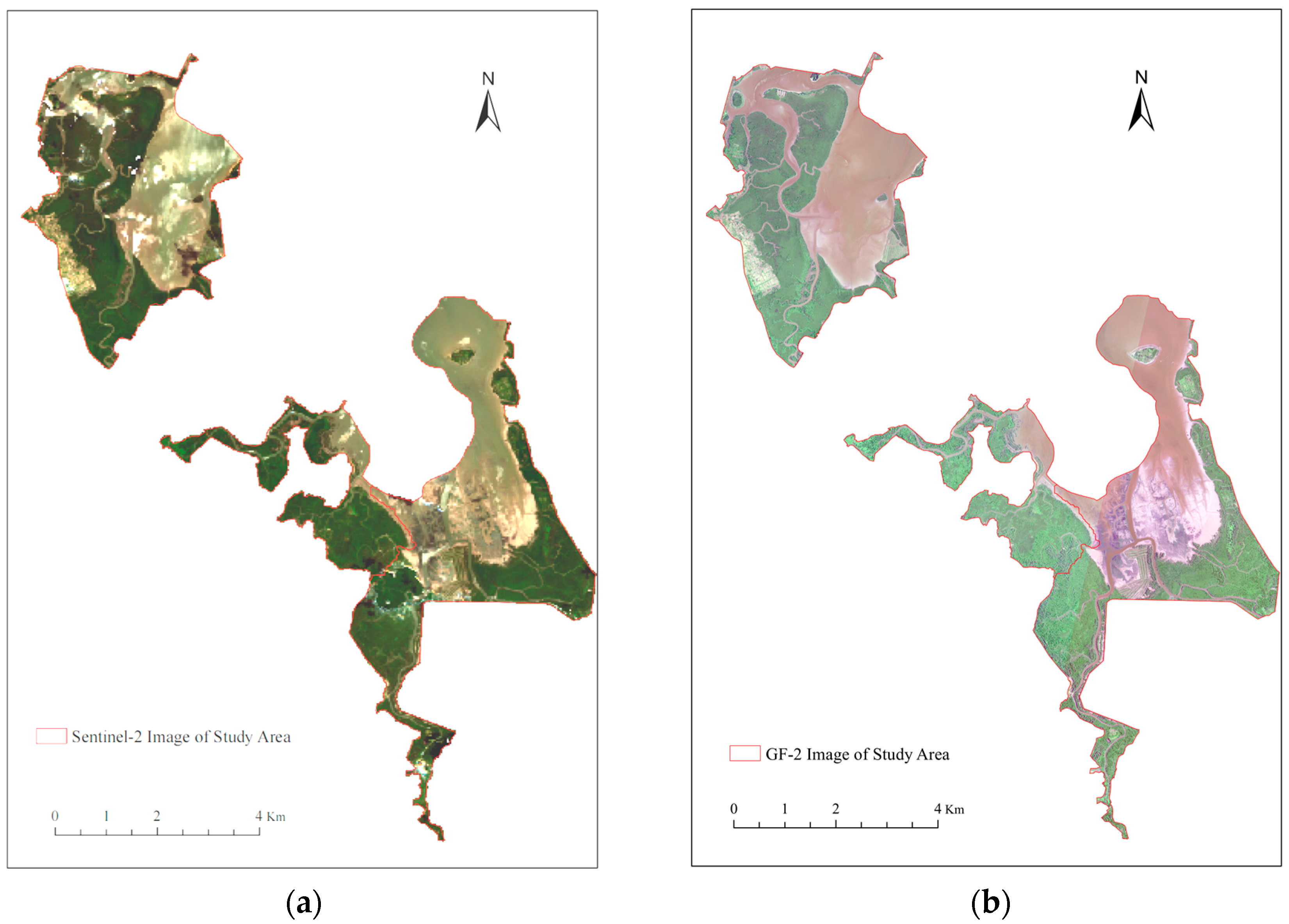
Leveraging the high geometric accuracy of both Sentinel-2 and GF-2 imagery, all datasets were projected to the WGS84/UTM zone 49N coordinate system. A uniform study area boundary was subsequently applied to crop the data, generating a spatially aligned subset (Figure 2) for further extraction and comparative analysis.

2.3.4. Derived Topographic Features

In ArcGIS 10.8, the Spatial Analyst extension was utilized to extract slope and elevation information from the DEM [16], which subsequently served as the basis for constructing terrain indices.

2.4. UAV Imagery and Accuracy Validation Points

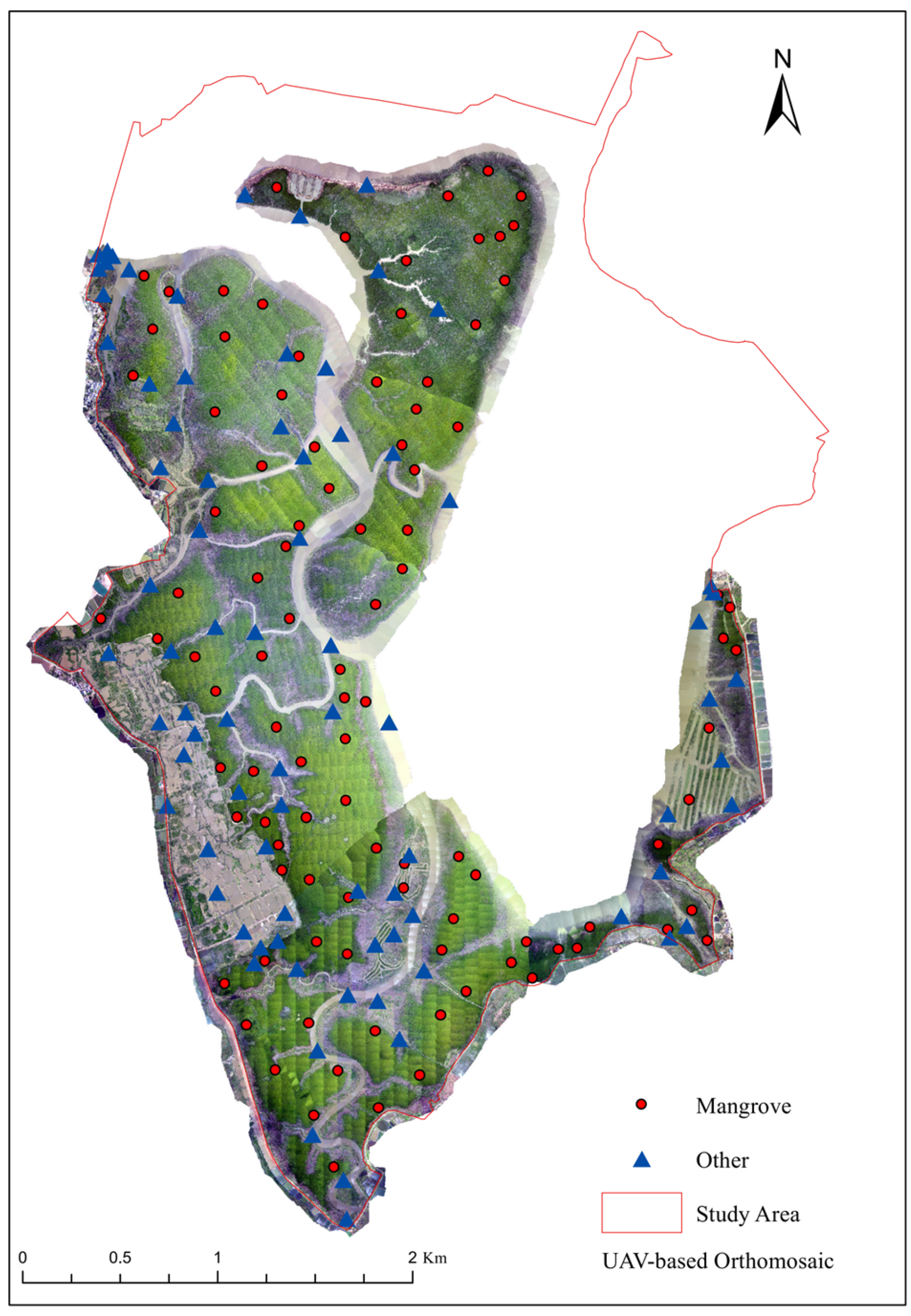
High-resolution reference data, approximating ground truth for accuracy validation [5], this study utilized orthophoto maps with a high resolution of 0.1 m, which were obtained from a UAV aerial survey conducted by the East Harbour National Nature Reserve Administration (Figure 3). This dataset forms the accuracy assessment benchmark. Subsequently, and in accordance with the principles of uniformity and representativeness, 180 sample points (100 within mangroves, 80 outside) were established through manual visual interpretation of the orthophotos, as their spatial distribution shown in Figure 3.

3. Research Methodology

3.1. Overall Technical Approach

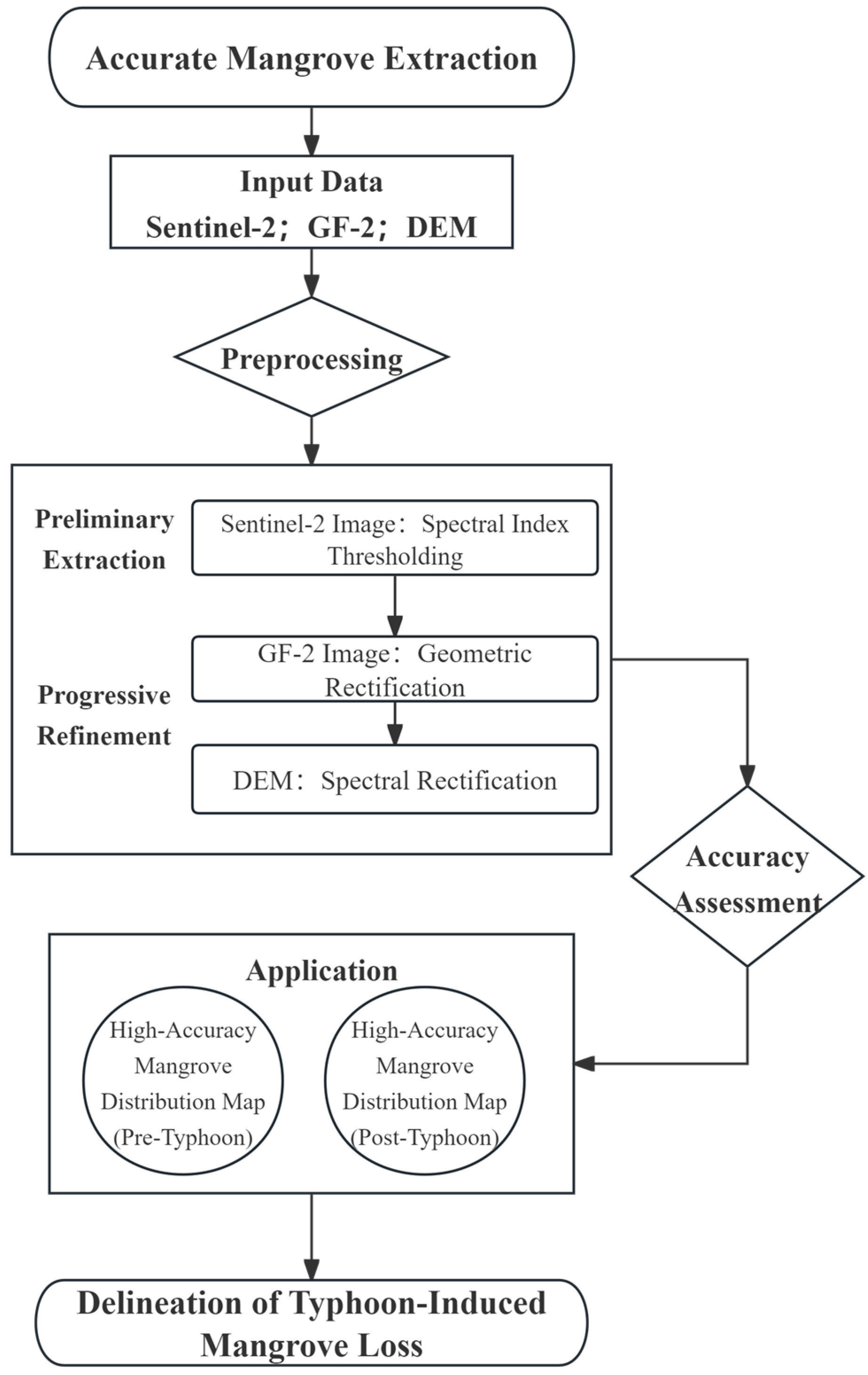
The core of this study is a progressive correction framework comprising the three sequential steps of spectral pre-screening, geometric refinement, and topographic correction, with its overall workflow illustrated in Figure 4. The framework initiates with large-scale preliminary extraction using Sentinel-2 imagery. It then refines the geometric boundaries by incorporating GF-2 high-resolution imagery. Finally, it implements a secondary spectral attribute correction by integrating DEM data, thereby addressing the misclassification of water bodies caused by the “spectral confusion” between heterogeneous features at land–water interfaces.

3.2. Large-Scale Preliminary Extraction Using Sentinel-2 Imagery

For the rapid, large-scale preliminary screening of mangroves, Sentinel-2 imagery was selected for its optimal combination of a 10 m spatial resolution and a 5-day revisit cycle, which balances extraction accuracy with timeliness for mangroves monitoring, as well as its rich red-edge bands that enhance spectral separability—a feature proven effective in aquatic vegetation monitoring [17].
To enhance the spectral separability of mangroves, three canopy-sensitive spectral indices were calculated: the Red Edge Normalized Difference Vegetation Index (RE_NDVI) [18], the Red Edge Position Index (REPI) [19], and the Moisture Stress Index (MSI) [20]. These indices, respectively, capture key vegetation characteristics: RE_NDVI indicates vegetation vigor, REPI reflects red-edge features, and MSI quantifies canopy water content. The formulas and corresponding Sentinel-2 bands used for each index are provided below.
RE _ NDVI   = B 8 A B 5 B 8 A + B 5
REPI =   700 + 40   ×   B 7 B 4 B 8 A B 4
M S I = B 11 B 8
Optimal segmentation thresholds for each index (RE_NDVI > 0.3; 710 nm < REPI < 730 nm; MSI < 0.42) were determined through iterative visual analysis and applied to classify the imagery, yielding a preliminary large-scale mangrove distribution map.

3.3. First Correction: Spatial Geometric Optimization Based on GF-2 Imagery

The pixel-mixing problem inherent in medium-resolution Sentinel-2 imagery [7,21], which led to misclassification and omission during preliminary mangrove extraction, necessitated the use of high-resolution GF-2 imagery for geometric refinement. The superior spatial resolution of GF-2 provides abundant spatial details and textural information, enabling the discrimination of spectrally similar objects based on their spatial configurations [22]. This not only serves as a near-ground-truth geometric reference for correcting Sentinel-2-derived results but also enhances the detection of fragmented mangrove patches and enables more accurate boundary delineation [7].
To construct the classification model, high-confidence training samples—comprising 200 mangrove and 220 non-mangrove polygons—were initially delineated through visual interpretation of GF-2 imagery. Spectral features were subsequently extracted from the red, green, and blue bands. A Random Forest (RF) classifier, widely recognized for its superior performance in mangrove remote sensing classification, was employed. The RF algorithm functions as an ensemble learning method that builds multiple decision trees to improve classification accuracy and mitigate overfitting [3,23]. The model was trained using optimized parameters, with n_estimators set to 200. Applying the trained model to the mosaicked GF-2 imagery generated a mangrove distribution map exhibiting exceptionally high spatial resolution. The resulting GF-2 classification map served as a high-precision geometric reference. These high-resolution outputs were then utilized to refine the preliminary Sentinel-2 classification map by directly replacing misclassified pixels.

3.4. Second Correction: Spectral Property Optimization Based on DEM Data

The geometric refinement based on GF-2 imagery effectively resolved all instances of mangrove omission. However, misclassifications arising from “spectral confusion” between different land cover types persisted both within and along the boundaries of mangrove stands, highlighting the challenges in distinguishing spectrally similar features using only spectral and textural information. To address this limitation, DEM data is therefore incorporated as an independent correction factor, with the aim of mitigating classification errors by accounting for underlying topographic controls. Although previous studies have frequently employed DEM-derived elevation and slope thresholds for large-scale screening of potential mangrove habitats [9], such methods are less applicable in the context of the extremely flat terrain characteristic of our study area. Furthermore, given that GF-2 imagery already offers sufficient spatial resolution, there is no need to integrate DEM data directly into the classification model to compensate for spatial resolution limitations [10].
Although the study area is topographically flat with minimal relief, fundamental terrain attributes such as elevation and slope were extracted from the digital elevation model (DEM). A weighted integration of these attributes was performed to enhance local variations, enabling the development of a Potential Waterlogging Index (PWI) for identifying areas prone to spectral confusion. The PWI is calculated as follows:
PWI   = R E 1 10 S 1 2 E S D
Based on geomorphological and hydrological principles, the weighting coefficients (−1.0, −0.1, −0.5) are assigned to enhance micro-topographic features indicative of waterlogging susceptibility. This weighting strategy aligns with the DEM-based topographic correction framework applied in coastal wetland studies [24], which utilizes terrain attributes to resolve spectral confusion. Specifically, the dominant negative weight (−1.0) for Relative Elevation (RE) emphasizes the role of low-lying areas in runoff accumulation, a pattern consistent with the topographic control on water retention observed in subtropical estuaries [25]. The significant weight for Elevation Standard Deviation (ESD, −0.5) reflects the influence of surface uniformity in promoting ponding by suppressing channelized flow, as demonstrated in studies of sediment dynamics in the Beibu Gulf [26]. In contrast, Slope (S) is assigned a minimal weight (−0.1) due to its subdued impact in flat coastal landscapes. This configuration effectively identifies micro-topographic units prone to water pooling while leveraging region-specific hydrological insights.
The segmentation threshold for the PWI was determined through a two-step process that integrates objective statistical analysis and expert validation. First, the statistical distribution of the PWI values across the entire study area was analyzed to establish a benchmark. The 95th percentile (P95) value was identified as 0.10, indicating that only the top 5% of the area exhibits a higher potential for hydrological convergence. This P95 value served as an objective statistical anchor. Subsequently, this anchor was visually calibrated against high-resolution GF-2 imagery to ensure the identified areas accurately represented prominent hydrological features. The final threshold was set at 0.12, a value slightly above the P95, to conservatively capture the most significant signals while minimizing commission errors from micro-topographic variations.
To apply the threshold, areas exceeding this value were defined as “high-potential waterlogged zones,” and a corresponding mask was generated. Within this mask, pixels that remained classified as “mangroves” after the initial spectral correction were reclassified as “water bodies.” This final reclassification step was confirmed through visual interpretation to ensure consistency with the high-resolution imagery.

3.5. Accuracy Validation Method

This study utilized an identical validation sample set to assess the accuracy of Sentinel-2 imagery results across three stages: initial extraction, geometric correction using GF-2 imagery, and topographic correction.
Accuracy was quantified using a confusion matrix to compute the following metrics [27]: Overall Accuracy (OA), Kappa coefficient, Producer’s Accuracy (PA), and User’s Accuracy (UA). The OA and Kappa coefficient were employed to evaluate the overall improvement in classification performance. PA reflects the completeness of mangrove detection, with higher values indicating a reduction in omission errors. In contrast, UA measures classification reliability, and an increase in UA provides direct evidence of reduced commission errors caused by spectral confusion.

3.6. AI Tools Declaration

During the preparation of this manuscript, the authors used artificial intelligence tools, including DeepL and ChatGPT (Open AI), for the specific purposes of translating the initial draft from Chinese to English and subsequently polishing the English text for improved fluency and readability. It is important to note that all core academic ideas, research design, data analysis, results interpretation, and scientific conclusions were solely generated and finalized by the human authors. The authors have thoroughly reviewed and edited all AI-assisted content and take full responsibility for the entire publication.

4. Results and Analysis

4.1. Mangrove Extraction Accuracy

Table 2 summarizes the accuracy assessment results for the preliminary Sentinel-2 extraction, the GF-2-based geometric correction, and the DEM-based topographic correction.
Quantitative remote sensing results (Table 2) demonstrate the significant and incremental improvements achieved through the “spectral pre-screening → geometric refinement → topographic optimization” framework. Initial mangrove extraction using Sentinel-2 imagery yielded a robust Kappa coefficient of 0.76, highlighting its effectiveness for rapid, large-scale mangrove mapping, attributable to its medium spatial resolution and red-edge spectral bands. Nevertheless, the UA of 84.35% indicates persistent misclassification issues arising from the pixel-mixing problem inherent in such moderate-resolution data. Subsequent refinement steps systematically addressed these limitations: geometric correction using GF-2 sub-meter imagery achieved and sustained the PA of 100%, reflecting near-complete elimination of omission errors in identifying true mangrove areas. Moreover, the integration of DEM data for topographic optimization further improved UA to 97.09%, demonstrating that terrain-based corrections effectively mitigate spectral confusion and enhance classification precision. Critically, the F1 score—representing a balanced measure of UA and PA—increased steadily from 0.90 to 0.99, indicating an optimal reduction in both commission and omission errors. This progressive improvement confirms the comprehensive efficacy of the proposed stepwise correction framework.

4.2. Mangrove Extraction Results and Analysis

4.2.1. Rapid Identification and Extraction of Mangroves Based on Sentinel-2 Imagery

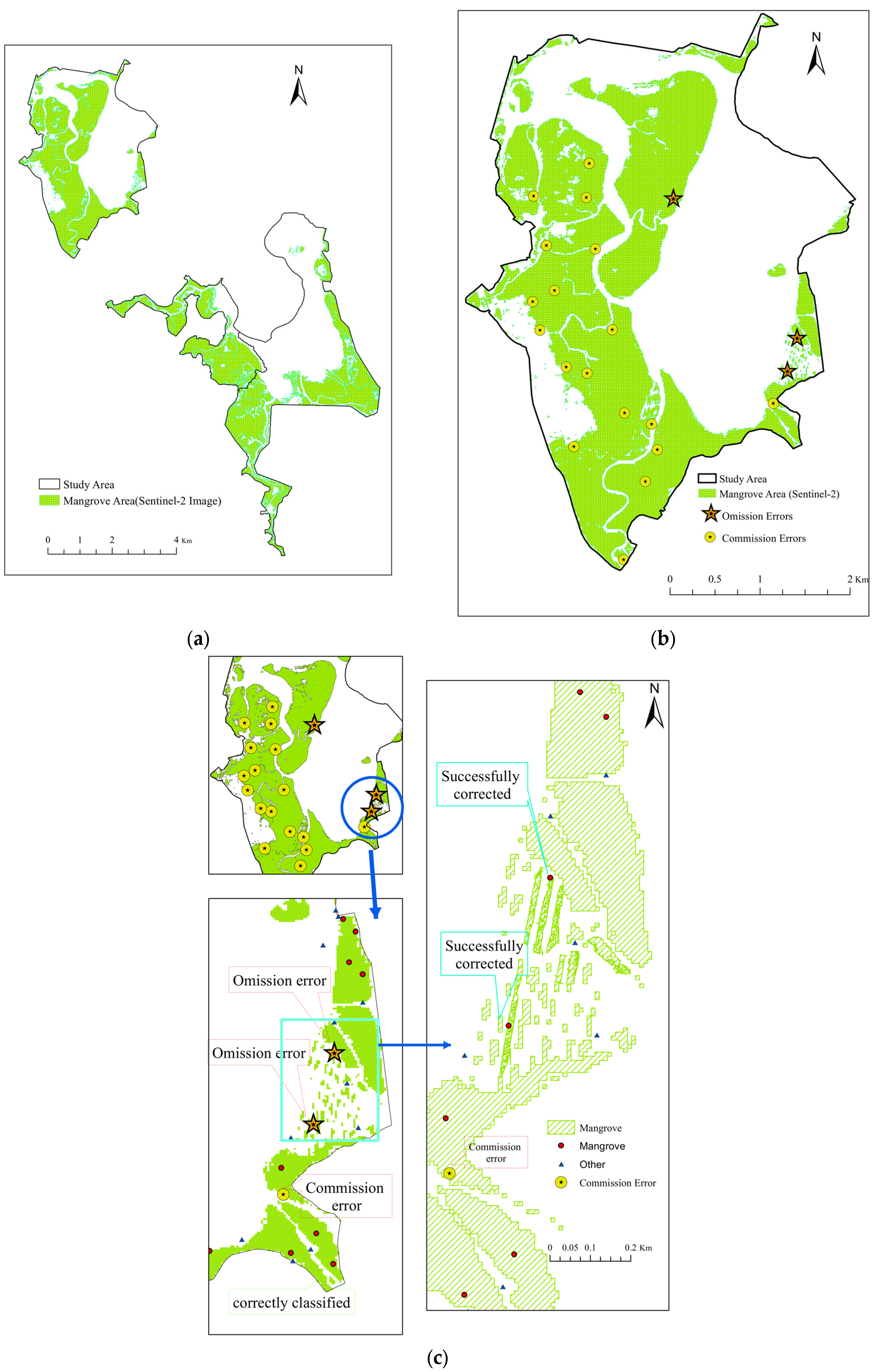
The remote sensing-based preliminary extraction results derived from Sentinel-2 imagery (Figure 5a) indicate the spatial distribution of mangroves within the study area. However, the accuracy assessment (Figure 5b) identifies two primary limitations: the misclassification of water bodies as mangrove vegetation and the omission of sparse mangrove patches, particularly along the land–water interface. Although the overall classification accuracy and Kappa coefficient of the preliminary extraction are 88.33% and 0.76, respectively, the relatively lower user accuracy of 84.35% indicates a significant level of commission errors.

4.2.2. Preliminary Correction Based on GF-2 Imagery

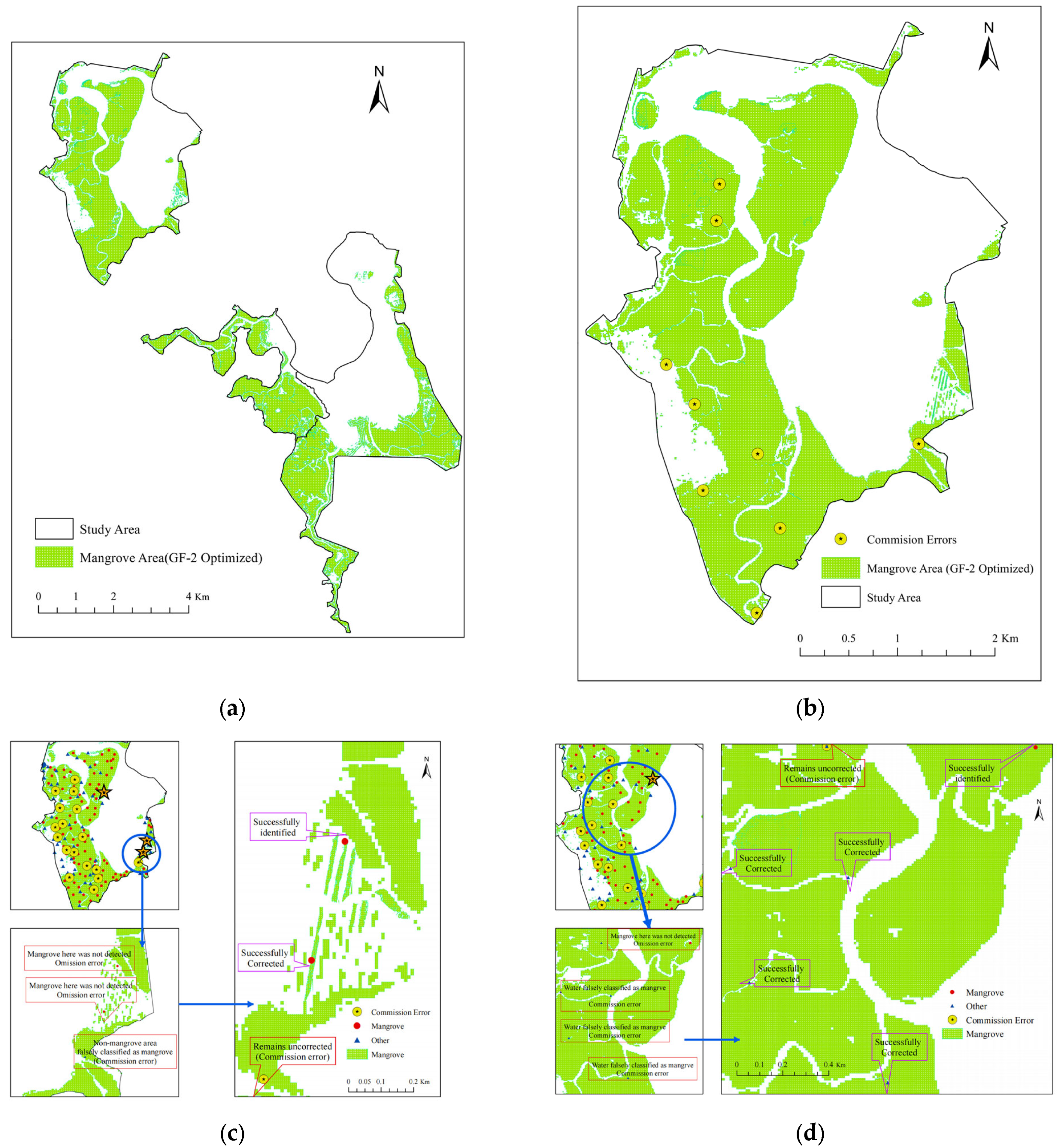
The high-precision classification map derived from GF-2 sub-meter resolution imagery was employed to replace and refine the initial results obtained from Sentinel-2 (Figure 6a). This integration substantially improved the spatial detail and geometric accuracy of the mangrove boundaries. Owing to the rich spatial information afforded by the sub-meter resolution, the outlines of mangrove patches became exceptionally clear and continuous (Figure 6b). Consequently, the remote sensing-derived total extracted mangrove area reflected an increase of approximately 20 hectares compared to the preliminary estimate.
A comparison between Figure 5b and Figure 6b reveals two significant improvements achieved through geometric correction using GF-2 imagery. First, it facilitates the near-complete recovery of previously omitted, sparsely distributed mangrove vegetation. Second, it effectively mitigates the misclassification of water bodies at land–water interfaces, thereby enabling accurate boundary delineation. The accuracy assessment (Table 2) indicates that the overall accuracy improved to 95.00%, with the Kappa coefficient increasing to 0.90. Notably, the user’s accuracy was substantially enhanced to 91.74%, while the producer’s accuracy reached 100%. These results collectively demonstrate that the integration of sub-meter resolution imagery successfully corrects omission errors in the initial extraction and effectively addresses large-scale commission errors.

4.2.3. Identification and Re-Optimization of “Potential Waterlogging Zones” Based on DEM

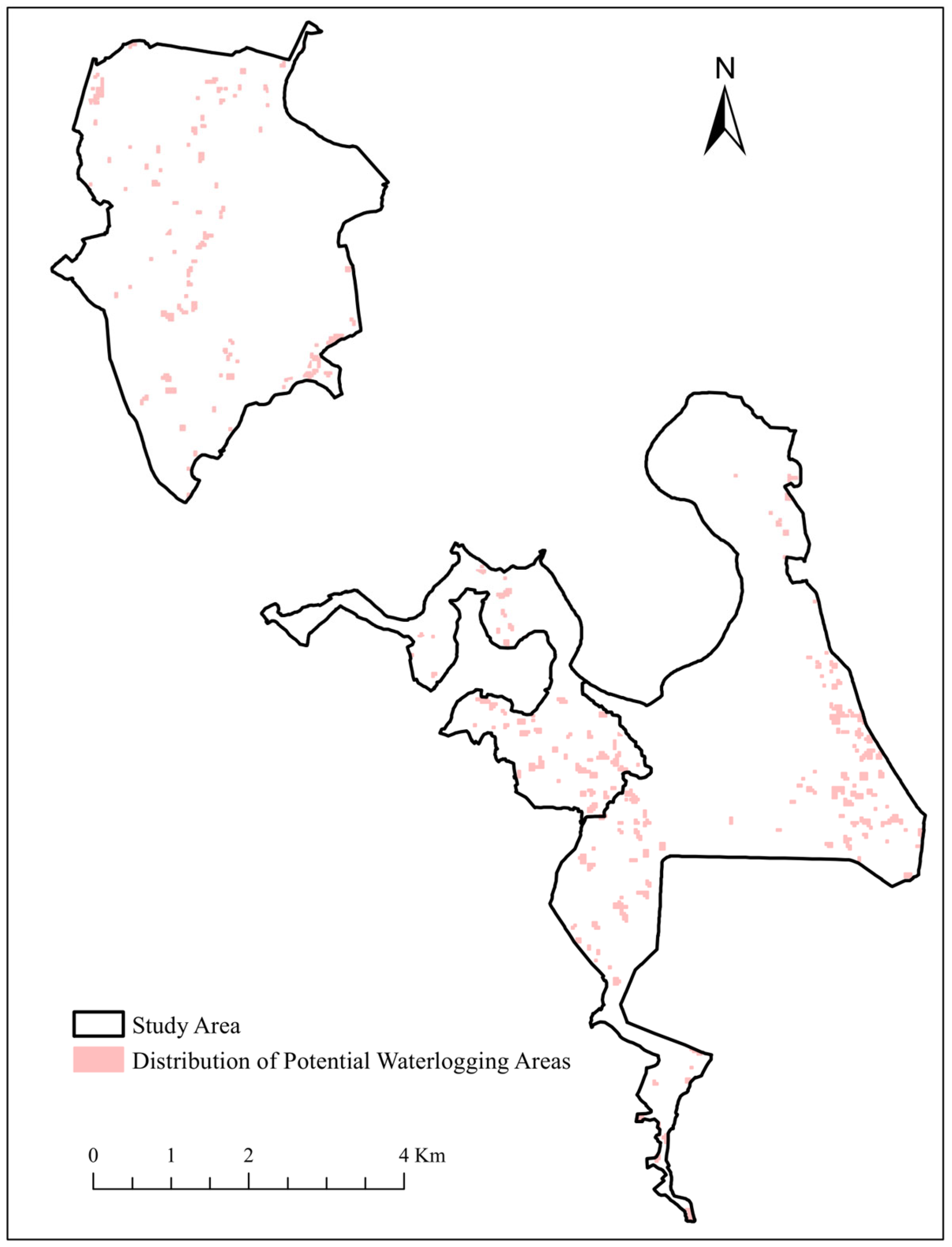
The initial correction, based on GF-2 imagery, substantially reduced misclassification. However, residual errors remained primarily in complex mangrove–water transition zones, particularly in small water bodies enclosed within the canopy. The application of the PWI, derived from DEM data with a threshold of 0.12, specifically targeted and corrected these residual water-body commission errors. This approach effectively identified potential water misclassification areas across the entire study area (Figure 7).
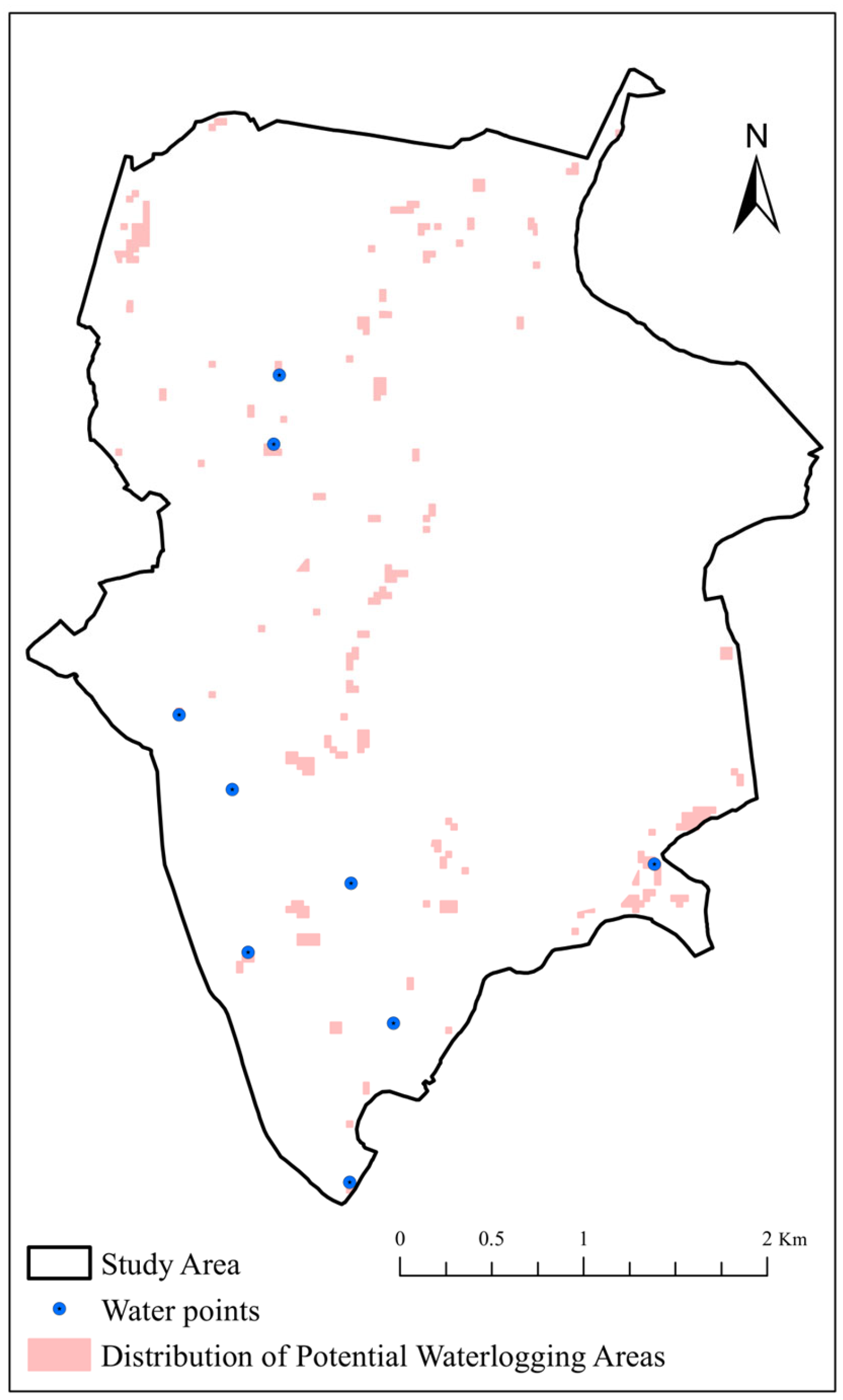
As shown in Figure 8, nine water misclassification points remained unresolved after the initial GF-2 image correction. Six of these points fell within potential waterlogged areas and could be excluded. The secondary correction reclassified ambiguous mixed pixels within potential waterlogged areas as “water bodies,” effectively removing residual misclassified water bodies within and along the edges of mangrove patches.

4.3. Spatial Distribution of Mangrove Damage

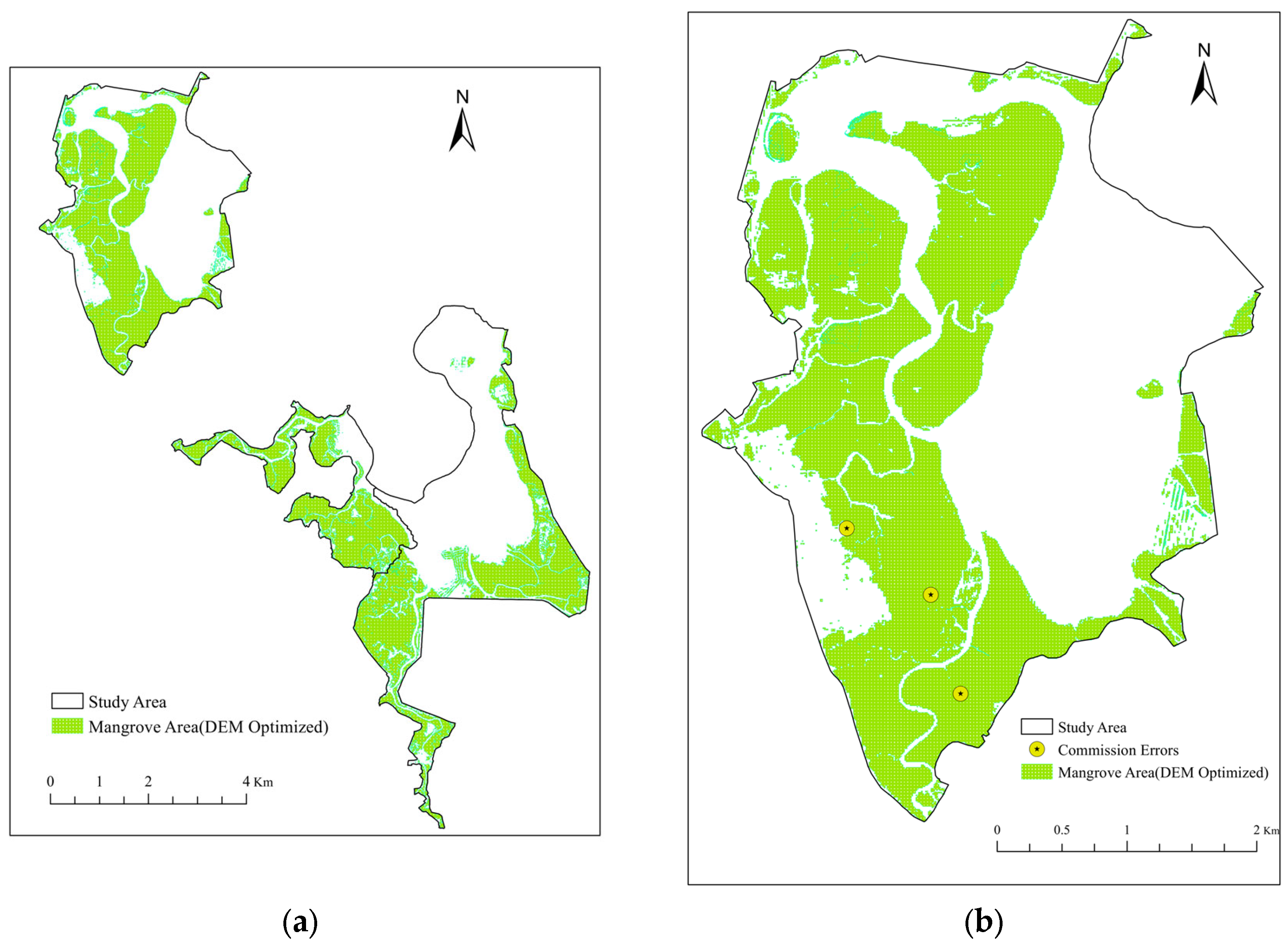
Figure 9a presents the final mangrove extraction results after topographic correction, with a reduction of approximately 6 hectares compared to the area derived after the initial GF-2 correction. Accuracy assessment (Figure 9b) demonstrates a significant improvement in classification precision: UA reached 97.09%, overall accuracy achieved 98.33%, and the Kappa coefficient attained 0.9661. The substantial enhancement in UA highlights the key contribution of this step—specifically, the accurate identification and removal of pixels that were previously misclassified as mangroves due to spectral confusion, even after GF-2 image correction. This outcome confirms the effectiveness of incorporating potential waterlogging terrain attributes to resolve spectral confusion in mangrove mapping.
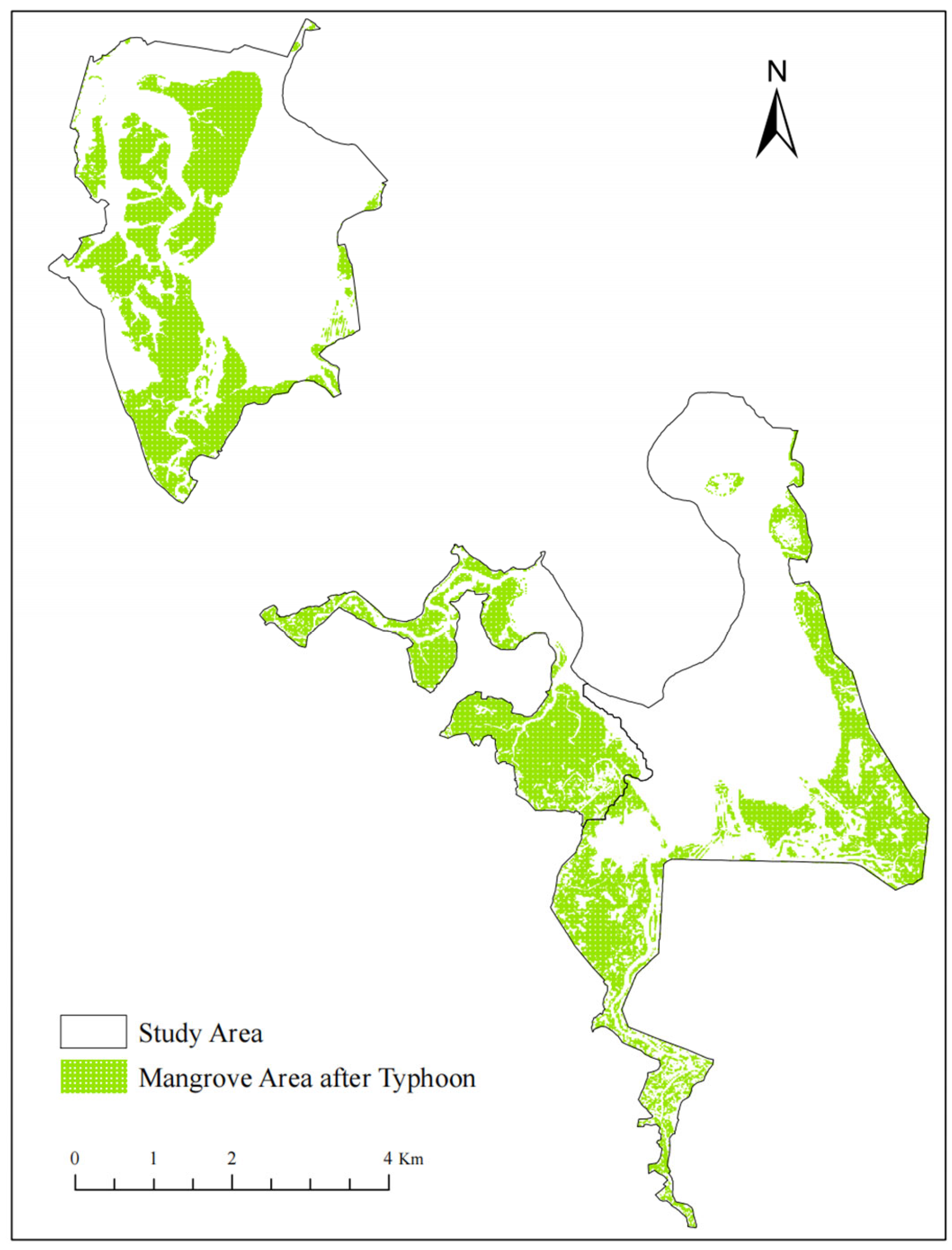
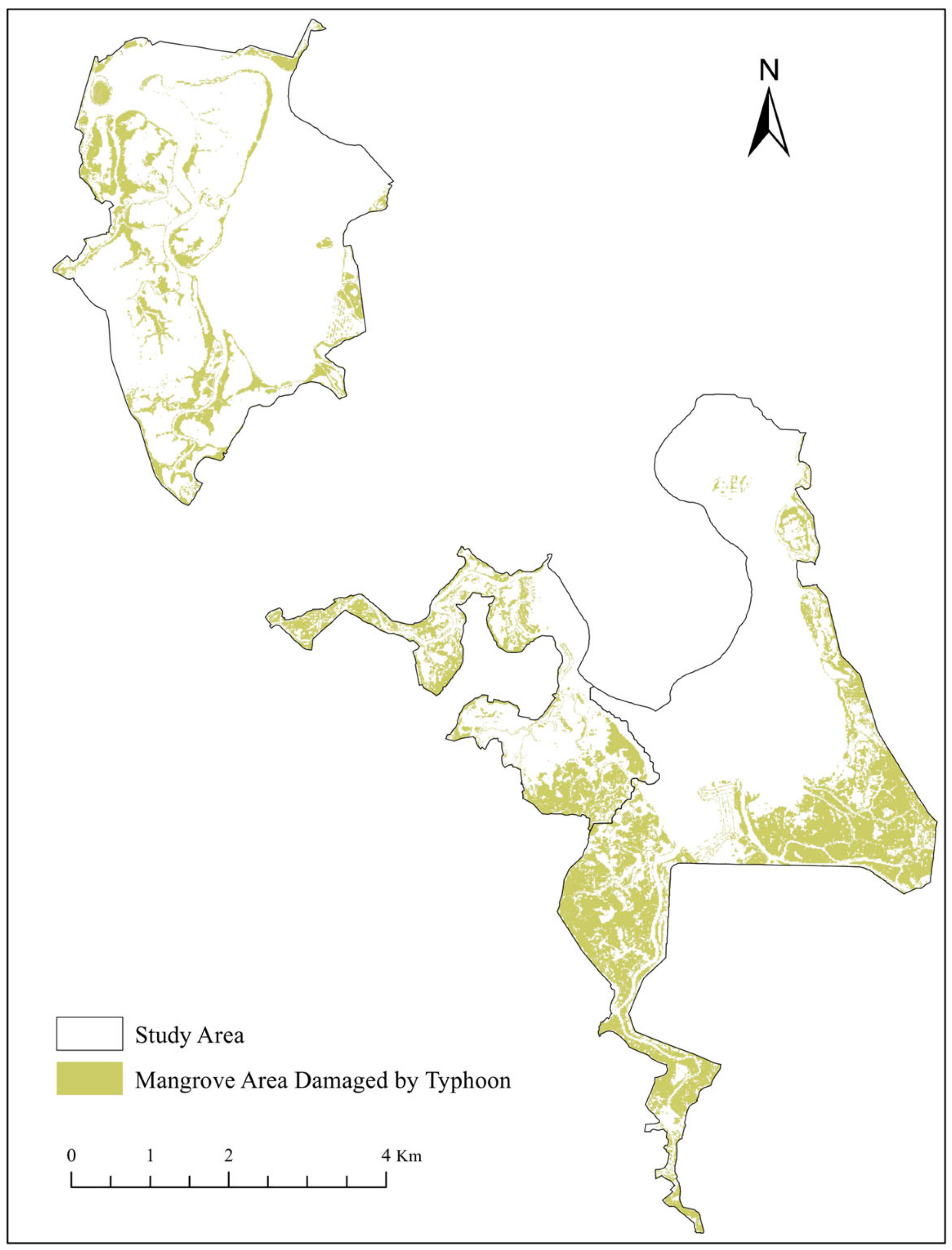
Applied to conditions after the typhoon, a streamlined version of the method—utilizing spectral pre-screening (Sentinel-2) and geometric refinement (GF-2)—was employed to map the surviving mangrove canopy, resulting in the distribution shown in Figure 10. Vector overlay analysis of mangrove areas before and after the typhoon determined the extent of damage, as shown in Figure 11. Based on remote sensing estimation, Typhoon Yagi impacted approximately 748.62 hectares of mangrove area, corresponding to a damage rate of 48.2%.

4.4. Analysis of the Controlling Role of “Potential Waterlogging Zones” on Damage Patterns

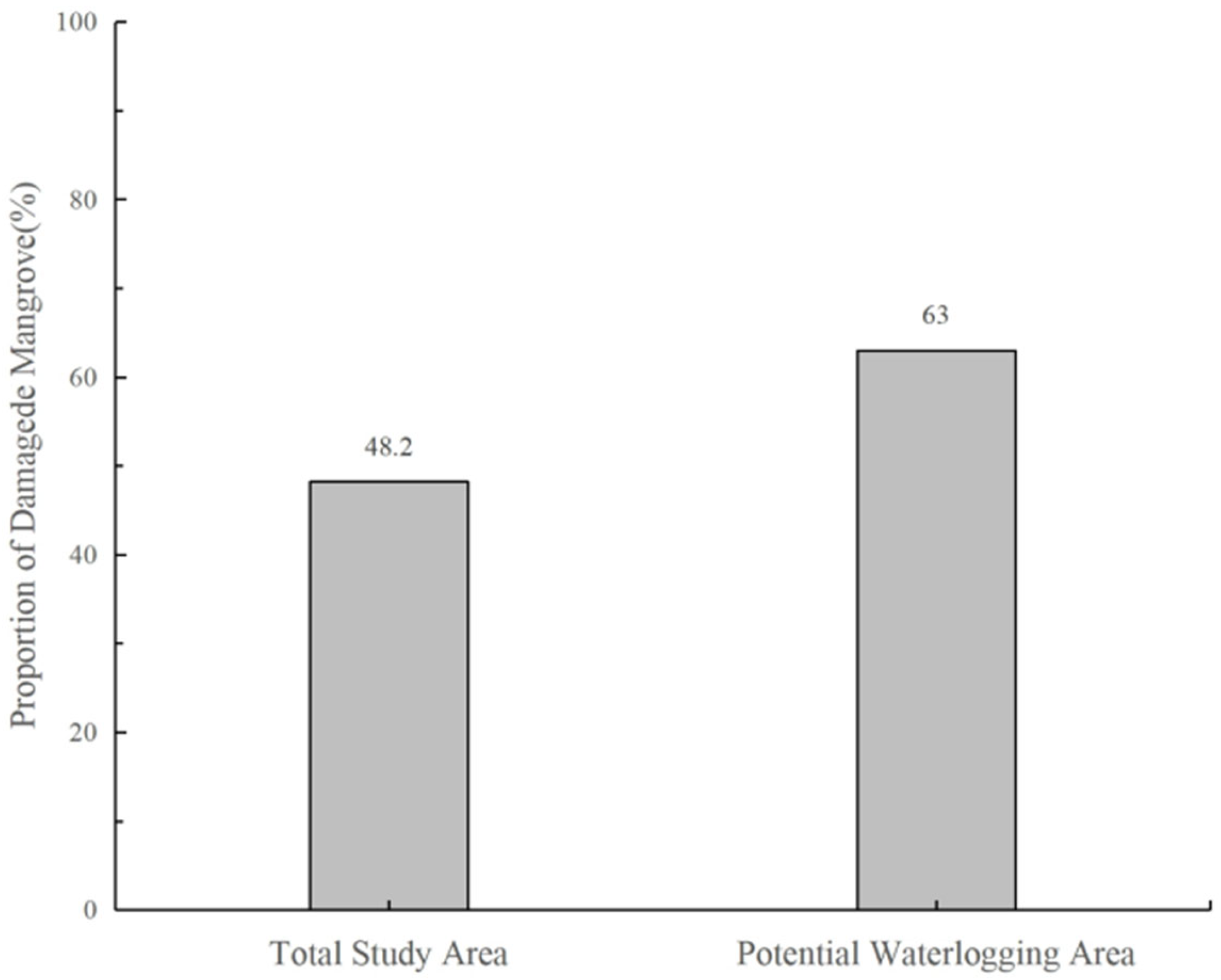
Application of our three-step (spectral–spatial–terrain) framework revealed that Typhoon Yagi caused damage to 748.62 hectares of mangrove forest within the study area, representing 48.2% of the mangrove extent before the typhoon. Spatial analysis of the damage distribution, based on remote sensing and focusing on potential waterlogging zones (PWI > 0.12) derived from DEM data, indicated that these 78.07-hectare zones exhibited a 79.4% overlap (62.00 hectares) with the mangrove areas. Notably, the damage rate quantified by our framework within these zones was significantly higher (63.0%) than the average across the entire study area (48.2%). This difference was statistically significant, as confirmed by a chi-square test (χ2(1) = 5.02, p = 0.025), as illustrated in Figure 12.
The significantly higher damage rate in potential waterlogged zones suggests a non-random pattern of mangroves affected and points to their greater vulnerability during typhoons. From the perspective of spatial disaster ecology, this finding supports the physical basis for using DEM as an independent factor in our topographic correction approach.

5. Discussion

5.1. Innovation, Effectiveness, and Limitations of the Stepwise Correction Framework

The remote sensing extraction of mangroves in flat intertidal zones continues to be challenged by the persistent issue of “spectral confusion” [28]. Differing from conventional one-step multi-source data fusion approaches, this study proposes a novel stepwise correction framework: “spectral pre-screening, geometric refinement, and topographic optimization.” The core innovation of this framework lies in its sequential strategy, which tackles spectral confusion by progressively enhancing spatial resolution and incorporating terrain-hydrological mechanisms, thereby achieving incremental improvements in accuracy. This stepwise methodology resonates with the established concept of multi-source remote sensing data integration (e.g., optical, SAR, terrain) [29] but offers greater interpretability by clearly delineating the contribution of each step.
The effectiveness of this method arises from its clear, stepwise logical structure. Although the initial extraction using Sentinel-2 data demonstrates high efficiency, the inherent issue of pixel mixing results in substantial misclassification (UA: 84.35%), consistent with the well-documented limitations of medium-resolution imagery in mapping tidal flats [7]. In contrast, geometric correction leveraging GF-2 sub-meter imagery capitalizes on its near-true spatial resolution to virtually eliminate omission errors (PA: 100%) and significantly enhance boundary delineation accuracy (UA: 91.74%), underscoring the indispensable value of high-resolution data for accurately identifying fragmented mangrove patches [30]. Nevertheless, residual misclassifications due to “spectral confusion” persisted even after GF-2-based correction. To address this, the present study introduces a key innovation by elevating DEM from an ancillary attribute to an independent, mechanism-driven corrective factor. By constructing the PWI for secondary correction—grounded in topographic and hydrological drivers—the overall UA was further improved to 97.09%. This conceptual advancement aligns with the principles of physical geography regarding the identification of “true depressions” in urban flood modeling [31], yet it advances the role of terrain analysis from mere “spatial support” to one of “mechanistic interpretation.” This paradigm shift enables a more robust resolution of spectral confusion in mangrove remote sensing, thereby enhancing both accuracy and ecological interpretability.
Nevertheless, the limitations of the proposed method must be considered. First, the high precision of GF-2 data is inversely related to its swath width and revisit cycle, presenting significant scalability constraints in applications covering vast regions or requiring rapid response. Furthermore, the inherent insensitivity of DEM data to micro-topographic changes is another limitation that can introduce discernible errors.
Furthermore, the inherent insensitivity of the 12.5 m resolution DEM data to micro-topographic changes is another limitation that could potentially introduce discernible errors in the identification of potential waterlogging zones. However, the significantly higher mangrove damage rate (63.0%) observed within the PWI-identified zones compared to the overall study area (48.2%) provides strong ecological validation. This statistically significant pattern (χ2(1) = 5.02, p = 0.025) demonstrates that the PWI, despite being derived from a medium-resolution DEM, effectively captures topographically controlled hydrological patterns that genuinely influence mangrove ecosystem vulnerability. Future research should prioritize the use of higher-resolution elevation data (e.g., from UAV-LiDAR) to better quantify micro-topographic thresholds that dictate mangrove susceptibility to hydrological stress.

5.2. Robustness of the PWI Threshold and Statistical Validation

The statistical properties of the PWI provide intrinsic, data-driven evidence that extends beyond ecological validation, offering a deeper understanding of the methodological robustness. The median PWI value (P50) being close to 0 confirms that the study area is predominantly flat, a topographic context that inherently justifies the strategy of focusing on the extreme upper tail of the distribution (i.e., the P95 benchmark). More importantly, the substantial discrepancy between the maximum PWI value (0.52) and the applied threshold (0.12) demonstrates the deliberately conservative nature of our approach. This conservatism is a strategic strength rather than a limitation; it directly explains the high User’s Accuracy (97.09%) achieved, as it effectively minimized commission errors from micro-topographic noise. Therefore, these statistical characteristics clarify the underlying reason for the method’s high precision in distinguishing mangroves from spectrally similar water bodies.

5.3. Discussion on the Mechanism of Micro-Topography Modulating Typhoon Damage to Mangroves

A chi-square test (p < 0.05) confirmed that mangrove damage rates within the DEM-identified potential waterlogging zones were significantly higher than the average across the study area. This distinct spatial pattern can be mechanistically explained by the exacerbating effects of prolonged storm surge inundation on these pre-existing low-lying depressions. These areas not only experience intensified hydrodynamic scouring but also suffer from extended soil waterlogging, leading to root destabilization and heightened physiological stress, which collectively amplify their vulnerability during typhoon events.
The underlying mechanism involves coupled “topography–hydrology–dynamics” processes, whereby areas prone to potential waterlogging function as catchment zones during typhoons, resulting in the prolonged retention of storm surge waters. This extended inundation amplifies hydrodynamic forces and imposes significant hydrological stress on mangrove ecosystem.
This finding is consistent with Feng et al. [32], who emphasize that topographic setting is a key determinant of mangrove resilience to typhoons. Furthermore, the inferred mechanism is supported by empirical evidence from Prachee et al. [33], who documented the impacts of typhoon-induced flooding on mangroves, and by the physiological experiments of Li et al. [34] on Avicennia marina seedlings, which demonstrate the substantial adverse effects of flooding stress. Collectively, these findings corroborate that mangroves in potential waterlogging zones experience heightened physiological stress due to prolonged submergence, leading to higher observed damage rates. This distinct spatial pattern of disaster impact provides robust ecological validation for using DEM-derived topography as an independent, mechanism-based variable to resolve spectral confusion.

5.4. Comparison with Existing Methods and Generalizability

The remote sensing “stepwise refinement” framework introduced in this study demonstrates greater transparency and interpretability than one-shot, multi-source data fusion classification approaches [35]. Its key advantage lies in explicitly clarifying the contribution of each data source at distinct stages—for instance, GF-2 addresses geometric refinement while DEM resolves spectral confusion—thereby facilitating error tracing and interpretation of the algorithm’s rationale. On an applied level, this work offers a mechanism-driven paradigm for employing DEM in ecological remote sensing. By contrast to common practices that use DEM primarily as a classification feature [10], this work establishes a direct link between DEM-derived metrics and disaster-induced stress responses, offering a robust, retrospective validation of the terrain correction mechanism.
In terms of its universality, the “spectral-spatial-topographic” synergistic framework proposed in this study is theoretically applicable to other flat intertidal zones [36]. However, its successful implementation depends on several critical conditions. First, parameter calibration is essential—particularly for the PWI threshold—which must be adjusted according to local topographic and hydrological characteristics. Second, variations in mangrove species composition may influence flood tolerance levels. Therefore, this method should be considered a transferable technical framework, the robustness of which requires further validation and refinement through additional case studies.

6. Conclusions and Outlook

This study successfully developed and validated a stepwise correction framework of “spectral pre-screening, geometric refinement, and topographic optimization” to address spectral confusion in flat intertidal mangrove ecosystem. This sequential approach clearly delineates the distinct contribution of each processing stage: Sentinel-2 data facilitates rapid, large-scale preliminary classification; GF-2 sub-meter resolution imagery effectively eliminates omission errors by refining geometric boundaries; and the novel DEM-based correction method resolves residual spectral confusion, thereby achieving highly accurate mangrove mapping (Kappa coefficient: 0.97). When applied to assess the impacts of Typhoon Yagi, the framework quantified, based on remote sensing, a total mangrove damaged of 748.62 hectares, corresponding to a 48.2% damage rate. Moreover, it revealed a consistent disaster-response pattern: significantly higher damage rates occurred within areas identified as potential waterlogging zones. This observation provides retrospective validation, from the perspective of disaster ecology, of the topographic and physical mechanisms that underlie the proposed methodology.
The limitations identified in this study provide clear guidance for future research directions. Subsequent studies could integrate SAR data to enhance robustness under frequently cloudy conditions, incorporate high-precision dynamic topographic datasets, and explore deep learning models to automate the extraction of terrain features, thereby improving correction efficiency. Moreover, expanding the analysis from static damage assessment to long-term time-series monitoring would enable the tracking of mangrove recovery dynamics after disaster, directly supporting research on ecosystem resilience. These enhancements aim to advance the methodology into a robust and scalable tool for large-scale coastal zone management.

Author Contributions

For research articles, the author Y.L. confirms sole responsibility for the following: research conception, methodology design, data analysis, and the original draft writing. S.L., Q.W., C.F., Y.S., Z.R., Y.S. and Y.Z. were involved in data collection and preprocessing. The corresponding author W.M. was responsible for supervision, project administration, and funding acquisition. Other authors contributed to data collection and preprocessing. All authors have read and agreed to the published version of the manuscript.

Funding

This research was funded by the National Natural Science Foundation of China, grant number 2023YFF1303605. The Article Processing Charge (APC) was funded by the same grant.

Data Availability Statement

The remote sensing data used in this study are from the following public sources: The Sentinel-2 imagery is available via the Google Earth Engine platform or the Copensicus Open Access Hub. The Gaofen-2 (GF-2) imagery and the 12.5m resolution DEM data were obtained from the China Centre for Resources Satellite Data and Application. The UAV-acquired imagery and field survey sample datasets generated and analyzed during this study are not publicly available due to agreements with the collaborating institution but can be made available upon reasonable request to the corresponding author, with permission from Hainan Provincial Academy of Environmental Sciences.

Acknowledgments

The authors would like to express their sincere gratitude to the Hainan Dongzhai Harbor National Nature Reserve Administration for providing the UAV flight services and data acquisition support, which were crucial for the validation of this study.

Conflicts of Interest

The authors declare no conflicts of interest.

References

  1. Akram, H.; Hussain, S.; Mazumdar, P.; Chua, K.O.; Butt, T.E.; Harikrishna, J.A. Mangrove Health: A Review of Functions, Threats, and Challenges Associated with Mangrove Management Practices. Forests 2023, 14, 1698. [Google Scholar] [CrossRef]
  2. Wang, Z.; Liu, K.; Cao, J.; Peng, L.; Wen, X. Annual Change Analysis of Mangrove Forests in China during 1986–2021 Based on Google Earth Engine. Forests 2022, 13, 1489. [Google Scholar] [CrossRef]
  3. Liu, X.; Liao, J.; Shen, G.; Zhang, L.; Chen, B. Extraction of 10 m Resolution Global Mangrove in 2022. Remote Sens. 2024, 16, 2723. [Google Scholar] [CrossRef]
  4. Bhaumik, K.; Das, S. Computational Hydrodynamics Based Flow Accumulation Models to Identify Urban Waterlogging at Deltaic Plain Using GIS. Environ. Earth Sci. 2022, 81, 10330. [Google Scholar] [CrossRef]
  5. Turner, H.C.; Galford, G.L.; Lopez, N.H.; Méndez, A.F.; Borroto-Escuela, D.Y.; Ramos, I.H.; González-Díaz, P. Extent, Severity, and Temporal Patterns of Damage to Cuba’s Ecosystems following Hurricane Irma: MODIS and Sentinel-2 Hurricane Disturbance Vegetation Anomaly (HDVA). Remote Sens. 2023, 15, 2495. [Google Scholar] [CrossRef]
  6. Tian, J.; Wang, L.; Yin, D.; Li, X.; Diao, C.; Gong, H.; Shi, C.; Menenti, M.; Ge, Y.; Nie, S.; et al. Development of Spectral-Phenological Features for Deep Learning to Understand Spartina Alterniflora Invasion. Remote Sens. Environ. 2020, 242, 111745. [Google Scholar] [CrossRef]
  7. Zhang, R.; Jia, M.; Wang, Z.; Zhou, Y.; Wen, X.; Tan, Y.; Cheng, L. A Comparison of Gaofen-2 and Sentinel-2 Imagery for Mapping Mangrove Forests Using Object-Oriented Analysis and Random Forest. IEEE J. Sel. Top. Appl. Earth Obs. Remote Sens. 2021, 14, 4185–4193. [Google Scholar] [CrossRef]
  8. Zhang, X.; Ge, Z.; Zhen, X.; Jiang, N.; Dong, T. Identification of Mangrove Forest via Remote Sensing Combined with Tidal Level and DEM. J. Nanjing Univ. Inf. Sci. Technol. (Nat. Sci. Ed.) 2024, 16, 727–736. [Google Scholar] [CrossRef]
  9. Meng, X.; Bao, Y.; Liu, H.; Zhang, X.; Wang, X. A New Digital Soil Mapping Method with Temporal-Spatial-Spectral Information Derived from Multi-Source Satellite Images. Geoderma 2022, 425, 116065. [Google Scholar] [CrossRef]
  10. Xue, Z.; Li, W.; Tian, Z.; Zhu, M.; Zhu, J. GEE-Based Fine-Scale Classification of Mangrove Species in Hainan Island Consid-ering Polarization and Topographic Features. Remote Sens. Nat. Resour. 2025, 37, 274–284. [Google Scholar] [CrossRef]
  11. Fu, C.; Song, X.; Xie, Y.; Wang, C.; Luo, J.; Fang, Y.; Cao, B.; Qiu, Z. Research on the Spatiotemporal Evolution of Mangrove Forests in the Hainan Island from 1991 to 2021 Based on SVM and Res-UNet Algorithms. Remote Sens. 2022, 14, 5554. [Google Scholar] [CrossRef]
  12. Zhao, Y.; Wu, S.; Zhang, X.; Luo, H.; Chen, H.; Song, C. EIAGA-S: Rapid Mapping of Mangroves Using Geospatial Data without Ground Truth Samples. Forests 2024, 15, 1512. [Google Scholar] [CrossRef]
  13. Guo, M.; Yu, Z.; Xu, Y.; Huang, Y.; Li, C. ME-Net: A Deep Convolutional Neural Network for Extracting Mangrove Using Sentinel-2A Data. Remote Sens. 2021, 13, 1292. [Google Scholar] [CrossRef]
  14. Liang, X.; Dai, Z.; Huang, H.; Wang, J.; Li, S.; Wang, R.; Pang, W. Elevation Inversion of Mangrove Tidal Flat Geomorphology Based on UAV Aerial Survey. Adv. Mar. Sci. 2024, 42, 384–399. [Google Scholar] [CrossRef]
  15. Zhang, Q.; Yuan, Q.; Li, Z.; Sun, F.; Zhang, L. Combined Deep Prior with Low-Rank Tensor Svd for Thick Cloud Removal in Multitemporal Images. ISPRS J. Photogramm. Remote Sens. 2021, 177, 161–173. [Google Scholar] [CrossRef]
  16. Zheng, X.; Han, L.; He, G.; Wang, N.; Wang, G.; Feng, L. Semantic Segmentation Model for Wide-Area Coseismic Landslide Extraction Based on Embedded Multichannel Spectral–Topographic Feature Fusion: A Case Study of the Jiuzhaigou Ms7.0 Earthquake in Sichuan, China. Remote Sens. 2023, 15, 1084. [Google Scholar] [CrossRef]
  17. Jia, M.; Wang, Z.; Wang, C.; Mao, D.; Zhang, Y. A New Vegetation Index to Detect Periodically Submerged Mangrove Forest Using Single-Tide Sentinel-2 Imagery. Remote Sens. 2019, 11, 2043. [Google Scholar] [CrossRef]
  18. Waśniewski, A.; Hościło, A.; Zagajewski, B.; Moukétou-Tarazewicz, D. Assessment of Sentinel-2 Satellite Images and Random Forest Classifier for Rainforest Mapping in Gabon. Forests 2020, 11, 941. [Google Scholar] [CrossRef]
  19. Liu, Y.; Zhu, X. Tracking Mangrove Light Use Efficiency Using Normalized Difference Red Edge Index. Ecol. Indic. 2024, 168, 112774. [Google Scholar] [CrossRef]
  20. Routhier, M.R.; Moore, G.E.; Rock, B.N.; Glidden, S.; Duckett, M.; Zaluski, S. Assessing Mangrove Forest Recovery in the British Virgin Islands After Hurricanes Irma and Maria with Sentinel-2 Imagery and Google Earth Engine. Remote Sens. 2025, 17, 2485. [Google Scholar] [CrossRef]
  21. Xue, J.; Zhang, Z.; Zhou, Y.; Yuan, L.; He, D.; Liu, X. Geographic Prior Guided Subpixel Mapping for Fine-Grained Urban Tree Cover Reconstruction. IEEE Geosci. Remote Sens. Lett. 2025, 22, 2502305. [Google Scholar] [CrossRef]
  22. Chen, R.; Zhang, R.; Zhao, C.; Wang, Z.; Jia, M. High-Resolution Mapping of Mangrove Species Height in Fujian Zhangjiangkou National Mangrove Nature Reserve Combined GF-2, GF-3, and UAV-LiDAR. Remote Sens. 2023, 15, 5645. [Google Scholar] [CrossRef]
  23. Aji, M.A.P.; Kamal, M.; Farda, N.M. Mangrove Species Mapping Through Phenological Analysis Using Random Forest Algorithm on Google Earth Engine. Remote Sens. Appl. Soc. Environ. 2023, 30, 100978. [Google Scholar] [CrossRef]
  24. Gao, E.; Zhou, G.; Li, S.; Fu, B.; Xiao, Y.; Lan, Y.; Wang, F.; Xu, J.; Zhu, Q.; Bai, Y. Spatio-Temporal Evolution Monitoring and Analysis of Tidal Flats in Beibu Gulf From 1987 to 2021 Using Multisource Remote Sensing. IEEE J. Sel. Top. Appl. Earth Obs. Remote Sens. 2024, 17, 6099–6114. [Google Scholar] [CrossRef]
  25. Chen, Y.; Li, Y.; Thompson, C.; Wang, X.; Cai, T.; Chang, Y. Differential sediment trapping abilities of mangrove and saltmarsh vegetation in a subtropical estuary. Geomorphology 2018, 318, 270–282. [Google Scholar] [CrossRef]
  26. Tang, R.; Dai, Z.; Zhou, X.; Li, S. Tropical cyclone-induced water and suspended sediment discharge delivered by mountainous rivers into the Beibu Gulf, South China. Geomorphology 2021, 389, 107844. [Google Scholar] [CrossRef]
  27. Long, J.; Giri, C.; Primavera, J.; Trivedi, M. Damage and Recovery Assessment of the Philippines’ Mangroves Following Super Typhoon Haiyan. Mar. Pollut. Bull. 2016, 109, 734–743. [Google Scholar] [CrossRef]
  28. Yuan, Y.; Wen, Q.; Xu, J.; Wang, C.; Zhao, X.; Liu, S.; Xie, R. Remote Sensing Monitoring of Mangrove Forest Changes from 1990 to 2020 in Guangdong-Hong Kong-Macao Greater Bay Area. Natl. Remote Sens. Bull. 2023, 27, 1496–1510. [Google Scholar] [CrossRef]
  29. Pinkaew, S.; Koedsin, W.; Chan, J.C.-W.; Huete, A. Large-Scale Mangrove Mapping in Thailand Using Multi-Sensor Ensemble Machine Learning with Sentinel-1/2 and SRTM Data. Remote Sens. Appl. Soc. Environ. 2025, 40, 101744. [Google Scholar] [CrossRef]
  30. Yang, X.; Xie, F.; Liu, S.; Zhu, Y.; Fan, J.; Zhao, H.; Fu, Y.; Duan, Y.; Fu, R.; Guo, S. Mapping Debris-Covered Glaciers Using High-Resolution Imagery (GF-2) and Deep Learning Algorithms. Remote Sens. 2024, 16, 2062. [Google Scholar] [CrossRef]
  31. Wang, J.; Liang, J.; Li, L.; Cha, Z.; Liu, Y. Deriving and Application of the Catchment Characteristics for Urban Flood Point Based on DEM. J. Hohai Univ. (Nat. Sci.) 2018, 46, 390–394. [Google Scholar] [CrossRef]
  32. Fang, Y.; Huang, H.; Zhou, G.; Wang, Q.; Gao, F.; Li, C.; Liu, Y.; Lin, J. An Animal Model Study on the Gene Expression Profile of Meniscal Degeneration. Sci. Rep. 2020, 10, 21469. [Google Scholar] [CrossRef]
  33. Patra, P.; Das, U.; Agrawal, S. Satellite Imagery-Based Tropical Cyclone Impact Assessment on LULC and Vegetation: A Case Study of Cyclone Biparjoy. Environ. Monit. Assess. 2024, 196, 748. [Google Scholar] [CrossRef]
  34. Li, H.; Li, Z.; Shen, Z.-J.; Luo, M.-R.; Liu, Y.-L.; Wei, M.-Y.; Wang, W.-H.; Qin, Y.-Y.; Gao, C.-H.; Li, K.-K.; et al. Physiological and Proteomic Responses of Mangrove Plant Avicennia Marina Seedlings to Simulated Periodical Inundation. Plant Soil 2020, 450, 231–254. [Google Scholar] [CrossRef]
  35. Xia, Q.; Li, J.; Dai, S.; Zhang, H.; Xing, X. Mapping High-Resolution Mangrove Forests in China Using GF-2 Imagery Under the Tide. Natl. Remote Sens. Bull. 2023, 27, 1320–1333. [Google Scholar] [CrossRef]
  36. Gugan, I.; Aldehim, G.; Alotaibi, F.A.; Allafi, R. Modelling the Elevation of the Exposed Intertidal Zone Using a Continental Scale Approach and Machine Learning Techniques. J. S. Am. Earth Sci. 2025, 154, 105391. [Google Scholar] [CrossRef]
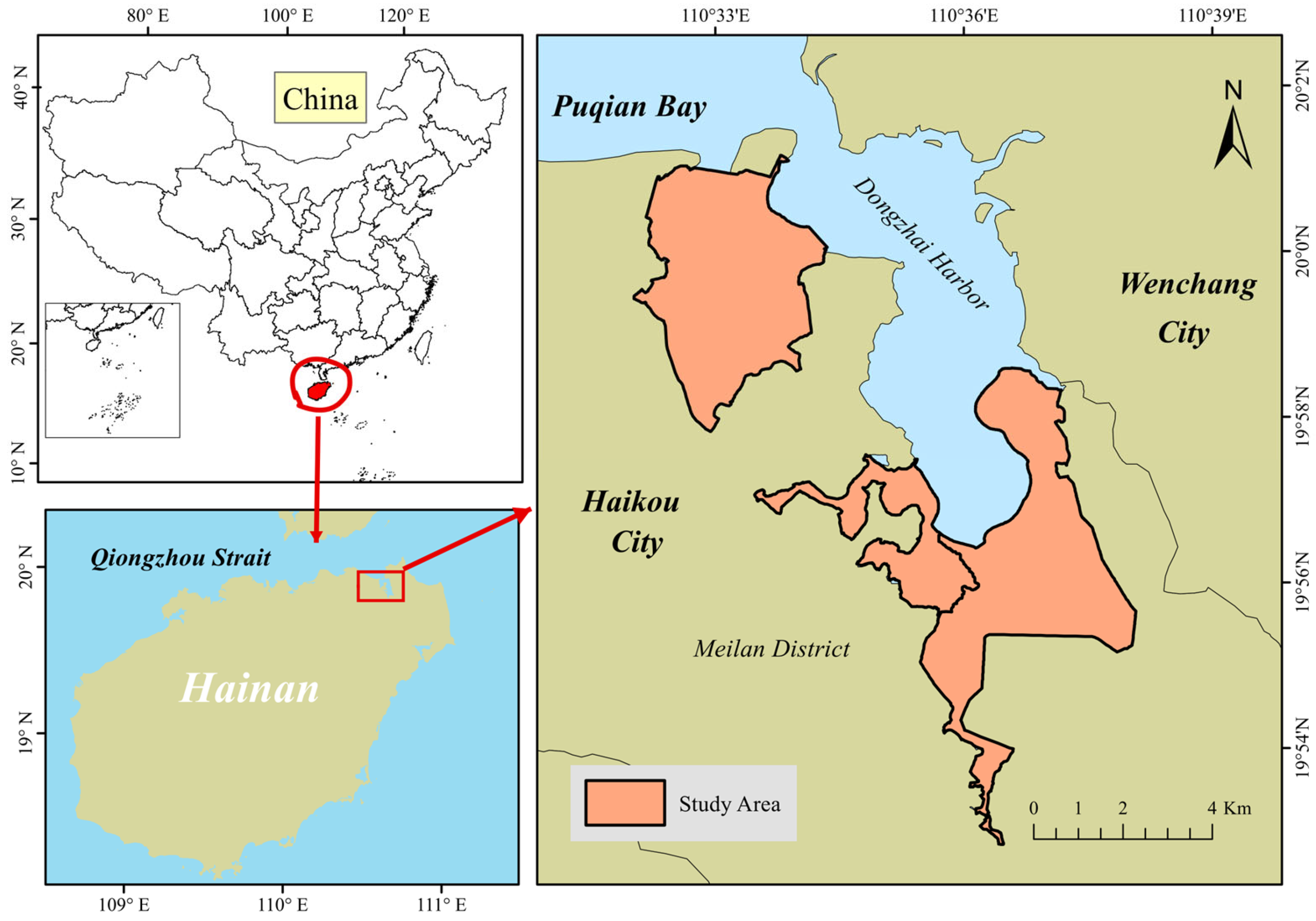
Figure 1. Geographic location map of Dongzhai Harbor National Nature Reserve.
Remotesensing 18 00567 g001
Figure 2. Data preprocessing results. (a) Sentinel-2 imagery; (b) GF-2 imagery.
Remotesensing 18 00567 g002
Figure 3. UAV verification data. Spatial distribution of accuracy validation sample points.
Remotesensing 18 00567 g003
Figure 4. Technical Approach.
Remotesensing 18 00567 g004
Figure 5. Preliminary mangrove extraction results from Sentinel-2 imagery. (a) Spatial distribution map; (b) Accuracy validation results; (c) Zoomed-in Distribution of Errors.
Remotesensing 18 00567 g005
Figure 6. GF-2 Preliminary Revised Mangrove Extraction Results. (a) Preliminary corrected mangrove distribution map; (b) Preliminary correction accuracy validation; (c) Zoomed-in Comparison of Correction Effectiveness (1); (d) Zoomed-in Comparison of Correction Effectiveness (2).
Remotesensing 18 00567 g006
Figure 7. Distribution map of potential waterlogged areas.
Remotesensing 18 00567 g007
Figure 8. Distribution of misclassified pixels in potential waterlogged areas after initial correction.
Remotesensing 18 00567 g008
Figure 9. DEM-Corrected Mangrove Map. (a) Results of DEM re-calibration; (b) Verification results of DEM re-calibration accuracy.
Remotesensing 18 00567 g009
Figure 10. Mangrove Area after Typhoon.
Remotesensing 18 00567 g010
Figure 11. Typhoon-induced mangrove damage map.
Remotesensing 18 00567 g011
Figure 12. Analysis of mangrove damage rates in poorly drained areas.
Remotesensing 18 00567 g012
Table 1. Summary of Data Sources.
Data CategoryDataResolutionAcquisition DateBandPurpose
Medium Resolution Imagery Sentinel-210.0 m9 August 2024Multispectral
13 bands
Preliminary Extraction and Change Detection of Large-Scale Mangrove Forests
High-Resolution ImageryGF-20.8 m4 August 2024R,G,B
3 bands
Training Sample Generation, First Correction (Geometric Optimization)
Terrain dataDEM12.5 m2020 (static)Elevation, slope, and other derived terrain featuresTerrain Factor Correction
Study area boundaryOfficial vector data---Study Area Clipping
Validation DataUAV (Drone) Imagery0.1 mSeptember 2024-Accuracy Assessment
Table 2. Summary of Accuracy Verification for Extraction/Correction Results.
Extraction MethodProducer Accuracy (PA)User Accuracy (UA)Overall Accuracy (OA)KappaF1 Score
Sentinel-2 Preliminary Extraction97.00%84.35%88.33%0.75920.9023
GF-2 Preliminary Correction100%91.74%95.00%0.89760.9565
Secondary Correction via DEM Data100%97.09%98.33%0.96610.9852
Disclaimer/Publisher’s Note: The statements, opinions and data contained in all publications are solely those of the individual author(s) and contributor(s) and not of MDPI and/or the editor(s). MDPI and/or the editor(s) disclaim responsibility for any injury to people or property resulting from any ideas, methods, instructions or products referred to in the content.