The Physiological and Structural Responses of African Vegetation to Extreme Drought Revealed by Multi-Spectral Satellite Remote Sensing



Highlights
- Vegetation drought responses are decomposed into physiological and structural anomalies, revealing fine-scale functional impacts of drought beyond traditional methods.
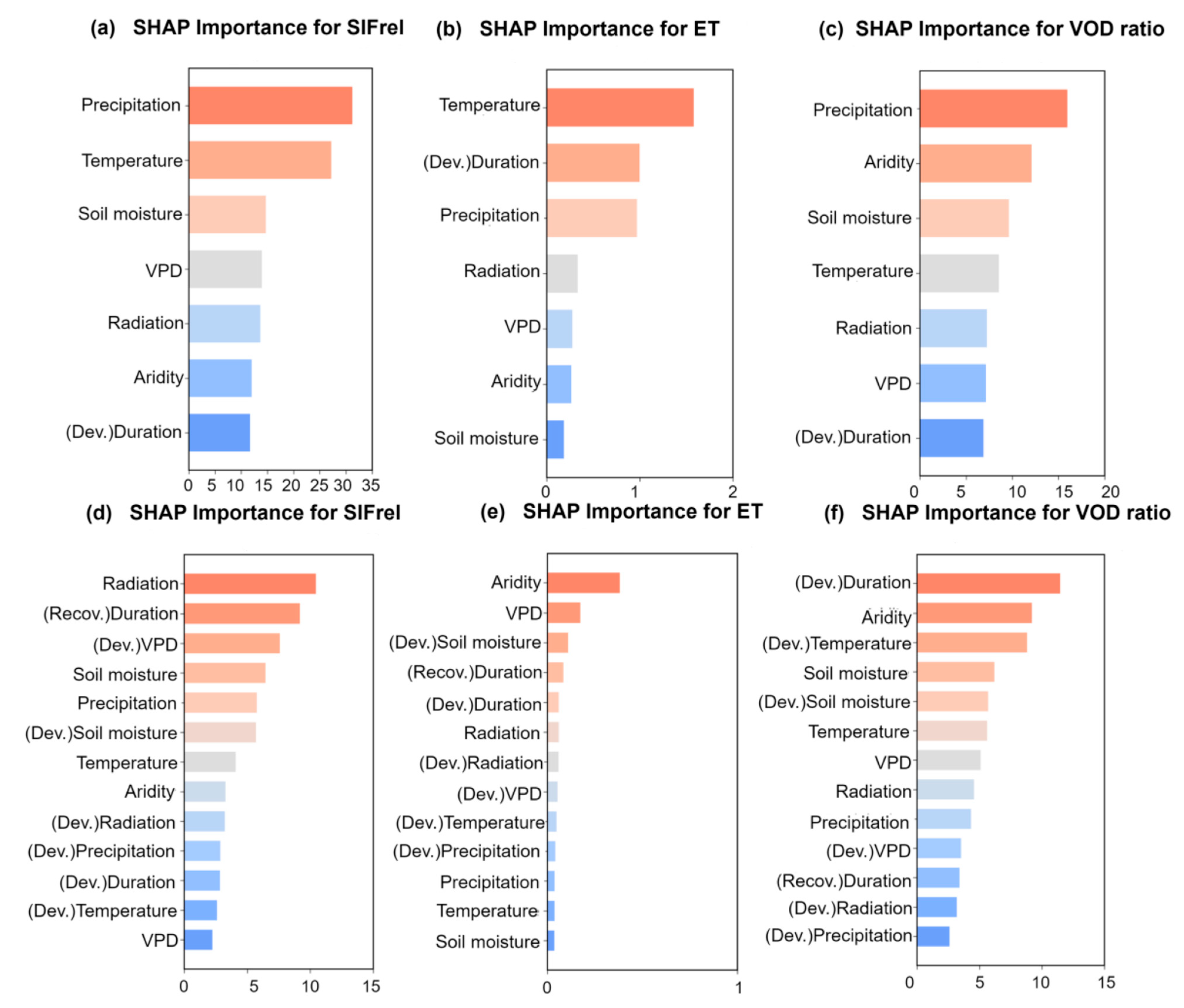
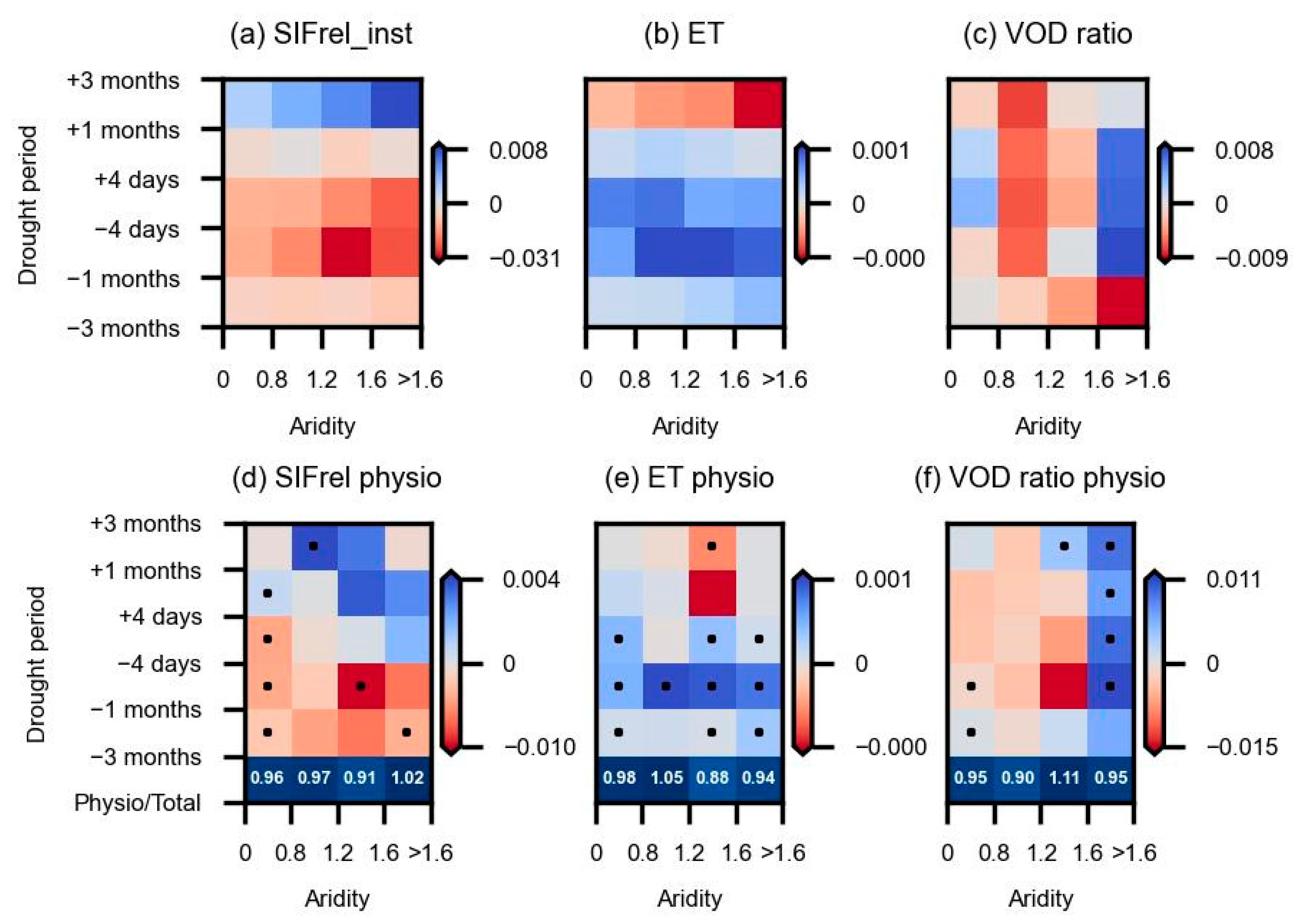
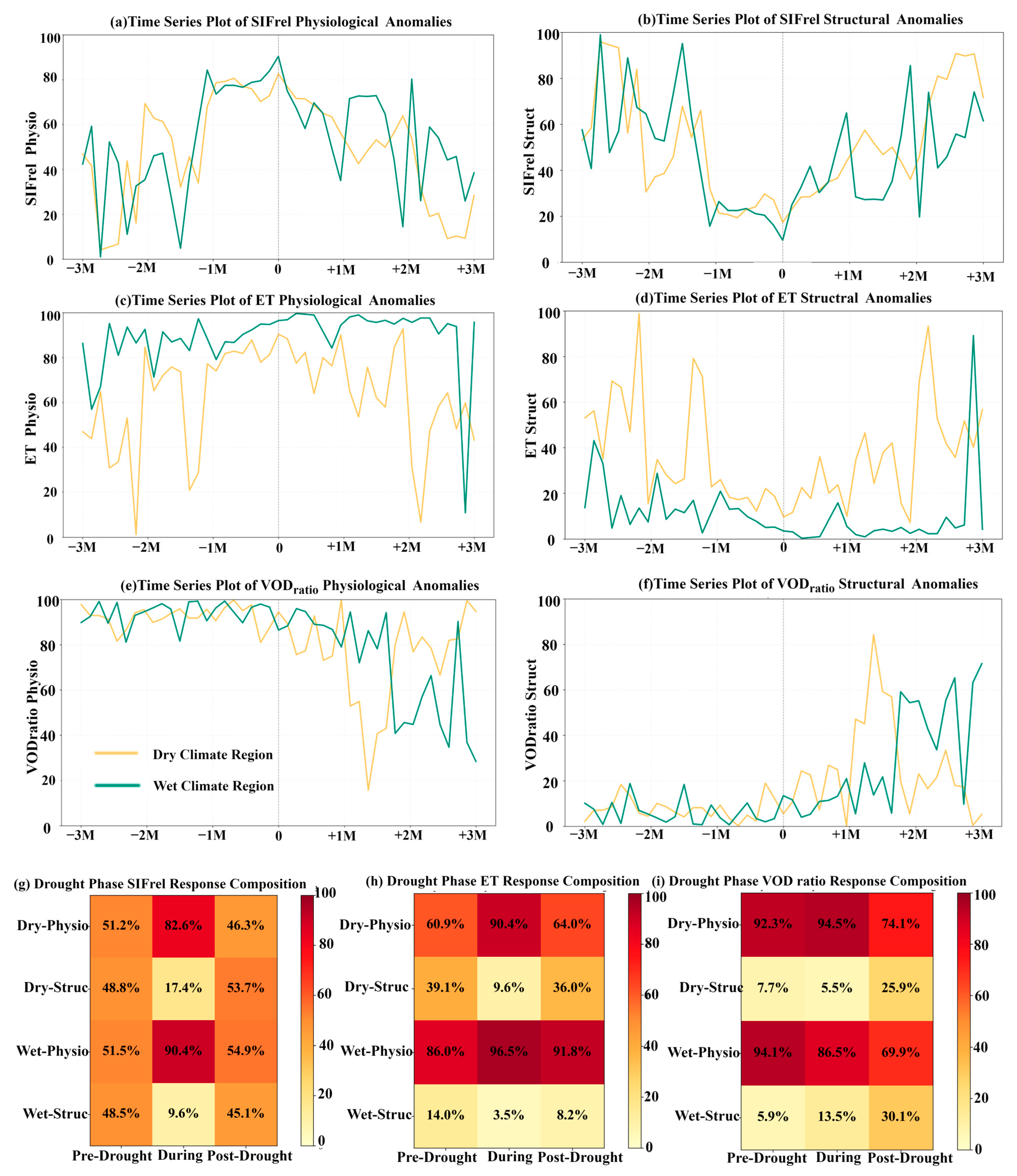
- Vegetation physiological components explained most of the functional responses during drought, and physiological anomalies accounted for over 88% of total vegetation anomalies during drought peaks, highlighting their dominant role in early-stage drought response.
- Physiological responses consistently outperform structural responses before, during, and after drought peaks, with intensified fluctuations at peak stress, underscoring vegetation’s prioritization of rapid physiological adjustments. This study advocates for the integration of physiological remote sensing indicators to establish a more sensitive early warning system for drought.
- Spatial vulnerability patterns and quantified climate drivers directly support tailored water and climate adaptation strategies.
Abstract
1. Introduction
2. Materials and Methods
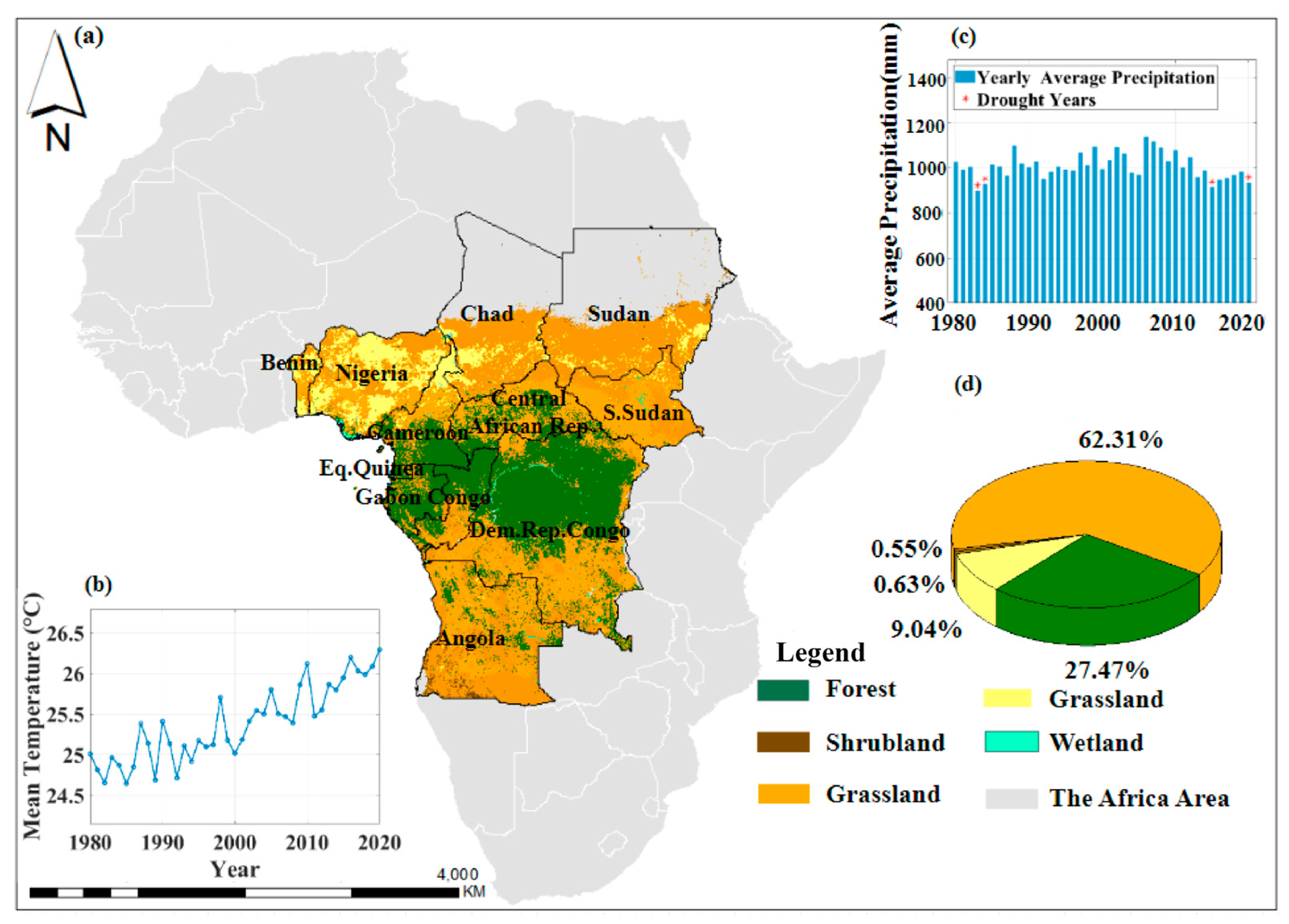
2.1. Study Area
2.2. Data Sources and Preprocessing
2.2.1. Hydrometeorological Variables
2.2.2. Photosynthetic Indicators
2.2.3. Vegetation Water Status Indicators
2.2.4. Spatial Domain and Vegetation Classification
2.2.5. Data Preprocessing and Anomaly Calculation
2.3. Methods
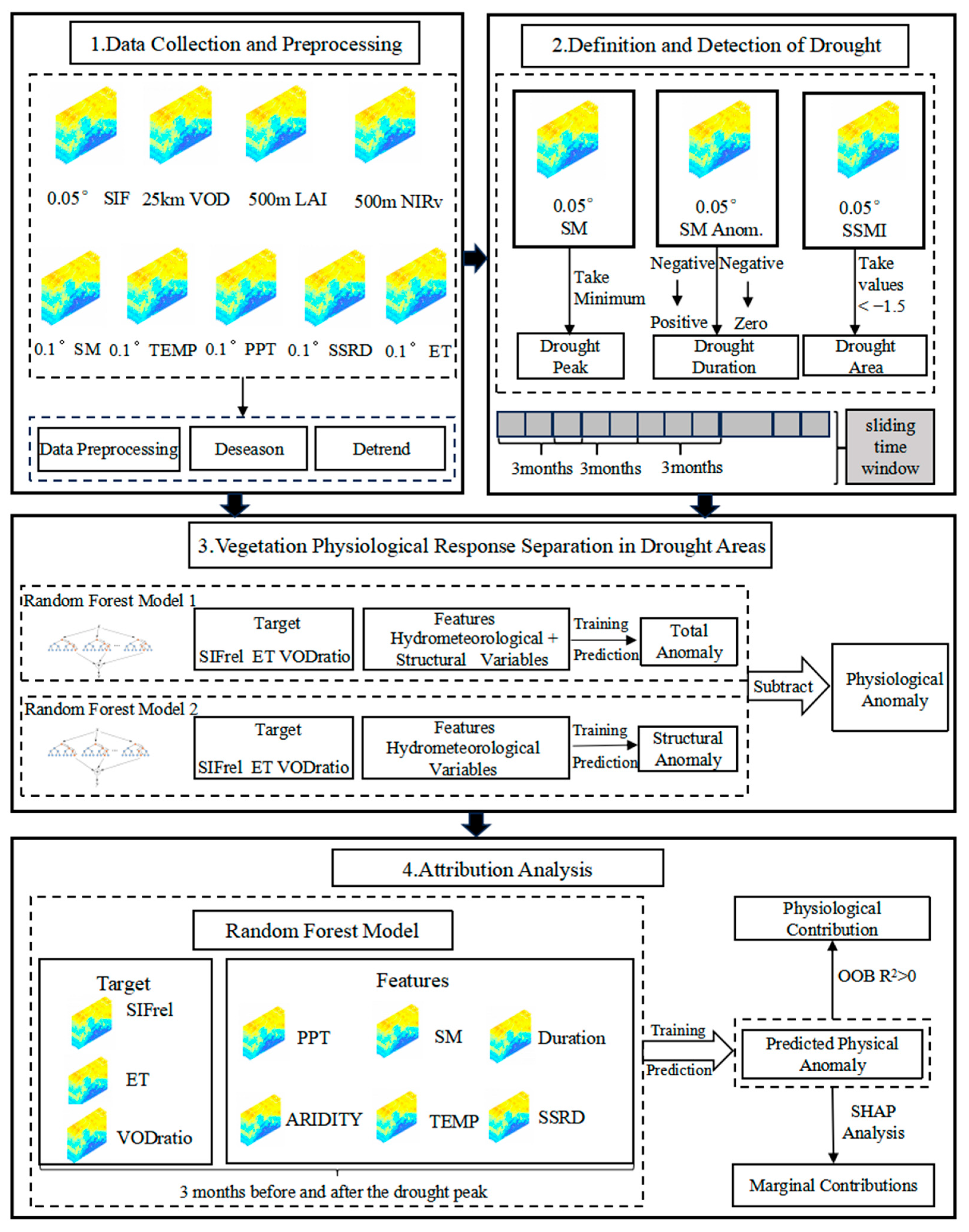
2.3.1. Definition and Detection of Drought
2.3.2. Vegetation Anomaly Signal Decomposition
2.3.3. Attribution Analysis
3. Results and Discussions
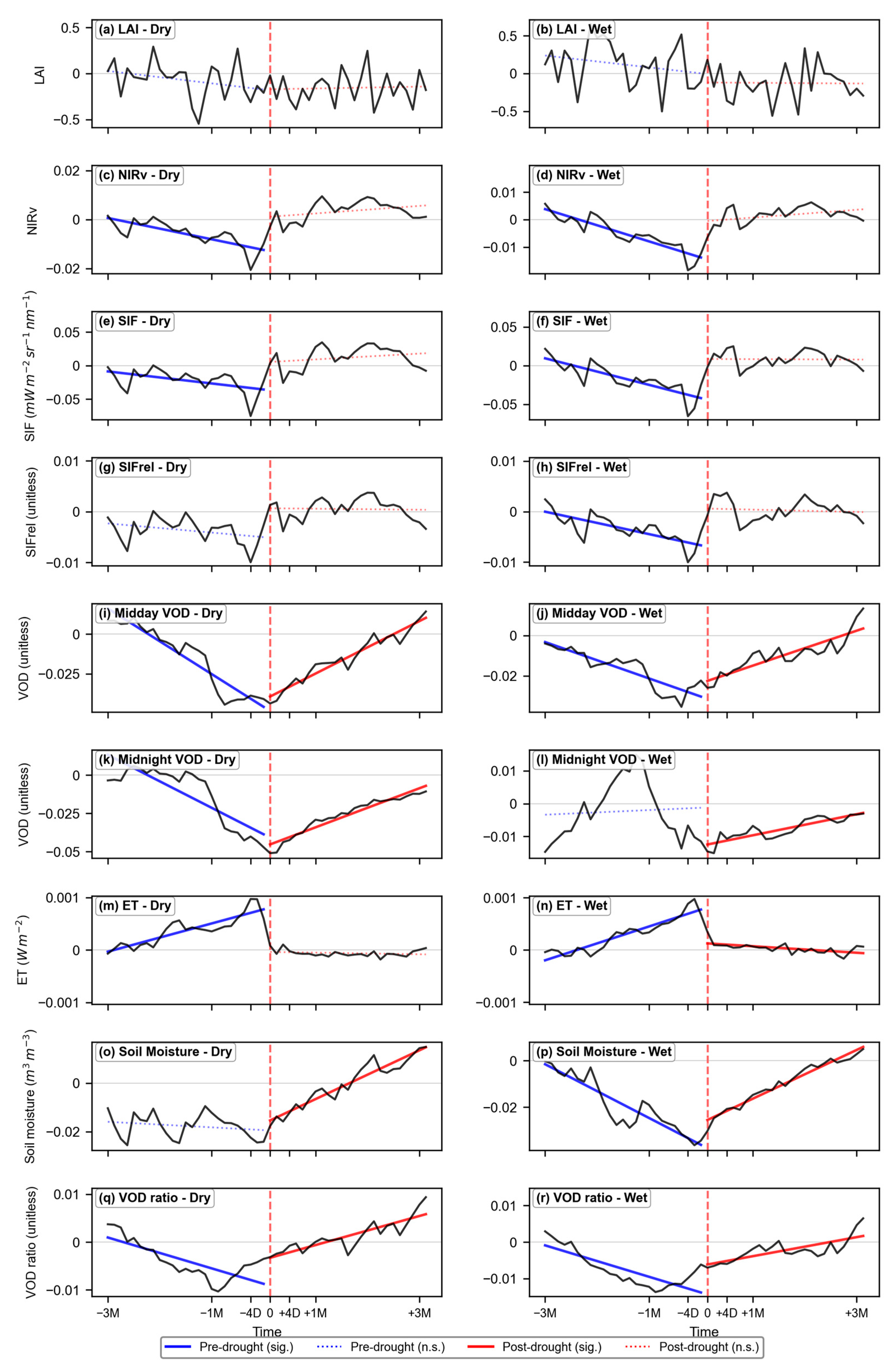
3.1. Temporal Dynamics of Vegetation Structural and Physiological Responses Under Arid and Humid Climate Regions
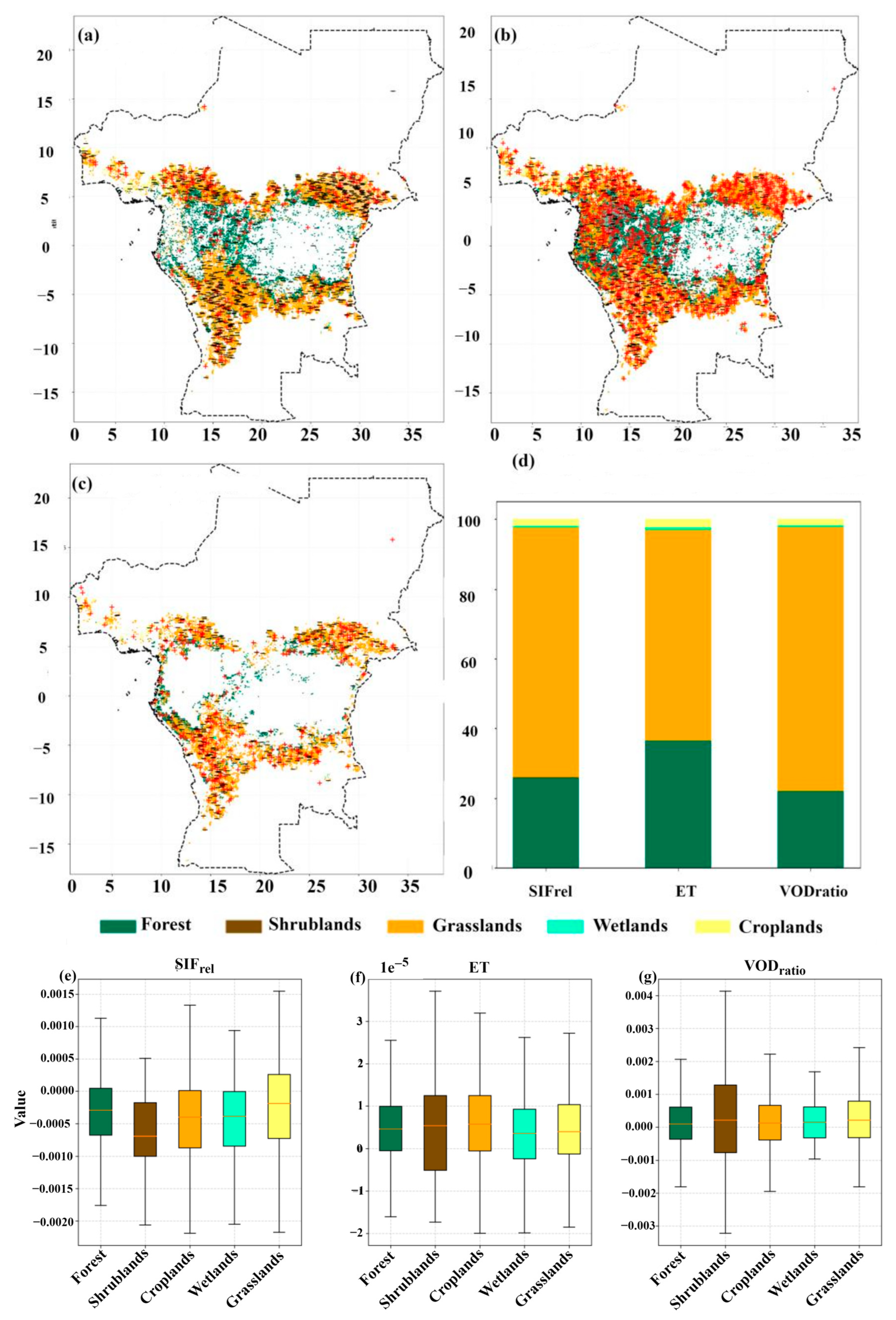
3.2. Spatiotemporal Response Characteristics of Vegetation Physiology to Drought
3.3. Spatial Distribution and Response Characteristics of Physiological Anomalies in Different Vegetation Types
3.4. The Physiological and Structural Response Ratios of Vegetation Under Drought Conditions: Temporal Variations and Phased Characteristics
3.5. Attribution Analysis of Physiological Responses
3.5.1. Feature Selection and Model Evaluation
3.5.2. SHAP Attribution Analysis and the Influence of Environmental Factor
4. Conclusions
Author Contributions
Funding
Data Availability Statement
Acknowledgments
Conflicts of Interest
Appendix A

| Source | Study Area | Time Span | Spatial Resolution | Temporal Resolution | Remote Sensing Data | Method | Contribution | Key Findings | Comments |
|---|---|---|---|---|---|---|---|---|---|
| (Jesslyn et al., 2008) [36] | U.S. Great Plains | 1989–2005 | 1 km | 14 days | Standardized Precipitation Index, Palmer Drought Severity Index, Percent of Average Seasonal Greenness, etc. | Supervised classification and regression tree (CART/Cubist) | Comprehensive monitoring index for vegetation drought stress | Provides 1 km drought condition maps | A composite drought assessment; no disentanglement of structural vs. physiological impacts |
| (Vicente-Serrano et al., 2013) [37] | Global terrestrial biomes | Not specified | Multi-scale | Multi-scale | Vegetation indices, tree rings, ANPP, SPEI | Correlation analysis | Assessing biome-specific drought responses; emphasizing temporal scales | Arid/humid biomes respond rapidly to short-term drought; semi-arid/sub-humid biomes respond to long-term drought | Macro-scale global focus; lacks regional mechanistic details and functional decoupling |
| (Sevanto et al., 2014) [38] | Drylands, eucalypt, tropical forests | Long-term | Global/conceptual | no specific resolution | NDVI, kNDVI, NIRv, LAI, VOD, SIF; meteorological, soil data | Mechanistic and conceptual framework | Drought-induced tree mortality mechanisms; process-based models | Tree mortality from hydraulic/carbon/biotic stress; process models explain best | Only correlations but lacks fine-scale decoupling of physiological vs. structural responses |
| Prentice et al. (2017) [39] | Global continental scale (e.g., SW N. America, Amazon) | 140 years | 1° | Monthly, annual | P-ET, ET, EF, soil moisture, LAI, net radiation (Rn), VPD | CMIP5 ESMs; idealized single-forcing experiments, linear decomposition | Relative roles of CO2-induced physiological effects vs. atmospheric changes on hydrology | CO2 effects dominate ET/EF, impacting runoff beyond climate, coupling carbon-water cycles | Macro-scale global focus; lacks regional mechanistic details and functional decoupling |
| (Jiao et al., 2021) [40] | Northern Hemisphere temperate zones | 1982–2015 | 0.5° | Monthly | SIF, GPP, NDVI, VOD, EVI, meteorological data | Correlation, response time, and attribution analysis | Quantifying vegetation response to water variability; analyzing drivers | Widespread increase in water limitation; shorter vegetation response time to moisture stress. Precipitation and solar radiation are key drivers | Only correlations analysis but lacks fine-scale decoupling of physiological vs. structural responses |
| (Kannenberg et al., 2022) [41] | North America and Europe | 2002–2019 | Not specified | Annual | Tree-ring width, GPP, LAI | Empirical analysis of resistance/recovery indices | Decoupling carbon uptake (GPP) and tree growth; drought legacy effects | GPP is relatively drought-resistant, while structural growth is more sensitive; decoupling persists as a legacy effect | Focuses on GPP vs. structural growth but may miss high-resolution functional changes (e.g., SIF/VOD) |
| (Maedeh et al., 2023) [42] | Ecosystem scale | Not specified | Ecosystem scale | Multi-scale | VOD, SIF | Complementarity assessment; plant-strategy interpretation | Evaluating VOD and SIF as complementary signals; revealing drought strategies | VOD and SIF reveal divergent early responses: SIF-sensitive in isohydric plants, VOD-sensitive in anisohydric plants | Predicts seasonal agricultural drought but lacks functional-level dissection of vegetation response mechanisms |
| (Xu et al., 2024) [43] | Global (agricultural sector) | 2000–2020 | 1.5° | 1 day | ECMWF S2S model meteorological data | Stacked ML ensemble (CBR, ETR, XGB, LGBM, RF) | Machine learning for robust seasonal drought prediction | Strong correlation (R2 > 0.8) in seasonal drought prediction; standardized agricultural drought protocol | Predicts seasonal agricultural drought but lacks functional-level dissection of vegetation response mechanisms |
| This paper | Central and West Africa | 2012–2020 | 0.05° | 4 days | ET, SIFrel, VODratio, LAI | Multi-model framework; random forest for signal decomposition and driver identification | Decoupling structural and physiological responses; phased water regulation; driver identification | Physiological responses dominate three months before and after peak growing period; drought responses show phased characteristics; vegetation responses influenced by precipitation, temperature, etc. | Decouples physiological and structural responses, emphasizes physiological dominance, and uses SHAP for interpretable attribution, surpassing traditional methods |
References
- Vicente-Serrano, S.M.; Quiring, S.M.; Peña-Gallardo, M.; Yuan, S.; Domínguez-Castro, F. A review of environmental droughts: Increased risk under global warming? Earth-Sci. Rev. 2020, 201, 102953. [Google Scholar] [CrossRef]
- Lombe, P.; Carvalho, E.; Rosa-Santos, P. Drought Dynamics in Sub-Saharan Africa: Impacts and Adaptation Strategies. Sustainability 2024, 16, 9902. [Google Scholar] [CrossRef]
- Zhu, Z.; Piao, S.; Myneni, R.B.; Huang, M.; Zeng, Z.; Canadell, J.G.; Ciais, P.; Sitch, S.; Friedlingstein, P.; Arneth, A.; et al. Greening of the Earth and its drivers. Nat. Clim. Change 2016, 6, 791–795. [Google Scholar] [CrossRef]
- Zhou, G.-Y.; Zhou, L.-Y.; Shao, J.-J.; Zhou, X.-H. Effects of extreme drought on terrestrial ecosystems: Review and prospects. Chin. J. Plant Ecol. 2020, 44, 515–525. [Google Scholar] [CrossRef]
- Li, W.; Pacheco-Labrador, J.; Migliavacca, M.; Miralles, D.; Hoek van Dijke, A.; Reichstein, M.; Forkel, M.; Zhang, W.; Frankenberg, C.; Panwar, A.; et al. Widespread and complex drought effects on vegetation physiology inferred from space. Nat. Commun. 2023, 14, 4640. [Google Scholar] [CrossRef] [PubMed]
- Hao, H.; Hao, X.; Xu, J.; Chen, Y.; Zhao, H.; Li, Z.; Kayumba, P.M. Recent Response of Vegetation Water Use Efficiency to Climate Change in Central Asia. Remote Sens. 2022, 14, 5999. [Google Scholar] [CrossRef]
- Liu, Z.; Chen, L.; Smith, N.G.; Yuan, W.; Chen, X.; Zhou, G.; Alam, S.A.; Lin, K.; Zhao, T.; Zhou, P.; et al. Global divergent responses of primary productivity to water, energy, and CO2. Environ. Res. Lett. 2019, 14, 124044. [Google Scholar] [CrossRef]
- Frank, D.; Reichstein, M.; Bahn, M.; Thonicke, K.; Frank, D.; Mahecha, M.D.; Smith, P.; van der Velde, M.; Vicca, S.; Babst, F.; et al. Effects of climate extremes on the terrestrial carbon cycle: Concepts, processes and potential future impacts. Glob. Change Biol. 2015, 21, 2861–2880. [Google Scholar] [CrossRef]
- Liu, Y.; Konings, A.G.; Kennedy, D.; Gentine, P. Global Coordination in Plant Physiological and Rooting Strategies in Response to Water Stress. Global Biogeochem. Cycles 2021, 35, 6758. [Google Scholar] [CrossRef]
- Ding, Y.; Nie, Y.; Chen, H.; Wang, K.; Querejeta, J.I. Water uptake depth is coordinated with leaf water potential, water-use efficiency and drought vulnerability in karst vegetation. New Phytol. 2021, 229, 1339–1353. [Google Scholar] [CrossRef]
- Sobejano-Paz, V.; Mikkelsen, T.N.; Baum, A.; Mo, X.; Liu, S.; Köppl, C.J.; Johnson, M.S.; Gulyas, L.; García, M. Hyperspectral and Thermal Sensing of Stomatal Conductance, Transpiration, and Photosynthesis for Soybean and Maize under Drought. Remote Sens. 2020, 12, 3182. [Google Scholar] [CrossRef]
- Damm, A.; Paul-Limoges, E.; Haghighi, E.; Simmer, C.; Morsdorf, F.; Schneider, F.D.; van der Tol, C.; Migliavacca, M.; Rascher, U. Remote sensing of plant-water relations: An overview and future perspectives. J. Plant Physiol. 2018, 227, 3–19. [Google Scholar] [CrossRef] [PubMed]
- Xu, H.J.; Wang, X.P.; Zhao, C.Y.; Yang, X.M. Assessing the response of vegetation photosynthesis to meteorological drought across northern China. Land Degrad. Dev. 2020, 32, 20–34. [Google Scholar] [CrossRef]
- Hoek van Dijke, A.J.; Orth, R.; Teuling, A.J.; Herold, M.; Schlerf, M.; Migliavacca, M.; Machwitz, M.; van Hateren, T.C.; Yu, X.; Mallick, K. Comparing forest and grassland drought responses inferred from eddy covariance and Earth observation. Agric. For. Meteorol. 2023, 341, 109635. [Google Scholar] [CrossRef]
- Gu, H.; Yin, G.; Yang, Y.; Verger, A.; Descals, A.; Filella, I.; Zeng, Y.; Hao, D.; Xie, Q.; Li, X.; et al. Satellite-Detected Contrasting Responses of Canopy Structure and Leaf Physiology to Drought. IEEE J. Sel. Top. Appl. Earth Obs. Remote Sens. 2023, 16, 2427–2436. [Google Scholar] [CrossRef]
- Schmidt, L.; Forkel, M.; Zotta, R.-M.; Scherrer, S.; Dorigo, W.A.; Kuhn-Régnier, A.; van der Schalie, R.; Yebra, M. Assessing the sensitivity of multi-frequency passive microwave vegetation optical depth to vegetation properties. Biogeosciences 2023, 20, 1027–1046. [Google Scholar] [CrossRef]
- Yao, Y.; Humphrey, V.; Konings, A.G.; Wang, Y.; Yin, Y.; Holtzman, N.; Wood, J.D.; Bar-On, Y.; Frankenberg, C. Investigating Diurnal and Seasonal Cycles of Vegetation Optical Depth Retrieved from GNSS Signals in a Broadleaf Forest. Geophys. Res. Lett. 2024, 51, 7121. [Google Scholar] [CrossRef]
- Momen, M.; Wood, J.D.; Novick, K.A.; Pangle, R.; Pockman, W.T.; McDowell, N.G.; Konings, A.G. Interacting Effects of Leaf Water Potential and Biomass on Vegetation Optical Depth. J. Geophys. Res. Biogeosci. 2017, 122, 3031–3046. [Google Scholar] [CrossRef]
- Nicholson, S.E.; Tucker, C.J.; Ba, M.B. Desertification, Drought, and Surface Vegetation: An Example from the West African Sahel. Bull. Am. Meteorol. Soc. 1998, 79, 815–830. [Google Scholar] [CrossRef]
- Thorncroft, C.D.; Nguyen, H.; Zhang, C.; Peyrillé, P. Annual cycle of the West African monsoon: Regional circulations and associated water vapour transport. Q. J. R. Meteorol. Soc. 2011, 137, 129–147. [Google Scholar] [CrossRef]
- Sultan, B.; Janicot, S. Abrupt Shift of the ITCZ over West Africa and intra-seasonal variability. Geophys. Res. Lett. 2000, 2720, 3353–3356. [Google Scholar] [CrossRef]
- Malhi, Y.; Adu-Bredu, S.; Asare, R.A.; Lewis, S.L.; Mayaux, P. African rainforests: Past, present and future. Philos. Trans. R. Soc. B 2013, 368, 312. [Google Scholar] [CrossRef]
- Verheggen, A.; Mayaux, P.; de Wasseige, C.; Defourny, P. Mapping Congo Basin vegetation types from 300m and 1km multi-sensor time series for carbon stocks and forest areas estimation. Biogeosciences 2012, 9, 5061–5079. [Google Scholar] [CrossRef]
- Hickler, T.; Eklundh, L.; Seaquist, J.W.; Smith, B.; Ardö, J.; Olsson, L.; Sykes, M.T.; Sjöström, M. Precipitation controls Sahel greening trend. Geophys. Res. Lett. 2005, 32, 24370. [Google Scholar] [CrossRef]
- Rishmawi, K.; Prince, S.D.; Xue, Y. Vegetation Responses to Climate Variability in the Northern Arid to Sub-Humid Zones of Sub-Saharan Africa. Remote. Sens. 2016, 8, 910. [Google Scholar] [CrossRef]
- Zhou, L.; Tian, Y.; Myneni, R.B.; Ciais, P.; Saatchi, S.; Liu, Y.Y.; Piao, S.; Chen, H.; Vermote, E.F.; Song, C.; et al. Widespread decline of Congo rainforest greenness in the past decade. Nature 2014, 509, 86–90. [Google Scholar] [CrossRef] [PubMed]
- Xiao, J.; Terrer, C.; Gentine, P.; Tateno, R.; Fan, L.; Ma, M.; Yue, Y.; Yuan, W.; Peňuelas, J.; Shi, W. Temporal and Phenological Modulation of the Impact of Increasing Drought Conditions on Vegetation Growth in a Humid Big River Basin: Insights from Global Comparisons. Earth’s Future 2025, 13, 5720. [Google Scholar] [CrossRef]
- Davidson, E.A.; Araújo, A.C.d.; Artaxo, P.; Balch, J.K.; Brown, I.F.; Bustamante, M.M.C.; Coe, M.T.; DeFries, R.S.; Keller, M.; Longo, M.; et al. The Amazon basin in transition. Nature 2012, 481, 321–328. [Google Scholar] [CrossRef]
- Daniela, V.; Giuseppe, L.-M.; Oscar Rosario, B.; Juan Miguel, R.-C.; Salvatore, P.; Simona, C.; Guido, D.U.; Giovanni Battista, C.; Antonio, C.; Alessandro, C.; et al. Comparing the use of ERA5 reanalysis dataset and ground-based agrometeorological data under different climates and topography in Italy. J. Hydrol. Reg. Stud. 2022, 42, 101182. [Google Scholar] [CrossRef]
- Du, J.; Kimball, J.S.; Jones, L.A.; Kim, Y.; Glassy, J.; Watts, J.D. A global satellite environmental data record derived from AMSR-E and AMSR2 microwave Earth observations. Earth Syst. Sci. Data 2017, 9, 791–808. [Google Scholar] [CrossRef]
- Cao, J.; Luo, Y.; Zhang, X.; Fan, L.; Tao, J.; Nam, W.-H.; Sur, C.; He, Y.; Gulakhmadov, A.; Niyogi, D. Assessing the responsiveness of multiple microwave remote sensing vegetation optical depth indices to drought on crops in Midwest US. Int. J. Appl. Earth Obs. Geoinf. 2024, 132, 104072. [Google Scholar] [CrossRef]
- Yifan, D.; Donghong, X.; Zhengan, S.; Xingwu, D.; Xiaoning, L.; Su, Z.; Yong, Y. The influences of mass failure on the erosion and hydraulic processes of gully headcuts based on an in situ scouring experiment in Dry-hot valley of China. Catena 2019, 176, 14–25. [Google Scholar] [CrossRef]
- Altman, N.; Krzywinski, M. Ensemble methods: Bagging and random forests. Nat. Methods 2017, 14, 933–934. [Google Scholar] [CrossRef]
- Oshiro, T.M.; Perez, P.S.; Baranauskas, J.A. How Many Trees in a Random Forest? In Machine Learning and Data Mining in Pattern Recognition; Springer: Cham, Switzerland, 2012; pp. 154–168. [Google Scholar]
- Yu, X.; Orth, R.; Reichstein, M.; Bahn, M.; Klosterhalfen, A.; Knohl, A.; Koebsch, F.; Migliavacca, M.; Mund, M.; Nelson, J.A.; et al. Contrasting drought legacy effects on gross primary productivity in a mixed versus pure beech forest. Biogeosciences 2022, 19, 4315–4329. [Google Scholar] [CrossRef]
- Brown, J.F.; Wardlow, B.D.; Tadesse, T.; Hayes, M.; Reed, B.C. The Vegetation Drought Response Index (VegDRI): A New Integrated Approach for Monitoring Drought Stress in Vegetation. GISci. Remote Sens. 2008, 45, 16–46. [Google Scholar] [CrossRef]
- Vicente-Serrano, S.M.; Gouveia, C.; Camarero, J.J.; Begueria, S.; Trigo, R.; Lopez-Moreno, J.I.; Azorin-Molina, C.; Pasho, E.; Lorenzo-Lacruz, J.; Revuelto, J.; et al. Response of vegetation to drought time-scales across global land biomes. Proc. Natl. Acad. Sci. USA 2013, 110, 52–57. [Google Scholar] [CrossRef] [PubMed]
- Sevanto, S.; McDowell, N.G.; Dickman, L.T.; Pangle, R.; Pockman, W.T. How do trees die? A test of the hydraulic failure and carbon starvation hypotheses. Plant Cell Environ. 2014, 37, 153–161. [Google Scholar] [CrossRef]
- Prentice, I.C.; Cleator, S.F.; Huang, Y.H.; Harrison, S.P.; Roulstone, I. Reconstructing ice-age palaeoclimates: Quantifying low-CO2 effects on plants. Glob. Planet. Change 2017, 149, 166–176. [Google Scholar] [CrossRef]
- Jiao, W.; Wang, L.; Smith, W.K.; Chang, Q.; Wang, H.; D’Odorico, P. Observed increasing water constraint on vegetation growth over the last three decades. Nat. Commun. 2021, 12, 3777. [Google Scholar] [CrossRef] [PubMed]
- Kannenberg, S.; Cabon, A.; Babst, F.; Belmecheri, S.; Delpierre, N.; Guerrieri, R.; Maxwell, J.; Meinzer, F.; Moore, D.; Pappas, C.; et al. Drought-induced decoupling between carbon uptake and tree growth impacts forest carbon turnover time. Agric. For. Meteorol. 2022, 322, 108996. [Google Scholar] [CrossRef]
- Maedeh, B.; Kakroodi, A.A.; Majid, K.; Ghasem, A. Satellite-based drought monitoring using optimal indices for diverse climates and land types. Ecol. Inform. 2023, 76, 102143. [Google Scholar] [CrossRef]
- Xu, L.; Zhang, X.; Wu, T.; Yu, H.; Du, W.; Zhang, C.; Chen, N. Global Prediction of Flash Drought Using Machine Learning. Geophys. Res. Lett. 2024, 51, e2024GL111134. [Google Scholar] [CrossRef]




| Parameter | Data Source | Spatial Resolution/Extent | Temporal Resolution/Extent |
|---|---|---|---|
| Temperature | ERA5-Land | 0.1°, Global | daily |
| Rainfall | ERA5-Land | 0.1°, Global | daily |
| Soil Moisture | ERA5-Land | 0.1°, Global | daily |
| Radiation | ERA5-Land | 0.1°, Global | daily |
| LAI | MCD15A3H | 500 m, Global | 4 days |
| NIRv | MCD43A4 | 500 m, Global | daily |
| SIF | CSIF | 0.05°, Global | daily |
| ET | ERA5-Land | 0.1°, Global | daily |
Disclaimer/Publisher’s Note: The statements, opinions and data contained in all publications are solely those of the individual author(s) and contributor(s) and not of MDPI and/or the editor(s). MDPI and/or the editor(s) disclaim responsibility for any injury to people or property resulting from any ideas, methods, instructions or products referred to in the content. |
© 2026 by the authors. Licensee MDPI, Basel, Switzerland. This article is an open access article distributed under the terms and conditions of the Creative Commons Attribution (CC BY) license.
Share and Cite
Zhao, Y.; Zhang, X. The Physiological and Structural Responses of African Vegetation to Extreme Drought Revealed by Multi-Spectral Satellite Remote Sensing. Remote Sens. 2026, 18, 478. https://doi.org/10.3390/rs18030478
Zhao Y, Zhang X. The Physiological and Structural Responses of African Vegetation to Extreme Drought Revealed by Multi-Spectral Satellite Remote Sensing. Remote Sensing. 2026; 18(3):478. https://doi.org/10.3390/rs18030478
Chicago/Turabian StyleZhao, Yuqiao, and Xiang Zhang. 2026. "The Physiological and Structural Responses of African Vegetation to Extreme Drought Revealed by Multi-Spectral Satellite Remote Sensing" Remote Sensing 18, no. 3: 478. https://doi.org/10.3390/rs18030478
APA StyleZhao, Y., & Zhang, X. (2026). The Physiological and Structural Responses of African Vegetation to Extreme Drought Revealed by Multi-Spectral Satellite Remote Sensing. Remote Sensing, 18(3), 478. https://doi.org/10.3390/rs18030478