1. Introduction
The radiometric imager aboard geostationary meteorological satellites typically perform a line-by-line scan of the target area through the coordinated movement of east–west and north–south scanning mirrors, operating in a ‘paintbrush-like’ manner (where the scan direction may be adjusted in specific operational modes) [
1,
2,
3,
4,
5,
6]. To enhance observational capabilities, new-generation geostationary imagers have widely adopted large-scale long-linear-array focal plane detector structures. Notable examples include the Advanced Baseline Imager (ABI) on the US GOES-R series [
1], the Advanced Himawari Imager (AHI) on Japan’s Himawari-8/9 [
2,
3], the Advanced Meteorological Imager (AMI) on South Korea’s GEO-KOMPSAT-2A [
4], the Flexible Combined Imager (FCI) on the European MTG series [
5], the Geostationary High-speed Imager (GHI) on China’s Fengyun-4B (FY-4B) satellite [
6], and the Advanced Geostationary Radiation Imager (AGRI) scheduled for launch aboard the Fengyun-4C satellite. By substantially increasing the number of detection elements, long-linear arrays effectively expand the coverage area of a single scan, significantly enhancing temporal resolution, spatial resolution, and the signal-to-noise ratio (SNR), demonstrating promising application prospects.
However, constrained by current infrared detector manufacturing techniques, the emergence of non-functional detectors (blind detectors) within focal plane arrays is inevitable [
7,
8,
9]. These detectors typically exhibit either a lack of response or excessively high noise, rendering them ineffective for signal detection. With the increasing scale of detector arrays and the substantial growth in detector count, the occurrence of blind detectors becomes unavoidable, which severely compromises the usability of the acquired data. Consequently, it is imperative to adopt effective measures to mitigate or compensate for the detrimental effects caused by these blind detectors [
8,
9].
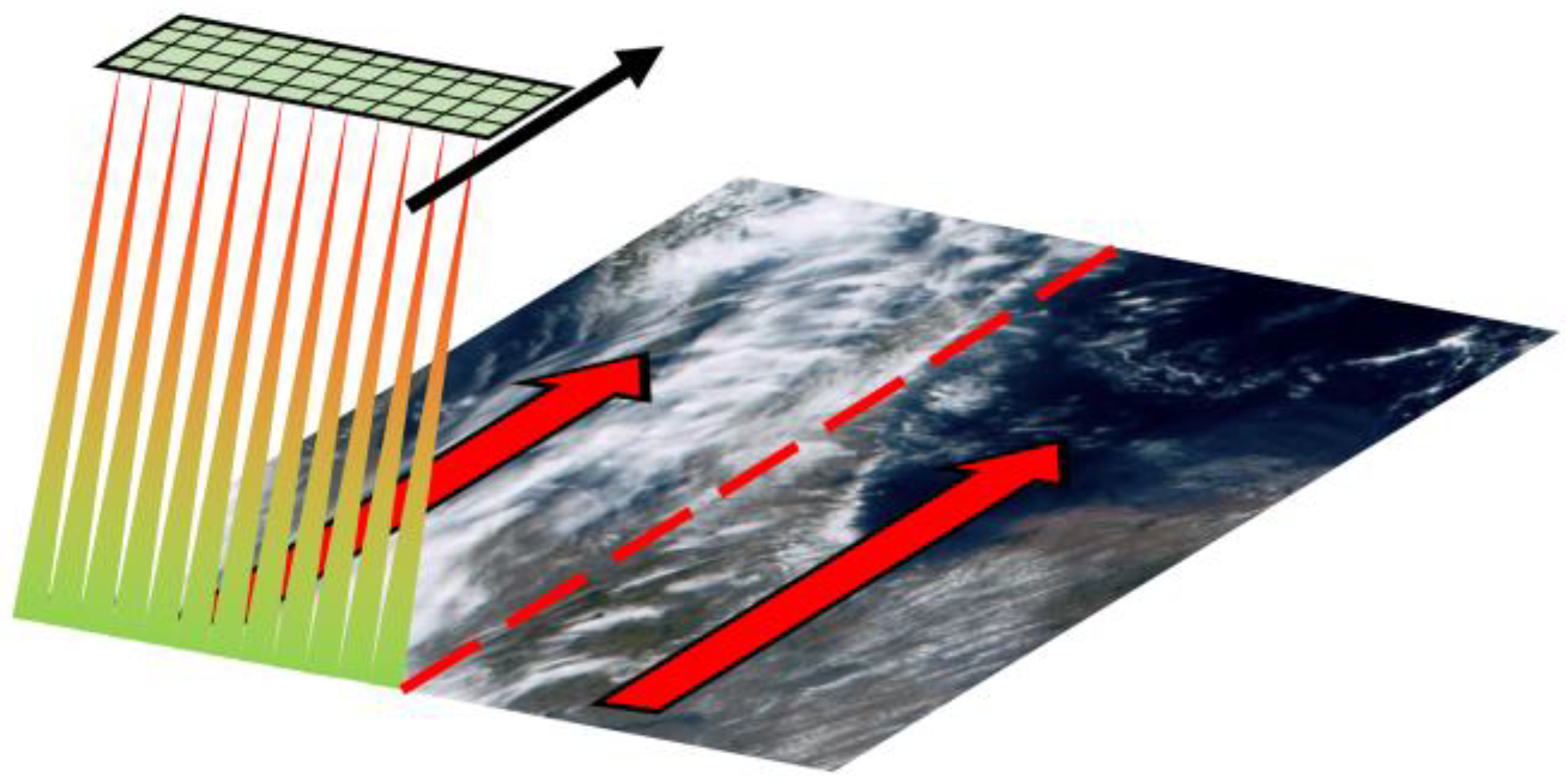
To address the issue of blind detectors, long-linear-array focal plane detectors typically employ a multi-column redundant architecture. This involves arranging multiple columns (commonly four or six) of detector arrays with identical specifications in parallel, enabling simultaneous observation of the same ground target (as schematically illustrated in
Figure 1). For invalid data detected by a blind detector, data from a functional detector within the same row can be selected to replace it. This approach effectively circumvents the impact of blind detectors at the hardware level.
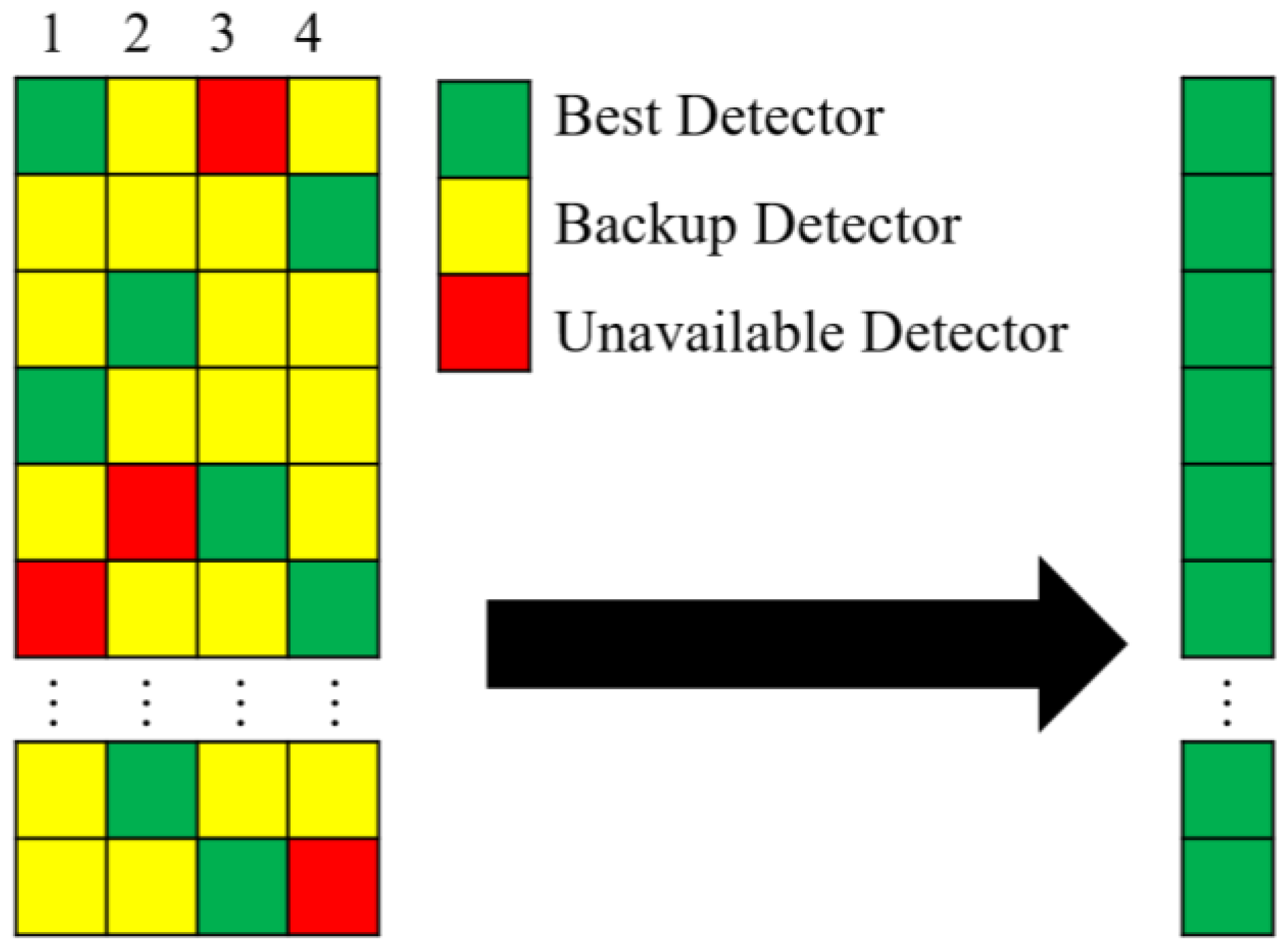
Leveraging this redundant architecture, a single detector with optimal performance must be selected from each row prior to image synthesis to construct the final image. This process is termed “Best Detector Selection” (BDS), and the resulting index map formed by these row-wise selections is referred to as the BDS map (a schematic of the workflow is shown in
Figure 2). Currently, the BDS maps for most payloads are determined during the pre-launch ground testing phase. To ensure system stability, the BDS map is generally not updated during on-orbit operation, with adjustments made only when the currently selected optimal detector exhibits anomalies.
From an ideal perspective, the optimal detector should integrate high sensitivity, high calibration accuracy, good uniformity, and long-term stability to enhance the quality of the synthesized imagery. However, a unified and universally accepted evaluation standard for the “optimal detector” has not yet been established within the industry, and a general methodology for balancing diverse metrics of different types and meanings is still lacking. Existing BDS strategies often overemphasize a single metric (e.g., sensitivity) while neglecting other critical performance parameters of the detectors [
10]. For example, in the operational long-wave infrared band of the Fengyun-4 GHI payload, the BDS strategy prioritizes detectors with the highest sensitivity. Although this helps improve overall sensitivity and minimize the system’s Noise-Equivalent Differential Temperature (NEdT), it overlooks other vital metrics—such as calibration accuracy and spectral response function—thus failing to fully exploit the detector’s comprehensive potential.
Therefore, establishing a rational evaluation index system and effectively integrating multiple metrics with distinct physical meanings to achieve comprehensive detector evaluation and BDS has become a critical issue warranting in-depth research. This paper proposes a detector evaluation method based on a modified Z-score, capable of accommodating diverse types of performance indicators and facilitating multi-dimensional comprehensive optimization. This method will be applied to the infrared channel processing of the AGRI aboard China’s Fengyun-4C satellite, providing technical support for its detector optimization.
2. Materials and Methods
2.1. Detector Element Evaluation
The evaluation of detector performance must rely on multiple key metrics. Based on their physical meanings and their directional contribution to image quality, these metrics can be systematically categorized into three types:
- (1)
Positive Metrics: A higher value indicates better detector performance. Examples include SNR, radiometric calibration accuracy, and linearity.
- (2)
Negative Metrics: A lower value signifies better detector performance. Typical examples are NEdT and calibration bias.
- (3)
Uniformity Metrics: These metrics focus on the consistency of performance across different detectors. Values closer to each other indicate better uniformity. Examples include responsivity, the Spectral Response Function (SRF), and dark current.
During the process of detector evaluation, one should avoid the over-optimization of a single metric. For instance, solely pursuing the highest sensitivity (i.e., the lowest NEdT) may introduce non-uniformity issues due to the neglect of radiometric calibration bias or disparities in the spectral response functions among detectors. This often manifests as striping noise in the imagery, severely impacting subsequent applications [
11,
12,
13,
14,
15,
16,
17,
18]. Conversely, exclusively prioritizing the highest calibration accuracy might lead to an excessive sacrifice in sensitivity, thereby hindering the detection of subtle changes in the target [
19,
20]. Therefore, developing an evaluation methodology that holistically balances multiple performance dimensions is crucial for achieving high-quality imaging.
In the practical implementation of the proposed method, relevant metrics can be flexibly selected for comprehensive evaluation based on specific remote sensing mission objectives and actual requirements, thereby achieving optimization of overall system performance. For the BDS procedure, the selected metrics should ideally be mutually independent and exhibit no significant correlation. To concretely illustrate the proposed methodology, this paper selects four representative metrics—sensitivity, calibration bias, the Spectral Response Function (SRF), and responsivity—as the foundation for constructing the comprehensive evaluation framework. These metrics are described as follows:
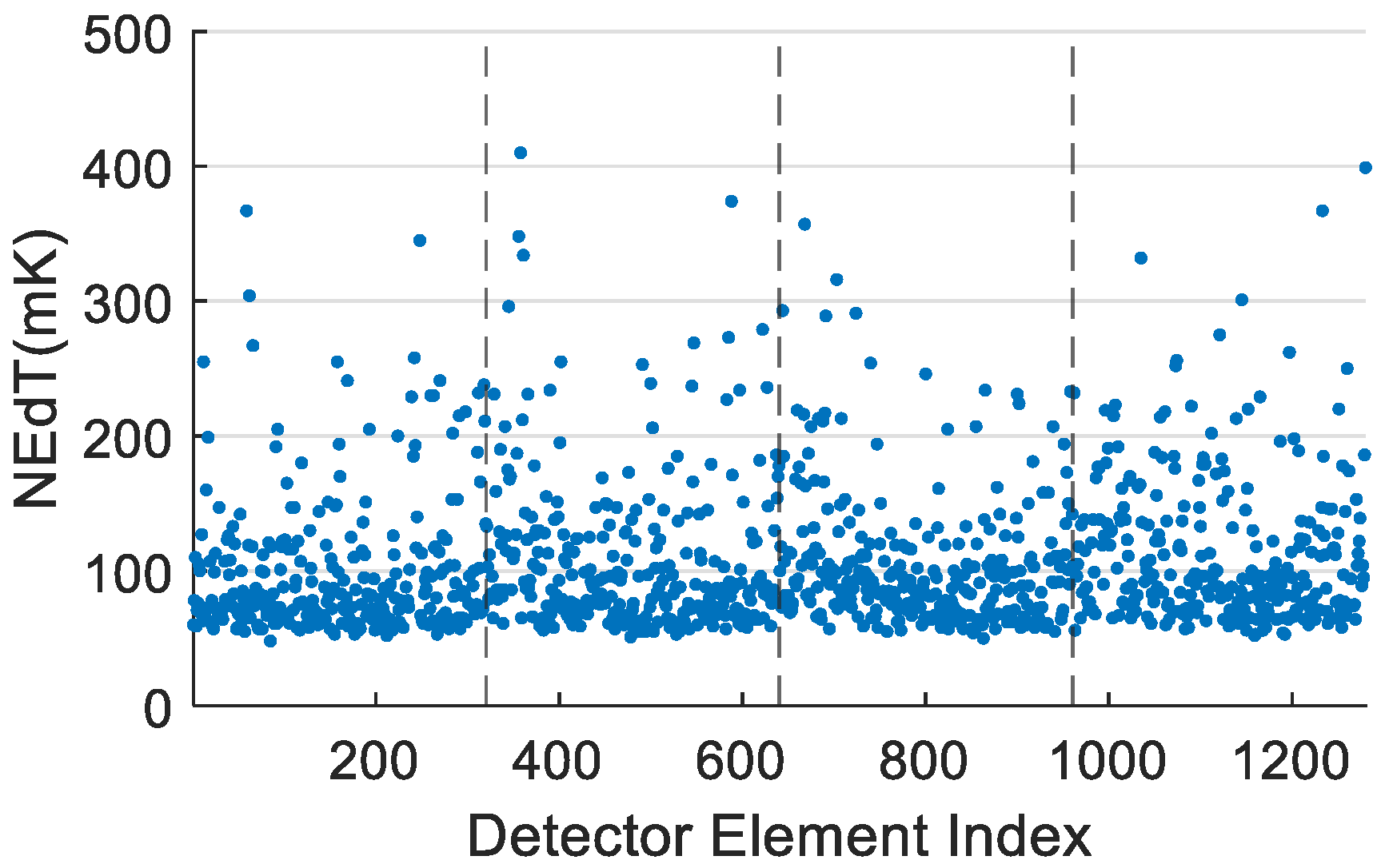
Sensitivity reflects the detector’s capability to discern changes in the target signal. The detection sensitivity of an infrared detector is limited by noise, specifically referring to the random electrical noise generated by the detector and circuit components. For infrared detectors, sensitivity is typically evaluated using NEdT. A lower NEdT value indicates higher sensitivity [
19].
- (2)
Calibration Bias
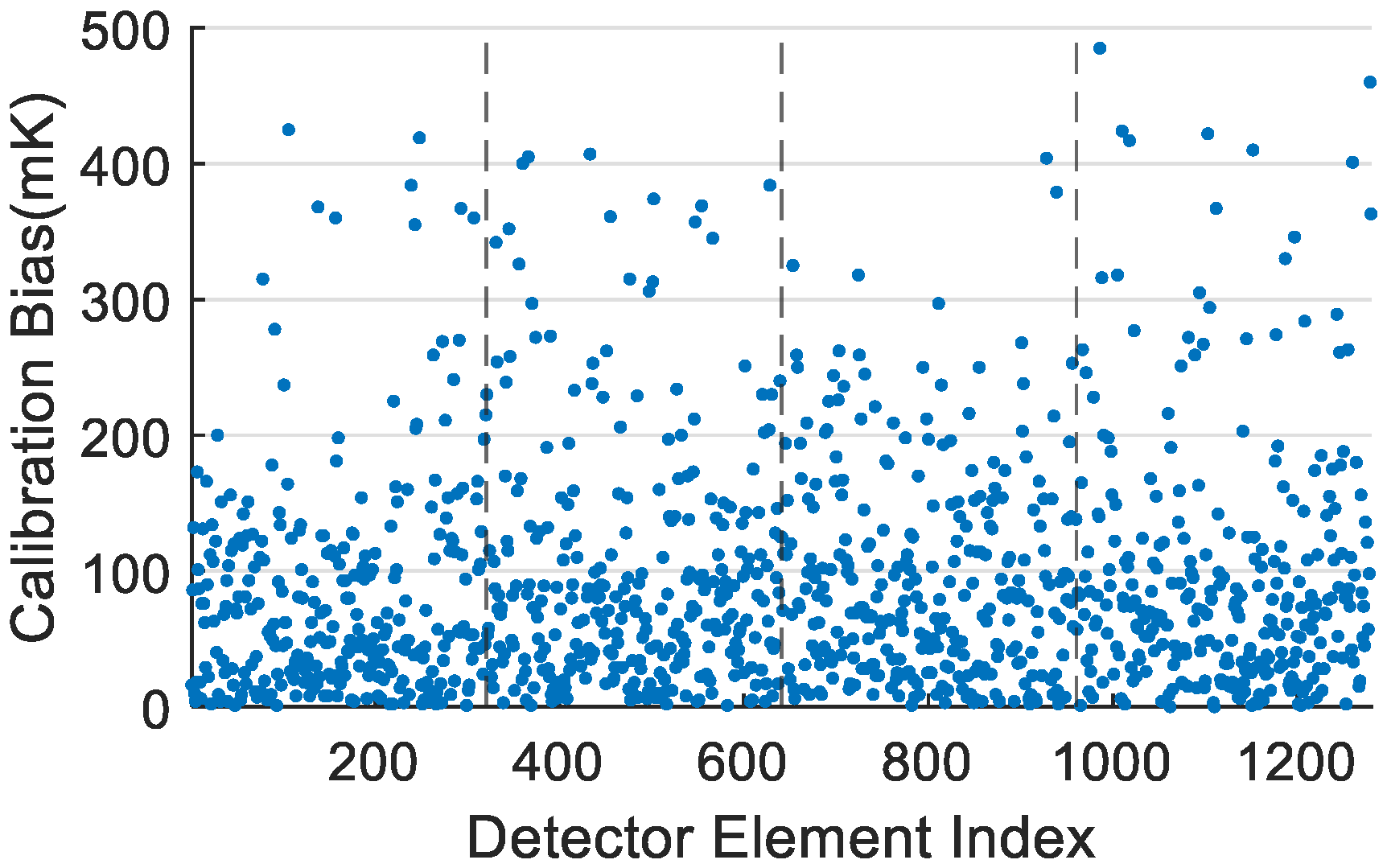
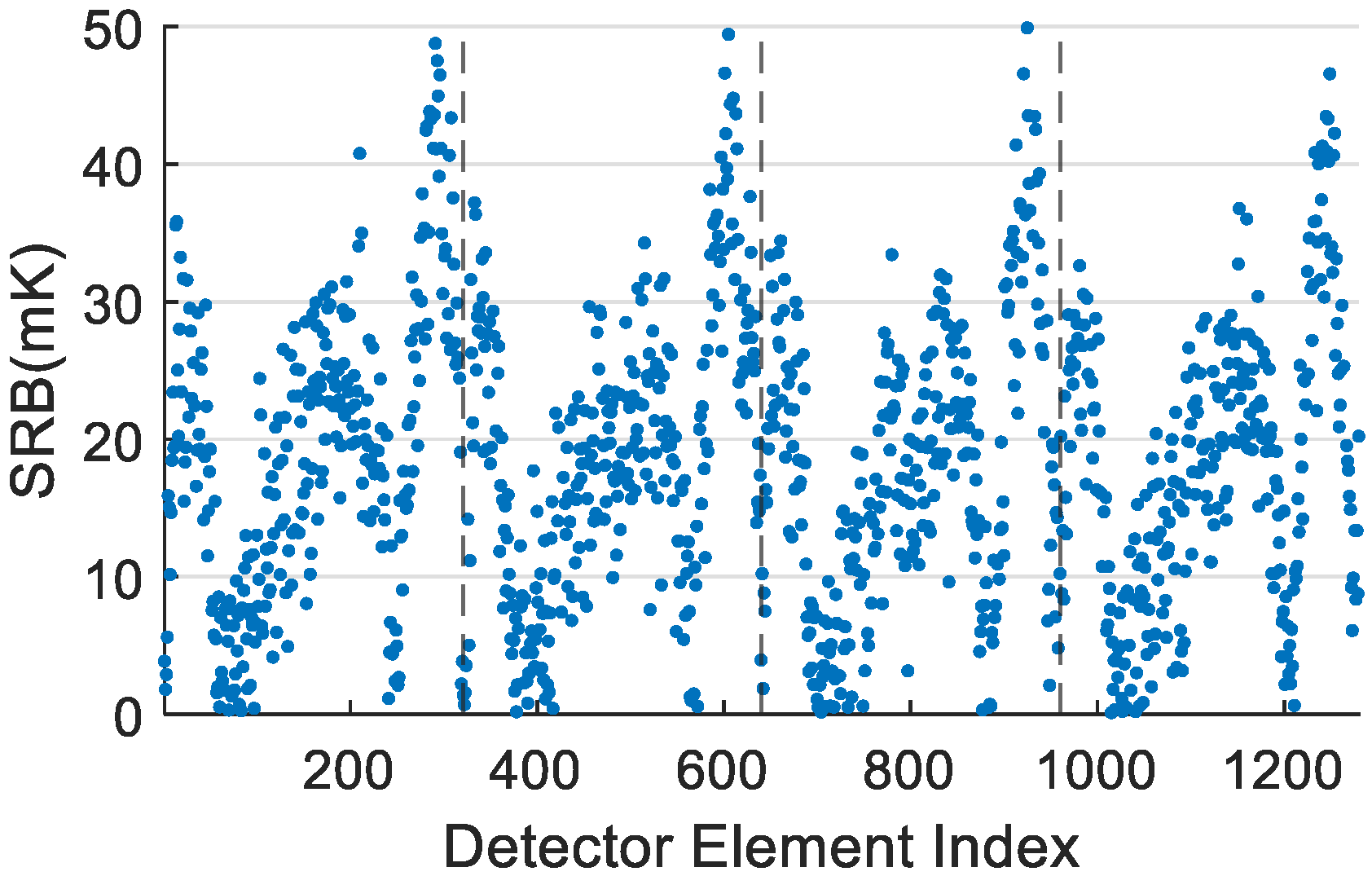
Calibration bias reflects the accuracy of the calibration or the goodness-of-fit of the calibration model. It is generally quantified as the discrepancy between the true radiance (or brightness temperature) and the radiance retrieved through the calibration process under a specific test condition (e.g., the difference between the true brightness temperature and the calibrated brightness temperature based on using a 300 K blackbody as reference). A smaller calibration bias indicates higher calibration accuracy for that specific condition. During the ground testing phase, where the true radiance is known, calibration accuracy can be assessed using the mean or root mean square of the calibration bias across multiple test conditions. However, for on-orbit calibration, obtaining true radiance values across different levels is challenging (due to difficulties in acquiring ground truth for terrestrial targets and the limited active temperature adjustment range of most onboard blackbody systems). Consequently, evaluating on-orbit calibration accuracy using the onboard blackbody often relies on the calibration bias from a single operating condition (the fixed operating temperature of the onboard blackbody) [
20,
21,
22,
23]. This study also adopts this approach to assess calibration bias. In addition, the evaluation of on-orbit calibration accuracy can also be achieved through ground calibration sites or cross-calibration with other satellite payloads; the method described in this paper is likewise applicable to such scenarios.
- (3)
Spectral Response Function (SRF)
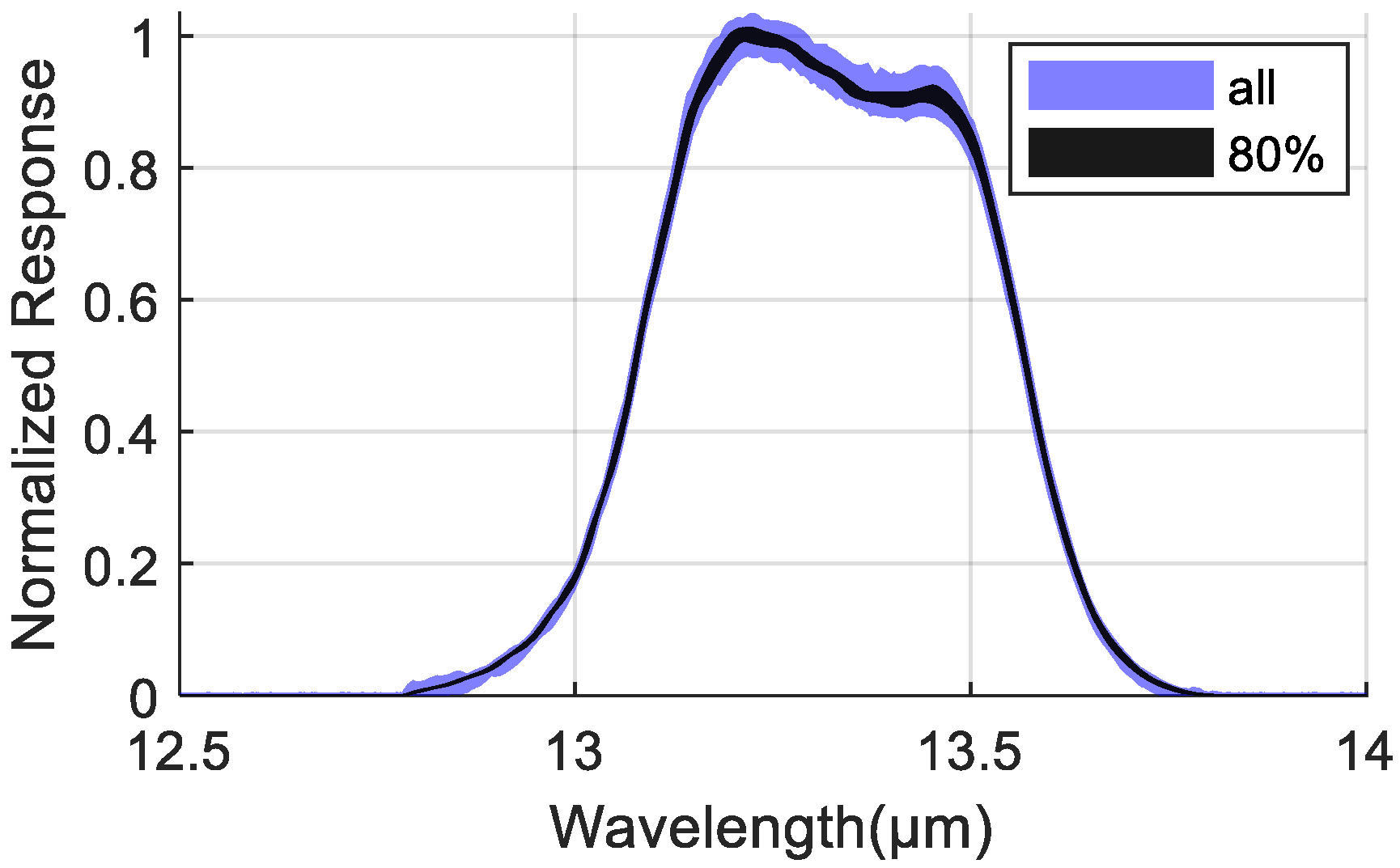
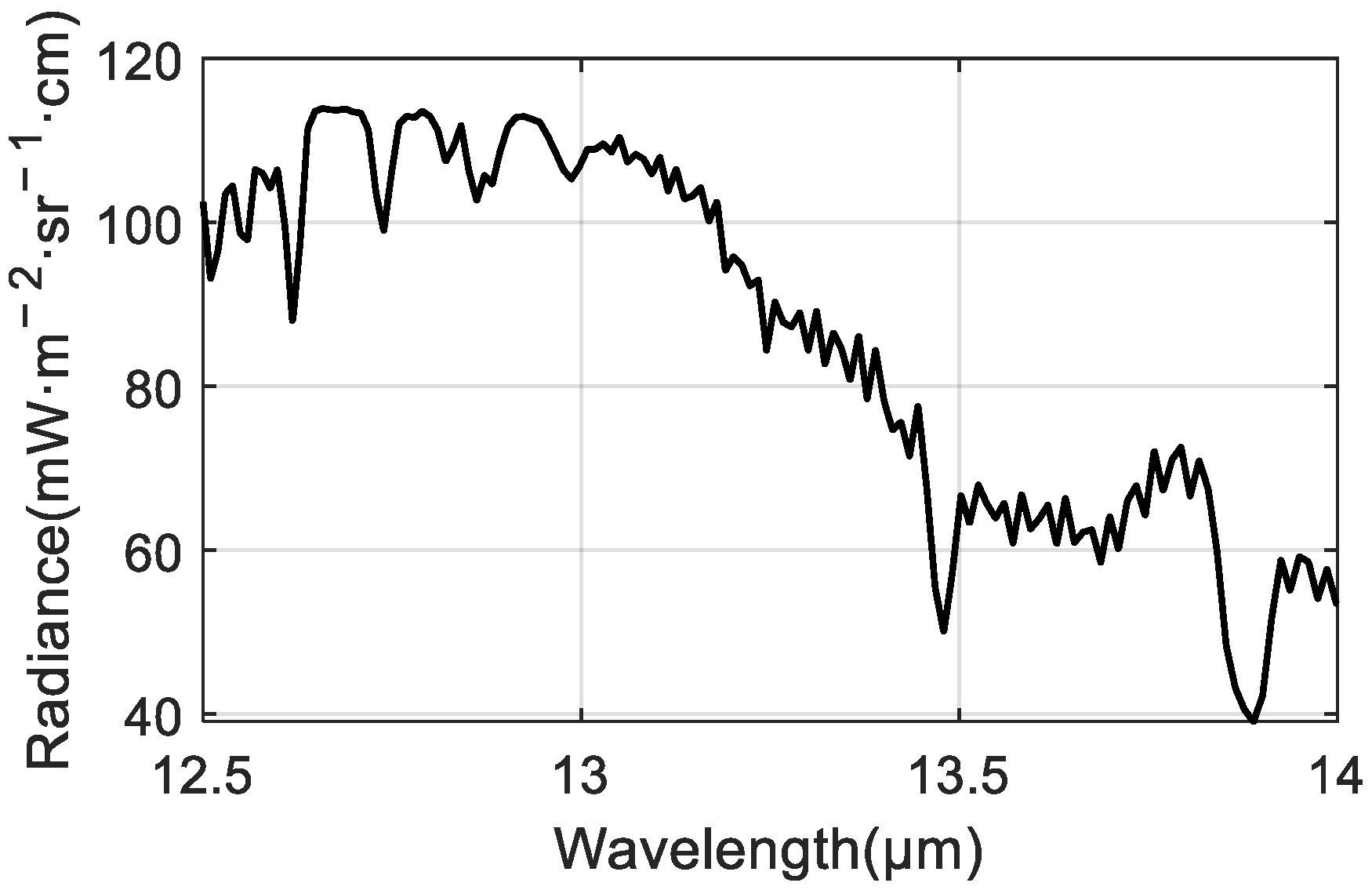
The Spectral Response Function (SRF) is a function of wavelength that describes the relative response of a detector to incident light at different wavelengths. It characterizes how the detector output varies with wavelength when subjected to incident light of unit energy or unit spectral radiance across the spectrum. The ideal SRF shape typically approximates a rectangular window. The SRF is an extremely critical parameter, directly impacting calibration accuracy, uniformity, and retrieval precision. For long-linear-array detectors, it is desirable for the SRF of each detector to be as identical as possible (i.e., having the same curve shape). Significant differences cause individual detectors to receive different effective radiances even from the same target, leading to non-uniformity and adversely affecting subsequent applications. Therefore, the selected detectors should ideally exhibit SRFs that are closely matched [
24,
25,
26].
- (4)
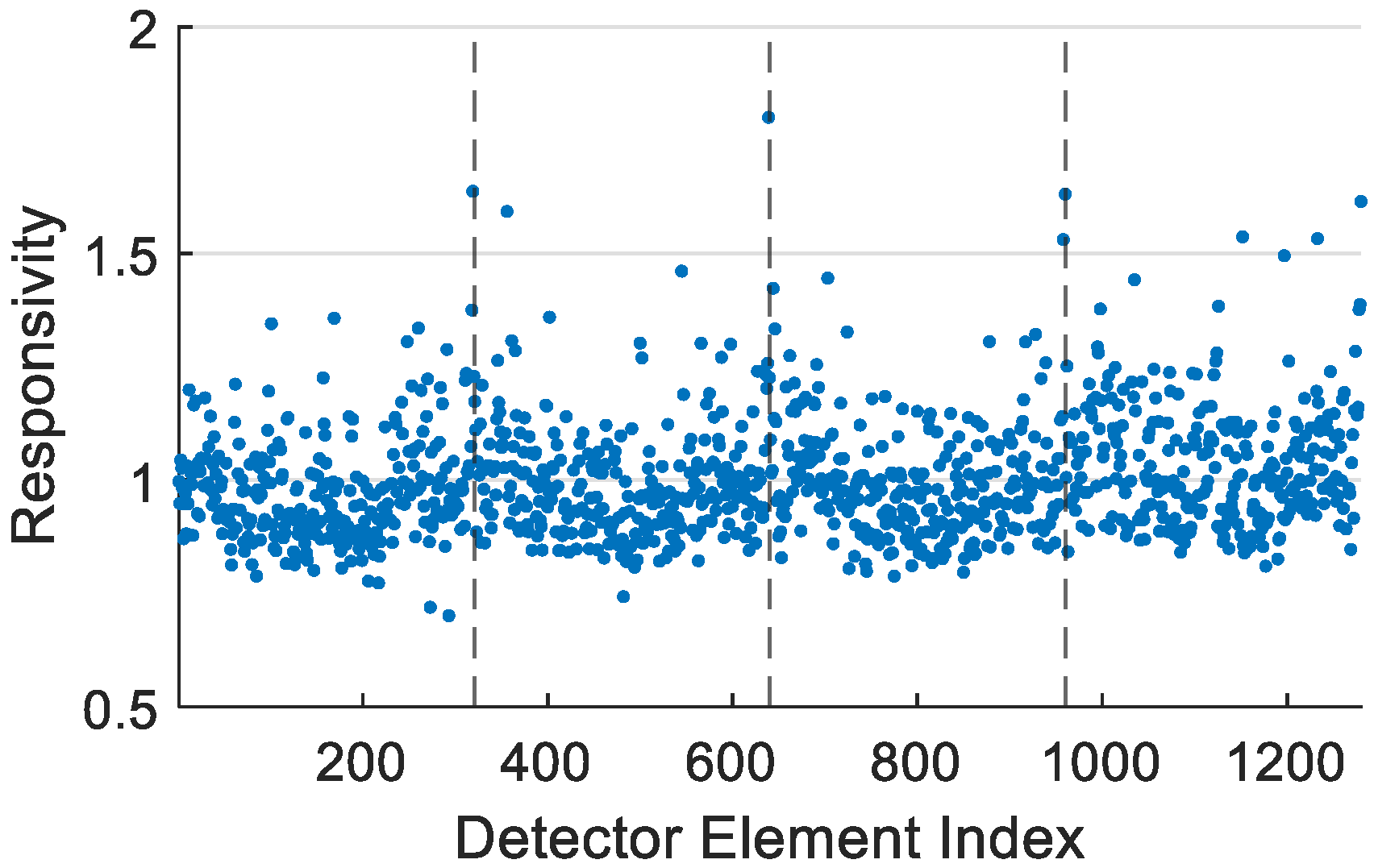
Responsivity
Responsivity refers to the ratio of the change in the detector’s output signal to the change in the incident target energy. Generally, it is desirable for the responsivity of different detectors to be as similar as possible. This facilitates the selection of appropriate bias settings and amplification gains for the subsequent readout circuitry, enabling the full performance potential of the detector. Furthermore, closely matched responsivity values imply that most detectors operate within the central portion of their dynamic range, thereby avoiding the larger calibration biases associated with strong non-linear effects typically found at the extremes of the dynamic range [
27,
28].
2.2. Blind Detector Element Identification and Removal
Blind detector identification and removal constitutes an indispensable prerequisite step for BDS. As detector performance gradually evolves over time, the instrument requires timely updates to the BDS map. Failure to accurately identify blind detectors may result in their erroneous selection as valid detectors during the update process, thereby rendering the update ineffective. Furthermore, since BDS relies on a comprehensive evaluation of the performance of all normal detectors, the construction of a rational BDS map must be founded upon the exclusion of interference from blind detectors.
Blind detector identification is a crucial preprocessing step in best detector selection. Since the performance metrics of blind detectors often exhibit significant outliers—for example, some blind elements have responsivity close to zero, or their noise and NEdT values are several orders of magnitude higher than the overall mean—evaluating the overall performance of the detector array (such as average responsivity or average sensitivity) before blind element removal yields results that lack practical meaning and comparability. Traditional blind detector detection primarily relies on a few key parameters, including detector responsivity, noise level, and noise-equivalent differential temperature. A typical identification procedure is as follows: first, elements with responsivity lower than one-quarter of the mean responsivity of the entire array are removed; second, elements whose noise amplitude exceeds twice the mean noise of the entire array are excluded; finally, elements that do not meet the preset NEdT threshold are filtered out. Through such rule-based screening, most substandard elements that fail to meet detection requirements are effectively eliminated. After removing these extreme outliers, the overall performance of the detector array is usually significantly improved.
However, with the continuously increasing demand for quantitative accuracy in remote sensing data, traditional methods have become inadequate in discriminative capability to meet the performance requirements of new-generation long-linear-array detectors. Modern blind detector identification should incorporate multidimensional metrics—such as calibration bias, dynamic range, spectral response function consistency, and long-term stability—to achieve more comprehensive and accurate blind element recognition [
29]. The specific methodologies for new-type blind detector detection are beyond the scope of this paper and will not be detailed here. All data used in this study underwent blind element identification and removal during the preprocessing stage.
2.3. Z-Score
An ideal detector evaluation and selection methodology should possess the following characteristics: the capability to integrate diverse metrics of different types and units, support for assigning varying weights to these metrics to accommodate diverse application needs, and low computational complexity to meet the demands of operational processing and even on-orbit real-time requirements. The Z-score (also known as the standard score), as a statistical measure, provides a viable pathway for comprehensively comparing performance indicators with different physical meanings and units. The following section first briefly introduces the fundamental principle of the conventional Z-score, followed by an elaboration of the modified Z-score method proposed in this paper.
The Z-score is defined as the difference between an observed value and the mean of the entire dataset, divided by the standard deviation, resulting in a dimensionless number. Its mathematical expression is as follows:
In Equation (1), represents the measured value or performance of detector i for a specific metric, denotes the mean value of that metric across all detectors, and is its standard deviation. Through Z-score transformation, metrics with different units and magnitudes are normalized to a common standard scale, thereby enabling comparability.
The magnitude of the Z-score reflects the relative position of a data point within the overall distribution: a higher Z-score indicates that the data point ranks higher among all data points; a Z-score close to zero signifies a performance level near the overall median; while a lower Z-score corresponds to a poorer relative ranking. For positive metrics, a higher Z-score indicates better performance; conversely, for negative metrics, a lower Z-score signifies better performance.
Upon completing the Z-score normalization for different metrics, unified calculation and comparison across these metrics become feasible. To concretely illustrate the comprehensive evaluation procedure, this paper selects the Signal-to-Noise Ratio (SNR, a positive metric) and the calibration bias (Δcal, a negative metric) as exemplary indicators.
First, the Z-scores for each detector concerning SNR and Δcal are calculated separately as follows:
Based on these, the comprehensive score
for each detector is constructed:
In Equation (4),
and k(Δcal) represent the weighting coefficients for SNR and Δcal, respectively. These are non-negative real numbers that can be pre-defined according to specific mission requirements. Since SNR is a positive metric, its term in the equation carries a positive sign; conversely, the calibration bias Δcal, being a negative metric, contributes with a negative sign. A higher comprehensive score
indicates superior overall performance of the detector. The BDS map is subsequently constructed by selecting, for each row, the detector with the highest
value. Proceeding further, we expand Equation (4) to obtain the following:
The last two terms in Equation (5) are constants and do not affect the relative ranking of the
scores among detectors. Therefore, to simplify the calculation, these constant terms can be discarded, yielding the following simplified expression:
This simplified form still adheres to the optimization criterion of maximizing and does not affect the resulting BDS map.
The preceding sections describe the detector evaluation and selection methodology based on the conventional Z-score. Although the Z-score-based evaluation method is theoretically intuitive and effective, it exhibits the following three limitations when applied to practical detector evaluation:
- (1)
While the Z-score can conveniently incorporate both positive and negative metrics (e.g., SNR and calibration bias), it is difficult to apply directly to uniformity metrics.
- (2)
The Z-score is suitable for symmetric distributions (particularly normal distributions) but performs poorly with skewed distributions. For instance, NEdT approximately follows a chi-square distribution. Using the Z-score for normalization in such cases introduces error, as the standard deviation in the denominator becomes inflated, leading to an underweighting of that metric.
- (3)
The Z-score is highly sensitive to extreme outliers. A few outliers can significantly increase the standard deviation of the dataset, thereby distorting the effectiveness of the Z-score.
To address these three limitations, this paper proposes a modified Z-score based on the framework of Equation (6).
2.4. Modified Z-Score
To address the second and third limitations of the traditional Z-score in detector evaluation, this paper employs the Interquartile Range (IQR) to replace the standard deviation as the normalization denominator. The IQR is defined as the difference between the 75th percentile (Q3) and the 25th percentile (Q1). In practical computation, the values of all detectors for a given metric are first sorted. Q1 and Q3 are then determined, and their difference yields the IQR, expressed as follows:
Consequently, Equation (1) is modified to:
The IQR is less sensitive to extreme values and the shape of the distribution, offering enhanced robustness.
To address the first limitation—namely, the difficulty of applying the traditional Z-score to uniformity metrics—this paper proposes the following transformation strategy: The essence of a uniformity metric lies in the closeness of performance values among detectors. The further a detector’s metric value deviates from the overall expected value, the poorer its uniformity. Based on this, an intermediate quantity reflecting the degree of uniformity can be constructed by calculating the absolute deviation of each detector’s metric value
from the expected value
Here,
E(
X) is commonly represented by the mean, and this study adopted the mean for calculation. When there are many outliers in the data, the median can be used as an alternative.
A larger value of this deviation indicates poorer detector uniformity, which aligns with the characteristics of a negative metric. Therefore, uniformity metrics can be transformed into negative metrics for processing, leading to their modified Z-score form:
At this point, this paper has established corresponding calculation methods using the modified Z-score for each of the three metric types, thus forming a complete comprehensive detector evaluation framework.
- A.
For a positive metric, the score for detector i under this metric is denoted as , calculated as shown in Equation (11):
- B.
For a negative metric, the score for detector i under this metric is denoted as , calculated as shown in Equation (12):
- C.
For a uniformity metric, the score for detector i under this metric is denoted as , calculated as shown in Equation (13):
In Equations (11)–(13), is the value of metric for detector i, is the interquartile range of this metric across all detectors, and in Equation (13), is the expected value of the metric for all detectors (generally represented by the mean or median).
Based on the definitions of the modified Z-score for the different metric types above, the comprehensive modified Z-score for each detector can be calculated as follows:
In Equation (14), represents the weighting coefficient for each corresponding metric, all of which are non-negative real numbers; the superscript [s] denotes the metric type, specifically: [+] for positive metrics, [−] for negative metrics, and [0] for uniformity metrics. A higher comprehensive modified score indicates superior overall performance of the detector. Accordingly, the optimal detector selection is achieved simply by choosing the detector with the highest in each row of the focal plane.
To facilitate the analysis and comparison of results,
is further linearly mapped to a 0–100 scale for normalization:
With this, the complete construction of the modified Z-score evaluation model is finalized. This model systematically integrates positive, negative, and uniformity metrics, and introduces a robust normalization method based on the Interquartile Range (IQR). It thereby establishes a comprehensive quantitative framework for assessing detector performance tailored to multi-column redundant detectors. Its structure is clear and its computation efficient, laying a solid methodological foundation for subsequent experimental validation and practical engineering applications.
2.5. Evaluation Method for the Spectral Response Function
The Spectral Response Function (SRF) is a critical parameter for evaluating detector performance, directly impacting radiometric calibration accuracy and the effectiveness of subsequent quantitative applications. Ideally, all detectors within the same spectral band should possess identical SRFs to ensure unbiased and consistent output signals when observing a uniform target. However, due to limitations in manufacturing processes, variations in SRF among detectors are inevitable [
12,
13,
14].
For a given detector i, the effective radiance
received under the condition of observing a target with spectral radiance
can be expressed as follows:
In Equation (16), is the spectral response function of detector i, and are the cut-on and cut-off wavelengths of the spectral band, respectively, and is the spectral radiance function of the observed target. Even when observing an identical target, differences in the spectral response function lead to variations in the effective radiance received by different detectors. This, in turn, causes non-uniformity and striping noise in the resulting imagery. Therefore, it is highly desirable for the spectral response functions of different detectors to be as closely matched as possible.
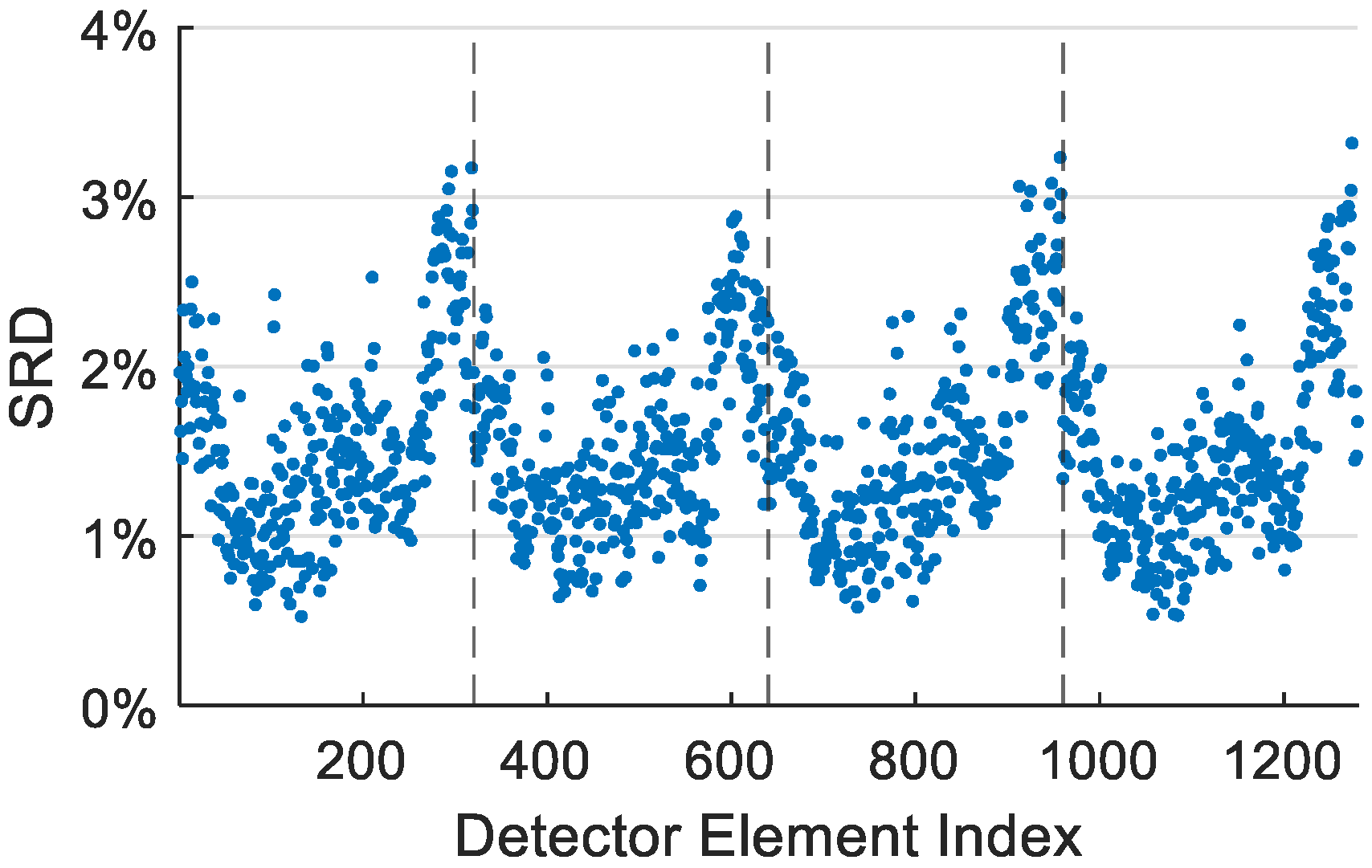
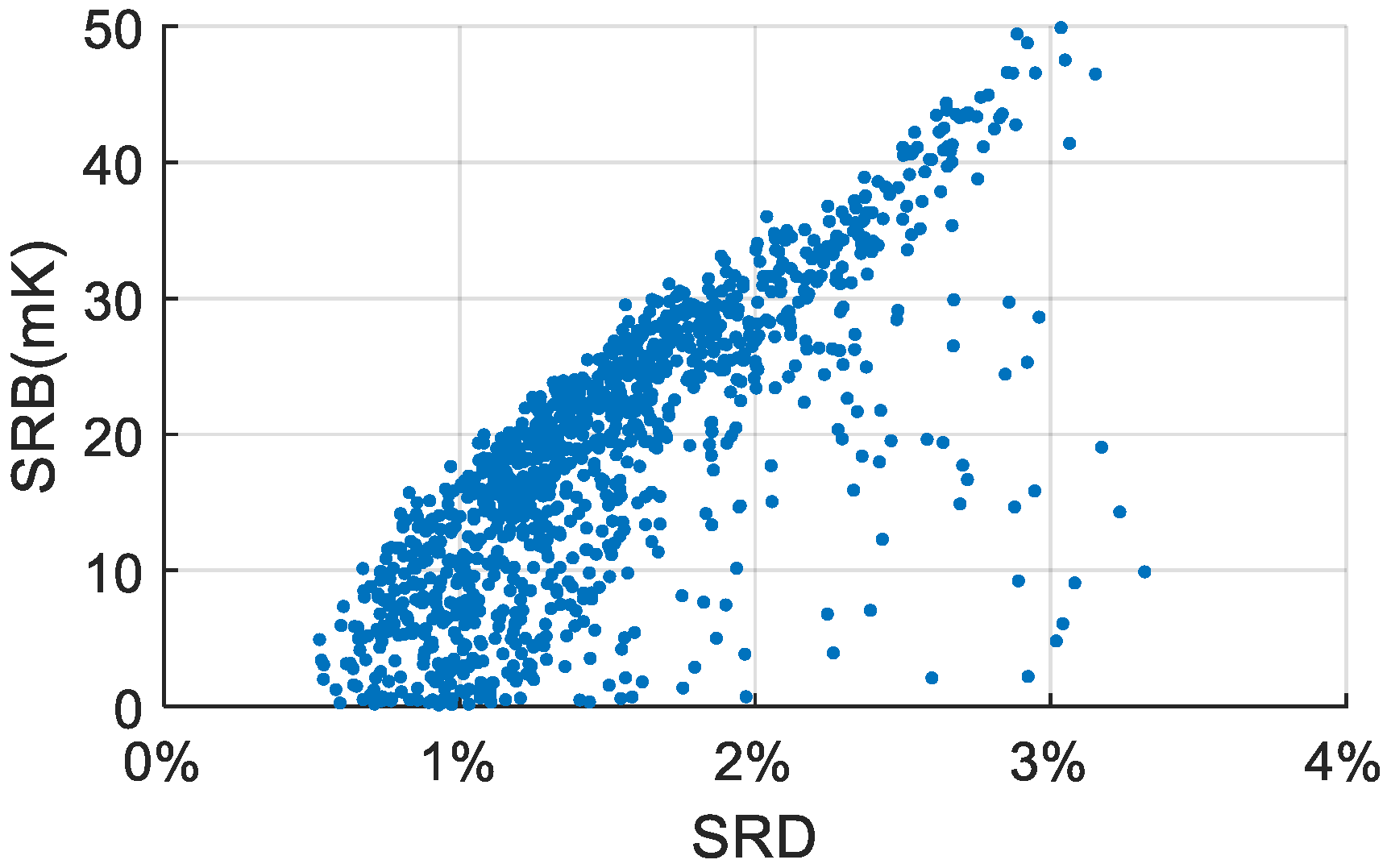
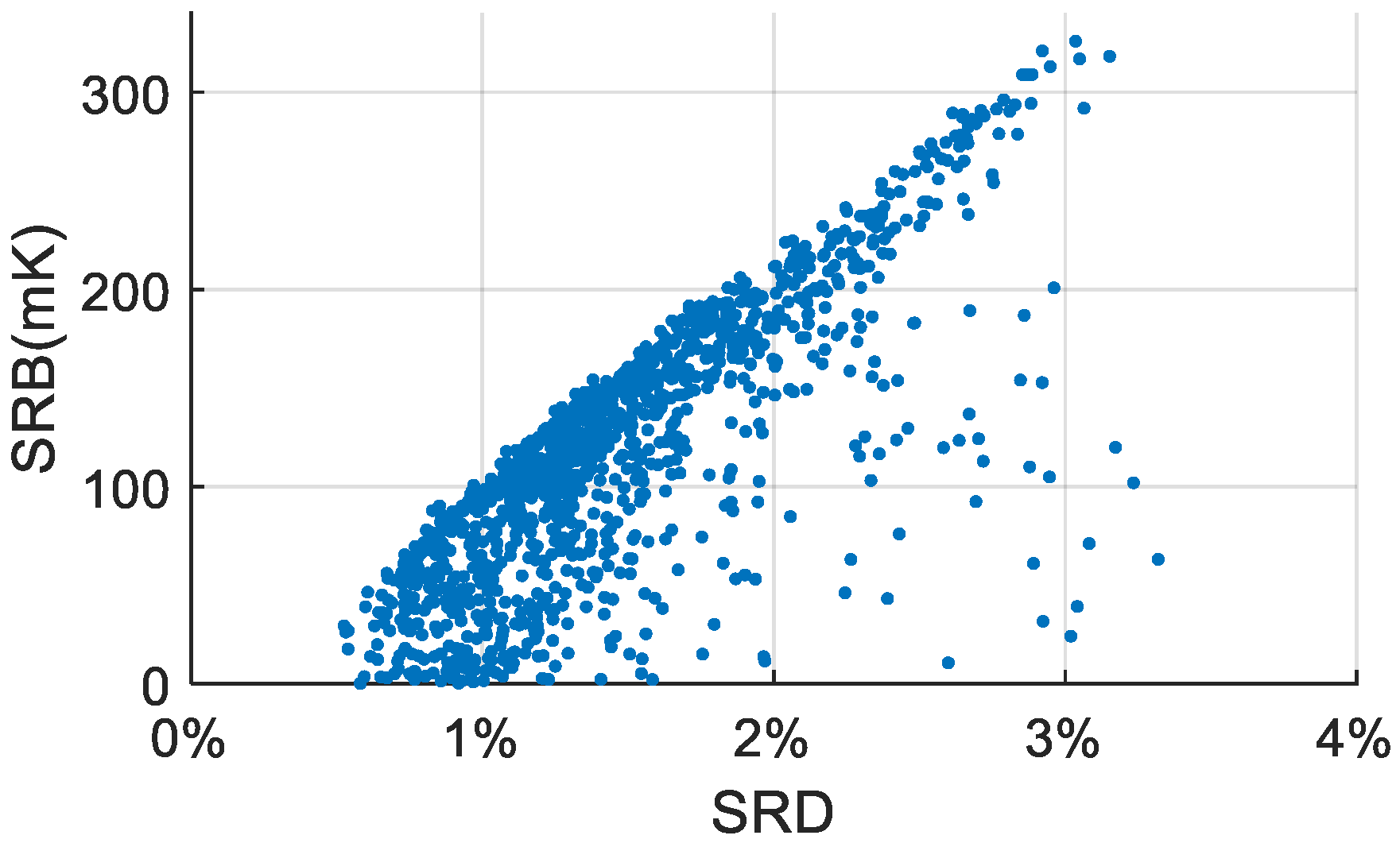
To quantify the inter-detector differences in SRF, this paper defines the Spectral Response Deviation (SRD)
as follows:
In Equation (17), represents the average spectral response function of all valid detectors within the spectral band, which is typically published to users as the nominal SRF for that band. quantifies the overall deviation of detector i’s SRF from the average SRF. A larger value indicates poorer spectral response consistency for the detector.
Through this transformation, the Spectral Response Function—originally a uniformity metric—is converted into a negative metric represented by SRD, which can be computed using the modified Z-score method for negative metrics outlined in Equation (12). Furthermore, during the blind detector screening phase, a threshold can be established based on SRD to identify and exclude detectors with excessive SRD as blind detectors, thereby preemptively removing those with anomalous spectral performance at an early stage.
In summary, the introduction of SRD as a quantitative metric not only enables an objective assessment of detector-level spectral response consistency but also provides a foundation for incorporating spectral dimension performance into the subsequent comprehensive evaluation framework. The impact of SRD on actual observational results will be further analyzed in Chapter 3 using experimental data.
4. Discussion
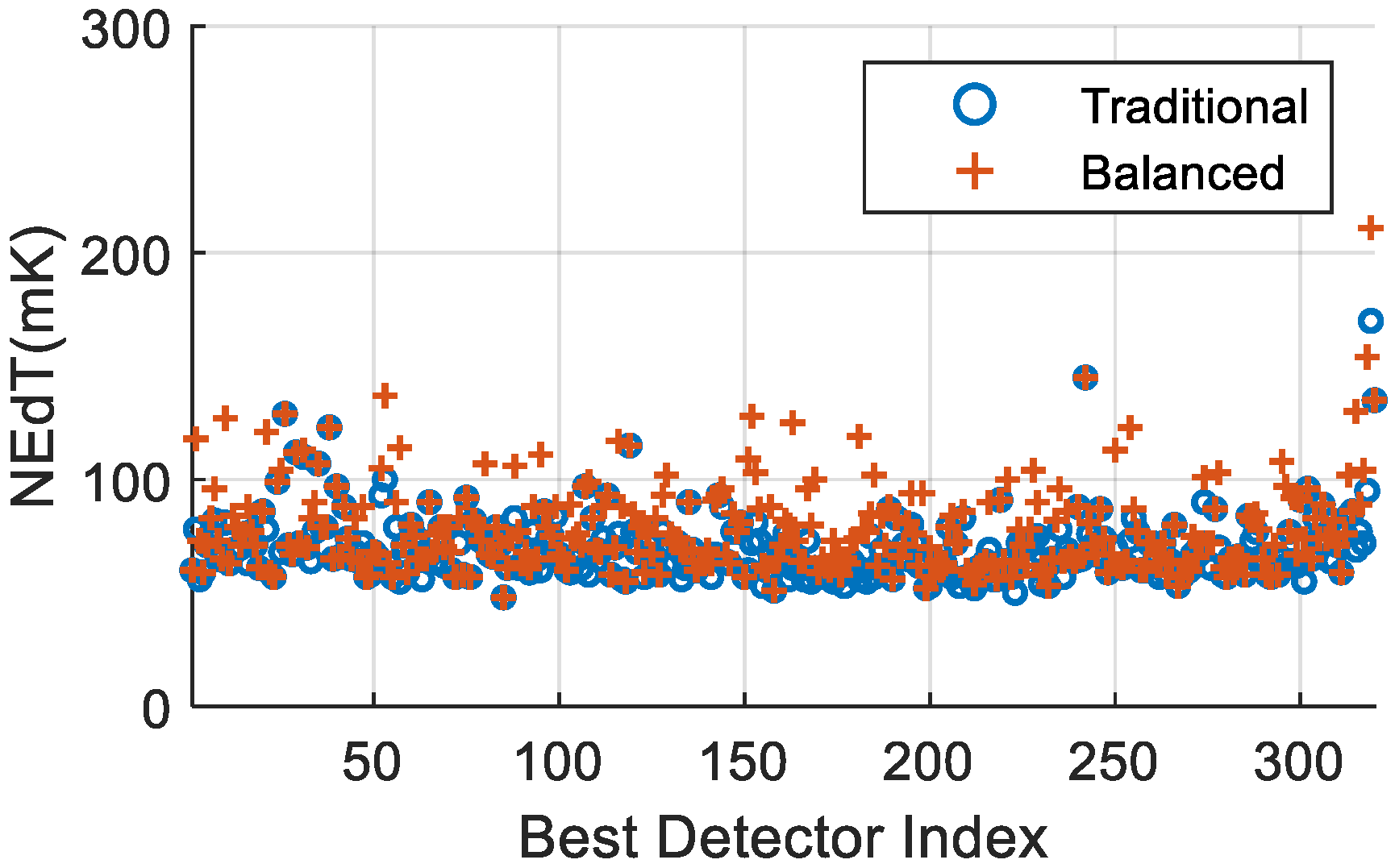
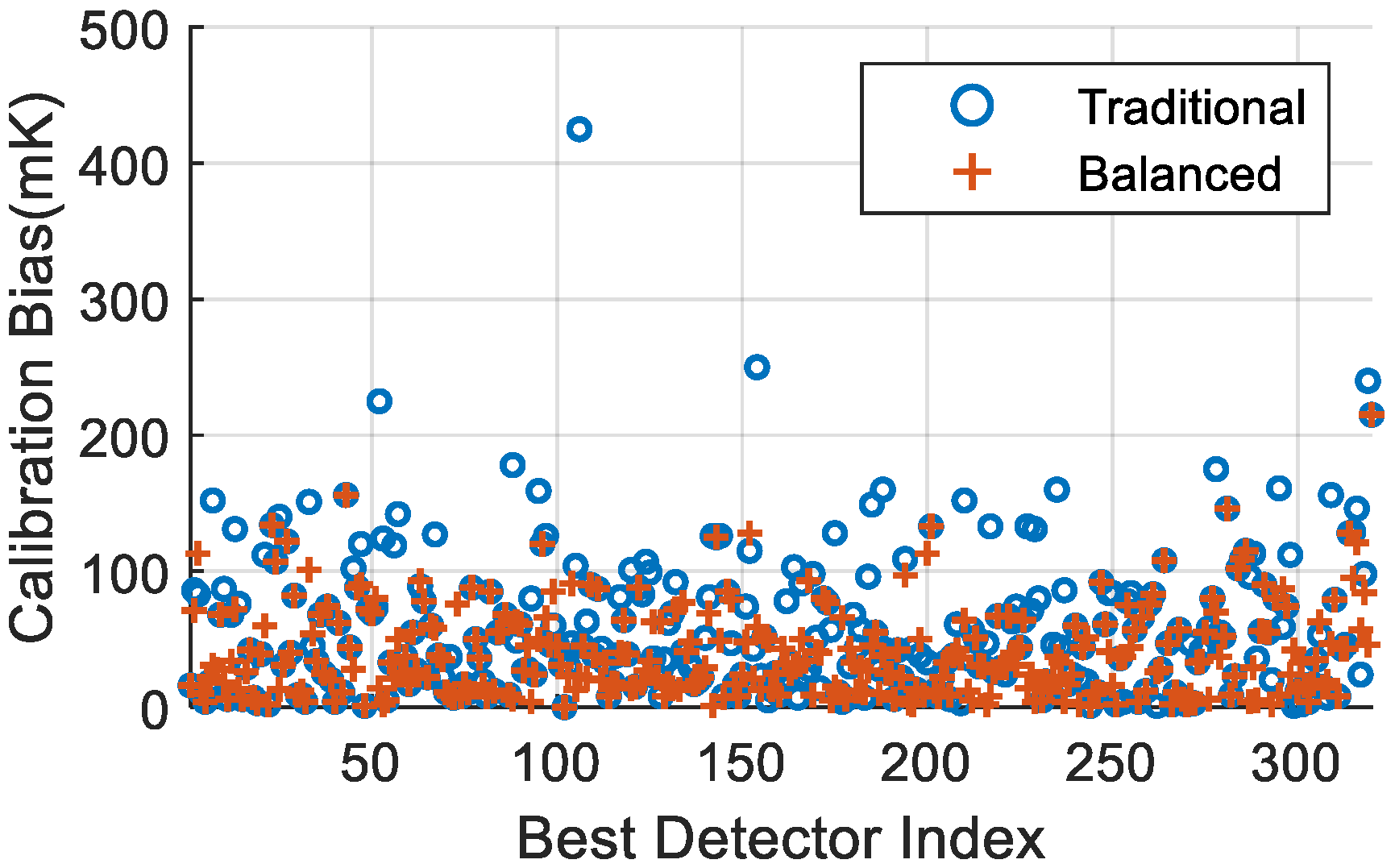
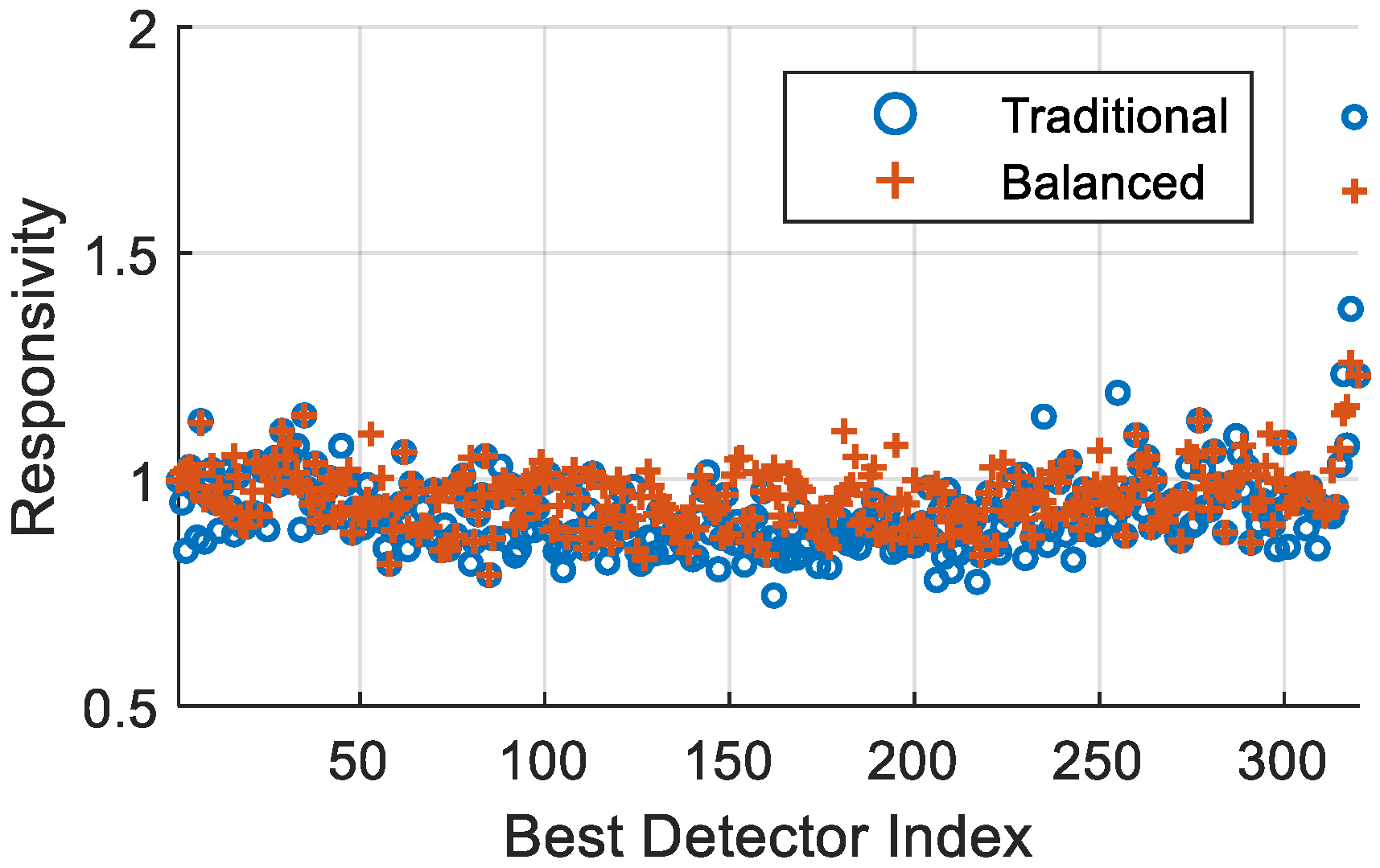
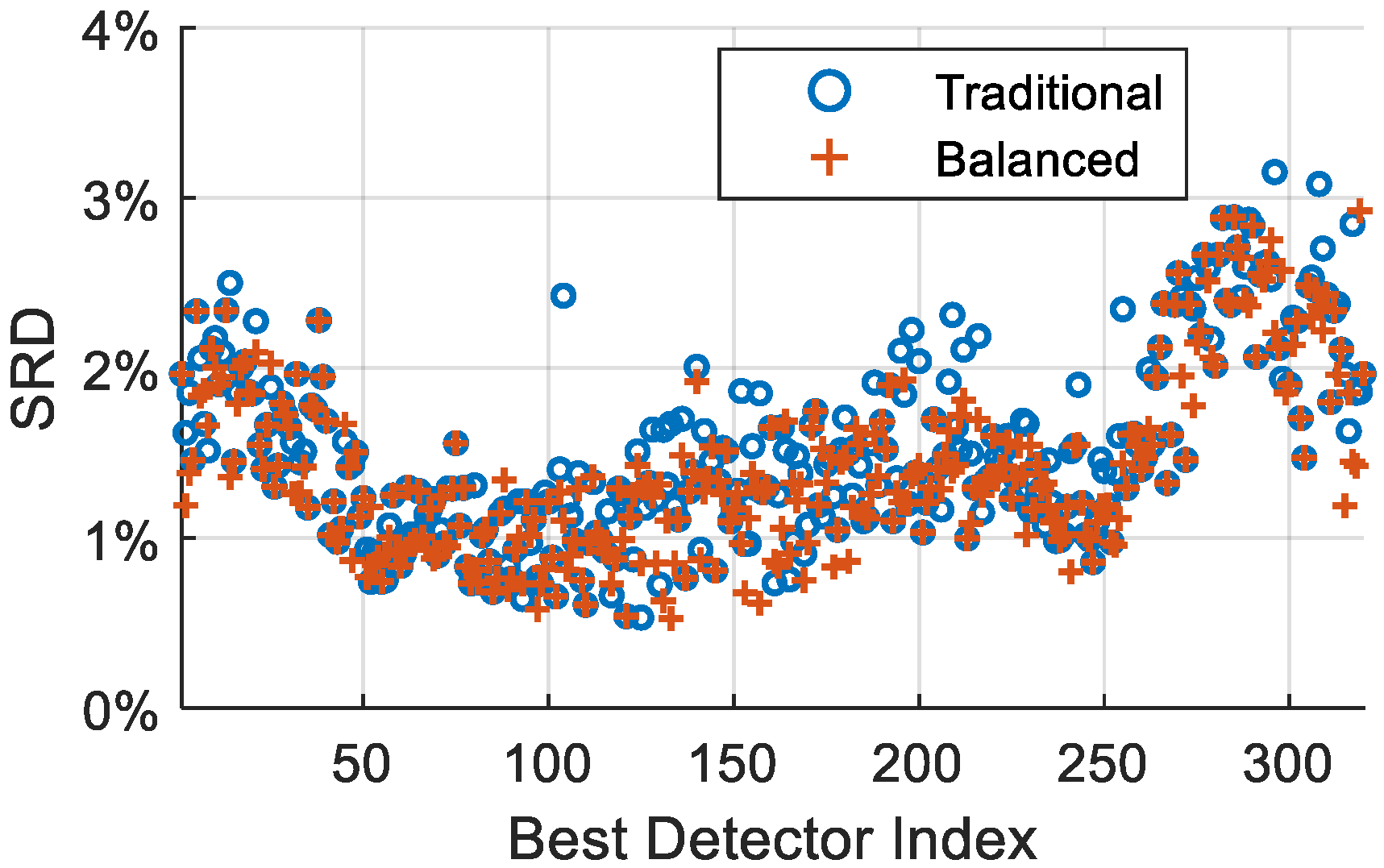
The experimental results demonstrate that the modified Z-score method proposed in this paper achieves significant comprehensive optimization in detector selection for multi-column redundant long-linear-array detectors. Compared to traditional single-metric strategies (e.g., sensitivity-first), the proposed method avoids the drawback of excessively sacrificing other performance aspects. Through the weighted fusion of multiple metrics, it simultaneously enhances sensitivity, calibration accuracy, and uniformity in a single selection process. Specifically, for Band 19 of FY-4C/AGRI, the balanced weighting configuration achieved the following improvements: the mean NEdT was reduced by 26.8% (from 106.1 mK to 77.7 mK), the mean calibration bias was reduced by 60.5% (from 102.4 mK to 40.4 mK), the coefficient of variation for responsivity was reduced by 37.1% (from 12.75% to 8.02%), and the mean SRD was reduced by 4.7% (from 1.50% to 1.43%). These quantitative improvements not only validate the effectiveness of the method but also fundamentally reduce image non-uniformity and striping noise, thereby enhancing the overall quality of remote sensing data.
From the perspective of optimization theory, the BDS problem is inherently a multi-objective decision-making task, which can be viewed as searching for the Pareto front. Traditional strategies like “sensitivity-first” or “calibration-first” reside at the extremes of this front, sacrificing comprehensiveness to pursue a single optimal metric. The core of our framework lies in providing a navigational tool along the Pareto front, allowing the selection of the best trade-off point via weight coefficients tailored to specific mission requirements (e.g., weak signal detection or high-precision calibration) [
30,
31,
32]. The balanced weighting scheme serves as a robust default configuration when no explicit preference is specified, allowing for fine-tuning in subsequent steps. The method also enhances robustness: the introduction of IQR normalization makes the algorithm more resilient to non-normal distributions (e.g., the chi-square distribution of NEdT) and outliers, avoiding the denominator bias issue associated with the traditional Z-score.
In engineering applications, this method upgrades the BDS process from a pre-launch “one-time fixed” configuration to a sustainable optimization scheme. It enables the satellite to rapidly generate BDS maps based on pre-launch ground test data or initial on-orbit test data. Furthermore, should the performance of the optimal detector degrade, the system can automatically switch to the next best detector within the same row. Going a step further, through periodic on-orbit monitoring of payload performance, this method facilitates scheduled updates of the BDS map. It provides reliable technical support for geostationary meteorological satellites (e.g., the FY-4C/AGRI infrared channels) and can be seamlessly transferred to other payloads employing multi-column long-linear-array detector structures (e.g., ABI).
The determination of metric weights is a crucial step for the effective implementation of the method. In addition to employing several manually defined weighting combinations, this study also tested an objective weight-determination algorithm—the entropy-weight method, which serves as a data-driven strategy to automatically assign weights based on the intrinsic variability of the metrics. The results show that although the entropy-weight method can reflect the statistical dispersion of normalized metrics, when certain metrics contain extreme values or exhibit high variability, the resulting weight distribution may deviate from engineering priorities (e.g., the responsivity metric may be assigned excessively high weight). Therefore, weighting coefficients should be determined by comprehensively considering both the performance characteristics of the detectors and the specific mission objectives. From the perspective of detector performance, by comparing the BDS results under a balanced weighting strategy (i.e., all weighting coefficients set to 1) with the original results of all detector elements, the improvement potential of each metric can be evaluated: metrics that show significant improvement possess higher optimization potential and can be assigned higher weights, whereas metrics with limited improvement have lower potential and should be given correspondingly lower weights. From the perspective of mission objectives, greater emphasis should be placed on calibration-related metrics for high-precision calibration tasks, whereas sensitivity metrics become more critical and should be assigned higher importance in weak-signal detection or high-sensitivity observation scenarios. It is important to emphasize that under no circumstances should a strategy that pursues the optimization of only a single metric (e.g., solely pursuing the lowest NEdT) be adopted.
The modified Z-score Best Detector Selection (BDS) framework proposed in this paper was developed and validated specifically for multi-column long-linear-array infrared payloads and can be widely applied to payloads with similar multi-column redundant architectures. Its core components—metric categorization (positive/negative/uniformity), IQR-based robust normalization, the spectral uniformity metric SRD, and weighted multi-metric fusion—are general and can be transferred to other multi-column long-linear-array imagers through appropriate metric selection and weight configuration. A primary limitation of the method lies in the fact that some key metrics cannot be directly measured on-orbit (e.g., SRF), and usually only ground-test or laboratory-calibration results are available as substitutes. Assessing the long-term stability of such proxy metrics and their influence on the algorithm output remains a significant challenge in practical application. Furthermore, the modified Z-score calculation relies on the statistical distribution of the available detector elements. When the number of elements is small, the sample size is insufficient, or the data contain highly correlated outliers, the robustness of the statistical estimation decreases, which may compromise the reliability of the results. To mitigate these issues, engineering solutions such as using aggregated multi-epoch data or adjusting weights based on engineering priors could be considered.
Future research could explore adaptive weighting mechanisms (e.g., determining weights by integrating sensitivity analysis or AI techniques) and further validate the operational applicability of the method across different payloads and observation scenarios, thereby enhancing its adaptability in complex environments.
5. Conclusions
This paper addresses the detector selection requirements for multi-column redundant long-linear-array infrared detectors by proposing a comprehensive evaluation method based on a modified Z-score, aiming to overcome the limitations of traditional single-metric selection strategies. The main conclusions and contributions of this study are as follows:
- (1)
A systematic detector evaluation framework was constructed, which clearly categorizes metrics into positive, negative, and uniformity types, and introduces, for the first time, spectral response deviation (SRD) as a quantitative measure for SRF consistency, supporting multi-dimensional integration.
- (2)
Corresponding modified Z-score calculation formulas were proposed for each metric category. The use of IQR normalization enhanced applicability to non-normal distributions and outliers, making the evaluation results more stable and reliable, and achieving effective integration and comprehensive evaluation of multi-dimensional, multi-unit metrics.
Validation using FY-4C/AGRI test data shows that the balanced-weight selection strategy proposed in this paper achieves synchronous optimization of other detector metrics without excessively compromising any single metric (such as sensitivity). Its comprehensive performance is significantly superior to the traditional “sensitivity-first” strategy. Furthermore, the weighting coefficients for different metrics can be flexibly adjusted according to specific remote sensing mission requirements (e.g., high-precision calibration needs or weak signal detection requirements), enabling customized optimal detector selection.
In summary, the modified Z-score framework proposed in this study provides a systematic, robust, and engineering-feasible solution for the comprehensive detector selection of multi-column long-linear-array detectors. This solution not only significantly enhances the initial imaging quality of geostationary meteorological satellites, but its flexibility and low computational complexity also establish a key technical foundation for achieving autonomous management and continuous performance optimization of the payload throughout its on-orbit lifecycle. With the operational application and promotion of this method on payloads such as FY-4C/AGRI, it is expected to effectively advance the development of high-frequency, high-quantitative-precision meteorological remote sensing. Future work could extend to adaptive weighting and integration with AI to further enhance the method’s universality.