Article

YOLO-Based Landslide Identification and Causal Inference Using Double Machine Learning in Longyan, Fujian

1
Department of Geotechnical and Geological Engineering, Zijin School of Geology and Mining, Fuzhou University, Fuzhou 350000, China
2
Fujian Key Laboratory of Geohazard Prevention, Fuzhou 350000, China
3
Key Laboratory of Geohazard Prevention of Hilly Mountains, Ministry of Natural Resources, Fuzhou 350000, China
4
Fujian Centre of Geo-Environment Monitoring, Fuzhou 350000, China
*
Author to whom correspondence should be addressed.
Remote Sens. 2026, 18(13), 2157; https://doi.org/10.3390/rs18132157
Submission received: 13 May 2026 / Revised: 26 June 2026 / Accepted: 26 June 2026 / Published: 3 July 2026

Highlights

What are the main findings?
  • YOLOv13n model developed is an effective and accurate technique for landslide identification.
  • Distribution characteristics of landslides with respected to twelve causative factors are quantified. Key causative factors are obtained through important score and SHAP value analyses.
  • Rainfall in June and July corresponds to high probability of landslide occurrence in terms of the ATE values.
What are the implications of the main findings?
  • They can serve as auxiliary decision-making information for the investigation of landslides in the southwestern Fujian region.
  • They provide valuable data support and model references for future landslide identification and prediction research.

Abstract

Landslides and their associated secondary hazards present substantial threats to both public infrastructure and resident safety. The rapid and accurate identification of large-scale landslide events remains a critical challenge in the field of engineering geology. In this study, a YOLO-based deep learning model is developed for landslide identification relying on a training dataset constructed using the satellite imagery of Longyan City, Fujian Province, in 2024. Adopting the double machine learning model, we examine the causal inference relationships between landslide and causative factors, including rainfall (R), mean Normalized Difference Vegetation Index (NDVI) and Distance to roads (DRoa). A total of 1185 landslides is identified in 2024, covering an area of approximately 31.02 km2. The landslides are predominantly concentrated in Shanghang, Wuping, Changting, and the southern part of Xinluo. The landslides mainly correspond to elevations around 300–500 m, slopes among the interval of [10°, 25°], and annual rainfall intensities ranging from 1600 m to 1700 mm. The top five key factors for landslide occurrence in descending order are NDVI, R, DRoa, Distance to Rivers (DRiv) and Aspect (A), in terms SHAP values. Causal inference analysis reveals that the rainfall in June and July shows significant positive causal effects to landslide, which is consistent with the physical mechanism of rainfall-induced landslide and the landslide data reported by the government. The framework proposed and the findings in this study offer valuable technical and theoretical support for landslide identification and risk assessment in southwestern Fujian.

1. Introduction

Rainfall-induced landslides, characterized by abrupt initiation, high recurrence rates, and catastrophic destructive potential, represent a formidable hazard to human safety, socioeconomic assets, and critical infrastructure, particularly within mountainous regions such as Fujian Province, China. The convergence of rugged mountainous terrain, extensively distributed weathered granite residual soils exhibiting significant strength degradation upon saturation, and a subtropical maritime monsoon climate dominated by intense precipitation and frequent typhoons collectively creates a geo-environment highly susceptible to such hazards [1,2,3]. The devastating Wuping County landslides of 16 June 2024, inflicting CNY 415 million in direct economic damage, serves as a grim testament to the destructive potential of compound geological hazards in subtropical monsoon regions. While timely hazard identification is critical for risk mitigation, traditional approaches based on field reconnaissance and manual image interpretation are increasingly inadequate, suffering from low efficiency and substantial spatiotemporal constraints [4,5,6,7]. Conventional approaches, despite offering simplicity and context, are limited by subjectivity, labor intensity, and inefficiency at scale. Critically, they fail to fully leverage the rich data latent in remote sensing imagery, thereby squandering the technology’s potential for proactive disaster risk reduction.
The advancement of computers and big data technologies has progressively shifted landslide identification from reliance on traditional manual visual interpretation toward automated solutions. In particular, the integration of remote sensing technology with deep learning models has led to substantial improvements in both the accuracy and efficiency of landslide identification [8,9,10,11,12,13,14,15,16]. For instance, Zheng et al. [17] combines InSAR and airborne LiDAR technologies to delineate landslide boundaries and analyze unstable slopes, thereby enhancing detection effectiveness. Similarly, Du et al. [18] employs convolutional neural networks with optical remote sensing imagery and utilizes the detection Transformer model for automated landslide identification and quantitative evaluation. Further contributing to this technological progression, Chen et al. [19] applies the Residual U-Net (ResU-Net) model for the intelligent identification of landslides frequently occurring in Longyan City. Their work establishes a detailed inventory of landslides triggered by a specific heavy rainfall event and elucidated key controlling factors. Meanwhile, Xu et al. [20] implements the You Only Look Once (YOLO) model to identify and catalog rainfall-induced landslides in Guangdong Province, facilitating analysis of their spatial distribution patterns and formative conditions. These studies exemplify the growing trend of applying advanced deep learning architectures, which has become a significant research focus as these models can automatically learn features from large volumes of data. Recent research continues to evolve, with novel models like the spatial-context-guided calibration network being proposed to address challenges such as multi-scale feature extraction and adaptability to complex environments.
Nevertheless, current landslide identification methodologies continue to confront substantial technical challenges. These include limitations in the spatial and spectral resolution of remote sensing imagery, which contribute to considerable errors in landslide identification and low recall rates of detection models [17,18,19,20,21]. Such limitations are especially acute in hilly and vegetated regions. Dense vegetation cover can severely degrade the quality of optical remote sensing imagery by introducing obscuring shadows and spectral ambiguities, complicating the distinction between landslide features and surrounding terrain. Furthermore, the generalizability and cross-regional applicability of many trained models are often constrained. Models developed in one geographical context may experience a significant decline in performance when applied to new areas with differing geological, geomorphological, and/or land cover characteristics, highlighting a critical need for more robust and adaptable solutions.
After landslide identification, analyzing the causal relationship between causative factors and landslide occurrence is pivotal for exploring the physical mechanisms behind slope failures. While existing studies predominantly rely on correlation analysis or SHAP values [22,23], being inherently associative rather than causal, these methods are fundamentally limited in quantifying true causal effects, often conflating correlation with causation. The Double Machine Learning (DML) model, a robust causal inference tool, has demonstrated significant success in fields such as economics and healthcare by effectively disentangling causal effects from high-dimensional confounders [24,25,26]. The advantages of the DML model are isolating landslide causative factors from environmental noise. It uses machine learning to filter confounding variables. This allows accurate quantification of a single factor’s causal inference, ensuring reliable results with complex geo-environment data and avoiding the correlation errors of traditional methods. Despite its proven efficacy, the application of the DML model in landslide research of causal inference remains underexplored. Given the intricate interplay of geo-environmental factors in slope stability, adopting the DML model can significantly advance our understanding of landslide mechanisms, making it a promising avenue worthy of greater scholarly attention.
To this end, we develop the YOLOv13n model to identify rainfall-induced landslides in Longyan City in 2024 and conduct causal inference for the landslides identified by adopting the DML model. The image dataset used for landslide identification is constructed using the satellite imagery of a spatial resolution of 0.5 m. Through manual verification and the elimination of false-positive samples of landslides identified, identification accuracy is enhanced. Building on the high-precision results achieved by the YOLOv13n model, a landslide dataset in Longyan City during 2024 is obtained. The landslide dataset together with the twelve causative factors are jointly used to conduct landslide causal inference. The latter enables us to infer the causal effects of key factors on landslide occurrence.
The remaining parts of this study are structured as follows. Section 2 introduces the study area, data sources, and methods. Section 3 and Section 4 describe the main results and provide discussion, respectively. The main conclusions are summarized in Section 5.

2. Materials and Methods

2.1. Study Area

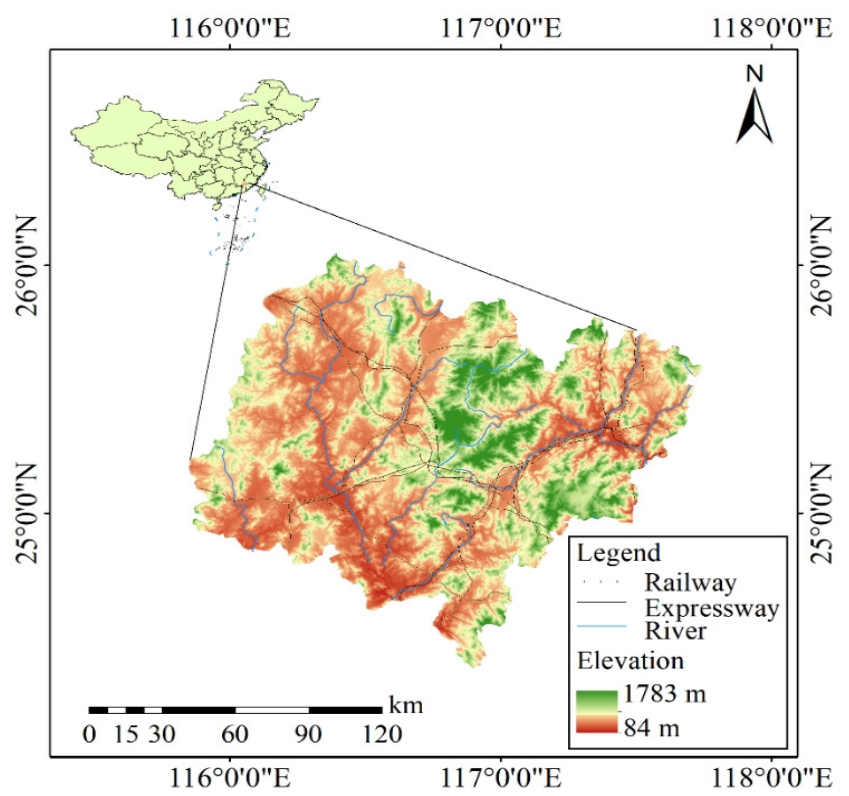
We select Longyan City, Fujian Province as the study area. Longyan City is situated in western Fujian, at the confluence of Fujian, Guangdong, and Jiangxi provinces, covering a total area of approximately 19,000 km2. The topography is characterized by high elevations in the east and north, with a general trend of descending toward the west and south. Medium and low mountainous regions dominate, accounting for 78.55% of the total area of Longyan City. Intensive fluvial denudation has resulted in highly fragmented terrain, featuring alternating ridges and valleys, with intertwined distributions of hills, river valleys, and plains. The average elevation of Longyan City is 652 m [27]. The river systems within the territory belong to four major basins (including Tingjiang, Jiulongjiang, Minjiang, and Yangtze River), exhibiting extensive basin areas and a dense drainage network (Figure 1).
Located in a subtropical maritime humid monsoon climate zone, Longyan City exhibits distinct hydro-meteorological characteristics that significantly influence the regional characteristics of the geological hazards. The complex topography, with considerable vertical variation, promotes frequent orographic precipitation, which can be strengthened by oceanic monsoons and tropical cyclones. The rainfall is mainly distributed in summer. While July and August are characterized by elevated temperatures (average highs of 34–36 °C) and relatively low precipitation, June is one of the rainiest months in the city and usually has frequent landslides under the influence of typhoons.
Longyan City exhibits a complex geological setting characterized by diverse lithological assemblages, primarily comprising Quaternary deposits, Permian, and Triassic formations. The region is dominated by volcanic rocks, sedimentary sequences, and intrusive igneous bodies. Extensive volcanic and intrusive rocks, subjected to prolonged subtropical weathering, have developed thick residual soil layers with depths reaching several tens of meters.

2.2. Data Sources and Causative Factors

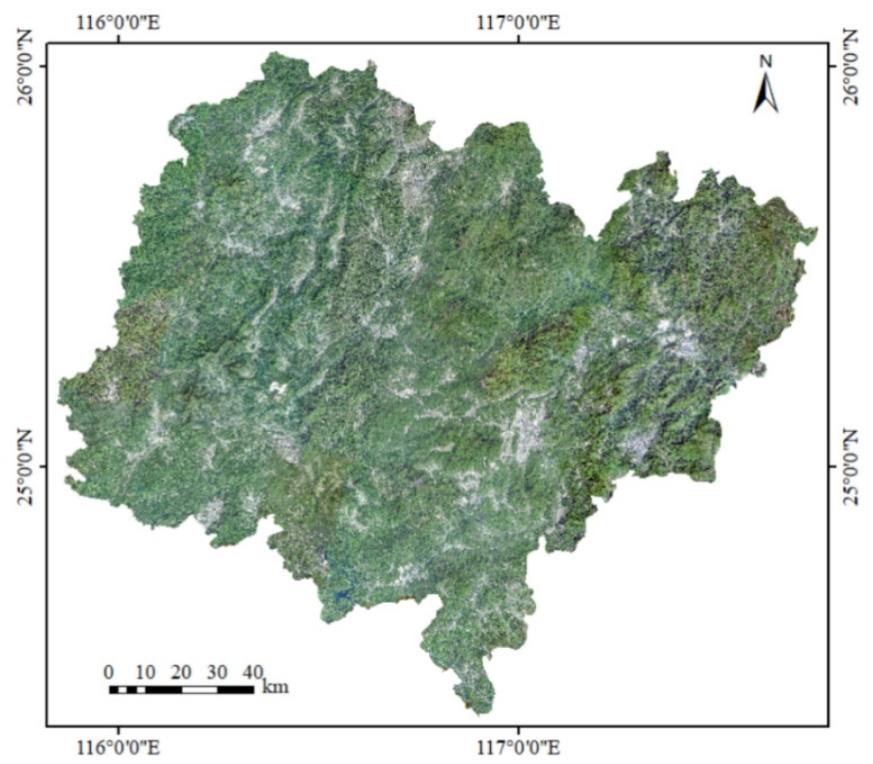
The high-resolution optical data used in this study is the satellite imagery of Longyan City in 2024 (Figure 2), which is publicly accessible at a spatial resolution of 0.5 m and employed for area-wide landslide identification. To systematically investigate the causal inference of landslides in southeastern Fujian, we select twelve causative factors, comprising Elevation (E), Slope (S), Aspect (A), Plan Curvature (PlC), Profile Curvature (PrC), Terrain Roughness (TR), Topographic Wetness Index (TWI), Distance to Rivers (DRiv), Distance to Faults (DF), mean Normalized Difference Vegetation Index (NDVI), Distance to Roads (DRoa), and Rainfall (R). Concerning the computation of these factors, Digital Elevation Model (DEM) data is used to calculate E, S, A, TWI, TR, PrC, and PlC. The distribution data of rivers, roads, and fault zones is used to calculate DRiv, DRoa and DF, respectively, after the landslides are identified.
The DEM data used in this study is derived from the Advanced Land Observing Satellite (ALOS) PALSAR global dataset, which has a spatial resolution of 12.5 m and is provided by the Japan Aerospace Exploration Agency (JAXA) [28]. All spatial data processing and cartographic outputs are generated using GIS platforms, facilitating integrated geospatial analysis and enhancing the visualization of landslide distribution patterns and terrain attributes relevant to this study. The rainfall data of Longyan City in 2024 is collected from the National Tibetan Plateau Data Center (https://data.tpdc.ac.cn/, accessed on 15 December 2025) [29]. The distribution data of fault zones in Longyan City comes from the China 1:2.5 million digital geological map spatial database. The distribution data of rivers and roads in Longyan City is collected from the Fujian Provincial Standard Map Service Website (https://bzdt.fjmap.net/, accessed on 20 December 2025). The data of NDVI in Longyan City is obtained from Resources and Environmental Science Data Center (https://www.resdc.cn/DOI/DOI.aspx?DOIID=49, accessed on 15 December 2025).

2.3. Landslide Identification

The You Only Look Once (YOLO) model [30,31] has attracted significant attention due to its efficiency and high accuracy in object identification. As an end-to-end identification framework, YOLO directly predicts bounding box coordinates and the object (e.g., landslide) probabilities from input image pixels. Compared to region-based models (e.g., the R-CNN family), YOLO offers superior inference speed, making it highly suitable for large-scale, near-real-time disaster monitoring and identification. Visual features are extracted through a convolutional backbone network in YOLO, which are then passed to detection heads for object identification and bounding box regression. However, versions prior to YOLOv13 rely on local receptive fields of convolutional operations, which limit their ability to capture long-range dependencies and model complex feature interactions. This architectural limitation can reduce performance in texture-rich, complex landslide scenes where global spatial relationships between information in different pixels are crucial.
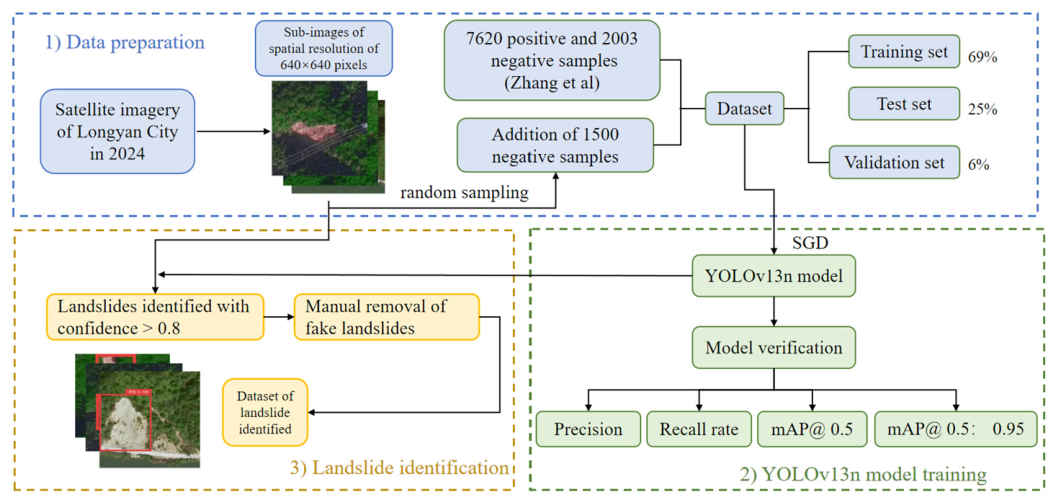
In this study, we adopt the YOLOv13n model [32,33], which is well suited to processing high-resolution satellite imagery. The model is configured with a depth factor of 0.50 and a width factor of 0.25, balancing computational cost and precision of identification. Our software environment is built on Python 3.9.23, with PyTorch 2.8.0 (CUDA 12.8 build) as the deep learning framework. The YOLOv13n model architecture is obtained from the official iMoonLab implementation and integrated into the runtime environment via local editable installation [33]. The main procedures for landslide identification using YOLOv13n are outlined as follows (Figure 3):
(1) Data preparation
The satellite imagery of Longyan City is divided into sub-images with a spatial resolution of 640 × 640 pixels. The coordinates for the geometrical center of each sub-image are recorded to facilitate subsequent stitching and spatial alignment of the identification results. We prepare a dataset for building the YOLOv13n model for landslide identification, which consists of 7620 positive and 2003 negative samples collected by Zhang et al. [34], and 1500 negative samples randomly drawn from the sub-images prepared in (1) Data preparation. The negative samples collected by Zhang et al. [34] lead to Precision achieving 97.6% when identifying landslides. Additionally, the newly added 1500 negative samples are collected in Zhejiang Province, which is located in outside of Longyan City, Fujian Province. In this study, we focus on landslide identification and therefore all (3503) negative samples are used to train the model.
The dataset including 7620 positive and 3503 negative samples is randomly separated into three components according to the Ultralytics framework [35], i.e., 69% (i.e., 4172 positive and 3503 negative samples) for training, 25% (i.e., 2781 positive samples) for testing, and 6% (i.e., 667 positive samples) for validation.
(2) YOLOv13n model training
The training configuration comprises a batch size of 16 and 500 training epochs. Model optimization is performed using Stochastic Gradient Descent (SGD), which not only accelerates convergence and improves generalization but also mitigates the risk of entrapment in local minima, thereby enhancing overall model efficacy. The performance of the model (i.e., YOLOv13n) is assessed in terms of Precision, Recall rate, mAP@0.5 (the average precision when the Intersection over Union (IoU) threshold is set to 0.5) and mAP@0.5: 0.95 (the average precision across multiple IoU thresholds from 0.5 to 0.95) basing on the validation set. The values of Precision, Recall rate, mAP@50, and mAP@50-95 after model (i.e., YOLOv13n) validation are 99.33%, 96.23%, 98.95%, and 93.14%, respectively, indicating high performance of the model [30,31,32,33].
(3) Landslide identification
The sub-images obtained in (1) Data preparation are fed into the trained YOLOv13n model for landslide identification. Landslides are identified if the corresponding confidence is larger than 0.8. To ensure accuracy, the landslides identified are further manually removed based on two criteria: area of landslide < 100 m2 or high similarity to critical infrastructure (e.g., cloud, reservoirs, factories, roads). The locations of the remaining landslides are used to compute causative factors.

2.4. Causal Inference

We employ a Random Forest (RF) model to describe the relationships between causative factors and landslides. The RF model uses decision trees for both classification and regression tasks. The RF model constructs decision trees through Bootstrap resampling with replacement. The final prediction through the RF model is obtained by aggregating the outputs of all individual trees [36,37].
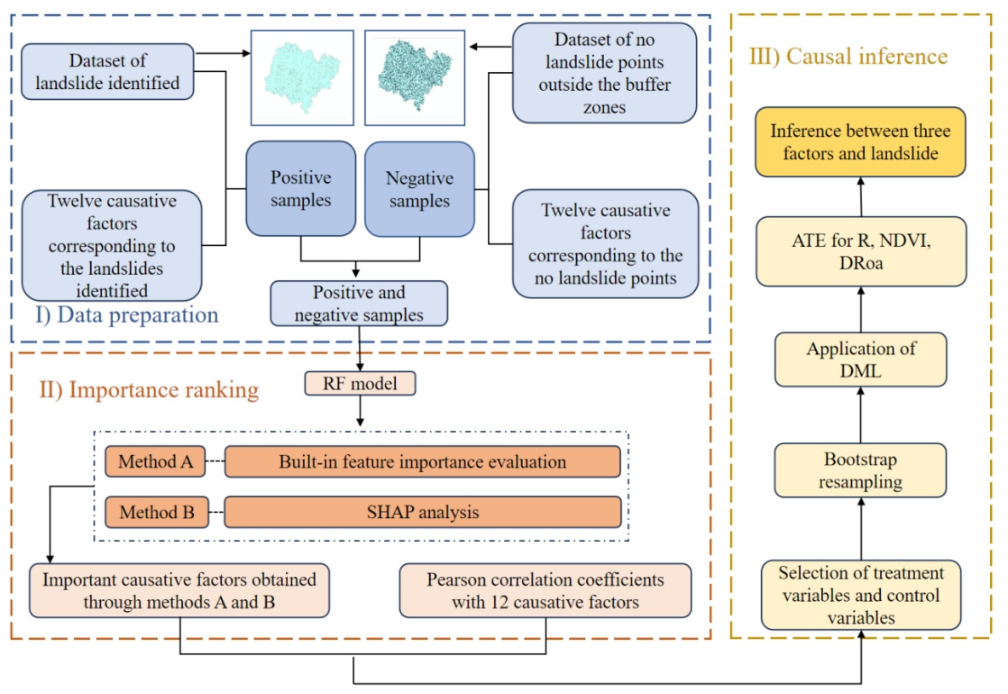
(I) Data preparation
Once the landslides are identified, twelve causative factors are computed. The dataset of landslides is identified and its corresponding causative factors form a total of 1185 positive samples. To generate the negative samples, we define the buffer zones between landslide centers and no landslide points. The centers of buffer zones are located at the geometrical centers of landslides identified, with a radius equal to 500 m. No landslide points are randomly sampled from the locations outside the buffer zones. The twelve causative factors corresponding to no landslide points are then obtained, together with a dataset of no landslide points yielding 3555 negative samples. The dataset used to conduct (II) Factor important ranking and (III) causal inference consists of 1185 positive and 3555 negative samples.
(II) Factor importance ranking
The dataset obtained in (I) Data preparation is separated into three components: 70% for training the RF model, 15% for validation, and 15% for testing. The trained RF model is later employed to analyze the factors that have a significant influence on landslide occurrence. We employ two methods (denoted as methods A and B) to rank the importance of factors. The built-in factor evaluation method of the RF model is denoted as method A, which uses the Gini impurity reduction criterion. Method B is Shapley Additive Explanations (SHAP) value analysis [38,39], which is used to rank the importance of the 12 causative factors. The SHAP value for each factor represents its contribution to the model prediction.
(III) Causal inference
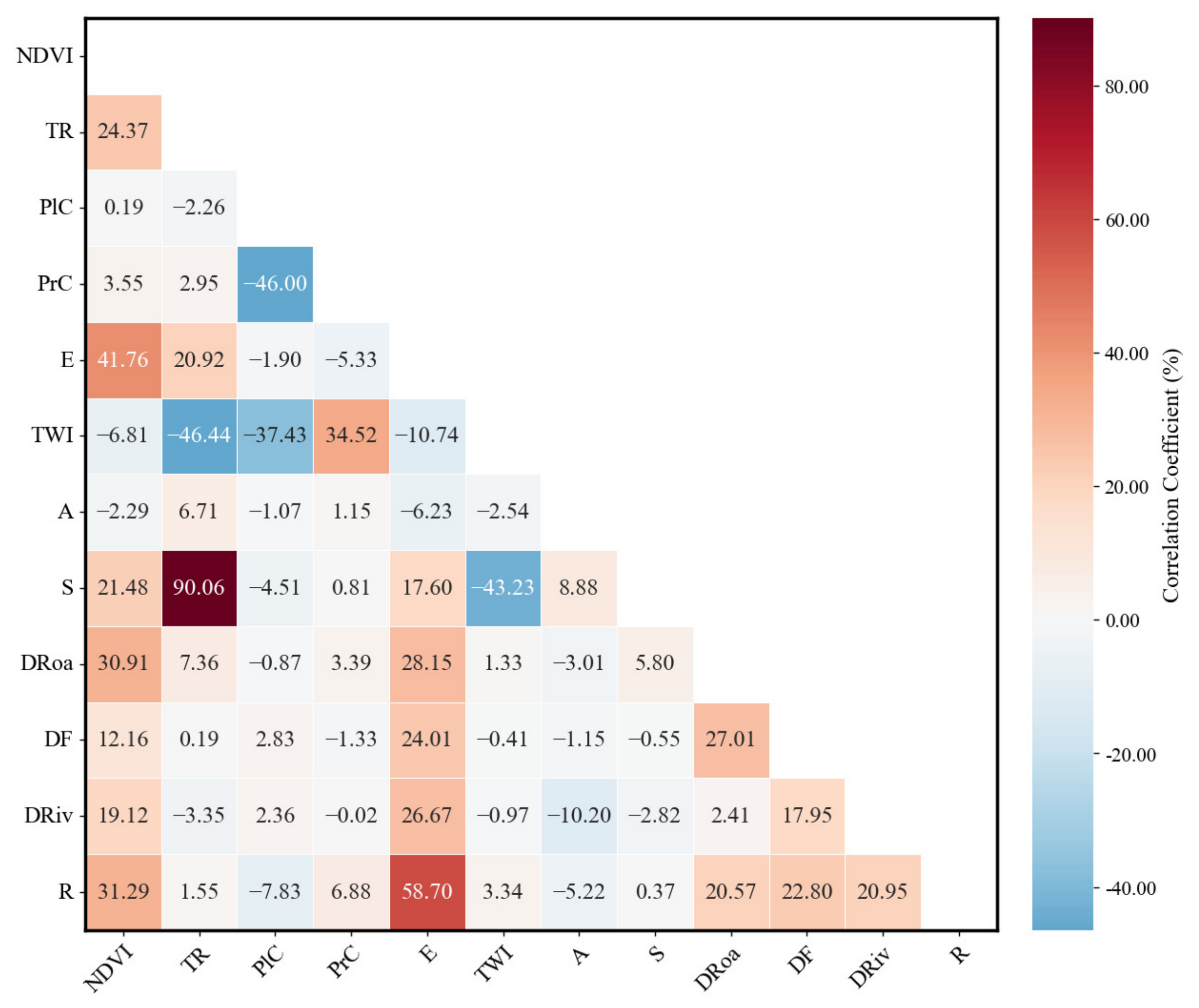
We take the landslide occurrence as the outcome variable, to study the relationship of causal inference between each causative factor and landslides. The selection of treatment variables and control variables can impact the results of causal inference [24,25,26]. We select control variables according to two criteria: (1) the absolute value of the Pearson correlation coefficient between two given causative factors larger than 0.3 and the five leading causative factors in terms of the importance ranking through methods A and B (Figure 4). Additionally, the nine causative factors (including E, A, DF, TWI, PlC, PrC, DRiv, S, and TR) are naturally formed static environmental variables with high spatial stability and non-intervention. Therefore, they are not suitable as treatment variables for the Double Machine Learning (DML) model to study the causal inference of landslides. Based on the aforementioned, we choose R, NDVI, and DRoa as treatment variables.
As a reminder, note that the causal inference of landslide occurrence generally satisfies the overlap, un-confoundedness, and hidden-confounders assumptions associated with the DML model [24,25,26]. Specifically, concerning the hidden confounders assumptions, we collect and analyze 12 causative factors that can overall characterize the key occurrence mechanisms of rainfall-induced landslides [19,20].
We then perform Bootstrap resampling on the entire dataset collected in (I) Data preparation, drawing N samples with replacement, to improve the robustness and accuracy of causal inference. The DML model is applied, trained with specific hyperparameters (100 decision trees, 42 random seeds, and default values for other parameters) according to the selection of treatment variables and control variables. Subsequently, we quantify the causal inference between a given treatment variable (i.e., R, NDVI, or DRoa) and outcome variable (occurrence of landslide) in terms of the value of Average Treatment Effect (ATE) for the treatment variable.

3. Results

3.1. Landslide Identification and Distribution

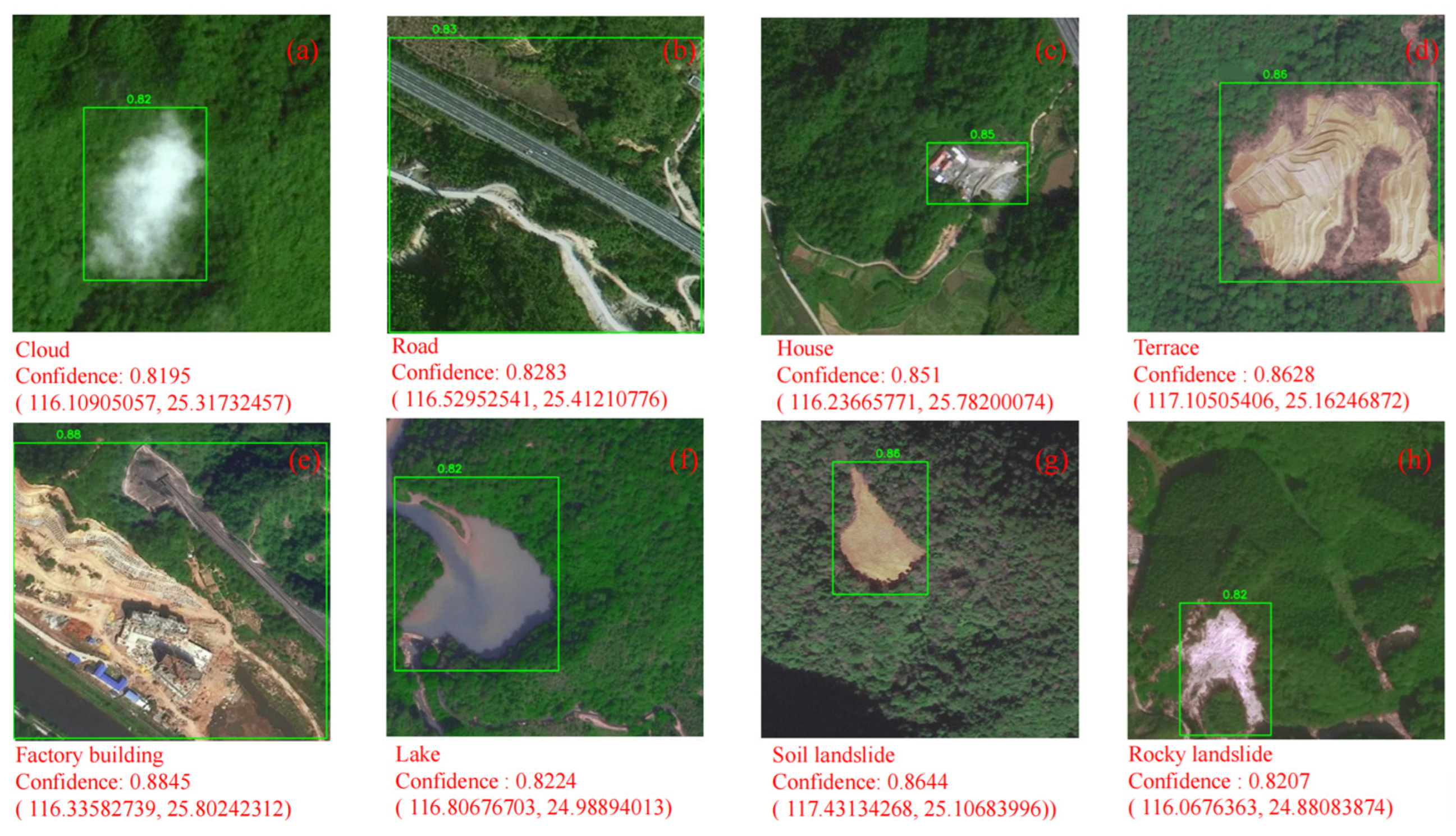
The total numbers of identified targets is 2643. Among them, there are 1185 landslides (e.g., Figure 5g,h), 1052 clouds (Figure 5a), 63 lakes (Figure 5f), 143 terraces (Figure 5d), and 200 artificial structures (Figure 5b,c,e). According to the profile color of the landslide, it is judged to be a landslide (Figure 5g), with a confidence of 0.8644, and its center coordinate is 117.43°E, 25.10°N, elevation: 623.00 m, slope: 30.52°, and aspect: 237.20°. Terrain is obviously undulating and the relative height difference is large. Applying the geological lithology map, it is known that the lithology of the landslide is granite. It belongs to the shallow intrusion formed by magmatic activity in the Yanshanian period (refer to https://osgeo.cn/). The weathered soil of granite appears reddish primarily due to the oxidation of iron-bearing minerals (e.g., hematite) within the rock. In this case, it is possible that there is a soil landslide in Figure 5g.
The target in Figure 5h is judged to be a landslide, with a confidence of 0.8207. The coordinate of center is 116.06°E, 24.88°N, elevation: 245.00 m, slope: 32.61°, and aspect: 191.65°. The main lithology includes potassium feldspar granite, geode granite and monzogranite, which were formed in the Yanshanian period. Additionally, the identified target in Figure 5h may be a rocky landslide, jointly analyzed with its color and grain of the target.
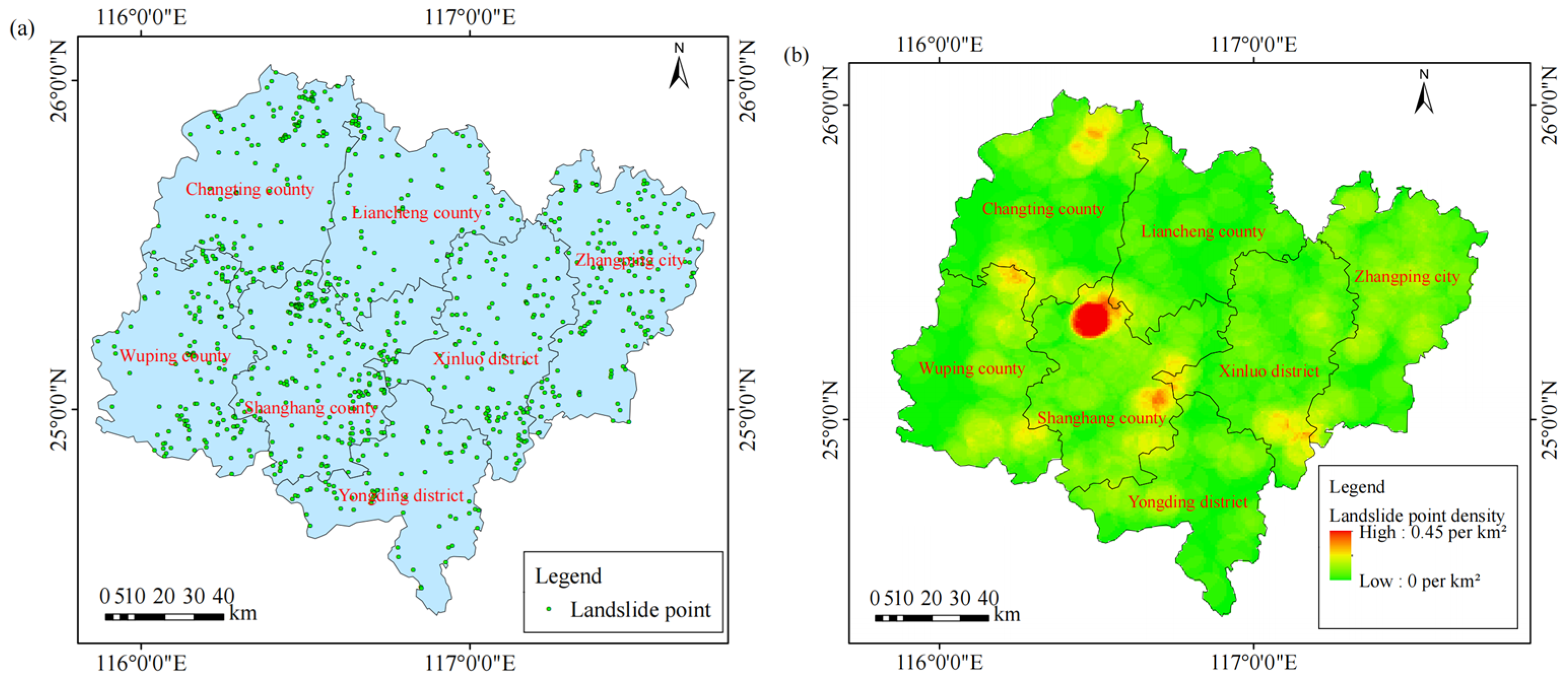
By using the YOLOv13n model to identify landslides in Longyan City, it was found that there were a total of 1185 landslides in the region (Figure 6). The landslides are primarily distributed in the northern and southeastern parts of Shanghang, the northern part of Changting County, the southern part of Xinluo District, and the northern part of Wuping County.
To validate the performance of the YOLOv13n model, Table 1 lists the values of Precision, Recall rate, mAP@0.5, and mAP@0.5:0.95 obtained through YOLOv11 and YOLOv13n when using the same dataset.
The results document the high capabilities of the YOLOv13n model in identifying landslides, which is consistent with the high performance of other versions of the YOLO models (e.g., YOLOv11) in identifying landslides.

3.2. Characteristics of Landslide Causative Factors

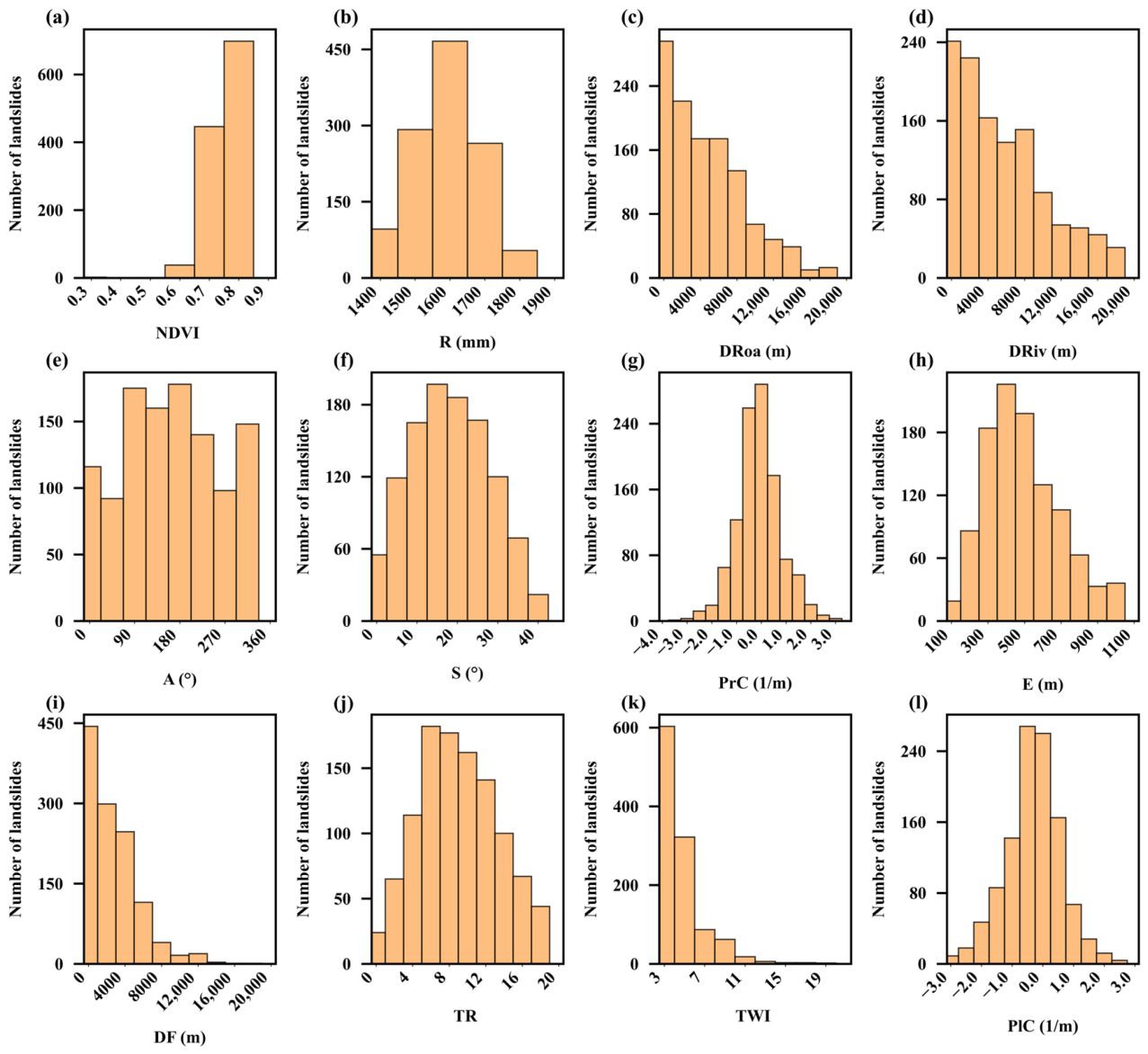
The twelve causative factors corresponding to landslide occurrence are calculated and obtained based on the locations of identified landslides in Figure 6a [40]. Figure 7 depicts the histogram of landslide distribution versus each causative factor. The values of NDVI corresponding to landslide distribution are mainly concentrated around 0.8 (Figure 7a), indicating that landslides predominantly occur in densely vegetated areas. In densely vegetated areas, the root system of vegetation loosens the soil and forms cracks under the action of wind and rain. It guides rainwater to quickly infiltrate and accumulate at the interface of different soil layers with distinctive permeabilities. As a consequence, the shear strength of the soil decreases, accelerating landslide occurrence.
Additionally, the values of cumulative rainfall in 2024 corresponding to landslides are mainly distributed between 1600–1700 mm (Figure 7b). The number of landslides increases with cumulative rainfall from 1400 mm to 1700 mm and then decreases with cumulative rainfall from 1700 to 1900 mm. This is so because rainfall for sure is not the only causative factor that induces landslide. The number of landslides overall decreases with DRoa and DRiv (Figure 7c,d). Road construction destabilizes slopes by cutting into the toe to create free faces and altering natural drainage patterns, which increases pore water pressure and reduces soil shear strength. The short distance from rivers corresponds to high fluctuations in pore water pressure, which trigger landslides by eroding the base of slopes, weakening soil, and reducing soil shear strength.
The number of landslides with respect to Asp is visually uniformly distributed and is slightly centered around sunny slopes (Figure 7e). This is because the intense solar radiation on sunny slopes accelerates physical weathering and corresponds to relatively strong wind effects and large rainfall. The number of landslides is mainly associated with a slope of 10–25° (Figure 7f). The 10–25° slopes easily accumulate thick and loose weathered soils such as laterite, which can become unstable under heavy rainfall. The values of PrC and PlC corresponding to landslides are predominantly distributed within the range of −1 to 1, which is somewhat consistent with Figure 7g,l. The values of elevations corresponding to landslide occurrences are mainly distributed within the range of 400 to 700 m (Figure 7h). Compared to the low elevations, high elevations correspond to low capability to hold the weathered granite residual soils that are theoretically unstable under the influence of geological forcing (refer to https://osgeo.cn/).
The number of landslides decreases with DF, which is linked to the short distance from the fault being physically associated with unstable slopes. The values of TR corresponding to landslides are mainly distributed within the range of 6 to 8 (Figure 7j). The number of landslides decreases with TWI, which is linked to the hydrological nature of hilly–mountainous regions, and somewhat consistent with the finding that landslide occurrence is distributed around the zero-order basin [41].
Figure 8 shows the Pearson correlation coefficients between paired causative factors. TR shows a strong correlation with S (90.06%), as steep slopes indicate complex terrain and consequently high roughness. Rainfall has a moderate correlation with elevation (58.7%). Higher elevations are generally associated with lower temperatures, which can promote water vapor condensation and enhance orographic precipitation. There is a moderate positive correlation (41.8%) between NDVI and E. Additionally, NDVI is positively correlated with DRoa (30.91%), because road construction, vehicle traffic, and other activities directly disrupt the growth environment of vegetation [42]. TWI shows a strong negative correlation with Slope (−43.23%), since TWI calculation includes the tangent of the slope angle in the denominator of its formula [43]. TR shows a moderate negative correlation with TWI (−46.44%). High-roughness surfaces disperse runoff, reduce the retention time of both surface water and groundwater, and decrease soil moisture, leading to a low TWI value [44].

3.3. Causal Inference for Landslide Occurrence

A total of 4740 samples are randomly selected from Longyan City, including 3555 negative samples where no landslides occur and 1185 positive samples associated with landslide occurrence. The value of 12 causative factors is extracted for each sample point to explore the factor which mainly affects landslide occurrence.
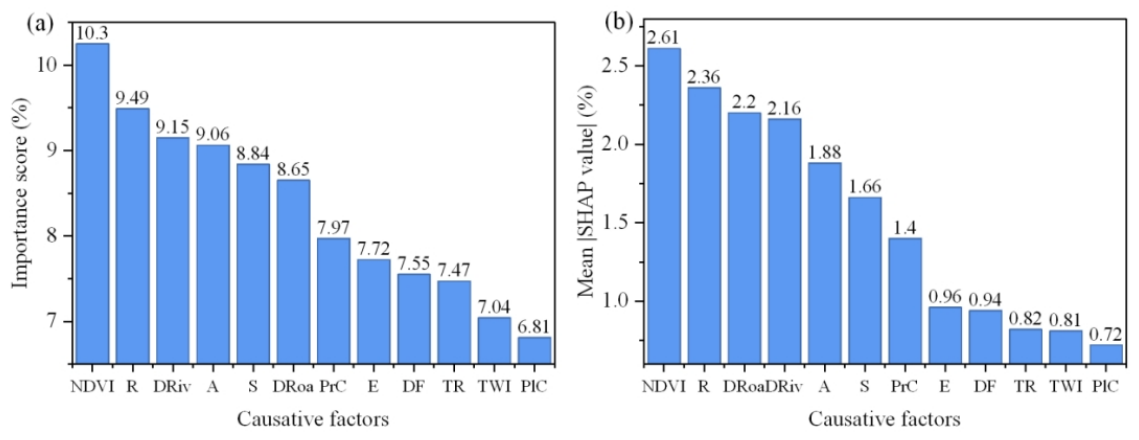
We rank the importance of causative factors for landslides in Longyan City using two approaches. The results of Method A (see Figure 4) show the following importance ranking: NDVI > R > DRiv > A > S > DRoa > PrC > E > DF > TR > TWI > PlC (Figure 9a), while the results of Method B (see Figure 4) are as follows: NDVI > R > DRoa > DRiv > A > S > PrC > E > DF > TR > TWI > PlC (Figure 9b). The main difference between the results obtained through the two methods is linked to the fact that the RF model measures the importance of features by the average decrease in node impurity (e.g., Gini index) or prediction accuracy, while SHAP values measure the marginal contribution of features to the predicted output based on game theory. Note that the importance ranking orders mentioned above merely indicate the levels of explanatory power of different causative factors for landslide occurrence.
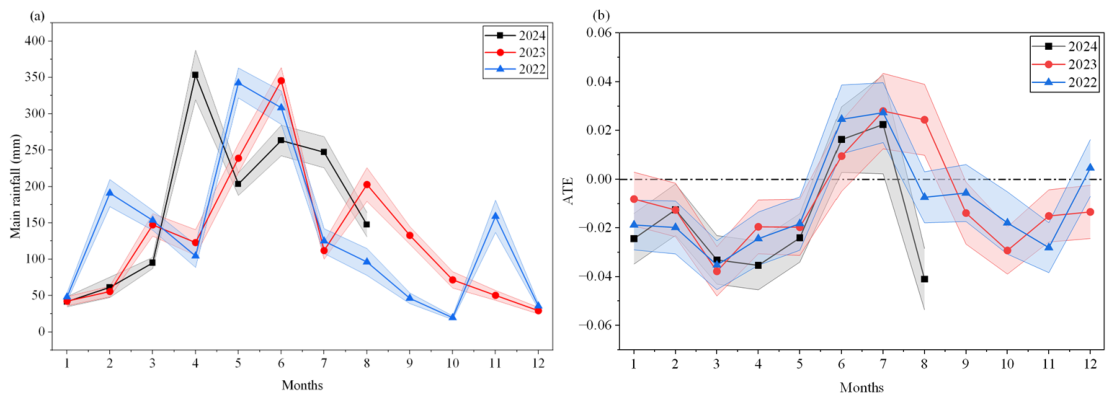
Additionally, R, NDVI, and DRoa are selected as treatment variables in the DML model to compute ATE and quantify their causal relationships with landslide occurrence. Given the selection of satellite imagery from September to December 2024, the spatially averaged monthly rainfall from January 2022 to August 2024 (Figure 10a) at landslide locations and the corresponding mean value ± standard deviation, are compiled. Monthly rainfall is used as the treatment variable in the model.
Figure 10b presents ATE values derived from the DML model. The ATE values are predominantly positive in June and July, with two exceptions observed in September 2023 and December 2022. These outcomes suggest that rainfall during June and July is associated with a higher landslide risk, whereas rainfall in other months corresponds to a comparatively lower risk. This pattern is physically reasonable. Intense rainfall during these months likely elevates soil moisture, leading to soil weakening and a reduction in shear strength. In contrast, although substantial rainfall may occasionally occur in April and May, soil moisture generally remains lower following the dry season, thereby maintaining relatively higher shear strength and resulting in a weaker causal link with landslide initiation.
To better study the causal relationship between landslide occurrence and monthly rainfall in Longyan City (2024), we exemplarily show the ATE values for April and June, which are −0.035 (95% confidence interval: [−0.056, −0.016], Bootstrap standard error: 0.010), and 0.016 (95% confidence interval: [−0.011, 0.043], Bootstrap standard error: 0.013), respectively. At the same time, Bootstrap standard errors from other months are also shown in the diagram (Figure 10b).
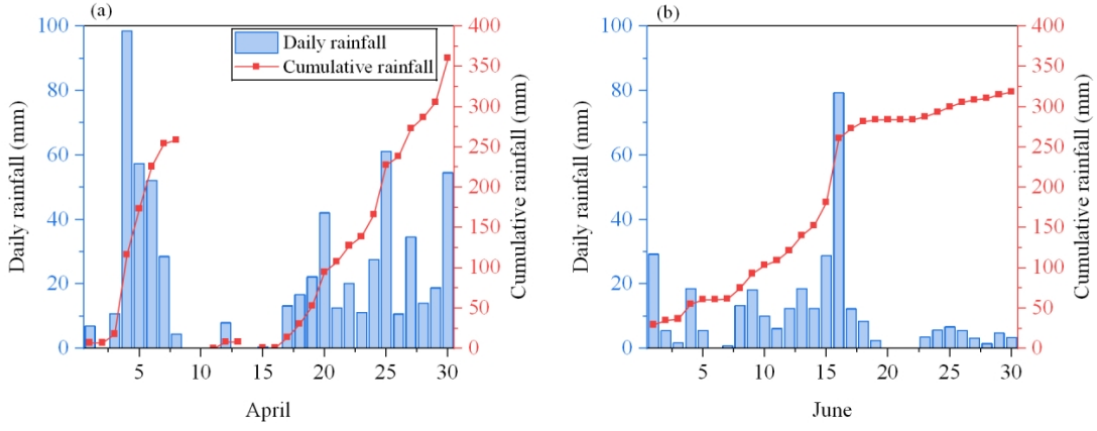
Figure 11 plots the daily and cumulative rainfall in April and June 2024. Note that the cumulative rainfall is calculated for every rainfall event, each in its duration associated with temporally continuous and positive values of daily rainfall. There is a total of three rainfall events in April and only one event in June. The first, second and third rainfall events occur during April 1 to 8, 11 to 13, and 15 to 30, respectively (Figure 11a). The second rainfall event is almost negligible in comparison with the others. This long-duration, low-intensity rainfall primarily discharged as surface runoff, exerting a negligible impact on soil infiltration and slope stability, which failed to significantly trigger landslides. In contrast, a sudden surge of short-term heavy rainfall occurred from June 15 to 16 (Figure 11b). The high-intensity precipitation rapidly infiltrated the soil within a brief period, substantially reducing soil shear strength and thereby effectively triggering landslide instability. Collectively, the results reveal that rainfall intensity and temporal distribution are more critical controls on landslide mechanisms than total rainfall amount, underscoring short-duration, high-intensity precipitation as a key triggering factor.
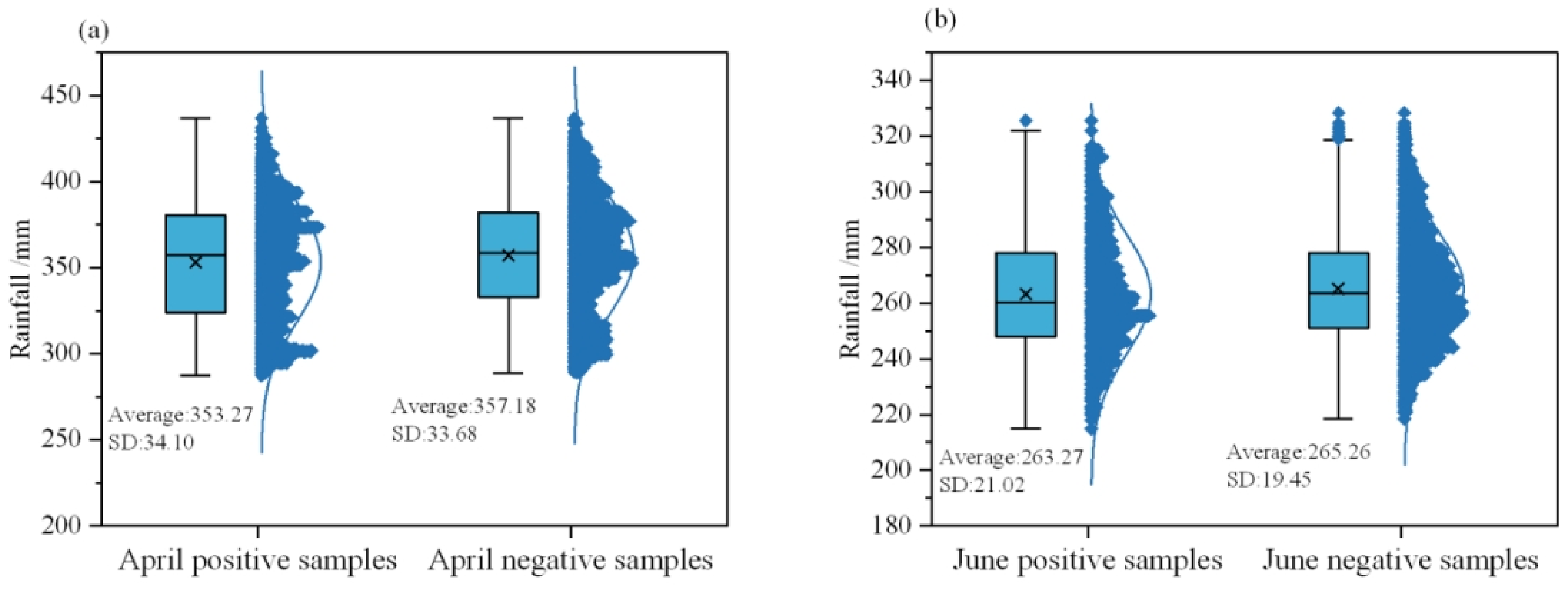
Figure 12 shows boxplots of daily rainfall for positive and negative samples of landslide occurrence in April (Figure 12a) and June (Figure 12b) 2024, together with their histogram and estimated Gaussian probability density function. The (sample) mean of daily rainfall for April corresponding to negative samples is larger than the value obtained for positive samples, while the (sample) mean of daily rainfall for June corresponding to negative samples and positive samples is smaller than the difference in April. This is linked to the ATE values obtained for April and June, which are equal to −4.12% and 0.9%. Although the rainfall in April 2024 is heavier than that in June and July, June and July still hold a stronger causal relationship between rainfall and landslide occurrence, indicating the validity and robustness of applying causal inference analysis on landslide occurrence.
Furthermore, we conduct causal inference on DRoa and NDVI, yielding ATE values of −0.028 and −0.027, respectively. The 95% confidence intervals for the ATE values of these two factors are [−0.046, −0.008] and [−0.050, −0.006], respectively, with Bootstrap standard errors of 0.010 and 0.012. These negative ATE values indicate that both factors exert an inhibitory effect on landslide occurrence. Specifically, areas closer to roads and with higher NDVI values exhibit a significantly lower susceptibility to landslides.

4. Discussion

By comparing the performance of YOLOv11 and YOLOv13n, we find that YOLOv13n outperforms YOLOv11 in accurately identifying landslides (Table 1). The results show that both YOLOv13n and YOLOv11 achieve an extremely high mAP@50 value of 98.95%. However, YOLOv13n demonstrates slightly higher Precision than YOLOv11, meaning it has a lower false positive rate and more rigorous identification results. Furthermore, YOLOv13n achieves a faster inference speed than YOLOv11, enabling more efficient processing. Specifically, using satellite imagery in Wuping County as an example, the dataset size is 24.4 GB, YOLOv11 takes 5 h to process it, while YOLOv13n requires only 2.5 h. CPU is 13th Gen Intel Core i7-13650HX.
Furthermore, previous studies have extensively compared YOLO models with other models [45,46,47]. These studies indicate that YOLO models consistently outperform other models (e.g., Faster R-CNN, SSD, and CenterNet) in landslide identification, achieving superior accuracy and inference speed. YOLO-based approaches have demonstrated advantages over conventional segmentation methods in both boundary detection and segmentation performance [45,46,47]. Additionally, while the YOLOv11 model utilized by He et al. [47] achieved Precision and Recall of 91.28% and 84.59%, respectively, our YOLOv13n model significantly outperformed it with a Precision of 99.33% and a Recall of 96.23%. These results underscore the enhanced accuracy of the YOLOv13n architecture in landslide identification.
As mentioned above, the YOLOv13n model initially identified 2643 landslide targets prior to manual verification. Subsequent manual verification reveals that 1052 of these are clouds, while the remaining 1591 non-cloud targets comprise 1185 true landslides, 200 buildings, 143 terraces, and 63 lakes. After excluding cloud misclassifications, landslides account for 74.5%, with other false positives constituting 25.5%. Notably, future research can explore automated post-processing approaches based on RGB spectral differences to reduce reliance on manual verification, although the complexity of distinguishing diverse land cover types warrants careful validation.
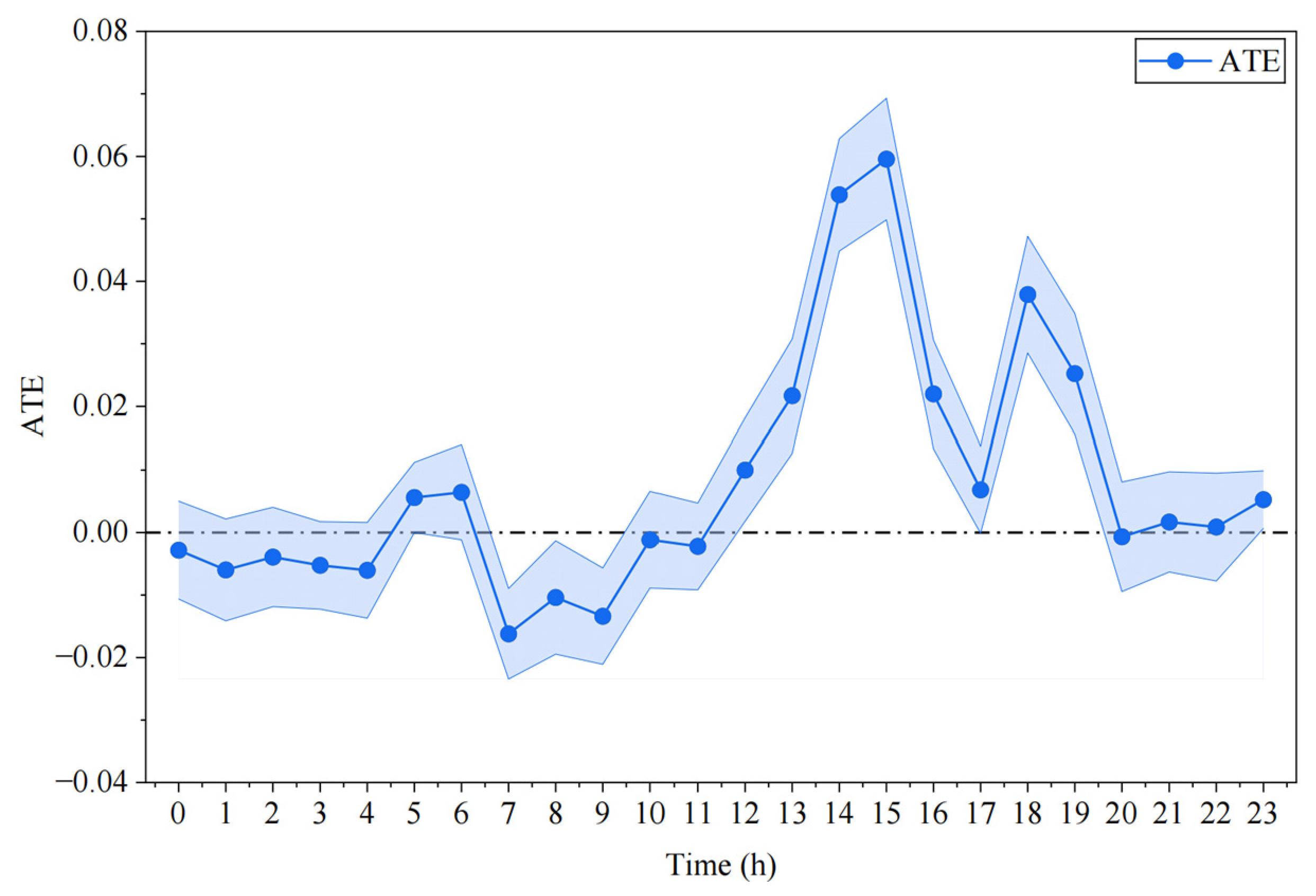
Another key factor worth discussing is the impact of the temporal scale of rainfall on the results of causal inference in terms of the values of ATE. Specifically, landslide initiation is often influenced by short-term hourly rainfall intensity, which is important for landslide causal inference. To this end, in Figure 13, we further plot the ATE values obtained through DML analysis on 16 June 2024 when numerous rainfall-induced landslides occurred.
ATE values remain predominantly negative prior to 12:00, shifting to positive thereafter, which aligns with the diurnal evolution of rainfall intensity (Figure 13). The peak ATE values (0.0538 and 0.0596) correspond specifically to the rainfall recorded at 14:00 and 15:00. These periods coincide with a sudden surge in precipitation intensity, as documented in official reports from the Longyan Municipal Government (Xinhua News Agency, 2024; https://m.chinanews.com/wap/detail/cht/zw/10235324.shtml, accessed on 21 March 2026). Mechanistically, such intense and sustained rainfall enhances soil erosion, elevates pore water pressure, and reduces soil shear strength, thereby triggering landslides. Furthermore, we acknowledge that antecedent cumulative rainfall and storm duration are critical modulators of slope stability. These factors together with rainfall intensity govern the effective rainfall for a given slope and influence the temporal stability of the latter [48], a relationship that warrants deeper causal investigation in future research.
DML estimation results quantify the causal effects of R, DRoa, and NDVI on landslide occurrence. Rainfall exerts a significant positive effect (ATE = 0.016), primarily by increasing the soil unit weight and pore water pressure, which reduces the shear strength of slope materials once infiltration thresholds are exceeded [49,50,51]. Conversely, DRoa exhibits a significant negative effect (ATE = −0.028), indicating that road proximity exacerbates susceptibility through anthropogenic modifications such as slope cutting and free-face creation, coupled with localized groundwater accumulation [48]. Additionally, NDVI exerts a negative effect (ATE = −0.027), indicating that dense vegetation enhances slope stability. This mitigation is achieved through root-soil reinforcement, canopy rainfall interception, and transpirational moisture reduction [52].
Collectively, these findings elucidate a comprehensive geo-mechanical cascade: rainfall acts as the primary trigger for instability, road engineering weakens slope integrity, and vegetation provides critical resistance. Notably, within the study area, the destabilizing influence of road disturbance marginally exceeds both the protective capacity of vegetation and the triggering potential of rainfall.
Furthermore, the apparent paradox of high landslide density coexisting with high NDVI values (as depicted in Figure 7) is reconciled by distinguishing their analytical perspectives. While the histogram reflects macro-scale spatial abundance driven by steep terrain under extreme rainfall that overshadows vegetation stabilization, the DML model isolates the intrinsic causal effect of vegetation stabilization by rigorously controlling for confounding factors. Thus, our integrated analysis elucidates both the macroscopic distribution patterns and the mechanistic geo-mechanical drivers of landslide evolution.

5. Conclusions

The main conclusions drawn from this study are summarized as follows:
  • The developed YOLOv13n model is an effective and accurate technique for landslide identification. The values of Precision, Recall rate, mAP50, and mAP50-95 after model validation are 99.33%, 96.23%, 98.95%, and 93.14%, respectively.
  • Landslides are mainly concentrated in low hilly areas of 300–500 m, as well as slopes of 10–20°, dense vegetation (NDVI between 0.7–0.8), and annual rainfall between 1500 mm–1700 mm, showing the significant regularity of landslide distribution in Longyan City.
  • The top five key factors obtained through the important scoring in descending order are NDVI, R, DRiv, A, and S, based on the mean SHAP value, while they are NDVI, R, DRoa, DRiv and A, in terms of SHAP values. The high consistency among the top five key factors obtained through different approaches emphasizes the reliability of these results.
  • The ATE values associated with rainfall in June and July have always been positive in the past three years, showing the high occurrence of landslides. This is also attributed to the fact that June and July coincide with the heavy rainfall and typhoon season. At the same time, the ATE of NDVI and DRoa are negative, indicating that the higher the vegetation coverage and the farther away from the road, the lower the risk of landslides.
The findings of this study can serve as auxiliary decision-making information for the investigation of landslides in the southwestern Fujian region. They provide valuable data support and model references for future landslide identification and prediction research.
To complement the current findings, several promising avenues for future research emerge. First, the proposed analytical framework should be extended to diverse geographical contexts to validate its generalizability. Second, future studies should investigate the causal effects of additional rainfall metrics (e.g., specifically antecedent accumulation and storm duration) on landslide-triggering mechanisms. Third, a systematic benchmarking of various machine learning algorithms is warranted to compare their efficacy in landslide causal inference.

Supplementary Materials

The following supporting information can be downloaded at: https://www.mdpi.com/article/10.3390/rs18132157/s1, Table S1: Hourly rainfall as a treatment variable for DML analysis in 6 January 2024.

Author Contributions

Conceptualization, J.H. and C.X.; methodology, J.H., L.L. and W.L.; software, L.L. and W.L.; validation, L.L. and W.L.; formal analysis, J.H., L.L. and W.L.; investigation, J.H., L.L. and W.L.; resources, J.H.; data curation, J.H., Y.L. and X.H.; writing—original draft preparation, J.H.; writing—review and editing, C.X.; visualization, J.H., Y.L. and X.H.; supervision, C.X.; project administration, H.W.; funding acquisition, H.W., C.G. and S.C. All authors have read and agreed to the published version of the manuscript.

Funding

This research is funded by the National Natural Science Foundation of China (grant numbers: 42477165), the Opening Fund of Key Laboratory of Geohazard Prevention of Hilly Mountains, Ministry of Natural Resources, China (grant number: FJKLGH2024K008), the Nature Science Foundation of Fujian Province, China (Grant No. 2025J01529), and guiding (Key) Project for Social Development of Fujian Provincial Department of Science and Technology (Grant No. 2024Y0042). This research is also from Project “Study on the characteristics and sensitivity of rainfall-induced landslides in the southeast (Project Number: 202510386067)” supported by National Training Program of Innovation and Entrepreneurship for Undergraduates in 2025.

Data Availability Statement

Publicly available datasets are analyzed in this study. The rainfall data of Longyan City can be found here: (https://data.tpdc.ac.cn/, accessed on 15 December 2025). The distribution data of rivers and roads in Longyan City can be found here: (https://bzdt.fjmap.net/, accessed on 20 December 2025). The NDVI in Longyan City can be found here: (https://www.resdc.cn/DOI/DOI.aspx?DOIID=49, accessed on 15 December 2025). The satellite imagery of Longyan City in 2024 is derived from beijing-1 satellite. The DEM data is derived from the Advanced Land Observing Satellite (ALOS) PALSAR global dataset, which has a spatial resolution of 12.5 m and is provided by the Japan Aerospace Exploration Agency (JAXA). We also compile the landslide dataset into Git-Hub, the link is as follows: https://github.com/wanxun675-collab/-Landslide-Database (accessed on 13 June 2026).

Acknowledgments

We express our sincere gratitude to the National Tibetan Plateau Data Center for providing the rainfall data. And we also thank Open-Source Geospatial Foundation and Esri for providing software support (QGIS). We acknowledge the China Meteorological Administration to give some data about Longyan City. We acknowledge National Training Program of Innovation and Entrepreneurship for Undergraduates to give fund.

Conflicts of Interest

The authors declare no conflicts of interest.

References

  1. Lin, J.L.; Huang, Y.H. Review of study on formation mechanism of slope disintegration erosion and its problems. J. Soil Water Conserv. 2010, 17, 41–44. [Google Scholar]
  2. Lin, J.; Chen, W.; Qi, X.; Hou, H. Risk assessment and its influencing factors analysis of geological hazards in typical mountain environment. J. Clean. Prod. 2021, 309, 127077. [Google Scholar] [CrossRef]
  3. Chen, R.; Deng, Z.; Xu, G.; Huang, C. Influence of rainfall on sliding modes of cutting slope of weathered granite stratum: Taking Yunxiao section in the Yunping freeway in Fujian for example. Chin. J. Geol. Hazard Control 2021, 32, 27–35. [Google Scholar] [CrossRef]
  4. Hu, F.; Fan, Y. Application of remote sensing image for landslide disaster identification. J. Agric. Catastrophol. 2021, 11, 98–99. [Google Scholar] [CrossRef]
  5. Ding, W.; Wang, G.; Yang, Q.; Xu, Y.; Gao, Y.; Chen, X.; Yang, X. Risk assessment and control of geological hazards in towns of complex mountainous areas based on remote sensing and geological survey. Water 2023, 15, 3170. [Google Scholar] [CrossRef]
  6. Da, G.; Ke, D.; Zhao, G.; Zhen, L. Early Identification of Serious Geological Hazards with Integrated Remote Sensing Technologies: Thoughts and Recommendations. Geomat. Inf. Sci. Wuhan Univ. 2019, 44, 949–956. [Google Scholar] [CrossRef]
  7. Wang, H.; Zhang, L.; Yin, K.; Luo, H.; Li, J. Landslide identification using machine learning. Geosci. Front. 2021, 12, 351–364. [Google Scholar] [CrossRef]
  8. Girshick, R.; Donahue, J.; Darrell, T.; Malik, J. Rich feature hierarchies for accurate object detection and semantic segmentation. In Proceedings of the IEEE Conference on Computer Vision and Pattern Recognition, Columbus, OH, USA, 23–28 June 2014; pp. 580–587. [Google Scholar] [CrossRef]
  9. Jiang, W.; Xi, J.; Li, Z.; Ding, M.; Yang, L.; Xie, D. Landslide detection and segmentation using mask R-CNN with simulated hard samples. Geomat. Inf. Sci. Wuhan Univ. 2023, 48, 1931–1942. [Google Scholar] [CrossRef]
  10. Dai, K.; Xu, Q.; Deng, J.; Zhuo, G.; Chen, Y.; Han, Y.; Li, Z. Review on Large-Scale Identification of Potential Landslides with InSAR. Geomat. Inf. Sci. Wuhan Univ. 2025, 50, 1469–1482. [Google Scholar] [CrossRef]
  11. Yao, J.M.; Yao, X.; Liu, X. Identification and analysis of active landslide disaster in Tianshui city using InSAR technology. Sci. Surv. Mapp. 2022, 47, 121–132. [Google Scholar]
  12. Ma, B.; Zhu, J.; Liu, S. Hidden landslide disaster identification in Yuanyang County with combined time-series insar and landslide disasters susceptibility. J. Geol. Hazards Environ. Preserv. 2023, 34, 8–14. [Google Scholar]
  13. Tao, C.; Zhang, Y.; Ren, S. Research progresses of InSAR technology application on landslide identification and monitoring. Geol. China 2025, 52, 513–526. [Google Scholar] [CrossRef]
  14. Chen, L.; Li, Z.; Song, C.; Xing, J.; Cai, X.; Fang, Z.; Li, Z. Automatic detection of earthquake triggered landslides using Sentinel-1 SAR imagery based on deep learning. Int. J. Digit. Earth 2024, 17, 2393261. [Google Scholar] [CrossRef]
  15. Li, Z.H.; Zhang, C.L.; Chen, B.; Zhan, J.; Ding, M.; Lv, Y.; Peng, J. A technical framework of landslide prevention based on multi-source remote sensing and its engineering application. Earth Sci. 2022, 47, 1901–1916. [Google Scholar] [CrossRef]
  16. Zhang, C.; Luo, J.; Li, Z. An Automatic Detection Method of Slow-Moving Landslides Using an Improved Faster R-CNN Model Based on InSAR Deformation Rates. Remote Sens. 2025, 17, 3243. [Google Scholar] [CrossRef]
  17. Zheng, W.; Zuo, X.; Li, Y.; Li, Z.; Wang, Z.; Li, D. Integration of InSAR and airborne LiDAR technologies for early landslide identification and analysis. Bull. Surv. Mapp. 2024, 1–6. [Google Scholar] [CrossRef]
  18. Du, Y.; Huang, L.; Zhao, Z.; Li, G. Landslide body identification and detection of high-resolution remote sensing image based on DETR. Bull. Surv. Mapp. 2023, 16–20. [Google Scholar] [CrossRef]
  19. Chen, B.; Zhang, C.; Li, Z.; Ma, Y.; Song, C.; Zhou, M.; Peng, J. Developmental characteristics and controlling factors of landslides triggered by extreme rainfalls on 16 June 2024 in Longyan, Fujian Province. Geomat. Inf. Sci. Wuhan Univ. 2024, 49, 2145–2155. [Google Scholar] [CrossRef]
  20. Xu, Q.; Xu, F.; Pu, C.; Li, W.; Fan, X.; Dong, X.; Li, Z. Preliminary analysis of extreme rainfall-induced cluster landslides in Jiangwan township, Shaoguan, Guangdong, April 2024. Geomat. Inf. Sci. Wuhan Univ. 2024, 49, 1264–1274. [Google Scholar] [CrossRef]
  21. Huang, J.; Li, X.; Chen, F.; Cui, R.; Li, H.; Du, B. A deep learning recognition model for landslide terrain based on multi-source data fusion. Chin. J. Geol. Hazard Control 2022, 33, 33–41. [Google Scholar] [CrossRef]
  22. Cui, T.; An, X.; Sun, D.; Chen, D.; Zhu, Y. Explainable machine learning models for landslide susceptibility mapping based on SHAP. J. Chengdu Univ. Technol. (Sci. Technol. Ed.) 2025, 52, 153–172. [Google Scholar] [CrossRef]
  23. Shang, M.; Wang, D.; Yi, Q.; Yuan, S.; Song, Y. Research on correlation analysis and early warning model for Woshaxi landslide deformation based on maximum information coefficient. J. Eng. Geol. 2025, 33, 572–580. [Google Scholar] [CrossRef]
  24. Chernozhukov, V.; Chetverikov, D.; Demirer, M.; Duflo, E.; Hansen, C.; Newey, W.; Robins, J. Double/debiased machine learning for treatment and structural parameters. Econom. J. 2018, 21, C1–C68. [Google Scholar] [CrossRef]
  25. Feyzollahi, M.; Rafizadeh, N. Double/Debiased Machine Learning for Economists: Practical Guidelines, Best Practices, and Common Pitfalls. Stud. Nonlinear Dyn. Econom. 2024. [Google Scholar] [CrossRef]
  26. Belloni, A.; Chernozhukov, V.; Hansen, C. Inference on treatment effects after selection among high-dimensional controls. Rev. Econ. Stud. 2014, 81, 608–650. [Google Scholar] [CrossRef]
  27. Huang, J.; Chen, Z.; Qi, D.L. Study on distribution of Danxia landform in China (first). Mt. Res. 2015, 33, 385–396. [Google Scholar]
  28. Li, Y.; Li, L.; Chen, C.; Liu, Y. Correction of global digital elevation models in forested areas using an artificial neural network-based method with the consideration of spatial autocorrelation. Int. J. Digit. Earth 2023, 16, 1568–1588. [Google Scholar] [CrossRef]
  29. Peng, S. 1-km Monthly Precipitation Dataset for China (1901–2024); National Tibetan Plateau/Third Pole Environment Data Center: Beijing, China, 2020. [Google Scholar] [CrossRef]
  30. Wong, A.; Famuori, M.; Shafiee, M.J.; Li, F.; Chwyl, B.; Chung, J. YOLO nano: A highly compact you only look once convolutional neural network for object detection. In 2019 Fifth Workshop on Energy Efficient Machine Learning and Cognitive Computing-NeurIPS Edition (EMC2-NIPS); IEEE: New York, NY, USA, 2019; pp. 22–25. [Google Scholar] [CrossRef]
  31. Ding, C.; Wang, S.; Liu, N.; Xu, K.; Wang, Y.; Liang, Y. REQ-YOLO: A resource-aware, efficient quantization framework for object detection on FPGAs. In Proceedings of the 2019 ACM/SIGDA International Symposium on Field-Programmable Gate Arrays; ACM: New York, NY, USA, 2019; pp. 33–42. [Google Scholar] [CrossRef]
  32. Simon, M.; Amende, K.; Kraus, A.; Honer, J.; Samann, T.; Kaulbersch, H.; Michael Gross, H. Complexer-YOLO: Real-Time 3D Object Detection and Tracking on Semantic Point Clouds; IEEE: New York, NY, USA, 2020. [Google Scholar] [CrossRef]
  33. Lei, M.; Li, S.; Wu, Y.; Hu, H.; Zhou, Y.; Zheng, X.; Gao, Y. YOLOv13: Real-Time Object Detection with Hypergraph-Enhanced Adaptive Visual Perception. arXiv 2025, arXiv:2506.17733. [Google Scholar] [CrossRef]
  34. Zhang, W.; Liu, Z.; Zhou, S.; Qi, W.; Wu, X.; Zhang, T.; Han, L. LS-YOLO: A novel model for detecting multiscale landslides with remote sensing images. IEEE J. Sel. Top. Appl. Earth Obs. Remote Sens. 2024, 17, 4952–4965. [Google Scholar] [CrossRef]
  35. Sapkota, R.; Karkee, M. Ultralytics YOLO evolution: An overview of YOLO26, YOLO11, YOLOv8 and YOLOv5 object detectors for computer vision and pattern recognition. arXiv 2025, arXiv:2510.09653. [Google Scholar] [CrossRef]
  36. Hesterberg, T. Bootstrap. Wiley Interdiscip. Rev. Comput. Stat. 2011, 3, 497–526. [Google Scholar] [CrossRef]
  37. Taalab, K.; Cheng, T.; Zhang, Y. Mapping landslide susceptibility and types using Random Forest. Big Earth Data 2018, 2, 159–178. [Google Scholar] [CrossRef]
  38. Li, W.; Zhang, J. Zoning Evaluation of Landslide Hazard Susceptibility in Zhuxi County. J. Nat. Disasters 2024, 33, 175–185. [Google Scholar] [CrossRef]
  39. Sun, D.; Chen, D.; Ma, C.; Chen, X.; Mi, S.; Li, X. Evaluation of landslide susceptibility in the gentle hill-valley areas based on the interpretable random forest-recursive feature elimination model. J. Geomech. 2023, 29, 202–219. [Google Scholar] [CrossRef]
  40. Wu, R.; Zhang, H.; Cao, C. Study on the relationship between landslide and rainfall and geological conditions in Longyan. J. Minxi Vocat. Tech. Coll. 2011, 13, 106–113. [Google Scholar] [CrossRef]
  41. Nakajima, N.; Nakane, H.; Hara, T. A study on the nature of sediment runoff in zero-order basins at steep slope and extracting method of dangerous basins. J. Jpn. Soc. Civ. Eng. Ser. C (Geosph. Eng.) 2022, 78, 306–320. [Google Scholar] [CrossRef] [PubMed]
  42. El Brahimi, M.; Benzougagh, B.; Sbihi, A.; Kadhim Tayyeh, H.; Mageed Hussein, A.; Bammou, Y.; Kader, S.; Faqeih, K.Y.; Mohamed Khedher, K. Landslide susceptibility assessment using feature selection-based machine learning models: RF, SVM, and LR applications in Rif, Morocco. Geosci. Lett. 2026, 13, 17. [Google Scholar] [CrossRef]
  43. Zhang, C.; Yang, Q.; Li, R. Advancement in Topographic Wetness Index and Its Application. Prog. Geogr. 2005, 24, 116–123. [Google Scholar] [CrossRef]
  44. Wang, J.; Du, J.; Zhang, J.; Ren, C. Occurrence Frequency Projection of Rainfall-Induced Landslides Under Climate Change in Chongqing, China. Water 2026, 18, 178. [Google Scholar] [CrossRef]
  45. Han, Z.; Fang, Z.; Li, Y.; Fu, B. A novel Dynahead-Yolo neural network for the detection of landslides with variable proportions using remote sensing images. Front. Earth Sci. 2023, 10, 1077153. [Google Scholar] [CrossRef]
  46. Ma, R.; Yu, H.; Liu, X.; Yuan, X.; Geng, T.; Li, P. InSAR-YOLOv8 for wide-area landslide detection in InSAR measurements. Sci. Rep. 2025, 15, 1595. [Google Scholar] [PubMed]
  47. He, L.; Zhou, Y.; Liu, L.; Zhang, Y.; Ma, J. Application of the YOLOv11-seg algorithm for AI-based landslide detection and recognition. Sci. Rep. 2025, 15, 12421. [Google Scholar] [PubMed]
  48. Li, Y.; Wang, X.; Mao, H. Influence of human activity on landslide susceptibility development in the Three Gorges area. Nat. Hazards 2020, 104, 2115–2151. [Google Scholar] [CrossRef]
  49. Gong, T.; He, R.; He, C.; Wang, W.; Qian, J.; Tian, H.; Zhang, J.; Peng, J.; Zhao, J.; Tian, B.; et al. Fluid-solid coupled modeling of the entire process of rainfall-induced landslides and study of landslide timing. Chin. J. Rock Mech. Eng. 2025, 44, 2608–2621. [Google Scholar] [CrossRef]
  50. Qi, G. Mechanism of Landslide Triggered by Rainfall and Its Evaluation Method. Master’s Thesis, Chengdu University of Technology, Chengdu, China, 2004. [Google Scholar]
  51. Xia, C.-A.; Zhang, J.-Q.; Wang, H.; Jian, W.-B. Global Sensitivity Analysis of Slope Stability Considering Effective Rainfall with Analytical Solutions. Water 2025, 17, 141. [Google Scholar] [CrossRef]
  52. Li, M.; Jiang, W.-J.; Dong, J.-H.; Jin, S.-F.; Zhang, C.-W.; Niu, R.-Q. Evaluation of landslide hazards susceptibility based on machine learning: Taking the Three Gorges Reservoir Area as an Example. South China Geol. 2023, 39, 413–427. [Google Scholar] [CrossRef]
Figure 1. Location of Longyan city, Fujian, China.
Remotesensing 18 02157 g001
Figure 2. Satellite imagery of Longyan in 2024.
Remotesensing 18 02157 g002
Figure 3. Workflow of landslide identification through YOLOv13n [34].
Remotesensing 18 02157 g003
Figure 4. Flowchart for landslide causal inference.
Remotesensing 18 02157 g004
Figure 5. Exemplary identification results with high confidence values: (a) cloud; (b) road; (c) house; (d) terrace; (e) factory building; (f) lake; (g) soil landslide; and (h) rocky landslide.
Remotesensing 18 02157 g005
Figure 6. (a) Spatial distribution of landslide points in Longyan in 2024 and (b) its corresponding point density map.
Remotesensing 18 02157 g006
Figure 7. Histograms of the number of landslides with respect to (a) NDVI, (b) R, (c) DRoa, (d) DRiv, (e) A, (f) S, (g) PrC, (h) E, (i) DF, (j) TR, (k) TWI, and (l) PlC.
Remotesensing 18 02157 g007
Figure 8. Correlation coefficient between paired causative factors showed in Figure 7.
Remotesensing 18 02157 g008
Figure 9. (a) Important score and (b) the mean of absolute Shape value for the twelve causative factors.
Remotesensing 18 02157 g009
Figure 10. (a) Monthly rainfall from 2022 to 2024 and (b) their corresponding ATE values.
Remotesensing 18 02157 g010
Figure 11. Daily rainfall and cumulative rainfall in (a) April and (b) June 2024.
Remotesensing 18 02157 g011
Figure 12. Boxplots of daily rainfall corresponding to positive and negative samples of landslide occurrences in (a) April and (b) June 2024; together with its histogram and estimated Gaussian probability density function.
Remotesensing 18 02157 g012
Figure 13. ATE values corresponding to hourly rainfall as a treatment variable for DML analysis on 16 June 2024 in Table S1.
Remotesensing 18 02157 g013
Table 1. The values of Precision, Recall rate, mAP@0.5, and mAP@0.5:0.95 obtained through YOLOv11 and YOLOv13n.
Performance MetricsYOLOv11YOLOv13n
Precision98.46%99.33%
Recall rate96.69%96.23%
mAP@0.598.95%98.95%
mAP@0.5:0.9594.81%93.14%
Disclaimer/Publisher’s Note: The statements, opinions and data contained in all publications are solely those of the individual author(s) and contributor(s) and not of MDPI and/or the editor(s). MDPI and/or the editor(s) disclaim responsibility for any injury to people or property resulting from any ideas, methods, instructions or products referred to in the content.