CETransUNet: An Intelligent Landslide Identification Method Based on Collaborative Optimization of Global Context and Dual Attention Mechanisms
Highlights
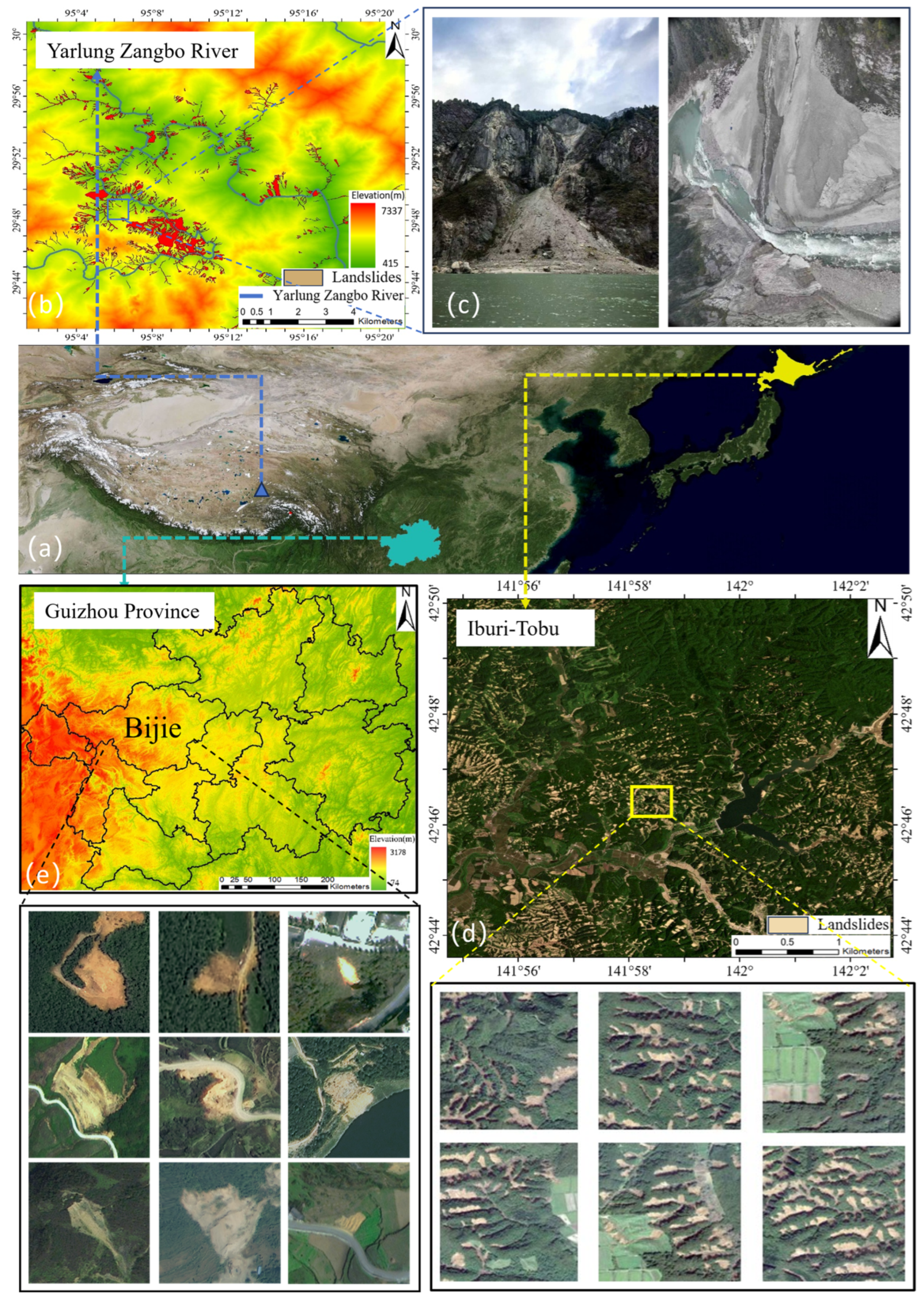
- Based on post-earthquake remote sensing images from the 2017 Nyingchi earthquake, this paper systematically constructed a co-seismic landslide detection dataset for the alpine valley region of the Yarlung Zangbo River. This dataset comprehensively covers typical landslide morphologies under various slope, illumination, and vegetation coverage conditions. It particularly emphasizes pixel-level fine annotation of fragmented boundaries and small-scale shallow landslides, effectively addressing the lack of high-quality landslide detection datasets for this specific area.
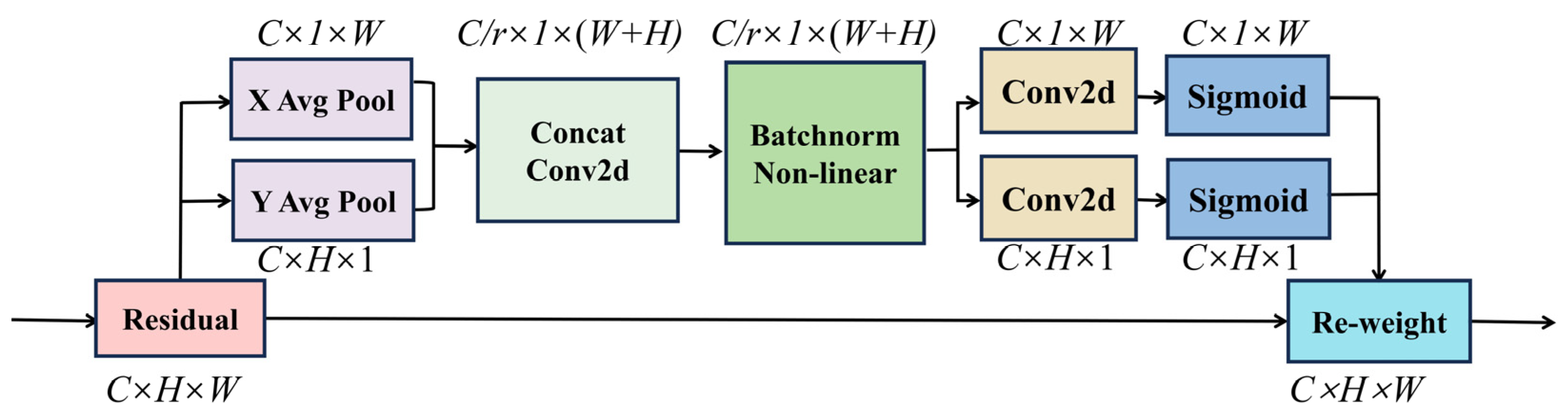
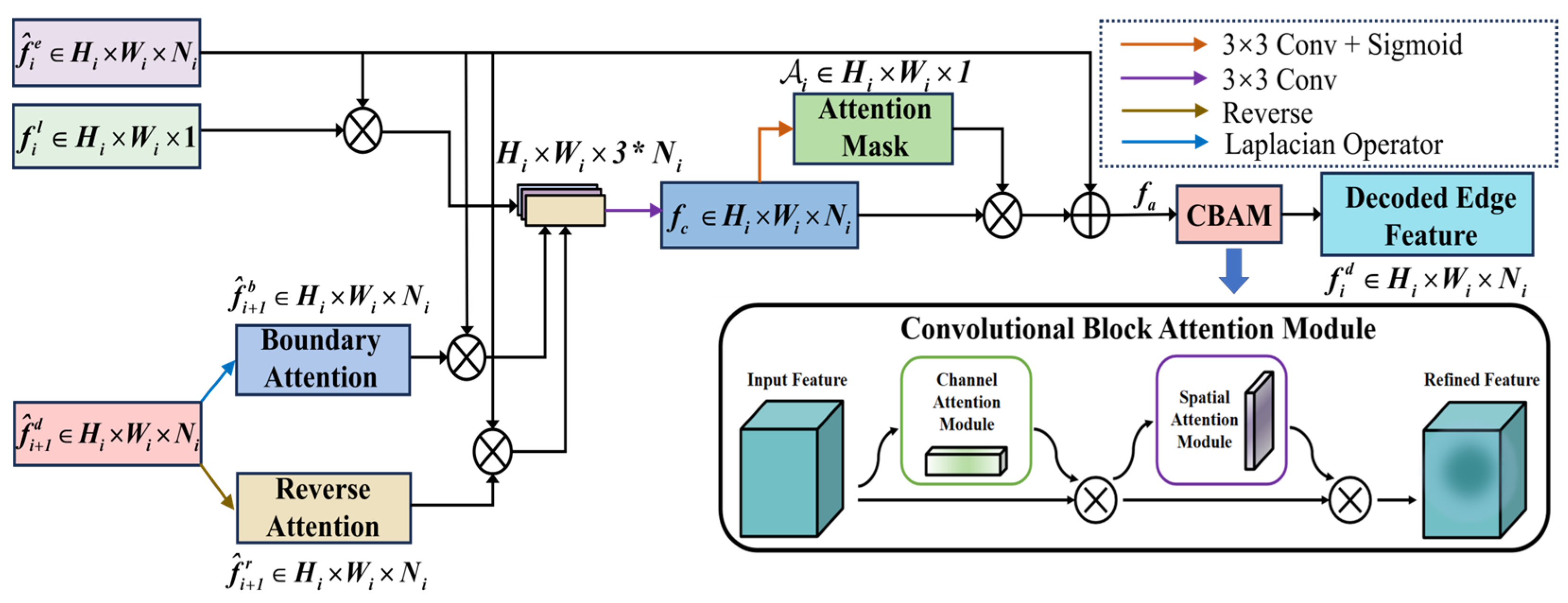
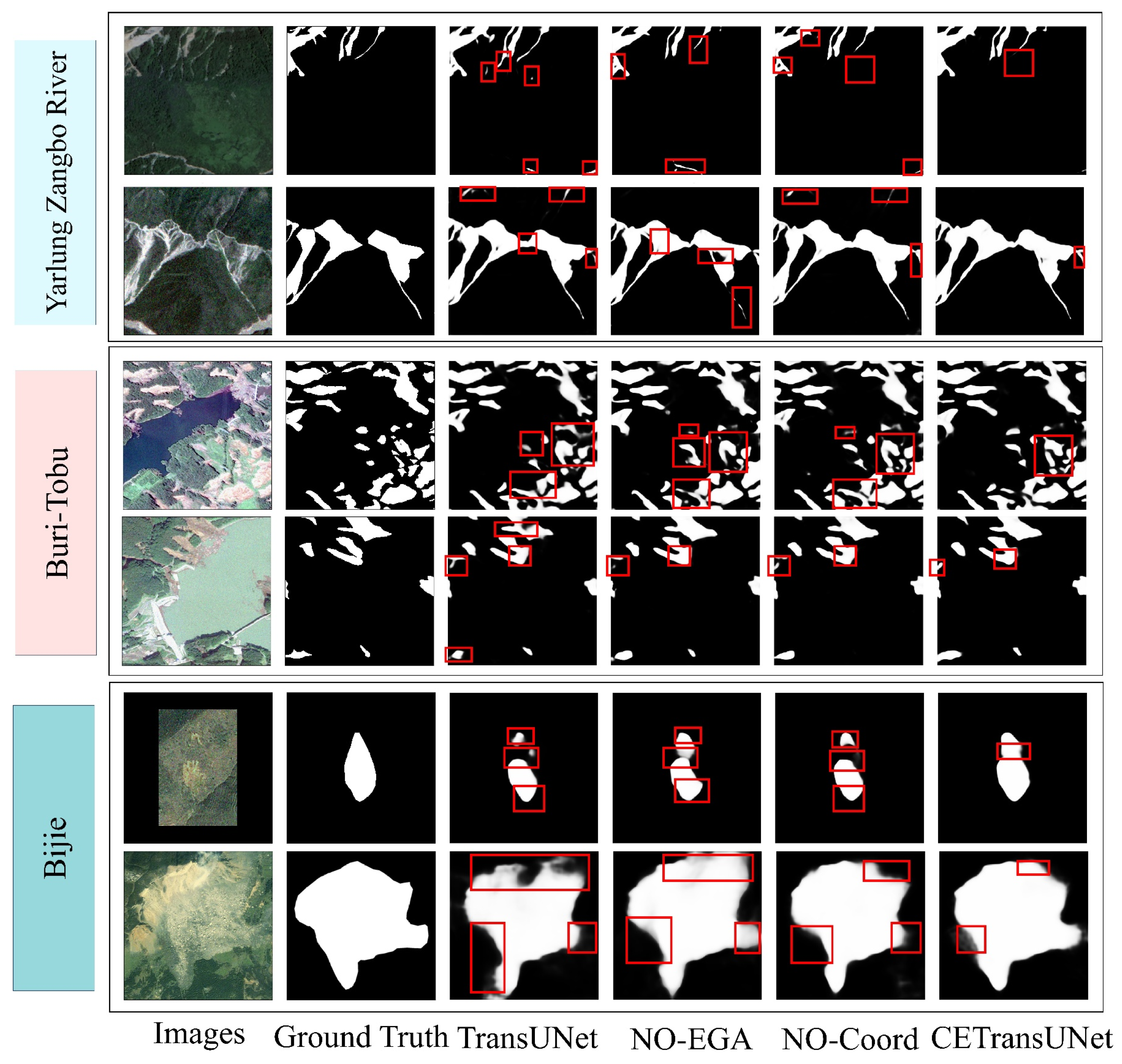
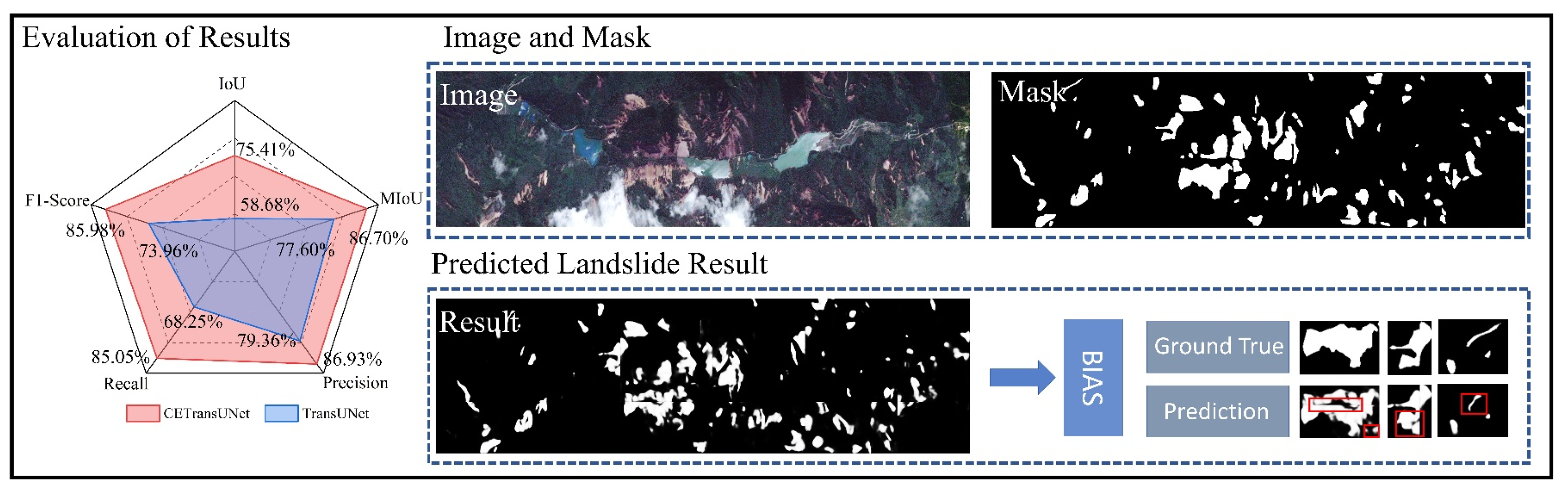
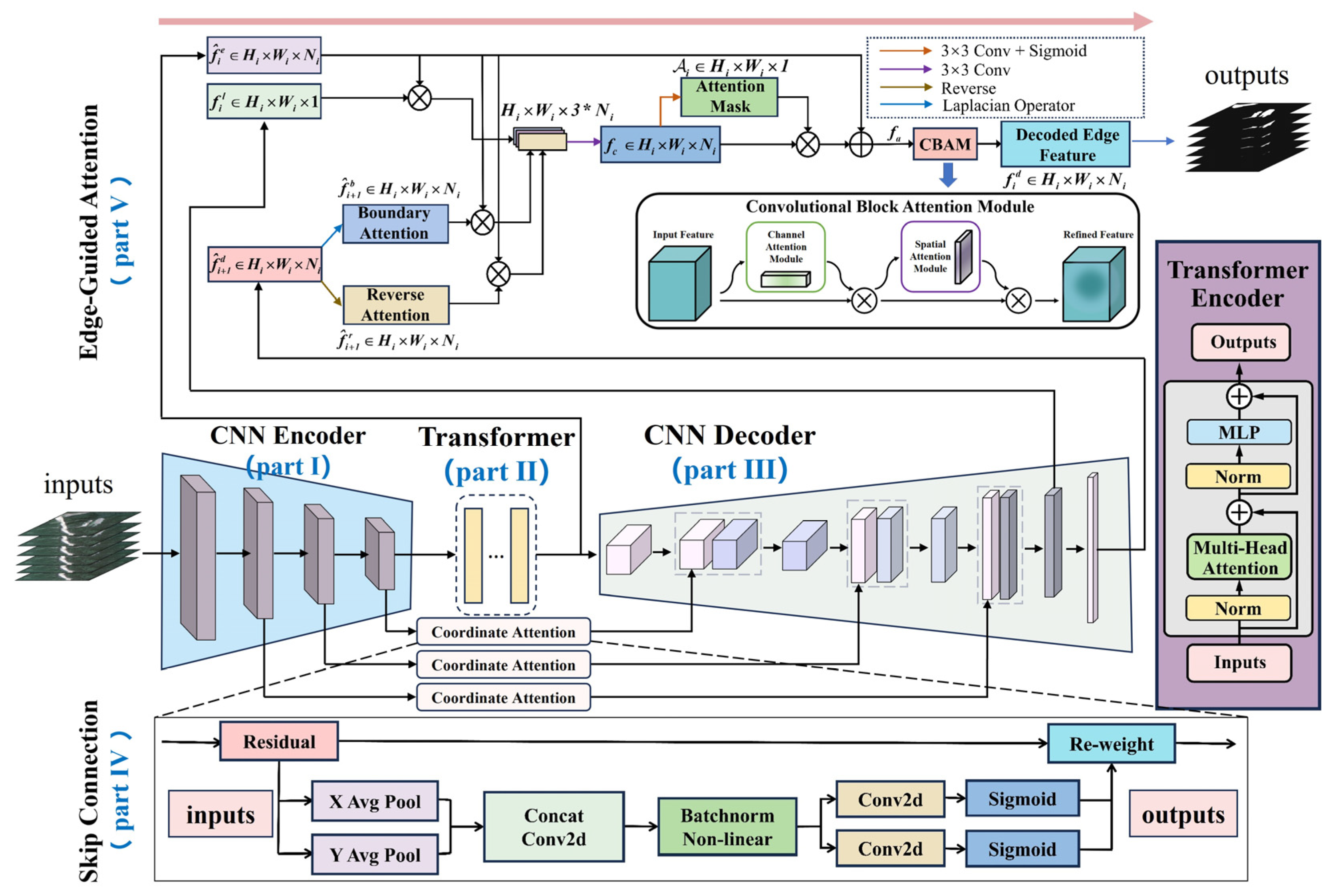
- This paper proposes CETransUNet, a novel landslide detection model that combines CNN and Transformer architecture. By integrating coordinate attention and edge-guided attention modules, the model effectively mitigates boundary ambiguity and geometric distortion in complex scenarios.
- The co-seismic landslide detection dataset of the Yarlung Zangbo River alpine valley region constructed in this paper effectively addresses the lack of high-quality landslide detection datasets for this area, providing a critical data foundation for researching the spatial distribution patterns of landslides, accurate hazard risk assessment, and the development of disaster prevention and mitigation strategies in the region.
- The CETransUNet model achieves a synchronous optimization of landslide boundary integrity and geometric precision, providing a reliable technical solution for large-scale intelligent landslide identification and disaster emergency decision-making.
Abstract
1. Introduction
2. Datasets and Methods
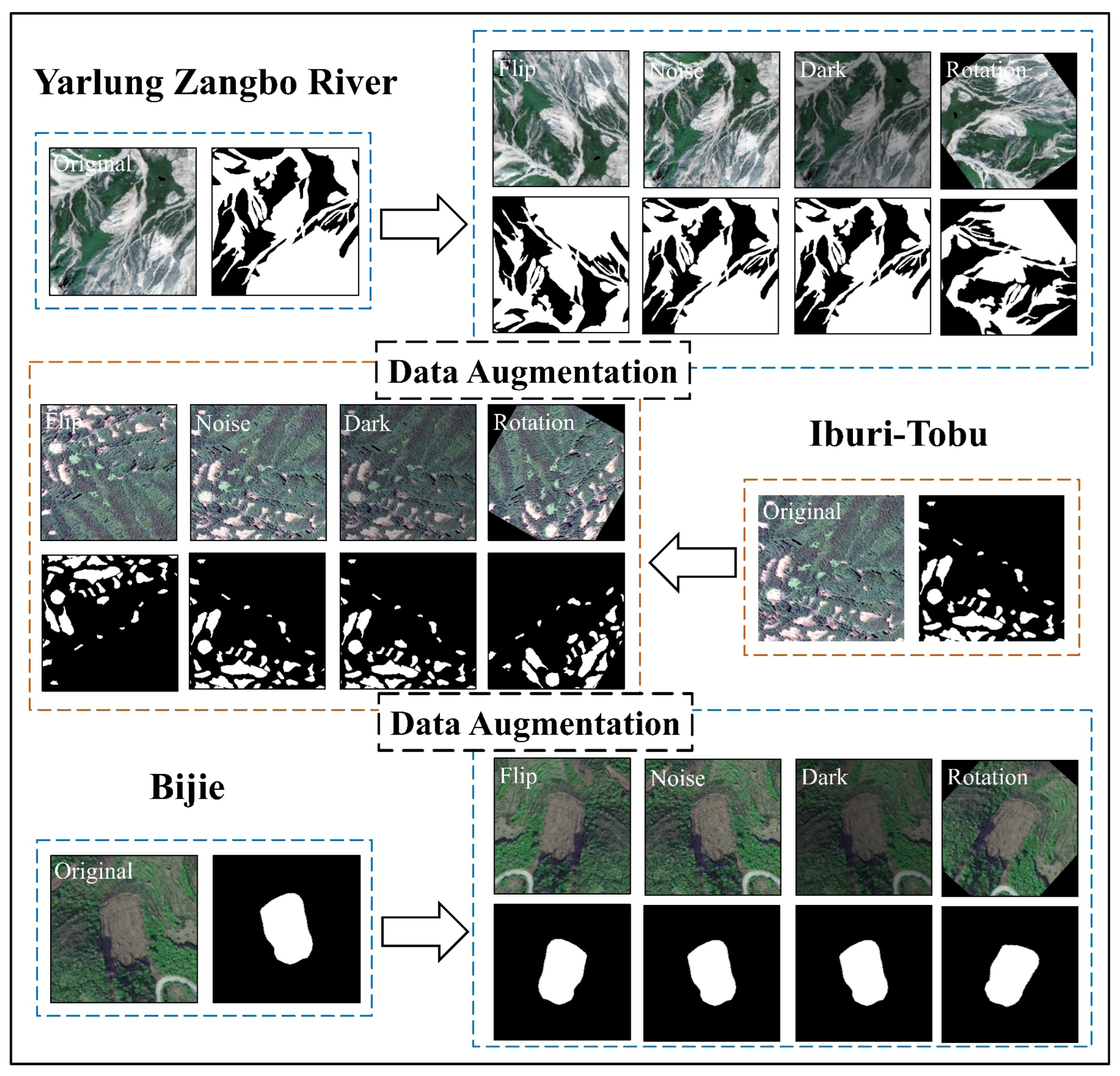
2.1. Datasets
2.2. CETransUNet
2.3. Coordinate Attention Module
2.4. Edge-Guided Attention Module
2.5. Evaluation Indicators
3. Results and Analysis
3.1. Data Preprocessing
3.2. Experimental Setup
3.3. Results
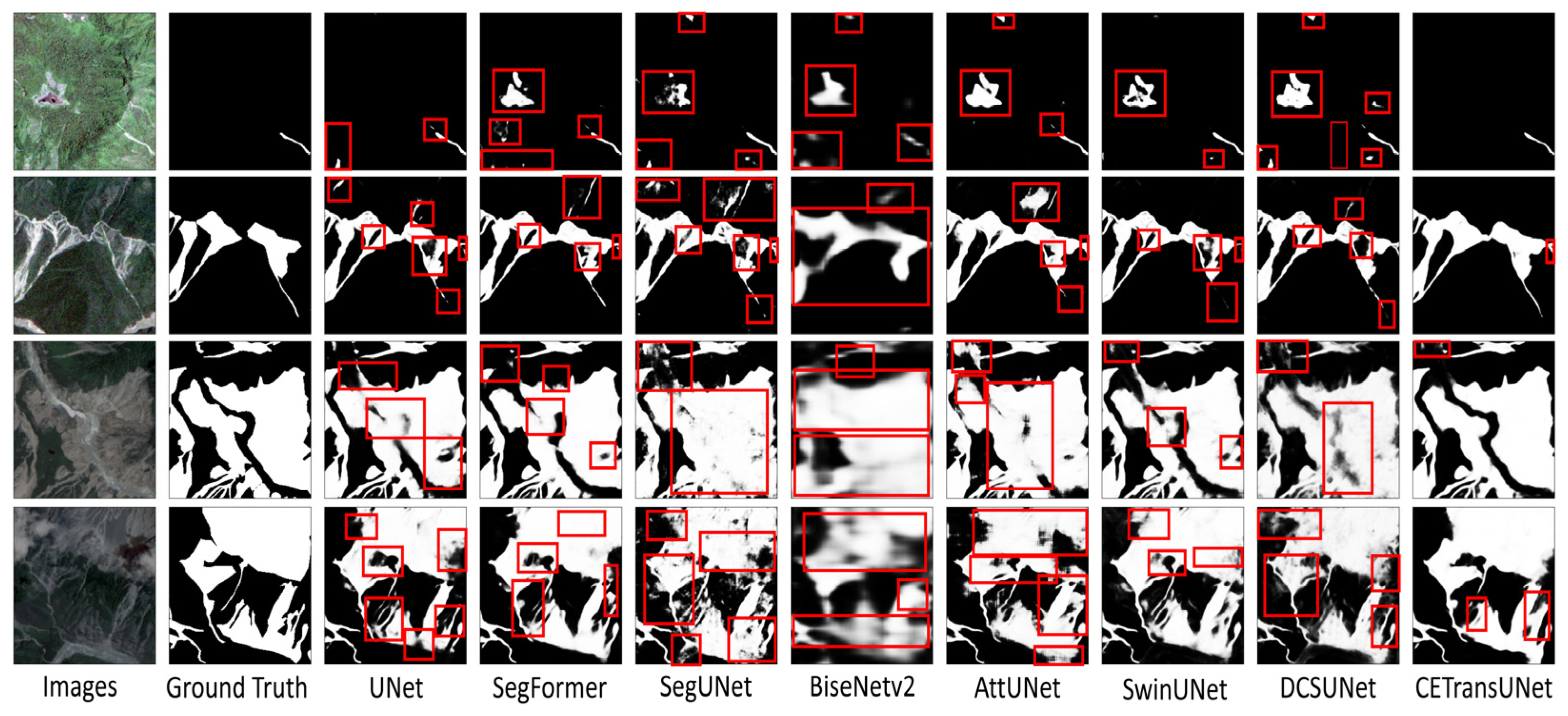
3.3.1. Comparative Experiments
3.3.2. Ablation Experiment
3.4. Generalization Performance Experiment
4. Discussion
4.1. Analysis of Results
4.2. Comparison of Model Complexity
5. Conclusions
Author Contributions
Funding
Data Availability Statement
Acknowledgments
Conflicts of Interest
References
- Qiu, P.; Pang, L.; Luo, Y.; Liu, Y.; Xing, H.; Liu, K.; Zhuang, G. Earthquake Event Knowledge Graph Construction and Reasoning. Geomat. Nat. Hazards Risk 2024, 15, 2383768. [Google Scholar] [CrossRef]
- Zhu, W.; Yang, L.; Cheng, Y.; Liu, X.; Zhang, R. Active Thickness Estimation and Failure Simulation of Translational Landslide Using Multi-Orbit InSAR Observations: A Case Study of the Xiongba Landslide. Int. J. Appl. Earth Obs. Geoinf. 2024, 129, 103801. [Google Scholar] [CrossRef]
- Song, C.; Chen, B.; Li, Y.; Li, Z.; Du, J.; Yu, C.; Peng, J.; Liu, H.; Liu, Z.; Hu, X.; et al. Amplified Coseismic Loess Failure and Postseismic Landslide Acceleration Triggered by the 2023 Jishishan, China Earthquake. Eng. Geol. 2025, 352, 108074. [Google Scholar] [CrossRef]
- Lu, J.; He, Y.; Zhang, L.; Zhang, Q.; Gao, B.; Chen, H.; Fang, Y. Ensemble Learning Landslide Susceptibility Assessment with Optimized Non-Landslide Samples Selection. Geomat. Nat. Hazards Risk 2024, 15, 2378176. [Google Scholar] [CrossRef]
- Li, Y.; Zhu, W.; Wu, J.; Zhang, R.; Xu, X.; Zhou, Y. DBSANet: A Dual-Branch Semantic Aggregation Network Integrating CNNs and Transformers for Landslide Detection in Remote Sensing Images. Remote Sens. 2025, 17, 807. [Google Scholar] [CrossRef]
- Zhang, R.; Zhu, W.; Li, Z.; Zhang, B.; Chen, B. Re-Net: Multibranch Network With Structural Reparameterization for Landslide Detection in Optical Imagery. IEEE J. Sel. Top. Appl. Earth Obs. Remote Sens. 2024, 17, 2828–2837. [Google Scholar] [CrossRef]
- Sul, A.; Patil, S. GIS and ML Integrated Techniques for Detection of Landslide-Prone Areas. In Proceedings of the 2024 2nd International Conference on Self Sustainable Artificial Intelligence Systems (ICSSAS), Erode, India, 23–25 October 2024; pp. 667–672. [Google Scholar]
- Ghorbanzadeh, O.; Gholamnia, K.; Ghamisi, P. The Application of ResU-Net and OBIA for Landslide Detection from Multi-Temporal Sentinel-2 Images. Big Earth Data 2023, 7, 961–985. [Google Scholar] [CrossRef]
- Chamoli, V.; Bahuguna, R.; Gowri, R.; Prakash, R.; Vidyarthi, A.; Dubey, V.P. Landslide Detection in Uttarakhand Region Using Active Remote Sensing. In Proceedings of the 2024 2nd International Conference on Device Intelligence, Computing and Communication Technologies (DICCT), Dehradun, India, 15–16 March 2024; pp. 154–157. [Google Scholar]
- Maxwell, A.E.; Warner, T.A.; Fang, F. Implementation of Machine-Learning Classification in Remote Sensing: An Applied Review. Int. J. Remote Sens. 2018, 39, 2784–2817. [Google Scholar] [CrossRef]
- Chen, B.; Li, Z.; Song, C.; Tomás, R.; Yu, C.; Zhu, W.; Peng, J. Unveiling the Long-Term Cascading Effects of the 2018 Baige Landslide and Subsequent Outburst Flood with Satellite Radar Observations. Remote Sens. Environ. 2026, 334, 115231. [Google Scholar] [CrossRef]
- Alzubaidi, L.; Zhang, J.; Humaidi, A.J.; Al-Dujaili, A.; Duan, Y.; Al-Shamma, O.; Santamaría, J.; Fadhel, M.A.; Al-Amidie, M.; Farhan, L. Review of Deep Learning: Concepts, CNN Architectures, Challenges, Applications, Future Directions. J. Big Data 2021, 8, 53. [Google Scholar] [CrossRef]
- Pritt, M.; Chern, G. Satellite Image Classification with Deep Learning. In Proceedings of the 2017 IEEE Applied Imagery Pattern Recognition Workshop (AIPR), Washington, DC, USA, 10–12 October 2017; pp. 1–7. [Google Scholar]
- Wang, R.; Lei, T.; Cui, R.; Zhang, B.; Meng, H.; Nandi, A.K. Medical Image Segmentation Using Deep Learning: A Survey. IET Image Process. 2022, 16, 1243–1267. [Google Scholar] [CrossRef]
- Dao, D.V.; Jaafari, A.; Bayat, M.; Mafi-Gholami, D.; Qi, C.; Moayedi, H.; Phong, T.V.; Ly, H.-B.; Le, T.-T.; Trinh, P.T.; et al. A Spatially Explicit Deep Learning Neural Network Model for the Prediction of Landslide Susceptibility. CATENA 2020, 188, 104451. [Google Scholar] [CrossRef]
- Qi, W.; Wei, M.; Yang, W.; Xu, C.; Ma, C. Automatic Mapping of Landslides by the ResU-Net. Remote Sens. 2020, 12, 2487. [Google Scholar] [CrossRef]
- Prakash, N.; Manconi, A.; Loew, S. Mapping Landslides on EO Data: Performance of Deep Learning Models vs. Traditional Machine Learning Models. Remote Sens. 2020, 12, 346. [Google Scholar] [CrossRef]
- Yi, Y.; Zhang, W. A New Deep-Learning-Based Approach for Earthquake-Triggered Landslide Detection From Single-Temporal RapidEye Satellite Imagery. IEEE J. Sel. Top. Appl. Earth Obs. Remote Sens. 2020, 13, 6166–6176. [Google Scholar] [CrossRef]
- Ghorbanzadeh, O.; Crivellari, A.; Ghamisi, P.; Shahabi, H.; Blaschke, T. A Comprehensive Transferability Evaluation of U-Net and ResU-Net for Landslide Detection from Sentinel-2 Data (Case Study Areas from Taiwan, China, and Japan). Sci. Rep. 2021, 11, 14629. [Google Scholar] [CrossRef]
- Cai, H.; Chen, T.; Niu, R.; Plaza, A. Landslide Detection Using Densely Connected Convolutional Networks and Environmental Conditions. IEEE J. Sel. Top. Appl. Earth Obs. Remote Sens. 2021, 14, 5235–5247. [Google Scholar] [CrossRef]
- Singh, A.; Dhiman, N.; Shukla, D.P. Transfer Learning in Landslide Susceptibility Mapping: Bridging Data-Rich and Data-Scarce Regions in the Northwestern Himalayas. In Proceedings of the IGARSS 2024—2024 IEEE International Geoscience and Remote Sensing Symposium, Athens, Greece, 7–12 July 2024; pp. 3253–3256. [Google Scholar]
- Liu, T.; Chen, T.; Niu, R.; Plaza, A. Landslide Detection Mapping Employing CNN, ResNet, and DenseNet in the Three Gorges Reservoir, China. IEEE J. Sel. Top. Appl. Earth Obs. Remote Sens. 2021, 14, 11417–11428. [Google Scholar] [CrossRef]
- Devlin, J.; Chang, M.-W.; Lee, K.; Toutanova, K. BERT: Pre-Training of Deep Bidirectional Transformers for Language Understanding. In Proceedings of the 2019 Conference of the North American Chapter of the Association for Computational Linguistics: Human Language Technologies, Volume 1 (Long and Short Papers); Burstein, J., Doran, C., Solorio, T., Eds.; Association for Computational Linguistics: Minneapolis, MN, USA, 2019; pp. 4171–4186. [Google Scholar]
- Wang, Q.; Li, B.; Xiao, T.; Zhu, J.; Li, C.; Wong, D.F.; Chao, L.S. Learning Deep Transformer Models for Machine Translation. In Proceedings of the 57th Annual Meeting of the Association for Computational Linguistics; Korhonen, A., Traum, D., Màrquez, L., Eds.; Association for Computational Linguistics: Florence, Italy, 2019; pp. 1810–1822. [Google Scholar]
- Cui, X.; Chen, X.; Zhou, J.; Lin, D. Transformer in Image Interpretation. In Proceedings of the International Conference on Computer Graphics, Artificial Intelligence, and Data Processing (ICCAID 2021); SPIE: Bellingham, WA, USA, 2022; Volume 12168, pp. 45–50. [Google Scholar]
- Chen, J.; Lu, Y.; Yu, Q.; Luo, X.; Zhou, Y. TransUNet: Transformers Make Strong Encoders for Medical Image Segmentation. arXiv 2021, arXiv:2102.04306. [Google Scholar] [CrossRef]
- Bazi, Y.; Bashmal, L.; Rahhal, M.M.A.; Dayil, R.A.; Ajlan, N.A. Vision Transformers for Remote Sensing Image Classification. Remote Sens. 2021, 13, 516. [Google Scholar] [CrossRef]
- Deng, P.; Xu, K.; Huang, H. When CNNs Meet Vision Transformer: A Joint Framework for Remote Sensing Scene Classification. IEEE Geosci. Remote Sens. Lett. 2022, 19, 8020305. [Google Scholar] [CrossRef]
- Perera, M.V.; Bandara, W.G.C.; Valanarasu, J.M.J.; Patel, V.M. Transformer-Based SAR Image Despeckling. In Proceedings of the IGARSS 2022—2022 IEEE International Geoscience and Remote Sensing Symposium, Kuala Lumpur, Malaysia, 17–22 July 2022; pp. 751–754. [Google Scholar]
- Yang, Z.; Xu, C.; Li, L. Landslide Detection Based on ResU-Net with Transformer and CBAM Embedded: Two Examples with Geologically Different Environments. Remote Sens. 2022, 14, 2885. [Google Scholar] [CrossRef]
- Wei, Y.; Fu, X.; Zhang, B.; Qin, X.; Kou, P.; Wang, L.; Li, H. Efficient Multi-Source Deep Learning for Rapid Landslide Mapping in the Karst Mountains of Bijie, China. Geomat. Nat. Hazards Risk 2025, 17, 2608246. [Google Scholar] [CrossRef]
- Han, Z.; Fu, B.; Fang, Z.; Li, Y.; Li, J.; Jiang, N.; Chen, G. Dynahead-YOLO-Otsu: An Efficient DCNN-Based Landslide Semantic Segmentation Method Using Remote Sensing Images. Geomat. Nat. Hazards Risk 2024, 15, 2398103. [Google Scholar] [CrossRef]
- Chen, H.; Zhang, L.; Yan, S.; Li, X.; Wang, D. A Lightweight Rockfall Detection Method in Complex Environments Based on Receptive Field and Attention Mechanism: REGM-YOLO. Landslides 2025, 22, 4113–4131. [Google Scholar] [CrossRef]
- Liu, X.; Xu, L.; Zhang, J. Landslide Detection with Mask R-CNN Using Complex Background Enhancement Based on Multi-Scale Samples. Geomat. Nat. Hazards Risk 2024, 15, 2300823. [Google Scholar] [CrossRef]
- Du, J.; Gao, J.; Chen, T.; Tsewang; Pakgordolma. Spatiotemporal Variations of the Precipitation Concentration Index and Seasonal Precipitation Characteristics in the Yalung Zangbo River Basin from 1981 to 2024. Arid Zone Res. 2025, 42, 1159–1172. [Google Scholar] [CrossRef]
- Yamagishi, H.; Yamazaki, F. Landslides by the 2018 Hokkaido Iburi-Tobu Earthquake on September 6. Landslides 2018, 15, 2521–2524. [Google Scholar] [CrossRef]
- Xu, Y.; Ouyang, C.; Xu, Q.; Wang, D.; Zhao, B.; Luo, Y. CAS Landslide Dataset: A Large-Scale and Multisensor Dataset for Deep Learning-Based Landslide Detection. Sci. Data 2024, 11, 12. [Google Scholar] [CrossRef]
- Ji, S.; Yu, D.; Shen, C.; Li, W.; Xu, Q. Landslide Detection from an Open Satellite Imagery and Digital Elevation Model Dataset Using Attention Boosted Convolutional Neural Networks. Landslides 2020, 17, 1337–1352. [Google Scholar] [CrossRef]
- Hou, Q.; Zhou, D.; Feng, J. Coordinate Attention for Efficient Mobile Network Design. In Proceedings of the IEEE/CVF Conference on Computer Vision and Pattern Recognition (CVPR), Nashville, TN, USA, 21–25 June 2021. [Google Scholar]
- Bui, N.-T.; Hoang, D.-H.; Nguyen, Q.-T.; Tran, M.-T.; Le, N. MEGANet: Multi-Scale Edge-Guided Attention Network for Weak Boundary Polyp Segmentation. In Proceedings of the IEEE/CVF Winter Conference on Applications of Computer Vision (WACV), Waikoloa, HI, USA, 3–8 January 2023. [Google Scholar]
- Woo, S.; Park, J.; Lee, J.-Y.; Kweon, I.S. CBAM: Convolutional Block Attention Module. In Proceedings of the Computer Vision—ECCV 2018; Ferrari, V., Hebert, M., Sminchisescu, C., Weiss, Y., Eds.; Springer International Publishing: Cham, Switzerland, 2018; pp. 3–19. [Google Scholar]
- Borgwardt, K.; Gretton, A.; Rasch, M.; Kröger, P.; Schölkopf, B.; Smola, A. Integrating Structured Biological Data by Kernel Maximum Mean Discrepancy. Bioinformatics 2006, 22, e49–e57. [Google Scholar] [CrossRef] [PubMed]
- Xu, M.; Zhang, Z.; Hu, H.; Wang, J.; Wang, L.; Wei, F.; Bai, X.; Liu, Z. End-to-End Semi-Supervised Object Detection with Soft Teacher. In Proceedings of the 2021 IEEE/CVF International Conference on Computer Vision (ICCV), Montreal, QC, Canada, 10–17 October 2021; pp. 3040–3049. [Google Scholar]





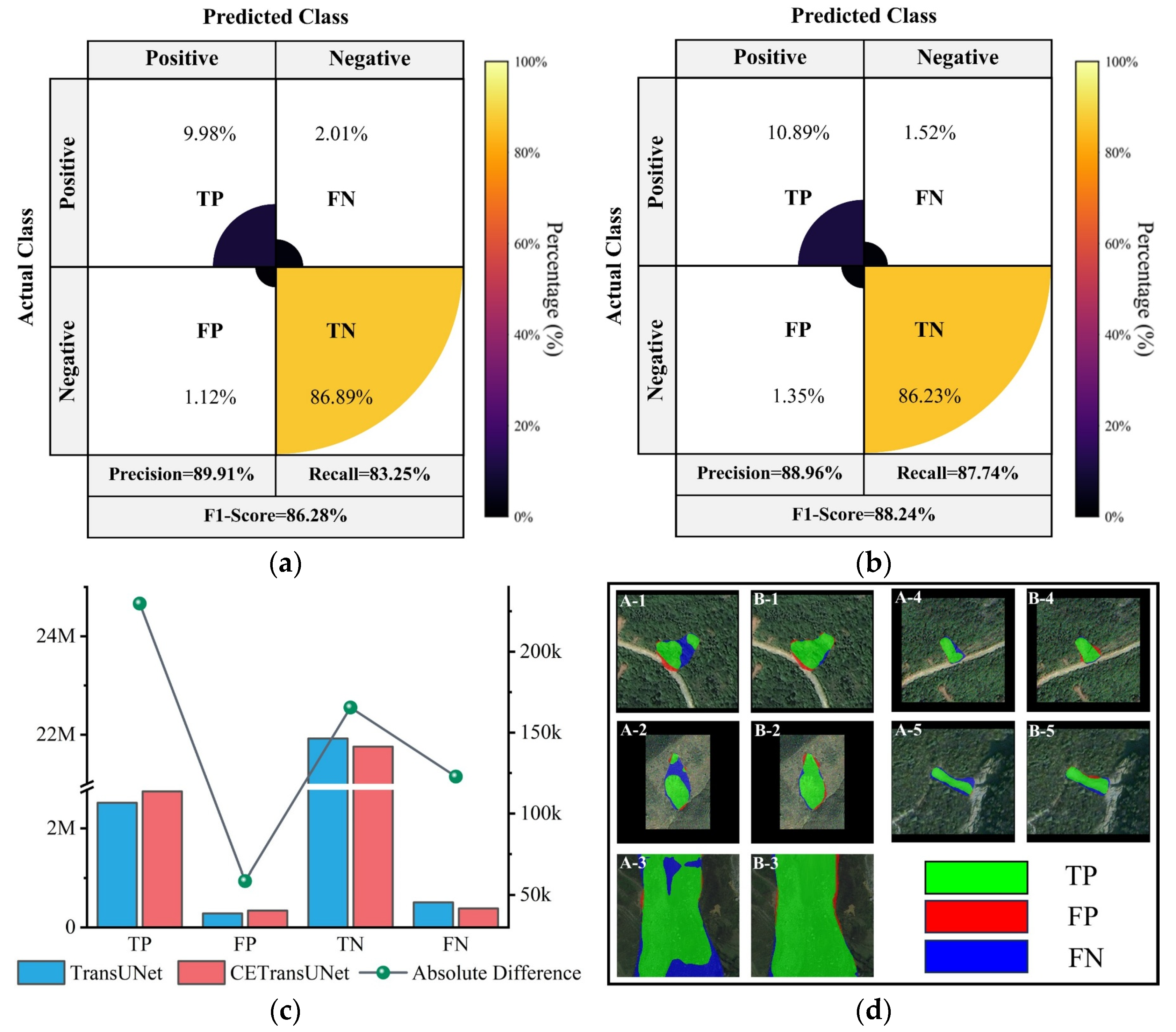

| Prediction False | Prediction Truth | |
|---|---|---|
| Ground False | TN | FP |
| Ground Truth | FN | TP |
| Dataset | Size | Band | Train/Val/Test | Resolution |
|---|---|---|---|---|
| Yarlung Zangbo River | 256 × 256 | RGB | 3296/412/412 | 3 m |
| Iburi-Tobu | 5940/740/740 | 3 m | ||
| Bijie | 3080/385/385 | 0.8 m |
| Models | IoU (%) | MIoU (%) | Precision (%) | Recall (%) | F1-Score (%) |
|---|---|---|---|---|---|
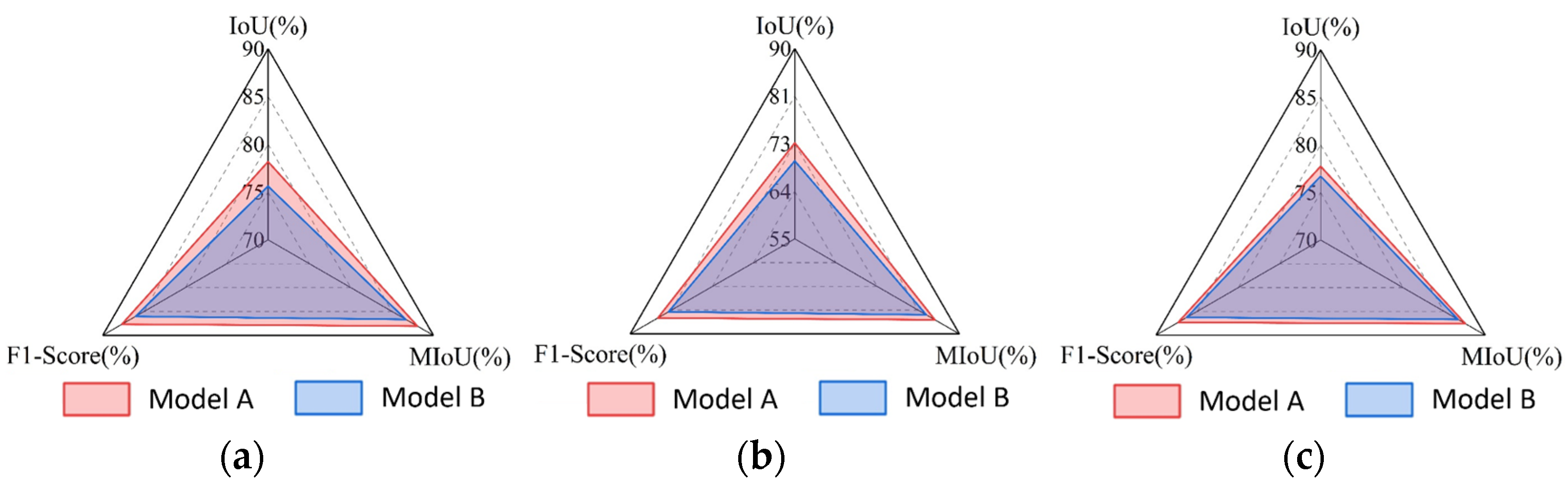
| Original | 75.61 | 86.66 | 85.06 | 87.08 | 86.04 |
| No-EGA | 78.36 | 88.17 | 86.80 | 88.91 | 87.82 |
| No-CA | 78.59 | 88.30 | 87.08 | 88.88 | 87.95 |
| CETransUNet | 80.26 | 89.22 | 88.80 | 89.23 | 89.01 |
| Models | IoU (%) | MIoU (%) | Precision (%) | Recall (%) | F1-Score (%) |
|---|---|---|---|---|---|
| Original | 69.34 | 82.96 | 82.56 | 81.19 | 81.85 |
| No-EGA | 72.48 | 84.70 | 83.42 | 84.62 | 84.00 |
| No-CA | 71.60 | 84.22 | 83.27 | 83.58 | 83.41 |
| CETransUNet | 74.77 | 86.00 | 85.61 | 85.48 | 85.53 |
| Models | IoU (%) | MIoU (%) | Precision (%) | Recall (%) | F1-Score (%) |
|---|---|---|---|---|---|
| Original | 76.17 | 86.71 | 89.91 | 83.25 | 86.28 |
| No-EGA | 76.93 | 87.10 | 86.81 | 86.96 | 86.77 |
| No-CA | 77.54 | 87.47 | 88.70 | 85.97 | 87.19 |
| CETransUNet | 79.20 | 88.37 | 88.96 | 87.74 | 88.24 |
| Models | Total Number of Components | FLOPs (G) | FPS (img/s) | Training Time | ||
|---|---|---|---|---|---|---|
| Yarlung Zangbo River | Iburi-Tobu | Bijie | ||||
| A | 188.2 M | 43.12 | 81 | 80 min | 83 min | 45 min |
| B | 192.4 M | 42.56 | 85 | 75 min | 79 min | 41min |
| C | 221.8 M | 48.76 | 63.13 | 123 min | 130 min | 70 min |
Disclaimer/Publisher’s Note: The statements, opinions and data contained in all publications are solely those of the individual author(s) and contributor(s) and not of MDPI and/or the editor(s). MDPI and/or the editor(s) disclaim responsibility for any injury to people or property resulting from any ideas, methods, instructions or products referred to in the content. |
© 2026 by the authors. Licensee MDPI, Basel, Switzerland. This article is an open access article distributed under the terms and conditions of the Creative Commons Attribution (CC BY) license.
Share and Cite
Sun, T.; Yang, C.; Wu, J.; Liu, Z.; Wang, Z.; Cheng, X. CETransUNet: An Intelligent Landslide Identification Method Based on Collaborative Optimization of Global Context and Dual Attention Mechanisms. Remote Sens. 2026, 18, 1974. https://doi.org/10.3390/rs18121974
Sun T, Yang C, Wu J, Liu Z, Wang Z, Cheng X. CETransUNet: An Intelligent Landslide Identification Method Based on Collaborative Optimization of Global Context and Dual Attention Mechanisms. Remote Sensing. 2026; 18(12):1974. https://doi.org/10.3390/rs18121974
Chicago/Turabian StyleSun, Tianli, Chengsheng Yang, Jifeng Wu, Zewei Liu, Ziqian Wang, and Xiaoqiang Cheng. 2026. "CETransUNet: An Intelligent Landslide Identification Method Based on Collaborative Optimization of Global Context and Dual Attention Mechanisms" Remote Sensing 18, no. 12: 1974. https://doi.org/10.3390/rs18121974
APA StyleSun, T., Yang, C., Wu, J., Liu, Z., Wang, Z., & Cheng, X. (2026). CETransUNet: An Intelligent Landslide Identification Method Based on Collaborative Optimization of Global Context and Dual Attention Mechanisms. Remote Sensing, 18(12), 1974. https://doi.org/10.3390/rs18121974