Article

Radar Analysis of Cyclic Tornadic Mesocyclones Within the 23 June 2016 Yancheng Supercell Storm in China


1
State Key Laboratory of Atmospheric Environment and Extreme Meteorology (AEEM), Institute of Atmospheric Physics, Chinese Academy of Sciences, Beijing 100029, China
2
China Meteorological Administration Tornado Key Laboratory, Foshan 528000, China
3
Foshan Tornado Research Centre, Foshan 528000, China
4
Institute of Atmospheric Physics, Chinese Academy of Sciences, Beijing 100029, China
*
Author to whom correspondence should be addressed.
Remote Sens. 2026, 18(12), 1958; https://doi.org/10.3390/rs18121958 (registering DOI)
Submission received: 12 April 2026 / Revised: 5 June 2026 / Accepted: 5 June 2026 / Published: 12 June 2026

Highlights

What are the main findings?
  • Cyclic tornadic mesocyclones were observed using S-band stationary radar in a supercell storm over Yancheng, China, on 23 June 2016.
  • The storm exhibited three discrete mesocyclones, providing a rare observational example of a severe cyclic supercell occurring in China.
What are the implications of the main findings?
  • The storm reflectivity intensity appeared to be closely coupled with the occlusion and formation of mesocyclones and tornadoes.
  • The timing of mesocyclogenesis may be associated with the weakening of the reflectivity core and its subsequent lowering toward the surface.

Abstract

On 23 June 2016, a supercell storm in Yancheng City, Jiangsu Province, China, produced two tornadoes: the first reached EF4 intensity and lasted approximately 50 min, while the second was rated EF2–EF3 and persisted for about 20 min. Evidence of cyclic tornadic mesocyclones within the supercell was captured by an S-band stationary Doppler radar, providing a rare case of a severe cyclic tornadic storm in China. Three discrete mesocyclones were identified during the storm’s evolution. The first occlusion persisted for approximately 42 min and was relatively prolonged; the submesocyclone-strength vortex associated with the old mesocyclone remained detectable for 18 min after the hook echo completed wrapping around itself. In contrast, the second occlusion evolved more rapidly and was completed within 18 min, during which the old and new mesocyclones rotated around each other. A temporal association was observed between the evolution of the reflectivity core and the occlusion and formation of the mesocyclones. The second and third mesocyclones formed approximately 24 and 18 min, respectively, after the reflectivity core weakened and lowered toward the surface.

1. Introduction

One supercell storm can produce a series of discrete vortices, updrafts, mesocyclones or tornadoes during its lifespan [1,2]. Burgess [3] proposed a conceptual model of cyclic mesocyclones based on radar data, in which the occlusion of mesocyclones resembled the extratropical cyclones in structure. Adlerman et al. [4] reproduced similar conceptual model using numerical simulations. Dowell and Bluestein [5,6] suggested that the cyclic tornadogenesis process is associated with an imbalance between inflow and outflow of the storm and a mismatch between the movement directions of the tornado and its parent storm. Adlerman and Droegemeier [7] presented two types of cyclic tornadogenesis in a numerical study, occluding and non-occluding, which depend on the vertical wind shear. With high-resolution mobile radars, Beck et al. [8] proposed a detailed conceptual model for the decay and reformation of hook echoes, and French et al. [9] studied the specific features of circulations at multiple levels of cyclic mesocyclones. Observations using polarimetric radar revealed more sophisticated and reliable signatures of supercell storms [10,11,12]. Kumjian et al. [13] analyzed the repetitive evolution of polarimetric features associated with the cyclic occlusion of the low-level mesocyclone using a rapid-scanning Weather Surveillance Radar-1988 Doppler (WSR-88D). Some atypical cyclic tornadoes were observed by mobile rapid scan polarimetric radars, such as the ‘failed occlusion’ during a loop-tracked tornado [14], and a hybrid case exhibiting both occlusion and non-occlusion characteristics [15]. Cyclic storms are typically among the most severe storms and may occur in tornado-prone regions worldwide. However, observations of these storms remain far less common outside North America [16,17,18].
In eastern China, tornadoes occur frequently, although the region is not among the most heavily affected. Fan and Yu [19] studied the spatial–temporal distribution of significant tornadoes in China from 1961 to 2010 and found that the average annual number of tornadoes rated higher than 1 on the Enhanced Fujita (EF) scale in China was 21, much less than in the United States and Europe. Zhang et al. [20] studied the climatology of 129 tornadoes with intensities exceeding EF2 from 1980 to 2016 based on the 5th generation ECMWF reanalysis (ERA5) dataset and found that the kinematic conditions for tornadic storms in China are much less favorable than those in the United States, which explains the lower tornado frequency and intensity in China.
At present, Doppler weather surveillance radar is an effective tool for tornado detection and warning [21]. Since the 1990s, a network of surveillance radars has been established in China [22]. These radars, known as China New Generation Weather Radar (CINRAD) or WSR-98D, have been used extensively. With the help of CINRADs, many studies have been conducted on tornadic storms in the Yangtze–Huaihe region in China, which has the highest frequency of severe tornadoes in the country. For example, based on analyses of multiple cases in this region, Wu et al. [23] and Wang et al. [24] reported that mid-level mesocyclones were more frequently associated with hail production, whereas low-level mesocyclones were more often linked to tornado occurrence.
On 23 June 2016, a supercell storm formed and swept across the Yangtze–Huaihe region, producing two tornadoes in Funing County (FN) and Sheyang County (SY) of Yancheng City, Jiangsu Province, China, and causing the most severe tornadic damage and loss since 1977 in the country. Damage surveys show that the tornado in FN reached EF4 intensity. Detailed records of the supercell storm, including meteorological background, full development of tornadoes, and damage surveys, can be found in Xue et al. [25], Zhang et al. [26] and Meng et al. [27]. Several numerical studies were performed on this tornado case. Sun et al. [28] investigated the resolution dependence of simulated tornado structures, while Huang and Xue [29,30,31] performed a series of dynamical diagnostics that revealed the roles of unstable vortex Rossby waves, vortex rivers, and related dynamical processes.
Previous work by Meng et al. [27] briefly discussed a possible occlusion process between two tornadoes within the Yancheng supercell, primarily inferred from a backward-moving tornadic vortex signature (TVS) relative to the storm’s main inflow during the dissipation stage of the first tornado. However, given the rarity of cyclic supercells in China and their association with the most severe convective events, the cyclic behavior of the Yancheng storm is worth further investigation.
Compared with earlier studies that mainly focus on the first EF4 tornado, this work examines the full life cycle of the supercell, including the cyclic evolution of two tornadic mesocyclones followed by a subsequent non-tornadic mesocyclone. The study documents more detailed and comprehensive radar-based observational evidence of cyclic mesocyclones, including the evolution of hook-echo geometry and associated inferred flow patterns, and the temporal association between mesocyclogenesis and reflectivity core evolution. However, due to the limitations of single-Doppler radar observations, the interpretations presented in this study are partly based on existing conceptual models of cyclic supercells. The findings of this study may improve understanding of the cyclic behavior of the Yancheng storm and could provide useful reference information for operational warning practices in the region.
The remainder of the paper is organized as follows: Section 2 provides an overview of the supercell storm; Section 3 discusses the cyclic tornadic mesocyclone occlusion-genesis processes; Section 4 compiles statistical data on characteristics of the mesocyclones and tornadoes; and Section 5 presents a summary of the study.

2. Event and Data

2.1. Synoptic Background

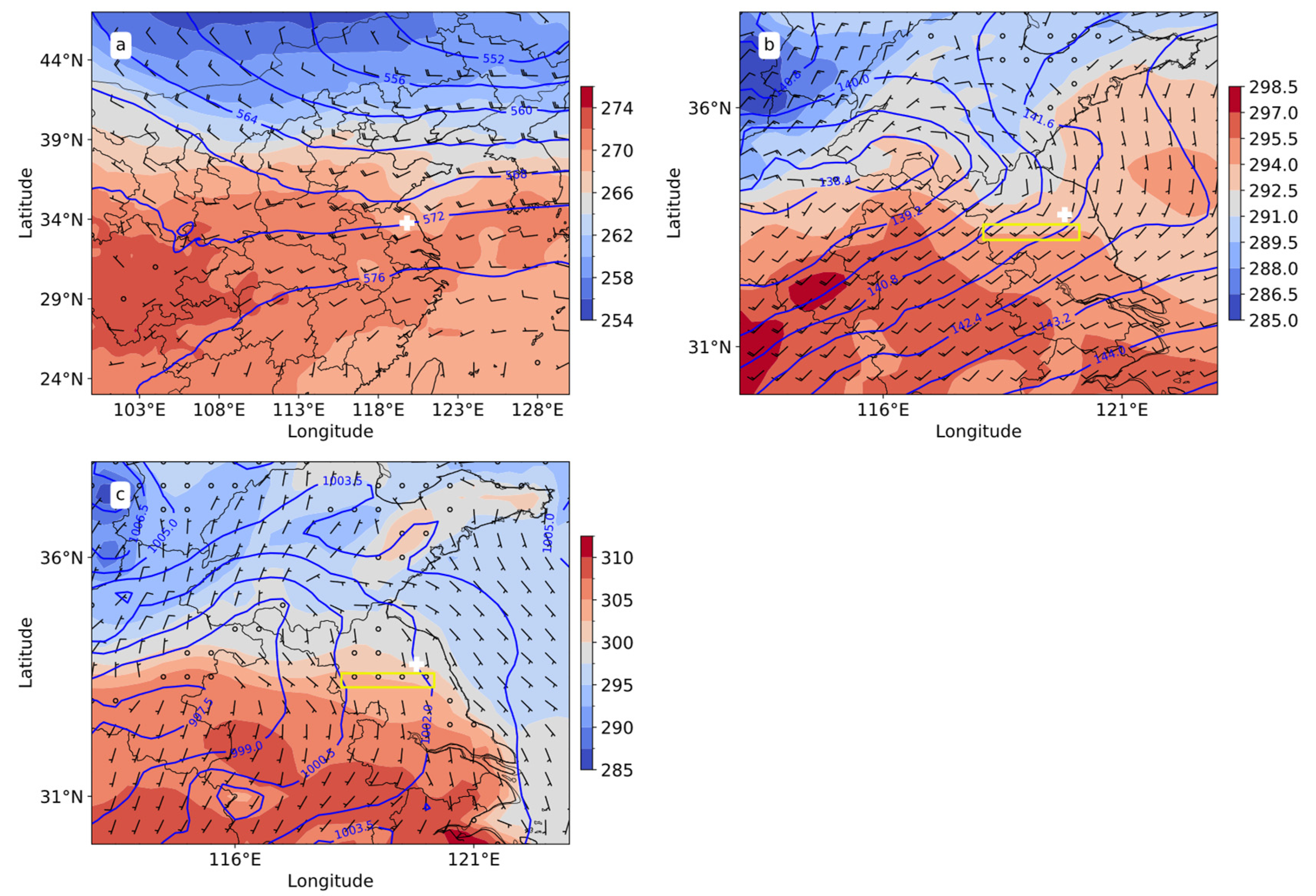
At 1400 local standard time (LST; UTC+8) on 23 June 2016, about 11 min before the first tornado struck FN in Yancheng City, a cold-core low was situated in northeastern China at 500 hPa, while the subtropical high was located over the northwest Pacific (Figure 1a). The cold air from the northwest of the cold-core low converged with moist warm air along the western edge of the subtropical high over the Huai River Basin in eastern China, creating favorable conditions for deep convection. At the surface, a strengthened surface low was located to the west of Yancheng City, and the city was in the warm sector behind the warm front (Figure 1c). Notably, a west–east alley of strong low-level wind shear, indicated by the weak surface winds and relatively strong southwesterly flow at 850 hPa (yellow boxes in Figure 1b,c), was located just south of FN. The maximum convective available potential energy estimated from the radiosondes near Yancheng City at 1400 LST ranged from 2991 J kg−1 [27] to 3290 J kg−1 [26]. The lifting condensation level was as low as 984.6 hPa, about 240 m above sea level [26]. The storm-relative helicity was 139 m2 s−2 for 0–1 km layer and 170 m2 s−2 for 0–3 km layer [26]. Overall, the combination of strong instability, adequate low-level moisture, and enhanced vertical wind shear provided a synoptic environment highly conducive to tornadic storm development. More detailed synoptic and mesoscale analyses can be found in references [26,27] and are, therefore, not repeated here.

2.2. The Supercell Storm

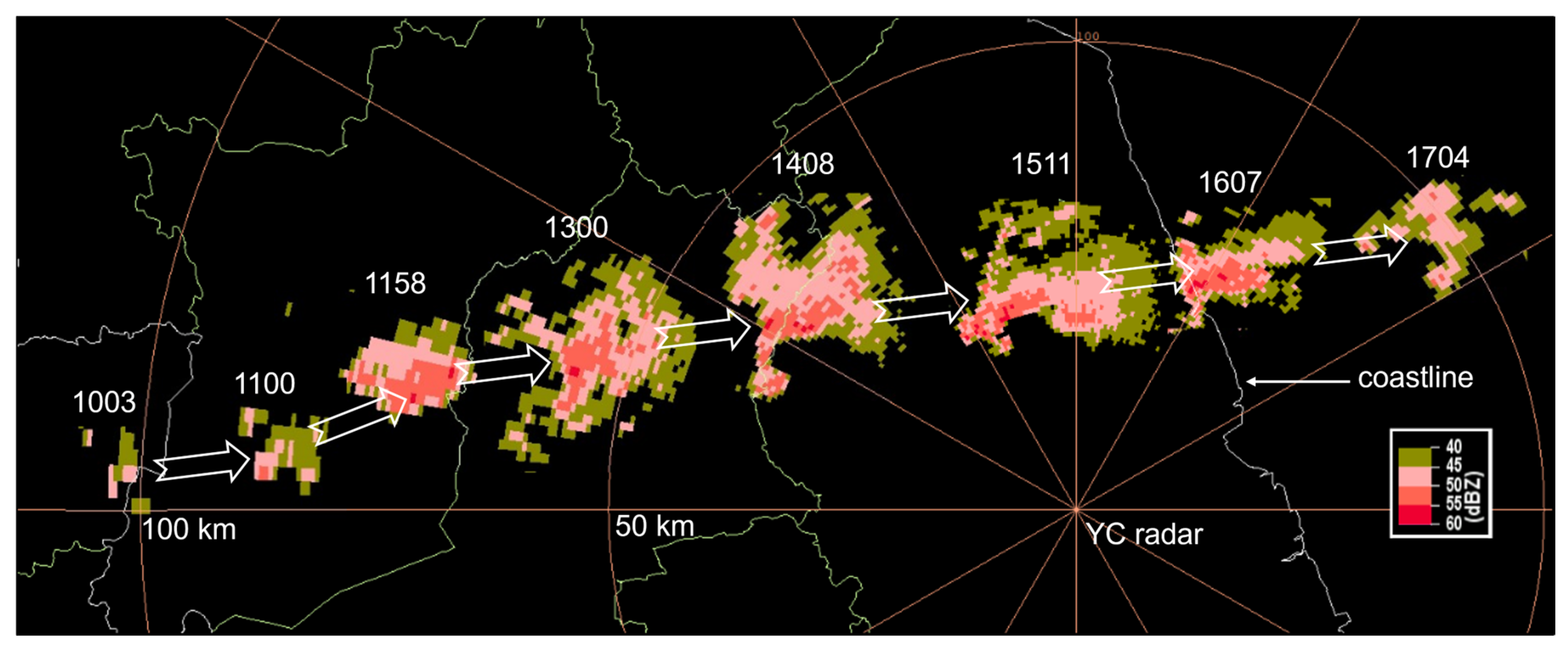
At 0855 LST, a storm developed in northern Anhui Province, about 450 km west of Yancheng City, and moved eastward. At 1003 LST, the storm entered Jiangsu Province and turned toward the east–northeast (Figure 2). After 1158 LST, a mesocyclone appeared in the storm for the first time, and the storm gradually organized and intensified as several cells merged. At 1408 LST, the storm developed a hook echo. Shortly after that, according to damage surveys, an EF4 tornado struck FN at about 1410 LST, and lasted until 1500 LST. About 10 min later, another tornado hit SY from 1510 to 1530 LST. The supercell storm moved over the sea at about 1607 LST and subsequently degraded into a non-supercell storm. During the lifetime of the storm, the hook echo formed cyclically three times at about 1408, 1511, and 1545 LST.

2.3. Radar Data

This study used CINRAD Doppler radar data from Yancheng station, which was about 40–65 km south–southeast of the supercell storm during its tornadic period. At the lowest elevation angle, the radar beam height ranged from 0.68–1.24 km. The radar used volume coverage pattern 21, which consisted of nine elevation angles ranging from 0.5° to 19.5°. At 0.5° and 1.5° elevations, pulse repetition frequencies were 322 Hz and 1014 Hz for reflectivity and radial velocity, with maximum ranges of 460 km and 230 km, respectively. The update interval for a single volume scan was approximately 6 min. Velocity dealiasing, removal of ground clutter and non-meteorological echoes, and mitigation of range folding were performed within the CINRAD system, followed by manual review and correction.
Detection of mesocyclone signatures and tornadic vortex signatures (TVSs) was based on the CINRAD system, which uses the same algorithms as those of the WSR-88D system. For TVS detection, the minimum gate-to-gate azimuthal radial velocity difference (DV) was set to 25 m s−1 at the detection base and 36 m s−1 anywhere within the detection, with a detection height of 8 km and a minimum depth of 1.5 km [32]. Only at 1511 LST was the base DV threshold temporarily reduced to 20 m s−1, which remains a reasonable threshold given that a tornado was identified in the damage survey and that the same threshold was applied by Meng et al. [27] throughout the case for TVS detection.
The CINRAD system uses two sets of thresholds for mesocyclone detection, one of high angular momentum (540 km2 h−1) and low wind shear (7.2 h−1), and the other with low angular momentum (180 km2 h−1) with high wind shear (14.4 h−1) [33]. A vortex exceeding either set is identified as a mesocyclonic vortex. To track submesocyclone-strength vortices after mesocyclones weakened, additional mesocyclone detections were performed using reduced angular momentum thresholds: 300 km2 h−1 and 100 km2 h−1 at 1448 LST, 200 km2 h−1 and 90 km2 h−1 at 1454 LST, and 300 km2 h−1, 100 km2 h−1 at 1459 LST.

3. Cyclic Mesocyclogenesis

3.1. Overview

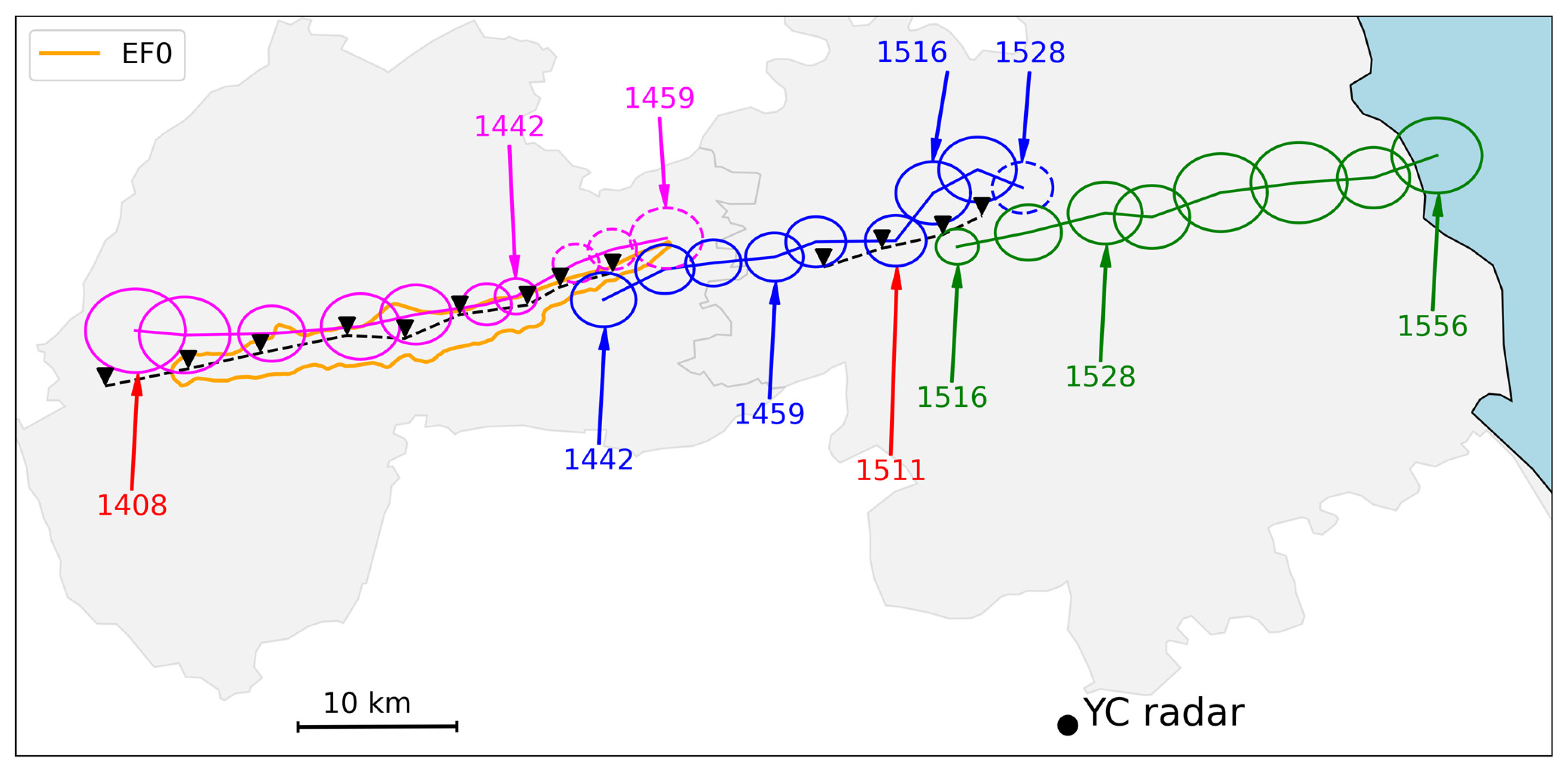
Figure 3 illustrates the evolution of mesocyclones within the storm from 1408 to 1556 LST, during which three cyclic mesocyclones were identified. The first mesocyclone (M1) was initially detected at 1156 LST by another CINRAD located approximately 100 km west of the Yancheng radar. At 1411 LST, an EF4 tornado struck FN and persisted until 1500 LST. From 1442 to 1459 LST, M1 weakened and occluded while a new mesocyclone (M2) formed to its east. M2 subsequently intensified and produced a tornado in SY from 1511 to 1528 LST. During 1516 to 1528 LST, M2 occluded as a third mesocyclone (M3) developed. M3 dissipated at 1556 LST as the storm moved offshore.

3.2. Transition Between M1 and M2

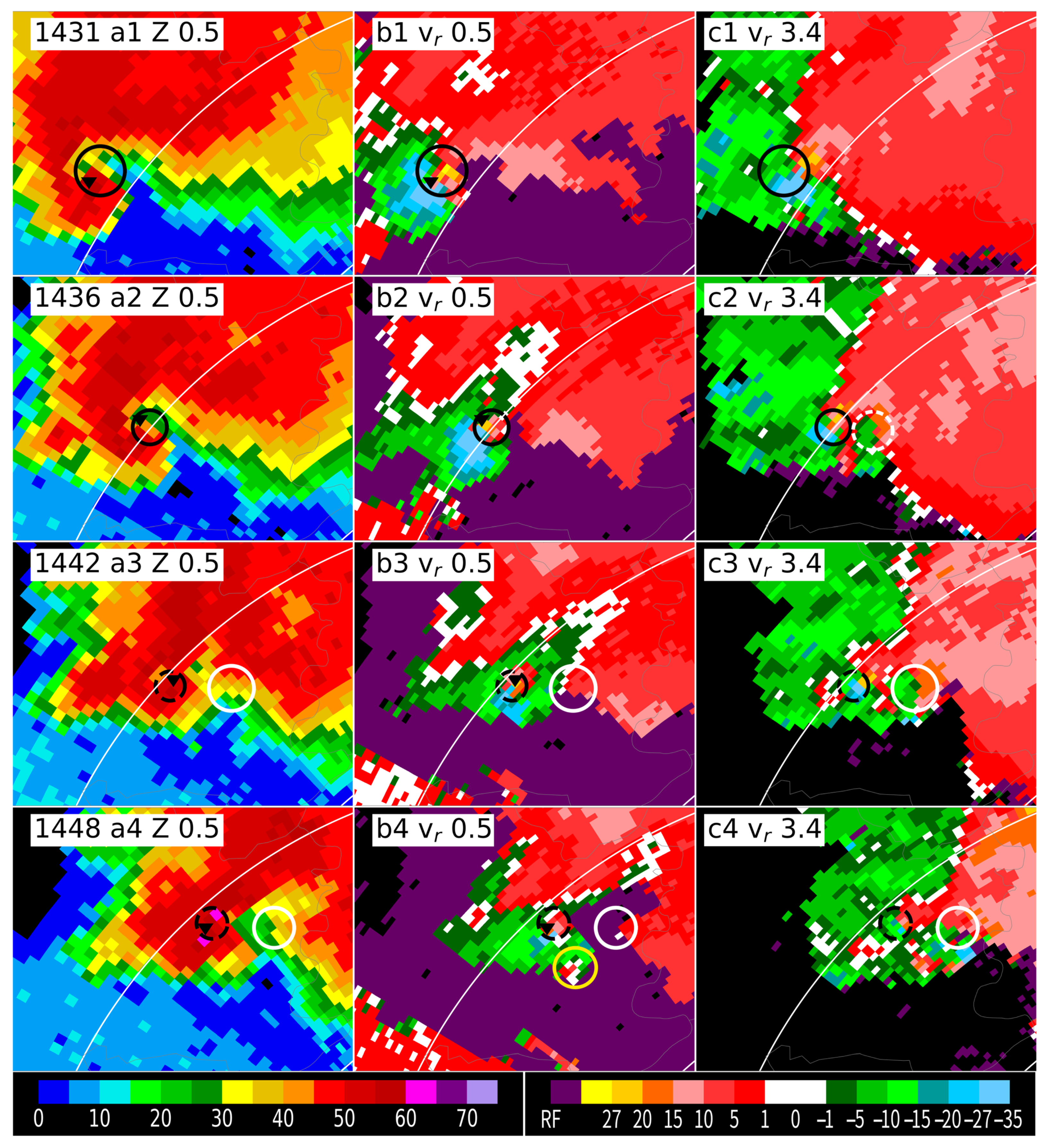
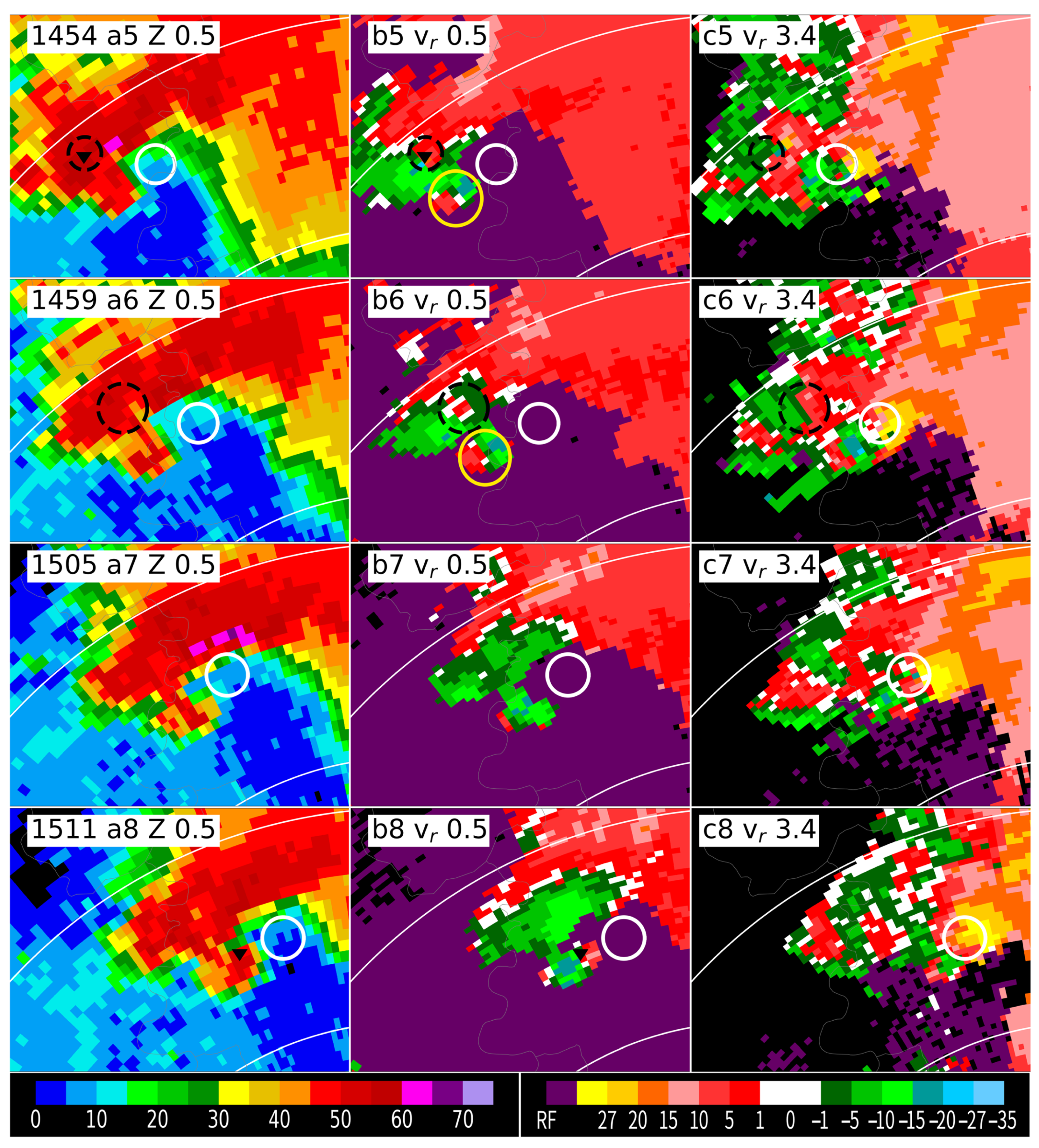
Figure 4 shows the reflectivity at 0.5° elevation, radial velocity at 0.5° and 3.4° elevation during the occlusion of M1 and formation of M2. At 1431 LST, M1’s maximum shear reached 94 × 10−3 s−1. At 1436 LST, a new submesocyclone-strength vortex formed at 3.4° elevation, east of the hook echo, downstream of the rear-flank downdraft (RFD; Figure 4(c2)).
At 1442 LST, the hook echo wrapped around itself, and the updraft width narrowed, as indicated by the narrowing of the Weak Echo Region (WER, Figure 4(a3)). The new vortex had strengthened into a mesocyclone, M2, while M1 exhibited a distinct backward movement relative to the WER. According to Meng et al. [27], the tornado’s damage swath narrowed significantly after this moment. By 1448 LST, M1 had weakened to submesocyclone strength, while the hook echo merged with the storm’s main reflectivity core and became undiscernible. However, the progress of occlusion slowed subsequently.
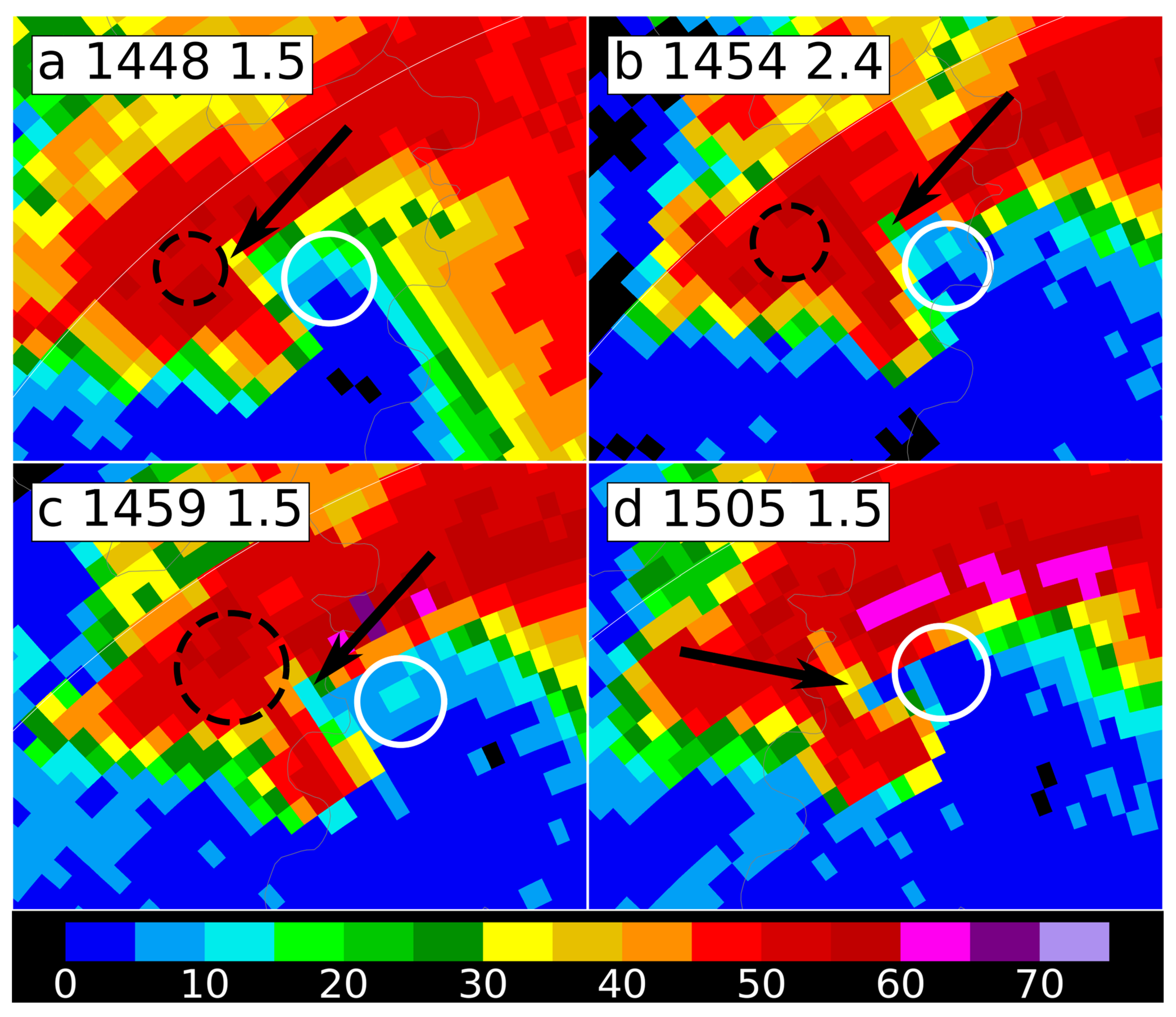
From 1448 to 1459 LST, the storm updraft widened, as indicated by a gradually expanding WER. Rather than propagating rearward, M1 remained relatively stationary near the hook-echo root, in close proximity to the WER. The WER also produced a small notch in the main reflectivity core toward M1 at 1.5° and 2.5° elevation (Figure 5), suggesting that the updraft continued to partially feed M1. This may reflect a transient rebalancing between inflow and outflow during this period. M1 persisted until 1459 LST, consistent with the end of Tornado 1 at approximately 1500 LST based on damage surveys.
Another indication of this reorganization is the persistence of a cyclonic–anticyclonic vortex pair on either side of the RFD at 0.5° elevation during the same period, suggesting that the RFD maintained a relatively steady orientation, with a possible tendency toward the northeast (Figure 4(b4–b6)). During this period, the RFD reflectivity became elongated northwest–southeast within the confluence zone between the RFD and the inflow. Notably, it evolved into a narrow tendril-shaped echo at 1459 LST (Figure 4(b6)), closely resembling the conceptual model of Beck et al. [8].
At 1505 LST, the RFD shifted towards a more southward direction (Figure 4(b7)), facilitating reformation of a new hook echo, and increased reflectivity also appeared at the forward-flank downdraft (FFD; Figure 4(a7)). At 1511 LST, the new hook echo had fully reformed, and tornado 2 struck SY.

3.3. Transition Between M2 and M3

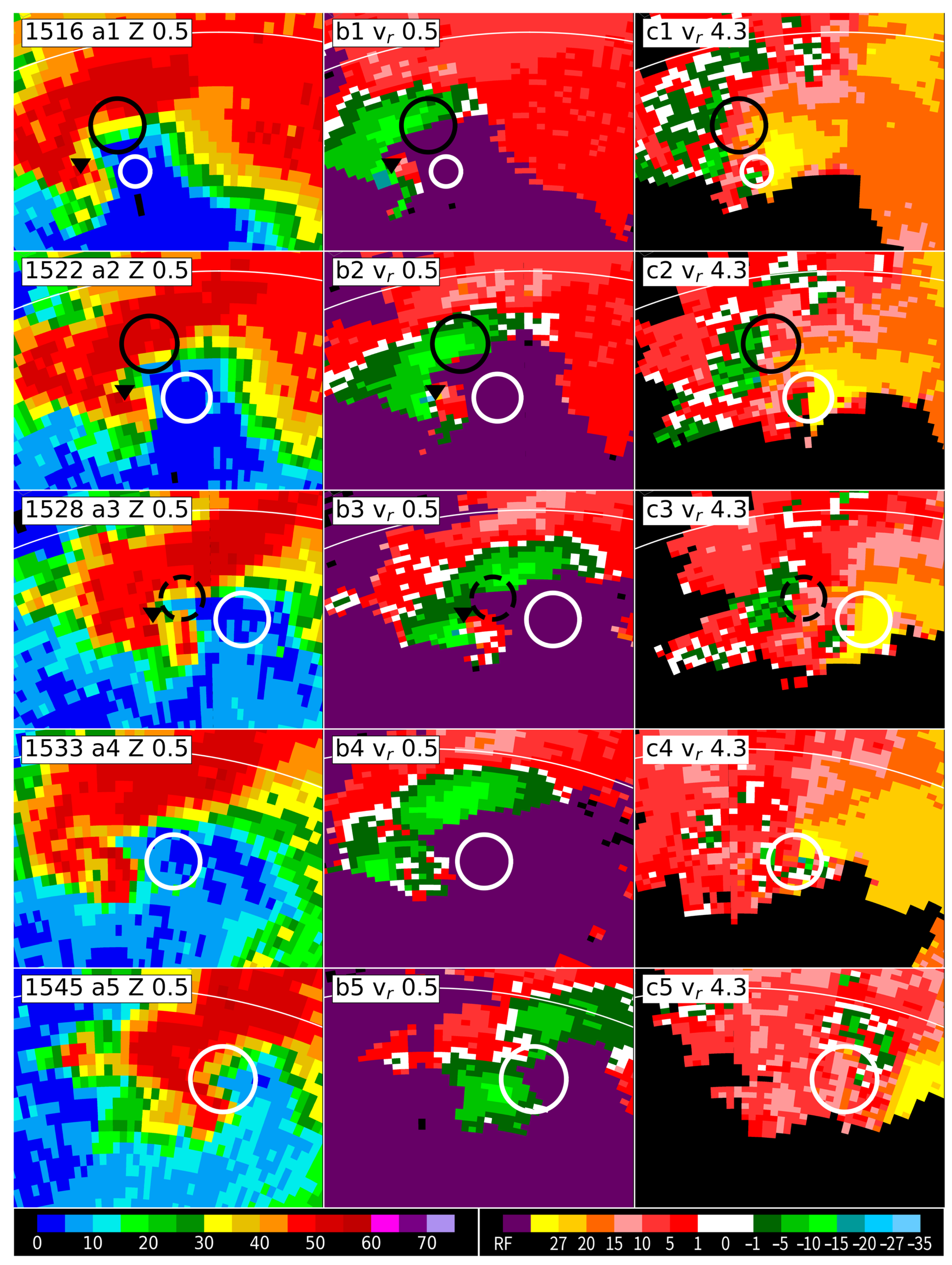
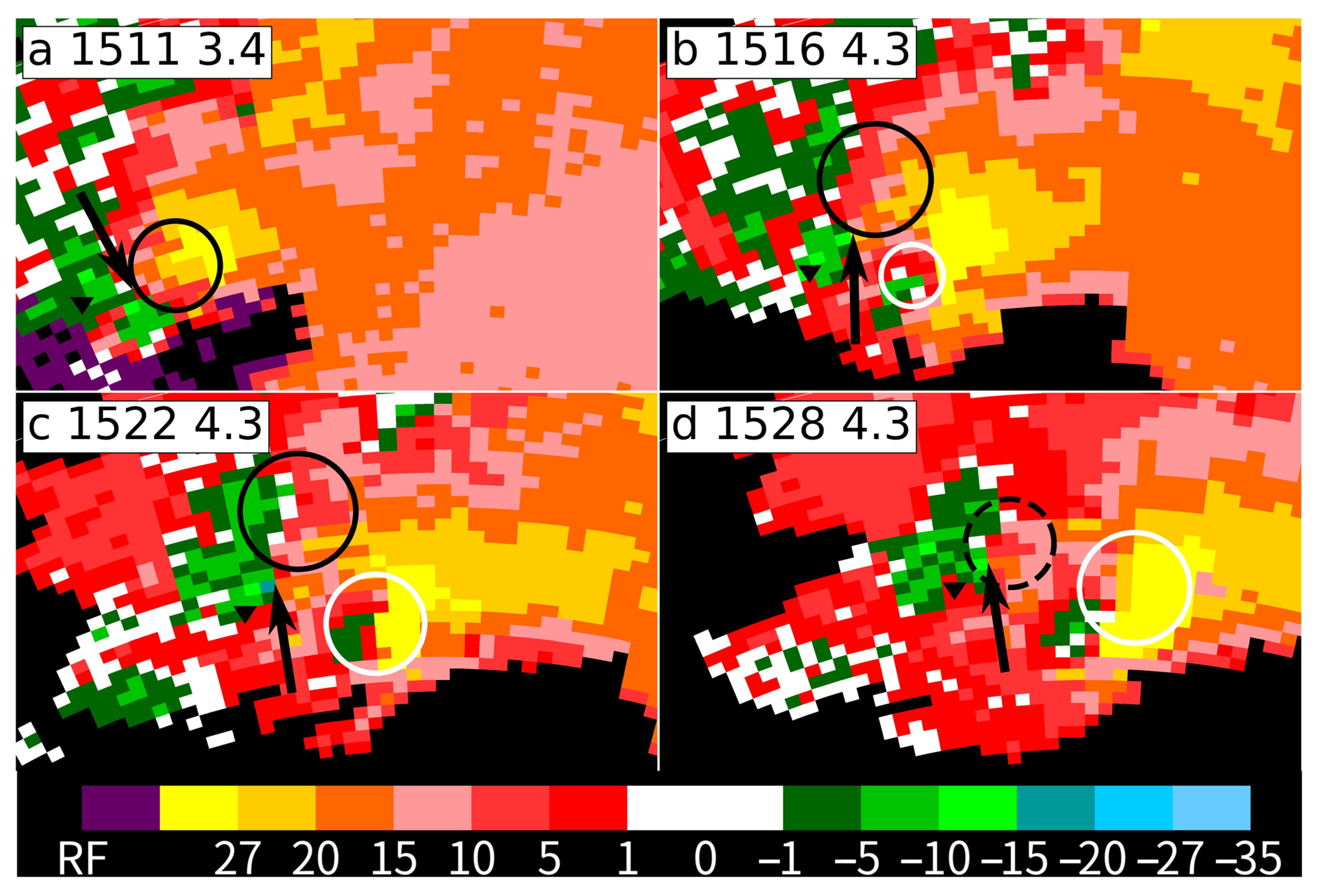
The occlusion of M2 and the genesis of M3 occurred from 1516 to 1545 LST (Figure 6). At 1511 LST, Tornado 2 formed at the tip of the hook echo (Figure 4(a8)). At 1516 LST, two mesocyclones coexisted: one to the north in the FFD and the other to the south in the WER (Figure 6(a1)). At 1.5° (or 2.4°) elevation, the TVS radial velocity couplet attached to the northern mesocyclone (Figure 7a) and moved with it in subsequent volume scans (Figure 7b–d). Therefore, it is plausible that M2 moved northward towards the FFD, consistent with an intensifying inflow during this period. Meanwhile, a new mesocyclone, M3, formed in the WER downstream of the RFD, near the original location of M2.
From 1516 to 1528 LST, M2 moved westward along the FFD and reached the “pocket” between the FFD and RFD, weakening to submesocyclone strength (Figure 6(a1–a3)). In terms of their relative positions, the mesocyclones rotated counterclockwise about each other during this period, with their relative displacement exhibiting an average angular velocity of 4.1° min−1. M2 later dissipated at 1533 LST.
The hook echo deformed and reformed from 1516 to 1545 LST. It extended beyond the TVS at 1522 LST (Figure 6(a2)) and deformed north–southward at 1528 LST (Figure 6(a3)), assumed a recurved hook shape at 1533 LST (Figure 6(a4)), and reformed into a new hook echo at 1545 LST (Figure 6(a5)). The recurved hook echo and the mutually rotating mesocyclones in this case show similarities to the cyclic mesocyclones reported by French et al. [9].
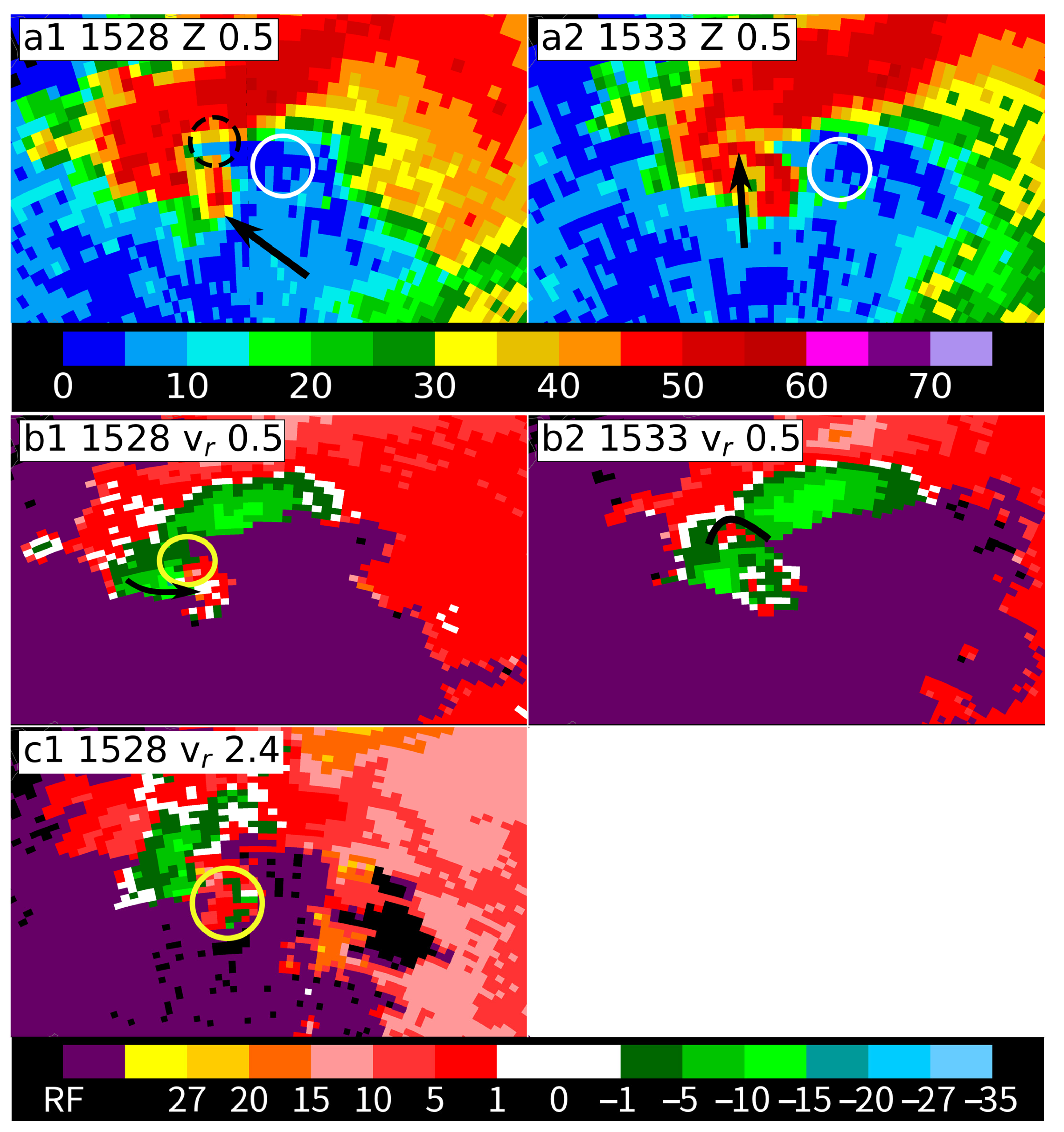
At 1528 LST, a north–south-oriented appendage developed ahead of the hook echo (Figure 8(a1)), and a possible cyclonic–anticyclonic vortex pair was collocated with the appendage (Figure 8(b1,c1)). However, the anticyclonic vortex on the southern portion of the appendage was only detectable above the 2.4° elevation angle because lower-level observations were affected by range folding; its existence should therefore be interpreted with caution (Figure 8(c1)). The appendage resembles the “hammerhead”-shaped echo documented by Bluestein et al. [34] and Houser et al. [15], suggesting that an eastward-moving RFD diverged upon encountering the inflow. The northern branch of the RFD may have partially disrupted the inflow to M2 but had not yet completed the occlusion.
By 1533 LST, the “hammerhead” echo had intensified and reconnected with the main reflectivity core via a west–east high-reflectivity band (Figure 8(a2)), indicating an intense reflectivity surge. A convergence line in the radial velocity field collocated with the strong precipitation surge (Figure 8(b2)) suggests that a northward moving rear-flank gust front was converging with the FFD, closing the “pocket” that contained M2 and completing the occlusion. Consequently, M2 had dissipated by this time.

3.4. Cyclic Evolution of Storm Intensity

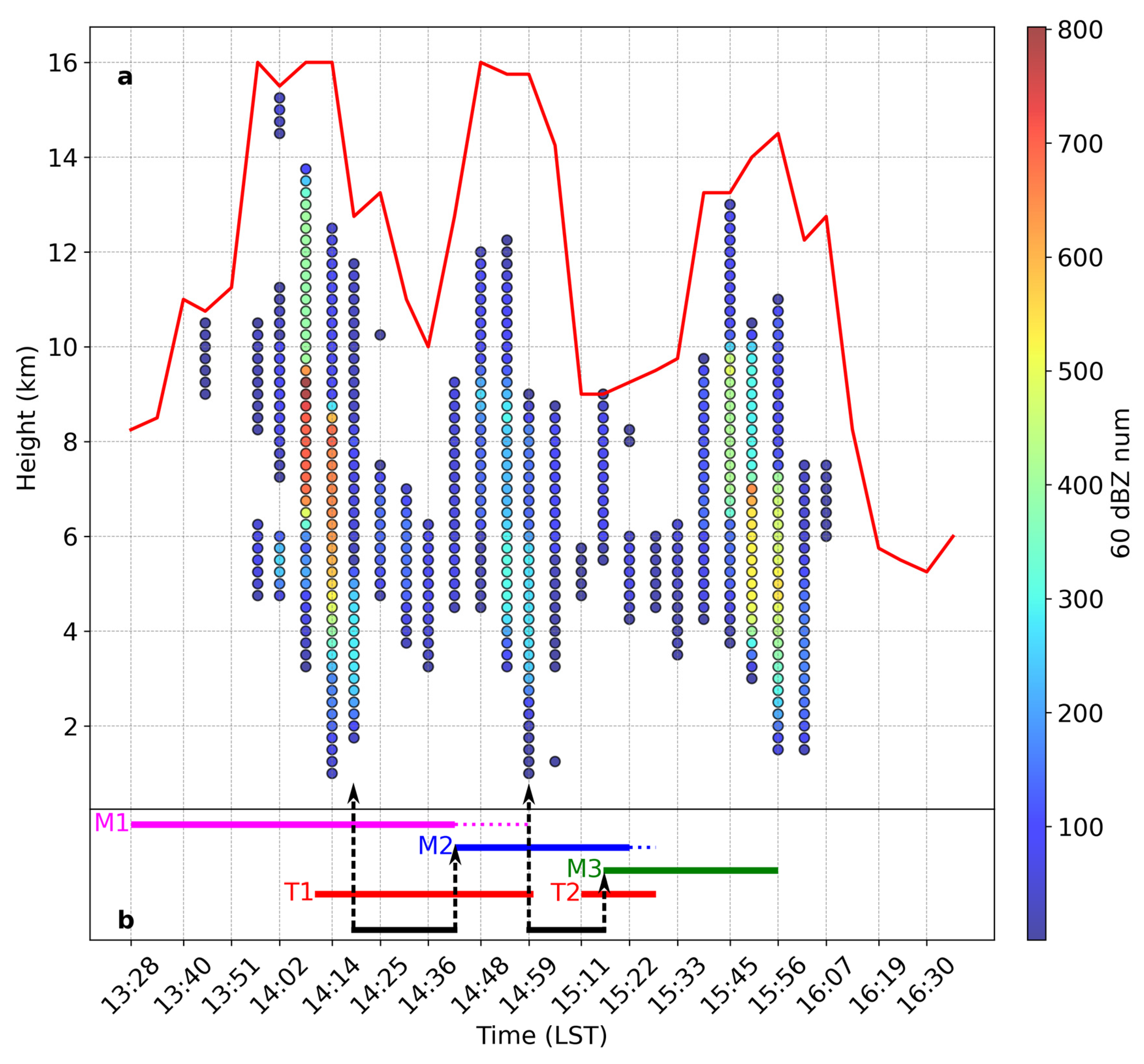
The storm-scale reflectivity core intensity was quantified by first remapping the radar data onto a three-dimensional Cartesian grid with a resolution of 250 m using the Python ARM Radar Toolkit version 2.2.1 [35], and then counting the number of grid points exceeding 60 dBZ within the entire storm (Sensitivity tests were performed using a 500 m grid spacing and a 55 dBZ threshold, and the results remained consistent).
Figure 9 illustrates the evolution of the storm-wide reflectivity core intensity from 1328 to 1630 LST, together with the 50 dBZ echo-top height and the lifetimes of the mesocyclones and tornadoes. During this period, the storm underwent three distinct intensity cycles that exhibited a temporal correspondence with the mesocyclone lifecycles. In each cycle, the storm initially intensified, as indicated by an enhanced reflectivity core and increasing echo-top height, and subsequently weakened, accompanied by decreases in both quantities. This cyclic behavior ceased after 1556 LST, when the storm moved offshore and the sharp decrease in low-level vertical wind shear (Figure 1b,c) likely contributed to the dissipation of M3. Notably, the reflectivity core experienced rapid weakening and lowering toward the surface at 1408–1419 LST, 1448–1459 LST and 1545–1601 LST. The genesis of M2 and M3 occurred with similar time lags relative to the weakening and lowering phase of the reflectivity core: approximately 24 min for M2 and 18 min for M3.

4. Statistics of Mesocyclones and TVSs

4.1. Mesocyclone and TVS Features

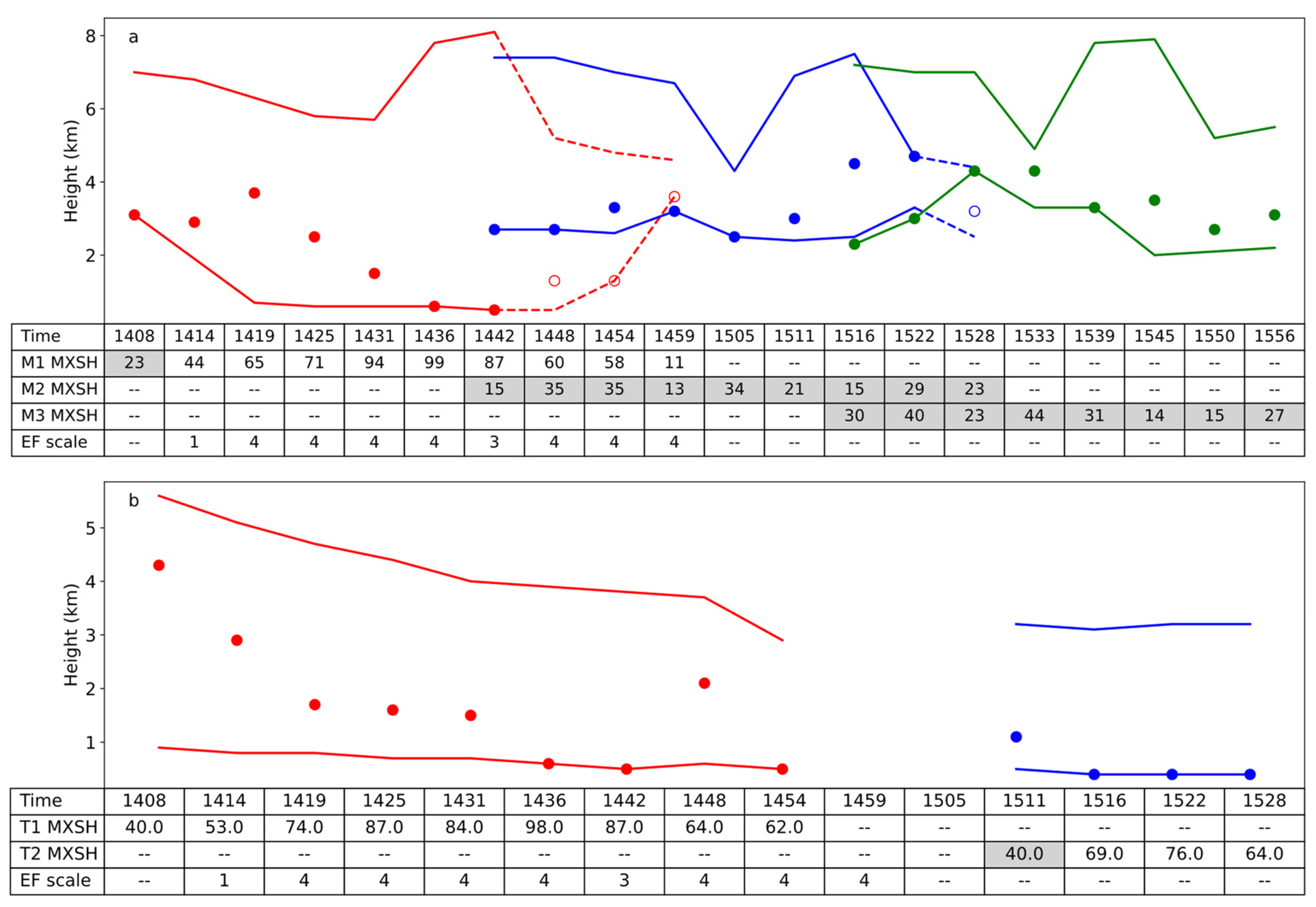
Figure 10a shows the top and bottom heights of the three mesocyclones, along with the intensity and height of maximum shear. Due to range folding at the 0.5° elevation angle, the bottom-height estimates may be biased at 1408 LST and throughout the lifetimes of M2 and M3. From 1408 to 1459 LST (Tornado 1), M1 exhibited an average maximum shear of approximately 61.2 × 10⁻³ s−1, which is more than four times higher than the mean value of 14.4 × 10⁻³ s−1 reported for six tornadic supercell storms (EF1–EF3) in the Yangtze–Huaihe region from 2003 to 2010, as documented by Zhou et al. [36]. Figure 10b illustrates the evolution of the top, bottom, and maximum shear heights of the TVSs, together with the maximum shear values summarized in the accompanying table. During Tornado 1 (1414–1454 LST), the TVSs exhibited an average maximum shear of 73.1 × 10⁻³ s−1, which is considerably higher than the mean value of 30.8 × 10⁻³ s−1 reported by Zhou et al. [36].

4.2. Maximum Wind Speed Estimation for Tornadoes

At present, mobile radars are regarded as among the most reliable instruments for measuring wind speeds in tornadoes. Doppler On Wheels radar [37] observations and WSR-88D data were statistically compared by Toth et al. [38], who established a linear relationship between the maximum tornado wind speeds derived from the two systems. The relationship yielded a coefficient of determination (R2) of 0.83 across 14 tornadic events. Given the close similarity between the CINRAD and WSR-88D radar, their measurements are treated as broadly comparable in this study. Accordingly, the same relationship is applied to convert CINRAD observations into equivalent DOW maximum velocities, providing a first-order estimate of tornado wind speeds. The conversion is expressed as:
v D O W = 1.4 v C I N R A D + 0.4
where v D O W and v C I N R A D denote the maximum wind speeds observed by DOW and CINRAD, respectively. The v C I N R A D term is estimated as:
v C I N R A D = 1 2 L L D V + v s
where LLDV is the Low-Level Delta Velocity observed by the CINRAD system, and v s is the storm-motion speed estimated from the temporal displacement of storm centroids identified by the storm cell identification and tracking algorithm of the CINRAD system, which is the same as that used in WSR-88D [39]. It should be noted that the storm-motion estimate may contain substantial uncertainty during periods of rapid storm-cell evolution, particularly during 1437–1442 and 1511–1516 LST in this case.
The estimated v D O W for Tornado 1 reached EF4 intensity (Table 1), which is broadly consistent with the available damage survey results. The estimated v D O W for Tornado 2 generally corresponded to EF0–EF2 intensity. Although the estimate briefly reached EF3 intensity at 1516 LST, this result is subject to considerable uncertainty in storm-motion estimation because of the rapid evolution of storm reflectivity during that period. No detailed damage survey has been reported in the literature to independently evaluate this estimate.
The estimated v D O W values should be regarded as rough radar-based estimates and interpreted with caution. Uncertainties may arise from intrinsic errors in the CINRAD system, the application of a WSR-88D-based model to CINRAD data, and errors associated with the conversion model itself. Moreover, even direct DOW observations are not equivalent to EF-scale intensity estimates [40].

5. Summary

On 23 June 2016, a supercell storm swept eastward across the northern part of Jiangsu Province, China. The storm produced two tornadoes in FN and SY of Yancheng City, Jiangsu Province. The FN tornado reached EF4 intensity and caused the most severe damage and losses by one tornado in China since 1977. This study, based on data from an S-band stationary CINRAD, focuses on the cyclic occlusion and formation of mesocyclones within the storm.
Within the supercell, three mesocyclone life cycles were identified. The cyclic evolution resembled that of classical conceptual models: the old mesocyclones moved rearward relative to the storm inflow, new mesocyclones developed at mid-levels downstream of the RFD, and the hook echo deformed during occlusion.
The first occlusion was relatively prolonged. After the hook echo wrapped itself, submesocyclone-strength vortices associated with the decaying mesocyclone persisted for three additional volume scans (18 min), suggesting sustained inflow support. In contrast, the second occlusion evolved more rapidly, during which the old and new mesocyclones rotated cyclonically around each other.
The storm intensity exhibited a cyclic evolution. A temporal association was observed between the evolution of the reflectivity core and the occlusion and formation of mesocyclones. The new mesocyclone formed approximately 24 min after the first instance of reflectivity-core weakening and lowering toward the surface and 18 min after the second.
Due to the limitations of single, fixed-site Doppler radar observations, this study is subject to several constraints, including coarse temporal and spatial resolution, the absence of dual-Doppler wind retrievals, and a lack of polarimetric analyses. These limitations highlight the need for multiple, rapid-scan polarimetric radar systems in future investigations of cyclic storms in the region. In addition, comparison of environmental conditions associated with cyclic tornadic storms and non-cyclic events would be a valuable direction for future research and may provide reference information for operational warning applications.

Author Contributions

Conceptualization, J.Z.; Methodology, J.Z.; Data curation, X.H.; Validation, J.Z., X.H., H.L. and H.C.; Formal analysis, J.Z.; Writing—original draft, J.Z.; Writing—review & editing, J.Z., X.H., H.L. and H.C. Funding acquisition, J.Z. and X.H. All authors have read and agreed to the published version of the manuscript.

Funding

This research was funded by the Strategic Priority Research Program of the Chinese Academy of Sciences (Grant No. XDB0760303), China Meteorological Administration Tornado Key Laboratory (Grant TKL202404), and Guangdong Basic and Applied Basic Research Foundation (Grant 2024A1515510006).

Data Availability Statement

The data used in this study were provided by a third-party organization under a data-use agreement and are not publicly available. Requests for access to these data should be directed to the data owner and may be subject to approval and applicable restrictions.

Acknowledgments

We thank the anonymous reviewers for their insightful comments and constructive suggestions, which have greatly improved this paper.

Conflicts of Interest

The authors declare no conflicts of interest.

References

  1. Brandes, E.A. Flow in Severe Thunderstorms Observed by Dual-Doppler Radar. Mon. Weather Rev. 1977, 105, 113–120. [Google Scholar] [CrossRef]
  2. Lemon, L.R.; Doswell, C.A. Severe Thunderstorm Evolution and Mesocyclone Structure as Related to Tornadogenesis. Mon. Weather Rev. 1979, 107, 1184–1197. [Google Scholar] [CrossRef]
  3. Burgess, D.W.; Wood, V.T.; Brown, R.A. Mesocyclone evolution statistics. In 12th Conference on Severe Local Storms; American Meteorological Society: Geneseo, NY, USA, 1982; pp. 422–424. [Google Scholar]
  4. Adlerman, E.J.; Droegemeier, K.K.; Davies-Jones, R. A Numerical Simulation of Cyclic Mesocyclogenesis. J. Atmos. Sci. 1999, 56, 2045–2069. [Google Scholar] [CrossRef]
  5. Dowell, D.C.; Bluestein, H.B. The 8 June 1995 McLean, Texas, Storm. Part I: Observations of Cyclic Tornadogenesis. Mon. Weather Rev. 2002, 130, 2626–2648. [Google Scholar] [CrossRef]
  6. Dowell, D.C.; Bluestein, H.B. The 8 June 1995 McLean, Texas, Storm. Part II: Cyclic Tornado Formation, Maintenance, and Dissipation. Mon. Weather Rev. 2002, 130, 2649–2670. [Google Scholar] [CrossRef]
  7. Adlerman, E.J.; Droegemeier, K.K. The Dependence of Numerically Simulated Cyclic Mesocyclogenesis upon Environmental Vertical Wind Shear. Mon. Weather Rev. 2005, 133, 3595–3623. [Google Scholar] [CrossRef]
  8. Beck, J.R.; Schroeder, J.L.; Wurman, J.M. High-Resolution Dual-Doppler Analyses of the 29 May 2001 Kress, Texas, Cyclic Supercell. Mon. Weather Rev. 2006, 134, 3125–3148. [Google Scholar] [CrossRef]
  9. French, M.M.; Bluestein, H.B.; Dowell, D.C.; Wicker, L.J.; Kramar, M.R.; Pazmany, A.L. High-Resolution, Mobile Doppler Radar Observations of Cyclic Mesocyclogenesis in a Supercell. Mon. Weather Rev. 2008, 136, 4997–5016. [Google Scholar] [CrossRef]
  10. Kumjian, M.R.; Ryzhkov, A.V. Polarimetric Signatures in Supercell Thunderstorms. J. Appl. Meteorol. Climatol. 2008, 47, 1940–1961. [Google Scholar] [CrossRef]
  11. Ryzhkov, A.V.; Schuur, T.J.; Burgess, D.W.; Zrnić, D.S. Polarimetric tornado detection. J. Appl. Meteorol. 2005, 44, 557–570. [Google Scholar] [CrossRef]
  12. Snyder, J.C.; Ryzhkov, A.V. Automated Detection of Polarimetric Tornadic Debris Signatures Using a Hydrometeor Classification Algorithm. J. Appl. Meteorol. Climatol. 2015, 54, 1861–1870. [Google Scholar] [CrossRef]
  13. Kumjian, M.R.; Ryzhkov, A.V.; Melnikov, V.M.; Schuur, T.J. Rapid-Scan Super-Resolution Observations of a Cyclic Supercell with a Dual-Polarization WSR-88D. Mon. Weather Rev. 2010, 138, 3762–3786. [Google Scholar] [CrossRef]
  14. Kurdzo, J.M.; Bodine, D.J.; Cheong, B.L.; Palmer, R.D. High-Temporal Resolution Polarimetric X-Band Doppler Radar Observations of the 20 May 2013 Moore, Oklahoma, Tornado. Mon. Weather Rev. 2015, 143, 2711–2735. [Google Scholar] [CrossRef][Green Version]
  15. Houser, J.L.; Bluestein, H.B.; Snyder, J.C. Rapid-Scan, Polarimetric, Doppler Radar Observations of Tornadogenesis and Tornado Dissipation in a Tornadic Supercell: The “El Reno, Oklahoma” Storm of 24 May 2011. Mon. Weather Rev. 2015, 143, 2685–2710. [Google Scholar] [CrossRef]
  16. Allen, J.T.; Allen, E.R.; Richter, H.; Lepore, C. Australian Tornadoes in 2013: Implications for Climatology and Forecasting. Mon. Weather Rev. 2021, 149, 1211–1232. [Google Scholar] [CrossRef]
  17. Lopes, M.M.; Oliveira, M.I.d.; Goede, V.; Ferreira, V.; Nascimento, E.d.L. Damage Survey and Multisensor Analysis of a Cold Season Tornado Outbreak in Southern Brazil. J. Appl. Meteorol. Climatol. 2025, 64, 831–855. [Google Scholar] [CrossRef]
  18. Taszarek, M.; Gromadzki, J. Deadly Tornadoes in Poland from 1820 to 2015. Mon. Weather Rev. 2017, 145, 1221–1243. [Google Scholar] [CrossRef]
  19. Fan, W.; Yu, X. Characteristics of Spatial Temporal Distribution of Tornadoes in China. Meteorol. Mon. 2015, 41, 793–805, (In Chinese with English abstract). [Google Scholar]
  20. Zhang, C.; Xue, M.; Zhu, K.; Yu, X. Climatology of Significant Tornadoes within China and Comparison of Tornado Environments between the United States and China. Mon. Weather Rev. 2023, 151, 465–484. [Google Scholar] [CrossRef]
  21. Simmons, K.M.; Sutter, D. WSR-88D Radar, Tornado Warnings, and Tornado Casualties. Wea. Forecast. 2005, 20, 301–310. [Google Scholar] [CrossRef][Green Version]
  22. Min, C.; Chen, S.; Gourley, J.J.; Chen, H.; Zhang, A.; Huang, Y.; Huang, C. Coverage of China New Generation Weather Radar Network. Adv. Meteorol. 2019, 2019, 5789358. [Google Scholar] [CrossRef]
  23. Wu, F.; Yu, X.; Zhang, Z.; Zhou, X.; Wei, Y. The Characteristics of the Mesocyclone and Severe Weather Associated with Convective Storms. Meteorol. Mon. 2012, 38, 1330–1338, (In Chinese with English abstract). [Google Scholar]
  24. Wang, Y.; Zheng, Y.; Sun, K.; Wu, H. A statistical analysis of characteristics of mesocyclone products from Nanjing radar. Acta Meteorol. Sin. 2018, 76, 266–278, (In Chinese with English abstract). [Google Scholar]
  25. Xue, M.; Zhao, K.; Wang, M.; Li, Z.; Zheng, Y. Recent significant tornadoes in China. Adv. Atmos. Sci. 2016, 33, 1209–1217. [Google Scholar] [CrossRef]
  26. Zhang, X.; Yang, B.; Zhu, W.; Fang, C.; Liu, X.; Zhou, K.; Lan, Y.; Tian, F. Analysis of the EF4 Tornado in Funing County, Jiangsu Province on 23 June 2016. Meteorol. Mon. 2016, 42, 1304–1314. [Google Scholar]
  27. Meng, Z.; Bai, L.; Zhang, M.; Wu, Z.; Li, Z.; Pu, M.; Zheng, Y.; Wang, X.; Yao, D.; Xue, M.; et al. The Deadliest Tornado (EF4) in the Past 40 Years in China. Wea. Forecast. 2018, 33, 693–713. [Google Scholar] [CrossRef]
  28. Sun, Z.; Xue, M.; Zhu, K.; Zhou, B. Prediction of an EF4 supercell tornado in Funing, China: Resolution dependency of simulated tornadoes and their structures. Atmos. Res. 2019, 229, 175–189. [Google Scholar] [CrossRef]
  29. Huang, W.; Xue, M. Subvortices within a Numerically Simulated Tornado: The Role of Unstable Vortex Rossby Waves. J. Atmos. Sci. 2023, 80, 2503–2529. [Google Scholar] [CrossRef]
  30. Huang, W.; Xue, M. How Are Vorticity Rivers in Supercell Storms Produced and Are They Important Vorticity Sources for Tornadoes? J. Atmos. Sci. 2025, 82, 2141–2160. [Google Scholar] [CrossRef]
  31. Huang, W.; Xue, M. What Forces the Rapid Vertical Acceleration and Vorticity Intensification near Ground in Tornadoes? Diagnostic Analysis Based on a Numerically Simulated Real Tornado. J. Atmos. Sci. 2025, 82, 2541–2568. [Google Scholar] [CrossRef]
  32. Mitchell, E.D.W.; Vasiloff, S.V.; Stumpf, G.J.; Witt, A.; Eilts, M.D.; Johnson, J.T.; Thomas, K.W. The National Severe Storms Laboratory Tornado Detection Algorithm. Wea. Forecast. 1998, 13, 352–366. [Google Scholar] [CrossRef]
  33. Stumpf, G.J.; Witt, A.; Mitchell, E.D.; Spencer, P.L.; Johnson, J.T.; Eilts, M.D.; Thomas, K.W.; Burgess, D.W. The National Severe Storms Laboratory Mesocyclone Detection Algorithm for the WSR-88D*. Wea. Forecast. 1998, 13, 304–326. [Google Scholar] [CrossRef]
  34. Bluestein, H.B.; Houser, J.B.; French, M.M.; Snyder, J.C.; Emmitt, G.D.; PopStefanija, I.; Baldi, C.; Bluth, R.T. Observations of the Boundary Layer near Tornadoes and in Supercells Using a Mobile, Collocated, Pulsed Doppler Lidar and Radar. J. Atmos. Ocean. Technol. 2014, 31, 302–325. [Google Scholar] [CrossRef]
  35. Helmus, J.J.; Collis, S.M. The Python ARM Radar Toolkit (Py-ART), a Library for Working with Weather Radar Data in the Python Programming Language. J. Open Res. Softw. 2016, 4, e25. [Google Scholar] [CrossRef]
  36. Zhou, H.; Diao, X.; Xia, W.; Wang, Y.; Xiang, Y. Analysis of the tornado supercell storm and its environmental parameters in the Yangtze-Huaihe region. Acta Meteorol. Sin. 2014, 72, 306–317, (In Chinese with English abstract). [Google Scholar]
  37. Wurman, J.; Straka, J.; Rasmussen, E.; Randall, M.; Zahrai, A. Design and deployment of a portable, pencil-beam, pulsed, 3-cm Doppler radar. J. Atmos. Ocean. Technol. 1997, 14, 1502–1512. [Google Scholar] [CrossRef]
  38. Toth, M.; Trapp, R.J.; Wurman, J.; Kosiba, K.A. Comparison of Mobile-Radar Measurements of Tornado Intensity with Corresponding WSR-88D Measurements. Wea. Forecast. 2013, 28, 418–426. [Google Scholar] [CrossRef]
  39. Johnson, J.T.; MacKeen, P.L.; Witt, A.; Mitchell, E.D.W.; Stumpf, G.J.; Eilts, M.D.; Thomas, K.W. The Storm Cell Identification and Tracking Algorithm: An Enhanced WSR-88D Algorithm. Wea. Forecast. 1998, 13, 263–276. [Google Scholar] [CrossRef]
  40. Snyder, J.C.; Bluestein, H.B. Some Considerations for the Use of High-Resolution Mobile Radar Data in Tornado Intensity Determination. Wea. Forecast. 2014, 29, 799–827. [Google Scholar] [CrossRef]
Figure 1. ECMWF ERA5 reanalysis at 1400 LST on 23 June 2016. (a) Geopotential height (contours, dagpm), temperature (shading, °C), and wind at 500 hPa. (b) Same as (a) but for 850 hPa. (c) Mean sea level pressure (contours, hPa), 2 m AGL temperature (shading, °C), and 10 m AGL wind. White crosses denote FN, where the first tornado occurred, and yellow boxes indicate regions of strong low-level wind shear.
Remotesensing 18 01958 g001
Figure 2. Time series of the supercell storm reflectivity (≥40 dBZ) at the 0.5° elevation angle from the Yancheng radar between 1003 and 1704 LST. Range rings indicate distances of 50 km and 100 km from the radar.
Remotesensing 18 01958 g002
Figure 3. Tracks of mesocyclones and TVSs based on 6 min interval volume scans from the Yancheng radar between 1408 and 1556 LST. Mesocyclones are shown as circles, with solid lines connecting circle centers to indicate their tracks. Circle diameters represent the average mesocyclone axis, defined as the mean of the radial and azimuthal axes. Dashed circles denote submesocyclone-strength vortices identified using reduced angular momentum thresholds. TVSs are shown as black inverted triangles connected by dashed lines. The orange contour outlines the EF0 damage swath associated with Tornado 1. Three cyclic mesocyclones are highlighted: M1 (magenta), M2 (blue), and M3 (green). Red time labels indicate approximate tornado initiation times. Transitional periods of the mesocyclones are marked from 1442 to 1459 LST (M1–M2 transition, purple/blue time labels) and 1516 to 1528 LST (M2–M3 transition, blue/green time labels). Shaded areas show FN (left) and SY (right).
Remotesensing 18 01958 g003
Figure 4. Yancheng radar observations from 1431 to 1511 LST: reflectivity (Z) at 0.5° elevation (a1a8), radial velocity at 0.5° (b1b8) and 3.4° elevation (c1c8). Black and white circles indicate M1 and M2, respectively; dashed circles denote submesocyclone-strength vortices; yellow circles represent anti-cyclonic vortices associated with the RFD (b4b6); and black inverted triangles mark TVSs. Range rings indicate distances of 30 km and 50 km from the radar (white curves). The left color bar corresponds to reflectivity (dBZ), and the right color bar corresponds to radial velocity (m s−1; RF indicates range folding, and black indicates no data).
Remotesensing 18 01958 g004aRemotesensing 18 01958 g004b
Figure 5. Reflectivity factor (Z, dBZ) at (a) 1448, (b) 1454, (c) 1459, and (d) 1505 LST. The elevation angle is 1.5° for panels (a,c,d), and 2.4° for panel (b). Black dashed circles denote submesocyclone-strength vortices associated with M1, and white circles indicate M2. Black arrows indicate WER notches eroding into the reflectivity core. Black indicates no data.
Remotesensing 18 01958 g005
Figure 6. Reflectivity (Z) at 0.5° elevation (a1a5), radial velocity (vr) at 0.5° (b1b5) and 4.3° elevation (c1c5) from 1516 to 1545 LST. Black and white circles indicate M2 and M3, respectively; dashed circles denote submesocyclone-strength vortices. Black inverted triangles mark TVSs. Range rings indicate distances of 50 km from the radar (white curves). The left color bar corresponds to reflectivity (dBZ), and the right color bar corresponds to radial velocity (m s−1; RF indicates range folding, and black indicates no data).
Remotesensing 18 01958 g006
Figure 7. Radial velocity (m s−1) at (a) 1511, (b) 1516, (c) 1522, and (d) 1528 LST. The elevation angle is 3.4° for panels (a), and 4.3° for panel (bd). Black and white circles indicate M2 and M3, respectively; the dashed black circle denotes the submesocyclone-strength vortex associated with M2. Black inverted triangles mark TVSs, and black arrows indicate the TVS couplets at the plotted elevations. RF in the color bar denotes range folding, and black indicates no data.
Remotesensing 18 01958 g007
Figure 8. Reflectivity (Z, dBZ) and radial velocity (vr, m s−1) during the occlusion of M2. Reflectivity at 0.5° elevation is shown in (a1) 1528 and (a2) 1533 LST; radial velocity at 0.5° elevation in (b1) 1528 and (b2) 1533 LST; and radial velocity at 2.4° elevation in (c1) 1528 LST. The dashed black circle indicates submesocyclone-strength vortex associated with M2, while white circles indicate M3. Yellow circles in (b1) and (c1) highlight the cyclonic-anticyclonic vortex pair associated with the RFD. Black arrows indicate the ‘hammerhead’ echo in (a1), the RFD direction in (b1), and the high-reflectivity band associated with the reflectivity surge in (a2). The black curve in (b2) marks the rear-flank gust front. RF in the lower color bar denotes range folding, and black indicates no data.
Remotesensing 18 01958 g008
Figure 9. (a) Time series of the number of grid points exceeding 60 dBZ within the supercell. Radar observations were interpolated onto a 3-dimensional Cartesian grid with 250 m resolution, and counts were computed over the 1–16 km altitude range at 250 m vertical intervals across the storm domain. The red curve indicates the 50 dBZ echo top height. (b) Lifetimes of the mesocyclones and tornadoes (T1: Tornado 1; T2: Tornado 2). Dashed lines denote submesocyclone-strength vortices associated with the mesocyclones. Black arrows denote the time lags between reflectivity weakening and mesocyclone formation.
Remotesensing 18 01958 g009
Figure 10. (a) Temporal evolution of top and bottom heights (lines) and maximum shear height (markers) for the three mesocyclones from 1408 to 1556 LST (red: M1; blue: M2; green: M3). Dashed lines and hollow markers denote submesocyclone-strength vortices. The table summarizes each mesocyclone’s maximum shear (MXSH; 10−3 s−1) and the corresponding maximum tornado EF scale during the analysis period. Grey shading indicates uncertain mesocyclone base heights due to range folding. (b) Same as in (a) but for TVSs (T1: Tornado 1, red; T2: Tornado 2, blue). Grey shading indicates TVSs identified using a reduced base DV threshold (20 m s−1).
Remotesensing 18 01958 g010
Table 1. Estimated DOW maximum wind speed (m s−1).
Tornado 1
Time (LST)LLDV (m s−1)vs (m s−1)vDOW (m s−1)EF scale
141436.516.649.21
141980.514.577.14
142577.518.981.14
143177.517.679.34
143784.518.385.24
1442743.957.73
144865.511.562.44
14544912.251.84
Tornado 2
Time (LST)LLDV (m s−1)vs (m s−1)vDOW (m s−1)EF scale
15112010.228.7--
151644.523.965--
152251.510.250.7--
15285112.153--
Bold text denotes the time associated with rapid storm cell evolution.
Disclaimer/Publisher’s Note: The statements, opinions and data contained in all publications are solely those of the individual author(s) and contributor(s) and not of MDPI and/or the editor(s). MDPI and/or the editor(s) disclaim responsibility for any injury to people or property resulting from any ideas, methods, instructions or products referred to in the content.